Items Similar to Untitled (Stage of Consciousness) - 20x24cm
Want more images or videos?
Request additional images or videos from the seller
1 of 2
Stefanie SchneiderUntitled (Stage of Consciousness) - 20x24cm2007
2007
$380
£289.93
€330.06
CA$534.09
A$587.10
CHF 308.22
MX$6,981.04
NOK 3,958.30
SEK 3,605.59
DKK 2,466.10
About the Item
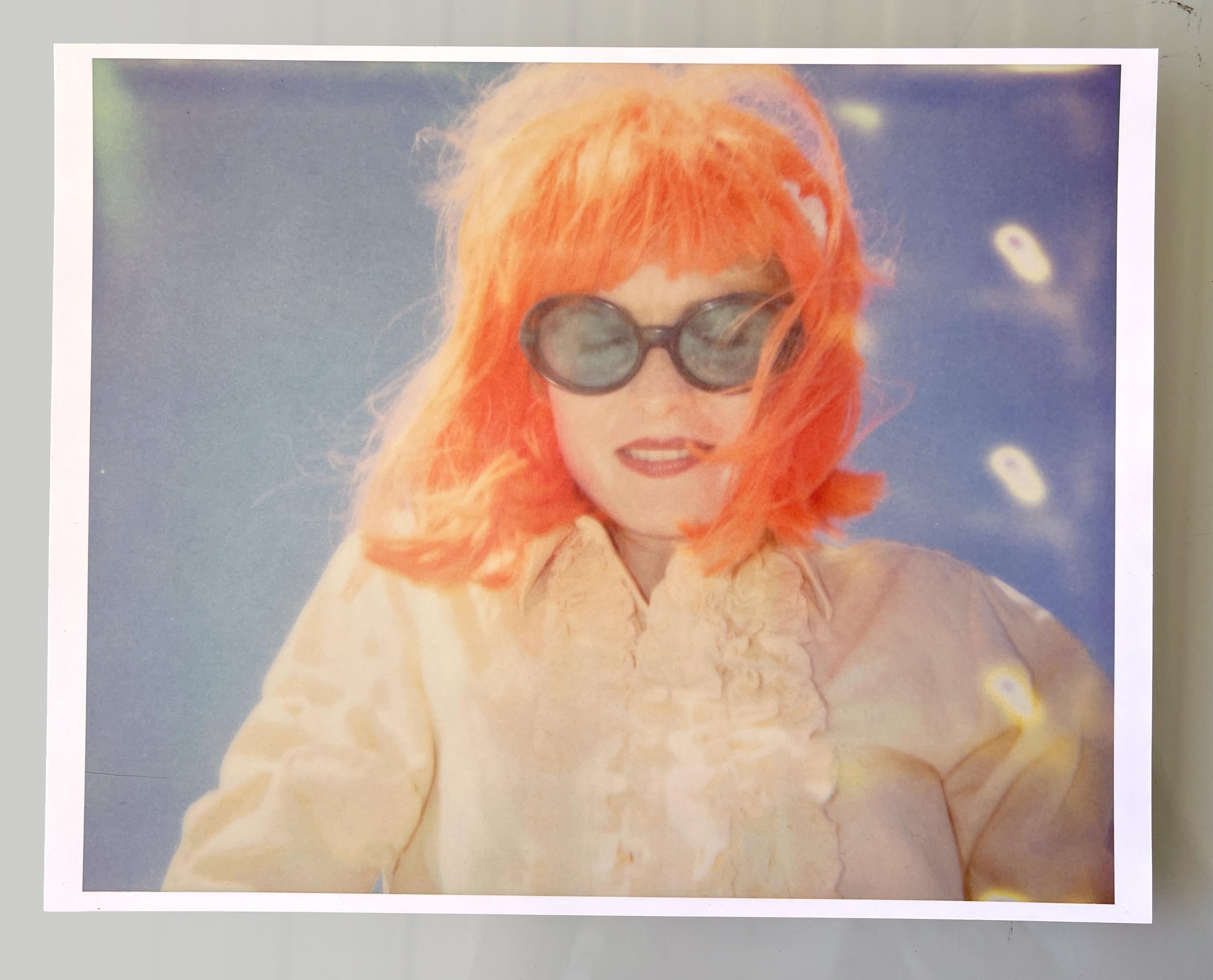
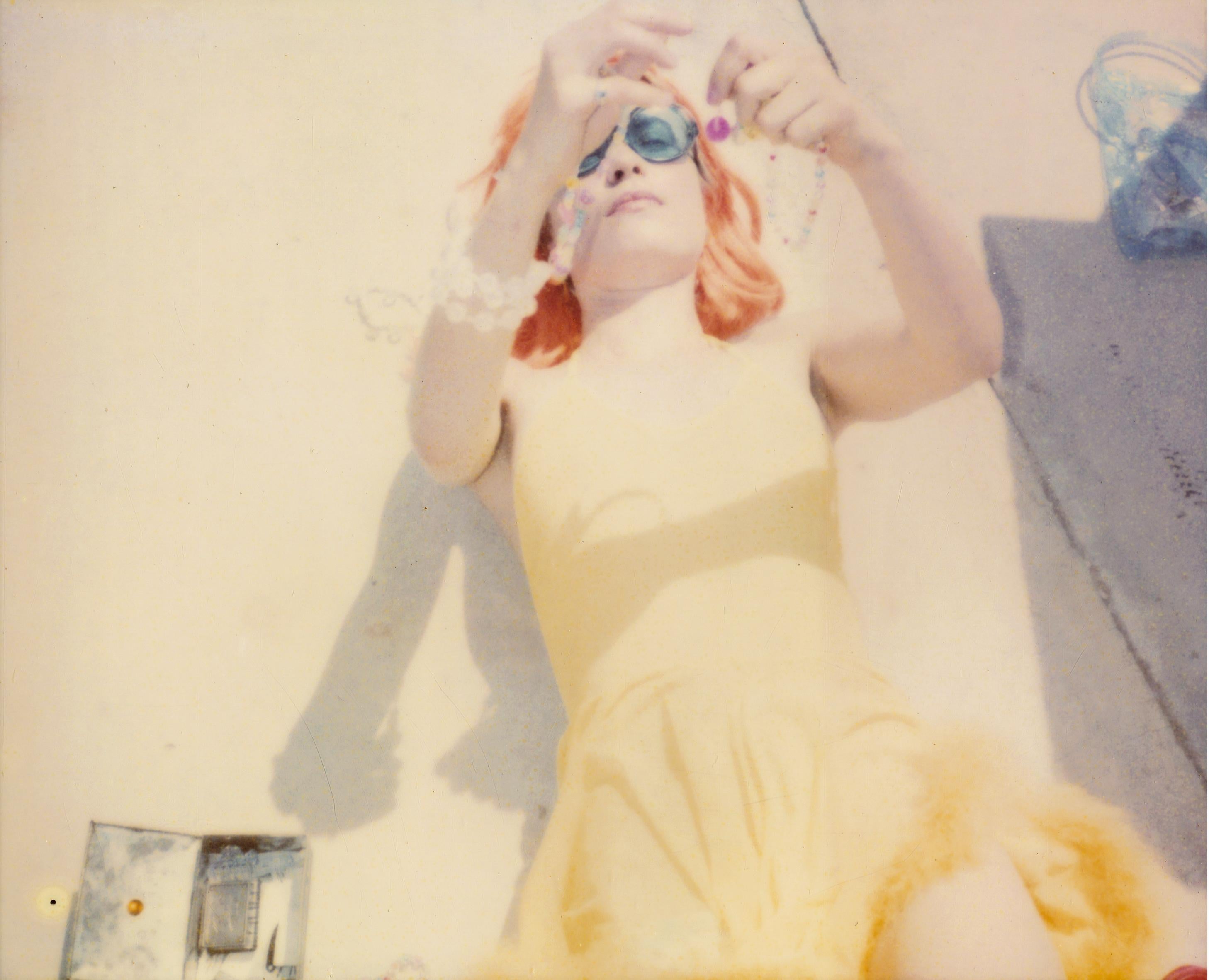
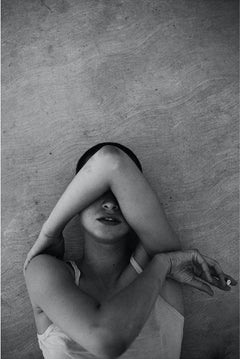
Untitled (Stage of Consciousness) - 2007
20x24cm,
Edition of 10, plus 2 Artist Proofs.
Archival C-Print, based on a Polaroid.
Signature label and Certificate.
Artist Inventory No. 6363.
Not mounted.
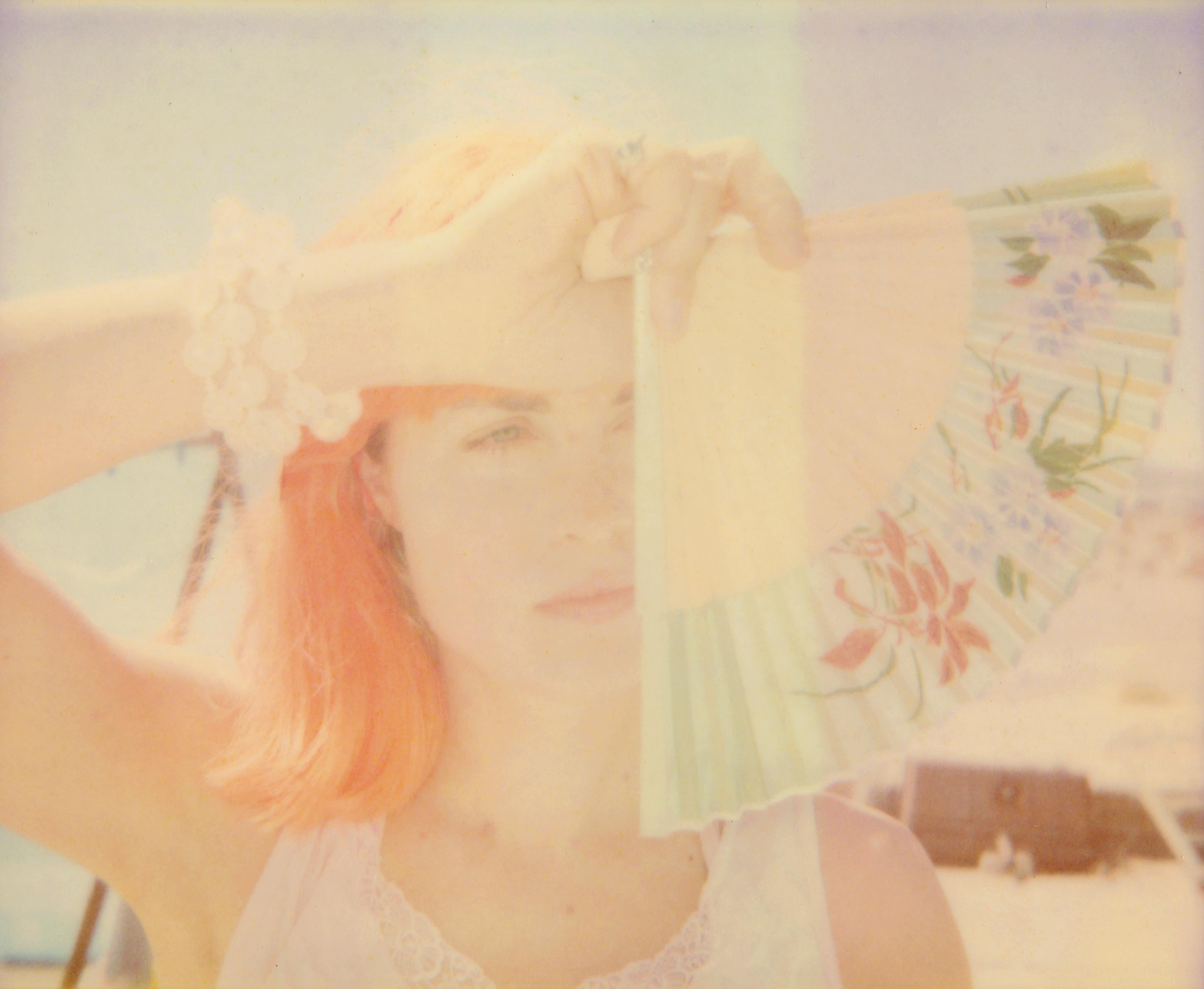
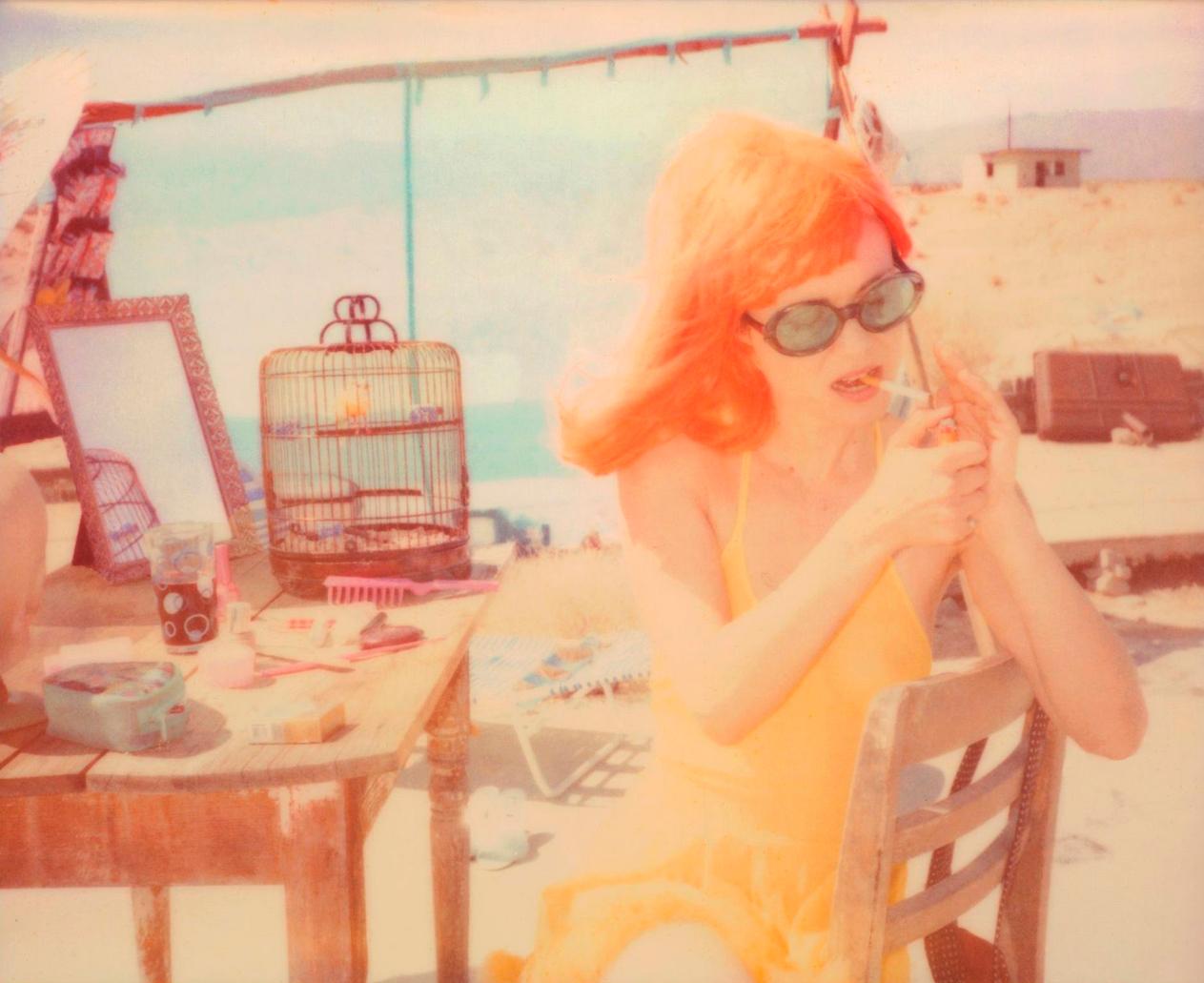
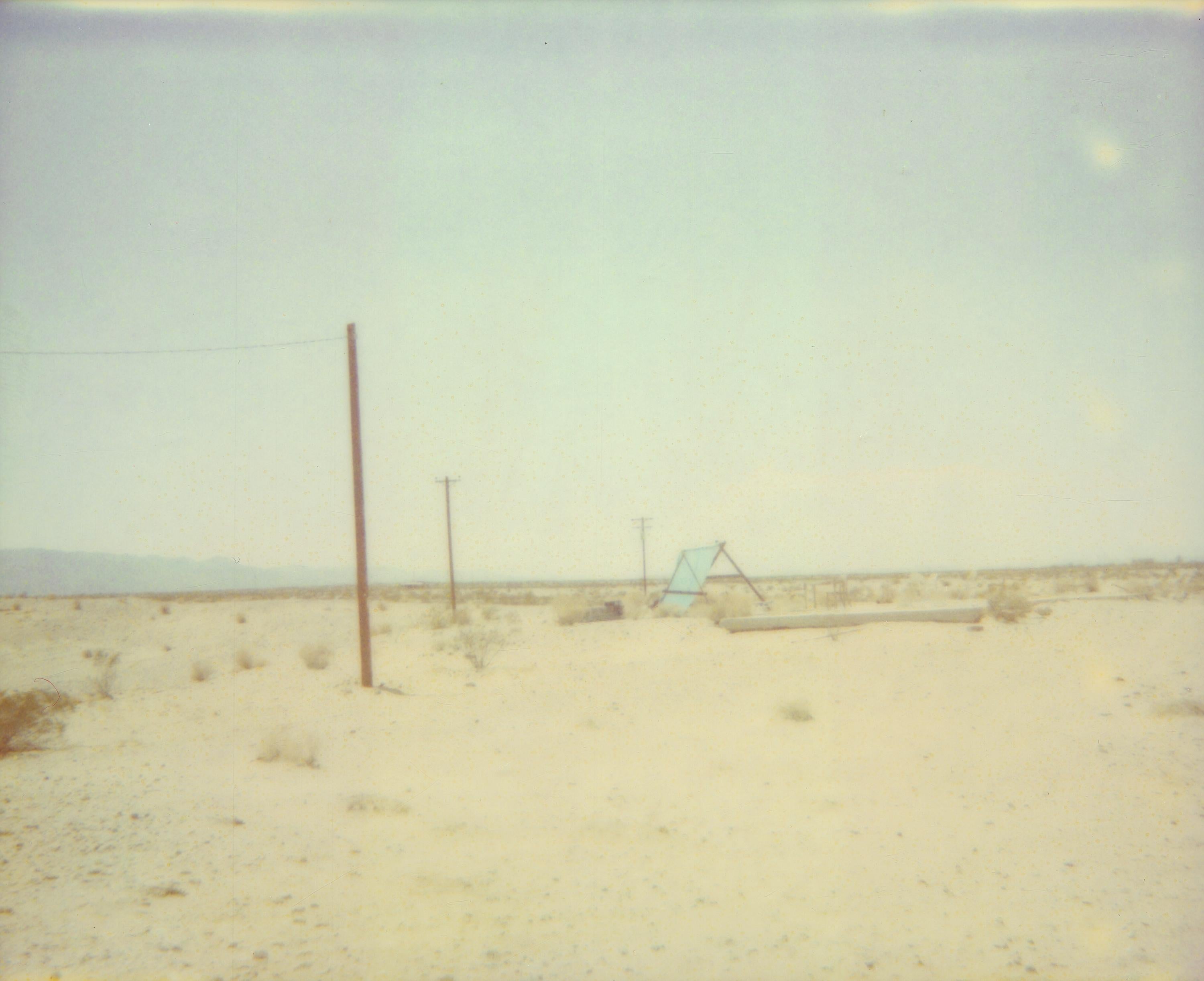
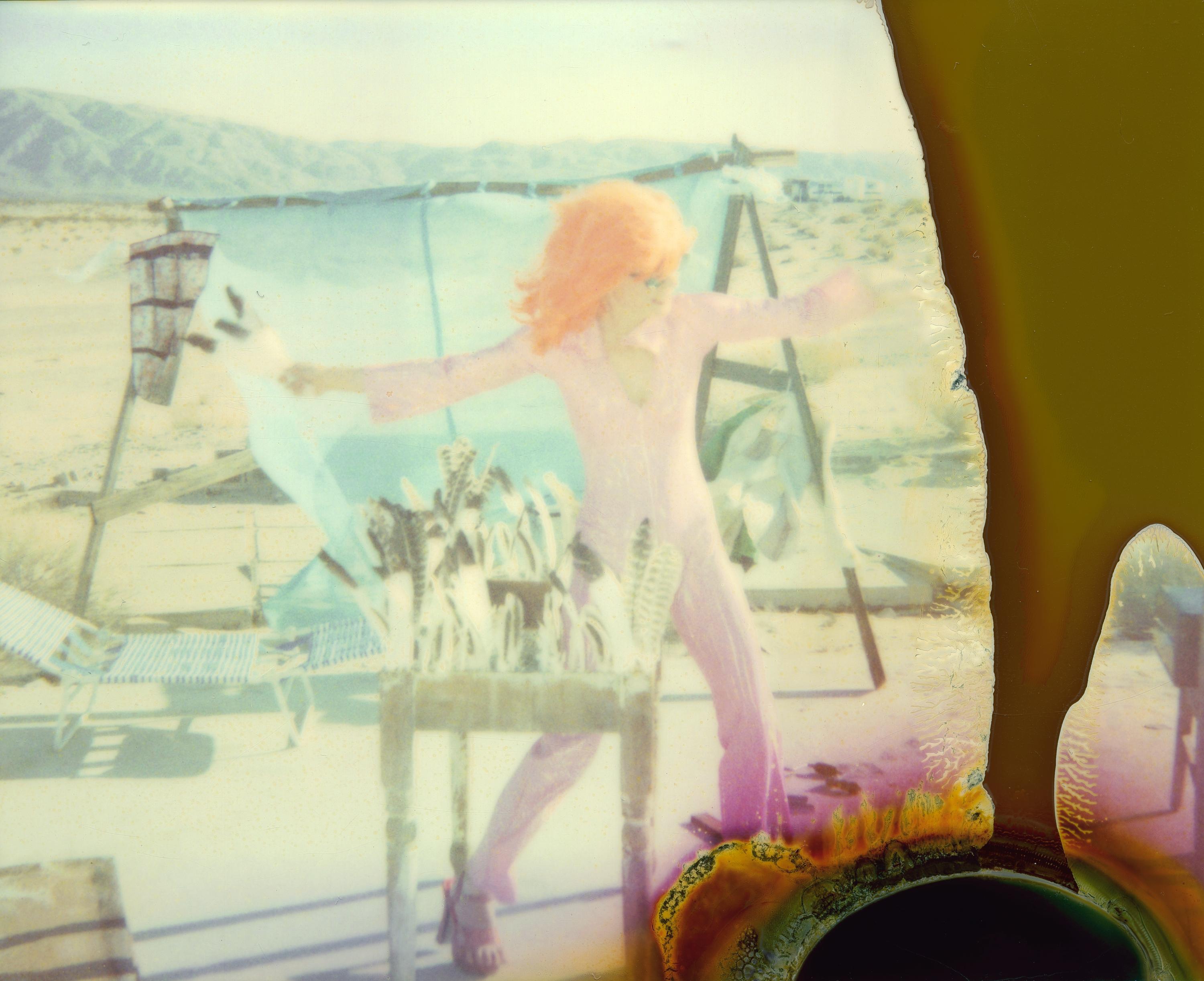
Stefanie Schneider's new photographic works tell fantastic stories about her adopted Californian home. She seeks out faded American myths and distills auratically charged reality in a very personal and surprising way. She uses out-of-date Polaroid film, and the blemishes caused by the degenerated film stock, - are included in the composition in a painterly way. Exposure mistakes and low budget movie effects are combined to alienating effect. Everything shimmers and flickers before our eyes. The artist plays with the authentic poetry of the amateur, mixing strangely dreamy staging with random photochemical events.
- Creator:Stefanie Schneider (1968, German)
- Creation Year:2007
- Dimensions:Height: 7.88 in (20 cm)Width: 9.45 in (24 cm)Depth: 0.04 in (1 mm)
- Medium:
- Movement Style:
- Period:
- Condition:
- Gallery Location:Morongo Valley, CA
- Reference Number:1stDibs: LU652310333022
Stefanie Schneider
Stefanie Schneider received her MFA in Communication Design at the Folkwang Schule Essen, Germany. Her work has been shown at the Museum for Photography, Braunschweig, Museum für Kommunikation, Berlin, the Institut für Neue Medien, Frankfurt, the Nassauischer Kunstverein, Wiesbaden, Kunstverein Bielefeld, Museum für Moderne Kunst Passau, Les Rencontres d'Arles, Foto -Triennale Esslingen., Bombay Beach Biennale 2018, 2019.
About the Seller
4.9
Platinum Seller
Premium sellers with a 4.7+ rating and 24-hour response times
Established in 1996
1stDibs seller since 2017
1,051 sales on 1stDibs
Typical response time: 1 hour
- ShippingRetrieving quote...Shipping from: Morongo Valley, CA
- Return Policy
More From This Seller
View AllUntitled (Stage of Consciousness) - 20x24cm
By Stefanie Schneider
Located in Morongo Valley, CA
Untitled (Stage of Consciousness) - 2007
20x24cm,
Edition of 10, plus 2 Artist Proofs.
Archival C-Print, based on a Polaroid.
Signature label and Certificate.
Artist Inventory N...
Category
Early 2000s Contemporary Portrait Photography
Materials
Archival Paper, Photographic Paper, C Print, Color, Polaroid

Untitled (Stage of Consciousness) - 20x24cm
By Stefanie Schneider
Located in Morongo Valley, CA
Untitled (Stage of Consciousness) - 2007
20x24cm,
Edition of 10, plus 2 Artist Proofs.
Archival C-Print, based on the Polaroid.
Signature label and Certificate.
Artist Inventory...
Category
Early 2000s Contemporary Portrait Photography
Materials
Archival Paper, Photographic Paper, C Print, Color, Polaroid

Untitled (Stage of Consciousness) - Polaroid
By Stefanie Schneider
Located in Morongo Valley, CA
Untitled (Stage of Consciousness) - 2008
20x20cm,
Edition of 10,
Archival C-Print, based on the Polaroid.
Certificate and Signature label.
Artist Inventory #6328
Not mounted.
...
Category
Early 2000s Contemporary Color Photography
Materials
Photographic Film, Archival Paper, C Print, Color, Polaroid
SOC (Stage of Consciousness)
By Stefanie Schneider
Located in Morongo Valley, CA
SOC (Stage of Consciousness) - 2007
20x24cm,
Edition of 10 plus 2 Artist Proofs.
Archival C-Print, based on the Polaroid.
Certificate and signature label.
Artist Inventory # 847...
Category
Early 2000s Contemporary Portrait Photography
Materials
Archival Paper, Photographic Paper, C Print, Color, Polaroid
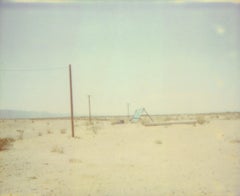
Subliminal (Stage of Consciousness)
By Stefanie Schneider
Located in Morongo Valley, CA
Subliminal (Stage of Consciousness) - 2007,
20x24cm,
sold out Edition of 10, Artist Proof 2/2.
Archival C-Print based on the Polaroid.
Certificate and signature label.
Inventor...
Category
Early 2000s Contemporary Color Photography
Materials
Archival Paper, Photographic Paper, C Print, Color, Polaroid
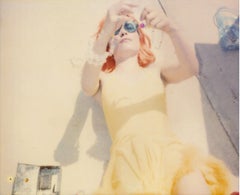
Flying (Stage of Consciousness) - Polaroid, Analog
By Stefanie Schneider
Located in Morongo Valley, CA
Flying (Stage of Consciousness) - 2007
part of the 29 Palms, CA project.
20x24cm,
Edition of 10 plus 2 Artist Proofs.
Archival C-Print, based on the original Polaroid.
Certificate and Signature label.
Artist Inventory #7870.
Not mounted.
LIFE’S A DREAM
(The Personal World of Stefanie Schneider)
Projection is a form of apparition that is characteristic of our human nature, for what we imagine almost invariably transcends the reality of what we live. And, an apparition, as the word suggests, is quite literally ‘an appearing’, for what we appear to imagine is largely shaped by the imagination of its appearance. If this sounds tautological then so be it. But the work of Stefanie Schneider is almost invariably about chance and apparition. And, it is through the means of photography, the most apparitional of image-based media, that her pictorial narratives or photo-novels are generated. Indeed, traditional photography (as distinct from new digital technology) is literally an ‘awaiting’ for an appearance to take place, in line with the imagined image as executed in the camera and later developed in the dark room. The fact that Schneider uses out-of-date Polaroid film stock to take her pictures only intensifies the sense of their apparitional contents when they are realised. The stability comes only at such time when the images are re-shot and developed in the studio, and thereby fixed or arrested temporarily in space and time.
The unpredictable and at times unstable film she adopts for her works also creates a sense of chance within the outcome that can be imagined or potentially envisaged by the artist Schneider. But this chance manifestation is a loosely controlled, or, better called existential sense of chance, which becomes pre-disposed by the immediate circumstances of her life and the project she is undertaking at the time. Hence the choices she makes are largely open-ended choices, driven by a personal nature and disposition allowing for a second appearing of things whose eventual outcome remains undefined. And, it is the alliance of the chance-directed material apparition of Polaroid film, in turn explicitly allied to the experiences of her personal life circumstances, that provokes the potential to create Stefanie Schneider’s open-ended narratives. Therefore they are stories based on a degenerate set of conditions that are both material and human, with an inherent pessimism and a feeling for the sense of sublime ridicule being seemingly exposed. This in turn echoes and doubles the meaning of the verb ‘to expose’. To expose being embedded in the technical photographic process, just as much as it is in the narrative contents of Schneider’s photo-novel exposés. The former being the unstable point of departure, and the latter being the uncertain ends or meanings that are generated through the photographs doubled exposure.
The large number of speculative theories of apparition, literally read as that which appears, and/or creative visions in filmmaking and photography are self-evident, and need not detain us here. But from the earliest inception of photography artists have been concerned with manipulated and/or chance effects, be they directed towards deceiving the viewer, or the alchemical investigations pursued by someone like Sigmar Polke. None of these are the real concern of the artist-photographer Stefanie Schneider, however, but rather she is more interested with what the chance-directed appearances in her photographs portend. For Schneider’s works are concerned with the opaque and porous contents of human relations and events, the material means are largely the mechanism to achieving and exposing the ‘ridiculous sublime’ that has come increasingly to dominate the contemporary affect(s) of our world. The uncertain conditions of today’s struggles as people attempt to relate to each other - and to themselves - are made manifest throughout her work. And, that she does this against the backdrop of the so-called ‘American Dream’, of a purportedly advanced culture that is Modern America, makes them all the more incisive and critical as acts of photographic exposure.
From her earliest works of the late nineties one might be inclined to see her photographs as if they were a concerted attempt at an investigative or analytic serialisation, or, better still, a psychoanalytic dissection of the different and particular genres of American subculture. But this is to miss the point for the series though they have dates and subsequent publications remain in a certain sense unfinished. Schneider’s work has little or nothing to do with reportage as such, but with recording human culture in a state of fragmentation and slippage. And, if a photographer like Diane Arbus dealt specifically with the anomalous and peculiar that made up American suburban life, the work of Schneider touches upon the alienation of the commonplace. That is to say how the banal stereotypes of Western Americana have been emptied out, and claims as to any inherent meaning they formerly possessed has become strangely displaced. Her photographs constantly fathom the familiar, often closely connected to traditional American film genre, and make it completely unfamiliar. Of course Freud would have called this simply the unheimlich or uncanny. But here again Schneider almost never plays the role of the psychologist, or, for that matter, seeks to impart any specific meanings to the photographic contents of her images. The works possess an edited behavioural narrative (she has made choices), but there is never a sense of there being a clearly defined story. Indeed, the uncertainty of my reading here presented, acts as a caveat to the very condition that Schneider’s photographs provoke.
Invariably the settings of her pictorial narratives are the South West of the United States, most often the desert and its periphery in Southern California. The desert is a not easily identifiable space, with the suburban boundaries where habitation meets the desert even more so. There are certain sub-themes common to Schneider’s work, not least that of journeying, on the road, a feeling of wandering and itinerancy, or simply aimlessness. Alongside this subsidiary structural characters continually appear, the gas station, the automobile, the motel, the highway, the revolver, logos and signage, the wasteland, the isolated train track and the trailer. If these form a loosely defined structure into which human characters and events are cast, then Schneider always remains the fulcrum and mechanism of their exposure. Sometimes using actresses, friends, her sister, colleagues or lovers, Schneider stands by to watch the chance events as they unfold. And, this is even the case when she is a participant in front of camera of her photo-novels. It is the ability to wait and throw things open to chance and to unpredictable circumstances, that marks the development of her work over the last eight years. It is the means by which random occurrences take on such a telling sense of pregnancy in her work.
However, in terms of analogy the closest proximity to Schneider’s photographic work is that of film. For many of her titles derive directly from film, in photographic series like OK Corral (1999), Vegas (1999), Westworld (1999), Memorial Day (2001), Primary Colours (2001), Suburbia (2004), The Last Picture Show (2005), and in other examples. Her works also include particular images that are titled Zabriskie Point, a photograph of her sister in an orange wig. Indeed the tentative title for the present publication Stranger Than Paradise is taken from Jim Jarmusch’s film of the same title in 1984. Yet it would be dangerous to take this comparison too far, since her series 29 Palms (1999) presages the later title of a film that appeared only in 2002. What I am trying to say here is that film forms the nexus of American culture, and it is not so much that Schneider’s photographs make specific references to these films (though in some instances they do), but that in referencing them she accesses the same American culture that is being emptied out and scrutinised by her photo-novels. In short her pictorial narratives might be said to strip films of the stereotypical Hollywood tropes that many of them possess. Indeed, the films that have most inspired her are those that similarly deconstruct the same sentimental and increasingly tawdry ‘American Dream’ peddled by Hollywood. These include films like David Lynch’s Blue Velvet (1986), Wild at Heart (1990) The Lost Highway...
Category
Early 2000s Contemporary Color Photography
Materials
Archival Paper, Photographic Paper, C Print, Color, Polaroid
You May Also Like
Untitled #20
By Laura Letinsky
Located in New York, NY
from the series "Ill Form and Void Full"
Category
21st Century and Contemporary Photography
Price Upon Request
Untitled (Nr. 0423) Photography 24" x 18" Edition of 24 by Ben Cope
By Ben Cope
Located in Culver City, CA
Untitled (Nr. 0423) Photography 24" x 18" Edition of 24 by Ben Cope
Signed and numbered by the artist.
Unframed - ships rolled in a tube
Ben Cope + Rowan Daly Off the Grid
Off t...
Category
21st Century and Contemporary Contemporary Portrait Photography
Materials
Archival Pigment
Untitled #12
By Laura Letinsky
Located in New York, NY
from the series "Ill Form and Void Full"
Ed. of 9
Price Upon Request
Price Upon Request
Maybe Yes, Maybe No
Located in Los Angeles, CA
The Art of Seduction, 2023.
Cyanotype Unique Variant Print
Limited Edition of 7
Cyanotype gives a contemporary edge to this flirty dialogue made from vintage magazines, and brings conversation to the counterculture of the "swinging sixties".
+ Cyanotype hand-printed on Arches BFK Rives French watercolor paper
+ Deckled Edges on all four sides
+ Signed and editioned on front in pencil
+ Letter of Authenticity
+ Printed in Los Angeles, CA
WHAT IS A CYANOTYPE?
cyan = blue
type = print
Cyanotype is a historic photographic processes, invented in 1842 and used by Anna Atkins–the first female photographer. The process involves coating watercolor paper with light-sensitive chemistry made of iron salts. Photographic negatives are laid on top, exposed in the sunlight, and then washed in water to develop into the deep Prussian-blue unique to cyanotypes. Brings a moment of beauty and conversation to any space.
ABOUT THE ARTIST:
Alexandra DeFurio...
Category
2010s Contemporary Figurative Photography
Materials
Film, Mixed Media, Watercolor, Magazine Paper, Color, Photogram

Untitled #28
By Laura Letinsky
Located in New York, NY
from the series "Ill Form and Void Full"
Ed. of 9
Price Upon Request