Andy Warhol
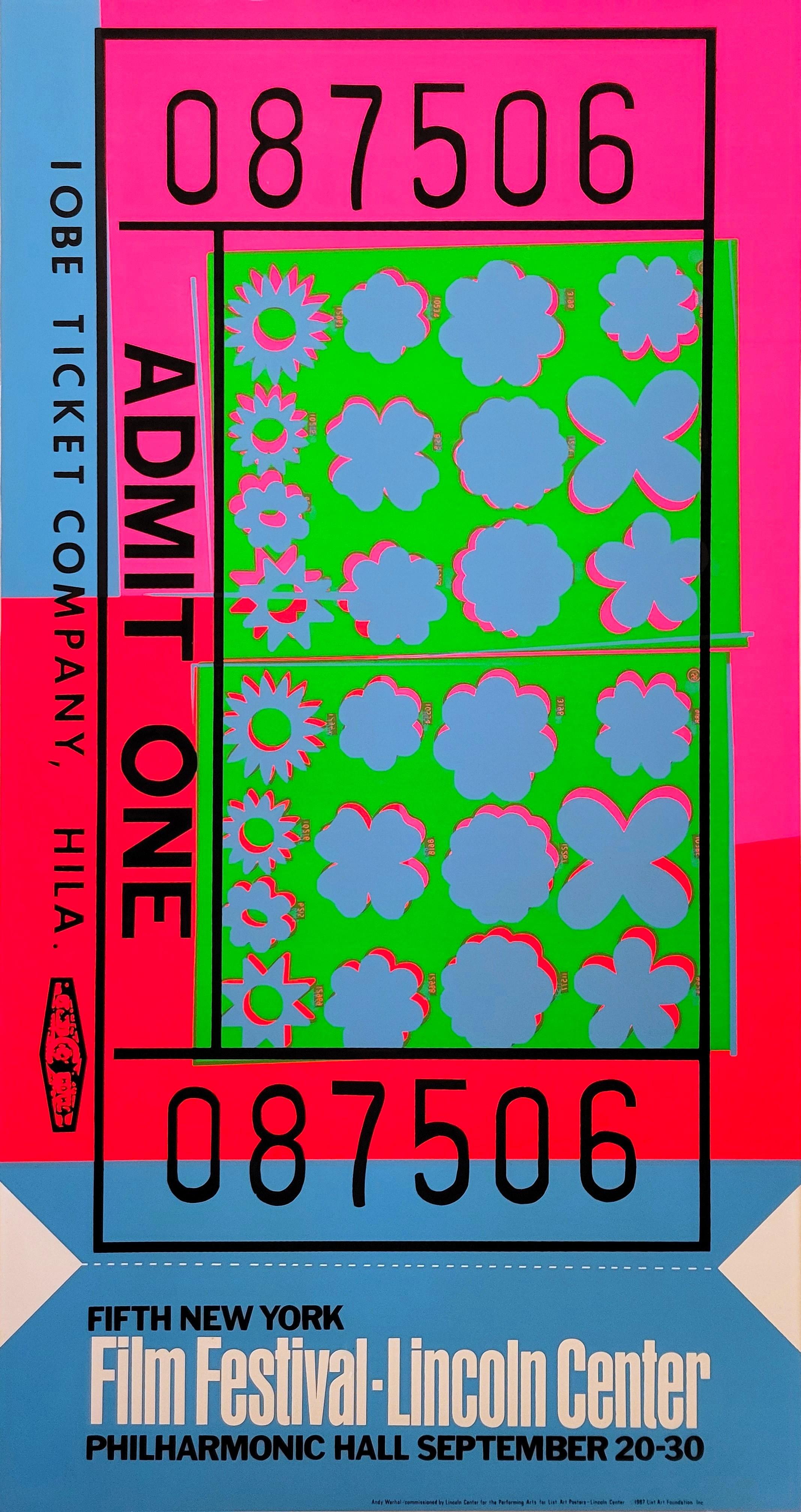
Deluxe Signed Edition of Film Festival Lincoln Center (Feldman
Schellmann, II.19), 1967
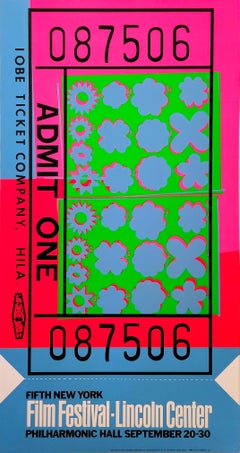
Silkscreen, die-cut on opaque acrylic
Edition 2/200 (Signed and numbered on the back with engraving pen)
Hand-signed by artist, As this work was done on acrylic, Warhol signed and numbered it by hand on verso with an engraving needle. Printed date with copyright
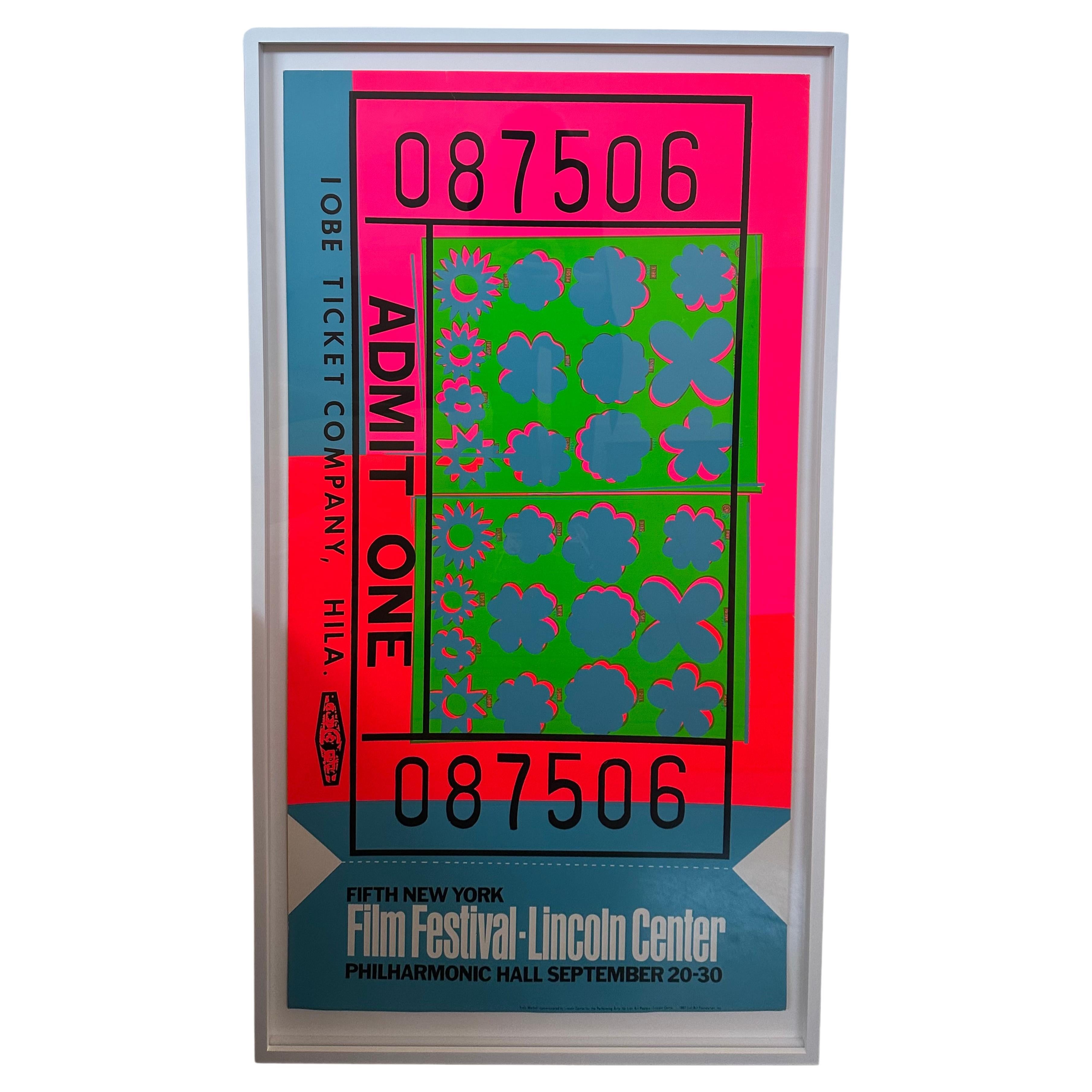
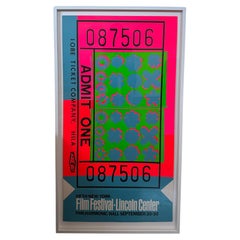
Frame included: Elegantly framed in a museum quality wood frame with UV plexiglass. A die-cut window has been created in the back of the frame to reveal Warhol's incised signature and edition
Publisher: Leo Castelli, New York
Printer: Chiron Press, New York
Catalogue Raisonne: Feldman
Schellmann, II.19
This work is often hung and displayed both vertically and horizontally - see photos for inspiration
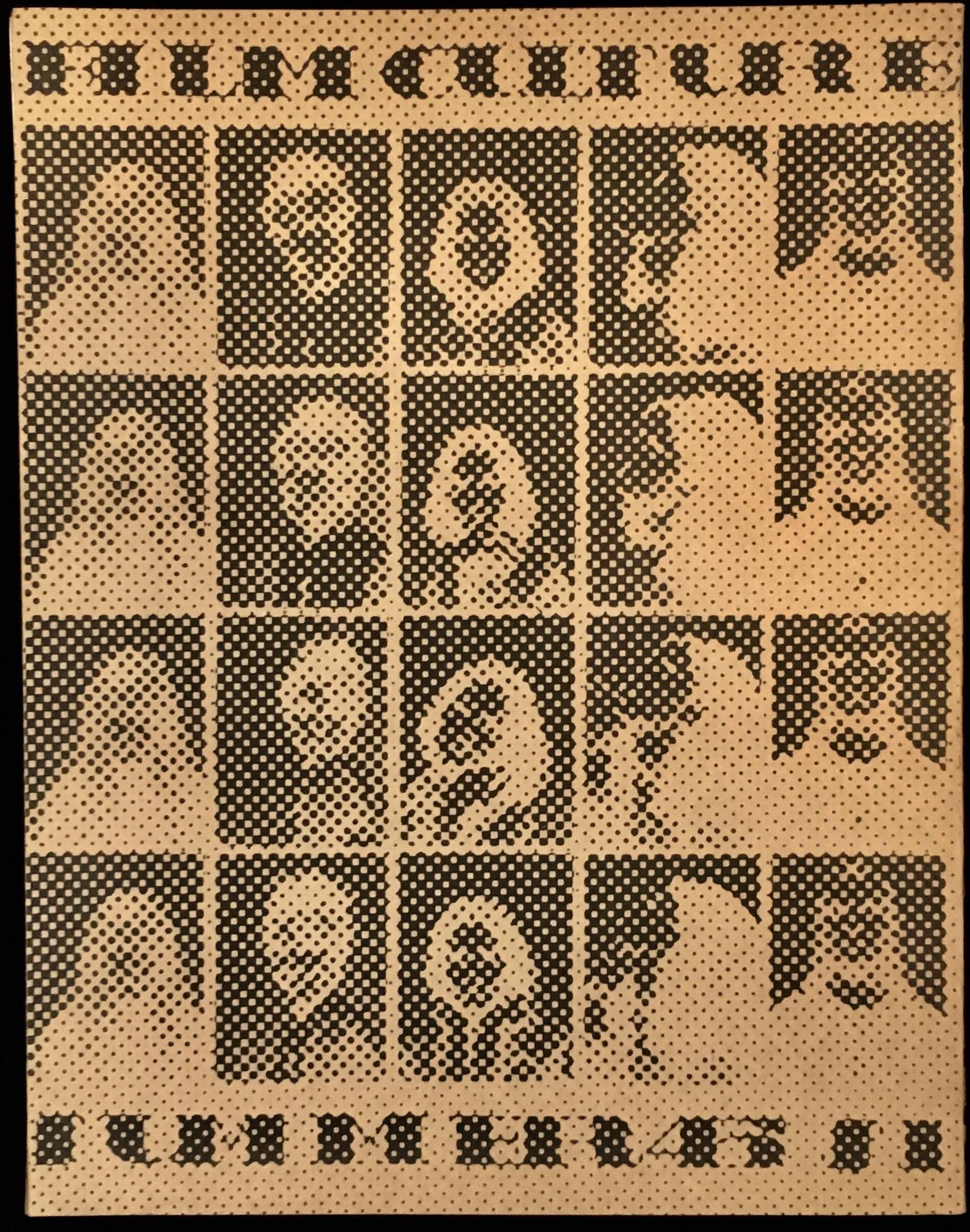
This work is one of only 200 done on opaque acrylic rather than wove paper, signed and numbered on the opaque acrylic by Andy Warhol with an engraving pen. (Separately, there was an unsigned edition of 500 on wove paper). What distinguishes this rare, extremely desirable signed edition of 200, other than that it is signed and numbered by hand by Andy Warhol, is that the black graphic text FIFTH NEW YORK is placed directly over the text Film Festival of Lincoln Center; whereas in the edition of 500, the text black text FIFTH NEW YORK is placed on top of the white text. An innovative feature that appears in this special edition is a perforated line running across the surface of the print, at its triangular cut out sides, mimicking the tear line present in real commercial movie admissions tickets. Chiron Press commissioned by Lincoln Center, devised a special process expressly to imprint the edition with this perforation using a die cut stamp. This work is quintessential early Warhol, with characteristic bright neon colors, featuring text, along with the artist's very recognizable flower motif. The Lincoln Center ticket simultaneously reflects Warhol's central preoccupations with commercial culture (the ticket is, par excellence, an object that is bought and sold), as well as his fascination with Hollywood - as the ticket, quite literally, represents an entree into the world of film. Warhol's appropriation of the flower - an otherwise sentimental and decorative motif, transforming it into a symbol of the Pop Art movement, is a hallmark of his early style and innovations. Andy Warhol's vibrant vintage color silkscreen Lincoln Center Ticket from the fabulous Sixties is considered one of the more iconic and recognizable Warhol images. It is also one of Warhol's earliest prints. The Vera List Art Project, which commissioned this design, was established in 1962 by philanthropists Vera and Albert List as a way to both support the visual arts and raise funds for Lincoln Center. During the '60s, Warhol was making numerous films. He was also a big fan of Hollywood, as evidenced by his preoccupation with movie stars like Liz Taylor and Marilyn Monroe. The giant movie ticket is also Warhol's homage to fellow Pop provocateur, Claes Oldenburg, famous for appropriating everyday objects and re-imagining them on the grand scale - as Warhol was acutely aware of the works of his contemporaries. Warhol's Lincoln Center ticket has been featured in numerous exhibitions and surveys of prints and multiples of the Sixties.
Measurements:
Artwork: 45 1/8 (vertical) × 24 1/8 in (horizontal)
Frame: approx. 49 x 29 x 1 3/4 inches
ANDY WARHOL Biography
Andy Warhol, born Andrew Warhola on August 6, 1928, was the youngest of three sons born to Andrej Warhola and Julia Zavacky Warhola. His parents immigrated to the United States from the European region that is now Slovakia, settling into the working-class neighborhood of Uptown in Pittsburgh, Pennsylvania. Warhol graduated from Carnegie Institute of Technology (now Carnegie Mellon University) in Pittsburgh with a Bachelor of Fine Art in Pictorial Design in 1949 and soon after moved to New York City to pursue a career as a commercial artist.
Throughout the 1950s, he became one of the most successful illustrators of his time and won numerous awards for his work. His clients included Tiffany
Co., The New York Times, I. Miller Shoes, Bonwit Teller, Columbia Records, Fleming-Joffe, NBC, and others. Much of his commercial work was based on photographs and other source images, a process he would use for the rest of his life. While he continued to work as a commercial artist throughout his career, in the early 60s Warhol transitioned into the fine art world, gaining notoriety in the nascent Pop Art movement.
Early Pop paintings were based on comics and ads, with his series of Campbell’s Soup Cans in 1962 creating a buzz in the art world that launched Warhol as a celebrity. Other early subjects drew upon Warhol’s life-long fascination with Hollywood and sensationalism; in 1962 he began a large series of celebrity portraits, including Marilyn Monroe, Elvis Presley, and Elizabeth Taylor. He also produced a series of “death and disaster” paintings at this time – canvases included images of electric chairs, suicides, and car crashes.
Throughout his career Warhol continually explored different mediums to create art. In 1963 he began to make films, and created many classics of avant-garde cinema, including Sleep (1963), Empire (1964), Kiss (1963-64), The Chelsea Girls (1966), and a body of work known as Screen Tests (4-minute portrait films, from 1964-1966). He broadened his activities into the realm of performance art with a traveling multimedia show called The Exploding Plastic Inevitable, which featured the rock and roll band The Velvet Underground.
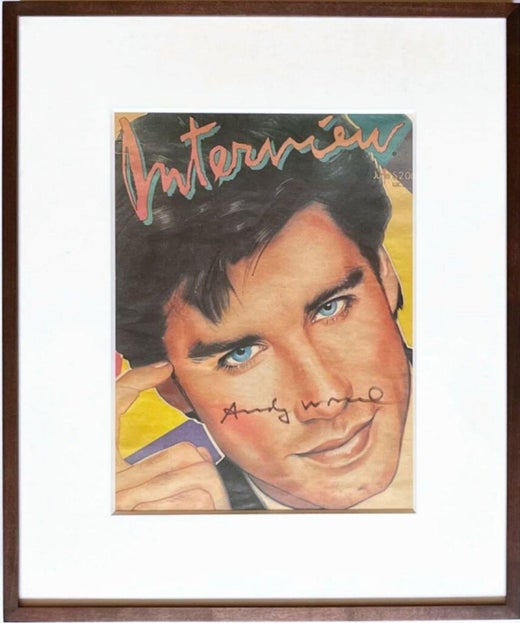
Andy Warhol poses with a step guide.On June 3, 1968, Valerie Solanas, a writer who had appeared in Warhol’s film I, a Man (1967-68), came into the studio and shot Warhol in the chest, angered over a script she wrote and thought Warhol stole. In the year following his recovery he co-founded Interview, a magazine devoted to film, fashion, and popular culture that continues to this day. Interview testified to Warhol’s lifelong obsession with film stars and other contemporary celebrities.
In 1974 Warhol started a series of Time Capsules, cardboard boxes that he filled with the materials of his everyday life, including mail, photos, art, clothing, collectibles, etc. The Time Capsules number over 600 boxes, providing an intimate and detailed look at the artist’s life and process.
Warhol accepted commission work as early as 1963, but portrait commissions became a significant source of output and income as he mixed further with New York’s high society circles. Whether captured in photographs or paintings, Warhol’s work blurred the lines between artist, socialite, and celebrity with his 70s and 80s work, capturing the images of everyone from Liza Minnelli, Halston, Grace Jones, Mick Jagger, and many others.
In the mid-80s, Warhol collaborated on artworks with young artists including Jean-Michel Basquiat and Keith Haring. Warhol and Basquiat together produced over 150 collaborative canvases over a four-year period. In the mid-1980s his television shows, Andy Warhol’s TV and Andy Warhol’s Fifteen Minutes, aired on Madison Square Garden cable television and on MTV.
In addition to his many portrait commissions, from the 1970s onward, Warhol’s solo output continued producing a prolific number of paintings, prints, photographs, and drawings. Series including Mao, Ladies and Gentlemen, Skulls, Oxidation, and many others, culminating in his Last Supper paintings, which were shown in Milan in early 1987.
Warhol died in New York City on February 22, 1987, due to complications following surgery to remove his gall bladder. After Warhol’s death The Andy Warhol Foundation for the Visual Arts, Inc. was founded to promote the “advancement of visual arts.” The Andy Warhol Museum was announced in 1989 and opened in Pittsburgh in 1994.