Items Similar to Boom Boom (Guns) mid century print, New York International portfolio S/N 1960s
Want more images or videos?
Request additional images or videos from the seller
1 of 8
ArmanBoom Boom (Guns) mid century print, New York International portfolio S/N 1960s1965
1965
$1,000
£759.41
€872.42
CA$1,409.76
A$1,498.87
CHF 810.54
MX$17,829.52
NOK 10,153.22
SEK 9,272.91
DKK 6,517.31
About the Item
Arman
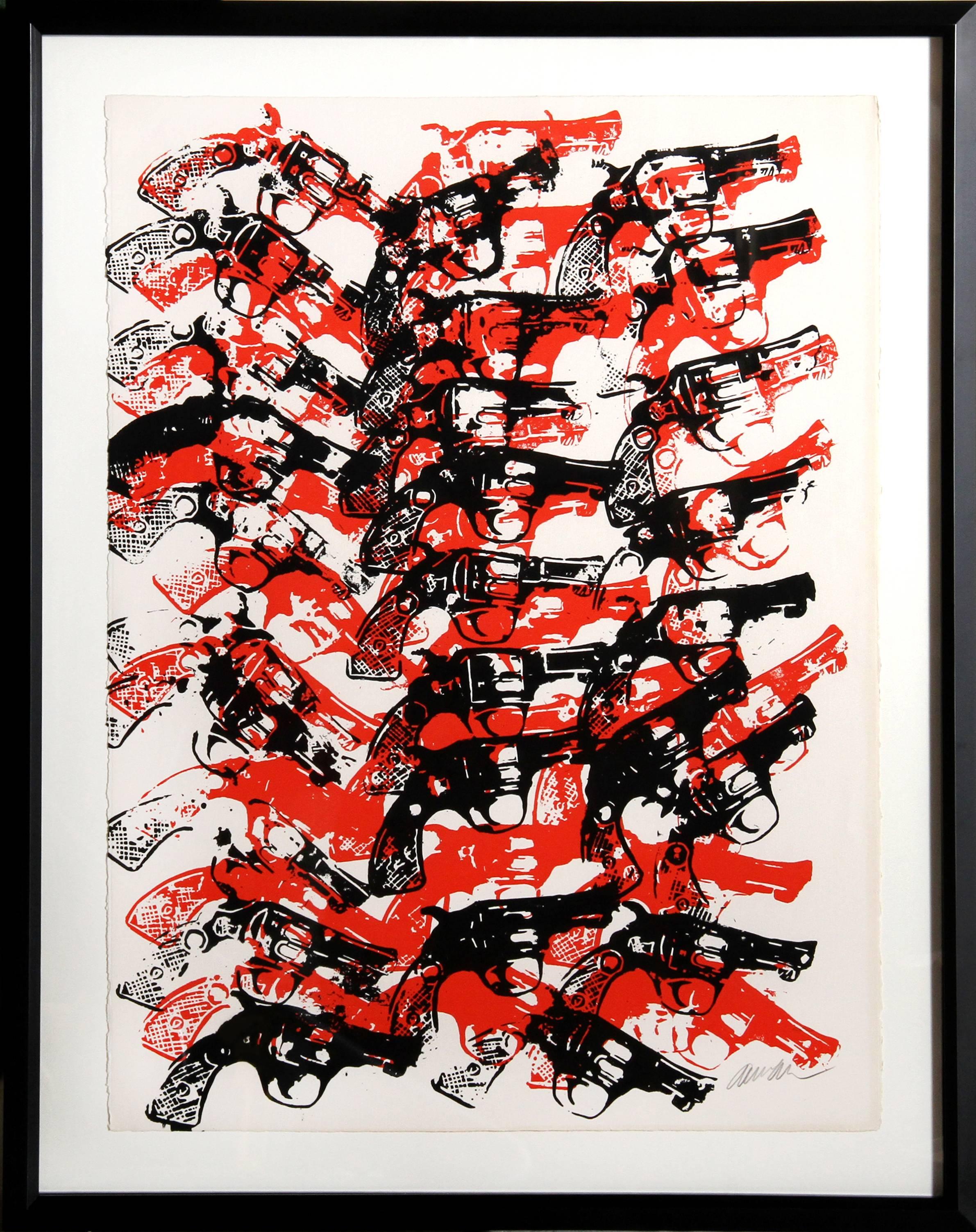
Boom Boom (unique variation from New York International Portfolio), 1965
Screenprint with pencil additions.
Pencil signed and numbered 12/225 on the front
Published by Chiron Press, bearing their blindstamp front
Provenance: Acquired from the original New York International Portfolio
17 × 22 inches
Edition of 225
Unframed
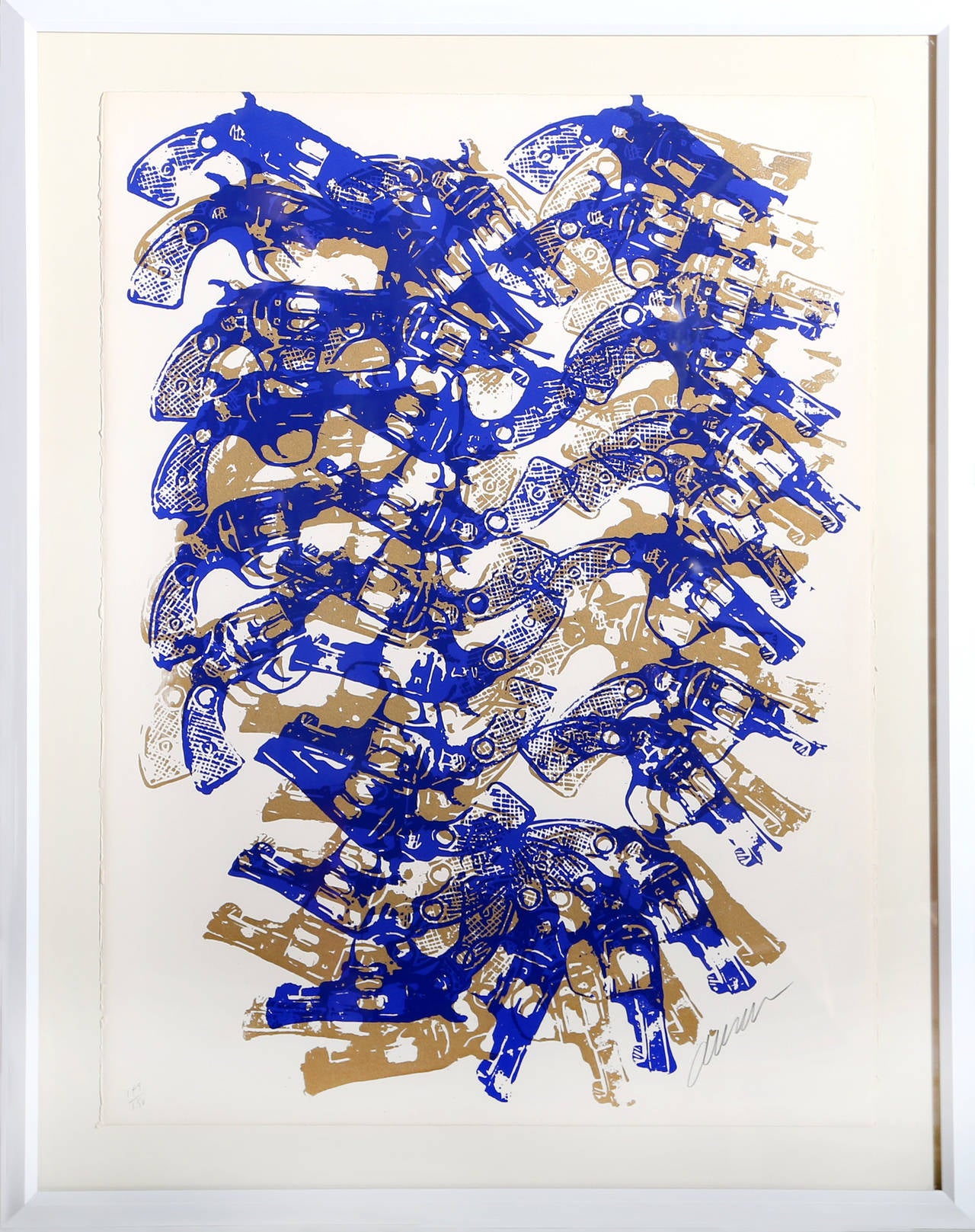
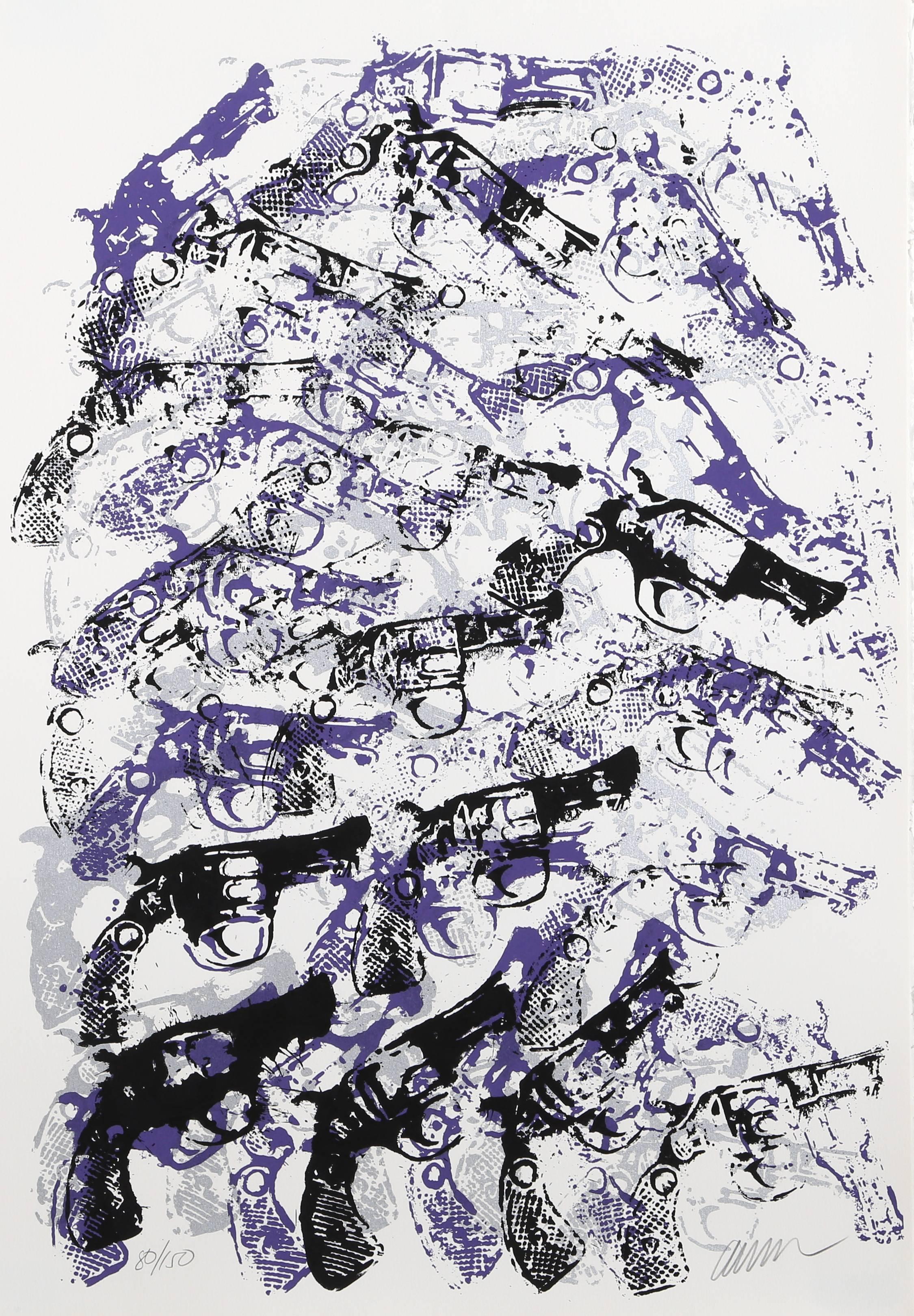
While this silkscreen and stencil print is from an edition of 225, each print is unique because the hand stenciled gun is placed differently on each image: "The artist drew guns on the silkscreen from which the prints were made. Each has an additional hand-stenciled gun for uniqueness and variety.The many revolvers, in accumulation, become so many horse heads. They gambol like the hills of the palm. Claes Oldenburg's ray guns of 1959 are evoked, as are Arman'e own accumulations of spectacles ans high heeled shoes. Silver and gold guns - aluminum and brass - take the light differently from the black and single red.Black silhouette, simple outline, 'arbitrary' smudge and continuous hatching are ways in which the gun is drawn. The effect is lively, not death-dealing." (from the portfolio introduction by Henry Geldzahler). The present work is the hand signed and numbered screenprint with unique pencil variations from the New York International portfolio, (which also featured work by Willi (Mary) Baumeister, Robert Motherwell, Oyvind Fahlstrom, John Goodyear, Charles Hinman, Allen Jones, Ad Reinhardt, James Rosenquist and Saul Steinberg.) Excerpt from the MOMA catalogue featuring this print: "Accumulation and repetition are the hallmarks of the work of Nouveau Realiste artist Arman. In common with the art of other members of this loosely defined Paris-based group, Arman's work signaled the return of interest in the industrialized urban environment after the predominance of abstract painting. His inventive constructions incorporate numerous manufactured goods, such as shoes, car parts, violins and paint tubes. Eschewing the personal artistic mark, Arman began making rubber stampings in 1955, which, by the end of the decade, evolved into his tracings - impressions on canvas made by objects dipped in paint. Revolvers have been a constant motif in Arman's work, beginning with the accumulation Boom!Boom! of 1960 and appearing as recently as 1979 in Tools of Persuasion. Other objects of violence, including sabers and gas masks, also appeared in the early 1960s work. During this period, Arman began his aggressive actions titled Coleres or Tantrums, which included dynamiting a car and smashing a cello on stage. This period of violent motifs, reflects in part, Arman's wartime experiences and coincides with the increased tension in Paris over the Algerian war. (1956-1962).
Arman was inspired by the prints of Jasper Johns that he saw on his first trip to New York in 1961. Among Arman's earliest prints are several lithographs and monotypes composed of repeated renderings or imprints of an object. In 1966, Rosa Esman of Tanglewood Press invited him to participate in her portfolio New York International. After the success of her first publishing venture, New York 10, Esman chose to work with an international roster of artists, many of whom had successful exhibitions in New York that season. More established artists, such as Robert Motherwell and Ad Reinhardt, were also included.
More about Arman
I specialize very much in… everything,” the French-born American artist Arman told an interviewer in 1968. “I have never been — how do you say it? A dilettante.” Regarded as one of the most prolific and inventive creators of the late 20th century, Arman’s vast artistic output ranges from drawings and prints to monumental public sculpture to his famous “accumulations” of found objects. His work—strongly influenced by Dada, and in turn a strong influence on Pop Art—is in the collections of such institutions as the Metropolitan Museum of Art in New York, the Tate Gallery in London and the Centre Pompidou in Paris.
Born in Nice in 1928, Armand Pierre Fernandez showed a precocious talent for painting and drawing as a child. (Inspired by Vincent van Gogh, he signed his early work with his first name only; he retained a printer’s 1958 misspelling of his name for the rest of his career.) The son of an antiques dealer and amateur cellist, the artist absorbed an intense appreciation for music, the art of collecting and the cultivation of discriminating taste from an early age. After studies at the Ecole Nationale des Arts Décoratifs in Nice, Arman decamped to Paris to study art history at the Ecole du Louvre. His work in these early years focused on abstract paintings inspired by the work of Nicolas de Staël. An avid reader, Arman sought inspiration through books and art reviews, as well as during frequent road trips throughout Europe with his artist friends from Nice, Claude Pascale and Yves Klein.
Arman
Arman was born in Nice, France, in 1928, and showed a talent for painting and drawing as a child. He studied at the the Ecole Nationale des Art Décoratifs in Nice followed by studies at the École du Louvre in Paris. In his early years he focused on abstract paintings. Then, in 1957, he became interested in common objects as works of art. He first did what came to be called his "allures d"objet" (object impressions), where he would dip an object into paint and press it on canvas thus leaving the object's shadow or impression. Then he decided the object itself was worth paying attention to and started to treat them in his own way. His intention was to remove the material purpose of an object so that its only remaining function was to "feed the mind" as a work of art. What better way to achieve that result than by breaking, slicing or even burning objects such as violins, telephones, typewriters or even whole cars? He also made objects useless by accumulating them, such as 2,000 wristwatches in a Plexiglass box that all kept different time. Once emotionally detached from the circumstances associated with a broken object, the viewer could grow to appreciate its abstract beauty; so, in a sense, Arman was literally teaching that things one never thought could be regarded as attractive could indeed turn out to be so. Through this achievement, Arman gained worldwide recognition and is regarded as one of the most prolific and inventive creators of the late 20th century. His work can be found in the collections of numerous museums including the Metropolitan Museum of Art in New York, the Tate Gallery in London and the Centre Pompidou in Paris. Arman’s work has also been exhibited in galleries, museums and public spaces worldwide including the Musée D’Art Contemporain in Tehran, Iran; the Museum of Art in Tel Aviv, Israel; the Musée Des Arts Decoratifs and Opéra De Paris in France; the La Jolla Museum of Contemporary Art in California; and the Museum of Arts and Design and the Guggenheim in New York He died in 2005 in New York.
About the Seller
5.0
Platinum Seller
Premium sellers with a 4.7+ rating and 24-hour response times
Established in 2007
1stDibs seller since 2022
482 sales on 1stDibs
Typical response time: 1 hour
- ShippingRetrieving quote...Shipping from: New York, NY
- Return Policy
More From This Seller
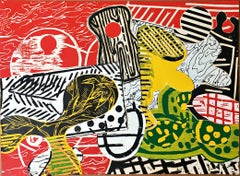
View AllSquash scarce Abstract Expressionist woodcut print, Signed/N, top female artist
By Judy Pfaff
Located in New York, NY
Judy Pfaff
Squash, 1985
Woodcut on wove paper
Signed, numbered 78/85, dated and titled on the front with artist's and publisher's blind stamps.
21 3/4 × 29 3/4 inches
Publisher
Cente...
Category
1980s Abstract Expressionist Abstract Prints
Materials
Woodcut
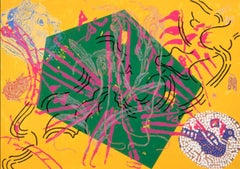
Nancy Graves - 5745, Jewish Museum, Signed/n Abstract Expressionist screenprint
By Nancy Graves
Located in New York, NY
Nancy Graves
5745, for the Jewish Museum, 1984
Silkscreen on paper
Signed, numbered 5/90 and dated in graphite pencil on the front; bears publishers' blind stamp front left corner
3...
Category
1980s Abstract Expressionist Abstract Prints
Materials
Screen
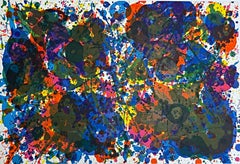
Untitled Abstract Expressionist lithograph, from Carnegie Museum (155 Lembark)
By Sam Francis
Located in New York, NY
Sam Francis
Untitled (from Fresh Air School), 1972
Lithograph on wove paper, for the Carnegie Museum of Art
15 × 22 inches
Limited Edition of 6,000 (unsigned edition; there is a sepa...
Category
1970s Abstract Expressionist Abstract Prints
Materials
Lithograph
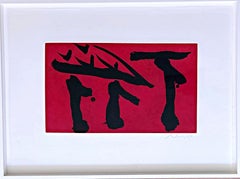
Pull Out All Flags, iconic Abstract Expressionist etching aquatint, SIgned 33/50
By Robert Motherwell
Located in New York, NY
Robert Motherwell
Pull Out All Flags (Engberg, Banach 263), 1980
Aquatint and etching in colors, on German Etching paper, with full margins
Hand-signed by artist, Pencil signed and n...
Category
1980s Abstract Expressionist Abstract Prints
Materials
Etching, Aquatint
Untitled, expressionistic woodcut print, from the Art Against AIDS Portfolio
By James Bettison
Located in New York, NY
James Bettison
Untitled, from the Art Against AIDS Portfolio, 1988
Woodcut on paper with deckled edges. Hand signed. Numbered 38/50. Dated. Printer's and Publisher's Blind Stamp.
20...
Category
1980s Contemporary Abstract Prints
Materials
Woodcut, Pencil
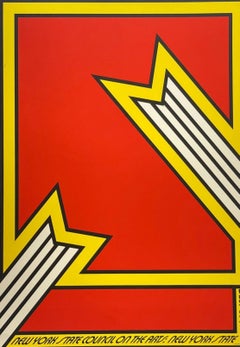
Vintage 1970 New York State Council on the Arts Award poster Nicholas Krushenick
By Nicholas Krushenick
Located in New York, NY
Nicholas Krushenick
New York State Council on the Arts Award poster, 1970
Silkscreen on wove paper - original 1970 poster, not a reprint
Unsigned, unnumbered, unframed
35 × 25 inches...
Category
1970s Pop Art Abstract Prints
Materials
Screen, Offset
You May Also Like
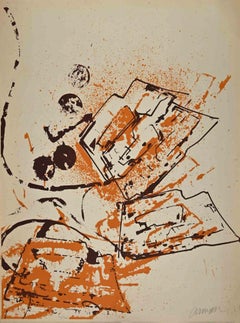
Abstract Composition - Lithograph by Arman - 1980s
By Arman
Located in Roma, IT
Abstract Composition is a contemporary artwork realized by the French Artist Arman (Armand Pierre Fernandez) in 1980s.
Mixed colored lithograph on paper. Hand signed on the lower ri...
Category
1980s Abstract Abstract Prints
Materials
Lithograph
Bloody Guns, Pop Art Screenprint by Arman
By Arman
Located in Long Island City, NY
Artist: Arman, French (1929 - 2005)
Title: Bloody Guns
Year: 1979
Medium: Serigraph, signed and numbered in pencil
Edition: 150, AP 30
Size: 30 in. x 22 in. (76.2 cm x 55.88 cm)
Category
1970s Dada Figurative Prints
Materials
Screen

Western Accumulation, Abstract Pop Art Screenprint by Arman
By Arman
Located in Long Island City, NY
Artist: Arman, French (1929 - 2005)
Title: Western Accumulation
Year: 1979
Medium: Silkscreen on Arches Paper, signed and numbered in pencil
Edition: 150, AP 30
Size: 30 in. x ...
Category
1970s Contemporary Abstract Prints
Materials
Screen
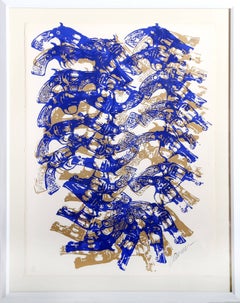
Cavalcade, Signed Abstract Screenprint by Arman
By Arman
Located in Long Island City, NY
Artist: Arman
Title: Cavalcade
Year: 1979
Medium: Silkscreen on Arches, signed and numbered in pencil
Edition: 150, AP 30
Paper Size: 25 x 39 inches
Category
1970s Pop Art Still-life Prints
Materials
Screen
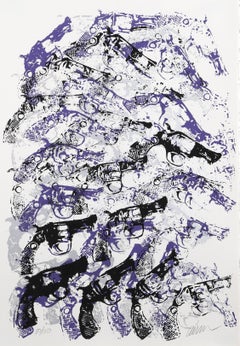
Royal Guns, Abstract Pop Art Screenprint by Arman
By Arman
Located in Long Island City, NY
Artist: Arman, French (1929 - 2005)
Title: Royal Guns
Year: 1979
Medium: Screenprint on Arches, signed and numbered in pencil
Edition: 150, AP 30
Size: 30 x 22 in. (76.2 x 55.88 cm)
Category
1970s Conceptual Figurative Prints
Materials
Screen
$960 Sale Price
20% Off
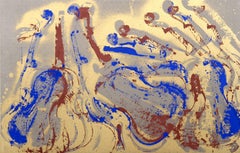
Music with a Flair, Pop Art Silkscreen by Arman
By Arman
Located in Long Island City, NY
Artist: Arman
Title: Music with a Flair
Year: 1979
Medium: Silkscreen on Arches, Signed and Numbered in Pencil
Edition: 150, AP 23/30
Size: 30 in. x 22 in. (76.2 cm x 55.88 cm)
Category
1970s Abstract Still-life Prints
Materials
Screen