Want more images or videos?
Request additional images or videos from the seller
1 of 8

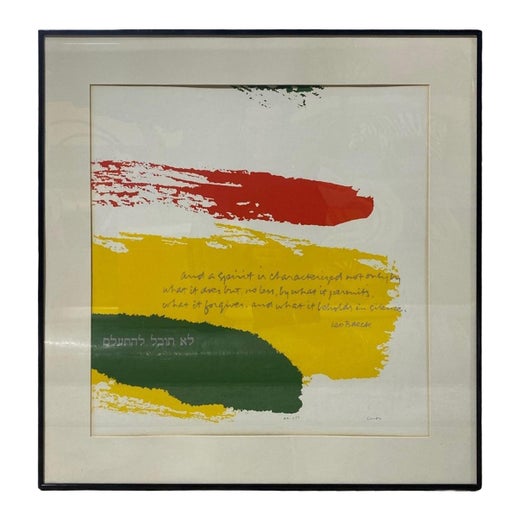
Corita Kent
Rainbow Covenant (Genesis 9) pencil signed limited edition of 200 Pop Art print

1971

Price:$4,400
$5,500List Price

You May Also Like

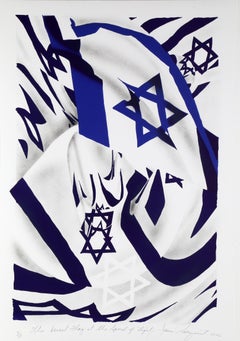
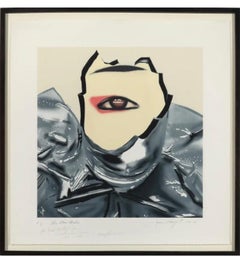
Israel Flag at the Speed of Light, Pop Art Print by James Rosenquist
By James Rosenquist
Located in Long Island City, NY
Artist: James Rosenquist Title: Israel Flag at the Speed of Light Year: 2006 Medium: Lithograph, Signed and numbered in Pencil Edition: 50 Size: 33.5 x 22 ...
Category

Early 2000s Pop Art Abstract Prints

Materials

Lithograph

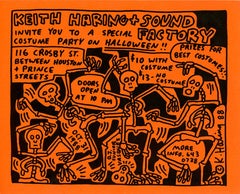
Keith Haring Halloween 1989 (announcement)
By Keith Haring
Located in NEW YORK, NY
Keith Haring New York City 1989: RARE original 1989 Keith Haring designed Sound Factory Halloween invite featuring a dazzling array of Keith Haring Skeletons: “Keith Haring & Sound Factory Invite You to A Special Halloween Costume...
Category

1980s Pop Art Abstract Prints

Materials

Lithograph, Offset

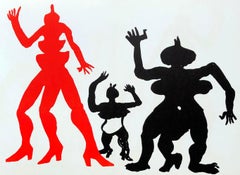
1970s Alexander Calder lithograph (Calder prints)
By Alexander Calder
Located in NEW YORK, NY
1970s Alexander Calder Lithograph from Derriere le Miroir: Medium: Lithograph in colors. 1975. Dimensions: 15 x 22 inches. Center fold-line as issued; v...
Category

1970s Pop Art Figurative Prints

Materials

Lithograph

Basquiat at Vrej Baghoomian gallery 1989 (Basquiat Red Warrior announcement)
By Jean-Michel Basquiat
Located in NEW YORK, NY
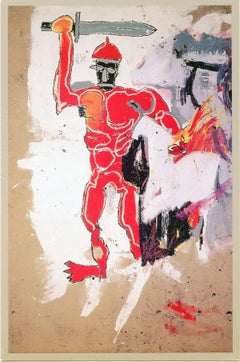
Basquiat: Vrej Baghoomian gallery New York, 1989: Vintage original folding announcement card to Jean-Michel Basquiat at Vrej Baghoomian Gallery New York: 10/21 to 11/25, 1989. Pictured on front side is an image of Basquiat's iconic, 'Red Warrior.' A rare, highly collectible Basquiat ephemera piece that works well in any collection. Off-set printed gallery announcement. 8.75 x 5.75 inches (folded closed). Light signs of handling; otherwise very good overall vintage condition. Published by Vrej Baghoomian Gallery, New York, 1989. Unsigned from an edition of unknown. Scarce. Jean-Michel Basquiat rose to success during the 1980s. Basquiat’s paintings are largely responsible for elevating graffiti artists into the realm of the New York gallery scene. His spray-painted crowns and scribbled words referenced everything from his Haitian and Puerto Rican heritage, to political issues, pop-culture icons, and Biblical verse. The gestural marks and expressive nature of his work not only aligned him with the street art of Keith Haring and Kenny Scharf, but also the Neo-Expressionists Julian Schnabel and David Salle. “If you wanna talk about influence, man, then you've got to realize that influence is not influence,” he said of his process. After quickly rising to fame in the early 1980s, Basquiat was befriended by many celebrities and artists, including Andy Warhol, with whom he made several collaborative works. At only 27, his troubles with fame and drug addiction led to his tragic death from a heroin overdose on August 12, 1988 in New York, NY. The Whitney Museum of American Art held the artist’s first retrospective from October 1992 to February 1993. Related Categories: Basquiat Tony Shafrazi. Basquiat ephemera. Basquiat poster. Basquiat prints...
Category

1980s Pop Art Figurative Prints

Materials

Lithograph, Offset

1971 Modernist Lithograph Redhead Pop Art Mod Fashionable Woman Richard Lindner
By Richard Lindner
Located in Surfside, FL
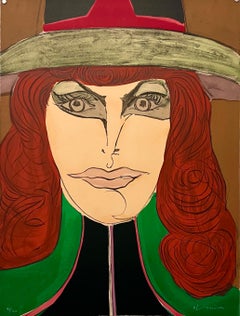
RICHARD LINDNER (American. 1901-1978) Hand Signed limited edition lithograph with blindstamp Publisher: Shorewood-Bank Street Atelier for the Skowhegan School of Painting and Sculpture 29.25 X 22 inches Richard Lindner was born in Hamburg, Germany. In 1905 the family moved to Nuremberg, where Lindner's mother was owner of a custom-fitting corset business and Richard Lindner grew up and studied at the Kunstgewerbeschule (Arts and Crafts School since 1940 Academy of Fine Arts). From 1924 to 1927 he lived in Munich and studied there from 1925 at the Kunstakademie. In 1927 he moved to Berlin and stayed there until 1928, when he returned to Munich to become art director of a publishing firm. He remained there until 1933, when he was forced to flee to Paris, where he became politically engaged, sought contact with French artists and earned his living as a commercial artist. He was interned when the war broke out in 1939 and later served in the French Army. In 1941 he went to the United States and worked in New York City as an illustrator of books and magazines (Vogue, Fortune and Harper's Bazaar). He began painting seriously in 1952, holding his first one-man exhibit in 1954. His style blends a mechanistic cubism with personal images and haunting symbolism. LIndner maintained contact with the emigre community including New York artists and German emigrants (Albert Einstein, Marlene Dietrich, Saul Steinberg). Though he became a United States citizen in 1948, Lindner considered himself a New Yorker, but not a true American. However, over the course of time, his continental circus women became New York City streetwalkers. New York police uniforms replaced European military uniforms as symbols of authority.At a time when Abstract Expressionism was all the rage, Lindner’s painting went against the current and always kept its distance. His pictorial language of vibrant colours and broad planes of colour and his urban themes make him a forerunner of American Pop Art. At the same time, he owes the critical tone of his paintings to the influence of European art movements such as Neue Sachlichkeit and Dada. His first exhibition did not take place until 1954, by which time he was over fifty, and, interestingly, it was held at the Betty Parsons Gallery in New York, a venue associated with the American Expressionists. From 1952 he taught at the Pratt Institute, Brooklyn, from 1967 at Yale University School of Art and Architecture, New Haven. In 1957 Lindner got the William and Norma Copley Foundation-Award. In 1965 he became Guest Professor at the Akademie für Bildende Künste, Hamburg. His Ice (1966, Whitney Museum of American Art) established a connection between the metaphysical tradition and pop art. He did work on Rowlux which was used by a number of pop artists (most notably Roy Lichtenstein)The painting shows harsh, flat geometric shapes framing an erotic but mechanical robot-woman. His paintings used the sexual symbolism of advertising and investigated definitions of gender roles in the media. While influencing Pop Art (Andy Warhol, Tom Wesselmann and Claes Oldenburg amongst others) his highly colourful, hard-edge style seems to have brought him close to Pop Art, which he rejected. Nevertheless, he is immortalised on the cover of the Beatles record "Sgt. Pepper’s Lonely Hearts Club Band" (1967) as a patron of the pop culture. He also did a tapestry banner with the Betsy Ross Flag...
Category

1970s Pop Art Abstract Prints

Materials

Lithograph

Joe Tilson British Pop Art Screenprint, Color Lithograph 4 Seasons 4 Elements
By Joe Tilson
Located in Surfside, FL
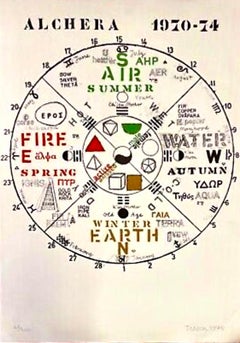
Silkscreen screenprint or Lithograph Hand signed and numbered. An esoteric, mystical, Kabbala inspired print with Hebrew as well as other languages. Joseph Charles Tilson RA (born 2...
Category

1970s Pop Art Abstract Prints

Materials

Screen, Lithograph

Judy Rifka Abstract Expressionist Contemporary Lithograph Hebrew 10 Commandment
By Judy Rifka
Located in Surfside, FL
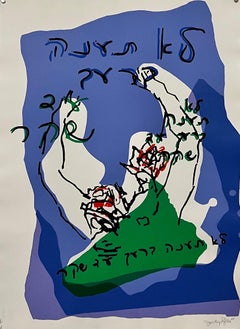
Judy Rifka (American, b. 1945) 44/84 Lithograph on paper titled "Thou Shalt Not Bear False Witness against Thy Neighbor"; Depicting an abstract composition in blue, green, red and black tones with Hebrew script. Judaica interest. (I have seen this print described as a screenprint and as a lithograph) Hand signed in pencil and dated alongside an embossed pictorial blindstamp of a closed hand with one raised index finger. Solo Press. From The Ten Commandments Kenny Scharf; Joseph Nechvatal; Gretchen Bender; April Gornik; Robert Kushner; Nancy Spero; Vito Acconci; Jane Dickson; Judy Rifka; Richard Bosman and Lisa Liebmann. Judy Rifka (born 1945) is an American woman artist active since the 1970s as a painter and video artist. She works heavily in New York City's Tribeca and Lower East Side and has associated with movements coming out of the area in the 1970s and 1980s such as Colab and the East Village, Manhattan art scene. A video artist, book artist and abstract painter, Rifka is a multi-faceted artist who has worked in a variety of media in addition to her painting and printmaking. She was born in 1945 in New York City and studied art at Hunter College, the New York Studio School and the Skowhegan School of Painting and Sculpture in Maine. Rifka took part in the 1980 Times Square Show, (Organized by Collaborative Projects, Inc. in 1980 at what was once a massage parlor, with now-famous participants such as Jenny Holzer, Nan Goldin, Keith Haring, Kenny Scharf, Jean-Michel Basquiat, and Kiki Smith, the roster of the exhibition reads like a who’s who of the art world), two Whitney Museum Biennials (1975, 1983), Documenta 7, Just Another Asshole (1981), curated by Carlo McCormick and received the cover of Art in America in 1984 for her series, "Architecture," which employed the three-dimensional stretchers that she adopted in exhibitions dating to 1982; in a 1985 review in the New York Times, Vivien Raynor noted Rifka's shift to large paintings of the female nude, which also employed the three-dimensional stretchers. In a 1985 episode of Miami Vice, Bianca Jagger played a character attacked in front of Rifka's three-dimensional nude still-life, "Bacchanaal", which was on display at the Museum of Art Fort Lauderdale. Rene Ricard wrote about Rifka in his influential December 1987 Art Forum article about the iconic identity of artists from Van Gogh to Jean-Michel Basquiat and Keith Haring, The Radiant Child.The untitled acrylic painting on plywood, in the collection of the Honolulu Museum of Art, demonstrates the artist's use of plywood as a substrate for painting. Artist and writer Mark Bloch called her work "imaginative surfaces that support experimental laboratories for interferences in sensuous pigment." According to artist and curator Greg de la Haba, Judy Rifka's irregular polygons on plywood "are among the most important paintings of the decade". In 2013, Rifka's daily posts on Facebook garnered a large social media audience for her imaginative "selfies," erudite friendly comments, and widely attended solo and group exhibitions, Judy Rifka's pop art figuration is noted for its nervous line and frenetic pace. In the January 1998 issue of Art in America, Vincent Carducci echoed Masheck, “Rifka reworks the neo-classical and the pop, setting all sources in quotation for today’s art-world cognoscenti.” Rifka, along with artists like David Wojnarowicz, helped to take Pop sensibility into a milieu that incorporated politics and high art into Postmodernism; Robert Pincus-Witten stated in his 1988 essay, Corinthian Crackerjacks & Passing Go that "Rifka’s commitment to process and discovery, doctrine with Abstract Expressionist practice, is of paramount concern though there is nothing dogmatic or pious about Rifka’s use of method. Playful rapidity and delight in discovery is everywhere evident in her painting." In 2016, a large retrospective of Rifka's art was shown at the Jean-Paul Najar Foundation in Dubai. In 2017, Gregory de la Haba presented a Rifka retrospective at the Amstel Gallery in The Yard, a section of Manhattan described as "a labyrinth of small cubicles, conference rooms and small office spaces that are rented out to young entrepreneurs, professionals and hipsters". In 2019 her video Bubble Dancers New Space Ritual was selected for the International Istanbul Bienali. Alexandra Goldman Talks To Judy Rifka About Ionic Ironic: Mythos from the '80s at CORE:Club and the Inexistence of "Feminist Art" Whitehot Magazine of Contemporary Art. She was included in "50 Contemporary Women Artists", a book comprising a refined selection of current and impactful artists. The foreword is by Elizabeth Sackler of the Brooklyn Museum’s Sackler Center for Feminist Art. Additional names in the book include sculptor and carver Barbara Segal...
Category

1980s Pop Art Abstract Prints

Materials

Lithograph, Screen

Large American Pop Art Color Abstract Lithograph James Rosenquist Glass Wishes
By James Rosenquist
Located in Surfside, FL
James Rosenquist (1933-2017) THE GLASS WISHES (Glenn 161) Color lithograph, 1978-1986, on wove paper, hand signed, dated, titled, dedicated for Jack Martin...
Category

1980s Pop Art Abstract Prints

Materials

Color, Lithograph

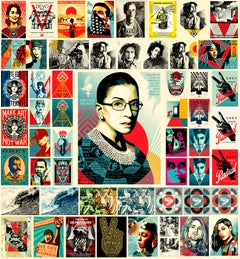
Shepard Fairey Screen-prints: collection of 60 works (2009-2022)
By Shepard Fairey
Located in NEW YORK, NY
Shepard Fairey Screen-prints: collection of 60 works: 2009-2022: A rare assemblage of 60 hand-signed Shepard Fairey screen-prints; collected over a near 15 year period (2009-2022). Notable imagery includes: Bob Marley, Keith Haring, Ruth Bader Ginsburg, Kurt Cobain, as well as a series of vivid anti-war pieces defining the artist's practice (title list found further below). Each very well-preserved. Medium: Screen-prints on heavy paper. 2009-2022 (see below for a list of titles & years). Dimensions ranging from: 19.5 x 16 inches to 24x36 inches. Each work is hand-signed; works are either numbered from their respective main editions or notated 'AP' (see last listing image); a few or several works are signed, but not numbered. Excellent overall condition with the exception of perhaps some minor signs of handling on a few examples. Provenance: Private collection New York via Shepard Fairey. Listing images beginning with image 2 represent the actual works. These works will be shipped flat using protective materials. Please feel free to contact us with any additional questions. Titles & Years: OCEAN TODAY...
Category

2010s Pop Art Abstract Prints

Materials

Lithograph, Screen

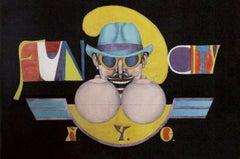
Fun City, N.Y.C.
By Richard Lindner
Located in New York, NY
A very good impression of this color lithograph. Signed and numbered 125/175 in pencil, lower margin.
Category

1970s Pop Art Abstract Prints

Materials

Color, Lithograph

More From This Seller

View All
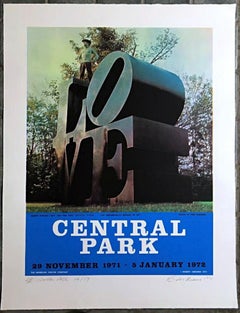
LOVE in Central Park, New York Pencil Signed and numbered 66/89, Historic print
By Robert Indiana
Located in New York, NY
Robert Indiana LOVE in Central Park, New York, 1971 Color lithograph on wove paper. Pencil signed, dated and numbered with LOVE drawing/flourish Hand-signed by artist, Pencil signed, dated and numbered 66/ 89. Also bears a drawing of the stacked letters LOVE in pencil. Bears Robert Indiana's copyright Published by Robert Indiana and printed by the American Poster Company to raise money for Central Park 39 × 30 inches Unframed This impressively large 1971 lithograph - pencil signed and numbered from the limited edition of only 89, with a stacked LOVE drawing on the front - depicts Robert Indiana's iconic LOVE sculpture (from the permanent collection of the Indianapolis Museum of Art) when it was exhibited at Central Park in New York City. This was the turn of the decade of the 1970s - during the height of the anti-Vietnam War protests of the Nixon Administration, when the presence of Indiana's monumental cor-ten steel LOVE in Central Park took on a much deeper significance in New York and indeed the country. This important print is pencil signed, dated and numbered by Robert Indiana from the very small edition of only 89. It also bears a drawing - a flourish - of the word LOVE written by the artist in pencil. Very few of the signed editions of this print remain -- so it is rarely seen on the market. Indeed, eighty nine (89) is a very small edition; however, this oversized print was used for promotional purposes in public places, so very few of the 89 signed and numbered works remain - let alone with the original stacked love drawing. . If you LOVE Robert Indiana...
Category

1970s Pop Art Abstract Prints

Materials

Lithograph, Pencil, Offset

Hockney s Alphabet, portfolio of 26 lithographs signed by Hockney and 23 writers
By David Hockney
Located in New York, NY
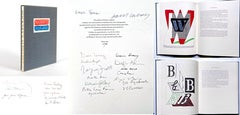
David Hockney Hockney's Alphabet, 1991 26 color lithographs in Fine Art Cartridge paper bound in quarter vellum with handmade Fabriano Roma paper sides, housed in matching box; signed by David Hockney and most contributors in ink and numbered 178 in black ink on the justification page Numbered 178/250 Hand signed by 24 of the contributors, including David Hockney and Steven Spender 12 5/8 x 9 5/8 inches Bound in book and held in slipcase This portfolio features 26 color lithographs in Fine Art Cartridge paper with full margins, bound as issued, in quarter vellum with handmade Fabriano Roma paper sides, in original grey slipcase. It is signed by David Hockney (the artist) and most contributors in ink and numbered 178 in black ink on the justification page, from the edition of 250, with full text and title page, published by Faber & Faber, London, text edits by Stephen Spender, who also signed. It is illustrated by David Hockney, hand signed by David Hockney and Stephen Spender and also signed by the following contributors: Douglas Adams, Martin Amis, Julian Barnes, William Boyd, Margaret Drabble, Patrick Leigh Fermor, William Golding, Seamus Heaney...
Category

1990s Pop Art Abstract Prints

Materials

Ink, Mixed Media, Vellum, Lithograph, Board, Pencil, Offset
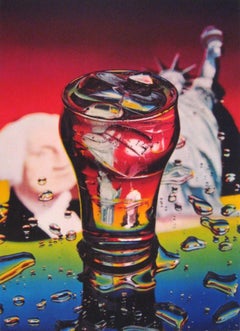
Yankee Flame Pop Art photorealist Lt Ed Signed/N. Statue of Liberty US President
By Ben Schonzeit
Located in New York, NY
Ben Schonzeit Yankee Flame, from the portfolio: America: the Third Century, 1975 Collotype on wove paper Pencil signed and numbered 50/200 on the front Publisher: APC Editions, Chermayeff Geismar Associates, Inc Printer: Triton Press 27 × 19 3/10 inches Unframed Note: this is the original hand signed and numbered collotype; not to be confused with the separate (unsigned) poster edition. This hand-signed, numbered and dated collotype in colors by photorealist pioneer artist Ben Schonzeit was created in 1975 for the portfolio America: the Third Century, commissioned by Mobil Oil Corporation in which 13 American artists, including Roy Lichtenstein, Ed Ruscha, Robert Rauschenberg, James Rosenquist and others created works celebrating America's bicentennial. Yankee Flame combines the iconic images of George Washington, Coca-Cola and the Statue of Liberty into a collaged interpretation of contemporary American life and the meaning of freedom. "Yankee Flame" is in excellent condition and never framed. It was acquired as part of the America: The Third Century full portfolio. Ben Schonzeit (b. 1942, Brooklyn, New York) is one of the original Photorealist painters and is considered to have pioneered the airbrush technique. His works often depict still life arrangements that are intentionally out of focus. He received his B.F.A. from The Cooper Union in 1964 and has since had over 50 solo exhibitions both in the United States and abroad. His paintings are held in numerous museum collections including the Solomon R. Guggenheim Museum in New York, Virginia Museum of Fine Arts in Richmond, Virginia, and the Metropolitan Museum of Art in New York. In 1973 Nancy Hoffman introduced me to Ben Schonzeit in the backroom of her gallery on West Broadway. She had been open less than a year, and Ben was one of the artists in her original stable. His large Crab Blue It had arrived from his studio a few days earlier and was leaning against the wall. I thought at the time it was one of the most impressive, virtuosic Photorealist works I had seen. That first encounter was more than a quarter of a century ago and I have always considered it to be one of the quintessential, tour de force paintings of American Photorealism. In the early seventies one could stand on West Broadway on any pleasant, sunny weekday and see less than a dozen people on the street between the Nancy Hoffman Gallery and OK Harris Works of Art. Almost all of the SoHo galleries, such as Leo Castelli, Paula Cooper, Ward-Nasse, and Ivan Karp’s Hundred Acres, could be visited in an afternoon. At night the streets were almost deserted. With the exception of Andy Warhol, there were no art world superstars. More importantly, none of the artists expected to achieve celebrity status. That was a phenomenon of the eighties and nineties. There were a only a handful of restaurants and watering holes, such Elephant and Castle, Fanelli’s, the Spring Street Bar and Prince Street Bar. Fanelli’s closed on weekends, which was a holdover from their sweatshop clientele during lunch and ragtag group of artists in the evenings. In those early days of SoHo, the drafty, raw sweatshop spaces with their large windows, rough floors, and service elevators provided large, inexpensive living quarters and studios for many artists. Unlike today, there were no boutiques. The area was not chic and with the exception of Lowell Nesbett’s showplace, the lofts were not glamorous. Schonzeit was in the same living and working space the he now occupies when I first visited him, but SoHo was a very different time and place. When the National Endowment of the Arts recommended me to curate America 1976, which turned into one of the major visual arts projects for the Bicentennial, Ben Schonzeit was on the first list of participants I made up for the U.S. Department of the Interior. His large diptych, Continental Divide, was one of the most memorable works produced for the exhibit. I stopped by his studio four or five times while it was in progress and have visited him many times over the years. We have maintained a very cordial working relationship and friendship over the past three decades. I saw The Music Room exhibit in 1978 and realized at the time that the vigorously rendered mural sized canvases and mirror and related works represented a major catharsis in his painting. In many ways, it and the other paintings and drawings based on the same image represented a sharp, decisive break with the tenets of Photorealism, or at least the photo-replicative aspects that had been so widely heralded in America and abroad in the mid-seventies. Over the years we have continued to work together. He has been in almost all of the major exhibitions I have curated here and abroad and in almost all of the books I have written. I am familiar with his studio habits, his quiet, internalized restlessness that manifests itself in the hundreds of small, unknown drawings and watercolors, doodles on napkins during lunch, and imaginary landscapes. I also know that he would rather do a painting than think or talk about it. Over the years I have followed the shifts in his studio procedure from the monumental airbrushed fruit and vegetable paintings to the most recent bouquets of flowers and decorative paintings. Our discussions of these matters tends to lapse into a verbal shorthand at this point. The following essay is based on both my longstanding familiarity and admiration for his work and involvement with contemporary realism and figurative painting. A booklet of color xeroxes with notes made up by Schonzeit was extremely helpful. In addition to several interviews, much of the information unfolded through a lengthy series of Emails. Due to our different working habits these were composed and sent out very late at night and answered by Ben the following morning. They dealt with the specifics of many of the paintings, generalities, his background and childhood in Brooklyn, and occasional bits of art world gossip. And there were odd discoveries. Prior to discussing his witty, tongue in cheek painting of Buffalo Bill, I did not know or had long forgotten that William Cody...
Category

1970s Pop Art Abstract Prints

Materials

Other Medium, Lithograph, Pencil

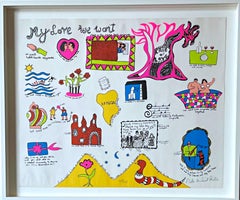
Niki de Saint Phalle, My Love We Wont, Rare whimsical 1960s silkscreen Signed/N
By Niki de Saint Phalle
Located in New York, NY
Niki de Saint Phalle My Love We Wont, 1968 Lithograph and silkscreen on wove paper Signed and numbered 51/75 in graphite pencil on the front Frame included: elegantly floated and framed in a museum quality white wood frame with UV plexiglass From the Brooklyn Museum, which has an edition of this work in its permanent collection: "Throughout her long and prolific career Niki de Saint Phalle, a former cover model for Life magazine and French Vogue, investigated feminine archetypes and women’s societal roles. Her Nanas, bold, sexy sculptures...
Category

1960s Pop Art Abstract Prints

Materials

Screen, Pencil, Lithograph, Mixed Media
Sister Corita (vintage hand signed poster) Images Gallery rarely found signed
By Corita Kent
Located in New York, NY
Sister Mary Corita Kent Sister Corita hand signed poster, 1985 Offset Lithograph Signed in pencil by the artist on the lower right 24 x 18 inches Unframed This offset lithograph post...
Category

1980s Pop Art Abstract Prints

Materials

Pencil, Lithograph, Offset

Fun Vacation (200 Engberg) Lithograph signed 13/16 by Ed Ruscha AND Kenny Scharf
Located in New York, NY
Ed Ruscha and Kenny Scharf Fun Vacation (200, Engberg), 1990 Lithograph in five colors on white Rives BFK paper (hand signed by BOTH Ed Ruscha and Kenny Scharf) 36 × 27 inches Hand-s...
Category

1990s Pop Art Abstract Prints

Materials

Pencil, Graphite, Lithograph

Recently Viewed

View All