Want more images or videos?
Request additional images or videos from the seller
1 of 9
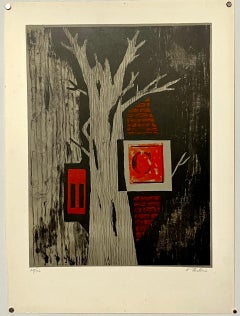
Enrico BajSurrealist Assemblage Collage Multiple Enrico Baj
Price:$1,632.94
$2,000List Price
About the Item
- Creator:Enrico Baj (1924-2003, Italian)
- Dimensions:Height: 42 in (106.68 cm)Width: 30.25 in (76.84 cm)
- Medium:
- Movement Style:
- Period:
- Condition:minor wear and tear on frame.
- Gallery Location:Surfside, FL
- Reference Number:1stDibs: LU38210806592
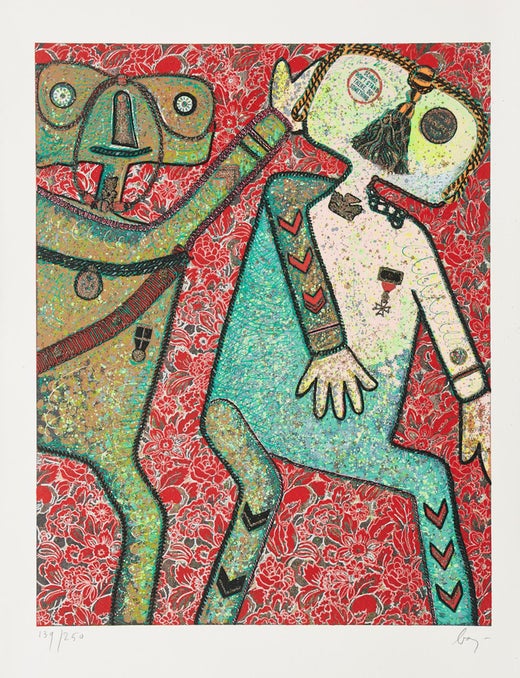
Enrico Baj
Enrico Baj, born in Milan on October 31, 1924 and died in Vergiate on June 16, 2003, was an Italian painter, libertarian anarcho-pataphysician. In 1950, with the painter Sergio Dangelo, he founded the Nuclear Movement (or Movimento Arte Nucleare), considered the Italian equivalent of the CoBrA movement. In 1953, he approached the painter Asger Jorn with the aim of founding the International Movement for an imaginist Bauhaus and organized the International Ceramic Meetings of Albisola, in which the painters Matta and Roland Giguère took part. From 1955, he composed his paintings with the most heterogeneous elements such as pieces of glass, skeins of wool, mattress canvas, watch dials. That same year, with the writer Édouard Jaguer, he created the Italian magazine Il gesto. After meeting Mesens in London, Marcel Duchamp and Arturo Schwarz in New York, he met André Breton in Paris in 1962. From 1965, he began a series of collages representing ladies: Dame Ninette de Valois, 1974 and Generals in ceremonial costumes overloaded with decorations: Lieutenant John Talbot, First Earl of Shrewsbury.
About the Seller
4.9
Platinum Seller
Premium sellers with a 4.7+ rating and 24-hour response times
Established in 1995
1stDibs seller since 2014
1,843 sales on 1stDibs
Typical response time: 1 hour
Authenticity Guarantee
In the unlikely event there’s an issue with an item’s authenticity, contact us within 1 year for a full refund. DetailsMoney-Back Guarantee
If your item is not as described, is damaged in transit, or does not arrive, contact us within 7 days for a full refund. Details24-Hour Cancellation
You have a 24-hour grace period in which to reconsider your purchase, with no questions asked.Vetted Professional Sellers
Our world-class sellers must adhere to strict standards for service and quality, maintaining the integrity of our listings.Price-Match Guarantee
If you find that a seller listed the same item for a lower price elsewhere, we’ll match it.Trusted Global Delivery
Our best-in-class carrier network provides specialized shipping options worldwide, including custom delivery.You May Also Like
Monograph: Francis Bacon (hand signed and warmly inscribed by Francis Bacon)
By Francis Bacon
Located in New York, NY
Francis Bacon
Francis Bacon (hand signed and warmly inscribed by Francis Bacon), 1975
Softcover catalogue with stiff wraps (hand signed and warmly inscribed by Francis Bacon)
hand si...
Category
1970s Surrealist More Art
Materials
Paper, Ink, Mixed Media, Lithograph, Offset, Felt Pen
$5,500
H 8.5 in W 10.75 in D 0.5 in
Sans Titre Original Mixed Media (2)
By Roberto Matta
Located in Hollywood, FL
Artist: Roberto Matta
Title: Sans Titre Original Mixed Media with Collage
Medium: Mixed Media on paper
Signed: Hand Signed
Measurements: 12" x 17"
Framed: 22.5" x 27"
Certificate...
Category
Late 20th Century Surrealist Abstract Prints
Materials
Mixed Media
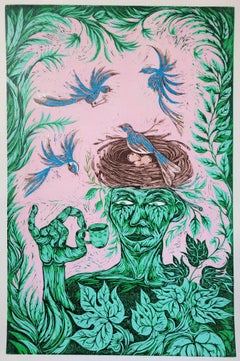
Surrealist Woodblock Print Royal College of Art LGBTQ+ Female Blue Green Birds
By Isabel Rock
Located in Norfolk, GB
Isabel Rock is a creator of contemporary fairy tales. A graduate of the Royal College of Art in London, her work is an explosion of strange occurrences while a surreal narrative take...
Category
2010s Surrealist Figurative Prints
Materials
Woodcut, Mixed Media
$1,306
H 35.44 in Dm 23.63 in
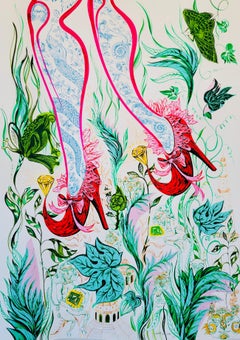
Surrealist Woodblock Print Royal College of Art LGBTQ+ Female Magic Red Shoes
By Isabel Rock
Located in Norfolk, GB
Isabel Rock is a creator of contemporary fairy tales. A graduate of the Royal College of Art in London, her work is an explosion of strange occurrences while a surreal narrative take...
Category
2010s Surrealist Figurative Prints
Materials
Archival Ink, Mixed Media, Archival Paper, Woodcut
$1,428
H 39.38 in Dm 27.56 in
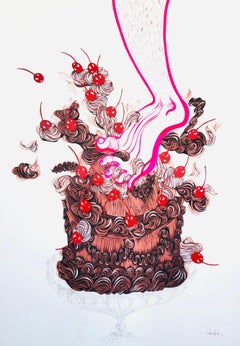
Surrealist Print Royal College of Art LGBTQ+ Female Celebration Cake Foot
By Isabel Rock
Located in Norfolk, GB
Isabel Rock is a creator of contemporary fairy tales. A graduate of the Royal College of Art in London, her work is an explosion of strange occurrences while a surreal narrative take...
Category
2010s Surrealist Figurative Prints
Materials
Mixed Media, Woodcut, Archival Ink, Archival Paper
$1,632
H 39.38 in Dm 27.56 in
Rrose Sélavy in Wilson-Lincoln System Lenticular print (Schwarz 344) Signed 8/60
By Marcel Duchamp
Located in New York, NY
Marcel Duchamp and by Takiguchi
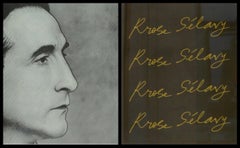
Rrose Sélavy (Marcel Duchamp) in Wilson-Lincoln System (Schwarz, 344), 1967
Lenticular print on thin white board. Hand signed by Marcel Duchamp. Date, title and number on label verso.
12 7/10 × 10 1/10 inches
Edition 8/60
Hand-signed by artist, Hand signed by Marcel Duchamp in blue ink recto. Sticker label verso bears printed title, edition number, year and description.
Printed by Shuzo Takiguchi, published in Tokyo.
Catalogue Raisonne Reference: "The Complete Works of Marcel Duchamp" by Arturo Schwarz, Plate 344
Provenance: This was part of the Deluxe Artist portfolio, "To and From Rrose Sélavy"; this will be the first time the work has been separated from the portfolio
Please refer to the attached video to see this 3-D piece in person
Eager to share Marcel Duchamp with Japanese audiences, Shuzo Takiguchi - a Japanese-born poet, critic, and artist with ties to Surrealist circles, assembled an international portfolio of graphic works by various artists with strong ties to Duchamp, to accompany the deluxe version of his monograph, "To and From Rrose Sélavy (aka Marcel Duchamp)." The present work - Takiguchi's own piece, a lenticular double portrait - combines Rrose Sélavy's signature with Man Ray's 1930 profile of Duchamp. Its subject, Marcel Duchamp, then signed this work in pencil. Its title, "Rrose Sélavy in the Wilson-Lincoln System", refers to Duchamp's Green Box note describing a two-way, changeable portrait of presidents Abraham Lincoln and Woodrow Wilson. Rrose Selavy is, famously, Marcel Duchamp's pseudonym and alter ego. Duchamp died before Takiguchi's book was completed, so this print is one of the very last graphic works that has been hand signed by Marcel Duchamp. It was published in Japan, and is a very elusive work stateside. Another edition of this work is in the permanent collection of the Museum of Modern Art. The National Portrait Gallery and other major institutional collections. This work is fully referenced in the catalogue raisonne "The Complete Works of Marcel Duchamp" by Arturo Schwarz, Plate 344, describing the work as follows: "Rrose Selavy in the Wilson Lincoln System (a double image plastic plate with, on the background, Man Ray's portrait of Duchamp, and superimposed,, Rrose Selavy's autograph signature repeated four times, signed lower right in blue ink: Marcel Duchamp, an original embossed print...."
More about Marcel Duchamp:
Henri-Robert-Marcel Duchamp was born July 28, 1887, near Blainville, France. In 1904, he joined his artist brothers, Jacques Villon and Raymond Duchamp-Villon, in Paris, where he studied painting at the Académie Julian until 1905. Duchamp’s early works were Post-Impressionist in style. He exhibited for the first time in 1909 at the Salon des Indépendants and the Salon d’Automne in Paris. His paintings of 1911 were directly related to Cubism but emphasized successive images of a single body in motion. In 1912, he painted the definitive version of Nude Descending a Staircase; this was shown at the Salon de la Section d’Or of that same year and subsequently created great controversy at the Armory Show in New York in 1913.
Duchamp’s radical and iconoclastic ideas predated the founding of the Dada movement in Zurich in 1916. By 1913, he had abandoned traditional painting and drawing for various experimental forms, including mechanical drawings, studies, and notations that would be incorporated in a major work, The Bride Stripped Bare by Her Bachelors, Even (1915–23; also known as The Large Glass). In 1914, Duchamp introduced his readymades—common objects, sometimes altered, presented as works of art—which had a revolutionary impact upon many painters and sculptors. In 1915, Duchamp traveled to New York, where his circle included Katherine Dreier and Man Ray, with whom he founded the Société Anonyme in 1920, as well as Louise and Walter Arensberg, Francis Picabia, and other avant-garde figures.
After playing chess avidly for nine months in Buenos Aires, Duchamp returned to France in the summer of 1919 and associated with the Dada group in Paris. In New York in 1920, he made his first motor-driven constructions and invented Rrose Sélavy, his feminine alter ego. Duchamp moved back to Paris in 1923 and seemed to have abandoned art...
Category
1960s Surrealist Figurative Prints
Materials
Plastic, Mixed Media, Board, Pencil, Lenticular
Marcel DuchampRrose Sélavy in Wilson-Lincoln System Lenticular print (Schwarz 344) Signed 8/60, 1967
$28,000
H 12.7 in W 10.1 in
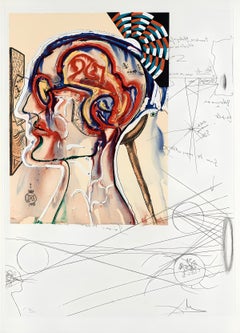
Lunettes à hologrammes et ordinateurs pour voir les objets imaginés (F 75-13)
By Salvador Dalí
Located in Fairfield, CT
Artist: Salvador Dali (1904-1989)
Title: Baignoire à tornade liquide (Michler/Löpsinger 822-831; Field 75-13), Imaginations et Objets du Futur (Hologram glasses and computers to see ...
Category
1970s Surrealist Landscape Prints
Materials
Mixed Media, Drypoint, Lithograph, Screen
$8,400 Sale Price
20% Off
H 28.5 in W 21 in
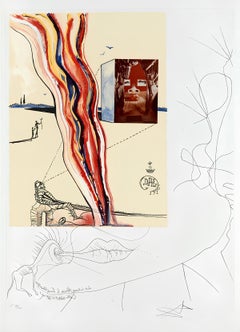
Télévision liquide et gazeuse (Michler/Löpsinger 822-831; Field 75-13)
By Salvador Dalí
Located in Fairfield, CT
Artist: Salvador Dali (1904-1989)
Title: Télévision liquide et gazeuse (Michler/Löpsinger 822-831; Field 75-13), Imaginations et Objets du Futur (Liquid and carbonated television, Im...
Category
1970s Surrealist Landscape Prints
Materials
Mixed Media, Drypoint, Lithograph, Screen
$4,400 Sale Price
20% Off
H 28.5 in W 21 in
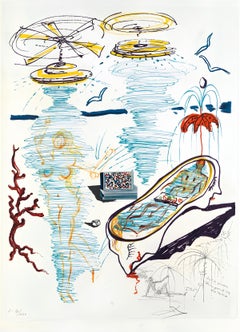
Baignoire à tornade liquide (Michler/Löpsinger 822-831; Field 75-13)
By Salvador Dalí
Located in Fairfield, CT
Artist: Salvador Dali (1904-1989)
Title: Baignoire à tornade liquide (Michler/Löpsinger 822-831; Field 75-13), Imaginations et Objets du Futur (Liquid tornado bathtub, Imaginations a...
Category
1970s Surrealist Landscape Prints
Materials
Mixed Media, Lithograph, Drypoint, Screen
$6,000 Sale Price
20% Off
H 28.5 in W 21 in
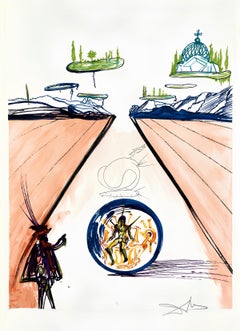
Locomotion paradisiaque intra-utérine (Michler/Löpsinger 822-831; Field 75-13)
By Salvador Dalí
Located in Fairfield, CT
Artist: Salvador Dali (1904-1989)
Title: Locomotion paradisiaque intra-utérine (Michler/Löpsinger 822-831; Field 75-13), Imaginations et Objets du Futur (Paradise intrauterine locomo...
Category
1970s Surrealist Landscape Prints
Materials
Mixed Media, Drypoint, Lithograph, Screen
$4,400 Sale Price
20% Off
H 28.5 in W 21 in
More From This Seller
View AllFeminist Surrealist French Abstract Colorful Lithograph Print Myriam Bat Yosef
Located in Surfside, FL
Myriam Bat-Yosef
Surrealist abstract lithograph print in colorful abstract shapes and shades
Hand signed and dated 1971.
sheet measures 9.25 X 9.25 inches
...
Category
1970s Surrealist Abstract Prints
Materials
Lithograph
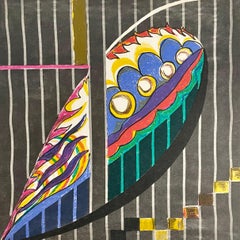
Feminist Surrealist French Abstract Colorful Lithograph Print Myriam Bat Yosef
Located in Surfside, FL
Myriam Bat-Yosef
Surrealist abstract lithograph print in colorful abstract shapes and shades
Hand signed and dated 1971.
sheet measures 9.25 X 9.25 inches
...
Category
1970s Surrealist Abstract Prints
Materials
Lithograph
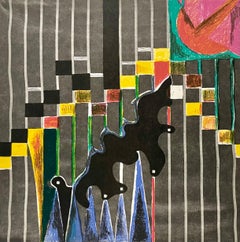
Feminist Surrealist French Abstract Colorful Lithograph Print Myriam Bat Yosef
Located in Surfside, FL
Myriam Bat-Yosef
Surrealist abstract lithograph print in colorful abstract shapes and shades
Hand signed and dated 1971.
sheet measures 9.25 X 9.25 inches
The envelope and the Peter Buch poster is just for provenance and is not included in this sale.
Myriam Bat-Yosef, whose real name is Marion Hellerman, born on January 31, 1931 in Berlin, Germany to a Jewish family from Lithuania, she is an Israeli-Icelandic artist who paints on papers, paintings, fabrics, objects and human beings for performances. Myriam Bat-Yosef currently lives and works in Paris. In 1933, her family fleeing the Nazi Holocaust, Miriam Bat-Yosef emigrates to Palestine and settles in Jaffa. In 1936, she suffers a family tragedy, her father, militant Zionist, is called to fight, still recovering from an operation of appendicitis. The incision will become infected, antibiotics did not exist yet, and her father will die in the hospital after 9 months of suffering.
Myriam and her mother leave Palestine to live in Paris for three years. French is Myriam's first school language. In 1939, still fleeing Nazism, she returned to Palestine, leaving France by the last boat from Marseille. She moved to Tel Aviv with her mother, aunt and maternal grandmother.
In 1940, she began attending the Academy of Fine Arts in Tel Aviv and took her name as an artist, Bat-Yosef, which means Joseph's daughter in Hebrew, as a tribute to her father. In 1946, Myriam graduated as a kindergarten teacher but wanted to be an artist. Her mother enrolled her in an evening school to prepare a diploma of art teacher. At 19, she performs two years of military service in Israel.
In 1952, with a pension of $50 a month that her mother allocated, she went to study at the Beaux-Arts in Paris. To survive, she has several activities while studying. In 1955, she had her first solo exhibition, at the Israeli Club on Wagram Avenue in Paris. Many artists, such as Yaacov Agam, Yehuda Neiman Avigdor Arikha, Raffi Kaiser, Dani Karavan and sculptors Achiam and Shlomo Selinger attended the opening .
In 1956, she enrolled at the School of Fine Arts in Florence. This is where she meets the painter Errô. They share an icy studio in winter. Myriam moves to Milan with friends. She organizes a joint exhibition with Erro, one room each, at the Montenapoleone gallery. Her works are admired by the sculptor Marino Marini and the painters Renato Birolli and Enrico Prampolini. Myriam and Erro exhibit in Rome, Milan, Florence and meet many personalities: Alain Jouffroy and his wife, the painter Manina, Roberto Matta and his wife Malitte, textile artist who was one of the founders of the Pompidou Center. Back in Paris, Myriam and Erro get married, which allows Myriam to avoid being called into the Israeli army during the Suez Canal War.
In 1957, Myriam and her husband went to Iceland. Myriam works in a chocolate factory. Having enough money, she starts producing art again. She exhibited in Reykjavik's first art gallery. She meets the artist Sigridur Bjornsdottir, married to the Swiss painter Dieter Roth .
In 1958, Myriam and her husband leave for Israel. They exhibit in Germany, then in Israel. Back in Paris, the couple became friends with artists of the surrealist movement, such as Victor Brauner, Hans Bellmer, the sculptor Philippe Hiquily, Liliane Lijn, future wife of Takis and photographer Nathalie Waag. Erro and Myriam have a daughter on March 15, 1960, named Tura, after the painter Cosmè Tura, but also close to the Icelandic Thora or the Hebrew Torah. Bat-Yosef’s complex trajectory throughout the 20th century is linked as much to the transnational history of what was for a time called the School of Paris as it is to a certain legacy of Surrealism. Her work features the same idea of resolving antinomies that also defined the spirit of surrealism, and is enhanced with her readings of the Kabbalah and her spiritual grounding in Taoism. However, while there are reasons for her approach to be associated with the process of the ready-made, it is important to consider the immediate intrication of these works with her practice of performance, during which the body itself is also painted – a feminist response to Yves Klein’s Anthropometries (1960) and an echo of the happenings which Jean-Jacques Lebel organised at the time in Paris.
In 1963, Erró told Myriam that if she wants to be a painter, she can not be his wife. Myriam chose to be a painter and the couple divorced in 1964. Since that time, Myriam Bat-Yosef has exhibited in many countries: Europe, United States, Japan, etc.
Although long in the shadows, the work of Myriam Bat-Yosef has been greeted by many artists and personalities: Anaïs Nin, Nancy Huston, André Pieyre of Mandiargues, José Pierre, René de Solier , Jacques Lacarrière, Alain Bosquet, Pierre Restany, Sarane Alexandrian and Surrealist André Breton who, after a visit to her studio, confided to having been intrigued by its phantasmagorical dimension. She was included in the book Pop Art and Beyond: Gender, Race, and Class in the Global Sixties by Mona Hadler and Kalliopi Minioudaki. Extract "World Citizen, Artist of the Pop Era Sarah Wilson; Why do we know so little of Myriam Bat-Yosef, the most important female Israeli artist of the Pop era? Issues of identity and sexuality feature constantly in her work. She exhibited internationally from Reykjavik to Tokyo; she had two shows at Arturo Schwarz’s famous Dada/surrealist gallery in Milan; she participated in feminist art events in Los Angeles. Above all, in 1971, she conceived Total Art, a Pop Gesamtkunstwerk inside and outside the Israel Museum, Jerusalem. Painter, performer, and installation artist, she was also a lover, wife, and mother. Of Lithuanian-Jewish descent, she was close to the family of philosopher Emmanuel Levinas. An émigré in Paris she would repudiate a national passport, participating in Garry Davis’s short-lived “World Citizens” movement. She continues the lineage of women surrealist artists: Valentine Hugo, Leonor Fini, Dorothea Tanning, Leonora Carrington, Unica Zürn, Jane Graverol, Toyen, Alice Rahon...
Category
1970s Surrealist Abstract Prints
Materials
Lithograph
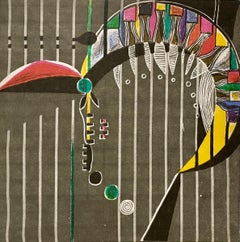
Feminist Surrealist French Abstract Colorful Lithograph Print Myriam Bat Yosef
Located in Surfside, FL
Myriam Bat-Yosef
Surrealist abstract lithograph print in colorful abstract shapes and shades
Hand signed and dated 1971.
sheet measures 9.25 X 9.25 inches
The envelope and the Peter Buch poster is just for provenance and is not included in this sale.
Myriam Bat-Yosef, whose real name is Marion Hellerman, born on January 31, 1931 in Berlin, Germany to a Jewish family from Lithuania, she is an Israeli-Icelandic artist who paints on papers, paintings, fabrics, objects and human beings for performances. Myriam Bat-Yosef currently lives and works in Paris. In 1933, her family fleeing the Nazi Holocaust, Miriam Bat-Yosef emigrates to Palestine and settles in Jaffa. In 1936, she suffers a family tragedy, her father, militant Zionist, is called to fight, still recovering from an operation of appendicitis. The incision will become infected, antibiotics did not exist yet, and her father will die in the hospital after 9 months of suffering.
Myriam and her mother leave Palestine to live in Paris for three years. French is Myriam's first school language. In 1939, still fleeing Nazism, she returned to Palestine, leaving France by the last boat from Marseille. She moved to Tel Aviv with her mother, aunt and maternal grandmother.
In 1940, she began attending the Academy of Fine Arts in Tel Aviv and took her name as an artist, Bat-Yosef, which means Joseph's daughter in Hebrew, as a tribute to her father. In 1946, Myriam graduated as a kindergarten teacher but wanted to be an artist. Her mother enrolled her in an evening school to prepare a diploma of art teacher. At 19, she performs two years of military service in Israel.
In 1952, with a pension of $50 a month that her mother allocated, she went to study at the Beaux-Arts in Paris. To survive, she has several activities while studying. In 1955, she had her first solo exhibition, at the Israeli Club on Wagram Avenue in Paris. Many artists, such as Yaacov Agam, Yehuda Neiman Avigdor Arikha, Raffi Kaiser, Dani Karavan and sculptors Achiam and Shlomo Selinger attended the opening .
In 1956, she enrolled at the School of Fine Arts in Florence. This is where she meets the painter Errô. They share an icy studio in winter. Myriam moves to Milan with friends. She organizes a joint exhibition with Erro, one room each, at the Montenapoleone gallery. Her works are admired by the sculptor Marino Marini and the painters Renato Birolli and Enrico Prampolini. Myriam and Erro exhibit in Rome, Milan, Florence and meet many personalities: Alain Jouffroy and his wife, the painter Manina, Roberto Matta and his wife Malitte, textile artist who was one of the founders of the Pompidou Center. Back in Paris, Myriam and Erro get married, which allows Myriam to avoid being called into the Israeli army during the Suez Canal War.
In 1957, Myriam and her husband went to Iceland. Myriam works in a chocolate factory. Having enough money, she starts producing art again. She exhibited in Reykjavik's first art gallery. She meets the artist Sigridur Bjornsdottir, married to the Swiss painter Dieter Roth .
In 1958, Myriam and her husband leave for Israel. They exhibit in Germany, then in Israel. Back in Paris, the couple became friends with artists of the surrealist movement, such as Victor Brauner, Hans Bellmer, the sculptor Philippe Hiquily, Liliane Lijn, future wife of Takis and photographer Nathalie Waag. Erro and Myriam have a daughter on March 15, 1960, named Tura, after the painter Cosmè Tura, but also close to the Icelandic Thora or the Hebrew Torah. Bat-Yosef’s complex trajectory throughout the 20th century is linked as much to the transnational history of what was for a time called the School of Paris as it is to a certain legacy of Surrealism. Her work features the same idea of resolving antinomies that also defined the spirit of surrealism, and is enhanced with her readings of the Kabbalah and her spiritual grounding in Taoism. However, while there are reasons for her approach to be associated with the process of the ready-made, it is important to consider the immediate intrication of these works with her practice of performance, during which the body itself is also painted – a feminist response to Yves Klein’s Anthropometries (1960) and an echo of the happenings which Jean-Jacques Lebel organised at the time in Paris.
In 1963, Erró told Myriam that if she wants to be a painter, she can not be his wife. Myriam chose to be a painter and the couple divorced in 1964. Since that time, Myriam Bat-Yosef has exhibited in many countries: Europe, United States, Japan, etc.
Although long in the shadows, the work of Myriam Bat-Yosef has been greeted by many artists and personalities: Anaïs Nin, Nancy Huston, André Pieyre of Mandiargues, José Pierre, René de Solier , Jacques Lacarrière, Alain Bosquet, Pierre Restany, Sarane Alexandrian and Surrealist André Breton who, after a visit to her studio, confided to having been intrigued by its phantasmagorical dimension. She was included in the book Pop Art and Beyond: Gender, Race, and Class in the Global Sixties by Mona Hadler and Kalliopi Minioudaki. Extract "World Citizen, Artist of the Pop Era Sarah Wilson; Why do we know so little of Myriam Bat-Yosef, the most important female Israeli artist of the Pop era? Issues of identity and sexuality feature constantly in her work. She exhibited internationally from Reykjavik to Tokyo; she had two shows at Arturo Schwarz’s famous Dada/surrealist gallery in Milan; she participated in feminist art events in Los Angeles. Above all, in 1971, she conceived Total Art, a Pop Gesamtkunstwerk inside and outside the Israel Museum, Jerusalem. Painter, performer, and installation artist, she was also a lover, wife, and mother. Of Lithuanian-Jewish descent, she was close to the family of philosopher Emmanuel Levinas. An émigré in Paris she would repudiate a national passport, participating in Garry Davis’s short-lived “World Citizens” movement. She continues the lineage of women surrealist artists: Valentine Hugo, Leonor Fini, Dorothea Tanning, Leonora Carrington, Unica Zürn, Jane Graverol, Toyen, Alice Rahon...
Category
1970s Surrealist Abstract Prints
Materials
Lithograph
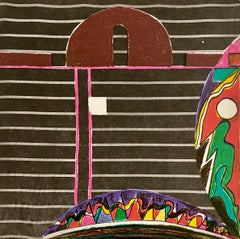
Lithograph Belgian American Surrealism WPA Modernist Karl Fortess Surrealist Art
Located in Surfside, FL
Karl Eugene Fortess (1907-1993)
Original color lithographs on BFK Rives paper,
1966, Hand signed and numbered 29/36 in pencil,
Sheet size 20.5 x 15 inches.
Karl E. Fortess (1907-1993) was a painter, printmaker and teacher, of Boston, Massachusetts and Woodstock, N.Y. Fortess was born in Antwerp, Belgium on October 13, 1907, and became an American citizen in 1923. He studied at the Art Institute of Chicago, the Art Students League in New York, and the Woodstock School of Painting with Yasuo Kuniyoshi. In 1937 the Works Progress Administration sent him and several other artists to Alaska to document the towns, villages, and remote wilderness landscapes (Pemberton, “Alaska art museum collects WPA’s Depression works from the territory,” Columbia Daily Tribune, November 9, 2003). Trains, trucks, and industrial buildings were what Karl Fortess envisioned when the Public Works of Art Project suggested that he depict “the American Scene.” His work bears the influence of Surrealism, Russsian Constructivist art and Cubism. He was part of a circle of left leaning artists loosley involved with the WPA which included Sol Wilson, Isaac Soyer, Louis Lozowick, Abraham Harriton, Ben Shahn, William Gropper, Nahum Tschacbasov, Morris Shulman, Yasuo Kuniyoshi, Louis Slobodkin, Adolf Dehn, Le Corbusier and Louis Schanker.
Karl Fortress taught at the Art Students League, Brooklyn Museum Art School, Louisiana State University, Fort Wright College, and Boston University School of Fine and Applied Arts. He was a member of the Artists Equity Association, Society of American Graphic Artists, American Association of University Professors, and the British Film Institute. He was awarded the Guggenheim Fellowship in 1946, was named an Associate of the National Academy of Design in 1960 and elected to full Academician in 1971. Fortess taught at many different schools, including Boston University School of Fine Art, where he also created an archive of interviews with more than two hundred and fifty contemporary American painters, sculptors, and graphic artists including many with with artists associated with the Woodstock, N.Y. art community.
Among the interviewees are Kenneth Armitage, Will Barnet, Romare Bearden, George Biddle, James Brooks, Adolph Dehn, Jane Freilicher, Julian Levi, Alice Neel, Larry Rivers, Moses Soyer, Dorothy Varian...
Category
Mid-20th Century Surrealist Landscape Prints
Materials
Lithograph
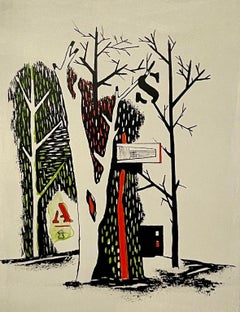
Lithograph Belgian American Surrealism WPA Modernist Karl Fortess Surrealist Art
Located in Surfside, FL
Karl Eugene Fortess (1907-1993)
Original color lithographs on BFK Rives paper,
1966, Hand signed and numbered 29/36 in pencil,
Sheet size 20.5 x 15 inches.
Karl E. Fortess (1907-1993) was a painter, printmaker and teacher, of Boston, Massachusetts and Woodstock, N.Y. Fortess was born in Antwerp, Belgium on October 13, 1907, and became an American citizen in 1923. He studied at the Art Institute of Chicago, the Art Students League in New York, and the Woodstock School of Painting with Yasuo Kuniyoshi. In 1937 the Works Progress Administration sent him and several other artists to Alaska to document the towns, villages, and remote wilderness landscapes (Pemberton, “Alaska art museum collects WPA’s Depression works from the territory,” Columbia Daily Tribune, November 9, 2003). Trains, trucks, and industrial buildings were what Karl Fortess envisioned when the Public Works of Art Project suggested that he depict “the American Scene.” His work bears the influence of Surrealism, Russsian Constructivist art and Cubism. He was part of a circle of left leaning artists loosley involved with the WPA which included Sol Wilson, Isaac Soyer, Louis Lozowick, Abraham Harriton, Ben Shahn, William Gropper, Nahum Tschacbasov, Morris Shulman, Yasuo Kuniyoshi, Louis Slobodkin, Adolf Dehn, Le Corbusier and Louis Schanker.
Karl Fortress taught at the Art Students League, Brooklyn Museum Art School, Louisiana State University, Fort Wright College, and Boston University School of Fine and Applied Arts. He was a member of the Artists Equity Association, Society of American Graphic Artists, American Association of University Professors, and the British Film Institute. He was awarded the Guggenheim Fellowship in 1946, was named an Associate of the National Academy of Design in 1960 and elected to full Academician in 1971. Fortess taught at many different schools, including Boston University School of Fine Art, where he also created an archive of interviews with more than two hundred and fifty contemporary American painters, sculptors, and graphic artists including many with with artists associated with the Woodstock, N.Y. art community.
Among the interviewees are Kenneth Armitage, Will Barnet, Romare Bearden, George Biddle, James Brooks, Adolph Dehn, Jane Freilicher, Julian Levi, Alice Neel, Larry Rivers, Moses Soyer, Dorothy Varian...
Category
Mid-20th Century Surrealist Landscape Prints
Materials
Lithograph
Recently Viewed
View AllMore Ways To Browse
Jasper Johns Signed
Kandinsky Original
Karl Alexander
Mark Mothersbaugh
P Morgan Art
Pop Art Rolling Stones
Tamarind Prints
Vintage Dairy Products
Cesar Domela
El Ultimo
Ernest Trova Falling Man
Frank Stella Signed Lithographs
Joan Miro Litografia
Miro Galerie Maeght
Red And Black Poster
Vintage 10X10 Frame
A R Penck
Antoni Miro