Items Similar to Léger, La partie de campagne, Derrière le miroir (after)
Want more images or videos?
Request additional images or videos from the seller
1 of 9
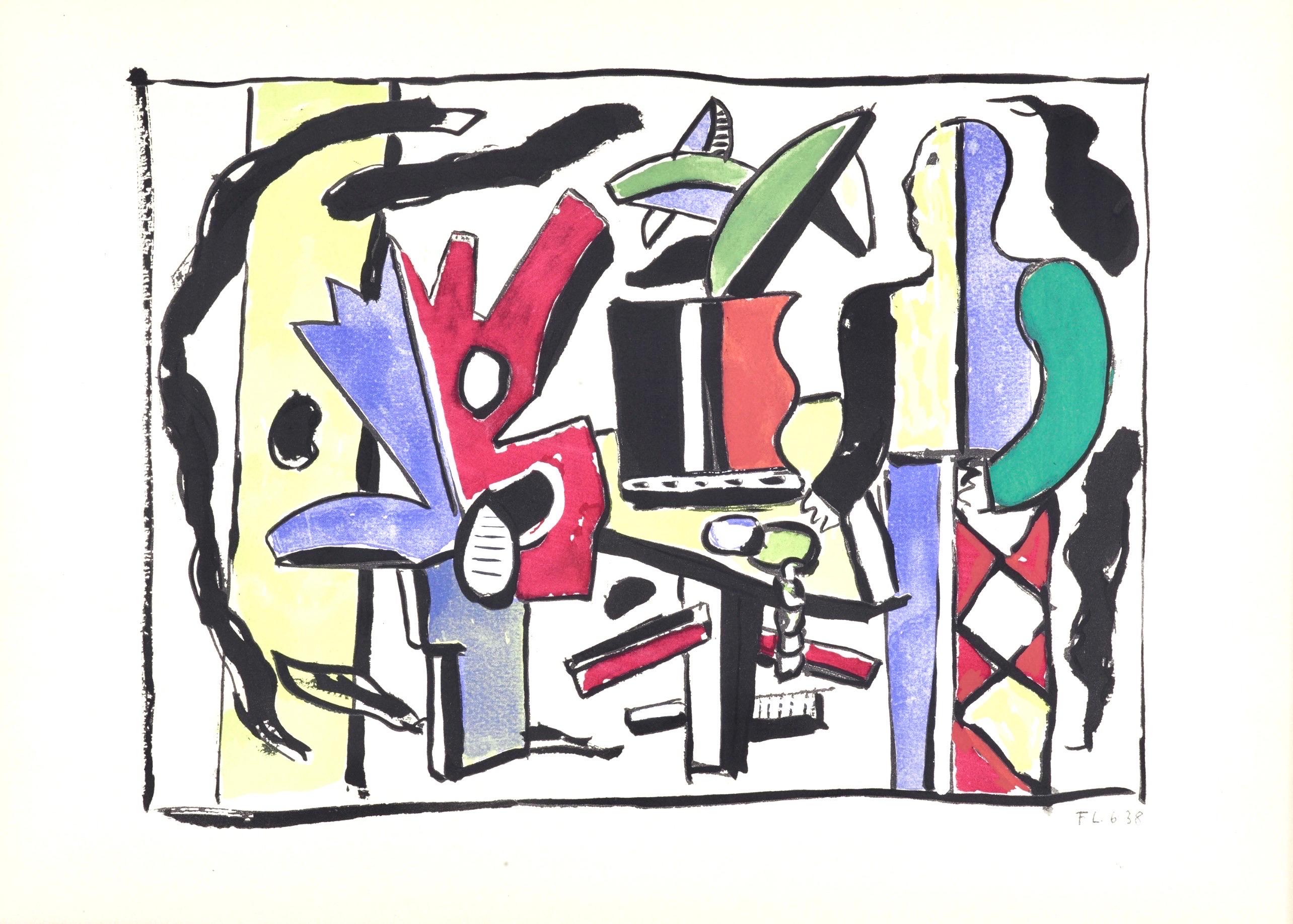
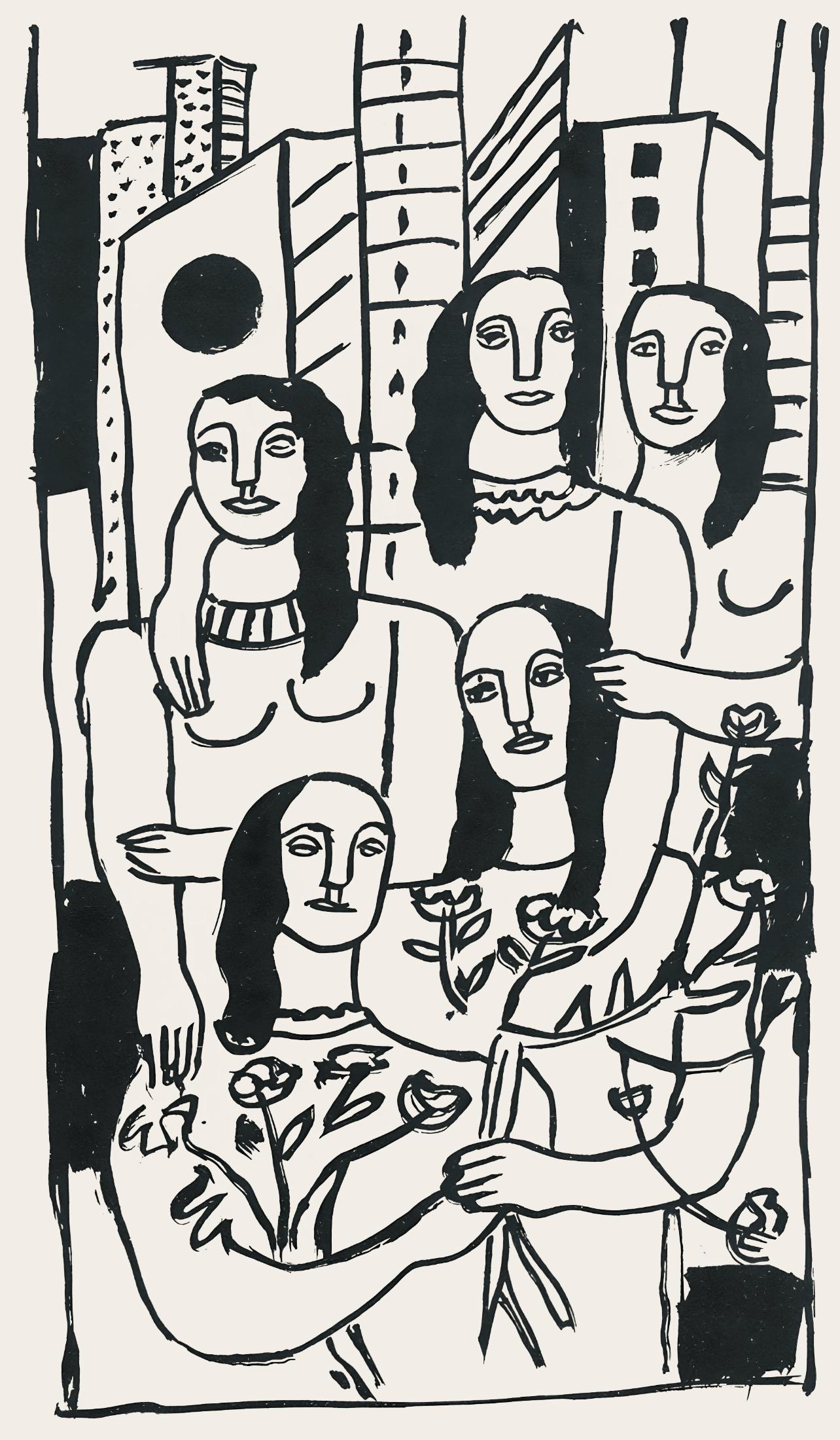
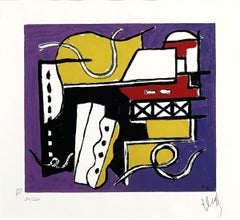
Léger, La partie de campagne, Derrière le miroir (after)1960
1960
$1,036
$1,29520% Off
£786.22
£982.7820% Off
€905.90
€1,132.3720% Off
CA$1,463.70
CA$1,829.6320% Off
A$1,568.33
A$1,960.4220% Off
CHF 841.30
CHF 1,051.6320% Off
MX$18,577.14
MX$23,221.4220% Off
NOK 10,612.55
NOK 13,265.6820% Off
SEK 9,708.84
SEK 12,136.0520% Off
DKK 6,767.17
DKK 8,458.9620% Off
About the Item
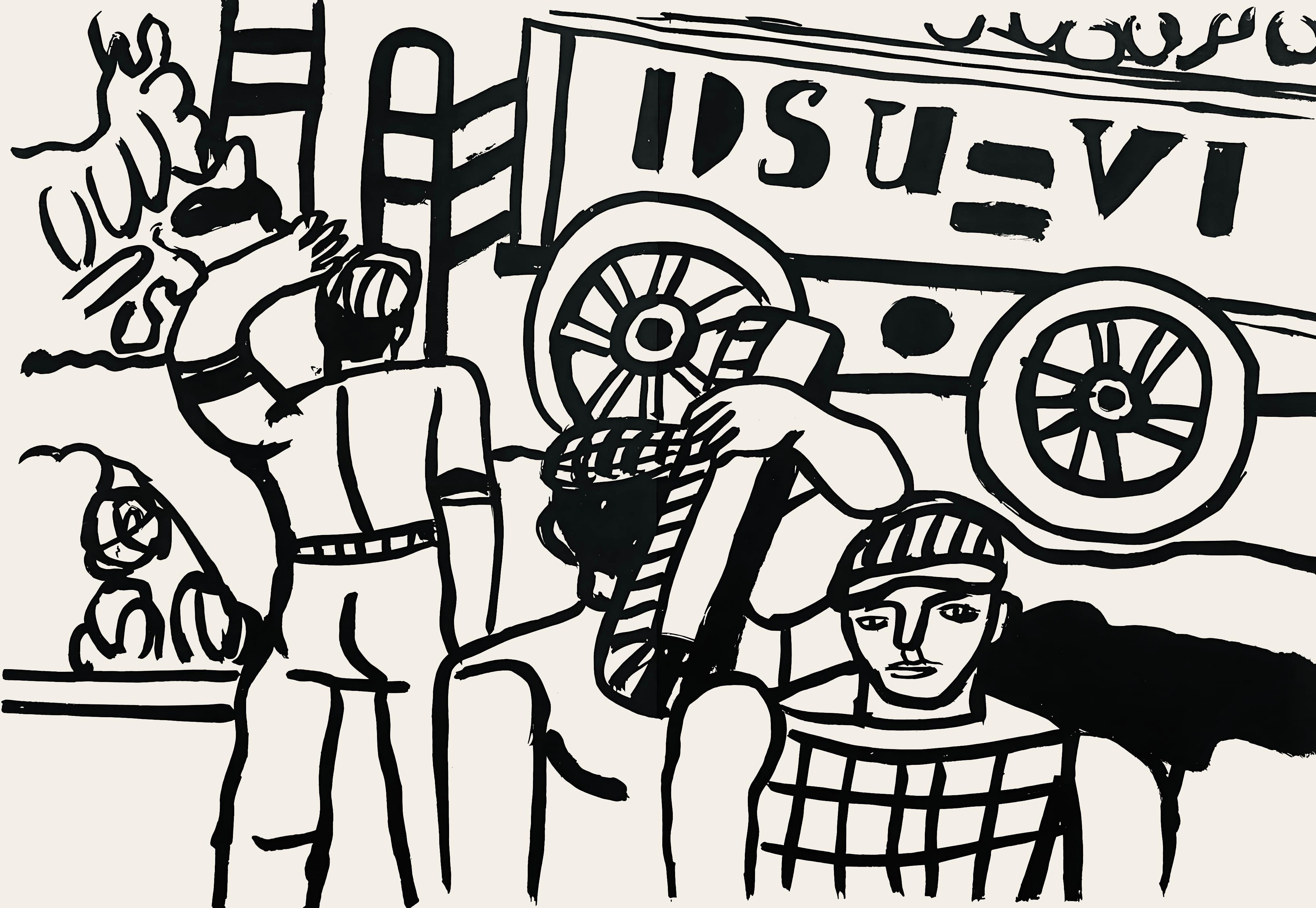
Lithograph on vélin paper. Inscription: Unsigned and unnumbered, as issued. Good condition, with centerfold, as issued. Notes: From Derrière le miroir, N° 121-122, 1960. Published by Aimé Maeght, Éditeur, Paris; printed by Éditions Pierre à Feu, Galerie Maeght, Paris. Excerpted from a Christie’s, New York lot essay, The life span of Derrière le Miroir was thirty-five years. Publication began in 1946. Aimé Maeght, initiator of Derrière le Miroir, had already made few attempts to start publications illustrated with fine printed lithographs in colours in the years prior to the launch of Derrière le Miroir. The name, Derrière le Miroir was suggested by Jacques Kober, manager of Galerie Maeght. The gallery had opened in 1945; the first number of Derrière le Miroir was released a year later. For this first issue Geer van Velde was invited to create lithographs to illustrate the publication. The lithographs in the first issue was printed by Mourlot, Paris. The first three issues of Derrière le Miroir were unsuccessful for Maeght as far as the edition size—the initial print-runs were far too large. From 30,000 for the first issue, the number was taken down to 10,000 for numbers two and three, until Derrière le Miroir number four was published in an edition of 1500. Maeght instituted a policy whereby unsold issues were recycled and used for the fabrication of new paper for the coming editions—this served to both conserve resources and also usually result in ultimate edition sizes far less than 1,500. With number four, the permanent format for Derrière le Miroir was established. Lithographs in colours were key; text was limited to comments on the featuring artist's exhibition taking place in the Galerie Maeght, and this catalogue format was defining to Derrière le Miroir. Galerie Maeght took on the leading role in Paris and presented all main artists including Braque, Matisse, Chagall, Léger, Bonnard, Chillida and many more. So too did Derrière le Miroir. The idea of a magazine was meanwhile still on the mind of Aimé Maeght. He found an insert as a solution. Two, and later four, pages of art review were inserted from 1952 onwards. In 1968 this find had ripened to independency and the dream of Aimé Maeght was now a tangible fact named l'Art vivant. Derrière le Miroir was on it's own again. Over 250 issues in a row. At that point publisher Aimé Maeght wished to make a mark with the publication of an hommage to all who once contributed to the magazine which came in the form of issue number 250, but was delayed by the death of Aimé Maeght. It was published after number 253 in 1982 and became a tribute to Aimé and Marguérite Maeght and 35 years of friendship with artists and poets. The era of Derrière le Miroir was closed with that final publication.
FERNAND LEGER (1881-1955) was a French painter, sculptor, and filmmaker. In his early works he created a personal form of cubism (known as "tubism") which he gradually modified into a more figurative, populist style. His boldly simplified treatment of modern subject matter has caused him to be regarded as a forerunner of pop art. Léger was born in Argentan, Orne, Lower Normandy, where his father raised cattle. Fernand Léger initially trained as an architect from 1897 to 1899, before moving in 1900 to Paris, where he supported himself as an architectural draftsman. After military service in Versailles, Yvelines, in 1902–1903, he enrolled at the School of Decorative Arts after his application to the École des Beaux-Arts was rejected. He nevertheless attended the Beaux-Arts as a non-enrolled student, spending what he described as "three empty and useless years" studying with Gérôme and others, while also studying at the Académie Julian. He began to work seriously as a painter only at the age of 25. At this point his work showed the influence of impressionism, as seen in Le Jardin de ma mère (My Mother's Garden) of 1905, one of the few paintings from this period that he did not later destroy. A new emphasis on drawing and geometry appeared in Léger's work after he saw the Cézanne retrospective at the Salon d'Automne in 1907. In 1909, he moved to Montparnasse and met Alexander Archipenko, Jacques Lipchitz, Marc Chagall, Joseph Csaky and Robert Delaunay. In 1910, he exhibited at the Salon d'Automne in the same room (salle VIII) as Jean Metzinger and Henri Le Fauconnier. In his major painting of this period, Nudes in the Forest, Léger displays a personal form of Cubism that his critics termed "Tubism" for its emphasis on cylindrical forms. In 1911, the hanging committee of the Salon des Indépendants placed together the painters identified as 'Cubists'. Metzinger, Albert Gleizes, Le Fauconnier, Delaunay and Léger were responsible for revealing Cubism to the general public for the first time as an organized group. The following year he again exhibited at the Salon d'Automne and Indépendants with the Cubists, and joined with several artists, including Le Fauconnier, Metzinger, Gleizes, Francis Picabia and the Duchamp brothers, Jacques Villon, Raymond Duchamp-Villon and Marcel Duchamp to form the Puteaux Group—also called the Section d'Or (The Golden Section) paintings, from then until 1914, became increasingly abstract. Their tubular, conical, and cubed forms are laconically rendered in rough patches of primary colors plus green, black and white, as seen in the series of paintings with the title Contrasting Forms. Léger made no use of the collage technique pioneered by Braque and Picasso.
- Creation Year:1960
- Dimensions:Height: 15 in (38.1 cm)Width: 22 in (55.88 cm)
- Medium:
- Movement Style:
- After:Fernand Léger (1881-1955, French)
- Period:
- Condition:
- Gallery Location:Southampton, NY
- Reference Number:1stDibs: LU1465215139692
About the Seller
4.9
Platinum Seller
Premium sellers with a 4.7+ rating and 24-hour response times
Established in 1978
1stDibs seller since 2021
1,271 sales on 1stDibs
Typical response time: 1 hour
- ShippingRetrieving quote...Shipping from: Southampton, NY
- Return Policy
More From This Seller
View AllFernand Leger, Untitled, from Twelve Contemporaries, 1959 (after)
By Fernand Léger
Located in Southampton, NY
This exquisite lithograph and pochoir after Fernand Leger (1881–1955), titled Sans titre (Untitled), from the album Douze Contemporains (Twelve Contemporaries), originates from the 1959 edition published by Editions d'art du lion, Paris, and Boston Book and Art Shop, Inc., Boston, rendered by Daniel Jacomet, Paris, and printed by Atelier Daniel Jacomet et Cie, Paris, December 1959. The work captures Leger's bold geometric visual language and his celebration of modernity, distilling mechanical rhythm and sculptural clarity into a composition emblematic of his innovative machine-age aesthetic.
Executed as a lithograph and pochoir on velin paper, this work measures 13.25 x 18.25 inches (33.7 x 46.4 cm). Signed in the plate and unnumbered, as issued. The edition exemplifies the refined craftsmanship of Atelier Daniel Jacomet et Cie, Paris.
Artwork Details:
Artist: After Fernand Leger (1881–1955)
Title: Sans titre (Untitled), from the album Douze Contemporains (Twelve Contemporaries)
Medium: Lithograph and pochoir on velin paper
Dimensions: 13.25 x 18.25 inches (33.7 x 46.4 cm)
Inscription: Signed in the plate and unnumbered, as issued
Date: 1959
Publisher: Editions d'art du lion, Paris, and Boston Book and Art Shop, Inc., Boston
Printer: Atelier Daniel Jacomet et Cie, Paris
Condition: Well preserved, consistent with age and medium
Provenance: From the album Douze Contemporains (Twelve Contemporaries), published by Editions d'art du lion, Paris, and Boston Book and Art Shop, Inc., Boston; rendered by Daniel Jacomet, Paris; printed by Atelier Daniel Jacomet et Cie, Paris, December 1959
Notes:
Excerpted from the folio (translated from French), This album finished printing in December 1959 drawn to CMLXX examples numbered from I to CMLXX and XXX non-commerce examples numbered from I to XXX, was directed by Daniel Jacomet. Typography of L'Imprimerie Union in Paris.
About the Publication:
Douze Contemporains (Twelve Contemporaries), published in 1959 by Editions d'art du lion in collaboration with Boston Book and Art Shop, Inc., is a landmark example of mid-century French printmaking, bringing together leading modern artists in a unified portfolio of lithographs and pochoirs. The album exemplifies Jacomet's meticulous approach to color separation and hand-stenciled execution, preserving the tonal richness and structural clarity of each composition. Issued in a substantial edition of numbered and non-commerce impressions, the publication reflects the vitality of postwar Parisian art and the technical excellence of Daniel Jacomet, whose workshop played a central role in the preservation and dissemination of twentieth-century modernist imagery.
About the Artist:
Fernand Leger (1881–1955) was a French painter, sculptor, and filmmaker whose pioneering fusion of modern life, mechanization, and visual abstraction made him one of the most influential artists of the 20th century. Emerging from the Cubist movement, Leger developed a highly personal style distinguished by bold contrasts, cylindrical forms, and rhythmic compositions that celebrated the beauty of industrial progress and the vitality of modern urban life. Deeply influenced by the innovations of Paul Cezanne and the structural experimentation of Pablo Picasso and Georges Braque, Leger transformed Cubism's fragmented perspective into a dynamic, machine-age aesthetic that bridged fine art, architecture, and design. His work often depicted workers, machinery, and everyday objects as monumental symbols of harmony between humanity and technology, reflecting both his optimism for modernity and his belief in the democratization of art. During his career, Leger was part of an extraordinary artistic circle that included Henri Matisse, Marc Chagall, Alexander Calder, Alberto Giacometti, Salvador Dali, Joan Miro, Wassily Kandinsky, Marcel Duchamp, and Man Ray—visionaries who shared his commitment to pushing the boundaries of artistic form and expression. A leading figure in the international avant-garde, Leger also explored large-scale murals, public art, and film, expanding the reach of modern art beyond the gallery. His works are represented in major museum collections worldwide, including the Museum of Modern Art, the Centre Pompidou, the Tate, and the Guggenheim, where they continue to inspire admiration for their bold geometry, humanist vision, and timeless modernity. The highest price ever paid for a Fernand Leger artwork is approximately 70 million USD, achieved in 2017 at Christies New York for Contraste de formes (1913).
Fernand Leger print...
Category
1950s Modern Abstract Prints
Materials
Lithograph, Stencil
$1,996 Sale Price
20% Off
Free Shipping
Fernand Leger, The Market Halls, Paris, from My Travels, 1970 (after)
By Fernand Léger
Located in Southampton, NY
This exquisite lithograph after Fernand Leger (1881–1955), titled Les Halles, Paris (The Market Halls, Paris), originates from the 1970 folio Fernand Leger mes voyages avec un poeme ...
Category
1970s Modern Landscape Prints
Materials
Lithograph
$716 Sale Price
44% Off
Free Shipping
Fernand Leger, The Reading, from Contrastes, 1959 (after)
By Fernand Léger
Located in Southampton, NY
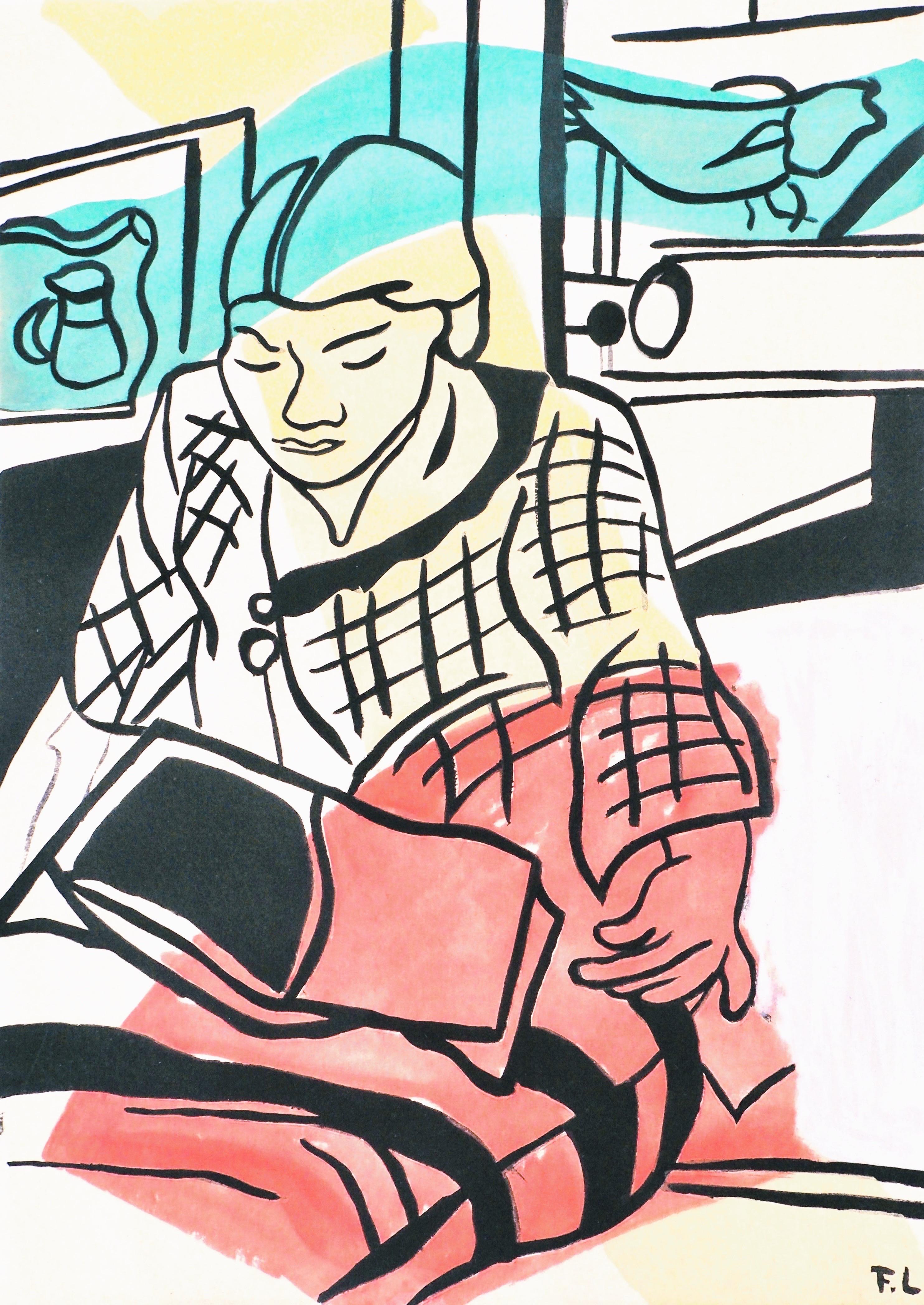
This exquisite lithograph and pochoir after Fernand Leger (1881–1955), titled La Lecture (The Reading), from the folio Contrastes, 13 Aquarelles, Gouache, Lavis, Crayon (Contrasts, 1...
Category
1950s Modern Figurative Prints
Materials
Lithograph, Stencil
$2,396 Sale Price
20% Off
Free Shipping
Fernand Leger, American Women, Los Angeles, from My Travels, 1970 (after)
By Fernand Léger
Located in Southampton, NY
This exquisite lithograph after Fernand Leger (1881–1955), titled Femmes americaines, Los Angeles (American Women, Los Angeles), originates from the 1970 folio Fernand Leger mes voya...
Category
1970s Modern Landscape Prints
Materials
Lithograph
$716 Sale Price
20% Off
Free Shipping
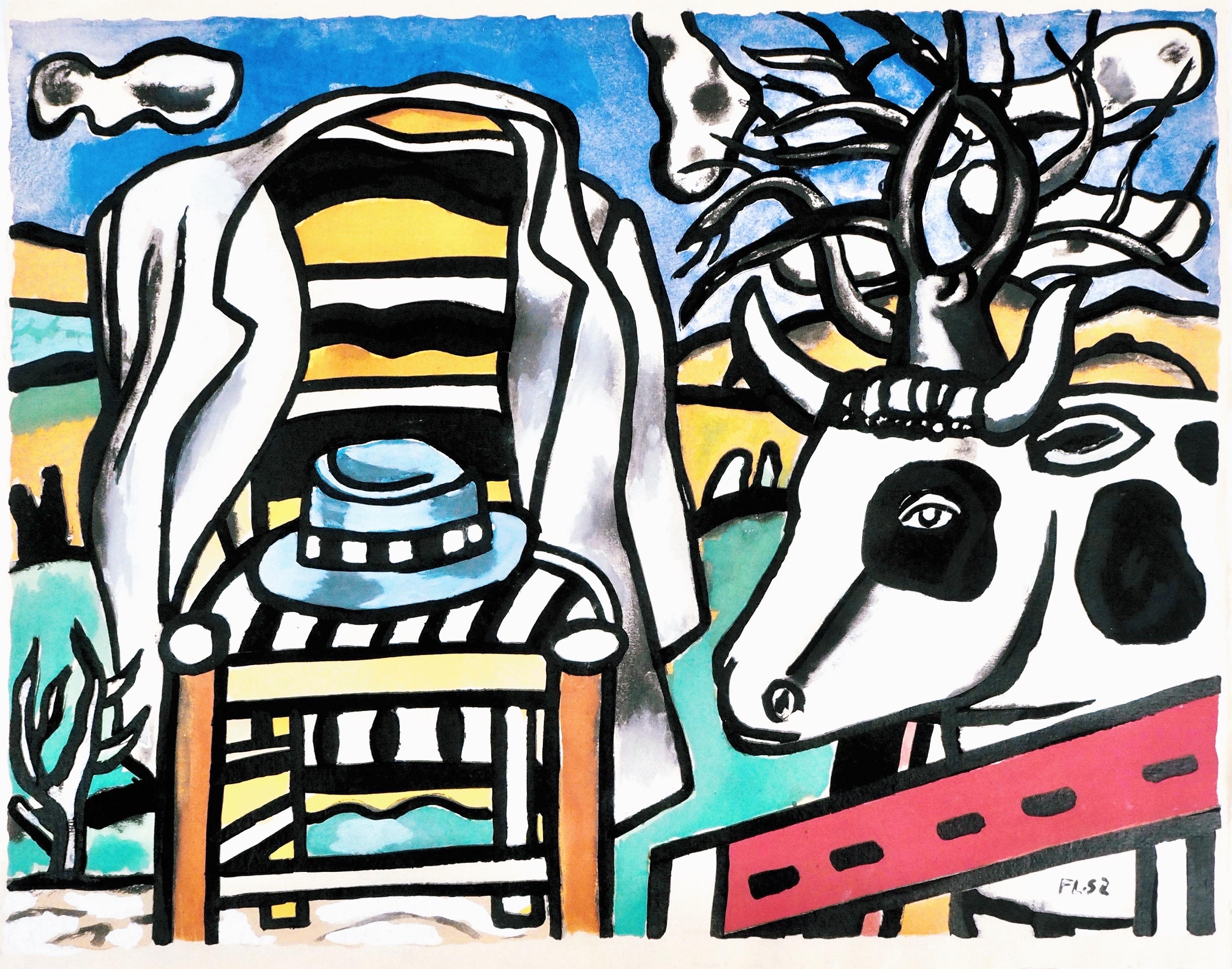
Fernand Leger, The Chair and the Cow, from Contrastes, 1959 (after)
By Fernand Léger
Located in Southampton, NY
This exquisite lithograph and pochoir after Fernand Leger (1881–1955), titled La Chaise et la Vache (The Chair and the Cow), from the folio Contrastes, 13 Aquarelles, Gouache, Lavis,...
Category
1950s Modern Figurative Prints
Materials
Lithograph, Stencil
$2,396 Sale Price
20% Off
Free Shipping
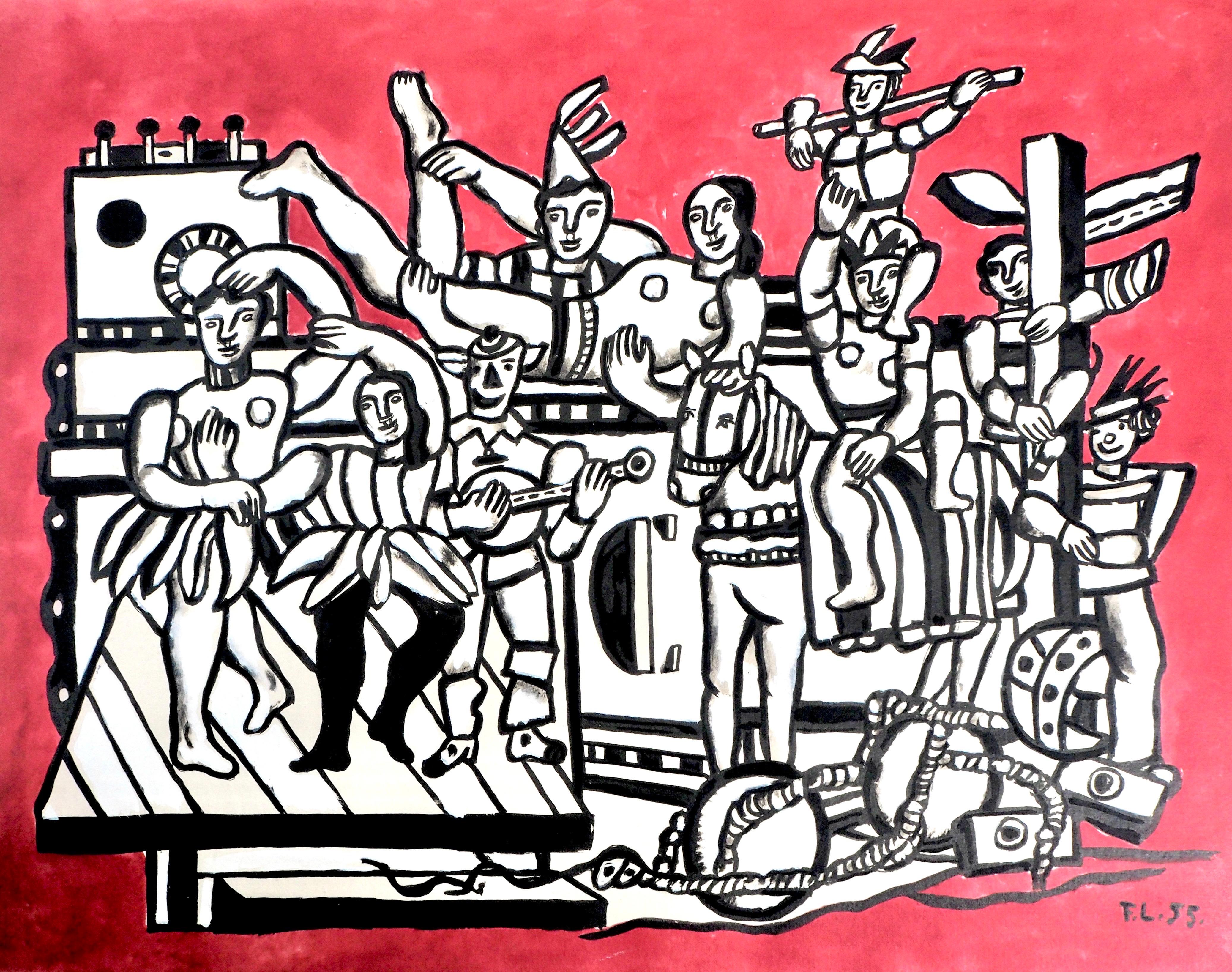
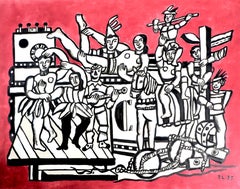
Fernand Leger, Grand Parade on Red Background, from Contrastes, 1959 (after)
By Fernand Léger
Located in Southampton, NY
This exquisite lithograph and pochoir after Fernand Leger (1881–1955), titled Grand Parade sur Fond Rouge (Grand Parade on Red Background), from the folio Contrastes, 13 Aquarelles, ...
Category
1950s Modern Figurative Prints
Materials
Lithograph, Stencil
$8,796 Sale Price
20% Off
Free Shipping
You May Also Like
La Partie de Campagne
By Fernand Léger
Located in OPOLE, PL
Fernand Léger (1881-1955) - La Partie de Campagne
Lithograph from 1952.
Dimensions of work: 52 x 35 cm
Publisher: Tériade, Paris.
On the verso another Lithographs in black.
The ...
Category
1950s Surrealist More Prints
Materials
Lithograph

French Modern Art by Fernand Léger - Untitled
By Fernand Léger
Located in Paris, IDF
Lithography on paper printed in 40's, numbered 42/300, 54,5 x 75,5 x 0,1 cm - 21,4 x 29,7 x 0,04 in, printed by Moulot Editions Editions with the stamp Fernand Léger on Musee Biot pa...
Category
1940s Cubist Abstract Prints
Materials
Paper, Lithograph
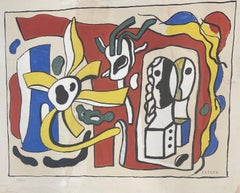
The Outing (La Partie de Campagne) (Verve)
By Fernand Léger
Located in Washington, DC
Artist: Fernand Leger
Title: The Outing (La Partie de Campagne) (Verve)
Medium: Original lithograph
Date: 1952
Edition: Unnumbered
Sheet Size: 14" x...
Category
1950s Figurative Prints
Materials
Lithograph
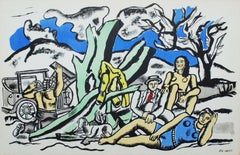
La Partie de Campagne
By Fernand Léger
Located in Paris, FR
Lithograph, 1952
Handsigned by the artist in pencil and numbered 6/75
Publisher : Maeght (Paris)
Printer : Mourlot (Paris)
Catalog : Saphire E 14
37.00 cm. x 55.50 cm. 14.57 in. x 2...
Category
1950s Abstract Abstract Prints
Materials
Lithograph
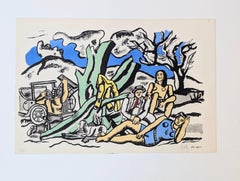
Fernand Léger, Composition géométrique (Geometric composition)
By (after) Fernand Léger
Located in Palo Alto, CA
Utilizing a bold color palette of purple, yellow, red, and black, Léger creates an abstract work in which shapes and forms create a constructive unit. We detect hints of a road, a la...
Category
1950s Modern Abstract Prints
Materials
Screen
$7,000 Sale Price
22% Off
L
Artiste dans le Studio from Douze Contemporains
By (after) Fernand Léger
Located in San Francisco, CA
Artist: Fernand Leger (after)
Title: L'Artiste dans le Studio from Douze Contemporains
Year: 1959 Original: 1938
Medium: Lithograph with Pochoir on Wove paper, signed and dated in t...
Category
1950s Abstract Figurative Prints
Materials
Lithograph