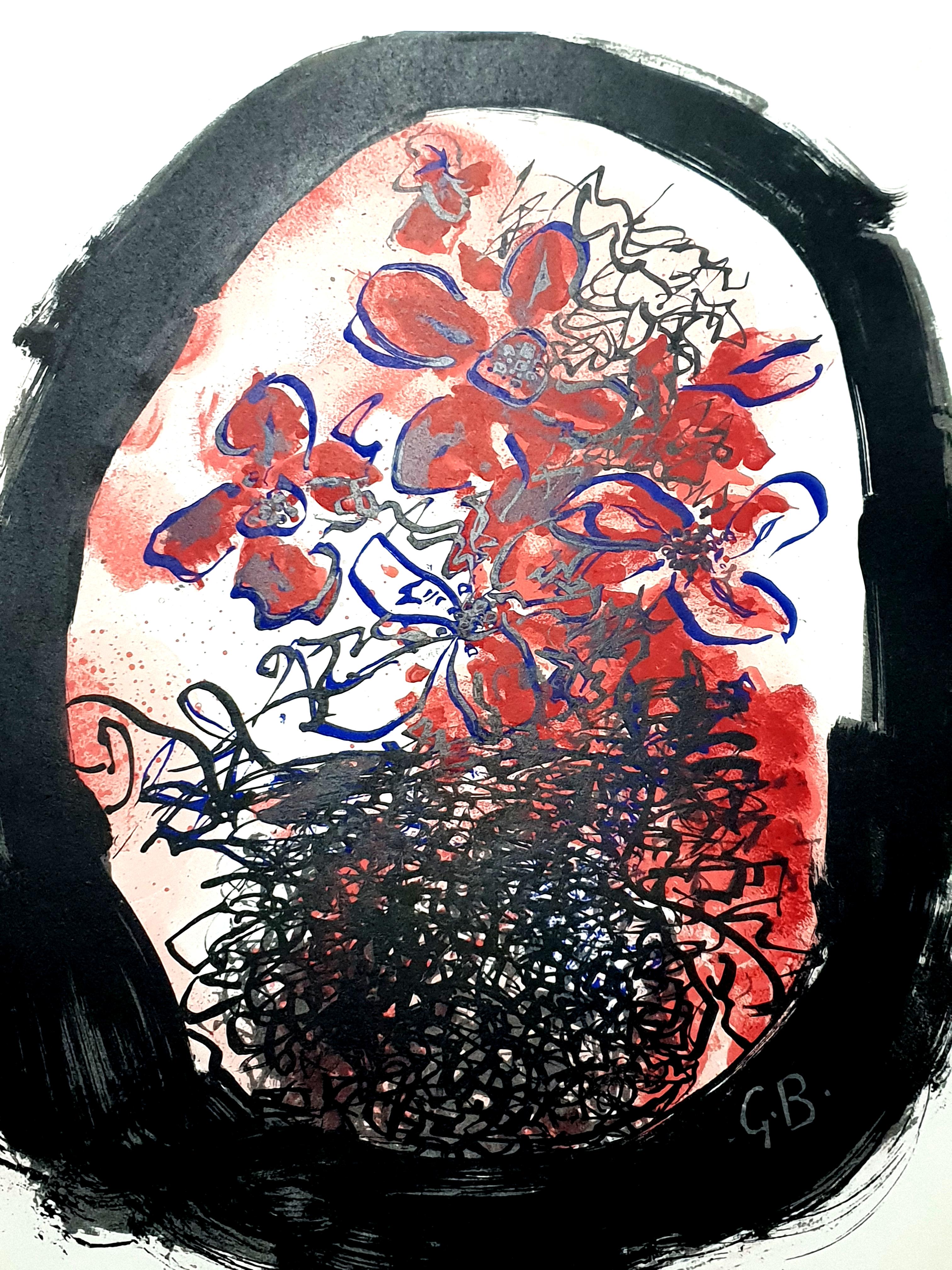
Items Similar to Georges Braque, Red Flowers, from Le Solitaire, XXe siecle, 1959 (after)
Want more images or videos?
Request additional images or videos from the seller
1 of 8
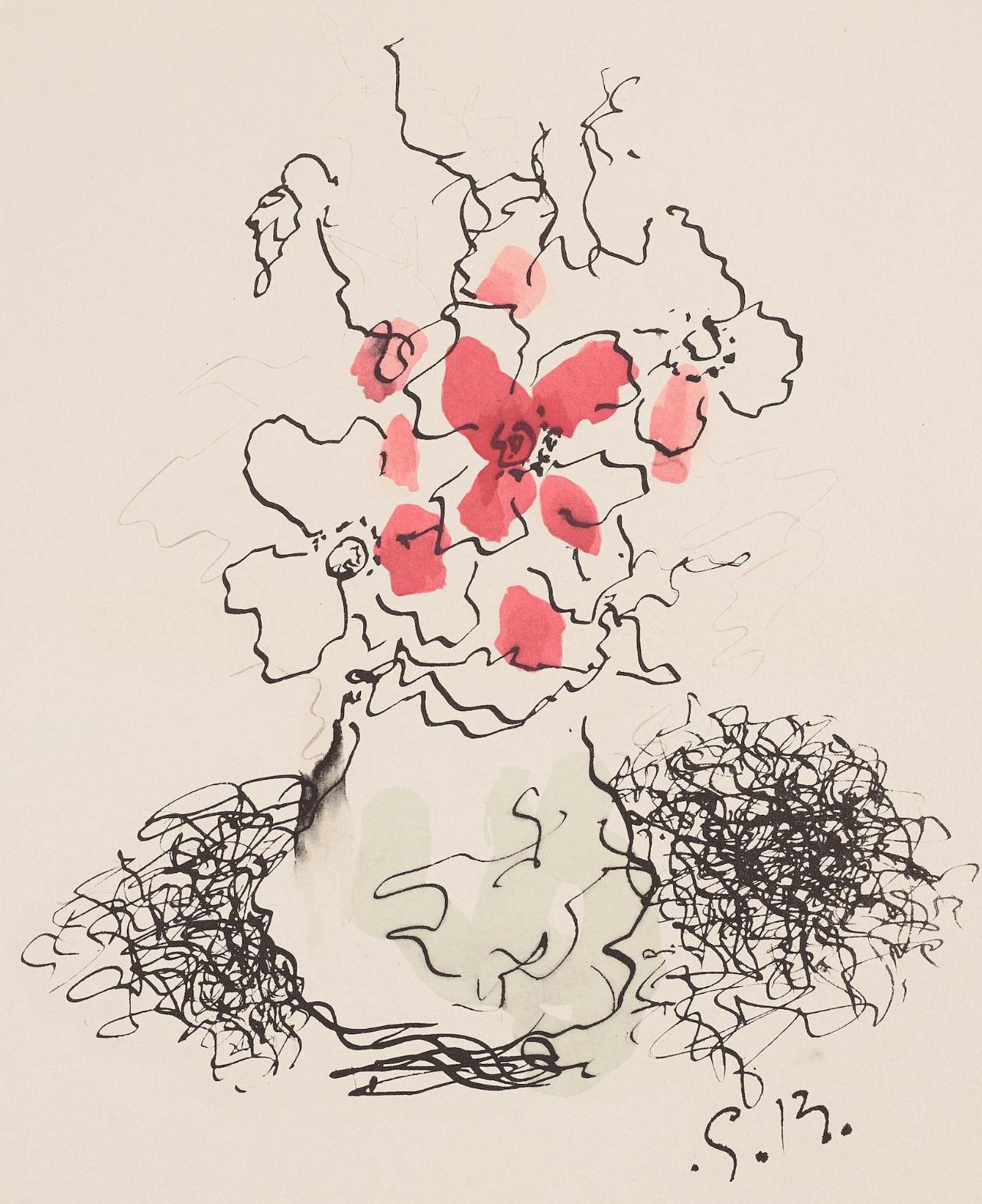
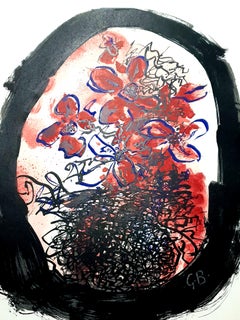
Georges Braque, Red Flowers, from Le Solitaire, XXe siecle, 1959 (after)1959
1959
$716
$89520% Off
£543.48
£679.3520% Off
€623.24
€779.0520% Off
CA$1,010.63
CA$1,263.2920% Off
A$1,084.82
A$1,356.0220% Off
CHF 577.61
CHF 722.0120% Off
MX$12,848.44
MX$16,060.5520% Off
NOK 7,299.40
NOK 9,124.2520% Off
SEK 6,666.39
SEK 8,332.9920% Off
DKK 4,655.86
DKK 5,819.8220% Off
About the Item
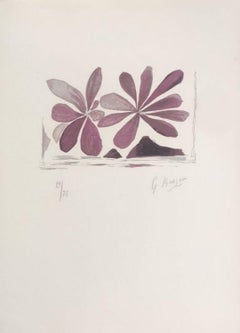
This exquisite lithograph and pochoir after Georges Braque (1882–1963), titled Fleurs rouges (Red Flowers), from the album Georges Braque, Le Solitaire (The Solitary), originates from the 1959 edition published by XXe siecle, Paris, in collaboration with Fernand Hazan, Paris; rendered by Daniel Jacomet, Paris; and printed by Daniel Jacomet et Cie, Paris, 1959. Fleurs rouges (Red Flowers) captures Braque’s serene exploration of nature through abstraction and harmony, translating the still life motif into a luminous orchestration of color and form. Through his distinctive balance of structure and sensitivity, Braque transforms a simple floral subject into a meditation on rhythm, perception, and the unity of natural and artistic order. The restrained yet radiant palette reveals his mastery of spatial balance and his pursuit of beauty through equilibrium and calm.
Executed as a lithograph and pochoir on velin d’Arches paper, this work measures 7.25 x 9.375 inches. Unsigned and unnumbered as issued. The edition exemplifies the technical excellence of Daniel Jacomet et Cie, Paris, produced in close collaboration with XXe siecle and Fernand Hazan, Paris.
Artwork Details:
Artist: After Georges Braque (1882–1963)
Title: Fleurs rouges (Red Flowers), from the album Georges Braque, Le Solitaire (The Solitary), 1959
Medium: Lithograph and pochoir on velin d’Arches paper
Dimensions: 7.25 x 9.375 inches (18.42 x 23.81 cm)
Inscription: Unsigned and unnumbered as issued
Date: 1959
Publisher: XXe siecle, Paris, in collaboration with Fernand Hazan, Paris
Printer: Daniel Jacomet et Cie, Paris
Condition: Well preserved, consistent with age and medium
Provenance: From the album Georges Braque, Le Solitaire, published by XXe siecle, Paris, in collaboration with Fernand Hazan, Paris; rendered by Daniel Jacomet, Paris; and printed by Daniel Jacomet et Cie, Paris, 1959
Notes:
Excerpted from the album (translated from French): XXX examples of this work were printed on Arches paper, containing an original engraving by Georges Braque, numbered from I to XXX. CM examples, constituting the original edition, including CCC for F. Hazan, publisher in Paris, CCC for A. Zwemmer, publisher in London, and CCC for the New York Graphic Society, LX examples, marked H.C., are reserved for the Author and the Publisher.
About the Publication:
Georges Braque, Le Solitaire (The Solitary) was published in Paris in 1959 by XXe siecle in collaboration with Fernand Hazan and printed by the Atelier Daniel Jacomet et Cie. Conceived as both a visual and literary homage to one of the founding figures of Cubism, the volume represents one of the most refined art book productions of the postwar era. The publication was issued in conjunction with the journal XXe siecle, under the direction of G. di San Lazzaro, a central figure in promoting modern art through his collaborations with artists such as Picasso, Miro, Chagall, and Calder. Le Solitaire brought together Braque’s mature reflections on nature, still life, and metaphysical quietude, accompanied by critical essays and reproductions of his work. The pochoir and lithographic plates—executed by Daniel Jacomet, whose atelier was renowned for its exceptional color pochoirs—capture the texture and tonal depth of Braque’s original paintings with rare precision.
About the Artist:
Georges Braque (1882–1963) was a French painter, sculptor, and printmaker whose pioneering vision transformed the course of 20th-century art. A central figure in modernism and the co-founder of Cubism alongside Pablo Picasso, Braque redefined visual perception by breaking objects into geometric forms and reassembling them from multiple perspectives, creating a new visual language that bridged the gap between abstraction and reality. His early work was influenced by the vibrant colors and expressive energy of the Fauvist painters Henri Matisse and Andre Derain, before evolving toward the more analytical and structured compositions inspired by Paul Cezanne’s theories of form and perspective. Braque’s collaboration with Picasso between 1908 and 1914 marked one of the most fertile and revolutionary periods in art history, resulting in works that challenged traditional notions of space, depth, and illusion. Throughout his career, Braque maintained a deep interest in harmony, rhythm, and balance, infusing his still lifes, landscapes, and later reliefs with poetic subtlety and intellectual rigor. He moved among a brilliant circle of contemporaries including Pablo Picasso, Henri Matisse, Marc Chagall, Juan Gris, Fernand Leger, and Amedeo Modigliani—artists united in their pursuit of new modes of artistic expression. Braque’s influence extended well beyond his own era, shaping the creative approaches of later modernists such as Alexander Calder, Alberto Giacometti, Salvador Dali, Joan Miro, Wassily Kandinsky, Marcel Duchamp, and Man Ray, all of whom drew inspiration from his structural innovations and aesthetic integrity. His works are held in major museum collections worldwide, including the Museum of Modern Art, the Centre Pompidou, the Tate, and the Guggenheim, where they continue to embody the essence of modern artistic thought and visual poetry. The highest price ever paid for a Georges Braque artwork is approximately 15 million USD, achieved in 2013 at Christie’s New York for Paysage a la Ciotat (1907).
Georges Braque Fleurs rouges, Braque Le Solitaire, Braque XXe siecle, Braque Fernand Hazan, Braque Daniel Jacomet.
- Creation Year:1959
- Dimensions:Height: 7.25 in (18.42 cm)Width: 9.375 in (23.82 cm)
- Medium:
- Movement Style:
- After:Georges Braque (1882 - 1963, French)
- Period:
- Condition:
- Gallery Location:Southampton, NY
- Reference Number:1stDibs: LU1465216690772
About the Seller
4.9
Platinum Seller
Premium sellers with a 4.7+ rating and 24-hour response times
Established in 1978
1stDibs seller since 2021
1,272 sales on 1stDibs
Typical response time: 1 hour
- ShippingRetrieving quote...Shipping from: Southampton, NY
- Return Policy
More From This Seller
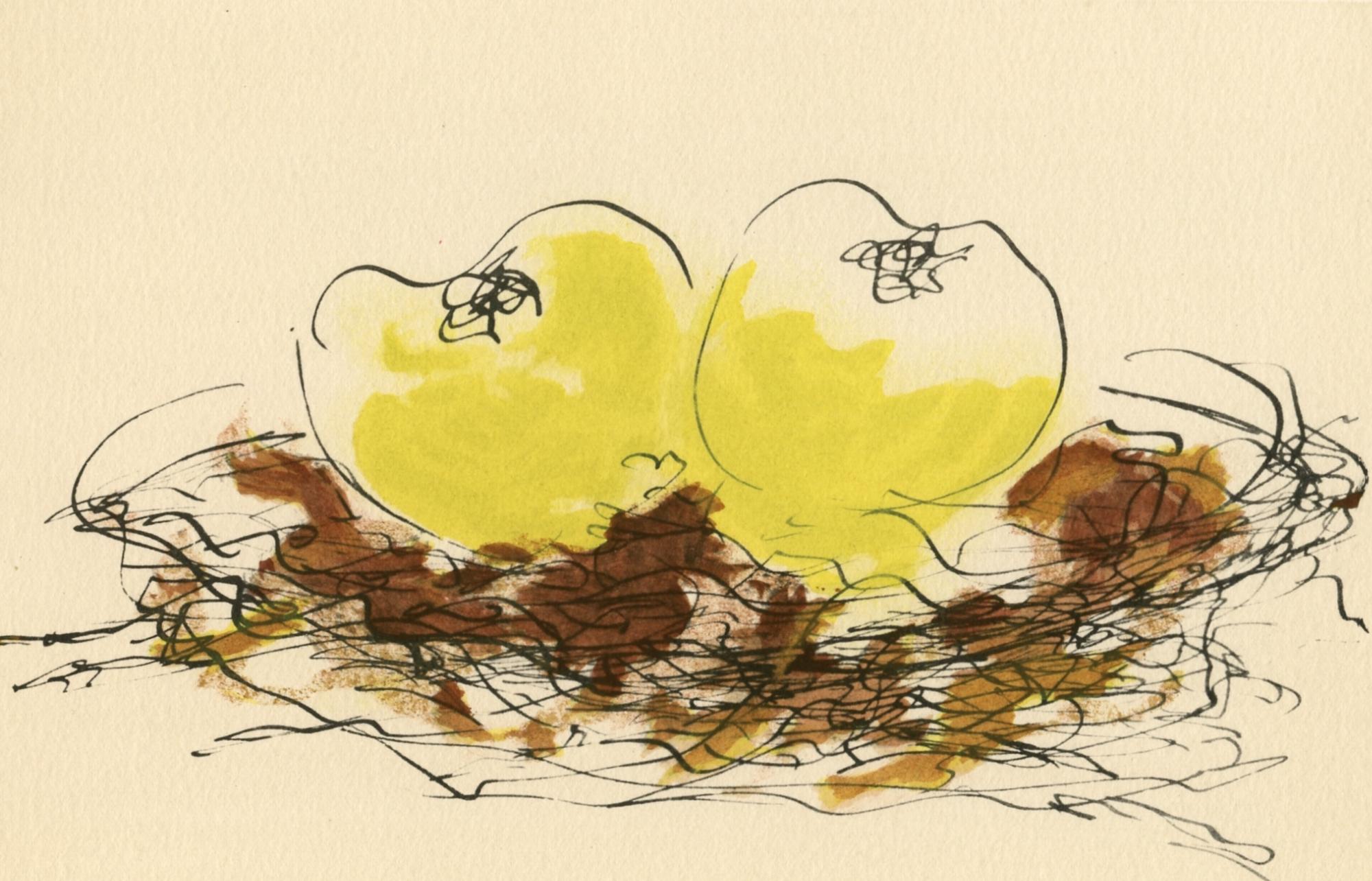
View AllGeorges Braque, Apples, from Le Solitaire, XXe siecle, 1959 (after)
By Georges Braque
Located in Southampton, NY
This exquisite lithograph and pochoir after Georges Braque (1882–1963), titled Pommes (Apples), from the album Georges Braque, Le Solitaire (The Solitary), originates from the 1959 e...
Category
1950s Cubist Abstract Prints
Materials
Lithograph
$716 Sale Price
20% Off
Free Shipping
Braque, Composition, Braque Espaces, 13 Dessins, Lavis, Aquarelles (after)
By Georges Braque
Located in Southampton, NY
Lithograph and stencil on vélin papier a la cuve du moulin richard de bas specialement filigrané pour cette édition paper. Inscription: signed in the plate and unnumbered, as issued....
Category
1950s Modern Landscape Prints
Materials
Lithograph, Stencil
$3,996 Sale Price
20% Off
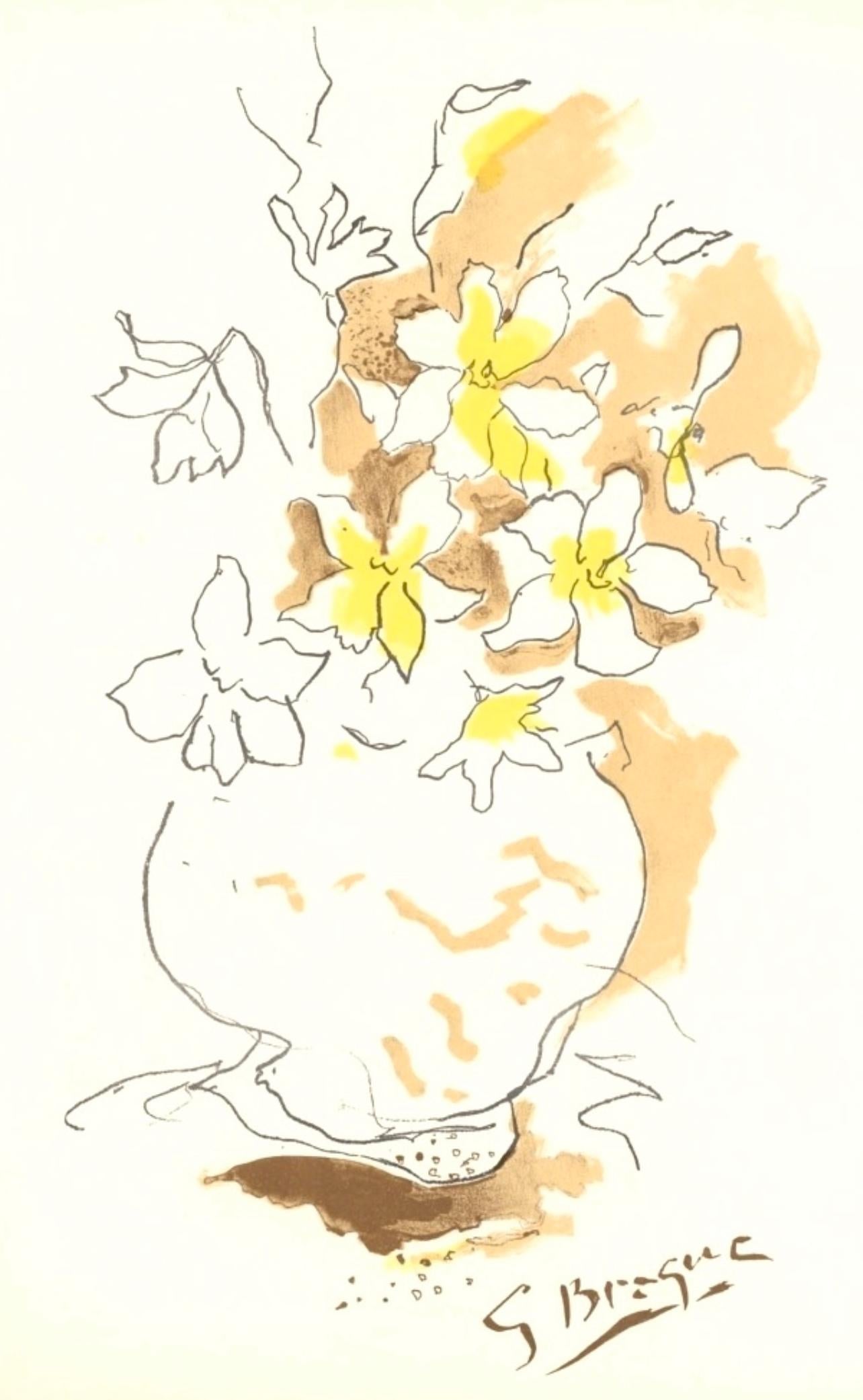
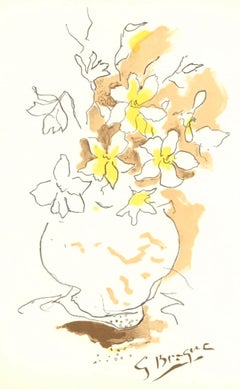
Georges Braque, The Bouquet, from Carnets intimes, 1955 (after)
By Georges Braque
Located in Southampton, NY
This exquisite lithograph after Georges Braque (1882–1963), titled Le Bouquet (The Bouquet), from Carnets intimes (Private Sketchbooks), Verve, Vol. VIII, No. 31–32, originates from ...
Category
1950s Modern Landscape Prints
Materials
Lithograph
$716 Sale Price
40% Off
Free Shipping
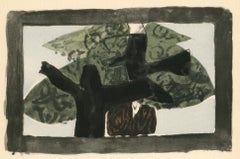
Georges Braque, The Tree, from Le Solitaire, XXe siecle, 1959 (after)
By Georges Braque
Located in Southampton, NY
This exquisite lithograph and pochoir after Georges Braque (1882–1963), titled L’arbre (The Tree), from the album Georges Braque, Le Solitaire (The Solitary), originates from the 195...
Category
1950s Cubist Abstract Prints
Materials
Lithograph
$716 Sale Price
20% Off
Free Shipping
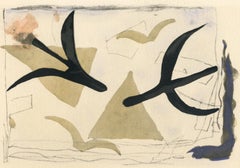
Georges Braque, Study of Birds, from Le Solitaire, XXe siecle, 1959 (after)
By Georges Braque
Located in Southampton, NY
This exquisite lithograph and pochoir after Georges Braque (1882–1963), titled Etude oiseaux (Study of Birds), from the album Georges Braque, Le Solitaire (The Solitary), originates ...
Category
1950s Cubist Abstract Prints
Materials
Lithograph
$716 Sale Price
20% Off
Free Shipping
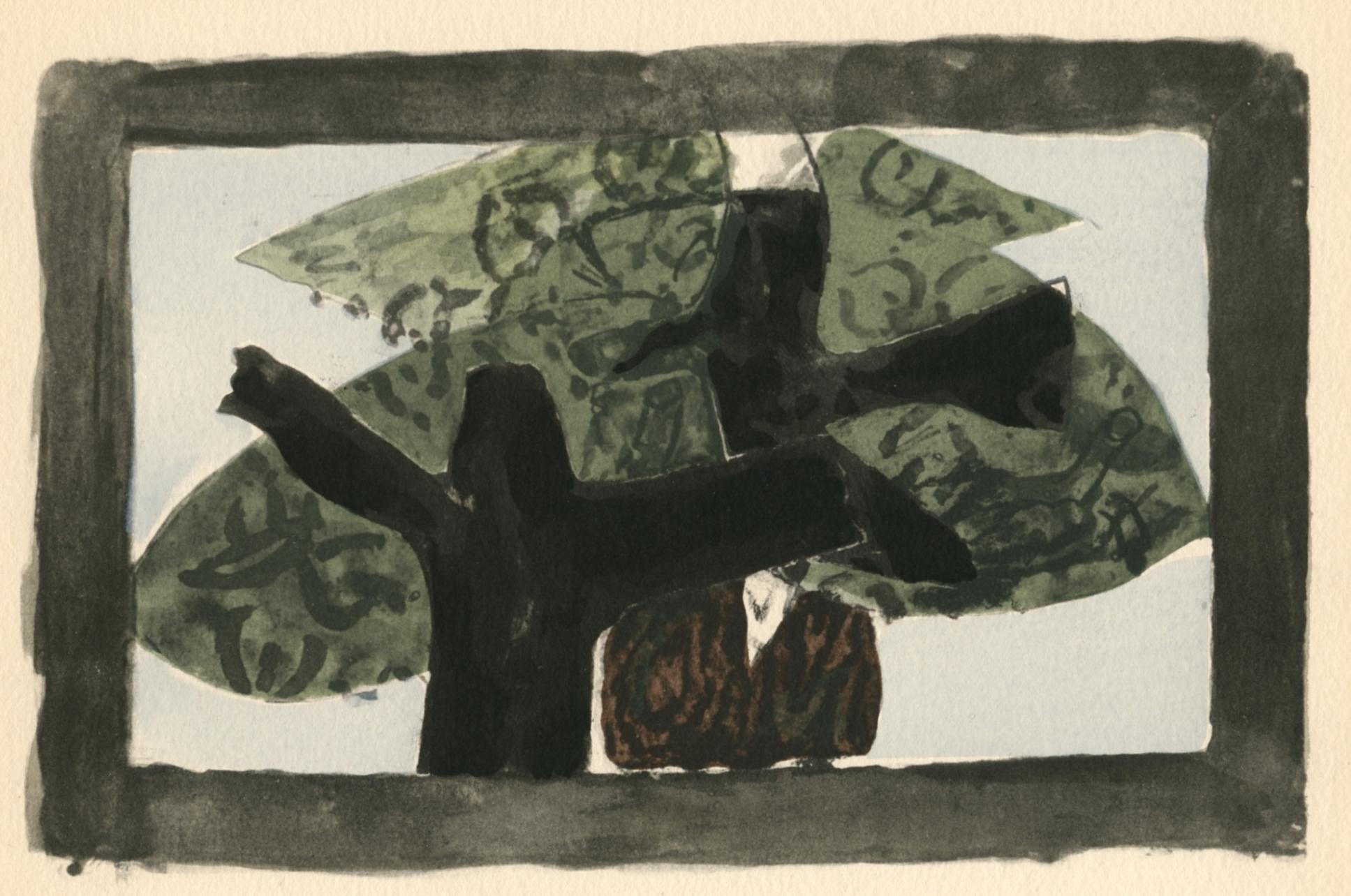
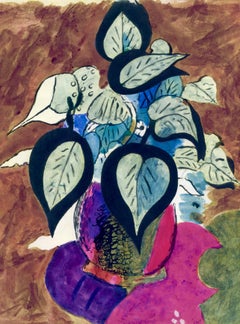
Georges Braque, Black Foliage, from Carnets intimes, 1955 (after)
By Georges Braque
Located in Southampton, NY
This exquisite lithograph after Georges Braque (1882–1963), titled Feuillage noir (Black Foliage), from Carnets intimes (Private Sketchbooks), Verve, Vol. VIII, No. 31–32, originates...
Category
1950s Modern Landscape Prints
Materials
Lithograph
$716 Sale Price
40% Off
Free Shipping
You May Also Like
Georges Braque - Original Lithograph
By Georges Braque
Located in Collonge Bellerive, Geneve, CH
Georges Braque - Original Lithograph
1963
Dimensions: 32 x 24 cm
Andre Sauret, Monte Carlo
The father of Cubism
Three Cubist that distinguishes art historian periods were initiated and developed by Georges Braque: The Cubist Cézanne (1907-1909), Executive (1909-1912) and synthetic (1912-1922).
Post-Impressionist and fawn, Braque no longer adheres to the contingency of a decorative way or the other. Cézanne’s paintings exhibited at the Grand Palais during the retrospective of 1907 are a revelation: Cézanne sought and invented a pictorial language. In his footsteps, Braque went to the South with the reasons of the Master. He returned with Estaque landscapes and surprising Ciotat it keeps Cezanne geometric model and retains the “passages” continuity from one surface to another to create the sensation of “turning around” of the object represented. But he wants to go after the consequences of the vision of Cezanne. In his paintings Houses in L’Estaque (1908) it simplifies the volumes of houses, neglects detail by removing doors and windows: the plastic rhythm that builds the table. Large Nude , a masterpiece of the period, can be considered the first work of Cézanne cubism .
Systematizing and deepening Braque discoveries open the door analytical cubism. In 1909, his painting became more cerebral than sensual. The pattern is recreated in the two-dimensionality of the canvas, leaving aside any illusionistic perspective. In Still Life with Violin, objects are analyzed facets according to their characteristic elements, each facet referring to a particular view of the object. There are so many facets of points selected view: Table reflects the knowledge of the object and the ubiquity of the eye. Moreover, Braque is looking for the essence of the objects in the world rather than their contingency, which explains the absence of light source and use of muted colors (gray, ocher), contingent aspects of the object . But formal logic has stepped facets, erased any anecdote to the object and ultimately led to his painting a hermetic more marked on the edge of abstraction (see the series of Castle Roche-Guyon ).
Braque, anxious to keep the concrete and refusing at all costs that the logic of Cubism takes the paintings to abstract, reintroduced signs of reality in his paintings in 1912 marks the beginning of Synthetic Cubism. Historians speak of “signs of real” rather than reality because what interests Braque, this is not to put reality into a table, but to create a painting which, by its language, refers to the real. To do this, he invented two major techniques XX th century inclusions and contributions. The inclusions consist of painting objects that have no real depth, materials (wallpaper in Nature morte aux playing cards faux wood is a pictorial inclusion) or letters (calligraphic inclusion in Portuguese ), made first brush and a few months later stencil. Contributions are defined in contrast with the collage on canvas of foreign materials: glued or sand paper, sawdust, etc.. Regarding the collages, Braque used for the first time in September 1912 a piece of adhesive paper imitating faux wood Compote and Glass , then the packet envelope of tobacco Bock in 1912-1913, or an advertisement in Damier , 1913). Inputs and inclusions refer to an external object in the table, without “emulate” this object. Away from their appearances, objects are represented in closest essence of the objects in the real world sense.
This is also the time of Synthetic Cubism that Braque invented paper sculpture. There are, unfortunately, and no one is living proof of a photograph makes it possible to realize: Paper and paperboard.
Métamorphoses period(1961-1963).
In 1961, Georges Braque worked on a Greek head for the Louvre, which obsesses him, and he wishes to free his mind. He tried several times to bring out the paint and the result was unsatisfactory. He thinks the ultimate metamorphosis its Greek head projected in three dimensions. He calls in his studio of Baron Heger Loewenfeld, master lapidary, and he communicates his enthusiasm during the “fateful encounter.” Nine months later, in honor of the eighty years of Georges Braque, Heger Loewenfeld offers the Master of the ring Circe: the famous Greek head finally exorcised, carved in an onyx. Braque Loewenfeld then asked to identify other issues that haunt him.
From dated and signed by Georges Braque, Heger gouaches Loewenfeld shapes works in the fields of jewelery, lapidary art...
Category
1960s Modern Figurative Prints
Materials
Lithograph
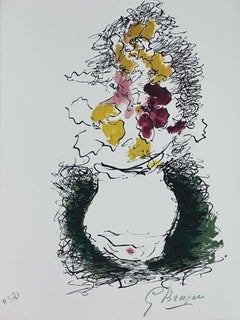
Le Bouquet
By Georges Braque
Located in Paris, FR
Lithograph, 1962
Edition : HC 10/125
Publisher : André Sauret (Monte-Carlo)
Printer : Mourlot (Paris)
Catalog : [Vallier 188, p. 284]
33.00 cm. x 52.00 cm. 12.99 in. x 20.47 in. (p...
Category
1960s Abstract Abstract Prints
Materials
Lithograph
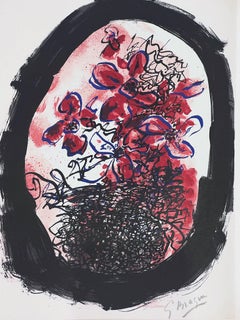
Frontispiece
By Georges Braque
Located in Paris, FR
Lithograph, 1962
Edition : 125 ex.
Publisher : André Sauret (Monte-Carlo)
Printer : Mourlot (Paris)
Catalog : [Vallier 188, p. 284]
33.00 cm. x 52.00 cm. 12.99 in. x 20.47 in. (pape...
Category
1960s Abstract Abstract Prints
Materials
Lithograph
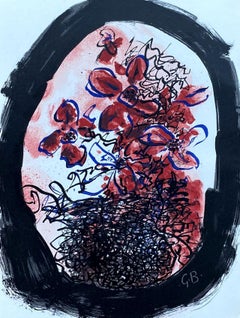
Bouquet of Flowers - Original Lithograph - Signed in the Plate (Vallier #188)
By Georges Braque
Located in Paris, IDF
Georges BRAQUE
Bouquet of flowers, 1961
Original lithograph in six colors (Mourlot workshop)
Printed signature in the plate
On vellum 34 x 26 cm (c. 13 x 10 inch)
REFERENCE : Catal...
Category
1960s Expressionist Still-life Prints
Materials
Lithograph
Si je mourais là-bas
By Georges Braque
Located in Paris, FR
Wood engraving, 1962
Handsigned by the artist in pencil and numbered 60/70
Publisher : Louis Broder (Paris)
Printer : Fréquet et Braudier (Paris)
Catalog : [Vallier 181, p.250]
47.50...
Category
1960s Abstract Abstract Prints
Materials
Wood, Engraving
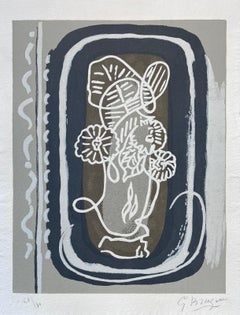
Fleurs de l
air
By Georges Braque
Located in Paris, FR
Lithograph, 1963
Handsigned by the artist in pencil and numbered 19/75
Publisher : Edwin Engelberts (Genève)
Catalog : Mourlot 127
38.00 cm. x 28.00 cm. 14.96 in. x 11.02 in. (paper...
Category
1960s Abstract Abstract Prints
Materials
Lithograph
More Ways To Browse
André Lanskoy On Sale
Andre Masson Don Giovanni
Anna Helper
Antoni Tapies Galerie Maeght
Arthur Boden On Sale
Benedictus Variations
Bridget Riley Poster
Calder Boomerang
Calder Convection
Calder Moon Lithograph
Calder Skybird
Calder Tree
Calder Triangles
Carmen Gracia
Cecily Brown All The Nightmares Came Today
Chihuly Float
Craig Sheppard
Cy Twombly Poster