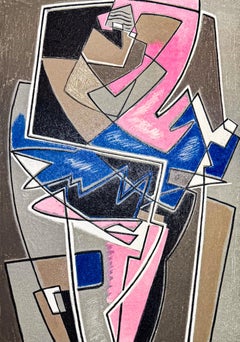
Items Similar to Arlecchino
Want more images or videos?
Request additional images or videos from the seller
1 of 12
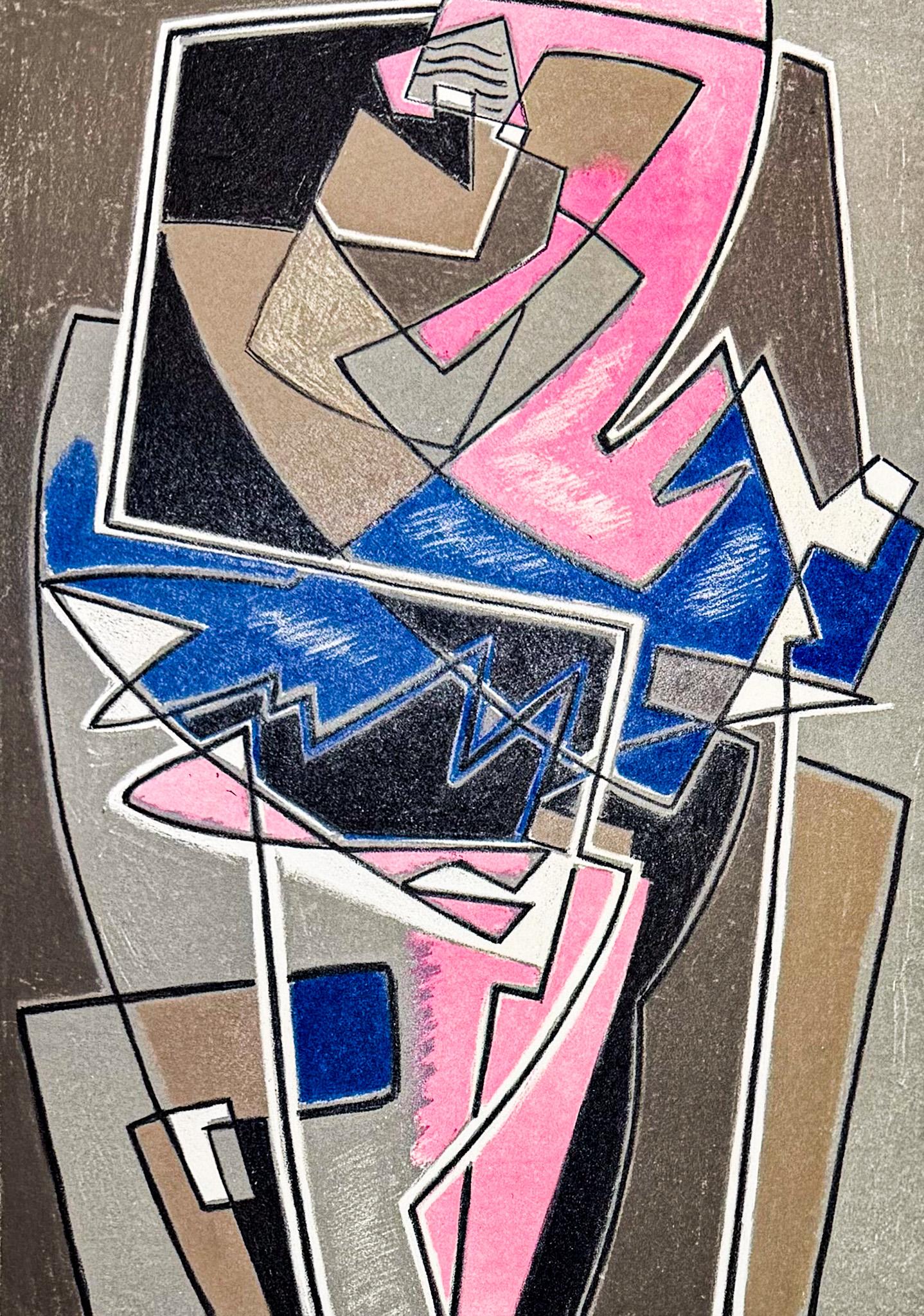
Gino SeveriniArlecchino1965
1965
$3,000
£2,284.44
€2,630.47
CA$4,251.26
A$4,572.84
CHF 2,443.86
MX$53,900.79
NOK 30,811.35
SEK 28,167.42
DKK 19,654.04
About the Item
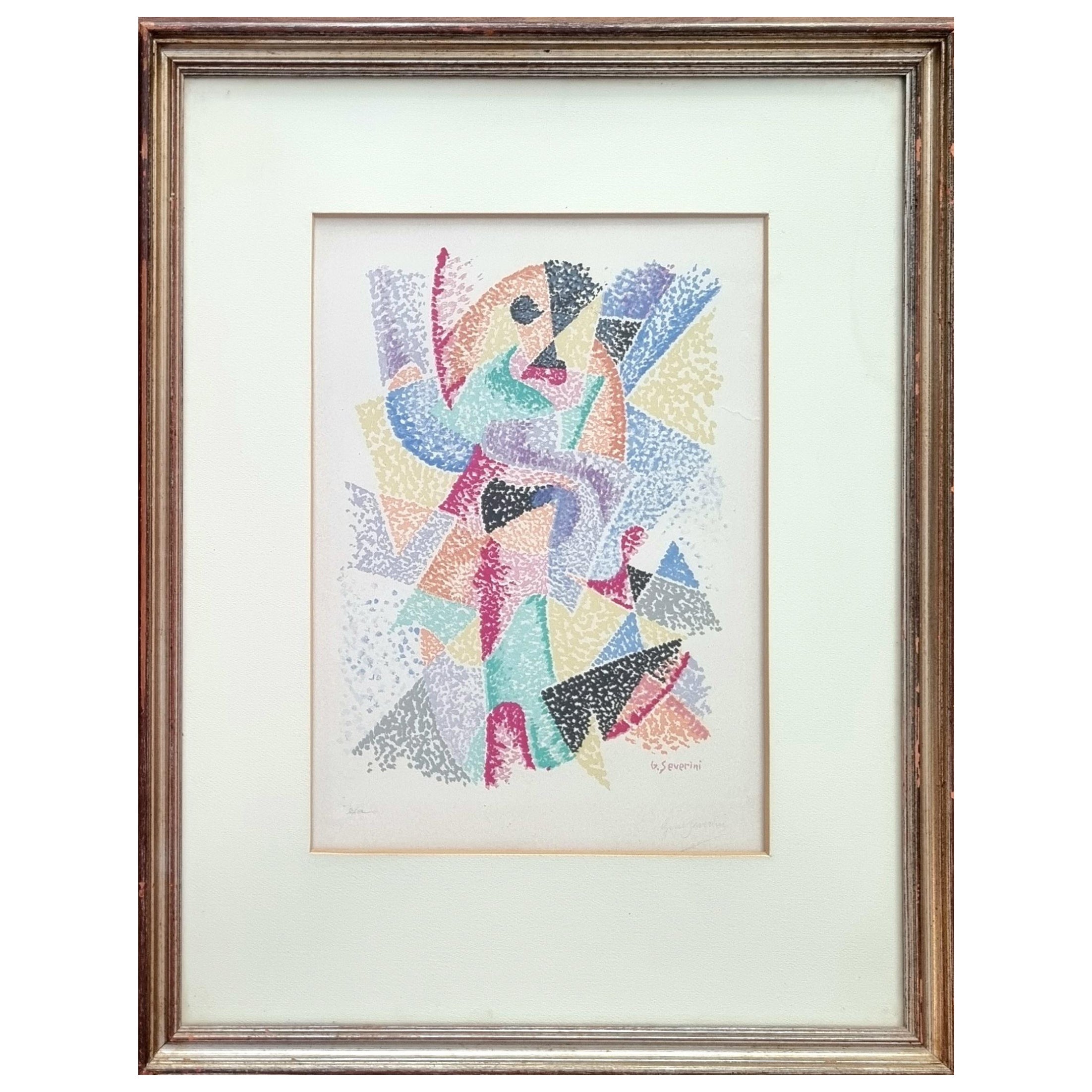
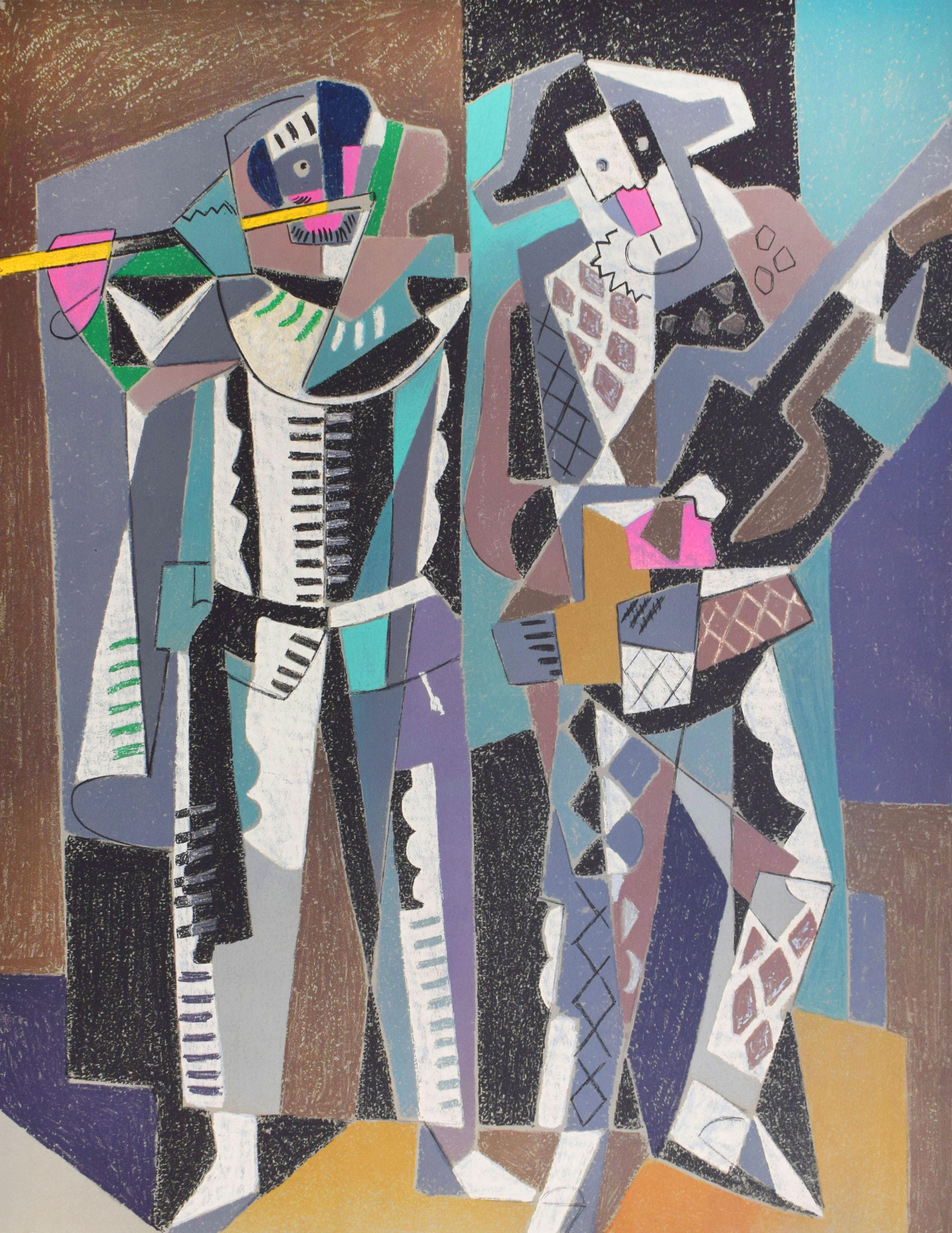
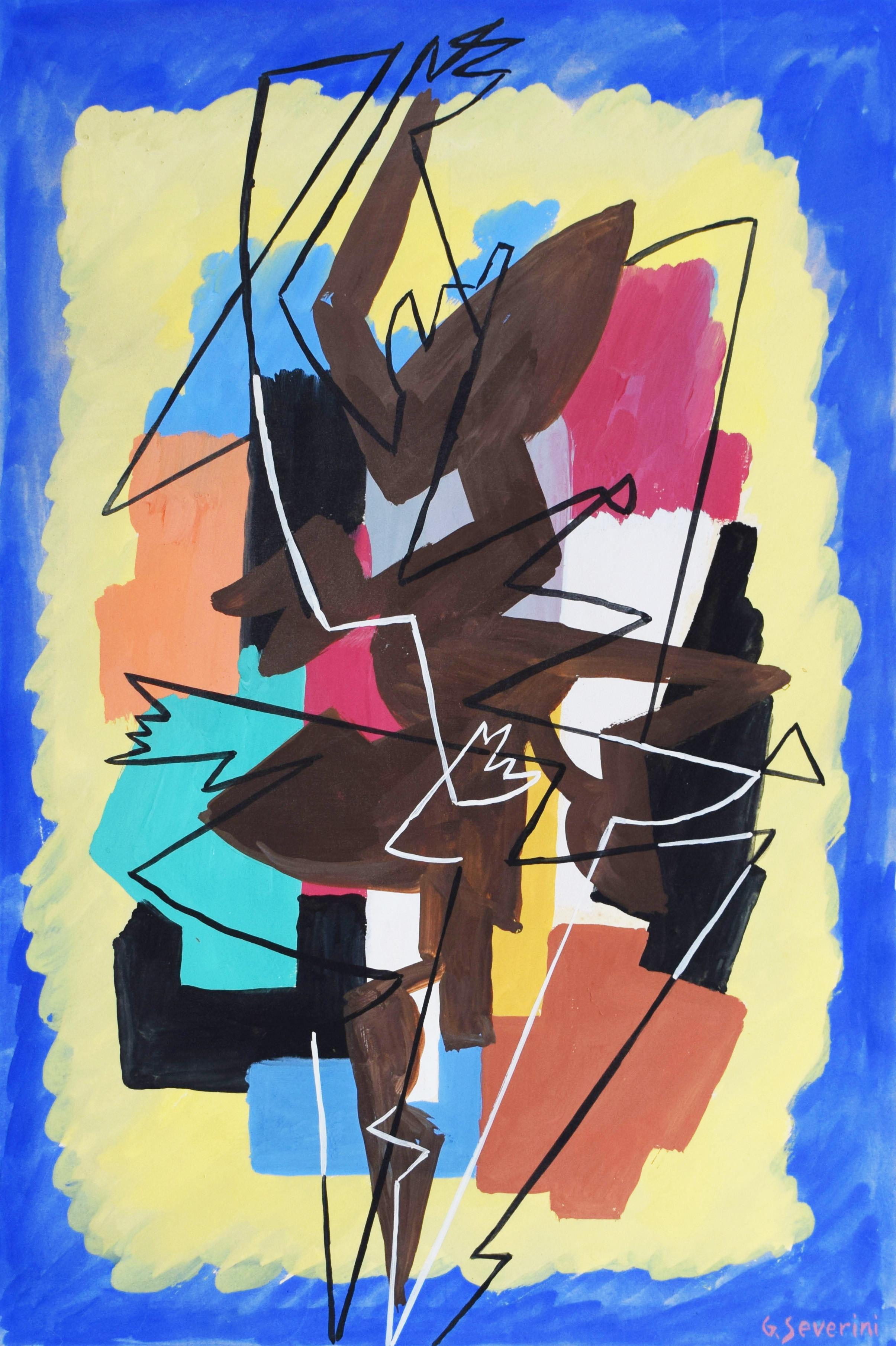
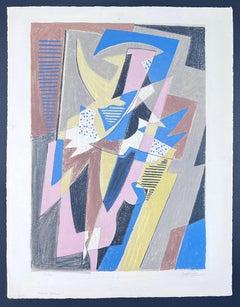
This artwork titled "Arlecchino" 1965, is an original colors lithograph on Wove paper by renown Italian artist Gino Severini, 1883-1966. It is hand signed and numbered 43/80 in pencil by the artist. The artwork (image) size is 15 x 11.15 inches, framed size is 27.25 x 19.25 inches. Custom framed in a wooden black frame, with off-white matting. It is in excellent condition.
About the artist:
Painter, sculptor, and printmaker Gino Severini was born on April 7, 1883 in Cortona, Italy, when the country was still under monarchical rule. Though born into a poor family his parents were able to send him to the Scuola Technica; however, he was expelled after being caught stealing exam papers with fellow students. Thus he went to work for his father, a junior court official, at the age of fifteen before relocating with his mother to Rome. There, he was introduced to painting and began studying on his own time while earning income as a shipping clerk. Not long after, a resident of his Cortona became his patron, allowing him to enroll in both private and institutional classes.
Around 1900 he was introduced to the Divisionist painter Umberto Buccioni who had founded a stippling technique that intrigued Severini: colors were never mixed, but instead were painted beside one another in a series of dots that would read as "mixed" from afar. Having only been exposed to classical themes and styles, this unusual technique and Buccioni's desire to throw off the confines of the traditional greatly influenced Severini's artistic path. His work began to move away from the classical, and he joined Filippo Martinelli, Luigi Russolo, Carlo Carra, and Buccioni in forming the Futurist movement. At this point, his patron revoked Severini's allowance, unsatisfied with the direction of the youth's work. Despite the financial setback, Severini was now free to move away from Italy, and by 1906 he had settled in Paris. For the rest of his life he would divide his time between his new home and Cortona.
It was in Paris that he found his stride, finding great inspiration in the experimental art scene of Montmartre. He kept a studio near Georges Braque, Raoul Dufy, and Suzanne Valadon, adjacent at all times to the burgeoning Modernist movements that found footing there. In 1912 he helped organize the first Futurist exhibition in Paris at Galerie Bernheim-Jeune. The following year he participated in Futurist exhibitions in Germany, the United States, and England, and he played a key role in bringing French experimental art theories, such as Cubism, to his Italian compatriots. It was around this time that his dedication to Futurism waned. Less enamored with machines and scenes of industry than his fellow Futurists, he turned to the forms of dancers and to the cafes and nightclubs of Paris for inspiration. In part, Severini's work at this time was seen by critics as proof of Futurism's failure, a rejection of the group's anti-classicist, industrial-driven idealism for the future.
A series of tragic events, partially brought on by the First World War, also converged upon Severini's artistic path. Despite having established himself as a part of the exciting new era of Modern artists, he did not have regular patrons, an issue that only worsened with the onset of war. Severini and his new wife, Jeanne, stuggled to find housing and food, and Severini was dealing with recurring ill bronchial health. They moved in with Severini's parents in the hopes of allowing him to improve his health; however, soon after their arrival in Montepulciano Jeanne became pregnant unexpectedly and war was declared. Selling their posessions, they returned to Montmartre where their daughter, Gina, was born as Paris experienced food shortages and influenza. Severini's health declined further and he was encouraged by his friend Pablo Picasso to travel to his doctor in Barcelona. When Severini returned, he found his wife and daughter emaciated, the city in chaos. They made the decision to move again, this time to the Igny countryside to look for paying work - an endeavor that proved fruitless and prompted their return to Paris. After the stillbirth of their son, Tonio, Severini's staunch atheism was fractured. He abandoned Futurism almost entirely to focus on the style introduced to him by Picasso, dubbed Synthetic Cubism. His compositions for a brief time became flat and stylized, focusing on tonality and bold shapes.
When it became clear that the war wasn't going to end anytime soon and Paris wasn't safe, Severini took his family to the countryside once again, and began working on still lifes and landscapes that synthesized his love of classical principles of light and shadow with his interest in Abstraction. As war and then the influenza pandemic took its toll, he lost friends Apollinaire to flu, Modigliani to tuberculosis, and Modigliani's wife Hebuterne to suicide, all within one year. The experiences of the war years radically changed his outlook on art as well as life; in addition to these sharply contrasting, simplified abstractions, he was also drawn once more into the world of Italian Renaissance masters; spiritualism and religion would soon find footing in his work. He would eventually become a part of the "return to order" post-war aesthetic, joining the Novecento Italiano group that upheld the aesthetic ideals of the new Mussolini era - a fact that would hinder his relationships with other European Modernists for a time.
During the 1920s and '30s he studied frescoe and muralist techniques and was commissioned to do pieces in Switzerland, Italy, and France, including two murals for the Montefugoni Castle purchased in the early 1910s by George Sitwell. He exhibited frequently, and in 1935 he won first prize in painting at the Rome Quadrennial. Following the Second World War, he turned toward Abstraction and religious themes. Adding mosaic into his skill set, he quickly gained a reputation for his finely wrought mosaic murals and he was dubbed the "Father of Modern Mosaics". This led to major commissions, including two large works for the church of Saint-Pierre in Freiburg and in the offices of KLM Rome Airlines and Alitalia Airlines. He would eventually open a school for mosaic training and design in Paris, and he continued to work and exhibit until his death on February 26, 1966.
Selected exhibitions:
1903, '04: Amatori e Culturi exhibition, Rome
1912: Galerie Bernheim-Jeune, Paris
1913: Marlborough Gallery, London (solo); Der Sturm, Berlin (solo)
1915: Panama-Pacific International Exhibition, San Francisco, CA, USA
1917: Alfred Steiglitz 291 Gallery, New York
1923, 1925: Rome Biennale
1926: Novecento Group exhibition, Milan
1929: Novecento Group exhibition, Geneva and Milan
1930: Venice Biennale
1931, 1935: Rome Quadrennials (first prize, painting, 1935)
1954: "The Futurists: Balla - Severini, 1912-1918", Rose Fried Gallery, New York
1965: Rome Quadrennial (Premio Nazionale di Pittura prize); Accademia di San Luca (solo)
Selected Collections:
Museum de Fundatie, Zwolle, The Netherlands; Musee National d'Art Moderne, Paris; Guggenheim Museum, New York; Museum of Modern Art, New York; Museo del Novecento, Milan; Jucker Collection, Pinacoteca di Brera, Milan; Estorick Collection, London
- Creator:Gino Severini (1883-1966, Italian)
- Creation Year:1965
- Dimensions:Height: 27.25 in (69.22 cm)Width: 19.25 in (48.9 cm)Depth: 1 in (2.54 cm)
- Medium:
- Movement Style:
- Period:
- Condition:
- Gallery Location:San Francisco, CA
- Reference Number:Seller: sev/arl/011stDibs: LU666317272952
Gino Severini
Gino Severini (7 April 1883 – 26 February 1966) was an Italian painter and a leading member of the Futurist movement. For much of his life he divided his time between Paris and Rome. He was associated with neo-classicism and the "return to order" in the decade after the First World War. During his career he worked in a variety of media, including mosaic and fresco. He showed his work at major exhibitions, including the Rome Quadrennial, and won art prizes from major institutions.
About the Seller
5.0
Platinum Seller
Premium sellers with a 4.7+ rating and 24-hour response times
Established in 1999
1stDibs seller since 2017
884 sales on 1stDibs
Typical response time: 2 hours
- ShippingRetrieving quote...Shipping from: San Francisco, CA
- Return Policy
More From This Seller
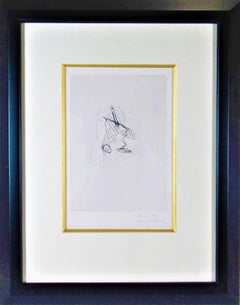
View AllAjournement IV
By Jacques Villon
Located in San Francisco, CA
Artist: Jacques Villon
Title: Ajournement IV
Year : 1959
Medium: Etching
Edition: Inscribed Bon A Tirer (Trial Proof) in pencil
Paper: Wove
Image size: 6 x 5 inches
Signature:...
Category
Mid-20th Century Abstract Abstract Prints
Materials
Etching
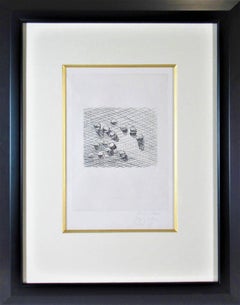
Ajournement I
By Jacques Villon
Located in San Francisco, CA
Artist: Jacques Villon
Title: Ajournement I
Year: 1959
Medium: Etching
Edition: Inscribed Bon A Tirer (Trial Proof) in pencil
Paper Wove
Image size: 5.5 x 6.5 inches
Signature: H...
Category
Mid-20th Century Abstract Abstract Prints
Materials
Etching
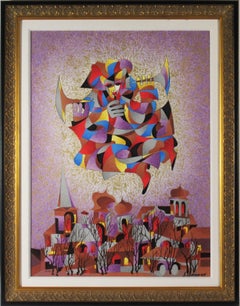
The City
s Conscience
By Anatole Krasnyansky
Located in San Francisco, CA
This artwork titled "The City 's Conscience" 2006 is an original color serigraph by Ukrainian/American artist Anatole Krasnyansky. It is hand signed and numbered 45/495 in black ink by the artist. The artwork size is 24 x 17.5 inches, framed size is 29.5 x 23 inches. Custom framed in a wooden black and gold frame, with fabric liner. It is in excellent condition.
About the artist:
Anatole Krasnyansky (born in 1930; Kiev, Ukraine) is a Ukrainian-American artist who has gained prominence by pioneering a new watercolor technique. Krasnyansky added paper texture as a component of his watercolors. With this new process, Krasnyansky added texture and depth to the watercolor medium and expanded its expressive possibilities to a level usually associated with oil painting.
Biography
He was born in Kiev, growing up and living during the times when Ukraine was a part of the U.S.S.R. Krasnyansky received master's degrees in fine art and architecture. He found that the freedom of expression that he needed in his artwork could not be found within the strictures of the Soviet Union and moved to the United States in 1975.
In the U.S., Krasnyansky found valuable use for his knowledge of architecture, design and his imagination. and found success in multiple artistic pursuits. Almost surreal, Krasnyansky’s figures are recognizable form while incorporating elements of his Eastern heritage, the cubist ideas of Picasso and Braque, and as well as American culture.
Accomplishments
Krasnyansky began working as a scenic artist for ABC and CBS, including the production of two Academy Awards shows. He became a set designer for Universal Studios (credits including The Blues Brothers and Battlestar Galactica...
Category
Late 20th Century Surrealist Landscape Prints
Materials
Screen
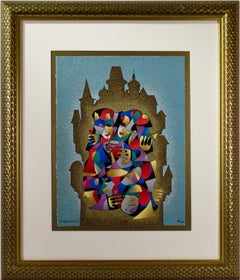
Two Faces
By Anatole Krasnyansky
Located in San Francisco, CA
This artwork "Two Faces" 2006 is an original color serigraph by Ukrainian/American artist Anatole Krasnyansky. It is hand signed and numbered 323/350 in blac...
Category
Late 20th Century Surrealist More Prints
Materials
Screen
Geometric Figure #23
By Dave Fox
Located in San Francisco, CA
Artist: David Fox (American, 1920-2011)
Title: Geometric Figure #23
Year: 2003
Medium: Acrylic on paper
Paper: Watercolor paper
Image size: 9.75 x...
Category
21st Century and Contemporary Cubist Abstract Paintings
Materials
Acrylic

Ajournement 2
By Jacques Villon
Located in San Francisco, CA
Artist: Jacques Villon
Title: Ajournement II
Year: 1959
Medium: Etching
Edition: Inscribed Bon A Tirer (Trial Proof) in pencil
Paper Wove
Image size: 6 x 8 inches
Signature: Hand...
Category
Mid-20th Century Abstract Abstract Prints
Materials
Etching
You May Also Like
GINO SEVERINI - Harlequin 1965, Lithograph signed by hand
By Gino Severini
Located in Vigevano, PV
"Harlequin" 1965
color lithograph
cm 63x46
Bottom left EA and signed lower right in pencil.
Il Bisonte publisher, Florence. In frame
Provenance
Private collection Milan
Sphere Gal...
Category
Antique 1860s Italian Futurist Contemporary Art
Materials
Paper
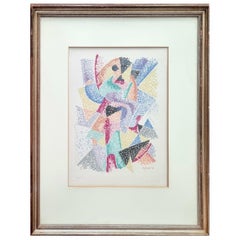
Commedia dell’Arte - Italian Cubism Futurism
By Gino Severini
Located in London, GB
This original lithograph is hand signed in pencil by the artist "Gino Severini" at the lower right margin.
It is also hand numbered in pencil from the edition of 175, at the lower le...
Category
1950s Futurist Figurative Prints
Materials
Lithograph
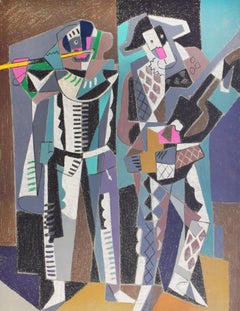
The Dancer - Italian Futurism Dancer
By Gino Severini
Located in London, GB
This tempera is hand signed by the artist "G. Severini" in the lower right image.
It is dedicated in pencil ‘al caro vecchio amico Raffaele Carrieri, affectuoso riccordi di Gino Sev...
Category
1950s Futurist Figurative Paintings
Materials
Paper, Tempera
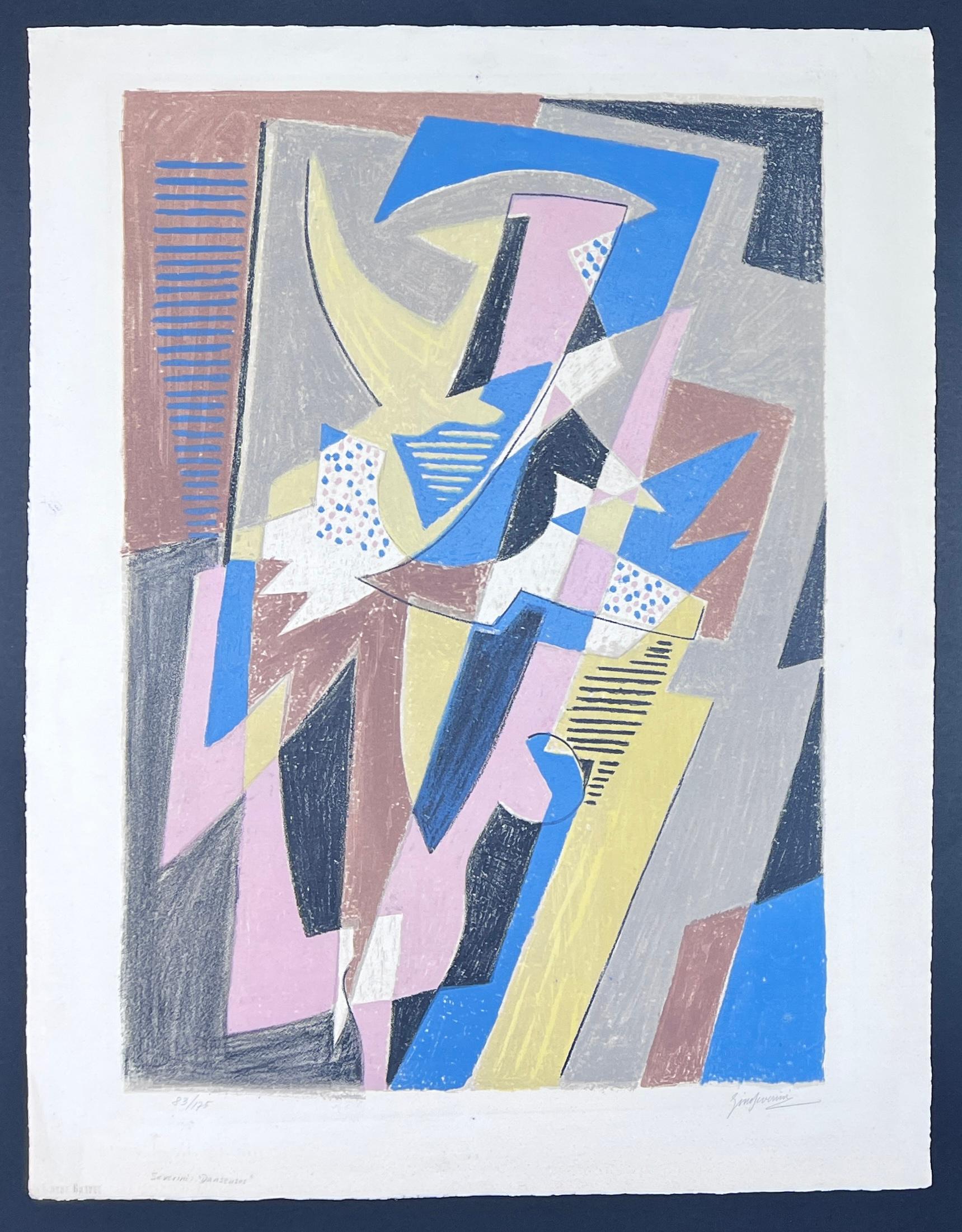
Gino Severini (1883 - 1966) - Danseuse - Seven-color lithograph on paper - 1957
By Gino Severini
Located in Varese, IT
Seven-color lithograph on paper, edited in 1957.
Limited edition of 175 copies, numbered as 83/175 in lower left corner.
Signed in pencil by artist in lower right corner.
Plate size...
Category
1950s Abstract Prints and Multiples
Materials
Lithograph
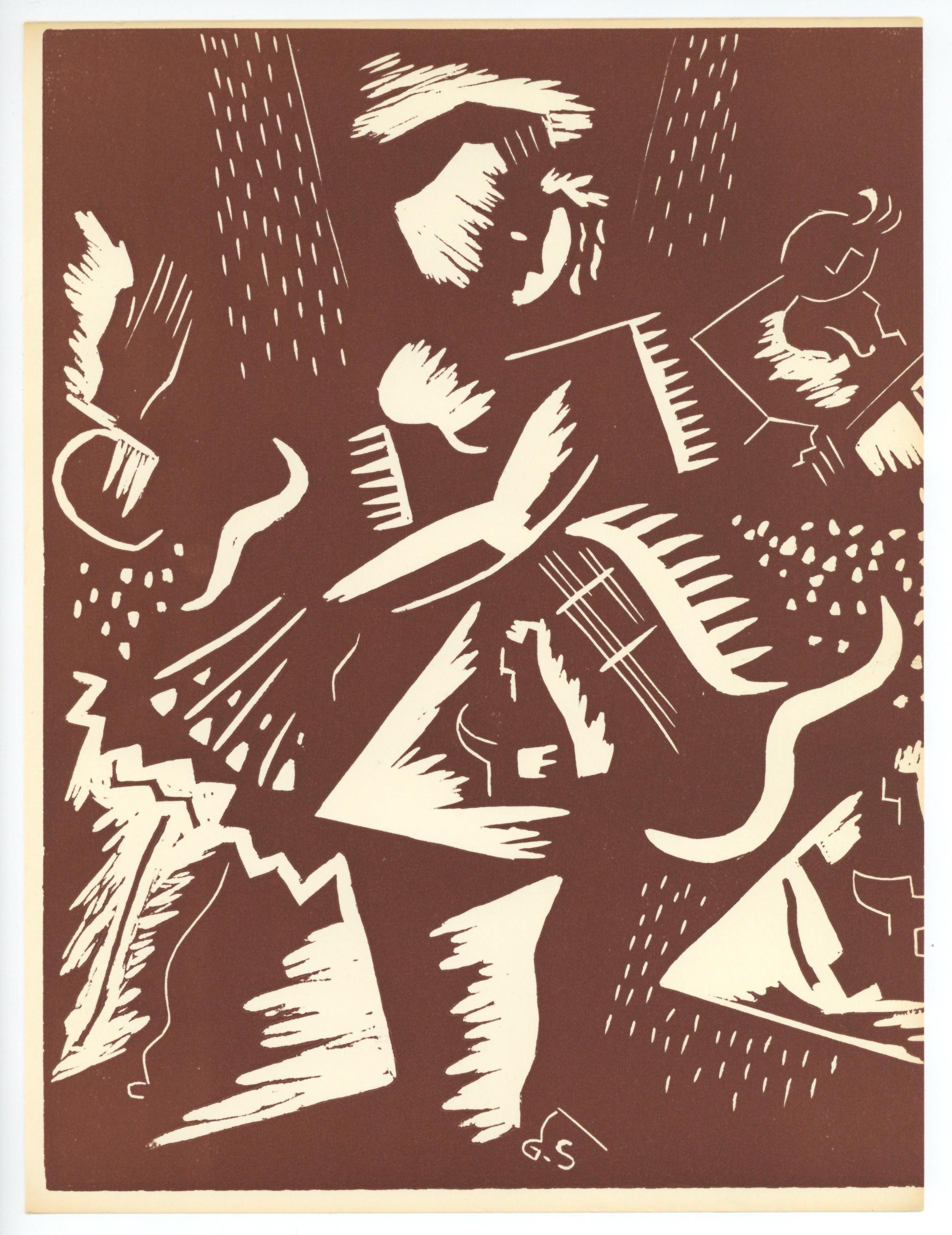
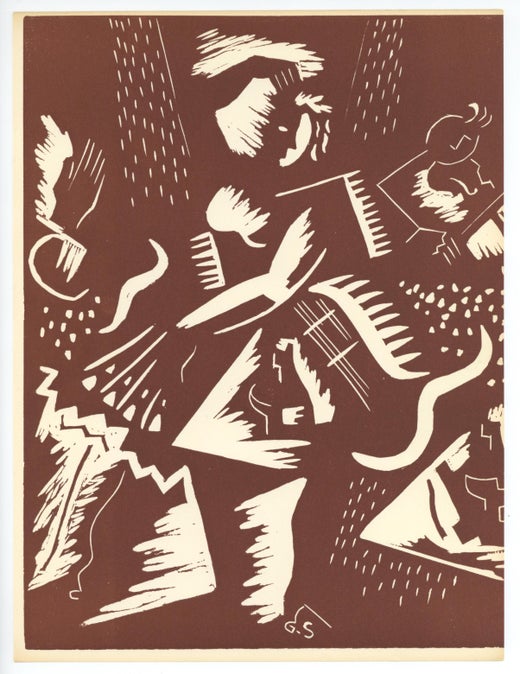
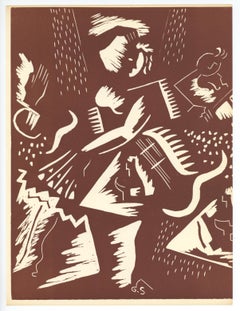
original linocut
By Gino Severini
Located in Henderson, NV
Medium: original linoleum cut. This linocut by Italian Futurist Gino Severini was printed in 1939 for the art revue XXe Siecle and published in Paris by San Lazzaro. Size: 12 1/2 x 9...
Category
1930s Futurist Prints and Multiples
Materials
Linocut
Gino Severini (1883–1966) - Ballerine - Colour lithograph on paper - 1954
By Gino Severini
Located in Varese, IT
Colour lithograph on paper, edited in 1954.
Limited edition of 100 pieces, numbered as 14/100 in lower left corner.
Signed in pencil by artist in lower right center.
Paper size: 50 ...
Category
1950s Abstract Prints and Multiples
Materials
Lithograph