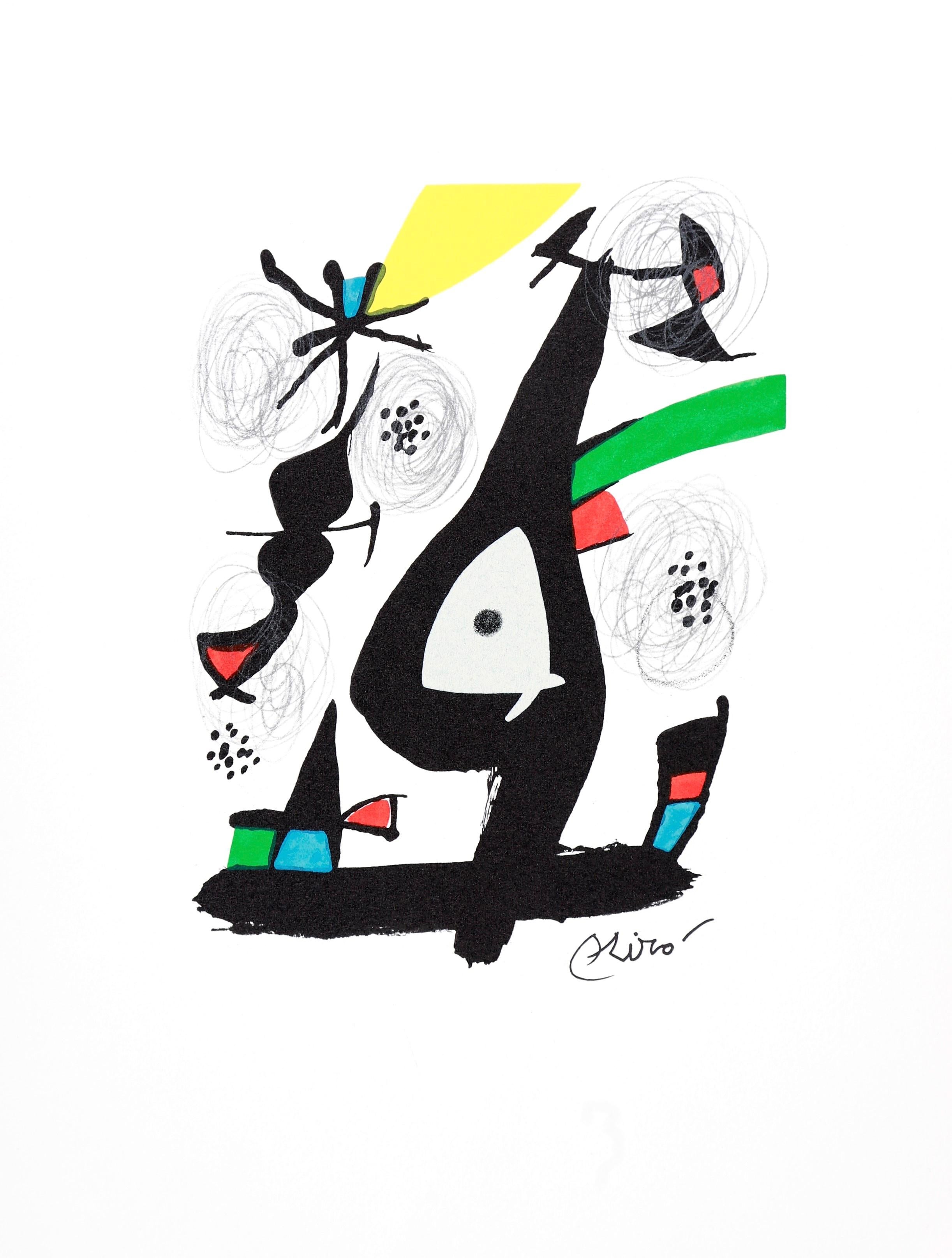
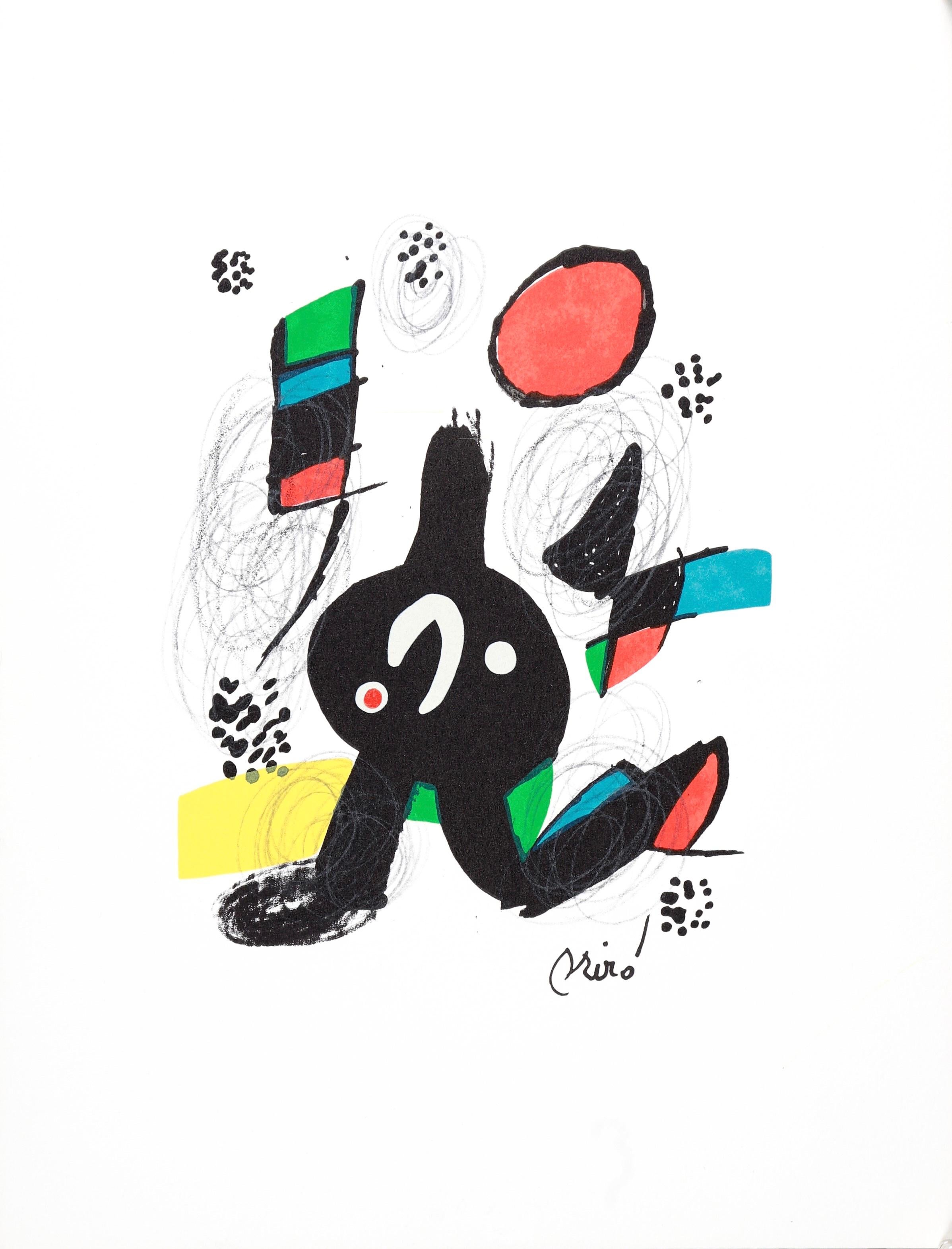
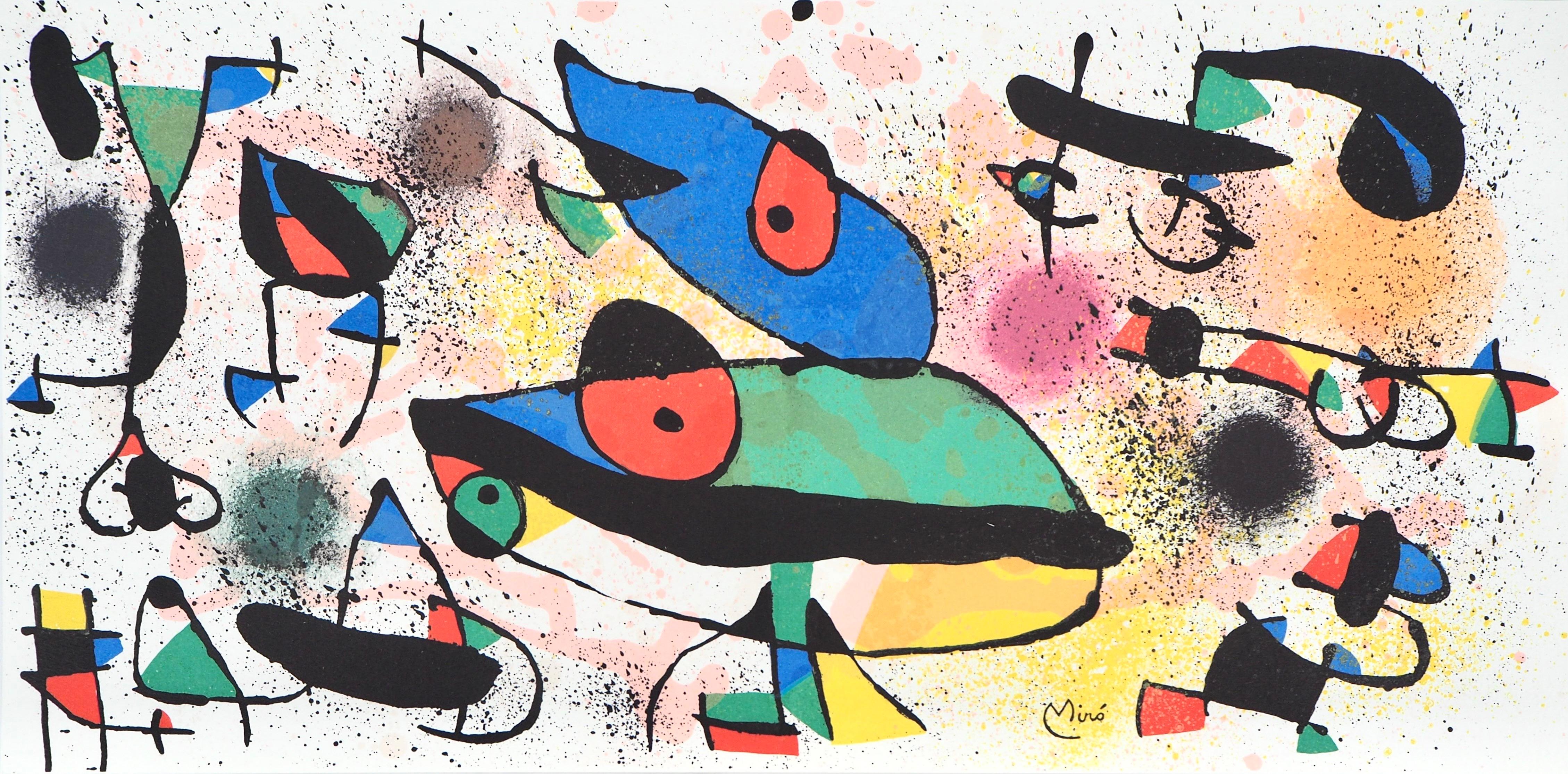
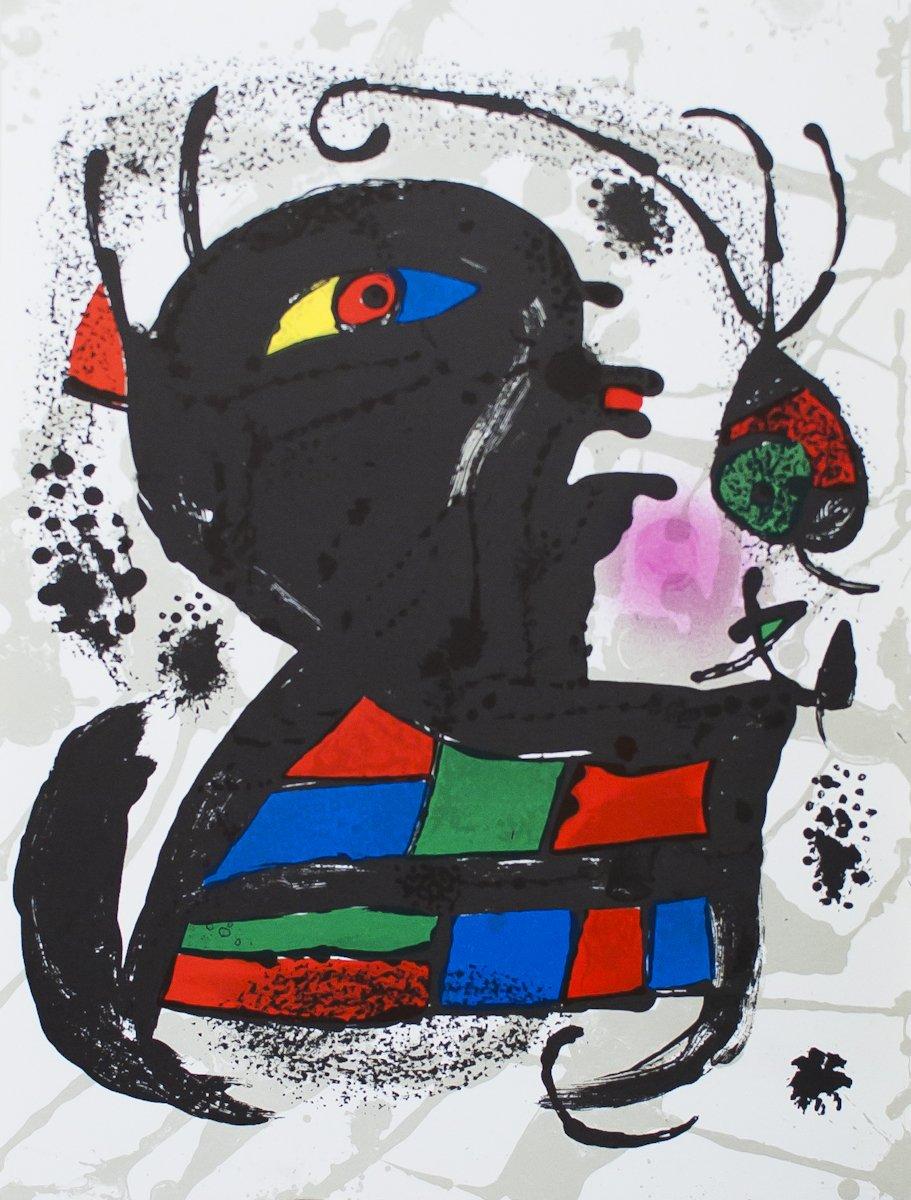
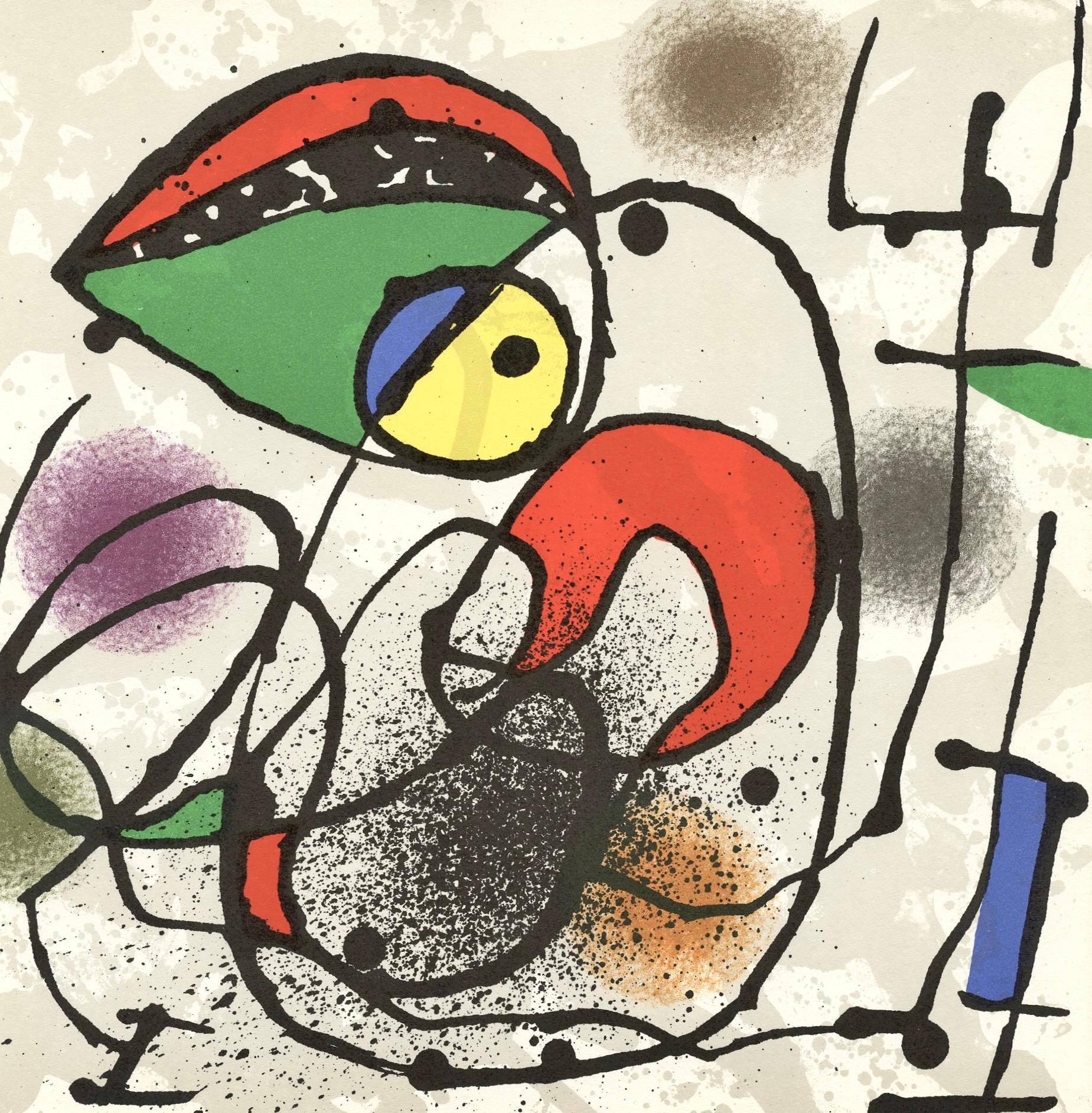
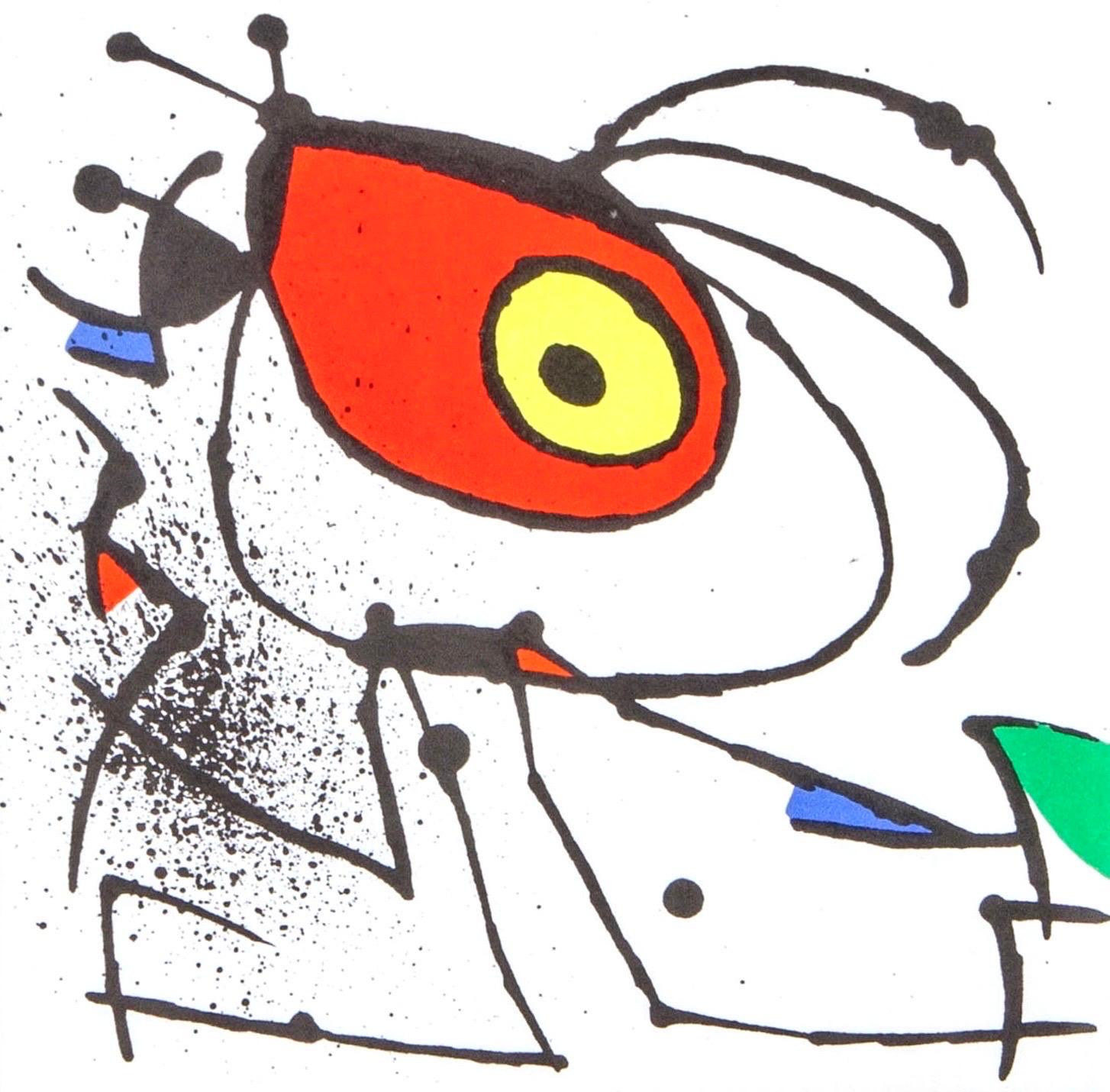
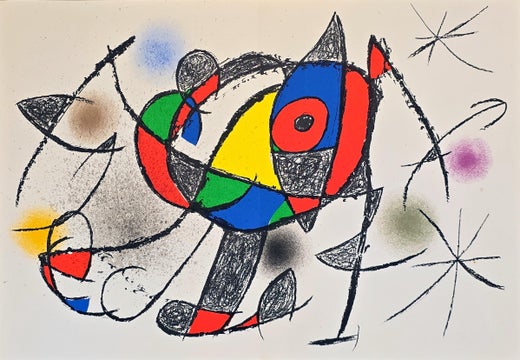
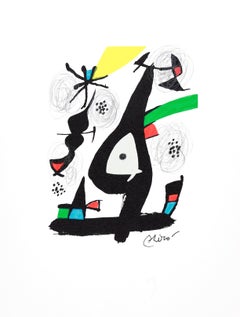
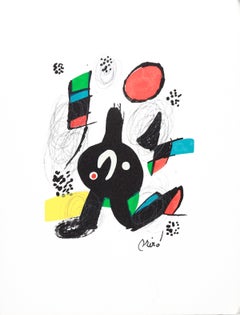
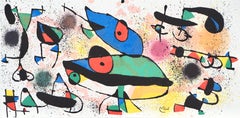
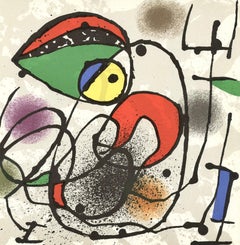
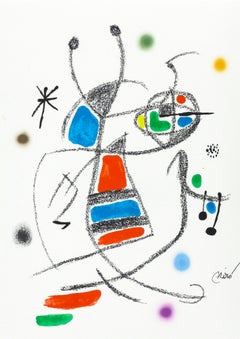
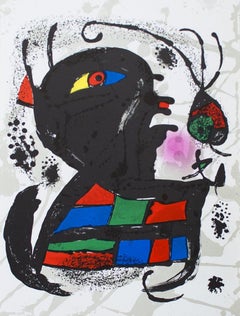
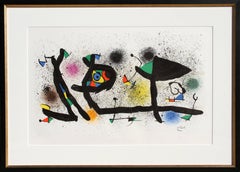
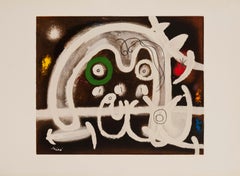
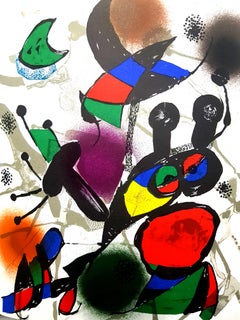
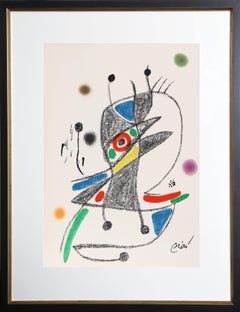
This exquisite lithograph by Joan Miro (1893–1983), titled La Melodie acide (The Acid Melody), from the folio 14 original lithographs by Joan Miro "La Melodie acide" (The Acid Melody), originates from the 1980 edition published by Au Pont des Arts-Galerie Lucie Weill, Paris, and rendered and printed by La Poligrafa, S.A., Barcelona, January 1980. La Melodie acide reflects Miros poetic synthesis of gesture, spontaneity, and visual rhythm, capturing the vibrant interplay of color and form that defines his late masterworks. The composition exemplifies Miros lyrical abstraction, where intuitive motion and symbolic geometry merge into a visual symphony of lightness and vitality.
Executed as a lithograph on velin d'Arches paper, this work measures 13 x 9.875 inches. Signed in the plate, as issued. The edition exemplifies the refined craftsmanship and technical mastery of La Poligrafa, S.A., Barcelona, one of the foremost printmaking ateliers of the 20th century.
Artwork Details:
Artist: Joan Miro (1893–1983)
Title: La Melodie acide (The Acid Melody), from the folio 14 original lithographs by Joan Miro "La Melodie acide" (The Acid Melody), 1980
Medium: Lithograph on velin d'Arches paper
Dimensions: 13 x 9.875 inches (33 x 25 cm)
Inscription: Signed in the plate, as issued
Date: 1980
Publisher: Au Pont des Arts-Galerie Lucie Weill, Paris
Printer: La Poligrafa, S.A., Barcelona
Catalogue raisonne references: Mourlot, Fernand, and Joan Miro. Catalogue des Lithographies de Miro. Vol. V. Andre Sauret, 1984, illustrations 1212–1225. Cramer, Patrick. Joan Miro: The Illustrated Books: Catalogue Raisonne. Patrick Cramer, 1989, illustration 248.
Condition: Well preserved, consistent with age and medium
Provenance: From the folio 14 original lithographs by Joan Miro "La Melodie acide" (The Acid Melody), published by Au Pont des Arts-Galerie Lucie Weill, Paris; rendered and printed by La Poligrafa, S.A., Barcelona, January 1980
Notes:
Excerpted from the album (translated from French), The series was printed using the original plates for the portfolio La Melodie acide, published in January 1980, the edition consisting of the following print run: XX series of XIV lithographs numbered from I to XX, plus VII series, numbered I to VII, and XII series HC from A to K, all printed on Japon Nacre paper and all signed personally by the Artist himself. LXXXI lithographs from plate no. I numbered from XXI to CI, plus XXVI lithographs marked A to Z, also on Japon Nacre paper and also signed by the Artist. The present edition consists of MD prints on Arches paper of the XXIV original plates, numbered from I/MD to MD/MD, and with the Artist's signature on each of the plates.
About the Publication:
La Melodie acide (The Acid Melody), published in 1980 by Au Pont des Arts-Galerie Lucie Weill, Paris, and rendered and printed by La Poligrafa, S.A., Barcelona, stands among the final and most refined lithographic suites of Joan Miros career. The album, comprising fourteen original lithographs, embodies the culmination of Miros lifelong engagement with poetic abstraction and chromatic harmony. Conceived in collaboration with one of Europes foremost printmaking studios, La Poligrafa, the suite exemplifies the technical precision and expressive fluidity that characterized Miros late period. Printed in vibrant hues on velin d'Arches and Japon Nacre papers, the portfolio celebrates the artists mastery of lithography as a medium of pure invention and lyricism. Issued in a meticulously structured edition, La Melodie acide represents both a summation of Miros artistic philosophy and a testament to the enduring collaboration between artist, printer, and publisher. As with many of Miros mature graphic works, the suite achieves a perfect balance between spontaneity and structure, transforming line, form, and color into a visual language of transcendence and play.
About the Artist:
Joan Miro (1893–1983) was a Catalan painter, sculptor, printmaker, and ceramicist whose visionary imagination and lyrical abstraction made him one of the most influential and beloved artists of the 20th century. Born in Barcelona, Miro drew inspiration from Catalan folk art, Romanesque frescoes, and the luminous landscapes of Mont-roig del Camp, developing a deep connection to nature that infused his work with vitality and symbolism. After formal training at the Escola d'Art in Barcelona, he absorbed the lessons of Post-Impressionism and Cubism before moving to Paris in the early 1920s, where he became a leading figure in the Surrealist movement. There, Miro forged a personal visual language of biomorphic shapes, floating symbols, and radiant color harmonies that reflected both spontaneity and spiritual depth. In creative dialogue with peers such as Alexander Calder, Alberto Giacometti, Salvador Dali, Wassily Kandinsky, Marcel Duchamp, and Man Ray, he helped revolutionize modern art by dissolving the boundaries between abstraction and dream imagery. Miros inventive approach extended far beyond painting, embracing sculpture, ceramics, and monumental public commissions that redefined how art could interact with space and emotion. His expressive freedom and gestural abstraction profoundly influenced later artists including Jackson Pollock, Mark Rothko, Alexander Calder, Jean Dubuffet, Antoni Tapies, and Joan Mitchell, inspiring generations who sought to merge instinct, color, and imagination. Today, Miros work remains a cornerstone of modernism, prized by collectors and celebrated in major museums worldwide. His highest auction record was achieved by Peinture (Etoile Bleue) (1927), which sold for 23,561,250 GBP (approximately 37 million USD) at Sotheby's, London, on June 19, 2012.
Joan Miro La Melodie acide, The Acid Melody, Miro La Melodie acide 1980, The Acid Melody, Miro La Poligrafa Barcelona, Miro Galerie Lucie Weill, Miro Au Pont des Arts, Miro lithograph Arches, Miro collectible print.