Want more images or videos?
Request additional images or videos from the seller
1 of 3

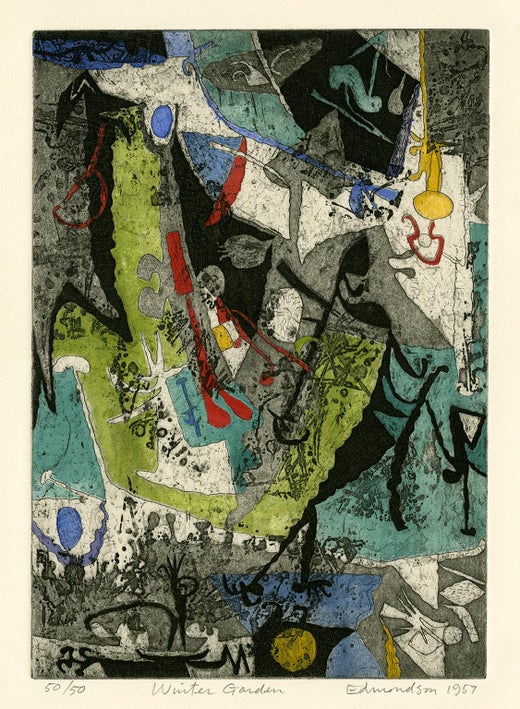
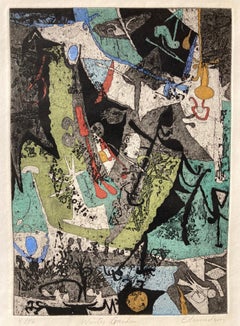
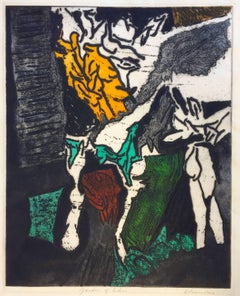
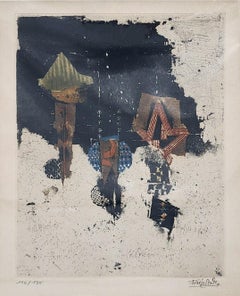
Leonard Edmondson
Winter Garden

1957

$1,400
£1,070.46
€1,226.23
CA$1,974.57
A$2,149.09
CHF 1,148.39
MX$25,952.76
NOK 14,432.51
SEK 13,423.91
DKK 9,160.48

About the Item

Leonard Edmondson, 'Winter Garden', color etching, edition 50, 1957. Signed, titled, dated, and numbered '50/50' in pencil. A superb, richly-inked impression, with fresh colors, on off-white, wove paper; the full sheet with wide margins (3 1/4 to 5 3/8 inches), in excellent condition. Matted to museum standards, unframed. ABOUT THE ARTIST Leonard Edmondson (1916-2002) began his career at the University of California at Berkeley where he earned a Master of Arts degree. After service in the U.S. Army Military Intelligence during WWII, Edmondson embarked on a distinguished teaching career that spanned five decades and culminated in his position as Chair of the art department at California State University Los Angeles (1964-70). A renowned printmaker whose work was informed by the experimental printmaking techniques of Stanley William Hayter, Edmondson also worked in a range of other media including oil paint, watercolor, and collage. By 1950, Edmondson’s work had evolved from figurative representation into abstraction, in what he cited as a journey of inspiration, discovery, and meaning. His distinctive style is inspired by the abstract surrealism of Paul Klee (which he had viewed in Europe during WWII) and the intuitive expressionism espoused by Hans Hofmann. Edmondson's vernacular invokes in his own words ‘almost remembered' forms, feelings, and spaces: ‘This vocabulary manifests itself in a dynamic structure where color responds to the size and position of shapes and reinforces the intent of the composition. My painting is not art of rebellion but one of discovery and sharing.’ Edmondson’s numerous solo and group exhibitions included shows at Pennsylvania Academy of Fine Arts (1951), Metropolitan Museum of Art, New York (1952), Whitney Museum of American Art (1952, 1996), De Young Museum, San Francisco (1953), Guggenheim Museum (1954), Santa Barbara Museum of Art, Santa Barbara (1955), Corcoran Gallery Biennial of American Painting (1957), San Francisco Art Institute, San Francisco (1956, 1967), Oklahoma City University Gallery (1958), California Institute of the Arts (1970), University of Colorado (1979). The artist’s work is represented in the museum collections of Bibliotheque Nationale (Paris), Brooklyn Museum, California State University; Cornell University; Cranbrook Academy of Art; Dallas Museum of Fine Art; Detroit Museum of Art,Herbert F. Johnson Museum of Art at Cornell University, Los Angeles County Museum of Art, Metropolitan Museum of Art, National Gallery of Art, New York Public Library, Oakland Art Museum, Philadelphia Museum of Fine Art, San Francisco Museum of Modern Art, Seattle Art Museum, Victoria and Albert Museum (London), Worcester Art Museum.
  • Creator:
    Leonard Edmondson (1916 - 2002, American)
  • Creation Year:
    1957
  • Dimensions:
    Height: 11.19 in (28.43 cm)Width: 7.75 in (19.69 cm)Depth: 0.01 in (0.26 mm)
  • Medium:
  • Movement Style:
  • Period:
  • Condition:
  • Gallery Location:
    Myrtle Beach, SC
  • Reference Number:
    Seller: 1003581stDibs: LU53234387382

More From This Seller

View All
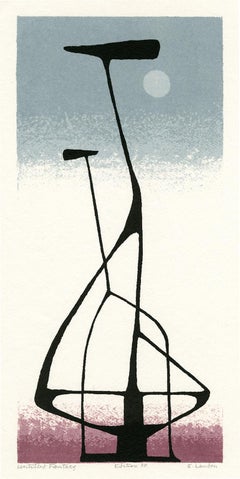
Untitled Fantasy — 1980s Surrealist Abstraction
By Edward August Landon
Located in Myrtle Beach, SC
Edward Landon, 'Untitled Fantasy', color serigraph, 1983, edition 30, Ryan 214. Signed, titled, and annotated 'Edition 30' in pencil. A fine impression, with fresh colors, on off-whi...
Category

Mid-20th Century Abstract Abstract Prints

Materials

Screen

Astral Comic — Modernist Abstraction
By Edward August Landon
Located in Myrtle Beach, SC
Edward Landon 'Astral Comic', color serigraph, 1978, edition 25, Ryan 12. Signed, titled, and annotated 'Edition 25' in pencil. A superb, painterly impression, with fresh colors, on ...
Category

1970s Abstract Abstract Prints

Materials

Screen

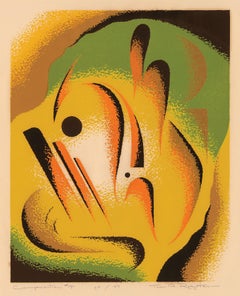
Composition # 4 — Mid-Century Modernism
By Thomas A. Robertson
Located in Myrtle Beach, SC
Thomas Robertson, 'Composition #4,' color serigraph, edition 47, c. 1940. Signed, titled, and annotated 'Ed/47' in pencil. A superb, painterly impression, with fresh colors, on buff wove paper, the full sheet with margins (1 to 2 inches), in excellent condition. Matted to museum standards, unframed. Image size: 10 9/16 x 8 1/2 inches (268 x 216 mm); sheet size 13 x 12 1/2 inches (330 x 318 mm). An impression of this work is represented in the collection of the National Gallery of Art. ABOUT THE ARTIST Born in Little Rock, Arkansas, Thomas Arthur Robertson (1911-1976) was the son of an attorney. Although his father, a co-owner of the Arkansas Law School, insisted that his son study there, after graduating, Robertson enrolled at the Adrian Brewer...
Category

1940s Abstract Abstract Prints

Materials

Screen

Arrangement with Blue Major — Musically Inspired Modernist Abstraction
By Edward August Landon
Located in Myrtle Beach, SC
Edward Landon, 'Arrangement with Blue Major', color serigraph, edition 40, 1942, Ryan 9. Signed, titled, and annotated 'Edition 40' in pencil. A superb impression, with fresh colors, on cream, wove paper; the full sheet with margins (3/4 to 1 5/8 inches), in excellent condition. Image size 15 x 9 3/4 inches (381 x 248 mm); sheet size 17 15/16 x 11 3/4 inches (456 x 298 mm). Matted to museum standards, unframed. 'Arrangement with Blue Major' was selected for the landmark ‘Artists for Victory’ exhibition at the Metropolitan Museum of Art in 1942. Impressions of this work are also in the collections of the Asheville Art Museum, Five Colleges and Historic Deerfield Museum Consortium, Georgetown University (Special Collections), Mount Holyoke College Art Museum, Rutgers University, Smith College Museum of Art, and the Springfield Museum of Fine Arts. ABOUT THE ARTIST Born in Hartford, Connecticut, Edward Landon dropped out of high school to study art at the Hartford Art School. In 1930 and 1931, he was a student of Jean Charlot at the Art Students League in New York, after which he traveled to Mexico to study privately for a year with Carlos Merida. In 1933 he settled near Springfield, Massachusetts, painted murals in the local trade school, and exhibited with the Springfield Art League. His painting 'Memorial Day' won first prize at the fifteenth annual exhibition of the League at the Springfield Museum of Fine Arts. Landon became an active member of the Artists Union of Western Massachusetts, serving as president from 1934-1938. Landon acquired Anthony Velonis’s instructional pamphlet on the technique of serigraphy in the late 1930s. With colleagues Phillip Hicken, Donald Reichert, and Pauline Stiriss, he began experimenting with screen printing techniques. The artists' groundbreaking work in screen printing as a fine art medium was the subject of the group’s landmark exhibition at the Springfield Museum of Fine Arts in 1940. Landon became one of the founding members of the National Serigraph Society and served as editor of its publication, 'Serigraph Quarterly,' in the late 1940s and as its president in 1952 and 1953. The Norlyst Gallery in Manhattan held a one-person show of his prints in 1945. Awarded a Fulbright Fellowship in 1950, Landon traveled to Norway, where he researched the history of local artistic traditions and produced the book 'Scandinavian Design: Picture and Rune Stones...
Category

Mid-20th Century Abstract Abstract Prints

Materials

Screen

Nets – Mid-Century Modernism, Atelier 17
By Sigismond Kolos-Vari
Located in Myrtle Beach, SC
Sigismond Kolos-Vari, 'Nets', color etching with soft-ground and aquatint, edition 200 (1 of 60 artist's proofs), 1952. Signed and dated in pencil. Numbered L/LX in pencil. A superb, richly-inked impression, on heavy, off-white, Arches wove paper; the full sheet with margins (1 3/8 to 3 1/2 inches), in excellent condition. Published by the Guide de la Gravure, Switzerland, with their blindstamp in the bottom left sheet corner. Matted to museum standards, unframed. Image size 11 3/4 x 15 5/8 inches (298 x 397 mm); sheet size 15 x 22 1/4 inches (381 x 565 mm). ABOUT THE ARTIST Sigismund Kolos-Vari was born in Hungary and attended the School of Applied Arts in Budapest from 1915 to 1918 and then the School of Decorative Arts until 1925. The artist settled in Paris, and his first one-person show in 1928 at Galerie Miromesnil, which was highly successful, led to numerous subsequent exhibitions, including with the prestigious Galerie Bonaparte in 1929 and Galerie Povolosky in 1930. Kolos-Vari’s early success was abruptly interrupted by the outbreak of WWII when he was arrested by the Gestapo and imprisoned in the Gurs internment camp. During this period, he created a sketchbook for a little girl, which is now preserved at the Centre de Documentation Juive Contemporaine at the Mémorial de la Shoah in Paris. He managed to escape after two years, crossing the border into Switzerland. After the war, he returned to Paris with a renewed dedication to his painting, producing increasingly powerful compositions. His work was highly acclaimed when shown at an important 1946 exhibition at the Musée National d’Art Moderne de Paris, organized by Jean Cassou. The artist was then approached by the eminent art dealer Jean Bucher, who gave Kolos-Vary a major one-person show at his gallery in 1948. During this post-war period, Kolos-Vary participated in the radical Salon de Mai, 1949-1958, the Salon des Réalités Nouvelles, 1956-1961, and the Salon des Comparaisons, 1960-1962. Supported by his association with Stanley William Hayter and the landmark printmaking workshop Atelier 17...
Category

Mid-20th Century Abstract Expressionist Abstract Prints

Materials

Etching, Aquatint

Underwater — Mid-century Modern
By Charles Quest
Located in Myrtle Beach, SC
Charles Quest, 'Underwater', 1948, chiaroscuro wood engraving, edition 12. Signed, titled, dated and numbered '3/12' in pencil. A fine, richly-inked impression, in dark brown and warm black, on off-white wove paper, with full margins (5/8 to 1 1/2 inch), in excellent condition. Scarce. ABOUT THE ARTIST Charles Quest, painter, printmaker, and fine art instructor, worked in various mediums, including mosaic, stained glass, mural painting, and sculpture. Quest grew up in St. Louis, his talent evident as a teenager when he began copying the works of masters such as Michelangelo on his bedroom walls. He studied at the Washington University School of Fine Arts, where he later taught from 1944 to 1971. He traveled to Europe after his graduation in 1929 and studied at La Grande Chaumière and Academie Colarossi, Paris, continuing to draw inspiration from the works of the Old Masters. After returning to St. Louis, Quest received several commissions to paint murals in public buildings, schools, and churches, including one from Joseph Cardinal Ritter, to paint a replica of Velasquez's Crucifixion over the main altar of the Old Cathedral in St. Louis. Quest soon became interested in the woodcut medium, which he learned through his study of J. J. Lankes' A Woodcut Manual (1932) and Paul Landacre's articles in American Artist magazine ‘since no artists in St. Louis were working in wood’ at that time. Quest also revealed that for him, wood cutting and engraving were ‘more enjoyable than any other means of expression.’ In the late 1940s, his graphic works began attracting critical attention—several of his woodcuts won prizes and were acquired by major American and European museums. His wood engraving entitled ‘Lovers’ was included in the American Federation of Art's traveling print exhibition in 1947. Two years later, Quest's two prize-winning prints, ‘Still Life with Grindstone’ and ‘Break Forth into Singing’, were exhibited in major American museums in a traveling show organized by the Philadelphia Print Club. His work was included in the Chicago Art Institute's exhibition, ‘Woodcut Through Six Centuries’, and the print ‘Still Life with Vise’ was purchased by the Museum of Modern Art in New York. In 1951 he was invited by artist-Curator Jacob Kainen to exhibit thirty wood engravings and color woodcuts in a one-person show at the Smithsonian's National Museum (now known as the American History Museum). Kainen's press release praised the ‘technical refinement’ of Quest's work: ‘He obtains a great variety of textural effects through the use of the graver, and these dense or transparent grays are set off against whites or blacks to achieve sparkling results. His work has the handsome qualities characteristic of the craftsman and designer.’ At the time of the Smithsonian exhibition, Quest's work was represented by three New York galleries in addition to one in his home town. He had won 38 prizes, and his prints were in the collections of the Library of Congress, the Chicago Art Institute, the Metropolitan Museum, and the Philadelphia Museum of Art. In cooperation with the Art in Embassies program, his color woodcuts were displayed at the American Embassy in Paris in 1951. Recognition at home came in 1955 with his first solo exhibition in St. Louis. Press coverage of the show heralded the ‘growth of graphic arts toward rivaling painting and sculpture as a major independent medium’. An exhibition of his prints at the Bethesda Art Gallery in 1983 attracted Curator Emeritus Joseph A. Haller, S.J., who began purchasing his work for Georgetown University's collection. In 1990 Georgetown University Library's Special Collections Division was the recipient of a large body of Quest's work, including prints, drawings, paintings, sculpture, stained glass, and his archive of correspondence and professional memorabilia. These extensive holdings, including some 260 of his fine prints, provide a rich opportunity for further study and appreciation of this versatile and not-to-be-forgotten mid-Western American artist...
Category

1940s American Modern Abstract Prints

Materials

Woodcut

You May Also Like

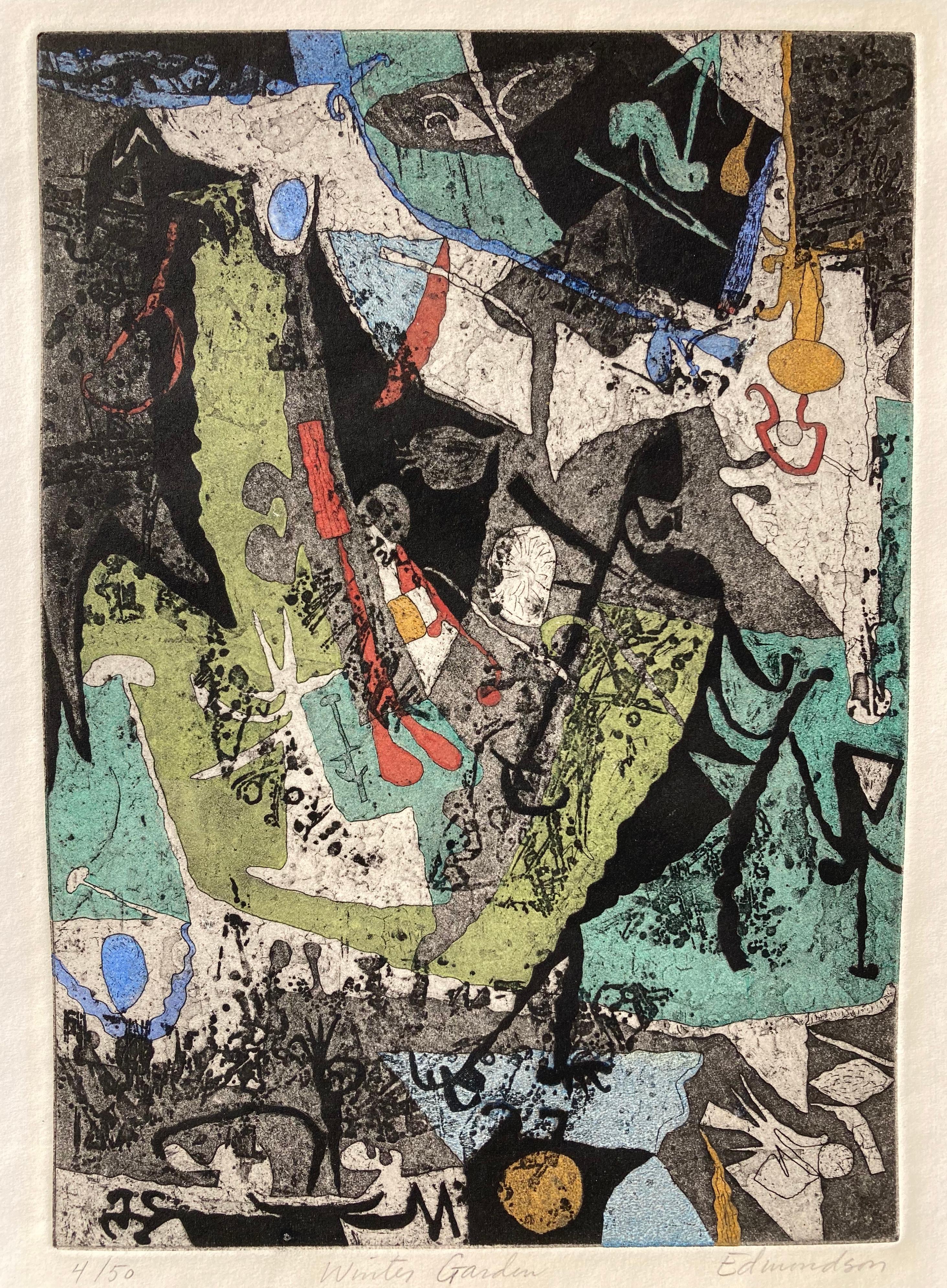
Winter Garden
By Leonard Edmondson
Located in Santa Monica, CA
LEONARD EDMONDSON (1906 – 2001) WINTER GARDEN, 1957 Color intaglio, Edition 50. signed, titled and no. in pencil. Image 11 x 8 ¾”, sheet 15 ¾ x 12 3/8”....
Category

1950s Abstract Expressionist Abstract Prints

Materials

Intaglio

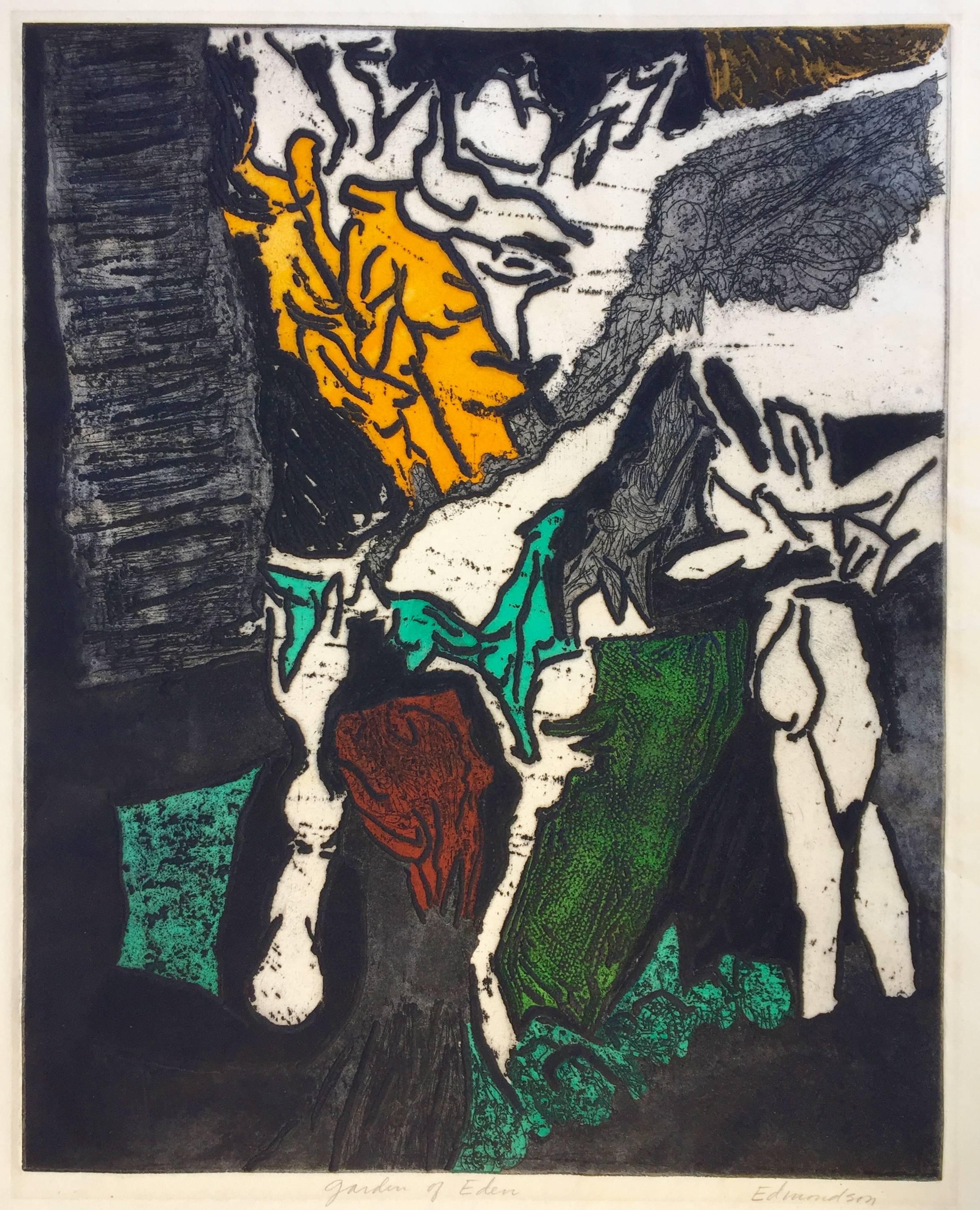
Garden of Eden
By Leonard Edmondson
Located in Santa Monica, CA
LEONARD EDMONDSON (1906 – 2001) GARDEN OF EDEN c. 1960 Color intaglio (carborundum?) Signed and titled in pencil. Small edition, these larger prints...
Category

1960s Abstract Expressionist Abstract Prints

Materials

Intaglio

Panama Garden, Mid-century abstract expressionist modern work
By Richard Andres
Located in Beachwood, OH
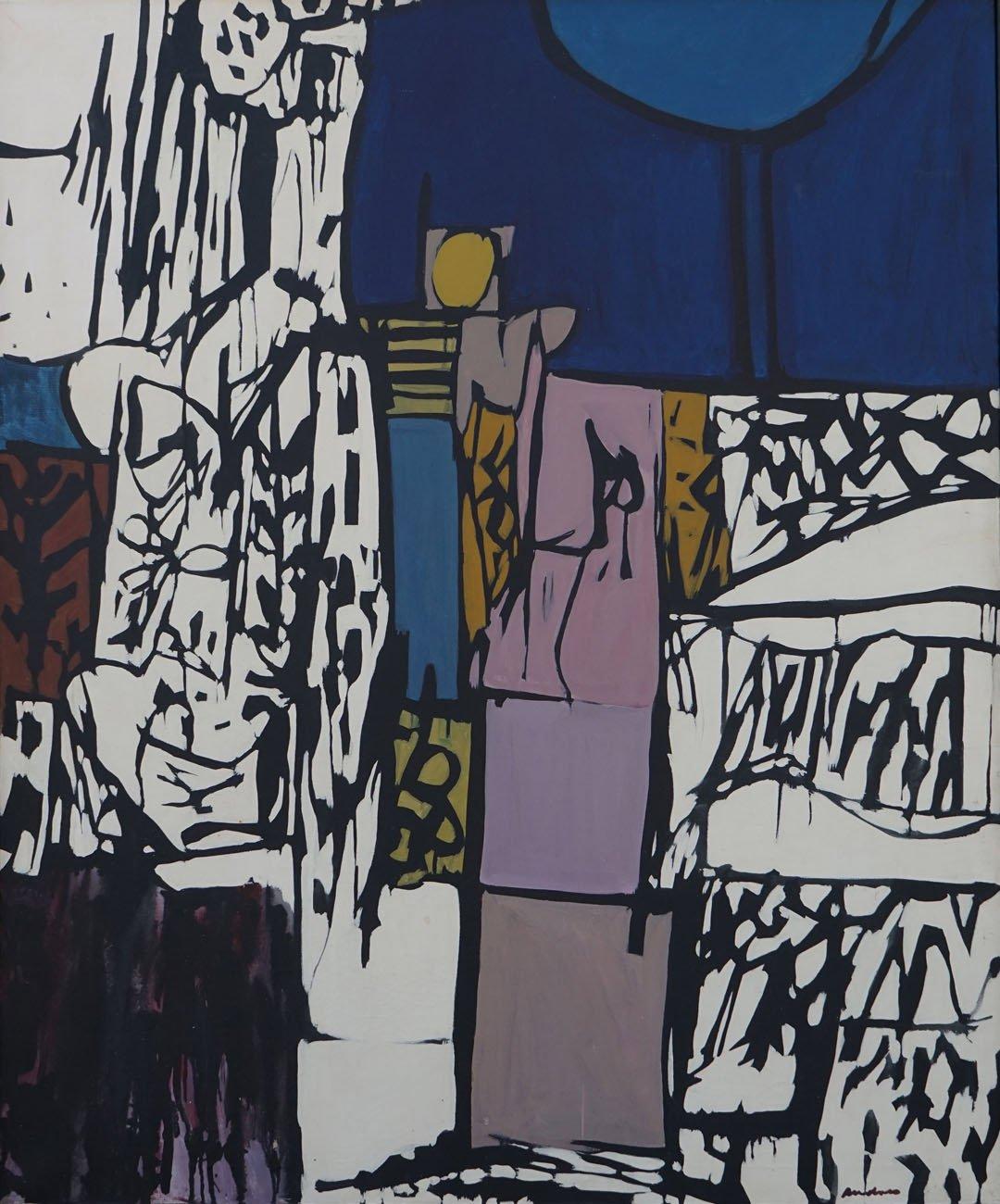
Richard Andres (American, 1927-2013) Panama Garden, c. 1964 acrylic on canvas signed lower right, signed and titled verso 46 x 38 inches Richard Andres was born in Buffalo, New York in 1927. A graduate of the Cleveland Institute of Art in 1950, he was immediately drafted and served for two years in the army as a mural painter. He received his Master of Arts from Kent State in 1961. A frequent exhibitor at galleries and museums and winner of multiple May Show prizes, Andres taught art in the Cleveland Public Schools for 28 years, as well as teaching the University of Buffalo, the Cleveland Institute of Art and the Western Reserve University. Very little in Richard Andres’ childhood would have predicted his love of classical music, mid-century-modern architecture and certainly not his lifelong passion for art and in particular abstract art. Richard’s father, Raymond, had no more than a third-grade education, and his mother, Clara, was one of thirteen children – only three of whom lived into adulthood and none of whom attended high school. They lived, when Richard was a boy, in a dingy area of Buffalo, NY in a walk-up apartment situated above a tavern. Raymond and Clara supplemented the income from their factory jobs in the bar downstairs with Raymond playing ragtime on the piano and Clara serving drinks. This often left Richard and his two older brothers at home alone to fend for themselves. The two older boys, Raymond and Russell, were - unlike Richard- rather rough and tumble and entertained themselves with stickball, boxing and the like. Richard, on the other hand, from a very young age liked to draw, or better yet even, to paint with the small set of watercolors he received for Christmas one year. Paper, however, at the height of the depression, was hard to come by. Luckily, Clara used paper doilies as decoration for the apartment and Richard would contentedly paint and then cut up doilies, gluing the pieces together to create collages. At eight-years-old, he discovered the Albright-Knox Museum (then known as the Albright Art Gallery) and spent several hours a week there studying the paintings. He was particularly fond of Charles Burchfield‘s landscapes, enamored with their ‘messiness’ and thinking that they somehow captured more ‘feeling’ than works he was previously familiar with. For his tenth Christmas, he asked for and received a ‘how-to’ paint book by Elliot O’Hare. Through this self-teaching, he assembled the portfolio needed for acceptance to Buffalo Technical High School where he studied Advertising Arts. In his Junior year, he was encouraged to enter a watercolor painting, “Two Barns,” in the national 1944-45 Ingersoll Art Award Contest and was one of twelve grand prize winners – each one winning one hundred dollars. More importantly the painting was exhibited at the Carnegie Institute Galleries, which resulted in his winning a national scholarship to the Cleveland School of Art (The Cleveland Art Institute). He flourished at the art school under the tutelage of faculty members such as Carl Gaertner, as well as that of visiting artists such as William Sommer and Henry George Keller. He would say in later years that Gaertner, in particular, influenced his attitude toward life as well as art. “Gaertner,” Andres said, “believed that there was no need to be a ‘tortured artist’, that an artist should rather enjoy beauty, family, and life in general.” Free to spend his days as he chose, he wandered the Cleveland Art Museum for most of the hours he was not attending classes or painting; the remaining time was spent drinking coffee at a local hangout with art school friends – which is where he met fellow Henry Keller scholarship winner, Avis Johnson. Richard was immediately smitten with Avis, but being rather shy, it took him the entire summer of 1948 to build up his courage to ask her out. Over that summer he ‘thought about Avis’ and worked in a diner to save money. He also used the hundred-dollar prize money won in High School to visit the first Max Beckmann retrospective in the United States at the City Art Museum in St. Louis. Over a half century later he spoke of that exhibit with a reverence usually reserved for spiritual matters, “I walked in and it was like nothing I had ever seen before... the color...It just glowed.” Returning to campus in the Fall, the first thing he did was go to the coffee shop in hopes of finding Avis. He did, and she, upon seeing him, realized that she was also smitten with him. They quickly became known as ‘the couple’ on campus, and a year later, with Richard being drafted for the Korean war, they were quickly married by a Justice of the Peace, celebrating after with family at Avis’s Cleveland home. As a gift, faculty member John Paul Miller...
Category

1960s Abstract Expressionist Abstract Paintings

Materials

Acrylic

Winter Garden
By Christine Hayman
Located in Greenwich, CT
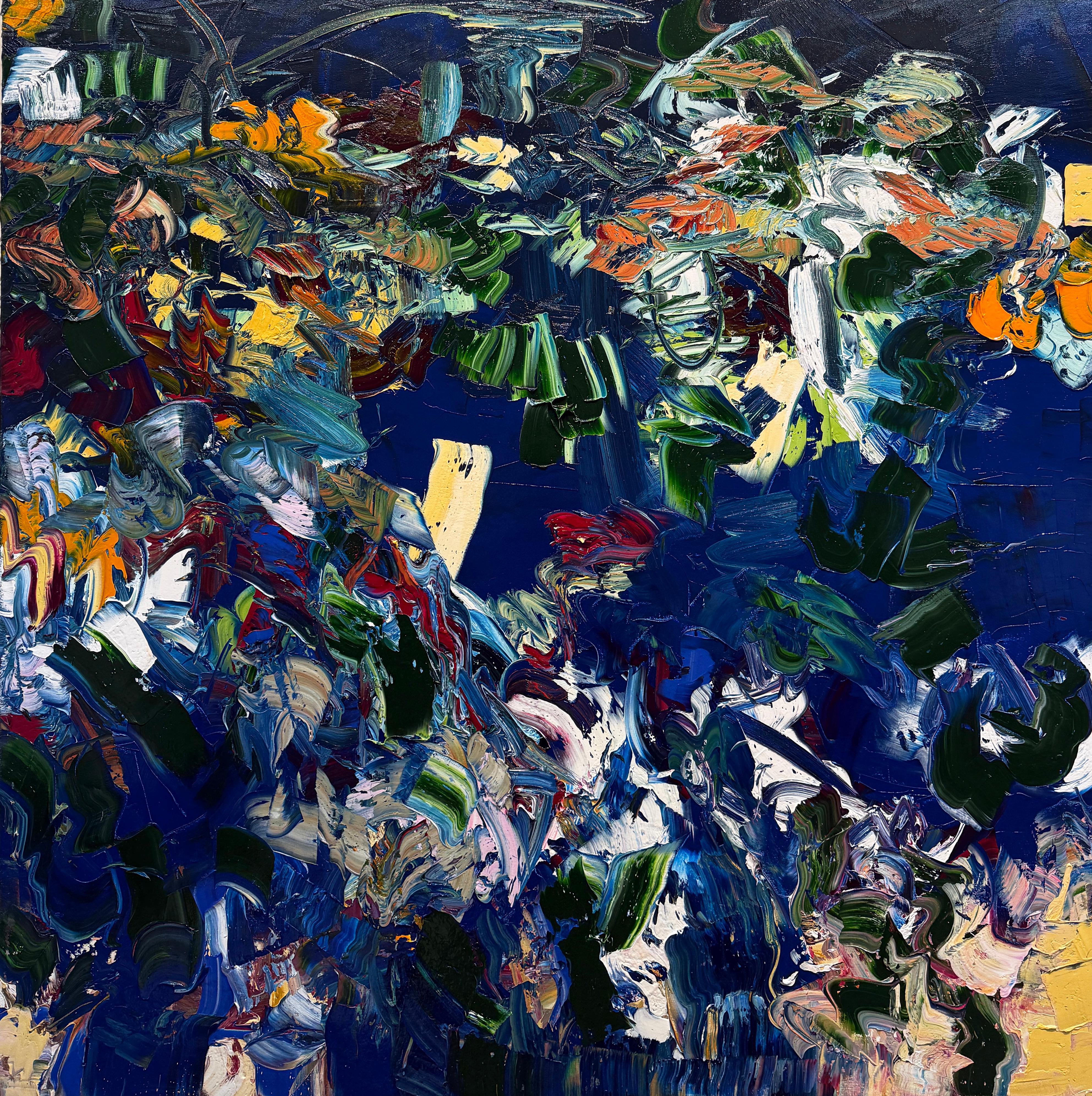
Christine Hayman Biography b. 1964 In her paintings Christine Hayman concerns herself with space. She is interested in how forms are energized by the space around them, especially w...
Category

2010s Abstract Expressionist Abstract Paintings

Materials

Canvas, Oil

Garden, Abstract Expressionist Mid-Century Modern geometric work
By Richard Andres
Located in Beachwood, OH
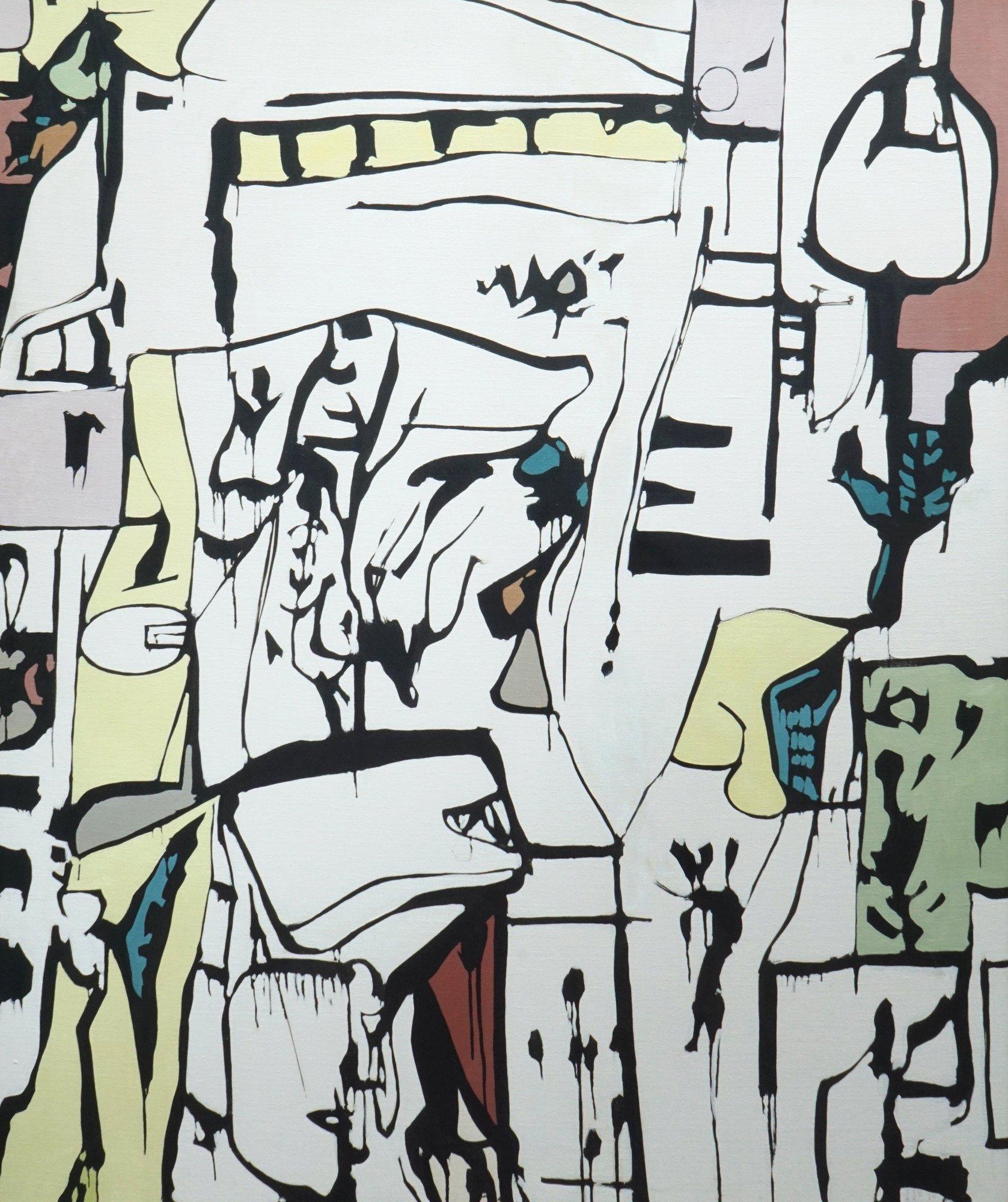
Richard Andres (American, 1927-2013) Garden, 1972 acrylic on canvas signed, dated and titled verso 59.5 x 50 inches Richard Andres was born in Buffalo, New York in 1927. A graduate of the Cleveland Institute of Art in 1950, he was immediately drafted and served for two years in the army as a mural painter. He received his Master of Arts from Kent State in 1961. A frequent exhibitor at galleries and museums and winner of multiple May Show prizes, Andres taught art in the Cleveland Public Schools for 28 years, as well as teaching the University of Buffalo, the Cleveland Institute of Art and the Western Reserve University. Very little in Richard Andres’ childhood would have predicted his love of classical music, mid-century-modern architecture and certainly not his lifelong passion for art and in particular abstract art. Richard’s father, Raymond, had no more than a third-grade education, and his mother, Clara, was one of thirteen children – only three of whom lived into adulthood and none of whom attended high school. They lived, when Richard was a boy, in a dingy area of Buffalo, NY in a walk-up apartment situated above a tavern. Raymond and Clara supplemented the income from their factory jobs in the bar downstairs with Raymond playing ragtime on the piano and Clara serving drinks. This often left Richard and his two older brothers at home alone to fend for themselves. The two older boys, Raymond and Russell, were - unlike Richard- rather rough and tumble and entertained themselves with stickball, boxing and the like. Richard, on the other hand, from a very young age liked to draw, or better yet even, to paint with the small set of watercolors he received for Christmas one year. Paper, however, at the height of the depression, was hard to come by. Luckily, Clara used paper doilies as decoration for the apartment and Richard would contentedly paint and then cut up doilies, gluing the pieces together to create collages. At eight-years-old, he discovered the Albright-Knox Museum (then known as the Albright Art Gallery) and spent several hours a week there studying the paintings. He was particularly fond of Charles Burchfield‘s landscapes, enamored with their ‘messiness’ and thinking that they somehow captured more ‘feeling’ than works he was previously familiar with. For his tenth Christmas, he asked for and received a ‘how-to’ paint book by Elliot O’Hare. Through this self-teaching, he assembled the portfolio needed for acceptance to Buffalo Technical High School where he studied Advertising Arts. In his Junior year, he was encouraged to enter a watercolor painting, “Two Barns,” in the national 1944-45 Ingersoll Art Award Contest and was one of twelve grand prize winners – each one winning one hundred dollars. More importantly the painting was exhibited at the Carnegie Institute Galleries, which resulted in his winning a national scholarship to the Cleveland School of Art (The Cleveland Art Institute). He flourished at the art school under the tutelage of faculty members such as Carl Gaertner, as well as that of visiting artists such as William Sommer and Henry George Keller. He would say in later years that Gaertner, in particular, influenced his attitude toward life as well as art. “Gaertner,” Andres said, “believed that there was no need to be a ‘tortured artist’, that an artist should rather enjoy beauty, family, and life in general.” Free to spend his days as he chose, he wandered the Cleveland Art Museum for most of the hours he was not attending classes or painting; the remaining time was spent drinking coffee at a local hangout with art school friends – which is where he met fellow Henry Keller scholarship winner, Avis Johnson. Richard was immediately smitten with Avis, but being rather shy, it took him the entire summer of 1948 to build up his courage to ask her out. Over that summer he ‘thought about Avis’ and worked in a diner to save money. He also used the hundred-dollar prize money won in High School to visit the first Max Beckmann retrospective in the United States at the City Art Museum in St. Louis. Over a half century later he spoke of that exhibit with a reverence usually reserved for spiritual matters, “I walked in and it was like nothing I had ever seen before... the color...It just glowed.” Returning to campus in the Fall, the first thing he did was go to the coffee shop in hopes of finding Avis. He did, and she, upon seeing him, realized that she was also smitten with him. They quickly became known as ‘the couple’ on campus, and a year later, with Richard being drafted for the Korean war, they were quickly married by a Justice of the Peace, celebrating after with family at Avis’s Cleveland home. As a gift, faculty member John Paul Miller...
Category

1970s Abstract Expressionist Abstract Paintings

Materials

Acrylic

Automne
Located in Kansas City, MO
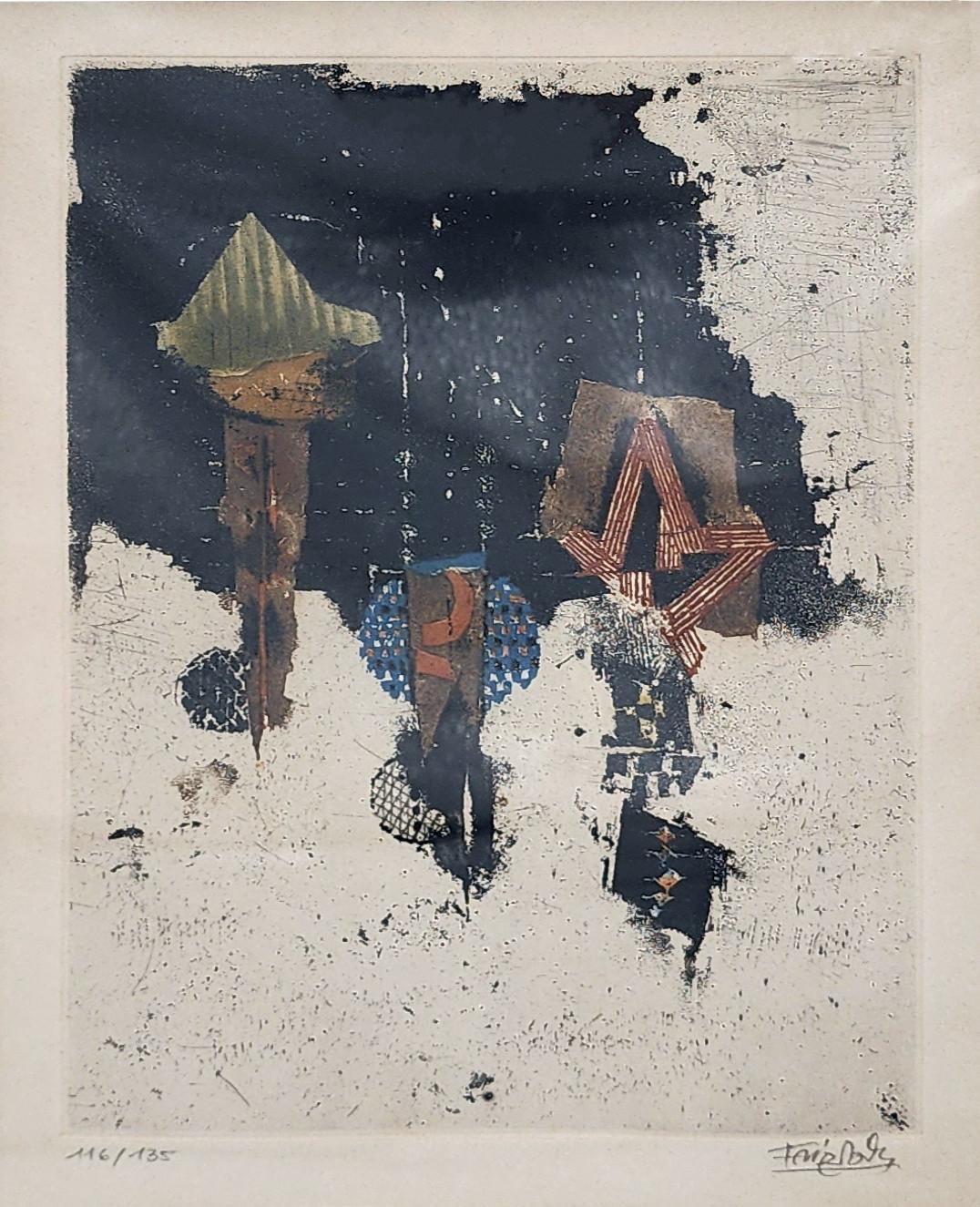
Johnny Friedlander Automne 1977 Etching on Arches teinte’ paper Visible: 10 x 7.25 inches Framed: 16.375 x 13.5 x 1 inches Edition: 135 Signed and numbered in pencil along lower edge...
Category

1970s Abstract Abstract Prints

Materials

Etching