Items Similar to
Da - Da I
— German Expressionism, Rare
Want more images or videos?
Request additional images or videos from the seller
1 of 3
Lyonel Feininger
Da - Da I
— German Expressionism, Rare1918
1918
$4,400
£3,339.18
€3,847.44
CA$6,216.50
A$6,660.88
CHF 3,573.09
MX$78,899.04
NOK 45,072.59
SEK 41,234.45
DKK 28,740.86
About the Item
Lyonel Feininger, 'Da-Da I' also titled by the artist 'Der Abgott' (The Idol), woodcut, 1918, a proof impression. Prasse W91. Signed in pencil and annotated '1876', the artist’s inventory number. A fine, richly-inked impression on thin, cream laid Japan paper, the full sheet with margins (1 3/8 to 3 7/16 inches), in excellent condition. One of only several proof impressions, printed by the artist—very rare.
Image size 4 5/8 x 3 1/2 inches (117 x 89 mm); sheet size 7 5/8 x 9 3/4 inches (194 x 248 mm). Matted to museum standards, unframed.
Known proofs printed by the artist chiefly on tissue-thin Japan paper and one on Kozo paper; on the mounting sheet of one proof, Julia Feininger has penciled "Block destroyed". Published in an unsigned edition on wove paper as the frontispiece in the book 'Dada', by Adolph Knoblauch, Kurt Wolff Verlag publisher, Leipzig, Germany, 1919. Block destroyed.
Collections: Buffalo Public Library (book edition); Leipzig DB (book edition); Museum of Modern Art (proof printed with W92); New York Public Library (book edition); Library of Congress (book edition); Yale University Library (book edition).
ABOUT THE ARTIST
Lyonel Feininger (1871-1956) was born in New York City into a German-American family of musicians—his father was a violinist and composer, and his mother was a singer and pianist. He studied violin with his father, and he was performing in public by the age of 12. However, he was also passionate about art and sketched incessantly, most notably the steamboats and sailing ships on the Hudson and East Rivers and the landscape around Sharon, Conn., where he spent time on a farm owned by a family friend. At 16, he traveled to Germany to pursue a music career, but being more attracted to art, he began studying drawing at the Kunstgewerbeschule in Hamburg. From 1888 to 1892, he attended the Akademie der Künste, Berlin, and worked as a caricaturist for magazines both in the US (Harper’s Round Table) and Germany (Fliegende Blätter), his innovative creations bringing him great success. In 1906-07, while staying in Paris, he worked for the French satirical weekly Le Témoin and published the weekly comic strip 'The Kin-Der-Kids' in the Chicago Sunday Tribune, the largest circulation newspaper in the Midwestern United States. He invented what became the standard design for the comic strip: in the words of editor Jon Carlin, "an overall pattern... that allowed the page to be read both as a series of elements one after the other, like language and as a group of juxtaposed images, like visual art."
Upon his return to Berlin in 1907, Feininger turned to easel paintings and drawings depicting architectural subjects and street scenes. After encountering Cubism and the works of Robert Delaunay during a 1911 trip to Paris, he began developing his distinctive lyrical style inspired by Cubist and Expressionist idioms and elevated by his resonance with the emotive qualities of light and color.
In 1913, at the invitation of the German Expressionists’ group Der Blaue Reiter, which had been founded in 1911 by Wassily Kandinsky and Franz Marc, he participated in the Erster Deutscher Herbstsalon at Herwarth Walden’s Der Sturm gallery in Berlin, where he also had his first solo exhibition in 1917. A year after his solo exhibition, in 1918, Feininger began making woodcuts. He became deeply absorbed in the printmaking process, producing 117 in his first year of exploring the medium. In 1919, at the invitation of the architect-founder Walter Gropius, he was appointed the first ‘form master’ at the newly formed and now renowned Staatliches Bauhaus in Weimar. His woodcut of a cathedral crowned by three stars illustrated the cover of the Bauhaus Manifesto. The dramatic image integrates elements of Cubism, Futurism, Expressionism, and Constructivism in a new artistic structure—a consummate avant-garde vernacular, yet one which used traditional sacred architecture as a template and symbolized “the new structure of the future,” with the alignment of the diverse avant-garde factions working in the name of a shared artistic and social cause which Gropius celebrated in the brochure’s manifesto. Feininger also published a portfolio of 12 woodcuts plus a title page, which has the distinction of being the renowned school’s first publication. While in Weimar, Feininger also worked on paintings whose structural order reflects the organizational principles of classical architecture and that of his own musical compositions wherein prismatic planes form dynamic constructions to produce a sense of energetic monumentality.
In 1924 Feininger founded the Die Blaue Vier (The Blue Four) group with his long-time friends and colleagues Wassily Kandinsky, Paul Klee, and Alexej Jawlensky. The group’s first exhibition in 1925 at the Charles Daniel Gallery in New York was followed by numerous other shows in Germany and the US. After the Bauhaus moved to Dessau in 1925, Feininger gave up teaching but remained an artist-in-residence and published another portfolio of 10 woodcuts—by that time, he had created 256 woodcuts.
In 1931, Feininger was given a major solo exhibition at the Nationalgalerie in Berlin, and from 1929 to 1931, he worked on a series of paintings of the city of Halle (Saale). In 1935, the National Socialists (Nazis) declared his art “degenerate.” As the Nazis gained power, Feininger and his wife, Julia, determined that life in Germany was untenable. In 1937, after nearly 50 years in the country, he and his family left for the United States to eventually settle back in New York.
In 1942, Feininger received a purchase prize from The Metropolitan Museum of Art, New York. Two years later, he was granted a retrospective with Marsden Hartley at The Museum of Modern Art, New York. The following year, in 1945, Josef Albers invited him to teach a summer course at Black Mountain College in North Carolina.
Feininger died on January 13, 1956, in New York.
The Lyonel Feininger Museum in Saxony-Anhalt, Germany, was established in 1986 to permanently honor the major artistic contributions of Lyonel Feininger to 20th-century classical modernism. The museum hosts a permanent exhibition of the artist's multi-faceted work, including caricatures, graphics, painting, photography, and Bauhaus master.
Posthumous retrospective exhibitions of his work have been held at the Dallas Museum for Contemporary Arts (1963), Pasadena Art Museum, California (1966), Kunsthaus Zürich (1973), and Whitney Museum of American Art, New York (2011). The J. Paul Getty Museum in Los Angeles organized the first exhibition of his photographs in 2011.
Feininger's works are held in numerous museum collections throughout the United States and Europe, including The Art Institute of Chicago; Achenbach Foundation for Graphic Arts (San Francisco); British Museum; Cincinnati Public Library; Cleveland Museum of Art; Deutsche Bucherel (Leipzig, Germany); Fogg Art Museum (Harvard University); Kester-Museum (Hanover, Germany); Kunstmuseum (Basel, Switzerland); Kunstmuseum der Stadt Dusseldorf (Dusseldorf, Germany); Los Angeles County Museum of Art; Museum Folkwang (Essen, Germany); Museum of Modern Art; Pennsylvania Academy of Fine Arts; Philadelphia Museum of Art; Saarland-Museum (Saarbrucken, Germany); Staatliche Kunsthalle (Karlsruhe, Germany); Staatliche Kunstsammlungen (Dresden, Germany); Stadtmuseum (Ludwigshafen am Rhein, Germany); Stiftung Preussischer Kulturbesitz Staatliche Museen (Berlin, Germany); The University of Nebraska Art Galleries (Lincoln, Nebraska); Yale University Art Gallery; and the Victoria and Albert Museum (London).
- Creator:Lyonel Feininger (1871-1956, American)
- Creation Year:1918
- Dimensions:Height: 4.63 in (11.77 cm)Width: 3.5 in (8.89 cm)
- Medium:
- Movement Style:
- Period:
- Condition:
- Gallery Location:Myrtle Beach, SC
- Reference Number:Seller: 1042071stDibs: LU532312685842
Lyonel Feininger
Lionel Feininger (1871–1956), a German-American painter, graphic artist, and caricaturist, developed a distinctive style influenced by Cubism and Expressionism. Born in New York City but raised in Germany, Feininger honed his skills at the Hamburg School of Arts and Crafts before studying under renowned artists in Berlin. Initially associated with the avant-garde group "Die Brücke" (The Bridge), Feininger's style evolved over time, gravitating towards Cubism after being inspired by artists like Picasso and Braque. His participation in the "Der Blaue Reiter" (The Blue Rider) exhibition in 1911 further solidified his reputation as an essential figure in the Expressionist movement. Returning to the United States during World War I, Feininger became associated with the American avant-garde, though the Nazis later targeted his works in the "Degenerate Art" exhibition. Feininger experimented with various mediums throughout his career, producing bold and vibrant works depicting urban landscapes and architectural motifs. His legacy as a pioneer of modern art continues to resonate, with his contributions to Cubism, Expressionism, and abstract art celebrated worldwide. Feininger passed away in 1956, leaving behind a rich and influential body of work.
About the Seller
5.0
Recognized Seller
These prestigious sellers are industry leaders and represent the highest echelon for item quality and design.
Platinum Seller
Premium sellers with a 4.7+ rating and 24-hour response times
Established in 1995
1stDibs seller since 2016
337 sales on 1stDibs
Typical response time: 1 hour
Associations
International Fine Print Dealers Association
- ShippingRetrieving quote...Shipping from: Myrtle Beach, SC
- Return Policy
More From This Seller
View All
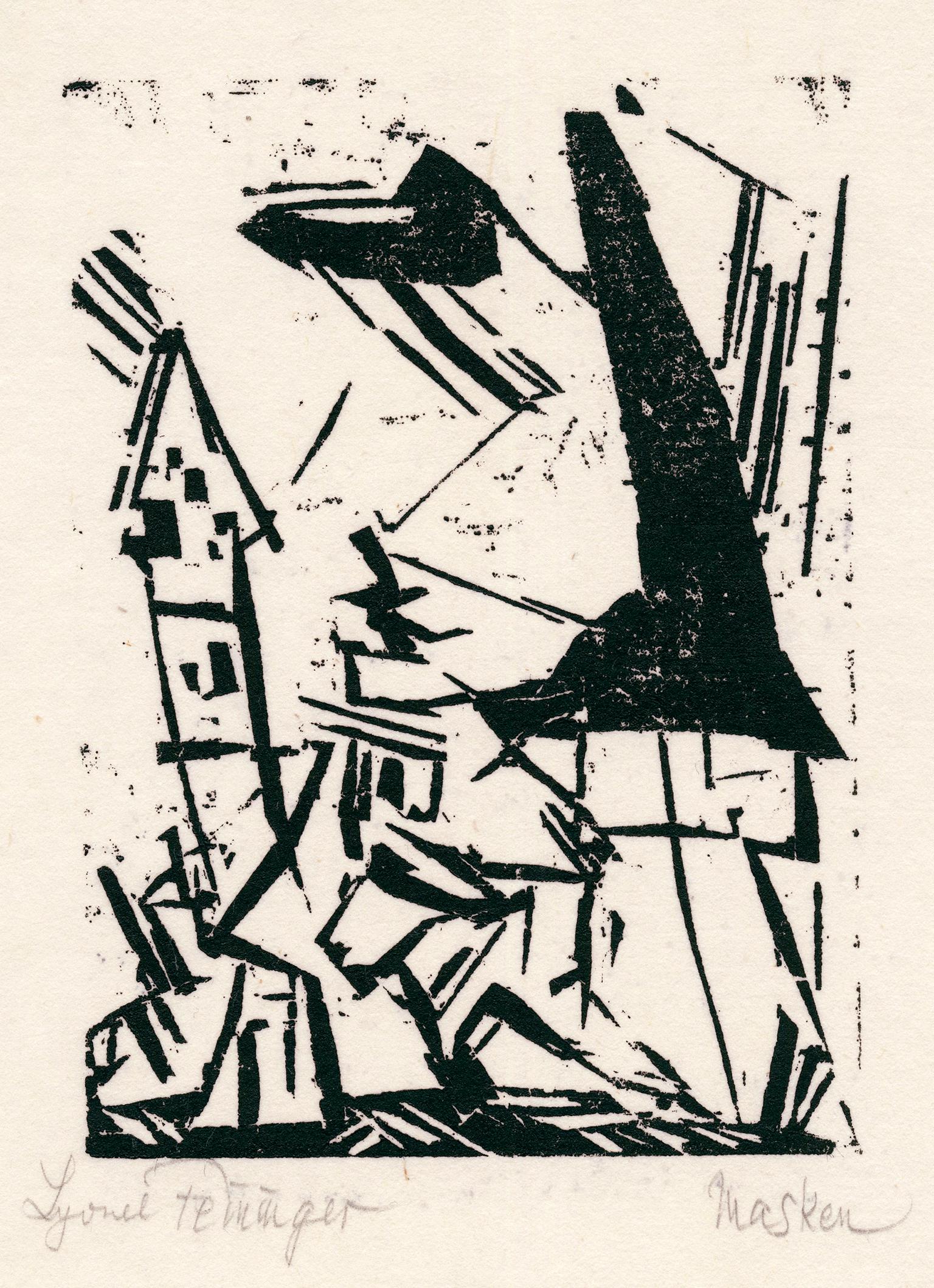
Masken (Masks)
— German Expressionism, Bauhaus
By Lyonel Feininger
Located in Myrtle Beach, SC
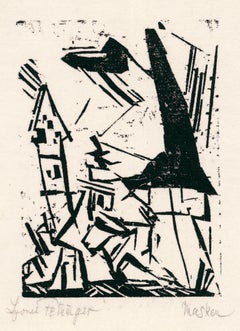
Lyonel Feininger, 'Masken (Masks)' also 'Carnival Masks', woodcut, 1920, proofs only. Prasse W193. Signed and titled in pencil. Annotated '1973', the artist’s inventory number. A fin...
Category
1920s Bauhaus Abstract Prints
Materials
Woodcut
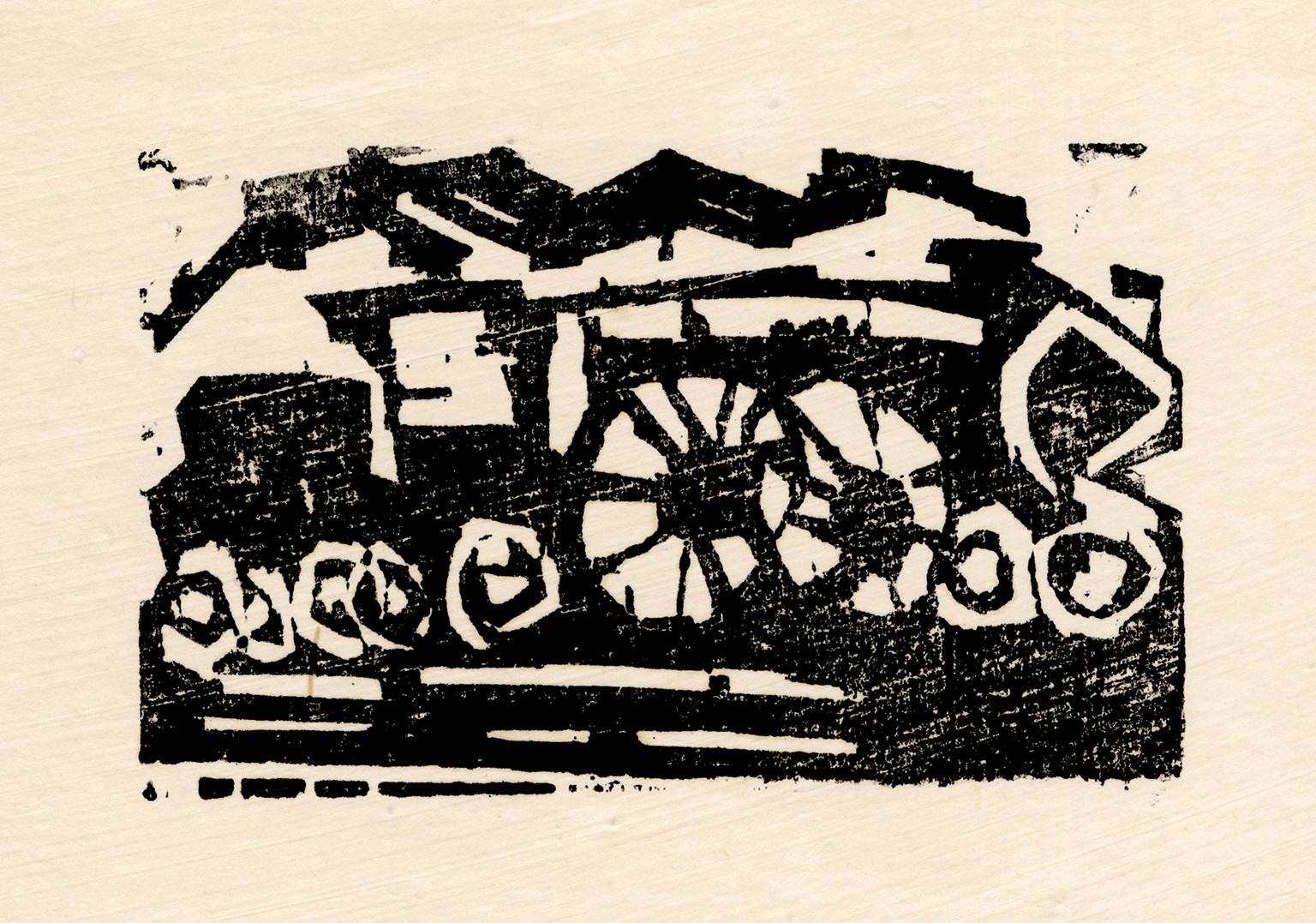
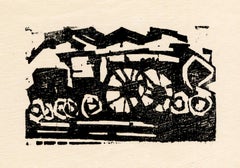
Little Locomotive
– Artist
s Personal Letterhead, Bauhaus Modernism
By Lyonel Feininger
Located in Myrtle Beach, SC
Lyonel Feininger, 'Little Locomotive (Kleine Lokomotive)', woodcut, 1936, one of a small but unknown number of letterhead proofs; Prasse W158. Annotated 'W 158' (Feininger catalogue number) and '1936' in pencil, in the bottom right sheet corner.
A fine impression, on cream, laid letterhead stock; hinge remains on the left and right top sheet edges, verso, in excellent condition. Very scarce.
Image size 2 1/4 x 3 5/16 inches; sheet size 10 x 7 inches. Archivally sleeved, unmatted.
Exhibited: 'Lyonel Feininer, Woodcuts Used As Letterheads'; Associated American Artists; Feb 4 - March 2, 1974; New York, NY.
Collections: Cleveland Museum of Art, Museum of Modern Art, Staatliche Museen zu Berlin (East Berlin KK).
ABOUT THE ARTIST
Lyonel Feininger (1871-1956) was born in New York City into a musical family—his father was a violinist and composer, his mother was a singer and pianist. He studied violin with his father, and by the age of 12, he was performing in public, but he also drew incessantly, most notably the steamboats and sailing ships on the Hudson and East Rivers, and the landscape around Sharon, Conn., where he spent time on a farm owned by a family friend. At the age of 16 he left New York to study music and art in Germany, from where his parents emigrated. Drawn more to the visual arts, he attended schools in Hamburg, Berlin, and Paris from 1887 to 1892.
After completing his studies, Feininger began his artistic career as a cartoonist and illustrator, his originality leading him to great success. In 1906, after working for a dozen years in Germany, he was offered a job as a cartoonist at the Chicago Tribune, the largest circulation newspaper in the Midwest. He worked there for a year, inventing what became the standard design for the comic strip: in the words of John Carlin, “an overall pattern. . . that allowed the page to be read both as a series of elements one after the other, like language and as a group of juxtaposed images, like visual art.” His originality did not end there: he went on to become one of the great abstract painters. Like Kandinsky, music was his model, but Kandinsky only knew music from the outside—as a listener (inspired initially by Wagner, then by Schoenberg)—while Feininger knew it from the inside. He lived in Paris from 1906 to 1908, during which time he met and was influenced by the work of progressive painters Robert Delaunay and Jules Pascin, as well as that of Paul Cezanne and Vincent van Gogh. He began painting full-time, developing his distinctive Iyrical style based on Cubist and Expressionist idioms and a concern for the emotive qualities of light and color. He exhibited with the Der Blaue Reiter group in 1913, and in 1917, he had his first solo exhibition at Galerie Der Sturm in Berlin.
One year after his solo exhibition, in 1918, Feininger began making woodcuts. He became enamored with the medium, producing an impressive 117 in his first year of exploring the printmaking medium. In 1919 at the invitation of the architect Walter Gropius, he was appointed the first master at the newly formed Staatliches Bauhaus in Weimar. His woodcut of a cathedral crowned...
Category
1930s Bauhaus Figurative Prints
Materials
Woodcut
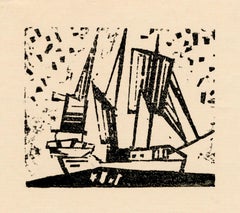
Three Masted Ship, 2
– Artist
s Personal Letterhead, Bauhaus Modernism
By Lyonel Feininger
Located in Myrtle Beach, SC
Lyonel Feininger, 'Three Masted Ship, 2 (Dreimastiges Schiff, 2)', woodcut, 1937, one of a small but unknown number of letterhead proofs; Prasse W296. Feininger estate stamp and inventory no. 'W 865' in pencil, bottom left sheet corner. Annotated 'W 296' and 'on block : 3702a' in pencil, bottom right sheet corner.
A fine impression, on cream, laid, letterhead stock; hinge remains on the left and right top sheet edges, verso, in excellent condition. Very scarce.
Image size 2 1/4 x 2 11/16 inches; sheet size 10 x 6 3/4 inches. Archivally sleeved, unmatted.
Exhibited: 'Lyonel Feininer, Woodcuts Used As Letterheads'; Associated American Artists; Feb 4 - March 2, 1974; New York, NY.
ABOUT THE ARTIST
Lyonel Feininger (1871-1956) was born in New York City into a musical family—his father was a violinist and composer, his mother was a singer and pianist. He studied violin with his father, and by the age of 12, he was performing in public, but he also drew incessantly, most notably the steamboats and sailing ships on the Hudson and East Rivers, and the landscape around Sharon, Conn., where he spent time on a farm owned by a family friend. At the age of 16 he left New York to study music and art in Germany, from where his parents emigrated. Drawn more to the visual arts, he attended schools in Hamburg, Berlin, and Paris from 1887 to 1892.
After completing his studies, Feininger began his artistic career as a cartoonist and illustrator, his originality leading him to great success. In 1906, after working for a dozen years in Germany, he was offered a job as a cartoonist at the Chicago Tribune, the largest circulation newspaper in the Midwest. He worked there for a year, inventing what became the standard design for the comic strip: in the words of John Carlin, “an overall pattern. . . that allowed the page to be read both as a series of elements one after the other, like language and as a group of juxtaposed images, like visual art.” His originality did not end there: he went on to become one of the great abstract painters. Like Kandinsky, music was his model, but Kandinsky only knew music from the outside—as a listener (inspired initially by Wagner, then by Schoenberg)—while Feininger knew it from the inside. He lived in Paris from 1906 to 1908, during which time he met and was influenced by the work of progressive painters Robert Delaunay and Jules Pascin, as well as that of Paul Cezanne and Vincent van Gogh. He began painting full-time, developing his distinctive Iyrical style based on Cubist and Expressionist idioms and a concern for the emotive qualities of light and color. He exhibited with the Der Blaue Reiter group in 1913, and in 1917, he had his first solo exhibition at Galerie Der Sturm in Berlin.
One year after his solo exhibition, in 1918, Feininger began making woodcuts. He became enamored with the medium, producing an impressive 117 in his first year of exploring the printmaking medium. In 1919 at the invitation of the architect Walter Gropius, he was appointed the first master at the newly formed Staatliches Bauhaus in Weimar. His woodcut of a cathedral crowned...
Category
1930s Bauhaus Figurative Prints
Materials
Woodcut
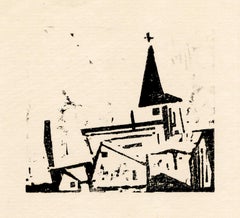
Church with Star
– Artist
s Personal Letterhead, Bauhaus Modernism
By Lyonel Feininger
Located in Myrtle Beach, SC
Lyonel Feininger, 'Church with Star (Kirche mit Stern)', woodcut, 1936, one of a small but unknown number of letterhead proofs; Prasse W265. Annotated 'W 265' (Feininger catalogue number) and inventory no. '2808' in pencil, in the bottom right sheet corner. A fine impression, on cream, laid letterhead stock; hinge remains on the left and right top sheet edges, verso, in excellent condition. Very scarce.
Image size 2 3/8 x 2 3/8 inches; sheet size 10 1/16 x 7 1/16 inches. Archivally sleeved, unmatted.
ABOUT THE ARTIST
Lyonel Feininger (1871-1956) was born in New York City into a musical family—his father was a violinist and composer, his mother was a singer and pianist. He studied violin with his father, and by the age of 12, he was performing in public, but he also drew incessantly, most notably the steamboats and sailing ships on the Hudson and East Rivers, and the landscape around Sharon, Conn., where he spent time on a farm owned by a family friend. At the age of 16 he left New York to study music and art in Germany, from where his parents emigrated. Drawn more to the visual arts, he attended schools in Hamburg, Berlin, and Paris from 1887 to 1892.
After completing his studies, Feininger began his artistic career as a cartoonist and illustrator, his originality leading him to great success. In 1906, after working for a dozen years in Germany, he was offered a job as a cartoonist at the Chicago Tribune, the largest circulation newspaper in the Midwest. He worked there for a year, inventing what became the standard design for the comic strip: in the words of John Carlin, “an overall pattern. . . that allowed the page to be read both as a series of elements one after the other, like language and as a group of juxtaposed images, like visual art.” His originality did not end there: he went on to become one of the great abstract painters. Like Kandinsky, music was his model, but Kandinsky only knew music from the outside—as a listener (inspired initially by Wagner, then by Schoenberg)—while Feininger knew it from the inside. He lived in Paris from 1906 to 1908, during which time he met and was influenced by the work of progressive painters Robert Delaunay and Jules Pascin, as well as that of Paul Cezanne and Vincent van Gogh. He began painting full-time, developing his distinctive Iyrical style based on Cubist and Expressionist idioms and a concern for the emotive qualities of light and color. He exhibited with the Der Blaue Reiter group in 1913, and in 1917, he had his first solo exhibition at Galerie Der Sturm in Berlin.
One year after his solo exhibition, in 1918, Feininger began making woodcuts. He became enamored with the medium, producing an impressive 117 in his first year of exploring the printmaking medium. In 1919 at the invitation of the architect Walter Gropius, he was appointed the first master at the newly formed Staatliches Bauhaus in Weimar. His woodcut of a cathedral crowned...
Category
1930s Bauhaus Figurative Prints
Materials
Woodcut
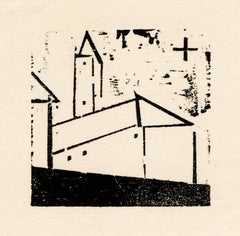
Church with House and Tree
– Artist
s Personal Letterhead, Bauhaus Modernism
By Lyonel Feininger
Located in Myrtle Beach, SC
Lyonel Feininger, 'Church with House and Tree (Kirche mit Haus und Baum)', woodcut, 1936, one of a small but unknown number of letterhead proofs; Prasse W290 V. Inscribed 'J. F. note paper', in pencil, in the artist’s hand; with the Feininger estate stamp and catalog no. 'W 859' in pencil. Annotated 'W.290 V state 3609' in pencil, in the bottom right sheet corner.
A fine impression, on cream, laid letterhead stock; hinge remains on the left and right top sheet edges, verso, in excellent condition. Very scarce.
Image size 2 3/8 x 2 3/4 inches; sheet size 10 x 7 5/16 inches. Archivally sleeved, unmatted.
Exhibited: 'Lyonel Feininer, Woodcuts Used As Letterheads'; Associated American Artists; Feb 4 - March 2, 1974; NY, NY.
ABOUT THE ARTIST
Lyonel Feininger (1871-1956) was born in New York City into a musical family—his father was a violinist and composer, his mother was a singer and pianist. He studied violin with his father, and by the age of 12, he was performing in public. Still, he also drew incessantly, most notably the steamboats and sailing ships on the Hudson and East Rivers, and the landscape around Sharon, Conn., where he spent time on a farm owned by a family friend. At the age of 16 he left New York to study music and art in Germany, from where his parents emigrated. Drawn more to the visual arts, he attended schools in Hamburg, Berlin, and Paris from 1887 to 1892.
After completing his studies, Feininger began his artistic career as a cartoonist and illustrator, his originality leading him to great success. In 1906, after working for a dozen years in Germany, he was offered a job as a cartoonist at the Chicago Tribune, the largest circulation newspaper in the Midwest. He worked there for a year, inventing what became the standard design for the comic strip: in the words of John Carlin, “an overall pattern. . . that allowed the page to be read both as a series of elements one after the other, like language and as a group of juxtaposed images, like visual art.” His originality did not end there: he went on to become one of the great abstract painters. Like Kandinsky, music was his model, but Kandinsky only knew music from the outside—as a listener (inspired initially by Wagner, then by Schoenberg)—while Feininger knew it from the inside. He lived in Paris from 1906 to 1908, during which time he met and was influenced by the work of progressive painters Robert Delaunay and Jules Pascin, as well as that of Paul Cezanne and Vincent van Gogh. He began painting full-time, developing his distinctive Iyrical style based on Cubist and Expressionist idioms and a concern for the emotive qualities of light and color. He exhibited with the Der Blaue Reiter group in 1913, and in 1917, he had his first solo exhibition at Galerie Der Sturm in Berlin.
One year after his solo exhibition, in 1918, Feininger began making woodcuts. He became enamored with the medium, producing an impressive 117 in his first year of exploring the printmaking medium. In 1919 at the invitation of the architect Walter Gropius, he was appointed the first master at the newly formed Staatliches Bauhaus in Weimar. His woodcut of a cathedral crowned...
Category
1930s Bauhaus Figurative Prints
Materials
Woodcut
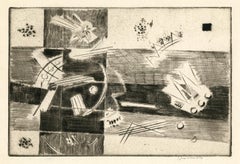
Small Forms On Crossing Bands
By Werner Drewes
Located in Myrtle Beach, SC
Werner Drewes, 'Small Forms on Crossing Bands', drypoint and roulette, 1935, edition 20, Rose 1.197. Signed in pencil. A fine, rich impression, in warm black ink, on cream wove paper...
Category
1930s Bauhaus Abstract Prints
Materials
Drypoint
You May Also Like
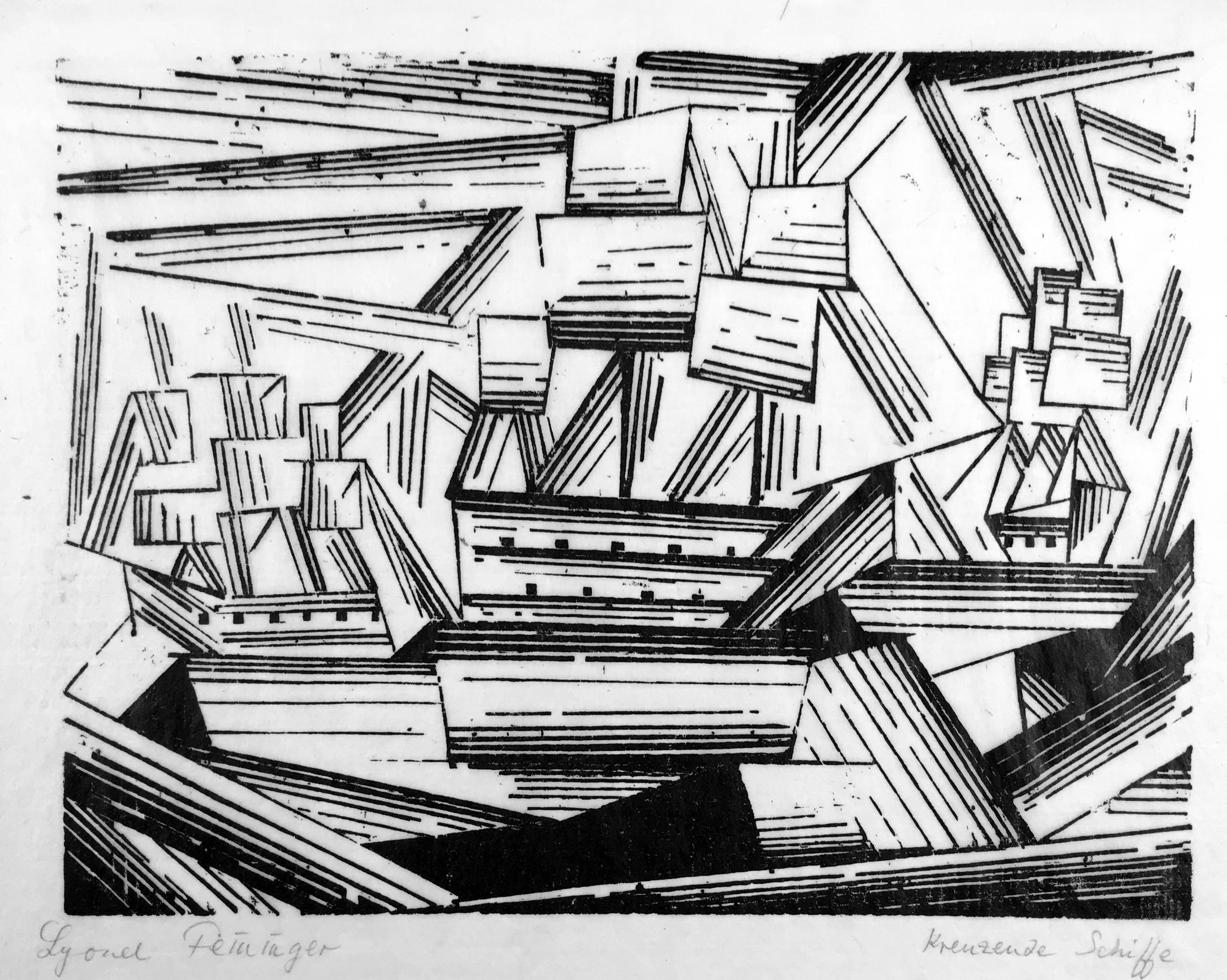
Kreuzende Segelschiffe 2 (Cruising Sailing Ships 2)
By Lyonel Feininger
Located in New York, NY
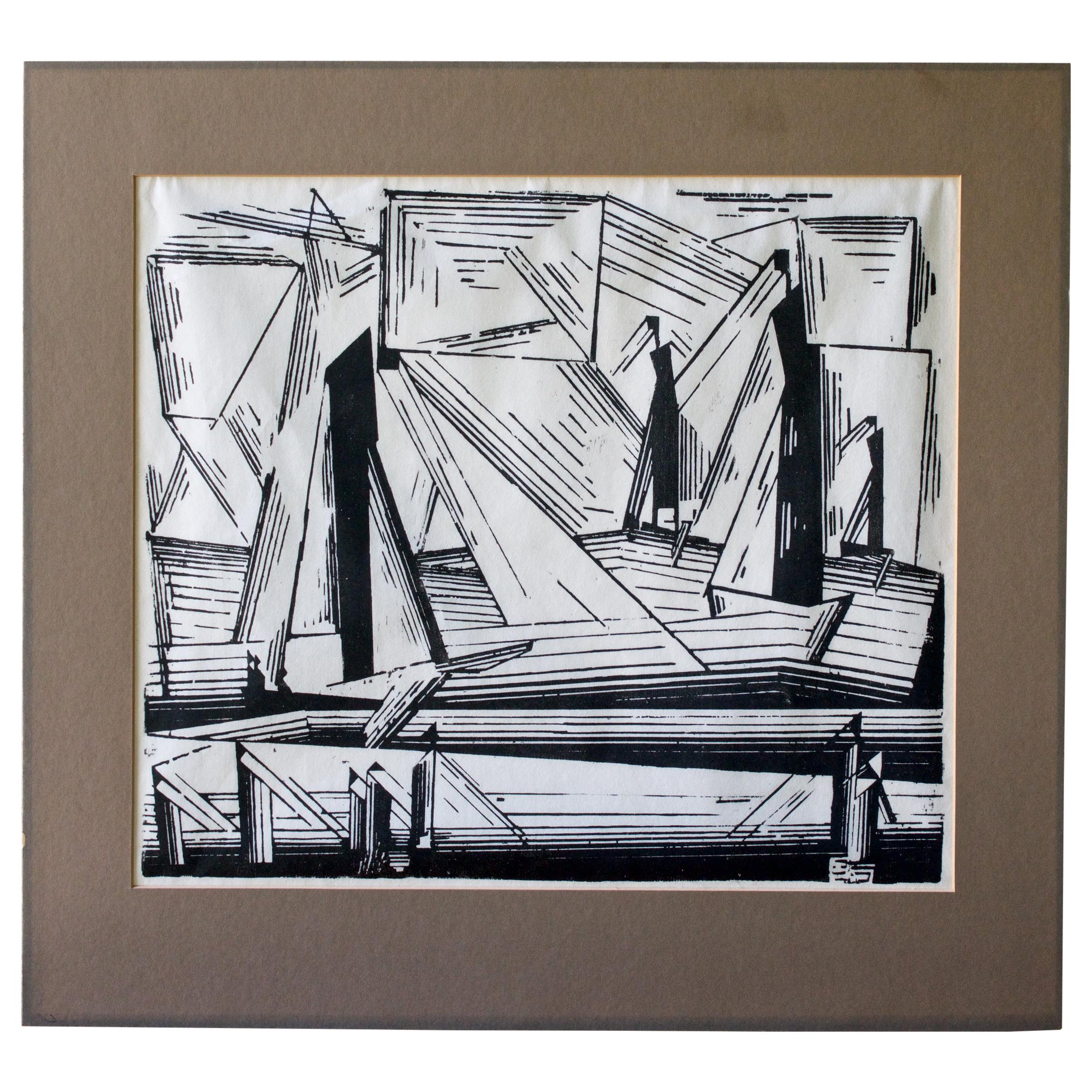
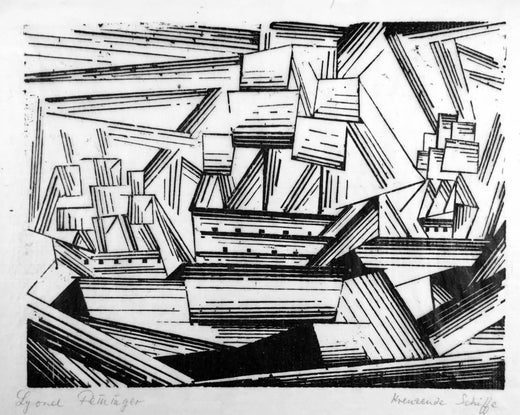
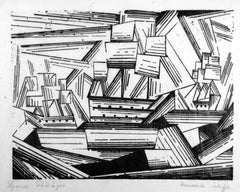
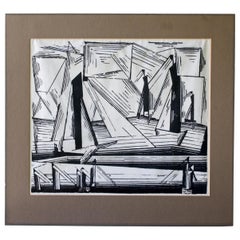
Lyonel Feininger, “Kreuzende Segelschiffe 2 (Cruising Sailing Ships 2)”
1919, Woodcut.
Prasse W175. Edition 275 unsigned for portfolio Die tunlte Jahresgabe des Kreises graphischer ...
Category
1910s Bauhaus Landscape Prints
Materials
Woodcut
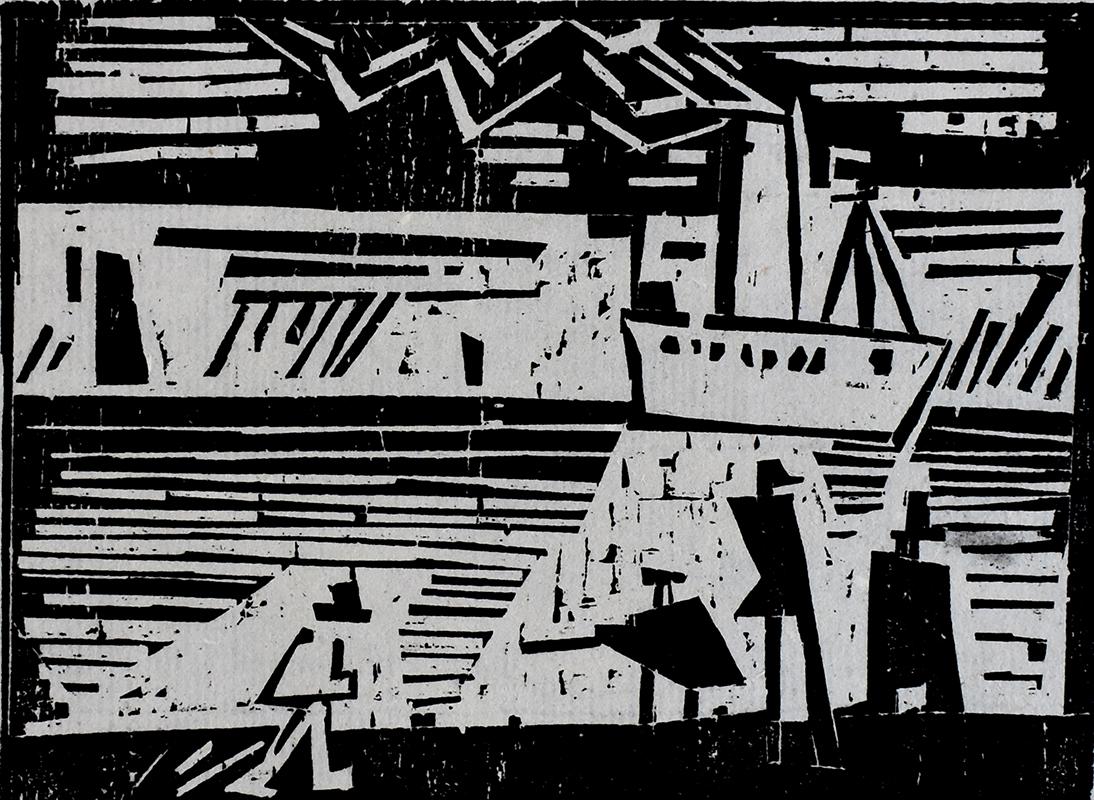
Steamboat Odin Dampfer Odin - German Woodcut
By Lyonel Feininger
Located in London, GB
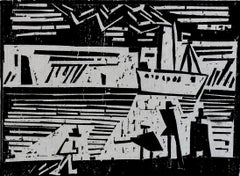
This original woodcut is hand signed in pencil "Lyonel Feininger" at the lower left margin.
It is also inscribed with the work number by the artist “1815” in the lower centre of the...
Category
1910s Expressionist More Prints
Materials
Woodcut
Church View Offset Print by Lyonel Feininger, Modern, 1988, Unframed
By Lyonel Feininger
Located in Brooklyn, NY
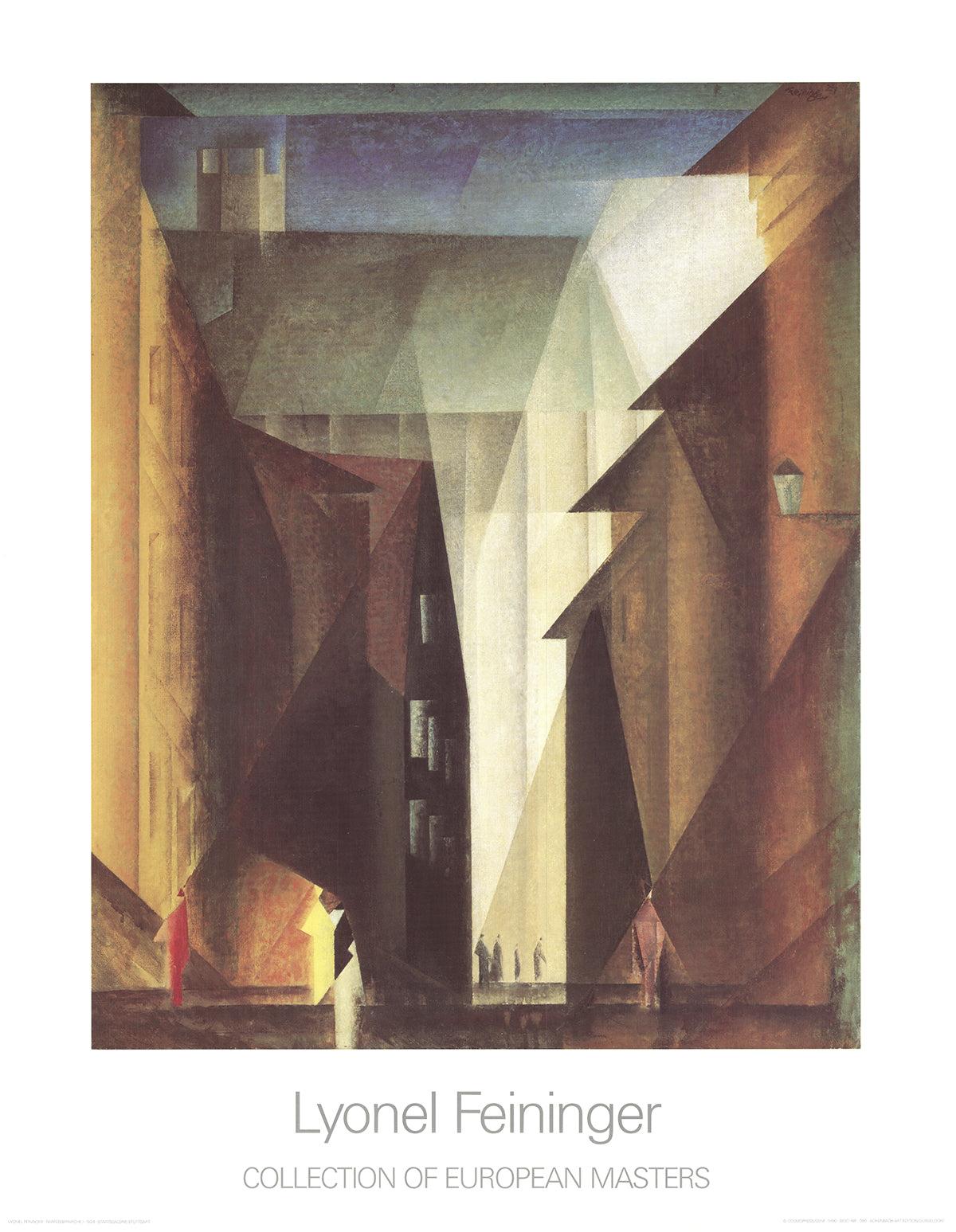
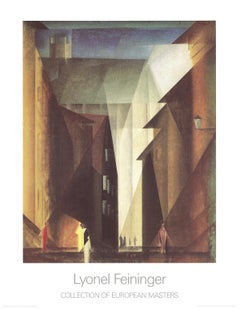
This rare exhibition poster features a high-quality reproduction of Lyonel Feininger’s Church View, part of the "Collection of European Masters" series published by Achenbach Edition...
Category
1980s Modern Prints and Multiples
Materials
Offset
1920s Lyonel Feininger Woodcut Art Deco Cityscape Abstract Futurist Cubist Print
Located in Hyattsville, MD
Lyonel Feininger (American 1871-1956) Fishing Boats, 1921, woodcut on paper. This example is from the Print Club of Cleveland edition no. 49 for 1971, a posthumous edition of 252.
...
Category
Vintage 1970s American Art Deco Prints
Materials
Paper
$1,200 Sale Price
20% Off
Stehkragen (rare hand signed woodcut)
By Lyonel Feininger
Located in Aventura, FL
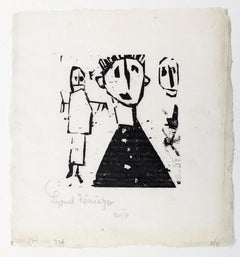
Woodcut print on paper. Hand signed and dated by Lyonel Feininger. Unknow edition. Image size approx 3.9 x 3.9 inches. Sheet size 7 x 6.5 inches.
Artwork is in excellent conditio...
Category
1920s Contemporary Figurative Prints
Materials
Silk, Screen
$6,750 Sale Price
25% Off
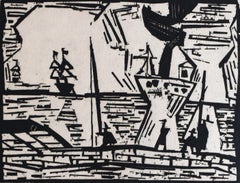
On the Quay Wall Auf der Quaimauer, 1921
By Lyonel Feininger
Located in London, GB
LYONEL FEININGER 1871-1956
1871 - New York - 1956 (American/German)
Title: On the Quay Wall Auf der Quaimauer, 1921
Technique: Original Hand Signed Woodcut on Wove Paper
Paper...
Category
1920s Expressionist Figurative Prints
Materials
Woodcut
More Ways To Browse
Antique Idols
German Musician
Antique Harp Table
German Bauhaus Prints
Wassily Kandinsky 1911
Warhol Electric Chair
1966 Salvador Dali
Alexander Calder Signed Lithographs
Alexander Calder Sun
Andy Warhol 1984
Arthur Lismer
Bauhaus Lithograph
Calder Spirals
Claes Oldenburg Signed
Dali Lucas Gallery
Derriere Le Miroir 173
Fournier Paris
Gerard Martin