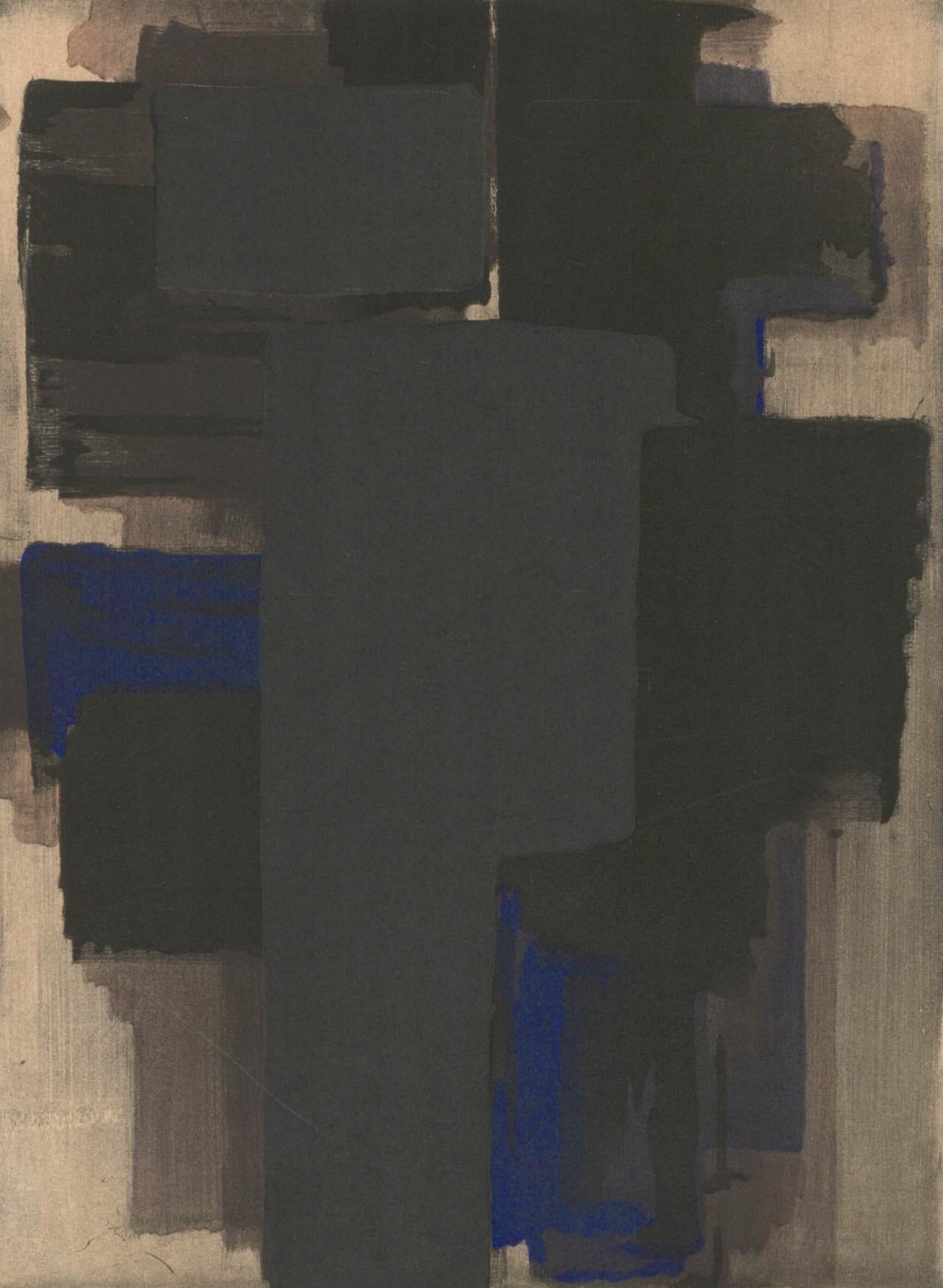
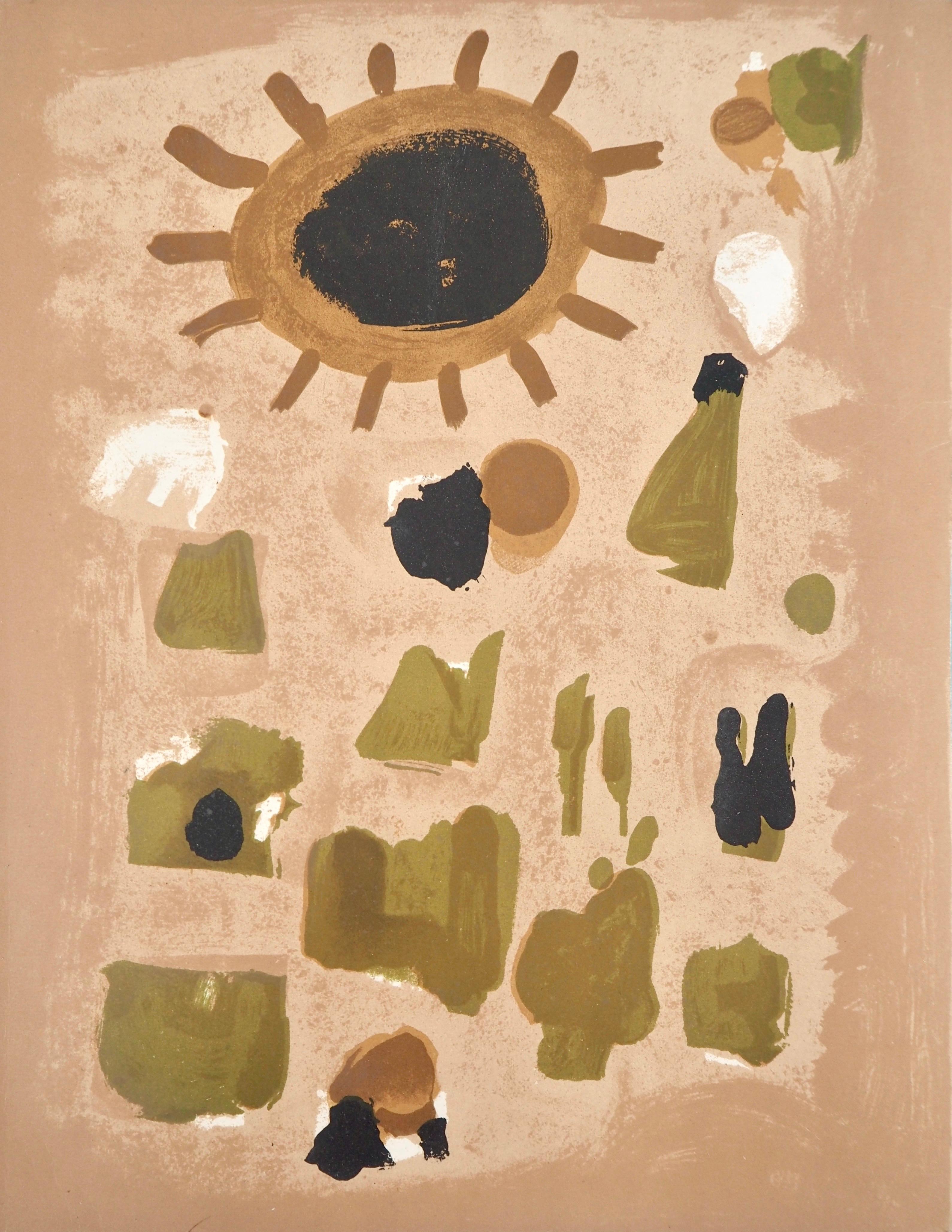
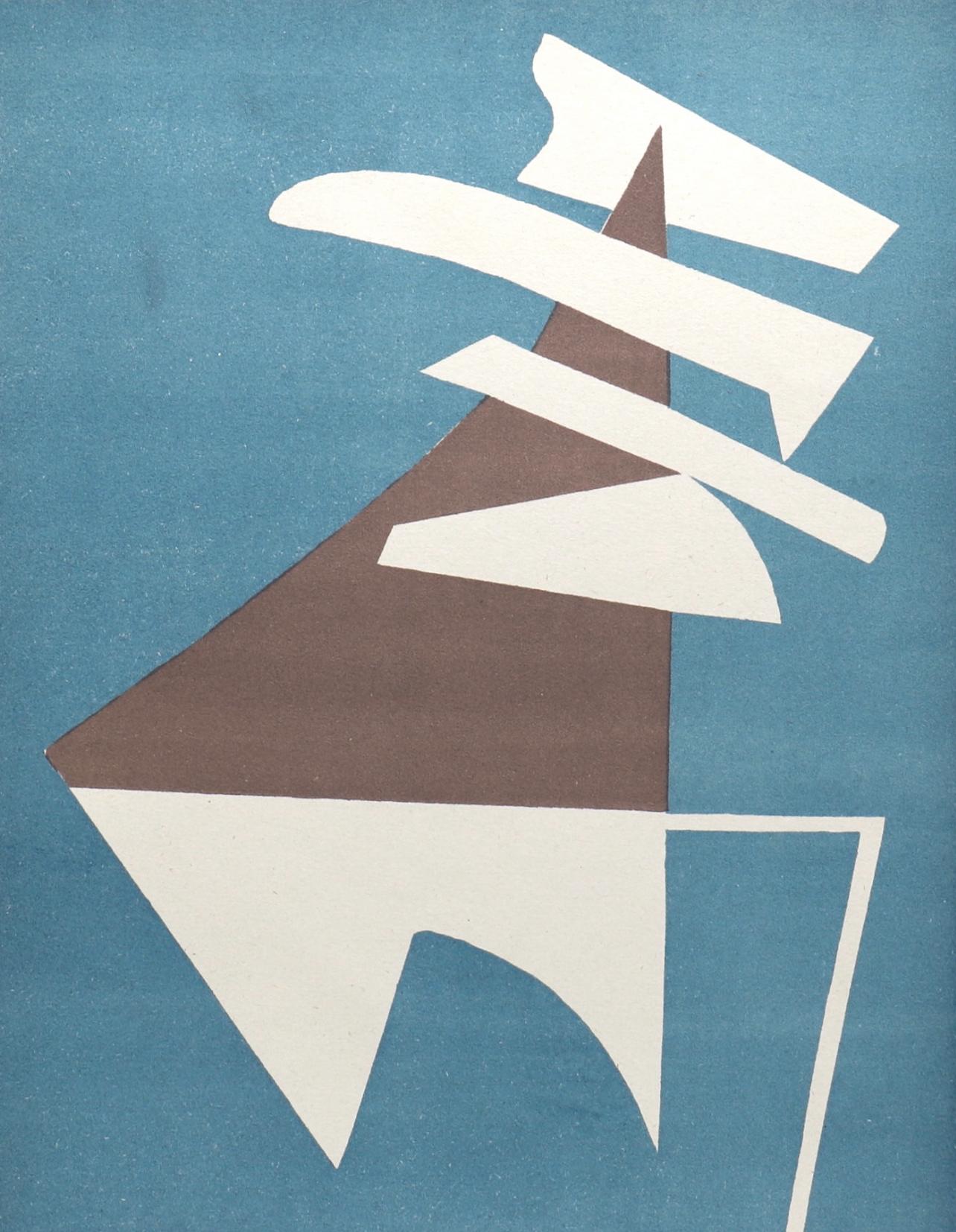
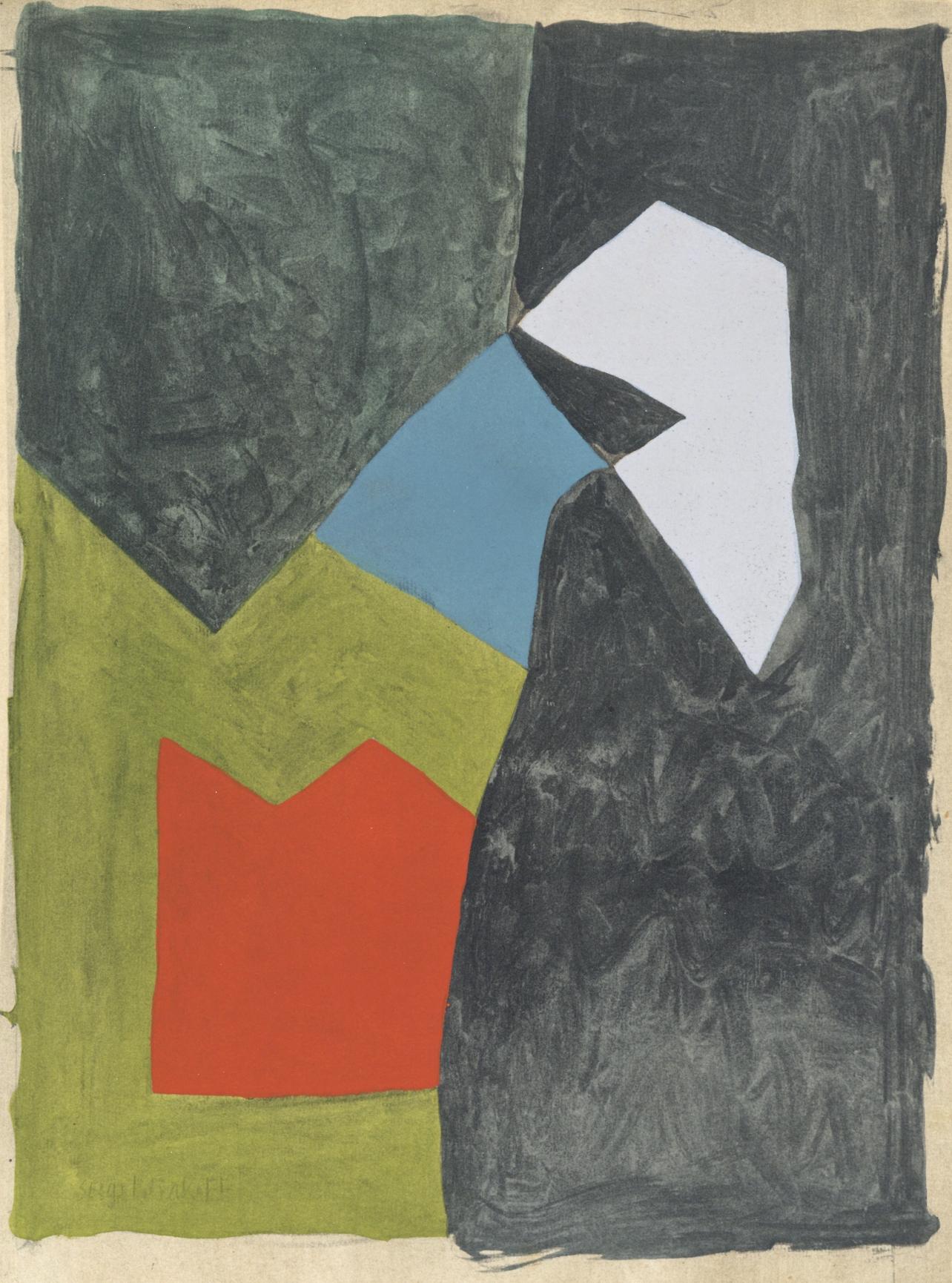
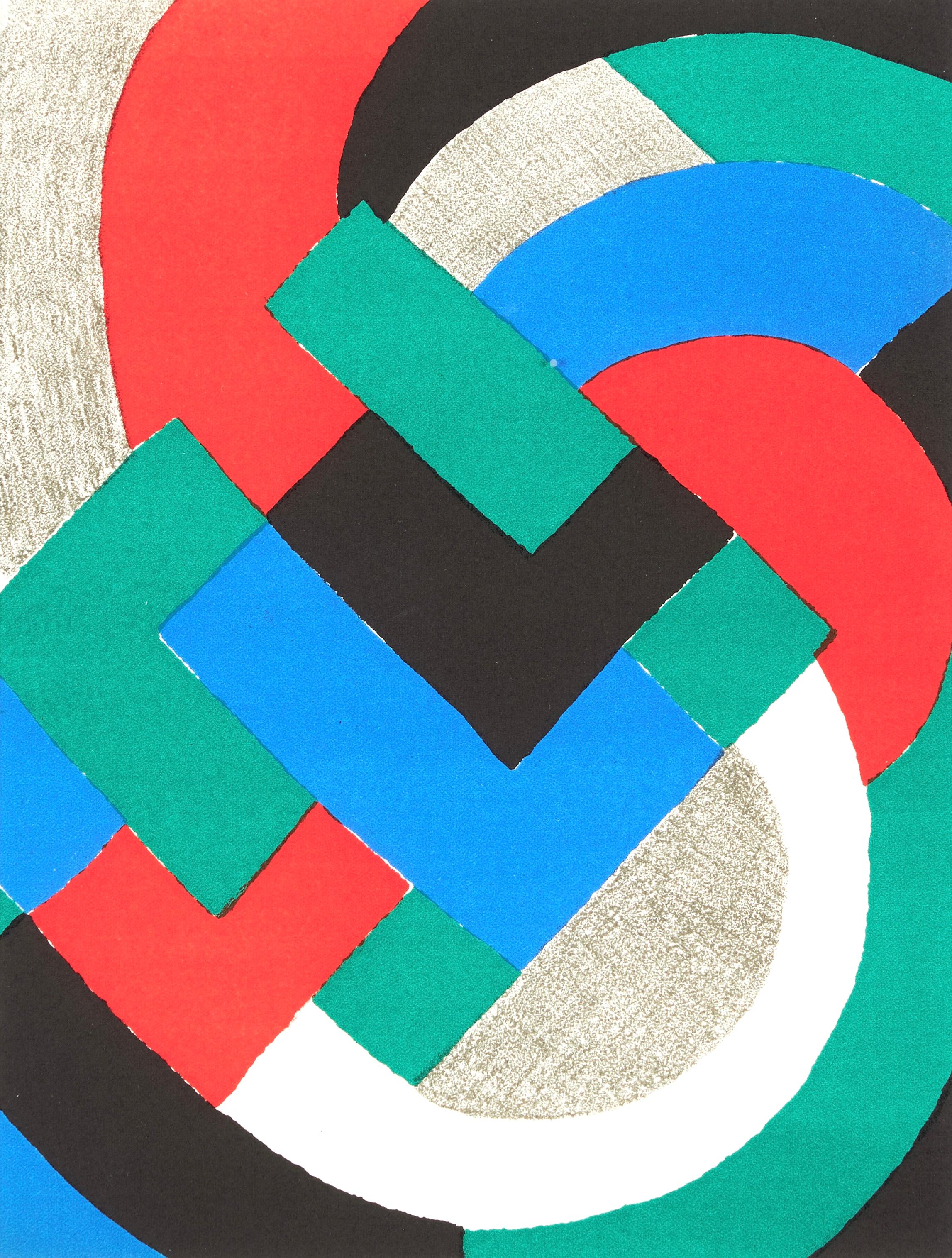
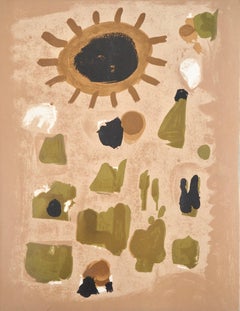
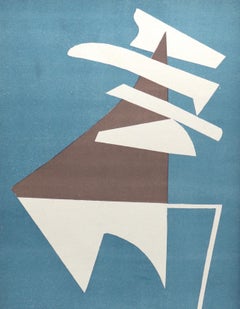
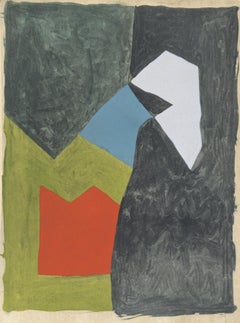
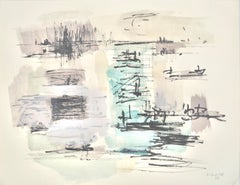
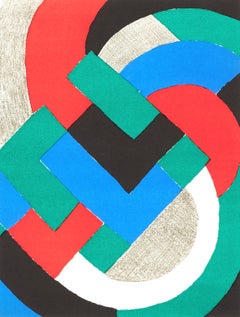
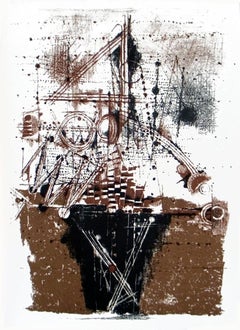
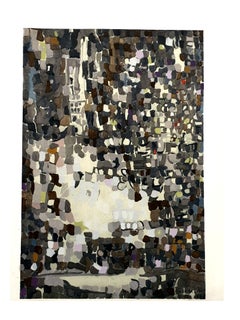
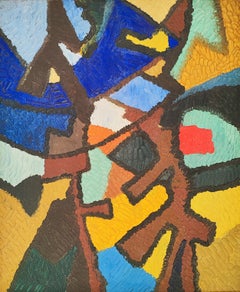
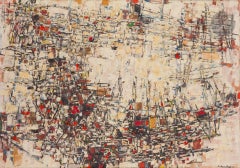
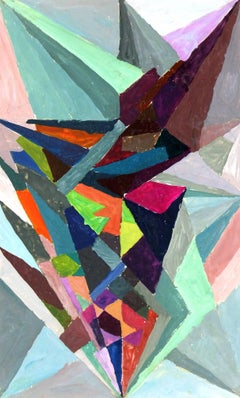
This exquisite lithograph and pochoir by Maria Helena Vieira da Silva (1908–1992), titled Sans titre (Untitled), from the album XXe Siecle, Nouvelle serie N°7 (double) Juin 1956, originates from the 1956 edition published by Societe Internationale dArt XXe Siecle, Paris, under the direction of Gualtieri di San Lazzaro, editeur, Paris, and printed by Atelier Daniel Jacomet et Cie, Paris, 1956. A shimmering example of Vieira da Silvas spatial abstraction, it reflects the rhythmic geometry, architectural depth, and luminous fragmentation that define her celebrated oeuvre.
Executed as a lithograph and pochoir on velin paper, this work measures 9.75 x 12.5 inches. Signed in the plate and unnumbered as issued. Printed by Atelier Daniel Jacomet et Cie, Paris, one of the foremost ateliers of the 20th century.
Artwork Details:
Artist: Maria Helena Vieira da Silva (1908–1992)
Title: Sans titre (Untitled)
Medium: Lithograph and pochoir on velin paper
Dimensions: 9.75 x 12.5 inches (24.77 x 31.75 cm)
Inscription: Signed in the plate and unnumbered as issued
Date: 1956
Publisher: Societe Internationale dArt XXe Siecle, Paris, under the direction of Gualtieri di San Lazzaro, editeur, Paris
Printer: Atelier Daniel Jacomet et Cie, Paris
Condition: Well preserved, consistent with age and medium
Provenance: From the album XXe Siecle, Nouvelle serie N°7 (double), Juin 1956, published by Societe Internationale dArt XXe Siecle, Paris; printed by Atelier Daniel Jacomet et Cie, Paris, 1956
About the Publication:
Gualtieri di San Lazzaros XXe Siecle (Twentieth Century) was one of the most influential art journals of the modern era, founded in Paris in 1938 to unite the greatest painters, sculptors, and writers of the 20th century. San Lazzaro, a visionary editor and champion of modernism, believed deeply in the synthesis of art and literature, creating a publication that served as both a scholarly platform and a collectors object. Across its many issues, XXe Siecle featured original lithographs, pochoirs, linocuts, and wood engravings by leading modern masters including Picasso, Matisse, Chagall, Miro, Braque, Leger, Kandinsky, and Calder, printed by premier ateliers such as Mourlot, Atelier Jacomet, and Lacouriere. The double issues of the 1950s reflect a flourishing period of postwar abstraction, sculpture, and avant garde experimentation. Today, XXe Siecle remains an essential reference point in 20th century art history, prized by collectors, museums, and scholars worldwide.
About the Artist:
Maria Helena Vieira da Silva (1908–1992) was a Portuguese-born French painter whose intricate, luminous abstractions of space, architecture, and memory made her one of the most influential artists of the 20th century and a central figure in postwar European modernism. Known for her labyrinthine compositions of light, rhythm, and geometric fragmentation, Vieira da Silva transformed the language of abstraction into a poetic exploration of perception and consciousness. Born in Lisbon, she moved to Paris in 1928, where she joined the vibrant avant-garde community and absorbed influences from Pablo Picasso, Alexander Calder, Alberto Giacometti, Salvador Dali, Joan Miro, Wassily Kandinsky, Marcel Duchamp, and Man Ray. From Picasso, she learned to deconstruct space; from Kandinsky and Miro, she discovered the expressive spirituality of abstraction; and from Duchamp and Man Ray, she inherited the conceptual freedom to merge intellect with intuition. Yet Vieira da Silvas art was wholly original—a synthesis of geometry, emotion, and memory rendered through pulsating networks of line and color. Her early works reflected Constructivist and Cubist structures, but by the 1940s she had developed her mature style, a visionary form of abstraction that transformed cities, libraries, and imagined spaces into shimmering mosaics of form and light. During World War II, she fled to Brazil with her husband, the painter Arpad Szenes, where the tropical atmosphere infused her palette with luminosity before her return to Paris in 1947, when she emerged as one of the leading figures of the Ecole de Paris. Her paintings such as La Bibliotheque (1949) and A Cidade (1950) revealed her ability to fuse architecture and emotion, intellect and intuition, depicting infinite spatial grids that evoke both the complexity of urban life and the architecture of thought itself. Throughout the 1950s and 1960s, she gained international acclaim, exhibiting at major institutions including the Museum of Modern Art, the Tate Modern, the Centre Pompidou, and the Calouste Gulbenkian Museum. In 1966, she became the first woman to receive Frances Grand Prix National des Arts, affirming her pioneering role in abstract painting. Vieira da Silvas work bridged the precision of Constructivism with the lyricism of Surrealism, inspiring later artists such as Nicolas de Stael, Pierre Soulages, Bridget Riley, and Sean Scully, who drew from her ability to harmonize geometry and emotion. Her paintings—often compared to musical compositions or woven tapestries of light—continue to captivate for their intellectual rigor and spiritual resonance, offering viewers entry into the metaphysical architecture of perception itself. Standing alongside Pablo Picasso, Alexander Calder, Alberto Giacometti, Salvador Dali, Joan Miro, Wassilly Kandinsky, Marcel Duchamp, and Man Ray, Vieira da Silva remains one of the great poetic visionaries of modern abstraction. Her highest auction record was achieved by A Cidade (1955), which sold for 2.68 million USD at Sothebys, London, on June 28, 2012, reaffirming her legacy as one of the most intellectually profound, spiritually evocative, and collectible female artists of the modern era.
Maria Helena Vieira da Silva, Sans titre, XXe Siecle 1956, lithograph and pochoir printed by Jacomet.