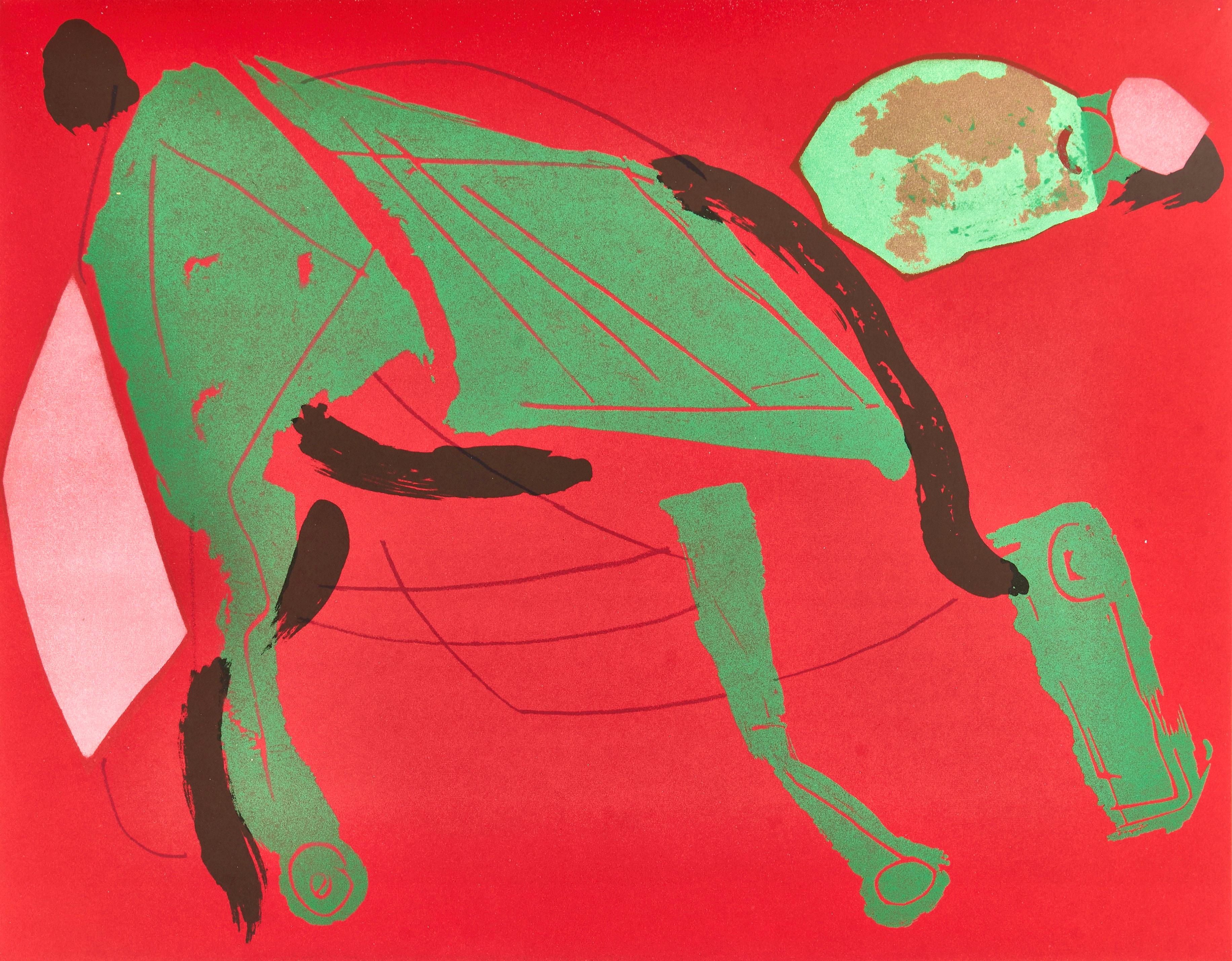
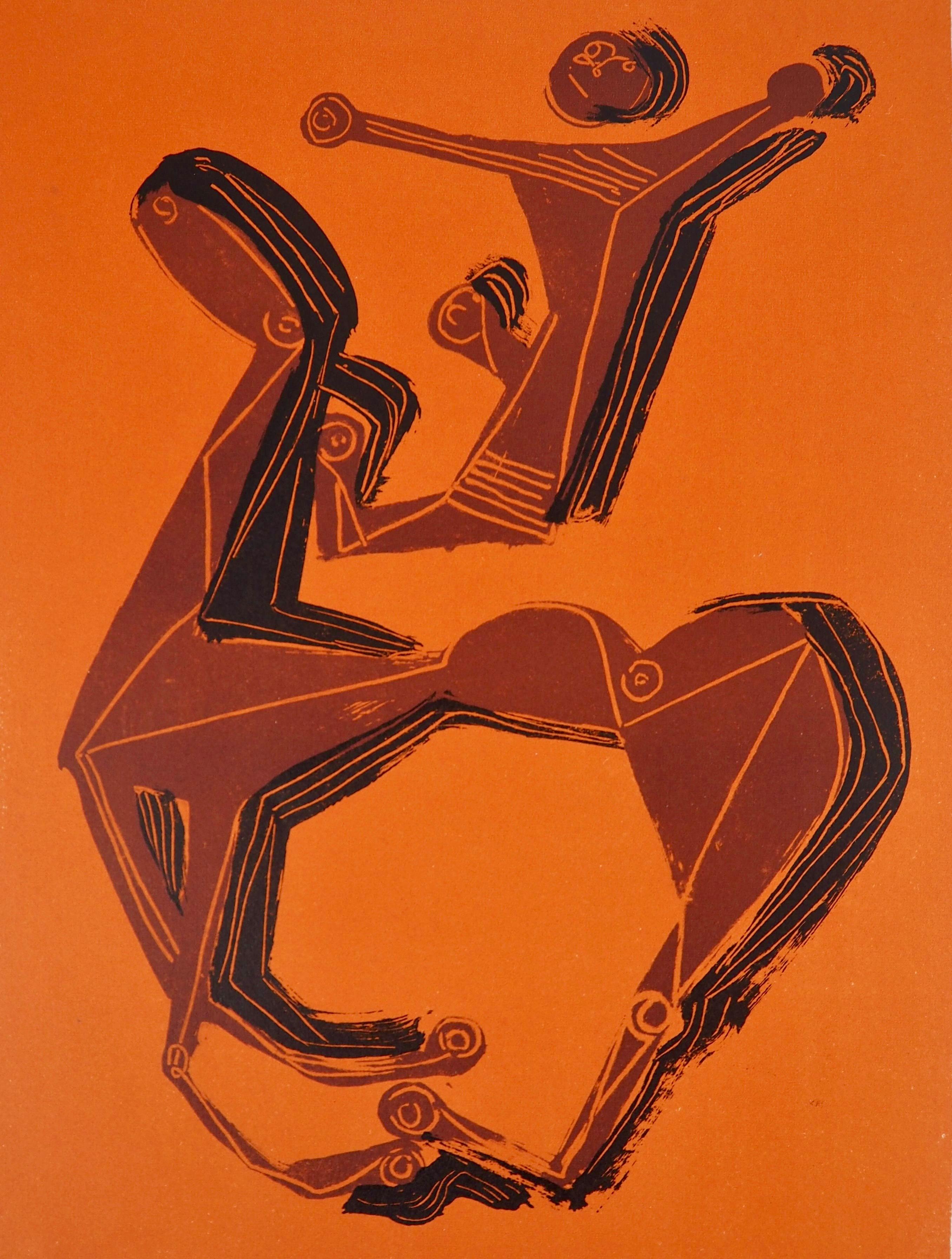
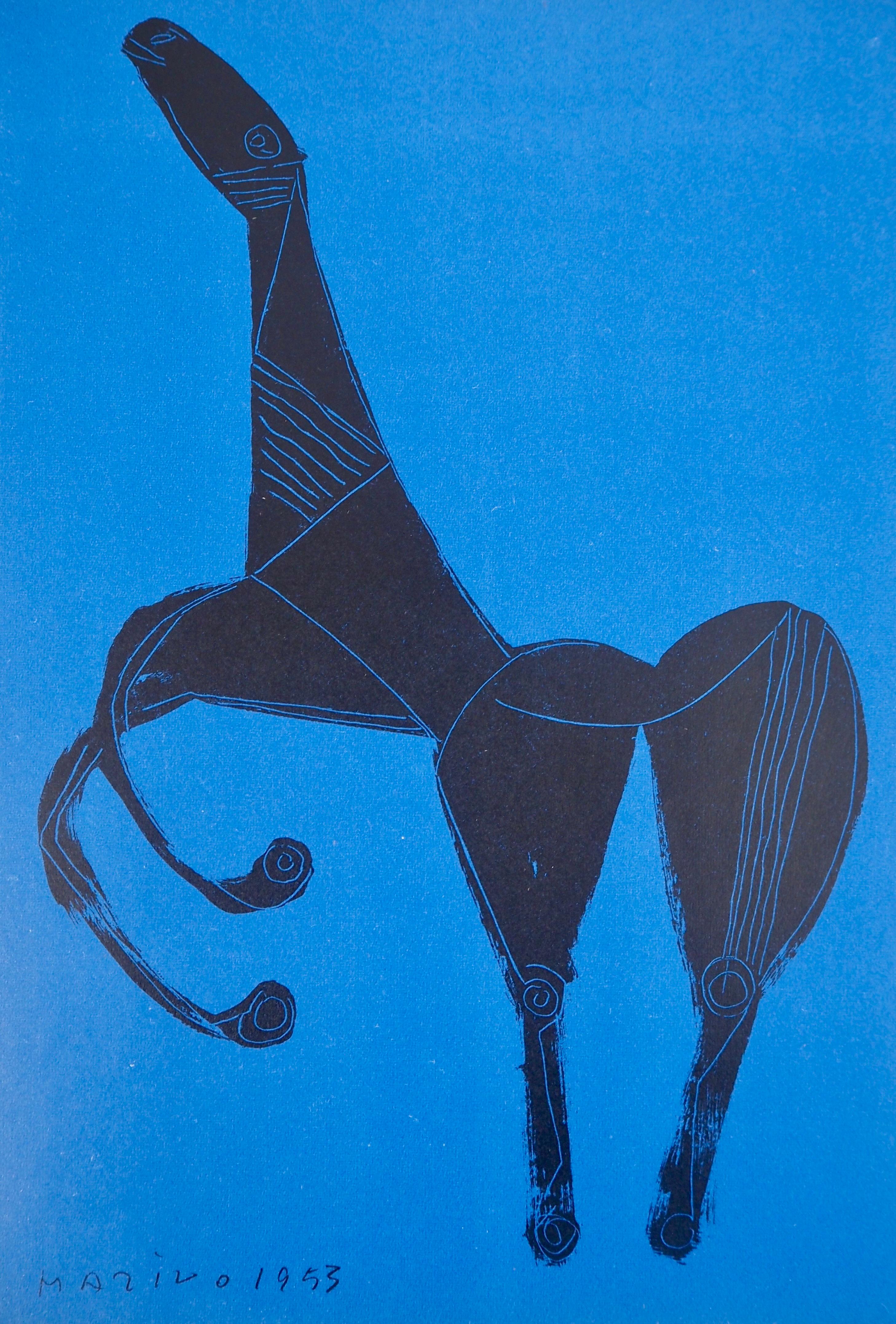
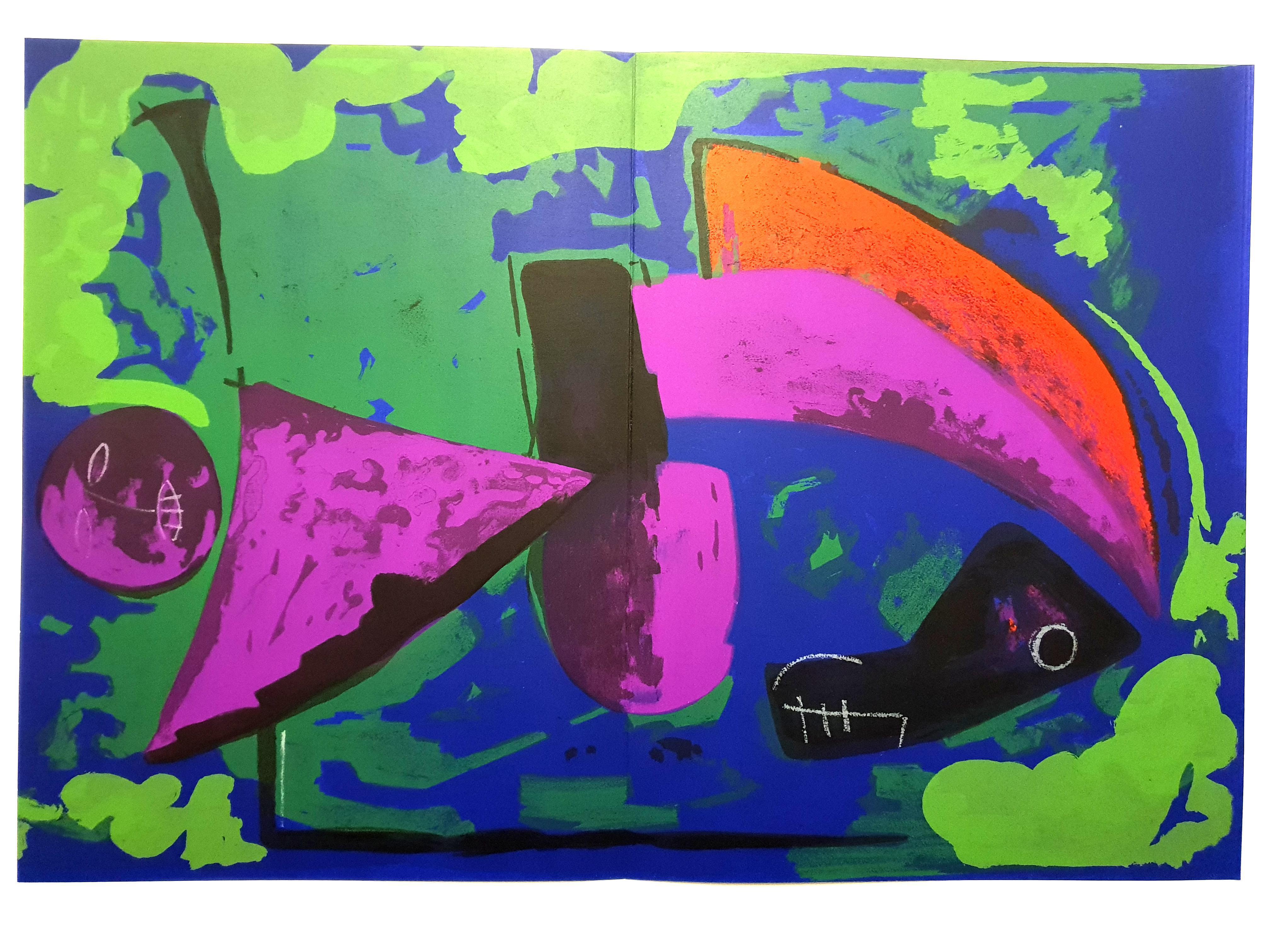
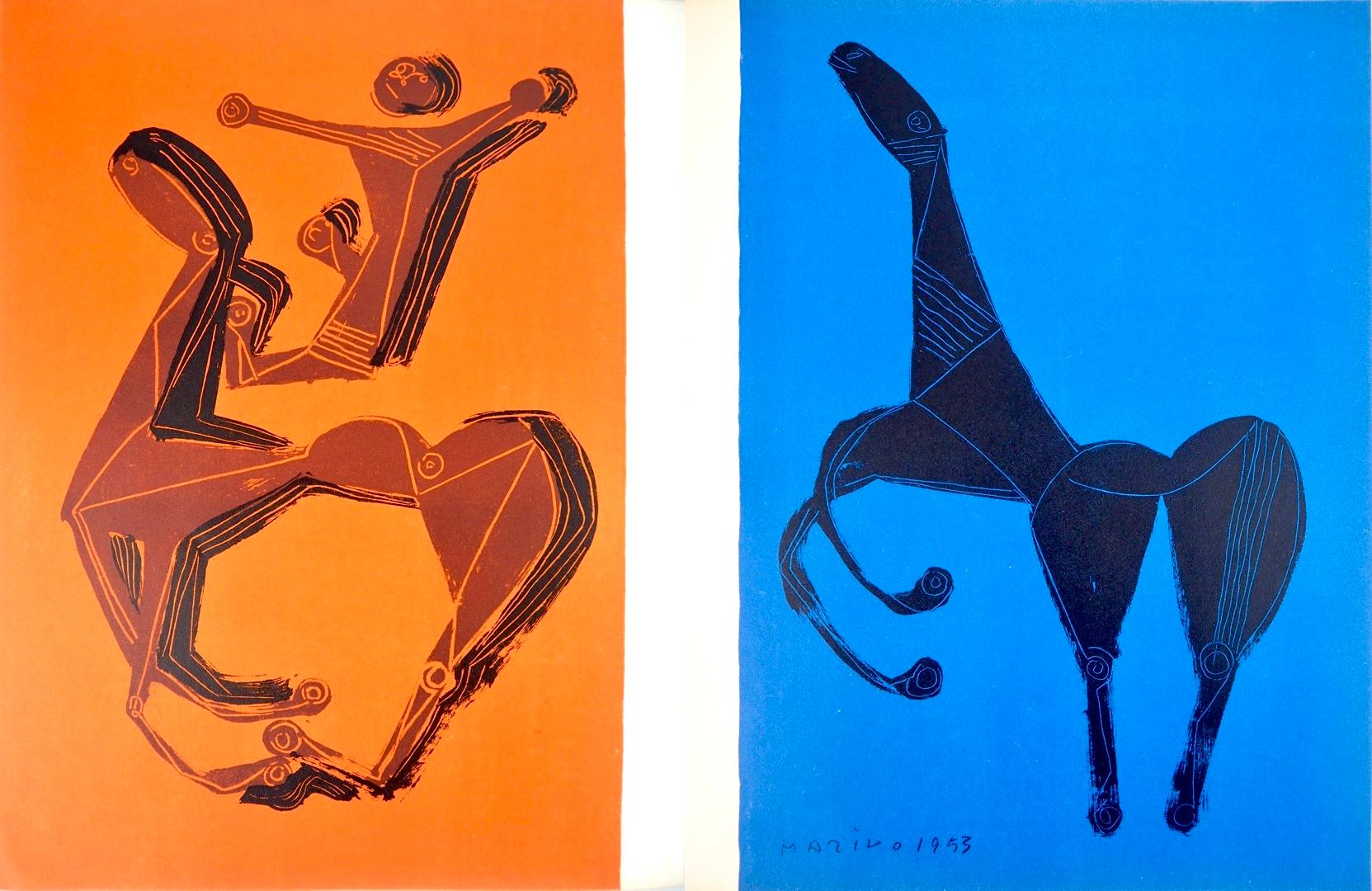
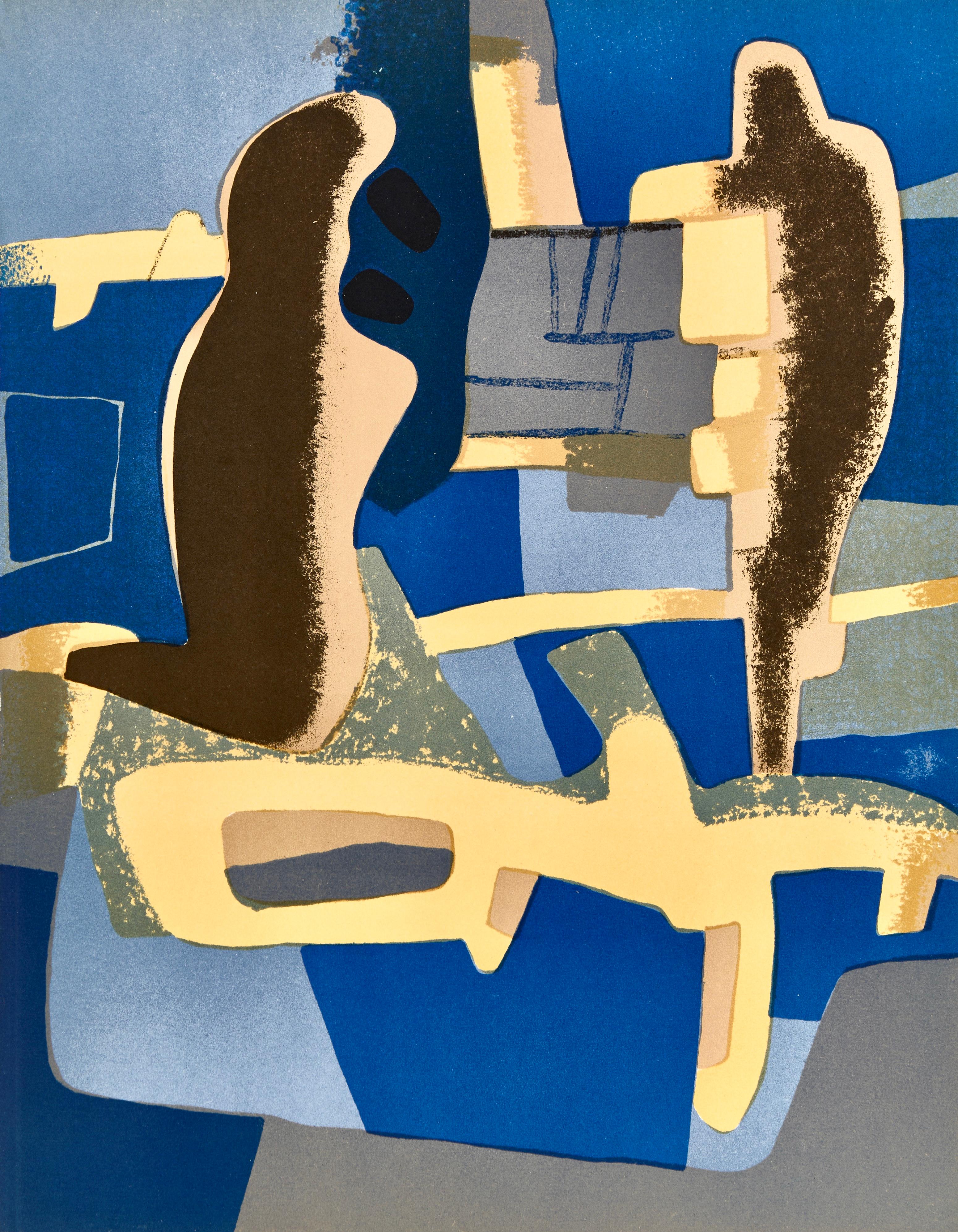
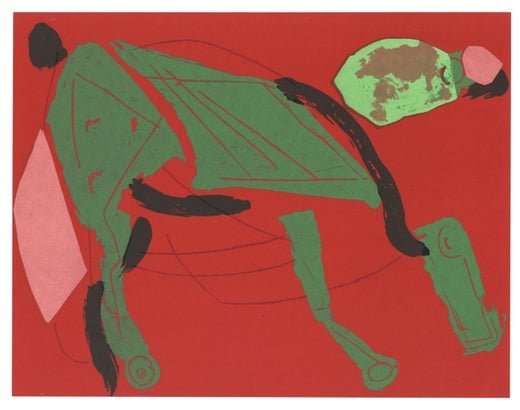
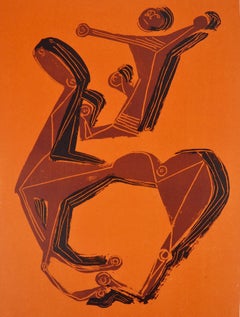
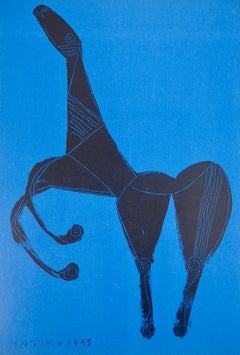
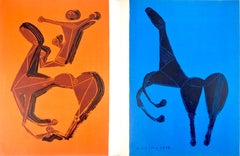
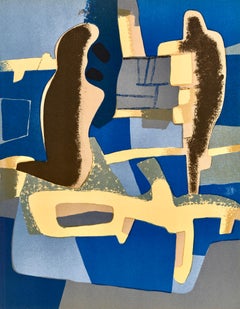
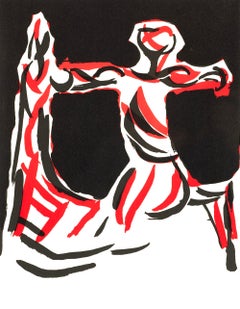
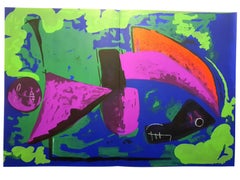
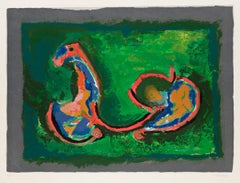
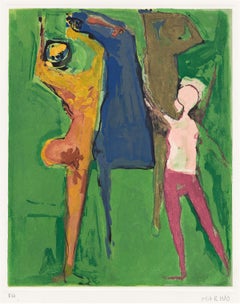
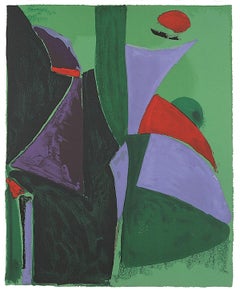
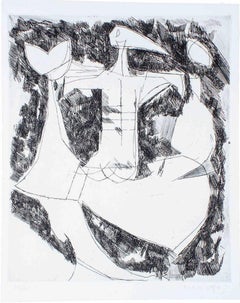
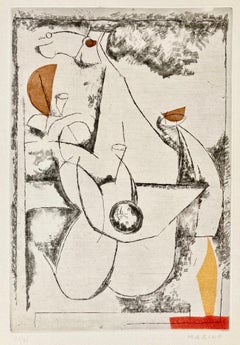
This exquisite lithograph by Marino Marini (1901–1980), titled Guerrier (Warrior), from the album XXe Siecle, Nouvelle serie, XXXe Annee No. 30, Juin 1968, originates from the 1968 edition published by Societe Internationale d'Art XXe siecle, Paris, under the direction of Gualtieri di San Lazzaro, editeur, Paris, and printed by Mourlot Freres, Paris, 1968. Guerrier embodies Marini’s profound exploration of humanity’s inner struggle and spiritual endurance, uniting mythic symbolism with modern abstraction in a composition of striking emotional depth.
Executed as a lithograph on velin paper, this work measures 12.5 x 19.5 inches, with centerfold as issued. Unsigned and unnumbered as issued. The edition exemplifies the superb craftsmanship of Mourlot Freres, Paris.
Artwork Details:
Artist: Marino Marini (1901–1980)
Title: Guerrier (Warrior), from the album XXe Siecle, Nouvelle serie, XXXe Annee No. 30, Juin 1968
Medium: Lithograph on velin paper
Dimensions: 12.5 x 19.5 inches (31.75 x 49.53 cm), with centerfold as issued
Inscription: Unsigned and unnumbered as issued
Date: 1968
Publisher: Societe Internationale d'Art XXe siecle, Paris, under the direction of Gualtieri di San Lazzaro, editeur, Paris
Printer: Mourlot Freres, Paris
Catalogue raisonne reference: Guastalla, Giorgio, et al. Marino Marini: Catalogue Raisonne of the Graphic Works (Engravings and Lithographs), 1919–1980. Leslie J. Sacks Editions: Graphis Arte Editions, 1993, illustration LR
Condition: Well preserved, consistent with age and medium
Provenance: From the album XXe Siecle, Nouvelle serie, XXXe Annee No. 30, Juin 1968, published by Societe Internationale d'Art XXe siecle, Paris; printed by Mourlot Freres, Paris, 1968
About the Publication:
Gualtieri di San Lazzaro's XXe Siecle (Twentieth Century) was one of the most influential art journals of the modern era, founded in Paris in 1938 as a platform for the greatest painters, sculptors, and writers of the 20th century. San Lazzaro, a visionary editor, critic, and champion of modernism, believed that art and literature should coexist as expressions of a shared human imagination. Under his direction, XXe Siecle became a cultural bridge between Europe and the wider world, publishing special issues devoted to leading figures such as Picasso, Matisse, Chagall, Braque, Calder, Miro, Kandinsky, and Leger. Each edition combined essays by renowned critics and poets with original lithographs and woodcuts printed by the foremost ateliers of Paris, Milan, and New York, including Mourlot, Curwen, and Amilcare Pizzi, creating a uniquely rich dialogue between text and image. Through XXe Siecle, San Lazzaro preserved the creative spirit of the avant-garde during and after World War Two, championing freedom of expression and the evolution of abstraction, surrealism, and modern thought. Over nearly four decades, the journal shaped international taste and defined the intellectual landscape of postwar art publishing. Today, XXe Siecle remains celebrated for its extraordinary synthesis of art, literature, and design, an enduring testament to Gualtieri di San Lazzaro's belief that the visual arts are the soul of the modern age.
About the Artist:
Marino Marini (1901–1980) was an Italian sculptor, painter, and printmaker whose emotionally charged equestrian figures and exploration of the human condition established him as one of the most important sculptors of the 20th century. Born in Pistoia, Italy, and trained at the Accademia di Belle Arti in Florence, Marini combined the timeless strength of classical and Etruscan sculpture with the expressive freedom of modernism to create a profoundly human art that bridged antiquity and abstraction. Deeply connected to the avant-garde circles of his time, he moved within the same creative orbit as Pablo Picasso, Alexander Calder, Alberto Giacometti, Salvador Dali, Joan Miro, Wassily Kandinsky, Marcel Duchamp, and Man Ray—artists who, like him, redefined form, emotion, and perception for the modern era. From Picasso and Giacometti, Marini absorbed the emotional and structural reinvention of the human form; from Calder and Miro, he embraced movement and rhythm; and from Dali, Duchamp, and Kandinsky, he took the freedom to infuse sculpture with psychological and spiritual intensity. His recurring motif of the horse and rider—seen in masterpieces such as Cavaliere, Pomona, and Miracolo—became a powerful metaphor for mankind’s eternal struggle between control and chaos, intellect and instinct, and the fragile balance between civilization and nature. In his early works, the rider appears calm and idealized, but as the world descended into the violence of the 20th century, Marini’s compositions grew increasingly expressive and fragmented, transforming into haunting symbols of fear, despair, and survival. His bronzes, with their rough textures and monumental simplicity, evoke both the endurance of ancient idols and the existential urgency of modern life. A leading figure of postwar European sculpture, Marini won the Grand Prize for Sculpture at the 1952 Venice Biennale and exhibited at major institutions including the Museum of Modern Art (New York), the Tate Modern (London), the Centre Pompidou (Paris), and the Peggy Guggenheim Collection (Venice). His tactile, timeless forms influenced a new generation of sculptors such as Henry Moore, Lynn Chadwick, Elisabeth Frink, and Fernando Botero, who shared his fascination with the expressive tension between man and beast, mass and motion, serenity and chaos. Marini’s art embodies both the dignity and vulnerability of humanity, achieving what few sculptors have since antiquity—a universal language of form and feeling that transcends time, culture, and ideology. Standing alongside Pablo Picasso, Alexander Calder, Alberto Giacometti, Salvador Dali, Joan Miro, Wassily Kandinsky, Marcel Duchamp, and Man Ray, Marino Marini remains one of the defining sculptural visionaries of modern art. His highest auction record was achieved by Cavaliere (1951), which sold for 10.6 million US dollars at Sotheby’s in New York on November 4, 2014, reaffirming his legacy as one of the most spiritually resonant, emotionally profound, and collectible sculptors of the modern era.
Marino Marini Guerrier, Marini Warrior 1968 XXe Siecle, Marini Mourlot lithograph, Marini velin paper, Marini collectible print.