Items Similar to Paul Klee, Blue Bird Pumpkin, from 12 Watercolors, 1964 (after)
Want more images or videos?
Request additional images or videos from the seller
1 of 13
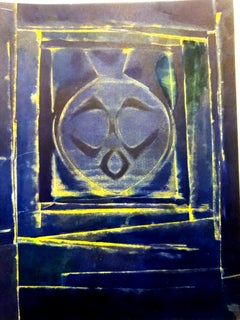
Paul Klee, Blue Bird Pumpkin, from 12 Watercolors, 1964 (after)1964
1964
$2,396
$2,99520% Off
£1,825.80
£2,282.2520% Off
€2,105.65
€2,632.0620% Off
CA$3,403.04
CA$4,253.8020% Off
A$3,656.37
A$4,570.4720% Off
CHF 1,961.64
CHF 2,452.0520% Off
MX$43,076.29
MX$53,845.3620% Off
About the Item
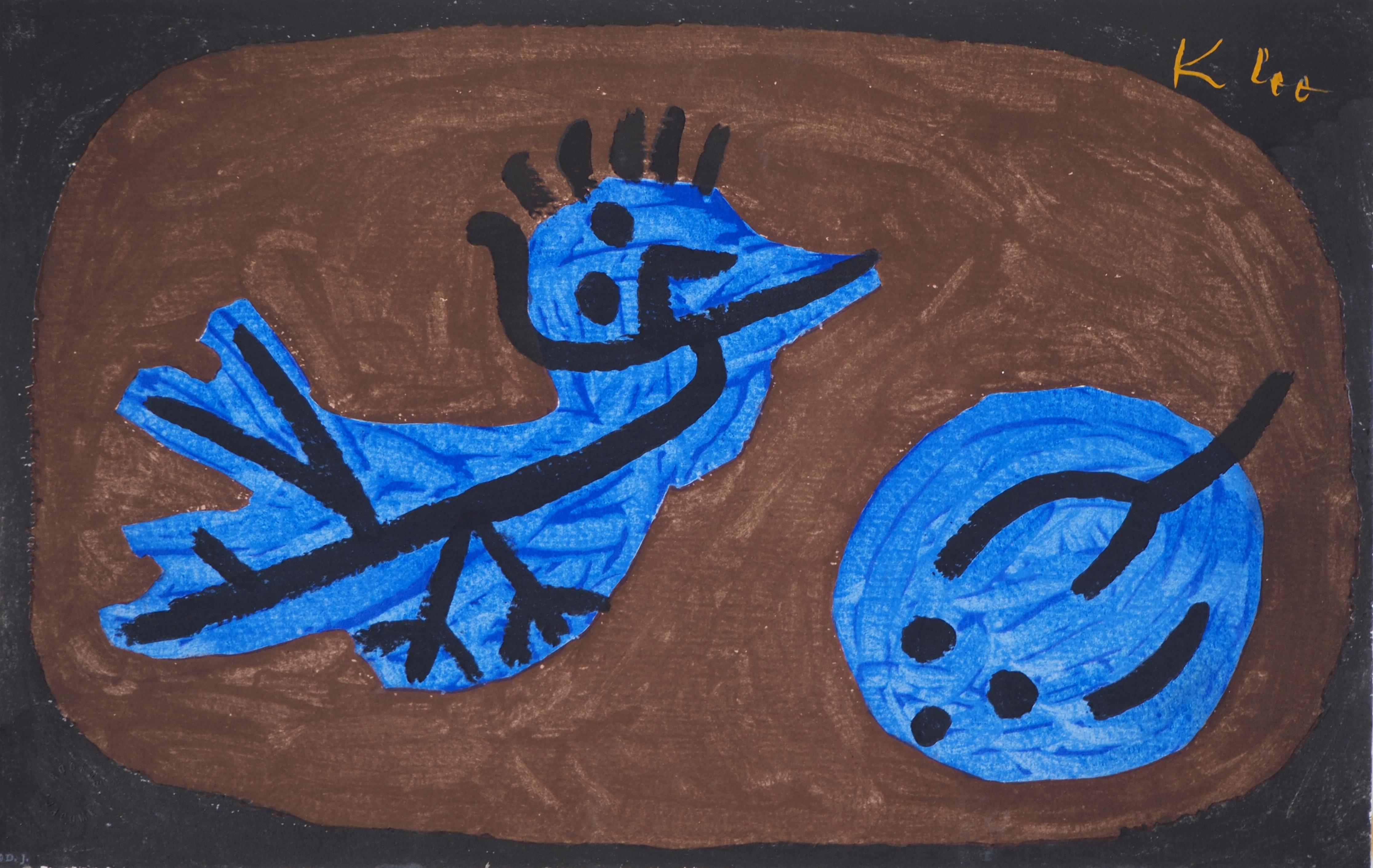
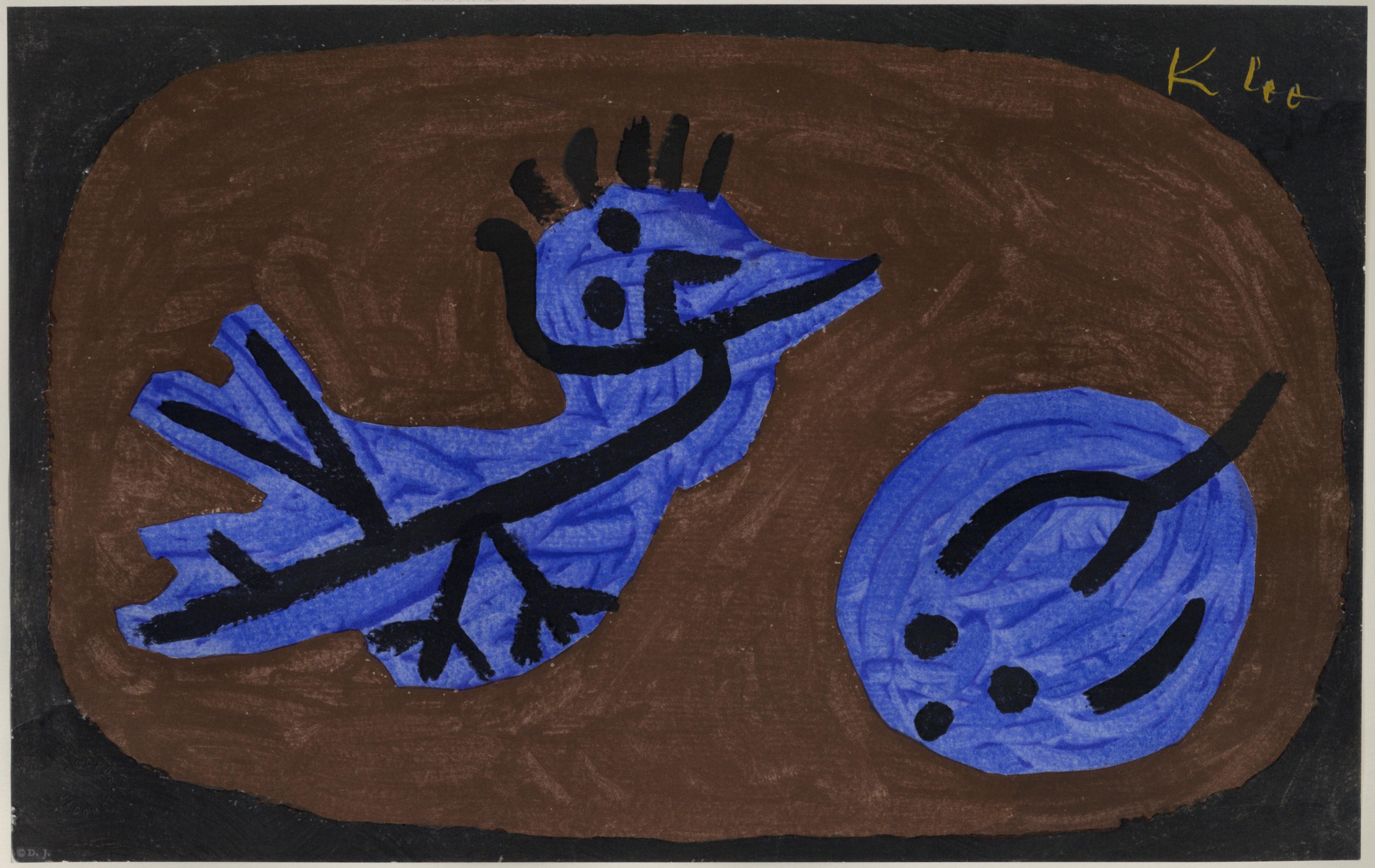
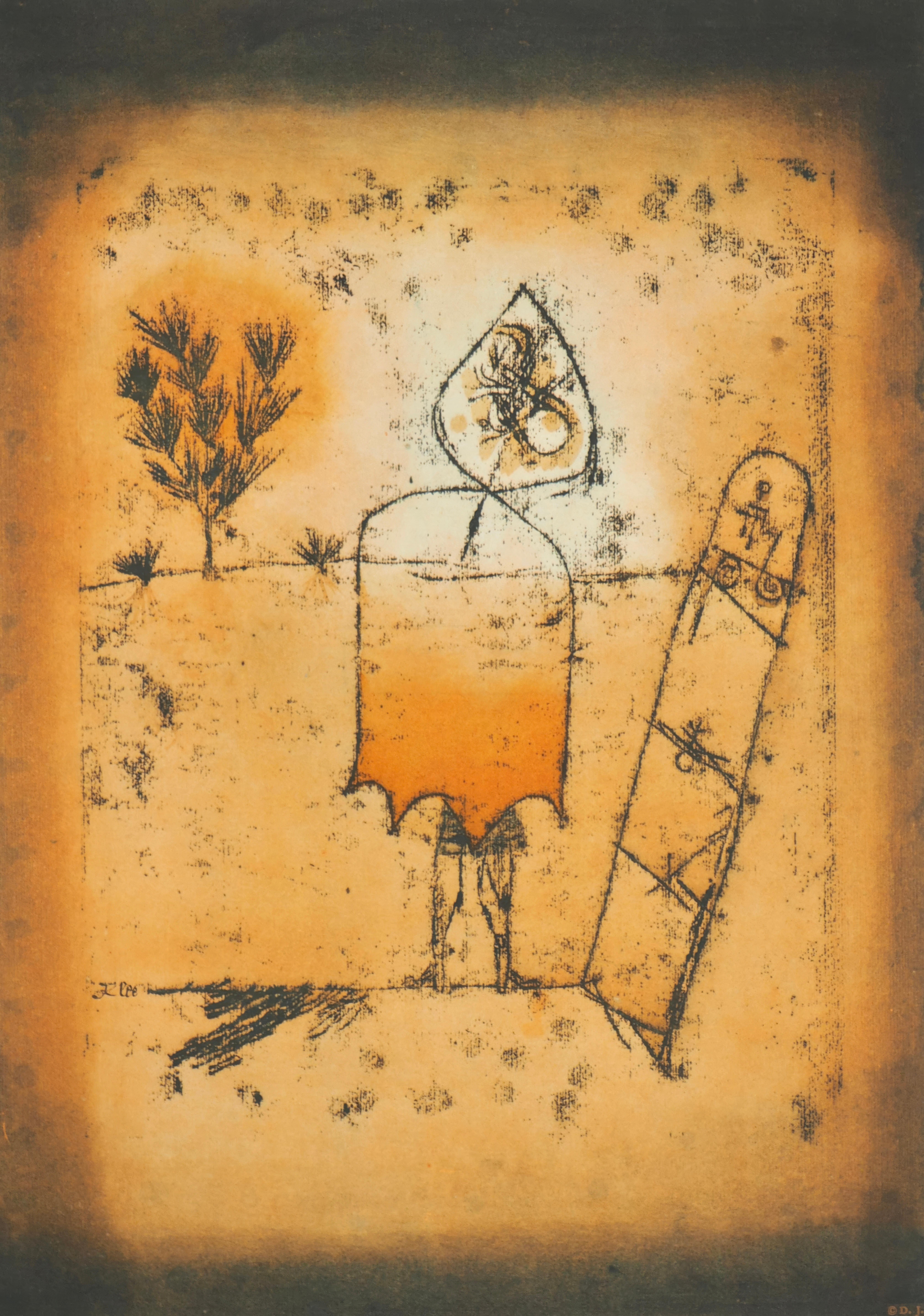
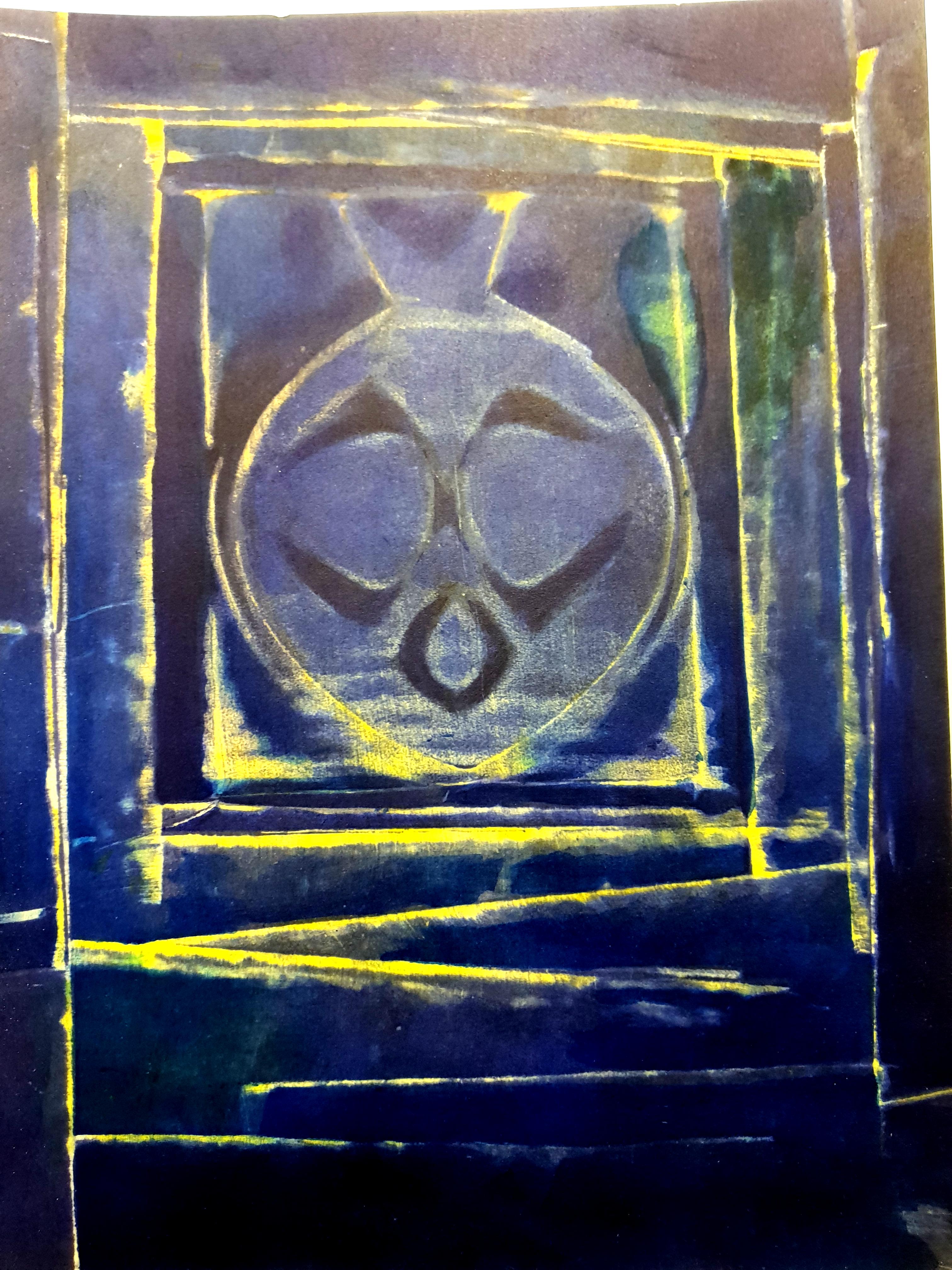
This exquisite lithograph and pochoir after Paul Klee (1879–1940), titled Blau-Vogel-Kurbis (Blue Bird Pumpkin), from the folio Paul Klee, 12 aquarelles (Paul Klee, Twelve Watercolors), originates from the 1964 edition published by Berggruen et Cie, Paris, rendered and printed by Atelier Daniel Jacomet et Cie, Paris, under the direction of Daniel Jacomet, September 10, 1964. The composition exemplifies Klee’s poetic abstraction and symbolic wit, uniting chromatic invention, playful figuration, and rhythmic structure within a dreamlike pictorial field.
Executed as a lithograph and pochoir on velin de Rives paper, this work measures 14.96 x 19.69 inches, overall. Signed in the plate and unnumbered as issued. The edition reflects the exceptional refinement and technical precision of the Daniel Jacomet atelier, celebrated for its mastery of pochoir and fidelity to modernist originals.
Artwork Details:
Artist: After Paul Klee (1879–1940)
Title: Blau-Vogel-Kurbis (Blue Bird Pumpkin), from the folio Paul Klee, 12 aquarelles (Paul Klee, Twelve Watercolors)
Medium: Lithograph and pochoir on velin de Rives paper
Dimensions: 14.96 x 19.69 inches (38 x 50 cm), overall
Inscription: Signed in the plate and unnumbered as issued
Date: 1964
Publisher: Berggruen et Cie, Paris
Printer: Atelier Daniel Jacomet et Cie, Paris
Condition: Well preserved, consistent with age and medium
Provenance: From the folio Paul Klee, 12 aquarelles (Paul Klee, Twelve Watercolors), published by Berggruen et Cie, Paris, 1964
Notes:
Excerpted from the folio (translated from French), This album, drawn in L numbered examples, was shot in the workshops of Daniel Jacomet; typography of the Union Printing in Paris. Completed printing on September 10, 1964.
About the Publication:
Paul Klee, 12 aquarelles (Paul Klee, Twelve Watercolors), published in Paris in 1964 by Berggruen et Cie, represents a refined postwar homage to one of the most poetic and intellectually rigorous figures of modernism. Conceived as a carefully curated presentation of Klee’s watercolor imagery, the publication reflects the mid twentieth century Parisian commitment to preserving and transmitting modern art through exceptional artisanal printing standards. Produced in collaboration with Daniel Jacomet, whose atelier was renowned for its mastery of pochoir and tonal fidelity, the folio emphasizes chromatic nuance, surface texture, and the delicate equilibrium between line and color that defines Klee’s work. Issued in a strictly controlled tirage, the publication stands today as an important example of modern art publishing that bridges scholarly intent and collector quality craftsmanship.
About the Artist:
Paul Klee (1879–1940) was a Swiss German painter, draftsman, printmaker, and teacher whose boundless imagination, lyrical abstraction, and profound mastery of color made him one of the most influential artists of the twentieth century. Born in Munchenbuchsee near Bern into a family of musicians, Klee developed an early sensitivity to rhythm and structure that informed his belief that painting, like music, followed harmonic principles. After studying in Munich, he explored Symbolism, Cubism, and abstraction before a transformative journey to Tunisia in 1914 revealed to him the expressive and spiritual power of color. As a central figure at the Bauhaus, Klee shaped generations of artists through both practice and pedagogy, developing theoretical writings that remain foundational to modern art education. Engaging in creative dialogue with contemporaries such as Pablo Picasso, Alexander Calder, Alberto Giacometti, Salvador Dali, Joan Miro, Wassily Kandinsky, Marcel Duchamp, and Man Ray, Klee shared the revolutionary ambitions of modernism while maintaining a uniquely introspective and poetic voice. His influence extended to later artists including Mark Rothko, Jackson Pollock, Cy Twombly, Jean Dubuffet, and Josef Albers. Today, his works are held in major museum collections worldwide, including the Museum of Modern Art, the Tate, the Centre Pompidou, and the Zentrum Paul Klee in Bern. His highest auction record was achieved by Tanzerin (Dancer) (1932), which sold for approximately 7.48 million USD at Christies, New York, on November 8, 2011, affirming his enduring legacy as one of the most poetic and visionary figures of modern art.
Paul Klee Blau-Vogel-Kurbis, Klee Blue Bird Pumpkin, Klee 12 aquarelles, Klee Twelve Watercolors, Klee Berggruen Paris, Klee Daniel Jacomet, Klee lithograph pochoir, Klee velin de Rives, Klee modernist print, Klee collectible work on paper.
- Creation Year:1964
- Dimensions:Height: 14.96 in (38 cm)Width: 19.69 in (50.02 cm)
- Medium:
- Movement Style:
- After:Paul Klee (1879-1940, German)
- Period:
- Condition:
- Gallery Location:Southampton, NY
- Reference Number:1stDibs: LU1465217467742
About the Seller
4.9
Platinum Seller
Premium sellers with a 4.7+ rating and 24-hour response times
Established in 1978
1stDibs seller since 2021
1,269 sales on 1stDibs
Typical response time: 1 hour
- ShippingRetrieving quote...Shipping from: Southampton, NY
- Return Policy
More From This Seller
View AllPaul Klee, Winter Journey, from 12 Watercolors, 1964 (after)
By Paul Klee
Located in Southampton, NY
This exquisite lithograph and pochoir after Paul Klee (1879–1940), titled Winterreise (Winter Journey), from the folio Paul Klee, 12 aquarelles (Paul Klee, Twelve Watercolors), origi...
Category
1960s Modern Abstract Prints
Materials
Lithograph, Stencil

$2,396 Sale Price
20% Off
Free Shipping
Paul Klee, Perspective-Ghost, from 12 Watercolors, 1964 (after)
By Paul Klee
Located in Southampton, NY
This exquisite lithograph and pochoir after Paul Klee (1879–1940), titled Perspectiv-Spuk (Perspective-Ghost), from the folio Paul Klee, 12 aquarelles (Paul Klee, Twelve Watercolors)...
Category
1960s Modern Abstract Prints
Materials
Lithograph, Stencil
$2,396 Sale Price
20% Off
Free Shipping
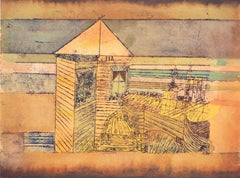
Paul Klee, Wonderful Landing or "112!", from 12 Watercolors, 1964 (after)
By Paul Klee
Located in Southampton, NY
This exquisite lithograph and pochoir after Paul Klee (1879–1940), titled Wunderbare Landung oder "112!" (Wonderful Landing or "112!"), from the folio Paul Klee, 12 aquarelles (Paul ...
Category
1960s Modern Abstract Prints
Materials
Lithograph, Stencil
$2,396 Sale Price
20% Off
Free Shipping
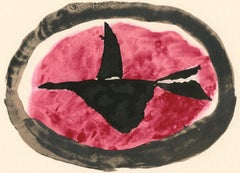
Georges Braque, Bird at Sunset, from Le Solitaire, XXe siecle, 1959 (after)
By Georges Braque
Located in Southampton, NY
This exquisite lithograph and pochoir after Georges Braque (1882–1963), titled Oiseau au couchant (Bird at Sunset), from the album Georges Braque, Le Solitaire (The Solitary), originates from the 1959 edition published by XXe siecle, Paris, in collaboration with Fernand Hazan, Paris; rendered by Daniel Jacomet, Paris; and printed by Daniel Jacomet et Cie, Paris, 1959. Oiseau au couchant (Bird at Sunset) reflects Braque’s meditative engagement with the motif of the bird—an enduring symbol of transcendence, freedom, and poetic solitude in his mature work. Through simplified form and muted harmony, the composition evokes the quiet passage of twilight, translating nature’s fleeting beauty into a timeless visual poem. Braque’s masterful integration of geometric abstraction with lyrical rhythm captures the balance between motion and stillness, light and silence.
Executed as a lithograph and pochoir on velin d’Arches paper, this work measures 7.25 x 9.375 inches. Unsigned and unnumbered as issued. The edition exemplifies the technical excellence of Daniel Jacomet et Cie, Paris, produced in close collaboration with XXe siecle and Fernand Hazan, Paris.
Artwork Details:
Artist: After Georges Braque (1882–1963)
Title: Oiseau au couchant (Bird at Sunset), from the album Georges Braque, Le Solitaire (The Solitary), 1959
Medium: Lithograph and pochoir on velin d’Arches paper
Dimensions: 7.25 x 9.375 inches (18.42 x 23.81 cm)
Inscription: Unsigned and unnumbered as issued
Date: 1959
Publisher: XXe siecle, Paris, in collaboration with Fernand Hazan, Paris
Printer: Daniel Jacomet et Cie, Paris
Condition: Well preserved, consistent with age and medium
Provenance: From the album Georges Braque, Le Solitaire, published by XXe siecle, Paris, in collaboration with Fernand Hazan, Paris; rendered by Daniel Jacomet, Paris; and printed by Daniel Jacomet et Cie, Paris, 1959
Notes:
Excerpted from the album (translated from French): XXX examples of this work were printed on Arches paper, containing an original engraving by Georges Braque, numbered from I to XXX. CM examples, constituting the original edition, including CCC for F. Hazan, publisher in Paris, CCC for A. Zwemmer, publisher in London, and CCC for the New York Graphic Society, LX examples, marked H.C., are reserved for the Author and the Publisher.
About the Publication:
Georges Braque, Le Solitaire (The Solitary) was published in Paris in 1959 by XXe siecle in collaboration with Fernand Hazan and printed by the Atelier Daniel Jacomet et Cie. Conceived as both a visual and literary homage to one of the founding figures of Cubism, the volume represents one of the most refined art book productions of the postwar era. The publication was issued in conjunction with the journal XXe siecle, under the direction of G. di San Lazzaro, a central figure in promoting modern art through his collaborations with artists such as Picasso, Miro, Chagall, and Calder. Le Solitaire brought together Braque’s mature reflections on nature, still life, and metaphysical quietude, accompanied by critical essays and reproductions of his work. The pochoir and lithographic plates—executed by Daniel Jacomet, whose atelier was renowned for its exceptional color pochoirs—capture the texture and tonal depth of Braque’s original paintings with rare precision.
About the Artist:
Georges Braque (1882–1963) was a French painter, sculptor, and printmaker whose pioneering vision transformed the course of 20th-century art. A central figure in modernism and the co-founder of Cubism alongside Pablo Picasso, Braque redefined visual perception by breaking objects into geometric forms and reassembling them from multiple perspectives, creating a new visual language that bridged the gap between abstraction and reality. His early work was influenced by the vibrant colors and expressive energy of the Fauvist painters Henri Matisse and Andre Derain, before evolving toward the more analytical and structured compositions inspired by Paul Cezanne’s theories of form and perspective. Braque’s collaboration with Picasso between 1908 and 1914 marked one of the most fertile and revolutionary periods in art history, resulting in works that challenged traditional notions of space, depth, and illusion. Throughout his career, Braque maintained a deep interest in harmony, rhythm, and balance, infusing his still lifes, landscapes, and later reliefs with poetic subtlety and intellectual rigor. He moved among a brilliant circle of contemporaries including Pablo Picasso, Henri Matisse, Marc Chagall, Juan Gris, Fernand Leger, and Amedeo Modigliani—artists united in their pursuit of new modes of artistic expression. Braque’s influence extended well beyond his own era, shaping the creative approaches of later modernists such as Alexander Calder, Alberto Giacometti, Salvador Dali, Joan Miro, Wassily Kandinsky, Marcel Duchamp, and Man Ray, all of whom drew inspiration from his structural innovations and aesthetic integrity. His works are held in major museum collections worldwide, including the Museum of Modern Art, the Centre Pompidou, the Tate, and the Guggenheim, where they continue to embody the essence of modern artistic thought and visual poetry. The highest price ever paid for a Georges Braque artwork is approximately 15 million USD, achieved in 2013 at Christie’s New York for Paysage a la Ciotat (1907).
Georges Braque Oiseau...
Category
1950s Cubist Abstract Prints
Materials
Lithograph
$716 Sale Price
20% Off
Free Shipping
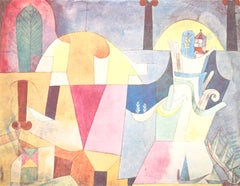
Paul Klee, Landscape with the Black Sands, from 12 Watercolors, 1964 (after)
By Paul Klee
Located in Southampton, NY
This exquisite lithograph and pochoir after Paul Klee (1879–1940), titled Landschaft mit den sobwarzes Sanden (Landscape with the Black Sands), from the folio Paul Klee, 12 aquarelle...
Category
1960s Modern Abstract Prints
Materials
Lithograph, Stencil
$2,396 Sale Price
20% Off
Free Shipping
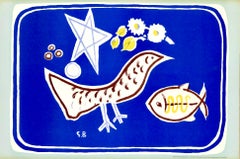
The Bird, School Prints, Georges Braque
By Georges Braque
Located in Southampton, NY
Lithograph on English cartridge paper. Inscription: Unsigned and unnumbered, as issued. Good Condition; never framed or matted. Notes: Published by School Prints Ltd., London; Printe...
Category
1940s Modern Landscape Prints
Materials
Lithograph
You May Also Like
Blue Bird, Squash - Lithograph and Stencil
By Paul Klee
Located in Paris, IDF
Paul KLEE (after)
Blue, Bird, Squash
Lithograph and stencil (Jacomet process)
Signed in the board
On vellum 50 x 38.2 cm (19.6 x 14.9 in)
INFORMATION : This lithograph was edited i...
Category
1960s Surrealist Animal Prints
Materials
Watercolor, Lithograph
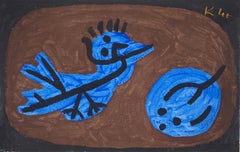
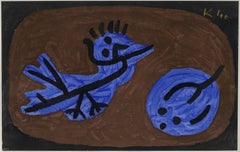
"Bleu Osieau Courge" pochoir
By (after) Paul Klee
Located in Henderson, NV
Medium: pochoir (after the watercolor). Printed in 1964 at the atelier of Daniel Jacomet for the "Paul Klee 12 Aquarelles" portfolio and published in Paris by the Berggruen Gallery i...
Category
1960s Prints and Multiples
Materials
Lithograph, Stencil
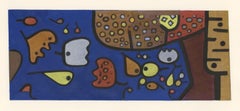
"Fruit on Blue" pochoir
By (after) Paul Klee
Located in Henderson, NV
Medium: offset lithograph with pochoir coloring. Printed in 1958 and published in Milan by Silvana Editoriale d'Arte in an edition of 200. Image size: 4 1/2 x 11 inches (115 x 282 mm...
Category
1950s Prints and Multiples
Materials
Lithograph, Stencil
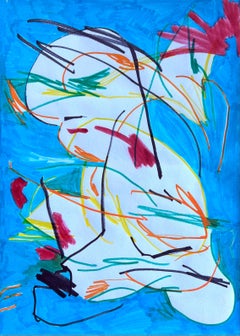
Picasso
s Dove, vibrant colorful and minimalist painting on paper
Located in Carballo, ES
Original drawing by the artist TUSET (1997, A Coruña), one of the young promises of contemporary Spanish painting. The work is original and includes a certificate of authenticity, it...
Category
21st Century and Contemporary Animal Drawings and Watercolors
Materials
Handmade Paper, Felt Pen
$805 Sale Price
20% Off
(after) Max Ernst - Blue Bird - Stencil
By (after) Max Ernst
Located in Collonge Bellerive, Geneve, CH
Max Ernst (after) - Blue Bird - Stencil
Published in the deluxe art review, XXe Siecle, 1958
Dimensions: 32 x 25 cm
Publisher: G. di San Lazzaro.
Max Ernst was born in Bruhl, a place near Cologne, in Germany. He was raised in a strict Catholic family, and both of his parents were disciplinarians who were dedicated to training their children into God-fearing and talented individuals. Although his father was deaf, Ernst learned so much from him, particularly when it comes to painting. In fact, much of his early years were lived under the inspiration of his father who was also a teacher. He was the one who introduced painting to Ernst at an early age.
In 1914, Ernst attended the University of Bonn where he studied philosophy. However, he eventually dropped out of school because he was more interested in the arts. He claimed that his primary sources of interest included anything that had something to do with painting. Moreover, he became fascinated with psychology, among other subjects in school.
Primarily, Ernst's love for painting was the main reason why he became deeply interested with this craft and decided to pursue it later on in his life. During his early years, he became familiar with the works of some of the greatest artists of all time including Claude Monet, Paul Cezanne and Vincent van Gogh. He was also drawn to themes such as fantasy and dream imagery, which were among the common subjects of the works of Giorgio de Chirico.
During World War I, Ernst was forced to join the German Army, and he became a part of the artillery division that exposed him greatly to the drama of warfare. A soldier in the War, Ernst emerged deeply traumatized and highly critical of western culture. These charged sentiments directly fed into his vision of the modern world as irrational, an idea that became the basis of his artwork. Ernst's artistic vision, along with his humor and verve come through strongly in his Dada and Surrealists works; Ernst was a pioneer of both movements.
It was Ernst's memories of the war and his childhood that helps him create absurd, yet interesting scenes in his artworks. Soon, he took his passion for the arts seriously when he returned to Germany after the war. With Jean Arp, a poet and artist, Ernst formed a group for artists in Cologne. He also developed a close relationship with fellow artists in Paris who propagated Avant-Garde artworks.
In 1919, Ernst started creating some of his first collages, where he made use of various materials including illustrated catalogs and some manuals that produced a somewhat futuristic image. His unique masterpieces allowed Ernst to create his very own world of dreams and fantasy, which eventually helped heal his personal issues and trauma. In addition to painting and creating collages, Ernst also edited some journals. He also made a few sculptures that were rather queer in appearance.
In 1920s, influenced by the writings of psychologist Sigmund Freud, the literary, intellectual, and artistic movement called Surrealism sought a revolution against the constraints of the rational mind; and by extension, they saw the rules of a society as oppressive. Surrealism also embraces a Marxist ideology that demands an orthodox approach to history as a product of the material interaction of collective interests, and many renown Surrealism artists later on became 20th century Counterculture symbols such as Marxist Che Guevara. In 1922 Ernst moved to Paris, where the surrealists were gathering around Andre Breton. In 1923 Ernst finished Men Shall Know Nothing of This, known as the first Surrealist painting. Ernst was one of the first artists who apply The Interpretation of Dreams by Freud to investigate his deep psyche in order to explore the source of his own creativity. While turning inwards unto himself, Ernst was also tapping into the universal unconscious with its common dream imagery.
Despite his strange styles, Ernst gained quite a reputation that earned him some followers throughout his life. He even helped shape the trend of American art during the mid-century, thanks to his brilliant and extraordinary ideas that were unlike those of other artists during his time. Ernst also became friends with Peggy Guggenheim, which inspired him to develop close ties with the abstract expressionists.
When Ernst lived in Sedona, he became deeply fascinated with the Southwest Native American navajo art. In fact, the technique used in this artwork inspired him and paved the way for him to create paintings that depicted this style. Thus, Ernst became a main figure of this art technique, including the rituals and spiritual traditions included in this form of art. Pollock, aside from the other younger generations of abstract expressionists, was also inspired by sand painting of the Southwest...
Category
1950s Surrealist Animal Prints
Materials
Stencil
Untitled, Two Birds
By Ruth Leaf
Located in San Francisco, CA
This artwork "Untitled, Two Birds" 1991, is an original woodcut monoprint on artisanal hand made paper by noted American artist Ruth Leaf, 1923-2015. It is hand signed and dated in r...
Category
Late 20th Century Abstract Expressionist Abstract Prints
Materials
Monoprint