Items Similar to Large Cuban Master Lithograph Abstract Biomorphic Serigraph Print Rafael Soriano
Want more images or videos?
Request additional images or videos from the seller
1 of 18
Rafael SorianoLarge Cuban Master Lithograph Abstract Biomorphic Serigraph Print Rafael Sorianoc.1990
c.1990
$2,200
£1,674.75
€1,914.59
CA$3,095.43
A$3,385.89
CHF 1,782.76
MX$40,424.09
NOK 22,721.58
SEK 20,784.83
DKK 14,300.06
About the Item
Rafael Soriano (1920 - 2015)
Hand signed lower right
Notated lower left P/A (Artist's Proof) bears a blind stamp
Born in 1920 in the town of Cidra in the province of Matanzas, Rafael Soriano manifested an early inclination for painting. After completing seven years of study at Havana’s prestigious Escuela Nacional de Bellas Artes San Alejandro, he graduated in 1941 as Professor of Painting, Drawing and Sculpture. He then returned to Matanzas where he taught visual arts for close to two decades. He was a co-founder, and later Director, of the Escuela de Bellas Artes de Matanzas, the most important art school in Cuba outside of Havana. He was one of the major Latin American artists of his generation and one of the premier painters of Cuba. In 1962 Soriano went into exile, settling in Miami with his wife Milagros and his daughter Hortensia. He worked as a graphic designer and occasionally taught, first at the Catholic Welfare Bureau, and later at the Cuban Cultural Program of the University of Miami. He continued to paint tirelessly in the evenings.
Soriano avoided vernacular themes which dominated Cuban art from its emergence with the first Vanguard in the mid-twenties. His work proceeded along the paths of geometric abstraction in the course of 1950’s, and was a part of the Ten Concrete Geometric painters, (Los Diez Pintores Concretos, The group were inspired by many European artists, and gathered at Galeria Color-Luz (Color-Light), opened by Lolo Soldevilla who had spent several years in Paris as Cuba’s cultural attaché, her partner was Pedro de Oraa, an artist, poet and art critic. Wifredo Arcay worked as a printmaker in Paris in the early 1950s and met many contemporary artists there. Sandu Darie, was a Romanian who emigrated to the island in 1941. The development of Cuban geometric abstraction the formation of Los Diez, coincided with the radical political and cultural shifts that raged throughout the country in the 1950s. The concept of concrete art quickly spread and many new groups were formed in Paris (Art Concret and Abstraction-Création) and Latin America (Madi, in Buenos Aires, Grupo Frente in Rio de Janeiro). Mario Carreño, Luis Martínez Pedro Jose Mijares, Alberto Menocal, Pedro Alvarez,Salvador Corratge, Pedro de Oraa, Jose Angel Rosabal, and Rafael Soriano.
By the late 1960’s, Soriano’s work took a radical turn. His brush began to create amazing shapes; abstract expressions related to the emotions, feelings, meditations and mystical introspections. A novel treatment of light and color, transparencies and forms placed Soriano in a new aesthetic dimension and freed him from his earlier attachments to schools and tendencies. Of the generation of Cuban Masters Wifredo Lam, Agustin Cardenas, Manuel Mendive, Sandu Darie, Agustin Fernandez, Jose Mijares, Amelia Pelaez, Mariano Rodriguez. Since his first solo exhibition in 1947 in Havana’s Lyceum and Lawn Tennis Club, Raphael Soriano’s work has been represented in numerous individual exhibitions and over 200 collective shows. He has had shoes at Hollis Taggart and at LnS art in Miami where he was shown with Artists Arturo Rodríguez, Carlos Alfonzo, César Trasobares, Emilio Sanchez, Fernando Garcia, Florencio Gelabert, Gustavo Acosta Lolo Soldevilla, Mario Díaz Bencomo, Roberto Matta, Tomas Sanchez and Tony Vazquez-Figueroa. His paintings have traveled through the United States, Latin America
Europe. His work is included in numerous private and public collections: Art Museum of the Americas, Washington, D.C., Bacardi Corporate Collection, Miami, Fla., Banco Bozano-Simonsen, Rio de Janeiro, Brazil, Blanton Museum of Art, Denver Art Museum, Galería de Arte Moderno, Santo Domingo, Dominican Republic, Long Beach Museum of Art, California, Lowe Art Museum, Miami, Fla., McMullen Museum of Art at Boston College, Mass., Museo de Arte Zea, Medellin, Colombia, Museo Nacional de Bellas Artes de La Habana, Cuba, National Gallery of Art, Washington, D.C., NSU Art Museum, Ft. Lauderdale, Fla., , Patricia
Phillip Frost Art Museum, Pérez Art Museum Miami, Fla., Smithsonian American Art Museum, Washington, D.C., Whitney Museum of American Art, New York, N.Y., Zimmerli Art Museum and other important institutions and corporations.
- Creator:Rafael Soriano (1920 - 2015)
- Creation Year:c.1990
- Dimensions:Height: 27.5 in (69.85 cm)Width: 39.5 in (100.33 cm)
- Medium:
- Movement Style:
- Period:
- Condition:please see photos.
- Gallery Location:Surfside, FL
- Reference Number:1stDibs: LU38217317292
About the Seller
4.9
Platinum Seller
Premium sellers with a 4.7+ rating and 24-hour response times
Established in 1995
1stDibs seller since 2014
1,846 sales on 1stDibs
Typical response time: 1 hour
- ShippingRetrieving quote...Shipping from: Miami, FL
- Return Policy
More From This Seller
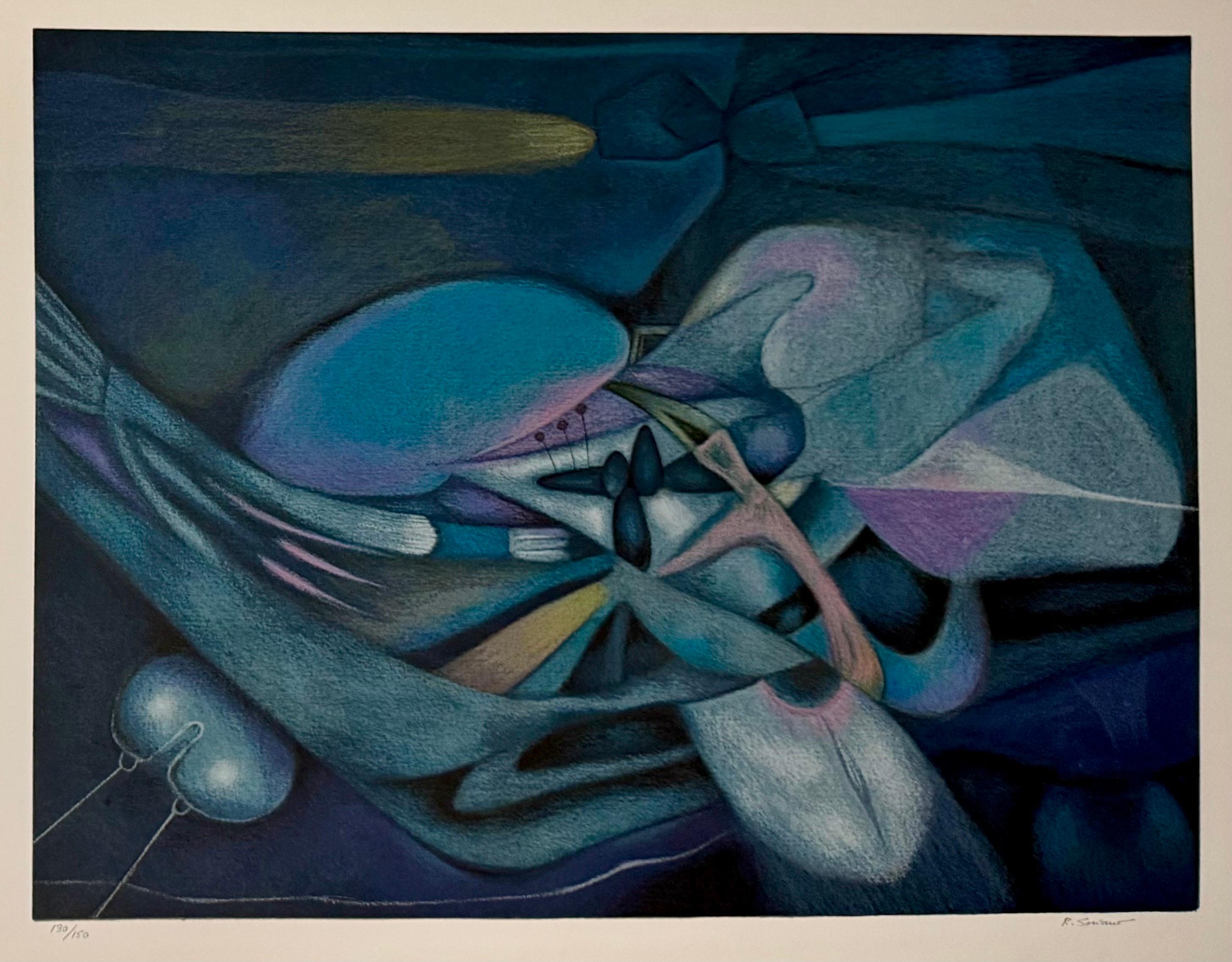
View AllLarge Cuban Master Lithograph Abstract Biomorphic Serigraph Print Rafael Soriano
Located in Surfside, FL
Rafael Soriano (1920 - 2015)
Hand signed lower right
Numbered lower left 130/150
Born in 1920 in the town of Cidra in the province of Matanzas, Rafael Soriano manifested an early in...
Category
1990s Abstract Expressionist Abstract Prints
Materials
Lithograph
Abstract Latin American Art Spanish Catalan Lithograph Josep Guinovart New York
By Josep Guinovart Bertrán
Located in Surfside, FL
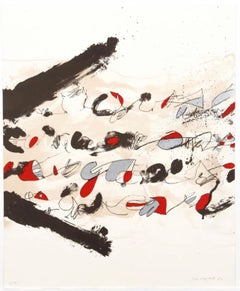
Guinovart, Josep (Spanish/Catalan, 1927-2007), Untitled Abstract, 1984, lithograph on paper, hand signed, dated and marked E.A. (artist's proof) in pencil at bottom, full sheet 26.75 x 22 inches, unframed.
Josep Guinovart (1927 –2007) was a Spanish Catalan painter most famous for his informalist or abstract expressionist work.
In 1941, he began to work as a decorator. Three years later, he started his studies at the Escuela de Artes y Oficios de la Llotja (Art School of La Llotja) where he stayed until 1946.
He first exhibited his work in 1948 in Galerías Syla in Barcelona. In 1951, he produced his first engravings entitled 'Homage to Federico García Lorca'. Two years later, he was awarded a grant from the French Institute to study in Paris for nine months. Here he discovered the cubist works of Henri Matisse and Pablo Picasso and travelled to Belgium, Holland and Germany.
On his return to Barcelona and after a period working as an illustrator and set designer, around 1957 he began moving towards abstract art. His work is highly unconventional and usually on a large scale, using a wide range of materials, three-dimensional objects and organic substances such as eggshell, earth and straw.
In 1962, he illustrated a book of poetry entitled Posies by Joan Salvat-Papasseit for the Ariel Editorial. He won many accolades for his work throughout the 1970s and 80s, including Spain's National Award for Plastic Arts in 1982. In 1994, a museum foundation dedicated to his art was inaugurated in Agramunt, his mother's birthplace to which he always felt a special attachment.
In 2006 he designed the winery Mas Blanch i Jové in La Pobla de Cérvoles (Lleida) and created The Artists' Vineyard, a project intended to mix sculptures and other art works from different artists in the middle of a vineyard. The Artists' Vineyard was inaugurated after his death in 2010 with the unveiling of his sculpture The Countryside Organ: a music instrument, 6 meters height, for the wind to sing the vines. This winery also displays the 10.5 meters work In Vino Veritas...
Category
1980s Abstract Abstract Prints
Materials
Lithograph
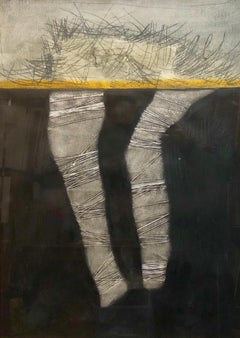
Cuban Art Abstract Oil Painting Latin American 1970
s Abstraction String Series
By Ramon Carulla
Located in Surfside, FL
Provenance: Virginia Miller Galleries.
Ramon Carulla, born in Havana, Cuba in 1936 moved to the United States in 1967. He has exhibited widely throughout the United States, Latin America and Europe. He has participated in personal and group exhibitions in Canada, Venezuela, Mexico and Spain and throughout the USA.
Select Gallery Exhibitions:
Lowe Art Museum (Coral Gables, Florida),
The Museum of Fine Arts (Montreal, Canada),
The International Monetary Fund (Washington, D.C.)
The Art Expo (New York City).
Select Awards:
First Prize at the VI Graphic Biennial of Latin America (1983; San Juan, Puerto Rico),
the Silvia Daro Dawidowics Award for Painting (1980; Metropolitan Museum)
the Samuel Golan Award (1982, Fine Art Auction Exhibition; CH 2, Miami, Florida).
the Cintas Fellowship (Institute of International Education; United Nations, New York)
SELECTED INDIVIDUAL EXHIBITIONS
2005 Sonnet Gallery (Sarasota, Florida)
2000 Ramon Carulla: People and Places - Corbino Galleries,
1998 The Dreamers - Cuban Collection Fine Art (Coral Gables, Florida)
1997 The Immigrant Series – Metro-Dade Cultural Resource Center (Miami, Florida)
1996-96 Ramon Carulla: Works on Paper – P. Jorn(Hamburg, Germany)
1994 Ramon Carulla: New Paintings, Plates & Boxes – The Barbara Scott Gallery
Rostros para recordar – Galería Traz (Mexico City, Mexico)
1993 Ramon Carulla, Exhibición Personal – Contemporary Art Museum (Panama)
1992 Ramon Carulla: Recent Work - The Barbara Scott Gallery (Bay Harbor, Florida)
1991 Cabinet Room – The Capitol (Tallahassee, Florida)
1988 Sofa & Hostage Series – Jay Moos Gallery
1987 20 Years After – Bacardi Art Gallery (Miami, Florida)
1985 Malcom Brown Gallery – (Cleveland, Ohio)
Mask Series...
Category
1970s Abstract Abstract Paintings
Materials
Paper, Oil
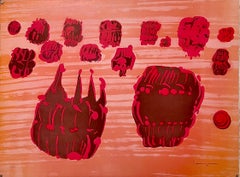
Pietro Consagra Italian Mod Abstract Expressionist Forma Brutalist Lithograph
By Pietro Consagra
Located in Surfside, FL
Pietro Consagra (Italian, 1920-2005).
Hand signed in pencil and numbered limited edition color lithograph on Magnani paper.
Embossed stamp with limited edition numbers in pencil to lower left, and having artist pencil signature to lower right.
(from a limited edition of 80 with 15 artist's proofs)
Published by Stamperia 2RC, Rome Italy and Marlborough Gallery, Rome, Italy.
Abstract Modernist work in colors, produced in the style of the Forma art movement of Postwar Italy, of which the artist was a prominent member.
Pietro Consagra (1920 – 2005) was an Italian Post war artist working in painting, printmaking and sculpture. In 1947 he was among the founding members of the Forma 1 group of artists, proponents of structured abstraction.
Consagra was born on 6 October 1920 in Mazara del Vallo, in the province of Trapani in south-western Sicily, to Luigi Consagra and Maria Lentini. From 1931 he enrolled in a trade school for sailors, studying first to become a mechanic, and later to become a captain. In 1938 he moved to Palermo, where he enrolled in the liceo artistico; despite an attack of tuberculosis, he graduated in 1941, and in the same year signed up at the Accademia di Belle Arti, where he studied sculpture under Archimede Campini. After the Invasion of Sicily and the Allied occupation of Palermo in 1943, Consagra found work as a caricaturist for the American Red Cross club of the city; he also joined the Italian Communist Party. Early in 1944, armed with a letter of introduction from an American officer, he travelled to Rome. There he came into contact with the Sicilian artist Concetto Maugeri, and through him with Renato Guttuso, who was also Sicilian and who introduced him to the intellectual life of the city and to other postwar artists such as Leoncillo Leonardi, Mario Mafai and Giulio Turcato. Consagra signed up at the Accademia di Belle Arti di Roma in September 1944 and studied sculpture there under Michele Guerrisi, but left before completing his diploma.
In 1947, with Carla Accardi, Ugo Attardi, Piero Dorazio, Mino Guerrini, Achille Perilli, Antonio Sanfilippo and Giulio Turcato, Consagra started the artist's group Forma 1, which advocated both Marxism and structured abstraction.
Steadily Consagra's work began to find an audience. Working primarily in metal, and later in marble and wood, his thin, roughly carved reliefs, began to be collected by Peggy Guggenheim and other important patrons of the arts. He showed at the Venice Biennale eleven times between 1950 and 1993, and in 1960 won the sculpture prize at the exhibition. During the 1960s he was associated with the Continuità group, an offshoot of Forma I, and in 1967 taught at the School of Arts in Minneapolis. Large commissions allowed him to begin working on a more monumental scale, and works of his were installed in the courtyard of the Foreign Ministry in Rome and in the European Parliament, Strasbourg. His work is found in the collections of The Tate Gallery, London, in Museo Cantonale d'Arte of Lugano and the Museum of Modern Art, Paris, and the National Gallery of Art in Washington, D.C..
Consagra returned to Sicily where he sculpted a number of significant works during the 1980s. With Senator Ludovico Corrao, he helped created an open-air museum in the new town of Gibellina, after the older town had been destroyed in the earthquake of 1968. Consagra designed the gates to the town's entrance, the building named "Meeting" and the gates to the cemetery, where he was later buried.
In 1952 Consagra published La necessità della scultura ("the need for sculpture"), a response to the essay La scultura lingua morta ("sculpture, a dead language"), published in 1945 by Arturo Martini. Other works include L'agguato c'è ("the snare exists", 1960), and La città frontale ("the frontal city", 1969). His autobiography, Vita Mia, was published by Feltrinelli in 1980. In 1989 a substantial retrospective exhibition of work by Consagra was shown at the Galleria Nazionale d'Arte Moderna in Rome; in 1993 a permanent exhibition of his work was installed there. In 1991 his work was shown in the Hermitage Museum in St. Petersburg. In 2002 the Galerie der Stadt Stuttgart opened a permanent exhibition of his work. He was one of ten artists invited by Giovanni Carandente, along with David Smith, Alexander Calder, Arnaldo Pomodoro, Lynn Chadwick, and Beverly Pepper, to fabricate works in Italsider factories in Italy for an outdoor exhibition, "Sculture nella città", held in Spoleto during the summer of 1962. He was included in the The 1962 International Prize for Sculpture the jury included Argan, Romero Brest and James Johnson Sweeney the former director of the Solomon R. Guggenheim Museum in New York. The participants included Louise Nevelson and John Chamberlain for the United States; Lygia Clark for Brazil; Pietro Consagra, Lucio Fontana, Nino Franchina, and Gió Pomodoro for Italy; Pablo Serrano for Spain; and Eduardo Paolozzi, William Turnbull, and Kenneth Armitage for England. Gyula Kosice, Noemí Gerstein...
Category
1960s Abstract Expressionist Abstract Prints
Materials
Lithograph
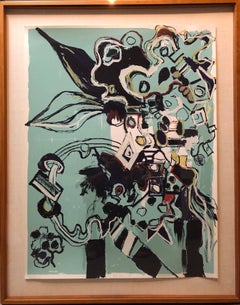
Large Format Modernist Abstract Lithograph Silkscreen Print Woman Artist
By Lydia Dona
Located in Surfside, FL
1982-84 Hunter College, New York (M.F.A.)
1978-80 School of Visual Arts, New York
1973-77 Bezalel Academy of Art, Jerusalem (B.F.A.)
American, born in Romania
Lives and works in New York City
Solo Exhibitions
2008 Michael Steinberg Fine Art, New York
2006 Galeria Joan Prats, Barcelona
2005 Karpio + Facchini Gallery, Miami
Jacob Karpio Galeria, San Jose (Costa Rica)
2004 Michael Steinberg Fine Art, New York
2001 Marella Arte Contemporanea, Milan
2000 Von Lintel & Nusser, New York
Galerie Von Lintel & Nusser, Munich
1998 Galerie Thomas von Lintel, Munich
1997 Galerie des Archives, Paris
1995 Galerie Samuel Lallouz, Montreal
L.A. Louver, Los Angeles
1994 Marc Jancou Gallery, London
Galerie des Archives, Paris
1993 Galerie Barbara Farber, Amsterdam
Real Art Ways, Hartford (Connecticut)
1992 Tom Cugliani Gallery, New York
Galerie Marc Jancou, Zurich
Galerie des Archives, Paris
1989 Tom Cugliani Gallery, New York
Galerie Barbara Farber, Amsterdam
Studied at bezalel from 1973 to 1977. And it was a very fascinating time because it was a highly conceptually based school. Very much influenced by Joseph Beuys, and European Conceptualism, I didn’t really like the atmosphere there that much, because it was dominated by male painters like Jörg Immendorf, Marcus Lupertz, and a few others. then came to New York to study at SVA for two years. New York in 1978 was exciting. I was very lucky to be in a class that was full of very bubbly and very energetic artists like Keith Haring, Kenny Scharf, Tim Rollins, Moira Dryer, Frank Holliday, and Tom Cugliani (who later became one of my dealers).The eighties were dominated largely by Neo-Expressionist paintings. There were Germans, such as Baselitz, Kiefer, Richter, Penck, and the Italians, Clemente, Chia, Cucchi, Palladino as well as Schnabel, Fischl, Basquiat, Salle, and many others, but all of their paintings were figuratively based. But below the popular consent, there was a group of painters who were working more in the vein of what Stephen Westfall referred to as “Neo-Surrealism,” including George Condo, Jeffrey Wasserman, Kenneth Scharf, David Humphrey. However, I felt that Carroll Dunham and you were the only two painters who seemed to be less interested in the kind of narrative, lyrical, or let’s say, stationary composition. He belongs to the generation of Terry Winters, Elizabeth Murray, David Reed and Jonathan Lasker but in some strange way, if we’re looking back to the mid-eighties, we have to include New Image painters like Susan Rothenberg, Neil Jenney, and Robert Moskowitz who were working in between the figure and abstraction with a kind of condensation and compression, in relationship, lets say, to cartoon imagery. There are artists like Jeff Koons, or even Damien Hirst who took the Duchampian aspect and brought it into the continuity of his readymade. But for me, I see no difference between the crack in “Large Glass” and the drips in Jackson Pollock’s paintings. There was something that I felt in my own equation of the continuity between Paul Klee, Duchamp, Picabia, and, oddly enough, Clyfford Still.
What essentially is important is how different artists carry on a dialogue among themselves so that they can all keep their work vital. Whether from the abstract paintings of Richmond Burton, Fabian Marcaccio extending the borders of his paintings on to the wall, or Cady Noland’s early scattered installation, my own pre-occupation with machinery, urban environment, and the Duchampian models has always materialized in relationship to other forms of art making.
Selected Group Exhibitions:
2014 Drawing on Difference: An Ambition by Saul Ostrow and Lidija
Slavkovic, Studio Vendome Gallery, New York.
2013 Drawing on Habit: An Ambition by Saul Ostrow and Lidija Slavkovic,
South Carlton Beach and The Betsy-South Beach Exhibition Programs,
Art Basel, Miami Beach.
2013 Imprinted Pictures: Lydia Dona...
Category
1980s Abstract Expressionist Abstract Prints
Materials
Lithograph, Screen
60s American Abstract Expressionist Untitled Abstract Color Composition Etching
By Don Fink
Located in Surfside, FL
Color Abstract Expressionism aquatint etching. hand pencil signed limited edition.
Don Fink (1923-2010) was a well known and well listed Abstract Expressionist who studied at the Art Students League and the Academie Julian. He was born in Duluth , Minnesota, but later moved to Europe where he established himself as an artist. He was first based in Paris where he was a member of the "Jeune École de Paris" (with Karel Appel, Debre, Friedensreich Hundertwasser, Antoni Tapies, Dumitresco, Messagier, Zanartu , etc.) and later moved to Barcelona.
A large retrospective of his earlier works was held in Madrid in 1998 with the following promotion:
Don Fink Returns to Madrid:
American "action" painter Don Fink (b. Duluth, Minnesota, 1923) has a show at Galería Rayuela through September 25. The artist divides his time between Barcelona, Paris, and New York. This is his second exhibition in Madrid in four years. The works on view date from 1952 to 1970. Their "active" surfaces meld the arts of tattooing, calligraphy and three-dimensional terrain mapping, resulting in a meditative and rewarding experience for the viewer. The show was organized by Sebastià Janè of Barcelona and Carmen Muro of Madrid. Galería Rayuela is at Calle Claudio Coello...
Category
20th Century Abstract Expressionist Abstract Prints
Materials
Etching, Aquatint
You May Also Like
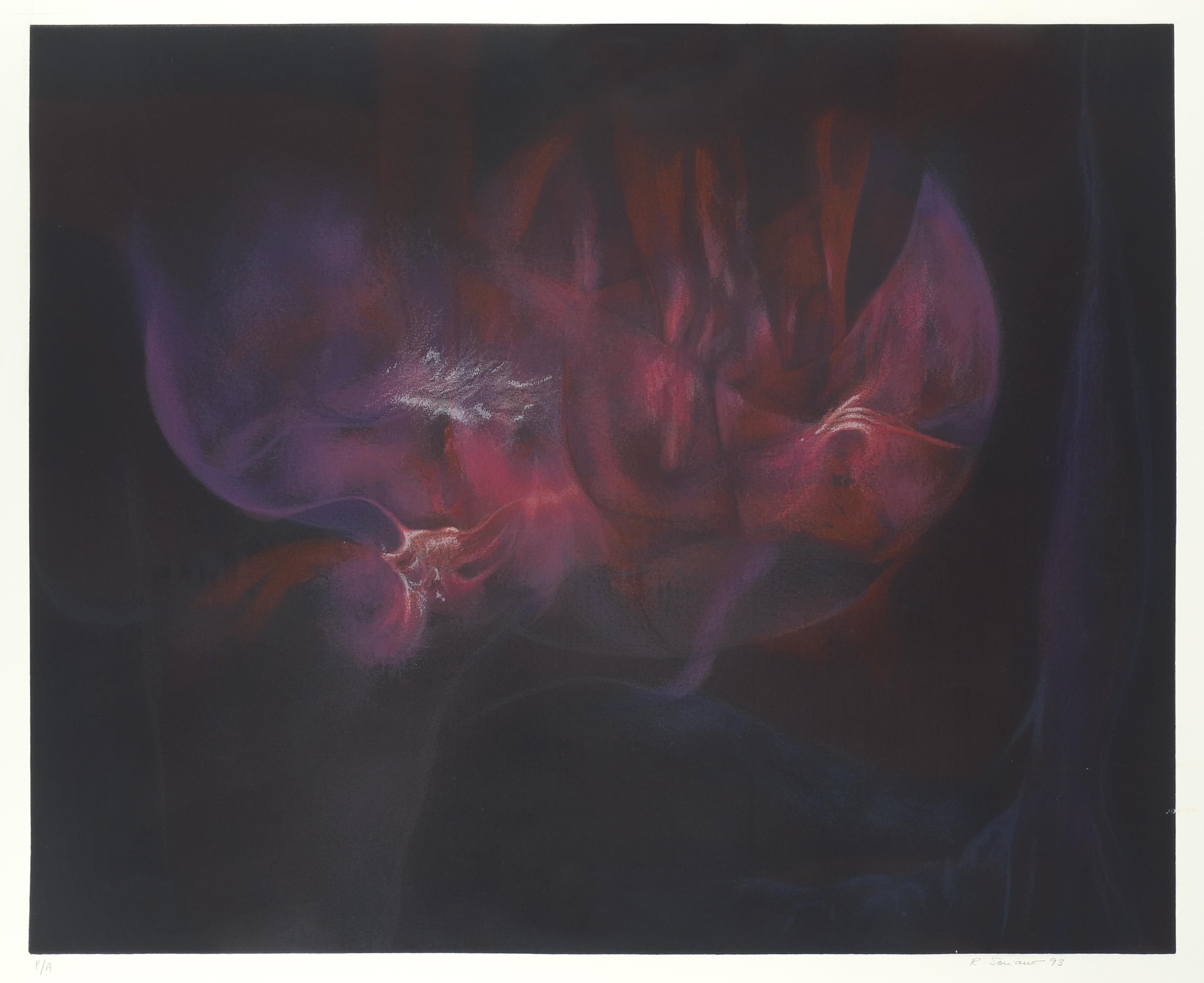
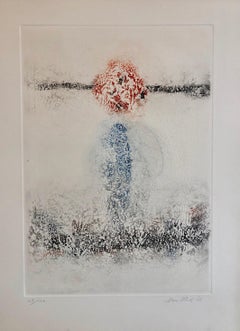
Rafael Soriano Lithograph, Untitled
Located in Miami, FL
Rafael Soriano
Untitled, 1993
Lithograph
Ed PA
33 x 26 in
Category
Late 20th Century Abstract Abstract Prints
Materials
Lithograph
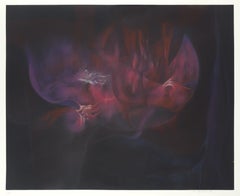
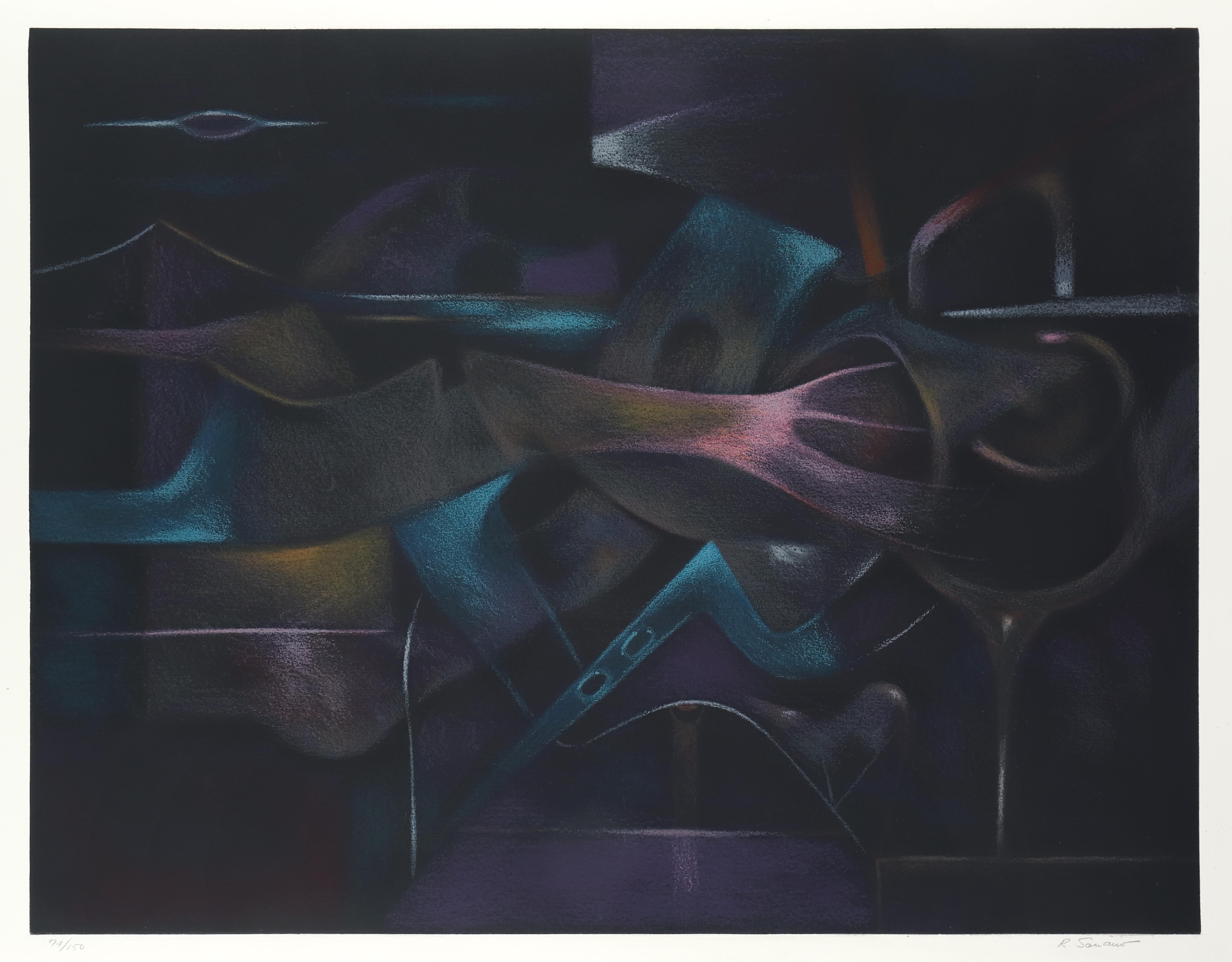
Rafael Soriano Lithograph, Untitled
Located in Miami, FL
Rafael Soriano
Untitled, 1990s
Lithograph
Ed 74 of 150
33 x 26 in
Category
Late 20th Century Abstract Abstract Prints
Materials
Lithograph
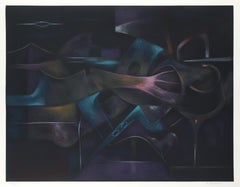
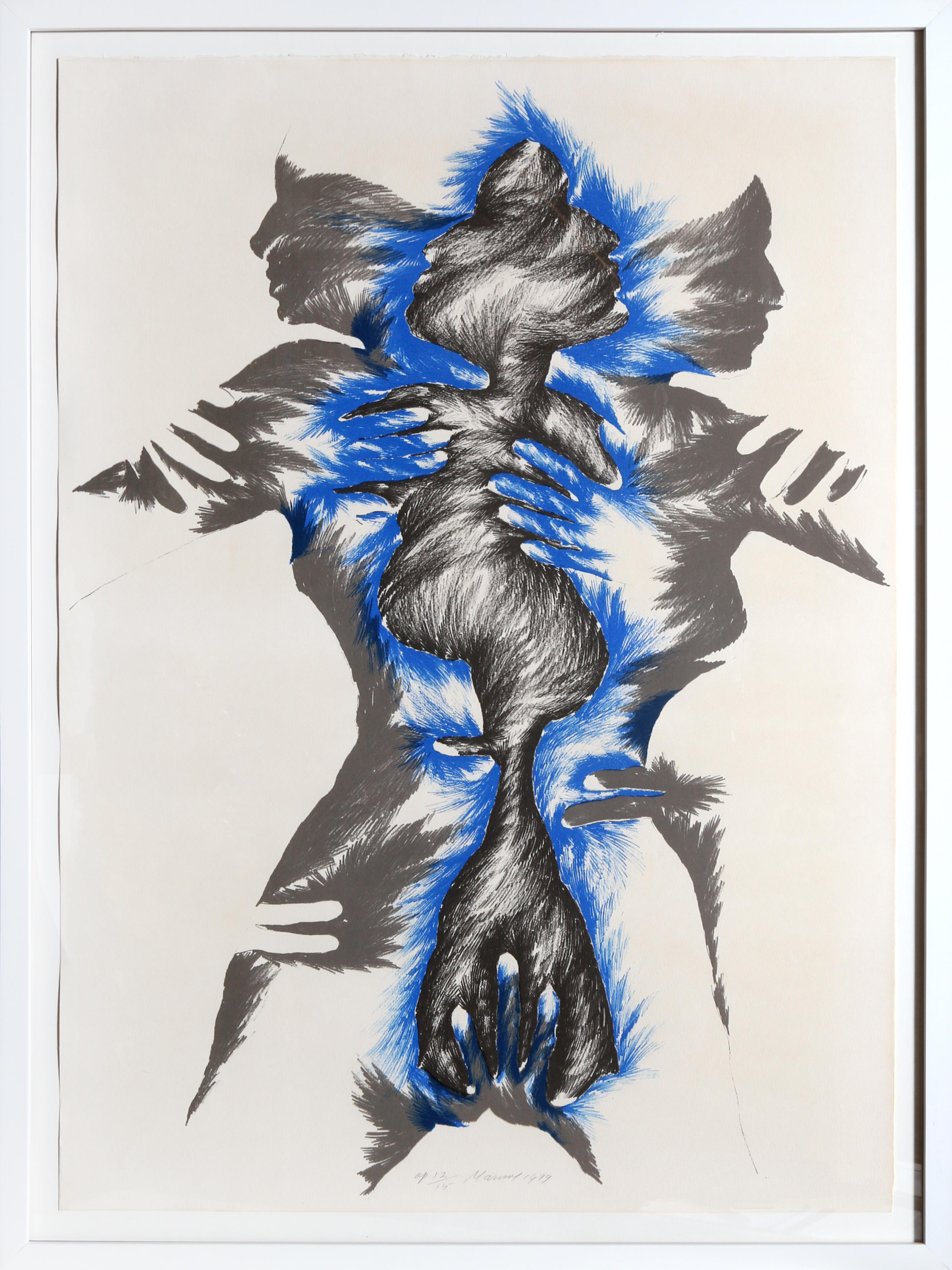
Abstract Expressionist Signed Lithograph by Marisol Escobar
By Marisol Escobar
Located in Long Island City, NY
Untitled III
Marisol Escobar
French/Venezuelan (1930–2016)
Date: 1979
Lithograph, signed and numbered in pencil
Edition of AP 12/15
Size: 41 in. x 29 in. (104.14 cm x 73.66 cm)
Fra...
Category
1970s Abstract Expressionist Prints and Multiples
Materials
Lithograph
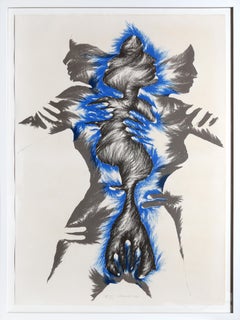
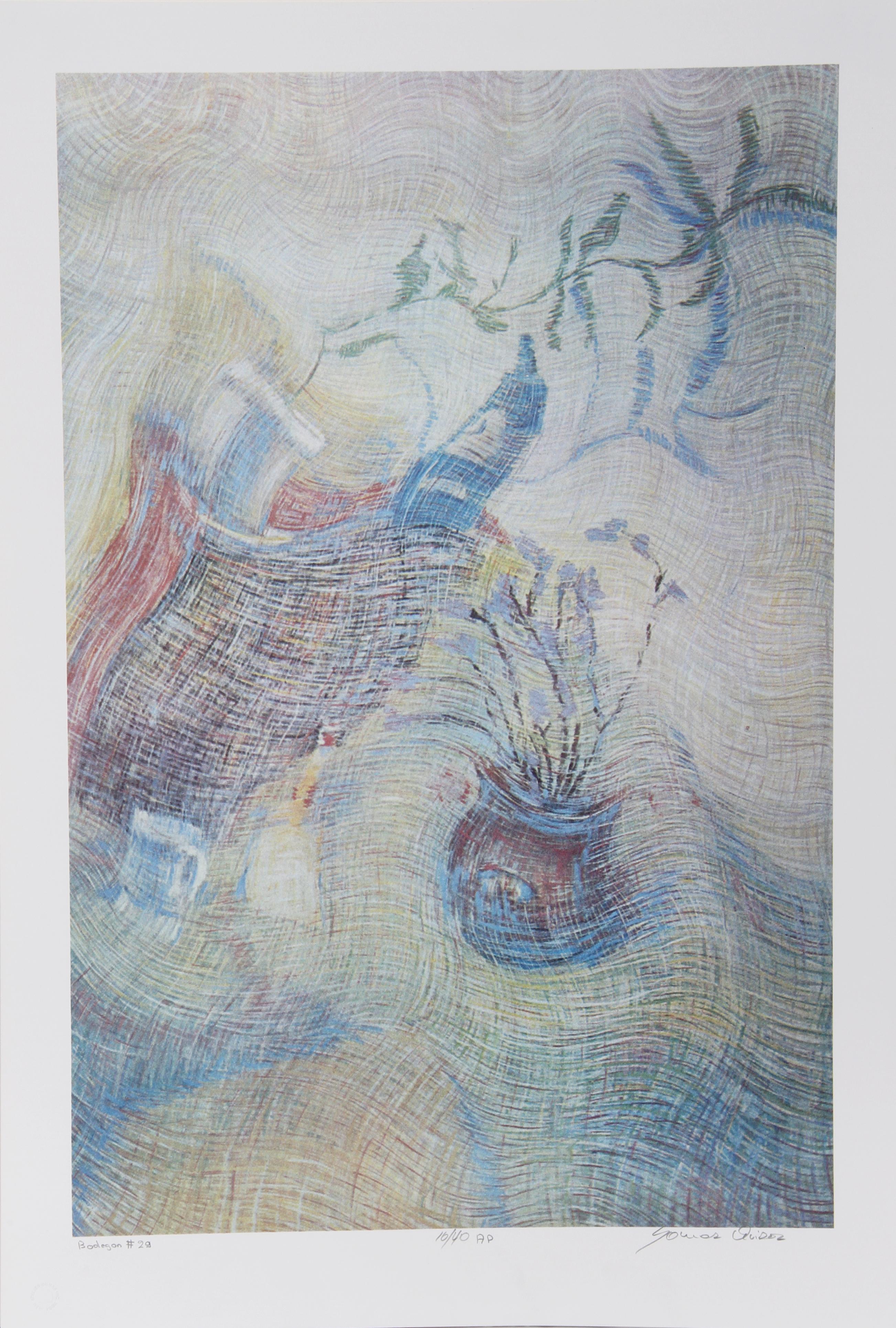
Bodegon 29, Signed Abstract Lithograph by Juan Manuel Gomez-Quiroz
Located in Long Island City, NY
Bodegon 29
Juan Manuel Gomez-Quiroz
Chilean (1939–2021)
Date: circa 1979
Lithograph, signed and numbered in pencil
Edition of 300, AP 40
Image Size: 25.5 x 17 inches
Size: 29 in. x...
Category
1970s Abstract Abstract Prints
Materials
Lithograph
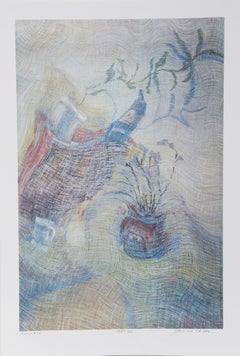
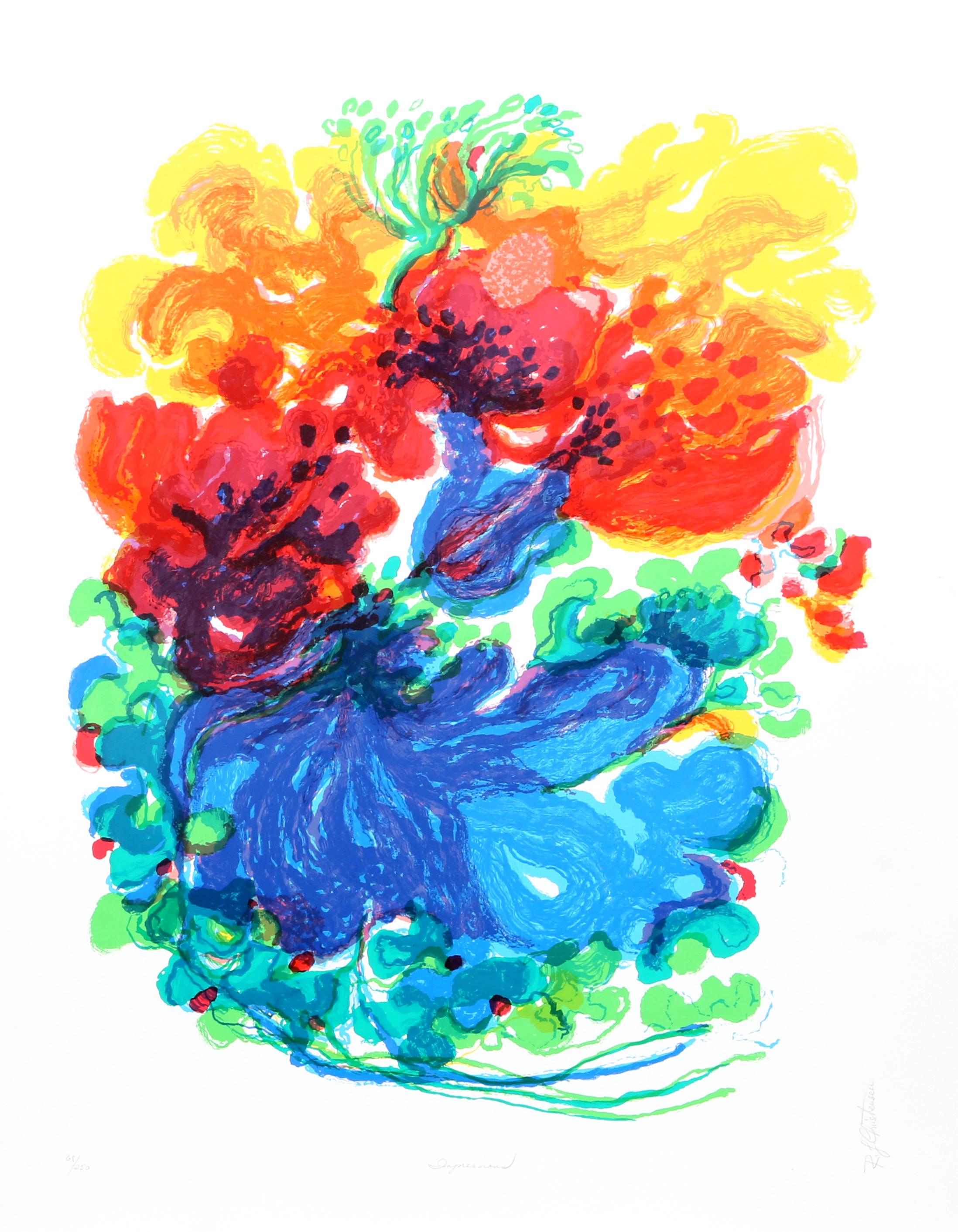
Impressions, Signed Abstract Lithograph by Ronald Julius Christensen
By Ronald Julius Christensen
Located in Long Island City, NY
Impressions by Ronald Julius Christensen, American (1923–1999)
Date: Circa 1979
Lithograph, signed and numbered in pencil
Edition of 250, AP 30
Size: 26.5 in. x 30 in. (67.31 cm x 76...
Category
1980s Abstract Abstract Prints
Materials
Lithograph
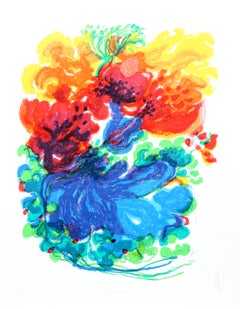
Cuban Artist signed limited edition original art print slkscreen abstract
Located in Miami, FL
Flavio Garciandia (Cuba, 1954)
'Sin título III', 2004
silkscreen on paper
39.4 x 27.6 in. (100 x 70 cm.)
Edition of 99
Unframed
ID: GAR1570-003-106
Category
Early 2000s Abstract Prints and Multiples
Materials
Paper, Screen