Robert Indiana
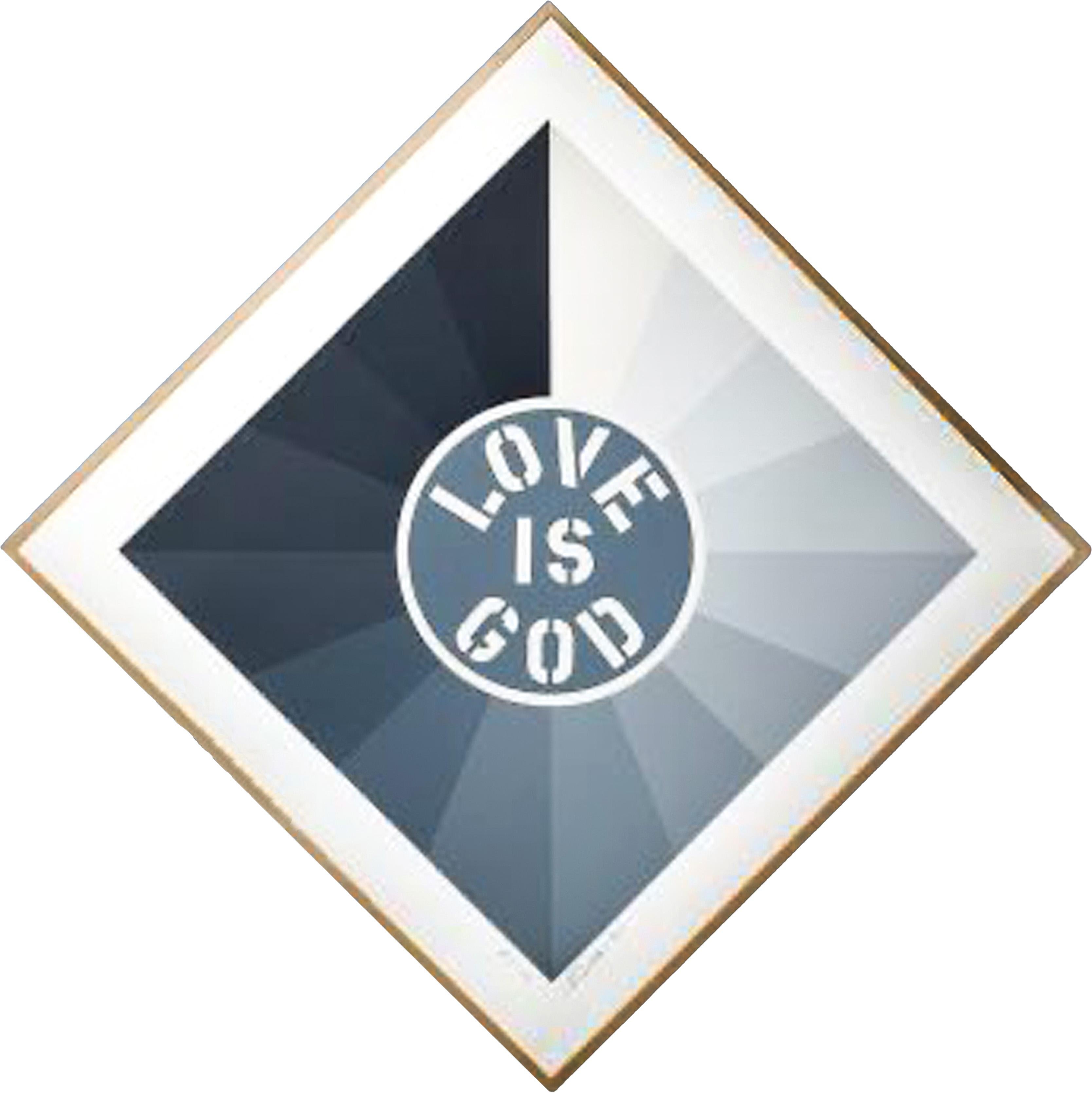
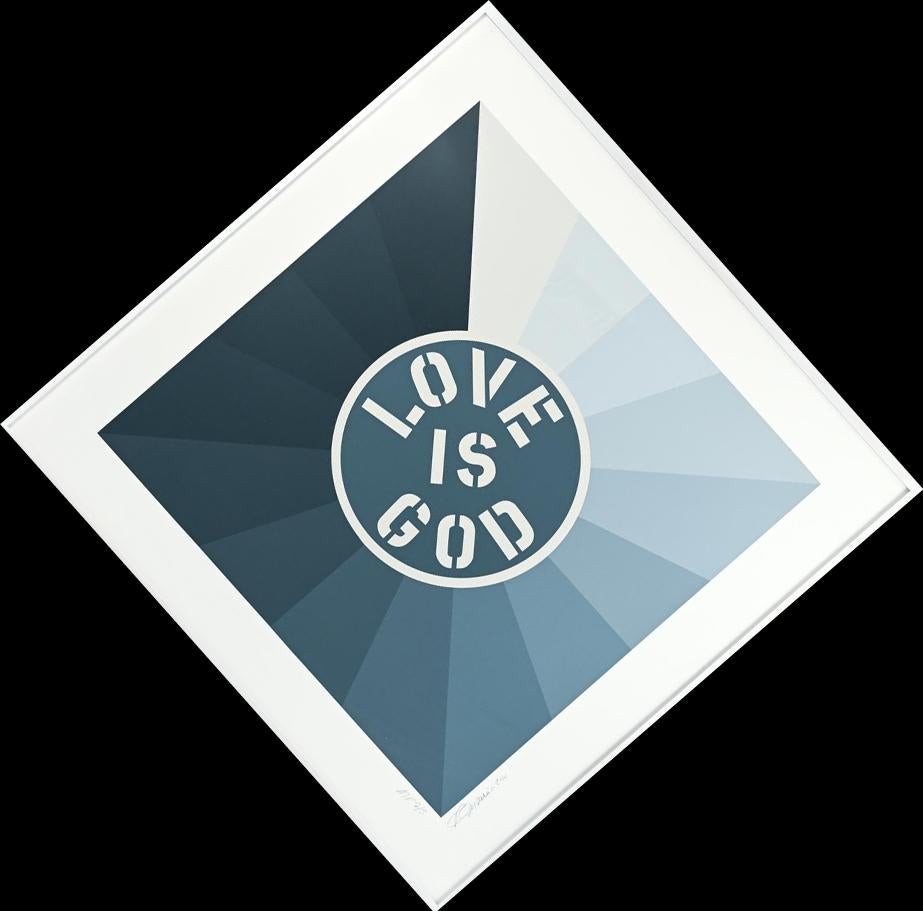
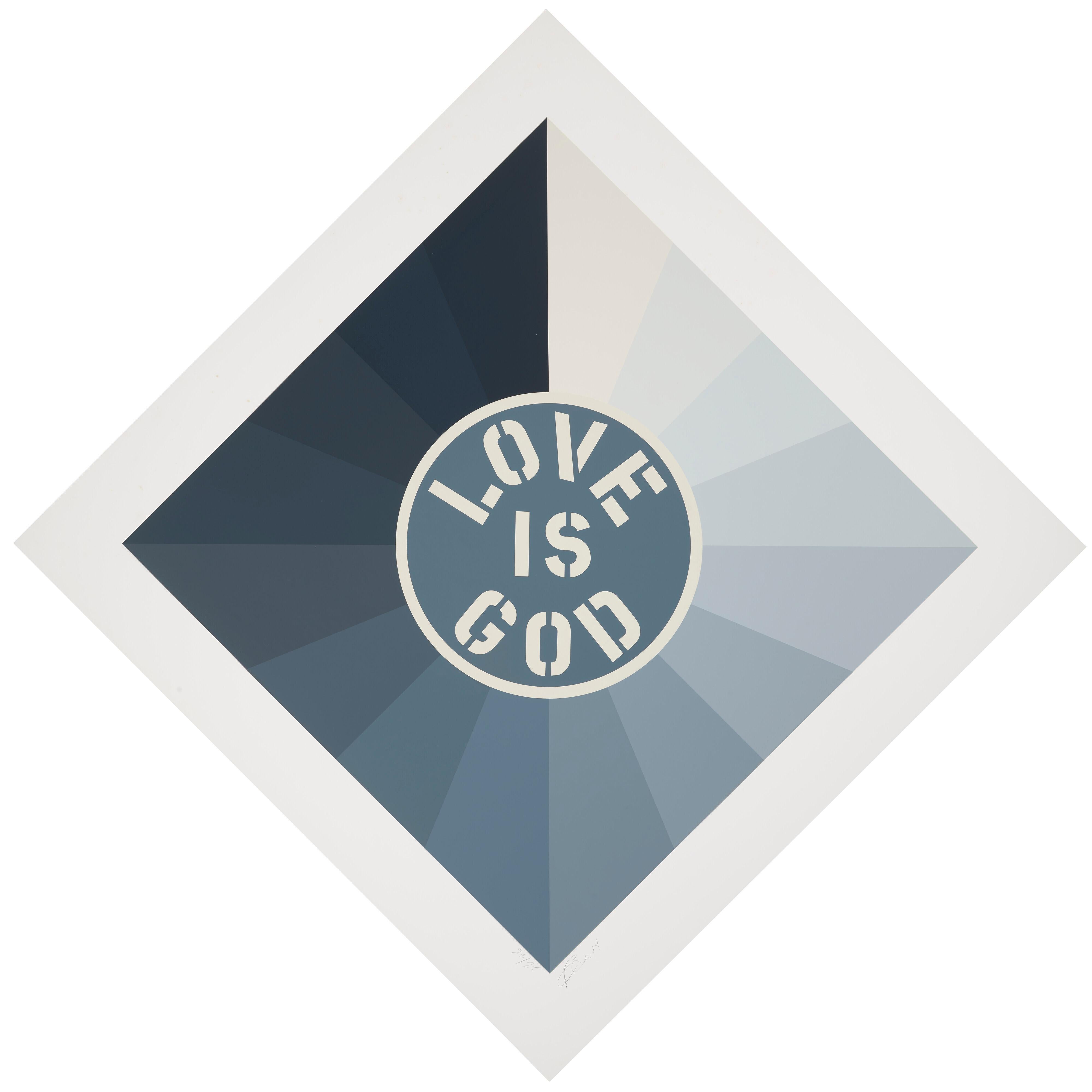
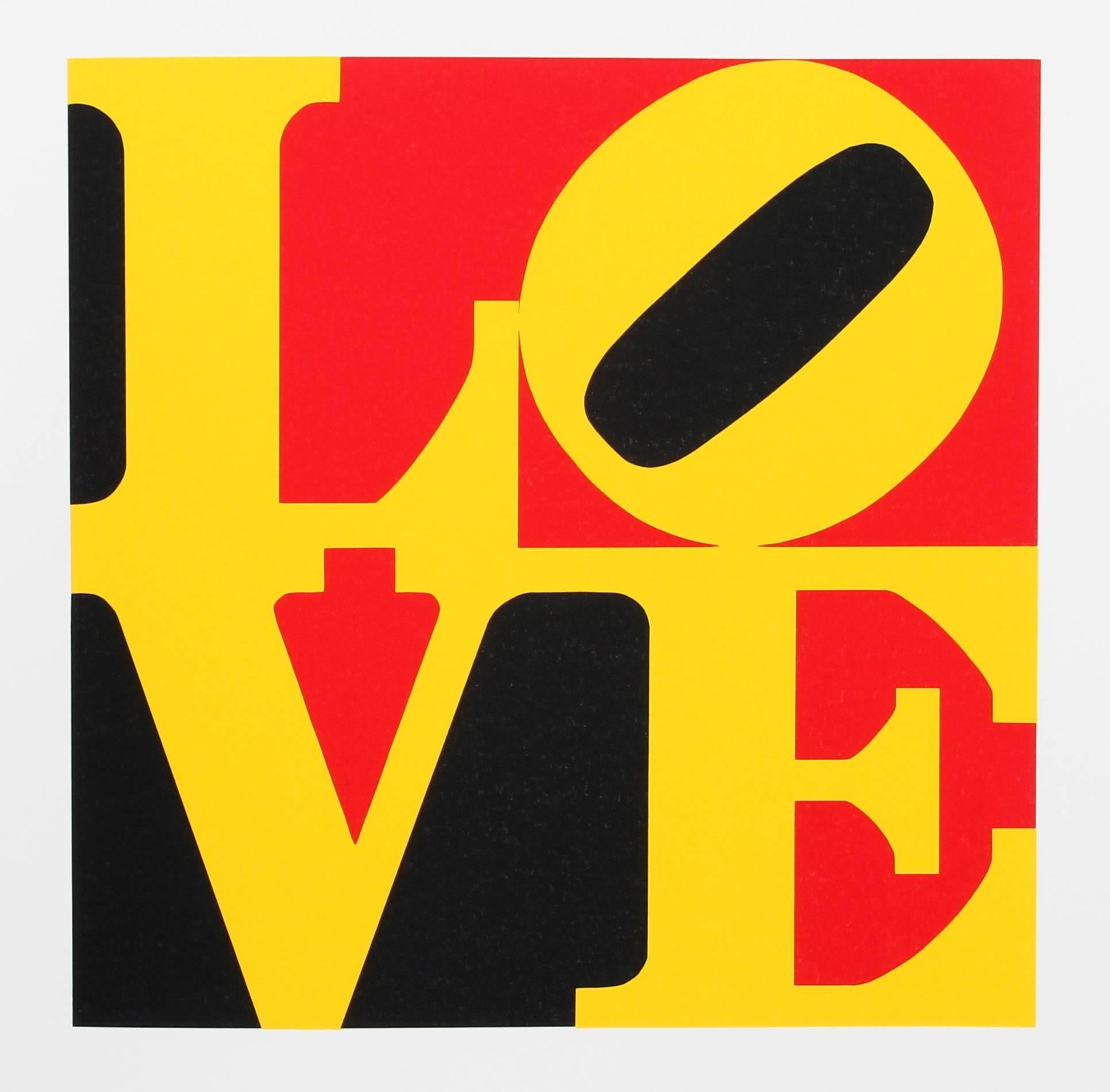
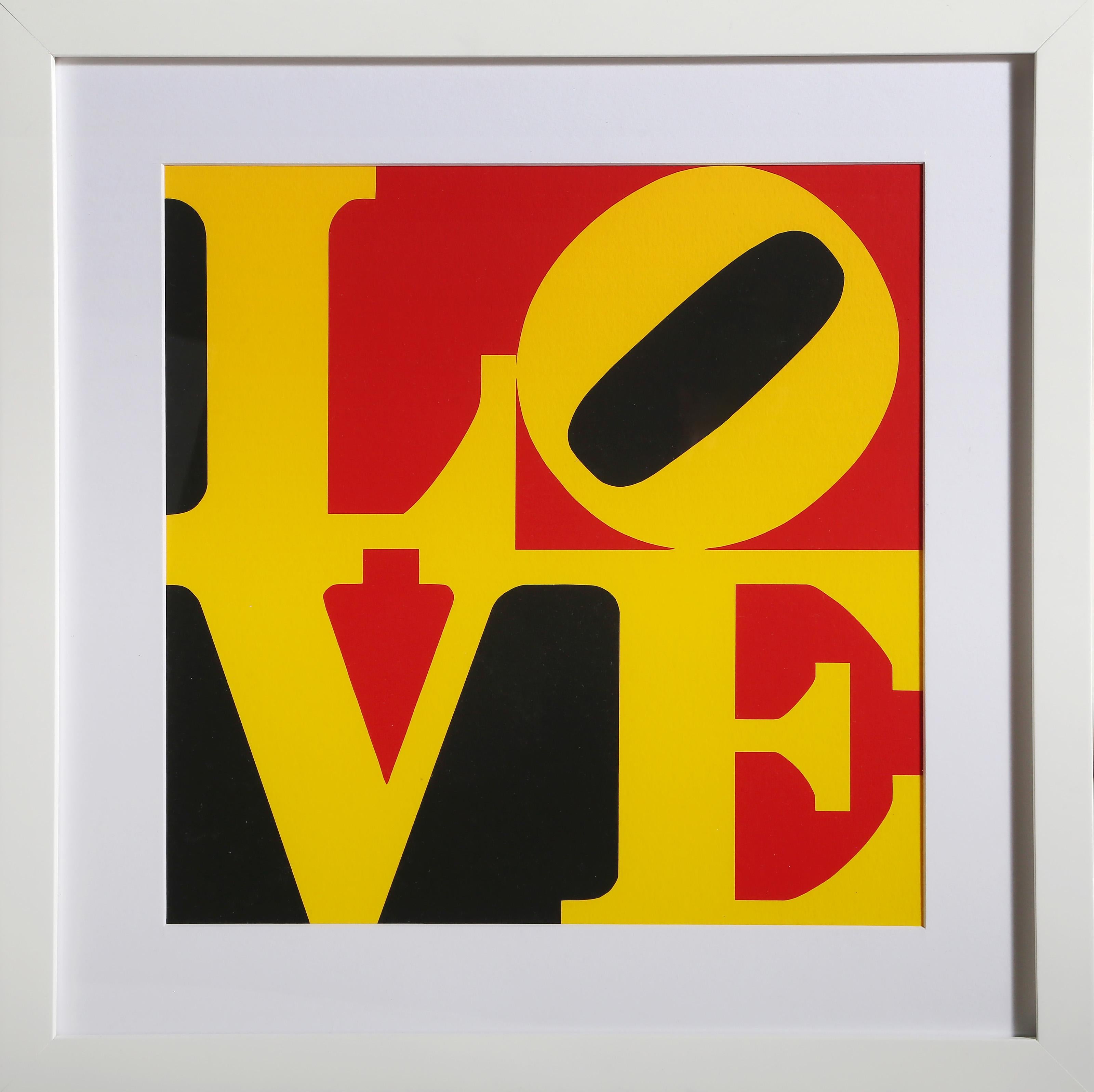
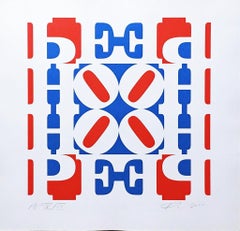
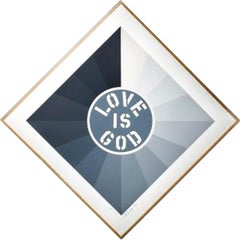
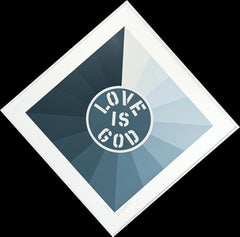
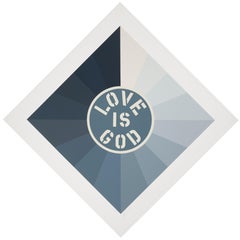
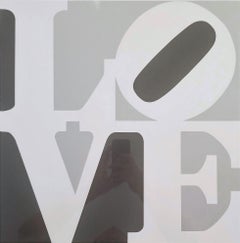
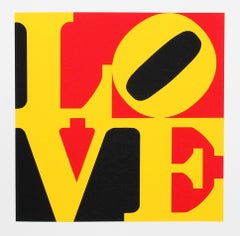
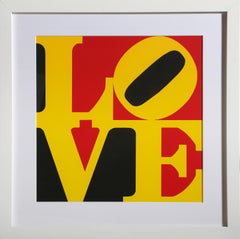
Love Is God, 2014
Silkscreen on 2 ply Rising Museum Board
Published by Gary Lichtenstein Editions
32 × 32 inches
Hand signed and numbered 33/50 in graphite pencil on the front
Unframed
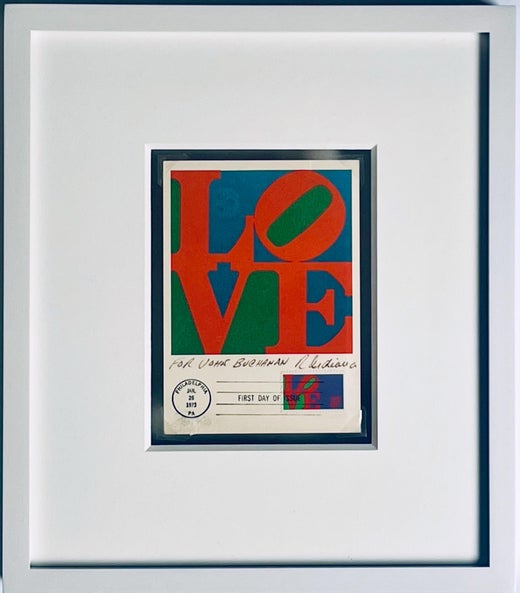
One of the most profound Robert Indiana silkscreens ever created; one of his last works done in 2014. This silkscreen is on museum board, pencil signed and numbered from the limited edition of only 50. Accompanied by a COA from the publisher. This print is based upon the eponymous original painting on canvas: it's actually more subversive than what it appears. Robert Indiana described the origin of that painting as follows:
"Well it all started probably a long, long time ago, and it comes, of course, from a spiritual rather than an erotic beginning. When I was a child I was exposed to and involved in the Christian Science church, and all Christian Science churches are very prim and pure. Most of them have no decoration whatsoever, no stained glass windows, no carvings, no paintings, and, in fact, only one thing appears in a Christian Science church, and that’s a small, very tasteful inscription in gold, usually, over the platform where the readers conduct the service. And that inscription is God Is Love.
Well a few years ago, in the mid-sixties [Larry Aldrich] . . . had the inspiration to expose his rather large private collection to a broader public. There happened to be a building available for this in Ridgefield; it had been a grocery store back in the early nineteenth century . . . this grocery store, later on, some time in the 1920s, became a Christian Science church. Then the Christian Scientists wanted better facilities so they built themselves a new church next door.
I was at a party at Andy Warhol’s old Factory, and Aldrich was there. I didn’t know him very well, but well enough to confront him. I was a little piqued because he had no Indiana, and I thought he should. I told him that an excellent opportunity was forthcoming for a special Indiana, because since he was making his museum in a former Christian Science church, I had an idea to do a special painting just for him. And that was the reversal of the religious motto. My painting read Love Is God instead.
. . . Although the Love Is God canvas bears no relationship to what now has become a logo, it started me thinking about the subject of love. I had been at one time employed as a typist for the man who was to become the bishop of California—then Dean [James A.] Pike, later Bishop Pike, and now in some area of sainthood, I suppose. He, of course, was greatly involved with the subject of love, particularly from an ecclesiastic standpoint.
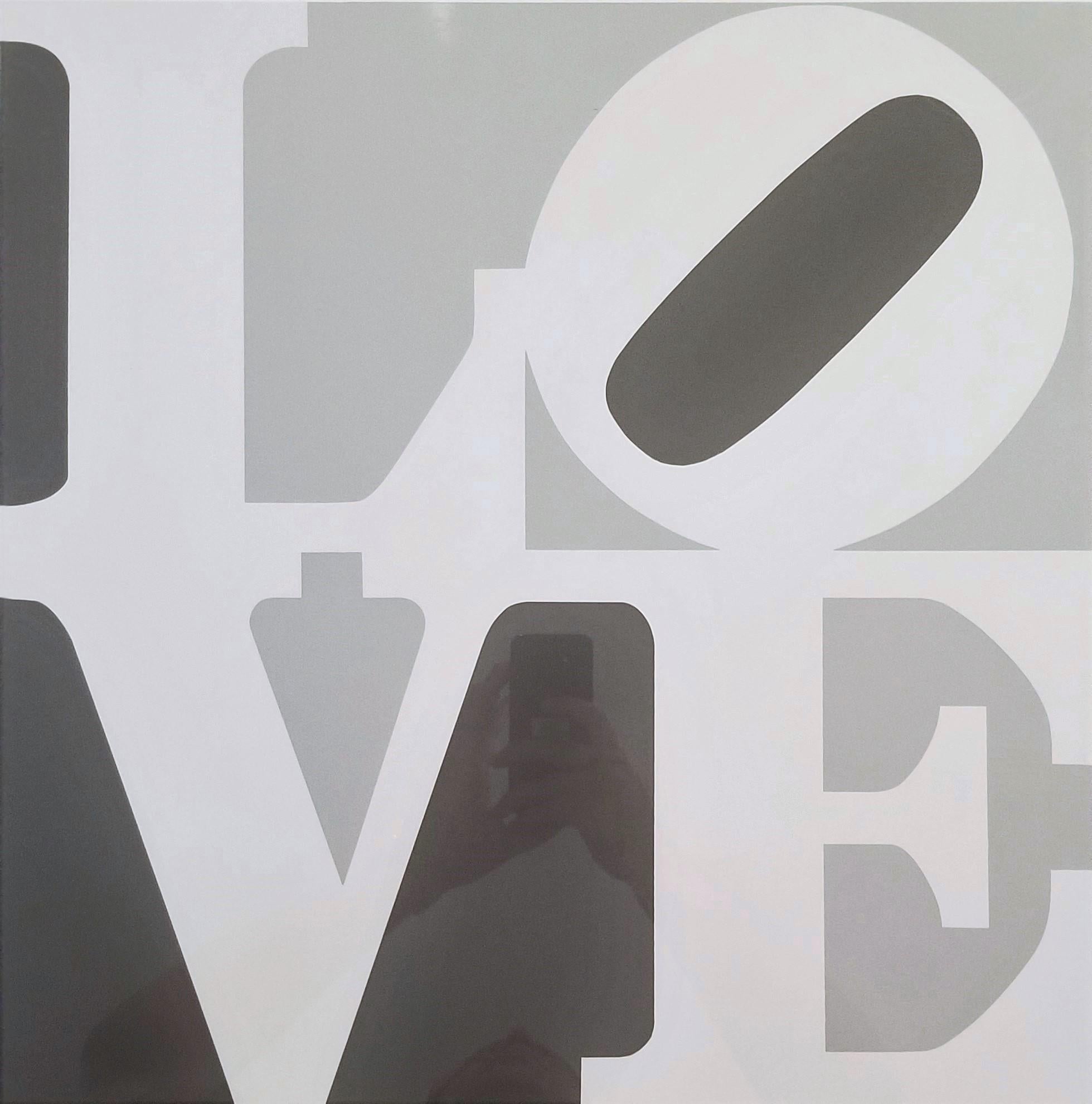
All these things kind of came together. I like to work on a square canvas, since the way I put the letters down, it is the most economical, the most dynamic way to put four letters on a square canvas..."
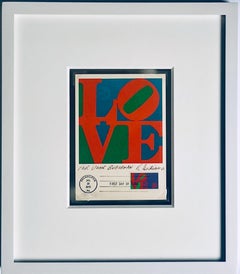
That is how the LOVE came about . .
ROBERT INDIANA BIOGRAPHY
One of the preeminent figures in American art since the 1960s, Robert Indiana played a central role in the development of assemblage art, hard-edge painting, and Pop art.
Indiana, a self proclaimed “American painter of signs,” created a highly original body of work that explores American identity, personal history, and the power of abstraction and language, establishing an important legacy that resonates in the work of many contemporary artists who make the written word a central element of their oeuvre.
Robert Indiana was born Robert Clark in New Castle, Indiana on September 13, 1928. Adopted as an infant, he spent his childhood moving frequently throughout his namesake state. His artistic talent was evident at an early age, and its recognition by a first grade teacher encouraged his decision to become an artist. In 1942, Indiana moved to Indianapolis in order to attend Arsenal Technical High School, known for its strong arts curriculum. After graduating he spent three years in the U.S. Air Force and then studied at the Art Institute of Chicago, the Skowhegan School of Sculpture and Painting in Maine, and the Edinburgh College of Art in Scotland.
In 1956, two years after moving to New York, Indiana met Ellsworth Kelly, and upon his recommendation took up residence in Coenties Slip, once a major port on the southeast tip of Manhattan. There he joined a community of artists that would come to include Kelly, Agnes Martin, James Rosenquist, and Jack Youngerman. The environment of the Slip had a profound impact on Indiana’s work, and his early paintings include a series of hard-edge double ginkgo leaves inspired by the trees which grew in nearby Jeannette Park. He also incorporated the ginkgo form into his nineteen-foot mural Stavrosis (1958), a crucifixion pieced together from forty-four sheets of paper that he found in his loft. It was upon completion of this work that Indiana adopted the name of his native state as his own.
Indiana, like some of his fellow artists, scavenged the area’s abandoned warehouses for materials, creating sculptural assemblages from old wooden beams, rusted metal wheels, and other remnants of the shipping trade that had thrived in Coenties Slip. While he created hanging works such as Jeanne d’Arc (1960–62) and Wall of China (1960–61), the majority were freestanding constructions which Indiana called “herms” after the sculptures that served as boundary markers at crossroads in ancient Greece and Rome. The discovery of nineteenth-century brass stencils led to the incorporation of brightly colored numbers and short emotionally charged words into these sculptures as well as canvases, and became the basis of his new painterly vocabulary.
-Courtesy PACE Gallery