Items Similar to BAGHDAD Six color screenprint, renowned British Pop pioneer R.B. Kitaj, Signed/N
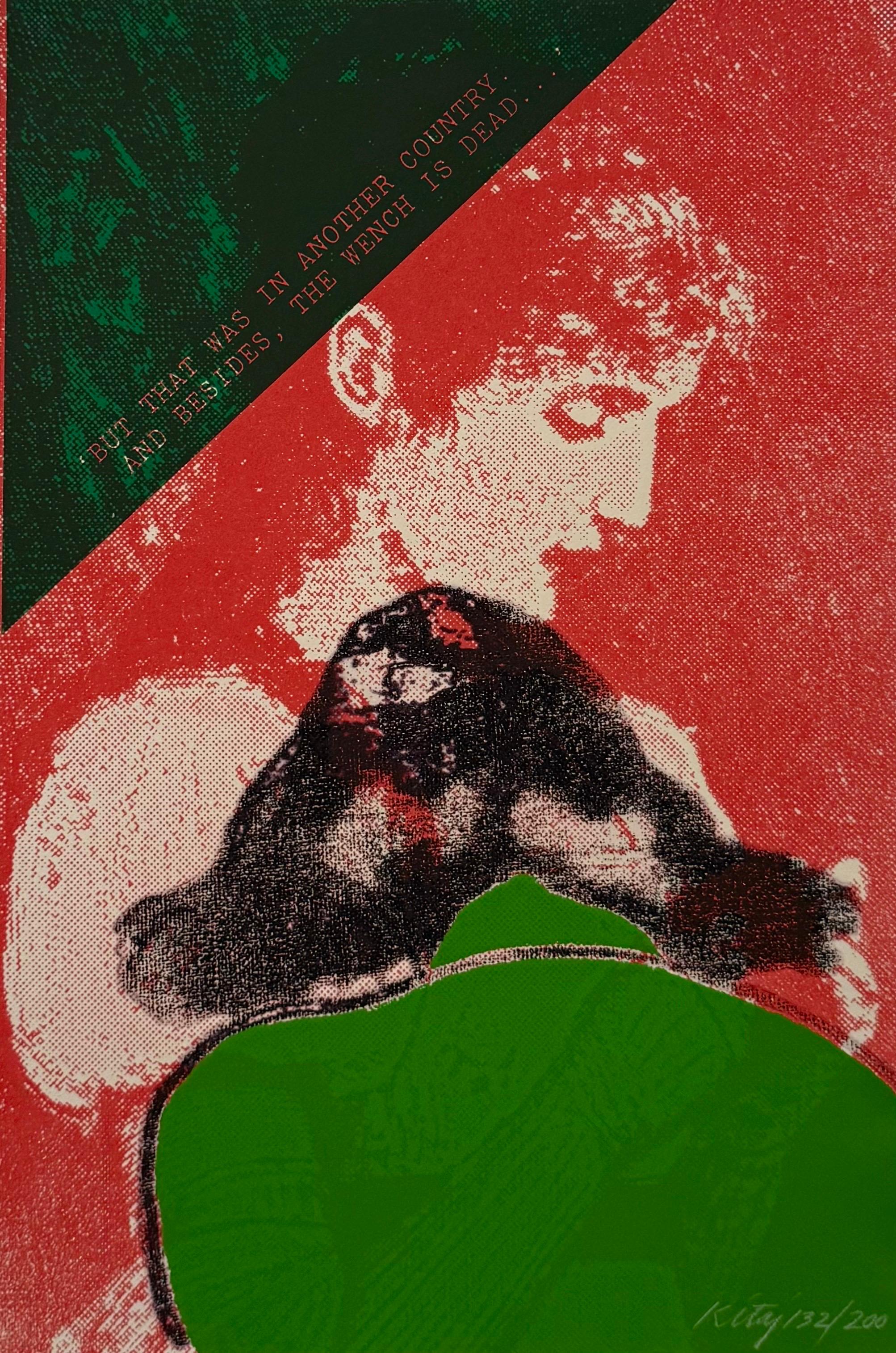
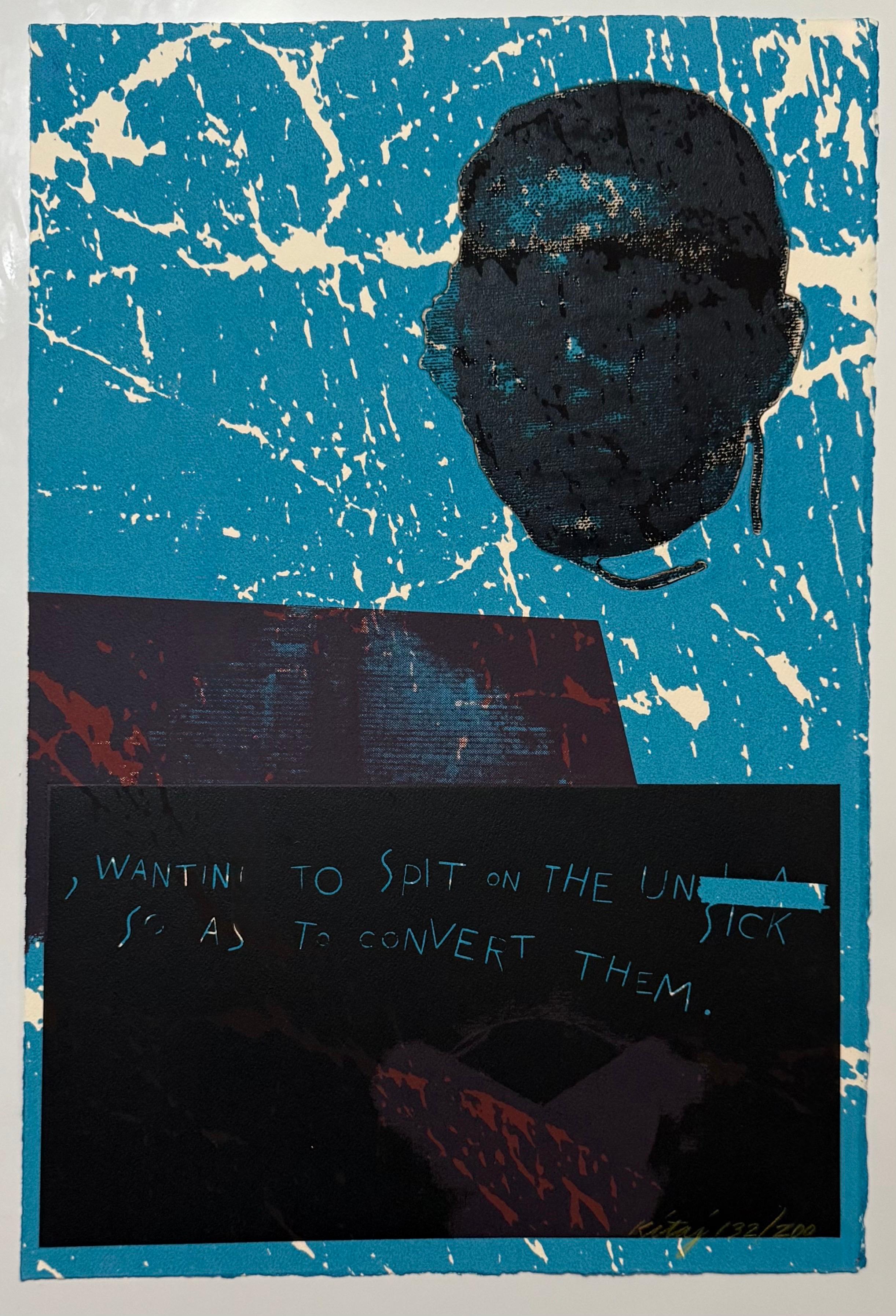
Want more images or videos?
Request additional images or videos from the seller
1 of 7
Ronald Brooks KitajBAGHDAD Six color screenprint, renowned British Pop pioneer R.B. Kitaj, Signed/N1972
1972
$1,450
£1,104.14
€1,271.39
CA$2,054.78
A$2,210.21
CHF 1,181.20
MX$26,052.05
NOK 14,892.15
SEK 13,614.25
DKK 9,499.45
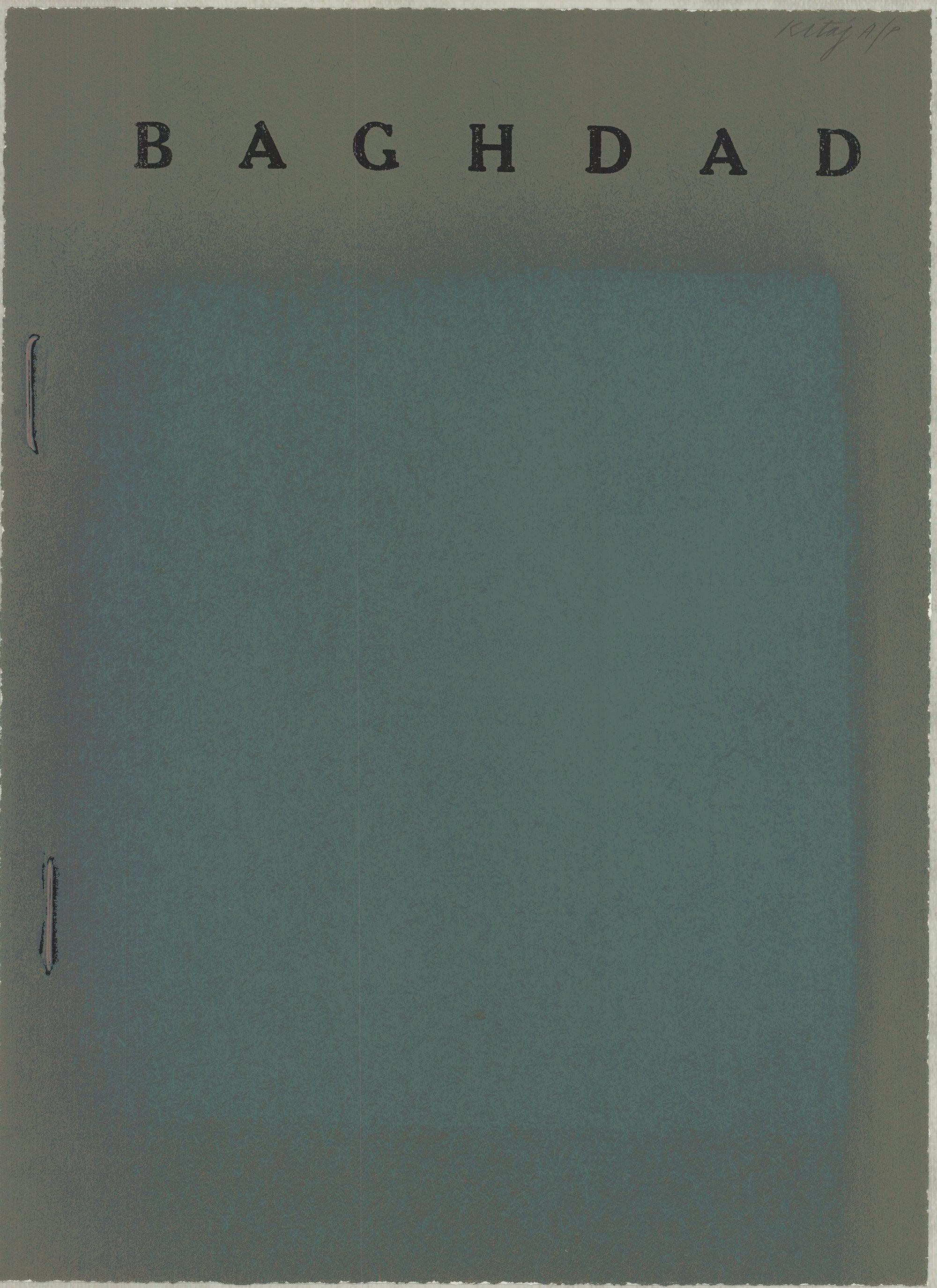
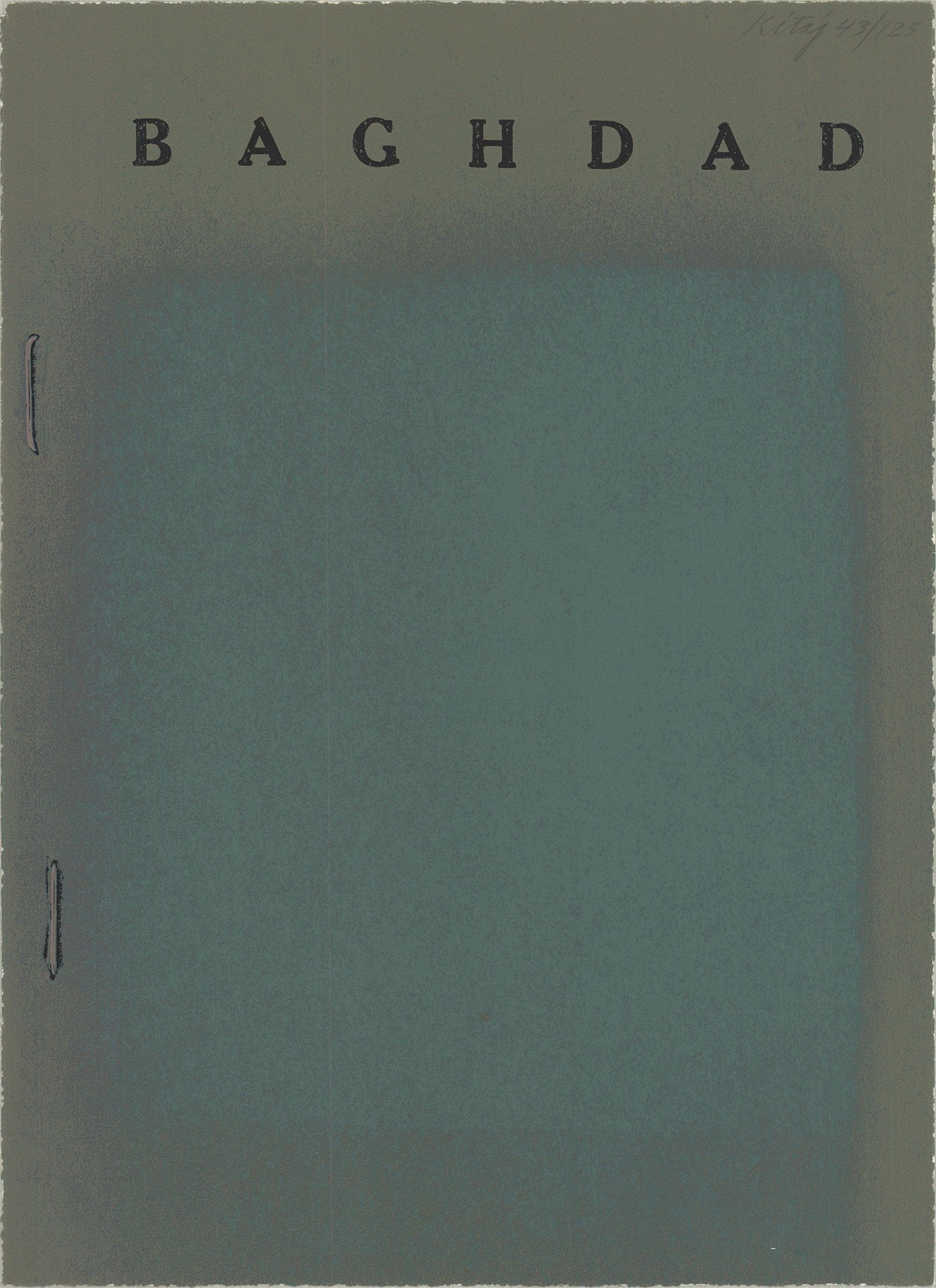
About the Item
Ronald Brooks (R.B.) Kitaj
BAGHDAD, 1972
Six Color Screenprint and Photoscreenprint
20 × 14 1/2 inches
Pencil signed and numbered 1/125
Printed at Kelpra Studio, London
Published by Marlborough Graphics, N.Y.
Unframed
Catalogues:
Kelpra Nº 7977
Kinsman Nº 53
British Museum Nº162 (reproduced on page 158)
Kitaj's "Baghdad" is one of the prints from the portfolio Prints for Phoenix House. A portfolio of ten prints by various artists, including Kitaj, Ellsworth Kelly, Alex Katz, David Hockney, Adolph Gottlieb, Joseph Cornell and James Rosenquist.
An excellent impression of this uncommon and desirable silkscreen from the early 1970s. Unframed and in fine condition. Terrific work by this very important British Pop art pioneer
More about R.B. (Ronald Brooks) Kitaj:
Born in Cleveland, Ohio, to a Viennese mother and Jewish stepfather, Ronald Brooks (R.B.) Kitaj became a noted painter and printmaker whose subjects were realistic and abstract figure and genre. Many of his works were inspired by his political ideas and by reactions to stories he heard from his family about the Nazis during World War II. At an early age, he developed a compassion for persons less fortunate and became dedicated to socialism, which had a lasting effect on his life and work. He was stirred by discussions about the Republican cause in the Spanish Civil War and by the events during World War II in Europe, especially as recollected by his parents and his Jewish step-grandmother, who moved in with his family. Kitaj also learned much on various voyages as a merchant seaman in Latin America and through attending art schools, first in 1950 at the Cooper Union for the Advancement of Science and Art in New York, and in 1951 to 1952 at the Akademie der Bildenden Knste, Vienna, under Albert Paris von Gtersloh. After his marriage in 1953 to Elsi Roessler, a fellow American student whom he had met in Vienna, he made his first extended visit to the Catalan port of San Felu de Guixols, and he continued to return their regularly over the next 30 years. From 1955 to the end of 1957 he served in the American Army near Fontainebleau, where he drew pictures of the Russian tanks and installations for war games. Kitaj was recognised as being one of the world's leading draftsmen, almost on a par with, or compared to, Degas. Indeed, he was taught drawing at Oxford by Percy Horton, himself a pupil of Walter Sickert, who was a pupil of Degas; and the teacher of Degas studied under Ingres. His more complex compositions build on his line work using a montage practice, which he called 'agitational usage'. Kitaj often depicts disorienting landscapes and impossible 3D constructions, with exaggerated and pliable human forms. He often assumes a detached outsider point of view, in conflict with dominant historical narratives. This is best portrayed by his masterpiece "The Autumn of Central Paris" (1972–73), wherein philosopher Walter Benjamin is portrayed, as both the orchestrator and victim of historical madness. The futility of historical progress creates a disjointed architecture that is maddening to deconstruct. He staged a major exhibition at Los Angeles County Museum of Art in 1965, and a retrospective at the Hirshhorn Museum in Washington D.C. in 1981. He selected paintings for an exhibition, "The Artist's Eye", at the National Gallery, London in 1980. In his later years, he developed a greater awareness of his Jewish heritage, which found expression in his works, with reference to the Holocaust and influences from Jewish writers such as Kafka and Walter Benjamin, and he came to consider himself to be a "wandering Jew". In 1989, Kitaj published "First Diasporist Manifesto", a short book in which he analysed his own alienation, and how this contributed to his art. His book contained the remark: "The Diasporist lives and paints in two or more societies at once." And he added: "You don't have to be a Jew to be a Diasporist." A second retrospective was staged at the Tate Gallery in 1994. Critical reviews in London were almost universally negative. British press savagely attacked the Tate exhibit, calling Kitaj a pretentious poseur who engaged in name dropping. Kitaj took the criticism very personally, declaring that “anti-intellectualism, anti-Americanism, and anti-Semitism” had fueled the vitriol. Despite the bad reviews, the exhibition moved to the Metropolitan Museum of Art in New York and afterwards to the Los Angeles County Museum in 1995. His second wife, Sandra Fisher died of a brain aneurysm in 1994, shortly after his exhibition at the Tate Gallery had ended. He blamed the British press for her death, stating that “they were aiming for me, but they got her instead.” David Hockney concurred and said that he too believed the London art critics had killed Sandra Fisher. Kitaj returned to the US in 1997 and settled in Los Angeles, near his first son. The "Tate War" and Sandra's death became a central themes for his later works: he often depicted himself and his deceased wife as angels. Kitaj was one of several artists to make a post-it note in celebration of 3M's 20th anniversary. When auctioned on the internet in 2000, the charcoal and pastel piece sold for $925, making it the most expensive post-it note in history, a fact recorded in the Guinness Book of World Records. Kitaj was elected to the Royal Academy in 1991, the first American to join the Academy since John Singer Sargent. He received the Golden Lion at the Venice Biennale in 1995. He staged another exhibition at the National Gallery in 2001, entitled "Kitaj in the Aura of Cézanne and Other Masters". In September 2010 Kitaj and five British artists including Howard Hodgkin, John Walker, Ian Stephenson, Patrick Caulfield and John Hoyland were included in an exhibition entitled The Independent Eye: Contemporary British Art From the Collection of Samuel and Gabrielle Lurie, at the Yale Center for British Art.
R. B. Kitaj helped define the post-war School of London (and coined the term itself) with his writings and bold, erudite, and expressive paintings. They referenced art history, literature, and, most significantly, Judaism. Drawing on the formalism of Paul Cézanne and Edgar Degas, Kitaj produced kaleidoscopic figurations, loose-brushed landscapes, and vibrant, collage-like compositions that synthesized ideas about history, politics, religion, and identity. Kitaj was elected to the American Academy of Arts and Letters in 1982. In 1985, he became the first American to be elected to the Royal Academy since 1894, when John Singer Sargent was elected. Retrospectives of his work have been held at the Hirshhorn Museum and Sculpture Garden, the Tate, the Los Angeles County Museum of Art, and the Metropolitan Museum of Art. Kitaj’s paintings have sold for six figures on the secondary market.
- Creator:Ronald Brooks Kitaj (1932-2007, American)
- Creation Year:1972
- Dimensions:Height: 20 in (50.8 cm)Width: 14.5 in (36.83 cm)
- Medium:
- Movement Style:
- Period:
- Condition:
- Gallery Location:New York, NY
- Reference Number:1stDibs: LU1745213079162
Ronald Brooks Kitaj
Born in Cleveland, Ohio in 1932, R.B. (Ronald Brooks) Kitaj is considered a key figure in European and American contemporary painting. While his work has been considered controversial, he is regarded as a master draftsman with a commitment to figurative art. His highly personal paintings and drawings reflect his deep interest in history; cultural, social and political ideologies; and issues of identity. Among his various honors are election to the American Academy of Arts and Letters in 1982, and election to the Royal Academy in 1985 (the first American since John Singer Sargent to receive this honor.) Numerous retrospective exhibitions of his work include shows at the Hirshhorn Museum in Washington, D.C.; The Jewish Museum, Berlin; The Jewish Museum, London; and the Hamburger Kunsthalle in Germany. Raised in Cleveland, Ohio, and Troy, New York, Kitaj joined the Merchant Marines in 1949.
In 1950, between sailings, he attended classes at the Cooper Union for the Advancement of Science and Art in New York. He went on to study drawing at the Academy of Fine Art in Vienna, Austria. Kitaj moved to Oxford, England in 1957, and enrolled at The Ruskin School of Drawing and Fine Art, University of Oxford. In 1959, Kitaj was accepted into Royal College of Art, London, where he befriended classmate David Hockney. Upon graduation from the RCA, Kitaj signed with Marlborough Fine Art, London, where he had his first solo exhibition in 1963. His art career began in earnest, and he found critical acclaim alongside commercial success. A second solo show followed at Marlborough Gallery, New York, in 1965, and he sold “The Ohio Gang” to The Museum of Modern Art. In 1969, Kitaj taught for a year at the University of California, Los Angeles. In 1976, he coined the term “School of London” in an essay he wrote as curator of the polemical exhibition, “The Human Clay,” at the Hayward Gallery, London. The term, though loose, continues to define a group of stylistically diverse artists, including Kitaj, who were working in London at that time focusing on figural representation. In 1981, he spent a year in Paris, France, where he focused on drawing and use of pastel. In 1994, the Tate Gallery, London, organized a major retrospective of Kitaj’s work. Hostile and personal attacks from some critics led to what Kitaj referred to as the “Tate War.” The exhibition subsequently traveled to the Los Angeles County Museum of Art and the Metropolitan Museum of Art, New York. Kitaj moved to Los Angeles, California, and continued to exhibit with Marlborough Fine Art and the Marlborough Gallery, New York. In 2001 the National Gallery London organized a solo exhibition of paintings: “R.B. Kitaj In the Aura of Cezanne and Other Masters.” Kitaj focused on his “late style” in his Yellow Studio in Westwood and died in 2007. His gift of his archive to the UCLA Library Special Collections was celebrated with exhibitions at the Skirball Cultural Center and UCLA’s Young Research Library.
About the Seller
5.0
Platinum Seller
Premium sellers with a 4.7+ rating and 24-hour response times
Established in 2007
1stDibs seller since 2022
481 sales on 1stDibs
Typical response time: 1 hour
- ShippingRetrieving quote...Shipping from: New York, NY
- Return Policy
More From This Seller
View AllPOGANY rare 17 color 1960s British Pop silkscreen signed numbered edition of 70
By Ronald Brooks Kitaj
Located in New York, NY
R.B. Kitaj
POGANY, 1966
17 colour Screenprint and Photo-screenprint
24 × 36 inches
Pencil signed and numbered from the Limited Edition of 70
Hand-signed by artist, Signed & numbered ...
Category
1960s Pop Art Abstract Prints
Materials
Screen, Pencil
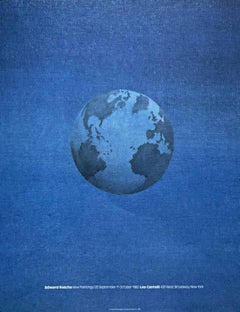
Historic rare Ed Ruscha Leo Castelli Gallery exhibition offset lithograph poster
By Ed Ruscha
Located in New York, NY
Edward Ruscha: New Paintings, Leo Castelli Gallery, 1980
Offset lithograph poster
22.5 x 18 inches
Unframed
Published by Leo Castelli Gallery
Good vintage condition with some handli...
Category
1980s Pop Art Abstract Prints
Materials
Lithograph, Offset
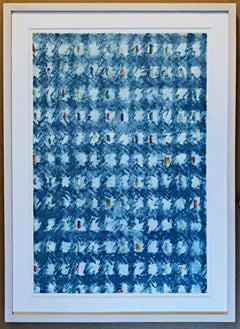
Monotype w/hand painting, geometric art famed color field painter, signed Framed
By Kenneth Noland
Located in New York, NY
Kenneth Noland
Untitled, 1987
Monotype with hand painting on wove paper
Signed and dated in pencil on the reverse, with the artist's initials blind stamped lower right
Unique
Frame i...
Category
1980s Color-Field Abstract Prints
Materials
Acrylic, Monotype, Screen
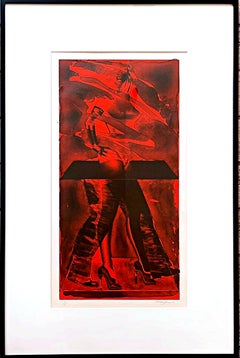
Red Feat (Lloyd, 73) Signed/N silkscreen by pioneering British Pop Artist Framed
By Allen Jones
Located in New York, NY
Rare coveted silkscreen in museum quality frame:
Allen Jones
Red Feat (Lloyd, 73), 1976
Lithograph on Arches paper
Hand signed, dated and numbered 49/60 in pencil recto, with Landfal...
Category
1970s Pop Art Abstract Prints
Materials
Lithograph
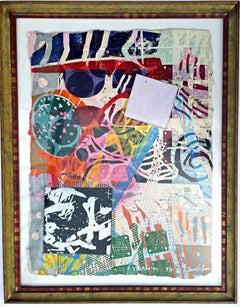
Sam Gilliam, Cuatro, Monoprint with collage acrylic stitching
embossing Signed
By Sam Gilliam
Located in New York, NY
Sam Gilliam
Cuatro, 1994
Monoprint with screenprint, collage, acrylic, stitching and embossing in colors on handmade paper
Hand signed, dated, titled and annotated P/P by Sam Gilliam...
Category
1990s Abstract Expressionist Abstract Prints
Materials
Mixed Media, Acrylic, Monoprint, Screen
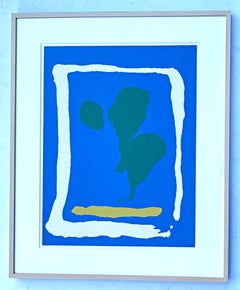
Helen Frankenthaler - Air Frame (Harrison 6) her first silkscreen Signed AP 1965
By Helen Frankenthaler
Located in New York, NY
Helen Frankenthaler
Air Frame, from the New York Ten portfolio (Harrison 6), 1965
Color silkscreen on Arches double-weight watercolor paper
Signed and annotated AP in graphite on the...
Category
1960s Abstract Expressionist Abstract Prints
Materials
Screen
You May Also Like
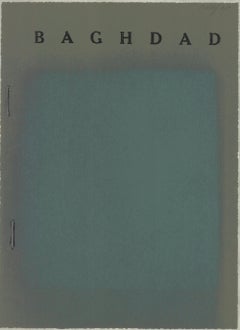
Baghdad Screen Print by Kitaj, Contemporary, Signed AP, 1972
By R.B. Kitaj
Located in Brooklyn, NY
Six color screen-print and photo-screenprint. Signed and numbered AP in pencil by Kitaj in the top right corner.
Printed at Kelpra Studio, London and published by Marlborough Graphi...
Category
1970s Contemporary Prints and Multiples
Materials
Screen
$1,200 Sale Price
20% Off
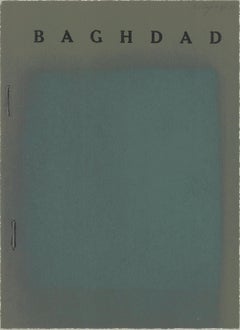
Baghdad Screen Print by R.B. Kitaj, Signed, 1972, Edition of 125
By R.B. Kitaj
Located in Brooklyn, NY
Six color screenprint and photoscreenprint. Signed and numbered out of 125 in pencil by Kitaj in the top right corner.
Printed at Kelpra Studio, London and published by Marlborough ...
Category
1970s Prints and Multiples
Materials
Screen
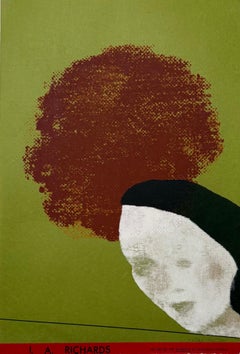
British Pop Art Artist RB Kitaj Screenprint Day Book Serigraph Hand Signed
By Ronald Brooks Kitaj
Located in Surfside, FL
R.B. Kitaj (British American 1932-2007)
Hand signed and numbered
Screenprint
Measures approximately 24.5 X 16.65 inches
This is from the Robert Creeley daybook. They were done in a...
Category
1970s Pop Art Figurative Prints
Materials
Screen
British Pop Art Artist RB Kitaj Screenprint Day Book Serigraph Silkscreen Signed
By Ronald Brooks Kitaj
Located in Surfside, FL
R.B. Kitaj (British American 1932-2007)
Hand signed and numbered
Screenprint
Measures approximately 24.5 X 16.65 inches
This is from the Robert Creeley daybook. They were done in ...
Category
1970s Pop Art Figurative Prints
Materials
Screen
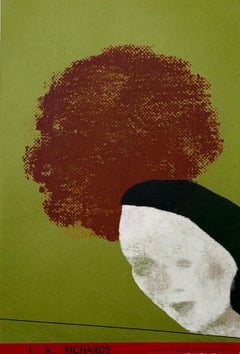
British Pop Art Artist RB Kitaj Screenprint Day Book Serigraph Silkscreen Signed
By Ronald Brooks Kitaj
Located in Surfside, FL
R.B. Kitaj (British American 1932-2007)
Hand signed and numbered
Screenprint
Measures approximately 24.5 X 16.65 inches
This is from the Robert Creeley daybook. They were done in ...
Category
1970s Pop Art Figurative Prints
Materials
Screen
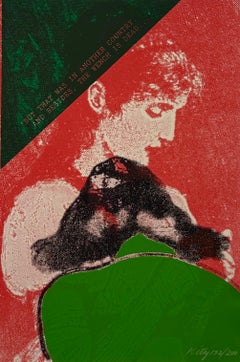
British Pop Art Artist RB Kitaj Screenprint Day Book Serigraph Silkscreen Signed
By Ronald Brooks Kitaj
Located in Surfside, FL
R.B. Kitaj (British American 1932-2007)
Hand signed and numbered
Screenprint
Measures approximately 24.5 X 16.65 inches
This is from the Robert Creeley daybook. They were done in ...
Category
1970s Pop Art Figurative Prints
Materials
Screen
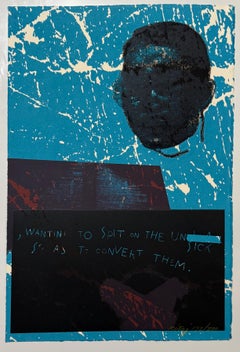
More Ways To Browse
Golden Lion
Ronald B Kitaj
David Kelly
Sandra Fisher
Agathe Bouton
Austin Thomas
Basmat Levin
Bortnyik Sandor
Butter Prints
Calder Lithograph Calder Signed
Damien Hirst Etching
Damien Hirst Heart
Dan Namingha Bronze Sculpture
Dan Namingha Bronze
Donald Judd Untitled
Frank Stella Etching
Galerie Rive Gauche
Gerhard Hoehme