Expressionist Abstract Prints

EXPRESSIONIST STYLE

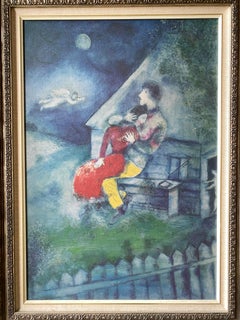
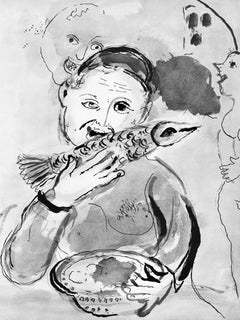
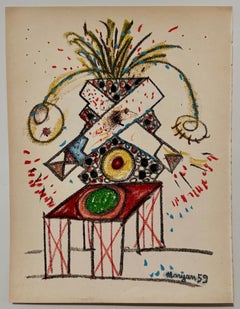
While “expressionist” is used to describe any art that avoids naturalism and instead employs a bold use of flattened forms and intense brushwork, Expressionist art formally describes early-20th-century work from Europe that drew on Symbolism and confronted issues such as urbanization and capitalism. Expressionist artists experimented in paintings and prints with skewed perspectives, abstraction and unconventional, bright colors to portray how isolating and anxious the world felt rather than how it appeared. 

Between 1905 and 1920, Austrian and German artists, in particular, were inspired by Postimpressionists such as Paul Gauguin and Vincent van Gogh in their efforts to strive for a new authenticity in their work. In its geometric patterns and decorative details, Expressionist art was also marked by eclectic sources like German and Russian folk art as well as tribal art from Africa and Oceania, which the movement’s practitioners witnessed at museums and world’s fairs.

Groups of artists came together to share and promote the themes now associated with Expressionism, such as Die Brücke (The Bridge) in Dresden, which included Erich Heckel, Ernst Ludwig Kirchner and Karl Schmidt-Rottluff and investigated alienation and the dissolution of society in vivid color. In Munich, Der Blaue Reiter (The Blue Rider), a group led by Wassily Kandinsky and Franz Marc, instilled Expressionism with a search for spiritual truths. In his iconic painting The Scream, prolific Norwegian painter Edvard Munch conveyed emotional turmoil through his depiction of environmental elements, such as the threatening sky.

Expressionism shifted around the outbreak of World War I, with artists using more elements of the grotesque in reaction to the escalation of unrest and violence. Printmaking was especially popular, as it allowed artists to widely disseminate works that grappled with social and political issues amid this time of upheaval. Although the art movement ended with the rise of Nazi Germany, where Expressionist creators were labeled “degenerate,” the radical ideas of these artists would influence Neo-Expressionism that emerged in the late 1970s with painters like Jean-Michel Basquiat and Francesco Clemente.

​​Find a collection of authentic Expressionist paintings, sculptures, prints and more art on 1stDibs.

to
48
51
18
27
9
3
Overall Width
to
Overall Height
to
9,026
3,289
2,245
1,163
1,097
295
246
143
110
76
15
14
33
12
6
4
4
105
3
7
2
4
1
28
23
13
6
4
83
23
1
6
4
3
2
2
1
1
1
1
1
1
1
1
1
64
13
13
9
7
18
8
101
6
Style: Expressionist
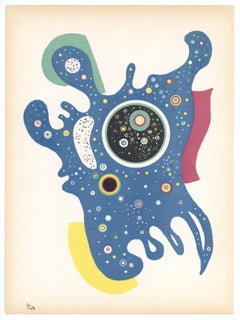
"Stars" original lithograph
Located in Henderson, NV
Medium: original lithograph. Printed in 1938 and published in Paris by Teriade for the art revue Verve (volume 1, number 2). Kandinsky was invited to contribute an original compositi...
Category

1930s Expressionist Abstract Prints

Materials

Lithograph

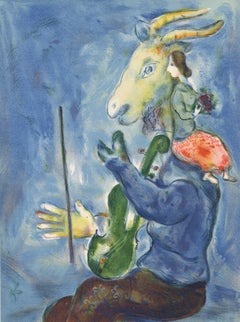
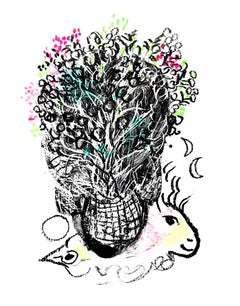
Marc Chagall, Spring, from Verve, Revue Artistique, 1938
Located in Southampton, NY
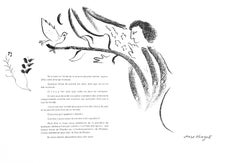
This exquisite lithograph by Marc Chagall (1887–1985), titled Printemps (Spring), from Verve, Revue Artistique et Litteraire, Vol. I, No. 3, originat...
Category

1930s Expressionist Abstract Prints

Materials

Lithograph

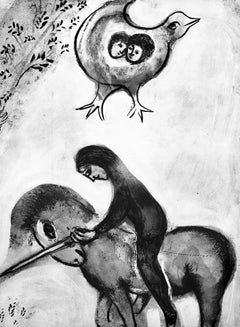
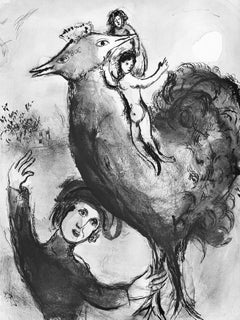
Marc Chagall, The Horseman and the Bird, from Tales of Boccaccio, 1950
Located in Southampton, NY
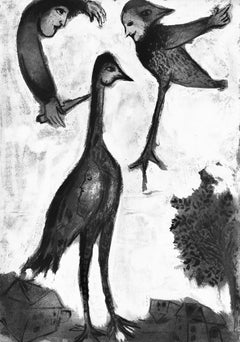
This exquisite lithograph by Marc Chagall (1887–1985), titled Le Cavalier et l’oiseau (The Horseman and the Bird), from Contes de Boccace, peintures du manuscrit des ducs de Bourgogn...
Category

1950s Expressionist Abstract Prints

Materials

Lithograph

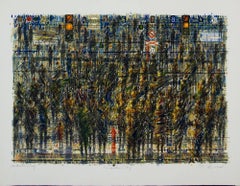
Computer City
By Bruno Zupan
Located in Paonia, CO
Computer City is a frenzy of colors and action. This is a city scene with stop lights, parking signs, directional signs, stop signs, digital time clock, buildings, streets and a mass...
Category

1970s Expressionist Abstract Prints

Materials

Screen

MULTI PERSONAGE Signed Lithograph, Abstract Collage Portrait, CoBrA Artist
Located in Union City, NJ
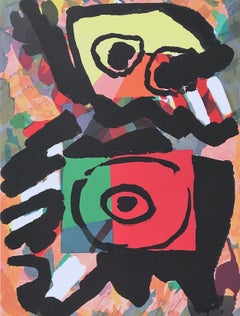
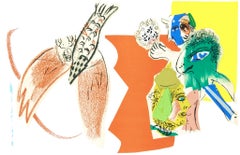
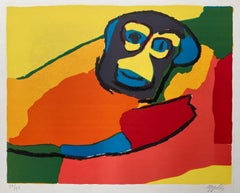
MULTI PERSONAGE is an original limited edition lithograph by the Dutch artist Karel Appel, printed using hand lithography techniques on archival Arches paper, 100% acid free. MULTI PERSONAGE is a lively abstract color collage portrait expressed in vibrant shades of red, blue, pink, green, purple, yellow with hints of multi color pastel tones and white creating an abstracted body and face. Bold black paint strokes define the face with its zany black eyes, head, body and limbs; collage effect torn paper bits fill in the body form. MULTI PERSONAGE is a very unique, fantastically playful and wild composition by Karel Appel, one of the founders of the avant-garde art movement CoBrA active during the late 1940's thru early 1950's. His paintings are known for incorporating applications of vibrant, violent colors often possessing a primal, childlike quality. Print size - 30 x 20 inches, unframed, excellent condition, pencil signed by Karel Appel Edition size - 175 Year published - 1980 Printer - JK Fine Art Editions Co., NY Karel Appel was one of the founders of the avant-garde art movement CoBrA, active during the late 1940's thru early 1950's. His paintings are known for incorporating applications of vibrant, violent colors often possessing a primal, childlike quality. Karel Appel, (born April 25, 1921, Amsterdam, Netherlands—died May 3, 2006, Zürich, Switzerland), Dutch painter of turbulent, colorful, and semi-abstract compositions, who was a co-founder (1948) of the CoBRA group of northern European Expressionists. He was also a noted sculptor and graphic artist. Appel attended the Royal Academy of Fine Arts, Amsterdam (1940–43), and helped found the “Reflex” group, which became known as CoBRA (for Copenhagen, Brussels, and Amsterdam), in 1948. He moved to Paris in 1950 and by the 1960s had settled in New York City; he later lived in Italy and Switzerland. Partly in reaction against what they perceived as the sterile academicism of the de Stijl movement, the CoBRA artists...
Category

1980s Expressionist Abstract Prints

Materials

Lithograph

Marc Chagall, The Red Horse, from XXe Siecle, 1970
Located in Southampton, NY
This exquisite lithograph by Marc Chagall (1887–1985), titled Le Cheval Rouge (The Red Horse), from the album XXe Siecle, XXXIIe Annee, Nouvelle serie, No. 34, Juin 1970, originates ...
Category

1970s Expressionist Abstract Prints

Materials

Lithograph

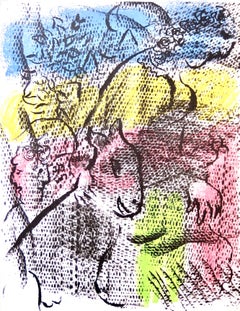
Marc Chagall, Dream at the Circus, from XXe Siecle, 1966
Located in Southampton, NY
This exquisite lithograph by Marc Chagall (1887–1985), titled Reve au cirque (Dream at the Circus), from the album XXe Siecle, Nouvelle serie, XXVIIIe Annee N°26, Mai 1966, originate...
Category

1960s Expressionist Abstract Prints

Materials

Lithograph

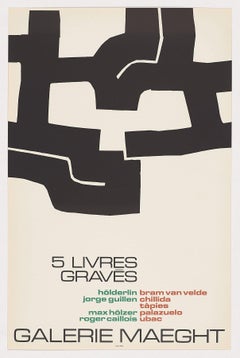
Eduardo Chillida Spanish Artist Original Unused Lithograph Poster
Located in Miami, FL
Eduardo Chillida (Spain, 1924-2002) '5 Livres Gravés', 1974 Original poster from show lithograph on paper 25.2 x 17 in. (64 x 43 cm.) Unframed Ref: CHI100-202 Eduardo Chillida He be...
Category

1970s Expressionist Abstract Prints

Materials

Lithograph

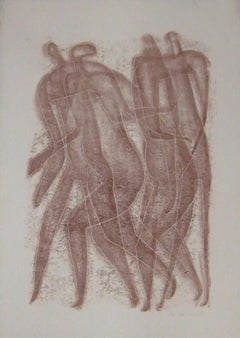
Trois femmes
Located in Belgrade, MT
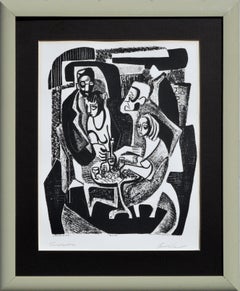
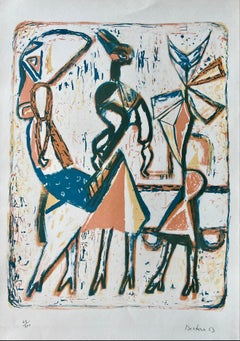
Walter Becker was born in 1893 in Essen, Ruhr, Germany. Considered an important graphic artist of the "lost generation", Becker is well known for his depictions of figures and portraits in a style that combined elements of German Expressionism, Dada, and French modernism. He worked in a variety of print media, including color lincut, lithography, woodcut and etching. After a short military service, Becker studied under the German Sculptor Karl Albiker at the Dresden Academy of Fine Arts. He moved to southern France where he lived and worked from 1924-1935, and was in contact with George Braque, Thomas...
Category

Mid-20th Century Expressionist Abstract Prints

Materials

Lithograph

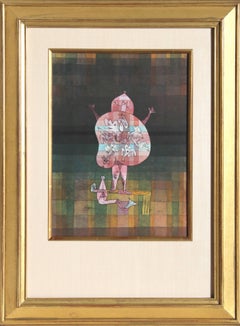
Bauchredner und Rufer im Moor, Cubist Pochoir Print on Rice Paper by Paul Klee
Located in Long Island City, NY
Artist: Paul Klee, After, Swiss (1879 - 1940) Title: Bauchredner und Rufer im Moor (Ventiloque criant dans le marais) Year: 1964 after 1920 Drawing Medium: Pochoir on Rice Paper, Sig...
Category

1960s Expressionist Abstract Prints

Materials

Rice Paper, Stencil

Shusaku Arakawa Japanese Artist 1977 original vintage poster lithograph print
Located in Miami, FL
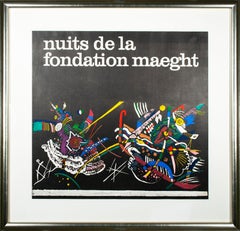
Shusaku Arakawa (Japan, 1936-2010) 'Galerie Maeght', 1977 Original poster from exhibition of 1977 lithograph on paper 23.7 x 17.8 in. (60 x 45 cm.) Unframed Ref: ARA100-201 Shusaku ...
Category

1970s Expressionist Abstract Prints

Materials

Lithograph

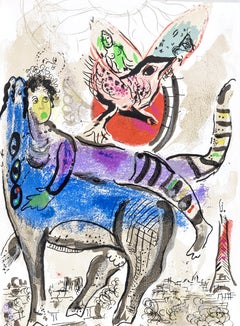
Marc Chagall, The Blue Cow, from XXe Siecle, 1967
Located in Southampton, NY
This exquisite lithograph by Marc Chagall (1887–1985), titled La Vache Bleue (The Blue Cow), from the album XXe Siecle, Nouvelle serie, XXIXe Annee No. 29, Decembre 1967, Panorama 70...
Category

1960s Expressionist Abstract Prints

Materials

Lithograph

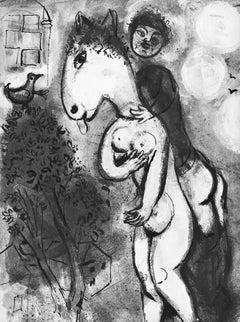
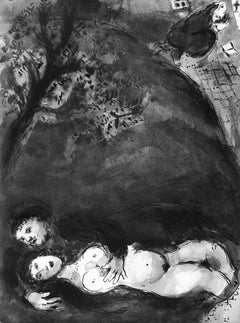
Marc Chagall, The Lovers Beneath the Tree, from Tales of Boccaccio, 1950
Located in Southampton, NY
This exquisite lithograph by Marc Chagall (1887–1985), titled Les Amants sous l’arbre (The Lovers Beneath the Tree), from Contes de Boccace, peintures du manuscrit des ducs de Bourgo...
Category

1950s Expressionist Abstract Prints

Materials

Lithograph

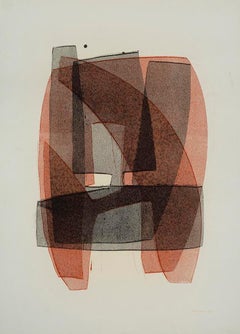
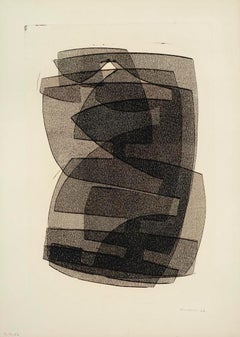
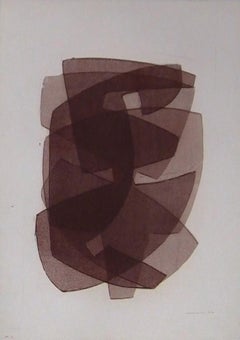
Estate No. 082024
Located in New Orleans, LA
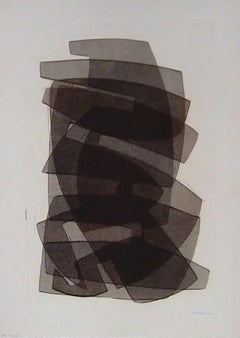
Otto Neumann (1895-1975) was an expressionist painter and printmaker born in Heidelberg, Germany. He was one of the most versatile and original artists of the twentieth century. Neum...
Category

1960s Expressionist Abstract Prints

Materials

Monotype

Air France Europe original vintage travel poster
Located in Spokane, WA
Original AIR FRANCE EUROPE, Editions Perceval, artist: Jacques Nathan Garamond. Professional acid-free archival linen backed vintage travel post...
Category

1960s Expressionist Abstract Prints

Materials

Lithograph

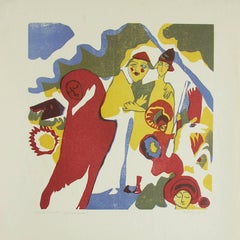
Allerheiligen- All Saints Day.
Located in New York, NY
KANDINSKY, Wassily. Allerheiligen- All Saints Day. Original three-color woodcut (red, yellow ochre, blue – with olive green). 1911. Signed with the monogram...
Category

1910s Expressionist Abstract Prints

Materials

Woodcut

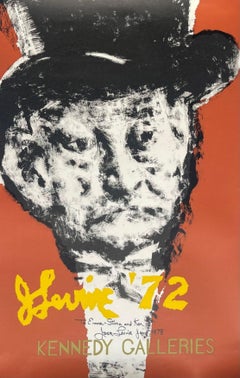
Vintage 1970s Kennedy Galleries poster, Hand signed warmly inscribed by artist
Located in New York, NY
Jack Levine Vintage 1970s Kennedy Galleries poster (Hand signed and warmly inscribed), 1972 Offset lithograph poster (Signed, dated and inscribed in black marker by Jack Levine) Sign...
Category

1970s Expressionist Abstract Prints

Materials

Lithograph, Offset

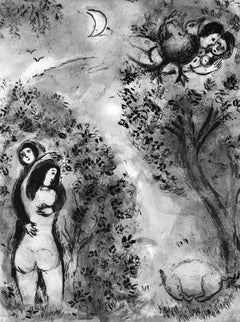
Marc Chagall, The Lovers under the Moon, from Tales of Boccaccio, 1950
Located in Southampton, NY
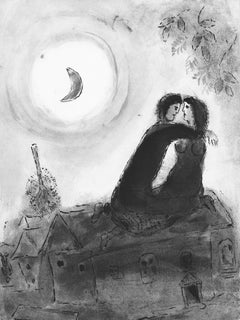
This exquisite lithograph by Marc Chagall (1887–1985), titled Les Amoureux sous la Lune (The Lovers under the Moon), from Contes de Boccace, peintures du manuscrit des ducs de Bourgogne, Bibliotheque de l'Arsenal (Ms. no. 5193) (Tales of Boccaccio, Paintings from the Manuscript of the Dukes of Burgundy, Library of the Arsenal), Lavis de Marc Chagall, from Verve, Revue Artistique et Litteraire, Vol. VI, No. 24, originates from the 1950 issue published by Editions de la revue Verve, Paris, under the direction of Teriade, Editeur, Paris, and printed by Draeger Freres, Maitres-Imprimeurs, Paris, 1950. This tender and poetic composition exemplifies Chagall’s lifelong fascination with love, dream, and transcendence. Les Amoureux sous la Lune radiates intimacy and serenity, its nocturnal palette and floating forms capturing the timeless romance between lovers united under the moon’s luminous gaze. Executed as a lithograph on velin du Marais paper, this work measures 14 x 10.5 inches. Unsigned and unnumbered as issued. The edition exemplifies the exquisite craftsmanship of the Draeger Freres atelier, celebrated for its precision and tonal richness in printing fine artworks. Artwork Details: Artist: Marc Chagall (1887–1985) Title: Les Amoureux sous la Lune (The Lovers under the Moon), from Contes de Boccace (Tales of Boccaccio), Verve, Revue Artistique et Litteraire, Vol. VI, No. 24, 1950 Medium: Lithograph on velin du Marais paper Dimensions: 14 x 10.5 inches Inscription: Unsigned and unnumbered as issued Date: 1950 Publisher: Editions de la revue Verve, Paris, under the direction of Teriade, Editeur, Paris Printer: Draeger Freres, Maitres-Imprimeurs, Paris Condition: Well preserved, consistent with age and medium Provenance: From Verve, Revue Artistique et Litteraire, Vol. VI, No. 24, published by Editions de la revue Verve, Paris, 1950 Notes: Excerpted from the album (translated from French), This Verve issue contains the lavis that Marc Chagall composed to illustrate Tales of Boccaccio's Decameron and the paintings on the same theme of the Manuscript of the Dukes of Burgundy preserved in the Arsenal Library. Marc Chagall executed the cover of this work which was completed printing on April 20, 1950 on the presses of Maitres-Imprimeurs, the Draeger Freres. About the Publication: This 1950 issue of Verve, Revue Artistique et Litteraire, titled Contes de Boccace (Tales of Boccaccio), was devoted to the great Italian humanist Giovanni Boccaccio and illuminated manuscripts from the 15th century, interpreted and revived through the eyes of modern artists. Under the artistic direction of Teriade, Marc Chagall contributed a series of lyrical paintings and lavis that reimagined these Renaissance themes with his signature dreamlike color, tenderness, and spiritual symbolism. The issue juxtaposed Chagall’s contemporary vision with the rich heritage of medieval illumination, bridging centuries of artistic imagination. Printed by the master craftsmen of Draeger Freres, the publication stands as a testament to Verve’s tradition of uniting art, literature, and history in one luxurious volume that celebrates the continuity of human creativity from the Middle Ages to modernity. About the Artist: Marc Chagall (1887–1985) was a Belarus-born French painter, printmaker, and designer whose visionary imagination, radiant color, and deeply poetic symbolism made him one of the most beloved and influential artists of the 20th century. Rooted in the imagery of his Jewish heritage and the memories of his childhood in Vitebsk, Chagall’s art wove together themes of faith, love, folklore, and fantasy with a dreamlike modern sensibility. His unique style—merging elements of Cubism, Fauvism, Expressionism, and Surrealism—defied categorization, transforming ordinary scenes into lyrical meditations on memory and emotion. Influenced by Russian icon painting, medieval religious art, and the modern innovations of artists such as Pablo Picasso, Henri Matisse, and Georges Braque, Chagall developed a profoundly personal visual language filled with floating figures, vibrant animals, musicians, and lovers that symbolized the transcendent power of imagination and love. During his early years in Paris, he became an integral part of the Ecole de Paris circle, forming friendships with Amedeo Modigliani, Fernand Leger, and Sonia Delaunay, and his creative spirit resonated with that of his peers and successors—Alexander Calder, Alberto Giacometti, Salvador Dali, Joan Miro, Wassily Kandinsky, Marcel Duchamp, and Man Ray—artists who, like Chagall, sought to push the boundaries of perception, emotion, and form. Over a prolific career that spanned painting, printmaking, stained glass, ceramics, and stage design, Chagall brought an unparalleled poetic sensibility to modern art, infusing even the most abstract subjects with human warmth and spiritual depth. His works are held in the most prestigious museums around the world, including the Museum of Modern Art, the Centre Pompidou, the Tate, and the Guggenheim, where they continue to inspire generations of artists and collectors. The highest price ever paid for a Marc Chagall artwork is approximately $28.5 million USD, achieved in 2017 at Sotheby’s New York for Les Amoureux (1928). Marc Chagall Les...
Category

1950s Expressionist Abstract Prints

Materials

Lithograph

Marc Chagall, The Evening Angel, from Tales of Boccaccio, 1950
Located in Southampton, NY
This exquisite lithograph by Marc Chagall (1887–1985), titled L’Ange du soir (The Evening Angel), from Contes de Boccace, peintures du manuscrit des ducs de Bourgogne, Bibliotheque d...
Category

1950s Expressionist Abstract Prints

Materials

Lithograph

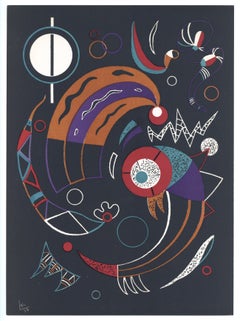
"Comets" original lithograph
Located in Henderson, NV
Medium: original lithograph. Printed in 1938 and published in Paris by Teriade for the art revue Verve (volume 1, number 2). Kandinsky was invited to contribute an original compositi...
Category

1930s Expressionist Abstract Prints

Materials

Lithograph

Nick s Coffee House in the Village - Rare Edition 1970s Modern Figurative Print
Located in Soquel, CA
This bold screen print depicts a scene from the 1950s, set in a jazz coffee house in Greenwich Village called Nick's, which Simon patronized while in high school. The original stone ...
Category

Late 20th Century Expressionist Abstract Prints

Materials

Archival Paper, Screen

Plate 12
Located in Fairlawn, OH
Plate 12 From: 10 Origi, 1942 Signed in the block with the artist's initials lower left (printed) From: 10 Origin Not from the First edition 100, published by Allianz-Verlag, Zurich,...
Category

1970s Expressionist Abstract Prints

Materials

Woodcut

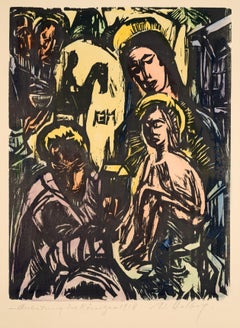
Adoration of the Magi / - The Rider of the Sun -
Located in Berlin, DE
Walter Helbig (1878 Falkenstein - 1968 Ascona), Adoration of the Magi, 1918. Hand-colored linocut, 30 cm x 22.5 cm (depiction), 50 cm x 35 cm (sheet size), signed “W.[alter] Helbig” in pencil lower right, inscribed “Adoration of the Magi” lower left and dated “1918”. Below this a handwritten dedication “with heartfelt Christmas greetings”. - Paper somewhat darkened and with slight creases, thumbtack holes in the corners - The Rider of the Sun - The 'apocalypse' of World War I brought about a return to sacred art. Walter Helbig belonged to the circle of the 'Brücke' and the 'Blauer Reiter'. With his reinterpretation of religious themes in an expressionist formal language, Helbig shaped an avant-garde neo-sacred art. This is symbolically expressed in the silhouette of the rider against the sun-like yellow background. It refers to the awakening initiated by the Blue Riding, which is now linked back to the sacred. The rider and horse "look" at Mary and the Christ Child, who occupy the entire field. Opposite them are the three kings, the eldest of whom kneels before Christ and offers him a gold-filled casket. The expressionist lines give rise to a tower that rises into the "sun", so that the gift has become a Gothic church, expressing the hope that the fallen world will be resurrected in the name of Christ. This dimension of meaning is emphasized by the magical effect of the color scheme. About the artist In 1895, Walter Helbig began studying at the Dresden Academy of Art, where he became friends with the future Brücke artist Otto Müller, with whom he lived in Dresden from 1903 to 1905. While studying in Italy from 1897 to 1899, he met Arnold Böcklin and Adolf von Hildebrand. After completing his studies, he first worked for Otto Gussmann, painting churches. From 1905 to 1909 he worked as a freelance painter in Hamburg. In 1909, through the mediation of Otto Müller, Helbig made the acquaintance of artists from the 'Brücke'. In 1910 he exhibited at the founding exhibition of the Berlin 'Neue Sezession'. In the same year, he moved to Switzerland, where, together with Hans Arp and Oscar Lüthy, he founded the 'Moderne Bund' in Weggis, to which Cuno Amiet and Giovanni Giacometti also belonged. At the second exhibition of the 'Moderne Bund' in Zurich in 1911, Henri Matisse and Robert Delaunay were represented alongside artists from the 'Blauer Reiter'. In 1913, Helbig traveled to Paris with Arp and Lüthy. After the dissolution of the 'Moderne Bund', Helbig was represented at the first Dada exhibition in Zurich in 1914. In 1919, he joined the Berlin 'Novembergruppe'. After the devastation of World War I, Helbig turned increasingly to religious themes in his work. In 1924, like many other artists of his time, he moved to Ascona for financial reasons, where he became a naturalized citizen in 1938. There he founded the artists' association "The Great Bear", to which Marianne von Werefkin...
Category

1910s Expressionist Abstract Prints

Materials

Paper

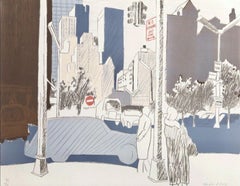
New York City Street Scene (L.18), Fairfield Porter
Located in Fairfield, CT
Artist: Fairfield Porter (1907-1975) Title: Street Scene (L.18) Year: 1969 Medium: Lithograph on Arches paper Edition: 69/100, plus proofs Size: 22.25 x 30 inches Condition: Excellen...
Category

1960s Expressionist Abstract Prints

Materials

Lithograph

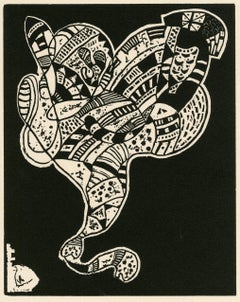
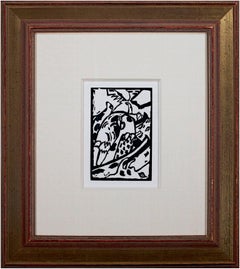
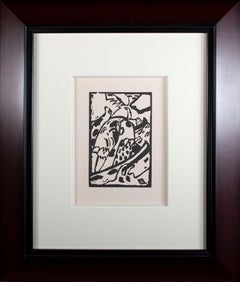
Improvisation 7 original first ed. woodcut from Klänge by Wassily Kandinsky
Located in Milwaukee, WI
The present woodcut print comes from 'Klänge (Sounds),' a book of original graphics and poetry by Wassily Kandinsky. This first edition was released in an edition of 300, each book signed and numbered by the artist. The title of the album and this particular print, 'Improvisation,' demonstrated Kandinsky's interest in music and how abstract musical forms could be translated into images on a two-dimensional surface. This particular composition is difficult to read, but through the abstraction, one can make out various figures and a landscape beyond. 7.5 x 5 inches, image 22 x 19.5 inches, frame Woodcut in black ink on laid paper (watermark Van Gelder Zonen) Signed with encircled 'K' in the block, lower right Framed to conservation standards using 100 percent acid free archival materials including silk-lined matting with 1/4 inch bevel, museum glass, and a gold-gilded moulding Ref. Roethel 124 The Museum of Modern Art described 'Klänge (Sounds)' as follows: Vasily Kandinsky's self-described "musical album," Klänge (Sounds), consists of thirty-eight prose-poems he wrote between 1909 and 1911 and fifty-six woodcuts he began in 1907. In the woodcuts Kandinsky veiled his subject matter, creating increasingly indecipherable images (though the horse and rider, his symbol for overcoming objective representation, runs through as a leitmotif). This process proved crucial for the development of abstraction in his art. Kandinsky said his choice of media sprang from an "inner necessity" for expression: the woodcuts were not merely illustrative, nor were the poems purely verbal descriptions. Kandinsky sought a synthesis of the arts, in which meaning was created through the interaction of, and space between, text and image, sound and meaning, mark and blank space. The experimental typography shows his interest in the physical aspects of the book. Klänge is one of three major publications by Kandinsky that appeared shortly before World War I, alongside Über die Geistige in der Kunst (Concerning the Spiritual in Art) and the Blaue Reiter almanac...
Category

1910s Expressionist Abstract Prints

Materials

Woodcut

Estate No. 044059
Located in New Orleans, LA
Signed and dated "55" in pencil. Otto Neumann (1895-1975) was a German Expressionist painter and printmaker. His monotypes evolved from sharp, angular, black and whites to late abst...
Category

1950s Expressionist Abstract Prints

Materials

Monotype

Estate No. 044021
Located in New Orleans, LA
Signed and dated "52" in pencil Otto Neumann (1895-1975) was a German Expressionist painter and printmaker. His monotypes evolved from sharp, angular, black and whites to late abst...
Category

1960s Expressionist Abstract Prints

Materials

Monotype

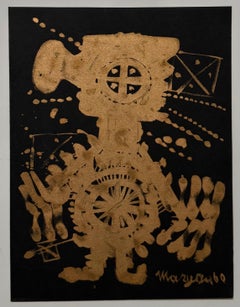
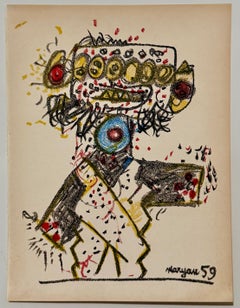
Polish French Figurative Abstract Art Brut Expressionist Lithograph Maryan
Located in Surfside, FL
Pinchas Burstein, known as Maryan Lithograph (after the drawing). 1960 Dimensions: 12 3/8 x 9 3/8 inches (315 x 240mm). Gold or bronze ink on black paper Signed in the plate, not b...
Category

1960s Expressionist Abstract Prints

Materials

Paper, Lithograph

Marc Chagall, The Lovers in the Tree, from Tales of Boccaccio, 1950
Located in Southampton, NY
This exquisite lithograph by Marc Chagall (1887–1985), titled Les Amants dans l’arbre (The Lovers in the Tree), from Contes de Boccace, peintures du manuscrit des ducs de Bourgogne, ...
Category

1950s Expressionist Abstract Prints

Materials

Lithograph

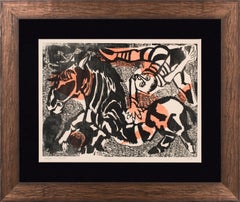
Bernard Lorjou "Pirouette au Galop" 1978 Expressionist Woodcut, Signed, H.C. Edn
Located in Miami, FL
BERNARD LORJOU – "PIROUETTE AU GALOP" ⚜ Woodcut ⚜ Hand Signed Lower Left ⚜ Numbered H.C. from the Edition of 80 ⚜ Conservation Frame ENERGY AND DRAMA FROM “LE CIRQUE” Created in 197...
Category

1970s Expressionist Abstract Prints

Materials

Woodcut

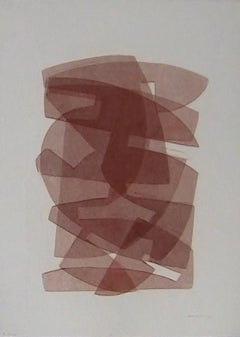
Estate No. 091013
Located in New Orleans, LA
Otto Neumann (1895-1975) was a German Expressionist painter and printmaker. His monotypes evolved from sharp, angular, black and whites to late abstract p...
Category

1960s Expressionist Abstract Prints

Materials

Monotype

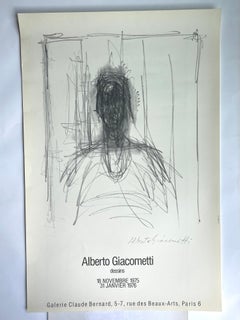
Alberto Giacometti, rare vintage original poster
Located in Saint Ouen, FR
Rare vintage original poster published by the famous Paris Gallery Claude Bernard pour an historic exhibition of Jean Dubuffet in the sixties (1964) a...
Category

1960s Expressionist Abstract Prints

Materials

Paper

Ghosts of Philadelphia 2
Located in Brooklyn, NY
Monotype Dramatic imagery from Tom Bennett’s series of black and white monotypes, blending surrealistic mindscapes with stark realism About Tom Bennett: With quick brushstrokes, Tom...
Category

2010s Expressionist Abstract Prints

Materials

Monotype, Archival Ink

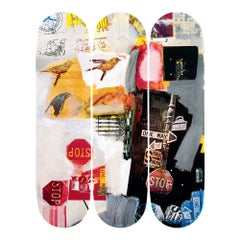
Robert Rauschenberg - OVERDRIVE. Limited Skate Deck Modern Design Pop American
Located in Madrid, Madrid
Robert Rauschenberg - OVERDRIVE Date of creation: 2017 Medium: Digital print on Canadian maple wood Edition: 300 Size: 80 x 20 cm (each skate) Condition: In mint conditions and never...
Category

2010s Expressionist Abstract Prints

Materials

Wood, Maple, Screen

UNTITLED (from the ARTSOUNDS Collection)
Located in New York, NY
YURA ADAMS Untitled (from the Artsounds Collection), 1986 color offset print, ed. 200 12 x 12 cm. 30.5 x 30.5 cm. Edition 49/100 signed and numbered in pencil by the artist on ver...
Category

1980s Expressionist Abstract Prints

Materials

Offset

Estate No. 082126
Located in New Orleans, LA
Otto Neumann (1895-1975) was an expressionist painter and printmaker born in Heidelberg, Germany. He was one of the most versatile and original artists of...
Category

1960s Expressionist Abstract Prints

Materials

Monotype

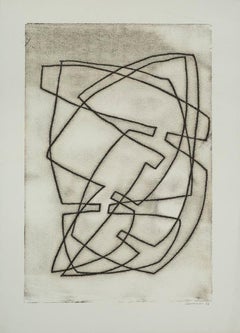
Estate No. 082031
Located in New Orleans, LA
Otto Neumann (1895-1975) was a German Expressionist painter and printmaker. His monotypes evolved from sharp, angular, black and whites to late abstract prints in a variety of colors. Neumann lived through revolutionary changes in the art world of prewar and postwar Germany. He was a prolific artist in Germany during a time of the country’s unprecedented academic and intellectual growth. His early work shows the influence of both French masters like Cezanne and the contemporary style that was then being developed by German Expressionists like Kirchner. A master printmaker, Neumann was also inspired by the works of Albrecht Durer, whose allegorical subject-matter and unmatched drawing technique Neumann would emulate throughout his career. A lifetime preoccupation with the human figure informs his work, with frieze-like human figures recalling ancient Greek art...
Category

1960s Expressionist Abstract Prints

Materials

Monotype

Estate No. 091014
Located in New Orleans, LA
Otto Neumann (1895-1975) was an expressionist painter and printmaker born in Heidelberg, Germany. He was one of the most versatile and original artists of...
Category

1970s Expressionist Abstract Prints

Materials

Monotype

Estate No. 054047
Located in New Orleans, LA
Otto Neumann (1895-1975) was a German Expressionist painter and printmaker. His monotypes evolved from sharp, angular, black and whites to late abstract prints in a variety of colors. Neumann lived through revolutionary changes in the art world of prewar and postwar Germany. He was a prolific artist in Germany during a time of the country’s unprecedented academic and intellectual growth. His early work shows the influence of both French masters like Cezanne and the contemporary style that was then being developed by German Expressionists like Kirchner. A master printmaker, Neumann was also inspired by the works of Albrecht Durer, whose allegorical subject-matter and unmatched drawing technique Neumann would emulate throughout his career. A lifetime preoccupation with the human figure informs his work, with frieze-like human figures recalling ancient Greek art...
Category

1960s Expressionist Abstract Prints

Materials

Monotype

Marc Chagall, Homage to Georges Braque, from Derriere le Miroir, 1964
Located in Southampton, NY
This exquisite lithograph by Marc Chagall (1887–1985), titled Hommage a Georges Braque (Homage to Georges Braque), originates from the 1964 folio Derriere le Miroir, Nos. 144–145–146, L’Hommage a Georges Braque (Tribute to Georges Braque). Published by Maeght Editeur, Paris, under the direction of Aime Maeght, and printed by Mourlot Freres, Paris, this luminous composition stands as Chagall’s poetic tribute to his friend and contemporary Georges Braque, “Neither the sun nor the brilliance of the moon can calm today this strange sadness. Something close has gone, though his life was distant. And there is nothing with which this life can be compared. And from this departure there arise feelings inexpressible, like his colors which spoke but not to everyone. I have seen his plastic world so far from the worries of the day and his personality beyond this world. That is what he called “reality.” How true he was, and how troubling that is! Perhaps if we enter into the grandeur of certain French paintings — La Poix d’Avignon, a still life by Chardin, or The Embarkation for Cythera by Watteau — then the dream of Braque will seem clearer to us. And our path will become clearer too.” In Hommage a Georges Braque, Chagall fuses symbolic imagery to evoke themes of flight, harmony, and spiritual transcendence, celebrating Braque’s lifelong devotion to art and transformation. The composition reflects Chagall’s unique synthesis of emotion and imagination, merging the visionary with the intimate. Executed on velin paper, this lithograph measures 15 x 22 inches (38.1 x 55.9 cm), with centerfold, as issued. Signed in the plate and unnumbered, as issued. The edition exemplifies Chagall’s lyrical command of color and form within the refined graphic artistry of Derriere le Miroir. Artwork Details: Artist: Marc Chagall (1887–1985) Title: Hommage a Georges Braque (Homage to Georges Braque), from Derriere le Miroir, Nos. 144–145–146, L’Hommage a Georges Braque (Tribute to Georges Braque), 1964 Medium: Lithograph on velin paper Dimensions: 15 x 22 inches (38.1 x 55.9 cm), with centerfold, as issued Inscription: Signed in the plate and unnumbered, as issued Date: 1964 Publisher: Maeght Editeur, Paris Printer: Mourlot Freres, Paris Condition: Well preserved, consistent with age and medium Provenance: From the 1964 folio Derriere le Miroir, Nos. 144–145–146, published by Maeght Editeur, Paris Notes: Excerpted from the folio (translated from French): Taken from this special issue of “Behind the Mirror,” CCCL examples on velin de Rives were numbered, constituting the original edition of L’Hommage a Georges Braque. These deluxe examples also included an etching based on Trois oiseaux sur fond violet. The lithographs for this issue were printed in the ateliers of Maeght Editeur, Levallois. The text was printed by Fequet et Baudier, typographers. Finished printing May 13, 1964. About the Publication: Derriere le Miroir (translated as "Behind the Mirror") was an iconic French art periodical published from 1946 to 1982 by Maeght Editeur, one of the most influential art publishers of the 20th century. Founded by Aime Maeght in Paris, the publication was conceived as a visual and literary collaboration between leading modern artists, poets, and critics. Each issue functioned as both an exhibition catalogue and a work of art in itself—featuring original lithographs printed directly from the artists' stones or plates, alongside essays, poems, and critical commentary. Over the course of 36 years, Derriere le Miroir produced more than 250 issues and showcased an extraordinary roster of artists including Henri Matisse, Marc Chagall, Joan Miro, Georges Braque, Alexander Calder, Fernand Leger, Pierre Bonnard, Alberto Giacometti, Eduardo Chillida, Ellsworth Kelly, Francis Bacon, Paul Rebeyrolle, Claude Garache, Antoni Tapies, Bram van Velde, Pierre Alechinsky, Pol Bury, Shusaku Arakawa, and Gerard Titus-Carmel. Printed in the ateliers of Mourlot, Arte, and Imprimerie Moderne du Lion, the periodical set new standards for quality in color lithography, combining fine art printing with elegant typography and poetic text. Beyond its visual brilliance, Derriere le Miroir also became a cultural chronicle of postwar European modernism. Each issue coincided with exhibitions held at Galerie Maeght, providing a collectible and widely accessible record of groundbreaking shows. Its integration of image, text, and philosophy created a dialogue between art and literature that elevated the modern art book to new aesthetic heights. Today, Derriere le Miroir remains one of the most sought-after and historically significant art publications, prized by collectors and scholars alike for its craftsmanship, influence, and its role in defining the visual language of 20th-century modernism. The Maeght Foundation in Saint-Paul-de-Vence continues to honor this legacy through exhibitions and archival preservation of the series, affirming Derriere le Miroir's enduring place in the history of modern art and fine art publishing. About the Artist: Marc Chagall (1887–1985) was a Belarus-born French painter, printmaker, and designer whose visionary use of color and poetic symbolism made him one of the most beloved and influential artists of the 20th century. Rooted in the rich imagery of his Jewish heritage and childhood in Vitebsk, Chagall’s dreamlike compositions fused memory, folklore, faith, and romance with the expressive innovations of modern art. His work evolved alongside and in dialogue with the great modern masters—Pablo Picasso, Henri Matisse, Alexander Calder, Salvador Dali, Joan Miro, Georges Braque, Wassily Kandinsky, Marcel Duchamp, and Man Ray—artists who, like Chagall, redefined artistic language for a new century. Spanning painting, printmaking, stained glass, ceramics, stage design, and illustration, Chagall’s career reflected both his deep spirituality and his boundless imagination. His works are held in major museum collections worldwide, including the Museum of Modern Art, the Guggenheim, the Tate, and the Centre Pompidou. The highest price ever paid for a Marc Chagall artwork is approximately $28.5 million USD, achieved in 2017 at Sotheby’s New York for Les Amoureux (1928). Marc Chagall Hommage a Georges Braque, Chagall Derriere le Miroir, Chagall Maeght Editeur Paris, Chagall Mourlot Freres, Chagall 1964...
Category

1960s Expressionist Abstract Prints

Materials

Lithograph

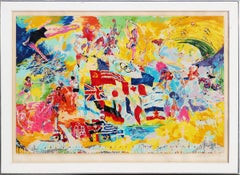
"Montreal Olympics 1976" Colorful Abstract Expressionist Figurative Lithograph
Located in Houston, TX
Colorful abstract expressionist lithograph celebrating the 1976 Olympics in Montreal Canada by American artist LeRoy Neiman. The work f...
Category

1970s Expressionist Abstract Prints

Materials

Lithograph

Christus, 1961 (Expressionist, Spiritual Theme)
Located in Kansas City, MO
Richard Haizmann Christus, 1961 Woodcut Year: 1987 (printed) Size: 33.66 x 24.01 inches (85.5 × 61 cm) Stamped verso by the Estate, signed "Dr. Wolfgang Wesiack" COA provided *Will ...
Category

1960s Expressionist Abstract Prints

Materials

Woodcut

Marc Chagall, Bouquet for Fernand, from Memories and Portraits of Artists, 1972
Located in Southampton, NY
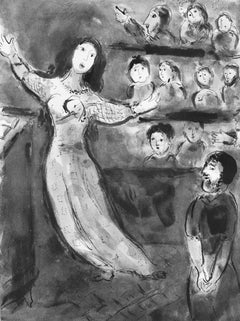
This exquisite lithograph by Marc Chagall (1887–1985), titled Bouquet pour Fernand (Bouquet for Fernand), from the album Souvenirs et Portraits d'Artistes (Memories and Portraits of ...
Category

1970s Expressionist Abstract Prints

Materials

Lithograph

BLACK FACE
Located in Santa Monica, CA
KAREL APPEL (1921 - 2006) BLACK FACE, 1969 Lithograph in colors signed in pencil. Edition 26/75, Image: 19 3/4 x 25 1/4, sheet: 22 x 30 inches. Just hint of a mat line Appel was a member of the Cobra art movement
Category

1960s Expressionist Abstract Prints

Materials

Lithograph

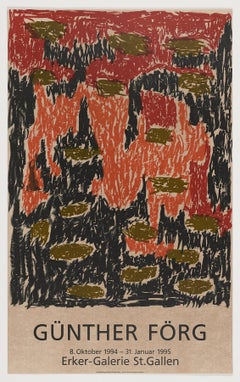
Günther Förg German Artist 1995 Original Poster lithograph
Located in Miami, FL
Günther Förg (Germany, 1952-2013) 'Erker-Gallery', 1995 Original poster from exhibition of 1995 lithograph on paper 36.5 x 22.6 in. (92.7 x 57.4 cm.) Unframed Ref: FOR100-201 Günthe...
Category

1990s Expressionist Abstract Prints

Materials

Lithograph

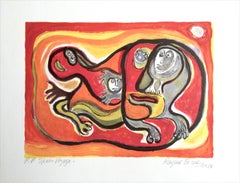
SPACE VOYAGE Signed Lithograph, Abstract Cosmic Creatures, Latin American Artist
Located in Union City, NJ
SPACE VOYAGE is an original hand drawn lithograph by the Latin American Woman artist Raquel Forner(1902–1988) , paper size - 13 1/4 x 15 1/4 in., image size - 8 1/2 x 11 3/4 in. pri...
Category

1980s Expressionist Abstract Prints

Materials

Lithograph

Spoleto- 14 Giugno, 1974
Located in Brooklyn, NY
Sku: AW1177 Artist: Willem de Kooning Title: Spoleto-14 Giugno Year: 1974 Signed: No Medium: Offset Lithograph Paper Size: 41.25 x 29.5 inches ( 104.775 x 74.93 cm ) Image Size: 41.2...
Category

1970s Expressionist Abstract Prints

Materials

Offset

Spoleto- 14 Giugno, 1974
$280 Sale Price
20% Off
Summer Rain
Located in San Francisco, CA
This artwork titled "Summer Rain" c.1990, is an original colors etching on Wove paper by noted American artist Ruth Leaf, 1923-2015. It is hand signed, titled and inscribed Artist Pr...
Category

Late 20th Century Expressionist Abstract Prints

Materials

Etching

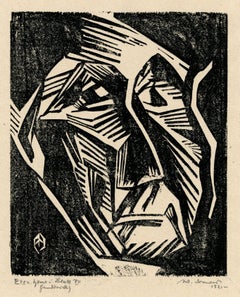
Ecce Homo VII
Located in Fairlawn, OH
Ecce Homo VII Woodcut, 1921 Signed, titled, and dated in pencil by the artist One of only three known impressions Created while the artist was studying at the Bauhaus in Weimar, Germany. Extreme rarity-One of three know impressions Note: In 1921 Drewes went to the Bauhaus in Weimar, where, after completing the compulsory preliminary course with Johannes Itten, he continued to study with Paul Klee, Oskar Schlemmer and Georg Muche and initially went to the wall painting workshop. He then traveled extensively through Europe, North America and Asia. After returning to Germany in 1927, he went back to the Bauhaus, this time to his new location in Dessau, where he studied in the classes of László Moholy-Nagy and Wassily Kandinsky. He was one of the first artists to introduce the groundbreaking concepts of the Bauhaus School in the United States through his painting, printmaking, and teaching. Condition: Excellent Missing small voids in the upper margin from removal of the original hinges. Image size: 9 7/8 x 8 3/16 inches Reference: Rose 30 Provenance: From the estate of Drewes's teacher at the Bauhaus. During the pasot WW2 the professor lived in East Germany. WERNER DREWES 1899-1985 Werner Drewes initially studied architecture before enrolling, in 1921-22, at the Bauhaus in Weimar under Klee, Kandinsky, Itten and Feininger. For four years - 1923 to 1927 - he travelled the world with his bride, before completing his Bauhaus training in Dessau in 1929. He immigrated to the United States in 1930, documenting that move to New York through series of woodcuts. In 1936/37 he was an active founder of the American Abstract Artists and participated in the Federal Arts Project in New York before moving on to a teaching career at Washington University in St. Louis. As an artist for over sixty five years, he employed various media from drawing and watercolor, through woodcut and etching, to painting and collage. Translating an early interest in subjective cubistic forms, his work evolved into nonobjective abstraction. He was creative until the day of his death. Courtesy: Toby C. Moss Werner Drewes (1899–1985) was a painter, printmaker, and art teacher. Considered to be one of the founding fathers of American abstraction, he was one of the first artists to introduce concepts of the Bauhaus school within the United States. His mature style encompassed both nonobjective and figurative work and the emotional content of this work was consistently more expressive than formal. Drewes was as highly regarded for his printmaking as for his painting. In his role as teacher as well as artist he was largely responsible for bringing the Bauhaus aesthetic to America. Early life and education Drewes was born in 1899 to Georg Drewes, a Lutheran pastor, and Martha Schaefer Drewes. The family lived in the village of Canig within Lower Lusatia, Germany. From age eight to eighteen he attended the Saldria Gymnasium, a boarding school in Brandenburg an der Havel. There, he showed talent both for painting and woodblock printing. Graduating from Saldria in 1917, he was drafted by the German army and served in France from then until the close of the war. About this period of his life he is reported to have said that the horrors of life at the front were only made tolerable by his sketchbook, a copy of Goethe's Faust and a volume of Nietzsche. For a decade following the close of the war he studied, made paintings and prints, and traveled widely. His friend, Herwarth Walden, helped shape his appreciation for expressionist literature and art. Walden produced the quarterly magazine, Der Sturm and ran a gallery of contemporary art, Galerie Der Sturm, from which, in 1919, Drewes purchased an expressionist painting by William Wauer titled Blutrausch (Bloodlust). In the same year he made the acquaintance of Heinrich Vogeler and participated in Vogeler's socialist utopian artists' commune, Barkenhoff, at Worpswede, Lower Saxony. In 1919 Drewes also enrolled at the Königlich Technischen Hochschule Charlottenburg to study architecture and the following year he studied the same subject at the Technischen Hochschule Stuttgart. Preferring art over architecture, he then enrolled in Stuttgart's school of applied arts (Kunstgewerbeschule) where he studied life drawing and learned to work with colored glass. At this time he joined a group of artists and architects associated with the newly formed Merz Akademie, a college of design, art, and media in Stuttgart. In 1921 his friendship with a French artist, Sébastien Laurent, led him to begin studies in Weimar at Bauhaus, then a new school which taught an integrated approach to the fine and applied arts. His instructors were Johannes Itten and Lyonel Feininger, whose paintings were expressionist and abstract, and Paul Klee, who taught bookbinding, stained glass, and murals. While at Bauhaus Drewes produced a portfolio of ten woodblock prints entitled "Ecce Homo." In 1923 and 1924 he studied art during travels throughout Italy, Spain, the United States, and Central America and in 1926 he traveled to San Francisco, Japan, and Korea, thence taking the Trans-Siberian railway to Manchuria, Moscow, and Warsaw. He later said the El Grecos he saw proved to be most influential in his work. While traveling, he exhibited: (1) etchings in Madrid (1923) and Montevideo (1924), oils and etchings in Buenos Aires and St. Louis (1925), and (3) etchings in San Francisco (1926). He paid his way by the sales these exhibits produced and by taking commissions to paint portraits. While in San Francisco he set up a shop from which he sold prints he had made in Spain and South America. After his return to Germany in 1927 he resumed study at Bauhaus, which had been forced to relocate in Dessau, Saxony-Anhalt. His instructors at that time were László Moholy-Nagy (metal work), Wassily Kandinsky, and (painting), and Lyonel Feininger (prints). At this time he also worked and exhibited in Frankfurt. With the rise of Nazism abstract artists found it increasingly difficult to sell their work and, in 1930, Drewes, finding the political pressure unbearable, emigrated to the United States. There, despite the world economic crisis, Drewes was able to earn a living as a professional artist. Mature style After Drewes moved to New York, Kandinsky, who was both friend and mentor, continued to exert a strong influence over his style. Later in life he said he had a hard time getting away from Kandinsky's influence as he developed his own style. In time he was able to bring a more emotional approach to his work and to base it, more than Kandinsky did, on natural forms. In 1930 Drewes had a solo exhibition at the 135th Street Branch of the New York Public Library and a two-person show at the S.P.R. Penthouse Gallery...
Category

1920s Expressionist Abstract Prints

Materials

Woodcut

Estate No. 082129
Located in New Orleans, LA
Otto Neumann (1895-1975) was a German Expressionist painter and printmaker. His monotypes evolved from sharp, angular, black and whites to late abstract prints in a variety of colors. Neumann lived through revolutionary changes in the art world of prewar and postwar Germany. He was a prolific artist in Germany during a time of the country’s unprecedented academic and intellectual growth. His early work shows the influence of both French masters like Cezanne and the contemporary style that was then being developed by German Expressionists like Kirchner. A master printmaker, Neumann was also inspired by the works of Albrecht Durer, whose allegorical subject-matter and unmatched drawing technique Neumann would emulate throughout his career. A lifetime preoccupation with the human figure informs his work, with frieze-like human figures recalling ancient Greek art...
Category

1960s Expressionist Abstract Prints

Materials

Monotype

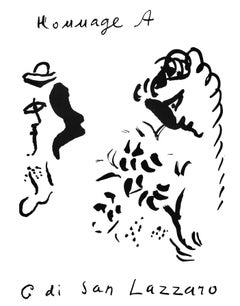
Marc Chagall, Homage to G. di San Lazzaro, from San Lazzaro et ses Amis, 1975
Located in Southampton, NY
This exquisite lithograph by Marc Chagall (1887–1985), titled Hommage a G. di San Lazzaro (Homage to G. di San Lazzaro), from the album San Lazzaro et ses Amis, Hommage au fondateur ...
Category

1970s Expressionist Abstract Prints

Materials

Lithograph

Marc Chagall, The King, from Tales of Boccaccio, 1950
Located in Southampton, NY
This exquisite lithograph by Marc Chagall (1887–1985), titled Le Roi (The King), from Contes de Boccace, peintures du manuscrit des ducs de Bourgogne, Bibliotheque de l'Arsenal (Ms. ...
Category

1950s Expressionist Abstract Prints

Materials

Lithograph

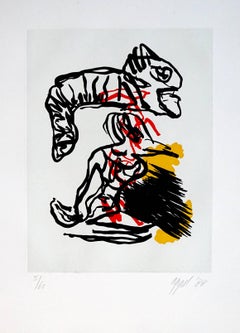
Salto Sobre La Cabeza
Located in Austin, TX
Artist: Karel Appel Title: Salto Sobre La Cabeza Year: 1988 Medium: Etching with aquatint Signed and dated '88, numbered 5/60 in pencil Dimensions: 19.25" x 4.5" Provenance: Gallery ...
Category

1980s Expressionist Abstract Prints

Materials

Etching, Aquatint

Girl Reaching Forward Lithograph by Albert Walker Signed Framed, Artist proof
Located in Plainview, NY
Girl Reaching Forward Lithograph by Albert Walker Signed & Framed, Artist proof : This artist’s proof lithograph, attributed to Albert Walker (American, 1900–1984), was published b...
Category

Mid-20th Century Expressionist Abstract Prints

Materials

Lithograph

La Baie de Trépassés
Located in New York, NY
An excellent impression of this large color aquatint. Numbered in pencil 99/175. Printed by Lacourière, Paris. Published by Vollard, Paris. Catalogue reference: Chapon/Rouault 141; ...
Category

1930s Expressionist Abstract Prints

Materials

Color, Aquatint

Nightfear
Located in Fairlawn, OH
Nightfear Color lithograph, 1958 From: Rhapsodie de ma nuit, (seven plates) Signed, dated and numbered in pecnil lower left (see photos) Edition: E.A. edition of 25, (there were a...
Category

1950s Expressionist Abstract Prints

Materials

Lithograph

German Israeli Expressionist Abstract Bush in Judea Lithograph
Located in Surfside, FL
Anna Ticho (אנה טיכו ) (1894-1980) was a Jewish artist who became famous for her drawings of the Jerusalem hills. Anna Ticho was born in Brno, Moravia, then part of the Austro-Hungarian Empire (today the Czech Republic) in 1894. At the age of 15, she began to study drawing in Vienna in an art school under the directorship of Ernst Nowak...
Category

20th Century Expressionist Abstract Prints

Materials

Lithograph

Marc Chagall, The Man with the Pig, from Tales of Boccaccio, 1950
Located in Southampton, NY
This exquisite lithograph by Marc Chagall (1887–1985), titled L’Homme au cochon (The Man with the Pig), from Contes de Boccace, peintures du manuscrit des ducs de Bourgogne, Biblioth...
Category

1950s Expressionist Abstract Prints

Materials

Lithograph

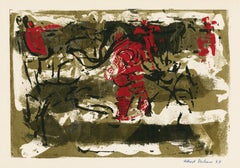
Untitled Abstraction (Figures in Red)
By Albert Urban
Located in Myrtle Beach, SC
Albert Urban, Untitled Abstraction (Figures in Red), color serigraph, 1944. Signed and dated in blue ink. A fine, painterly impression, with fresh, rich colors, on cream wove paper;...
Category

1940s Expressionist Abstract Prints

Materials

Screen

Marc Chagall, The Horse and the Lover, from Tales of Boccaccio, 1950
Located in Southampton, NY
This exquisite lithograph by Marc Chagall (1887–1985), titled Le Cheval et l’Amoureux (The Horse and the Lover), from Contes de Boccace, peintures du manuscrit des ducs de Bourgogne,...
Category

1950s Expressionist Abstract Prints

Materials

Lithograph

Expressionist abstract prints for sale on 1stDibs.

Find a wide variety of authentic Expressionist abstract prints available for sale on 1stDibs. Works in this style were very popular during the 21st Century and Contemporary, but contemporary artists have continued to produce works inspired by this movement. If you’re looking to add abstract prints created in this style to introduce contrast in an otherwise neutral space in your home, the works available on 1stDibs include elements of orange, blue, green, purple and other colors. Many Pop art paintings were created by popular artists on 1stDibs, including Otto Neumann, Karel Appel, Wassily Kandinsky, and Zvi Milshtein. Frequently made by artists working with Lithograph, and Monotype and other materials, all of these pieces for sale are unique and have attracted attention over the years. Not every interior allows for large Expressionist abstract prints, so small editions measuring 4.25 inches across are also available. Prices for abstract prints made by famous or emerging artists can differ depending on medium, time period and other attributes. On 1stDibs, the price for these items starts at $99 and tops out at $25,600, while the average work sells for $1,045.

Recently Viewed

View All