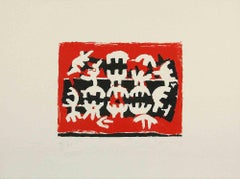
Items Similar to "Six-Day War" (FRAMED) Abstract Lithograph 10" x 13" in (1967) by Zaccaria Zeini
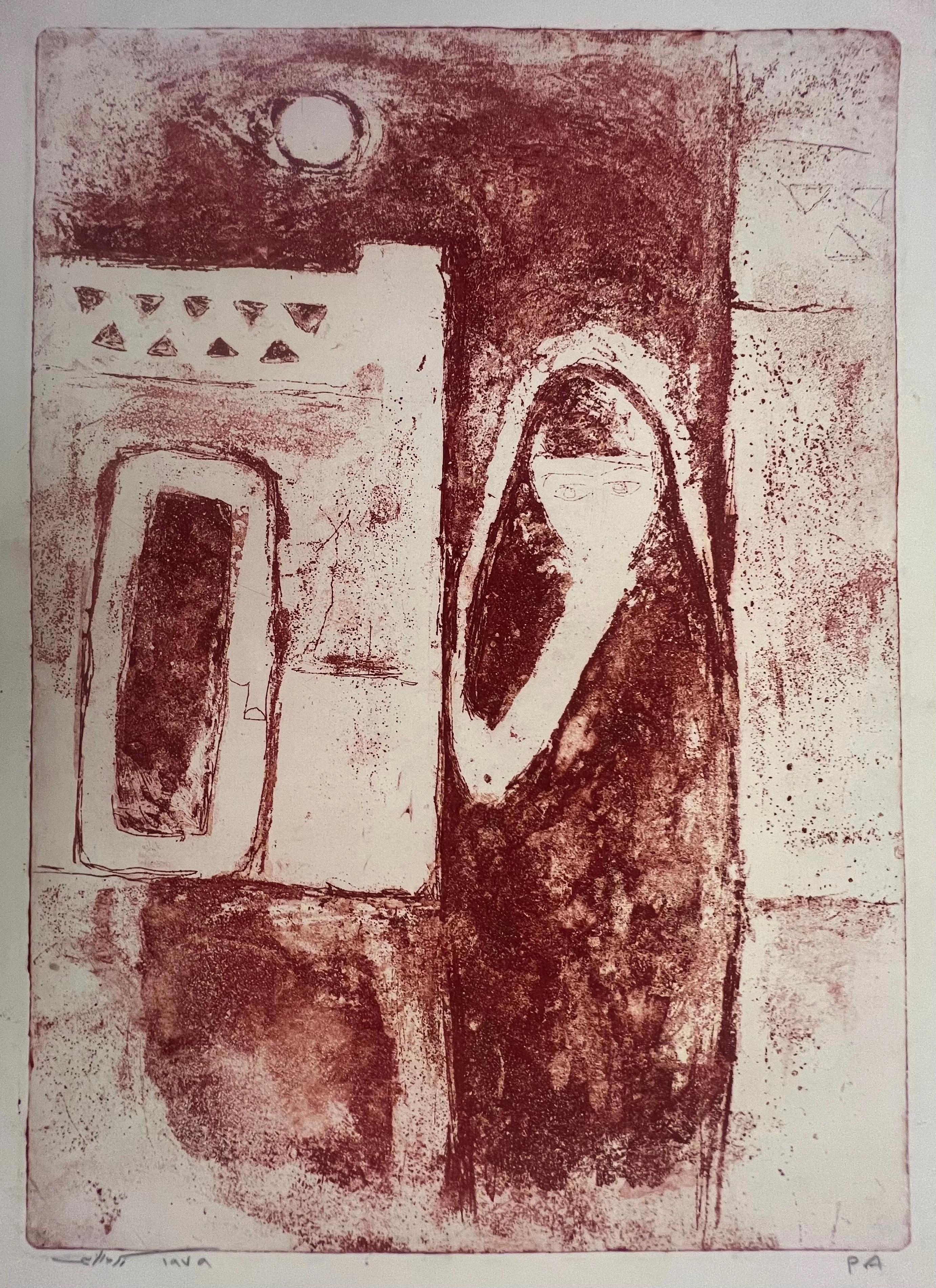
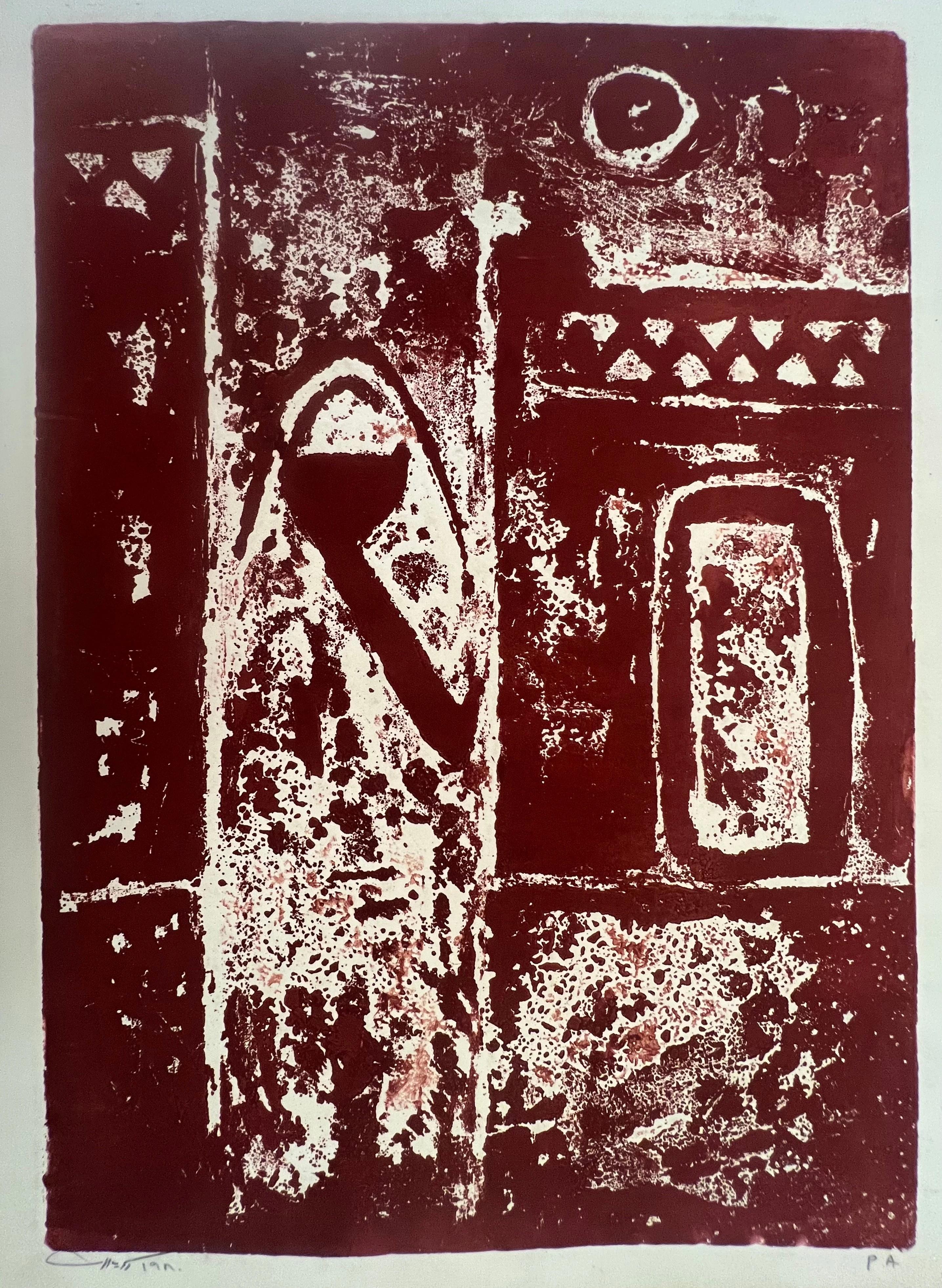
Want more images or videos?
Request additional images or videos from the seller
1 of 5
Zaccaria Zeini"Six-Day War" (FRAMED) Abstract Lithograph 10" x 13" in (1967) by Zaccaria Zeini1967
1967
$9,000
£6,858.17
€7,909.36
CA$12,782.69
A$13,734.29
CHF 7,368.42
MX$161,805.76
About the Item
"Six-Day War" (FRAMED) Abstract Lithograph 10" x 13" in (1967) by Zaccaria Zeini
Medium: lithograph
Signed and dated
Zaccaria El Zeini (1932 - 1993) was raised in the popular district of Sayyida Zienab in Old Cairo and graduated from the Faculty of Fine Arts in the city’s capital, where his graduation project revolved around the birth of the female saint, the namesake of the area where he was born. He was a postwar Modernist who received his formal training in painting in Venice, graduating from the Academy of Pravana, and it was in Italy that he gained his fascination with Greco-Roman architecture, which would develop into a preferred subject in his painting. He later became a professor at his alma mater, the Faculty of Fine Arts, and ended his career as head of its painting department. El Zeini’s oeuvre spans predominantly expressionist and abstract-figurative painting styles, with a strong proclivity towards using different personal symbols in his work and throughout several periods. These symbols connote each of the three wives he had during his life, and he cryptically places these symbols as markers throughout his paintings, whether discreetly or overtly. His formative upbringing in the Sayyida Zeinab district remained one of the most significant influences on his trajectory as an artist, having been exposed to since birth the popular celebrations and festivities surrounding the birth of the granddaughter of the Prophet Muhammed.
The first period was predicated on the quintessentially Egyptian practices and folk rituals and rites of ‘el moulid’ and ‘el zar.’ His work has always been distinguished for portraying the human figure (face and torso) enclosed in a geometric shape of either a square or a rectangle, often in a prominent contrasting color like green or red against backgrounds in predominantly neutral and earthy textured tones. Despite this rigid, enclosed portrayal, the viewer still feels the sympathy that the painter emotes toward these human beings living or oftentimes trapped, in this constrained and confined space in the reductionist form of a house, door, or window. El Zeini used this form of representation as a commentary on the impacts of societal constraints, norms, prejudices, and discrimination. It was through these ‘el moulid’ and ‘el zar’ periods that El Zeini was able to enrich his imagination and that of his audience and find refuge in it, thus transmitting to us his message in a poignant and enduring manner.
In some early works when he concentrated on the plight of the woman, and constantly featured women enclosed by such simplified bars, windows, or doors, in his basic geometric enclosures, in doing so he was criticizing the passivity of women and her role vis-à-vis her society. In his second period, El Zeini devoted himself to the artistic study of the concept of garbage and waste, ‘el zibala.’ El Zeini emphasized the salient topic of waste management on the streets of Cairo, he accomplished this by often dividing the painting in two and depicting abstract forms of detritus, debris, and discarded waste throughout the canvas and on either side of the divide. This period was a thoroughly original artistic undertaking and underscored the artist’s innate predilection for dedicating his art to social themes and with an underlying message that permeated his work, which has remained especially pertinent in today’s world. In his final period, El Zeini focused on the impression of flowers, introducing us to an alternative view of the subject by using geometric design and three-dimensional shapes. El Zeini also left us various examples of impressive lithography, which he became deeply involved with later on towards the end of his career and death, covering the more calming and serene themes of landscapes and flowers.
- Creator:Zaccaria Zeini (1932 - 1993, Egyptian)
- Creation Year:1967
- Dimensions:Height: 10 in (25.4 cm)Width: 13 in (33.02 cm)
- Medium:
- Movement Style:
- Period:
- Condition:
- Gallery Location:Culver City, CA
- Reference Number:1stDibs: LU1085117317722
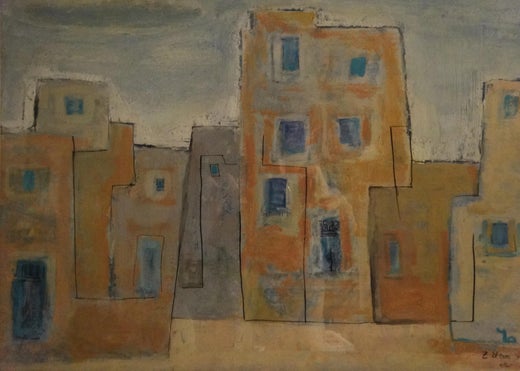
Zaccaria El Zeini (1932 - 1993) was raised in the popular district of Sayyida Zienab in Old Cairo and graduated from the Faculty of Fine Arts in the city’s capital, where his graduation project revolved around the birth of the female saint, the namesake of the area where he was born. He was a postwar Modernist who received his formal training in painting in Venice, graduating from the Academy of Pravana, and it was in Italy that he gained his fascination with Greco-Roman architecture, which would develop into a preferred subject in his painting. He later became a professor at his alma mater, the Faculty of Fine Arts, and ended his career as head of its painting department. El Zeini’s oeuvre spans predominantly expressionist and abstract-figurative painting styles, with a strong proclivity towards using different personal symbols in his work and throughout several periods. These symbols connote each of the three wives he had during his life, and he cryptically places these symbols as markers throughout his paintings, whether discreetly or overtly. His formative upbringing in the Sayyida Zeinab district remained one of the most significant influences on his trajectory as an artist, having been exposed to since birth the popular celebrations and festivities surrounding the birth of the granddaughter of the Prophet Muhammed. The first period was predicated on the quintessentially Egyptian practices and folk rituals and rites of ‘el moulid’ and ‘el zar.’ His work has always been distinguished for portraying the human figure (face and torso) enclosed in a geometric shape of either a square or a rectangle, often in a prominent contrasting color like green or red against backgrounds in predominantly neutral and earthy textured tones. Despite this rigid, enclosed portrayal, the viewer still feels the sympathy that the painter emotes toward these human beings living or oftentimes trapped, in this constrained and confined space in the reductionist form of a house, door, or window. El Zeini used this form of representation as a commentary on the impacts of societal constraints, norms, prejudices, and discrimination. It was through these ‘el moulid’ and ‘el zar’ periods that El Zeini was able to enrich his imagination and that of his audience and find refuge in it, thus transmitting to us his message in a poignant and enduring manner. In some early works when he concentrated on the plight of the woman, and constantly featured women enclosed by such simplified bars, windows, or doors, in his basic geometric enclosures, in doing so he was criticizing the passivity of women and her role vis-à-vis her society. In his second period, El Zeini devoted himself to the artistic study of the concept of garbage and waste, ‘el zibala.’ El Zeini emphasized the salient topic of waste management on the streets of Cairo, he accomplished this by often dividing the painting in two and depicting abstract forms of detritus, debris, and discarded waste throughout the canvas and on either side of the divide.
About the Seller
4.7
Gold Seller
Premium sellers maintaining a 4.3+ rating and 24-hour response times
Established in 2016
1stDibs seller since 2018
438 sales on 1stDibs
Typical response time: <1 hour
- ShippingRetrieving quote...Shipping from: Cairo, Egypt
- Return Policy
More From This Seller
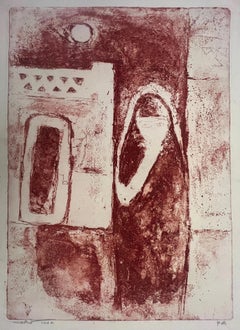
View All"Nubian I" (FRAMED) Abstract Lithograph 20" x 14" in (1979) by Zaccaria Zeini
Located in Culver City, CA
"Nubian I" (FRAMED) Abstract Lithograph 20" x 14" in (1979) by Zaccaria Zeini
Medium: lithograph
Signed and dated
Zaccaria El Zeini (1932 - 1993) was raised in the popular distric...
Category
20th Century Abstract Prints
Materials
Lithograph
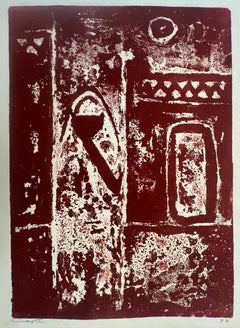
"Nubian II" (FRAMED) Abstract Lithograph 20" x 14" in (1980) by Zaccaria Zeini
Located in Culver City, CA
"Nubian II" (FRAMED) Abstract Lithograph 20" x 14" in (1980) by Zaccaria Zeini
Medium: lithograph
Signed and dated
Zaccaria El Zeini (1932 - 1993) was raised in the popular distri...
Category
20th Century Abstract Prints
Materials
Lithograph
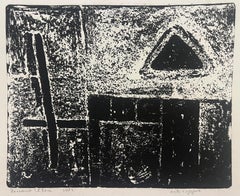
"Triangle
Cross" (FRAMED) Lithograph 9" x 12" in (1972) by Zaccaria Zeini
Located in Culver City, CA
"Triangle
Cross" (FRAMED) Lithograph 9" x 12" in (1972) by Zaccaria Zeini
Medium: lithograph
Signed and dated
Zaccaria El Zeini (1932 - 1993) was raised in the popular distr...
Category
20th Century Abstract Prints
Materials
Lithograph
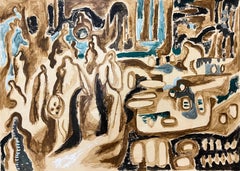
"Market Bustle" Abstract Painting 20" x 28" inch by Salah Boutros
Located in Culver City, CA
"Market Bustle" Abstract Painting 20" x 28" inch by Salah Boutros
Salah Boutros was born in 1964 in Cairo where he still lives and works. He gained a BA degree from the Faculty of F...
Category
21st Century and Contemporary Abstract Expressionist Abstract Paintings
Materials
Paper, Acrylic
"Abstract Composition 1" Painting 10" x 14" inch by Ahmed Yousry
Located in Culver City, CA
"Abstract Composition 1" Painting 10" x 14" inch by Ahmed Yousry
Ahmed Yousry was born in Alexandria in 1993. In 2017, he graduated from the Faculty of Fine Arts at Alexandria Unive...
Category
21st Century and Contemporary Abstract Abstract Paintings
Materials
Ink, Acrylic, Cardboard
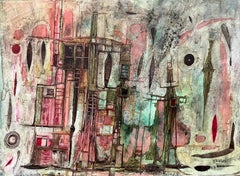
"Abstract Composition 5" Painting 10" x 14" inch by Ahmed Yousry
Located in Culver City, CA
"Abstract Composition 5" Painting 10" x 14" inch by Ahmed Yousry
Ahmed Yousry was born in Alexandria in 1993. In 2017, he graduated from the Faculty of Fine Arts at Alexandria Unive...
Category
21st Century and Contemporary Abstract Abstract Paintings
Materials
Ink, Acrylic, Cardboard
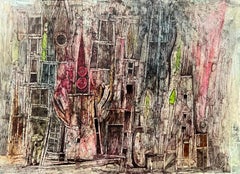
You May Also Like
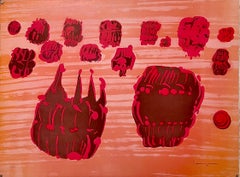
Pietro Consagra Italian Mod Abstract Expressionist Forma Brutalist Lithograph
By Pietro Consagra
Located in Surfside, FL
Pietro Consagra (Italian, 1920-2005).
Hand signed in pencil and numbered limited edition color lithograph on Magnani paper.
Embossed stamp with limited edition numbers in pencil to lower left, and having artist pencil signature to lower right.
(from a limited edition of 80 with 15 artist's proofs)
Published by Stamperia 2RC, Rome Italy and Marlborough Gallery, Rome, Italy.
Abstract Modernist work in colors, produced in the style of the Forma art movement of Postwar Italy, of which the artist was a prominent member.
Pietro Consagra (1920 – 2005) was an Italian Post war artist working in painting, printmaking and sculpture. In 1947 he was among the founding members of the Forma 1 group of artists, proponents of structured abstraction.
Consagra was born on 6 October 1920 in Mazara del Vallo, in the province of Trapani in south-western Sicily, to Luigi Consagra and Maria Lentini. From 1931 he enrolled in a trade school for sailors, studying first to become a mechanic, and later to become a captain. In 1938 he moved to Palermo, where he enrolled in the liceo artistico; despite an attack of tuberculosis, he graduated in 1941, and in the same year signed up at the Accademia di Belle Arti, where he studied sculpture under Archimede Campini. After the Invasion of Sicily and the Allied occupation of Palermo in 1943, Consagra found work as a caricaturist for the American Red Cross club of the city; he also joined the Italian Communist Party. Early in 1944, armed with a letter of introduction from an American officer, he travelled to Rome. There he came into contact with the Sicilian artist Concetto Maugeri, and through him with Renato Guttuso, who was also Sicilian and who introduced him to the intellectual life of the city and to other postwar artists such as Leoncillo Leonardi, Mario Mafai and Giulio Turcato. Consagra signed up at the Accademia di Belle Arti di Roma in September 1944 and studied sculpture there under Michele Guerrisi, but left before completing his diploma.
In 1947, with Carla Accardi, Ugo Attardi, Piero Dorazio, Mino Guerrini, Achille Perilli, Antonio Sanfilippo and Giulio Turcato, Consagra started the artist's group Forma 1, which advocated both Marxism and structured abstraction.
Steadily Consagra's work began to find an audience. Working primarily in metal, and later in marble and wood, his thin, roughly carved reliefs, began to be collected by Peggy Guggenheim and other important patrons of the arts. He showed at the Venice Biennale eleven times between 1950 and 1993, and in 1960 won the sculpture prize at the exhibition. During the 1960s he was associated with the Continuità group, an offshoot of Forma I, and in 1967 taught at the School of Arts in Minneapolis. Large commissions allowed him to begin working on a more monumental scale, and works of his were installed in the courtyard of the Foreign Ministry in Rome and in the European Parliament, Strasbourg. His work is found in the collections of The Tate Gallery, London, in Museo Cantonale d'Arte of Lugano and the Museum of Modern Art, Paris, and the National Gallery of Art in Washington, D.C..
Consagra returned to Sicily where he sculpted a number of significant works during the 1980s. With Senator Ludovico Corrao, he helped created an open-air museum in the new town of Gibellina, after the older town had been destroyed in the earthquake of 1968. Consagra designed the gates to the town's entrance, the building named "Meeting" and the gates to the cemetery, where he was later buried.
In 1952 Consagra published La necessità della scultura ("the need for sculpture"), a response to the essay La scultura lingua morta ("sculpture, a dead language"), published in 1945 by Arturo Martini. Other works include L'agguato c'è ("the snare exists", 1960), and La città frontale ("the frontal city", 1969). His autobiography, Vita Mia, was published by Feltrinelli in 1980. In 1989 a substantial retrospective exhibition of work by Consagra was shown at the Galleria Nazionale d'Arte Moderna in Rome; in 1993 a permanent exhibition of his work was installed there. In 1991 his work was shown in the Hermitage Museum in St. Petersburg. In 2002 the Galerie der Stadt Stuttgart opened a permanent exhibition of his work. He was one of ten artists invited by Giovanni Carandente, along with David Smith, Alexander Calder, Arnaldo Pomodoro, Lynn Chadwick, and Beverly Pepper, to fabricate works in Italsider factories in Italy for an outdoor exhibition, "Sculture nella città", held in Spoleto during the summer of 1962. He was included in the The 1962 International Prize for Sculpture the jury included Argan, Romero Brest and James Johnson Sweeney the former director of the Solomon R. Guggenheim Museum in New York. The participants included Louise Nevelson and John Chamberlain for the United States; Lygia Clark for Brazil; Pietro Consagra, Lucio Fontana, Nino Franchina, and Gió Pomodoro for Italy; Pablo Serrano for Spain; and Eduardo Paolozzi, William Turnbull, and Kenneth Armitage for England. Gyula Kosice, Noemí Gerstein...
Category
1960s Abstract Expressionist Abstract Prints
Materials
Lithograph
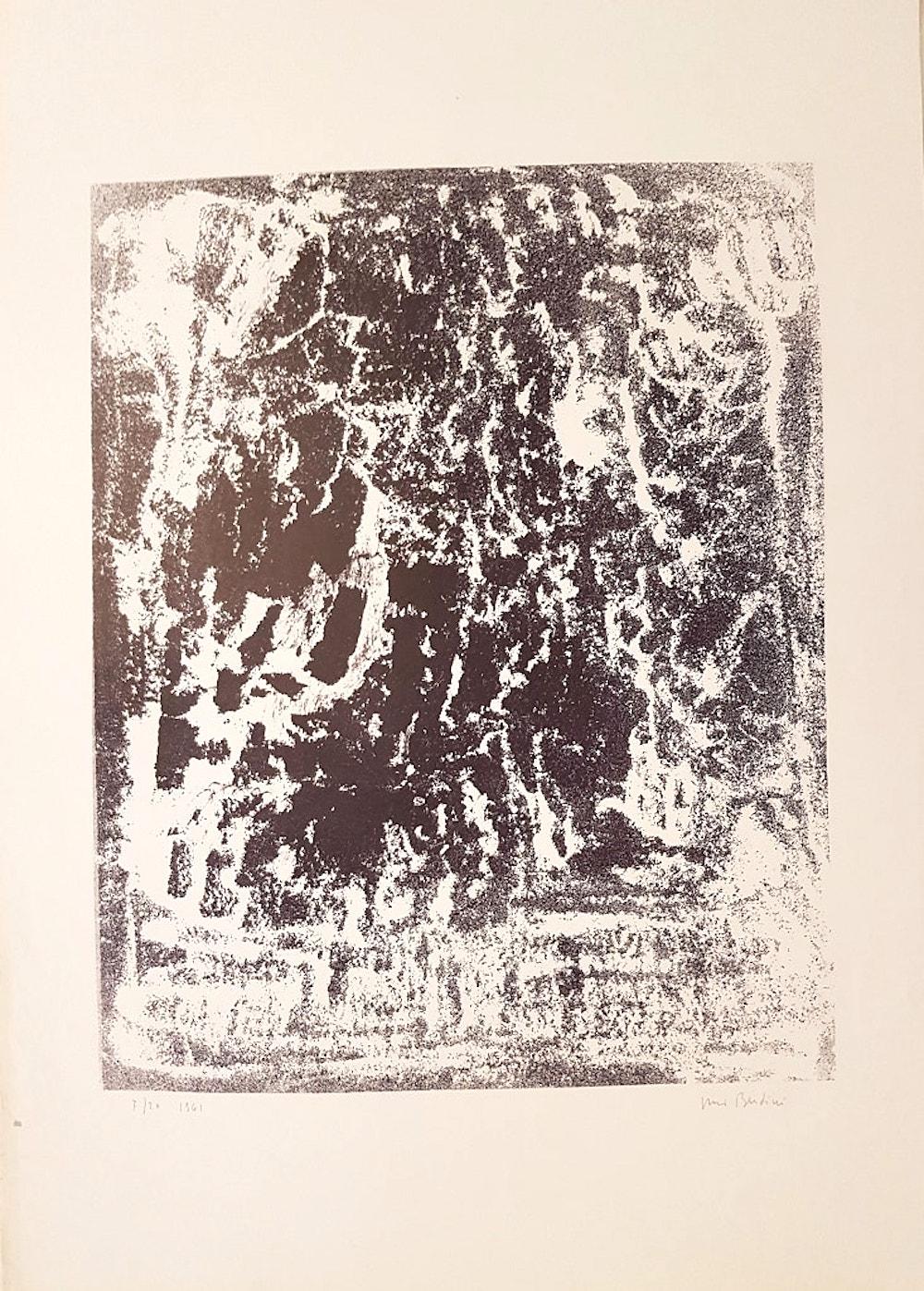
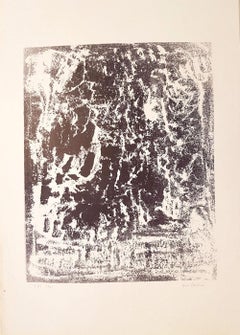
Untitled - Original Lithograph by Vasco Bendini - 1961
By Vasco Bendini
Located in Roma, IT
Image dimensions: 49 x 38 cm.
Interesting b/w lithograph representing a abstract composition. Dated, numbered and hand-signed with pencil on lower margin by the Italian artist, Vasc...
Category
1960s Abstract Prints
Materials
Lithograph
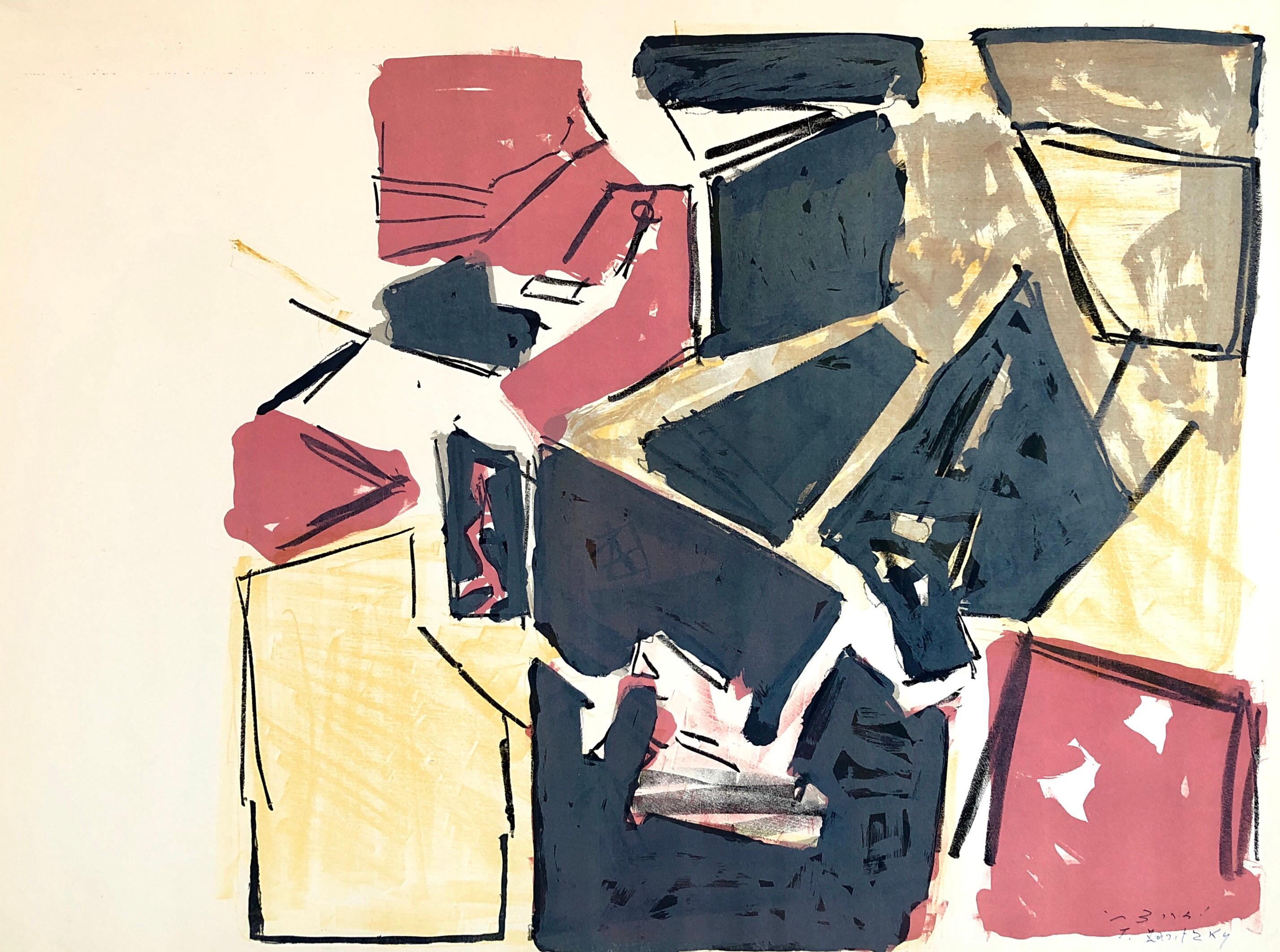
Israeli Josef Zaritsky Abstract Modernist Lithograph Print "Composition"
Located in Surfside, FL
Abstract Composition, 1959 Lithograph
This was from a portfolio which included works by Yosl Bergner, Menashe Kadishman, Yosef Zaritsky, Aharon Kahana, Moshe Tamir and Michael Gross.
Joseph (Yossef) Zaritsky (Hebrew: יוסף זריצקי; September 1, 1891 – November 30, 1985) was one of Israel's greatest artists and one of the early promoters of modern art in the Land of Israel both during the period of the Yishuv (Palestine, the body of Jewish residents in the Land of Israel before the establishment of the State of Israel) and after the establishment of the State. In 1948 Zaritsky was one of the founders of the "Ofakim Hadashim" group. In his works he created a uniquely Israeli style of abstract art, which he sought to promote by means of the group. For this work he was awarded the Israel Prize for painting in 1959.
Joseph Zaritsky...
Category
1950s Modern Abstract Prints
Materials
Lithograph
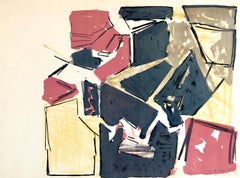
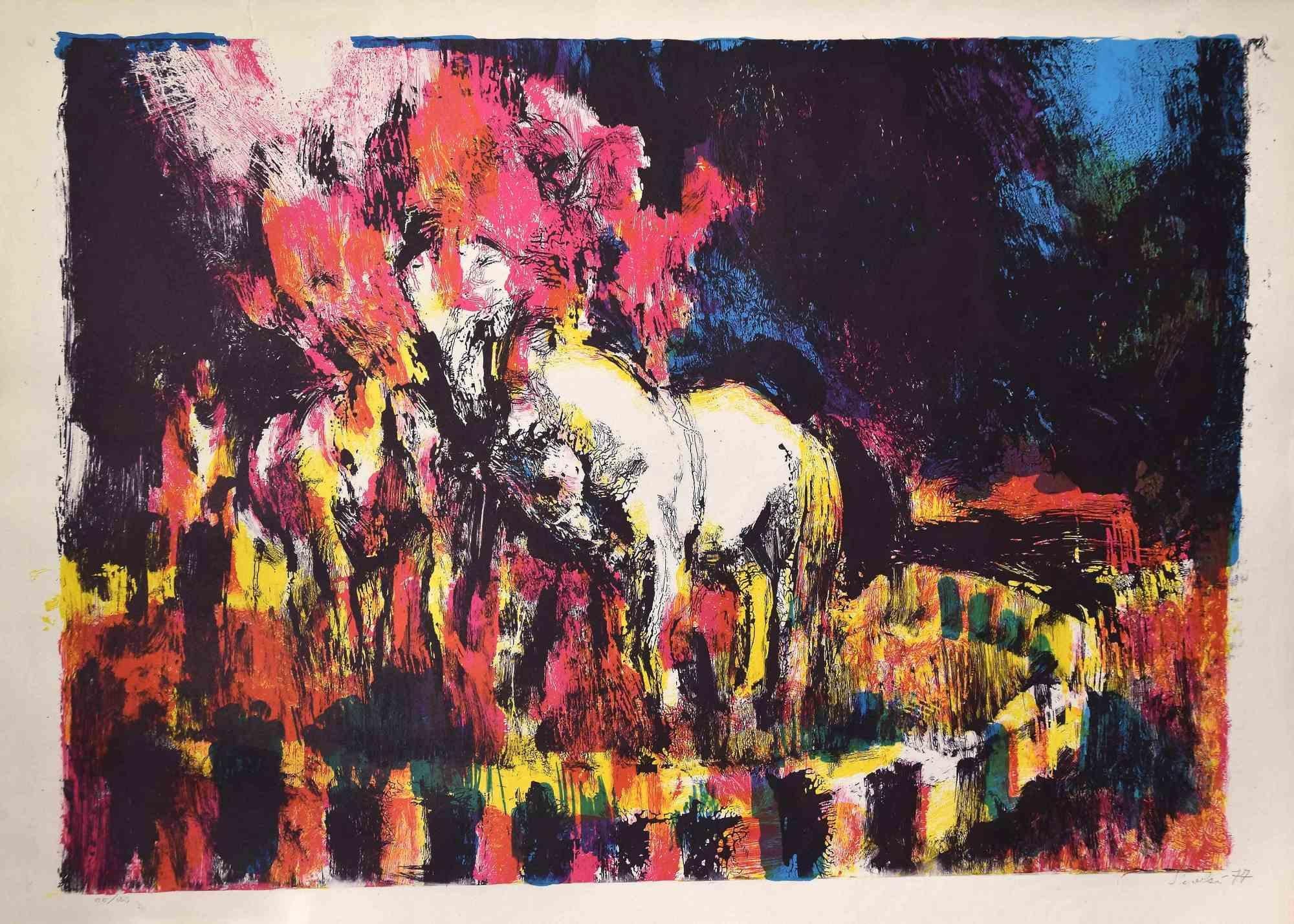
Abstract Composition - Screen Print by Nicola Simbari - 1970
By Nicola Simbari
Located in Roma, IT
Abstract Composition is a lithograph print on paper realized by Nicola Simbari in 1970 ca.
Hand-signed on the lower right.
Numbered, edition of 100 prints.
In good condition.
The artwork is represented by harmonious colors that create delicacy and charm.
Nicola Simbari (San Lucido...
Category
1970s Contemporary Abstract Prints
Materials
Screen
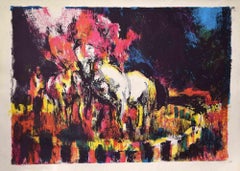
Untitled - Original Lithograph by Vasco Bendini - 1961
By Vasco Bendini
Located in Roma, IT
Image dimensions: 46 x 34 cm.
Lithograph representing a abstract composition. Dated, numbered and hand-signed with pencil on lower margin by the Italian artist, Vasco Bendini. Editi...
Category
1960s Abstract Prints
Materials
Lithograph
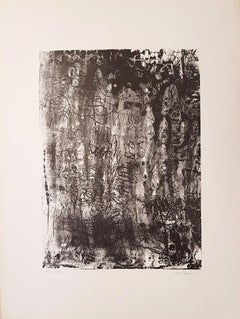
Untitled - Lithograph by Giuseppe Capogrossi - 1960s
By Giuseppe Capogrossi
Located in Roma, IT
Untitled is a print realized by Giuseppe Capogrossi (Rome, 1900 - 1972).
Lithograph on paper
Hand-signed lower right, numbered, edition lower left, 56/80 prints. Embossing stamp of...
Category
1960s Abstract More Prints
Materials
Paper, Lithograph