Want more images or videos?
Request additional images or videos from the seller
1 of 2
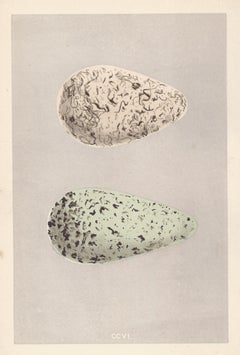
Alexander LydonBird Eggs - Antique egg colour woodblock print, 18751875
1875
$50List Price
About the Item
- Creator:Alexander Lydon (1836 - 1917, British)
- Creation Year:1875
- Dimensions:Height: 9.26 in (23.5 cm)Width: 6.11 in (15.5 cm)
- Medium:
- Movement Style:
- Period:
- Condition:
- Gallery Location:Melbourne, AU
- Reference Number:1stDibs: LU124428825152
About the Seller
5.0
Gold Seller
Premium sellers maintaining a 4.3+ rating and 24-hour response times
Established in 2005
1stDibs seller since 2019
633 sales on 1stDibs
Typical response time: 1 hour
Authenticity Guarantee
In the unlikely event there’s an issue with an item’s authenticity, contact us within 1 year for a full refund. DetailsMoney-Back Guarantee
If your item is not as described, is damaged in transit, or does not arrive, contact us within 7 days for a full refund. Details24-Hour Cancellation
You have a 24-hour grace period in which to reconsider your purchase, with no questions asked.Vetted Professional Sellers
Our world-class sellers must adhere to strict standards for service and quality, maintaining the integrity of our listings.Price-Match Guarantee
If you find that a seller listed the same item for a lower price elsewhere, we’ll match it.Trusted Global Delivery
Our best-in-class carrier network provides specialized shipping options worldwide, including custom delivery.You May Also Like
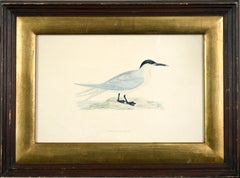
"Sandwich Tern
Antique Hand Colored Lithograph
Located in Soquel, CA
"Sandwich Tern' Antique Hand Colored Lithograph
Delicately rendered naturalist drawing of a sandwich tern from the 1903 edition of "A History of British Birds" by F.O. Morris. This...
Category
Early 1900s Naturalistic Animal Prints
Materials
Paper, Watercolor, Lithograph
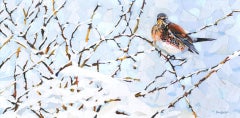
Winter Fieldfare, Paul Bartlett, Limited Edition Print, Affordable Art, Bird Art
By Paul Bartlett
Located in Deddington, GB
Paul Bartlett is a highly acclaimed artist who has won many awards for his original depictions of nature which inform and educate the viewer on conservation issues.
Winter Fieldfare...
Category
21st Century and Contemporary Naturalistic Animal Prints
Materials
Paper
$215
Free Shipping
H 14.77 in W 23.63 in D 0.04 in
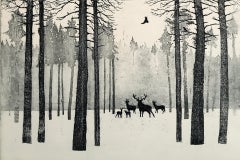
Tim Southall, Deer in Winter, Contemporary Etching, Animal Print, Affordable Art
By Tim Southall
Located in Deddington, GB
Tim Southall
Deer in Winter
Limited Edition Etching
Edition of 75
Image Size: H 20cm x W 30cm
Sheet Size: H 35cm x W 42cm x D 0.1cm
Sold Unframed
(Please note that in situ images are...
Category
21st Century and Contemporary Naturalistic Landscape Prints
Materials
Paper, Etching
$337
H 13.78 in W 16.54 in D 0.04 in
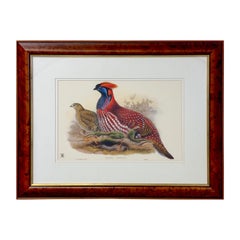
John Gould
Henry Constantine Richter Birds of Asia Temminck
s Tragopan Print
By John Gould and Henry Constantine Richter
Located in Plainview, NY
A large print of John Gould & Henry Constantine Richter of Temminck's Tragopan from his published book " Birds of Asia ". John Gould was influenced by James Audubon paintings of bi...
Category
20th Century Naturalistic Animal Prints
Materials
Handmade Paper
$1,200 Sale Price
27% Off
H 28.25 in W 35.25 in D 1 in
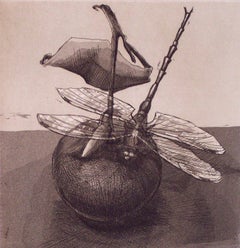
Dragonfly #3 : Monochrome etching
By Lisa Dinhofer
Located in New York, NY
Lisa Dinhofer's work is presented in a realist style, deftly creating meticulous portraits of creatures - dragonflies, turtles, birds, bats and grasshoppers - that comprise her surro...
Category
1990s Naturalistic More Art
Materials
Etching
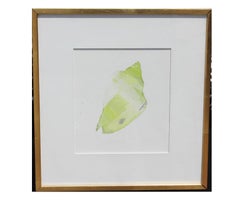
Green Painted Sea Shell Lithograph Edition 33 of 34
By Frances Nail
Located in Houston, TX
Green shell lithograph of a cone shell. Print is edition 33 of 34. Signed and dated by the artist along with titled. Print is framed in a golden frame...
Category
1970s Naturalistic Still-life Prints
Materials
Lithograph
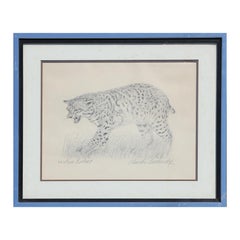
Naturalistic Modern Texas Bobcat Black and White Animal Wildlife Print
By Charles Beckendorf
Located in Houston, TX
A signed and numbered print of a bobcat from Texas artist Charles Beckendorf. Charles did the original in pencil for this series. The print is displayed in a chrome frame and white m...
Category
1960s Naturalistic Animal Prints
Materials
Paper, Black and White
$350
H 15.5 in W 18.5 in D 0.75 in
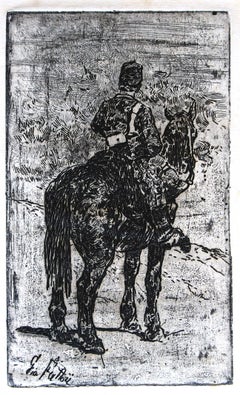
Gunner Riding - Original Etching by Giovanni Fattori - 1900 ca.
By Giovanni Fattori
Located in Roma, IT
Image dimensions: 16.5x10 cm
Signed on plate by the artist.
Bibliography: A.Baboni, L’Ottocento: le incisioni di Giovanni Fattori, Museo Civico “Giovanni Fattori”, Livorno 2001, p. 7...
Category
Early 1900s Naturalistic Figurative Prints
Materials
Etching
$4,050
H 19.69 in W 13.78 in D 0.04 in
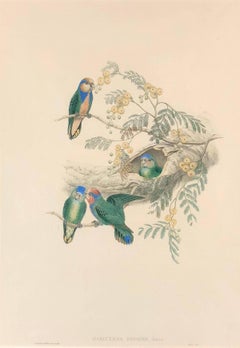
Nasiterna Bruijni
By John Gould
Located in Missouri, MO
John Gould (British, 1804-1881)
Nasiterna Bruijni c. 1849-1861
Hand Colored Lithograph
Image Size: approx 19.5 x 13.5 inches
Framed Size: 27 3/8 x 21 1/2 inches
John Gould was an English ornithologist and bird artist. The Gould League in Australia was named after him. His identification of the birds now nicknamed "Darwin's finches" played a role in the inception of Darwin's theory of evolution by natural selection. Gould's work is referenced in Charles Darwin's book, On the Origin of Species.
Gould was born in Lyme Regis, Dorset, the son of a gardener, and the boy probably had a scanty education. Shortly afterwards his father obtained a position on an estate near Guildford, Surrey, and then in 1818 became foreman in the Royal Gardens of Windsor. He was for some time under the care of J T Aiton, of the Royal Gardens of Windsor. The young Gould started training as a gardener, being employed under his father at Windsor from 1818 to 1824, and he was subsequently a gardener at Ripley Castle in Yorkshire. He became an expert in the art of taxidermy, and in 1824 he set himself up in business in London as a taxidermist, and his skill led to him becoming the first Curator and Preserver at the museum of the Zoological Society of London in 1827.
Gould's position brought him into contact with the country's leading naturalists, and also meant that he was often the first to see new collections of birds given to the Society. In 1830 a collection of birds arrived from the Himalayas, many not previously described. Gould published these birds in A Century of Birds from the Himalaya Mountains (1830-1832). The text was by Nicholas Aylward Vigors, and the illustrations were lithographed by Gould's wife Elizabeth, daughter of Nicholas Coxen of Kent.
This work was followed by four more in the next seven years including Birds of Europe in five volumes - completed in 1837, with the text written by Gould himself, edited by his clerk Edwin Prince. Some of the illustrations were made by Edward Lear as part of his Illustrations of the Family of Psittacidae in 1832. Lear however was in financial difficulty, and he sold the entire set of lithographs to Gould. The books were published in a very large size, imperial folio, with magnificent coloured plates. Eventually 41 of these volumes were published with about 3000 plates. They appeared in parts at £3 3s. a number, subscribed for in advance, and in spite of the heavy expense of preparing the plates, Gould succeeded in making his ventures pay and in realizing a fortune. In 1838 he and his wife moved to Australia to work on the Birds of Australia and shortly after his return to England, his wife died in 1841.
When Charles Darwin presented his mammal and bird specimens collected during the second voyage of HMS Beagle to the Geological Society of London at their meeting on 4 January 1837, the bird specimens were given to Gould for identification. He set aside his paying work and at the next meeting on 10 January reported that birds from the Galápagos Islands, which Darwin had thought were blackbirds, "gross-bills" and finches were in fact "a series of ground Finches which are so peculiar" as to form "an entirely new group, containing 12 species." This story made the newspapers.
In March, Darwin met Gould again, learning that his Galápagos "wren" was another species of finch and the mockingbirds he had labeled by island were separate species rather than just varieties, with relatives on the South American mainland. Subsequently Gould advised that the smaller southern Rhea specimen that had been rescued from a Christmas dinner...
Category
1850s Naturalistic Animal Prints
Materials
Lithograph
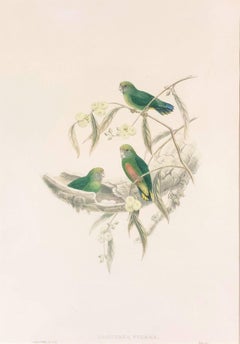
Nasiterna Pygmae
By John Gould
Located in Missouri, MO
John Gould (British, 1804-1881)
Nasiterna Pygmae c. 1849-1861
Hand Colored Lithograph
Image Size: approx 19.5 x 13.5 inches
Framed Size: 27 3/8 x 21 1/2 inches
John Gould was an English ornithologist and bird artist. The Gould League in Australia was named after him. His identification of the birds now nicknamed "Darwin's finches" played a role in the inception of Darwin's theory of evolution by natural selection. Gould's work is referenced in Charles Darwin's book, On the Origin of Species.
Gould was born in Lyme Regis, Dorset, the son of a gardener, and the boy probably had a scanty education. Shortly afterwards his father obtained a position on an estate near Guildford, Surrey, and then in 1818 became foreman in the Royal Gardens of Windsor. He was for some time under the care of J T Aiton, of the Royal Gardens of Windsor. The young Gould started training as a gardener, being employed under his father at Windsor from 1818 to 1824, and he was subsequently a gardener at Ripley Castle in Yorkshire. He became an expert in the art of taxidermy, and in 1824 he set himself up in business in London as a taxidermist, and his skill led to him becoming the first Curator and Preserver at the museum of the Zoological Society of London in 1827.
Gould's position brought him into contact with the country's leading naturalists, and also meant that he was often the first to see new collections of birds given to the Society. In 1830 a collection of birds arrived from the Himalayas, many not previously described. Gould published these birds in A Century of Birds from the Himalaya Mountains (1830-1832). The text was by Nicholas Aylward Vigors, and the illustrations were lithographed by Gould's wife Elizabeth, daughter of Nicholas Coxen of Kent.
This work was followed by four more in the next seven years including Birds of Europe in five volumes - completed in 1837, with the text written by Gould himself, edited by his clerk Edwin Prince. Some of the illustrations were made by Edward Lear as part of his Illustrations of the Family of Psittacidae in 1832. Lear however was in financial difficulty, and he sold the entire set of lithographs to Gould. The books were published in a very large size, imperial folio, with magnificent coloured plates. Eventually 41 of these volumes were published with about 3000 plates. They appeared in parts at £3 3s. a number, subscribed for in advance, and in spite of the heavy expense of preparing the plates, Gould succeeded in making his ventures pay and in realizing a fortune. In 1838 he and his wife moved to Australia to work on the Birds of Australia and shortly after his return to England, his wife died in 1841.
When Charles Darwin presented his mammal and bird specimens collected during the second voyage of HMS Beagle to the Geological Society of London at their meeting on 4 January 1837, the bird specimens were given to Gould for identification. He set aside his paying work and at the next meeting on 10 January reported that birds from the Galápagos Islands, which Darwin had thought were blackbirds, "gross-bills" and finches were in fact "a series of ground Finches which are so peculiar" as to form "an entirely new group, containing 12 species." This story made the newspapers.
In March, Darwin met Gould again, learning that his Galápagos "wren" was another species of finch and the mockingbirds he had labeled by island were separate species rather than just varieties, with relatives on the South American mainland. Subsequently Gould advised that the smaller southern Rhea specimen that had been rescued from a Christmas dinner...
Category
Mid-19th Century Naturalistic Animal Prints
Materials
Lithograph
More From This Seller
View AllBird Eggs - Antique egg colour woodblock print, 1875
Located in Melbourne, Victoria
Antique bird egg colour woodblock , 1880, from Francis Orpen Morris’, 'A Natural History of the Nests & Eggs of British Birds', 1875. The woodblocks ...
Category
Late 19th Century Naturalistic Animal Prints
Materials
Woodcut
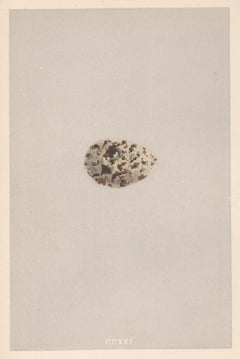
Bird Eggs - Antique egg colour woodblock print, 1875
Located in Melbourne, Victoria
Antique bird egg colour woodblock , 1880, from Francis Orpen Morris’, 'A Natural History of the Nests & Eggs of British Birds', 1875. The woodblocks ...
Category
Late 19th Century Naturalistic Animal Prints
Materials
Woodcut
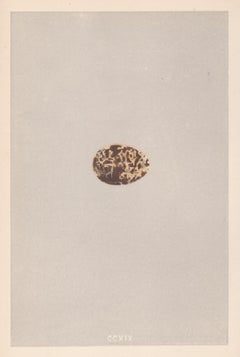
Bird Eggs - Antique egg colour woodblock print, 1875
Located in Melbourne, Victoria
Antique bird egg colour woodblock , 1880, from Francis Orpen Morris’, 'A Natural History of the Nests & Eggs of British Birds', 1875. The woodblocks ...
Category
Late 19th Century Naturalistic Animal Prints
Materials
Woodcut
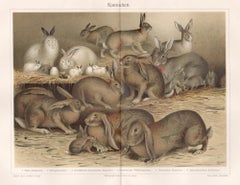
Rabbits, German antique animal chromolithograph print.
Located in Melbourne, Victoria
'Kaninchen'
(Rabbits)
German chromolithograph, circa 1910. Key in German to the types of rabbits at the bottom of the image. Central vertical fold as issued.
245mm by 305mm (shee...
Category
Early 20th Century Naturalistic Animal Prints
Materials
Lithograph
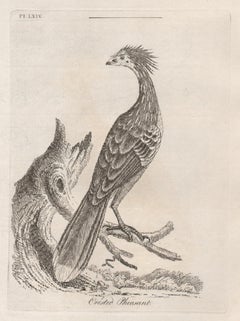
Crested Pheasant, 18th century bird engraving by John Latham
By John Latham
Located in Melbourne, Victoria
Copper-line engraving. 1781. From John Latham's 'General Synopsis of Birds' 1781-1785, and its Supplements. Plate number top left. Laid paper.
John Latham was the leading English or...
Category
Late 18th Century Naturalistic Animal Prints
Materials
Engraving
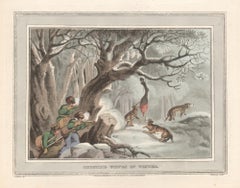
Shooting the Wolves in Winter, aquatint engraving hunting print, 1813
By Samuel Howitt
Located in Melbourne, Victoria
'Shooting the Wolves in Winter'
Colour aquatint by Mathew Dubourg (1786-1838) after Franz Joseph Manskirch (1768-1830).
From Samuel Howitt's 'Foreign Field Sports'. Samuel Howitt w...
Category
Early 19th Century Naturalistic Animal Prints
Materials
Aquatint
Still Thinking About These?
All Recently ViewedMore Ways To Browse
Antique Bird Eggs
Antique Egg Print
Poster Aesthetic Vintage Art
Prairie Dog
Signed Duck Art Prints
Simon Bussy
Strato Lounger
Tete De Taureau
Tortoise And Hare Vintage
Ulisse Aldrovandi
Vintage Fetish Shoes
Albion Printing Press
Andy Warhol Pussy
Audubon Hawk
Audubon Puffin
Azoulay Art Horses
Banksy Greenpeace
Blue Dog Lithograph