Items Similar to Brown Pelican /// John James Audubon New Orleans Ornithology Animal Bird Art
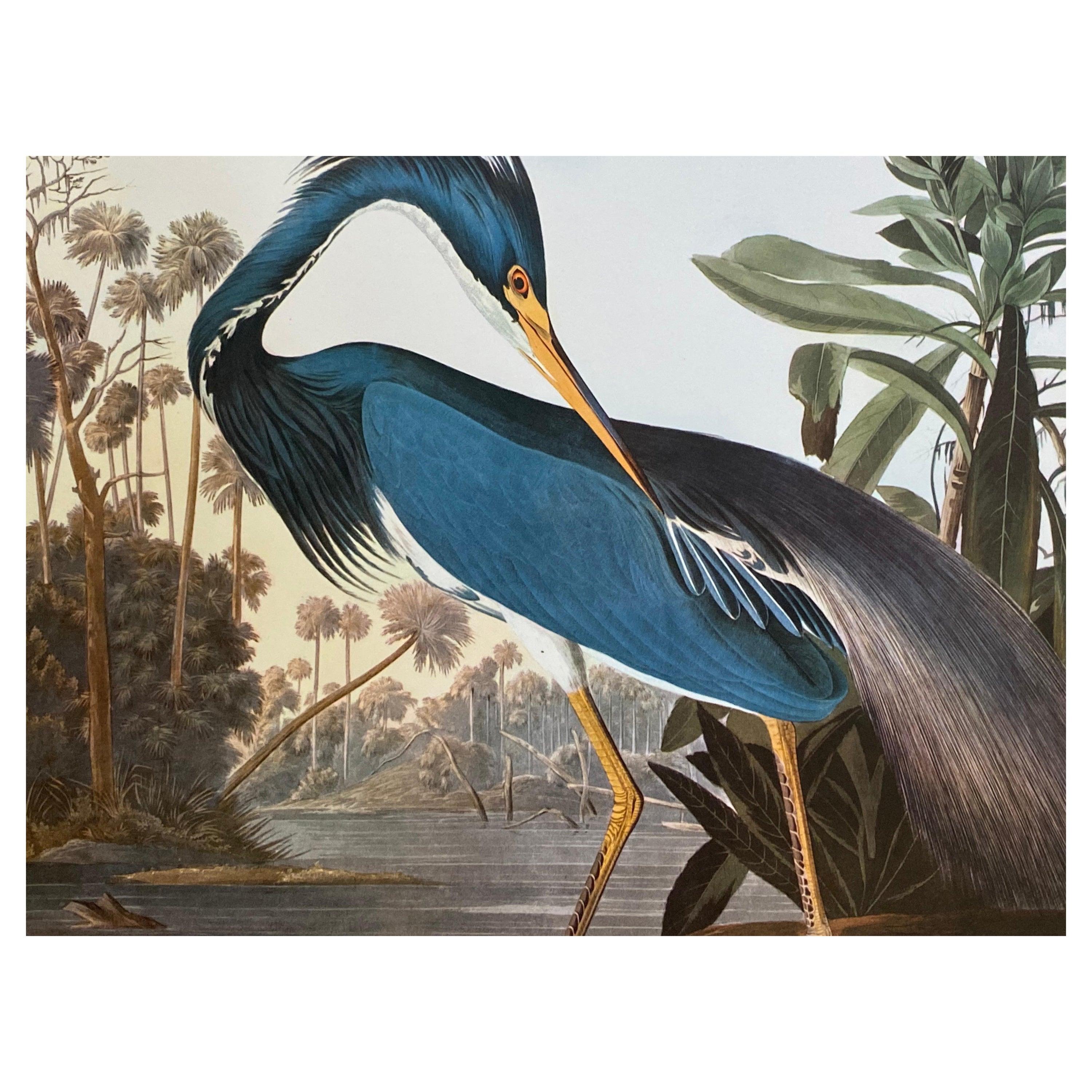
Want more images or videos?
Request additional images or videos from the seller
1 of 15
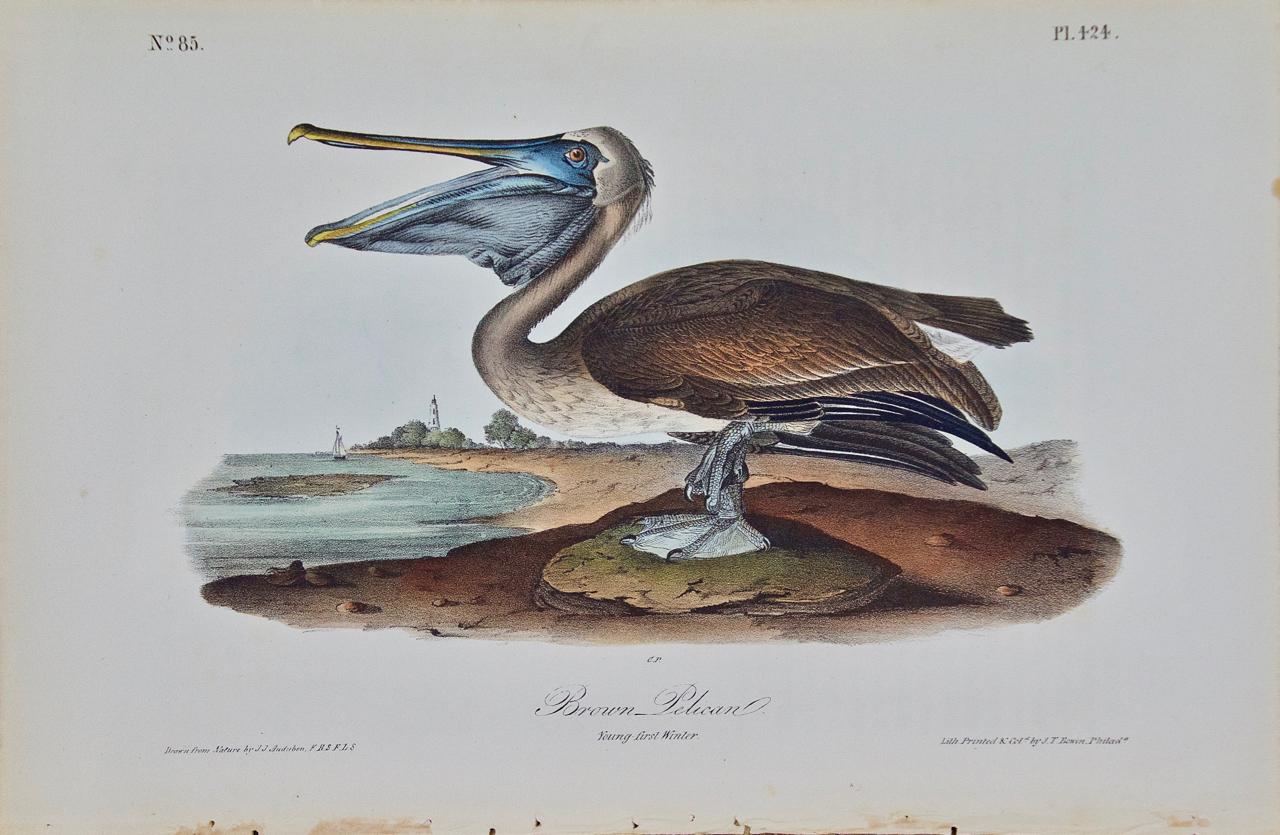
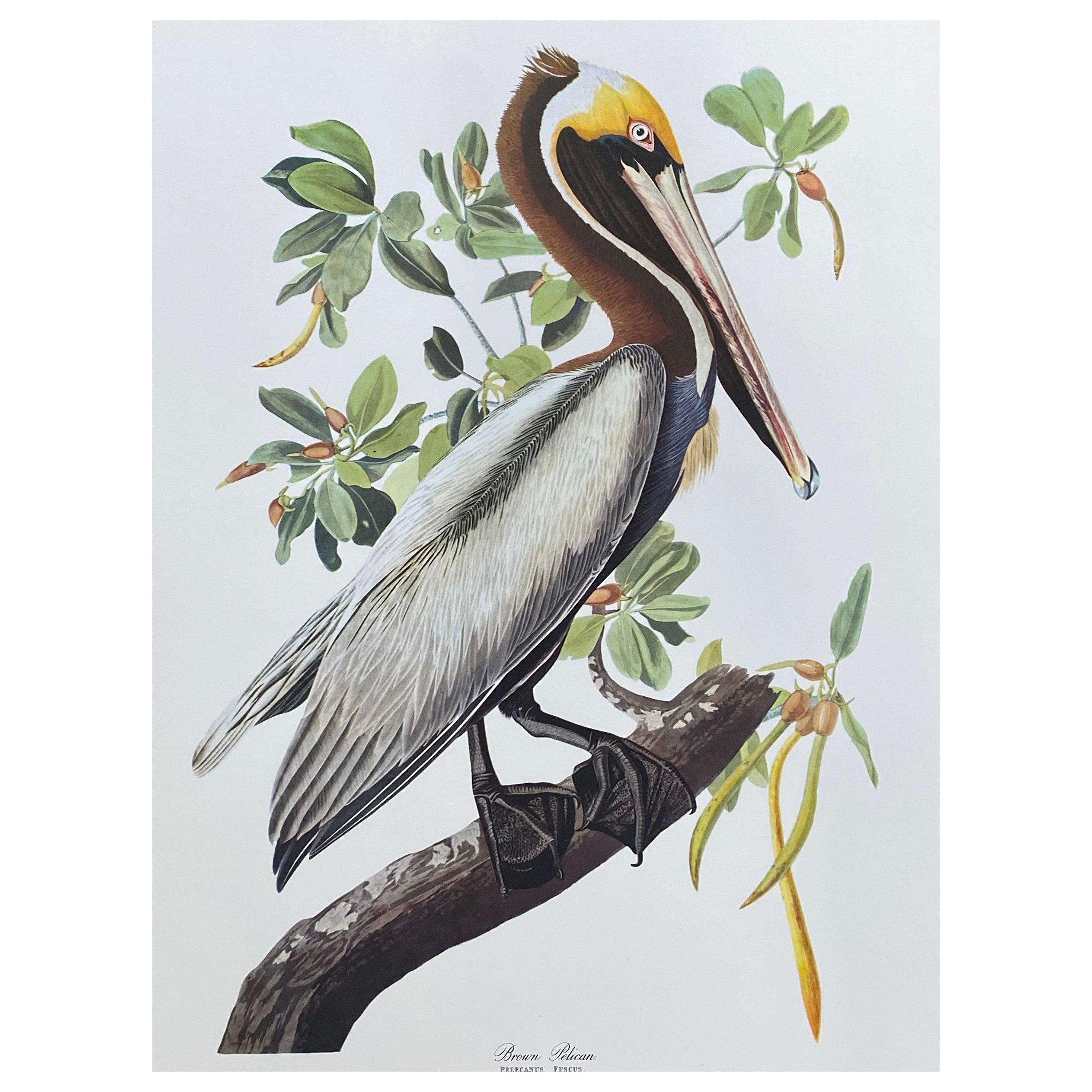
John James AudubonBrown Pelican /// John James Audubon New Orleans Ornithology Animal Bird Art1840-1844
1840-1844
$1,400
£1,066.07
€1,227.55
CA$1,983.92
A$2,133.99
CHF 1,140.47
MX$25,153.70
NOK 14,378.63
SEK 13,144.80
DKK 9,171.88
About the Item
Artist: John James Audubon (American, 1785-1851)
Title: "Brown Pelican" (Plate 424, No. 85)
Portfolio: The Birds of America, First Royal Octavo Edition
Year: 1840-1844
Medium: Original Hand-Colored Lithograph on wove paper
Limited edition: approx. 1,200
Printer: John T. Bowen, Philadelphia, PA
Publisher: John James Audubon and J.B. Chevalier, New York, NY and Philadelphia, PA
Sheet size: 6.57" x 10.07"
Image size: 4.25" x 7.75"
Condition: Some minor soiling at left edge. In otherwise excellent condition with strong colors
Notes:
Provenance: private collection - Jacksonville, FL. Lithography and hand-coloring by American artist John T. Bowen (1801-c.1856). Comes from Audubon's famous seven volume portfolio "The Birds of America", First Royal Octavo Edition (1840-1844), which consists of 500 hand-colored lithographs. Left, top, and right edges are gold gilded as issued.
Based on a composition painted in New Orleans, January 28 and 29, 1821. "During a severe gale, on the 7th of April 1836, the wind coming from the north-west, I saw a flock of about thirty of these birds flying only a few feet above the water, and against the gale. Having proceeded a few yards, they plunged into the water, generally to leeward, and threw their bodies round as soon as their bills were immersed, giving a very curious appearance to the wings, which seemed as if locked. On seizing a fish they kept the bill beneath the surface for a short time in a perpendicular direction, and drew it up gradually, when the water was seen to flow out, after which they raised the bill to a horizontal position, and swallowed the fish."
The brown pelican (Pelecanus occidentalis) is a bird of the pelican family, Pelecanidae, one of three species found in the Americas and one of two that feed by diving into water. It is found on the Atlantic Coast from New Jersey to the mouth of the Amazon River, and along the Pacific Coast from British Columbia to Peru, including the Galapagos Islands.
To make 'The Birds of America' more affordable and widely available, in 1839 John James Audubon began the first octavo edition, a smaller version of the folio which was printed and hand-colored by J. T. Bowen in Philadelphia. Employing a new invention, the camera lucida, the images were reduced in size, rendered in intermediate drawings by John James Audubon and his son John Woodhouse, and then drawn onto lithographic stones. These miniatures exhibit a remarkable amount of attention to quality and detail, as well as a meticulous fidelity to the larger works. Some compositional changes were made in order to accommodate the smaller format. Like the Havell edition, John James Audubon’s first octavo edition was sold by subscription and distributed in parts, five at a time. However, the octavo editions were issued in proper phylogenic, or species order. These prints also bear the plate number in the upper right-hand corner and the subscription number in the upper left. The first edition of approximately 1,200 sets was completed in five years from 1839 to 1844. A total of 500 images comprise the First Royal Octavo Edition.
Biography:
John James Audubon (April 26, 1785, Les Cayes, Saint-Domingue (later Haiti) – January 27, 1851 (aged 65) Manhattan, New York, U.S.), born Jean-Jacques Audubon, was an American ornithologist, naturalist, and painter. He was notable for his expansive studies to document all types of American birds and for his detailed illustrations that depicted the birds in their natural habitats. His major work, a color-plate book entitled The Birds of America (1827–1839), is considered one of the finest ornithological works ever completed. Audubon identified 25 new species.
- Creator:John James Audubon (1785-1851, American, French)
- Creation Year:1840-1844
- Dimensions:Height: 6.57 in (16.69 cm)Width: 10.07 in (25.58 cm)
- Medium:
- Movement Style:
- Period:
- Condition:
- Gallery Location:Saint Augustine, FL
- Reference Number:1stDibs: LU121217151842
John James Audubon
John James Audubon (April 26, 1785, Les Cayes, Saint-Domingue (later Haiti) – January 27, 1851 (aged 65) Manhattan, New York, U.S.), born Jean-Jacques Audubon, was an American ornithologist, naturalist, and painter. He was notable for his expansive studies to document all types of American birds and for his detailed illustrations that depicted the birds in their natural habitats. His major work, a color-plate book entitled The Birds of America (1827–1839), is considered one of the finest ornithological works ever completed. Audubon identified 25 new species.
About the Seller
5.0
Platinum Seller
Premium sellers with a 4.7+ rating and 24-hour response times
Established in 1978
1stDibs seller since 2015
1,369 sales on 1stDibs
Typical response time: <1 hour
- ShippingRetrieving quote...Shipping from: Saint Augustine, FL
- Return Policy
More From This Seller
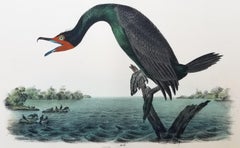
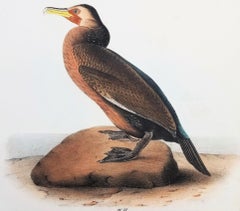
View AllFlorida Cormorant /// John James Audubon Ornithology Bird Art Natural History
By John James Audubon
Located in Saint Augustine, FL
Artist: John James Audubon (American, 1785-1851)
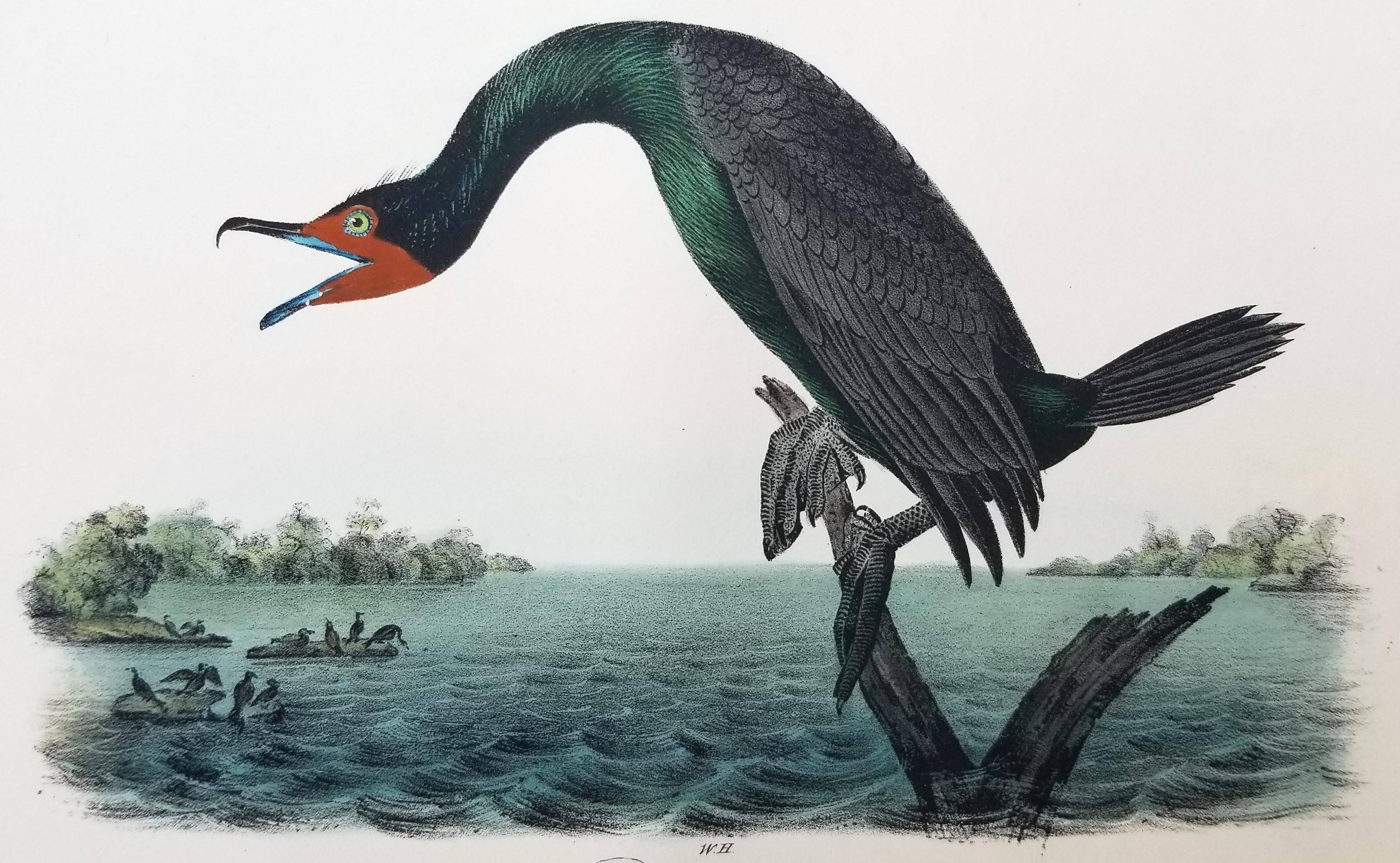
Title: "Florida Cormorant" (Plate 417, No. 84)
Portfolio: The Birds of America, First Royal Octavo Edition
Year: 1840-1844
Medium: Original Hand-Colored Lithograph on wove paper
Limited edition: approx. 1,200
Printer: John T. Bowen, Philadelphia, PA
Publisher: John James Audubon and J.B. Chevalier, New York, NY and Philadelphia, PA
Sheet size: 6.5" x 10.44"
Image size: 3.75" x 6.25"
Condition: Some minor discoloration upper center in margin. In excellent condition with strong colors
Notes:
Provenance: private collection - Cleveland, OH. Lithography and hand-coloring by American artist John T. Bowen (1801-c.1856). Comes from Audubon's famous seven volume portfolio "The Birds of America", First Royal Octavo Edition (1840-1844), which consists of 500 hand-colored lithographs.
Based on a composition painted in the Florida Keys on April 26, 1832, Audubon's forty-seventh birthday.
The double-crested cormorant (Nannopterum auritum) is a member of the cormorant family of water birds. It is found near rivers and lakes and in coastal areas and is widely distributed across North America, from the Aleutian Islands in Alaska down to Florida and Mexico. Measuring 70–90 cm (28–35 in) in length, it is entirely black except for a bare patch of orange-yellow facial skin and some extra plumage that it exhibits in the breeding season when it grows a double crest in which black feathers are mingled with white. Five subspecies are recognized. It mainly eats fish and hunts by swimming and diving. Its feathers, like all cormorants, are not waterproof, and it must dry them out after spending time in the water. Once threatened by the use of DDT, the numbers of this bird have increased markedly in recent years.
To make 'The Birds of America' more affordable and widely available, in 1839 John James Audubon began the first octavo edition, a smaller version of the folio which was printed and hand-colored by J. T. Bowen in Philadelphia. Employing a new invention, the camera lucida, the images were reduced in size, rendered in intermediate drawings by John James Audubon and his son John Woodhouse, and then drawn onto lithographic stones. These miniatures exhibit a remarkable amount of attention to quality and detail, as well as a meticulous fidelity to the larger works. Some compositional changes were made in order to accommodate the smaller format. Like the Havell edition, John James Audubon’s first...
Category
1840s Victorian Animal Prints
Materials
Watercolor, Lithograph
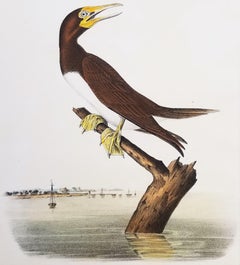
Booby Gannet /// Ornithology Bird Art John James Audubon Florida Keys Seascape
By John James Audubon
Located in Saint Augustine, FL
Artist: John James Audubon (American, 1785-1851)
Title: "Booby Gannet" (Plate 426, No. 86)
Portfolio: The Birds of America, First Royal Octavo Edition
Year: 1840-1844
Medium: Original Hand-Colored Lithograph on wove paper
Limited edition: approx. 1,200
Printer: John T. Bowen, Philadelphia, PA
Publisher: John James Audubon and J.B. Chevalier, New York, NY and Philadelphia, PA
Sheet size: 10.38" x 6.75"
Image size: 5.94" x 5.5"
Condition: Two small tears at top edge. In otherwise excellent condition with strong colors
Notes:
Provenance: private collection - Seattle, WA. Lithography and hand-coloring by American artist John T. Bowen (1801-c.1856). Comes from Audubon's famous seven volume portfolio "The Birds of America", First Royal Octavo Edition (1840-1844), which consists of 500 hand-colored lithographs.
Based on a composition painted May 14, 1832. Audubon wrote: "I am unable to find a good reason for those who have chosen to call these birds 'boobies'. Authors, it is true, generally represent them as extremely stupid; but to me the word is utterly inapplicable to any bird with which I am acquainted". The view of the Florida Keys is based on a drawing by George Lehman.
The bird family Sulidae comprises the gannets and boobies. Collectively called sulids, they are medium-large coastal seabirds that plunge-dive for fish and similar prey. The 10 species in this family are often considered congeneric in older sources, placing all in the genus Sula.
To make 'The Birds of America' more affordable and widely available, in 1839 John James Audubon began the first octavo edition, a smaller version of the folio which was printed and hand-colored by J. T. Bowen in Philadelphia. Employing a new invention, the camera lucida, the images were reduced in size, rendered in intermediate drawings by John James Audubon and his son John Woodhouse, and then drawn onto lithographic stones. These miniatures exhibit a remarkable amount of attention to quality and detail, as well as a meticulous fidelity to the larger works. Some compositional changes were made in order to accommodate the smaller format. Like the Havell edition, John James Audubon’s first...
Category
1840s Victorian Animal Prints
Materials
Watercolor, Lithograph
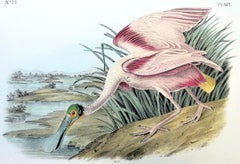
Roseate Spoonbill /// John James Audubon Natural History Ornithology Water Bird
By John James Audubon
Located in Saint Augustine, FL
Artist: John James Audubon (American, 1785-1851)
Title: "Roseate Spoonbill" (Plate 362, No. 73)
Portfolio: The Birds of America, First Royal Octavo Edition
Year: 1840-1844
Medium: Original Hand-Colored Lithograph on wove paper
Limited edition: approx. 1,200
Printer: John T. Bowen, Philadelphia, PA
Publisher: John James Audubon and J.B. Chevalier, New York, NY and Philadelphia, PA
Sheet size: 6.75" x 10.44"
Image size: 5" x 7.63"
Condition: In excellent condition
Very rare
The "Roseate Spoonbill" is one of the very top, absolute most desirable birds from Audubon's famous "Birds of America" series
Notes:
Provenance: private collection - Fleming Island, FL. Lithography and hand-coloring by American artist John T. Bowen (1801-c.1856). Comes from Audubon's famous seven volume portfolio "The Birds of America", First Royal Octavo Edition (1840-1844), which consists of 500 hand-colored lithographs.
Based on a composition painted in Florida in 1831 or 1832. "This beautiful and singular bird" was prized for its wings and tail feathers which were made into fans in St. Augustine.
The roseate spoonbill is a gregarious wading bird of the ibis and spoonbill family, Threskiornithidae. It is a resident breeder in both South and North America. The roseate spoonbill's pink color is diet-derived, consisting of the carotenoid pigment canthaxanthin, like the American flamingo.
To make 'The Birds of America' more affordable and widely available, in 1839 John James Audubon began the first octavo edition, a smaller version of the folio which was printed and hand-colored by J. T. Bowen in Philadelphia. Employing a new invention, the camera lucida, the images were reduced in size, rendered in intermediate drawings by John James Audubon and his son John Woodhouse, and then drawn onto lithographic stones. These miniatures exhibit a remarkable amount of attention to quality and detail, as well as a meticulous fidelity to the larger works. Some compositional changes were made in order to accommodate the smaller format. Like the Havell edition, John James Audubon’s first...
Category
1840s Victorian Animal Prints
Materials
Watercolor, Lithograph
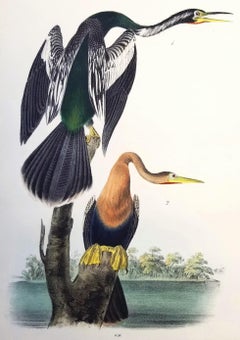
American Anhinga - Snake Bird /// John James Audubon Ornithology Natural History
By John James Audubon
Located in Saint Augustine, FL
Artist: John James Audubon (American, 1785-1851)
Title: "American Anhinga - Snake Bird" (Plate 420, No. 84)
Portfolio: The Birds of America, First Royal Octavo Edition
Year: 1840-1844
Medium: Original Hand-Colored Lithograph on wove paper
Limited edition: approx. 1,200
Printer: John T. Bowen, Philadelphia, PA
Publisher: John James Audubon and J.B. Chevalier, New York, NY and Philadelphia, PA
Sheet size: 10" x 6.69"
Image size: 6.63" x 4.63"
Condition: Minor toning to sheet and some faint discoloration in margins. Old glue staining along right binding edge as normal. It is otherwise in very good condition with strong colors
Notes:
Provenance: private collection - Cleveland, OH. Lithography and hand-coloring by American artist John T. Bowen (1801-c.1856). Comes from Audubon's famous seven volume portfolio "The Birds of America", First Royal Octavo Edition (1840-1844), which consists of 500 hand-colored lithographs. The preceding 1836 Havell edition of this work has a different title: "Black-bellied Darter", (Plate: CCCXVI - 396, No. 64).
Based on a drawing inscribed "New Orleans 1822 - redrawn ... 1836". This conspicuous bird had various names including "water turkey" and "Bec à Lancette".
The Anhinga, sometimes called snakebird, darter, American darter, or water turkey, is a water bird of the warmer parts of the Americas. The word anhinga comes from a'ñinga in the Brazilian Tupi language and means "devil bird" or "snake bird".
To make 'The Birds of America' more affordable and widely available, in 1839 John James Audubon began the first octavo edition, a smaller version of the folio which was printed and hand-colored by J. T. Bowen in Philadelphia. Employing a new invention, the camera lucida, the images were reduced in size, rendered in intermediate drawings by John James Audubon and his son John Woodhouse, and then drawn onto lithographic stones. These miniatures exhibit a remarkable amount of attention to quality and detail, as well as a meticulous fidelity to the larger works. Some compositional changes were made in order to accommodate the smaller format. Like the Havell edition, John James Audubon’s first...
Category
1840s Victorian Animal Prints
Materials
Watercolor, Lithograph
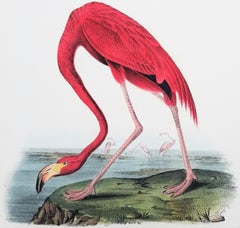
American Flamingo /// John James Audubon Natural History Ornithology Bird Litho
By John James Audubon
Located in Saint Augustine, FL
Artist: John James Audubon (American, 1785-1851)
Title: "American Flamingo" (Plate 375, No. 75)
Portfolio: The Birds of America, First Royal Octavo E...
Category
1840s Victorian Animal Prints
Materials
Watercolor, Lithograph
Townsend
s Cormorant /// John James Audubon Ornithology Bird Art Natural History
By John James Audubon
Located in Saint Augustine, FL
Artist: John James Audubon (American, 1785-1851)
Title: "Townsend's Cormorant" (Plate 418, No. 84)
Portfolio: The Birds of America, First Royal Octavo Edition
Year: 1840-1844
Medium: Original Hand-Colored Lithograph on wove paper
Limited edition: approx. 1,200
Printer: John T. Bowen, Philadelphia, PA
Publisher: John James Audubon and J.B. Chevalier, New York, NY and Philadelphia, PA
Sheet size: 10.13" x 6.5"
Image size: 4.38" x 5"
Condition: Light toning to sheet. Some light foxing and small areas of discoloration. Remnants of mounting tape from previous framing on verso. The white background was recently also hand-colored. In otherwise good condition with strong colors
Notes:
Provenance: private collection - Nashville, TN; acquired from a gallery in Nashville, TN. Lithography and hand-coloring by American artist John T. Bowen (1801-c.1856). Comes from Audubon's famous seven volume portfolio "The Birds of America", First Royal Octavo Edition (1840-1844), which consists of 500 hand-colored lithographs.
Based on a composition probably painted in London in 1838, from a specimen obtained near the mouth of the Columbia River.
Brandt's cormorant is a strictly marine bird of the cormorant family of seabirds that inhabits the Pacific coast of North America. It ranges, in the summer, from Alaska to the Gulf of California, but the population north of Vancouver Island migrates south during the winter.
To make 'The Birds of America' more affordable and widely available, in 1839 John James Audubon began the first octavo edition, a smaller version of the folio which was printed and hand-colored by J. T. Bowen in Philadelphia. Employing a new invention, the camera lucida, the images were reduced in size, rendered in intermediate drawings by John James Audubon and his son John Woodhouse, and then drawn onto lithographic stones. These miniatures exhibit a remarkable amount of attention to quality and detail, as well as a meticulous fidelity to the larger works. Some compositional changes were made in order to accommodate the smaller format. Like the Havell edition, John James Audubon’s first...
Category
1840s Victorian Animal Prints
Materials
Watercolor, Lithograph
You May Also Like
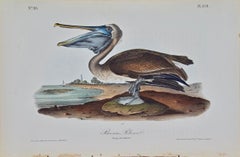
Brown Pelican: An Original Audubon 1st Edition Hand-colored Bird Lithograph
By John James Audubon
Located in Alamo, CA
This is an original rare and extremely collectible first octavo edition John James Audubon hand colored lithograph entitled "Brown Pelican, Young First Winter", No. 85, Plate 424, fr...
Category
Mid-18th Century Naturalistic Animal Prints
Materials
Lithograph
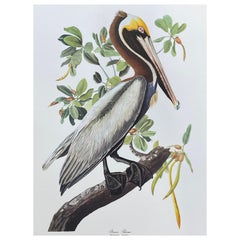
Large Classical Bird Color Print after John James Audubon - Brown Pelican
By After John James Audubon
Located in Cirencester, Gloucestershire
Classical Bird print,
after John James Audubon,
printed by Harry N. Abrams, Publishers, New York
unframed, 17 x 14 inches color print on pap...
Category
20th Century Victorian Animal Prints
Materials
Color
$147 Sale Price
20% Off
Large Classical Bird Color Print after John James Audubon, Brown Pelican
Located in Cirencester, Gloucestershire
Classical Bird print,
after John James Audubon,
printed by Harry N. Abrams, Publishers, New York
unframed, 17 x 14 inches color print on paper
condition: very good
provenance: from...
Category
20th Century Victorian Animal Prints
Materials
Acrylic
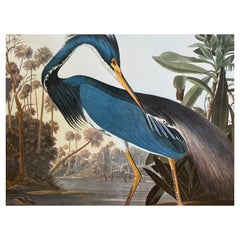
Large Classical Bird Color Print After John James Audubon, Louisiana Heron
Located in Cirencester, Gloucestershire
Classical Bird print,
after John James Audubon,
printed by Harry N. Abrams, Publishers, New York
unframed, 17 x 14 inches color print on paper
Condition: very good
Provenance: from...
Category
20th Century Victorian Animal Prints
Materials
Acrylic
Large Classical Bird Color Print after John James Audubon, Broad Winged Hawk
Located in Cirencester, Gloucestershire
Classical Bird print,
after John James Audubon,
printed by Harry N. Abrams, Publishers, New York
unframed, 17 x 14 inches color print on paper
condition: very good
provenance: from...
Category
20th Century Victorian Animal Prints
Materials
Acrylic
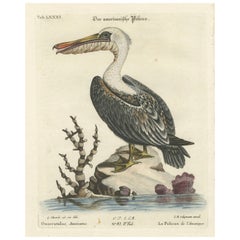
Hand-Colored Engraving of the American Pelican by Seligman, c.1770
Located in Langweer, NL
Title: Der Amerikanische Pelican - Hand-Colored Engraving of the American Pelican by Johann Michael Seligmann, 18th Century
This beautiful hand-colored engraving, titled 'Der Amerik...
Category
Antique 1770s German Prints
Materials
Paper
$654 Sale Price
20% Off