Want more images or videos?
Request additional images or videos from the seller
1 of 12
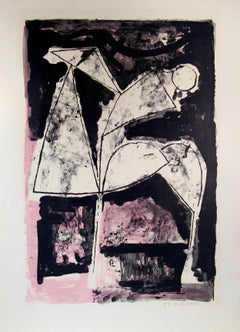
Kakulu SaggiaktokThe Protectress1997
1997
$1,700List Price
About the Item
- Creator:Kakulu Saggiaktok (1940 - 2020, Inuit, Canadian)
- Creation Year:1997
- Dimensions:Height: 25.75 in (65.41 cm)Width: 30.85 in (78.36 cm)Depth: 1.15 in (2.93 cm)
- Medium:
- Period:
- Condition:
- Gallery Location:San Francisco, CA
- Reference Number:Seller: sag/pro/011stDibs: LU666310576312
About the Seller
5.0
Platinum Seller
Premium sellers with a 4.7+ rating and 24-hour response times
Established in 1999
1stDibs seller since 2017
869 sales on 1stDibs
Authenticity Guarantee
In the unlikely event there’s an issue with an item’s authenticity, contact us within 1 year for a full refund. DetailsMoney-Back Guarantee
If your item is not as described, is damaged in transit, or does not arrive, contact us within 7 days for a full refund. Details24-Hour Cancellation
You have a 24-hour grace period in which to reconsider your purchase, with no questions asked.Vetted Professional Sellers
Our world-class sellers must adhere to strict standards for service and quality, maintaining the integrity of our listings.Price-Match Guarantee
If you find that a seller listed the same item for a lower price elsewhere, we’ll match it.Trusted Global Delivery
Our best-in-class carrier network provides specialized shipping options worldwide, including custom delivery.You May Also Like
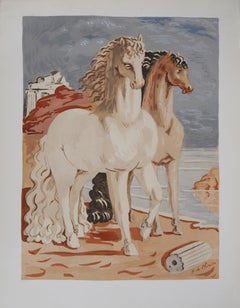
Horses in a Mythological Landscape - Lithograph
By Giorgio De Chirico
Located in Paris, IDF
Giorgio de CHIRICO
Horses in a Mythological Landscape, c. 1955
Lithograph and stencil (Jacomet workshop)
Printed signature in the plate
On light vellum 48 x 38 cm (c. 19 x 15 in)
V...
Category
1950s Surrealist Animal Prints
Materials
Lithograph, Stencil
$1,148 Sale Price
20% Off
H 18.9 in W 14.97 in
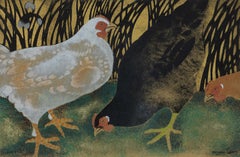
Three Hens by Georges Manzana Pissarro - Animal stencil
By Georges Henri Manzana Pissarro
Located in London, GB
Three Hens by Georges Manzana Pissarro (1871-1961)
Pochoir
31.8 x 48.3 cm (12 ½ x 19 inches)
Signed with Estate stamp and épreuve d'état
Provenance
Private Collection, London
Artis...
Category
19th Century Post-Impressionist Animal Prints
Materials
Stencil
$1,750
H 12.52 in W 19.02 in
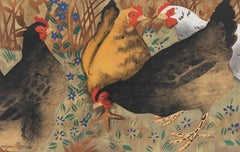
Les poules by Georges Manzana Pissarro - Stencil
By Georges Henri Manzana Pissarro
Located in London, GB
Les poules by Georges Manzana Pissarro (1871-19610
Pochoir
30 x 46 cm (11 ³/₄ x 18 ¹/₈ inches)
Signed with Estate stamp Manzana Pissarro and numbered 7/100 lower left
Artist biograp...
Category
20th Century Animal Prints
Materials
Stencil
$1,843
H 11.82 in W 18.12 in
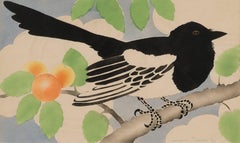
Magpie by Georges Manzana Pissarro - Stencil art, Animal
By Georges Henri Manzana Pissarro
Located in London, GB
Magpie by Georges Manzana Pissarro (1871-1961)
Pochoir
26.5 x 45 cm (10 ³/₈ x 17 ³/₄ inches)
Signed lower right manzana - Pissarro and numbered 2/100
Artist biograpraphy:
Like all s...
Category
1920s Animal Prints
Materials
Stencil
$1,911
H 10.44 in W 17.72 in
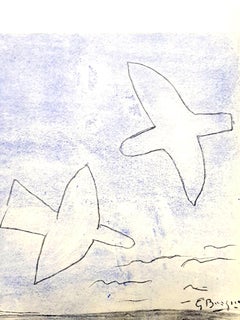
After Georges Braque - Oiseaux - Pochoir
By Georges Braque
Located in Collonge Bellerive, Geneve, CH
after Georges Braque
Oiseaux
Color Pochoir on Paper
Published in the deluxe art review, XXe Siecle (issue number 11 "Les nouveaux rapports de l'art et de la nature")
1958
Dimensions:...
Category
1950s Modern Figurative Prints
Materials
Stencil
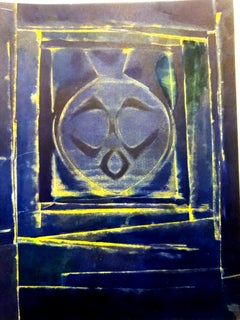
(after) Max Ernst - Blue Bird - Stencil
By (after) Max Ernst
Located in Collonge Bellerive, Geneve, CH
Max Ernst (after) - Blue Bird - Stencil
Published in the deluxe art review, XXe Siecle, 1958
Dimensions: 32 x 25 cm
Publisher: G. di San Lazzaro.
Max Ernst was born in Bruhl, a place near Cologne, in Germany. He was raised in a strict Catholic family, and both of his parents were disciplinarians who were dedicated to training their children into God-fearing and talented individuals. Although his father was deaf, Ernst learned so much from him, particularly when it comes to painting. In fact, much of his early years were lived under the inspiration of his father who was also a teacher. He was the one who introduced painting to Ernst at an early age.
In 1914, Ernst attended the University of Bonn where he studied philosophy. However, he eventually dropped out of school because he was more interested in the arts. He claimed that his primary sources of interest included anything that had something to do with painting. Moreover, he became fascinated with psychology, among other subjects in school.
Primarily, Ernst's love for painting was the main reason why he became deeply interested with this craft and decided to pursue it later on in his life. During his early years, he became familiar with the works of some of the greatest artists of all time including Claude Monet, Paul Cezanne and Vincent van Gogh. He was also drawn to themes such as fantasy and dream imagery, which were among the common subjects of the works of Giorgio de Chirico.
During World War I, Ernst was forced to join the German Army, and he became a part of the artillery division that exposed him greatly to the drama of warfare. A soldier in the War, Ernst emerged deeply traumatized and highly critical of western culture. These charged sentiments directly fed into his vision of the modern world as irrational, an idea that became the basis of his artwork. Ernst's artistic vision, along with his humor and verve come through strongly in his Dada and Surrealists works; Ernst was a pioneer of both movements.
It was Ernst's memories of the war and his childhood that helps him create absurd, yet interesting scenes in his artworks. Soon, he took his passion for the arts seriously when he returned to Germany after the war. With Jean Arp, a poet and artist, Ernst formed a group for artists in Cologne. He also developed a close relationship with fellow artists in Paris who propagated Avant-Garde artworks.
In 1919, Ernst started creating some of his first collages, where he made use of various materials including illustrated catalogs and some manuals that produced a somewhat futuristic image. His unique masterpieces allowed Ernst to create his very own world of dreams and fantasy, which eventually helped heal his personal issues and trauma. In addition to painting and creating collages, Ernst also edited some journals. He also made a few sculptures that were rather queer in appearance.
In 1920s, influenced by the writings of psychologist Sigmund Freud, the literary, intellectual, and artistic movement called Surrealism sought a revolution against the constraints of the rational mind; and by extension, they saw the rules of a society as oppressive. Surrealism also embraces a Marxist ideology that demands an orthodox approach to history as a product of the material interaction of collective interests, and many renown Surrealism artists later on became 20th century Counterculture symbols such as Marxist Che Guevara. In 1922 Ernst moved to Paris, where the surrealists were gathering around Andre Breton. In 1923 Ernst finished Men Shall Know Nothing of This, known as the first Surrealist painting. Ernst was one of the first artists who apply The Interpretation of Dreams by Freud to investigate his deep psyche in order to explore the source of his own creativity. While turning inwards unto himself, Ernst was also tapping into the universal unconscious with its common dream imagery.
Despite his strange styles, Ernst gained quite a reputation that earned him some followers throughout his life. He even helped shape the trend of American art during the mid-century, thanks to his brilliant and extraordinary ideas that were unlike those of other artists during his time. Ernst also became friends with Peggy Guggenheim, which inspired him to develop close ties with the abstract expressionists.
When Ernst lived in Sedona, he became deeply fascinated with the Southwest Native American navajo art. In fact, the technique used in this artwork inspired him and paved the way for him to create paintings that depicted this style. Thus, Ernst became a main figure of this art technique, including the rituals and spiritual traditions included in this form of art. Pollock, aside from the other younger generations of abstract expressionists, was also inspired by sand painting of the Southwest...
Category
1950s Surrealist Animal Prints
Materials
Stencil
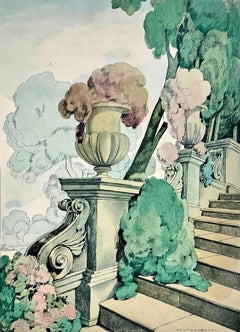
Brunelleschi, Composition, La Leçon d
amour dans un parc (after)
By Umberto Brunelleschi
Located in Southampton, NY
Lithograph and stencil on vélin d’Arches paper. Unsigned and unnumbered, as issued. Good condition. Notes: From the volume, La Leçon d'amour dans un parc, 1933. Published by Éditions...
Category
1930s Modern Landscape Prints
Materials
Lithograph, Stencil
$1,436 Sale Price
20% Off
Free Shipping
H 13.11 in W 10.039 in
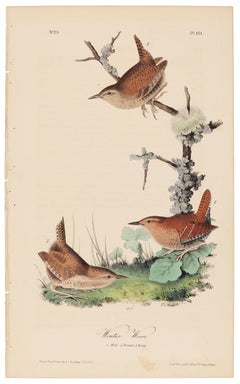
Winter Wren
By John James Audubon
Located in Columbia, MO
John James Audubon was born in Haiti in 1785. Most of his childhood was spent in France, where he first took interest in birds and drawing. He came to the U.S. at age 18, and made ma...
Category
19th Century American Realist Animal Prints
Materials
Lithograph
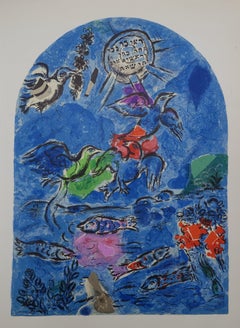
Bible : Ruben, Ocean, Sky and Sun - Lithograph (Mourlot 1962)
By Marc Chagall
Located in Paris, IDF
Marc CHAGALL (1887-1985)
Bible : Ruben, Ocean, Sky and Sun, 1962
Lithograph (Mourlot workshop)
Unsigned
On Vellum 32.5 x 24 cm
INFORMATION: Lithograph produced by Chagall in 1962 f...
Category
1960s Modern Animal Prints
Materials
Lithograph
$239
H 12.8 in W 9.45 in
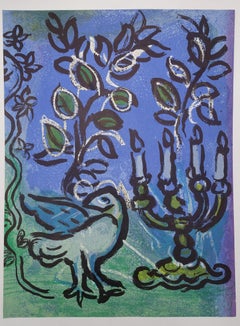
Bible : Dove and Menorah candlestick - Original Lithograph
By Marc Chagall
Located in Paris, IDF
Marc CHAGALL (1887-1985)
Bible : Dove and Menorah candlestick, 1962
Original lithograph (Mourlot workshop)
Unsigned
On Vellum 32.5 x 24 cm
REFERENCE: Mourlot catalog raisonné #366
...
Category
1960s Modern Animal Prints
Materials
Lithograph
More From This Seller
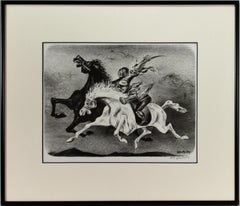
View AllHorsemen
By William Gropper
Located in San Francisco, CA
This artwork titled "The Horsemen" 1935, is an original lithograph on paper by noted American artist William Gropper, 1897-1977. It is hand signed in pencil by the artist. The artwork (image) size is 9.5 x 12.75 inches, framed size is 17.5 x 20.40 inches. Published by Associated American Artists, New York, printed by George Miller. Referenced and pictured in the artist catalogue raisonne by Steinberg, page 246 and Windisch and Cole, plate #602. Custom framed in a black metal frame, with off white matting. It is in excellent condition, the frame have very minor scratches.
An example of this particular artwork is held at the Metropolitan Museum of Art, New York. and at the Portland Museum, Portland.
About the artist:
William Gropper was born in New York City's Lower East Side in 1897. He was the first of six children to parents who earned small wages working in sweatshops. At the age of fourteen, Gropper left school to help support his family. While carrying bolts of cloth for his deliveries, Gropper began to draw on scraps of paper, sidewalks, and walls. A passerby saw some of these drawings and invited Gropper to attend a life-drawing class at the Ferrer School. He studied there for three years from 1912 to 1915, attending classes taught by Robert Henri and George Bellows. From 1915 to 1918 Gropper attended the New York School of Fine and Applied Art part-time on scholarship. Gropper also won a scholarship to the National Academy of Design, but remained as a student for only a short time; the rigid and systematic institution conflicted with Gropper's belief in the personal nature of art.
At the New York School of Fine and Applied Art, Gropper earned several prizes. One of these prizes was for his cartoons, which led him to be hired by the New York Tribune in 1917 to sketch for their features. A few years later through freelance work, his cartoons and drawings appeared in other newspapers and magazines, such as The Liberator, The New Masses, The New York Post, The New Yorker and Vanity Fair.
By the late 1920s Gropper was an established cartoonist and draughtsman. He sympathized with the labor movement and was a champion of peace and personal liberty. Gropper began to paint seriously, but privately, on these themes in 1921. Gropper's first exhibition of monotypes was held in 1921 at the Washington Square Book Shop in New York. At this time, he also began to do illustrations for books. Gropper took his first sketching trip in 1924 to the West with Morris Pass.
By 1930 Gropper began to receive recognition as a fine artist. In 1934, he received two mural commissions from the Schenley Corporation in New York City. In 1935, he was commissioned to paint a mural for the Hotel Taft in New York City. In 1936, Gropper received several public mural commissions: one was for the Freeport, Long Island Post Office, which was completed in 1938 and followed by another mural for the Northwestern Postal Station, Detroit, Michigan.
In his first gallery exhibition in 1936 at ACA Galleries, Gropper's work was so well received by critics, collectors, and artists that the following year he had two one-man exhibitions at ACA Galleries. In 1937, Gropper traveled west on a Guggenheim Fellowship and visited the Dust Bowl and the Hoover and Grand Coulee Dams, sketching studies for a series of paintings and a mural he painted for the Department of the Interior in Washington, DC. That same year he had paintings purchased by both the Metropolitan Museum of Art and the Museum of Modern Art.
Gropper exhibited at the 1939 New York World's Fair, Whitney Museum of American Art (1924-55), Art Institute of Chicago (1935-49), Carnegie International (1937-50), Pennsylvania Academy of the Fine Arts (1939-48), and National Academy of Design (1945-48). He was a founder of the Artists Equity Association and member of the National Institute of Arts and Letters.
From 1940 to 1945 William Gropper was preoccupied with anti-Nazi cartoons...
Category
Mid-20th Century American Realist Figurative Prints
Materials
Lithograph
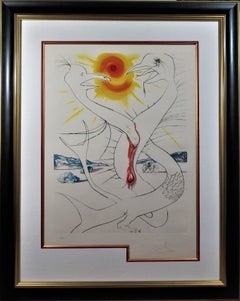
Le Caducee de Mars Alimente par la Boule de feu de Jupiter
By Salvador Dalí
Located in San Francisco, CA
Artist: Salvador Dali (Spanish surrealist, 1904-1989)
Title: Le Caducee de Mars Alimente par la Boule de feu de Jupiter
Year: 1974
Medium: Etching with embossing and color lithograph...
Category
Late 20th Century Surrealist Abstract Prints
Materials
Etching, Lithograph
Impressionabilita
By Marino Marini
Located in San Francisco, CA
This artwork titled "Impressionabilita" 1969, is an original color screen print on wove by noted Italian artist Marino Marini, 1901-1980. It is hand signed and numbered 93/125 in pen...
Category
Mid-20th Century Post-Modern Animal Prints
Materials
Screen
Two Horses
By Kaiko Moti
Located in San Francisco, CA
This artwork "Two Horses" 1964, is an original color aquatint on paper by noted Indian artist Kaiko Moti, 1921-1989. It is hand signed and numbered 107/120 in pencil by the artist. ...
Category
Mid-20th Century Impressionist Animal Prints
Materials
Aquatint
"Bunter Reiter II" Large original colors lithograph
By Marino Marini
Located in San Francisco, CA
This artwork titled "Bunter Reiter II" 1976, is an original color lithograph on wove paper by noted Italian artist Marino Marini, 1901-1980. It is hand signed and numbered 22/75 in p...
Category
Mid-20th Century Post-Modern Animal Prints
Materials
Lithograph

"l
Attesa" Large original colors lithograph
By Marino Marini
Located in San Francisco, CA
This artwork titled "l'Attesa" 1965, is an original color lithograph on BFK Rives paper by noted Italian artist Marino Marini, 1901-1980. It is hand signed and numbered 38/60 in penc...
Category
Mid-20th Century Post-Modern Animal Prints
Materials
Lithograph