Want more images or videos?
Request additional images or videos from the seller
1 of 5

Ludovic-Rodo Pissarro
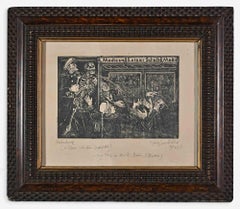
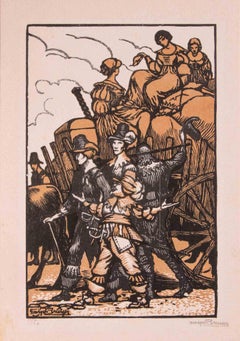
The Grim Reaper by Ludovic-Rodo Pissarro - Colour woodcut

circa 1915

$680.39
£500
€584.33
CA$940.88
A$1,024.38
CHF 546.98
MX$12,365.83
NOK 6,876.58
SEK 6,396.02
DKK 4,364.64

About the Item

The Grim Reaper by Ludovic-Rodo Pissarro (1878-1952) Colour woodcut 17 x 14.3 cm (6 ³/₄ x 5 ⁵/₈ inches) Initialled in the plate lower right, LR Exhibition: London, Stern Pissarro Gallery, Camille Pissarro his Descendants - A Tradition of Printmaking, October 2003, no. 61 (illustrated) Artist biography: Ludovic-Rodolphe Pissarro, born in Paris in 1878, was Camille Pissarro’s fourth son. Encouraged by his father, he began drawing from nature at an early age. He was familiarly known as “Rodo” and generally signed his works "Ludovic-Rodo", or early on in his career simply "Rodo". The impact of Camille’s art and teaching on Rodo was considerable. His artistic production encompassed a wide range of media, including oil painting, tempera, watercolour, gouache, wood engraving, drawing and lithography. Rodo exhibited regularly at the Salon des Indépendants over a forty-year period. In 1894, at the age of sixteen, Rodo published his first wood engravings in the anarchist journal, Le Père Peinard. When Camille left France for the safety of Belgium during the anarchist upheavals of the same year, Rodo joined him there. Rodo moved into his first studio in Montmartre with his brother Georges in 1898. Works of this early important period until just after the death of his father in 1903 were post-impressionist and clearly painted under the influence of his father. By 1904 living in Paris, he found the nightlife and the habitués of the cafes, theatres, circuses and cabarets compelling subjects for his work and changed dramatically the style of his painting, affiliating himself to the Fauve artists. Rodo became close to artists such as Kees Van Dongen, Maurice de Vlaminck and Raoul Dufy. In 1905 he participated in the first Fauve exhibition at the Salon des Indépendants. In 1907 he visited Van Dongen in Rotterdam and the two artists continued to paint together, something they often did in Paris. In 1914 he married, though he never had children. Later that year at the outbreak of the War Rodo moved to England. Over the next seven years he lived mainly in and around West London. He worked closely with his brother Lucien to establish in 1915 the Monarro Group, formed with the aim of exhibiting work by contemporary artists inspired by Impressionism. Many of the works produced by Rodo while he was in England were of London landmarks but, he was also interested in the urbanisation of West London. After 1921, when Rodo had already returned to France, he divided his time between Paris and Les Andelys in Normandy, living and working closely with his elder brother Georges Manzana. Despite his rich artistic heritage and his achievements as an artist, Rodo is perhaps best remembered for his contribution to art history. For ten years he researched and compiled a catalogue of his father’s paintings – a project that was finally published in two volumes in 1939 and the first catalogue raisonné of Camille Pissarro’s paintings. Rodo enjoyed a rich career travelling extensively painting and exhibiting throughout Normandy, Brittany, Paris, London, the south coast of England, Jersey, Rotterdam, Germany, and Belgium. His works can be found in many museums including the Ashmolean Museum in Oxford and the Museum of Fine Art in Boston.
  • Creator:
    Ludovic-Rodo Pissarro (1878 - 1952, French)
  • Creation Year:
    circa 1915
  • Dimensions:
    Height: 6.7 in (17 cm)Width: 5.63 in (14.3 cm)
  • Medium:
  • Period:
  • Condition:
  • Gallery Location:
    London, GB
  • Reference Number:
    1stDibs: LU261213116592

More From This Seller

View All
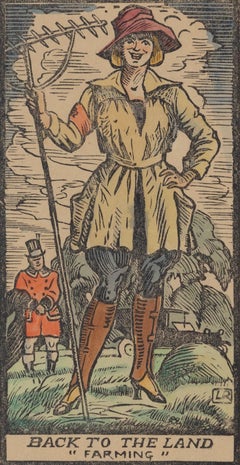
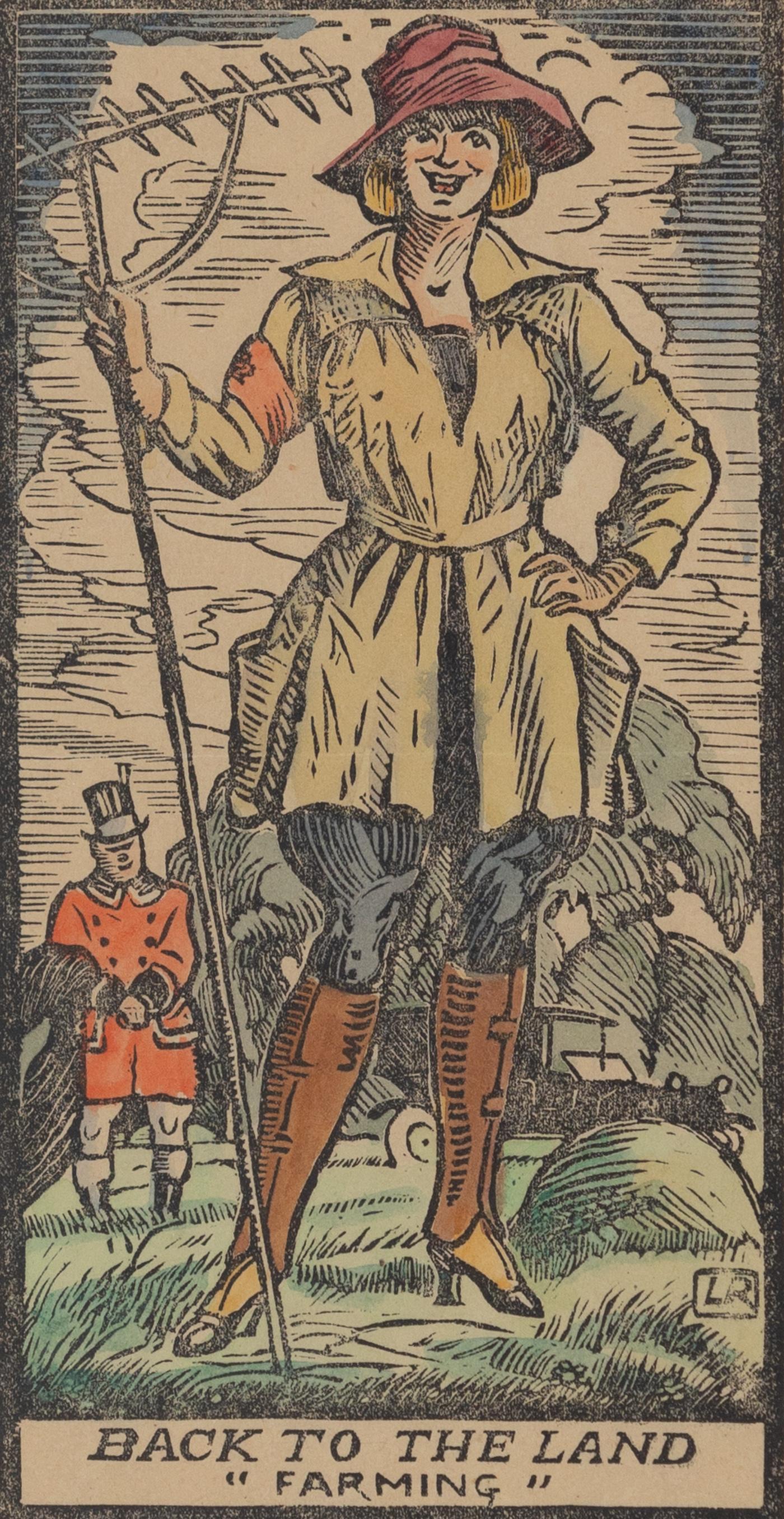
Back to the Land “Farming” by Ludovic-Rodo Pissarro - Colour woodcut
By Ludovic-Rodo Pissarro
Located in London, GB
Back to the Land “Farming” by Ludovic-Rodo Pissarro (1878-1952) Colour wood engraving 19.3 x 10.5 cm (7 ⁵/₈ x 4 ¹/₈ inches) Initialed and titled in the plate and numbered, 4th state ...
Category

1910s Figurative Prints

Materials

Color, Woodcut

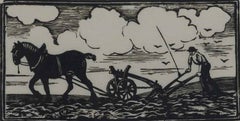
Man Ploughing by Paulémile Pissarro - Wood Engraving Print
Located in London, GB
Man Ploughing by Paulémile Pissarro (1884 - 1972) Wood engraving 7 x 13 cm (2 ³/₄ x 5 ¹/₈ inches) Signed lower right, Paulémile Pissarro and numbered lower left, 4/5 Artist's Biogra...
Category

20th Century Figurative Prints

Materials

Wood, Engraving

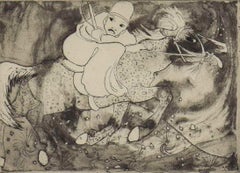
Fear Ridden by Orovida Pissarro, 1926 - Etching Print
By Orovida Pissarro
Located in London, GB
Fear Ridden by Orovida Pissarro (1893 - 1968) Etching 12.8 x 17.5 cm (5 x 6 ⅞ inches) Signed and dated lower right Orovida 1926 Inscribed lower left Final state no. 12/23 and titled ...
Category

1920s Figurative Prints

Materials

Etching

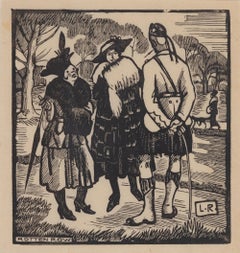
Rotten Row (Hyde Park) by Ludovic-Rodo Pissarro - Wood engraving
By Ludovic-Rodo Pissarro
Located in London, GB
SOLD UNFRAMED Rotten Row (Hyde Park) by Ludovic-Rodo Pissarro (1878-1952) Wood engraving 13.5 x 12.5 cm (5 ¼ x 4 ⅞ inches) Initialed and titled in the plate Executed circa 1917 Artist biography Ludovic-Rodolphe Pissarro, born in Paris in 1878, was Camille Pissarro’s fourth son. Encouraged by his father...
Category

1910s Figurative Prints

Materials

Engraving, Woodcut

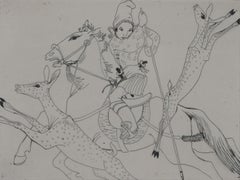
The Hunting Prince by Orovida Pissarro - Etching
By Orovida Pissarro
Located in London, GB
The Hunting Prince by Orovida Pissarro (1893 - 1968) Etching 15 x 20 cm (5 ⅞ x 7 ⅞ inches) Signed and dated lower right Orovida 1926 Inscribed lower left Trial proof no.14 and titled lower middle Provenance: Private collection, Europe Artist biography: Orovida Camille Pissarro, Lucien and Esther Pissarro’s only child, was the first woman in the Pissarro family as well as the first of her generation to become an artist. Born in Epping, England in 1893, she lived and worked predominantly in London where she became a prominent member of several British arts clubs and societies. She first learned to paint in the Impressionist style of her father, but after a brief period of formal study with Walter Sickert in 1913 she renounced formal art schooling. Throughout her career, Orovida always remained outside of any mainstream British art movements. Much to Lucien's disappointment she soon turned away from naturalistic painting and developed her own unusual style combining elements of Japanese, Chinese, Persian and Indian art. Her rejection of Impressionism, which for the Pissarro family had become a way of life, together with the simultaneous decision to drop her famous last name and simply use Orovida as a ‘nom de peintre’, reflected a deep desire for independence and distance from the weight of the family legacy. Orovida's most distinctive and notable works were produced from the period of 1919 to 1939 using her own homemade egg tempera applied in thin, delicate washes to silk, linen or paper and sometimes embellished with brocade borders. These elegant and richly decorative works generally depict Eastern, Asian and African subjects...
Category

1920s Animal Prints

Materials

Etching

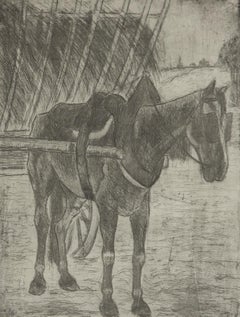
Horse Pulling Hay Cart by Félix Pissarro - Animal etching, 19th century
By Félix Pissarro
Located in London, GB
Horse Pulling Hay Cart by Félix Pissarro (1874-1897) Etching 19.5 x 15 cm (7 ⅝ x 5 ⅞ inches) Exhibition London, Stern Pissarro Gallery, Camille Pissarro & his Descendants - A Tradit...
Category

1890s Post-Impressionist Animal Prints

Materials

Etching

You May Also Like

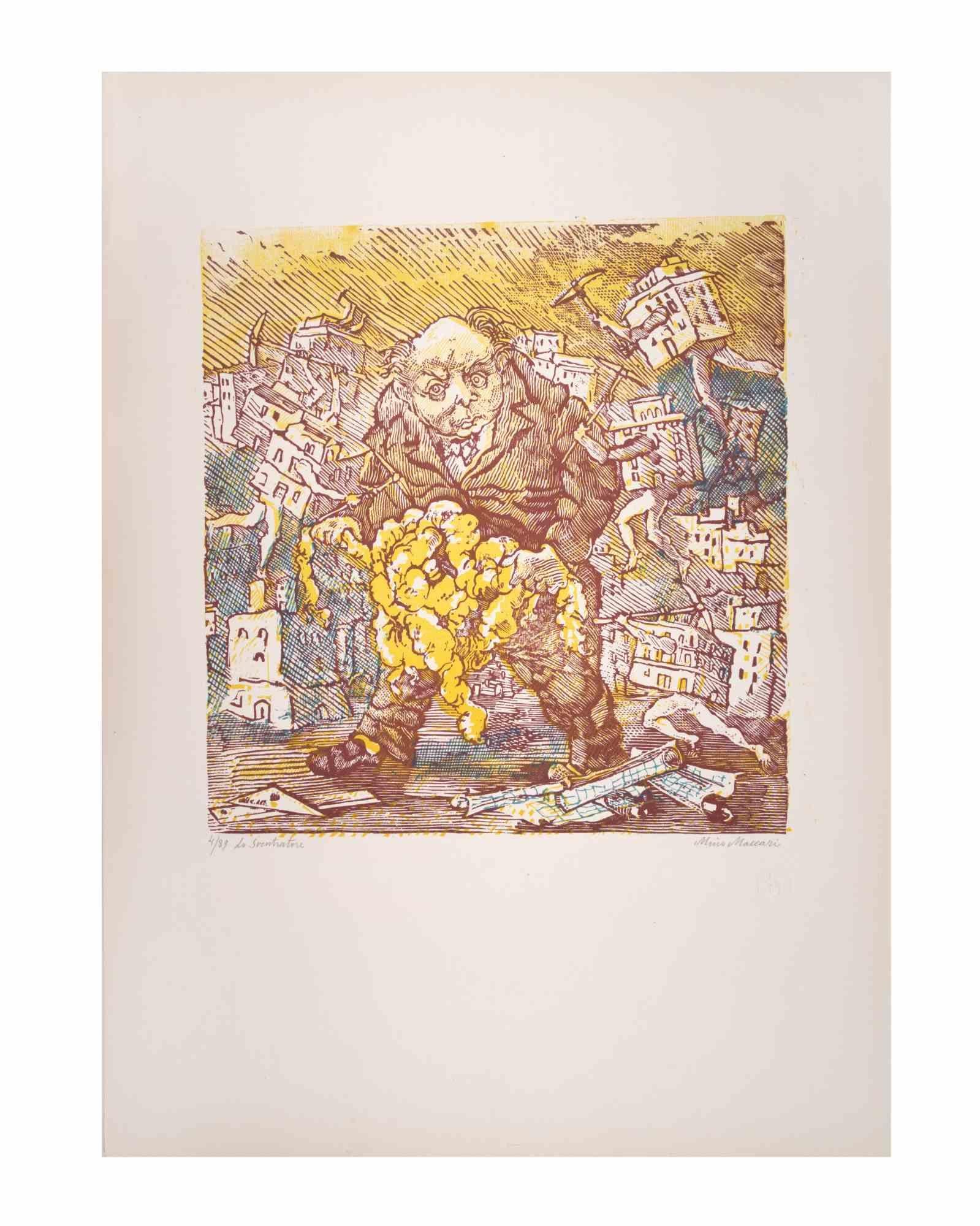
The Reaper - Woodcut by Mino Maccari - Mid-20th Century
By Mino Maccari
Located in Roma, IT
The Reaper is an Artwork realized by Mino Maccari  (1924-1989) in the Mid-20th Century. Colored woodcut on paper. Hand-signed on the lower, numbered 4/89 specimens and titled on the...
Category

Mid-20th Century Modern Figurative Prints

Materials

Woodcut

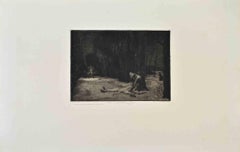
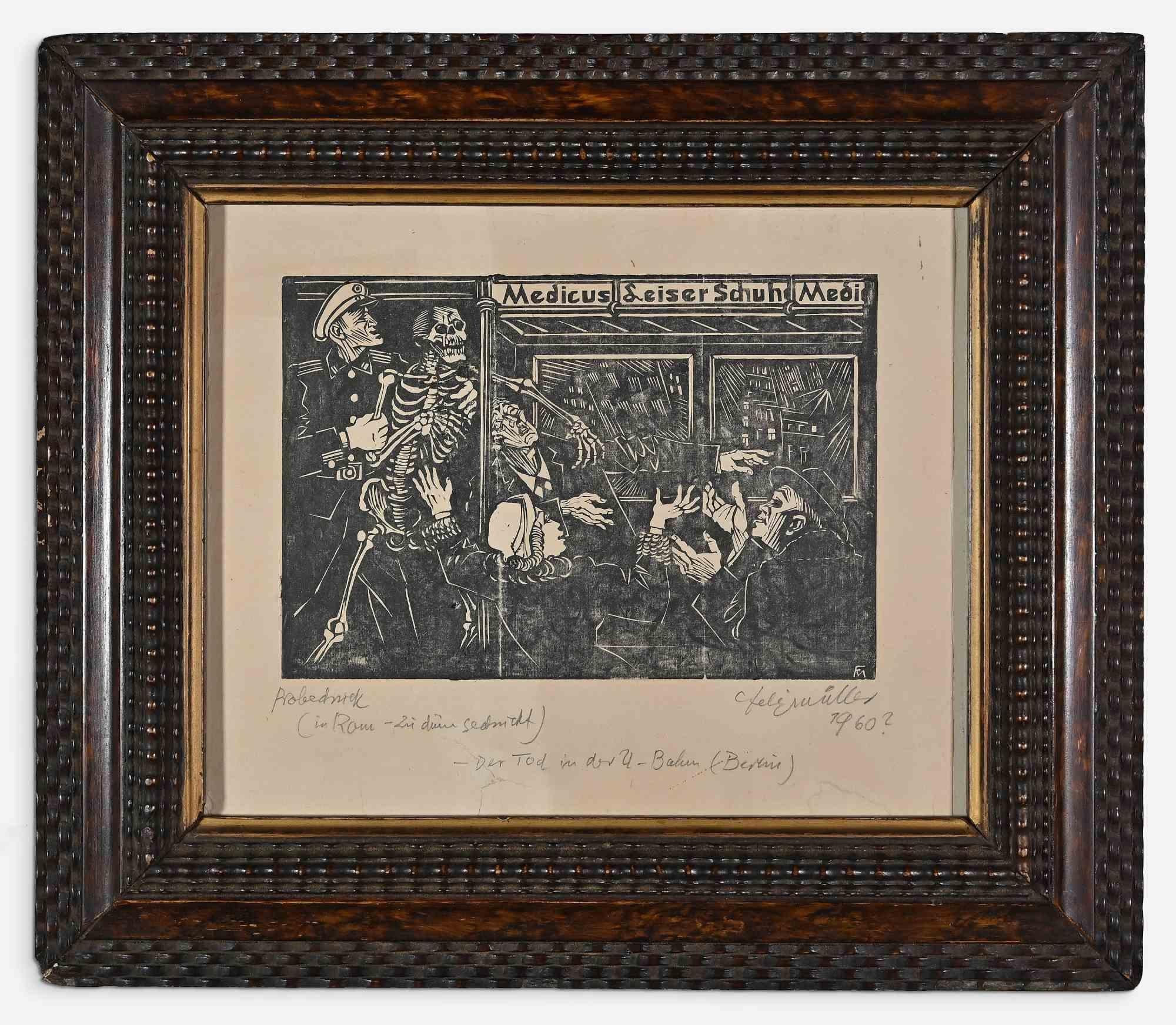
The Death - Woodcut Print by Conrad Felixmüller - 1960 ca
By Conrad Felixmuller
Located in Roma, IT
The Death is a woodcut print realized by Conrad FelixMuller (1897-1977) in the 1960s. Autographed note by the artist in the right margin. 36x42 cm with frame. Good conditions.
Category

1960s Expressionist Figurative Prints

Materials

Woodcut

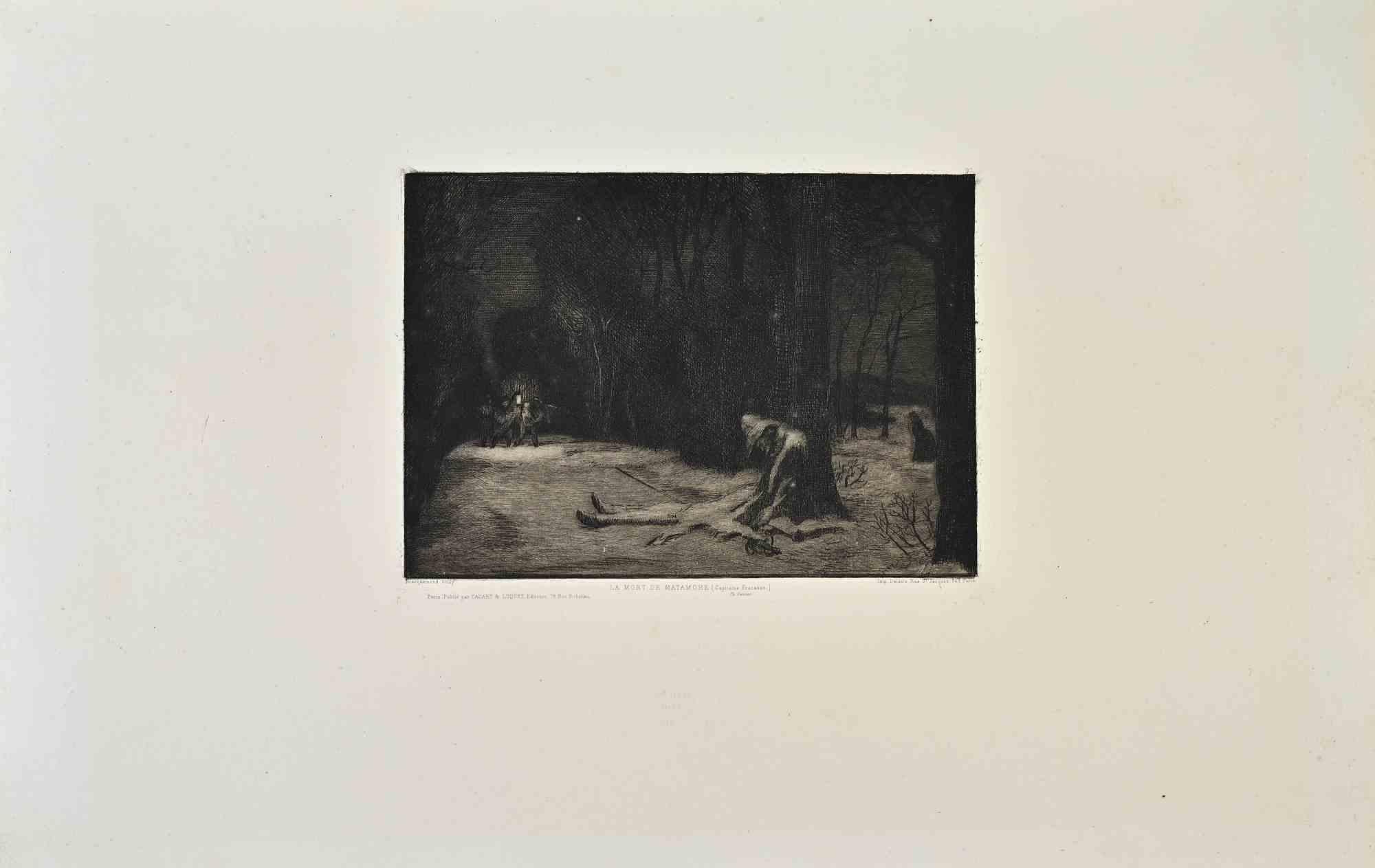
La Mort de Matamore (Capitain Fracasse)-Etching by Félix Bracquemond-1860s
By Félix Bracquemond
Located in Roma, IT
Etching on laid paper Signed in plate lower left: Bracquemond Published by Cadart Luquet, Éditeurs, 79 Rue Richelieu, Paris With the blindstamp of the Société des Aquafortistes...
Category

1860s Modern Figurative Prints

Materials

Etching

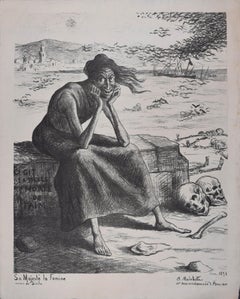
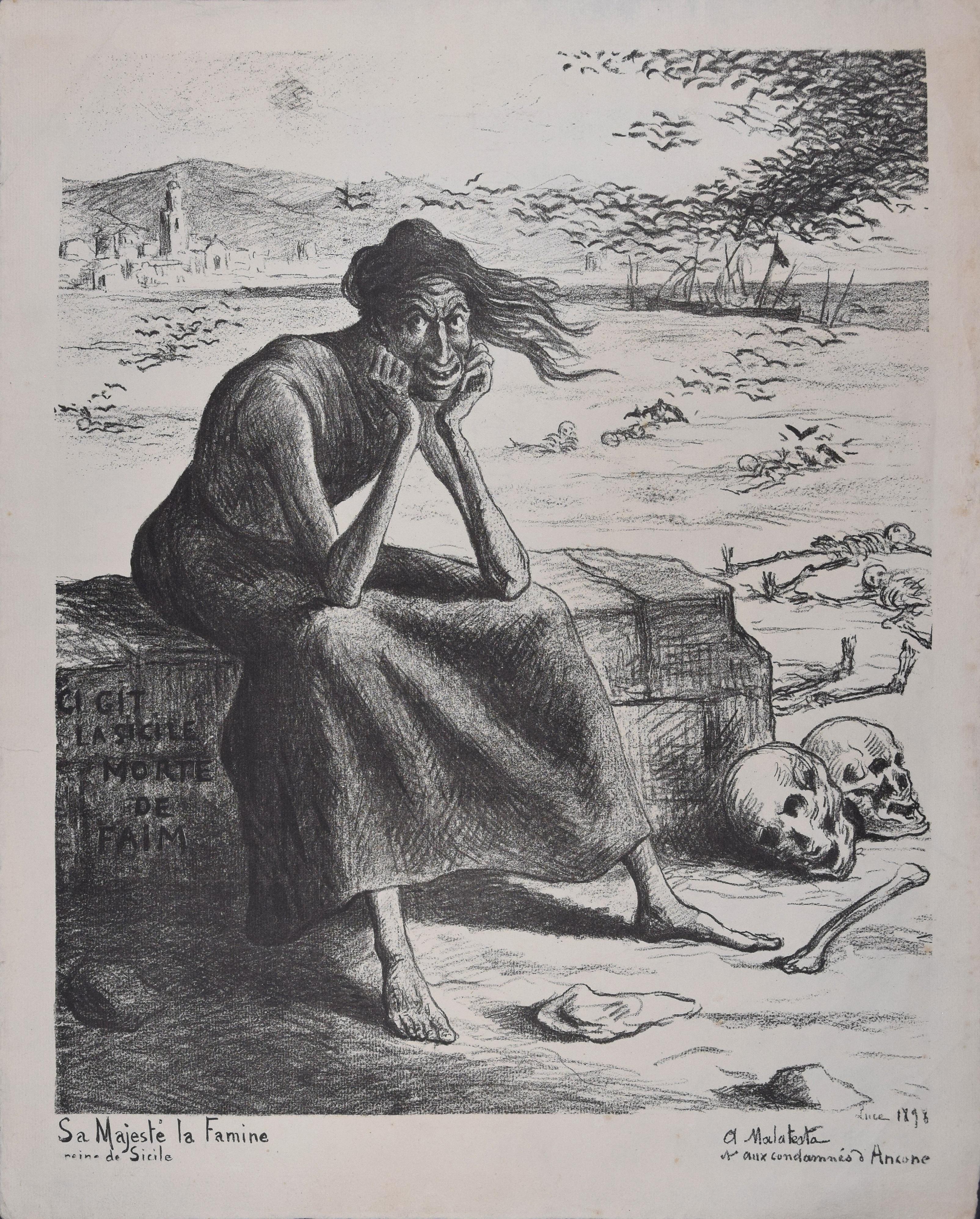
Sa Majesté la Famine - Original Lithograph by Maximilien Luce - 1898
By Maximilien Luce
Located in Roma, IT
Sa Majesté la famine is a beautiful black and white lithograph realized in 1898 by the French artist, Maximilien Luce. Signed and dated on plate on lower right margin "Luce 1898". T...
Category

1890s Post-Impressionist Figurative Prints

Materials

Lithograph

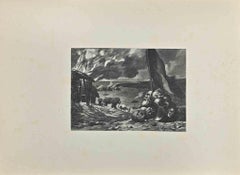
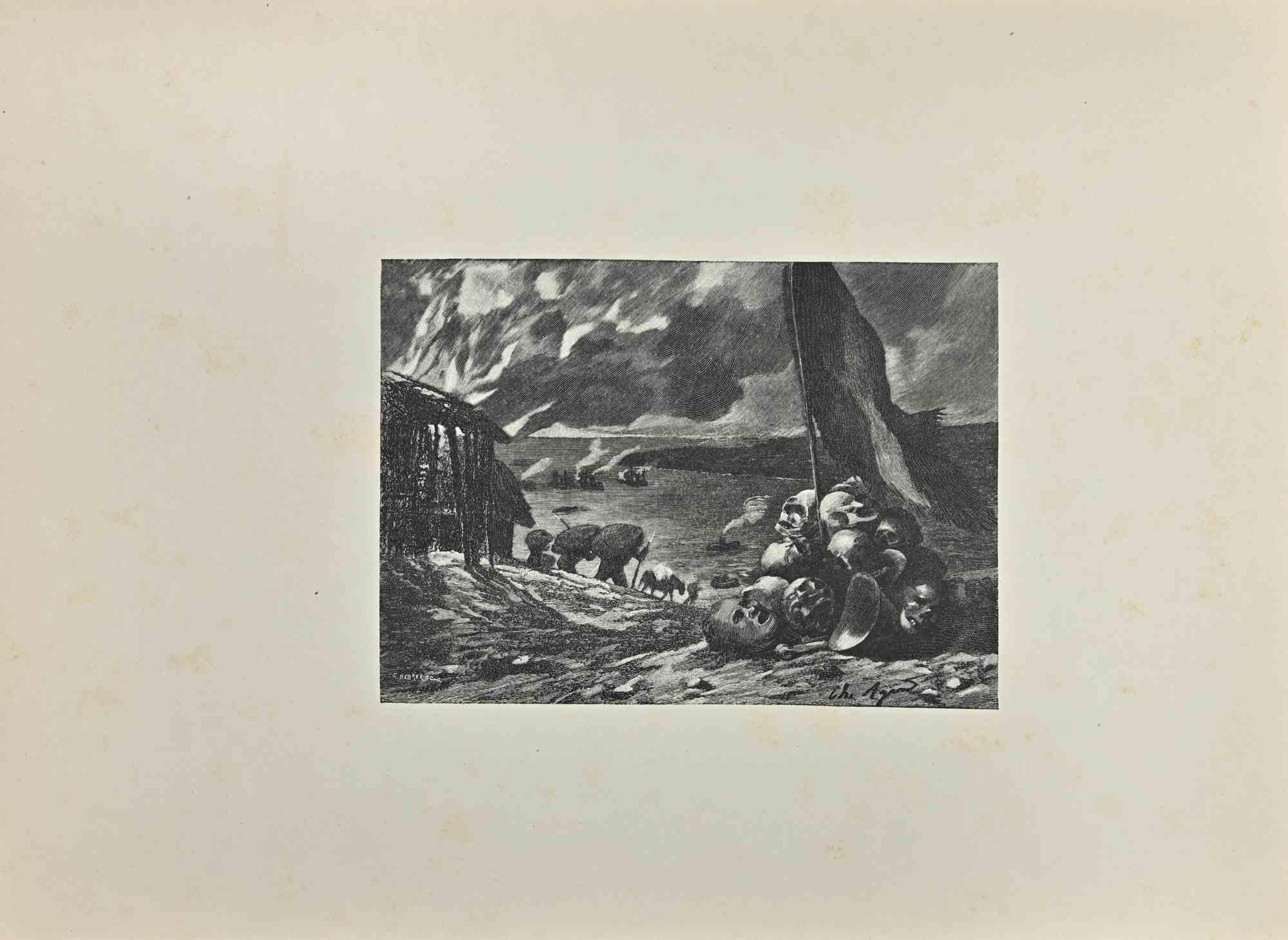
Shadowing Death - Woodcut Print by Georges Berger - Early 20th Century
By Georges Berger
Located in Roma, IT
Shadowing Death is a woodcut print on paper realized by French artist in 1900s G. Berger. Signed on the plate on the lower right. The state of preservation is very good. The artwork represents the dark scenery of skulls and dead in a dark stormy...
Category

Early 20th Century Modern Figurative Prints

Materials

Woodcut

The Migration - Woodcut Print by Georges Bruyer - Early 20th Century
Located in Roma, IT
The Migration is an original artwork realized by Georges Bruyer (1883-1962. Original woodcut print on paper, realized on early-20th century, hand signed in pencil by the artist on t...
Category

Early 20th Century Modern Figurative Prints

Materials

Woodcut