Early 18th Century Animal Prints
to
5
7
10
1
Overall Width
to
Overall Height
to
9
4
3
1
1
715
1,424
2,666
1,941
31
29
67
173
102
138
250
604
366
352
680
17
1
9
9
6
5
5
5
4
4
3
2
2
2
1
1
1
1
1
1
1
1
14
9
9
4
10
1
Period: Early 18th Century
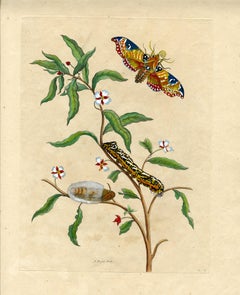
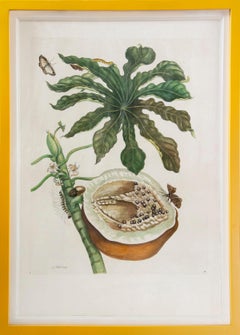
Tree with moth, caterpillar..., Plate 39, Metamorphosis Insectorum Surinamensium
Located in Middletown, NY
Metamorphosis Insectorum Surinamensium, Plate No. 39; Unidentified tree with moth, caterpillar and pupa.
The Netherlands: 1705....
Category
Naturalistic Early 18th Century Animal Prints
Materials
Watercolor, Engraving
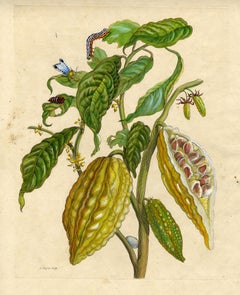
Cocoa plant, caterpillar, ..., Plate 26, Metamorphosis Insectorum Surinamensium
Located in Middletown, NY
Metamorphosis Insectorum Surinamensium, Plate No. 26; Cocoa plant, caterpillar, pupa, and butterflies. The Netherlands: 1705. En...
Category
Naturalistic Early 18th Century Animal Prints
Materials
Watercolor, Engraving
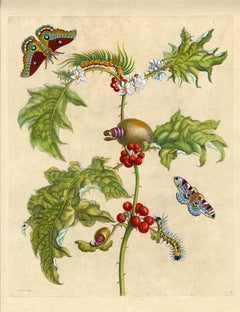
Thistle and Moths, plate no. 6, Metamorphosis Insectorum Surinamensium
Located in Middletown, NY
Metamorphosis Insectorum Surinamensium, Plate No. 6; Thistle and Moths. The Netherlands: 1705. Engraving with hand coloring in w...
Category
Naturalistic Early 18th Century Animal Prints
Materials
Watercolor, Engraving
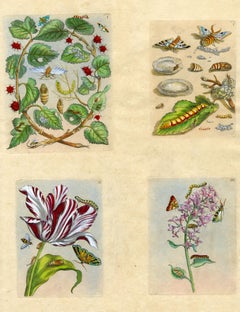
4 plates from The Wondrous Transformation of Caterpillars
their Strange Diet..
Located in Middletown, NY
Four plates from The Wondrous Transformation of Caterpillars and their Strange Diet of Flowers. “Wolfsmelk Rupsen;" “Wolfsmilch, Raupe und Schmetterling" Amsterdam: J F Bernard, 1730. Each an engraving with hand coloring in watercolor and gouache printed on one sheet of watermarked Honig cream laid paper, each measures 6 1/4 x 5 inches (157 x 121 mm), sheet measures 20 5/8 x 14 inches (522 x 355 mm), full margins. With handling creases in the lower right sheet quadrant, as well as minor, loose cockling, otherwise in very good condition. The colors are superb with exceptionally fresh and bright saturation. Engraved between 1679 and 1683, printed 1730. Plates included: No.1:I; No. 2:1; II & III.
MARIA SIBYLLA MERIAN was one of the most highly respected entomologists of the 17th century, and remains today one of the field's most significant figures. A German-born naturalist and scientific illustrator, she reared herself on the study of caterpillars, and made tremendous contributions to the knowledge of the life cycles of numerous species. Until her detailed and careful study of the process of metamorphosis it was thought that insects were "born of mud," through spontaneous generation.
Trained as a miniature painter by her stepfather, she published her first book of illustrations in 1675, at the age of 28. In 1679, Merian published the first volume of the two-volume series on caterpillars, The Wondrous Transformation of Caterpillars and their Strange Diet of Flowers; the second volume followed in 1683. Each volume contained 50 plates that she engraved and etched. In 1699, Merian traveled to Dutch Guiana...
Category
Naturalistic Early 18th Century Animal Prints
Materials
Watercolor, Engraving
4 plates from The Wondrous Transformation of Caterpillars
their Strange Diet..
Located in Middletown, NY
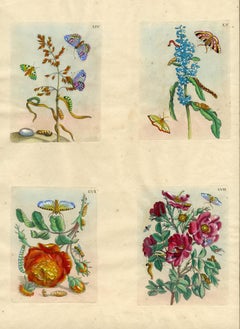
Four plates from The Wondrous Transformation of Caterpillars and their Strange Diet of Flowers. “Wolfsmelk Rupsen;" “Wolfsmilch, Raupe und Schmetterling" Amsterdam: J F Bernard, 1730. Each an engraving with hand coloring in watercolor and gouache printed on one sheet of watermarked Honig cream laid paper, each measures 6 1/4 x 5 inches (157 x 121 mm), sheet measures 20 5/8 x 14 inches (522 x 355 mm), full margins. With handling creases in the lower right sheet quadrant, as well as minor, loose cockling, otherwise in very good condition. The colors are superb with exceptionally fresh and bright saturation. Engraved between 1679 and 1683, printed 1730. Plates included: LIV, LV, LVI, & LVII.
MARIA SIBYLLA MERIAN was one of the most highly respected entomologists of the 17th century, and remains today one of the field's most significant figures. A German-born naturalist and scientific illustrator, she reared herself on the study of caterpillars, and made tremendous contributions to the knowledge of the life cycles of numerous species. Until her detailed and careful study of the process of metamorphosis it was thought that insects were "born of mud," through spontaneous generation.
Trained as a miniature painter by her stepfather, she published her first book of illustrations in 1675, at the age of 28. In 1679, Merian published the first volume of the two-volume series on caterpillars, The Wondrous Transformation of Caterpillars and their Strange Diet of Flowers; the second volume followed in 1683. Each volume contained 50 plates that she engraved and etched. In 1699, Merian traveled to Dutch Guiana...
Category
Naturalistic Early 18th Century Animal Prints
Materials
Watercolor, Engraving
4 plates from The Wondrous Transformation of Caterpillars
their Strange Diet..
Located in Middletown, NY
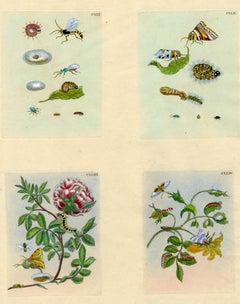
Four plates from The Wondrous Transformation of Caterpillars and their Strange Diet of Flowers. “Wolfsmelk Rupsen;" “Wolfsmilch, Raupe und Schmetterling" Amsterdam: JF Bernard, 1730. Each an engraving with hand coloring in watercolor and gouache printed on one sheet of watermarked Honig cream laid paper, each measures 6 1/4 x 5 inches (157 x 121 mm), sheet measures 20 5/8 x 14 inches (522 x 355 mm), full margins. With handling creases in the lower right sheet quadrant, as well as minor, loose cockling, otherwise in very good condition. The colors are superb with exceptionally fresh and bright saturation. Engraved between 1679 and 1683, printed 1730. Plates included: CXLI, CXLII, CXIII & CXLIV.
MARIA SIBYLLA MERIAN was one of the most highly respected entomologists of the 17th century, and remains today one of the field's most significant figures. A German-born naturalist and scientific illustrator, she reared herself on the study of caterpillars, and made tremendous contributions to the knowledge of the life cycles of numerous species. Until her detailed and careful study of the process of metamorphosis it was thought that insects were "born of mud," through spontaneous generation.
Trained as a miniature painter by her stepfather, she published her first book of illustrations in 1675, at the age of 28. In 1679, Merian published the first volume of the two-volume series on caterpillars, The Wondrous Transformation of Caterpillars and their Strange Diet of Flowers; the second volume followed in 1683. Each volume contained 50 plates that she engraved and etched. In 1699, Merian traveled to Dutch Guiana...
Category
Naturalistic Early 18th Century Animal Prints
Materials
Watercolor, Engraving
[ Bird of Paradise] La Pie de paradise, vue par derriere, No.21
Located in Paonia, CO
[ Bird of Paradise] La Pie de paradise, vue par derriere , No.21, Paris 1801-1806 [Astrapia nigra]. Color-printed engraving with hand-coloring. French botanical and zoological illustrator Jacques Barraband (1767-1809) was known as one of the finest ornithological artists of his time .He is best known for his watercolors and engravings that were commissioned by François LeVaillant, French explorer, naturalist, zoological collector , noted ornithologist and author. Levaillant’s Histoire naturelle des perroquets (1801-05) and his Histoire naturelle des oiseaux de paradis (Birds of Paradise, 1801-06), both of which Barraband contributed to, are still considered some of the most beautiful bird books of all times because of their exceptional scientific accuracy, rich color and detail. The Astrapia nigra is a Bird of Paradise that inhabits the Vogelkop Peninsula of West Papua...
Category
Other Art Style Early 18th Century Animal Prints
Materials
Engraving
![[ Bird of Paradise] La Pie de paradise, vue par derriere, No.21](https://a.1stdibscdn.com/jacques-barraband-prints-works-on-paper--bird-of-paradise-la-pie-de-paradise-vue-par-derriere-no21-for-sale/a_7803/1543778408303/Bird_of_Paradise_master.jpg?width=240 "jacques bird")
$5,200 Sale Price
20% Off
John Gould - Trogon Personatus from
Birds of Great Britain
C. 1862
By John Gould
Located in BRUCE, ACT
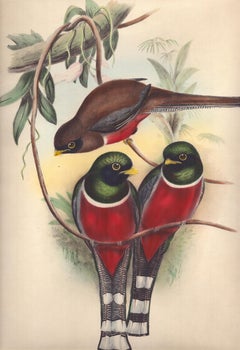
Trogon Personatus - John Gould lithograph with hand-colored
size 54 cm X 36 cm
This remarkable ornithology lithograph with hand-finished color i...
Category
Early 18th Century Animal Prints
Materials
Lithograph

$864 Sale Price
20% Off
John Gould - Ciconia Nigra from
Birds of Great Britain
C. 1862
By John Gould
Located in BRUCE, ACT
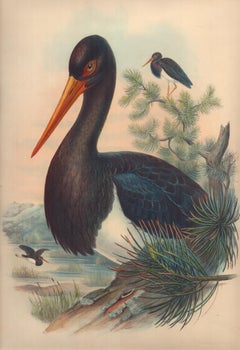
Ciconia Nigra - John Gould lithograph with hand-coloured
size 54 cm X 36 cm
This remarkable ornithology lithograph with hand-finished colour is ...
Category
Early 18th Century Animal Prints
Materials
Lithograph
$944 Sale Price
20% Off
4 plates from The Wondrous Transformation of Caterpillars
their Strange Diet..
Located in Middletown, NY
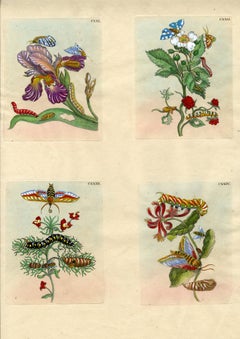
Four plates from The Wondrous Transformation of Caterpillars and their Strange Diet of Flowers. “Wolfsmelk Rupsen;" “Wolfsmilch, Raupe und Schmetterling" Amsterdam: J F Bernard, 1730. Each an engraving with hand coloring in watercolor and gouache printed on one sheet of watermarked Honig cream laid paper, each measures 6 1/4 x 5 inches (157 x 121 mm), sheet measures 20 5/8 x 14 inches (522 x 355 mm), full margins. With one 1.5 inch inch tear across the area of the top-left corner, well outside of image area. Handling creases in the lower right sheet quadrant, as well as minor, loose cockling, otherwise in very good condition. The colors are superb with exceptionally fresh and bright saturation. Engraved between 1679 and 1683, printed 1730. Plates included: CXXI, CXXII, CXXIII, & CXXIV.
MARIA SIBYLLA MERIAN was one of the most highly respected entomologists of the 17th century, and remains today one of the field's most significant figures. A German-born naturalist and scientific illustrator, she reared herself on the study of caterpillars, and made tremendous contributions to the knowledge of the life cycles of numerous species. Until her detailed and careful study of the process of metamorphosis it was thought that insects were "born of mud," through spontaneous generation.
Trained as a miniature painter by her stepfather, she published her first book of illustrations in 1675, at the age of 28. In 1679, Merian published the first volume of the two-volume series on caterpillars, The Wondrous Transformation of Caterpillars and their Strange Diet of Flowers; the second volume followed in 1683. Each volume contained 50 plates that she engraved and etched. In 1699, Merian traveled to Dutch Guiana...
Category
Naturalistic Early 18th Century Animal Prints
Materials
Watercolor, Engraving
4 plates from The Wondrous Transformation of Caterpillars
their Strange Diet..
Located in Middletown, NY
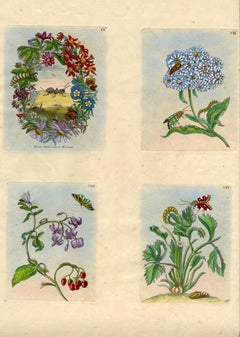
Four plates from The Wondrous Transformation of Caterpillars and their Strange Diet of Flowers. “Wolfsmelk Rupsen;" “Wolfsmilch, Raupe und Schmetterling" Amsterdam: J F Bernard, 1730. Each an engraving with hand coloring in watercolor and gouache printed on one sheet of watermarked Honig cream laid paper, each measures 6 1/4 x 5 inches (157 x 121 mm), sheet measures 20 5/8 x 14 inches (522 x 355 mm), full margins. With handling creases in the lower right sheet quadrant, as well as minor, loose cockling, otherwise in very good condition. The colors are superb with exceptionally fresh and bright saturation. Engraved between 1679 and 1683, printed 1730. Plates included: CI; CII; CIII & CIV.
MARIA SIBYLLA MERIAN was one of the most highly respected entomologists of the 17th century, and remains today one of the field's most significant figures. A German-born naturalist and scientific illustrator, she reared herself on the study of caterpillars, and made tremendous contributions to the knowledge of the life cycles of numerous species. Until her detailed and careful study of the process of metamorphosis it was thought that insects were "born of mud," through spontaneous generation.
Trained as a miniature painter by her stepfather, she published her first book of illustrations in 1675, at the age of 28. In 1679, Merian published the first volume of the two-volume series on caterpillars, The Wondrous Transformation of Caterpillars and their Strange Diet of Flowers; the second volume followed in 1683. Each volume contained 50 plates that she engraved and etched. In 1699, Merian traveled to Dutch Guiana...
Category
Naturalistic Early 18th Century Animal Prints
Materials
Watercolor, Engraving
3 plates from The Wondrous Transformation of Caterpillars
their Strange Diet..
Located in Middletown, NY
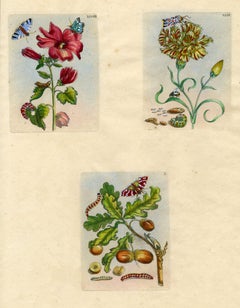
Three plates from The Wondrous Transformation of Caterpillars and their Strange Diet of Flowers. “Wolfsmelk Rupsen;" “Wolfsmilch, Raupe und Schmetterling" Amsterdam: J F Bernard, 1730. Each an engraving with hand coloring in watercolor and gouache printed on one sheet of watermarked Honig cream laid paper, each measures 6 1/4 x 5 inches (157 x 121 mm), sheet measures 20 5/8 x 14 inches (522 x 355 mm), full margins. With handling creases in the lower right sheet quadrant, as well as minor, loose cockling, otherwise in very good condition. The colors are superb with exceptionally fresh and bright saturation. Engraved between 1679 and 1683, printed 1730. Plates included: XLVIII; XLIX & L.
MARIA SIBYLLA MERIAN was one of the most highly respected entomologists of the 17th century, and remains today one of the field's most significant figures. A German-born naturalist and scientific illustrator, she reared herself on the study of caterpillars, and made tremendous contributions to the knowledge of the life cycles of numerous species. Until her detailed and careful study of the process of metamorphosis it was thought that insects were "born of mud," through spontaneous generation.
Trained as a miniature painter by her stepfather, she published her first book of illustrations in 1675, at the age of 28. In 1679, Merian published the first volume of the two-volume series on caterpillars, The Wondrous Transformation of Caterpillars and their Strange Diet of Flowers; the second volume followed in 1683. Each volume contained 50 plates that she engraved and etched. In 1699, Merian traveled to Dutch Guiana...
Category
Naturalistic Early 18th Century Animal Prints
Materials
Watercolor, Engraving
Francois Nicolas Martinet (1731-1804) - Engraving, Petite Outarde ou Canepetiere
Located in Corsham, GB
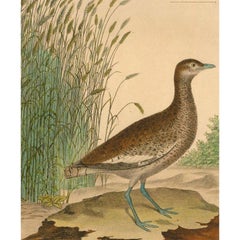
This hand-colored engraving comes from "Histoire Naturelle Des Oiseaux," a famous set of volumes edited by Georges Louis Leclerc, le comte de Buffon (1707-1788). The book was publish...
Category
Early 18th Century Animal Prints
Materials
Engraving
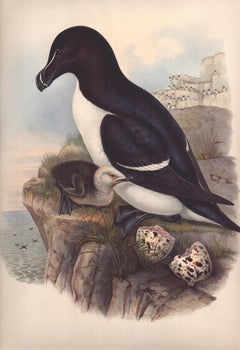
John Gould - Alca Torda - Razorbill from
Birds Europe
C. 1832
By John Gould
Located in BRUCE, ACT
Alca Torda (Razorbill) - John Gould lithograph with hand-coloured
size 54 cm X 36 cm
Good Condition
FREE SHIPPING
This remarkable ornithology l...
Category
Early 18th Century Animal Prints
Materials
Lithograph
$616 Sale Price
30% Off
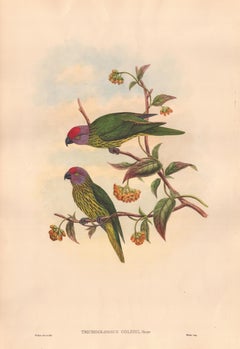
John Gould - Trichoglossus goldiei-(Birds of New Guinea and the adjacent Papuan)
By John Gould
Located in BRUCE, ACT
Trichoglossus goldiei - John Gould lithograph with hand-colored
size 54 cm X 37 cm
This remarkable ornithology lithograph with hand-finished col...
Category
Early 18th Century Animal Prints
Materials
Lithograph
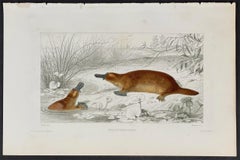
Platypus - Australia - Georges Louis Leclerc, Comte de Buffon C. 1820
Located in BRUCE, ACT
This originally hand-colored engraving is from Georges Louis Leclerc comte de Buffon's Oeuvres complètes de Buffon. Nouvelle édition annotée et pr...
Category
Early 18th Century Animal Prints
Materials
Engraving
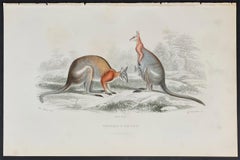
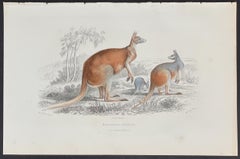
Kangaroo - Australia - Georges Louis Leclerc, Comte de Buffon C. 1820
Located in BRUCE, ACT
This originally hand-colored engraving is from Georges Louis Leclerc comte de Buffon's Oeuvres complètes de Buffon. Nouvelle édition annotée et pr...
Category
Early 18th Century Animal Prints
Materials
Engraving
Kangaroo - Australia - Georges Louis Leclerc, Comte de Buffon C. 1820
Located in BRUCE, ACT
This originally hand-colored engraving is from Georges Louis Leclerc comte de Buffon's Oeuvres complètes de Buffon. Nouvelle édition annotée et pr...
Category
Early 18th Century Animal Prints
Materials
Engraving
Related Items
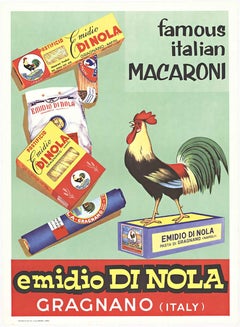
Original Italian Emidio di Nola Italian Macaroni original vintage food poster
Located in Spokane, WA
Emidio di Nola, original Italian pasta poster. Size 19" x 25.5". Professional acid-free archival linen-backed; in excellent condition; ready to frame....
Category
Aesthetic Movement Early 18th Century Animal Prints
Materials
Lithograph
$750
H 25.5 in W 19 in D 0.05 in
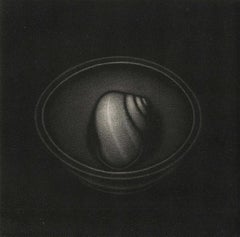
Snail in a Bowl (Artist Proof inscribed to Fritz Eichenberg)
Located in New Orleans, LA
Leonard Merchant's mezzotint, "Snail in Cup" is inscribed for fellow artist, Fritz Eichenberg.
While a student at the Central School for Arts and Crafts in London, a young Leonard Marchant found an engraving rocker in a cupboard and proceeded to turn himself into a master of the painstaking art of mezzotinting.
Marchant, who has died in Shrewsbury aged 70, grew up in Simonstown, the Royal Navy's enclave in South Africa. Though his first job was as a parliamentary messenger, he taught himself to paint and, aged 19, was given a one-man show in Cape Town. Fired by this success, he left for England to study painting and, he claimed, to escape the stifling home atmosphere created by his Catholic mother and aunts. (His father was killed in the second world war.) Without contacts in London, he phoned Jacob Epstein, whose recommendation resulted in a grant to study briefly at the Central School. It was later, when studying full-time at the Central, that he saw the mezzotints of the Japanese master, Yozo Hamaguchi, in a London gallery. He was hooked.
Creating a mezzotint is tedious in the extreme. The copper plate must first be prepared with a "rocker" which roughens the surface. A plate may be "rocked" 30 or 40 times. The rough texture is then reduced with a burnisher and a scraper, allowing the print a range of tones from velvety black through the greys to white. Marchant's plates could be months in the making. But the technical demands were the least of his worries. In its 18th- and 19th-century heyday, mezzotint was solely a reproductive medium, for copying masters such as Reynolds and Turner. The development of photography rendered it unfashionable, and by the 1960s the technique, known as la manière anglaise, was a bygone medium.
Marchant, by now a teacher in printmaking at the Central, began to create original mezzotints with a colleague, Radavan Kraguly. A perfectionist, he seemed to revel in the straitjacket procedure. Perhaps it was the metaphor of bringing darkness out of light that appealed to this straight-talking, sometimes sombre, man, who would suddenly relax and light up like a gleaming hue on one of his prints. His work was of squares and triangles with the occasional cat, black and ominous, and carefully arranged still lifes, featuring plants, a seed pod, a pot he might have bought at auction to celebrate the sale of a print.
There were one-man shows, notably at the Bankside Gallery. He sold well at the Royal Academy summer exhibition, was a Florence Biennale prizewinner, spent a fellowship year at the British School in Rome, and was elected a Fellow of the Royal Society of Painter-Printmakers.
But making mezzotints was not a paying job. Marchant and his South African wife...
Category
Modern Early 18th Century Animal Prints
Materials
Mezzotint
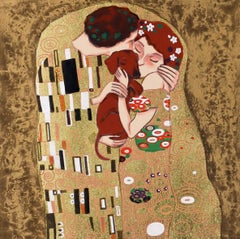
The Kiss - Gustav Klimt
s Dog, original, contemporary, art print
Located in Deddington, GB
Screenprint and gold leaf on paper.
Signed and titled in pencil.
Numbered from the edition of 100.
Image size: 220 x 220mm
Paper size: 380 x 400mm
Gold Leaf on Paper
Edition of...
Category
Contemporary Early 18th Century Animal Prints
Materials
Gold Leaf
$501
H 15.75 in W 14.97 in D 0.04 in
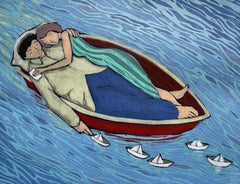
Love Notes and Little Boats, original, contemporary, art print
Located in Deddington, GB
Woodcut on paper
Signed and titled in pencil
Numbered from the edition of 100
Paper size: 780 x 605 mm
Woodcut print on Paper
Edition of 100
Sold unframed
Complete size of...
Category
Contemporary Early 18th Century Animal Prints
Materials
Paper
$918
H 23.63 in W 30.71 in D 0.04 in
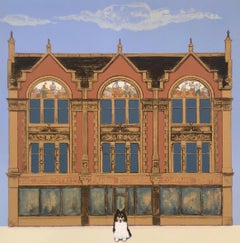
Wes Anderson
s Dog, original, contemporary, art print
Located in Deddington, GB
Screenprint on paper
Signed and titled in pencil
Numbered from the edition of 50
Image size: 505 x 505 mm
Paper size: 665 x 685 mm
Silkscreen print on Paper
Edition of 50
50.5...
Category
Contemporary Early 18th Century Animal Prints
Materials
Paper
$779
H 25.2 in W 30.71 in D 0.4 in
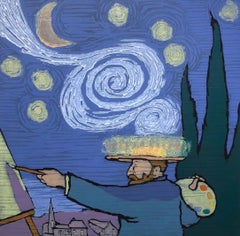
Starry Night, original, contemporary, landscape, print, silkscreen
Located in Deddington, GB
Woodcut on paper
Signed and titled in pencil
Numbered from the edition of 75
Image size: 495 x 500 mm
Paper size: 610 x 630 mm
Woodcut print on Paper
Edition of 75
50 H x 49.5...
Category
Contemporary Early 18th Century Animal Prints
Materials
Paper
$779
H 25.2 in W 30.71 in D 0.4 in
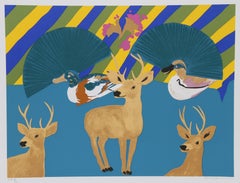
Three Deer, Pop Art Screenprint by Hunt Slonem
By Hunt Slonem
Located in Long Island City, NY
Artist: Hunt Slonem, American (1951 - )
Title: Three Deer
Year: 1980
Medium: Screenprint, signed and numbered in pencil
Edition: AP 30
Image Size: 24 x 32 inches
Size: 26 in. ...
Category
Pop Art Early 18th Century Animal Prints
Materials
Screen
[ Bird of Paradise] La Pie de paradise, vue par derriere, No.21
Located in Paonia, CO
[ Bird of Paradise] La Pie de paradise, vue par derriere , No.21, Paris 1801-1806 [Astrapia nigra]. Color-printed engraving with hand-coloring. French botanical and zoological illustrator Jacques Barraband (1767-1809) was known as one of the finest ornithological artists of his time .He is best known for his watercolors and engravings that were commissioned by François LeVaillant, French explorer, naturalist, zoological collector , noted ornithologist and author. Levaillant’s Histoire naturelle des perroquets (1801-05) and his Histoire naturelle des oiseaux de paradis (Birds of Paradise, 1801-06), both of which Barraband contributed to, are still considered some of the most beautiful bird books of all times because of their exceptional scientific accuracy, rich color and detail. The Astrapia nigra is a Bird of Paradise that inhabits the Vogelkop Peninsula of West Papua...
Category
Other Art Style Early 18th Century Animal Prints
Materials
Engraving
$5,200 Sale Price
20% Off
H 21 in W 28.5 in
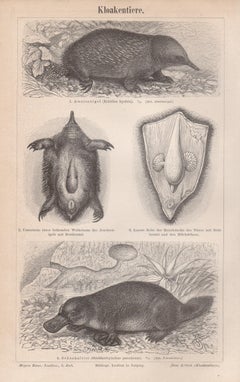
Echidna and Platypus, Australian animal monotreme antique engraving print
Located in Melbourne, Victoria
'Kloakentiere'
(Monotremes - echidna and platypus))
German wood-engraving, circa 1895.
240mm by 155mm (sheet)
Category
Naturalistic Early 18th Century Animal Prints
Materials
Engraving
$65
H 9.45 in W 6.11 in
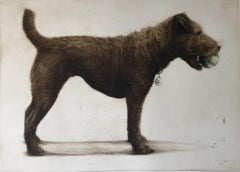
Izzy with her Ball, Dog Art, Affordable Art, Contemporary Animal Art Print
Located in Deddington, GB
Izzy, a charming characterful terrier stands alert, holding her ball in her mouth. Colour etching hand made and printed by the artist.
Helen Fay's art for sale online and in our gall...
Category
Contemporary Early 18th Century Animal Prints
Materials
Paper, Drypoint, Etching
$556
H 25.2 in W 32.29 in D 0.06 in
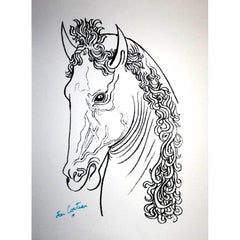
Jean Cocteau - Artaban - Original Lithograph
By Jean Cocteau
Located in Collonge Bellerive, Geneve, CH
Original Lithograph by Jean Cocteau
Title: Artaban
1961
signed in the stone/printed signature
Dimensions: 38 x 28 cm
Lithograph made for the portfolio "Gitans et Corridas" ...
Category
Modern Early 18th Century Animal Prints
Materials
Lithograph
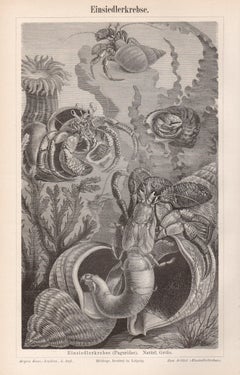
Hermit Crabs, German animal antique underwater crustacean engraving print
Located in Melbourne, Victoria
'Einsiedlerkrebse'
(Hermit crabs)
German wood-engraving, circa 1895.
240mm by 155mm (sheet)
Category
Naturalistic Early 18th Century Animal Prints
Materials
Engraving
$50
H 9.45 in W 6.11 in
Previously Available Items
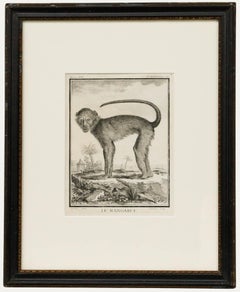
Jacques Eustache de Seve
Claude Donat Jardinier - Engraving, Le Mangabey
By Jacques Eustache de Seve
Located in Corsham, GB
A charming engraving of a mangabey monkey. The print is from the Histoire Naturelle, générale et particulière, avec la description du Cabinet du Roi (Natural History, General and Par...
Category
Early 18th Century Animal Prints
Materials
Engraving
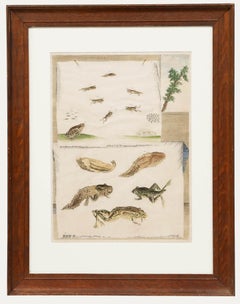
Maria Sibylla Merian (1647-1717) - Framed 18th Century Engraving, Metamorphosis
Located in Corsham, GB
An original engraving by Maria Sibylla Merian (1647-1717). This unique 18th or early 19th century engraving with hand-colouring depicts the life cycle of a frog. The artist documents...
Category
Early 18th Century Animal Prints
Materials
Engraving
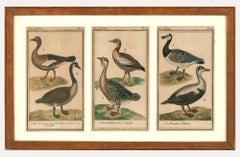
Jacques de Seve (fl. 1742-1788) - Engravings of Geese
Located in Corsham, GB
A fine collection of 18th century engravings, taken from Georges-Louis Leclerc book 'Natural History, general and particular'. These three pages, illustrated by Seve, depict breeds o...
Category
Early 18th Century Animal Prints
Materials
Engraving
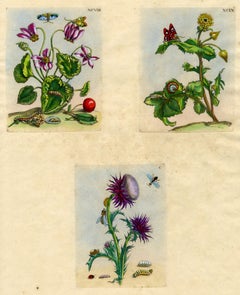
3 plates from The Wondrous Transformation of Caterpillars
their Strange Diet..
Located in Middletown, NY
Three plates from The Wondrous Transformation of Caterpillars and their Strange Diet of Flowers. “Wolfsmelk Rupsen;" “Wolfsmilch, Raupe und Schmetterling" Amsterdam: J F Bernard, 173...
Category
Naturalistic Early 18th Century Animal Prints
Materials
Watercolor, Engraving
4 plates from The Wondrous Transformation of Caterpillars
their Strange Diet..
Located in Middletown, NY
Merian, Maria Sibylla. Four plates from The Wondrous Transformation of Caterpillars and their Strange Diet of Flowers. “Wolfsmelk Rupsen;" “Wolfsmilch, Raupe und Schmetterling" Amste...
Category
Naturalistic Early 18th Century Animal Prints
Materials
Watercolor, Engraving
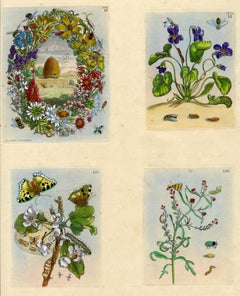
Icecream Bean plant..., plate no. 58, Metamorphosis Insectorum Surinamensium
Located in Middletown, NY
Metamorphosis Insectorum Surinamensium, Plate No. 58; Ice Cream Bean Plant, Cloudless Sulphur Butterfly and Caterpillar with Mot...
Category
Naturalistic Early 18th Century Animal Prints
Materials
Engraving, Watercolor
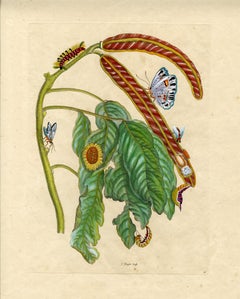
Alligator with Snake and a Lizard.
By (After) Maria Sybilla Merian
Located in London, London
[MERIAN, Maria Sibylla; SLUYTER, P.]
Alligator with Snake and a Lizard.
The Hague, Gosse, 1719.
Engravings of an Alligator with a Snake and a Lizard by J. Mulder, P. Sluyter and ...
Category
Naturalistic Early 18th Century Animal Prints
Materials
Watercolor, Laid Paper, Engraving
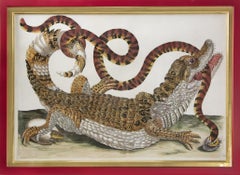
Merian - A Group of Six Flowers, Insects and Fruits.
Located in London, London
[MERIAN, Maria Sibylla].
A Group of Six Flowers, Insects and Fruits.
The Hague, Gosse, 1719.
A group of six engravings by J. Mulder, P. Sluyter and D. Stoopendaal after Merian, with...
Category
Naturalistic Early 18th Century Animal Prints
Materials
Paper, Engraving
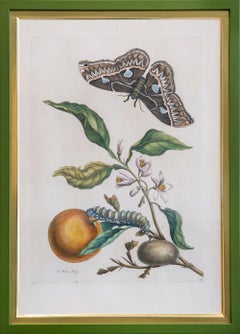
Merian - A Group of Six Flowers, Insects and Fruits.
Located in London, London
[MERIAN, Maria Sibyl].
A Group of Six Flowers, Insects and Fruits.
The Hague, Gosse, 1719.
A group of six engravings by J. Mulder, P. Sluyter and D. Stoopendaal after Merian, with later hand-colour, of flowers, fruits and insects from Dissertatio de Generatione et Metamorphasibus Insectorum Surinamensium. Framed and glazed, overall dimensions: 38.2cm by 53.2cm.
Superb engravings which depict the metamorphoses of South American insects and the exotic plants on which they feed.
Maria Sybilla, daughter of the German engraver and publisher Matthias Merian, devoted herself to the study of European insects and their metamorphoses. As a result of the wealth of tropical varieties being brought back by the Dutch West Indies...
Category
Naturalistic Early 18th Century Animal Prints
Materials
Handmade Paper, Engraving, Etching
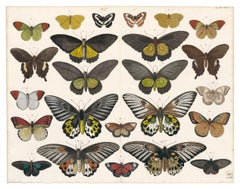
Engraving of Butterflies and Moths
Located in New York, NY
Locupletissimi rerum naturalium thesauri accurata descriptio, et iconibus artificiossimis expressio, per universam physices historiam.
Amsterdam, Wetsten, Smith, Jansson-Waesberg, 17...
Category
Naturalistic Early 18th Century Animal Prints
Materials
Laid Paper
More Ways To Browse
Penguin Lithograph
Peter Klucik
Pheasant Engraving
Picasso Dove Of Peace
Picasso Le Taureau
Picasso Rooster
Ronald Smith
Rooster Print Picasso
Salvador Dali Argus
Salvador Dali Unicorn
Sam Savitt
Shore Bird Print
Space Elephant Dali
Szabolcs Bozo
The Toad Picasso
Vintage Forest Service Posters
Vintage Posters Coppertone
Warhol Siberian Tiger