Items Similar to Alberto Giacometti, Untitled, from XXe Siecle, 1956 (after)

Want more images or videos?
Request additional images or videos from the seller
1 of 5
Alberto Giacometti, Untitled, from XXe Siecle, 1956 (after)1956
1956
$956
$1,19520% Off
£727.97
£909.9720% Off
€838.24
€1,047.8020% Off
CA$1,354.74
CA$1,693.4220% Off
A$1,457.21
A$1,821.5220% Off
CHF 778.78
CHF 973.4720% Off
MX$17,176.38
MX$21,470.4820% Off
NOK 9,818.55
NOK 12,273.1920% Off
SEK 8,976.02
SEK 11,220.0220% Off
DKK 6,263.09
DKK 7,828.8620% Off
About the Item
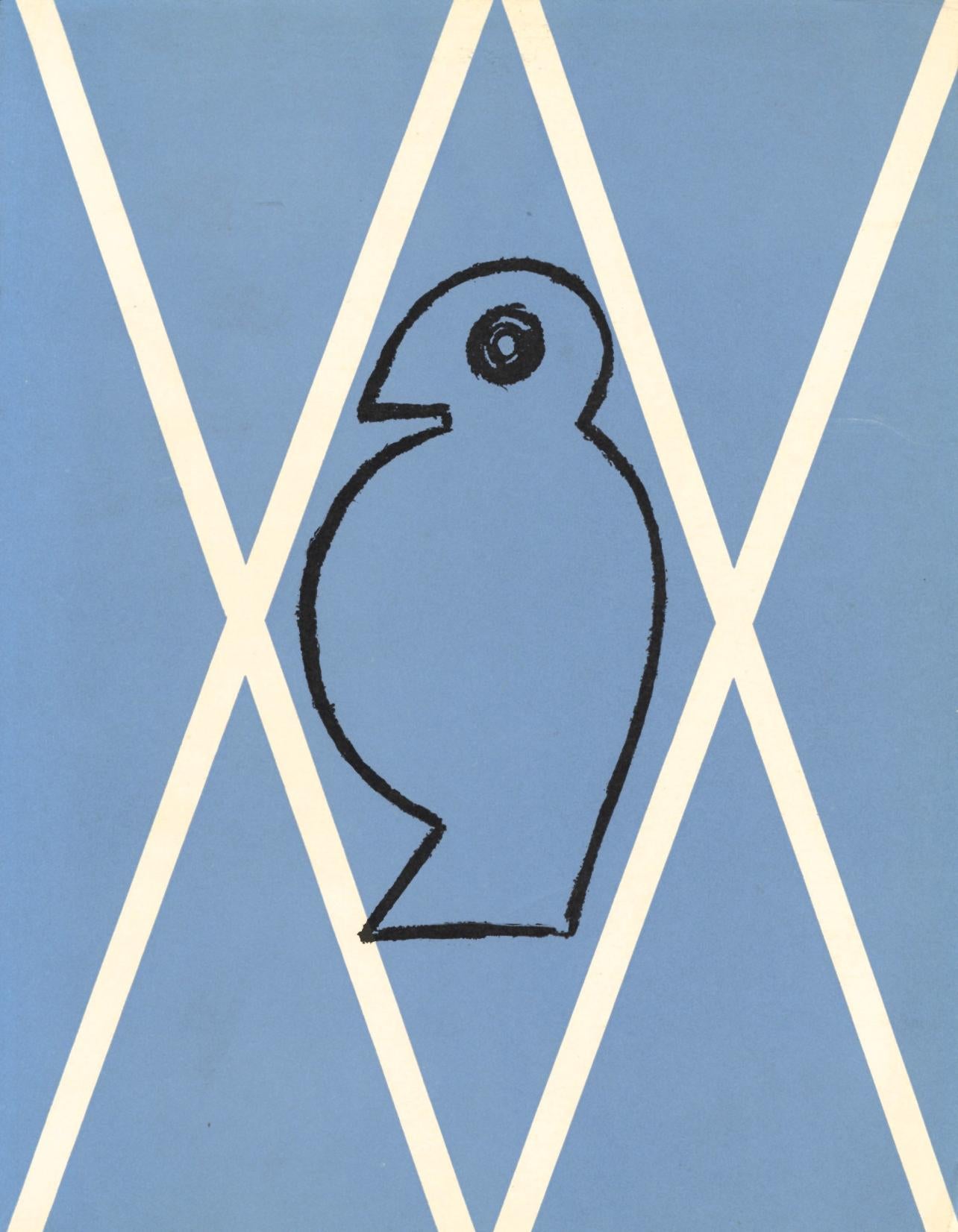
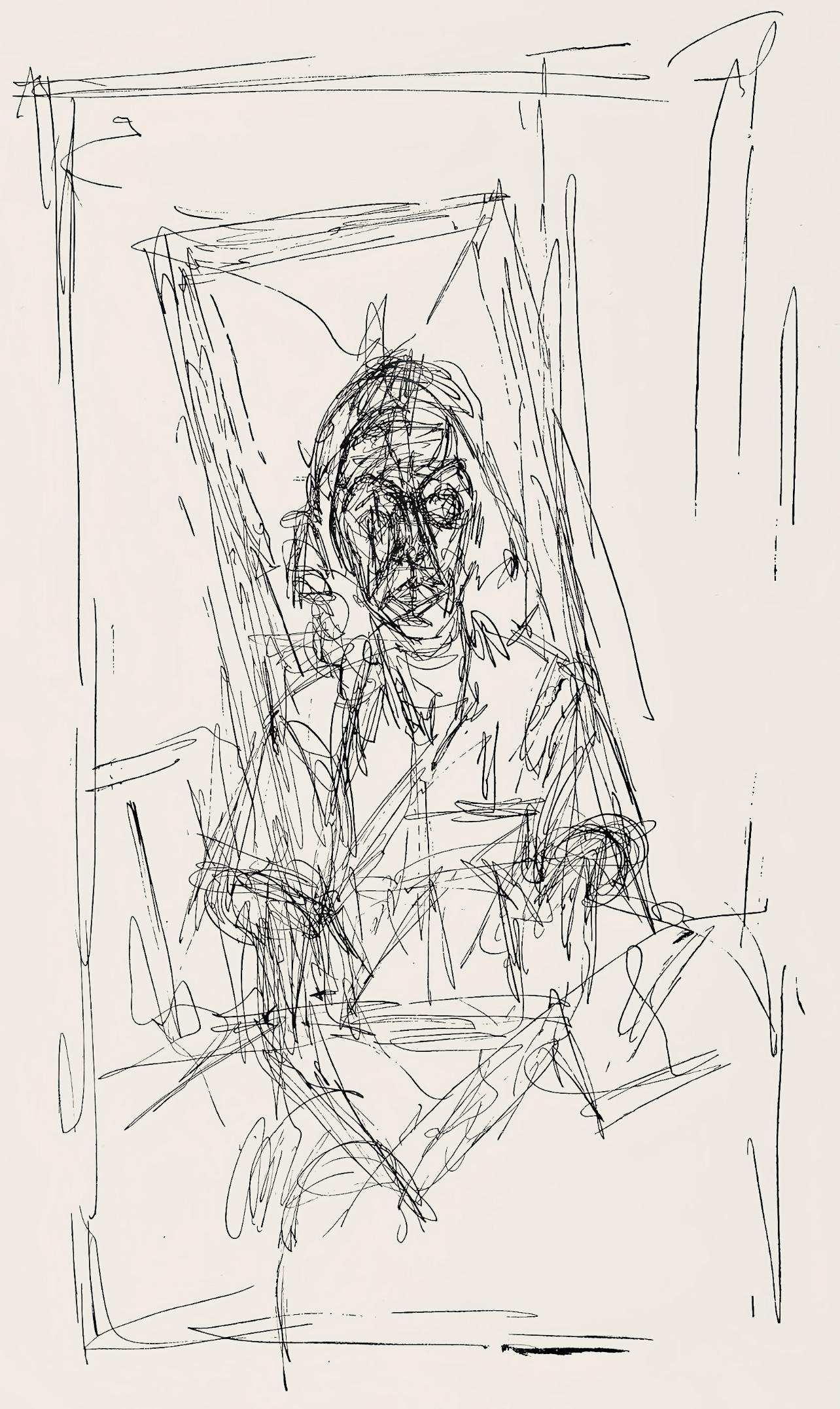
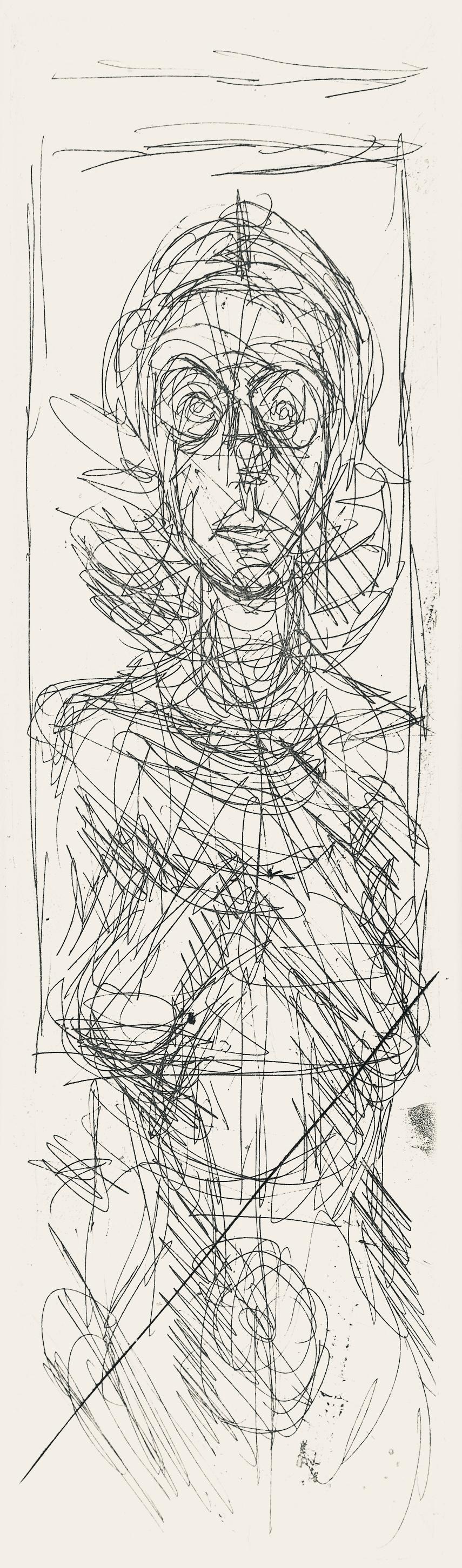
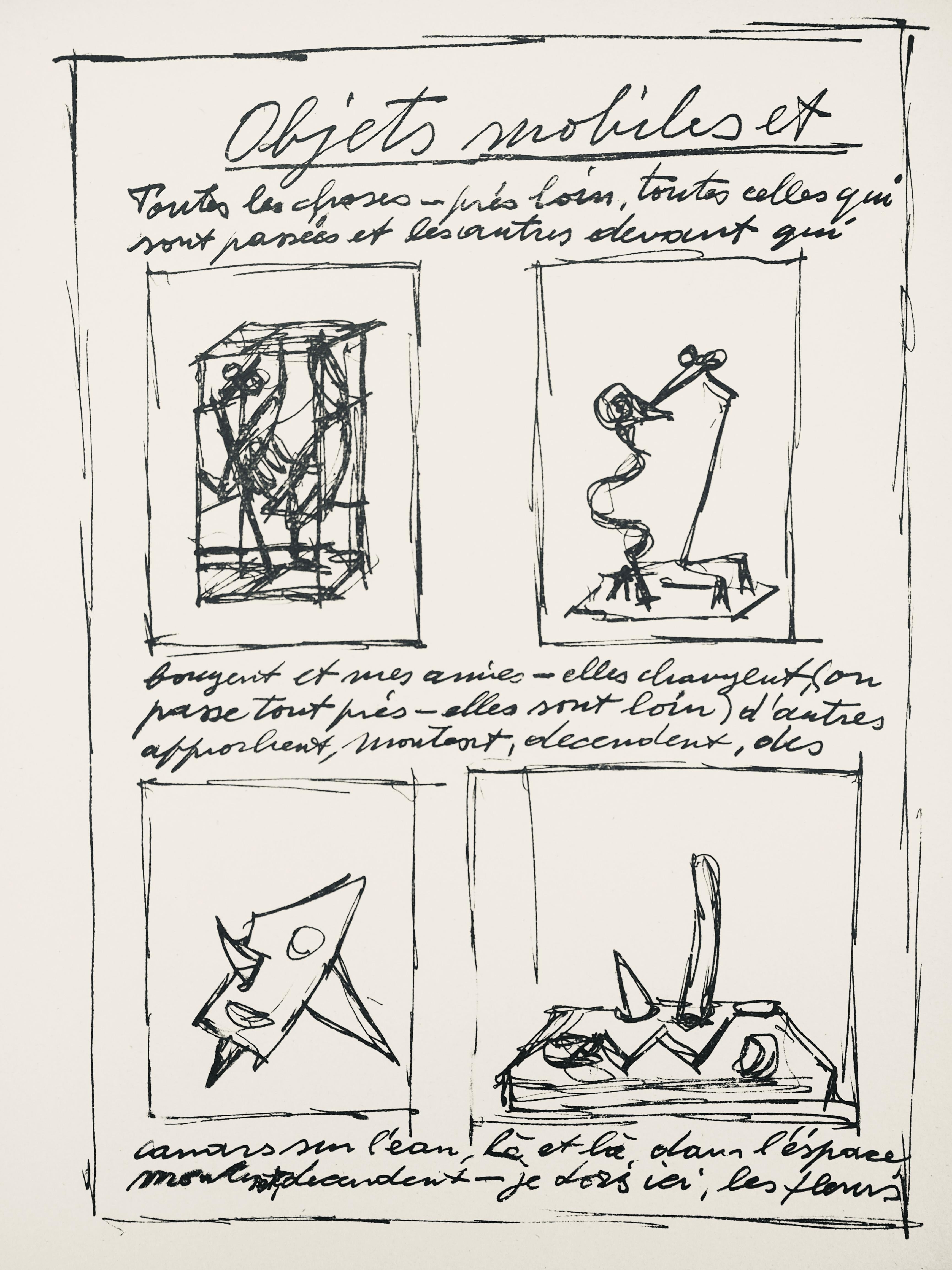
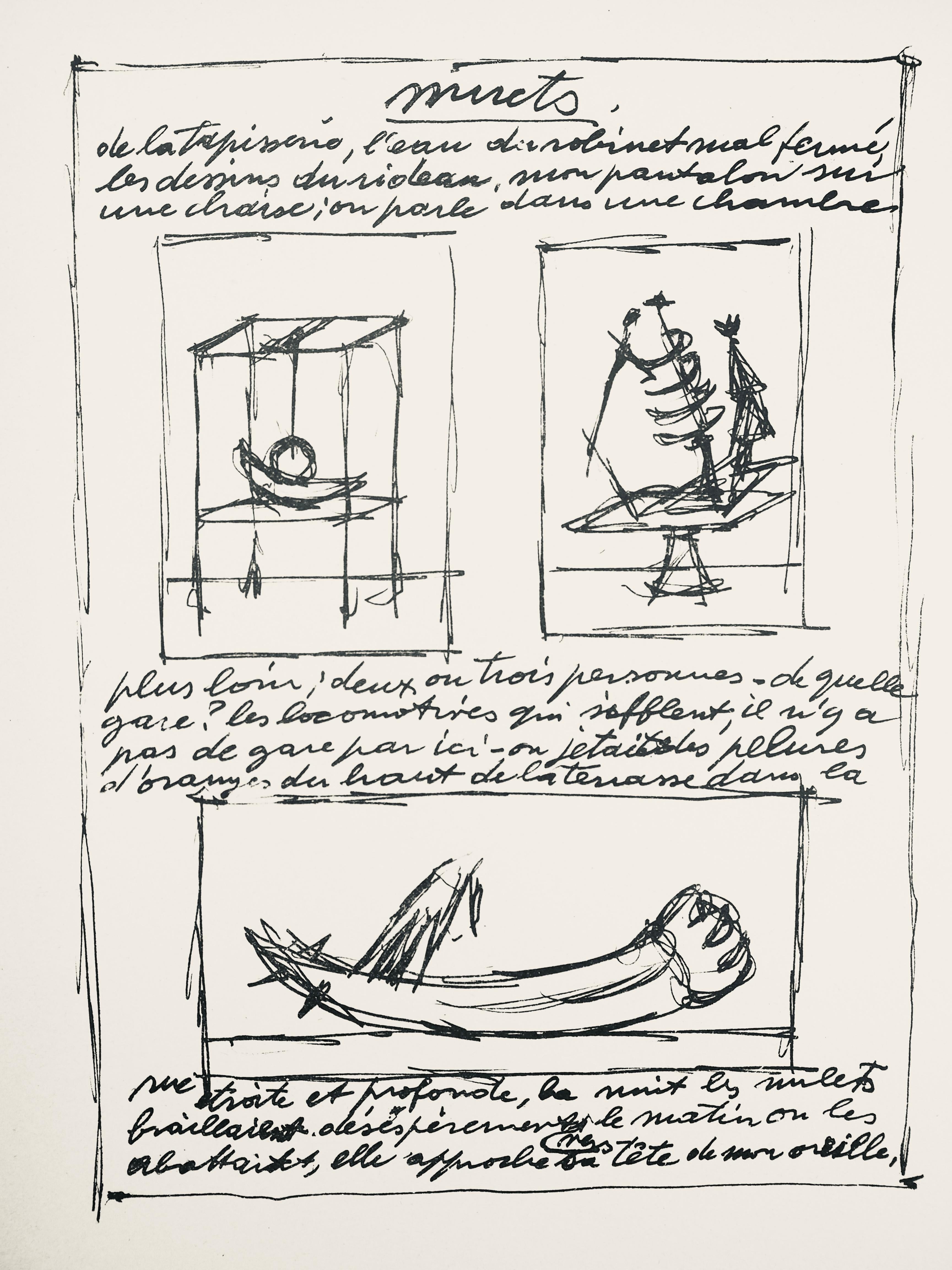
This exquisite lithograph after Alberto Giacometti (1901–1966), titled Sans titre (Untitled), from the album XXe Siecle, Nouvelle serie N°7 (double) Juin 1956, originates from the 1956 edition published by Societe Internationale dArt XXe Siecle, Paris, under the direction of Gualtieri di San Lazzaro, editeur, Paris, and printed by Mourlot Freres, Paris, 1956. A compelling example of Giacomettis postwar graphic expression, it reflects the psychological intensity, spare line, and existential resonance that define his celebrated oeuvre.
Executed as a lithograph on velin paper, this work measures 12.5 x 9.75 inches. Unsigned and unnumbered as issued. Printed by Mourlot Freres, Paris, one of the foremost ateliers of the 20th century.
Artwork Details:
Artist: Alberto Giacometti (1901–1966)
Title: Sans titre (Untitled)
Medium: Lithograph on velin paper
Dimensions: 12.5 x 9.75 inches (31.75 x 24.77 cm)
Inscription: Unsigned and unnumbered as issued
Date: 1956
Publisher: Societe Internationale dArt XXe Siecle, Paris, under the direction of Gualtieri di San Lazzaro, editeur, Paris
Printer: Mourlot Freres, Paris
Condition: Well preserved, consistent with age and medium
Provenance: From the album XXe Siecle, Nouvelle serie N°7 (double), Juin 1956, published by Societe Internationale dArt XXe Siecle, Paris; printed by Mourlot Freres, Paris, 1956
About the Publication:
Gualtieri di San Lazzaros XXe Siecle (Twentieth Century) was one of the most influential art journals of the modern era, founded in Paris in 1938 to unite the greatest painters, sculptors, and writers of the 20th century. San Lazzaro, a visionary editor and champion of modernism, believed deeply in the synthesis of art and literature, creating a publication that served as both a scholarly platform and a collectors object. Across its many issues, XXe Siecle featured original lithographs, pochoirs, linocuts, and wood engravings by leading modern masters including Picasso, Matisse, Chagall, Miro, Braque, Leger, Kandinsky, and Calder, printed by premier ateliers such as Mourlot, Atelier Jacomet, and Lacouriere. The double issues of the 1950s reflect a flourishing period of postwar abstraction, sculpture, and avant garde experimentation. Today, XXe Siecle remains an essential reference point in 20th century art history, prized by collectors, museums, and scholars worldwide.
About the Artist:
Alberto Giacometti (1901–1966) was a Swiss sculptor, painter, and draughtsman whose hauntingly elongated figures and existential vision redefined modern art and made him one of the most influential artists of the 20th century. Born in Borgonovo, Switzerland, into an artistic family—his father, Giovanni Giacometti, was a noted Post-Impressionist—he was immersed in art from an early age before studying in Geneva and moving to Paris in 1922, where he became part of the citys avant garde alongside Pablo Picasso, Alexander Calder, Salvador Dali, Joan Miro, Wassily Kandinsky, Marcel Duchamp, and Man Ray. In the 1920s and 1930s, Giacometti explored Cubism and Surrealism, creating symbolic and dreamlike sculptures such as Suspended Ball (1930–31) and The Palace at 4 A.M. (1932), which reflected the influence of Dali, Duchamp, and Man Ray. By the 1940s, he abandoned Surrealism to pursue a deeply personal exploration of the human condition, developing his iconic attenuated figures that embodied both fragility and resilience. His signature sculptures—L’Homme qui marche I (Walking Man I), Femme debout, and Le Chariot—expressed the isolation, endurance, and vulnerability of modern existence, echoing the existential philosophy of Jean Paul Sartre and Simone de Beauvoir. Giacomettis figures, stripped of mass yet monumental in spirit, symbolized humanitys search for meaning in a postwar world, while his paintings and drawings—portraits of his brother Diego, his wife Annette, and his friends—captured the psychological depth of perception with trembling, repetitive lines that blurred the boundary between body and soul. His friendships with Picasso, Calder, Miro, and Kandinsky shaped his understanding of form, motion, and space, while his philosophical engagement with Duchamp and Man Ray deepened his inquiry into the nature of reality and perception. Working obsessively in his modest Montparnasse studio, Giacometti pursued art as an existential act—destroying and rebuilding his figures in an endless search for truth. His influence on postwar art was immense, shaping the work of Henry Moore, Francis Bacon, Louise Bourgeois, Lucian Freud, and later contemporary sculptors such as Antony Gormley and Anselm Kiefer. His aesthetic also resonated beyond sculpture, influencing fashion, photography, and architecture through his vision of form, isolation, and proportion. Giacomettis work is represented in major museum collections including MoMA, the Tate Modern, and the Centre Pompidou, and continues to inspire artists, collectors, and thinkers worldwide. Standing alongside Pablo Picasso, Alexander Calder, Salvador Dali, Joan Miro, Wassilly Kandinsky, Marcel Duchamp, and Man Ray, Giacometti remains a towering figure in modern art—a sculptor philosopher who transformed the human form into a universal symbol of resilience and reflection. His highest auction record was achieved by L’Homme qui marche I (Walking Man I), which sold for 141.3 million USD at Sothebys, London, on February 3, 2010, reaffirming Alberto Giacometti’s enduring legacy as one of the most visionary, profound, and collectible artists in the history of modern art.
Alberto Giacometti, Sans titre, XXe Siecle 1956, lithograph printed by Mourlot.
- Creation Year:1956
- Dimensions:Height: 13.375 in (33.98 cm)Width: 9.5 in (24.13 cm)
- Medium:
- Movement Style:
- After:Alberto Giacometti (1901 - 1966, Swiss)
- Period:
- Condition:
- Gallery Location:Southampton, NY
- Reference Number:1stDibs: LU1465214073852
About the Seller
4.9
Platinum Seller
Premium sellers with a 4.7+ rating and 24-hour response times
Established in 1978
1stDibs seller since 2021
1,270 sales on 1stDibs
Typical response time: 1 hour
- ShippingRetrieving quote...Shipping from: Southampton, NY
- Return Policy
More From This Seller
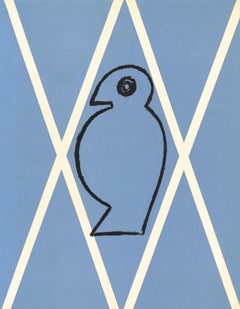
View AllMax Ernst, Bird, from XXe Siecle, 1958 (after)
By Max Ernst
Located in Southampton, NY
This exquisite lithograph after Max Ernst (1891–1976), titled Oiseau (Bird), from the album XXe Siecle, vol. no. 11, 1958, originates from the 1958 edition published by Societe Internationale dArt XXe Siecle, Paris, under the direction of Gualtieri di San Lazzaro, editeur, Paris, and printed by Mourlot Freres, Paris, 1958. Oiseau reflects Ernsts poetic, dream-infused visual language during a period that bridged Surrealist invention with his mature exploration of myth, metamorphosis, and symbolic form.
Executed as a lithograph on velin paper, this work measures 12.5 x 9.75 inches. Unsigned and unnumbered as issued. The edition exemplifies the superb craftsmanship of Mourlot Freres, Paris
Artwork Details:
Artist: After Max Ernst (1891–1976)
Title: Oiseau (Bird)
Medium: Lithograph on velin paper
Dimensions: 12.5 x 9.75 inches (31.75 x 24.77 cm)
Inscription: Unsigned and unnumbered as issued
Date: 1958
Publisher: Societe Internationale dArt XXe Siecle, Paris, under the direction of Gualtieri di San Lazzaro, editeur, Paris
Printer: Mourlot Freres, Paris
Condition: Well preserved, consistent with age and medium
Provenance: From the album XXe Siecle, vol. no. 11, 1958, published by Societe Internationale dArt XXe Siecle, Paris; printed by Mourlot Freres, Paris, 1958
About the Publication:
Gualtieri di San Lazzaros XXe Siecle (Twentieth Century) was one of the most influential art journals of the modern era, founded in Paris in 1938 as a platform for the greatest painters, sculptors, and writers of the 20th century. San Lazzaro, a visionary editor, critic, and champion of modernism, believed that art and literature should coexist as expressions of a shared human imagination. Under his direction, XXe Siecle became a cultural bridge between Europe and the wider world, publishing special issues devoted to leading figures such as Picasso, Matisse, Chagall, Braque, Calder, Miro, Kandinsky, and Leger. Each edition combined essays by renowned critics and poets with original lithographs and woodcuts printed by the foremost ateliers of Paris, Milan, and New York, including Mourlot, Curwen, and Amilcare Pizzi, creating a uniquely rich dialogue between text and image. The 1960 issue, XXe Siecle, Nouvelle serie, no. 14, showcased Daphnis et Chloe, one of Chagalls most celebrated lithographic subjects, coinciding with his work on the monumental suite of lithographs inspired by the same pastoral tale, published by Teriade. Through this publication, San Lazzaro further cemented Chagalls reputation as the modern poet of color and love, uniting myth, nature, and emotion in visual form. Today, XXe Siecle remains an essential record of 20th century modernism, celebrated for its seamless integration of fine art, literature, and design.
About the Artist:
Max Ernst (1891–1976) was a German-French painter, sculptor, printmaker, and poet whose groundbreaking imagination and experimental techniques made him one of the most revolutionary figures of 20th century art. A founding member of both Dada and Surrealism, Ernst dismantled traditional notions of art through chance, dream imagery, and psychological exploration, transforming painting, sculpture, and collage into instruments of the unconscious mind. Born in Bruhl, Germany, he studied philosophy and psychology at the University of Bonn before rejecting academic convention to pursue art, inspired by the Symbolists, Cubists, and the early abstractions of Pablo Picasso and Wassily Kandinsky. His traumatic experience serving in World War I left him disillusioned with logic and order, propelling him toward the Dada movement in Cologne in 1919, where he began creating his seminal collages that fused scientific diagrams and Victorian engravings into surreal dreamscapes. By 1922, Ernst had moved to Paris and joined a circle of avant-garde luminaries that included Picasso, Alexander Calder, Alberto Giacometti, Salvador Dali, Joan Miro, Marcel Duchamp, Man Ray, and Andre Breton, each of whom shared his fascination with the irrational and the unseen. Ernsts invention of frottage (rubbing) and grattage (scraping) revolutionized modern painting, revealing textures and hidden images beneath the surface and allowing chance to become an active participant in creation. His visionary paintings—such as The Elephant Celebes (1921), Two Children Are Threatened by a Nightingale (1924), and Europe After the Rain II (1940–42)—blend myth, science, and dream into vast symbolic landscapes that remain among the defining masterpieces of Surrealism. A restless innovator, Ernst expanded into sculpture, crafting enigmatic totemic forms such as Capricorne (1948–1963) that bridged organic abstraction and surreal fantasy, echoing the fluid equilibrium of Calders mobiles and the conceptual wit of Duchamp. Fleeing Nazi-occupied France during World War II, Ernst emigrated to the United States with the support of Peggy Guggenheim, whom he later married, influencing the emerging Abstract Expressionists—among them Jackson Pollock, Robert Motherwell, and Willem de Kooning—through his fusion of automatism, texture, and mythic narrative. Returning to Europe after the war, he continued to refine his poetic, alchemical approach to painting, blending chaos and order into cosmic landscapes that inspired later artists such as Anselm Kiefer, Robert Rauschenberg, Cy Twombly, and Kiki Smith. His work, housed in major museums including MoMA, the Tate, and the Centre Pompidou, stands as a testament to his belief that art could bridge the conscious and unconscious, the rational and the fantastic. Standing alongside Pablo Picasso, Alexander Calder, Alberto Giacometti, Salvador Dali, Joan Miro, Wassily Kandinsky, Marcel Duchamp, and Man Ray, Max Ernst remains a cornerstone of modern art, an artist-philosopher whose limitless curiosity reshaped visual language and influenced generations of creators. His highest auction record was achieved by Le roi jouant avec la reine (The King Playing with the Queen) (1944), which sold for approximately 24.4 million USD at Christies, New York, in November 2022, reaffirming Max Ernsts enduring legacy as one of the most visionary, provocative, and collectible masters of 20th century modernism.
Max Ernst XXe Siecle 1958, Max Ernst lithograph...
Category
1950s Surrealist Figurative Prints
Materials
Lithograph
Alberto Giacometti, Untitled, from XXe Siecle 1956 (after)
By Alberto Giacometti
Located in Southampton, NY
This exquisite lithograph after Alberto Giacometti (1901–1966), titled Sans titre (Untitled), from the album XXe Siecle, Nouvelle serie N°7 (double) Juin 1956, originates from the 19...
Category
1950s Modern Abstract Prints
Materials
Lithograph
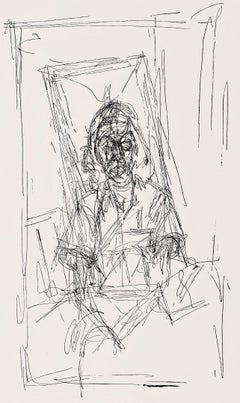
Alberto Giacometti, Nude in Profile, from Derriere le miroir, 1956 (after)
By Alberto Giacometti
Located in Southampton, NY
This exquisite etching after Alberto Giacometti (1901–1966), titled Nu de Profil (Nude in Profile), from the folio Derriere le miroir, 10 Ans d'Edition 1946-1956, No. 92-93, originates from the 1956 edition published by Maeght Editeur, Paris, and printed by Atelier Crommelynck, Paris, 1956. This work exemplifies Giacometti’s mastery of line and existential sensitivity, capturing the fragility, grace, and introspection that define his vision of the human form.
Executed as an etching, cuivre rayé apres tirage on velin paper, this work measures 15 x 11 inches overall; 12.2 x 2.17 inches image size. Unsigned and unnumbered as issued. The edition exemplifies the superb craftsmanship of Atelier Crommelynck, Paris.
Artwork Details:
Artist: After Alberto Giacometti (1901–1966)
Title: Nu de Profil (Nude in Profile), from the folio Derriere le miroir, 10 Ans d'Edition 1946-1956, No. 92-93
Medium: Etching, cuivre rayé apres tirage on velin paper
Dimensions: 15 x 11 inches, overall; 12.2 x 2.17 inches, image size (38.1 x 27.94 cm; 31 x 5.5 cm)
Inscription: Unsigned and unnumbered as issued
Date: 1956
Publisher: Maeght Editeur, Paris
Printer: Atelier Crommelynck, Paris
Condition: Well preserved, consistent with age and medium
Provenance: From the folio Derriere le miroir, 10 Ans d'Edition 1946-1956, No. 92-93, published by Maeght Editeur, Paris; printed by Atelier Crommelynck, Paris, 1956
Notes:
Excerpted from the folio (translated from French), This catalogue, forming a special issue of Derriere le miroir, was completed in October 1956 on the presses of Draeger Freres on behalf of Aime Maeght, Editeur. The original lithographs of Miro, Chagall and Bazaine were shot by Mourlot Freres. The eaux-fortes rayees of Miro and Giacometti were shot by Crommelynck. Raoul Ubac composed and pulled the engraved wood from the cover. The photographs of Braque's reproduced works are by Mr. Routhier. Those of the other artists of Y. Hervochon.
About the Publication:
Derriere le miroir (Behind the Mirror) was one of the most important art publications of the 20th century, created and published by Maeght Editeur in Paris from 1946 to 1982. Founded by the visionary art dealer and publisher Aime Maeght, the series served as both an exhibition catalogue and a work of art in its own right, uniting original lithographs by leading modern and contemporary artists with critical essays, poetry, and design of the highest quality. Printed by master lithographers such as Mourlot Freres and Arte, Derriere le miroir became synonymous with the artistic vanguard of postwar Europe. Each issue was devoted to a single artist or theme and published to accompany exhibitions at the Galerie Maeght in Paris, featuring works by Pablo Picasso, Henri Matisse, Georges Braque, Joan Miro, Marc Chagall, Alexander Calder, Fernand Leger, and Alberto Giacometti, among others. The publication reflected Maeght's belief that art should be both accessible and elevated—an ideal realized through its luxurious production values, meticulous printing, and collaboration with the greatest creative minds of its time.
About the Artist:
Alberto Giacometti (1901–1966) was a Swiss sculptor, painter, and draughtsman whose hauntingly elongated figures and existential vision redefined modern art and made him one of the most influential artists of the 20th century. Born in Borgonovo, Switzerland, into an artistic family—his father, Giovanni Giacometti, was a noted Post-Impressionist—he was immersed in art from an early age before studying in Geneva and moving to Paris in 1922, where he became part of the city’s avant-garde alongside Pablo Picasso, Alexander Calder, Salvador Dali, Joan Miro, Wassily Kandinsky, Marcel Duchamp, and Man Ray. In the 1920s and 1930s, Giacometti explored Cubism and Surrealism, creating symbolic and dreamlike sculptures such as Suspended Ball (1930–31) and The Palace at 4 A.M. (1932), which reflected the influence of Dali, Duchamp, and Man Ray. By the 1940s, he abandoned Surrealism to pursue a deeply personal exploration of the human condition, developing his iconic attenuated figures that embodied both fragility and resilience. His signature sculptures—L’Homme qui marche I (Walking Man I), Femme debout, and Le Chariot—expressed the isolation, endurance, and vulnerability of modern existence, echoing the existential philosophy of Jean-Paul Sartre and Simone de Beauvoir. Giacometti’s figures, stripped of mass yet monumental in spirit, symbolized humanity’s search for meaning in a postwar world, while his paintings and drawings—portraits of his brother Diego, his wife Annette, and his friends—captured the psychological depth of perception with trembling, repetitive lines that blurred the boundary between body and soul. His friendships with Picasso, Calder, Miro, and Kandinsky shaped his understanding of form, motion, and space, while his philosophical engagement with Duchamp and Man Ray deepened his inquiry into the nature of reality and perception. Working obsessively in his modest Montparnasse studio, Giacometti pursued art as an existential act—destroying and rebuilding his figures in an endless search for truth. His influence on postwar art was immense, shaping the work of Henry Moore, Francis Bacon, Louise Bourgeois, Lucian Freud, and later contemporary sculptors such as Antony Gormley and Anselm Kiefer. His aesthetic also resonated beyond sculpture, influencing fashion, photography, and architecture through his vision of form, isolation, and proportion. Giacometti’s work is represented in major museum collections including MoMA, the Tate Modern, and the Centre Pompidou, and continues to inspire artists, collectors, and thinkers worldwide. Standing alongside Pablo Picasso, Alexander Calder, Salvador Dali, Joan Miro, Wassily Kandinsky, Marcel Duchamp, and Man Ray, Giacometti remains a towering figure in modern art—a sculptor-philosopher who transformed the human form into a universal symbol of resilience and reflection. His highest auction record was achieved by L’Homme qui marche I (Walking Man I), which sold for 141.3 million USD at Sotheby’s, London, on February 3, 2010, reaffirming Alberto Giacometti’s enduring legacy as one of the most visionary, profound, and collectible artists in the history of modern art.
After Alberto Giacometti Nu de Profil 1956, Giacometti Derriere le miroir No. 92-93, Giacometti etching...
Category
1950s Modern Abstract Prints
Materials
Etching

$1,996 Sale Price
20% Off
Free Shipping
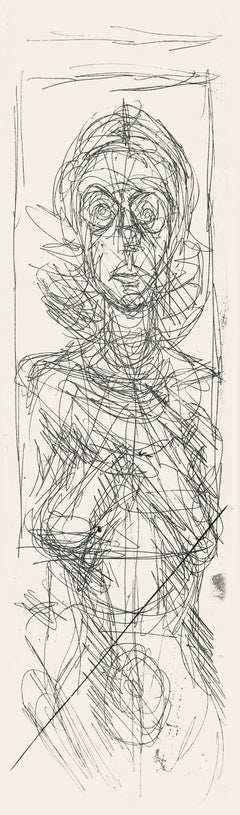
Alberto Giacometti, Annette, Frontal View, from Derriere le miroir, 1956 (after)
By Alberto Giacometti
Located in Southampton, NY
This exquisite etching after Alberto Giacometti (1901–1966), titled Annette de Face (Annette, Frontal View), from the folio Derriere le miroir, 10 Ans d'Edition 1946-1956, No. 92-93, originates from the 1956 edition published by Maeght Editeur, Paris, and printed by Atelier Crommelynck, Paris, 1956. This work exemplifies Giacometti’s mastery of line and existential sensitivity, capturing the haunting stillness and psychological intensity of his wife and muse, Annette.
Executed as an etching, cuivre rayé apres tirage on velin paper, this work measures 15 x 11 inches overall; 8.07 x 2.28 inches image size. Unsigned and unnumbered as issued. The edition exemplifies the superb craftsmanship of Atelier Crommelynck, Paris.
Artwork Details:
Artist: After Alberto Giacometti (1901–1966)
Title: Annette de Face (Annette, Frontal View), from the folio Derriere le miroir, 10 Ans d'Edition 1946-1956, No. 92-93
Medium: Etching, cuivre rayé apres tirage on velin paper
Dimensions: 15 x 11 inches, overall; 8.07 x 2.28 inches, image size (38.1 x 27.94 cm; 20.5 x 5.8 cm)
Inscription: Unsigned and unnumbered as issued
Date: 1956
Publisher: Maeght Editeur, Paris
Printer: Atelier Crommelynck, Paris
Condition: Well preserved, consistent with age and medium
Provenance: From the folio Derriere le miroir, 10 Ans d'Edition 1946-1956, No. 92-93, published by Maeght Editeur, Paris; printed by Atelier Crommelynck, Paris, 1956
Notes:
Excerpted from the folio (translated from French), This catalogue, forming a special issue of Derriere le miroir, was completed in October 1956 on the presses of Draeger Freres on behalf of Aime Maeght, Editeur. The original lithographs of Miro, Chagall and Bazaine were shot by Mourlot Freres. The eaux-fortes rayees of Miro and Giacometti were shot by Crommelynck. Raoul Ubac composed and pulled the engraved wood from the cover. The photographs of Braque's reproduced works are by Mr. Routhier. Those of the other artists of Y. Hervochon.
About the Publication:
Derriere le miroir (Behind the Mirror) was one of the most important art publications of the 20th century, created and published by Maeght Editeur in Paris from 1946 to 1982. Founded by the visionary art dealer and publisher Aime Maeght, the series served as both an exhibition catalogue and a work of art in its own right, uniting original lithographs by leading modern and contemporary artists with critical essays, poetry, and design of the highest quality. Printed by master lithographers such as Mourlot Freres and Arte, Derriere le miroir became synonymous with the artistic vanguard of postwar Europe. Each issue was devoted to a single artist or theme and published to accompany exhibitions at the Galerie Maeght in Paris, featuring works by Pablo Picasso, Henri Matisse, Georges Braque, Joan Miro, Marc Chagall, Alexander Calder, Fernand Leger, and Alberto Giacometti, among others. The publication reflected Maeght's belief that art should be both accessible and elevated—an ideal realized through its luxurious production values, meticulous printing, and collaboration with the greatest creative minds of its time.
About the Artist:
Alberto Giacometti (1901–1966) was a Swiss sculptor, painter, and draughtsman whose hauntingly elongated figures and existential vision redefined modern art and made him one of the most influential artists of the 20th century. Born in Borgonovo, Switzerland, into an artistic family—his father, Giovanni Giacometti, was a noted Post-Impressionist—he was immersed in art from an early age before studying in Geneva and moving to Paris in 1922, where he became part of the city’s avant-garde alongside Pablo Picasso, Alexander Calder, Salvador Dali, Joan Miro, Wassily Kandinsky, Marcel Duchamp, and Man Ray. In the 1920s and 1930s, Giacometti explored Cubism and Surrealism, creating symbolic and dreamlike sculptures such as Suspended Ball (1930–31) and The Palace at 4 A.M. (1932), which reflected the influence of Dali, Duchamp, and Man Ray. By the 1940s, he abandoned Surrealism to pursue a deeply personal exploration of the human condition, developing his iconic attenuated figures that embodied both fragility and resilience. His signature sculptures—L’Homme qui marche I (Walking Man I), Femme debout, and Le Chariot—expressed the isolation, endurance, and vulnerability of modern existence, echoing the existential philosophy of Jean-Paul Sartre and Simone de Beauvoir. Giacometti’s figures, stripped of mass yet monumental in spirit, symbolized humanity’s search for meaning in a postwar world, while his paintings and drawings—portraits of his brother Diego, his wife Annette, and his friends—captured the psychological depth of perception with trembling, repetitive lines that blurred the boundary between body and soul. His friendships with Picasso, Calder, Miro, and Kandinsky shaped his understanding of form, motion, and space, while his philosophical engagement with Duchamp and Man Ray deepened his inquiry into the nature of reality and perception. Working obsessively in his modest Montparnasse studio, Giacometti pursued art as an existential act—destroying and rebuilding his figures in an endless search for truth. His influence on postwar art was immense, shaping the work of Henry Moore, Francis Bacon, Louise Bourgeois, Lucian Freud, and later contemporary sculptors such as Antony Gormley and Anselm Kiefer. His aesthetic also resonated beyond sculpture, influencing fashion, photography, and architecture through his vision of form, isolation, and proportion. Giacometti’s work is represented in major museum collections including MoMA, the Tate Modern, and the Centre Pompidou, and continues to inspire artists, collectors, and thinkers worldwide. Standing alongside Pablo Picasso, Alexander Calder, Salvador Dali, Joan Miro, Wassily Kandinsky, Marcel Duchamp, and Man Ray, Giacometti remains a towering figure in modern art—a sculptor-philosopher who transformed the human form into a universal symbol of resilience and reflection. His highest auction record was achieved by L’Homme qui marche I (Walking Man I), which sold for 141.3 million USD at Sotheby’s, London, on February 3, 2010, reaffirming Alberto Giacometti’s enduring legacy as one of the most visionary, profound, and collectible artists in the history of modern art.
After Alberto Giacometti Annette...
Category
1950s Modern Abstract Prints
Materials
Etching
$1,996 Sale Price
20% Off
Free Shipping
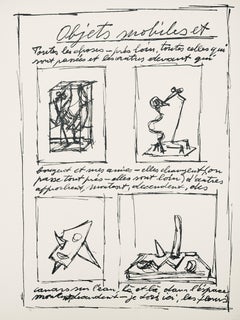
Alberto Giacometti, Untitled, from XXe Siecle 1952 (after)
By Alberto Giacometti
Located in Southampton, NY
This exquisite lithograph after Alberto Giacometti (1901–1966), titled Sans titre (Untitled), from the album XXe Siecle, Nouvelle serie N°3 (double) Juin 1952, originates from the 19...
Category
1950s Modern Abstract Prints
Materials
Lithograph
$1,196 Sale Price
20% Off
Free Shipping
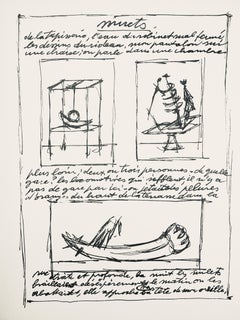
Alberto Giacometti, Untitled, from XXe Siecle 1952 (after)
By Alberto Giacometti
Located in Southampton, NY
This exquisite lithograph after Alberto Giacometti (1901–1966), titled Sans titre (Untitled), from the album XXe Siecle, Nouvelle serie N°3 (double) Juin 1952, originates from the 19...
Category
1950s Modern Abstract Prints
Materials
Lithograph
$1,196 Sale Price
20% Off
Free Shipping
You May Also Like
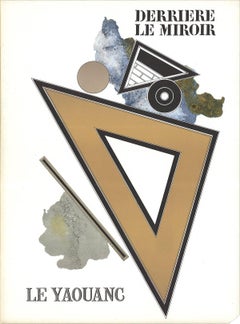
1969 After Alain Le Yaouanc
DLM No. 176 Cover
Expressionism
Located in Brooklyn, NY
Paper Size: 15 x 11 inches ( 38.1 x 27.94 cm )
Image Size: 15 x 11 inches ( 38.1 x 27.94 cm )
Framed: No
Condition: C: Several Signs of use and handling, some visible marks
Add...
Category
1960s Prints and Multiples
Materials
Lithograph
$60 Sale Price
52% Off
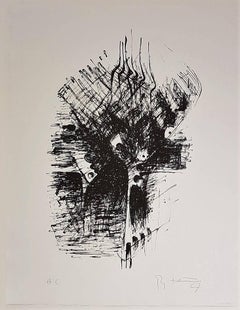
"Komposition" (Composition)
By Bernhard Heiliger
Located in Kansas City, MO
Bernhard Heiliger
“Composition”, 1967
Medium: Lithograph
Signed, numbered or inscribed
Edition: 100 + H.C.
Size: 20.5 × 12.9 on 25.5 × 19.7 inches
COA provided
Bernhard Heiliger (11...
Category
1960s Abstract Portrait Prints
Materials
Lithograph
L
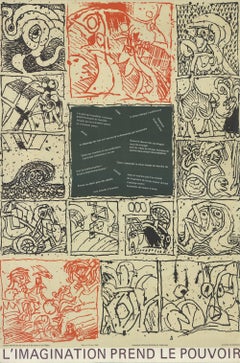
Imagination Prend Le Pouvoir Poster, Offset Print, 1968
By Pierre Alechinsky
Located in Brooklyn, NY
This rare original poster by Pierre Alechinsky is a powerful artistic and historical document from the May 1968 Paris student protests. Printed on billboard paper using a home press,...
Category
1960s Contemporary Prints and Multiples
Materials
Offset
$560 Sale Price
20% Off
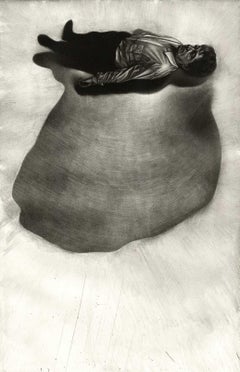
Personne Seule Etendue
By Maurice Pasternak
Located in New Orleans, LA
Maurice Pasternak's imagery is not organized or presented in a way that makes literal sense. His figures and landscapes have mysterious drama that's open to individual interpretatio...
Category
Late 20th Century Surrealist Landscape Prints
Materials
Mezzotint
$337 Sale Price
25% Off
La Garçonne
By Kees van Dongen
Located in OPOLE, PL
Kees Van Dongen (1877-1968) - La Garçonne
Original Lithograph, pochoir from 1925.
Arches paper (no watermark).
Dimensions of work: 23.5 x 18 cm
Publisher: E. Flammarion Éditeur.
...
Category
1920s Modern Figurative Prints
Materials
Lithograph
La Garçonne
By Kees van Dongen
Located in OPOLE, PL
Kees Van Dongen (1877-1968) - La Garçonne
Original Lithograph, pochoir from 1925.
Arches paper (no watermark).
Dimensions of work: 23.5 x 18 cm
Publisher: E. Flammarion Éditeur.
...
Category
1920s Modern Figurative Prints
Materials
Lithograph
More Ways To Browse
Giacometti Alberto
Ai Weiwei Tree
Alice And Wonderland Salvador Dali
Andre Heller
Andy Warhol Invitation
Angel Zarraga
Antique Boat Motors
Antique Mermaid Print
Bonnard Etching
Carlos Bastos
Chagall Creation
Chagall Etching Watercolor
Chagall Maternite
Christinas World
Cries Of London
Dali Carmen
Dali Cavalier
Dali Horse Lithograph