Want more images or videos?
Request additional images or videos from the seller
1 of 10

Albrecht Dürer
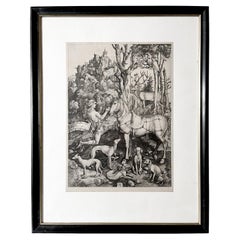
The Small Horse by Albrecht Dürer

1505

$42,500
£32,520.43
€37,219.96
CA$60,021.20
A$65,232.73
CHF 34,958.78
MX$792,041.26
NOK 438,886.32
SEK 407,000.36
DKK 277,987.29

About the Item

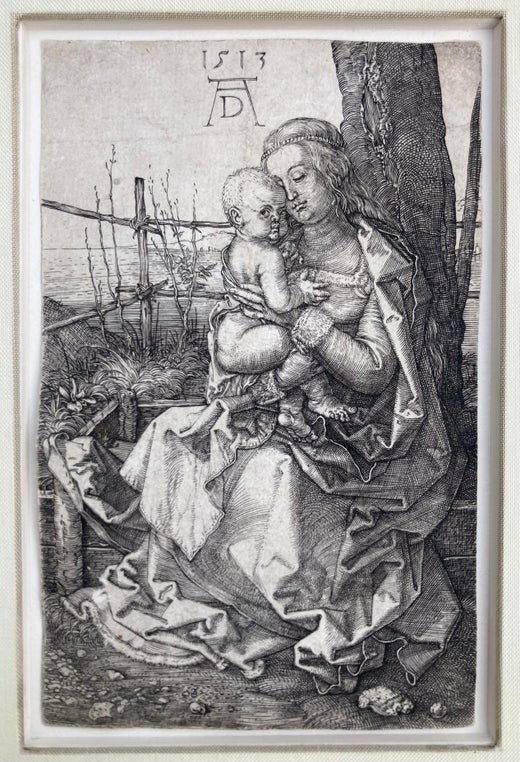
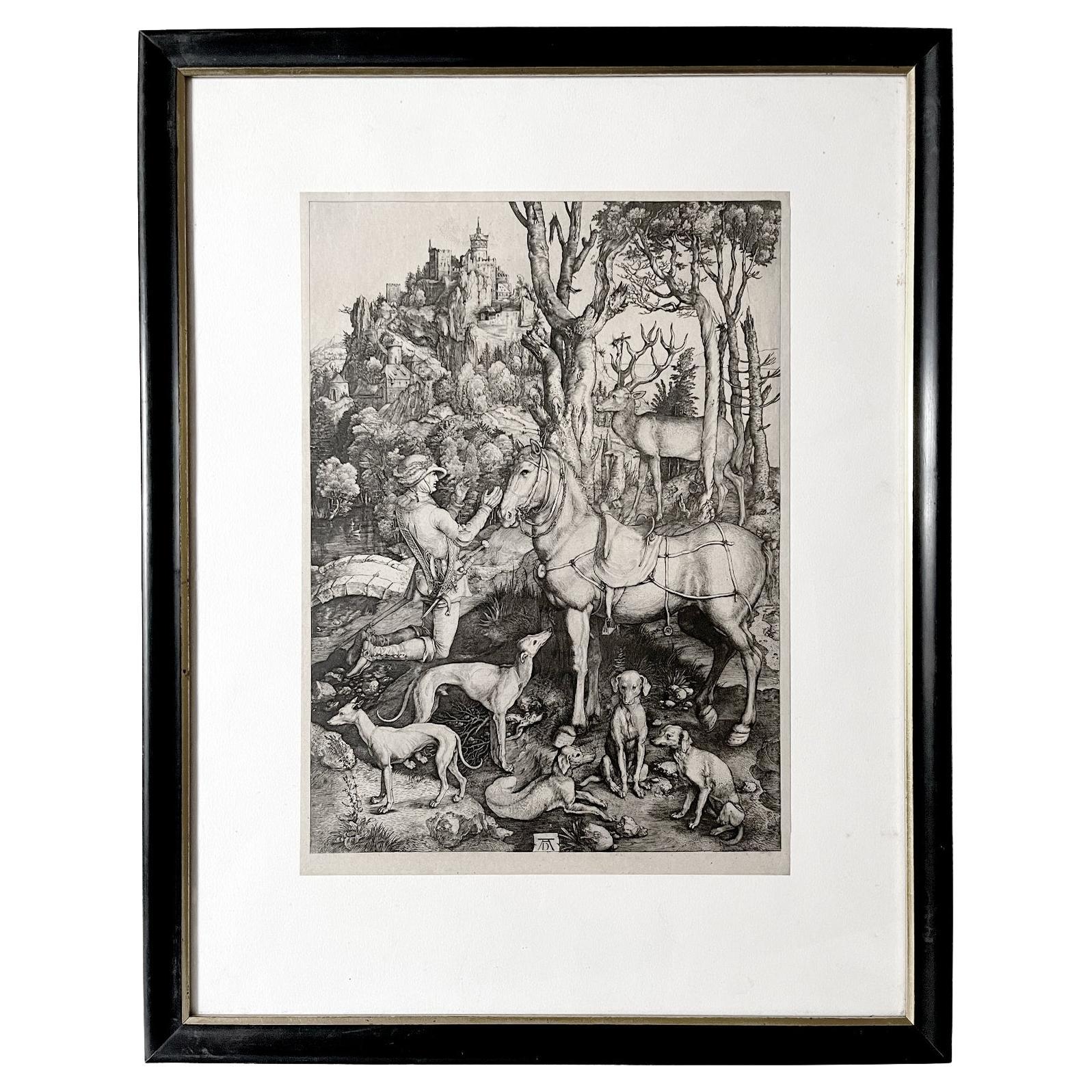
Albrecht Dürer 1471-1528 German The Small Horse Dated in the plate on upper center; monogrammed in the plate lower center: AD Meder state a Copperplate engraving on laid paper “Whatever was mortal in Albrecht Dürer lies beneath this mound.” — Albrecht Dürer’s epitaph Regarded as the greatest engraver in history, Albrecht Dürer revolutionized printmaking by combining extraordinary naturalism with technical precision. The Small Horse reflects his lifelong fascination with ideal beauty, proportion and movement. The striking horse, rendered with anatomical accuracy, conveys both energy and poise, exemplifying Dürer’s mastery of copper engraving and his ability to merge realism with classical idealization. The composition is tightly controlled, with the horse shown in profile against a stone wall, its tail restrained by a knot, while the wing-footed warrior in a butterfly-winged helmet struggles to keep pace. Dürer’s use of intersecting diagonals in the architecture and pike arrests the motion, creating a dynamic tension that balances naturalistic detail with a heraldic formality. Influenced by Italian Renaissance masters such as Pisanello, Donatello, Mantegna and Leonardo da Vinci, as well as classical bronze equestrian sculptures in Venice, Dürer integrates idealized form with studied observation. Horses were recurring subjects in Dürer’s oeuvre, often used to explore movement, proportion and symbolism. In The Small Horse, each detail, from the musculature of the horse to the warrior’s posture, is meticulously rendered through precise shading and line work, creating a work that is both a vivid study in anatomy and a testament to Dürer’s unrivaled skill in engraving. His prints remain benchmarks for technical achievement and artistic insight, influencing generations of artists across Europe. Albrecht Dürer, born in Nuremberg in 1471, is regarded as the most influential artist of the Northern Renaissance. Early in his career, Dürer apprenticed with his father, a goldsmith, and later with Michael Wolgemut, whose workshop introduced him to woodcut illustration. Fascinated by the Italian Renaissance, Dürer made two formative visits to Italy, where he absorbed the classical techniques of masters like Pollaiuolo, Mantegna and Michelangelo. Dürer engraved this poignant depiction of the Virgin Mary and the Christ Child following his second trip to Venice in 1505-1507. The stay marked a turning point in his career, and this engraving reveals Dürer's deepened understanding of classical form, as well as his mastery of naturalistic effects in light and shade. His ability to merge these Italian influences with the Northern tradition of intricate detail established Dürer as a leading figure in Renaissance art. Throughout his career, Dürer created works that transcended the boundaries of woodcuts, engravings and paintings, demonstrating unmatched intellectual and artistic depth. Dürer was the most influential German artist of his time, serving as court artist to both Holy Roman Emperor Maximilian I and his successor Charles V. Examples of this work are featured in the permanent collections of the Metropolitan Museum of Art, the National Gallery of Art in Washington, D.C., the Harvard Art Museums and other esteemed institutions. Plate dated 1505 Paper: 6" high x 4" deep (15.24 x 10.16 cm) Frame: 16 3/4" high x 12 3/4" wide x 1" deep (42.55 x 32.39 x 2.54 cm) Literature: Strauss, Walter L., ed. The Illustrated Bartsch 10 (Commentary): Sixteenth Century German Artists, Albrecht Dürer. New York: Abaris Books, 1980. 328 pp., ill. No. 96, pp. 212–215 Bartrum, Giulia, ed. Albrecht Dürer and his Legacy – The Graphic Work of a Renaissance Artist, with contributions by Günter Grass, Joseph L. Koerner, and Ute Kuhlemann. London: The British Museum Press, 2002. 320 pp., ill. No. 180, p. 229 Dodgson, C. The Masters of Engraving and Etching: Albrecht Dürer. London and Boston, 1926. No. 43 Hollstein, F.W.H. German Engravings, Etchings and Woodcuts, c.1400–1700. Volume VII. Amsterdam: M. Hertzberger, 1954–. No. 93 Rowlands, J.K. The Graphic Work of Albrecht Dürer: An Exhibition of his Prints and Drawings in Commemoration of the Quincentenary of his Birth. London: British Museum, 1971. Exhibition catalogue. No. 113 Schoch, R., M. Mende, and A. Scherbaum. Albrecht Dürer. Das Druckgraphische Werk. Band I: Kupferstiche, Eisenradierungen und Kaltnadelblätter. Munich, London, New York, 2001. No. 42 Heller, Joseph. Das Leben und die Werke Albrecht Dürer. Bamberg, 1827. Vols. 2 3 (vol. 1 unpublished). No. 1000 Meder, Joseph. Dürer-Katalog: Ein Handbuch über Albrecht Dürers Stiche, Radierungen, Holzschnitte, deren Zustände, Ausgaben und Wasserzeichen. Vienna, 1932. No. 93 Dodgson, C. The Masters of Engraving and Etching: Albrecht Dürer. London and Boston, 1926. No. 43 Tietze, Hans and Erika Tietze-Conrat. Kritisches Verzeichnis der Werke Albrecht Dürers. Vol. 1, Augsburg, 1928; Vol. 2, Basel and Leipzig, 1937; Vol. 3, Basel and Leipzig, 1938. No. 281 Panofsky, Erwin. The Life and Art of Albrecht Dürer. Vol. I, Princeton: Princeton University Press, 1955 (4th edn); Vol. II, Princeton: Princeton University Press, 1945 (2nd edn). No. 203 Strauss, W.L. The Intaglio Prints of Albrecht Dürer. 6 volumes. New York, 1977. No. 44 Provenance: Private Collection, Germany M.S. Rau, New Orleans
  • Creator:
    Albrecht Dürer (1471-1528, German)
  • Creation Year:
    1505
  • Dimensions:
    Height: 16.75 in (42.55 cm)Width: 12.75 in (32.39 cm)Depth: 1 in (2.54 cm)
  • Medium:
  • Movement Style:
  • Period:
  • Condition:
  • Gallery Location:
    New Orleans, LA
  • Reference Number:
    Seller: 32-14311stDibs: LU18617209242

More From This Seller

View All
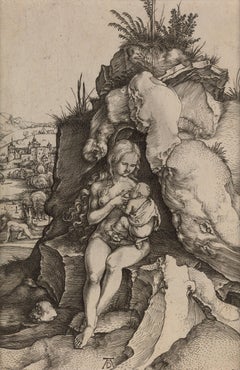
The Penance of St. Chrysostom by Albrecht Dürer
By Albrecht Dürer
Located in New Orleans, LA
Albrecht Dürer 1471-1528 German The Penance of St. Chrysostom Monogrammed in the plate lower center "AD" Copper engraving on laid paper “Whatever was mortal in Albrecht Dürer li...
Category

15th Century and Earlier Old Masters More Art

Materials

Copper

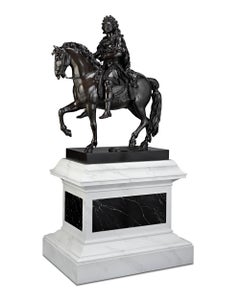
Girardon’s Equestrian Portrait of Louis XIV
Located in New Orleans, LA
King Louis XIV, one of France's greatest monarchs, sits confidently astride a prancing steed in this bronze equestrian statue. The extraordinary work is a reduction of the portrait of the Sun King by François Girardon, one of the most noted and influential sculptors of the period. Looking back to the great masterpieces of antiquity, Girardon took his inspiration from the seminal ancient Roman marble of Marcus Aurelius, now in the Musei Capitoline (Rome). Louis XIV is thus portrayed here as a conquering Roman hero, his costume adorned with many neoclassical motifs, hand outstretched in a gesture of command. The result is an imposing royal portrait of power and absolute authority that pays homage to one of the most important sovereigns in French history. It was in 1685, at the very height of his rule, when Louis XIV commissioned the monumental bronze of himself from the great Girardon. As sculptor to the king, Girardon was a key figure in the decoration of the gardens at the Château de Versailles, and he was later commissioned to complete several important royal...
Category

19th Century Other Art Style Figurative Sculptures

Materials

Bronze

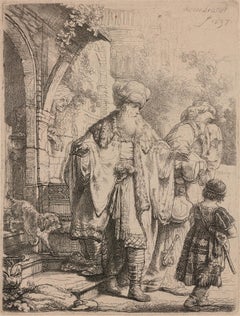
Abraham Casting Out Hagar and Ishmael by Rembrandt van Rijn
By Rembrandt van Rijn
Located in New Orleans, LA
Rembrandt van Rijn 1606-1669 Dutch Abraham Casting Out Hagar and Ishmael Signed and dated "Rembrandt f. 1637" (upper right) State one of one Etching with touches of drypoint This...
Category

17th Century Old Masters Figurative Drawings and Watercolors

Materials

Drypoint, Etching

Illuminated Manuscript Painting by the German School
By German School
Located in New Orleans, LA
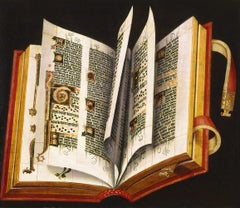
Extraordinary in its beauty and rarity, this early 16th-century German painting of an illuminated manuscript showcases a masterful trompe l’oeil effect. Unequivocally among the finest of only 17 known works of its kind, the oil on panel is both rare and captivating. With illusory pages that appear to leap from the panel, this virtuosic painting of a hand-colored book suspended into space is exceptional. Created more than four centuries ago, the composition evokes a strong sense of realism. Executed by a masterful Northern Renaissance artist of the German school, the illuminated manuscript pictured shows the astonishing splendor of the historical books of the period. Sumptuously decorated with scrolling floral motifs in the margins, the manuscript appears before a deep black background, heightening the trompe l’oeil illusion of depth through its strong contrast and the naturalistic shadows falling across the fluttering pages. It has been said that of the 17 known versions of this composition, ours stands alone in its precision in both perspective and the play of light and shadow. The visible folios feature choral arrangements and other texts, indicating the pictured manuscript likely served a role in the celebration of church services. In fact, other examples of manuscript paintings...
Category

16th Century Renaissance Still-life Paintings

Materials

Oil, Panel

The Battle of Anghiari by Enrico Bosi
By Enrico Bosi
Located in New Orleans, LA
Enrico Bosi fl.1850-1865 Italian The Battle of Anghiari Maker's label inscribed "H. Bosi / Firenze" (en verso) Pietre dure Based on a lost painting by Leonardo da Vinci, which wa...
Category

19th Century Mixed Media

Materials

Marble

Beggar Seated on a Bank by Rembrandt Van Rijn
By Rembrandt van Rijn
Located in New Orleans, LA
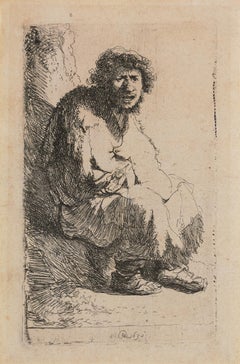
Rembrandt van Rijn 1606-1669 Dutch Beggar Seated on a Bank Etching on paper New Hollstein's first state of two Signed and dated in plate "RHL 1630" (lower center) This remarkable...
Category

17th Century Old Masters Figurative Prints

Materials

Paper, Etching

You May Also Like

La Nativite, Heliogravure by Albrecht Dürer
By Albrecht Dürer
Located in Long Island City, NY
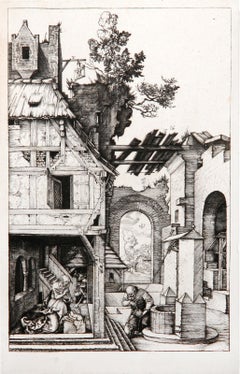
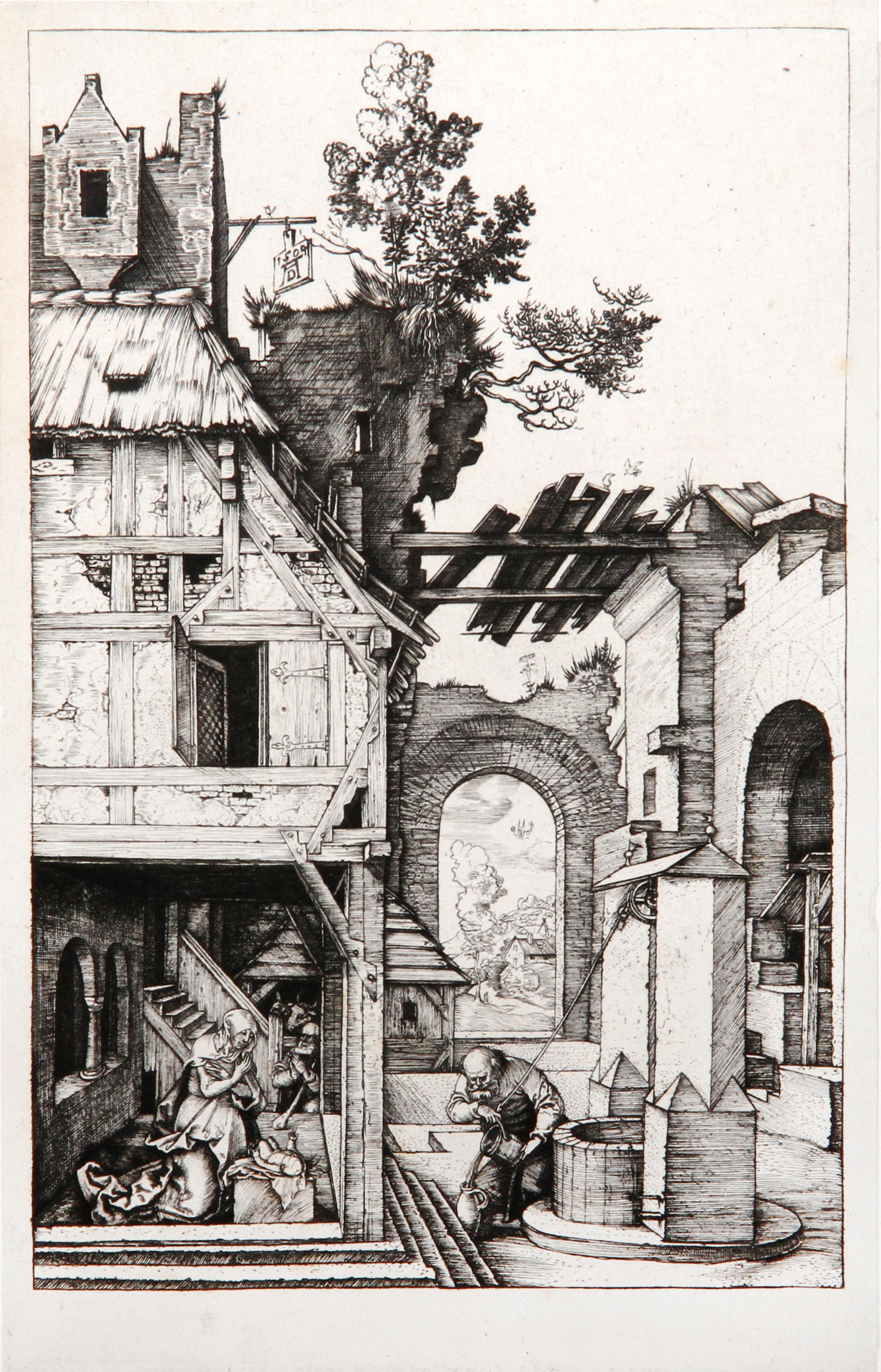
Albrecht Durer, After by Amand Durand, German (1471 - 1528) - La Nativite, Year: 1873, Medium: Heliogravure, Size: 8 x 5 in. (20.32 x 12.7 cm), Printer: Amand Durand, Description...
Category

Late 19th Century Old Masters Prints and Multiples

Materials

Etching

L Assemblee des Gens de Guerre, Heliogravure by Albrecht Dürer
By Albrecht Dürer
Located in Long Island City, NY
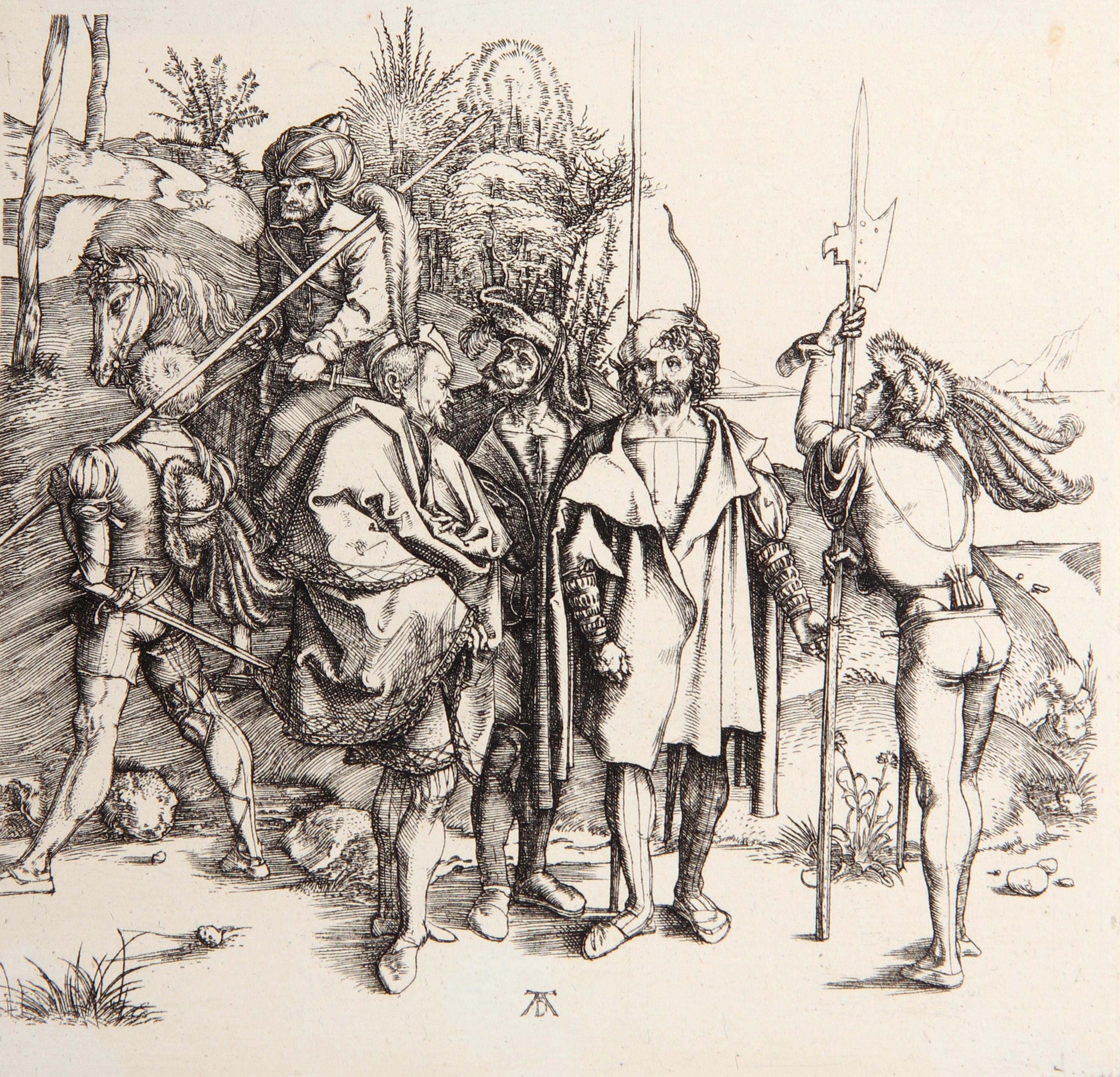
Albrecht Durer, After by Amand Durand, German (1471 - 1528) - L'Assemblee des Gens de Guerre, Year: 1873, Medium: Heliogravure, Size: 5.5 x 6 in. (13.97 x 15.24 cm), Printer: Ama...
Category

Late 19th Century Old Masters Prints and Multiples

Materials

Etching

Albrecht Dürer - Saint Eustace
By Albrecht Dürer
Located in Paris, FR
Albrecht Dürer, Saint Eustace. Wood engraving, 1501. Signed with the monogram A.D (Albrecht Dürer) Why not having on a wall a Masterpiece which is also ...
Category

Antique 16th Century German Renaissance Prints

Materials

Paper

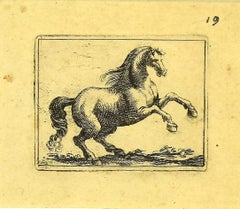
The Horse - Etching by Antonio Tempesta - 1610s
By Antonio Tempesta
Located in Roma, IT
The Horse is a wonderful black and white etching on thick laid paper, realized by the Italian master Antonio Tempesta (1555-1630). Not signed. Image Dimensions: 5 x 7 / 8 x 10 c...
Category

Early 17th Century Figurative Prints

Materials

Etching

The Horse - Etching by Antonio Tempesta - 1610s
By Antonio Tempesta
Located in Roma, IT
The Horse is a wonderful black and white etching on thick laid paper, realized by the Italian master Antonio Tempesta (1555-1630). Image Dimensions: 5 x 7 / 8 x 10 cm. Not signed....
Category

Early 17th Century Figurative Prints

Materials

Etching

The Horse - Etching by Antonio Tempesta - 1610s
By Antonio Tempesta
Located in Roma, IT
The Horse is a wonderful black and white etching on thick laid paper, realized by the Italian master Antonio Tempesta (1555-1630). Not signed. In excellent conditions. Including ...
Category

Early 17th Century Figurative Prints

Materials

Etching