Video Loading
1 of 6
Alejandro SantiagoUntitled (Rejoneador)2012
2012
About the Item
- Creator:Alejandro Santiago (1964-2013, Mexican)
- Creation Year:2012
- Dimensions:Height: 40 in (101.6 cm)Width: 25.5 in (64.77 cm)
- Medium:
- Movement Style:
- Period:
- Condition:
- Gallery Location:New York, NY
- Reference Number:1stDibs: LU1062316462
Authenticity Guarantee
In the unlikely event there’s an issue with an item’s authenticity, contact us within 1 year for a full refund. DetailsMoney-Back Guarantee
If your item is not as described, is damaged in transit, or does not arrive, contact us within 7 days for a full refund. Details24-Hour Cancellation
You have a 24-hour grace period in which to reconsider your purchase, with no questions asked.Vetted Professional Sellers
Our world-class sellers must adhere to strict standards for service and quality, maintaining the integrity of our listings.Price-Match Guarantee
If you find that a seller listed the same item for a lower price elsewhere, we’ll match it.Trusted Global Delivery
Our best-in-class carrier network provides specialized shipping options worldwide, including custom delivery.You May Also Like
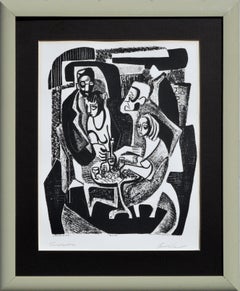
Nick
s Coffee House in the Village - Rare Edition 1970s Modern Figurative Print
By Lenore SImon
Located in Soquel, CA
This bold screen print depicts a scene from the 1950s, set in a jazz coffee house in Greenwich Village called Nick's, which Simon patronized while in high school. The original stone ...
Category
Late 20th Century Expressionist Figurative Prints
Materials
Archival Paper, Screen
$920 Sale Price
20% Off
H 22 in W 18 in D 0.75 in
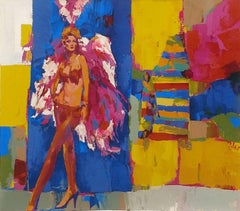
VERA
By Nicola Simbari
Located in Aventura, FL
Serigraph on paper. Hand signed and numbered by the artist. Artwork appears to be in excellent condition. Artwork has not been examined outside the matting. Matted size: approx. 37 x...
Category
1970s Expressionist Portrait Prints
Materials
Paper, Screen
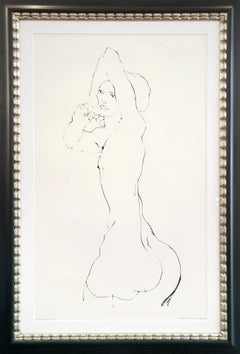
RÜCKSEITE AKTSTUDIE
By Egon Schiele
Located in New York, NY
(After) Egon Schiele
Marked on the bottom:
EGON SCHIELE, RÜCKSEITE AKTSTUDIE, 1912
PUBLISHED BY MULTIPLA s.r.I., PARMA, ITALY, 1988
© BY SIAE, 1988
Label on Reverse specifies no. ...
Category
Late 20th Century Expressionist Figurative Prints
Materials
Paper, Screen
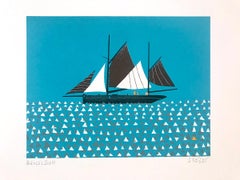
Excelsior by Simon Tozer, Limited edition, Sailing, Landscape, Figurative art
By Simon Tozer
Located in Deddington, GB
Excelsior by Simon Tozer [2021]
limited_edition and hand signed by the artist
Screenprint on Paper
Edition number of 30
Image size: H:23 cm x W:30 cm
...
Category
21st Century and Contemporary Expressionist Landscape Prints
Materials
Paper, Screen
$129
H 13.78 in W 19.69 in D 0.04 in
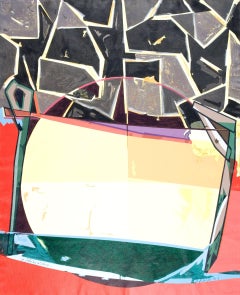
Herve Telemaque, "La pêche miraculeuse", 2005, Engraving, 39.4x31.9 in
By Herve Telemaque
Located in Miami, FL
Herve Telemaque (France, 1937-2022)
'La pêche miraculeuse', 2005
silkscreen on canvas
39.4 x 31.9 in. (100 x 81 cm.)
Edition of 99
Unframed
ID: TEL1361-013-106
Category
Early 2000s Expressionist Prints and Multiples
Materials
Paper, Engraving, Screen
$2,000
H 39.4 in W 31.9 in
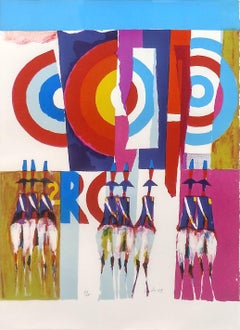
CARABINIERI A OSTIA
By Nicola Simbari
Located in Aventura, FL
Serigraph on paper. Hand signed and numbered by the artist. Artwork size 27.5 x 19.5 inches. Frame size approx 32 x 24 inches. Artwork is in excellent condition. Edition of 125. C...
Category
1990s Expressionist Abstract Prints
Materials
Paper, Screen
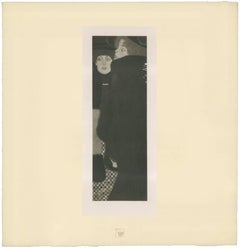
H.O. Miethke Das Werk folio "The Sisters" collotype print
By Gustav Klimt
K.K. Hof-und Staatsdruckerei
Located in Palm Beach, FL
DAS WERK GUSTAV KLIMTS, a portfolio of 50 prints, ten of which are multicolor collotypes on chine colle paper laid down on hand-made heavy cream wove paper with deckled edges; under each of the 50 prints is a gold signet intaglio printed on the cream paper each of which Klimt designed for the publication as unique and relating to its corresponding image; H.O. Miethke, Editor-Publisher; k.k. Hof-und Staatsdruckerei, Printer; printed in a limited edition of 300 numbered plus several presentation copies; Vienna, 1908-1914.
The idea of collaboration in the arts is anything but new; however it has so often been viewed and assessed as somehow devaluing the intrinsic worth of art. It’s as if it was a dirty secret to be hidden away. More so even than the eroticism explored by Klimt, which divided public opinion, the artistic avant-garde began to boldly flaunt artistic collaboration beginning in the 19th century- which gained steam in the first part of the 20th century- to become a driving vehicle of contemporary artistic creation. Viewed in this context, the folios of collotype prints published by H.O. Miethke in Vienna between 1908-1914 known as Das Werk Gustav Klimts, are important art documents worthy of as much consideration for their bold stand they take on established ways of thinking about artistic collaboration as they are for their breathtakingly striking images.
1908 is indeed a watershed moment in the history of art. To coincide with the 60th anniversary of the reign of Emperor Franz Joseph I, Kunstschau opened in Vienna in May of that year. It was there that Klimt delivered the inaugural speech. Speaking about the avant-garde group’s unifying philosophy of Gesamtkunstwerk, or the synthesis of the arts, Klimt shared his belief that the ideal means to bring artists and an audience together was via “work on major art projects.” It was at Kunstschau 1908 that Klimt first exhibited his most iconic painting, The Kiss, as well as The Sunflower, Water Snakes I and II and Danae. It was at Kunstschau 1908 that Das Werk Gustav Klimts was first available for purchase. Thanks to Galerie Miethke’s organization, Kunstschau 1908 was possible. Miethke’s pioneering art house had become Klimt’s exclusive art dealer and main promoter of his modernist vision. Paul Bacher and Carl Moll, a founding member with Klimt of the Vienna Secession, who all broke away during the rift in 1905, took stewardship of the gallery following the fallout with the Secession. Das Werk Gustav Klimts is a prime example of Miethke’s masterful and revolutionary approach to marketing art. Miethke’s innovative marketing strategy played to a penchant for exclusivity. The art gallery and publishing house utilized the press and art critics- such as Austria’s preeminent Art Historian, Hugo Haberfield, who became Director of the gallery in 1912- as a means of gaining publicity as well as maintaining effective public relations. Miethke used the grand exposition format to extend the art gallery’s market reach, cultivating their product’s prestige by stroking the egos of current art patrons while simultaneously creating accessibility for newcomers and others avid collectors to share a relative proximity to other wealthy and respected members of the art collecting community. Essentially, their approach paved the way for what is still the predominant means of marketing.
Between 1908 and 1914, H.O. Miethke published a total of 5 installments of print folios of Klimt’s painted work, each comprising 10 prints. The series was limited in availability to 300 and purchase was arranged through subscription. Each issue was presented unbound in a gold embossed black paper folder. Included in the folio was a Title Page, a Justification page and a Table of Contents page itemizing each of the 10 printed works with details about their corresponding painted works as well as information about each work’s current owner. These folios were not comprehensive of Klimt’s work; but rather, they feature what he believed were his most important paintings from 1898-1913. Only 2 collotypes in each folio were multicolored.
To punctuate the fact that Klimt, himself, was very much an active player in creating these printed works, he created square-shaped signets, unique to each collotype which were intaglio printed in gold ink at the bottom of the cream wove papers to which the chine collie papers were affixed.These signets relate thematically to their corresponding printed images and designate each of those images by their placement in the folio’s Table...
Category
Early 1900s Vienna Secession Figurative Prints
Materials
Archival Paper
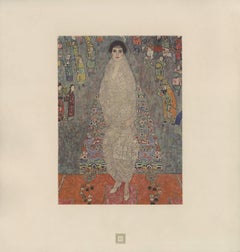
Max Eisler Eine Nachlese folio “Portrait of Baroness Bachofen-Echt” collotype
By (after) Gustav Klimt
Located in Palm Beach, FL
After Gustav Klimt, Max Eisler #22, Bildnis Baronin Bachofen-Echt; multi-color collotype after 1914-1916 painting in oil on canvas.
GUSTAV KLIMT EINE NACHLESE (GUSTAV KLIMT AN AFTERMATH), a portfolio of 30 collotypes prints, 15 are multi-color and 15 are monochrome, on chine colle paper laid down on heavy cream-wove paper with deckled edges; Max Eisler, Editor-Publisher; Osterreichischer Staatsdruckerei (Austrian State Printing Office), Printer; in a limited edition of 500 numbered examples of which: 200 were printed in German, 150 were printed in French and 150 were printed in English; Vienna, 1931.
2018 marks the 100th anniversary of Gustav Klimt’s death. It is a fitting time to reflect upon the enduring legacy and deep impact of his art. Recognizing this need for posterity with uncanny foresight, the publication of Gustav Klimt: An Aftermath (Eine Nachlese) provides a rare collection of work after Klimt which has proven to be an indispensable tool for Klimt scholarship as well as a source for pure visual delight.
Approximately 25 percent of the original works featured in the Aftermath portfolio have since been lost. Of those 30, six were destroyed by fire on 8 May 1945. On that fateful final day of WWII, the retreating Feldherrnhalle, a tank division of the German Army, set fire to the Schloss Immendorf which was a 16th century castle in Lower Austria used between 1942-1945 to store objects of art. All three of Klimt’s Faculty Paintings: Philosophy, Medicine and Jurisprudence (1900-1907), originally created for the University of Vienna, were on premises at that time. Also among the inventory of Klimt paintings in storage there was art which had been confiscated by the Nazis. One of the most significant confiscated collections was the Lederer collection which featured many works by Gustav Klimt such as Girlfriends II and Garden Path with Chickens...
Category
1930s Vienna Secession Figurative Prints
Materials
Archival Paper
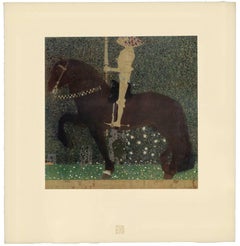
H.O. Miethke Das Werk folio "Life is a Struggle" collotype print
By Gustav Klimt
K.K. Hof-und Staatsdruckerei
Located in Palm Beach, FL
Life is a Struggle (The Golden Knight), no. 10 from the second installment of Das Werk Gustav Klimts
With his golden armor meticulously and faithfully rendered after examples found ...
Category
Early 1900s Vienna Secession Figurative Prints
Materials
Archival Paper
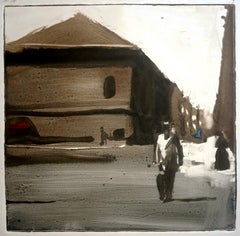
Ghosts of New York 5, mysterious, monochromatic cityscape
By Tom Bennett
Located in Brooklyn, NY
One of a series of oil based monotypes on fine printmaking paper, subtle color design, symbolic and atmospheric figure/figures in cityscape
Category
2010s Expressionist Landscape Prints
Materials
Monotype, Archival Paper
$350
H 12 in W 12 in D 0.05 in
Recently Viewed
View AllMore Ways To Browse
Vintage Pinup Girls Art
Vintage Print Girl Bird
W H Howell
Wax Doll
Wharton Esherick Art
Whistler Fumette
William Blake Original
William Hogarth Beauty
Yoko Ono Lithograph Harold Town
Zamy Steynovitz Serigraph
Zeno Giglietti
18th Century Shoe Buckle
1960 1970 Posters
Abraham Lincoln Emancipation Proclamation
Ak47 Lotus
Al Hirschfeld Barbra Streisand
Alex Katz Bicycle
Alex Katz Christy