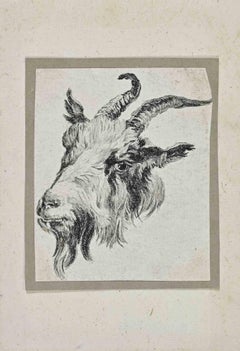
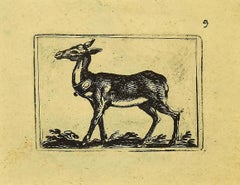
Items Similar to Goat - Etching by Antonio Tempesta - 1610s
Want more images or videos?
Request additional images or videos from the seller
1 of 5
Antonio TempestaGoat - Etching by Antonio Tempesta - 1610s1610s
1610s
$297.45
£221.31
€250
CA$412.02
A$441.47
CHF 236.82
MX$5,229.26
NOK 2,987.31
SEK 2,732.93
DKK 1,904.88
About the Item
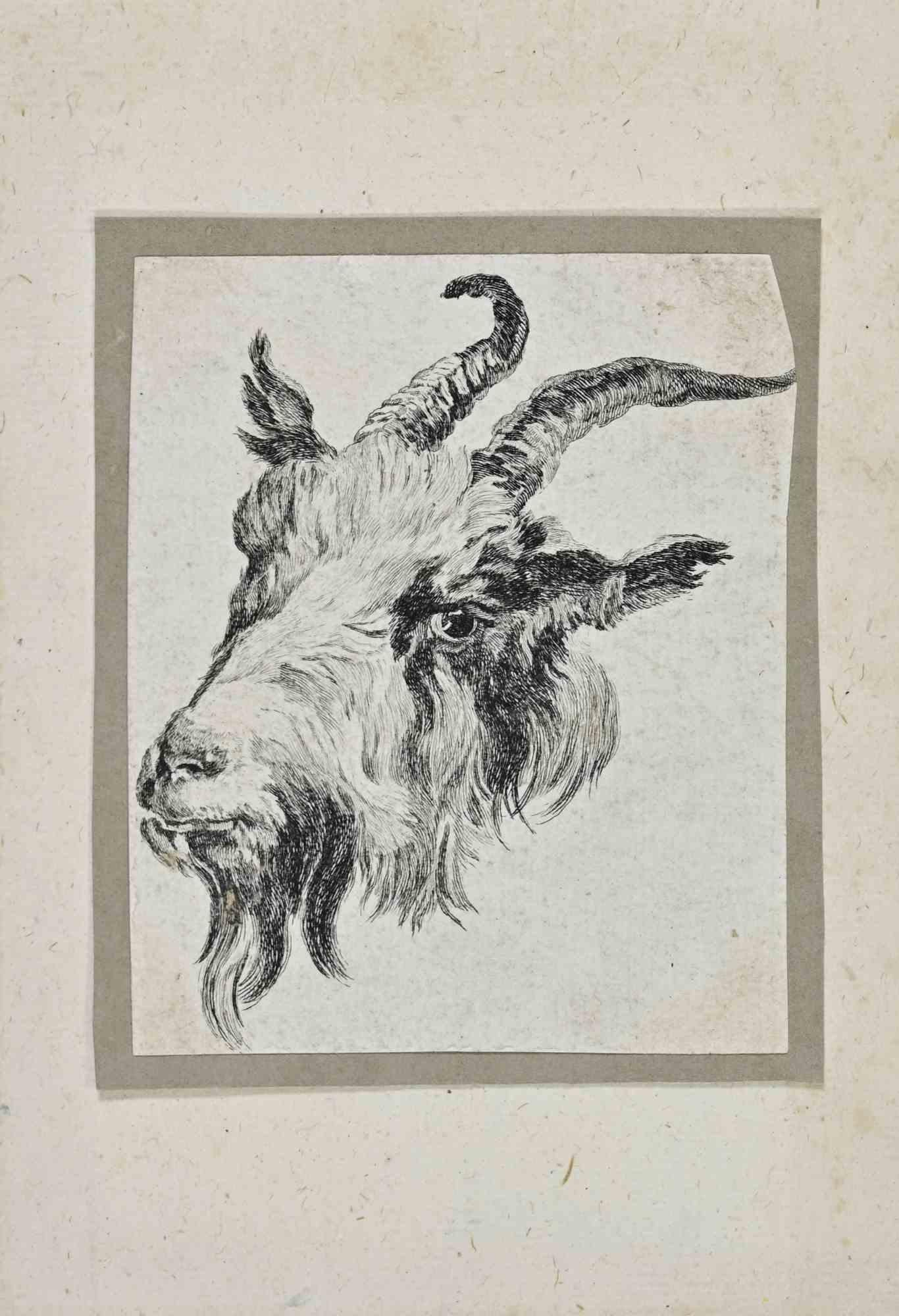
Goat is a wonderful black and white etching on thick laid paper, realized by the Italian master Antonio Tempesta (1555-1630).
Not signed.
In excellent conditions.
Including a cream-colored cardboard passepartout, 34 x 50 cm.
An exciting original print, with all the dignity of a mythological or epic story, represented with an incredible balance of black and white, light and shadow, and a typical Baroque dynamism.
Antonio Tempesta, also known as Il Tempestino (Florence, 1555 - Rome, 1630), was an Italian painter and engraver of the early Baroque period. Antonio Tempesta trained in the culture of late Mannerism, with a naturalistic but also calligraphic taste, acquired from the frequentation of Giovanni Stradano, with whom he collaborated in the decoration of Palazzo Vecchio.
Moving to Rome in 1573, he worked for Pope Gregory XIII, frescoing some maps of Rome in the Vatican, including the famous Map of Rome (1593). In the pontifical capital, he worked for many noble families and for important cardinals, such as Alessandro Farnese and Scipione Borghese. His works are in San Giovanni dei Fiorentini, at the villa in Caprarola, in Tivoli.
He returned to Florence for a brief stay, where he collaborated with Alessandro Allori, Ludovico Buti, Giovan Maria Butteri and Ludovico Cigoli on the decoration of the ceilings of the Uffizi Gallery on the east side, executed with grotesque drawings. When he returned to Rome, he devoted himself more and more to engraving, with which he gained wide recognition throughout Europe.
He was also a talented draftsman, endowed with a particularly scenographic vein, and other artists printed and spread his work.
- Creator:Antonio Tempesta (1555 - 1630, Italian)
- Creation Year:1610s
- Dimensions:Height: 13.39 in (34 cm)Width: 19.69 in (50 cm)Depth: 0.04 in (1 mm)
- Medium:
- Period:Early 17th Century
- Framing:Framing Options Available
- Condition:Insurance may be requested by customers as additional service, contact us for more information.
- Gallery Location:Roma, IT
- Reference Number:Seller: M-1141621stDibs: LU65037486482
Antonio Tempesta
Antonio Tempesta was born and trained in Florence and painted in a variety of styles, influenced to some degree by Counter-Maniera or Counter-Mannerism. He enrolled in the Florentine Accademia delle Arti del Disegno in 1576. He was a pupil of Santi di Tito, then of the Flemish painter Johannes Stradanus. He was part of the large team of artists working under Giorgio Vasari on the interior decoration of the Palazzo Vecchio in Florence.
About the Seller
4.9
Platinum Seller
Premium sellers with a 4.7+ rating and 24-hour response times
1stDibs seller since 2017
7,916 sales on 1stDibs
Typical response time: 1 hour
- ShippingRetrieving quote...Shipping from: Monaco, Monaco
- Return Policy
More From This Seller
View AllGoat - Etching by Nicolaes Pieterszoon Berghem - 17th Century
Located in Roma, IT
Etching on laid paper, depicting a finely observed study of a goat’s head shown in three-quarter profile. The animal’s curved horns, alert eye, and textured beard are rendered with e...
Category
17th Century Modern Figurative Prints
Materials
Etching
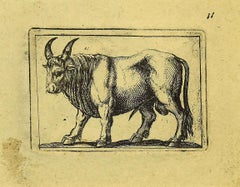
Ox - Etching by Antonio Tempesta - 1610s
By Antonio Tempesta
Located in Roma, IT
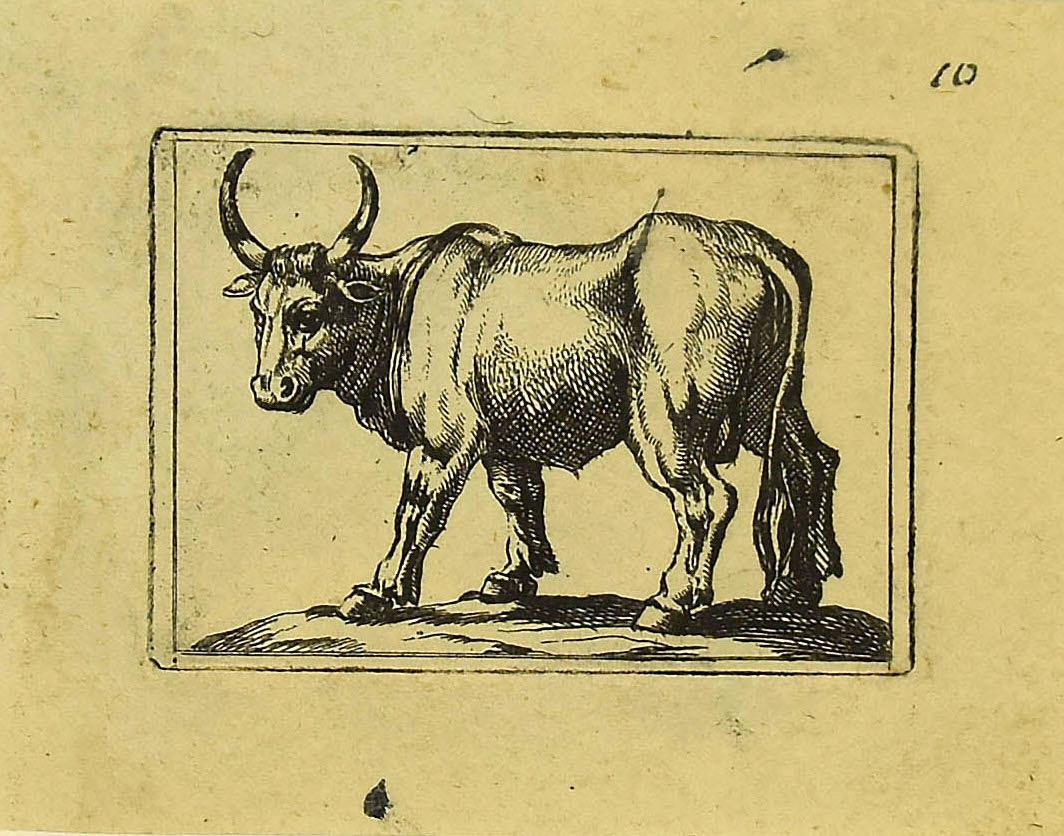
Ox is a wonderful black and white etching on thick laid paper, realized by the Italian master Antonio Tempesta (1555-1630).
Not signed.
In excellent conditions.
Image Dimensions:...
Category
Early 17th Century Figurative Prints
Materials
Etching
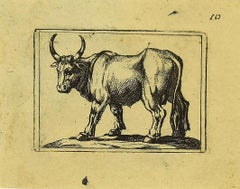
Bull - Etching by Antonio Tempesta - 1610s
By Antonio Tempesta
Located in Roma, IT
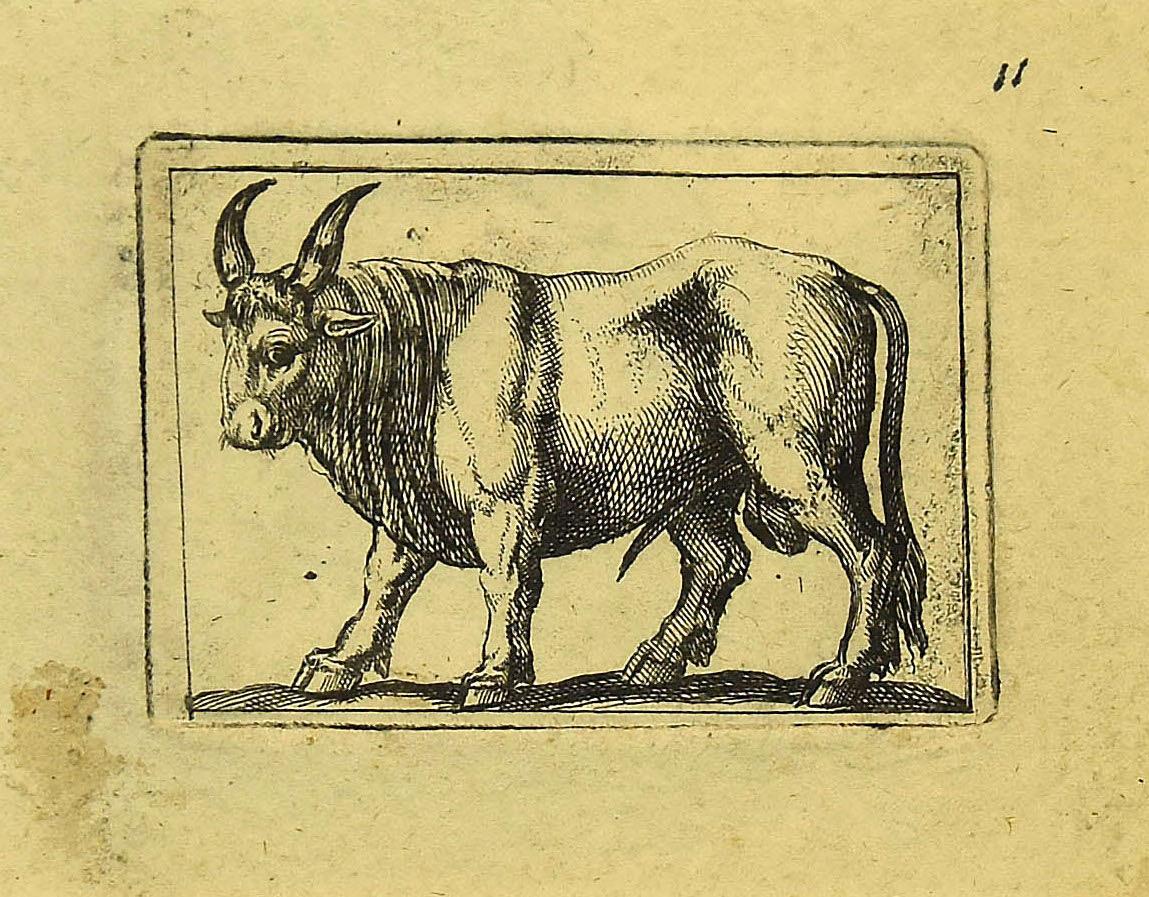
Bull is a wonderful black and white etching on thick laid paper, realized by the Italian master Antonio Tempesta (1555-1630).
Image Dimensions: 5 x 7 cm. 8 x 10 cm.
Not signed.
I...
Category
Early 17th Century Figurative Prints
Materials
Etching
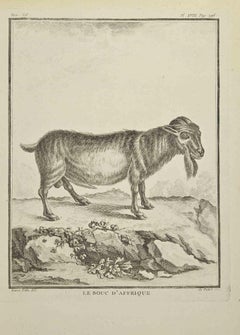
Le Bouc D
Affrique - Etching by A-J De Fehrt - 1771
Located in Roma, IT
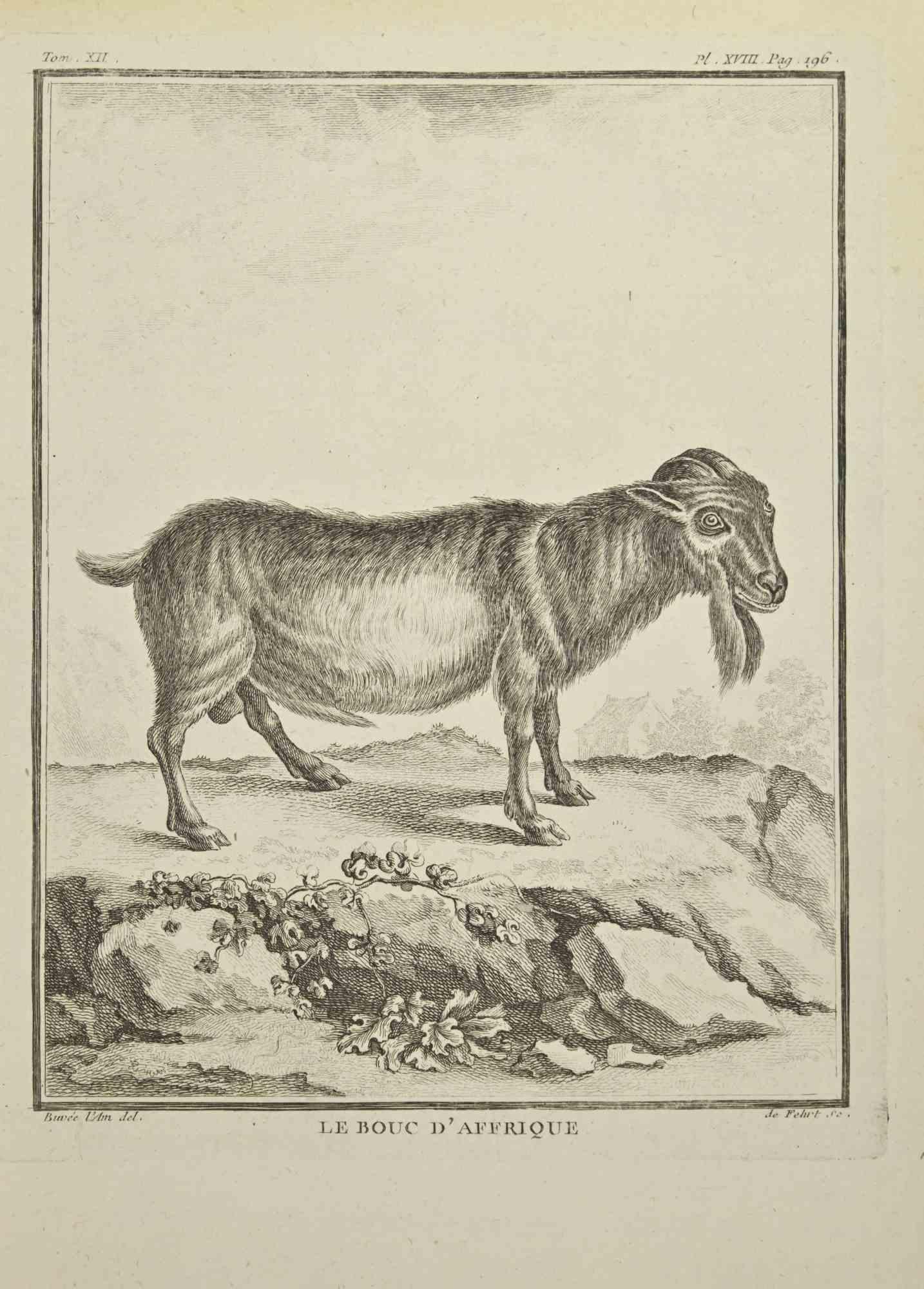
Le Bouc D'Affrique is an etching realized in 1771 by A-J De Fehrt.
Signed in plate.
The artwork Belongs to the suite "Histoire naturelle, générale et particulière avec la descripti...
Category
18th Century Modern Figurative Prints
Materials
Etching
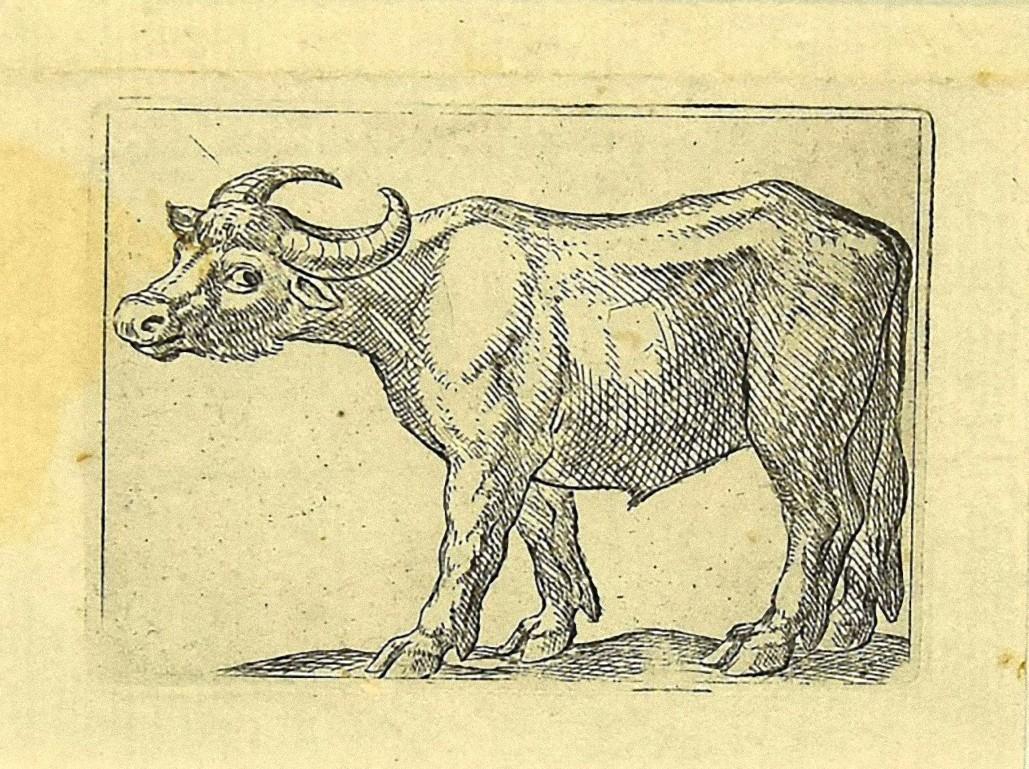
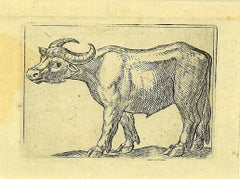
The Buffalo - Etching by Antonio Tempesta - 1610s
By Antonio Tempesta
Located in Roma, IT
The Buffalo is a wonderful black and white etching on thick laid paper, realized by the Italian master Antonio Tempesta (1555-1630).
Not signed.
In excellent conditions.
Including a cream-colored cardboard passepartout, 34 x 50 cm.
An exciting original print, with all the dignity of a mythological or epic story, represented with an incredible balance of black and white, light and shadow, and a typical Baroque dynamism.
Antonio Tempesta, also known as Il Tempestino (Florence, 1555 - Rome, 1630), was an Italian painter and engraver of the early Baroque period. Antonio Tempesta trained in the culture of late Mannerism, with a naturalistic but also calligraphic taste, acquired from the frequentation of Giovanni Stradano, with whom he collaborated in the decoration of Palazzo Vecchio.
Moving to Rome in 1573, he worked for Pope Gregory XIII, frescoing some maps of Rome in the Vatican, including the famous Map of Rome (1593). In the pontifical capital, he worked for many noble families and for important cardinals, such as Alessandro Farnese and Scipione Borghese. His works are in San Giovanni dei Fiorentini, at the villa in Caprarola, in Tivoli.
He returned to Florence for a brief stay, where he collaborated with Alessandro Allori...
Category
Early 17th Century Figurative Prints
Materials
Etching
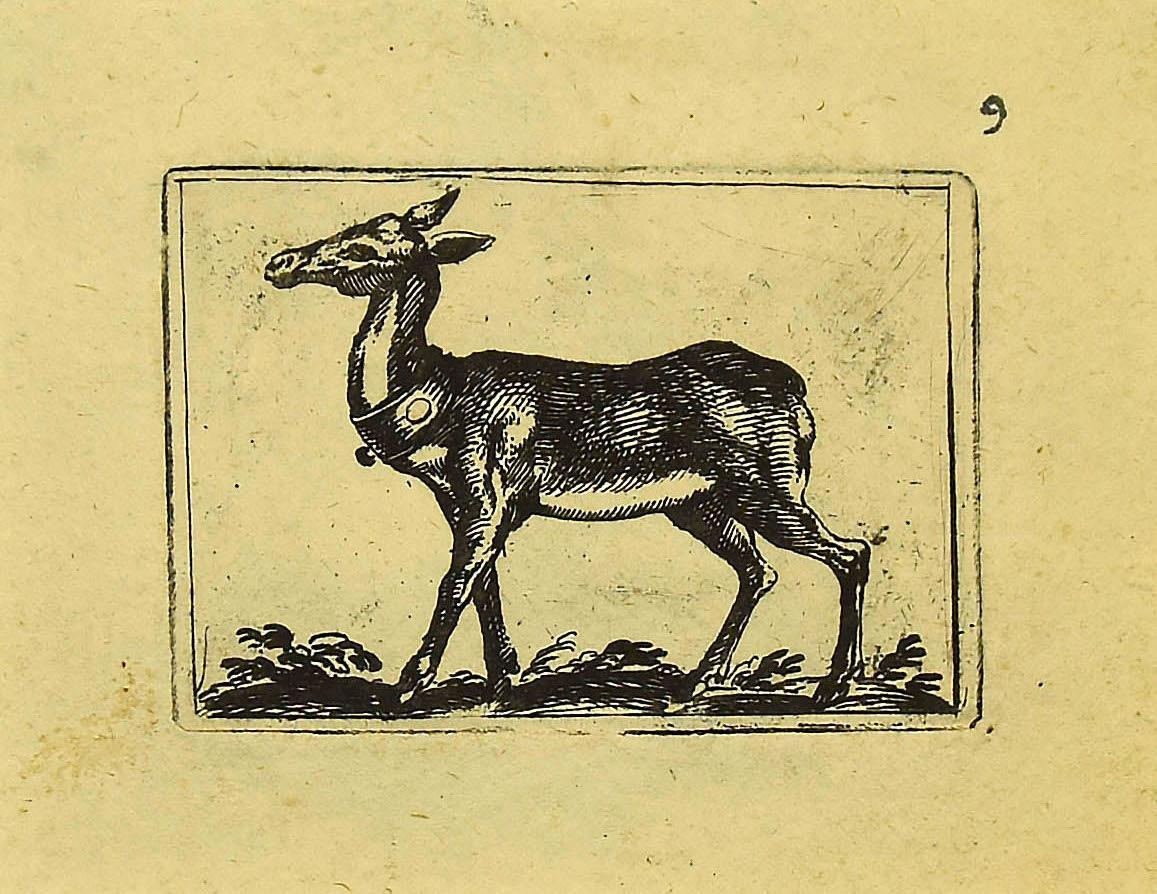
The Fawn - Etching by Antonio Tempesta - 1610s
By Antonio Tempesta
Located in Roma, IT
The fawn is a wonderful black and white etching on thick laid paper, realized by the Italian master Antonio Tempesta (1555-1630).
Image Dimensions: 5 x 7 / 8 ...
Category
Early 17th Century Figurative Prints
Materials
Etching
You May Also Like
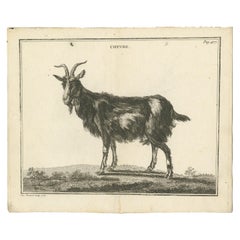
Antique Print of a Goat by Fessard, 1819
Located in Langweer, NL
Antique print titled 'Chevre'. Copper engraving of a goat. This print originates from 'Handboek der genees- en verloskunde van het vee (..)' by A. Numan. Published by R.J. Schierbeek...
Category
Antique Early 19th Century Prints
Materials
Paper
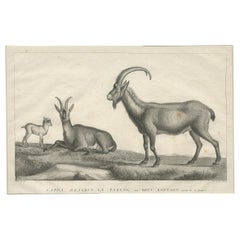
Antique Print of a Wild Goat by Miger
c.1805
Located in Langweer, NL
Antique print titled 'Capra Aegagrus, le Paseng ou Bouc Sauvage'. Original antique print of a wild goat. This print originates from 'Illustrations de La Ménagerie du Muséum National ...
Category
Antique Early 19th Century Prints
Materials
Paper
$193 Sale Price
34% Off
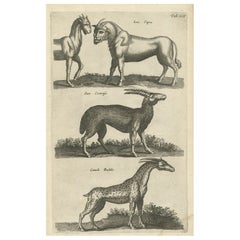
Rare Animals Lea Capra, Fantasy Creature, Ovis Cretensis, Camelo Pardalis, 1657
Located in Langweer, NL
Antique print of various animals; Lea Capra - Fantasy creature, Ovis Cretensis, Camelo Pardalis. This print originates from 'Historiae Naturalis (..)'...
Category
Antique 17th Century Prints
Materials
Paper
$276 Sale Price
20% Off
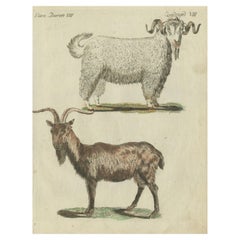
Hand Colored Antique Print of a Goat and Angora Goat
Located in Langweer, NL
Original antique print of a goat and Angora goat (or Ankara). This engraved print originates from a very rare unknown Dutch work. The plates are similar to the plates in the famous German work: ‘Bilderbuch fur Kinder' by F.J. Bertuch, published 1790-1830 in Weimar. This could be Dutch edition of this work (no references found), or a work that used the Bertuch plates. Published circa 1820.
The engraving shows two caprine animals, commonly known as members of the goat family. They are labeled "Viverr. Dieren VIII" (Dutch 'viervoetige dieren, meaning quadrupeds) and "Quadrup. VIII", which suggests they are part of the eighth set in a series on quadrupeds.
1. **Top Illustration**: This image shows an animal with the distinctive thick, shaggy coat...
Category
Antique Mid-19th Century Prints
Materials
Paper
Le Mouton de Barbarie, antique French 1760s sheep engraving
Located in Melbourne, Victoria
'Le Mouton de Barbarie'
Copper-line engraving, circa 1765
From Buffon's "Histoire Naturelle, Generale et Particuliere Avec la Description du Cabinet du Roi" which was published in Paris.
Jacques E. De Seve...
Category
Late 19th Century Victorian Animal Prints
Materials
Engraving

17th century etching animal print sketch ram sheep black and white signed
By Karel Dujardin
Located in Milwaukee, WI
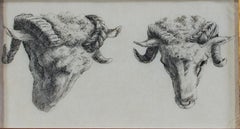
"Two Rams Looking Down & To Their Left" is an original etching by Karel DuJardin. DuJardin completed many delicate etchings of rams.
3 3/4" x 7 3/4" art
16 3/8" x 19 1/2" frame
Du Jardin was a master of various genres of painting, including refined and tranquil Italianising landscapes, monumental historical paintings and superb portraits of the aristocracy.
Unlike the majority of his contemporaries, Karel du Jardin (b. Amsterdam 1626, d. Venice 1678) was a talented painter in not one, but many different genres. He is especially famous for his small-scale landscapes, such as the charming Italian landscape with a woman milking a goa" (1652) from the Rijksmuseum's collection. Du Jardin depicted both sun-filled Italianate scenes and Dutch farmyards with pigs and sheep. He also painted a range of elegant portraits of aristocrats and merchants. His self-portrait (1662) on copper is one of the most fascinating 17th-century portraits of a Dutch artist. Du Jardin's spectacular large-scale historical pieces, represented is the show by the impressive Conversion of Saint Pau" (1662) from the collection of the National Gallery of London, are among his most remarkable achievements; he often chose themes that were only rarely depicted by other Dutch painters of the period.
During his own lifetime Du Jardin was praised by poets and writers, particularly for his attention to detail and elegant painting technique. As Cornelis de Bie, the artist’s biographer, wrote in 1661: "the surety of the brush at his finger and such sharpe clarity […] that the eye thereon doth linger." Du Jardin's valuable paintings were mainly purchased by rich individuals with an eye for elegance, but were also commissioned by prominent institutions such as the Amsterdam 'Spinhuis' (a women's prison), for whom he painted a vast group portrait of the prison-governors.
Karel du Jardin was an artist who liked to travel. He lived for a time in Lyon and in Paris, and sailed with Joan Reynst, Heer van Drakestein, by ship via England, Portugal and Spain to Tangier and Algiers, where they met Michiel de Ruyter...
Category
17th Century Old Masters Animal Prints
Materials
Etching
More Ways To Browse
Antonio Antonio
Antique Goat
Frank Cassara
Fred Larson
Frederic Remington Lithographs
Frederic Vidalens
Fritz Eichenberg. On Sale
Fudo Myoo
Fuller Potter
G Hoffman
Gaetano Dura On Sale
George Grosz On Sale
George Jo Mess
Giovanni Battista Piranesi Vaso Di Marmo Antico Che Si Vede Nel Museo Capitolino Etching 1778
Grace Albee
Gustave Adolph Hoffman On Sale
H Hargrove
H Otsuka