Want more images or videos?
Request additional images or videos from the seller
1 of 11
Arnold FribergAt the End of the Dayc.1980
c.1980
Price:$880
$1,100List Price
About the Item
- Creator:Arnold Friberg (1913 - 2010)
- Creation Year:c.1980
- Dimensions:Height: 22.5 in (57.15 cm)Width: 29 in (73.66 cm)Depth: 0.01 in (0.26 mm)
- Medium:
- Movement Style:
- Period:
- Condition:
- Gallery Location:San Francisco, CA
- Reference Number:Seller: fri/at/end/day/011stDibs: LU66636883262
About the Seller
5.0
Platinum Seller
Premium sellers with a 4.7+ rating and 24-hour response times
Established in 1999
1stDibs seller since 2017
877 sales on 1stDibs
Typical response time: 2 hours
Authenticity Guarantee
In the unlikely event there’s an issue with an item’s authenticity, contact us within 1 year for a full refund. DetailsMoney-Back Guarantee
If your item is not as described, is damaged in transit, or does not arrive, contact us within 7 days for a full refund. Details24-Hour Cancellation
You have a 24-hour grace period in which to reconsider your purchase, with no questions asked.Vetted Professional Sellers
Our world-class sellers must adhere to strict standards for service and quality, maintaining the integrity of our listings.Price-Match Guarantee
If you find that a seller listed the same item for a lower price elsewhere, we’ll match it.Trusted Global Delivery
Our best-in-class carrier network provides specialized shipping options worldwide, including custom delivery.You May Also Like
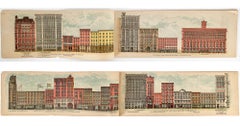
A Pictorial View of Broadway, 1899 - 74 Chromolithograph plates
Located in Middletown, NY
What did Broadway look like at the turn of the 20th Century? Here is a scarce and important block-by-block view published in 1899 by The Mail and Express
New York: The Mail and Expr...
Category
Late 19th Century American Realist Figurative Prints
Materials
Lithograph
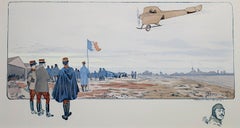
"French Air Show with Remarque of Head of Pilot, " Lithograph
Stencil by GAMY
By Marguerite Montaut
Located in Milwaukee, WI
"French Air Show with Remarque of Head of Pilot" is an original lithograph and stencil print by Marguerite Montaut (GAMY). It depicts an early airplane flying above a crowd of specta...
Category
1910s American Realist Landscape Prints
Materials
Lithograph, Stencil, Ink
$5,750
H 26.25 in W 41.625 in
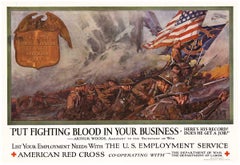
Put Fighting Blood in Your Business
Located in Spokane, WA
Original WW1 poster. Put Fighting Blood in Your Business. Here’s his record! Does he get a Job? Arthur Woods, Assistant to the Secretary of...
Category
1910s American Realist Landscape Prints
Materials
Lithograph
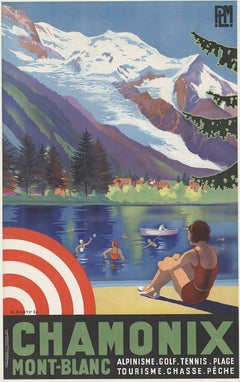
Original Chamonix Mont-Blanc vintage travel poster
Located in Spokane, WA
Original vintage travel poster Chamonix Mont-Blanc PLM French travel poster. Very good condition, archival linen backed. Ready to frame. ...
Category
1930s American Realist Landscape Prints
Materials
Lithograph
$8,500
H 39.38 in W 24.5 in D 0.07 in
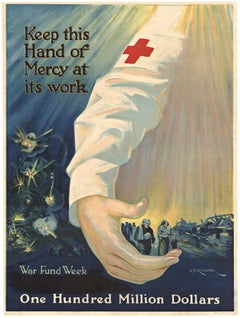
Original War Fund Week Keep this Hand of Mercy at its work vintage poster
Located in Spokane, WA
Original WW1 poster: Keep this Hand of Mercy at its work. War Fund Week. One hundred Million Dollars. Original WW1 lithograph, archival line...
Category
1910s American Realist Landscape Prints
Materials
Lithograph
$500 Sale Price
20% Off
H 27.25 in W 20.25 in D 0.05 in
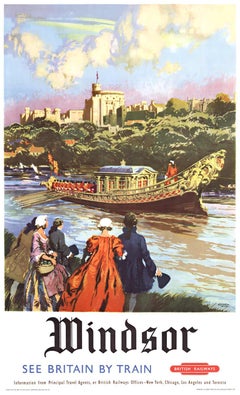
Original Windsor, See Britain by Train vintage poster
By Gordon Nicoll
Located in Spokane, WA
Original Windsor See Britain by Train vintage railroad poster. Linen backed in very fine condition, ready to frame. No restoration to t...
Category
1950s American Realist Landscape Prints
Materials
Lithograph
$1,720 Sale Price
20% Off
H 39 in W 24 in D 0.05 in
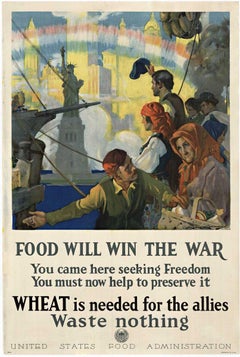
Original "Food Will Win The War" vintage World War 1 poster
By Charles E. Chambers
Located in Spokane, WA
Original World War 1 vintage poster: Food Will Wn the War. Arhival linen backed. PRINTER: Rusling Wood Litho., New York Bright and in good condition. There is some marks down the left side of the poster, possible ink from when the poster was printed.
This poster calls on immigrants to do their part in the war effort. It depicts recent immigrants standing near a sailing ship with the Statue of Liberty and a rainbow stretched across the New York City skyline in the background. The text reads:
You came here seeking Freedom.
You must now help preserve it.
Wheat is needed by the allies.
Waste nothing.
The generosity and compassion of the American people and the great agricultural resources of the North American continent would be called upon... Twenty million Americans signed pledges of membership in the Food Administration...
Category
1910s American Realist Figurative Prints
Materials
Lithograph
$1,100
H 30 in W 20 in D 0.05 in
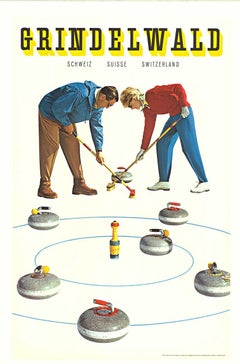
Original Grindelwald Switzerland vintage curling winter sports poster
Located in Spokane, WA
Original vintage poster: GRINDELWALD SUISSE; vintage Swiss winter sporting poster created by Karl Toggweiler. Size 25.5" x 40"; c. 1960. Original lithograph. This Swiss curlin...
Category
1960s American Realist Figurative Prints
Materials
Lithograph
$1,518 Sale Price
20% Off
H 40 in W 25.5 in D 0.05 in
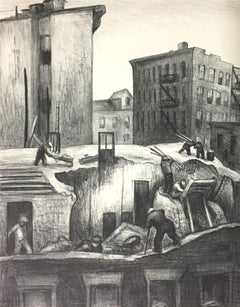
Ann Nooney, (Demolition with Windows, NYC)
By Ann Nooney
Located in New York, NY
The dimensions are for the image; there are large margins. This lithograph is signed in pencil.
A native New Yorker, Ann Nooney (1900-1970) recorded the urban scene while on the Wo...
Category
1930s American Realist Figurative Prints
Materials
Lithograph
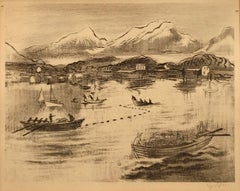
"Fishing Village" Joe Jones, Mid-Century, American Life, Small Town Scene
By Joe Jones
Located in New York, NY
Joe Jones
Fishing Village, 1949
Signed in pencil lower right margin
Lithograph on wove paper
Image 9 5/16 x 12 9/16 inches
Sheet 12 x 15 15/16 inches
From the edition of 250
The initial details of Jones' career are sparse, and this is intentional. The young artist was engaged in a process of self-reinvention, crafting a persona. When he submitted a work to the Sixteen Cities Exhibition at New York City's Museum of Modern Art in 1933, he briefly characterized himself: "Born St. Louis, 1909, self-taught. " Jones intentionally portrayed himself to the art community as an authentic working-class figure, backed by a compelling history. He was the youngest of five children in a family led by a one-armed house painter from St. Louis, a Welsh immigrant, and his German American spouse. At the age of ten, Jones found himself in a Missouri reformatory due to authorities' concerns over his graffiti activities. After completing elementary school, he traveled by freight car to California and back, even being arrested for vagrancy in Pueblo, Colorado. Returning to St. Louis, he attempted to settle down by working alongside his father. Yet, Jones felt a profound restlessness and was drawn toward a more elevated artistic pursuit in his late teenage years. He discovered a local collective of budding artists that formed St. Louis’s "Little Bohemia," sharing a studio and providing mutual support until he managed to secure his own modest workspace in a vacant garage.
Jones’s initial creations comprised still lifes, landscapes, and poignant portraits of those close to him. These subjects were not only accessible but also budget-friendly, as hiring models was beyond his means. He depicted himself, his father, mother, and eventually, his wife. In December 1930, at the age of 21, Jones wed Freda Sies, a modern dancer and political activist who was four years older than him.
By 1933, Jones had started gaining noteworthy local recognition through a solo exhibition at the Artists’ Guild of Saint Louis. Of the twenty-five paintings on display, one, titled River Front (private collection, previously with Hirschl and Adler Galleries), was selected to illustrate a feature article about his show in The Art Digest (February 15, 1933, p. 9). Shortly before this exhibition, a young surgeon named Dr. Robert Elman took an interest in Jones’s art, purchasing several pieces and forming a group of potential patrons committed to providing the emerging artist with a monthly stipend in exchange for art. This group was officially known as the "Co-operative Art Society," but it was informally dubbed the "Joe Jones Club. " Jones became an active participant in the St. Louis artistic scene, particularly within its bohemian segments. He embraced modernism and was a founding member of the "New Hat" movement in 1931, a playful rebellion against the conservative and traditional mainstream art establishment.
The summer of 1933 marked a significant shift in Jones’s journey. Sponsored by a dedicated ally, Mrs. Elizabeth Green, Jones, along with Freda and Green, embarked on an eastward road trip. In Washington, D. C., they explored the Corcoran Gallery of Art, the Freer Gallery (part of the Smithsonian Institution), the Library of Congress, and Mount Vernon. Following this whirlwind of art and American culture, they made their way to New York, where they visited various museums and galleries, including a stop at The New School for Social Research, which featured notable contemporary murals by fellow Missourian Thomas Hart Benton and the politically active Mexican artist, José Clemente Orozco. From June through August, Jones and Freda resided in the artist colony of Provincetown, Massachusetts, later returning home via Detroit to see Diego Rivera’s Detroit Industry mural housed at the Detroit Institute of Fine Arts.
While Elizabeth Green allegedly hoped that Jones would refine his artistic skills under the guidance of Charles Hawthorne or Richard Miller in Provincetown, Jones followed a different path. Rather than pursuing conservative mentors, he connected with an engaging network of leftist intellectuals, writers, and artists who dedicated their time to reading Marx and applying his theories to the American landscape. Jones's reaction to the traditional culture of New England was captured in his statement to a reporter from the St. Louis Post Dispatch: “Class consciousness . . . that’s what I got of my trip to New England. Those people [New Englanders] are like the Chinese—ancestor worshipers. They made me realize where I belong” (September 21, 1933). The stark social divisions he witnessed there prompted him to embrace his working-class identity even more fervently. Upon returning to St. Louis, he prominently identified himself as a Communist. This newfound political stance created friction with some of his local supporters. Many of his middle-class advocates withdrew their backing, likely influenced not only by Jones’s politics but also by his flamboyant and confrontational demeanor.
In December 1933, Jones initiated a complimentary art class for unemployed individuals in the Old Courthouse of St. Louis, the same location where the Dred Scott case was deliberated and where slave auctions formerly took place. Concurrently, the St. Louis Art League was offering paid courses. Emphasizing the theme of social activism, with a studio adorned with Soviet artwork, Jones’s institution operated for just over a year before being removed from the courthouse by local officials. The school’s political focus and unconventional teaching practices, along with its inclusion of a significant number of African American students during a period marked by rigid racial segregation, certainly contributed to its challenges. Under Jones’s guidance, the class created a large chalk pastel mural on board, measuring 16 by 37 feet, titled Social Unrest in St. Louis. Mural painting posed no challenge for the former housepainter, who was adept at handling large wall surfaces. His first significant commission in St. Louis in late 1931 was a mural that celebrated the city’s industrial and commercial fortitude for the local radio station, KMOX. This mural, aimed at conveying optimism amid severe economic hardship, showcased St. Louis's strengths in a modernist approach. When Jones resumed mural work in late 1933, his worldview had evolved considerably. The mural produced for the school in the courthouse, conceived by Jones, featured scenes of modern St. Louis selected to highlight political messages. Jones had observed the technique of utilizing self-contained scenes to craft visual narratives in the murals he encountered in the East. More locally, this compositional strategy was commonly employed by the renowned Missouri artist...
Category
1940s American Realist Landscape Prints
Materials
Paper, Lithograph
$900
H 16.25 in W 20.25 in
More From This Seller
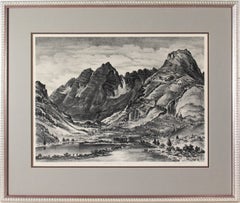
View AllMaroon Lake, Colorado
By Adolf Arthur Dehn
Located in San Francisco, CA
This artwork titled "Maroon Lake, Colorado" 1945 is an original lithograph on paper by noted American artist Adolf Arthur Dehn, 1895-1968. It is hand signed, dated, titled, numbered ...
Category
Mid-20th Century American Realist Landscape Prints
Materials
Lithograph
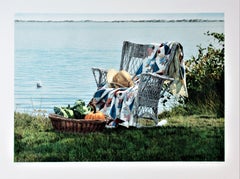
Cornucopia
By Helen Rundell
Located in San Francisco, CA
This artwork titled "Cornucopia" 1987 is an original color lithograph on Aches paper by American artist Helen Rundell, b. 1935. It is hand signed and numbered 103/295 in pencil by th...
Category
Late 20th Century American Realist Landscape Prints
Materials
Lithograph
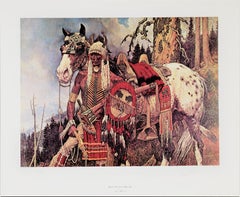
When the Land was His
Located in San Francisco, CA
This artwork titled "When the Land was His" 1985, is a color offset lithograph by renown western artist Arnold Friberg, 1913-2010. It is hand signed and...
Category
Late 20th Century American Realist Figurative Prints
Materials
Lithograph
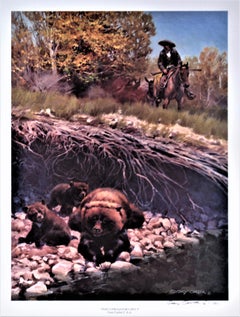
When Predators Meet
Located in San Francisco, CA
This artwork titled "When Predators Meet" 1988 is an offset lithograph by renown Western artist Gary Carter, born 1938. It is hand signed and numbered 817/...
Category
Late 20th Century American Realist Figurative Prints
Materials
Lithograph
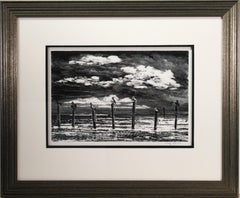
Key West Beach
By Adolf Arthur Dehn
Located in San Francisco, CA
This artwork titled "Key West Beach" 1947 is an original lithograph on paper by noted American artist Adolf Arthur Dehn, 1895-1968. It is hand signed in penci...
Category
Mid-20th Century American Realist Landscape Prints
Materials
Lithograph
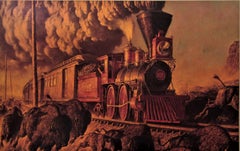
Yelding the Right of Way
Located in San Francisco, CA
This artwork titled "Yelding the Right of Way" c.1975 is a color offset lithograph by renown western artist Arnold Friberg, 1913-2010. It is hand signed...
Category
Late 20th Century American Realist Figurative Prints
Materials
Lithograph
Still Thinking About These?
All Recently ViewedMore Ways To Browse
Andy Warhol Louisiana
R Mora
Juan Alcalde Alonso
Herbert L. Fink On Sale
German Expressionist Poster
Frank Martinez
Wilf Roberts
Wilfred Jenkins
William Nichols Paintings
William Notman
William Olendorf
William Otto Emerson
William Stoddard Loughran
William Teodecki
William Ward Gill
Willy Hempel
Willy Martens
Willy Muller Gera