Miniature Figurative Prints
to
6,864
22,822
7,710
7,263
3,376
1,822
Overall Width
to
Overall Height
to
11,270
1,964
1,692
1,396
855
546
476
292
171
91
77
41
17
10
674
277
227
170
139
2,736
6,340
12,134
1,612
160
371
1,068
960
906
1,622
1,556
1,333
666
339
2,397
14,980
6,905
890
14,556
7,835
6,781
4,965
4,295
4,096
2,447
1,521
1,457
1,251
1,059
1,010
994
993
858
769
584
581
569
486
9,283
7,664
2,619
2,539
1,354
1,011
12,548
11,165
6,535
Size: Miniature
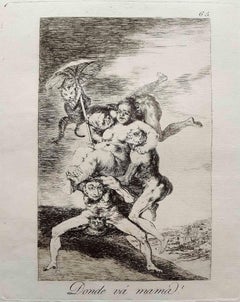
Donde va Mama from Los Caprichos - Etching by Francisco Goya - 1799
Located in Roma, IT
Donde va Mama from Los Caprichos is an original artwork realized by the artist Francisco Goya and published for the first time in 1799.
Etching and aqua...
Category
1790s Modern Figurative Prints
Materials
Etching, Aquatint
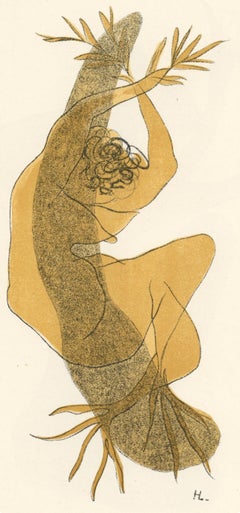
Henri Laurens, Daphne, from Verve, Revue Artistique, 1953
Located in Southampton, NY
This exquisite lithograph by Henri Laurens (1885–1954), titled Daphne (Daphne), from Verve, Revue Artistique et Litteraire, Vol. VII, No. 27–28, originates from the 1953 issue publis...
Category
1950s Modern Landscape Prints
Materials
Lithograph

$716 Sale Price
20% Off
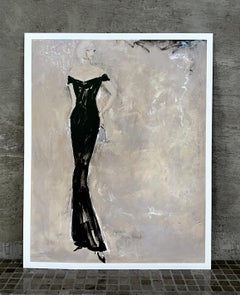
Colours Of The Night #4, 11"x14", Fashion Art Print, Figurative, Woman
Located in Mississauga, Ontario
Colours Of The Night #4 - This figurative art print on paper captures the essence of timeless style. A neutral, atmospheric background creates an evening-like ambiance. Personalize your space with a sense of quiet sophistication.
Hand signed on back. This is #4 from a series of 4 art...
Category
2010s Contemporary Figurative Prints
Materials
Paper
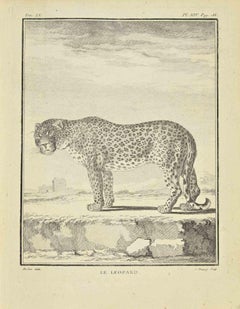
Le Leopard - Etching by Jean Charles Baquoy - 1771
Located in Roma, IT
Le Leopard is an etching realized by Jean Charles Baquoy in 1771.
The artwork Belongs to the suite "Histoire naturelle, générale et particulière avec la description du Cabinet du Ro...
Category
1770s Modern Figurative Prints
Materials
Etching
$178 Sale Price
40% Off
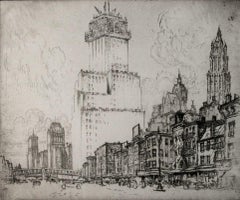
The Biggest of All; Telephone and Telegraph Building.
Located in Storrs, CT
The Biggest of All; Telephone and Telegraph Building. 1925. Etching. Wuerth 853. 9 7/8 x 11 7/8 (sheet 11 1/2 x 17 1/8). Edition probably 35. An atmospheric impression with plate tone, printed on antique laid paper...
Category
Early 20th Century American Modern Landscape Prints
Materials
Drypoint, Etching
$850 Sale Price
43% Off
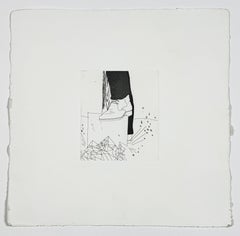
Digging up glass by David Hockney (Six Fairy Tales from the Brothers Grimm)
Located in New York, NY
This etching from David Hockney’s celebrated Six Fairy Tales from the Brothers Grimm portfolio depicts the somewhat obscure story Old Rinkrank, which Hockney chose to illustrate beca...
Category
1960s Modern Figurative Prints
Materials
Etching, Aquatint
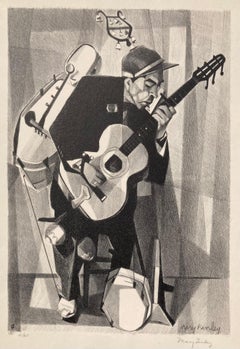
ONE MAN BAND
Located in Santa Monica, CA
MARY LOUISE FRY FINLEY (1908 - 1964)
ONE MAN BAND c1950 . Signed and numbered 11/20 in pencil and with the k in a circle, the signature of Los Angeles Master printer Lynton Kistle...
Category
1950s Figurative Prints
Materials
Lithograph
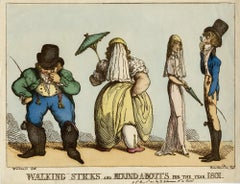
Walking Sticks and Round-A-Bouts. For the Year 1801
Located in Middletown, NY
An excellent example of Rowlandson's visual commentary on the challenges of changing fashion for those with a less than ideal physique.
Rowlandson, Thomas (after George Murgatroyd W...
Category
Early 19th Century English School Portrait Prints
Materials
Watercolor, Handmade Paper, Engraving, Etching
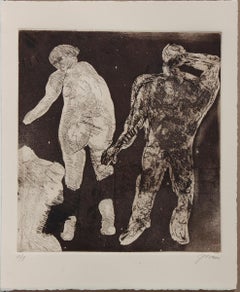
Yovani Bauta, ¨Untitled¨, 2003, Engraving, 14x11.8 in
Located in Miami, FL
Yovani Bauta (Cuba, 1957)
'Untitled 2 (pareja)', 2003
engraving on paper Guarro Super Alpha 250g.
14 x 11.9 in. (35.5 x 30 cm.)
Edition of 7
ID: BAU-316
Unframed
Category
Early 2000s Contemporary Prints and Multiples
Materials
Paper, Engraving, Etching, Aquatint
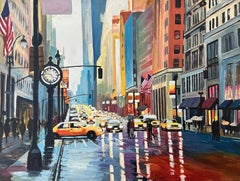
High Quality Print of New York Rain III Painting by leading British Urban Artist
Located in Preston, GB
High Quality Print of New York Rain III Painting by leading British Urban Artist, Angela Wakefield. Part of her New York Series. Hand signed by the ...
Category
2010s Realist Landscape Prints
Materials
Paper, Board, Color, Digital
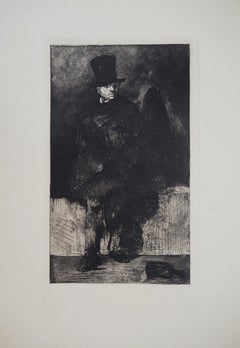
The Absinthe Drinker - Original Etching (Guerin #9 Fisher #9)
Located in Paris, IDF
Edouard MANET
The Absinthe Drinker, 1860
Original etching
Printed signature in the plate
On Japan paper 45 x 40 cm (c. 18 x 16 inch)
REFERENCES : Catalog raisonnes Guerin n°9 and F...
Category
1860s Impressionist Figurative Prints
Materials
Etching
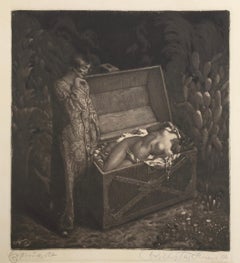
1001 Nights - SURREALIST WOMAN DEAD IN A TREASURE BOX
Located in Santa Monica, CA
RICHARD TESCHNER (Prague 1879 – 1948)
From: A Thousand and One Nights -
SURREALIST WOMAN DEAD IN A TREASURE BOX, 1917 Aquatint, Proof no. 17. Aqua...
Category
1910s Symbolist Figurative Prints
Materials
Aquatint
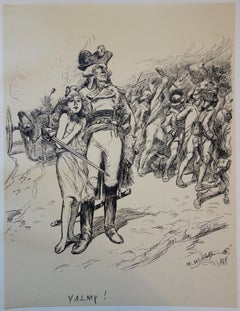
French Revolution, the Battle of Valmy - Original Lithograph 1899
Located in Paris, IDF
Adolphe WILLETTE (1857-1926)
French Revolution, the Battle of Valmy, 1899
Original lithograph (Champenois workshop)
Printed signature in the plate
On ...
Category
1890s Art Nouveau Figurative Prints
Materials
Lithograph
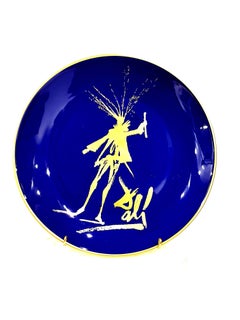
Faust - Limoges Porcelain Blue and Gold
Located in Collonge Bellerive, Geneve, CH
Limoges porcelain in "Bleu de Sèvres" and gold.
Artist: Salvador Dali
Exclusive limited edition to 2000 copies "Raynaud & Co. Limoges", France, 1968.
"Faust" drawn by Salvador Dalí. Print signed.
Plate Signed in the back of the plate
Dimensions: Diameter: 26 cm
Edited by Salins Earthenware
Sold in its original box
The company "Raynaud-Limoges" specialized in the production of porcelain products in small runs, among the company's customers - crowned people and representatives of the old aristocratic families of Europe.
Dali - the Prodigy Child without an Exam.
Salvador Dali was born as the son of a prestigious notary in the small town of Figueras in Northern Spain. His talent as an artist showed at an early age and Salvador Felipe Jacinto Dali received his first drawing lessons when he was ten years old. His art teachers were a then well known Spanish impressionist painter, Ramon Pichot and later an art professor at the Municipal Drawing School. In 1923 his father bought his son his first printing press.
Dali began to study art at the Royal Academy of Art in Madrid. He was expelled twice and never took the final examinations. His opinion was that he was more qualified than those who should have examined him.
In 1928 Dali went to Paris where he met the Spanish painters Pablo Picasso and Joan Miro. He established himself as the principal figure of a group of surrealist artists grouped around Andre Breton, who was something like the theoretical "schoolmaster" of surrealism. Years later Breton turned away from Dali accusing him of support of fascism, excessive self-presentation and financial greediness.
By 1929 Dali had found his personal style that should make him famous the world of the unconscious that is recalled during our dreams. The surrealist theory is based on the theories of the psychologist Dr. Sigmund Freud. Recurring images of burning giraffes and melting watches became the artist's surrealist trademarks. His great craftsmanship allowed him to execute his paintings in a nearly photo-realistic style. No wonder that the artist was a great admirer of the Italian Renaissance painter Raphael.
Salvador Dali and Gala.
Meeting Gala was the most important event in the artist's life and decisive for his future career. She was a Russian immigrant and ten years older than Dali. When he met her, she was married to Paul Eluard.
Gala decided to stay with Dali. She became his companion, his muse, his sexual partner, his model in numerous art works and his business manager. For him she was everything. Most of all Gala was a stabilizing factor in his life. And she managed his success in the 1930s with exhibitions in Europe and the United States.
Gala was legally divorced from her husband in 1932. In 1934 Dali and Gala were married in a civil ceremony...
Category
1960s Modern Mixed Media
Materials
Porcelain
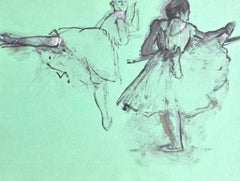
Degas, Dancer at the bar, Ten Ballet Sketches (after)
By Edgar Degas
Located in Fairfield, CT
Medium: Lithograph and stencil on vélin paper
Year: 1945
Paper Size: 13 x 17 inches
Inscription: Signed in the plate and unnumbered, as issued
Notes: From the folio, Degas, Ten Balle...
Category
1940s Impressionist Figurative Prints
Materials
Lithograph
$716 Sale Price
20% Off
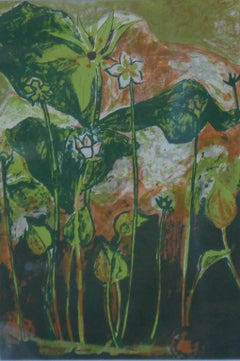
Untitled
Located in Bournemouth, Dorset
James Sellars (1927-2000)
Auto-Lithograph, 1952
Image: 23.5 x 16.0 cm
Frame: 36.5 x 28.5 cm
Produced at the Royal College of Art in 4 colours
By The Curwen Press, Pliastow, E.13
Sellars lived and worked in the county and the landscape captured his imagination and features heavily.
He taught at Herefordshire College of Art before going on to be appointed head of fine art printmaking at Southampton College of Art.
The Test Valley with its chalk downlands, streams and river were a rich source of inspiration for his later work and a natural progression...
Category
1950s Figurative Prints
Materials
Lithograph
$130 Sale Price
20% Off
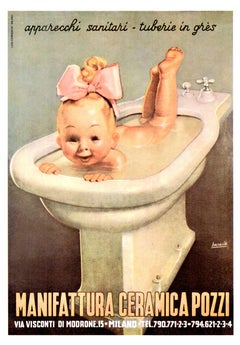
Original Baby in bidet - Manifattura Ceramica Pozzi vintage Italian poster
Located in Spokane, WA
Original poster showing a “Baby in a Bidet”. In Italian it is Maniffatura Ceramica Pozzi. Linen backed in very fine condition, ready to frame. This Italian poster was only know...
Category
1950s American Modern Portrait Prints
Materials
Offset
Jack McClain, (Evening in the City) (NYC)
Located in New York, NY
A moody evening in New York City. The buildings capture the quiet that New York sometimes achieves.
Signed and dated in pencil.
Category
Mid-20th Century American Modern Landscape Prints
Materials
Lithograph

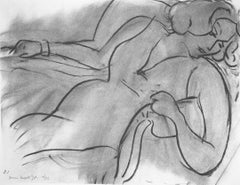
Henri Matisse, Series B, Var. 1, Drawings, Themes and Variations, 1943 (after)
Located in Southampton, NY
This exquisite lithograph after Henri Matisse (1869–1954), titled Serie B, var. 1 (Series B, Variation 1), from the album Henri Matisse, Dessins, Themes et Variations (Drawings, Them...
Category
1940s Fauvist Figurative Prints
Materials
Lithograph
$796 Sale Price
20% Off
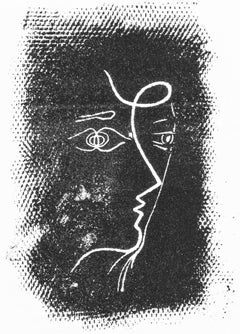
Georges Braque, Profile of a Woman, 1972 (after)
Located in Southampton, NY
This exquisite lithograph after Georges Braque (1882–1963), titled Profil de femme (Profile of a Woman), originates from the 1972 edition published by Editions A. C. Mazo et Cie., Pa...
Category
1970s Cubist Abstract Prints
Materials
Lithograph
$1,196 Sale Price
20% Off
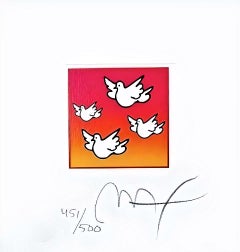
Flying Doves, Peter Max
By Peter Max
Located in Fairfield, CT
Artist: Peter Max (1937)
Title: Flying Doves
Year: 2002
Edition: 451/500, plus proofs
Medium: Lithograph on Lustro Saxony paper
Size: 4.87 x 4.5 inches
Condition: Excellent
Inscripti...
Category
Early 2000s Pop Art Figurative Prints
Materials
Lithograph
$716 Sale Price
20% Off
Icart, Sans titre, Le Sopha (after)
By Louis Icart
Located in Southampton, NY
La pointe sèche etching on vélin de Rives filigrané à notre nom paper. Paper size: 9.5 x 7.5 inches; image size: 6.5 x 4.5 inches. Inscription: unsigned and unnumbered, as issued. No...
Category
1930s Modern Figurative Prints
Materials
Drypoint, Etching
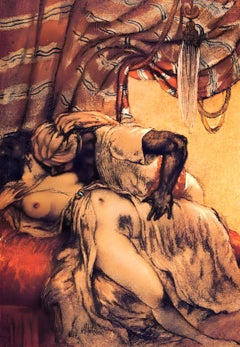
$876 Sale Price
20% Off
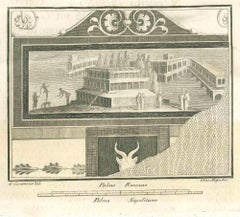
Seascapes With Monument and Figures - Etching by Giuseppe Aloja - 18th Century
Located in Roma, IT
Seascapes With Monument and Figures is an Etching realized by Giuseppe Aloja (1783-1837).
The etching belongs to the print suite “Antiquities of Herculaneum Exposed” (original titl...
Category
18th Century Old Masters Figurative Prints
Materials
Etching
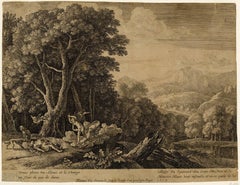
Venus Lamenting over the Death of Adonis
Located in Middletown, NY
c. 1654. Etching with engraving on thin laid paper with an early and large unidentified watermark with a sundial and a many-pointed star, and an unidentified collector's stamp in the...
Category
Mid-17th Century Old Masters Landscape Prints
Materials
Handmade Paper, Engraving, Etching
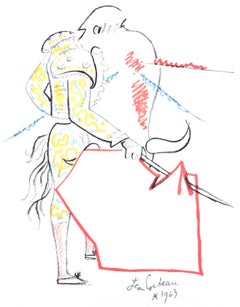
Jean Cocteau, In the Cradle of Horns, from Bulls, 1965 (after)
By Jean Cocteau
Located in Southampton, NY
This exquisite lithograph after Jean Cocteau (1889–1963), titled Dans le berceau des cornes (In the Cradle of Horns), from the folio Taureaux, Lithographies de Jean Cocteau (Bulls, L...
Category
1960s Modern Figurative Prints
Materials
Lithograph
$796 Sale Price
20% Off
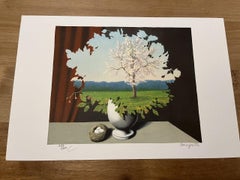
Le Plagiat - 20th Century, Surrealist, Lithograph, Figurative Print
Located in Sint-Truiden, BE
Color lithograph after the 1940 oil on canvas by René Magritte, printed signature of Magritte and numbered from the edition of 300.
The lithograph features the dry stamps of the Magritte Foundation & ADAGP and is countersigned in pencil by Mr. Charly Herscovici, President of the Magritte Foundation, Chairman of the Magritte Museum and unique representative of the Magritte Succession. A proof of edition is printed on the back of the lithograph, guaranteeing its authenticity.
Magritte was a Belgian surrealist artist whose witty and thought-provoking images challenged observers? preconditioned perceptions of reality. Magritte's work frequently displays a juxtaposition of ordinary objects in an unusual context, giving new meanings to familiar things.Magritte grew up in a simple and somewhat tragic household. His father was a modest tailor. His mother, who was mentally unsound, committed suicide in the year 1912. Magritte started drawing at a young age, and his first paintings, produced c. 1915, were Impressionistic in style.Magritte first worked as a draughtsman in a wallpaper factory and, in the year 1922, fell in love with and married Georgette Berger. In 1926, Magritte signed...
Category
20th Century Surrealist Figurative Prints
Materials
Lithograph
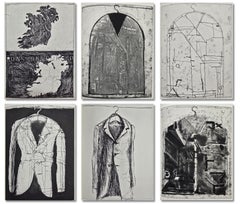
Poems of W.B. Yeats (with 6 Etchings by Richard Diebenkorn, ~21% OFF)
Located in Kansas City, MO
Richard Diebenkorn
Poems of W.B. Yeats (with 6 Etchings by Richard Diebenkorn)
Year: 1990
Size: 10.5 x 8.25 (26.67 x 20.95 cm) (each)
Edition: 314 of 400
Signed in pencil “R Diebenko...
Category
1990s Modern Prints and Multiples
Materials
Etching
$2,999 Sale Price
21% Off
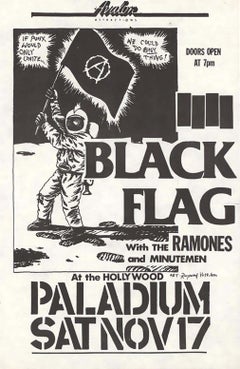
Raymond Pettibon illustrated Punk Flyers 1982/1984 (Pettibon Black Flag)
Located in NEW YORK, NY
Raymond Pettibon Black Flag 1982/1984:
A set of 2 rare Raymond Pettibon illustrated Black Flag punk flyers. Published on the occasion of:
Black Flag & Saccharine Trust at the Whis...
Category
1980s Pop Art Prints and Multiples
Materials
Offset, Lithograph
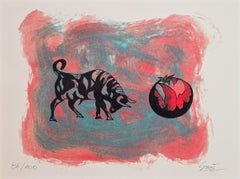
Bull - Still Life (Surreal, Colorful, Vibrant, Modern) (26% OFF LIST PRICE)
Located in Kansas City, MO
Franz Graw
Bull
Color Offset Lithograph
Year: 2023
Size: 11.81 x 15.74 inches (30 x 40 cm)
Edition: 100
Signed and numbered in pencil
COA provided
Franz Graw (b. 1964) is a Düsseld...
Category
2010s Surrealist Figurative Prints
Materials
Lithograph, Offset
Henri Matisse, Mrs. Dorothy Parley, Portraits by Henri Matisse, 1954 (after)
Located in Southampton, NY
This exquisite heliogravure after Henri Matisse (1869–1954), titled Madame Dorothy Parley (Mrs. Dorothy Parley), from the album Portraits par Henri Matisse (Portraits by Henri Matiss...
Category
1950s Fauvist Abstract Prints
Materials
Lithograph
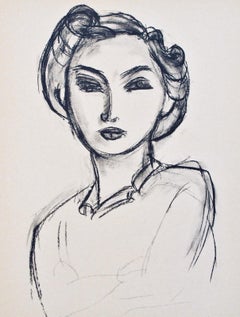
$716 Sale Price
20% Off
Nude - Lithograph by Andrè Derain - 1929
By André Derain
Located in Roma, IT
Nude is a modern artwork realized by Andrè Derain in Early 20th century.
Lithograph on simili-Japan paper.
Realized for "Les Travaux et les Jeux" by Vincent Muselli. Published by J...
Category
1920s Modern Figurative Prints
Materials
Lithograph
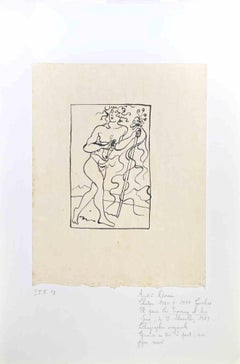
Dante
Virgilus - Etching, (Ed. Goupil, 1897)
Located in Paris, IDF
ARTISTE: after Auguste RODIN
TITLE : Dante & Virgilus
MEDIUM : Etching/photogravure after the original drawing
SIGNATURE : Unsigned
YEAR : 1897
PAPER : Vellum
SIZE : 13 x 10"
INFOR...
Category
1890s Academic Figurative Prints
Materials
Etching
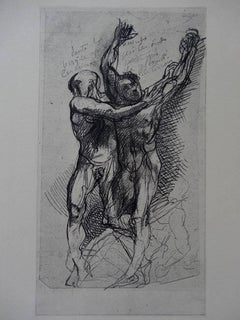
David Hockney, Letter V, from Hockney
s Alphabet, 1991
Located in Southampton, NY
This exquisite lithograph by David Hockney (born 1937), titled Letter V, from the folio Hockney's Alphabet, Drawings by David Hockney, originates from the 1991 edition published by A...
Category
1990s Contemporary Figurative Prints
Materials
Lithograph
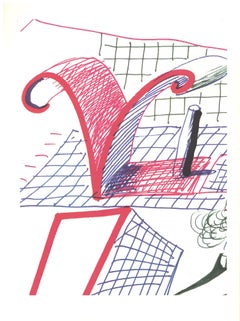
$1,196 Sale Price
20% Off
Henri Laurens, Apollo, from Verve, Revue Artistique, 1953
Located in Southampton, NY
This exquisite lithograph by Henri Laurens (1885–1954), titled Apollon (Apollo), from Verve, Revue Artistique et Litteraire, Vol. VII, No. 27–28, originates from the 1953 issue publi...
Category
1950s Modern Landscape Prints
Materials
Lithograph
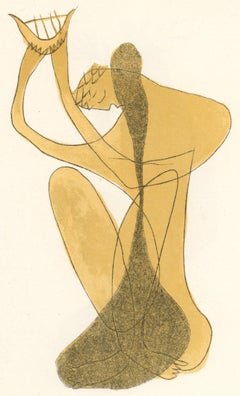
$716 Sale Price
20% Off
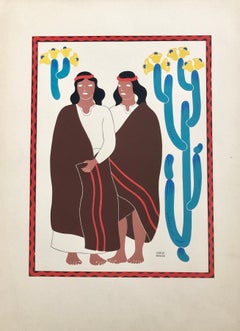
1945 Mexican Modernist Silkscreen Serigraph Print Regional Folk Art Dress Mexico
Located in Surfside, FL
This listing is for the one Silkscreen serigraph piece listed here.
Mexico City, 1945. First edition. plate signed, limited edition of 1000, these serigraph plates depict various types of traditional and folk art indigenous clothing...
Category
1940s Folk Art Figurative Prints
Materials
Screen
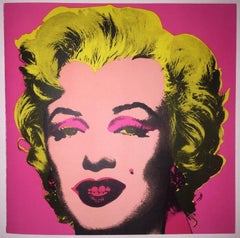
Andy Warhol, Marilyn Monroe Print, Invitation to the Leo Castelli Gallery, 1981
By Andy Warhol
Located in Beverly Hills, CA
An invitation to "Andy Warhol: A Print Retrospective 1963-1981" held at the Leo Castelli Gallery in New York City, printed with the iconic image of Marilyn Monroe. Published by Caste...
Category
1980s Pop Art Portrait Prints
Materials
Lithograph, Offset
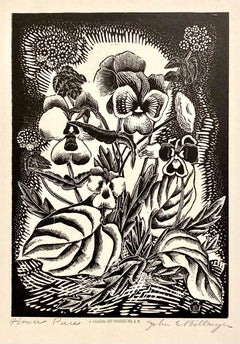
John E. Billmyer, Flower Piece, WPA wood engraving
Located in New York, NY
'Flower Piece' shows the artist, John Billmyer, to be a highly accomplished wood engraver. There are endless patterns and created details -- all executed flawlessly. Mostly made up o...
Category
Mid-20th Century American Modern Figurative Prints
Materials
Woodcut
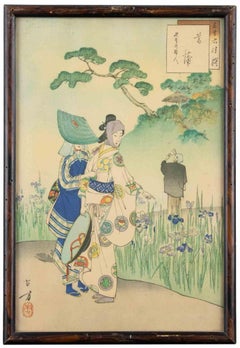
Sanjûroku Kasen ... - Woodcut by Mizuno Toshikata - 1893
Located in Roma, IT
Nishiki-e (woodcut print), in vertical oban format (31x20.5) realized by Mizuno Toshikata in 1893 (Meiji 26).
Belongs to the Series "Sanjûroku Kasen" (Thirty-Six Beauties in Compari...
Category
1890s Modern Figurative Prints
Materials
Woodcut
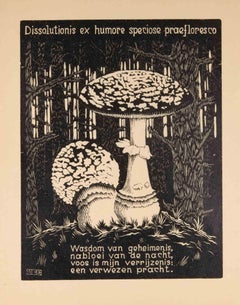
Toadstool - Woodcut by Maurits Cornelis Escher - 1931
Located in Roma, IT
Woodcut print realized by Escher for the series "Emblemata", and published in 1931.
On Hollande van Gelder paper.
Edition of 300.
Unsigned, as issued. Excellent condition, matted....
Category
1930s Modern Figurative Prints
Materials
Woodcut
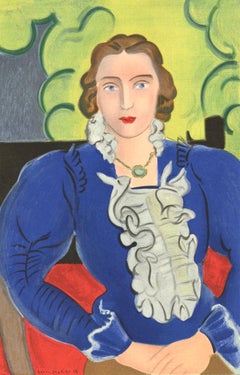
Henri Matisse, Mrs. L.D., from Portraits by Henri Matisse, 1954 (after)
Located in Southampton, NY
This exquisite lithograph after Henri Matisse (1869–1954), titled Madame L.D. (Mrs. L.D.), from the album Portraits par Henri Matisse (Portraits by Hen...
Category
1950s Fauvist Abstract Prints
Materials
Lithograph
$716 Sale Price
20% Off
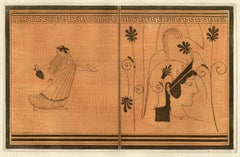
William Hamilton Classical Greek Vase-Painting Engraving
Located in Melbourne, Victoria
Subject : Ancient Greek vase-painting from depicting a woman and a bust of Athena from a white glazed lekythos, now in the British Museum.
Technique : Copper-line engraving with ori...
Category
Early 1800s Other Art Style Figurative Prints
Materials
Engraving
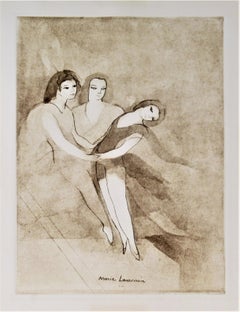
Trois Danseuses (Three Dancers)
Located in San Francisco, CA
This artwork "Trois Danseuses" (Three Dancers) c.1940 is an etching in sepia on Wove paper after French artist Marie Laurencin, 1883-1956. It his signed in the plate as issue. This is a posthumous impression from the canceled plate. The image (plate mark) is 14.60 x 10.75 inches, sheet size is 16.5 x 12.85 inches. It is in excellent condition, hanging tape mark, small piece of tape and 3 small skinned area are visible on the back only.
About the artist:
Marie Laurencin, intimate of Braque, Picasso, Matisse and Appollinaire, was born in 1883. She held a celebrated place in the early part of the 20th century during a period when Art exploded with genius. She lived in the Montmartre District of Paris and became part of the circle revolving around the Steins. Though her early portraits show the imprint of the Fauves and Cubists, her romantic and delicate temperament asserted itself against these schools.
She was prim, conservative and always wore a kitchen apron...
Category
Mid-20th Century Impressionist Figurative Prints
Materials
Etching
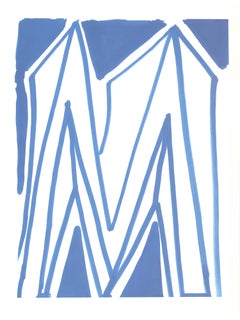
David Hockney, Letter M, from Hockney
s Alphabet, 1991
Located in Southampton, NY
This exquisite lithograph by David Hockney (born 1937), titled Letter M, from the folio Hockney's Alphabet, Drawings by David Hockney, originates from the 1991 edition published by A...
Category
1990s Contemporary Figurative Prints
Materials
Lithograph
$1,196 Sale Price
20% Off
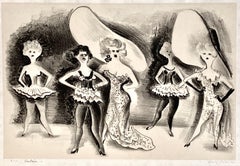
Adolf Dehn, Curtain (aka Flora Dora Girls), 1932, burlesque lithograph
By Adolf Dehn
Located in New York, NY
Adolf Dehn's, lithograph on chine collé, Curtain or The Flora Dora Girls, is an ode to burlesque with dancing girls and fabulous costumes. It comes on the heals of a 1930 pre-code mo...
Category
1940s American Modern Landscape Prints
Materials
Lithograph
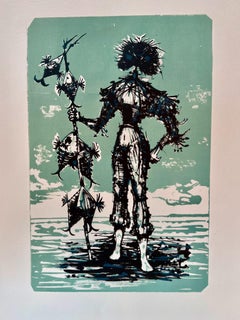
Fisherman
Located in Belgrade, MT
This etching by Lucien Coutard is part of my private collection since the 1970's. It is signed. Lucien Courtard created surrealist depictions of sexuality, he called it Eroticism and...
Category
Mid-20th Century Surrealist Abstract Prints
Materials
Etching, Lithograph
$880 Sale Price
20% Off
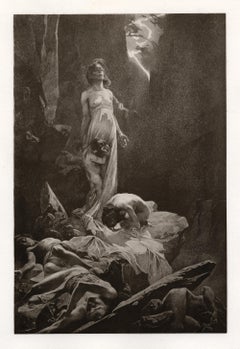
"On Earth as it is in Heaven" Original 1899 Lithograph by Alphonse Mucha
Located in Palm Beach, FL
Alphonse Mucha worked mainly as a poster artist and became an influential figure of Art Nouveau in late 1890s, when poster illustrations were emerging as popular art form and new pri...
Category
1890s Art Nouveau Figurative Prints
Materials
Lithograph
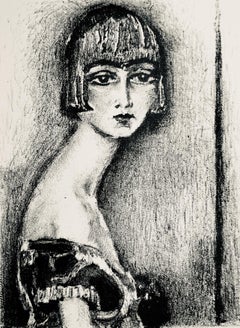
La Perruque d
argent (Juffermans 6), Van Dongen, Kees van Dongen
Located in Southampton, NY
Lithograph on vélin paper. Unsigned and unnumbered, as issued. Good condition. Notes: From the album, Van Dongen, 1925. Published by Henri Floury, Paris; printed by Pierre Dumont, Pa...
Category
1920s Modern Figurative Prints
Materials
Lithograph
$3,596 Sale Price
20% Off
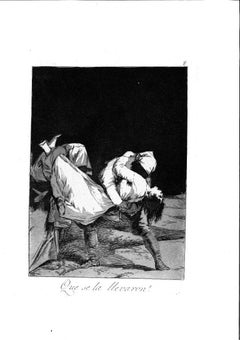
Que se la Llevaron! - Etching by Francisco Goya - 1799
Located in Roma, IT
Que se la Llevaron! is an original etching realized by Francisco Goya in 1799, from Los Caprichos series.
The artwork is the plate 8 (as printed on plate on the higher right margin) from the series Los Caprichos, first edition.
Good conditions.
Los Caprichos.
Put on sale the 6 February 1799, at the end of the last carnival of the century, Los Caprichos, first Goya’s printed...
Category
1790s Old Masters Figurative Prints
Materials
Etching
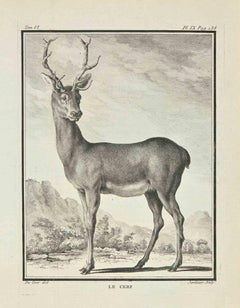
Le Cerf - Etching by Claude Jardinier - 1771
Located in Roma, IT
Le Cerf is an etching realized in 1771 by Claude Jardinier.
Titled and Signed on the plate.
The artwork Belongs to the suite "Histoire naturelle, générale et particulière avec la d...
Category
1770s Modern Figurative Prints
Materials
Etching
$142 Sale Price
40% Off
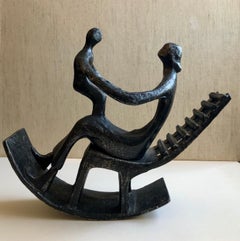
In the style of Henry Moore, Mother and Child in Rocking Chair
Located in Surfside, FL
This is a cast metal sculpture of a woman and child, mother and baby in a rocking chair. It has a patina on a white metal. Not sure if it is steel or aluminum. It is and older vintage piece and has wear to patina where it sits and rocks on table. It is not signed or numbered and there is no foundry mark. Hence it is being sold as being after or in the manner of Henry Moore.
Henry Spencer Moore (1898 – 1986)
Moore was born in Castleford, the son of a coal miner. He became well-known through his carved marble and larger-scale abstract cast bronze sculptures, and was instrumental in introducing a particular form of modernism to the United Kingdom later endowing the Henry Moore Foundation, which continues to support education and promotion of the arts.
After the Great War, Moore received an ex-serviceman's grant to continue his education and in 1919 he became a student at the Leeds School of Art (now Leeds College of Art), which set up a sculpture studio especially for him. At the college, he met Barbara Hepworth, a fellow student who would also become a well-known British sculptor, and began a friendship and gentle professional rivalry that lasted for many years. In Leeds, Moore also had access to the modernist works in the collection of Sir Michael Sadler, the University Vice-Chancellor, which had a pronounced effect on his development. In 1921, Moore won a scholarship to study at the Royal College of Art in London, along with Hepworth and other Yorkshire contemporaries. While in London, Moore extended his knowledge of primitive art and sculpture, studying the ethnographic collections at the Victoria and Albert Museum and the British Museum.
Moore's familiarity with primitivism and the influence of sculptors such as Constantin Brâncuși, Jacob Epstein, Henri Gaudier-Brzeska and Frank Dobson led him to the method of direct carving, in which imperfections in the material and marks left by tools became part of the finished sculpture. After Moore married, the couple moved to a studio in Hampstead at 11a Parkhill Road NW3, joining a small colony of avant-garde artists who were taking root there. Shortly afterward, Hepworth and her second husband Ben Nicholson moved into a studio around the corner from Moore, while Naum Gabo, Roland Penrose, Cecil Stephenson and the art critic Herbert Read also lived in the area (Read referred to the area as "a nest of gentle artists"). This led to a rapid cross-fertilization of ideas that Read would publicise, helping to raise Moore's public profile. The area was also a stopping-off point for many refugee artists, architects and designers from continental Europe en route to America—some of whom would later commission works from Moore.
In 1932, after six year's teaching at the Royal College, Moore took up a post as the Head of the Department of Sculpture at the Chelsea School of Art. Artistically, Moore, Hepworth and other members of The Seven and Five Society would develop steadily more abstract work, partly influenced by their frequent trips to Paris and their contact with leading progressive artists, notably Pablo Picasso, Georges Braque, Jean Arp and Alberto Giacometti. Moore flirted with Surrealism, joining Paul Nash's modern art movement "Unit One", in 1933. In 1934, Moore visited Spain; he visited the cave of Altamira (which he described as the "Royal Academy of Cave Painting"), Madrid, Toledo and Pamplona. Moore made his first visit to America when a retrospective exhibition of his work opened at the Museum of Modern Art in New York City.[28]
Before the war, Moore had been approached by educator Henry Morris, who was trying to reform education with his concept of the Village College. Morris had engaged Walter Gropius as the architect for his second village college at Impington near Cambridge, and he wanted Moore to design a major public sculpture for the site.
In the 1950s, Moore began to receive increasingly significant commissions. He exhibited Reclining Figure: Festival at the Festival of Britain in 1951, and in 1958 produced a large marble reclining figure for the UNESCO building in Paris. With many more public works of art, the scale of Moore's sculptures grew significantly and he started to employ an increasing number of assistants to work with him at Much Hadham, including Anthony Caro and Richard Wentworth.
Moore produced at least three significant examples of architectural sculpture during his career. In 1928, despite his own self-described "extreme reservations", he accepted his first public commission for West Wind for the London Underground Building at 55 Broadway in London, joining the company of Jacob Epstein and Eric Gill. At an introductory speech in New York City for an exhibition of one of the finest modernist sculptors, Alberto Giacometti, Sartre spoke of "The beginning and the end of history...
Category
1950s Modern Abstract Prints
Materials
Metal
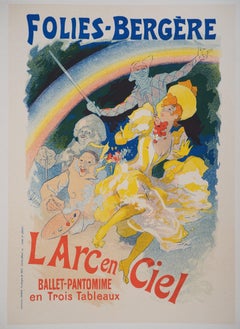
Folies-Bergère - Lithograph (Les Maîtres de l
Affiche), 1895
By Jules Chéret
Located in Paris, IDF
Jules Chéret
Folies-Bergère (L'Arc-en-Ciel), 1895
Stone ithograph
Printed signature in the plate
On vellum
Size 39 x 29 cm (c. 15.3 x 11.4")
INFORMATION : Plate 21 of "Les Maîtres...
Category
1890s Art Nouveau Figurative Prints
Materials
Lithograph
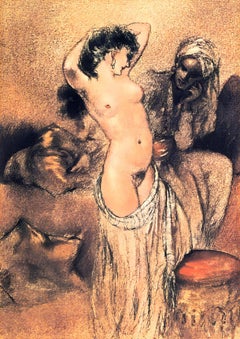
Icart, Sans titre, Le Sopha (after)
By Louis Icart
Located in Southampton, NY
La pointe sèche etching on vélin de Rives filigrané à notre nom paper. Paper size: 9.5 x 7.5 inches; image size: 6.5 x 4.5 inches. Inscription: unsigned and unnumbered, as issued. No...
Category
1930s Modern Figurative Prints
Materials
Drypoint, Etching
$876 Sale Price
20% Off
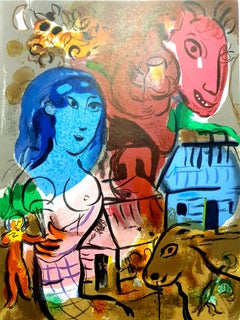
Marc Chagall - Homage to Marc Chagall - Original Lithograph
By Marc Chagall
Located in Collonge Bellerive, Geneve, CH
Marc Chagall
Original Lithograph
1969
From the revue XXe Siecle, edition of 12,000
Unsigned, as issued
Dimensions: 32 x 24
Condition : Excellent
Reference: Mourlot 572
Marc Chagall (born in 1887)
Marc Chagall was born in Belarus in 1887 and developed an early interest in art. After studying painting, in 1907 he left Russia for Paris, where he lived in an artist colony on the city’s outskirts. Fusing his own personal, dreamlike imagery with hints of the fauvism and cubism popular in France at the time, Chagall created his most lasting work—including I and the Village (1911)—some of which would be featured in the Salon des Indépendants exhibitions. After returning to Vitebsk for a visit in 1914, the outbreak of WWI trapped Chagall in Russia. He returned to France in 1923 but was forced to flee the country and Nazi persecution during WWII. Finding asylum in the U.S., Chagall became involved in set and costume design before returning to France in 1948. In his later years, he experimented with new art forms and was commissioned to produce numerous large-scale works. Chagall died in St.-Paul-de-Vence in 1985.
The Village
Marc Chagall was born in a small Hassidic community on the outskirts of Vitebsk, Belarus, on July 7, 1887. His father was a fishmonger, and his mother ran a small sundries shop in the village. As a child, Chagall attended the Jewish elementary school, where he studied Hebrew and the Bible, before later attending the Russian public school. He began to learn the fundamentals of drawing during this time, but perhaps more importantly, he absorbed the world around him, storing away the imagery and themes that would feature largely in most of his later work.
At age 19 Chagall enrolled at a private, all-Jewish art school and began his formal education in painting, studying briefly with portrait artist Yehuda Pen. However, he left the school after several months, moving to St. Petersburg in 1907 to study at the Imperial Society for the Protection of Fine Arts. The following year, he enrolled at the Svanseva School, studying with set designer Léon Bakst, whose work had been featured in Sergei Diaghilev's Ballets Russes. This early experience would prove important to Chagall’s later career as well.
Despite this formal instruction, and the widespread popularity of realism in Russia at the time, Chagall was already establishing his own personal style, which featured a more dreamlike unreality and the people, places and imagery that were close to his heart. Some examples from this period are his Window Vitebsk (1908) and My Fianceé with Black Gloves (1909), which pictured Bella Rosenfeld, to whom he had recently become engaged.
The Beehive
Despite his romance with Bella, in 1911 an allowance from Russian parliament member and art patron Maxim Binaver enabled Chagall to move to Paris, France. After settling briefly in the Montparnasse neighborhood, Chagall moved further afield to an artist colony known as La Ruche (“The Beehive”), where he began to work side by side with abstract painters such as Amedeo Modigliani and Fernand Léger as well as the avant-garde poet Guillaume Apollinaire. At their urging, and under the influence of the wildly popular fauvism and cubism, Chagall lightened his palette and pushed his style ever further from reality. I and the Village (1911) and Homage to Apollinaire (1912) are among his early Parisian works, widely considered to be his most successful and representative period.
Though his work stood stylistically apart from his cubist contemporaries, from 1912 to 1914 Chagall exhibited several paintings at the annual Salon des Indépendants exhibition, where works by the likes of Juan Gris, Marcel Duchamp and Robert Delaunay were causing a stir in the Paris art world. Chagall’s popularity began to spread beyond La Ruche, and in May 1914 he traveled to Berlin to help organize his first solo exhibition, at Der Sturm Gallery. Chagall remained in the city until the highly acclaimed show opened that June. He then returned to Vitebsk, unaware of the fateful events to come.
War, Peace and Revolution
In August 1914 the outbreak of World War I precluded Chagall’s plans to return to Paris. The conflict did little to stem the flow of his creative output, however, instead merely giving him direct access to the childhood scenes so essential to his work, as seen in paintings such as Jew in Green (1914) and Over Vitebsk (1914). His paintings from this period also occasionally featured images of the war’s impact on the region, as with Wounded Soldier (1914) and Marching (1915). But despite the hardships of life during wartime, this would also prove to be a joyful period for Chagall. In July 1915 he married Bella, and she gave birth to a daughter, Ida, the following year. Their appearance in works such as Birthday (1915), Bella and Ida by the Window (1917) and several of his “Lovers” paintings give a glimpse of the island of domestic bliss that was Chagall’s amidst the chaos.
To avoid military service and stay with his new family, Chagall took a position as a clerk in the Ministry of War Economy in St. Petersburg. While there he began work on his autobiography and also immersed himself in the local art scene, befriending novelist Boris Pasternak, among others. He also exhibited his work in the city and soon gained considerable recognition. That notoriety would prove important in the aftermath of the 1917 Russian Revolution when he was appointed as the Commissar of Fine Arts in Vitebsk. In his new post, Chagall undertook various projects in the region, including the 1919 founding of the Academy of the Arts. Despite these endeavors, differences among his colleagues eventually disillusioned Chagall. In 1920 he relinquished his position and moved his family to Moscow, the post-revolution capital of Russia.
In Moscow, Chagall was soon commissioned to create sets and costumes for various productions at the Moscow State Yiddish Theater, where he would paint a series of murals titled Introduction to the Jewish Theater as well. In 1921, Chagall also found work as a teacher at a school for war orphans. By 1922, however, Chagall found that his art had fallen out of favor, and seeking new horizons he left Russia for good.
Flight
After a brief stay in Berlin, where he unsuccessfully sought to recover the work exhibited at Der Sturm before the war, Chagall moved his family to Paris in September 1923. Shortly after their arrival, he was commissioned by art dealer and publisher Ambroise Vollard to produce a series of etchings for a new edition of Nikolai Gogol's 1842 novel Dead Souls. Two years later Chagall began work on an illustrated edition of Jean de la Fontaine’s Fables, and in 1930 he created etchings for an illustrated edition of the Old Testament, for which he traveled to Palestine to conduct research.
Chagall’s work during this period brought him new success as an artist and enabled him to travel throughout Europe in the 1930s. He also published his autobiography, My Life (1931), and in 1933 received a retrospective at the Kunsthalle in Basel, Switzerland. But at the same time that Chagall’s popularity was spreading, so, too, was the threat of Fascism and Nazism. Singled out during the cultural "cleansing" undertaken by the Nazis in Germany, Chagall’s work was ordered removed from museums throughout the country. Several pieces were subsequently burned, and others were featured in a 1937 exhibition of “degenerate art” held in Munich. Chagall’s angst regarding these troubling events and the persecution of Jews in general can be seen in his 1938 painting White Crucifixion.
With the eruption of World War II, Chagall and his family moved to the Loire region before moving farther south to Marseilles following the invasion of France. They found a more certain refuge when, in 1941, Chagall’s name was added by the director of the Museum of Modern Art (MOMA) in New York City to a list of artists and intellectuals deemed most at risk from the Nazis’ anti-Jewish campaign. Chagall and his family would be among the more than 2,000 who received visas and escaped this way.
Haunted Harbors
Arriving in New York City in June 1941, Chagall discovered that he was already a well-known artist there and, despite a language barrier, soon became a part of the exiled European artist community. The following year he was commissioned by choreographer Léonide Massine to design sets and costumes for the ballet Aleko, based on Alexander Pushkin’s “The Gypsies” and set to the music of Pyotr Ilyich Tchaikovsky.
But even as he settled into the safety of his temporary home, Chagall’s thoughts were frequently consumed by the fate befalling the Jews of Europe and the destruction of Russia, as paintings such as The Yellow Crucifixion...
Category
1960s Surrealist Figurative Prints
Materials
Lithograph
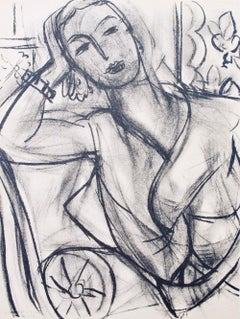
Henri Matisse, Mrs. Mary Hutchinson, Portraits by Henri Matisse, 1954 (after)
Located in Southampton, NY
This exquisite heliogravure after Henri Matisse (1869–1954), titled Madame Mary Hutchinson (Mrs. Mary Hutchinson), from the album Portraits par Henri Matisse (Portraits by Henri Mati...
Category
1950s Fauvist Abstract Prints
Materials
Lithograph
$716 Sale Price
20% Off
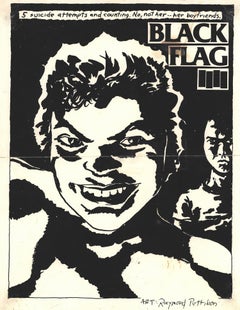
Raymond Pettibon Black Flag poster (Raymond Pettibon punk)
Located in NEW YORK, NY
Raymond Pettibon Black Flag poster circa 1983:
Flea, the Red Hot Chili Peppers bassist once said of Pettibon's Black Flag illustrations and iconic l...
Category
1980s Street Art Prints and Multiples
Materials
Lithograph, Offset
$500 Sale Price
20% Off
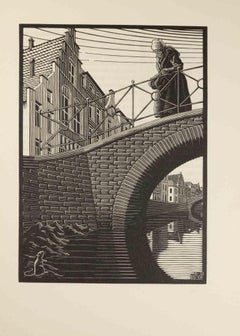
The Bridge - Woodcut by Maurits Cornelis Escher - 1932
Located in Roma, IT
Woodcut print from the Series "Der vreeselijke avonturen vas Scholastica" (The Terrible Adventures of Scholastica).
Edition of 300, published by A. J. van Dishoeck.
Unsigned, ass i...
Category
1930s Modern Figurative Prints
Materials
Woodcut
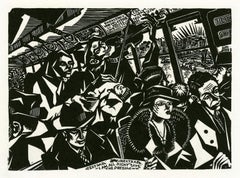
Modern Music
— WPA Modernism, New York City El
Located in Myrtle Beach, SC
Albert Potter, 'Modern Music' also Twilight Melodies', linocut, c. 1935, from the posthumous edition of 20, printed in 1977, authorized by the artist’s widow. Estate authenticated in...
Category
1930s American Modern Figurative Prints
Materials
Linocut
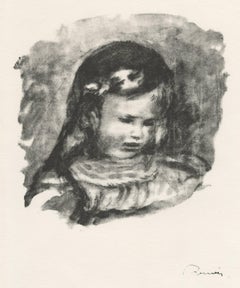
Claude Renoir, la Tete Baisee (Claude Renoir, Head Lowered)
Located in Fairlawn, OH
Claude Renoir, la Tete Baisee
(Claude Renoir, Head Lowered)
Lithograph, 1904
Edition 1,000, this one of 950 on wove paper with the stamp signature (there were also 50 impressions pri...
Category
Early 1900s Impressionist Figurative Prints
Materials
Lithograph
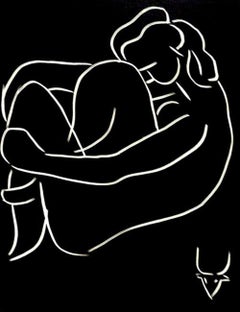
Pasiphae Plate 12: Seule, au pied du grand caroubier
Located in Washington, DC
Artist: Henri Matisse
Title: Plate 12: Seule, au pied du grand caroubier (Only, At the Foot of the Great Carob Tree)
Portfolio: Pasiphae
Medium: Linocut on Arches vellum
Date: 1944
E...
Category
1940s Modern Figurative Prints
Materials
Linocut
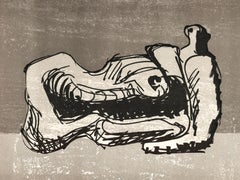
Henry Moore, Reclining Figure, from San Lazzaro et ses Amis, 1975
By Henry Moore
Located in Southampton, NY
This exquisite lithograph by Henry Moore (1898–1986), titled Reclining Figure, from the album San Lazzaro et ses Amis, Hommage au fondateur de la revue XXe siecle (San Lazzaro and His Friends, Tribute to the Founder of the Journal XXe Siecle), originates from the 1975 edition published by XXe siecle, Paris, and printed by Curwen Studio, London, October 1975. Reclining Figure embodies Moore’s lifelong fascination with the human form in repose—a theme that became central to his sculptural and graphic work. Through elegant contours and balanced abstraction, the composition captures the harmony between body, landscape, and spirit that defined Moore’s artistic vision.
Executed as a lithograph on velin d'Arches paper, this work measures 10.5 x 14 inches (26.67 x 35.56 cm). Unsigned and unnumbered as issued. The edition exemplifies the exceptional craftsmanship of the Curwen Studio in London, a distinguished atelier celebrated for its collaborations with the leading modern artists of the postwar period.
Artwork Details:
Artist: Henry Moore (1898–1986)
Title: Reclining Figure, from San Lazzaro et ses Amis, Hommage au fondateur de la revue XXe siecle, 1975
Medium: Lithograph on velin d'Arches paper
Dimensions: 10.5 x 14 inches (26.67 x 35.56 cm)
Inscription: Unsigned and unnumbered as issued
Date: 1975
Publisher: XXe siecle, Paris
Printer: Curwen Studio, London
Catalogue raisonne references: Moore, Henry, et al. Henry Moore, Catalogue of Graphic Work. Gerald Cramer, 1986, illustration 366.
Condition: Well preserved, consistent with age and medium
Provenance: From the album San Lazzaro et ses Amis, Hommage au fondateur de la revue XXe siecle, published by XXe siecle, Paris, October 1975
Notes:
Excerpted from the folio (translated from French), Finished printing in Paris in October 1975. This album has been printed on velin d'Arches in DLXXV numbered examples. The LXXV original examples include a series of VIII original lithographs, signed and numbered by the artists. In addition, LV examples were printed for artists, authors, friends and collaborators of XXe siecle. The typography is from l'Imprimerie Union in Paris; the lithographs of Max Bill, Marc Chagall, Hans Hartung, Braque, Fontana, Magnelli, Picasso, Magritte and Poliakoff were printed by Fernand Mourlot in Paris; those of Alexander Calder and Joan Miro by l'imprimerie Arte in Paris; that of Max Ernst by Pierre Chave in Vence; that of Zao Wou-Ki by ateliers Bellin in Paris; and that of Henry Moore by the Curwen Studio in London.
About the Publication:
San Lazzaro et ses Amis, Hommage au fondateur de la revue XXe siecle (San Lazzaro and His Friends, Tribute to the Founder of the Journal XXe Siecle), published in 1975 by XXe siecle, Paris, represents one of the most significant collaborative tributes in modern art publishing. Created in honor of Gualtieri di San Lazzaro, the visionary editor and founder of the journal XXe Siecle, the folio unites original lithographs by the greatest modern masters—Picasso, Chagall, Miro, Calder, Hartung, Moore, and others. Printed by premier ateliers such as Mourlot, Arte, Bellin, and Curwen, the portfolio celebrates the spirit of artistic collaboration and innovation that defined mid-20th-century modernism.
About the Artist:
Henry Moore (1898–1986) was a British sculptor, draftsman, and modernist pioneer whose monumental bronzes and organic abstractions revolutionized 20th-century sculpture and made him one of the most influential artists of his time. Renowned for his reclining figures, mother-and-child compositions, and pierced biomorphic forms inspired by nature, Moore transformed traditional carving into a universal language of rhythm, balance, and humanity. Born in Castleford, Yorkshire, he studied at the Leeds School of Art and the Royal College of Art in London, absorbing the influences of classical sculpture, African and Pre-Columbian art, and the radical innovations of the European avant-garde. Inspired by Pablo Picasso’s Cubist fragmentation of form, Joan Miro’s lyrical biomorphism, Wassily Kandinsky’s spiritual abstraction, and Constantin Brancusi’s purity of shape, Moore developed a style rooted in the harmony between mass and void, structure and space. During the interwar years, he became part of an international circle that included Alexander Calder, Alberto Giacometti, Salvador Dali, Marcel Duchamp, and Man Ray—artists who, like Moore, expanded art’s boundaries through abstraction, surrealism, and conceptual experimentation. Like Calder, Moore explored balance and movement; like Giacometti, he sought the spiritual essence of humanity; and like Dali and Duchamp, he challenged perception and redefined modern form. His sculptures, carved in stone or cast in bronze, evoke both ancient and modern sensibilities—forms that appear to breathe with natural vitality while engaging directly with their surrounding landscapes. Moore’s “Shelter Drawings” (1940–41), created during the London Blitz, revealed his deep empathy for the human condition, marking a pivotal moment in his exploration of resilience and vulnerability. By the mid-20th century, Moore’s monumental bronzes had become landmarks around the world, from the Lincoln Center in New York to the UNESCO headquarters in Paris, embodying timeless symbols of endurance, renewal, and unity. His synthesis of organic abstraction and humanism influenced generations of sculptors including Barbara Hepworth, Isamu Noguchi, Eduardo Paolozzi, Antony Gormley, Anish Kapoor, and Rachel Whiteread. Like Kandinsky and Miro, he believed abstraction could transcend culture and time, while like Duchamp and Man Ray, he embraced experimentation as a pathway to new truths. Moore’s works, housed in major collections including the Museum of Modern Art in New York, the Tate in London, the Guggenheim Museum, and the Art Institute of Chicago, continue to define the landscape of modern sculpture for their elegance, power, and emotional depth. Standing alongside Pablo Picasso, Alexander Calder, Alberto Giacometti, Salvador Dali, Joan Miro, Wassily Kandinsky, Marcel Duchamp, and Man Ray, Henry Moore remains a cornerstone of modern art—a sculptor whose vision united nature, form, and spirit into a universal language of beauty and meaning. His highest auction record was achieved by Reclining Figure: Festival (1951), which sold for $33.1 million USD at Christie’s, London, on June 30, 2016, reaffirming Henry Moore’s enduring legacy as one of the most visionary, influential, and collectible sculptors in the history of modern art.
Henry Moore Reclining Figure...
Category
1970s Surrealist Figurative Prints
Materials
Lithograph
$1,756 Sale Price
20% Off