Want more images or videos?
Request additional images or videos from the seller
1 of 3

Clare Leighton
Landing from the Lumber Camp series — American Modernism

1929

$3,000
£2,282.56
€2,629.98
CA$4,259.06
A$4,569.21
CHF 2,450.83
MX$55,012.68
NOK 30,895.60
SEK 28,172.50
DKK 19,649.42

About the Item

Clare Leighton, 'Landing' from the series 'Lumber Camp', wood engraving, edition 100, 1931. Signed, titled, and numbered 75/100 in pencil. A fine, richly-inked impression, on off-white wove paper, with full margins (1 7/16 to 2 5/8 inches), in excellent condition. An impression from the American edition of 100. An edition of 30 was also printed in England. Matted to museum standards, unframed. Image size 8 1/4 x 12 3/8 inches (210 x 314 mm); sheet size 11 1/2 x 17 1 /2 inches (292 x 445 mm). ABOUT THIS WORK While in the United States on a lecture tour in 1930–31, Clare Leighton visited a Canadian International Paper Company lumber camp in the Laurentian Mountains, where she made on-site sketches that became the basis for her 'Lumber Camp' series of wood engravings. The six scenes that make up this series depict the sequential stages of the timber harvest—from felling and limbing to loading and final handling of logs for transport. In 'Landing', massive piles of logs lie stacked on the ice, while workers bend to prod and roll them toward the spring melt. Their bodies and tools are rendered with economy of line and stark contrasts of black and white, conveying the physical intensity of the demanding labor and the expansive, snow-covered landscape. Leighton’s structured composition, rhythmically conceived as a dynamic, complex interplay of intersecting diagonals, echoes the lumbermen’s repetitive movements while inviting the viewer to engage with the scene’s narrative. Works from Clare Leighton’s 'Lumber Camp' series, including 'Landing', have been featured in major institutional exhibitions, notably Quiet Spirit, Skillful Hand: The Graphic Work of Clare Leighton, organized by the Mint Museum of Art and subsequently presented at venues including the Cameron Art Museum and the Georgia Museum of Art, as well as in multiple exhibitions organized by the Terra Foundation for American Art. Impressions of this work are held in the following collections: Art Institute of Chicago, Blanton Museum of Art, Currier Museum of Art, Library of Congress (Pennell Fund), Metropolitan Museum of Art, National Academy of Design, Terra Foundation for American Art, Yale Center for British Art. ABOUT THE ARTIST "The process of wood engraving was not just a technique for Leighton but a spiritual act in which the artist created light from the wood block. As she described it, the process was 'almost a Biblical feeling that you're making light—a sort of Genesis.' " —from the essay 'Clare Leighton's Art and Craft: Exploring Her Rich Legacy through the Pratt Collection' by Caroline Mesrobian Hickman Clare Leighton (1901–1989) was a distinguished British-American artist best known for her evocative wood engravings that depict rural life, landscapes, and the labor of ordinary people. Born in London, Leighton grew up in a creative and intellectual family, which fostered her early interest in the arts. She studied at the Brighton School of Art, the Slade School of Fine Art in London, and the Central School of Arts and Crafts, where she learned the art of wood engraving under the mentorship of renowned engravers like Noel Rooke. This technique would become her hallmark and vehicle for capturing the beauty of the natural world and the dignity of working-class people. Leighton’s work gained widespread recognition for its dynamic and detailed portrayal of agricultural scenes, craftspeople, and rural life, often in a way that celebrated the connection between people and nature. Her work showed empathy and admiration for her subjects and demonstrated a skillful, almost architectural approach to composition, where every element was carefully composed and meticulously detailed. In the 1930s, Leighton published several influential books, including The Farmer's Year (1933) and Four Hedges: A Gardener's Chronicle (1935), combining her engravings with her poetic prose. These books celebrated the cycle of rural life, the beauty of nature, and the importance of craftsmanship. She moved to the United States in 1939, settling in North Carolina, where she continued to produce engravings and also taught art. Her work in America expanded to include iconic depictions of Southern life and New England landscapes, capturing the distinct regional characteristics of her adopted country. Leighton was a prolific illustrator, creating wood engravings for numerous books, and her work was widely exhibited in both the UK and the US. Throughout her life, Leighton received numerous honors, including election to the National Institute of Arts and Letters. Her legacy endures not only through her engravings and books but also through her influence on the art of wood engraving and her role in documenting and celebrating the beauty of rural life. She passed away in 1989, leaving behind a body of work that reflects her technical skill and deep love for the world around her. Leighton's celebrated work is widely represented in numerous public collections including the Allentown Art Museum, Art Gallery of New South Wales, Blanton Museum of Art, Boston Public Library, British Museum (London), Brooklyn Museum, Cedar Rapids Museum of Art, Cleveland Museum of Art, Davis Museum (Wellesley College), Farnsworth Art Museum, Fine Arts Museums of San Francisco, Fitzwilliam Museum (Cambridge, UK), Hood Museum, Library of Congress, Nelson-Atkins Museum of Art, Memphis Brooks Museum of Art, Metropolitan Museum of Art, Museum of Fine Arts Boston, National Gallery of Art, Nelson-Atkins Museum of Art, Phoenix Art Museum, Rhode Island School of Design, Smithsonian American Art Museum, UC Santa Barbara, Victoria and Albert Museum (London), Williams College Museum, Yale University Art Gallery, Yale Center for British Art (New Haven, USA).
  • Creator:
    Clare Leighton (1898-1989, British)
  • Creation Year:
    1929
  • Dimensions:
    Height: 8.25 in (20.96 cm)Width: 12.38 in (31.45 cm)
  • Medium:
  • Movement Style:
  • Period:
  • Condition:
  • Gallery Location:
    Myrtle Beach, SC
  • Reference Number:
    Seller: 1040151stDibs: LU532317423642

More From This Seller

View All
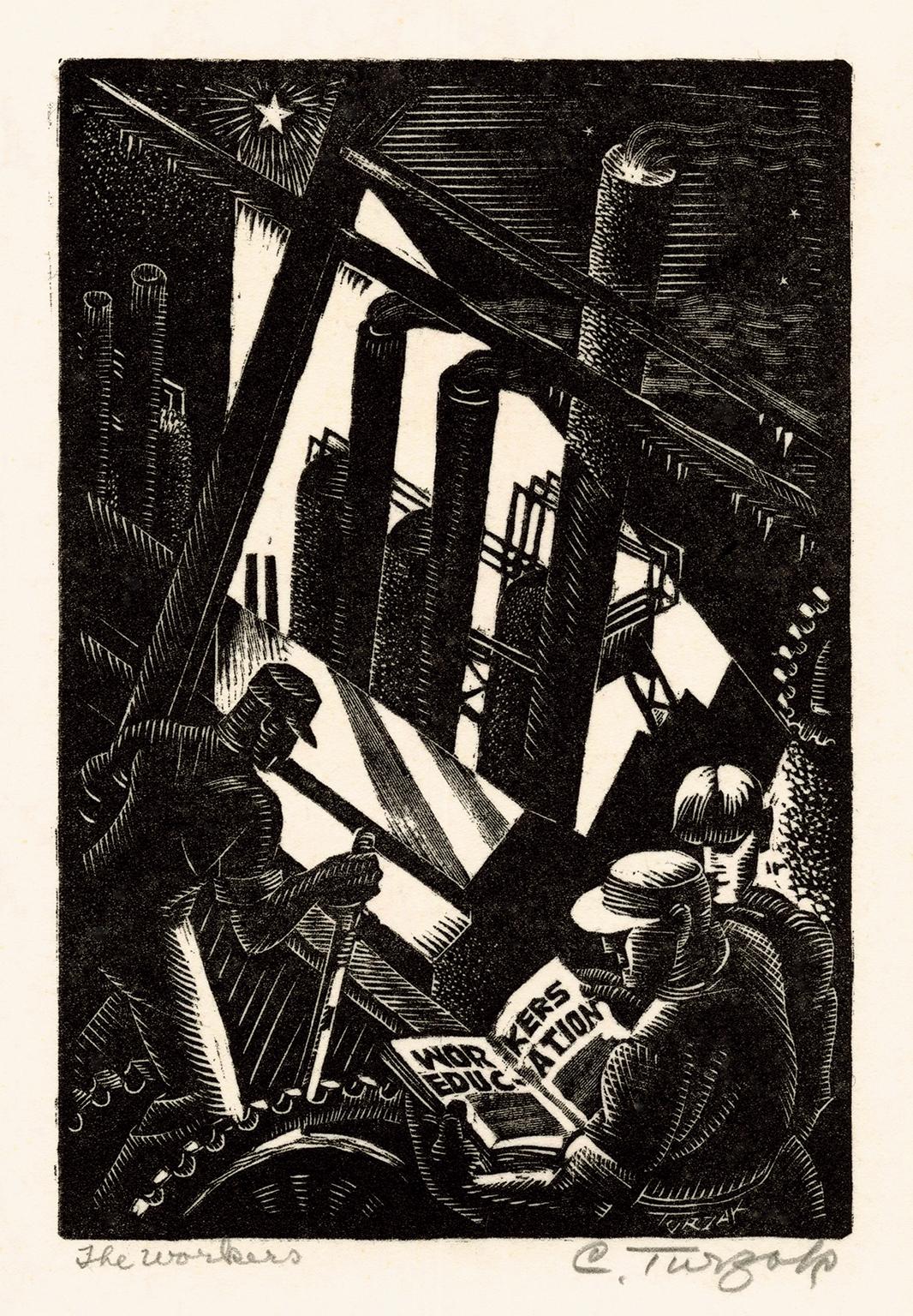
The Workers (No. 1) — 1930s WPA Modernist Woodcut
By Charles Turzak
Located in Myrtle Beach, SC
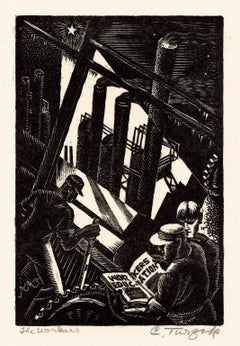
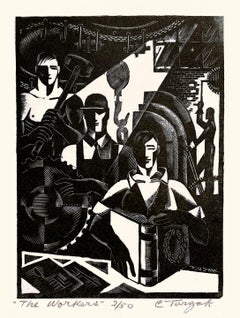
Charles Turzak, 'The Workers (No. 1)', woodcut, edition c. 50, c. 1935. Signed and titled in pencil. Signed in the block, lower right. A fine, richly-inked impression, on cream wove...
Category

1930s American Modern Figurative Prints

Materials

Woodcut

Lot Cleaning, Los Angeles — 1930s Modernism
By Paul Landacre
Located in Myrtle Beach, SC
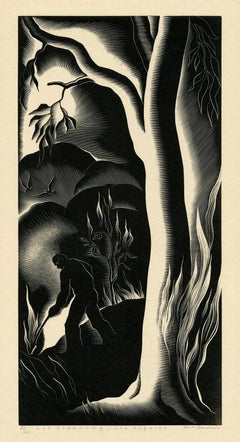
'Lot Cleaning, Los Angeles', wood engraving, edition 60, Zeitlin & Ver Brugge 69. Signed, titled and numbered '51/60' in pencil. A brilliant, black impression, on Kitakata Japan pape...
Category

1930s American Modern Figurative Prints

Materials

Woodcut

Partners — Mid-Century Modernist Regionalism
By Dale Nichols
Located in Myrtle Beach, SC
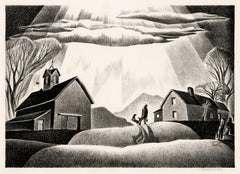
Dale Nichols, 'Partners', lithograph, edition 250, 1950. Signed in pencil. A fine, richly-inked impression, on cream wove paper; the full sheet with margins (7/8 to 1 5/8 inches); tw...
Category

1950s American Modern Landscape Prints

Materials

Lithograph

Tropical Wash Day — Mid-Century Modernism
Located in Myrtle Beach, SC
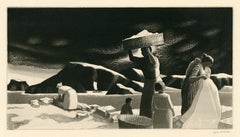
'Tropical Wash Day', aquatint, edition 100, 1946. Signed in pencil. Signed and dated in the plate, lower left. A superb, richly-inked impression, on heavy cream wove paper, with full...
Category

1940s American Modern Figurative Prints

Materials

Aquatint

The Workers (No. 2) — 1930s WPA Modernist Woodcut
By Charles Turzak
Located in Myrtle Beach, SC
Charles Turzak, 'The Workers (No. 2)', woodcut, edition 50, c. 1935. Signed and numbered 2/50 in pencil. A fine, richly-inked impression, on cream wove Japan paper, with full margin...
Category

1930s American Modern Figurative Prints

Materials

Woodcut

Mountain Climber — American Modernism
By Rockwell Kent
Located in Myrtle Beach, SC
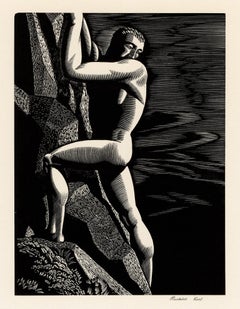
Rockwell Kent, 'Mountain Climber', wood engraving, 1933, edition 250, Burne Jones 93. Signed in pencil. A brilliant, black impression, on cream, wove Japan paper; the full sheet with margins (2 9/16 to 3 5/8 inches); slight skinning at the top sheet edge verso, where previously hinged; otherwise, in excellent condition. Archivally matted to museum standards, unframed. Image size 7 7/8 x 5 7/8 inches (200 x 149 mm); sheet size 14 x 11 1/8 inches (356 x 283 mm). Printed by Pynson Printers, New York. Distributed by The Print Club of Cleveland, Publication No. 11, 1933. Literature: 'Rockwellkentiana,' Harcourt, Brace and Company, New York, 1933. '101 of The World’s Greatest Books', edited by Spencer Armstrong, 1950. Impressions of this work are held in the following museum collections: Akron Art Institute, Burne Jones Collection, IL; Cincinnati Art Museum; Cleveland Museum of Art; Columbus Gallery of Fine Arts; Crystal Bridges Museum of American Art; Davis Museum at Wellesley College; Fine Art Museums of San Francisco; H. M. de Young Museum; Hermitage Museum; Kent Collection, NY; Library of Congress; Memorial Art Gallery, University of Rochester; Metropolitan Museum of Art; New York Public Library; Philadelphia Museum of Art; Princeton University Library; Smithsonian American Art Museum, Spector Collection, NY; SUNY, Plattsburg. ABOUT THE ARTIST Rockwell Kent (1882-1971), though best known as a painter, graphic artist, and illustrator, pursued many careers throughout his life, including architect, carpenter, explorer, writer, dairy farmer, and political activist. Born in Tarrytown, New York, Kent was interested in art from a young age. These ambitions were encouraged by his aunt Jo Holgate, an accomplished ceramicist. Jo came to live with the family after Kent’s father passed away in 1887 and took him to Europe as a teenager, undoubtedly kindling his interest in exploring the world. Kent attended the Horace Mann School in New York City, where he excelled at mechanical drawing. His family’s financial circumstances prevented him from pursuing a career in the fine arts; however, after graduating from Horace Mann in 1900, Kent decided to study architecture at Columbia University. Before matriculating at Columbia, Kent spent the first of three consecutive summers studying painting at William Merritt Chase’s art school in Shinnecock Hills, Long Island. There he found a community of mentors and fellow students who encouraged him to pursue his interest in art. At the end of Kent’s third summer at Shinnecock, Chase offered him a full scholarship to the New York School of Art, where he was a teacher. Kent began taking night classes at the art school in addition to his architecture studies but soon left Columbia to study painting full-time. In addition to Chase, Kent took classes with Robert Henri and Kenneth Hayes Miller, where his classmates included the artists George Bellows and Edward Hopper. Kent spent the summer of 1903 assisting the eccentric painter Abbott Handerson Thayer at his studio in Dublin, New Hampshire—a position he secured through the recommendation of his Aunt Jo. Thayer’s naturalist lifestyle and almost mystical appreciation for natural phenomena greatly influenced Kent; he returned to Dublin for many years to visit Thayer and his family. Thayer gave the young artist time to pursue his work, and that summer Kent painted several views of the New Hampshire landscape, including Mount Monadnock. In 1905 Kent moved from New York to Monhegan Island in Maine, home to a summer art colony, where he continued to find inspiration in nature. Kent soon found success exhibiting and selling his paintings in New York, and in 1907, he was given his first solo show at Claussen Galleries. The following year he married his first wife, Kathleen Whiting (Thayer’s niece), with whom he had five children. The couple divorced in 1924, and Kent married Frances Lee the following year. They divorced after 15 years of marriage, and the artist married Sally Johnstone. For the next several decades, Kent lived a peripatetic lifestyle, settling in several locations in Connecticut, Maine, and New York. During this time he took several extended voyages to remote, often ice-filled, corners of the globe, including Newfoundland, Alaska, Tierra del Fuego, and Greenland, to which he made three separate trips. For Kent, exploration and artistic production were twinned endeavors, and his travels to these rugged, elemental locations inspired his visual art and his writings. He developed a stark, realist landscape style in his paintings and drawings that revealed both nature’s harshness and its sublimity. Kent’s human figures, which appear sparingly in his work, often allude to the mythic themes of isolation, individualism, heroism, and the quest for self-connection. Important exhibitions of works from these travels include the Knoedler Gallery’s shows in 1919 and 1920, featuring Kent’s Alaska drawings...
Category

1930s American Modern Nude Prints

Materials

Woodcut

You May Also Like

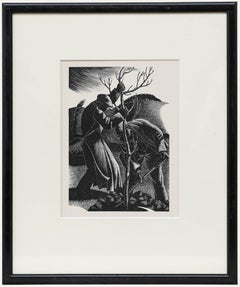
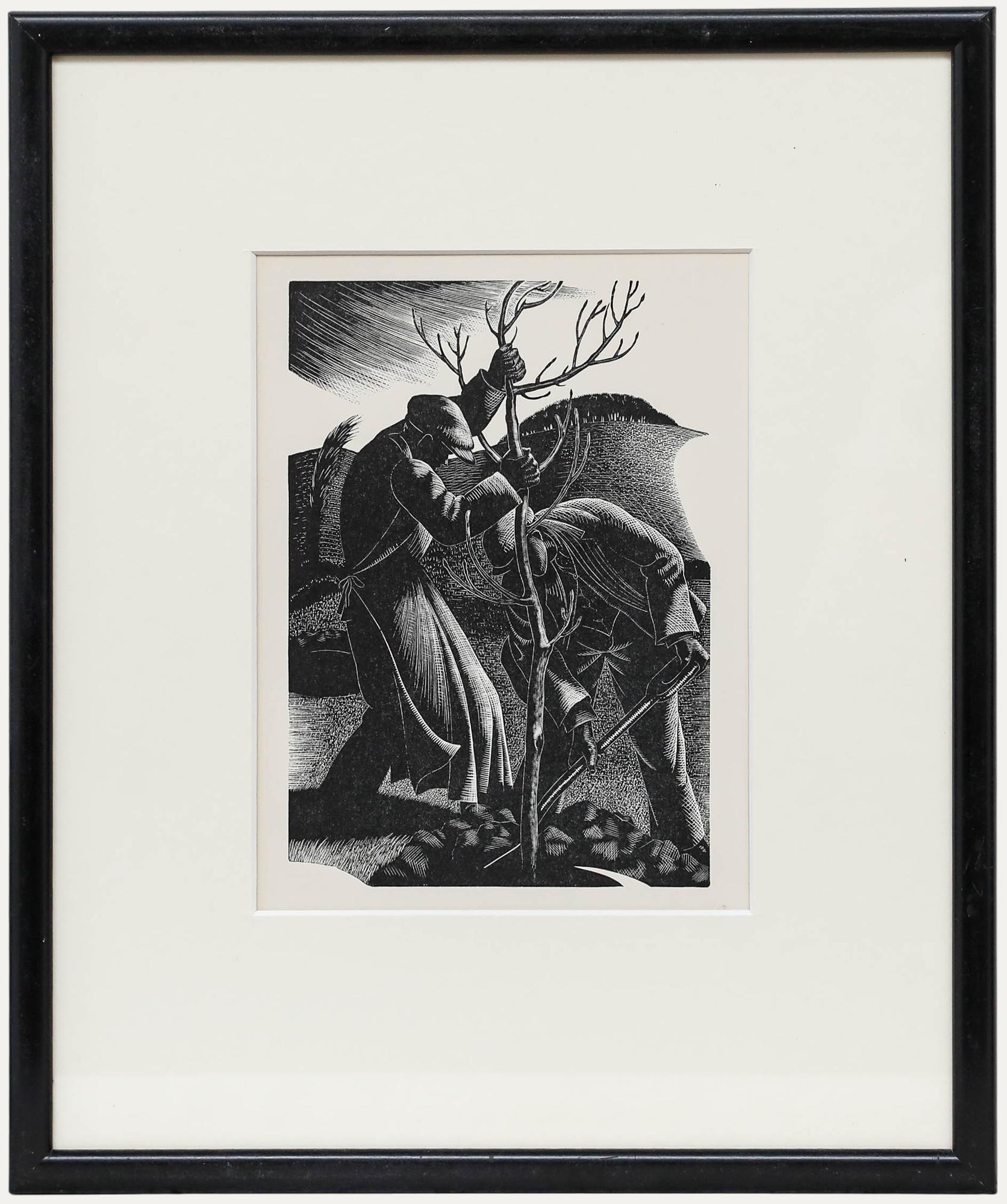
Clare Leighton (1898-1989) - Framed Mid 20th Century Woodcut, Tree Planting
By Clare Leighton
Located in Corsham, GB
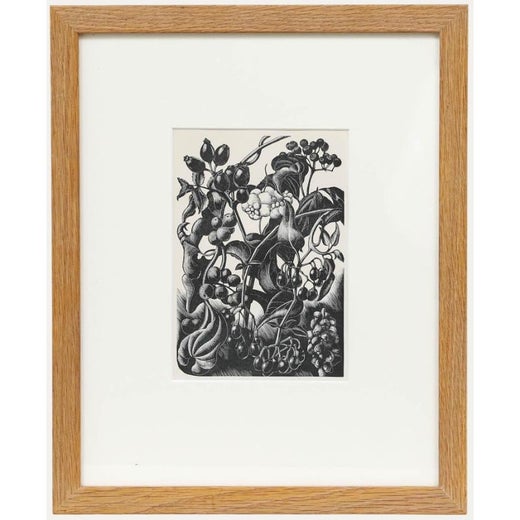
Two figures plant a tree in this striking woodcut by Clare Leighton. The print is from Leighton's 1935 book *Four Hedges,* which documents her experience creating a garden over the c...
Category

20th Century Landscape Prints

Materials

Woodcut

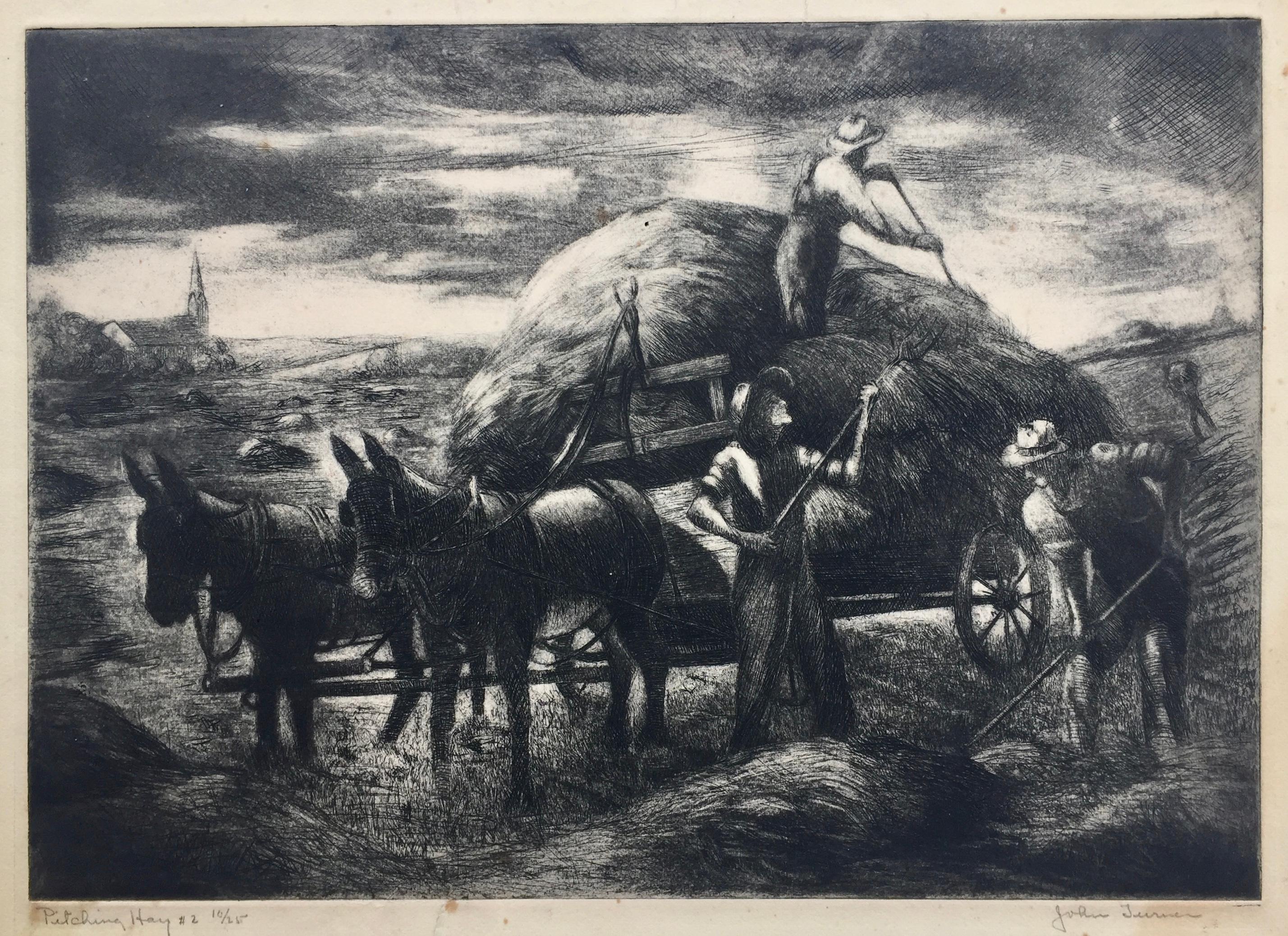
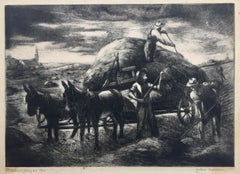
PITCHING HAY - Created for the WPA / Federal Arts Project - (FAP)
By John Turner (b.1916)
Located in Santa Monica, CA
JOHN TURNER (1908 - 1939 per the FDR Presidential Library Collection) PITCHING HAY no 2, c. 1940 Etching and Carborundum. Signed and numbered 10/25 in pencil. 8 1/2 x 12 inches. Sheet 10 x 13 1/2. Annotated at lower sheet edge "Carbograph and etching". This print was done for the WPA / Federal Art Project. The editions for the WPA/FAP prints were generally 25 as in this example. It is illustrated in the Newark Museum WPA collection. Their copy has the Pennsylvania WPA label and with a stamped date of March 11. 1940. Also listed in the General Services Administration catalog of WPA prints...
Category

1940s American Realist Prints and Multiples

Materials

Etching

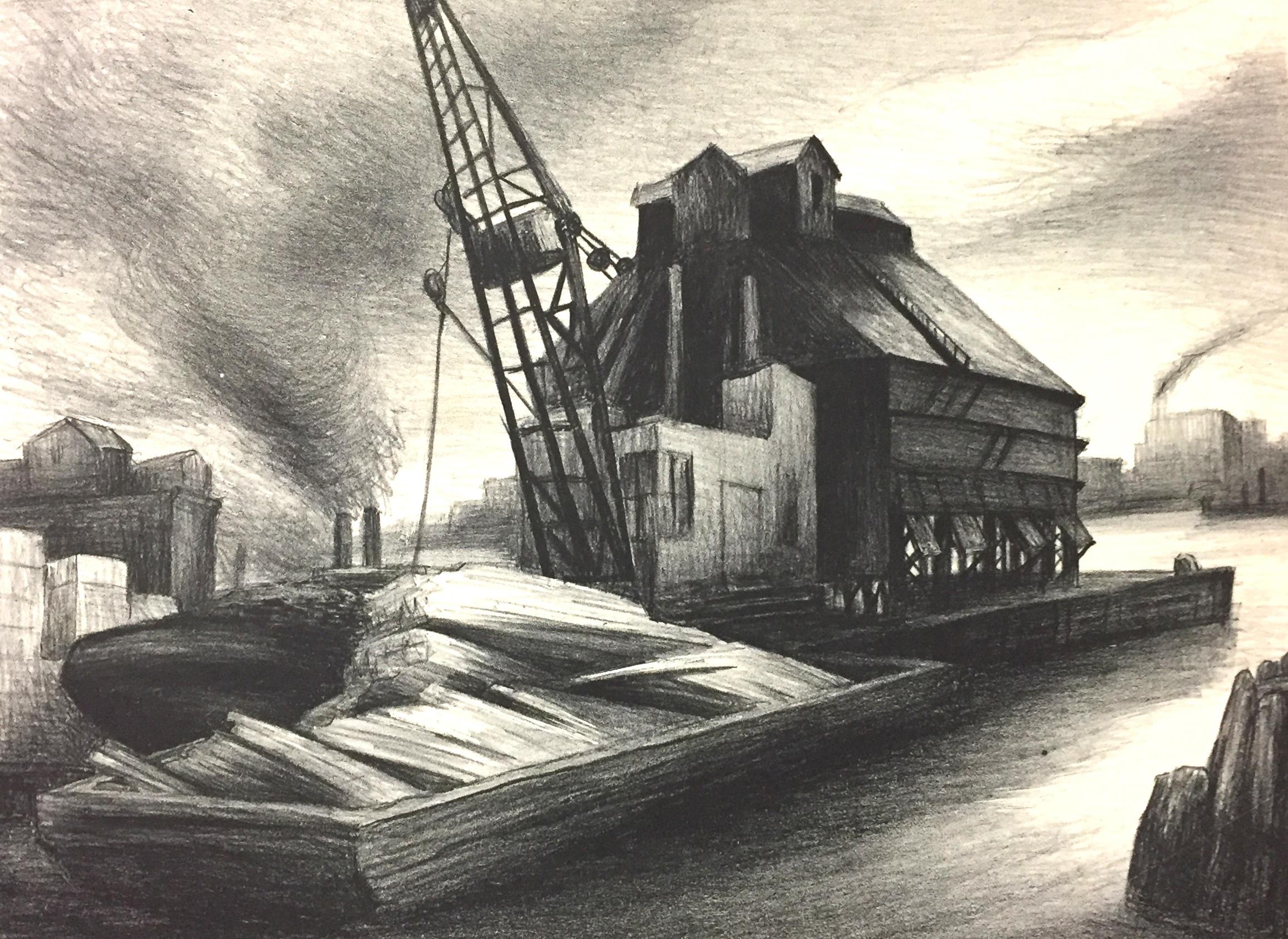
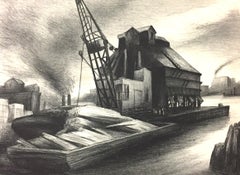
Ann Nooney, (Loading the Lumber Barge, NYC)
By Ann Nooney
Located in New York, NY
The dimensions are for the image. There are large margins. Signed in pencil. A native New Yorker, Ann Nooney (1900-1970), recorded the urban scene while on the Works Progress Admini...
Category

1930s American Realist Landscape Prints

Materials

Lithograph

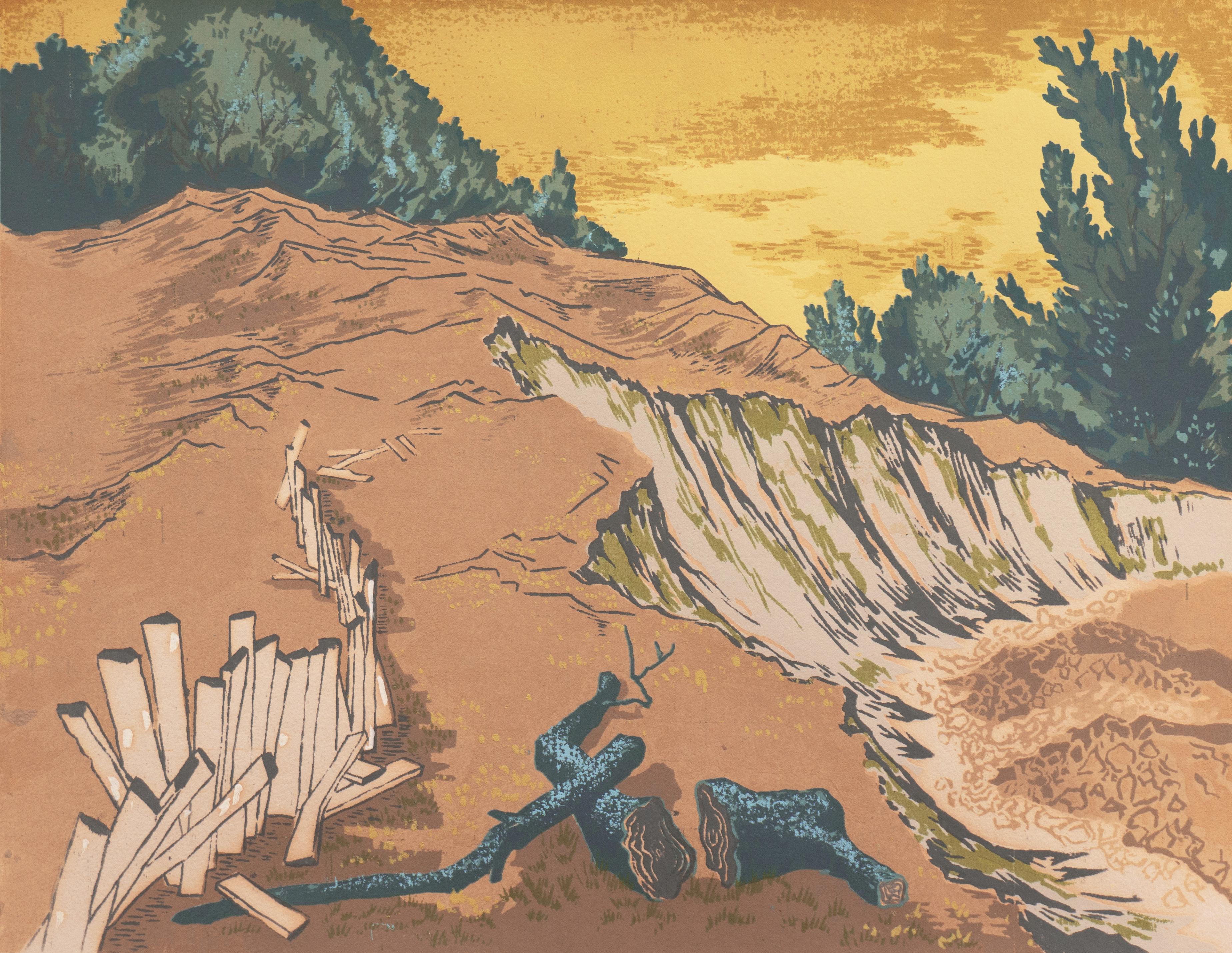
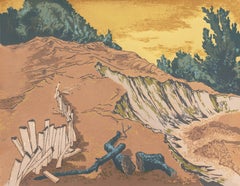
Vermont Quarry , Kansas City Art Institute, New York, Art Students League, WPA
Located in Santa Cruz, CA
Signed lower right, 'Guy Maccoy' (American, 1904-1981), dated 1941 and titled, lower left, 'Vermont Quarry'. Serigrapher, muralist and teacher, Guy Maccoy began his art studies at the Kansas City Art Institute and continued with Ernest Lawson in Colorado Springs. Upon moving to New York City, he studied at the Art Students League and at Columbia University. In 1932 he began producing silk screen prints in New York City with his wife, Geno Pettit...
Category

1940s Landscape Prints

Materials

Paint, Paper, Screen

ROCKWELL KENT S STUDIO
By Letterio Calapai
Located in Portland, ME
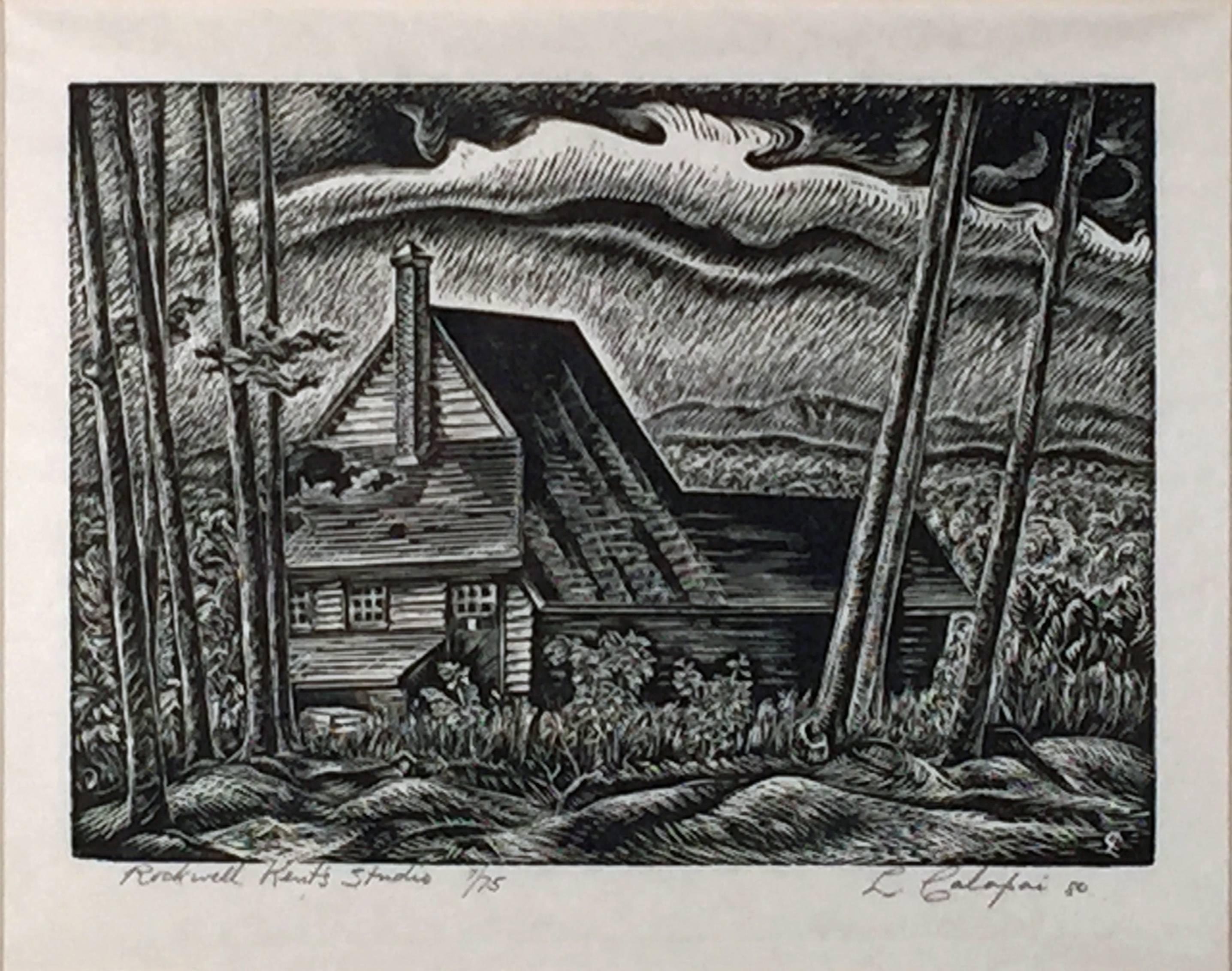
Calapai, Letterio. ROCKWELL KENT'S STUDIO. Wood engraving, 1980. Titled, numbered 7/75 and signed in pencil. 6 x 8 7/16 inches, 153 x 216 mm. In very good condition. Framed.
Category

1980s American Realist Landscape Prints

Materials

Engraving, Woodcut

"Road to Cripple Creek, Colo., " Wood Engraving by Gerhard H. Bakker
Located in Milwaukee, WI
"Road to Cripple Creek, Colo." is an original woodcut print by Gerhardt H. Bakker. Lines full of expression and shape make up every bit of this print, fr...
Category

1930s American Modern Landscape Prints

Materials

Woodcut