Want more images or videos?
Request additional images or videos from the seller
1 of 7

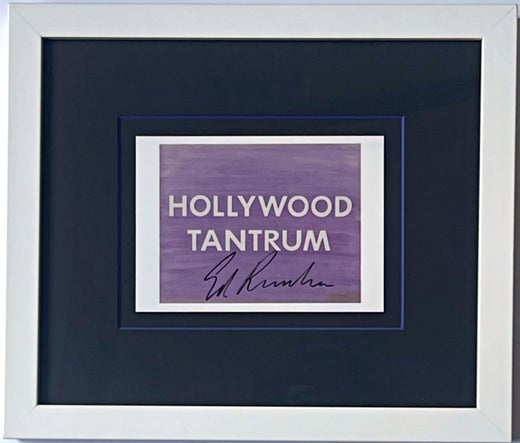
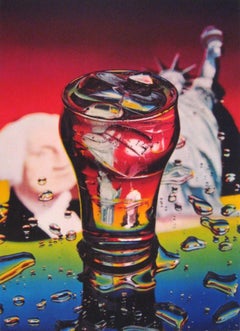
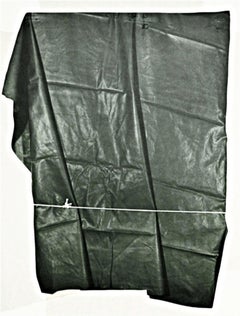
Ed Ruscha
Absolut Ruscha

1988

$8,000List Price

You May Also Like

Robert Rauschenberg Core
By Robert Rauschenberg
Located in New York, NY
C.O.R.E. 1965 Lithograph Signed and numbered edition of 200 36 X 24 inches Robert Rauschenberg’s work reflects a methodology between the approaches of structuralism and post-...
Category

21st Century and Contemporary Pop Art Abstract Prints

Materials

Lithograph

NOTES (KASSEL)
By Claes Oldenburg
Located in Aventura, FL
Hand signed and numbered by the artist. Edition of 100. Sheet size 23 x 15 in. Framed. Artwork is in excellent condition. Certificate of Authenticity is included. All reasonable of...
Category

1960s Pop Art Figurative Prints

Materials

Paper, Lithograph

NOTES (KASSEL)
$3,712 Sale Price
25% Off
H 23 in W 15.75 in
Large Bus by Allen Jones classic British 1960s pop art in bright primary colors
By Allen Jones
Located in New York, NY
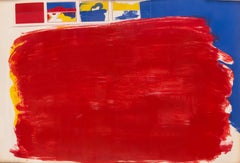
This large Allen Jones lithograph is printed exuberantly in primary colors. A swath of bright red brushstrokes represents the side of a bus. In the upper left, small windows reveal the passengers: a woman’s face is cut off above her vampy red lips, and a blue-haired man’s face is hidden. Royal blue fills the upper right corner of the composition, giving the impression of looking up at a passing bus against the cloudless sky. One can imagine Jones was thinking of the iconic red double decker bus the AEC Routemaster, first introduced in London in 1954. In the 1960s buses were a living symbol of familiar and new technology coexisting: as David Bucken put it, “In and around London a midpoint change on a journey might involve alighting from an RT bus, of which production had started just prior to World War II, and getting on one of the sexy new Routemasters.” In the artist’s words: “The whole problem as a figurative artist was that it was going against the main march of modernism, which was towards abstraction. But here was a way of making the subject you were painting the same as the object you were painting on. By making the canvas a rhomboid, and putting little wheels on it, you have a schematic version of a vehicle, in this case a London bus.” Jones plays with the space between abstraction and figuration: windowed passengers, elaborated with just a few lines and placed adjacent to a weighty red ground of brushstrokes, easily convey the form of a bus, yet the print also conveys Jones’ visceral, painterly delight in color play. Four color lithograph on wove paper Paper 28.5 x 42.5 / 72.4 X 108 cm Wood frame 31 x 46 x 2 in. / 78.75 x 117 x 5 cm with 1 in. moulding Signed by the artist lower right in pencil, labeled Trial Proof lower left in pencil. Edition 20. Printed at Tamarind Los Angeles with Clifford Smith...
Category

1960s Pop Art Abstract Prints

Materials

Lithograph

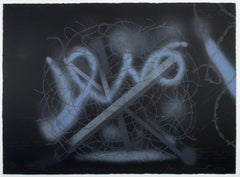
Tumbleweed, James Rosenquist neon blue barbed wire sculptural lithograph drawing
By James Rosenquist
Located in New York, NY
This print depicts the tangle of barbed wire encircling curling and twisting neon, with lengths of wood at the center. The dark paper sets off the electric blue, and captures the ori...
Category

Late 20th Century Pop Art Figurative Prints

Materials

Lithograph

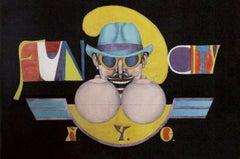
Fun City, N.Y.C.
By Richard Lindner
Located in New York, NY
A very good impression of this color lithograph. Signed and numbered 125/175 in pencil, lower margin.
Category

1970s Pop Art Abstract Prints

Materials

Color, Lithograph

California Pop Art Abstract Expressionist LA Lithograph John Altoon About Women
Located in Surfside, FL
Hand signed and numbered About Women Printed by Kenneth E. Tyler; published by Gemini G.E.L. John Altoon (1925 - 1969), an American artist, was born in Los Angeles to immigrant Arm...
Category

1960s Pop Art Abstract Prints

Materials

Lithograph

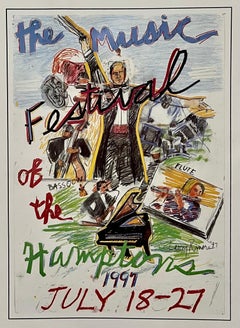
Vintage Pop Art 1997 Offset Lithograph Larry Rivers Music Poster Hamptons NY
By Larry Rivers
Located in Surfside, FL
Larry Rivers "The Music Festival of the Hamptons / July 18-27 1997" poster, Not hand signed. [Dimensions: 24" H x 18" W] Larry Rivers (born Yitzroch Loiza Grossberg) (1923 – 2002) was an American artist, musician, filmmaker, and occasional actor. Considered by many scholars to be the "Godfather" and "Grandfather" of Pop art, he was one of the first artists to merge non-objective, non-narrative art with narrative and objective abstraction. Rivers took up painting in 1945 and studied at the Hans Hofmann School from 1947–48. He earned a BA in art education from New York University in 1951. His work was quickly acquired by the Museum of Modern Art. A 1953 painting Washington Crossing the Delaware was damaged in fire at the museum five years later. He was a pop artist of the New York School, reproducing everyday objects of American popular culture as art. He was one of eleven New York artists featured in the opening exhibition at the Terrain Gallery in 1955 along with Paul Mommer, Leonard Baskin, Peter Grippe During the early 1960s Rivers lived in the Hotel Chelsea, notable for its artistic residents such as Bob Dylan, Janis Joplin, Leonard Cohen, Arthur C. Clarke, Dylan Thomas, Sid Vicious and multiple people associated with Andy Warhol Factory and where he brought several of his French nouveau réalistes friends like Yves Klein who wrote there in April 1961 his Manifeste de l'hôtel Chelsea, Arman, Martial Raysse, Jean Tinguely, Niki de Saint-Phalle, Christo & Jean Claude, Daniel Spoerri or Alain Jacquet, several of whom, like Rivers, left some pieces of art in the lobby of the hotel for payment of their rooms. In 1965, Rivers had his first comprehensive retrospective in five important American museums. His final work for the exhibition was The History of the Russian Revolution, which was later on extended permanent display at the Hirshhorn Museum and Sculpture Garden in Washington, DC. He spent 1967 in London collaborating with the American painter Howard Kanovitz. In 1968, Rivers traveled to Africa for a second time with Pierre Dominique Gaisseau to finish their documentary Africa and I, which was a part of the groundbreaking NBC series Experiments in Television. During this trip they narrowly escaped execution as suspected mercenaries. During the 1970s, Rivers worked closely with Diana Molinari and Michel Auder on many video tape projects, including the infamous Tits, and also worked in neon. Rivers's legs appeared in John Lennon and Yoko Ono's 1971 film Up Your Legs Forever. From 1940–1945 he worked as a jazz saxophonist in New York City, changing his name to Larry Rivers in 1940 after being introduced as "Larry Rivers and the Mudcats" at a local pub. He studied at the Juilliard School of Music in 1945–46, along with Miles Davis, with whom he remained friends until Davis's death in 1991. Larry Rivers was born in the Bronx to Samuel and Sonya Grossberg, Jewish immigrants from Ukraine. In 1945, he married Augusta Berger, and they had one son, Steven. Rivers also adopted Berger's son from a previous relationship, Joseph, and reared both children after the couple divorced. In 1949 he had his first one-man exhibition at the Jane Street Gallery in New York. This same year, he met and became friends with John Ashbery, and Kenneth Koch. In 1950 he met Frank O’Hara. This same year he took his first trip to Europe spending eight months in Paris, France, reading and writing poetry. Beginning in 1950 and continuing until Frank’s death in July of 1966, Larry Rivers and Frank O’Hara cultivated a uniquely creative friendship that produced numerous collaborations, as well as inspired paintings and poems. In 1951 Rivers’ works were shown at the Tibor de Nagy Gallery where he continued to show annually (except 1955) for about 10 years. In 1954 he had his first exhibition of sculptures at the Stable Gallery, New York. In 1955 The Museum of Modern Art acquired Washington Crossing the Delaware. This same year he won 3rd prize in the Corcoran Gallery national painting competition for “Self-Figure.” Rivers’ also painted “Double Portrait of Berdie” in 1955, which was soon purchased by the Whitney Museum. In 1957 he and Frank O’Hara began work on “Stones,” a collaborative mix of images and poetry in a series of lithograph for Tatyana Grosman company ULAE. During this time he also appeared on the television game show “The $64,000.00 Question” where along with another contestant, they both won, each receiving $32,000.00. In 1958 he again spent time in Paris and played in various jazz bands. In 1959 he painted Cedar Bar Menu...
Category

1990s Pop Art Abstract Prints

Materials

Lithograph, Offset

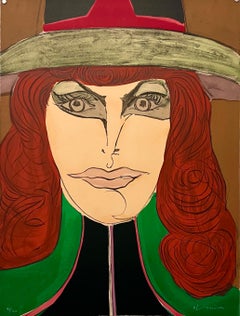
1971 Modernist Lithograph Redhead Pop Art Mod Fashionable Woman Richard Lindner
By Richard Lindner
Located in Surfside, FL
RICHARD LINDNER (American. 1901-1978) Hand Signed limited edition lithograph with blindstamp Publisher: Shorewood-Bank Street Atelier for the Skowhegan School of Painting and Sculpture 29.25 X 22 inches Richard Lindner was born in Hamburg, Germany. In 1905 the family moved to Nuremberg, where Lindner's mother was owner of a custom-fitting corset business and Richard Lindner grew up and studied at the Kunstgewerbeschule (Arts and Crafts School since 1940 Academy of Fine Arts). From 1924 to 1927 he lived in Munich and studied there from 1925 at the Kunstakademie. In 1927 he moved to Berlin and stayed there until 1928, when he returned to Munich to become art director of a publishing firm. He remained there until 1933, when he was forced to flee to Paris, where he became politically engaged, sought contact with French artists and earned his living as a commercial artist. He was interned when the war broke out in 1939 and later served in the French Army. In 1941 he went to the United States and worked in New York City as an illustrator of books and magazines (Vogue, Fortune and Harper's Bazaar). He began painting seriously in 1952, holding his first one-man exhibit in 1954. His style blends a mechanistic cubism with personal images and haunting symbolism. LIndner maintained contact with the emigre community including New York artists and German emigrants (Albert Einstein, Marlene Dietrich, Saul Steinberg). Though he became a United States citizen in 1948, Lindner considered himself a New Yorker, but not a true American. However, over the course of time, his continental circus women became New York City streetwalkers. New York police uniforms replaced European military uniforms as symbols of authority.At a time when Abstract Expressionism was all the rage, Lindner’s painting went against the current and always kept its distance. His pictorial language of vibrant colours and broad planes of colour and his urban themes make him a forerunner of American Pop Art. At the same time, he owes the critical tone of his paintings to the influence of European art movements such as Neue Sachlichkeit and Dada. His first exhibition did not take place until 1954, by which time he was over fifty, and, interestingly, it was held at the Betty Parsons Gallery in New York, a venue associated with the American Expressionists. From 1952 he taught at the Pratt Institute, Brooklyn, from 1967 at Yale University School of Art and Architecture, New Haven. In 1957 Lindner got the William and Norma Copley Foundation-Award. In 1965 he became Guest Professor at the Akademie für Bildende Künste, Hamburg. His Ice (1966, Whitney Museum of American Art) established a connection between the metaphysical tradition and pop art. He did work on Rowlux which was used by a number of pop artists (most notably Roy Lichtenstein)The painting shows harsh, flat geometric shapes framing an erotic but mechanical robot-woman. His paintings used the sexual symbolism of advertising and investigated definitions of gender roles in the media. While influencing Pop Art (Andy Warhol, Tom Wesselmann and Claes Oldenburg amongst others) his highly colourful, hard-edge style seems to have brought him close to Pop Art, which he rejected. Nevertheless, he is immortalised on the cover of the Beatles record "Sgt. Pepper’s Lonely Hearts Club Band" (1967) as a patron of the pop culture. He also did a tapestry banner with the Betsy Ross Flag...
Category

1970s Pop Art Abstract Prints

Materials

Lithograph

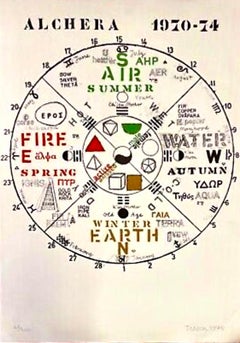
Joe Tilson British Pop Art Screenprint, Color Lithograph 4 Seasons 4 Elements
By Joe Tilson
Located in Surfside, FL
Silkscreen screenprint or Lithograph Hand signed and numbered. An esoteric, mystical, Kabbala inspired print with Hebrew as well as other languages. Joseph Charles Tilson RA (born 2...
Category

1970s Pop Art Abstract Prints

Materials

Screen, Lithograph

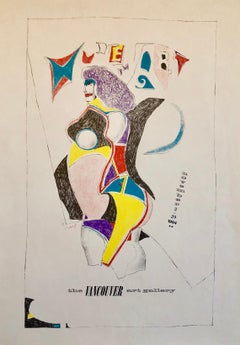
Vintage Modern Lithograph Poster 1960s Pop Art Mod Figure
By Richard Lindner
Located in Surfside, FL
Vintage 1960's Lithograph poster for Vancouver Canada art show. Richard Lindner was born in Hamburg, Germany. In 1905 the family moved to Nuremberg, where Lindners mother was owner of a custom-fitting corset business and Richard Lindner grew up and studied at the Kunstgewerbeschule (Arts and Crafts School since 1940 Academy of Fine Arts). From 1924 to 1927 he lived in Munich and studied there from 1925 at the Kunstakademie. In 1927 he moved to Berlin and stayed there until 1928, when he returned to Munich to become art director of a publishing firm. He remained there until 1933, when he was forced to flee to Paris, where he became politically engaged, sought contact with French artists and earned his living as a commercial artist. He was interned when the war broke out in 1939 and later served in the French Army. In 1941 he went to the United States and worked in New York City as an illustrator of books and magazines (Vogue, Fortune and Harper's Bazaar). He began painting seriously in 1952, holding his first one-man exhibit in 1954. His style blends a mechanistic cubism with personal images and haunting symbolism. LIndner maintained contact with the emigre community including New York artists and German emigrants (Albert Einstein, Marlene Dietrich, Saul Steinberg). Though he became a United States citizen in 1948, Lindner considered himself a New Yorker, but not a true American. However, over the course of time, his continental circus women became New York City streetwalkers. New York police...
Category

1960s Pop Art Abstract Prints

Materials

Lithograph

More From This Seller

View All
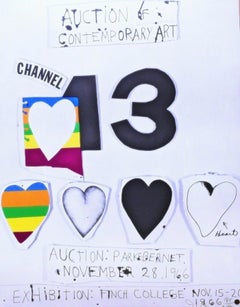
Jim Dine, I Love Public Television, deluxe hand signed/N 1966 Pop Art Lithograph
By Jim Dine
Located in New York, NY
Jim Dine Love for Channel 13 Lithograph. Hand signed and numbered recto 27 × 21 1/2 inches Edition 185/200 Signed and numbered 185/200 in graphite pencil on the recto Unframed Rarel...
Category

1960s Pop Art Abstract Prints

Materials

Pencil, Lithograph, Offset

Yankee Flame Pop Art photorealist Lt Ed Signed/N. Statue of Liberty US President
By Ben Schonzeit
Located in New York, NY
Ben Schonzeit Yankee Flame, from the portfolio: America: the Third Century, 1975 Collotype on wove paper Pencil signed and numbered 50/200 on the front Publisher: APC Editions, Chermayeff Geismar Associates, Inc Printer: Triton Press 27 × 19 3/10 inches Unframed Note: this is the original hand signed and numbered collotype; not to be confused with the separate (unsigned) poster edition. This hand-signed, numbered and dated collotype in colors by photorealist pioneer artist Ben Schonzeit was created in 1975 for the portfolio America: the Third Century, commissioned by Mobil Oil Corporation in which 13 American artists, including Roy Lichtenstein, Ed Ruscha, Robert Rauschenberg, James Rosenquist and others created works celebrating America's bicentennial. Yankee Flame combines the iconic images of George Washington, Coca-Cola and the Statue of Liberty into a collaged interpretation of contemporary American life and the meaning of freedom. "Yankee Flame" is in excellent condition and never framed. It was acquired as part of the America: The Third Century full portfolio. Ben Schonzeit (b. 1942, Brooklyn, New York) is one of the original Photorealist painters and is considered to have pioneered the airbrush technique. His works often depict still life arrangements that are intentionally out of focus. He received his B.F.A. from The Cooper Union in 1964 and has since had over 50 solo exhibitions both in the United States and abroad. His paintings are held in numerous museum collections including the Solomon R. Guggenheim Museum in New York, Virginia Museum of Fine Arts in Richmond, Virginia, and the Metropolitan Museum of Art in New York. In 1973 Nancy Hoffman introduced me to Ben Schonzeit in the backroom of her gallery on West Broadway. She had been open less than a year, and Ben was one of the artists in her original stable. His large Crab Blue It had arrived from his studio a few days earlier and was leaning against the wall. I thought at the time it was one of the most impressive, virtuosic Photorealist works I had seen. That first encounter was more than a quarter of a century ago and I have always considered it to be one of the quintessential, tour de force paintings of American Photorealism. In the early seventies one could stand on West Broadway on any pleasant, sunny weekday and see less than a dozen people on the street between the Nancy Hoffman Gallery and OK Harris Works of Art. Almost all of the SoHo galleries, such as Leo Castelli, Paula Cooper, Ward-Nasse, and Ivan Karp’s Hundred Acres, could be visited in an afternoon. At night the streets were almost deserted. With the exception of Andy Warhol, there were no art world superstars. More importantly, none of the artists expected to achieve celebrity status. That was a phenomenon of the eighties and nineties. There were a only a handful of restaurants and watering holes, such Elephant and Castle, Fanelli’s, the Spring Street Bar and Prince Street Bar. Fanelli’s closed on weekends, which was a holdover from their sweatshop clientele during lunch and ragtag group of artists in the evenings. In those early days of SoHo, the drafty, raw sweatshop spaces with their large windows, rough floors, and service elevators provided large, inexpensive living quarters and studios for many artists. Unlike today, there were no boutiques. The area was not chic and with the exception of Lowell Nesbett’s showplace, the lofts were not glamorous. Schonzeit was in the same living and working space the he now occupies when I first visited him, but SoHo was a very different time and place. When the National Endowment of the Arts recommended me to curate America 1976, which turned into one of the major visual arts projects for the Bicentennial, Ben Schonzeit was on the first list of participants I made up for the U.S. Department of the Interior. His large diptych, Continental Divide, was one of the most memorable works produced for the exhibit. I stopped by his studio four or five times while it was in progress and have visited him many times over the years. We have maintained a very cordial working relationship and friendship over the past three decades. I saw The Music Room exhibit in 1978 and realized at the time that the vigorously rendered mural sized canvases and mirror and related works represented a major catharsis in his painting. In many ways, it and the other paintings and drawings based on the same image represented a sharp, decisive break with the tenets of Photorealism, or at least the photo-replicative aspects that had been so widely heralded in America and abroad in the mid-seventies. Over the years we have continued to work together. He has been in almost all of the major exhibitions I have curated here and abroad and in almost all of the books I have written. I am familiar with his studio habits, his quiet, internalized restlessness that manifests itself in the hundreds of small, unknown drawings and watercolors, doodles on napkins during lunch, and imaginary landscapes. I also know that he would rather do a painting than think or talk about it. Over the years I have followed the shifts in his studio procedure from the monumental airbrushed fruit and vegetable paintings to the most recent bouquets of flowers and decorative paintings. Our discussions of these matters tends to lapse into a verbal shorthand at this point. The following essay is based on both my longstanding familiarity and admiration for his work and involvement with contemporary realism and figurative painting. A booklet of color xeroxes with notes made up by Schonzeit was extremely helpful. In addition to several interviews, much of the information unfolded through a lengthy series of Emails. Due to our different working habits these were composed and sent out very late at night and answered by Ben the following morning. They dealt with the specifics of many of the paintings, generalities, his background and childhood in Brooklyn, and occasional bits of art world gossip. And there were odd discoveries. Prior to discussing his witty, tongue in cheek painting of Buffalo Bill, I did not know or had long forgotten that William Cody...
Category

1970s Pop Art Abstract Prints

Materials

Other Medium, Lithograph, Pencil

Fun Vacation (200 Engberg) Lithograph signed 13/16 by Ed Ruscha AND Kenny Scharf
Located in New York, NY
Ed Ruscha and Kenny Scharf Fun Vacation (200, Engberg), 1990 Lithograph in five colors on white Rives BFK paper (hand signed by BOTH Ed Ruscha and Kenny Scharf) 36 × 27 inches Hand-s...
Category

1990s Pop Art Abstract Prints

Materials

Pencil, Graphite, Lithograph

The Wrapped (MCA) Chicago 1969, Lt Ed of 200 w/gold stamp Hand Signed by Christo
By Christo and Jeanne-Claude
Located in New York, NY
Christo and Jeanne-Claude The Wrapped (MCA), 1969 (Hand Signed), 2019 Four-color offset lithograph on 110 lb. Crane Lettra Cover stock, with an elegant gold foil stamp. Hand Signed ...
Category

1960s Pop Art Abstract Prints

Materials

Foil

MOCA Chicago Lithograph, first North American building Christo wrapped Signed/N
By Christo
Located in New York, NY
This is a truly historic limited edition hand signed museum print from the 1960s - of the first North American building the legendary artists Christo ever wrapped: Christo Wrap In Wr...
Category

1960s Pop Art Abstract Prints

Materials

Offset, Lithograph, Laid Paper, Pencil
Sister Corita (vintage hand signed poster) Images Gallery rarely found signed
By Corita Kent
Located in New York, NY
Sister Mary Corita Kent Sister Corita hand signed poster, 1985 Offset Lithograph Signed in pencil by the artist on the lower right 24 x 18 inches Unframed This offset lithograph post...
Category

1980s Pop Art Abstract Prints

Materials

Pencil, Lithograph, Offset

Recently Viewed

View All