Items Similar to Group of Four original etchings from the French Set
Want more images or videos?
Request additional images or videos from the seller
1 of 6
Ernest HaskellGroup of Four original etchings from the French Setc. 1900
c. 1900
$1,000
£764.62
€875.88
CA$1,410.41
A$1,535.06
CHF 820.28
MX$18,537.68
NOK 10,308.94
SEK 9,588.51
DKK 6,543.20
About the Item
Four etchings
1) Washing Wool. etching, 3 x 2 inches
Signed in pencil on the reverse
2) The Ragpicjer's Daughter, etching, 3 1/2 x 2 3/8 inches
Signed and titled in pencil on the mount
3) Cafe Artist, etching, 2 3/8 x 1 7/8 inches, edition 10
Monogrammed in the plate upper left
4) The Ribbon Vendor, etching, 2 3/8 x 2 inches
Signed in the plate upper right
All from the French Set
Provenance: Estate of thew Artist
By descent
James A. Bergquist, Boston
Associated American Artists, New York
Condition: Excellent
Ernest Haskell (1876-1925)
An illustrator, painter and etcher, Ernest Haskell was a well-known figure in New York and Paris during the early part of the 20th century. In 1976, a memorial centennial exhibition of his birth was held at the New York Public Library. Haskell was especially noted for his etchings, a skill he learned as a student of James McNeill Whistler. He also designed promotional posters in watercolor.
Haskell was born in Woodstock, Connecticut, and by age 19 was established in New York City where he turned out magazine covers and posters for Scribner's, The New York Sunday Journal and Truth magazine. By age 21, he was living in Paris, a city where he spent much of his time in the future as well. He enrolled in the Academie Julian but spent most of his time studying privately around the Louvre and with Whistler from whom he learned special techniques, which he later combined with elegant poster designs that made his work highly unique. It was said that Haskell created the first real art posters in the United States.
When he returned to New York in the 1890s, he was popular as a celebrity portraitist whose subjects included Ethel Barrymore and Helen Hayes. He was a member of the Players Club, a social venue for actors and artists that included many of New Yorks prominent figures such as Mark Twain, Childe Hassam and John Barrymore.
In 1903, Haskell married Elizabeth Foley, a New York society girl, and they had two children and spent much time at their farm on the coast of Maine. They also traveled occasionally to California. In 1918, Elizabeth died in the flu epidemic, and two years later, Haskell married Emma Laumeister in San Francisco. The couple had twins, Ernest Jr. and Josephine. Tragically, in 1925, Haskell was killed while driving close to his rural home in Maine in a Model T Ford. He was returning from New York City, where he had been arranging a show.
Courtesy, AskArt
Sources:
Abigail Aldridge, daughter of Josephine, and grand-daughter of the artist, in an article titled “Flair for the Theatrics,” Art and Antiques, December 2004, p. 86.
Additional information courtesy of Ernest Haskell, III grandson of the artist
- Creator:Ernest Haskell (1876-1925, American)
- Creation Year:c. 1900
- Dimensions:Height: 3 in (7.62 cm)Width: 2 in (5.08 cm)
- Medium:
- Movement Style:
- Period:
- Condition:
- Gallery Location:Fairlawn, OH
- Reference Number:Seller: FA5386, 5394, 5377, 53751stDibs: LU14017321412
About the Seller
5.0
Recognized Seller
These prestigious sellers are industry leaders and represent the highest echelon for item quality and design.
Gold Seller
Premium sellers maintaining a 4.3+ rating and 24-hour response times
Established in 1978
1stDibs seller since 2013
831 sales on 1stDibs
Typical response time: <1 hour
Associations
International Fine Print Dealers Association
- ShippingRetrieving quote...Shipping from: Akron, OH
- Return Policy
More From This Seller
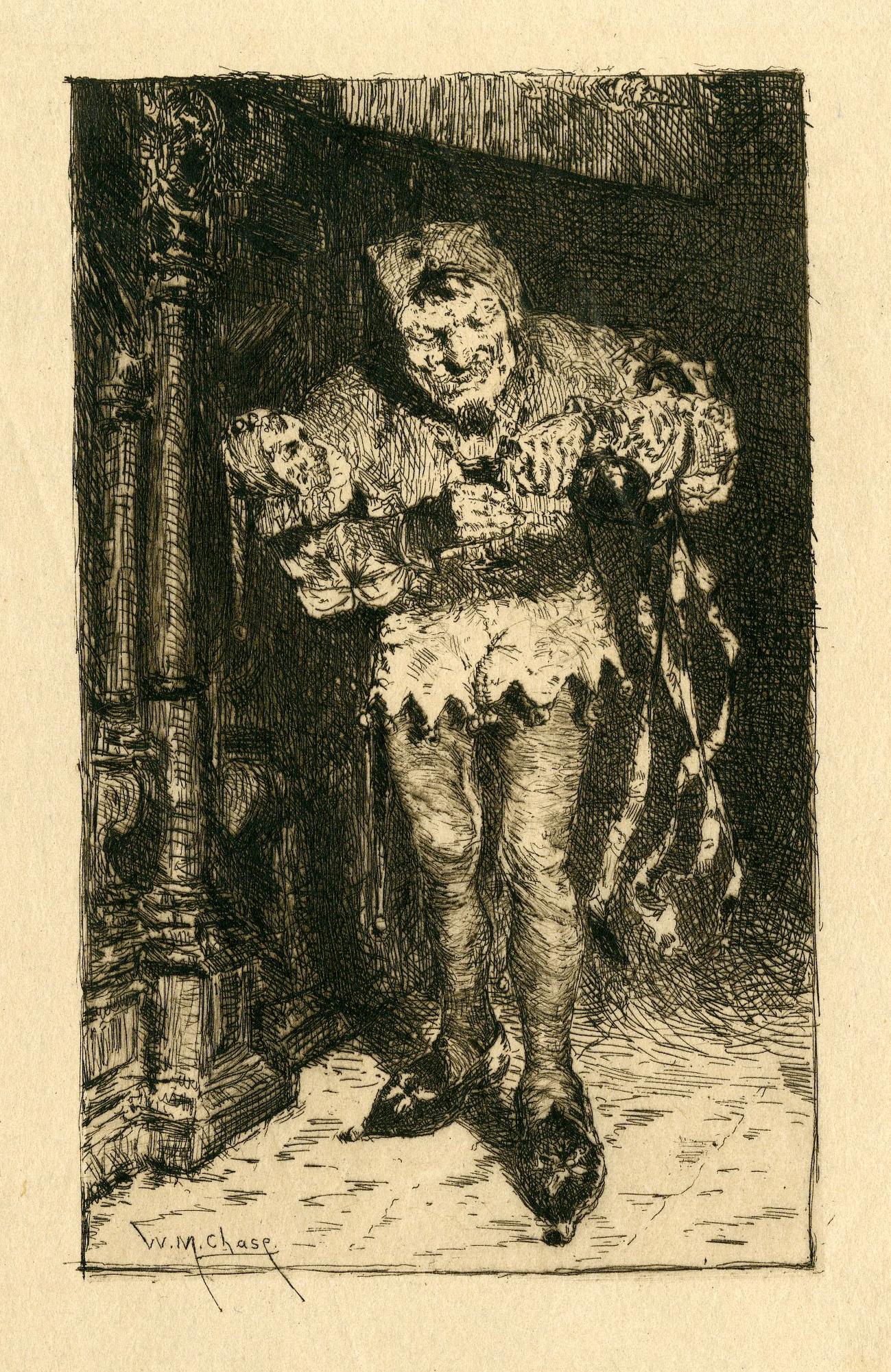
View AllKeying Up - The Court Jester
By William Merritt Chase
Located in Fairlawn, OH
Keying Up - The Court Jester
Etching with drypoint, 1879
Signed in the plate lower left corner (see photos)
Proof before engraved title and engraved names
Printed on thin light golden Japanese tissue paper
In the final state, with engraved titled and typeface engraved artist’s signature below the image
Condition: excellent
Plate size: 6-5/8 x 4-1/4"
According to Pisano, this image was very popular during Chase’s life. It is based on his famous painting, Keying Up-The Court Jester, in the collection of the Pennsylvania Academy of Fine Arts. The painting was created in Munich during the artist’s studies there. It was exhibited in the 1876 Centennial Exhibition in Philadelphia where it won a Medal of Honor and helped establish the artist’s reputation as a leading American painter.
Chase, always conscious of self promotion, created the etching and had numerous impressions printed. He sold them for a modest price to increase his fame. The etching was later published in Sylvester R. Koehler, American Art Review, September 1878. It was for this American Art Review printing that the engraved titled and type face signature below the image were added to the plate.
This example was part of a group of impressions that came down in the Chase family via his daughter Dorothy Bremond Chase, his third daughter. They were acquired at auction in a single auction lot, housed in a paper board folder. The consignor was Associated American Artist’s as they were liquidating their stock prior to closing the gallery.
Dorothy was the subject of Chase’s painting, My Little Daughter Dorothy. C. 1894, in the collection of the Detroit Institute of Arts as well as numerous other portraits of her.
Reference: Pisano/Bake, Volume 1, Pr. 3, illustrates the rare 1st state, this being a 2nd state before any other the engraved title and Chase's name in the bottom margin which are found in the third state.
Artist bio in file (Chase)
In 1883 Chase was involved in the organization of an exhibition to help raise funds for a pedestal for the Statute of Liberty. The exhibition featured loans of three works by Manet and urban scenes by the Italian Impressionist Giuseppe de Nittis. Both artists influenced Chase's Impressionistic style that gave rise to a series of New York park scenes. It is also thought that he was influenced by John Singer Sargent's In the Luxembourg Gardens (1879) which was exhibited in New York at this time. Indeed, Chase had met Sargent in Europe in 1881, the two men becoming lifelong friends with Sargent painting Chase's portrait in 1902.
On another European trip in 1885, Chase met James McNeill Whistler in London. While Whistler had a reputation for being difficult, the two artists got along famously and agreed to paint one another's portrait. Eventually, however, Whistler's moods began to grate with Chase who wrote home stating "I really begin to feel that I never will get away from here". For his part, Whistler criticized Chase's finished portrait and, according to Hirshler, "complained about Chase for the rest of his life". While no record exists of Whistler's portrait of Chase; Chase's portrait of Whistler remains a well-known piece in his oeuvre.
In 1887 Chase married Alice Gerson, the daughter of the manager of a lithography company. Though some fifteen years his junior (Chase was 37), he had known Alice for some time through her family's devotion to the arts. The pair, who would enjoy a happy marriage with Alice in full support of her husband's career, settled initially in Brooklyn where their first child was born. The couple would parent six daughters and two sons and it was only his family that could rival his devotion to his art. Indeed, Chase often combined his two loves by painting several portraits of his wife and children in Brooklyn parks before the couple relocated to Manhattan.
Later Period
Between 1891 and 1902, Chase and his family spent their summers at a purpose-built home and studio in Shinnecock Hills, a close suburb of the upmarket town of Southampton on the south shore of Long Island (roughly 100 miles east of New York). Chase set up, and taught two days a week, at the nearby Shinnecock Hills Summer School of Art which benefitted from the financial backing of local art collectors. It was at Shinnecock that Chase, taken in by the region's striking natural surroundings, painted several Impressionistic landscapes. As Bettis put it, "There, among the dunes, in the bright sunlight and sea air his painterly impulse was given free sway, and he produced some of his freest and loveliest work". His passion for the area was so felt he even gave his daughter Hazel the middle name of Neamaug, in honor of the rich Native American history of Shinnecock. Chase was equally focused on the students that came to the School and who he encouraged to paint in the modern plein air style favored by the French Impressionists.
Although Chase was making a name for himself as an Impressionist, he never abandoned his commitment to the sombre tones and academic tropes he had learned in Munich, though these he reserved for his portraits, and for his series of striking still lifes featuring dead fish. Chase was in fact a successful society portraitist - he painted fashionable women for a fee of $2,000 - and would paint his students as "samples" which he then donated to leading art institutions (such as Lady in Black (1888) which he donated to the Metropolitan Museum in 1891).
In 1896, facing financial difficulties, Chase flirted with the idea of giving up his teaching in New York and traveled with his family to Madrid where he developed a passion for bullfighting. Chase returned however to Shinnecock in June to teach his yearly summer art class, and in the fall of that year, established his own art school in Manhattan: the Chase School which was modelled on the Académie Julian in Paris. Chase lacked business savvy, however, and the Chase School lasted only two years before it was placed under new management. It continued as the New York School of Art (changed to Parsons School of Design starting 1941) with Chase as head the School for eleven more years. Chase also taught during this period at the Pennsylvania Academy of Fine Arts.
In 1902, following the premature death of his friend John Twachtman, Chase was invited to join the Ten American Painters group (who included amongst its members, Frank Weston Benson, Thomas Wilmer Dewing...
Category
1870s American Impressionist Figurative Prints
Materials
Etching
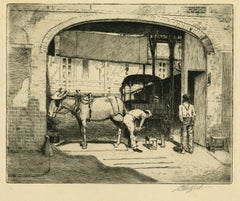
Untitled (Black smith in Charleston, South Carolina)
By Louis Oscar Griffith
Located in Fairlawn, OH
untitled (Shoeing the Mule, Charleston, South Carolina)
Etching, c. 1930
Signed by the artist in pencil lower right (see photo)
Condition: Excellent
Image/plate size: 8 x 10 inches
S...
Category
1930s American Impressionist Figurative Prints
Materials
Etching
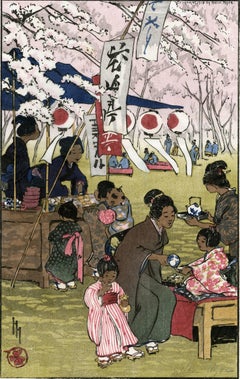
Blossom Time in Tokyo
By Helen Hyde
Located in Fairlawn, OH
Blossom Time in Tokyo
Color woodcut, 1914
Signed by the artist in pencil on the image (see photo)
Signed in the block with the artist red stamp and her initials (see photo)
Condition...
Category
1910s American Impressionist Figurative Prints
Materials
Woodcut
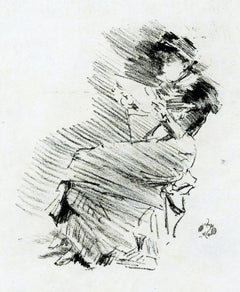
Reading
By James Abbott McNeill Whistler
Located in Fairlawn, OH
Reading
Lithograph, 1879 and 1887
Signed in the stone with the Butterfly (see photo)
A proof laid paper printed before the edition of 100 impressions printed for Art Notes
Watermark:...
Category
1870s American Impressionist Figurative Prints
Materials
Lithograph
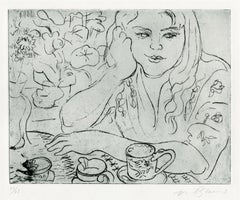
Daureen, II
By Nell Blaine
Located in Fairlawn, OH
Daureen, II
Etching, 1969
Signed in pencil lower right
Edition: 28 (17/28)
Condition: Excellent
Two hinges from previous matting
Blaine studied etching at Atelier 17 in New York and considered one of their distinguished alums.
"Blaine was foremost an abstract painter, first a student of Theresa Pollak...
Category
1960s Impressionist Figurative Prints
Materials
Etching
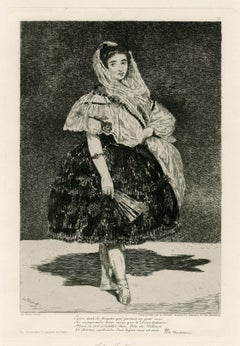
Lola De Valence
By Édouard Manet
Located in Fairlawn, OH
Lola De Valence
Etching, 1862
Signed in the plate lower left: “Ed Manet”
Printed on chine collee paper, without watermark
From the first edition, published by Cadart and Luquet, Paris, before the removal of the inscription “ Ed. Manet sculpt”
From the 1863 edition, before the 1874 Portfolio, 1890 Portolio. 1894 Dumont edition and the Strolin edition of 100 in 1905
Pencil inscription with title below the plate in the lower margin
Conditiono: Excellent
Image size: 10 7/8 x 6 7/8 inches
Plate size: 18 3/4 x 13 inches
Reference: Harris-Manet 33 iii/III
Guerin-Manet 23 vi/VIII
The painting that this etching is inspired by is in the collection of the Musee d'Orsay, Paris.
"Lola de Valence is a painting by the painter Édouard Manet in 1862 . The canvas represents a dancer dressed intraditional Spanish clothes...
Category
1860s Impressionist Figurative Prints
Materials
Etching
You May Also Like
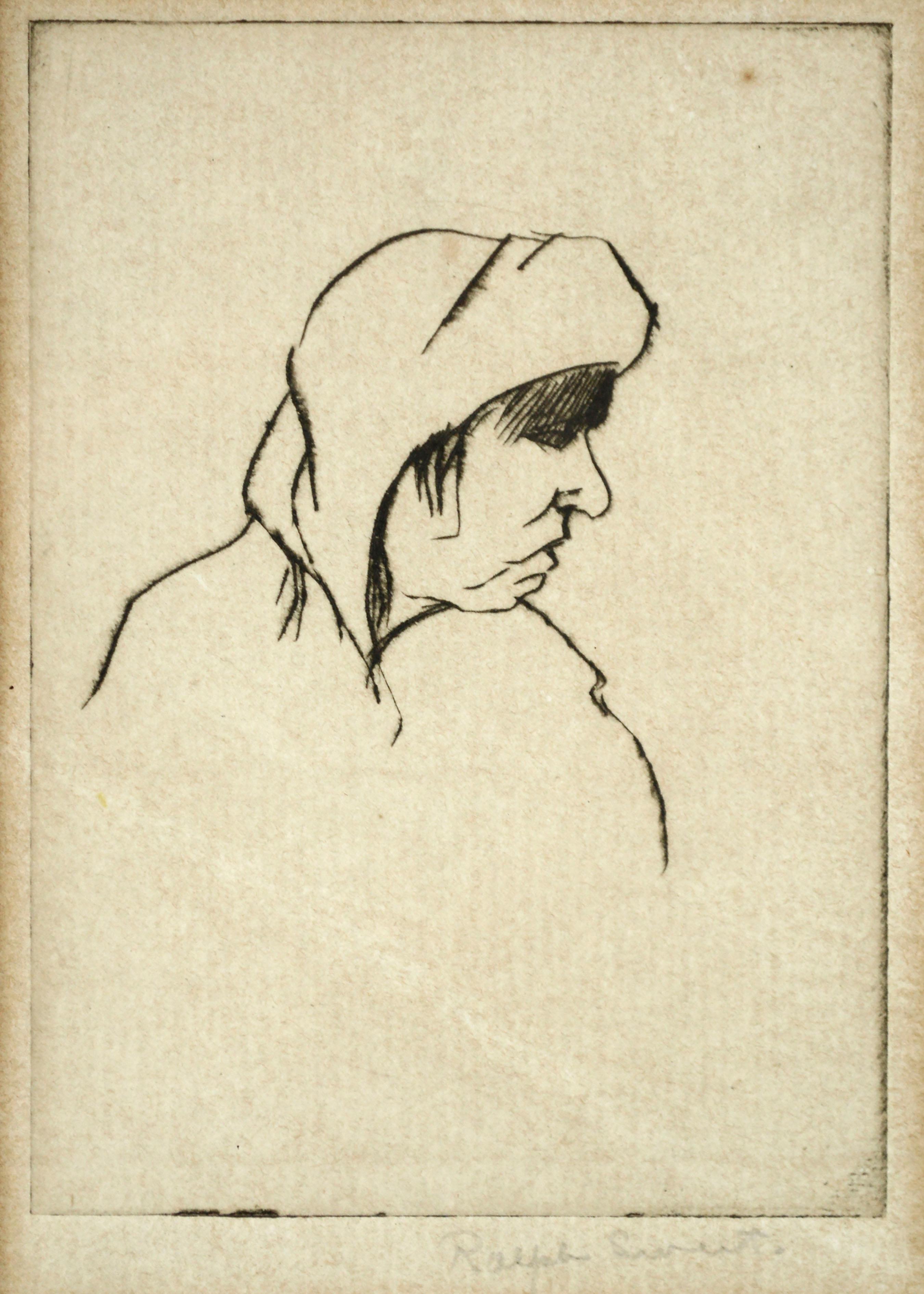
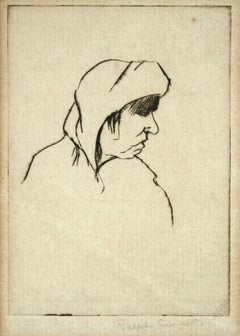
Early 20th Century Miniature Etching, Portrait of an Old Woman by Ralph Sweet
Located in Soquel, CA
Early 20th Century Miniature Etching, Portrait of an Old Woman by Ralph Sweet
Compelling early 20th century small-scale figurative etching of an old...
Category
Early 20th Century American Impressionist Portrait Prints
Materials
Paper, Etching
$700 Sale Price
20% Off
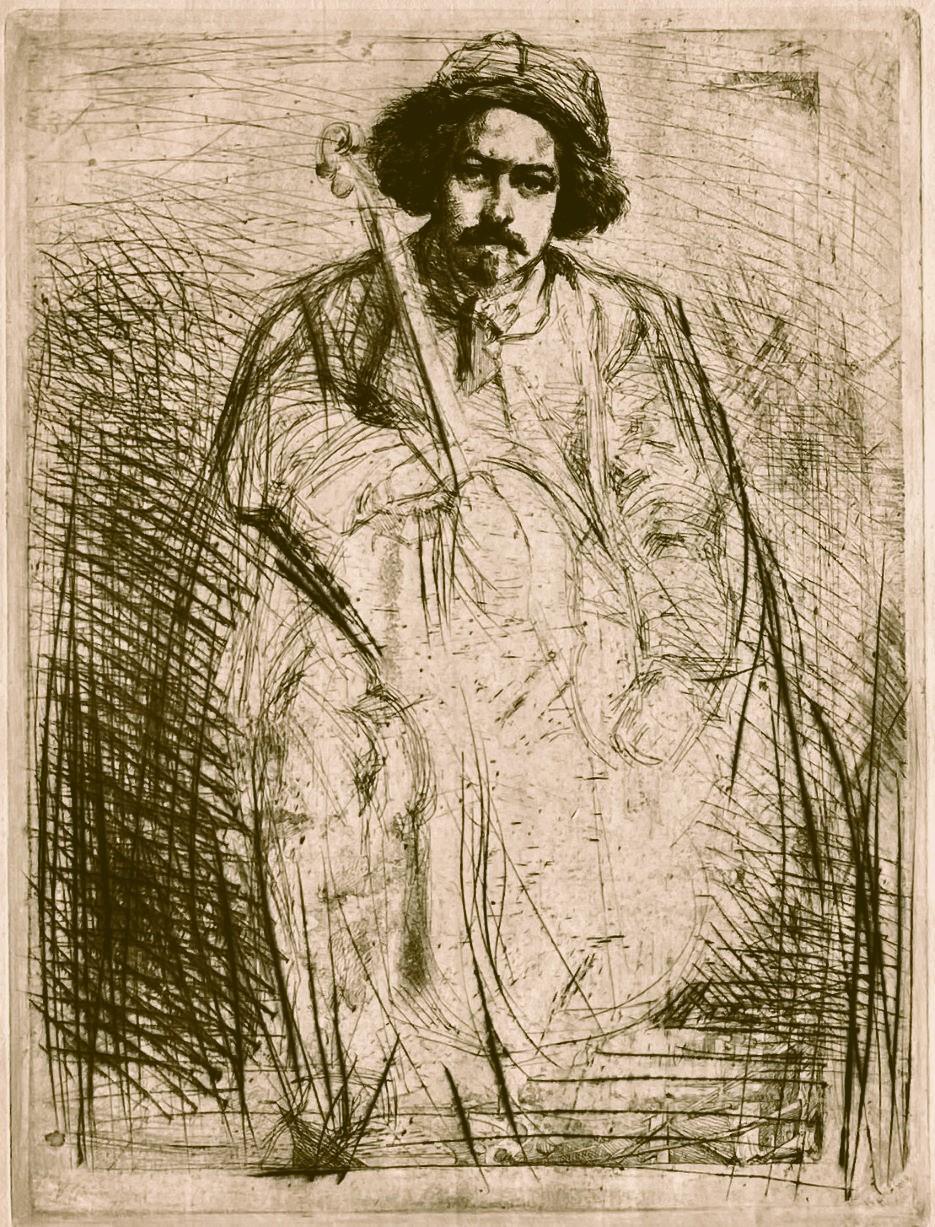
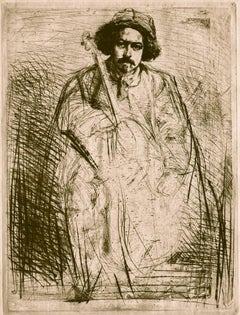
Becquet
By James Abbott McNeill Whistler
Located in Storrs, CT
J. Becquet, Sculptor (The Fiddler). 1859. Drypoint. Kennedy 52 state iv; Glasgow 62. state i. 10 1/8 x 7 1/2 (sheet 15 5/16 x 9 3/4). Series: "Sixteen Etchings or Scenes on the Thame...
Category
Mid-19th Century American Impressionist Figurative Prints
Materials
Drypoint, Etching
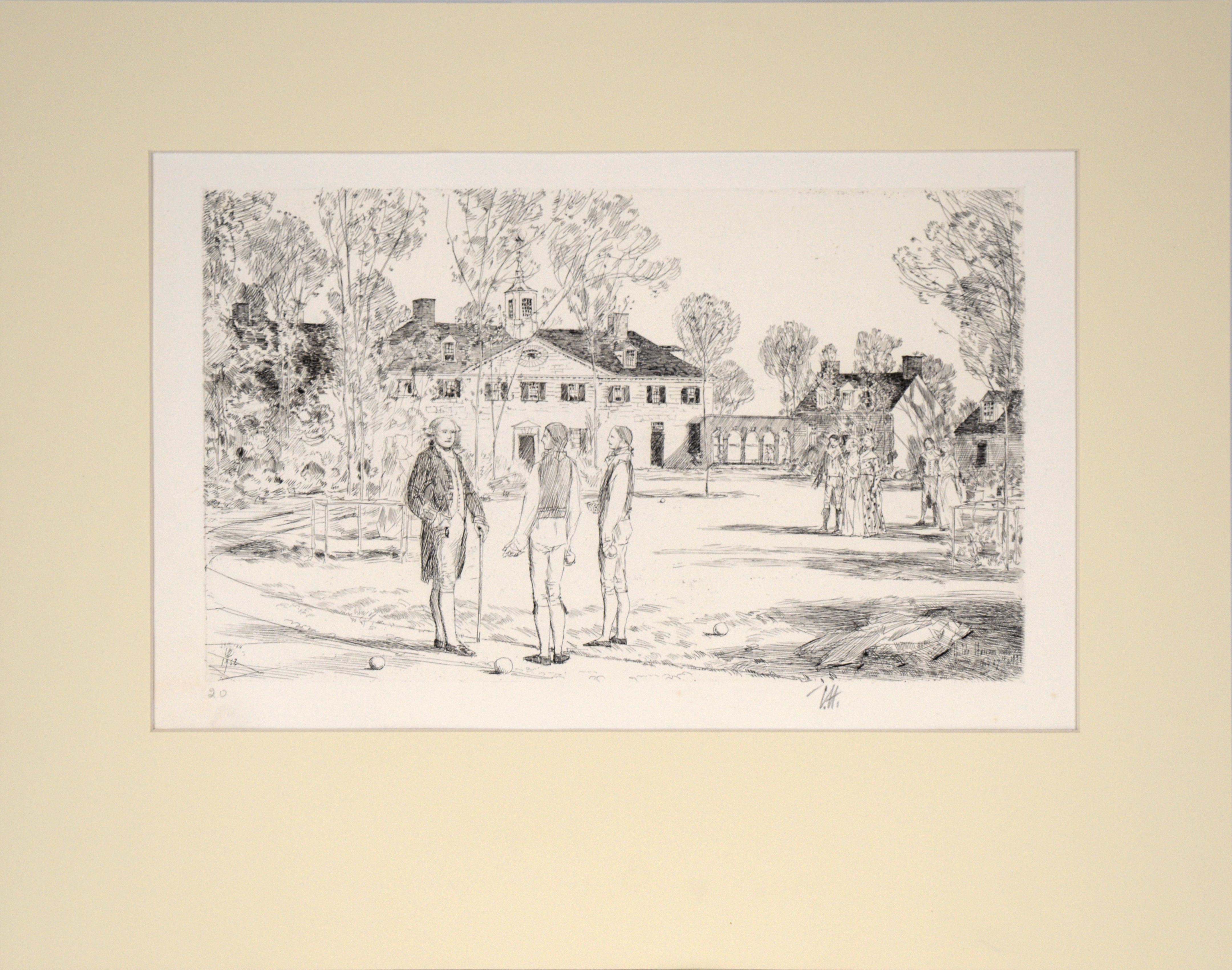
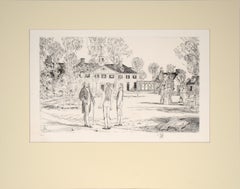
Bowling on the Green (from the Bicentennial Pageant of George Washington)
By Childe Hassam
Located in Soquel, CA
Bowling on the Green (from the Bicentennial Pageant of George Washington)
'Bowling on the Green', by printmaker Frederick Childe Hassam, depicts George Washington and friends lawn b...
Category
1930s American Impressionist Figurative Prints
Materials
Ink, Etching, Laid Paper
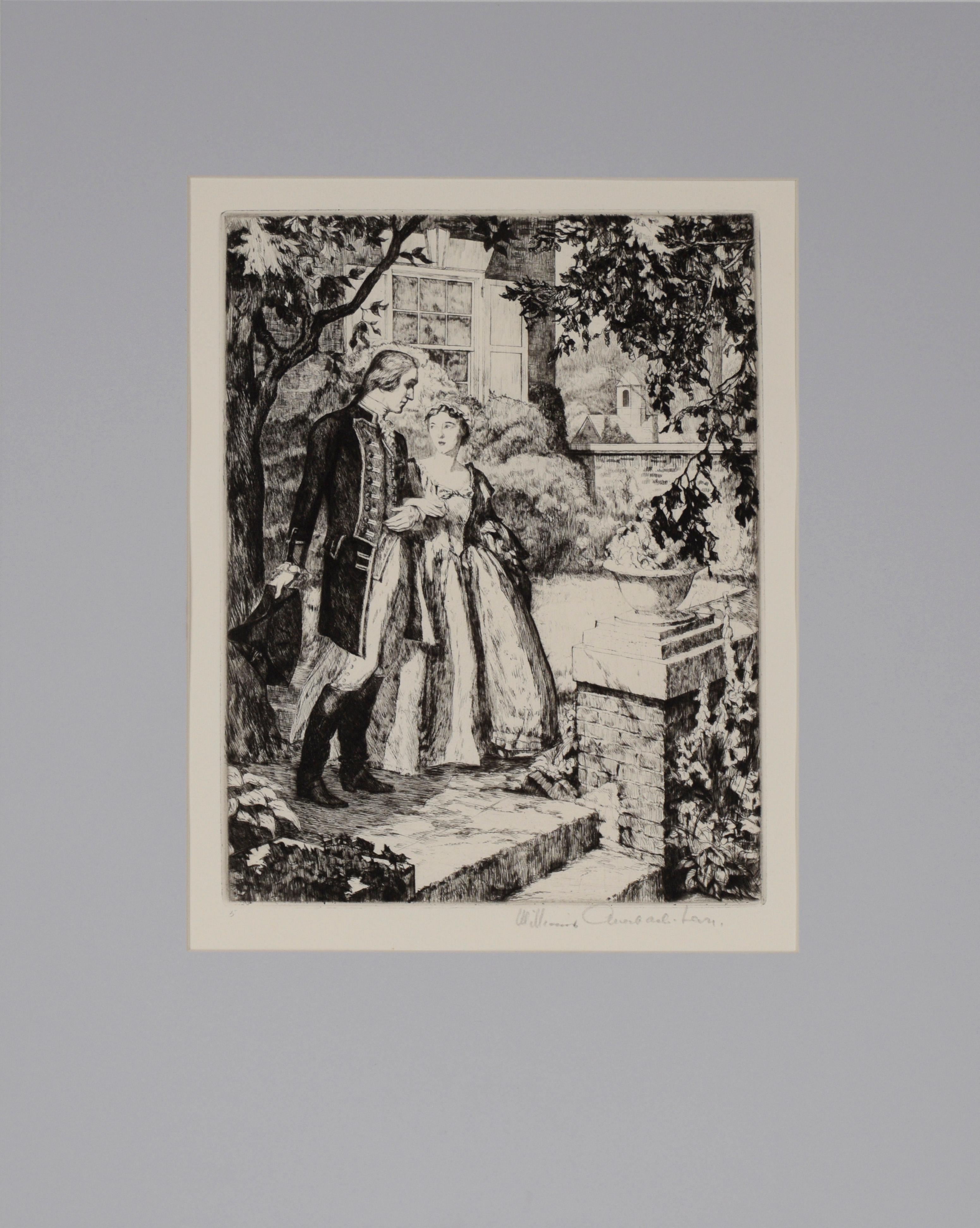
Washington
s Courtship - 1932 Etching on Paper
By William Auerbach-Levy
Located in Soquel, CA
Washington's Courtship - 1932 Etching on Paper
1932 black and white etching depicting George and Martha Washington by William Auerbach-Levy (Russian, 1889-1964). Titled "Washington'...
Category
1930s American Impressionist Figurative Prints
Materials
Laid Paper, Etching
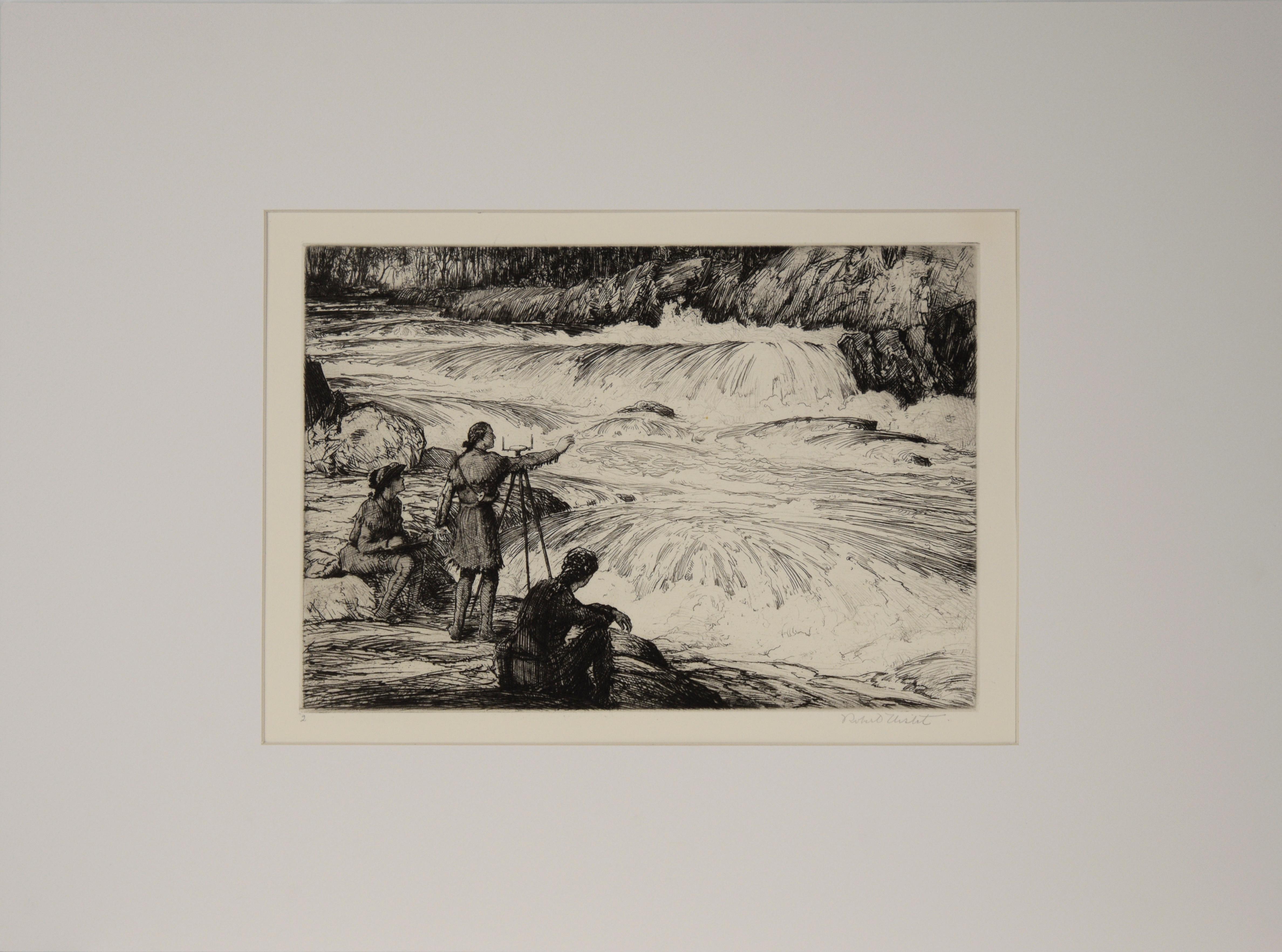
"Conquering The Wilderness" - Lewis and Clark Expedition Original Etching
By Robert Hogg Nisbet
Located in Soquel, CA
"Conquering The Wilderness" - Lewis and Clark Expedition Original Etching
Original 1932 black and white etching titled "Conquering The Wilderness" by Robert Hogg Nisbet (American, ...
Category
1930s American Impressionist Figurative Prints
Materials
Laid Paper, Etching
Resurrection (aka Flying Figures; Border of the Lake)
By Arthur B. Davies
Located in New York, NY
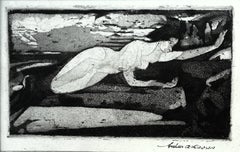
Arthur B. Davies (1862-1928), Resurrection (aka Flying Figures; Border of the Lake), drypoint and aquatint on zinc, 1916, signed with the estate stamp lower right. Reference: Price 2...
Category
1910s American Impressionist Figurative Prints
Materials
Drypoint, Aquatint