Want more images or videos?
Request additional images or videos from the seller
1 of 14

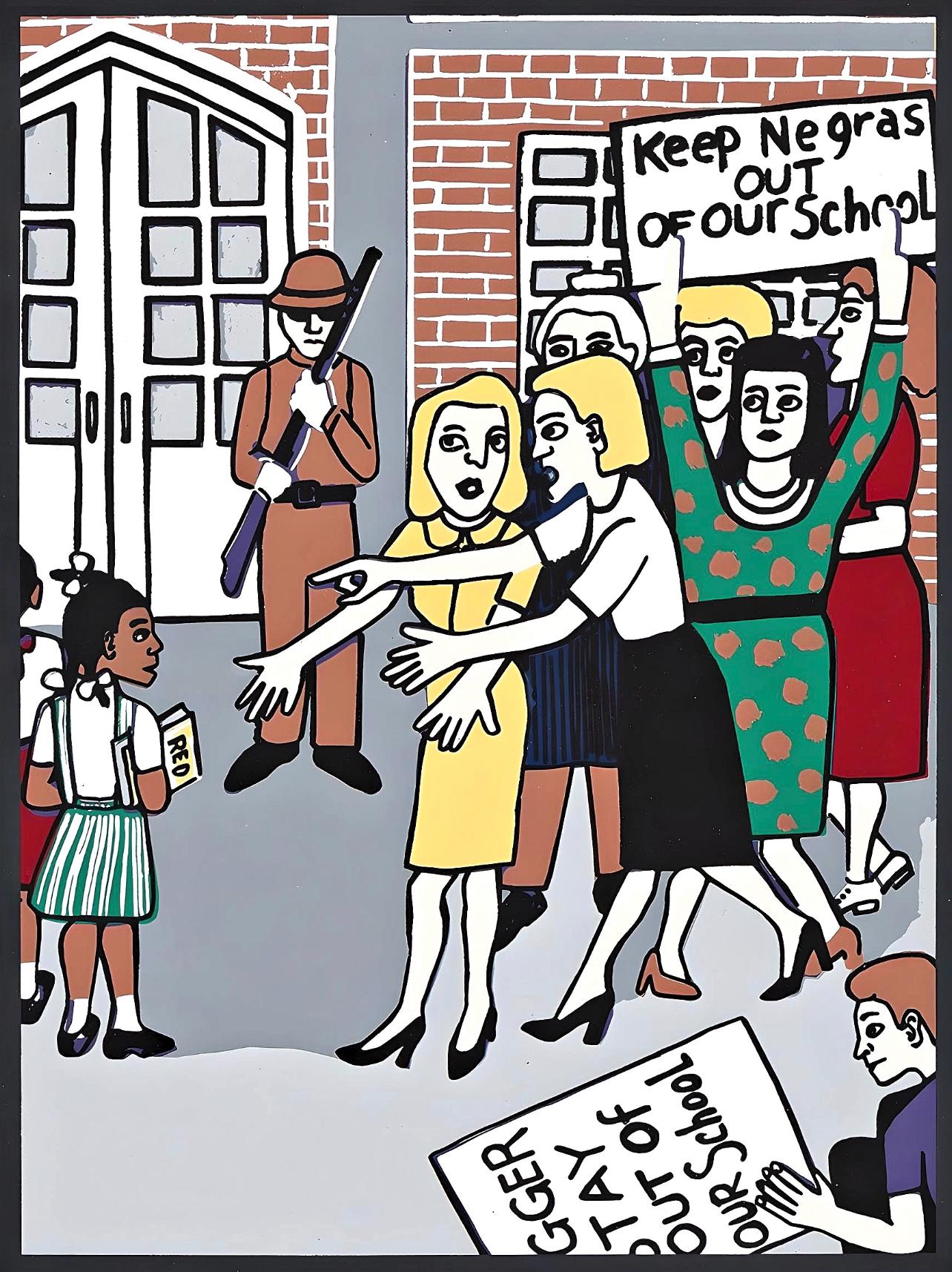
Faith Ringgold
Faith Ringgold, Four Little Girls Bombed in a Church, 2007

2007

$4,796
$5,99520% Off
£3,643.78
£4,554.7220% Off
€4,187.46
€5,234.3320% Off
CA$6,736.57
CA$8,420.7120% Off
A$7,332.59
A$9,165.7320% Off
CHF 3,885.28
CHF 4,856.5920% Off
MX$88,185.45
MX$110,231.8220% Off
NOK 49,400.29
NOK 61,750.3620% Off
SEK 45,269.90
SEK 56,587.3720% Off
DKK 31,280.10
DKK 39,100.1320% Off

About the Item

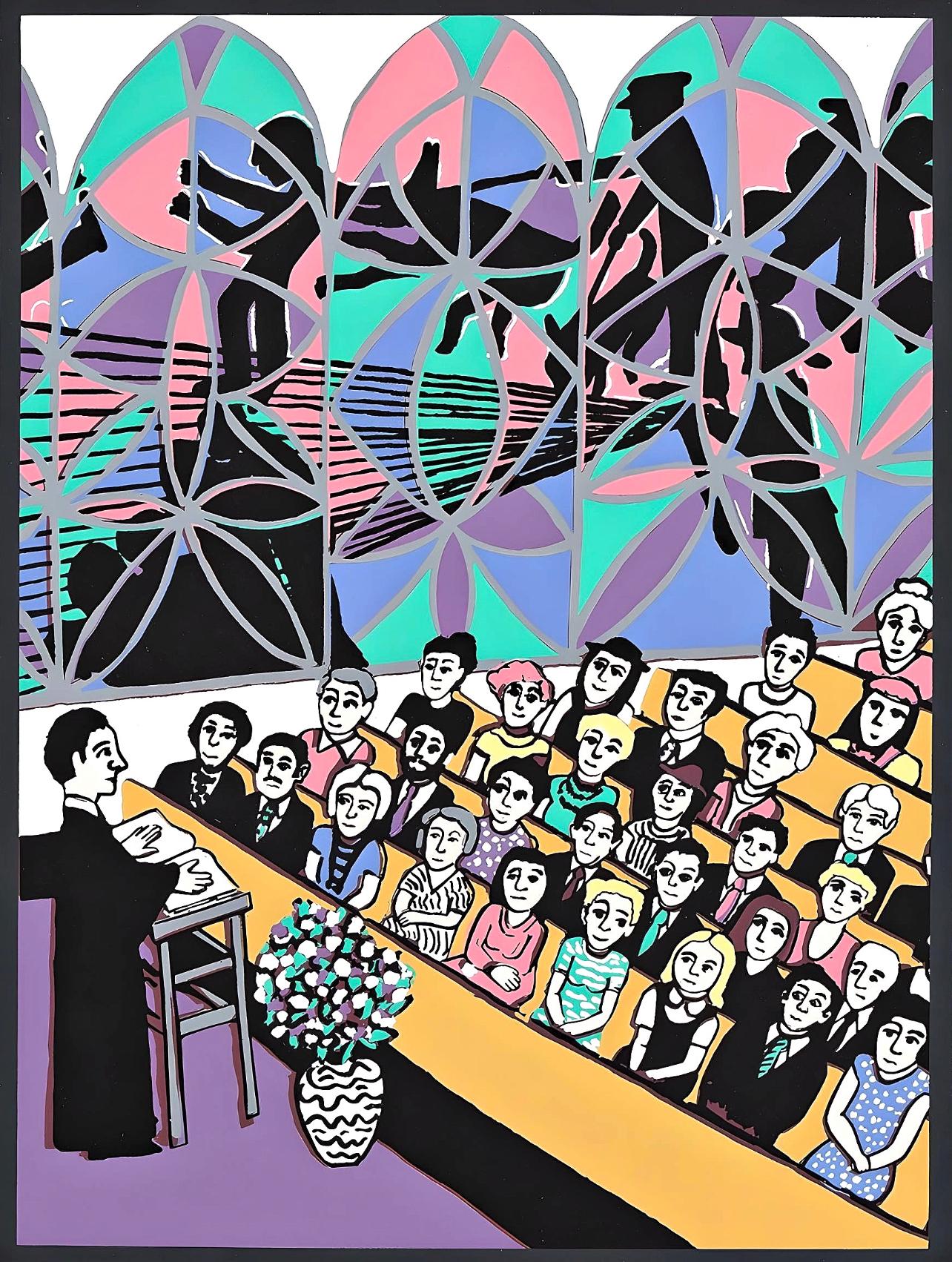
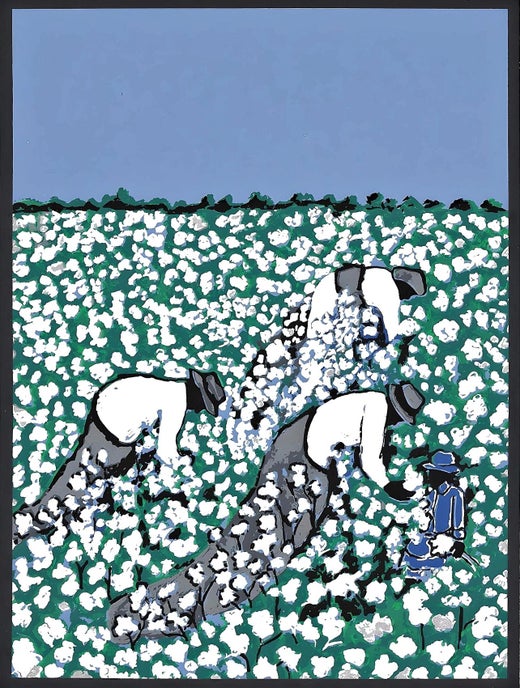
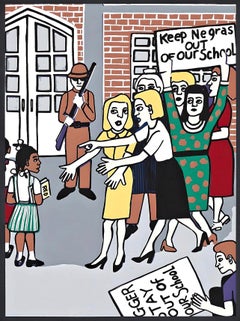
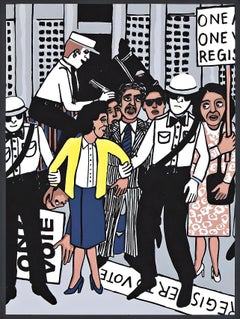
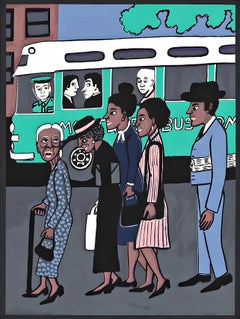
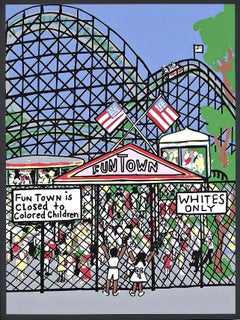
This exquisite silkscreen by Faith Ringgold (1930–2024), titled Four Little Girls Bombed in a Church, from the folio Letter from Birmingham City Jail, originates from the 2007 edition published by The Limited Editions Club, New York, and printed by Raven Fine Art Editions, Easton, under the direction of Curlee Raven Holton, Easton, 2007. Four Little Girls Bombed in a Church embodies Ringgold’s deep engagement with social justice, memory, and moral conviction, transforming Dr. King’s historic words into a visual narrative of faith, struggle, and remembrance. With her signature fusion of vivid color, symbolic imagery, and emotional depth, Ringgold commemorates one of the most tragic and transformative moments of the Civil Rights Movement, turning grief into a powerful meditation on innocence, sacrifice, and the enduring pursuit of equality. Executed as a silkscreen on velin d’Arches paper, this work measures 17.75 x 13.75 inches. Unsigned and unnumbered as issued. The edition exemplifies the superb craftsmanship of Raven Fine Art Editions, Easton, under the direction of master printer Curlee Raven Holton, whose meticulous approach honored Ringgold’s vision and the integrity of her design. Artwork Details: Artist: Faith Ringgold (1930–2024) Title: Four Little Girls Bombed in a Church, from the folio Letter from Birmingham City Jail, 2007 Medium: Silkscreen on velin d’Arches paper Dimensions: 17.75 x 13.75 inches (45.1 x 34.9 cm) Inscription: Unsigned and unnumbered as issued Date: 2007 Publisher: The Limited Editions Club, New York Printer: Raven Fine Art Editions, Easton, under the direction of Curlee Raven Holton, Easton Condition: Well preserved, consistent with age and medium Provenance: From the folio Letter from Birmingham City Jail, published by The Limited Editions Club, New York; printed by Raven Fine Art Editions, Easton, under the direction of Curlee Raven Holton, Easton, 2007 Notes: Excerpted from the folio, A Note by the Artist: The further we are from the turbulent 1960s, the more magnificent the life and work of the Reverend Dr. Martin Luther King, Jr. becomes. How lucky we are that fate destined him to be born, grow up here and live out his American dream in the birthplace of democracy. When Sid Shiff, publisher of the Limited Editions Club of New York, asked me to illustrate Dr. King's famous letter, I found myself face to face with the great man's dream. In my way I have tried to visualize the story of Dr. King's letter from the Birmingham City Jail with these eight serigraphs. What he has to say about the life and struggle of black people in America is a treatise on freedom and justice and a model for democracy in the world. I am deeply moved and profoundly honored to have had the opportunity to illustrate this portfolio and book: a resonance of Dr. King's American dream for which the truly great man lived and died.—Faith Ringgold. Letter from Birmingham City Jail, CDXX examples of this edition were designed, set in Monotype Garamond and printed by Michael and Winifred Bixler; the eight serigraph prints were printed by Curlee Raven Holton. About the Publication: Letter from Birmingham City Jail, published in 2007 by The Limited Editions Club, New York, is among the most significant fine press tributes to the legacy of Dr. Martin Luther King, Jr. The portfolio unites King’s immortal 1963 text—written during his imprisonment in Birmingham, Alabama—with eight original serigraphs by Faith Ringgold, whose visionary imagery reinterprets the moral and emotional force of King’s words. The edition was designed and typeset in Monotype Garamond by Michael and Winifred Bixler and printed under the meticulous supervision of master printer Curlee Raven Holton at Raven Fine Art Editions, Easton. Through Ringgold’s vibrant visual storytelling, King’s message of nonviolent resistance and human dignity is transformed into a work of art that transcends time, reminding future generations of the continuing struggle for civil rights and equality. This folio remains a landmark collaboration between literature, art, and activism—an enduring testament to the shared legacy of King’s vision and Ringgold’s artistic power. About the Artist: Faith Ringgold (1930–2024) was a groundbreaking American artist, author, educator, and civil rights activist whose revolutionary vision reshaped modern and contemporary art through her fusion of painting, textiles, storytelling, and social engagement. Born in Harlem, New York, she grew up surrounded by the vibrant cultural energy of the Harlem Renaissance, an environment that profoundly shaped her lifelong dedication to creativity and justice. Deeply inspired by the formal experimentation of Pablo Picasso, Alexander Calder, Alberto Giacometti, Salvador Dali, Joan Miro, Wassily Kandinsky, Marcel Duchamp, and Man Ray, Ringgold absorbed and reinterpreted European modernism through the lens of African American heritage and experience. She merged these influences with African textile traditions, storytelling, and feminist theory to create a new visual language that gave voice to Black identity, womanhood, and the ongoing struggle for equality. Beginning in the 1960s with her American People Series, she directly confronted themes of race, class, and gender with an intensity that mirrored the Civil Rights Movement, aligning her with socially conscious peers such as Romare Bearden, Jacob Lawrence, Norman Lewis, and Elizabeth Catlett. By the 1970s, she became an outspoken advocate for the inclusion of Black and women artists in major museums, organizing protests and exhibitions that challenged institutional bias and exclusion. In the 1980s, Ringgold pioneered her celebrated “story quilts,” integrating painting, fabric, and written narrative to chronicle the lives, dreams, and histories of African Americans—an innovation that would revolutionize the relationship between craft and fine art. Works such as Who’s Afraid of Aunt Jemima (1983) and Tar Beach (1988) not only redefined the concept of narrative painting but also became beloved cultural touchstones, with Tar Beach later adapted into an award-winning children’s book that introduced her art to new generations. Her interdisciplinary practice influenced major contemporary artists including Kerry James Marshall, Mickalene Thomas, Kehinde Wiley, Hank Willis Thomas, Amy Sherald, and Kara Walker, as well as countless others who continue to build upon her legacy of storytelling and social transformation. Among the ten most renowned African American artists—Jean-Michel Basquiat, Faith Ringgold, Kerry James Marshall, Kehinde Wiley, Amy Sherald, Betye Saar, Alma Thomas, Sam Gilliam, Jacob Lawrence, and Henry Ossawa Tanner—Ringgold stands out as a singular force whose art bridges fine art, literature, and activism with profound moral and cultural resonance. Her work is housed in the most prestigious collections worldwide, including the Museum of Modern Art, the Whitney Museum of American Art, the Guggenheim Museum, the Tate Modern, and the Smithsonian American Art Museum. Beyond her artistic innovations, Ringgold’s tireless advocacy for diversity, representation, and equality reshaped the institutional landscape of American art, ensuring that future generations of artists of color would have a voice and place in history. The highest auction record for Faith Ringgold was achieved in 2022, when her seminal painting The Flag Is Bleeding (1967) sold for 2.4 million USD at Christie’s New York, cementing her legacy as one of the most influential, visionary, and enduring figures in modern and contemporary art. Faith Ringgold Four Little Girls Bombed in a Church, Letter from Birmingham City Jail 2007, Faith Ringgold Limited Editions Club, Faith Ringgold Curlee Raven Holton silkscreen, Faith Ringgold velin d’Arches, Faith Ringgold collectible print.
  • Creator:
    Faith Ringgold (1930, American)
  • Creation Year:
    2007
  • Dimensions:
    Height: 17.75 in (45.09 cm)Width: 13.75 in (34.93 cm)
  • Medium:
  • Movement Style:
  • Period:
  • Condition:
  • Gallery Location:
    Southampton, NY
  • Reference Number:
    1stDibs: LU1465217188842

More From This Seller

View All
Faith Ringgold, Brown Versus Board of Education 1954, 2007
By Faith Ringgold
Located in Southampton, NY
This exquisite silkscreen by Faith Ringgold (1930–2024), titled Brown Versus Board of Education 1954, from the folio Letter from Birmingham City Jail, o...
Category

Early 2000s Expressionist Figurative Prints

Materials

Screen

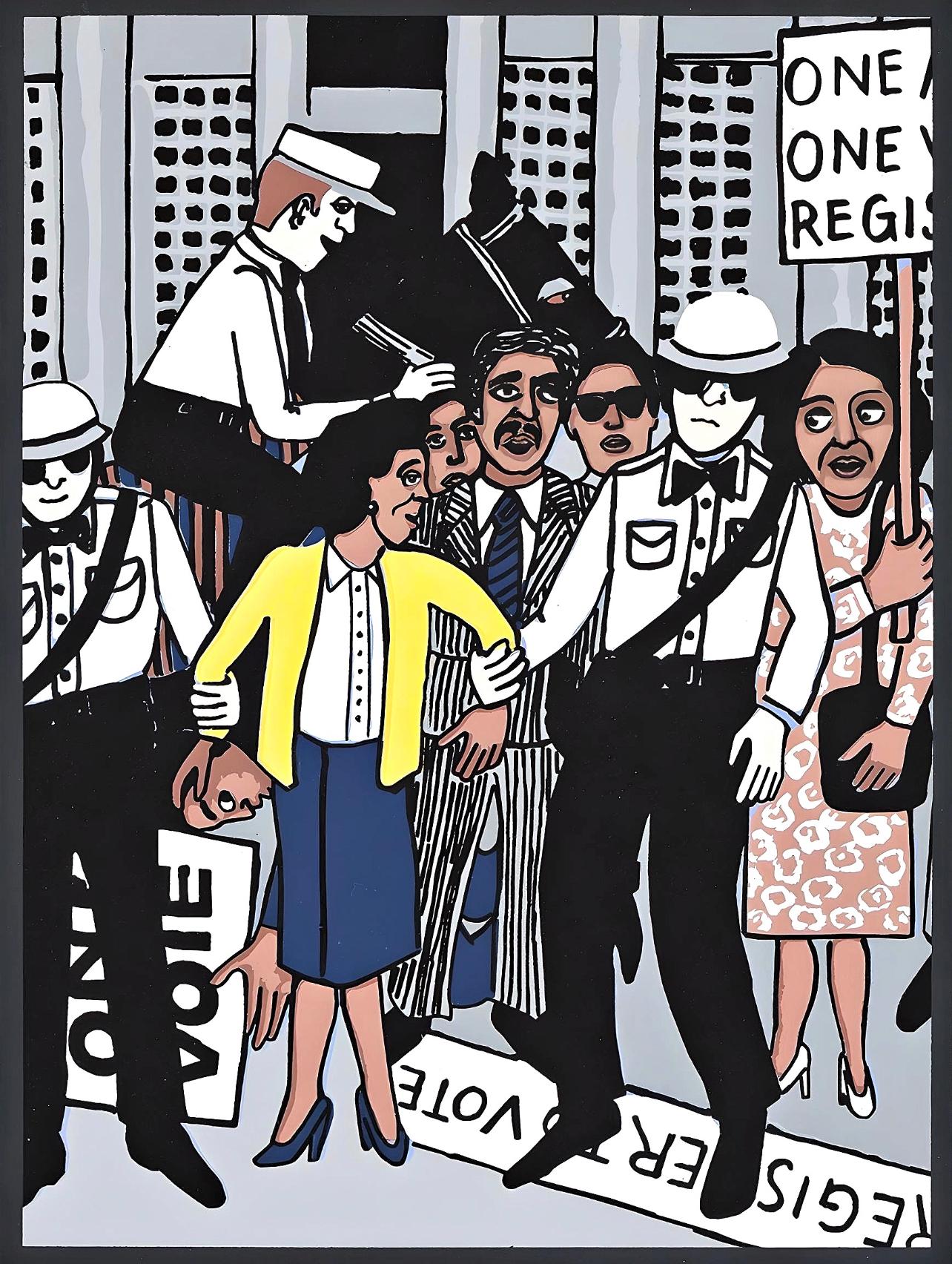
Faith Ringgold, The Right to Vote, from Letter from Birmingham City Jail, 2007
By Faith Ringgold
Located in Southampton, NY
This exquisite silkscreen by Faith Ringgold (1930–2024), titled The Right to Vote, from the folio Letter from Birmingham City Jail, originates from the 2007 edition published by The ...
Category

Early 2000s Expressionist Figurative Prints

Materials

Screen

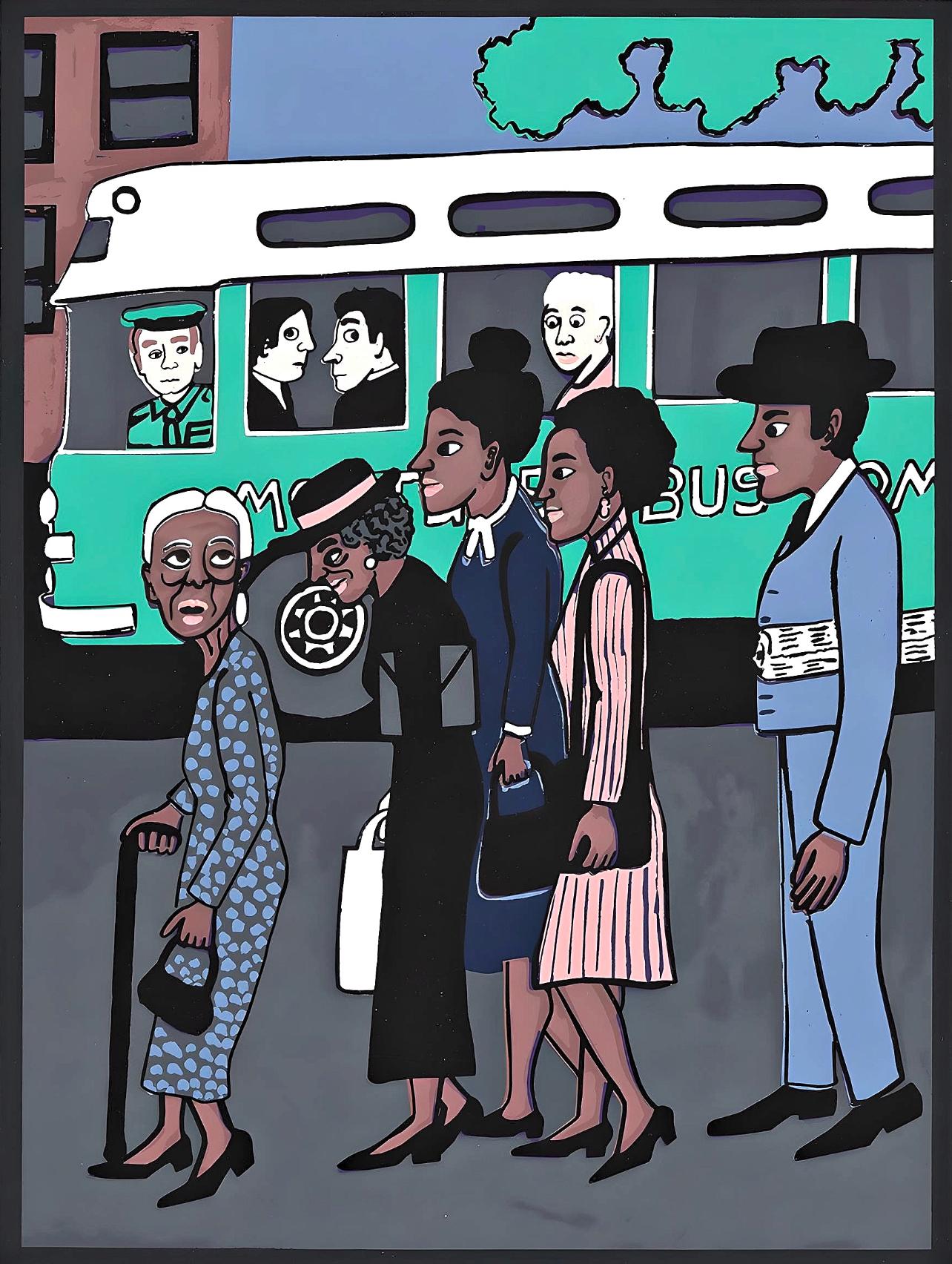
Faith Ringgold, Montgomery Bus Boycott, Letter from Birmingham City Jail, 2007
By Faith Ringgold
Located in Southampton, NY
This exquisite silkscreen by Faith Ringgold (1930–2024), titled Montgomery Bus Boycott, from the folio Letter from Birmingham City Jail, originates from the 2007 edition published by...
Category

Early 2000s Expressionist Figurative Prints

Materials

Screen

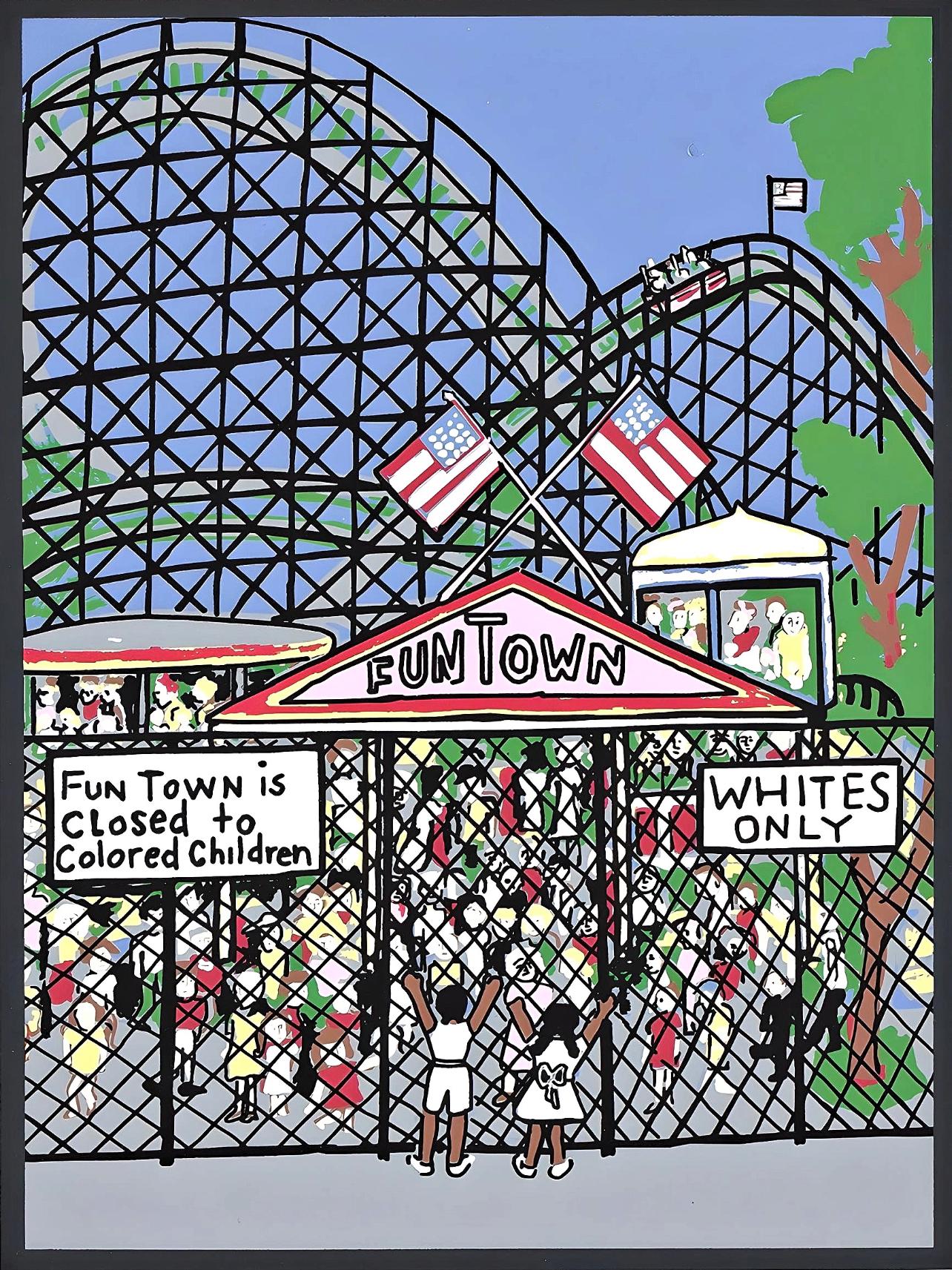
Faith Ringgold, For Whites Only, from Letter from Birmingham City Jail, 2007
By Faith Ringgold
Located in Southampton, NY
This exquisite silkscreen by Faith Ringgold (1930–2024), titled For Whites Only, from the folio Letter from Birmingham City Jail, originates from the 2007 edition published by The Li...
Category

Early 2000s Expressionist Figurative Prints

Materials

Screen

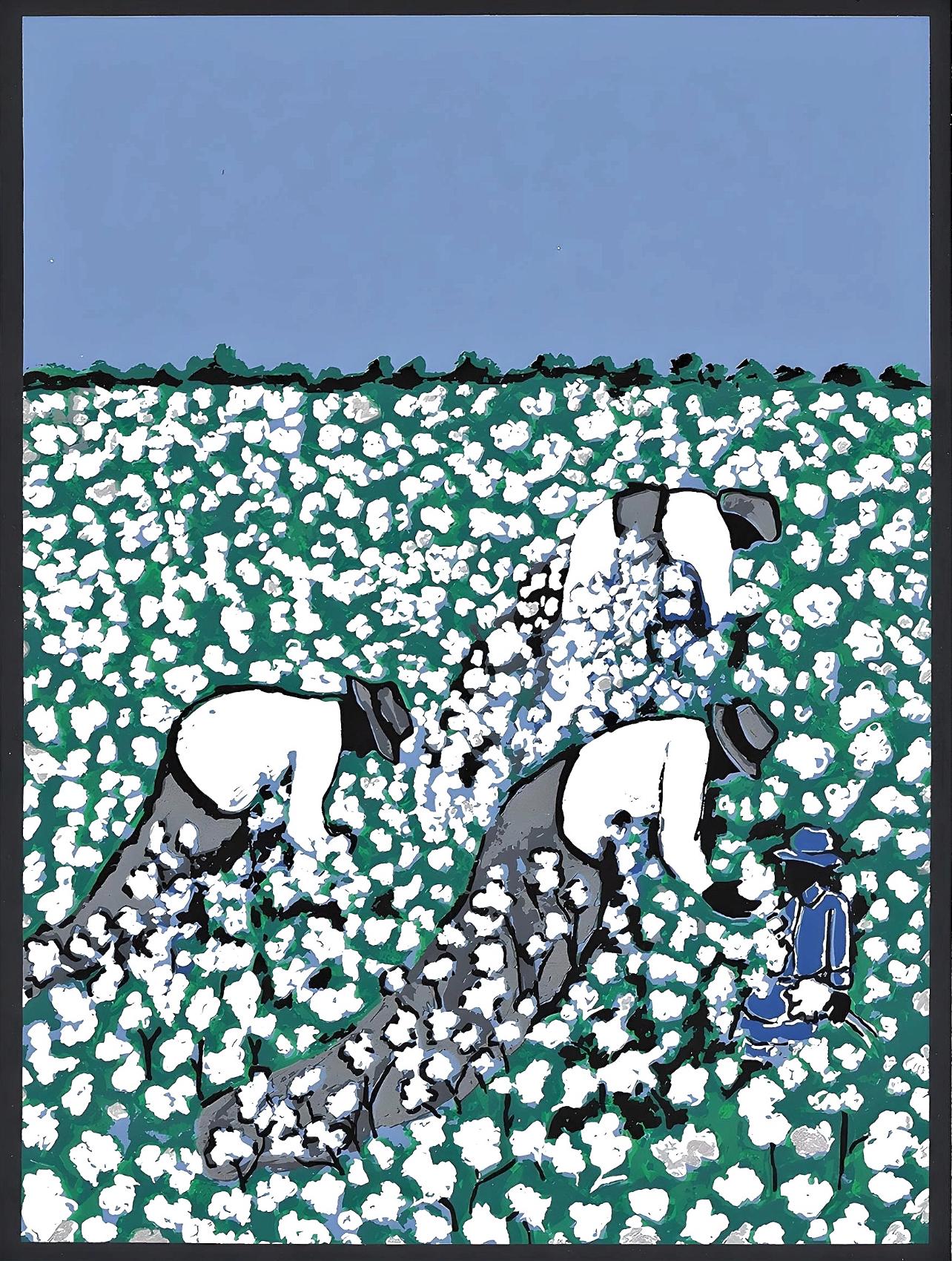
Faith Ringgold, Slavery, from Letter from Birmingham City Jail, 2007
By Faith Ringgold
Located in Southampton, NY
This exquisite silkscreen by Faith Ringgold (1930–2024), titled Slavery, from the folio Letter from Birmingham City Jail, originates from the 2007 edition published by The Limited Ed...
Category

Early 2000s Expressionist Figurative Prints

Materials

Screen

Faith Ringgold, Police Brutality Viewed Thru Stained Glass, 2007
By Faith Ringgold
Located in Southampton, NY
This exquisite silkscreen by Faith Ringgold (1930–2024), titled Police Brutality Viewed Thru Stained Glass, from the folio Letter from Birmingham City J...
Category

Early 2000s Expressionist Figurative Prints

Materials

Screen

You May Also Like

Self Portrait 2023 Signed Screen print Limited Edition
By Faith Ringgold
Located in Rochester Hills, MI
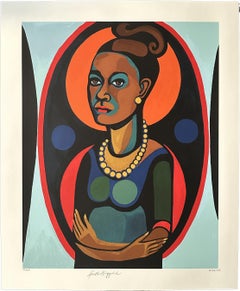
Artist: FAITH RINGGOLD Title: Self Portrait Year: 2023 Screen print on paper Edition: signed in pencil and marked 87/100 Size: 28 x 23 inches Hand-signed and numbered A striking se...
Category

2010s Contemporary Portrait Prints

Materials

Screen

Faith Ringgold Groovin High 1996- Serigraph Unsigned, Printer s Proof
By Faith Ringgold
Located in Brooklyn, NY
This is a printer’s proof of Groovin’ High, created by the esteemed artist and civil rights activist Faith Ringgold. Unlike the official edition, this p...
Category

1990s Contemporary Prints and Multiples

Materials

Screen

Faith Ringgold Groovin High Hand Signed Limited Edition
By Faith Ringgold
Located in Brooklyn, NY
This piece, titled "Groovin' High", is a printer's proof created by the renowned artist and civil rights activist Faith Ringgold. The print is signed an...
Category

1990s American Modern Still-life Prints

Materials

Screen

Mending , African American Woman Folk Artist, Houston, Dallas, Blues Museum Oil
Located in Santa Cruz, CA
Signed lower center, in fabrics bowl, 'Ruth Mae McCrane' (American, 1929-2002) and dated upper center, in calendar, February 1989. Ruth Mae McCrane taught...
Category

1980s Folk Art Interior Drawings and Watercolors

Materials

Paper, Gouache

The Joyous Farewell into the Future - quilt - Negro Spirituals - figures
Located in Atlanta, GA
Columbia, South Carolina-based artist, Wendell George Brown creates quilts that explore the traditions of African American quilt-making and Negro Spirit...
Category

2010s Folk Art Mixed Media

Materials

Fabric, Acrylic

Large Mixed Media Collage Painting Great Jewish Feminist Artist Miriam Schapiro
By Miriam Schapiro
Located in Surfside, FL
Miriam Schapiro, "Curtain Call" 2002 Hand signed, dated and titled verso and signed and dated recto. acrylic paint, digital images, glitter and textile fabric on canvas, tooling with gold leaf embossing around self edge of painting. size: 60 x 50 in Miriam Schapiro (or Mimi Schapiro) (November 15, 1923 – June 20, 2015) was a Canadian-born artist based in America. She was a painter, sculptor and printmaker. She was a pioneer of feminist art. She was also considered a leader of the Pattern and Decoration art movement. Schapiro's artwork blurs the line between fine art and craft. Her paintings contain craft elements because crafts and decoration is associated with women and femininity. She used icons that are associated with women such as hearts, floral decorations, geometric patterns and the color pink. In the 1970s she made a small woman's object, the fan, heroic by painting it six feet by twelve feet. This bears the influence of the Pattern and Decoration movement artists such as Brad Davis, Mary Grigoriadis, Joyce Kozloff, Robert Kushner, Kim MacConnel, Sonya Rapoport, Miriam Schapiro and Valerie Jaudon. Shapiro was born in Toronto, Ontario, Canada. Her father was an industrial design artist who fostered her desire to be an artist and served as her role model and mentor. Her mother was a stay at home mother who worked part-time during the depression. As a teenager, Schapiro was taught by Victor d’Amico, her first modernist teacher at the Museum of Modern Art. In the evenings she joined WPA classes for adults to study drawing from the nude model. In 1943, Schapiro entered Hunter College in New York City, but eventually transferred to the University of Iowa. At the University of Iowa, Schapiro studied painting with Stuart Edie and James Lechay. She studied printmaking under Mauricio Lasansky and was his personal assistant, which then led her to help form the Iowa Print Group. Lasanky taught his students to use several different printing techniques in their work and to study the masters' work in order to find solutions to technical problems. At the State University of Iowa she met the artist Paul Brach, whom she married in 1946.. By 1951 they moved to New York City and befriended many of the Abstract expressionist artists of the New York School, including Joan Mitchell, Larry Rivers, Knox Martin and Michael Goldberg. Schapiro worked in the style of Abstract expressionism during this time period. Shapiro and Brach lived in New York City during the 1950s and 1960s. During this period Shapiro had a successful career as an abstract expressionist painter in the hard-edge style. In December 1957, André Emmerich selected one of her paintings for the opening of his gallery. Schapiro not only honored the craft tradition in women's art, but also paid homage to women artists of the past. In the early 1970s she made paintings and collages which included photo reproductions of Mary Cassatt's and Georgia O'keefe's paintings. Early in her career, Schapiro started looking for maternal symbols to unify her own roles as a woman. Her series, Shrines (1963), was her first artistically successful attempt at compartmentalizing her life roles. Her painting, Big Ox No. 1, from 1968, references Shrines, however no longer compartmentalized. The center O takes on the symbol of the egg which exists as the window into the maternal structure with outstretched limbs. Her series, Shrines was created in 1961–63. It is one of her earliest group of work that was also an autobiography. Each section of the work show an aspect of being a woman artist. They are also symbolic of her body and soul. In 1964 Schapiro and her husband Paul both worked at the Tamarind Lithography Workshop. One of Schapiro's biggest turning points in her art career was working at the workshop and experimenting with Josef Albers' Color-Aid paper, where she began making several new shrines and created her first collages. In the 1970s, Schapiro and Brach moved to California so that both could teach in the art department at the University of California. Subsequently, she was able to establish the Feminist Art Program at the California Institute of the Arts, in Valencia with Judy Chicago. The program set out to address the problems in the arts from an institutional position. They wanted the creation of art to be less of a private, introspective adventure and more of a public process through consciousness raising sessions, personal confessions and technical training. She participated in the Womanhouse exhibition in 1972. Schapiro's smaller piece within Womanhouse, called "Dollhouse", was constructed using various scrap pieces to create all the furniture and accessories in the house. Each room signified a particular role a woman plays in society and depicted the conflicts between them. Along with Nancy Spero, Joan Snyder, Joyce Kozloff, Audrey Flack and Judy Chicago, she is from that first generation of Jewish American feminist women artists and includes Judaica in her work. Schapiro's work from the 1970s onwards consists primarily of collages assembled from fabrics, which she called "femmages". As Schapiro traveled the United States giving lectures, she would ask the women she met for a souvenir. These souvenirs would be used in her collage like paintings. Her 1977-1978 essay Waste Not Want Not: An Inquiry into What Women Saved and Assembled - FEMMAGE (written with Melissa Meyer) describes femmage as the activities of collage, assemblage, découpage and photomontage practised by women using "traditional women's techniques - sewing, piercing, hooking, cutting, appliquéing, cooking and the like..." She was involved in Abstract expressionism, Minimalism, Computer art, and Feminist art. She worked with collage, printmaking, painting, femmage [fr] – using women's craft in her artwork, and sculpture. Schapiro not only honored the craft tradition in women's art, but also paid homage to women artists of the past. In the early 1970s she made paintings and collages which included photo reproductions of past artists such as Mary Cassatt. In the mid 1980s she painted portraits of Frida Kahlo on top of her old self-portrait paintings. In the 1990s Schapiro began to include women of the Russian Avant Garde in her work. The Russian Avant Garde was an important moment in Modern Art history for Schapiro to reflect on because women were seen as equals. Schapiro also did collaborative art projects, like her series of etchings Anonymous was a Woman from 1977. She was able to produce the series with a group of nine women studio-art graduates from the University of Oregon. Each print is an impression made from an untransformed doily that was placed in soft ground on a zinc plate, then etched and printed. Her image is included in the iconic 1972 poster Some Living American Women Artists by Mary Beth Edelson...
Category

Early 2000s Contemporary Mixed Media

Materials

Glitter, Mixed Media, Fabric, Acrylic, Digital