Items Similar to Indian Friendship Dance
Want more images or videos?
Request additional images or videos from the seller
1 of 7
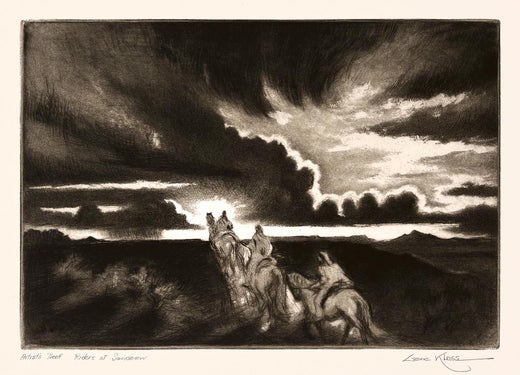
Gene KlossIndian Friendship Dance1953
1953
$2,500
£1,868.68
€2,156.18
CA$3,499.75
A$3,697.80
CHF 1,988.98
MX$44,275.14
NOK 24,919.62
SEK 22,822.76
DKK 16,100.70
About the Item
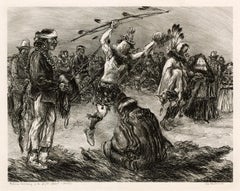
Indian Friendship Dance
Drypoint, 1953
Signed in pencil lower right, (see photo)
Edition 200
Published by The Society of American Graphic Artists, New York
An impression is in the collection of SAAM, Washington and RISD Museum,
Condition: Excellent
Very rich impression with burr and selective whiping of the ink for atmospheric nocturnal effect.
Image/Plate size: 8 3/16 x 11 15/16 inches
Sheet size: 11 1/8 x 17 inches
Reference: Kloss 450
"'Indian Friendship Dance' is an eloquent statement of something which Gene Kloss has both observed and participated in. It is an Indian dance that is thought of as entertainment, rather than ceremony, but it is essentially an idea expressed in action, and an idea that has universal meaning. The young men who dance wear costumes of exquisite workmanship, intricately wrought with beads and feathers and subtle combinations of colors. The dancers are trained from childhood but develop their own steps and exhibit distinctive strength and grace. Singers and a tom-tom accompany the dance and since it usually takes place at night, a campfire is the source of light. The conclusion occurs when all the onlookers, old and young and from many places, join hands with the dancers in a slow revolving movement, while those who can, sing the difficult but meaningful Indian song that flows with the rhythmical dance step and speaks of fellowship, brotherhood, friendship." - An excerpt from a descriptive statement, written by Lynd Ward, and distributed with the drypoint at the time of publication." Courtesy Old Print Shop
Born Alice Glasier in Oakland, CA, Kloss grew up amid the worldly bustle of the San Francisco Bay Area. She attended the University of California at Berkeley, graduating with honors in art in 1924. She discovered her talents in intaglio printmaking during a senior-year course in figurative drawing. The professor, Perham Nahl, held up a print from Kloss’ first plate, still damp from the printing process, and announced that she was destined to become a printmaker.
In 1925, Gene married Phillips Kloss, a poet and composer who became her creative partner for life. The match was uncanny, for in her own way Gene, too, was a poet and a composer. Like poetry, her artworks capture a moment in time; like music, her compositions sing with aesthetic harmony. Although she was largely self-taught, Kloss was a printmaking virtuoso.
On their honeymoon the Klosses traveled east from California, camping along the way. They spent two week is Taos Canyon – with a portable printing press cemented to a rock near their campsite – where Gene learned to appreciate the wealth of artistic subject matter in New Mexico. The landscape, the cultures, and the immense sky left an indelible impression on the couple, who returned every summer until they made Taos their permanent home 20 years later.
Throughout her life, Kloss etched more than 625 copper plates, producing editions ranging from five to 250 prints. She pulled every print in every edition herself, manually cranking the wheel of her geared Sturges press until she finally purchased a motorized one when she was in her 70s. Believing that subject matter dictated technique, she employed etching, drypoint, aquatint, mezzotint, roulette, softground, and a variety of experimental approaches, often combining several techniques on the same plate. She also produced both oil and watercolor paintings.
Kloss’ artworks are filled with drama. Her prints employ striking contrasts of darkness and light, and her subjects are often illuminated by mysterious light sources. Though she was a devout realist, there is also a devout abstraction on Kloss’ work that adds an almost mythical quality.
For six decades Kloss documented the cultures of the region-from images of daily life to those of rarely seen ceremonies. She and her husband shared a profound respect for the land and people, which made them welcome among the Native American and Hispanic communities. Kloss never owned a camera but relied instead on observation and recollection. Her works provide an inside look at the cultures she depicted yet at the same time communicate the awe and freshness of an outsider’s perspective.
Although Kloss is best known for her images of Native American and Penitente scenes, she found artistic inspiration wherever she was. During the early years of their marriage, when she and Phil returned to the Bay Area each winter to care for their aging families, she created images of the California coast. And when the Klosses moved to southwestern Colorado in 1965, she etched the mining towns and mountainous landscapes around her.
In 1970 the Klosses returned to Taos and built a house north of town. Though her artwork continued to grow in popularity, she remained faithful to Taos’ Gallery A, where she insisted that owner Mary Sanchez keep the prices of her work reasonable regardless of its market value. Kloss continued to etch until 1985, when declining health made printmaking too difficult.
From her first exhibition at San Francisco’s exclusive Gump’s in 1937 to her 1972 election to full membership in the National Academy of Design, Kloss experienced a selective fame. She received numerous awards, and though she is not as well known as members of the Taos Society of Artists, her works are in collections throughout the world including those of the Metropolitan Museum of Art, the National Gallery, the Library of Congress, and the Museum of Tokyo.
Kloss was 93 years old when she died. Alive for most of the 20th century, she witnessed vast changes in our society and landscape. Yet to look at her artwork, one would never know that the world changed. There is remarkable continuity in style and subject matter through the years that gives her work a timeless quality. This is enhanced by Kloss’ ability to capture the spirit of people and places. Her etchings turn brief moments into lasting impressions.
Courtesy: Jennifer Cook, curator of visual arts at the Sangre de Cristo Arts Center.
- Creator:Gene Kloss (1903-1996, American)
- Creation Year:1953
- Dimensions:Height: 8.19 in (20.81 cm)Width: 11.94 in (30.33 cm)
- Medium:
- Movement Style:
- Period:
- Condition:
- Gallery Location:Fairlawn, OH
- Reference Number:Seller: FA123891stDibs: LU14015483652
Gene Kloss
Gene (Alice Geneva) Kloss is considered one of America’s master printmakers. She was born in Oakland, California and established herself as an artist on the West coast. Kloss was introduced to etching by Perham Nahl while at UC Berkley. She graduated in 1924, and in 1925 married poet Phillips Kloss. In her late twenties, Kloss moved to Taos, New Mexico and began her life’s work of the New Mexican landscape and peoples. It was at this time that she received national acclaim. Her artwork exudes an unmistakable content and style. Enchanted by the architecture, mountainous landscapes and rituals of the inhabitants, Kloss captured the beauty of the Southwest and surrounding areas. Her style was bold yet deftly simple, masterfully expressing the elusive Southwestern light. In 1938, she exhibited in Paris with Ernest Blumenschein, Georgia O’Keeffe, and John Sloan. She was also a member of the National Academy of Design, New York.
About the Seller
5.0
Recognized Seller
These prestigious sellers are industry leaders and represent the highest echelon for item quality and design.
Platinum Seller
Premium sellers with a 4.7+ rating and 24-hour response times
Established in 1978
1stDibs seller since 2013
841 sales on 1stDibs
Typical response time: <1 hour
Associations
International Fine Print Dealers Association
- ShippingRetrieving quote...Shipping from: Akron, OH
- Return Policy
More From This Seller
View AllKeresan Dancers
By Gene Kloss
Located in Fairlawn, OH
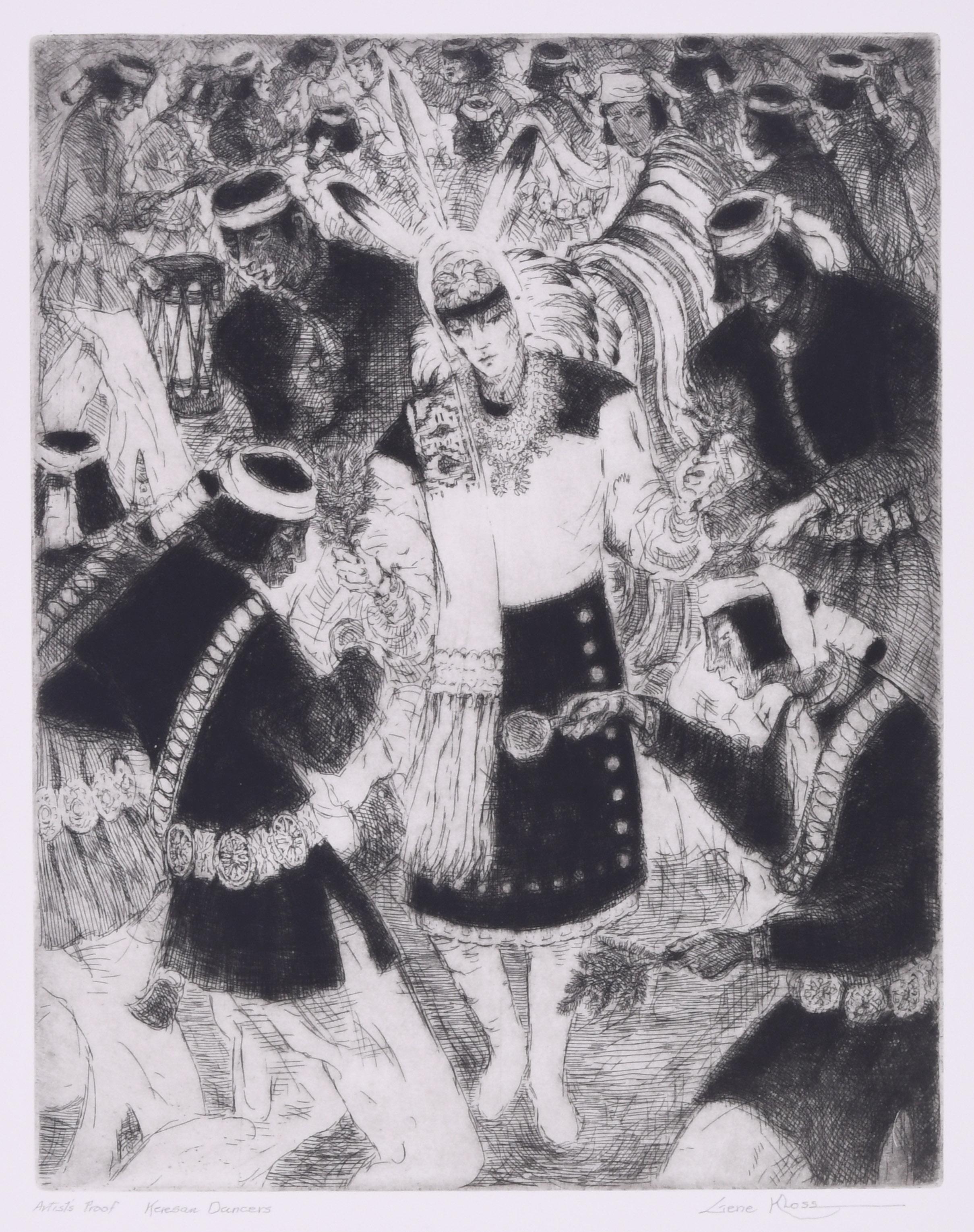
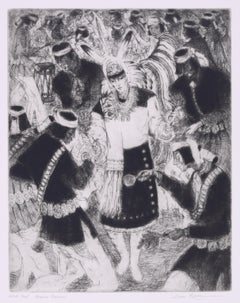
Keresan Dancers
Etching & drypoint, 1962
Signed lower right (see photo)
Inscribed lower left: "Artist's Proof Keresan Dancers"
Depicts Keresan speaking peoples at Sam Felipe Pueblo
Contemporary Puebloans are customarily described as belonging to either the eastern or the western division. The eastern Pueblo villages are in New Mexico along the Rio Grande and comprise groups who speak Tanoan and Keresan languages. Tanoan languages such as Tewa are distantly related to Uto-Aztecan, but Keresan has no known affinities. The western Pueblo villages include the Hopi villages of northern Arizona and the Zuni, Acoma, and Laguna villages, all in western New Mexico.
Born Alice Glasier in Oakland, CA, Kloss grew up amid the worldly bustle of the San Francisco Bay Area. She attended the University of California at Berkeley, graduating with honors in art in 1924. She discovered her talents in intaglio printmaking during a senior-year course in figurative drawing. The professor, Perham Nahl, held up a print from Kloss’ first plate, still damp from the printing process, and announced that she was destined to become a printmaker.
In 1925, Gene married Phillips Kloss, a poet and composer who became her creative partner for life. The match was uncanny, for in her own way Gene, too, was a poet and a composer. Like poetry, her artworks capture a moment in time; like music, her compositions sing with aesthetic harmony. Although she was largely self-taught, Kloss was a printmaking virtuoso.
On their honeymoon the Klosses traveled east from California, camping along the way. They spent two week is Taos Canyon – with a portable printing press cemented to a rock near their campsite – where Gene learned to appreciate the wealth of artistic subject matter in New Mexico. The landscape, the cultures, and the immense sky left an indelible impression on the couple, who returned every summer until they made Taos their permanent home 20 years later.
Throughout her life, Kloss etched more than 625 copper plates, producing editions ranging from five to 250 prints. She pulled every print in every edition herself, manually cranking the wheel of her geared Sturges press until she finally purchased a motorized one when she was in her 70s. Believing that subject matter dictated technique, she employed etching, drypoint, aquatint, mezzotint, roulette, softground, and a variety of experimental approaches, often combining several techniques on the same plate. She also produced both oil and watercolor paintings.
Kloss’ artworks are filled with drama. Her prints employ striking contrasts of darkness and light, and her subjects are often illuminated by mysterious light sources. Though she was a devout realist, there is also a devout abstraction on Kloss’ work that adds an almost mythical quality.
For six decades Kloss documented the cultures of the region-from images of daily life to those of rarely seen ceremonies. She and her husband shared a profound respect for the land and people, which made them welcome among the Native American and Hispanic communities. Kloss never owned a camera but relied instead on observation and recollection. Her works provide an inside look at the cultures she depicted yet at the same time communicate the awe and freshness of an outsider’s perspective.
Although Kloss is best known for her images of Native American and Penitente scenes, she found artistic inspiration wherever she was. During the early years of their marriage, when she and Phil returned to the Bay Area each winter to care for their aging families, she created images of the California coast. And when the Klosses moved to southwestern Colorado in 1965, she etched the mining towns and mountainous landscapes around her.
In 1970 the Klosses returned to Taos and built a house north of town. Though her artwork continued to grow in popularity, she remained faithful to Taos’ Gallery A, where she insisted that owner Mary Sanchez keep the prices of her work reasonable regardless of its market value. Kloss continued to etch until 1985, when declining health made printmaking too difficult.
From her first exhibition at San Francisco’s exclusive Gump’s in 1937 to her 1972 election to full membership in the National Academy of Design, Kloss experienced a selective fame. She received numerous awards, and though she is not as well known as members of the Taos Society of Artists...
Category
1960s American Realist Figurative Prints
Materials
Drypoint
Sevillanas
Located in Fairlawn, OH
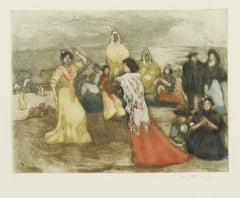
Sevillanas
Etching and color aquatint on laid watermarked paper, c. 1900
Signed by the artist in pencil lower right (see photo)
Editioned in pencil lower left corner of sheet
Publish...
Category
Early 1900s Post-Impressionist Figurative Prints
Materials
Aquatint
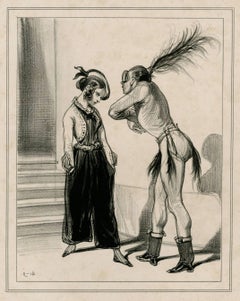
"Do you wish to escape, my wild one"
By Paul Gavarni
Located in Fairlawn, OH
Unsigned
Edition: 12 (proof before lettering)
Provenance:
Charles Sessler, Philadelphia
Considered by A. & B. as "rare, rare, rare."
Reference: A. & B. 256 i/II, proof...
Category
19th Century Figurative Prints
Materials
Lithograph
Lice
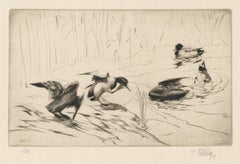
Located in Fairlawn, OH
Lice (Mallards grooming themselves)
Drypoint, 1927
Signed and dated lower right (see photo)
Titled lower left corner
Condition: Excellent
Image/Plate size: 6 7/8 x 10 3/4 inches
Shee...
Category
1920s American Realist Animal Prints
Materials
Drypoint
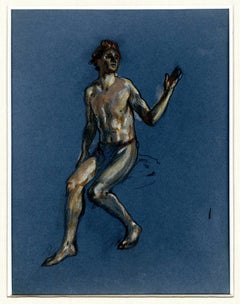
Study of an Indian Model
By Arthur B. Davies
Located in Fairlawn, OH
Study of an Indian Model
Unsigned
Pastel and chalk on blue paper, mounted to support
Provenance:
Estate of the artist (per Graham and Sons, agent for the estate)
James Graham & Sons,...
Category
1920s Ashcan School Nude Drawings and Watercolors
Materials
Chalk, Pastel
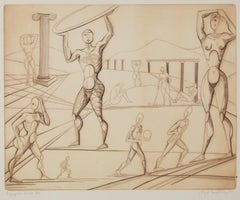
Olympian Games
By Ray H. French
Located in Fairlawn, OH
Olympian Games
Engraving, 1957
Signed, dated, titled and numbered (see photos)
Edition: 25 (7/25)
From the first and only edition, probably less than 8 impressions printed
Printed by the artist
Condition: Excellent
soft fold in upper left margin
Image size: 15 7/8 x 19 7/8 inches
Sheet size: 18 1/2 x 22 3/8 inches
Provenance: Estate of the artist
Martha A. French Revocable Trust
Item Reference
LU14013763732
Crucifixion, color etching, 1947
Item Reference
LU14013160582
The Web, engraving, 1950
Item Reference
LU14011892032
The Swan, mixed media (etching & soft ground), 1957
Item Reference
LU1404294651
Snowy Egret, engraving, 1954, third edition c. 1990, printed by the master printer Jon Clemens
Item Reference
LU1402253433
Debris, color etching, c. 1940, printed by the artist at the John Herron Art Institute, Indianapolis, Indiana
Item Reference
LU140331242
Crucifixion, engraving, 1958
Item Reference
LU140145330
Strange Animals, engraving, 1947
Item Reference
G130708140172
The Gull, engraving, 1955
Item Reference
LU14012448972
Moon Rays...
Category
1950s American Modern Figurative Prints
Materials
Engraving
You May Also Like
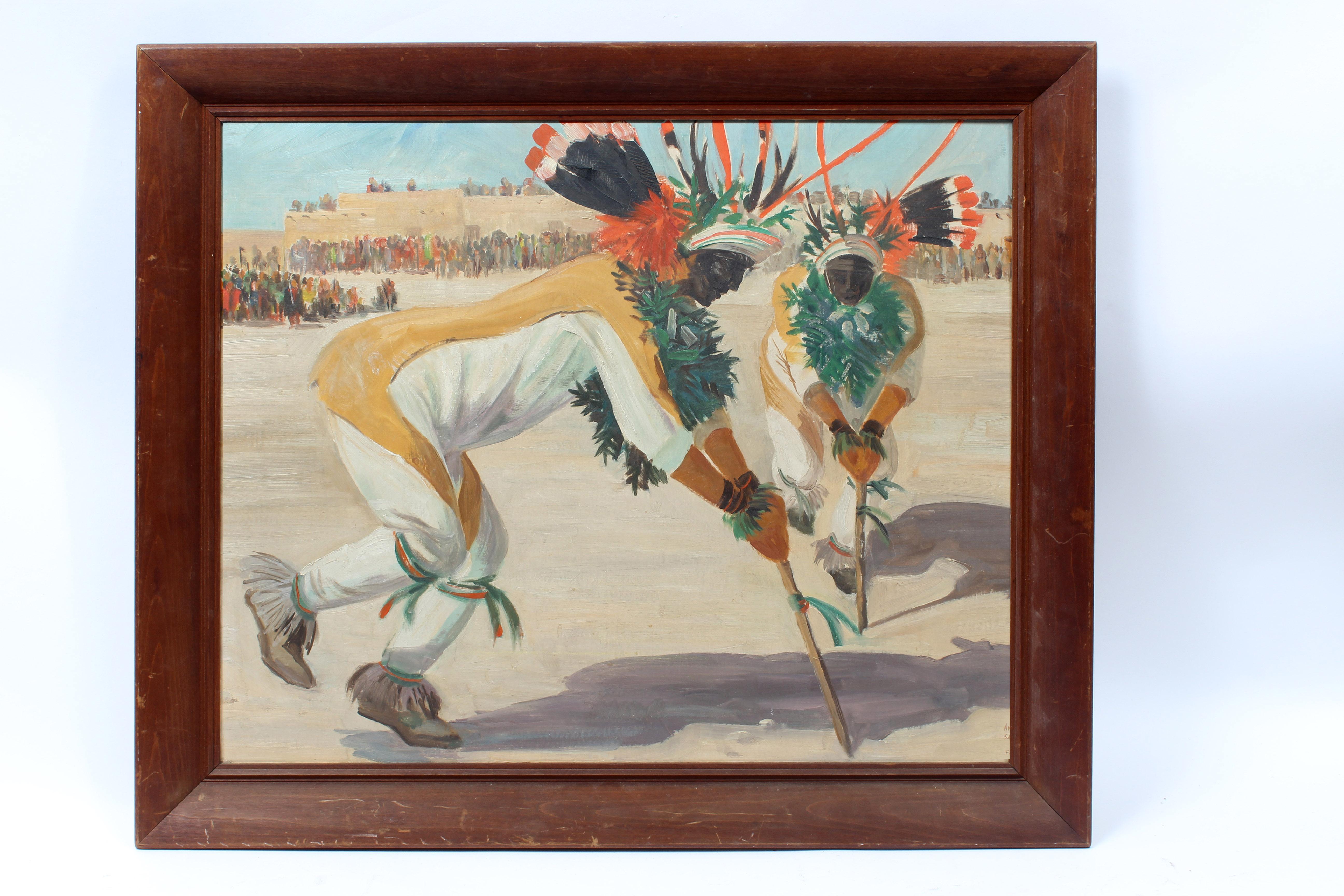
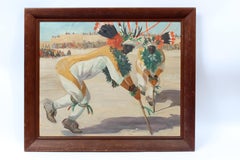
American Painting Native American Dance Exhibition New Mexico Antelope Dancers
Located in Buffalo, NY
An original oil painting by American artist Rudolph Wedow. This fantastic painting depicts Antelope Dancers in San Felipe Pueblo in New Mexico.
Created...
Category
1940s American Impressionist Figurative Paintings
Materials
Oil, Board
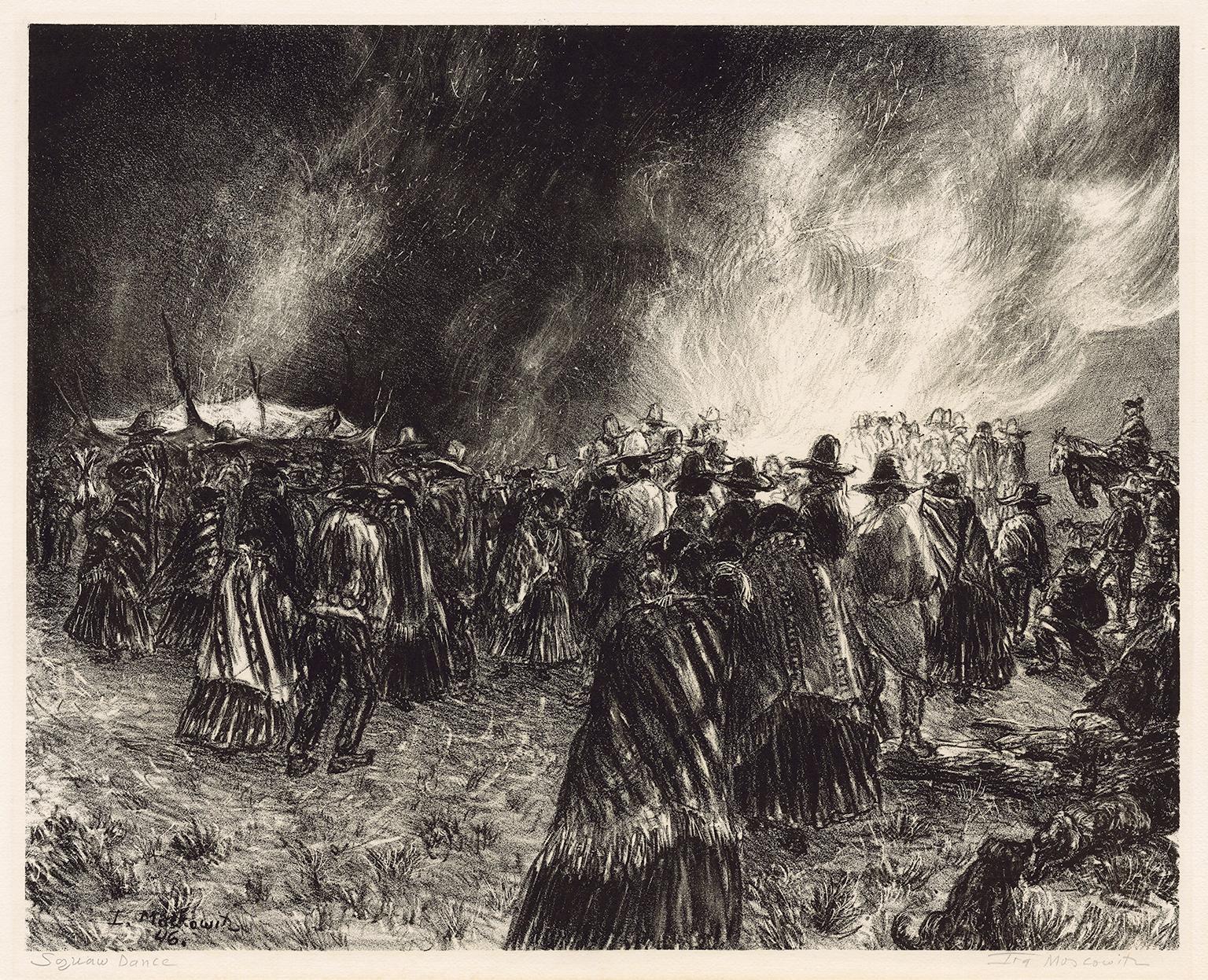
Navajo Courtship Dance
— Southwest Regionalism, Native American Subject
By Ira Moskowitz
Located in Myrtle Beach, SC
Ira Moskowitz, 'Navajo Courtship Dance (Squaw Dance)', lithograph, 1946, edition 30, Czestochowski 161. Signed and titled in pencil. Signed and dated in the stone, lower left. A fine...
Category
1940s American Modern Landscape Prints
Materials
Lithograph
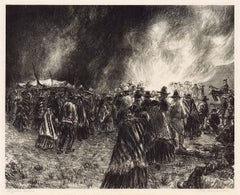
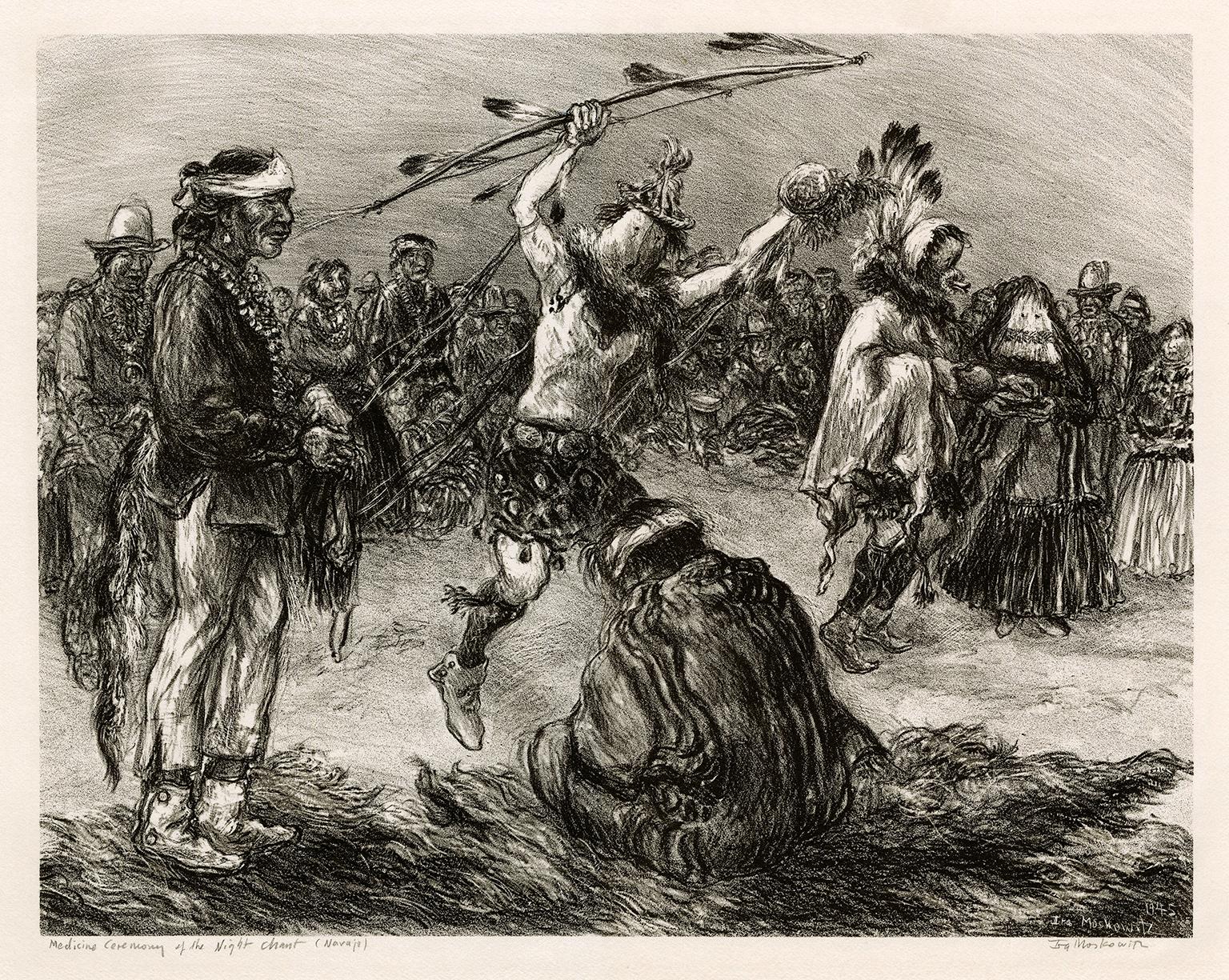
Navajo Medicine Ceremony of the Night Chant
— Native American Subject
By Ira Moskowitz
Located in Myrtle Beach, SC
Ira Moskowitz, 'The Three Gods of Healing (Navajo Medicine Ceremony of the Night Chant)', lithograph, 1945, edition 30, Czestochowski 148. Signed and titled in pencil. Signed and dat...
Category
1940s American Modern Landscape Prints
Materials
Lithograph
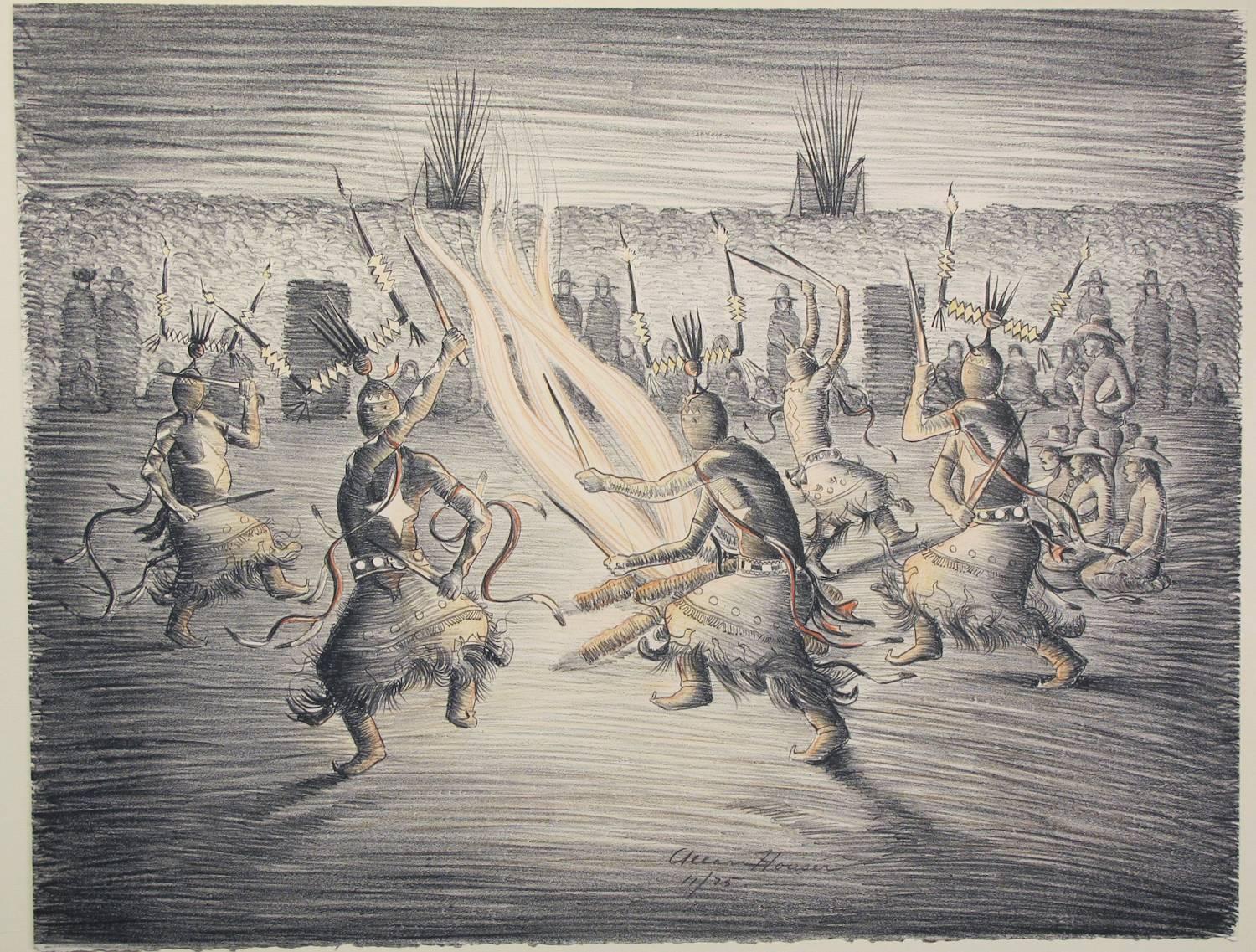
Apache Mountain Spirit Dancers, lithograph, Apache, Allan Houser Haozous black
By Allan Houser
Located in Santa Fe, NM
Apache Mountain Spirit Dancers, lithograph, Apache, Allan Houser Haozous black
Hand colored original lithograph edition by Allan Houser
hand printed in Santa Fe, New Mexico
Allan Houser (Haozous), Chiricahua Apache (1914-1994)
Selected Collections
Centre Georges Pompidou, Paris, France * “They’re Coming”, bronze
Dahlem Museum, Berlin, Germany
Japanese Royal Collection, Tokyo, Japan “The Eagle”, black marble commissioned by President William J. Clinton
United States Mission to the United Nations, New York City, NY *"Offering of the Sacred Pipe”, monumental bronze by Allan Houser © 1979 Presented to the United States Mission to the United Nations as a symbol of World Peace honoring the native people of all tribes in these United States of America on February 27, 1985 by the families of Allan and Anna Marie Houser, George and Thelma Green and Glenn and Sandy Green in New York City.
National Portrait Gallery, Smithsonian, Washington, DC * Portrait of Geronimo, bronze
National Museum of American Art, Smithsonian, Washington, D.C. * “Buffalo Dance Relief”, Indiana limestone...
Category
1970s Contemporary Figurative Prints
Materials
Color Pencil, Lithograph
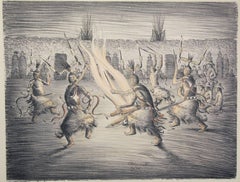
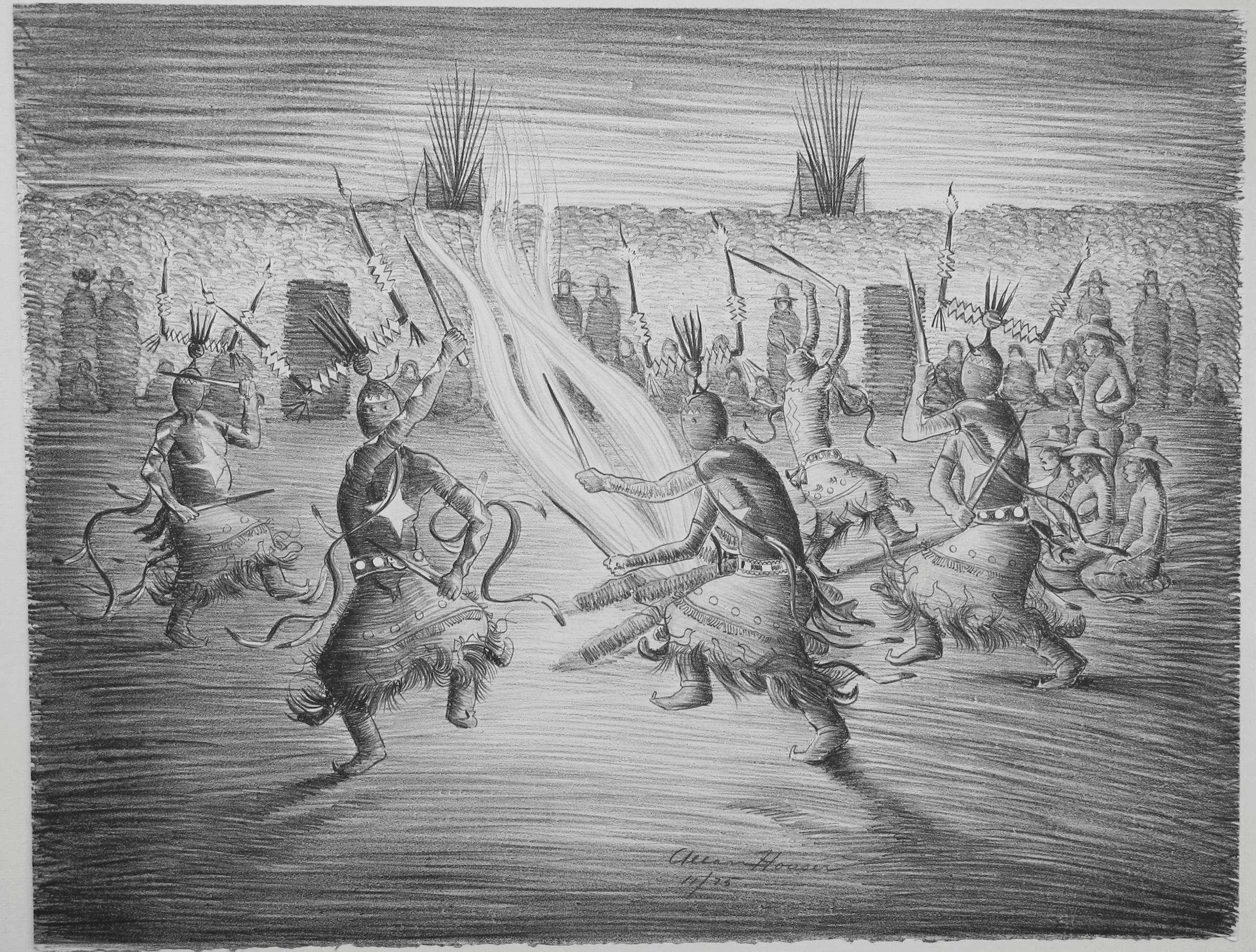
Apache Mountain Spirit Dancers, lithograph, black
white, Allan Houser
By Allan Houser
Located in Santa Fe, NM
Apache Mountain Spirit Dancers, lithograph, black & white, Allan Houser
hand pulled black and white lithograph edition printed in Santa Fe, New Mexico
L...
Category
1970s Contemporary Figurative Prints
Materials
Lithograph
Dancers
Located in San Francisco, CA
This artwork titled "Dancers" c.1990is a color offset lithograph by noted equine American artist Fred Stone, 1930-2018. It is hand signed in pencil by the a...
Category
Late 20th Century American Realist Animal Prints
Materials
Lithograph