Want more images or videos?
Request additional images or videos from the seller
1 of 9

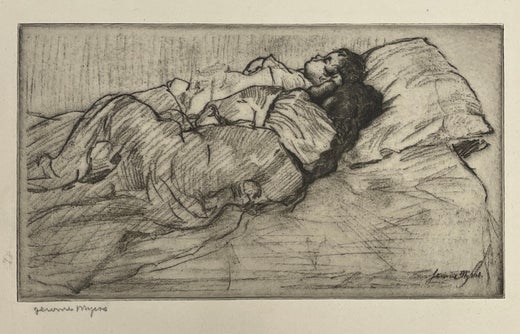
Jerome Myers
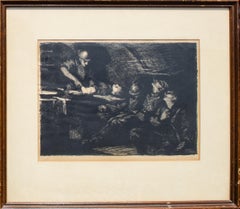
Signed Jerome Myers Engraving of Sleeping Children

c. 1915

$600List Price

You May Also Like

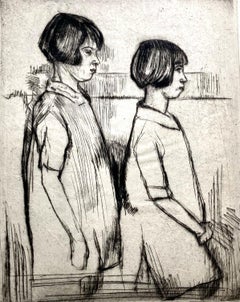
Bernard Sanders, (Two Young Girls), about 1925
Located in New York, NY
Bernard Sanders (1906-1967) was a master at suggesting layers of meaning. Here, at first glance, this is study of sisters, posed to show subtle differences in height and profile. But...
Category

1920s American Modern Figurative Prints

Materials

Drypoint

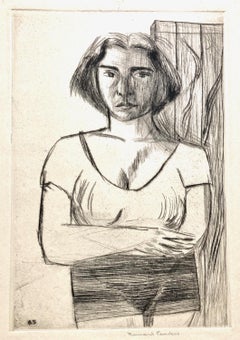
Bernard Sanders, Young Girl (With Arms Crossed), about 1930
Located in New York, NY
Young Girl by Bernard Sanders (1906-1967) is a classic example of his masterful portraiture. This is a drypoint. It is signed in pencil, titled in the lower left margin, and initial...
Category

1930s American Modern Figurative Prints

Materials

Drypoint

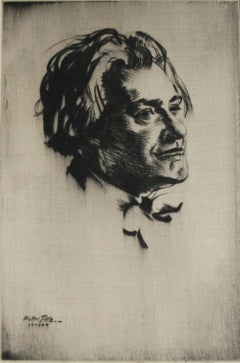
Portrait of James McBey.
By Walter Tittle
Located in Storrs, CT
James McBey. 1931. Drypoint. 8 7/8 x 5 7/8 (sheet 11 1/2 x 9 ). An extremely rich impression with drypoint burr, printed by the artist on cream wove paper. Signed in the plate lower ...
Category

1930s American Modern Portrait Prints

Materials

Drypoint, Etching

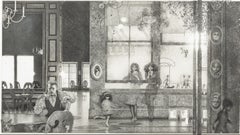
Interiors I: Family Reunion — A penetrating scene with a hidden homage to Eadwea
By Peter Milton
Located in Middletown, NY
Interiors I: Family Reunion 1984 Resist ground etching and engraving on BFK Rives wove paper, 20 x 36 inches (501 x 913 mm), full margins. Signed, titled, dated and numbered 49/175 in pencil, lower margin. In excellent condition with minor mat tone. A luminous, rich, and well-inked impression of this haunting image, with astonishing detail and depth. Framed handsomely under museum grade glass with archival materials in a solid wood frame with silver finish. [Milton 107] Intended to be a stand alone image in its inception, Family Reunion ended up spawning seven additional images, and became a sort of Primo Pensiero in the sprawling, masterpiece suite now known as Interiors. The suite took eight years to complete, and consists of works of varying format, psychological intensity, and subject matter. The thematic darkness in the eight images waxes and wanes, and Milton intentionally included several interlude works to lighten the tension he felt while composing several of the darker images. The first two in the series, Family Reunion, and Hotel Paradise Café, were meant to be companion pieces. The equilibrium of each composition is anchored on a central brooding figure; a man (perhaps based on a Thomas Eakins portrait of the American anthropologist Frank Hamilton...
Category

1980s American Modern Figurative Prints

Materials

Engraving, Etching

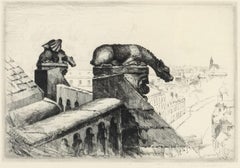
Guardians of the Spire; Amiens Cathedral Number 2
By John Taylor Arms
Located in Middletown, NY
Guardians of the Spire; Amiens Cathedral Number 2 New York: 1937. Etching and drypoint on watermarked F.J. Head cream-colored, antique laid paper, 6 3/4 ...
Category

Mid-20th Century American Modern Figurative Prints

Materials

Drypoint, Etching

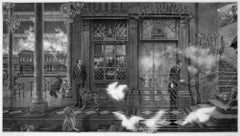
Interiors VII: The Train from Munich
By Peter Milton
Located in Middletown, NY
Interiors VII: The Train from Munich Robert E. Townsend, 1991. Resist ground etching and engraving with hand refinement in charcoal, pencil, stabilo, and eraser on BFK Rives white wove paper, 20 x 36 inches (507 x 914 mm), full margins. Signed, titled, dated and numbered 51/175 by the artist in pencil, lower margin. A brilliant, inky impression with luminous light and gradient tones. In excellent condition with one extremely minor and superficial spot of light tan adhesive residue on the verso, unobtrusive and not visible on the recto, with no other visible defects. With the blind stamp of the printer, Robert E. Townsend in the lower left margin. An especially fine impression in superb condition. [Milton 113]. When asked about this work in particular, Milton expressed that his favorite images were his darkest images, in theme, mood, and in ink. Milton, who has said that his work is infused with a postmodern awareness of the past, has focused here in a deeply personal way on a segment of history that continues to haunt us all. The work, published in 1991, evokes one of the darkest periods of European history, the eroding and erasing of European culture under fascism, and the eventual total loss of humanity. The Train from Munich is an especially relevant and emotional work for Milton, who created the piece for his wife, Edith, who escaped Munich in 1939 as a child on the fabled Kinderstransport. The Kinderstransport was a desperate rescue effort on the part of the British government to save as many Jewish children as possible by railway before borders closed on the precipice of the Second World War. Children left their parents behind, and boarded the trains alone, leaving the impending doom of Nazi Germany, they arrived in Great Britain as refugees. More than 10,000 children escaped the holocaust via the Kinderstransport. In Train from Munich, the image itself holds an almost immeasurable amount of symbolism; each inch of the matrix is a successful effort to confront this history in a way that is poignant through a series of motifs. We see the Café disappearing into a ghostlike memory of the past, an allegory to the disintegration of culture, while through the windows we can see a rampant, snarling dog; a portrait of Hitler's shepherd, Blondi. Blondi isn't the only notable figure in the composition. Milton has pointed out that the fading figure of the doorman at the Hotel Metropole is modeled after the artist and intellectual Marcel Duchamp, and the face of the young girl peering...
Category

1990s American Modern Interior Prints

Materials

Charcoal, ABS, Engraving, Etching

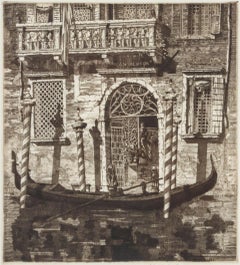
Palazzo dell Angelo
By John Taylor Arms
Located in Middletown, NY
Palazzo dell'Angelo 1931 Etching and drypoint on cream-colored, handmade laid paper with deckle edges, 7 1/4 x 6 3/4 inches (185 x 171 mm), edition of 100, full margins. Signed, dated and numbered "Ed. 100" in pencil, lower margin, second state (of three). Printed by Henry Carling, New York. Extremely minor mat tone and some inky residue in the top right corner, all unobtrusive and well outside of image area. An exquisite impression of this intricate image, with astonishing detail, and all the fine lines printing clearly. The image represents the first print which Arms printed on his own handmade paper. Framed handsomely with archival materials and museum grade glass in a wood gilt frame with a flower and garland motif. Illustrated: Dorothy Noyes Arms, Hill Towns and Cities of Northern Italy, p. 180; Anderson, American Etchers Abroad 1880-1930; Eric Denker, Reflections & Undercurrents: Ernest Roth and Printmaking in Venice, 1900-1940, p. 116. [Fletcher 233] Born in 1887 in Washington DC, John Taylor Arms studied at Princeton University, and ultimately earned a degree in architecture at the Massachusetts Institute of Technology in 1912. With the outbreak of W.W.I, Arms served as an officer in the United States Navy, and it was during this time that he turned his focus to printmaking, having published his first etching in 1919. His first subjects were the Brooklyn Bridge, near the Navy Yard, and it was during his wartime travel that Arms created a series of extraordinarily detailed etchings based on Gothic cathedrals and churches he visited in France and Italy. He used what was available to him, namely sewing needles and a magnifying glass, to create the incredibly rich and fine detail that his etchings are known for. Upon his return to New York after the war, Arms enjoyed a successful career as a graphic artist, created a series of etchings of American cities, and published Handbook of Print Making and Print Makers (Macmillan, 1934). He served as President of the Society of American Graphic Artists, and in 1933, was made a full member of the National Academy of Design. In its most modern incarnation, Palazzo dell'Angelo was constructed in or around 1570. The building, which has a rich and storied history, was erected upon the ruins of an earlier structure which predates the Gothic period. Some remnants of the earliest features of the residence were most certainly still visible when Arms visited, as they are today. Having a background in architecture, there's no question that Arms was moved by the beauty, history and ingenuity represented in the physical structure. One thing specifically gives away Arms's passion for the architecture, and that is the fact that he focused on the building's Moorish entranceway, balustrade, and two mullioned windows, and not on the curious Gothic era bas-relief of an angel nestled into the facade of the building, after which the structure is named. The sculpture itself doesn't appear in Arms's composition at all, despite the fact that it is the feature of the building that is most famous in its folklore. Arms instead focuses on the oldest portion of the architecture, even documenting some of the remnants of a fresco, and a funerary stele for the freedman Tito Mestrio Logismo, and his wife Mestria Sperata (visible above the water level, to the left of the door, behind the gondola), which was first described in 1436. Among the many notable bits of history regarding the Palazzo, it has been documented that Tintoretto painted frescos of battle scenes on the facade of the building. The paintings have been lost to time and the elements, but not entirely to history. The empty frame...
Category

1930s American Modern Figurative Prints

Materials

Drypoint, Etching

Palazzo dell
Angelo
$2,800
H 7.25 in W 6.75 in
14th Street Oriental
By Isabel Bishop
Located in Middletown, NY
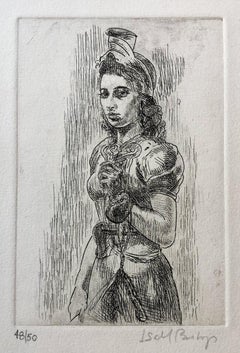
New York, Associated American Artists, 1950. Drypoint and aquatint on cream wove paper, 5 7/8 x 3 15/16 inches (150 x 100 mm), full margins. Signed and numbered 48/50 in pencil, lower margin. Printed by Stephen Sholinsky...
Category

Mid-20th Century American Modern Portrait Prints

Materials

Drypoint, Aquatint

"The Caissons Go Rolling Along".
By Kerr Eby
Located in Storrs, CT
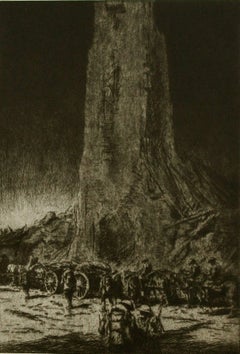
"The Caissons Go Rolling Along". 1929. Etching and sandpaper ground. Giardina 145. 17 3/8 x 9 1/2 (sheet 18 3/4 x 11 1/2). Edition 90. Slight mat line, otherwise find condition. A ri...
Category

1920s American Modern Landscape Prints

Materials

Drypoint, Etching

"The Caissons Go Rolling Along".
$1,250 Sale Price
28% Off
H 20 in W 16 in D 2 in
Tugs on the Hudson
By Charles Frederick William Mielatz
Located in Middletown, NY
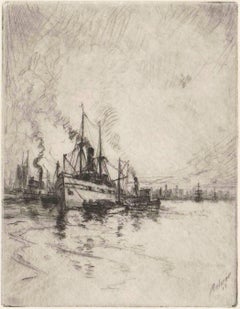
Drypoint etching with engraving printed in black ink on Japanese mulberry paper, 4 1/2 x 3 3/8 inches (113 x 84 mm), full margins. In superb condition. A beautiful New York City river...
Category

Early 20th Century American Modern Landscape Prints

Materials

Handmade Paper, Drypoint, Etching

More From This Seller

View All
Original Stan Phillips Lithograph of Ballerinas, c. 1970
Located in New York, NY
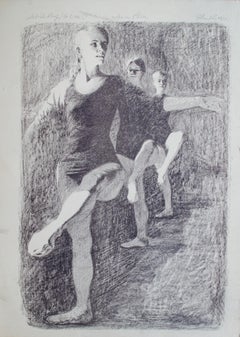
Stan Phillips (American, 1923-2012) Jacob's Pillow, c. 1970 Lithograph 14 7/8 x 10 7/8 in. Signed and inscribed Phillips was born in Brooklyn, New York and spent most of his young l...
Category

1970s American Modern Figurative Prints

Materials

Lithograph

Samuel J. Woolf Antique Litho: First Aid Station at Seicheprey
Located in New York, NY
Samuel J. Woolf (American, 1880-1948) First Aid Station at Seicheprey Lithograph Sight: 11 x 14 1/2 in. Framed: 20 x 23 x 1 in. Signed lower right: S. J. Woolf Numbered lower left: 23/150 This print is based on Woolf 1918 oil painting: Front Line Dressing Station...
Category

Early 20th Century American Modern Figurative Prints

Materials

Lithograph

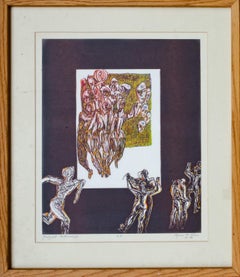
Hand Colored Etching by WPA Artist Agnes Mills, 1982, Unique
Located in New York, NY
Agnes Mills (American, 1915-2008) Guignol Intermezzo, 1982 Hand colored etching (UNIQUE) Sight: 13 3/4 x 11 1/4 in. Framed: 19 1/2 x 17 x 3/4 in. Titled lower right Inscribed "AP" bo...
Category

1980s American Modern Figurative Prints

Materials

Etching

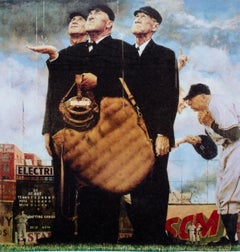
Norman Rockwell "Bottom Of The Sixth" Seriolithograph
By Norman Rockwell
Located in New York, NY
Norman Rockwell (American, 1894-1978) Bottom of The Sixth Original painting produced 1948, authorized postumous estate print produced 2005 Seriolithograph Sight: 20 1/4 x 19 in. Fram...
Category

Early 2000s American Modern Figurative Prints

Materials

Lithograph

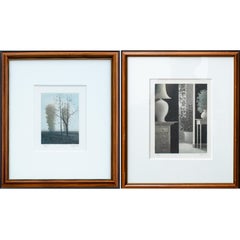
2 Lovely Robert Kipniss Lithographs titled "Leaning" "Interiors"
By Robert Kipniss
Located in New York, NY
Robert Kipniss (American, b. 1931) Left: Leaning, c. 1988 Lithograph Sight: 5 1/4 x 4 in. Framed: 11 x 9 3/4 x 3/4 in. Numbered lower left: 53/175 Signed lower right: Kipniss Right...
Category

1980s American Modern Landscape Prints

Materials

Lithograph

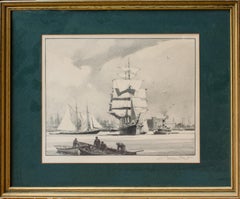
Gordon Grant Sail Boat Lithograph "Salt Bark - Gloucester"
By Gordon Grant
Located in New York, NY
Gordon Grant (American, 1875-1962) The Salt Bark - Gloucester, c. 1947 Lithograph Sight: 10 x 12 1/2 in. Framed: 15 x 19 x 3/4 in. Signed lower right in pencil Published in edition ...
Category

1940s American Modern Landscape Prints

Materials

Lithograph

Still Thinking About These?

All Recently Viewed