Items Similar to Miró, Composition, Derrière le miroir (after)
Want more images or videos?
Request additional images or videos from the seller
1 of 10
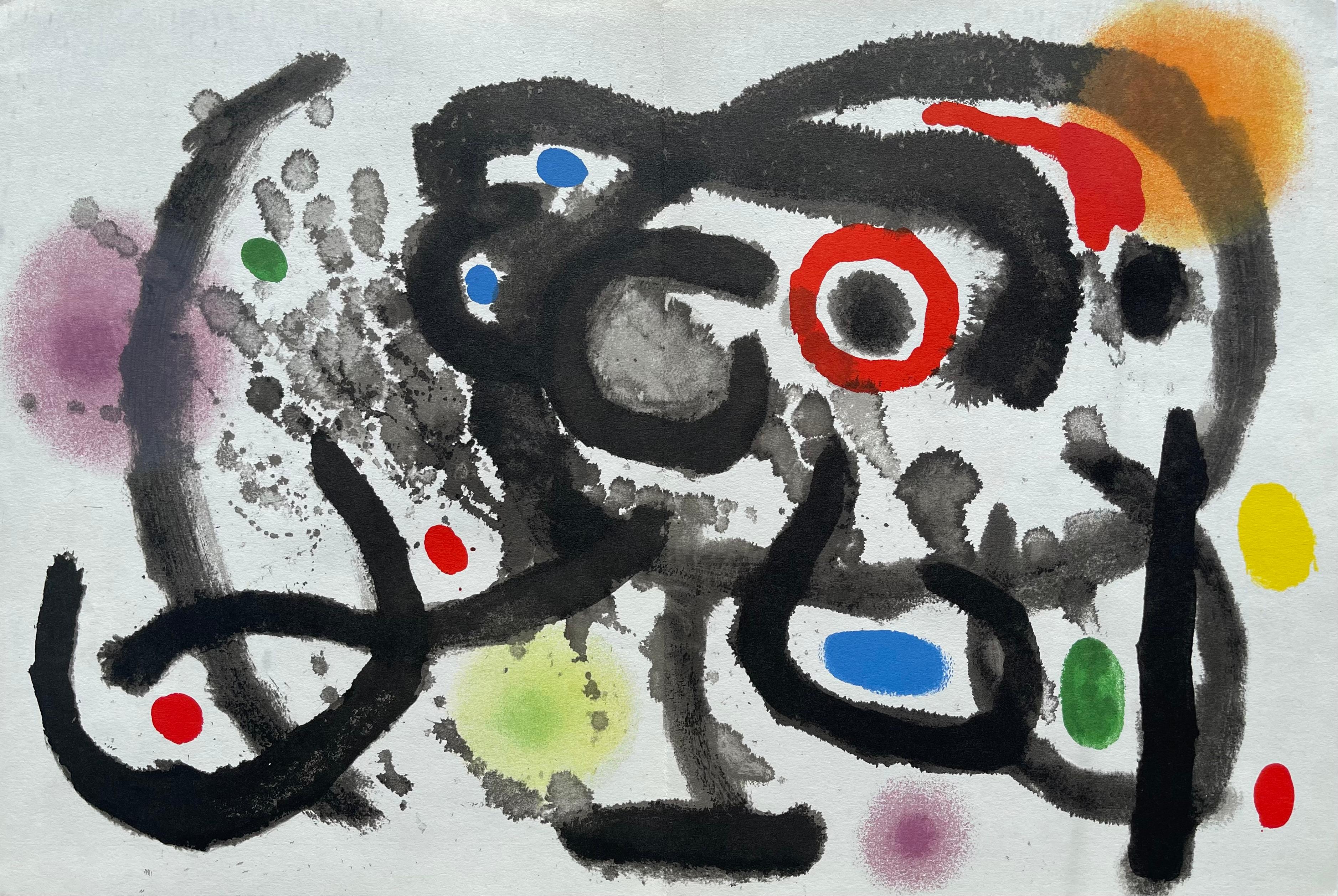
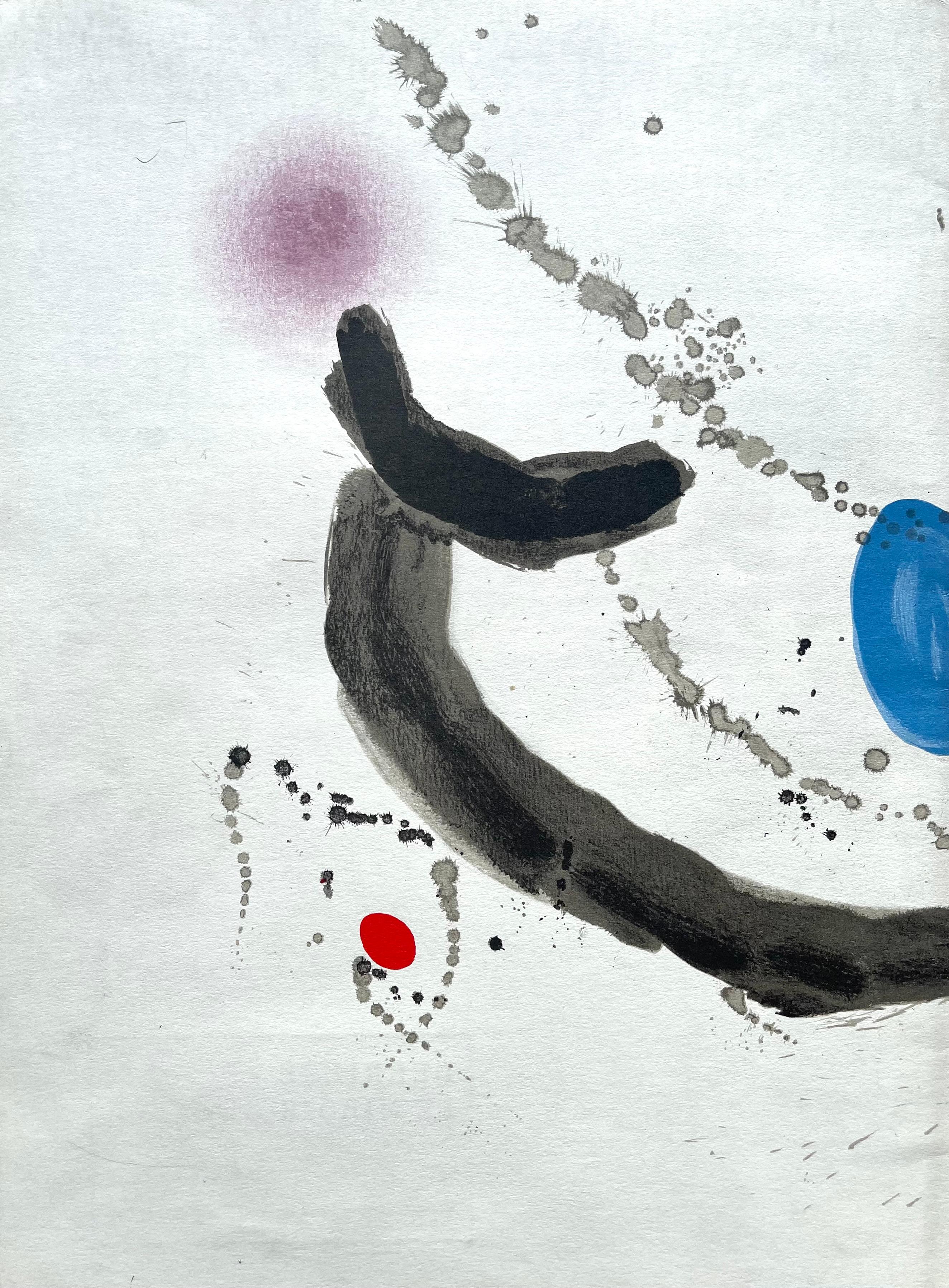
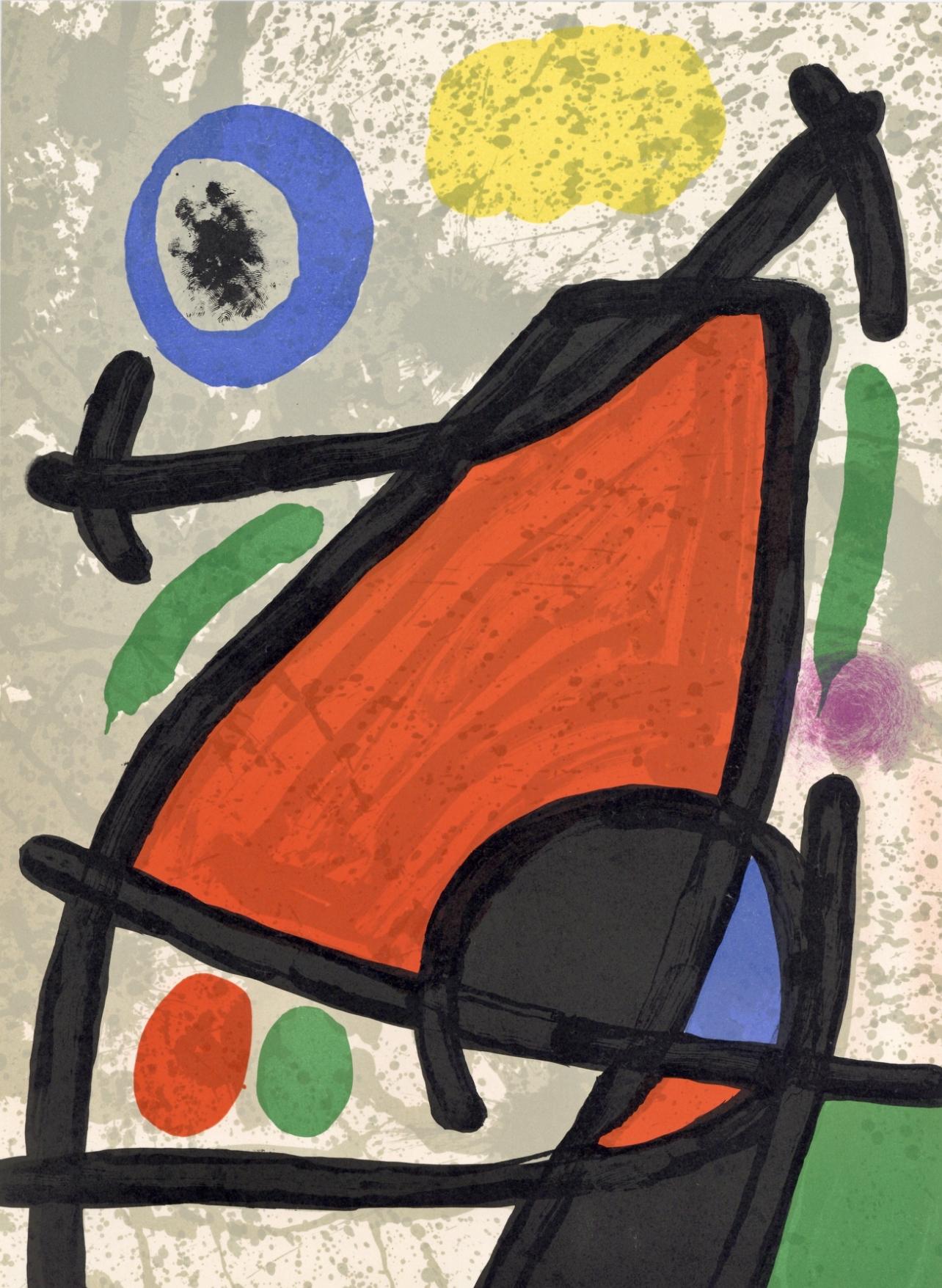
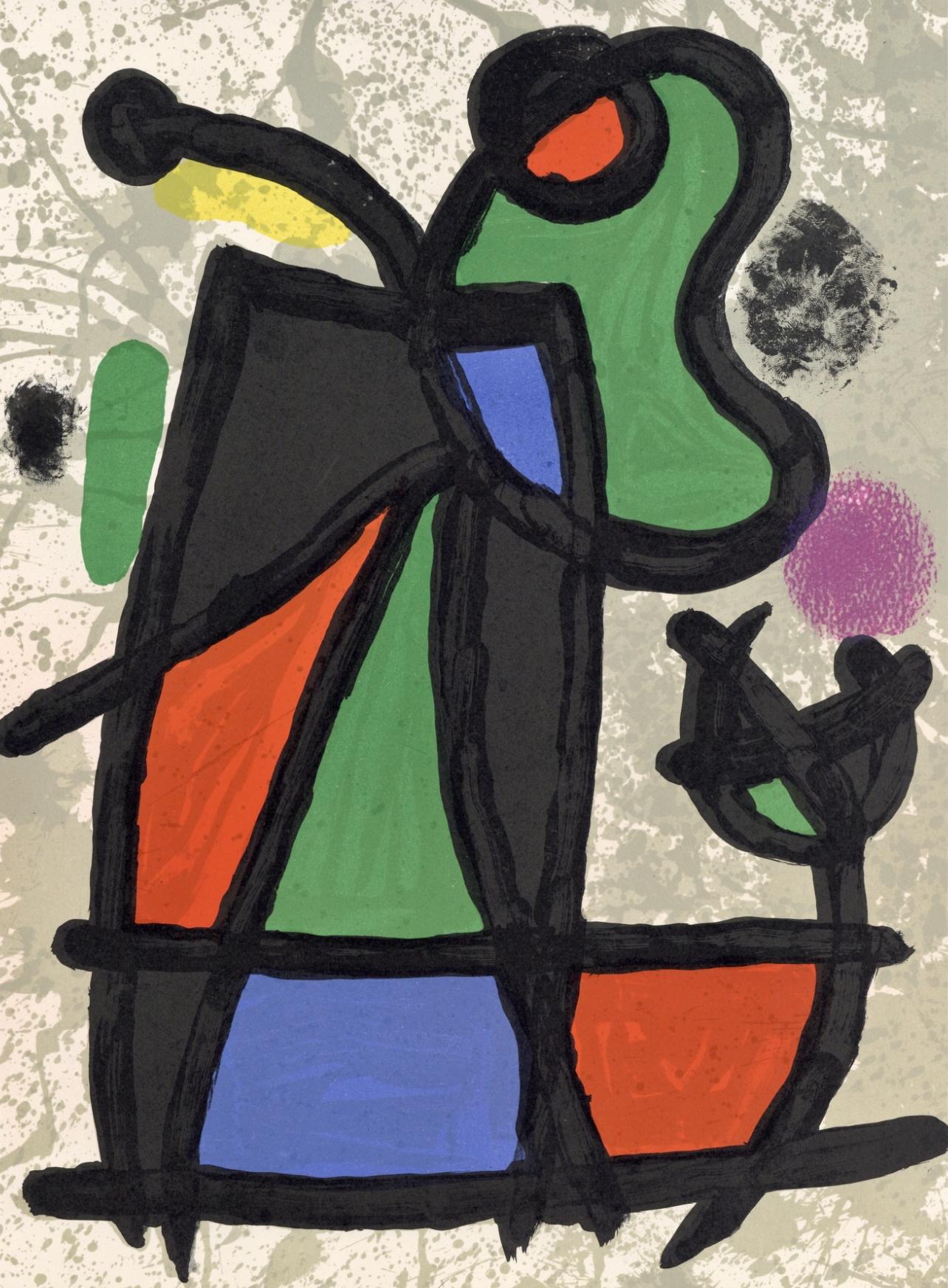
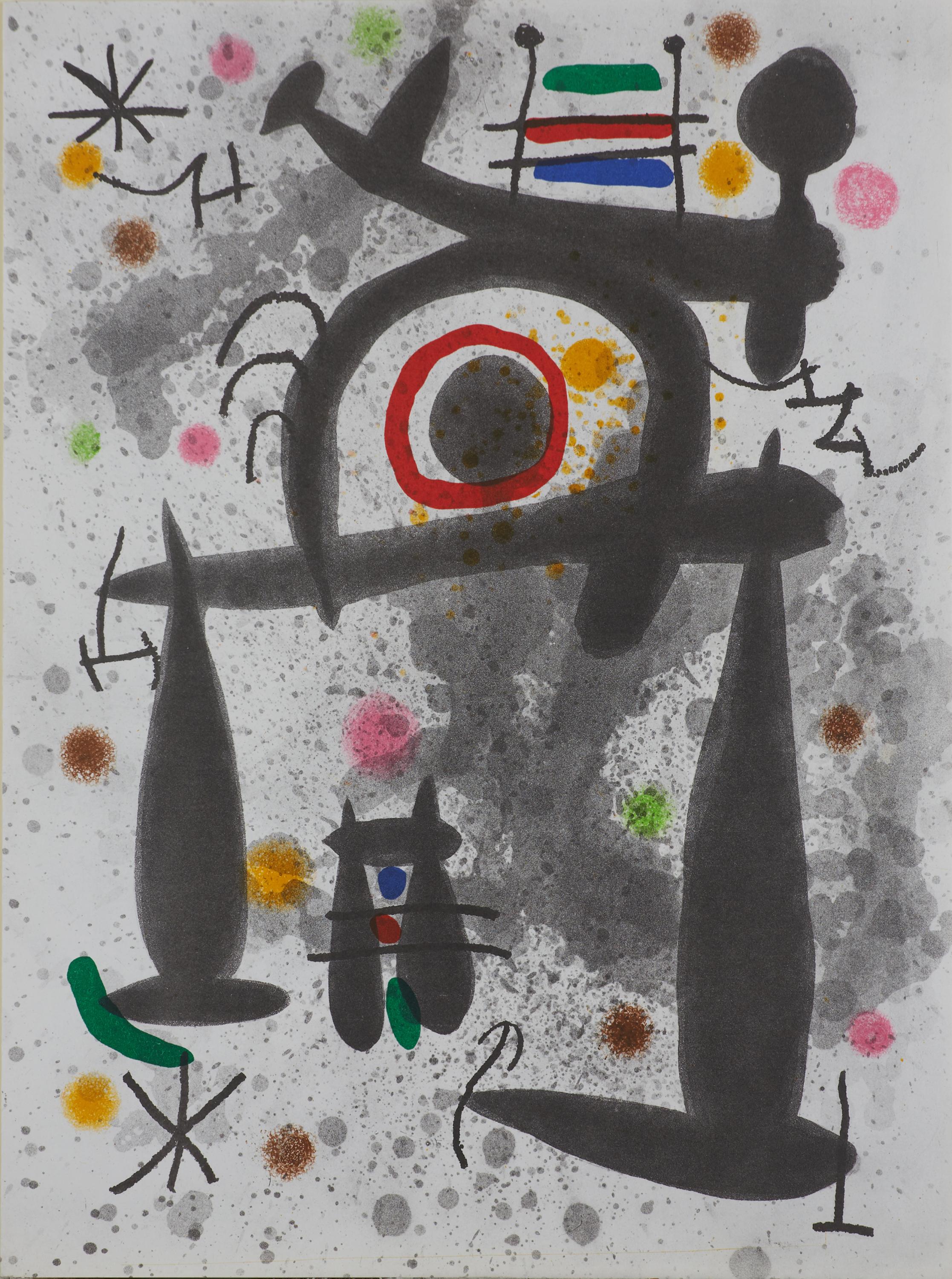
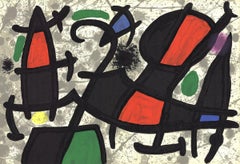
Miró, Composition, Derrière le miroir (after)1965
1965
$716
$89520% Off
£543.37
£679.2220% Off
€626.08
€782.6020% Off
CA$1,011.59
CA$1,264.4920% Off
A$1,083.91
A$1,354.8820% Off
CHF 581.44
CHF 726.8020% Off
MX$12,839.03
MX$16,048.7820% Off
NOK 7,334.54
NOK 9,168.1820% Off
SEK 6,709.97
SEK 8,387.4620% Off
DKK 4,676.92
DKK 5,846.1520% Off
About the Item
Lithograph on vélin paper. Inscription: Unsigned and unnumbered, as issued. Good condition. Notes: From the volume, Derrière le miroir, N° 155, 1965. Published by Aimé Maeght, Éditeur, Paris; printed by Éditions Pierre à Feu, Galerie Maeght, Paris, 1965. Excerpted from a Christie’s, New York lot essay, The life span of Derrière le Miroir was thirty-five years. Publication began in 1946. Aimé Maeght, initiator of Derrière le Miroir, had already made few attempts to start publications illustrated with fine printed lithographs in colours in the years prior to the launch of Derrière le Miroir. The name, Derrière le Miroir was suggested by Jacques Kober, manager of Galerie Maeght. The gallery had opened in 1945; the first number of Derrière le Miroir was released a year later. For this first issue Geer van Velde was invited to create lithographs to illustrate the publication. The lithographs in the first issue was printed by Mourlot, Paris. The first three issues of Derrière le Miroir were unsuccessful for Maeght as far as the edition size—the initial print-runs were far too large. From 30,000 for the first issue, the number was taken down to 10,000 for numbers two and three, until Derrière le Miroir number four was published in an edition of 1500. Maeght instituted a policy whereby unsold issues were recycled and used for the fabrication of new paper for the coming editions—this served to both conserve resources and also usually result in ultimate edition sizes far less than 1,500. With number four, the permanent format for Derrière le Miroir was established. Lithographs in colours were key; text was limited to comments on the featuring artist's exhibition taking place in the Galerie Maeght, and this catalogue format was defining to Derrière le Miroir. Galerie Maeght took on the leading role in Paris and presented all main artists including Braque, Matisse, Chagall, Léger, Bonnard, Chillida and many more. So too did Derrière le Miroir. The idea of a magazine was meanwhile still on the mind of Aimé Maeght. He found an insert as a solution. Two, and later four, pages of art review were inserted from 1952 onwards. In 1968 this find had ripened to independency and the dream of Aimé Maeght was now a tangible fact named l'Art vivant. Derrière le Miroir was on it's own again. Over 250 issues in a row. At that point publisher Aimé Maeght wished to make a mark with the publication of an hommage to all who once contributed to the magazine which came in the form of issue number 250, but was delayed by the death of Aimé Maeght. It was published after number 253 in 1982 and became a tribute to Aimé and Marguérite Maeght and 35 years of friendship with artists and poets. The era of Derrière le Miroir was closed with that final publication.
JOAN MIRO (1893-1983) Joan Miro was a Surrealist Spanish painter who created artwork of imaginative fantasy. Miro was very much against the established painting methods of the time, and is often credited with being the founder of automatic drawing. Automatic drawing is the process of allowing the hand to move randomly on the canvas, leaving the artwork to chance. His dreamlike works contain impressions of playfully distorted animal forms, twisted organic shapes, and odd geometric constructions. A contemporary of Picasso, Miro towers as one of the great masters of modern art, and is amongst the most famous artists of the 20th century.
- Creation Year:1965
- Dimensions:Height: 15 in (38.1 cm)Width: 11 in (27.94 cm)
- Medium:
- Movement Style:
- After:Joan Miró (1893 - 1983, Catalan)
- Period:
- Condition:
- Gallery Location:Southampton, NY
- Reference Number:1stDibs: LU1465215170692
About the Seller
4.9
Platinum Seller
Premium sellers with a 4.7+ rating and 24-hour response times
Established in 1978
1stDibs seller since 2021
1,271 sales on 1stDibs
Typical response time: 1 hour
- ShippingRetrieving quote...Shipping from: Southampton, NY
- Return Policy
More From This Seller
View AllJoan Miro, Mural Ceramic for Harvard, from Derriere le Miroir, 1961
By Joan Miró
Located in Southampton, NY
This exquisite lithograph by Joan Miro (1893–1983), titled Ceramique Murale pour Harvard (Mural Ceramic for Harvard), originates from the February 1961 folio Derriere le Miroir, No. 123, published by Maeght Editeur, Paris, under the direction of Aime Maeght, and printed by Imprimerie Arte, Paris, 1961. The composition documents Miro’s monumental ceramic project conceived for Harvard University, translating architectural scale and material experimentation into a graphic language of signs, rhythms, and chromatic force that reflects his mature synthesis of abstraction, symbolism, and public art.
Executed on velin paper, this lithograph measures 15 x 22 inches (38.1 x 55.88 cm), with centerfold, as issued. Unsigned and unnumbered, as issued. The edition reflects the refined technical standards and craftsmanship of Imprimerie Arte, Paris.
Artwork Details:
Artist: Joan Miro (1893–1983)
Title: Ceramique Murale pour Harvard (Mural Ceramic for Harvard), from Derriere le Miroir, No. 123, February 1961
Medium: Lithograph on velin paper
Dimensions: 15 x 22 inches (38.1 x 55.88 cm), with centerfold, as issued
Inscription: Unsigned and unnumbered as issued
Date: 1961
Publisher: Maeght Editeur, Paris
Printer: Imprimerie Arte, Paris
Condition: Well preserved, consistent with age and medium
Provenance: From the February 1961 folio Derriere le Miroir, No. 123, published by Maeght Editeur, Paris
About the Publication:
Derriere le Miroir (translated as "Behind the Mirror") was an iconic French art periodical published from 1946 to 1982 by Maeght Editeur, one of the most influential art publishers of the twentieth century. Founded by Aime Maeght in Paris, the publication was conceived as a visual and literary collaboration between leading modern artists, poets, and critics. Each issue functioned simultaneously as an exhibition catalogue and as an autonomous work of art, featuring original lithographs printed directly from the artists stones or plates alongside essays, poems, and critical texts. Over more than three decades, Derriere le Miroir produced over 250 issues and presented an extraordinary range of artists including Henri Matisse, Marc Chagall, Georges Braque, Alexander Calder, Fernand Leger, Pierre Bonnard, Alberto Giacometti, Eduardo Chillida, Ellsworth Kelly, Francis Bacon, Antoni Tapies, Pierre Alechinsky, Pol Bury, Bram van Velde, and many others. Printed by master ateliers such as Mourlot and Arte, the series established new standards of excellence in modern lithography and graphic design. Closely linked to exhibitions at Galerie Maeght, each issue served as a lasting document of postwar modernism, uniting image, text, and philosophy into a uniquely influential publication that remains among the most important and collectible achievements in twentieth century art publishing.
About the Artist:
Joan Miro (1893–1983) was a Catalan painter, sculptor, printmaker, and ceramicist whose visionary imagination and lyrical abstraction made him one of the most influential and beloved artists of the twentieth century. Born in Barcelona, Miro drew inspiration from Catalan folk art, Romanesque frescoes, and the luminous landscapes of Mont-roig del Camp, developing a deep connection to nature that infused his work with vitality and symbolism. After formal training at the Escola d'Art in Barcelona, he absorbed the lessons of Post-Impressionism and Cubism before moving to Paris in the early 1920s, where he became a leading figure in the Surrealist movement. There, Miro forged a personal visual language of biomorphic shapes, floating symbols, and radiant color harmonies that reflected both spontaneity and spiritual depth. In creative dialogue with peers such as Alexander Calder, Alberto Giacometti, Salvador Dali, Wassily Kandinsky, Marcel Duchamp, and Man Ray, he helped revolutionize modern art by dissolving the boundaries between abstraction and dream imagery. Miro's inventive approach extended far beyond painting, embracing sculpture, ceramics, and monumental public commissions that redefined how art could interact with space and emotion. His expressive freedom and gestural abstraction profoundly influenced later artists including Jackson Pollock, Mark Rothko, Alexander Calder, Jean Dubuffet, Antoni Tapies, and Joan Mitchell, inspiring generations who sought to merge instinct, color, and imagination. Today, Miro's work remains a cornerstone of modernism, prized by collectors and celebrated in major museums worldwide. His highest auction record was achieved by Peinture (Etoile Bleue) (1927), which sold for approximately 37 million USD at Sothebys London on June 19, 2012.
Joan Miro Ceramique...
Category
1960s Surrealist Figurative Prints
Materials
Lithograph
$796 Sale Price
20% Off
Free Shipping
Joan Miro, Mural Ceramic for Harvard, from Derriere le Miroir, 1961
By Joan Miró
Located in Southampton, NY
This exquisite lithograph by Joan Miro (1893–1983), titled Ceramique Murale pour Harvard (Mural Ceramic for Harvard), originates from the February 1961 folio Derriere le Miroir, No. 123, published by Maeght Editeur, Paris, under the direction of Aime Maeght, and printed by Imprimerie Arte, Paris, 1961. The composition documents Miro’s monumental ceramic project conceived for Harvard University, translating architectural scale and material experimentation into a graphic language of signs, rhythms, and chromatic force that reflects his mature synthesis of abstraction, symbolism, and public art.
Executed on velin paper, this lithograph measures 15 x 11 inches (38.1 x 27.94 cm). Unsigned and unnumbered, as issued. The edition reflects the refined technical standards and craftsmanship of Imprimerie Arte, Paris.
Artwork Details:
Artist: Joan Miro (1893–1983)
Title: Ceramique Murale pour Harvard (Mural Ceramic for Harvard), from Derriere le Miroir, No. 123, February 1961
Medium: Lithograph on velin paper
Dimensions: 15 x 11 inches (38.1 x 27.94 cm)
Inscription: Unsigned and unnumbered as issued
Date: 1961
Publisher: Maeght Editeur, Paris
Printer: Imprimerie Arte, Paris
Condition: Well preserved, consistent with age and medium
Provenance: From the February 1961 folio Derriere le Miroir, No. 123, published by Maeght Editeur, Paris
About the Publication:
Derriere le Miroir (translated as "Behind the Mirror") was an iconic French art periodical published from 1946 to 1982 by Maeght Editeur, one of the most influential art publishers of the twentieth century. Founded by Aime Maeght in Paris, the publication was conceived as a visual and literary collaboration between leading modern artists, poets, and critics. Each issue functioned simultaneously as an exhibition catalogue and as an autonomous work of art, featuring original lithographs printed directly from the artists stones or plates alongside essays, poems, and critical texts. Over more than three decades, Derriere le Miroir produced over 250 issues and presented an extraordinary range of artists including Henri Matisse, Marc Chagall, Georges Braque, Alexander Calder, Fernand Leger, Pierre Bonnard, Alberto Giacometti, Eduardo Chillida, Ellsworth Kelly, Francis Bacon, Antoni Tapies, Pierre Alechinsky, Pol Bury, Bram van Velde, and many others. Printed by master ateliers such as Mourlot and Arte, the series established new standards of excellence in modern lithography and graphic design. Closely linked to exhibitions at Galerie Maeght, each issue served as a lasting document of postwar modernism, uniting image, text, and philosophy into a uniquely influential publication that remains among the most important and collectible achievements in twentieth century art publishing.
About the Artist:
Joan Miro (1893–1983) was a Catalan painter, sculptor, printmaker, and ceramicist whose visionary imagination and lyrical abstraction made him one of the most influential and beloved artists of the twentieth century. Born in Barcelona, Miro drew inspiration from Catalan folk art, Romanesque frescoes, and the luminous landscapes of Mont-roig del Camp, developing a deep connection to nature that infused his work with vitality and symbolism. After formal training at the Escola d'Art in Barcelona, he absorbed the lessons of Post-Impressionism and Cubism before moving to Paris in the early 1920s, where he became a leading figure in the Surrealist movement. There, Miro forged a personal visual language of biomorphic shapes, floating symbols, and radiant color harmonies that reflected both spontaneity and spiritual depth. In creative dialogue with peers such as Alexander Calder, Alberto Giacometti, Salvador Dali, Wassily Kandinsky, Marcel Duchamp, and Man Ray, he helped revolutionize modern art by dissolving the boundaries between abstraction and dream imagery. Miro's inventive approach extended far beyond painting, embracing sculpture, ceramics, and monumental public commissions that redefined how art could interact with space and emotion. His expressive freedom and gestural abstraction profoundly influenced later artists including Jackson Pollock, Mark Rothko, Alexander Calder, Jean Dubuffet, Antoni Tapies, and Joan Mitchell, inspiring generations who sought to merge instinct, color, and imagination. Today, Miro's work remains a cornerstone of modernism, prized by collectors and celebrated in major museums worldwide. His highest auction record was achieved by Peinture (Etoile Bleue) (1927), which sold for approximately 37 million USD at Sothebys London on June 19, 2012.
Joan Miro Ceramique...
Category
1960s Surrealist Figurative Prints
Materials
Lithograph
$716 Sale Price
20% Off
Free Shipping
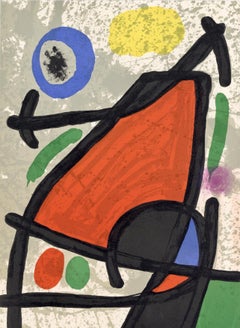
Joan Miro, Figure and Bird in the Night, from Derriere le miroir, 1970
By Joan Miró
Located in Southampton, NY
This exquisite lithograph by Joan Miro (1893–1983), titled Personnage et oiseau dans la nuit (Figure and Bird in the Night), from the folio Derriere le miroir, No. 186, originates fr...
Category
1970s Surrealist Figurative Prints
Materials
Lithograph
$796 Sale Price
20% Off
Free Shipping
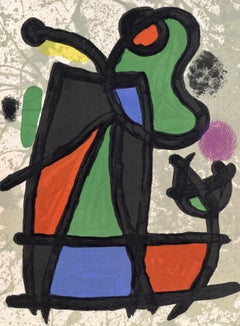
Joan Miro, The Great Figure, from Derriere le miroir, 1970
By Joan Miró
Located in Southampton, NY
This exquisite lithograph by Joan Miro (1893–1983), titled Le Grand Personnage (The Great Figure), from the folio Derriere le miroir, No. 186, originates from the 1970 edition publis...
Category
1970s Surrealist Figurative Prints
Materials
Lithograph
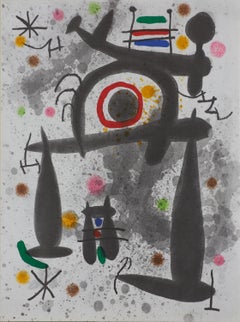
Joan Miro, The Mirror of Man Through Beasts V, from Derriere le Miroir, 1971
By Joan Miró
Located in Southampton, NY
This exquisite lithograph by Joan Miro (1893–1983), titled Le miroir de l'homme par les betes V (The Mirror of Man Through Beasts V), originates from the December 1971 folio Derriere...
Category
1970s Surrealist Figurative Prints
Materials
Lithograph
$716 Sale Price
44% Off
Free Shipping
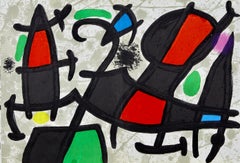
Joan Miro, The Comedy of Art, from Derriere le miroir, 1970
By Joan Miró
Located in Southampton, NY
This exquisite lithograph by Joan Miro (1893–1983), titled La Commedia dell'Arte (The Comedy of Art), from the folio Derriere le miroir, No. 186, originates from the 1970 edition pub...
Category
1970s Surrealist Figurative Prints
Materials
Lithograph
$796 Sale Price
20% Off
Free Shipping
You May Also Like
Derrière le Miroir Lithograph by Joan Miró, Modern, 1970, Unframed
By Joan Miró
Located in Brooklyn, NY
This double-page lithograph by Joan Miró is featured on pages 16-17 of Derrière le Miroir No. 186, published by Maeght Editeur in Paris in 1970. The lithograph, which includes a fold...
Category
1970s Modern Prints and Multiples
Materials
Lithograph
$232 Sale Price
33% Off
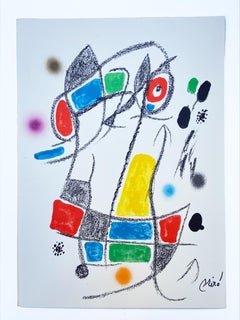
Joan Miró - Maravillas con variaciones n•3
By Joan Miró
Located in Saint Ouen, FR
Joan Miró - Maravillas con variaciones n-3
Lithography
35,7x49,6cm
Signed in the plate
1975
Edition of 1500 copies on Guarro paper
Publisher : Poligrafa Barcelona
890€
Category
1970s Abstract Abstract Prints
Materials
Paper
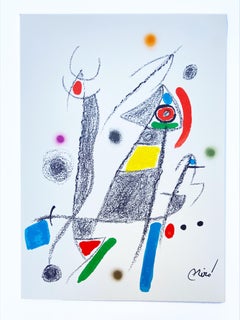
Joan Miró - Maravillas con variaciones n•6
By Joan Miró
Located in Saint Ouen, FR
Joan Miró - Maravillas con variaciones n-6
Lithography
35,7x49,6cm
Signed in the plate
1975
Edition of 1500 copies on Guarro paper
Publisher : Poligrafa Barcelona
890€
Category
1970s Abstract Abstract Prints
Materials
Paper
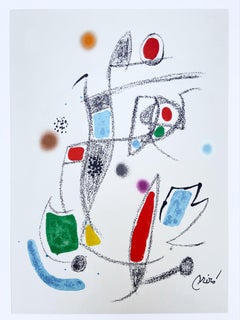
Joan Miró - Maravillas con variaciones n•10
By Joan Miró
Located in Saint Ouen, FR
Joan Miró - Maravillas con variaciones n-10
Lithography
35,7x49,6cm
Signed in the plate
1975
Edition of 1500 copies on Guarro paper
Publisher : Poligrafa Barcelona
890€
Category
1970s Abstract Abstract Prints
Materials
Paper
Joan Miró - Maravillas con variaciones n•4
By Joan Miró
Located in Saint Ouen, FR
Joan Miró - Maravillas con variaciones n-4
Lithography
35,7x49,6cm
Signed in the plate
1975
Edition of 1500 copies on Guarro paper
Publisher : Poligrafa Barcelona
890€
Category
1970s Abstract Abstract Prints
Materials
Paper
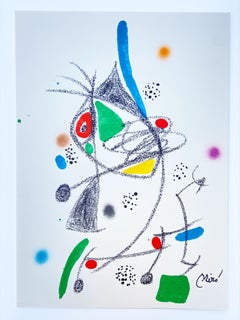
Joan Miró - Maravillas con variaciones n•2
By Joan Miró
Located in Saint Ouen, FR
Joan Miró - Maravillas con variaciones n-2
Lithography
35,7x49,6cm
Signed in the plate
1975
Edition of 1500 copies on Guarro paper
Publisher : Poligrafa Barcelona
890€
Category
1970s Abstract Abstract Prints
Materials
Paper
More Ways To Browse
La Petite Corrida
Leon Boullet
Leroy Neiman Posters
Lithograph By Mirror
Lithograph Picasso 1957
Make Art Not War
Marc Chagall Poster Framed
Marc Chagall The Lovers
Marino Marini Shakespeare
Mary Cassatt Etchings
Matisse Signed Print
Max Baer
Max Beckmann Drypoint
May Belfort
Melanie Taylor Kent
Mexican Revolution Art
Michel Delacroix On Sale
Munch Poster 1969