Items Similar to Avanzi delle rovine della Villa... - Etching by L. Rossini - 1826
Want more images or videos?
Request additional images or videos from the seller
1 of 5
Luigi RossiniAvanzi delle rovine della Villa... - Etching by L. Rossini - 18261826
1826
$533.95
£398.62
€450
CA$741.82
A$797.93
CHF 426.44
MX$9,405.35
NOK 5,376.39
SEK 4,915.04
DKK 3,429.51
About the Item
Avanzi delle Rovine della casa del console Ventidio Basso, non molto lungi da Quintigliolo nella Valle verso Tramontana in Tivoli.
Image dimensions: 36x46 cm.
From the collection “Le antichità de’ contorni di Roma (...)” an artist's proof with sharp details, representing the Consul Ventidio Basso’s Villa near Tivoli . Signed on plate “Rossini dis. e inc.” on lower-left corner, with indication of date and place “Roma, 1826”. In Excellent conditions.
Luigi Rossini (1790 – 1857)
Like Giovanni Battista Piranesi, Luigi Rossini was an architect and his etchings have the same tendency to emphasize the massive constructions of the Ancient Rome. He became famous thanks to his etchings representing Roman landscapes and antique monuments. Among which “Le antichità de' contorni di Roma ossia le più famose città del Lazio. Tivoli, Albano, Castel Gandolfo, Palestrina, Tuscolo, Cora e Ferentino”, a collection of 72 plates published in Rome, 1826.
- Creator:Luigi Rossini (1790-1857, Italian)
- Creation Year:1826
- Dimensions:Height: 19.89 in (50.5 cm)Width: 27.56 in (70 cm)Depth: 0.04 in (1 mm)
- Medium:
- Movement Style:
- Period:
- Condition:Insurance may be requested by customers as additional service, contact us for more information.
- Gallery Location:Roma, IT
- Reference Number:Seller: J-772691stDibs: LU65034240711
Luigi Rossini
Luigi Rossini (1790-1857) like his predecessors, Giovanni Piranesi (1720–1778) and Giuseppi Vasi (1710-1782), was an architect and artist. Like Piranesi and Vasi, he wanted to glorify the architecture of ancient Rome, which he felt was deteriorating and needed to be documented. Several of the ruins he illustrated have, in fact, since disappeared leaving only his images as a record of their appearance. His images of the grand edifices of the city dramatically depict the power and glory of ancient Rome reflected by its architecture, but were accurate enough to be used by practicing architects, as well as other serious students of classical antiquity. His art continues to influence and inspire architects, artists and those who love Rome. Rossini was born in Rome and trained at the Academy of Bologna. Upon graduation, he moved to Rome and attempted a career as an architect. As he was not economically successful as an architect, he became a full-time artist, initially producing souvenirs for local collectors, wealthy and aristocratic European tourists on the Grand Tour, as well as for architectural students and practitioners all over Europe. Many of his prints were published in several imperial folio sized collections, including Le Anchita Romane (The Rome of Antiquity).
About the Seller
4.9
Platinum Seller
Premium sellers with a 4.7+ rating and 24-hour response times
1stDibs seller since 2017
7,916 sales on 1stDibs
Typical response time: 1 hour
- ShippingRetrieving quote...Shipping from: Roma, Italy
- Return Policy
More From This Seller
View AllVeduta degli Avanzi della Villa... - Etching by L. Rossini - 1825
By Luigi Rossini
Located in Roma, IT
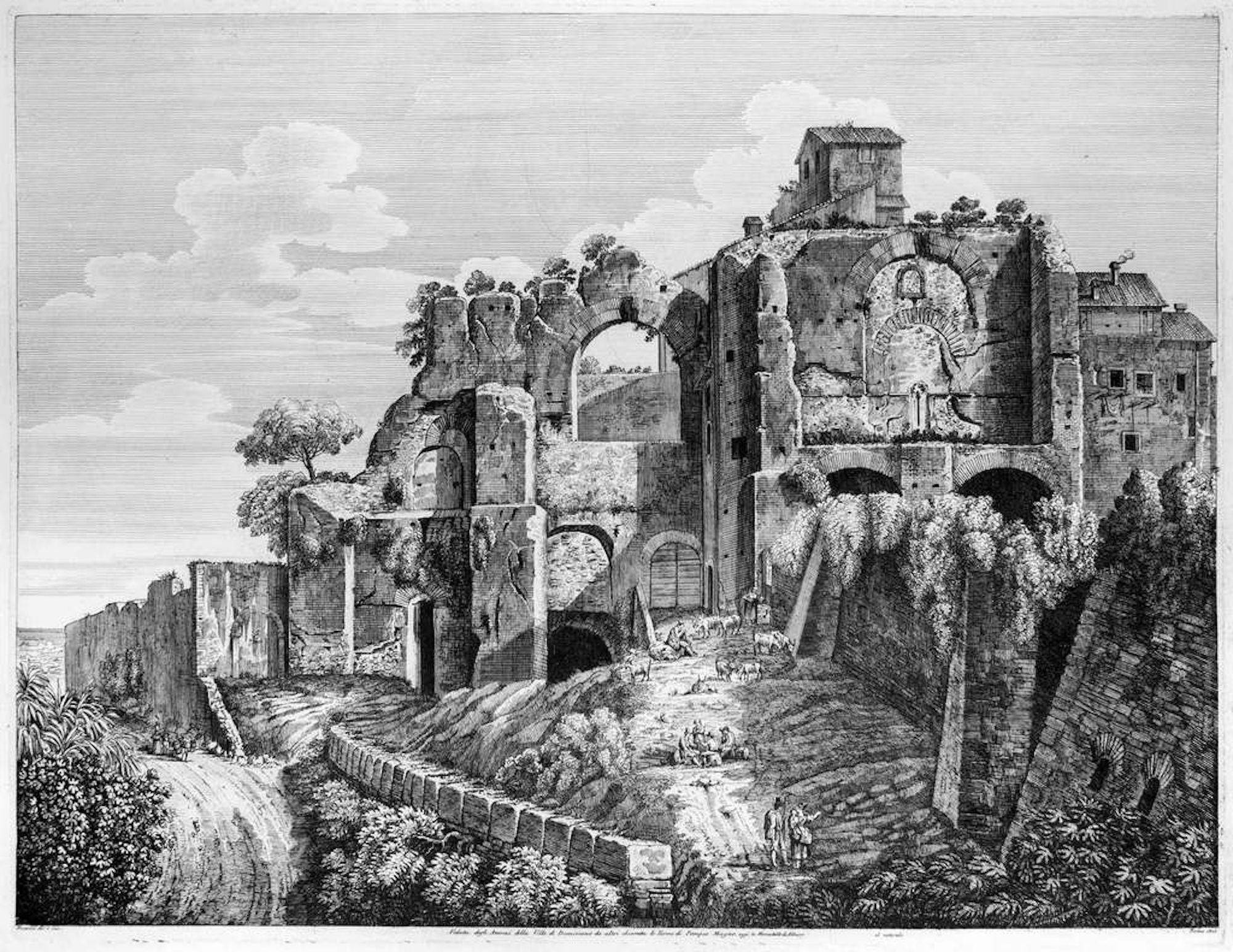
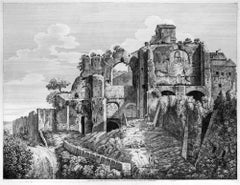
Veduta degli Avanzi della Villa di Domiziano da altri chiamata le Terme di Pompeo Magno
Image dimensions: 46x60 cm.
From the collection “Le antichità de’ contorni di Roma (...)” an a...
Category
1820s Old Masters Figurative Prints
Materials
Etching
Veduta delle rovine di una Conserva... - Etching by L. Rossini - 1826
By Luigi Rossini
Located in Roma, IT
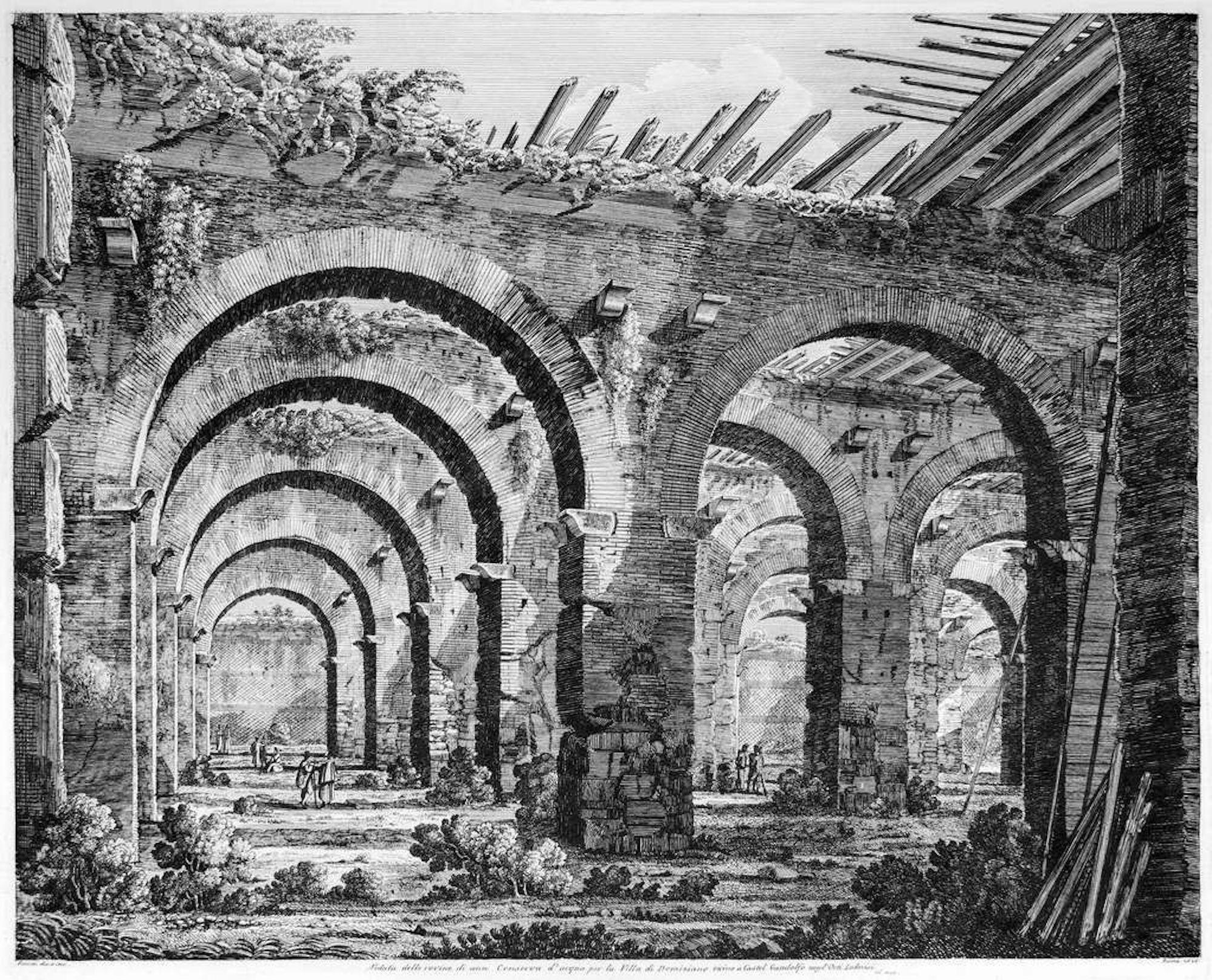
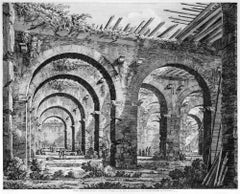
Veduta delle Rovine di una Conserva d'acqua per la Villa di Domiziano vicino a Castel Gandolfo negl'Orti Lodovisi
Image dimensions: 42 x 52 cm.
From th...
Category
1820s Old Masters Figurative Prints
Materials
Etching
Avanzi della Biblioteca ... - Etching by Luigi Rossini - 1824
By Luigi Rossini
Located in Roma, IT
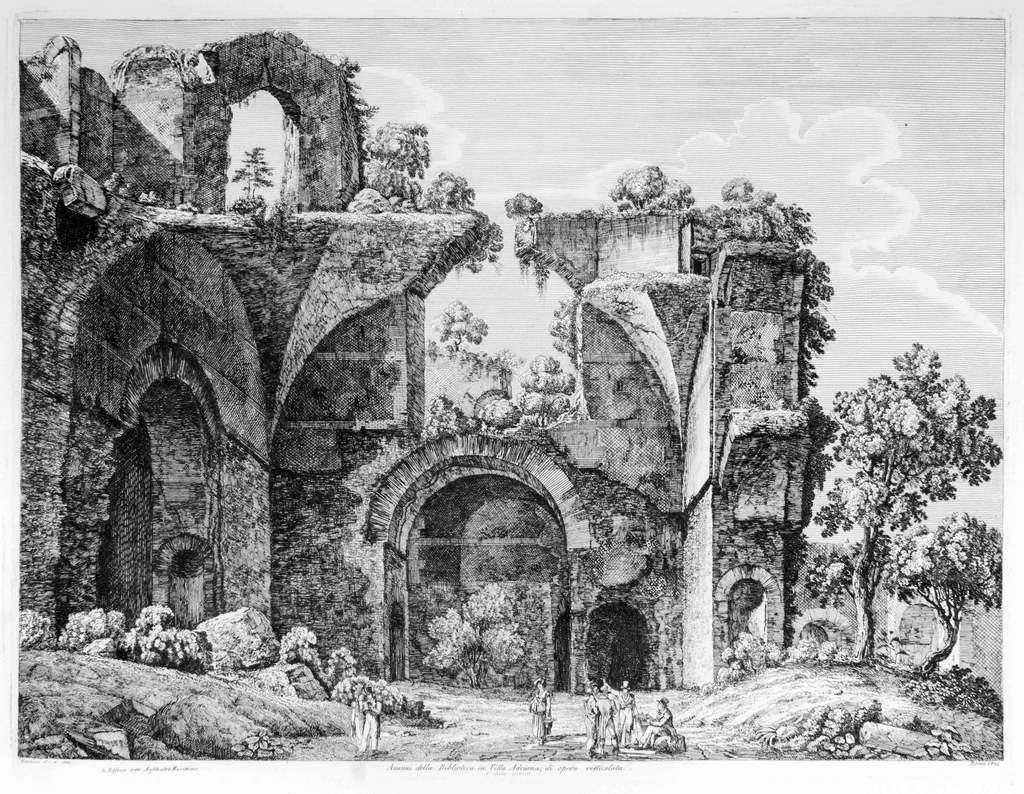
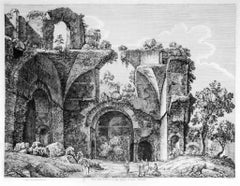
Avanzi della Biblioteca in Villa Adriana, di opera retticolata is an original etching realized by Luigi Rossini.
From the collection “Le antichità de’ c...
Category
1820s Old Masters Landscape Prints
Materials
Etching
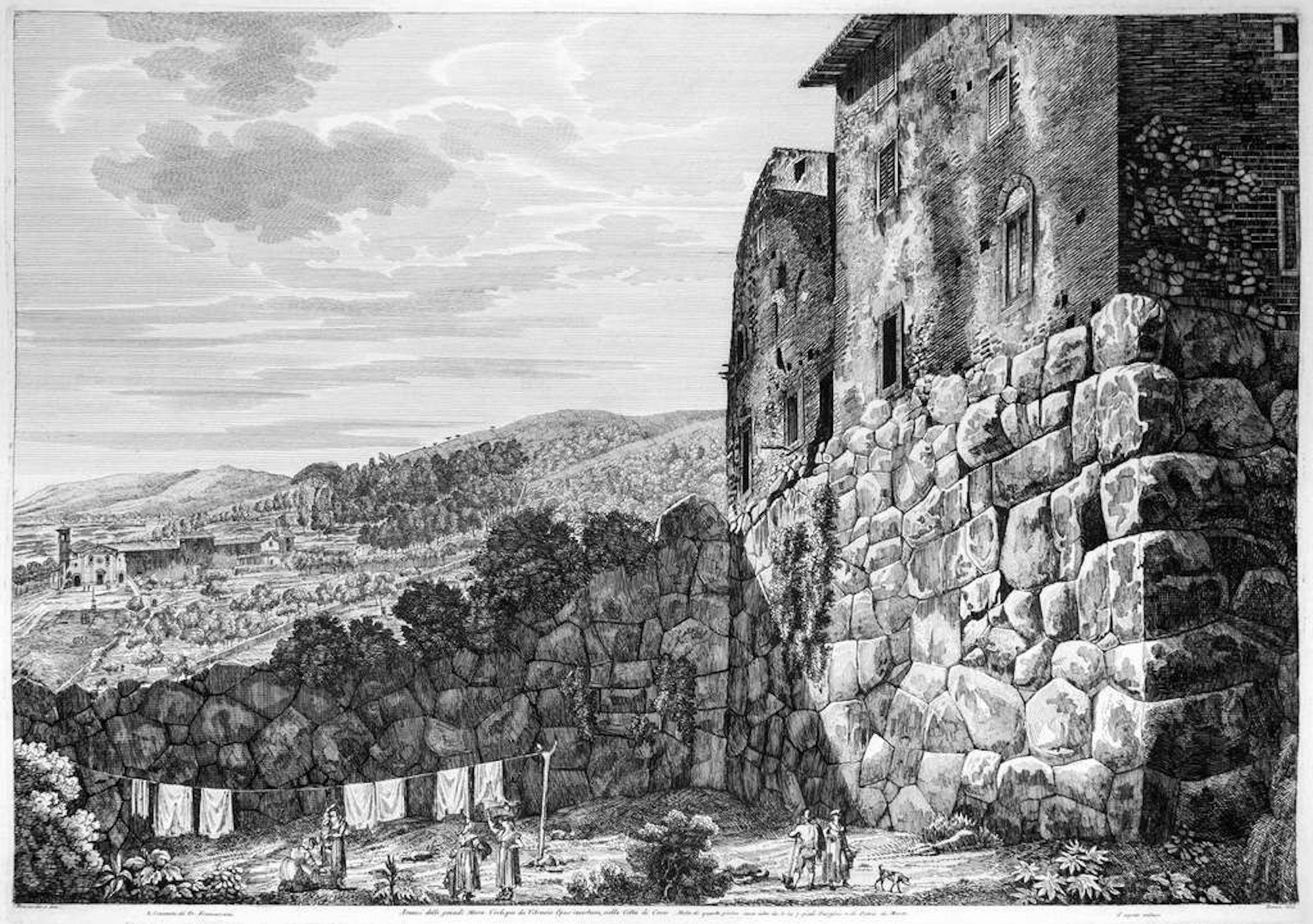
Avanzi delle grandi Mura ciclopee... - Etching by L. Rossini - 1825
By Luigi Rossini
Located in Roma, IT
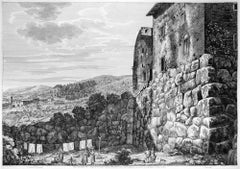
Avanzi delle grandi Mura Ciclopee da Vitruvio Opus Incertum, nella città di Cora
Image dimensions: 47x67 cm.
From the collection “Le antichità de’ contorni di Roma (...)” an artist's...
Category
1820s Old Masters Figurative Prints
Materials
Etching
Veduta di Tivoli mista d
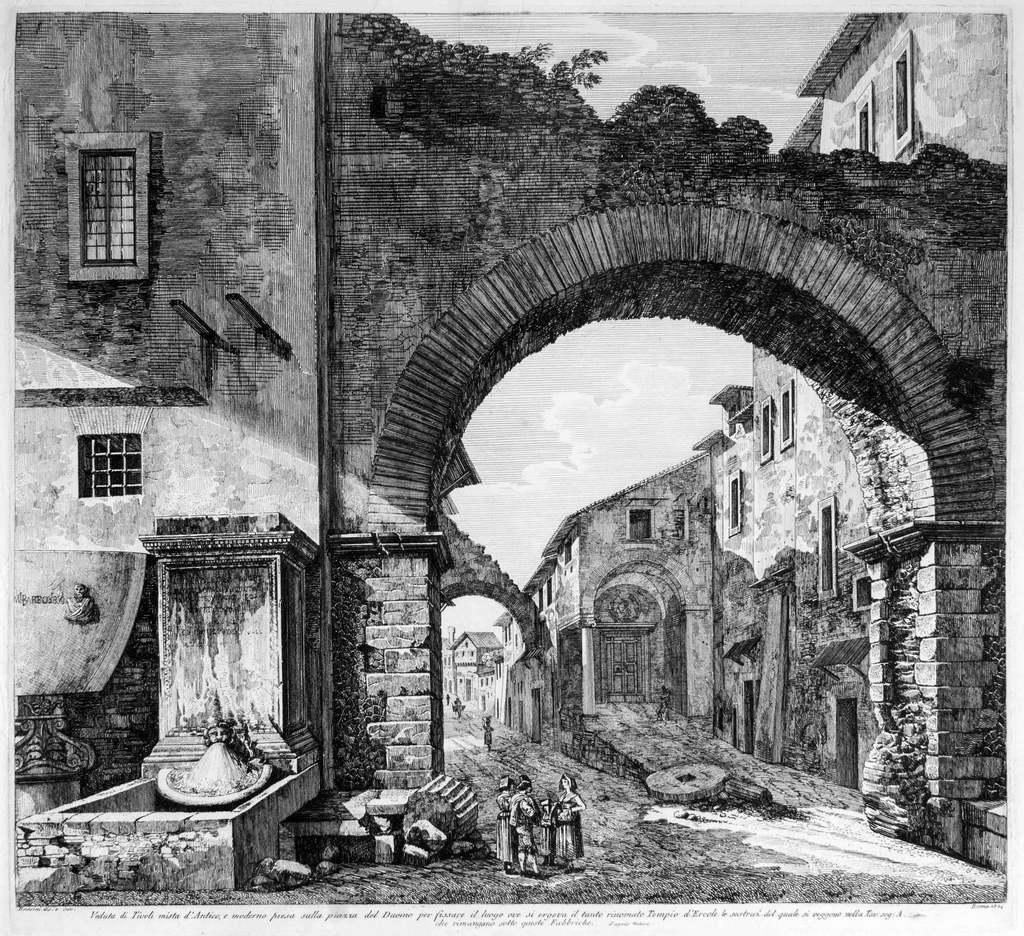
Antico, e moderno (...) - Etching by L. Rossini - 1824
By Luigi Rossini
Located in Roma, IT
Veduta di Tivoli mista d'Antico, e moderno (...)
From the collection: “Le antichità de' contorni di Roma ossia le più famose città del Lazio. Tivoli, Albano...
Category
1820s Modern Landscape Prints
Materials
Etching
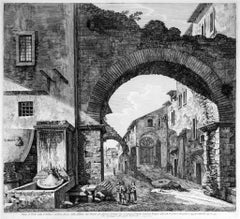
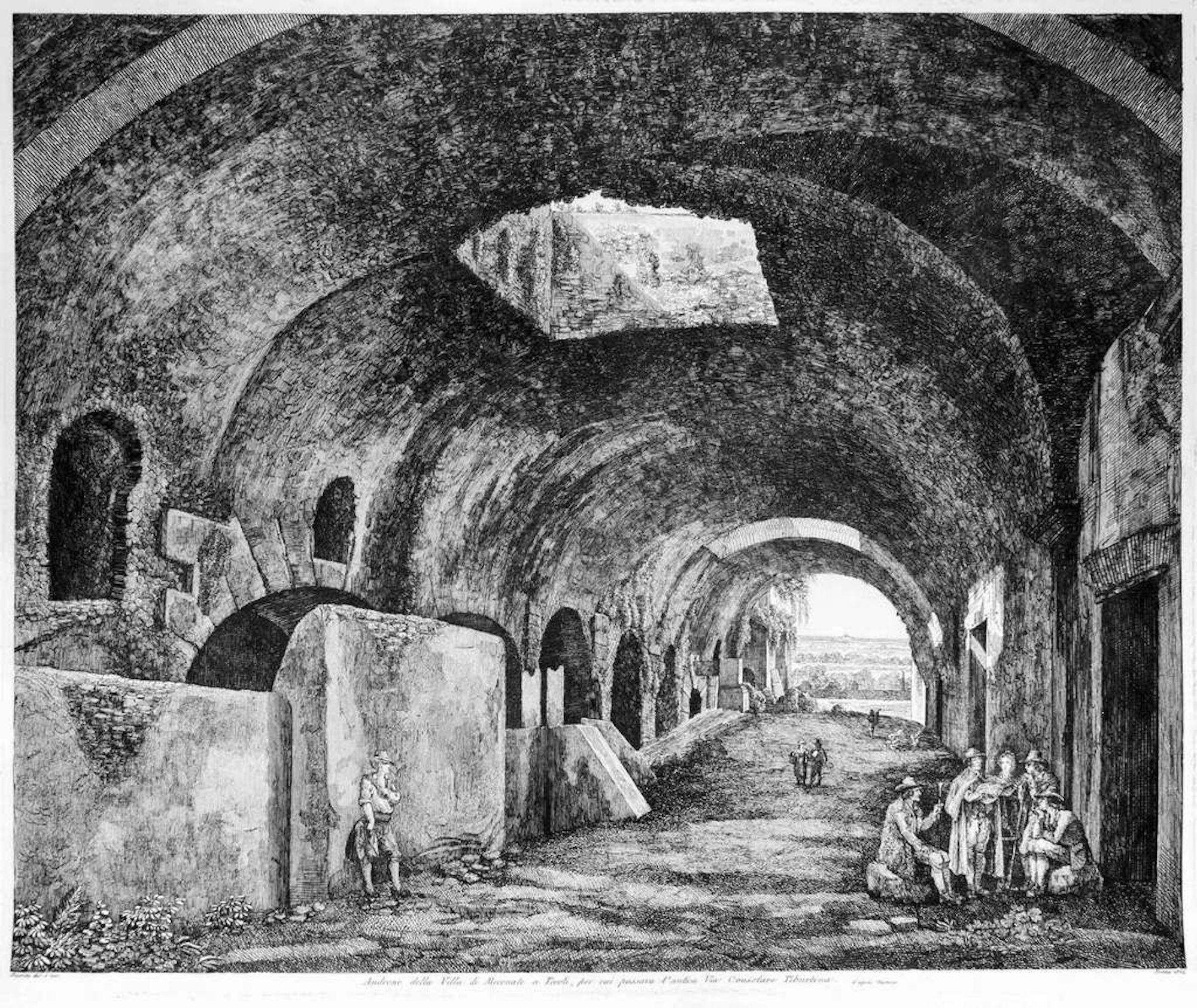
Androne della Villa di Mecenate a Tivoli - Etching by L. Rossini - 1824
By Luigi Rossini
Located in Roma, IT
Androne della Villa di Mecenate a Tivoli, per cui passava l'antica Via Consolare Tiburtina
Image dimensions: 50x60 cm.
From the collection “Le antichità de’ contorni di Roma (...)” a...
Category
1820s Old Masters Figurative Prints
Materials
Etching
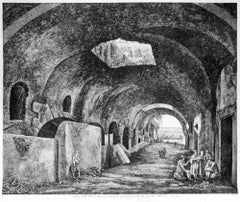
You May Also Like
Ruins of the Roman Baths of Belisarius: A 19th C. Etching by Luigi Rossini
By Luigi Rossini
Located in Alamo, CA
This early 19th century etching entitled "Veduta degl' Avanzi delle Torri di Belisario Dalla parte che guarda l' Interno della Città, vicino a Porta S. Giovanni, A. Mura Aureliane" (...
Category
1820s Old Masters Landscape Prints
Materials
Etching
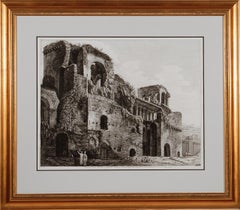
19th Century Etching of the Ancient Caracalla Baths in Rome by Luigi Rossini
By Luigi Rossini
Located in Alamo, CA
This early 19th century etching entitled "Veduta dei Grandi Avanzi delle Terme Antoniane, o di Caracalla" (The baths of Caracalla) was created by Luigi Rossini and included in his pu...
Category
1820s Old Masters Figurative Prints
Materials
Etching
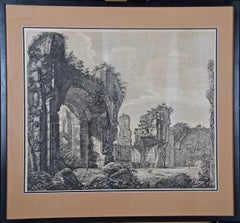
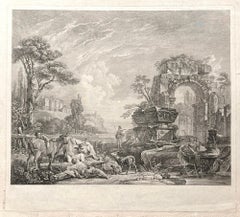
Les Bergers Romains, landscape with Roman ruins, 18th century engraving
Located in Melbourne, Victoria
Les Bergers Romains
Copper-line engraving by Jean Jacques Leveau (1729-1786) after Pierre Mettay (1728-1759). C1755.
Proof, before lettering. Laid, watermarked paper.
A landscap...
Category
18th Century French School Landscape Prints
Materials
Engraving
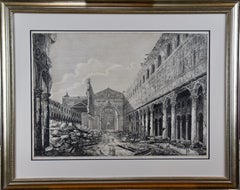
The Basilica of St. Paul in Rome, Early 19th Century Etching by Luigi Rossini
By Luigi Rossini
Located in Alamo, CA
"Rovina della gran Basilica di S. Paolo fueri le mura accaduta" (View of the Ruins of the Great Triumphal Arch of S. Paolo Fuori le Mura) from "Le Antichita Romane" (Ancient Rome), published in Rome in 1823. It depicts the destruction of the Basilica of St. Paul after the fire of 1823. People stand in the road and on the right observing the damage amid debris, which includes many fragments of columns.
The etching is presented in a silver-color wood frame with an off-white double mat with a black inner mat. There are a few small spots, but it is otherwise in very good condition. See item # LU117324669722 for another Rossini etching...
Category
1820s Old Masters Figurative Prints
Materials
Etching
Suite of 12 Views of Italy
By Franz Weirotter
Located in New York, NY
Franz Weirotter (1730-1771), Suite of 12 Views of Italy, etchings, 1759 [most signed in the plate by Weirotter]. Reference: Nagel 5. 10 printed in pairs on one sheet; one on a small...
Category
1750s Old Masters Landscape Prints
Materials
Etching
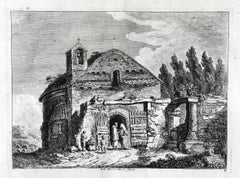
Ruine di Sepolcro antico
By Giovanni Battista Piranesi
Located in Fairlawn, OH
Ruine di Sepolcro antico
Etching, 1743
Signed in the plate bottomleft in the caaption plate
From: Prima Parte, 1743
Second edition: 1750-1778
Watermark: R 37-39
A lifetime impression printed during Piranesi’s life, before the plates are moved to Paris by his sons in the 1790’s
Coniditon: Excellent/Very good
Image size: 14 5/8 x 9 3/4 inches
Reference: Robison 17 iii/V
Piranesi In Rome: Prima Parte di Architetture e Prospettive
"Although Piranesi studied architecture in Venice, he never was able to find work in the field other than a few jobs involving remodeling in Rome. While Piranesi was struggling to support his architectural endeavors upon his arrival in Rome in 1740, he spent a short period of time in the studio of master painter Giovanni Battista Tiepolo (1696-1770) in addition to his apprenticeship with Giuseppe Vasi. The first production of Piranesi’s early years in Rome and a culmination of his training under Vasi, Tiepolo, and his uncle, was the Prima Parte di Architetture e Prospettive (1743). The Prima Parte was a collection of twelve etchings of imaginary temples, palaces, ruins, and a prison. During this time, Piranesi was still developing the unique style of etching he is known for today, and as such the Prima Parte differs significantly in technique compared to later works. In the Frontispiece of the Prima Parte, Piranesi’s lines are definite and exact with very little flow to them, designed in the form of traditional etching. The detail is immaculate, and yet perspective of the piece is oddly simple and familiar to the viewer. Piranesi’s technique employs miniscule markings and lines, intricately woven together to create a stippling effect. The Prima Parte, described as “rigid” by art historian Jonathan Scott, came to be seen as a stark contrast to his later sketches, which were much lighter and freer. Influenced by the style of Tiepolo, which epitomized the lightness and brightness of the Rococo period, Piranesi adopted some of the more painterly techniques of the masters he apprenticed under. Piranesi made the medium of etching appear as though it was a sketch or a painting, hence a “freer” and more fluid design in his later works. For example, the frontispiece of the Prima Parte read as an etching to Piranesi’s audience, but in his later vedute, the style of etching almost appears to be made of brushstrokes. Moreover, at the same time Piranesi was working on the Prima Parte, he aided the artist Giambattista Nolli. There is a small section of Nolli’s map...
Category
1740s Old Masters Interior Prints
Materials
Etching