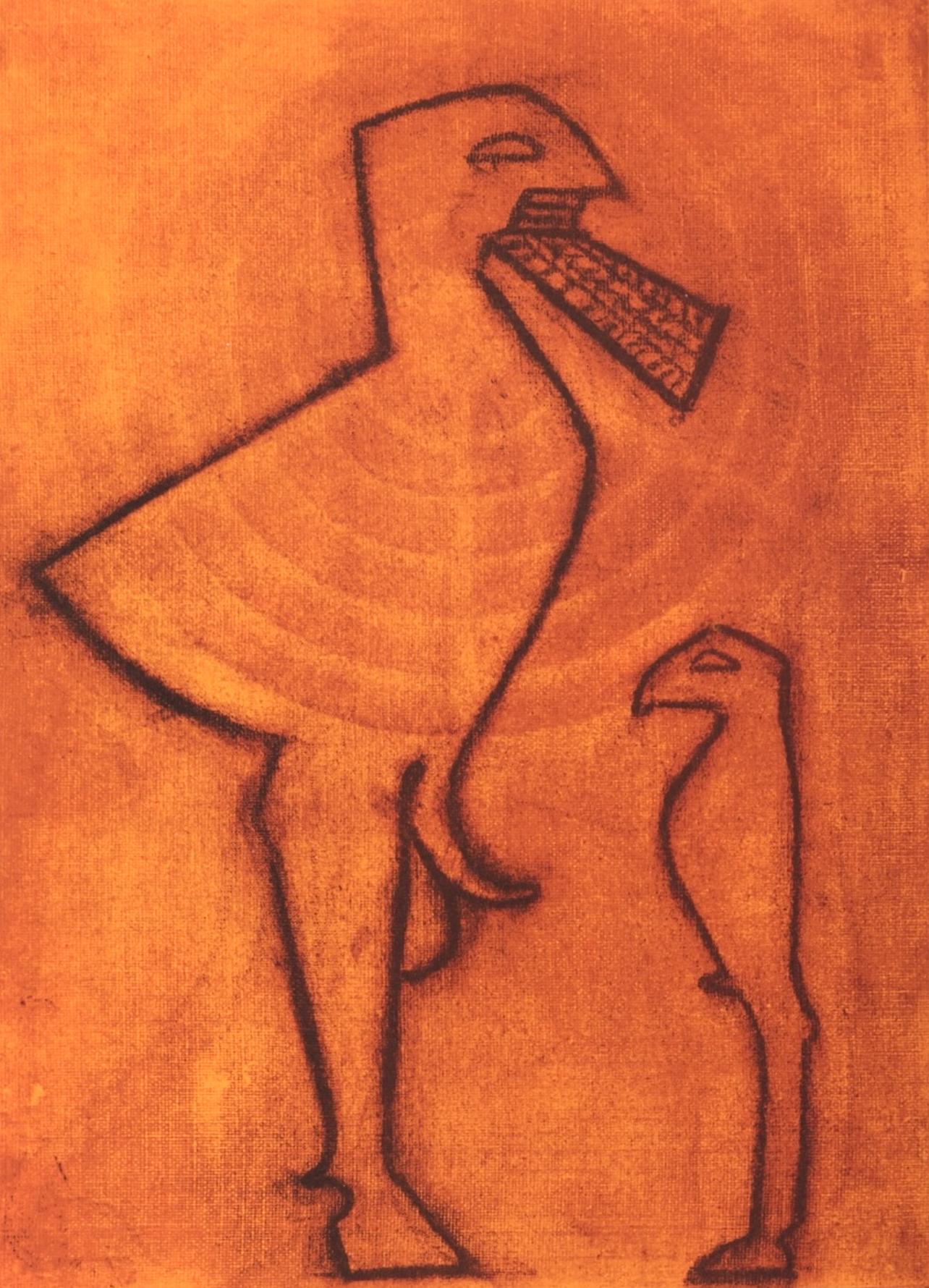
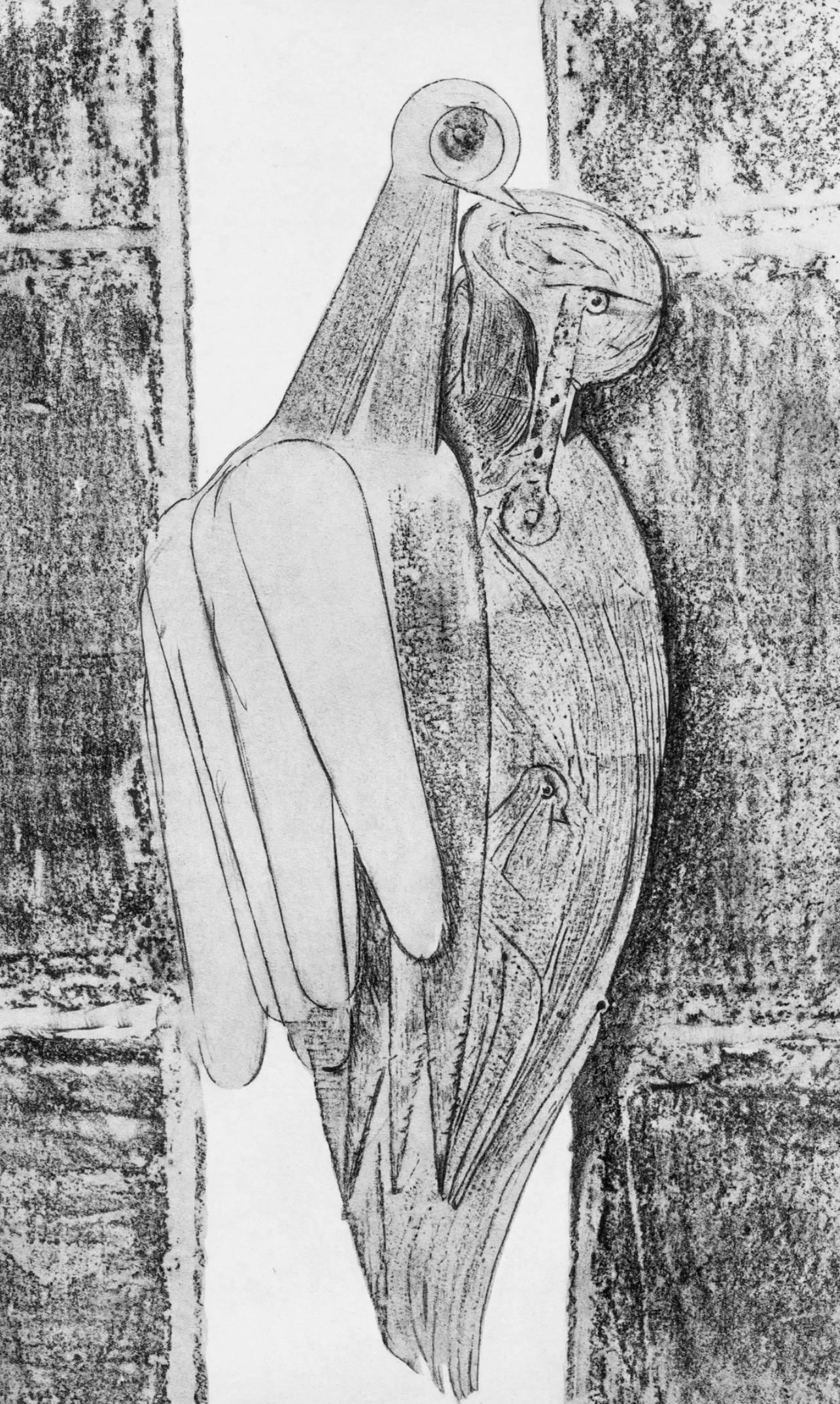
Items Similar to Ernst, Deux Oiseaux (Spies/Leppien 438) (after)
Want more images or videos?
Request additional images or videos from the seller
1 of 8
Ernst, Deux Oiseaux (Spies/Leppien 438) (after)1970
1970
$796
$1,79555% Off
£604.09
£1,362.2355% Off
€696.04
€1,569.5855% Off
CA$1,124.62
CA$2,536.0555% Off
A$1,205.01
A$2,717.3455% Off
CHF 646.41
CHF 1,457.6655% Off
MX$14,273.55
MX$32,187.2255% Off
NOK 8,154.04
NOK 18,387.5755% Off
SEK 7,459.69
SEK 16,821.7855% Off
DKK 5,199.48
DKK 11,724.9655% Off
About the Item
Lithograph on wove paper. Inscription: Unsigned and unnumbered, as issued. Good Condition; never framed or matted. Notes: Published and printed by Poligrafa, Barcelona, 1970.
MAX ERNST (1891-1976) was a German (naturalised American in 1948 and French in 1958) painter, sculptor, printmaker, graphic artist, and poet. A prolific artist, Ernst was a primary pioneer of the Dada movement and Surrealism in Europe. He had no formal artistic training, but his experimental attitude toward the making of art resulted in his invention of frottage—a technique that uses pencil rubbings of textured objects and relief surfaces to create images—and grattage, an analogous technique in which paint is scraped across canvas to reveal the imprints of the objects placed beneath. Ernst is noted for his unconventional drawing methods as well as for creating novels and pamphlets using the method of collages. He served as a soldier for four years during World War I, and this experience left him shocked, traumatised and critical of the modern world. During World War II he was designated an "undesirable foreigner" while living in France. Ernst was in the milieu of Picasso, Dali, and Miro.
- Creation Year:1970
- Dimensions:Height: 13 in (33.02 cm)Width: 24 in (60.96 cm)
- Medium:
- Movement Style:
- After:Max Ernst (1891-1976, American, German, French)
- Period:
- Condition:
- Gallery Location:Southampton, NY
- Reference Number:1stDibs: LU1465214024182
About the Seller
4.9
Platinum Seller
Premium sellers with a 4.7+ rating and 24-hour response times
Established in 1978
1stDibs seller since 2021
1,270 sales on 1stDibs
Typical response time: 1 hour
- ShippingRetrieving quote...Shipping from: Southampton, NY
- Return Policy
More From This Seller
View AllErnst, Composition (Monod 2619; Spies/Leppien A19/C), Dent Prompte (after)
By Max Ernst
Located in Southampton, NY
Lithograph on vélin d’Arches paper. Inscription: unsigned and unnumbered, as issued. Good condition. Notes: From the folio, Dent Prompte, Dix poèmes inédits illustrés par Max Ernst, ...
Category
1960s Surrealist Landscape Prints
Materials
Lithograph
$716 Sale Price
52% Off
Free Shipping
Max Ernst, The Origin of the Clock, from Natural History, 1972 (after)
By Max Ernst
Located in Southampton, NY
This exquisite collotype after Max Ernst (1891–1976), titled L'Origine de la pendule (The Origin of the Clock), from the album Max Ernst, Histoire Naturelle (Natural History), origin...
Category
1970s Surrealist Landscape Prints
Materials
Lithograph
$716 Sale Price
20% Off
Free Shipping
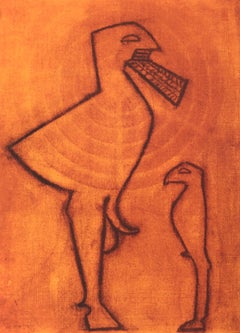
Ernst, Composition, Judith, Tragödie in drei Akten (after)
By Max Ernst
Located in Southampton, NY
Lithograph on vélin d'Arches paper. Unsigned and unnumbered, as issued. Good condition. Notes: From the album, Judith, Tragödie in Drei Akten, Lithographien von Max Ernst und Dorothe...
Category
1970s Surrealist Abstract Prints
Materials
Lithograph
$1,196 Sale Price
20% Off
Free Shipping
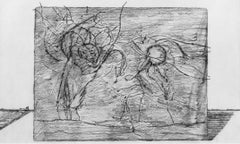
Max Ernst, Whip Lashes or Lava Threads, from Natural History, 1972 (after)
By Max Ernst
Located in Southampton, NY
This exquisite collotype after Max Ernst (1891–1976), titled Coups de fouet ou ficelles de lave (Whip Lashes or Lava Threads), from the album Max Ernst, Histoire Naturelle (Natural H...
Category
1970s Surrealist Landscape Prints
Materials
Lithograph
$716 Sale Price
20% Off
Free Shipping
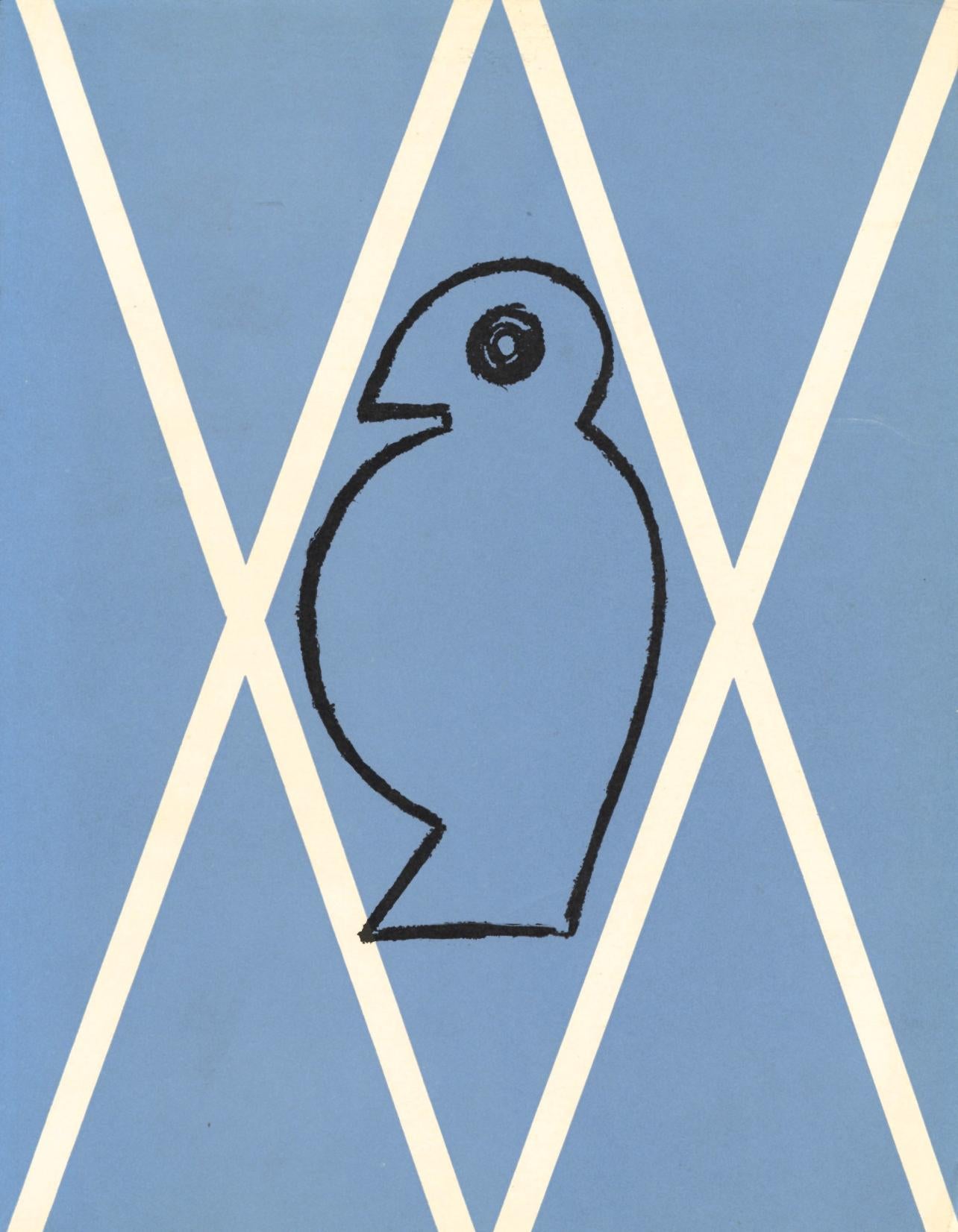
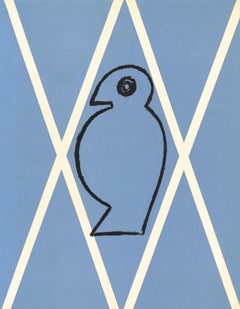
Max Ernst, Bird, from XXe Siecle, 1958 (after)
By Max Ernst
Located in Southampton, NY
This exquisite lithograph after Max Ernst (1891–1976), titled Oiseau (Bird), from the album XXe Siecle, vol. no. 11, 1958, originates from the 1958 edition published by Societe Internationale dArt XXe Siecle, Paris, under the direction of Gualtieri di San Lazzaro, editeur, Paris, and printed by Mourlot Freres, Paris, 1958. Oiseau reflects Ernsts poetic, dream-infused visual language during a period that bridged Surrealist invention with his mature exploration of myth, metamorphosis, and symbolic form.
Executed as a lithograph on velin paper, this work measures 12.5 x 9.75 inches. Unsigned and unnumbered as issued. The edition exemplifies the superb craftsmanship of Mourlot Freres, Paris
Artwork Details:
Artist: After Max Ernst (1891–1976)
Title: Oiseau (Bird)
Medium: Lithograph on velin paper
Dimensions: 12.5 x 9.75 inches (31.75 x 24.77 cm)
Inscription: Unsigned and unnumbered as issued
Date: 1958
Publisher: Societe Internationale dArt XXe Siecle, Paris, under the direction of Gualtieri di San Lazzaro, editeur, Paris
Printer: Mourlot Freres, Paris
Condition: Well preserved, consistent with age and medium
Provenance: From the album XXe Siecle, vol. no. 11, 1958, published by Societe Internationale dArt XXe Siecle, Paris; printed by Mourlot Freres, Paris, 1958
About the Publication:
Gualtieri di San Lazzaros XXe Siecle (Twentieth Century) was one of the most influential art journals of the modern era, founded in Paris in 1938 as a platform for the greatest painters, sculptors, and writers of the 20th century. San Lazzaro, a visionary editor, critic, and champion of modernism, believed that art and literature should coexist as expressions of a shared human imagination. Under his direction, XXe Siecle became a cultural bridge between Europe and the wider world, publishing special issues devoted to leading figures such as Picasso, Matisse, Chagall, Braque, Calder, Miro, Kandinsky, and Leger. Each edition combined essays by renowned critics and poets with original lithographs and woodcuts printed by the foremost ateliers of Paris, Milan, and New York, including Mourlot, Curwen, and Amilcare Pizzi, creating a uniquely rich dialogue between text and image. The 1960 issue, XXe Siecle, Nouvelle serie, no. 14, showcased Daphnis et Chloe, one of Chagalls most celebrated lithographic subjects, coinciding with his work on the monumental suite of lithographs inspired by the same pastoral tale, published by Teriade. Through this publication, San Lazzaro further cemented Chagalls reputation as the modern poet of color and love, uniting myth, nature, and emotion in visual form. Today, XXe Siecle remains an essential record of 20th century modernism, celebrated for its seamless integration of fine art, literature, and design.
About the Artist:
Max Ernst (1891–1976) was a German-French painter, sculptor, printmaker, and poet whose groundbreaking imagination and experimental techniques made him one of the most revolutionary figures of 20th century art. A founding member of both Dada and Surrealism, Ernst dismantled traditional notions of art through chance, dream imagery, and psychological exploration, transforming painting, sculpture, and collage into instruments of the unconscious mind. Born in Bruhl, Germany, he studied philosophy and psychology at the University of Bonn before rejecting academic convention to pursue art, inspired by the Symbolists, Cubists, and the early abstractions of Pablo Picasso and Wassily Kandinsky. His traumatic experience serving in World War I left him disillusioned with logic and order, propelling him toward the Dada movement in Cologne in 1919, where he began creating his seminal collages that fused scientific diagrams and Victorian engravings into surreal dreamscapes. By 1922, Ernst had moved to Paris and joined a circle of avant-garde luminaries that included Picasso, Alexander Calder, Alberto Giacometti, Salvador Dali, Joan Miro, Marcel Duchamp, Man Ray, and Andre Breton, each of whom shared his fascination with the irrational and the unseen. Ernsts invention of frottage (rubbing) and grattage (scraping) revolutionized modern painting, revealing textures and hidden images beneath the surface and allowing chance to become an active participant in creation. His visionary paintings—such as The Elephant Celebes (1921), Two Children Are Threatened by a Nightingale (1924), and Europe After the Rain II (1940–42)—blend myth, science, and dream into vast symbolic landscapes that remain among the defining masterpieces of Surrealism. A restless innovator, Ernst expanded into sculpture, crafting enigmatic totemic forms such as Capricorne (1948–1963) that bridged organic abstraction and surreal fantasy, echoing the fluid equilibrium of Calders mobiles and the conceptual wit of Duchamp. Fleeing Nazi-occupied France during World War II, Ernst emigrated to the United States with the support of Peggy Guggenheim, whom he later married, influencing the emerging Abstract Expressionists—among them Jackson Pollock, Robert Motherwell, and Willem de Kooning—through his fusion of automatism, texture, and mythic narrative. Returning to Europe after the war, he continued to refine his poetic, alchemical approach to painting, blending chaos and order into cosmic landscapes that inspired later artists such as Anselm Kiefer, Robert Rauschenberg, Cy Twombly, and Kiki Smith. His work, housed in major museums including MoMA, the Tate, and the Centre Pompidou, stands as a testament to his belief that art could bridge the conscious and unconscious, the rational and the fantastic. Standing alongside Pablo Picasso, Alexander Calder, Alberto Giacometti, Salvador Dali, Joan Miro, Wassily Kandinsky, Marcel Duchamp, and Man Ray, Max Ernst remains a cornerstone of modern art, an artist-philosopher whose limitless curiosity reshaped visual language and influenced generations of creators. His highest auction record was achieved by Le roi jouant avec la reine (The King Playing with the Queen) (1944), which sold for approximately 24.4 million USD at Christies, New York, in November 2022, reaffirming Max Ernsts enduring legacy as one of the most visionary, provocative, and collectible masters of 20th century modernism.
Max Ernst XXe Siecle 1958, Max Ernst lithograph...
Category
1950s Surrealist Figurative Prints
Materials
Lithograph
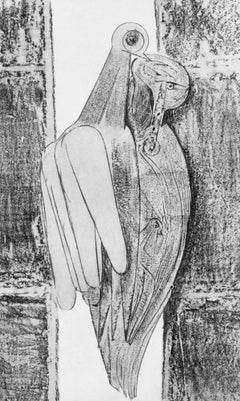
Max Ernst, The Conjugal Diamonds, from Natural History, 1972 (after)
By Max Ernst
Located in Southampton, NY
This exquisite collotype after Max Ernst (1891–1976), titled Les Diamants conjugaux (The Conjugal Diamonds), from the album Max Ernst, Histoire Naturelle (Natural History), originate...
Category
1970s Surrealist Landscape Prints
Materials
Lithograph
$716 Sale Price
20% Off
Free Shipping
You May Also Like
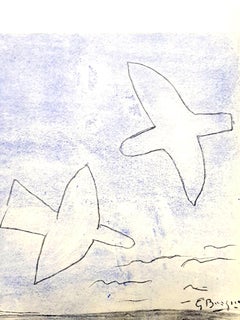
After Georges Braque - Oiseaux - Pochoir
By Georges Braque
Located in Collonge Bellerive, Geneve, CH
after Georges Braque
Oiseaux
Color Pochoir on Paper
Published in the deluxe art review, XXe Siecle (issue number 11 "Les nouveaux rapports de l'art et de la nature")
1958
Dimensions:...
Category
1950s Modern Figurative Prints
Materials
Stencil
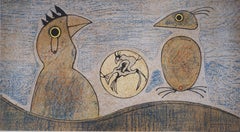
Surrealist Dream : Couple of Roosters - Original lithograph (Spies #p. 438)
By Max Ernst
Located in Paris, IDF
Max Ernst (1891-1976)
Surrealist Dream : Couple of Roosters, 1970
Original color lithograph
Printed signature in the plate
On Arches vellum 33.5 × 61 cm (c. 13 x 24 in)
REFERENCES...
Category
1970s Surrealist Animal Prints
Materials
Lithograph
Bird Potentiality
By Airom
Located in Santa Monica, CA
Artwork by Airom and collaborators.
Category
21st Century and Contemporary Surrealist Abstract Paintings
Materials
Acrylic

$105 Sale Price
65% Off
Allegory of a Bird - Original Drawing - Late 20th Century
Located in Roma, IT
Allegory of a Bird is an original artwork, pencil, pastel, gouache and watercolor on paper. Is not signed and dated but we can attribute the period late 19th Century.
The artist p...
Category
Late 20th Century Modern Animal Drawings and Watercolors
Materials
Watercolor, Pastel, Gouache, Pencil
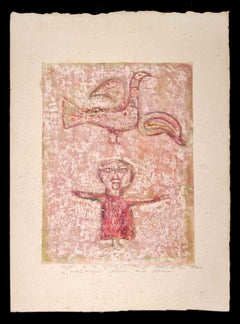
Cantique du Singulier
By Aristide Caillaud
Located in San Francisco, CA
This artwork titled "Cantique du Singulier" 1977, is an original colors lithograph on Japan paper by noted French artist Aristide Caillaud, 1902-1990. It is hand signed and numbered ...
Category
Late 20th Century Surrealist Figurative Prints
Materials
Lithograph

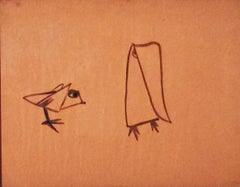
TWO BIRDS
By Morris Graves
Located in Portland, ME
Graves, Morris (American 1910-2001). TWO BIRDS. Brown Ink on tan
paper, not dated. Although signed in pencil, lower right, the signature proved fugitive dur...
Category
Mid-20th Century Animal Drawings and Watercolors
Materials
Pencil
$3,500
More Ways To Browse
Takashi Murakami Korin
Tama Janowitz
Tete Homme Picasso
The Avengers
Triple Self Portrait
Vitraux Pour Jerusalem
Walasse Ting Geisha
Wayland Moore
Whitney Poster
Yoshitoshi Taiso
1930s Woodblock
Ai Weiwei Tree
Alice And Wonderland Salvador Dali
Andre Heller
Andy Warhol Invitation
Angel Zarraga
Antique Boat Motors
Antique Mermaid Print