Items Similar to Eva
s Apples - Woodcut print by Michel Fingesten - 1936
Want more images or videos?
Request additional images or videos from the seller
1 of 2
Michel FingestenEva
s Apples - Woodcut print by Michel Fingesten - 19361936
1936
$571.11
£424.92
€480
CA$791.07
A$847.62
CHF 454.69
MX$10,040.17
NOK 5,735.64
SEK 5,247.22
DKK 3,657.37
About the Item
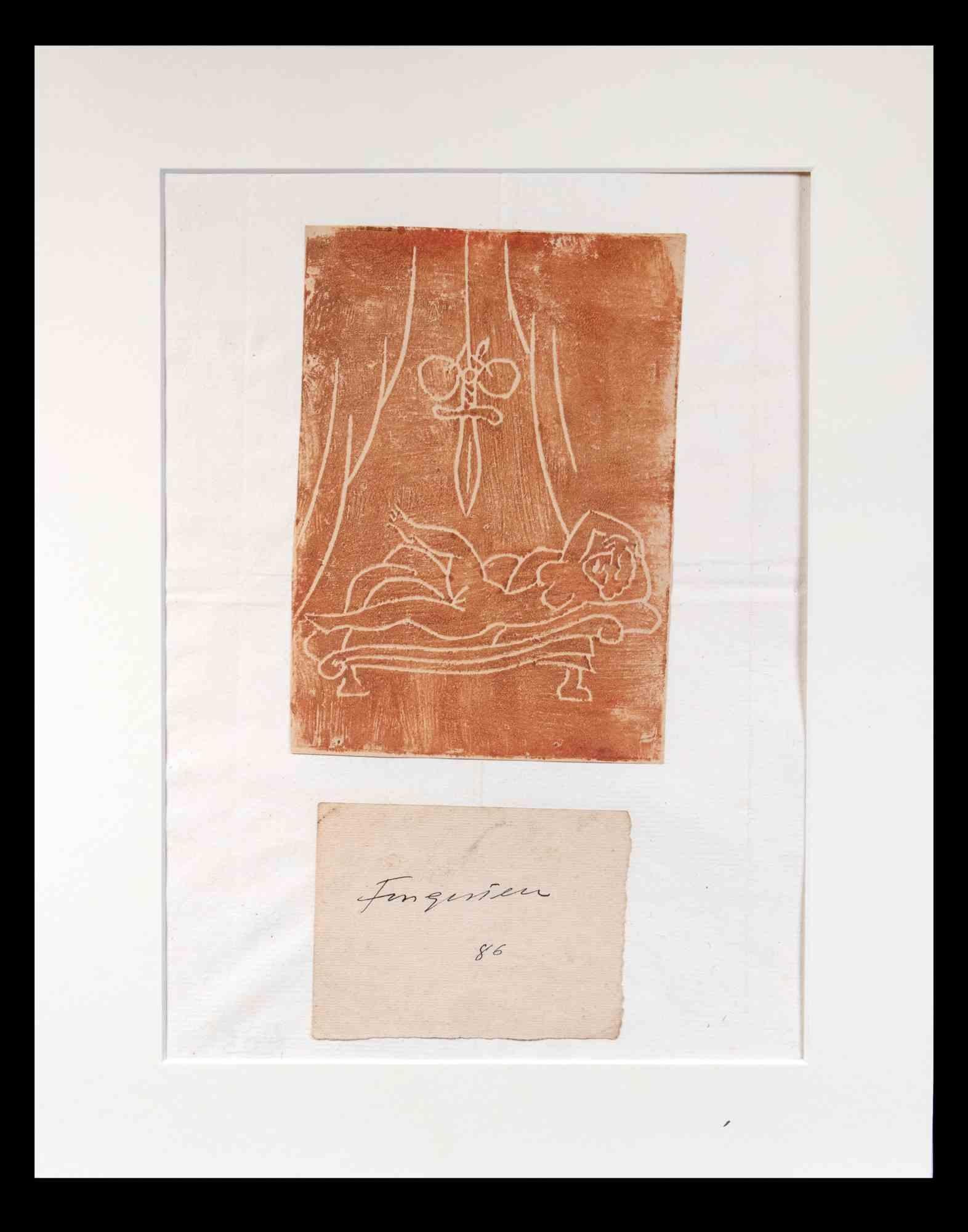
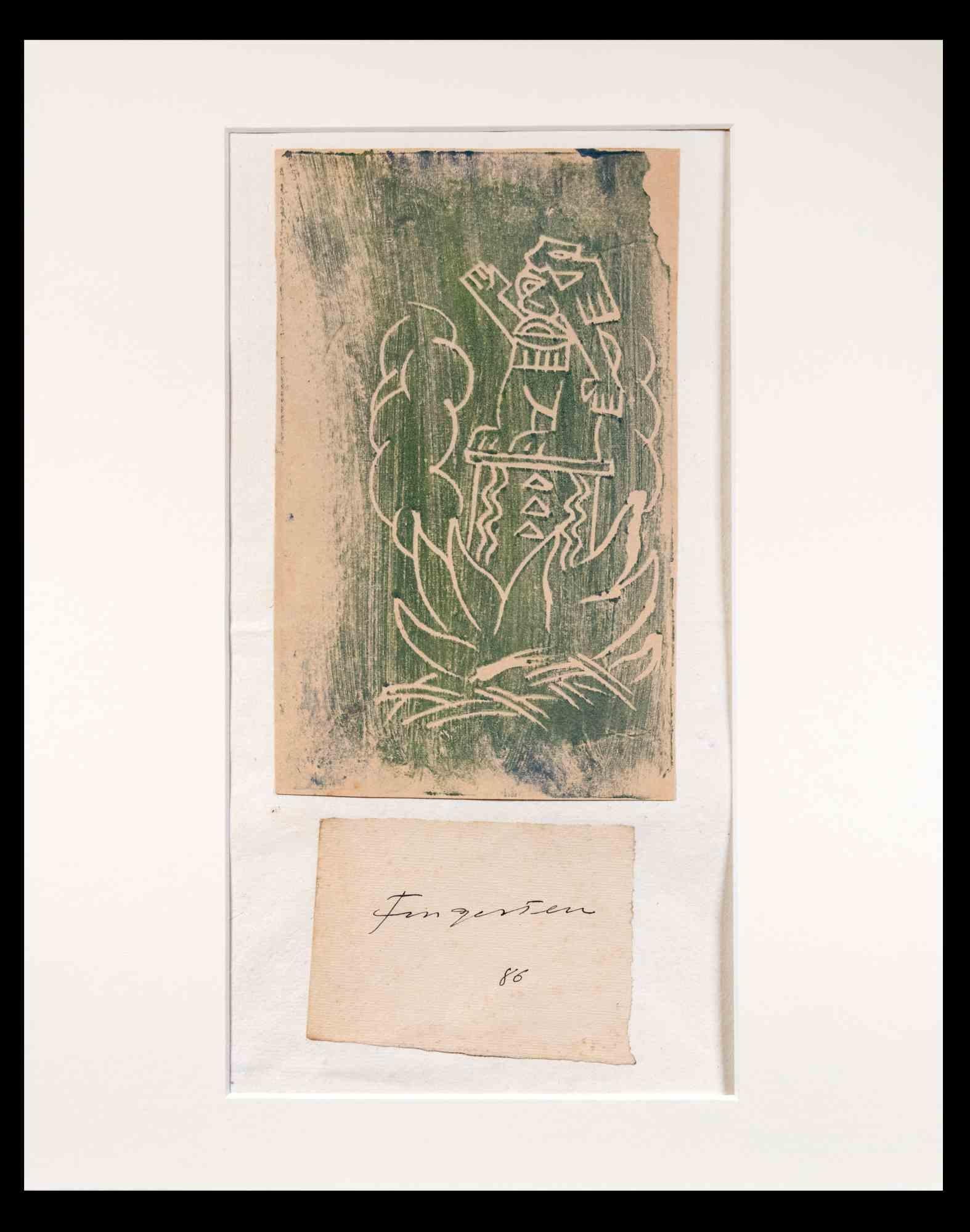
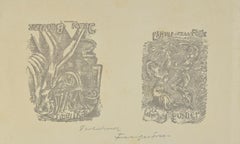
Eve's Apples is an woodcut realized by Michel Fingesten in 1930s.
Woodcut showing Eve while handing apples. Below a card with number 86 and Fingesten signature.
Includes matte.
30x24 cm.
Good conditions.
- Creator:Michel Fingesten (1884 - 1943, Italian)
- Creation Year:1936
- Dimensions:Height: 11.82 in (30 cm)Width: 9.45 in (24 cm)Depth: 0.04 in (1 mm)
- Medium:
- Movement Style:
- Period:
- Framing:Framing Options Available
- Condition:Insurance may be requested by customers as additional service, contact us for more information.
- Gallery Location:Roma, IT
- Reference Number:Seller: T-1387321stDibs: LU650312063152
About the Seller
4.9
Platinum Seller
Premium sellers with a 4.7+ rating and 24-hour response times
1stDibs seller since 2017
7,916 sales on 1stDibs
Typical response time: 1 hour
- ShippingRetrieving quote...Shipping from: Grasse, France
- Return Policy
More From This Seller
View AllWomen and Dagger - Woodcut by Michel Fingesten - 1936
By Michel Fingesten
Located in Roma, IT
Women and Dagger (ex Libris) is a woodcut print by Michel Fingesten, in 1936.
Hand signed with pencil, included a white cardboard passpartout (30x24 cm).
In excellent conditions: As good as new.
Michel Fingesten (1884 - 1943) was a Czech painter and engraver of Jewish origin. He is considered one of the greatest Ex Libris artists in history. From an Austrian weaver father and a Jewish mother from Trieste. At 16 he studied at the Vienna Academy, together with Oskar Kokoschka. From 1902 to 1906 he wandered around America, and then Australia, before arriving in Palermo in 1907. He went up the peninsula via Trieste and returning to Germany, first settling in Munich in Franz von Stuck's studio, practicing caricature and small format graphics and then in Berlin.
In 1913 he began to record. He returned to Italy in 1935 to visit his maternal relatives from Trieste and remained there because of the racial persecutions to which the Jews in Silesia were subject, settling in Milan. In this period he recorded about 500 exlibris. On 9 October 1940 he was arrested and interned as a foreigner in the camp of Civitella del Tronto and then of Ferramonti, (Cosenza) from November 1941 and will be accused by the Nazis of having painted degenerate art ("Entartete Kunst...
Category
Early 20th Century Symbolist Figurative Prints
Materials
Woodcut
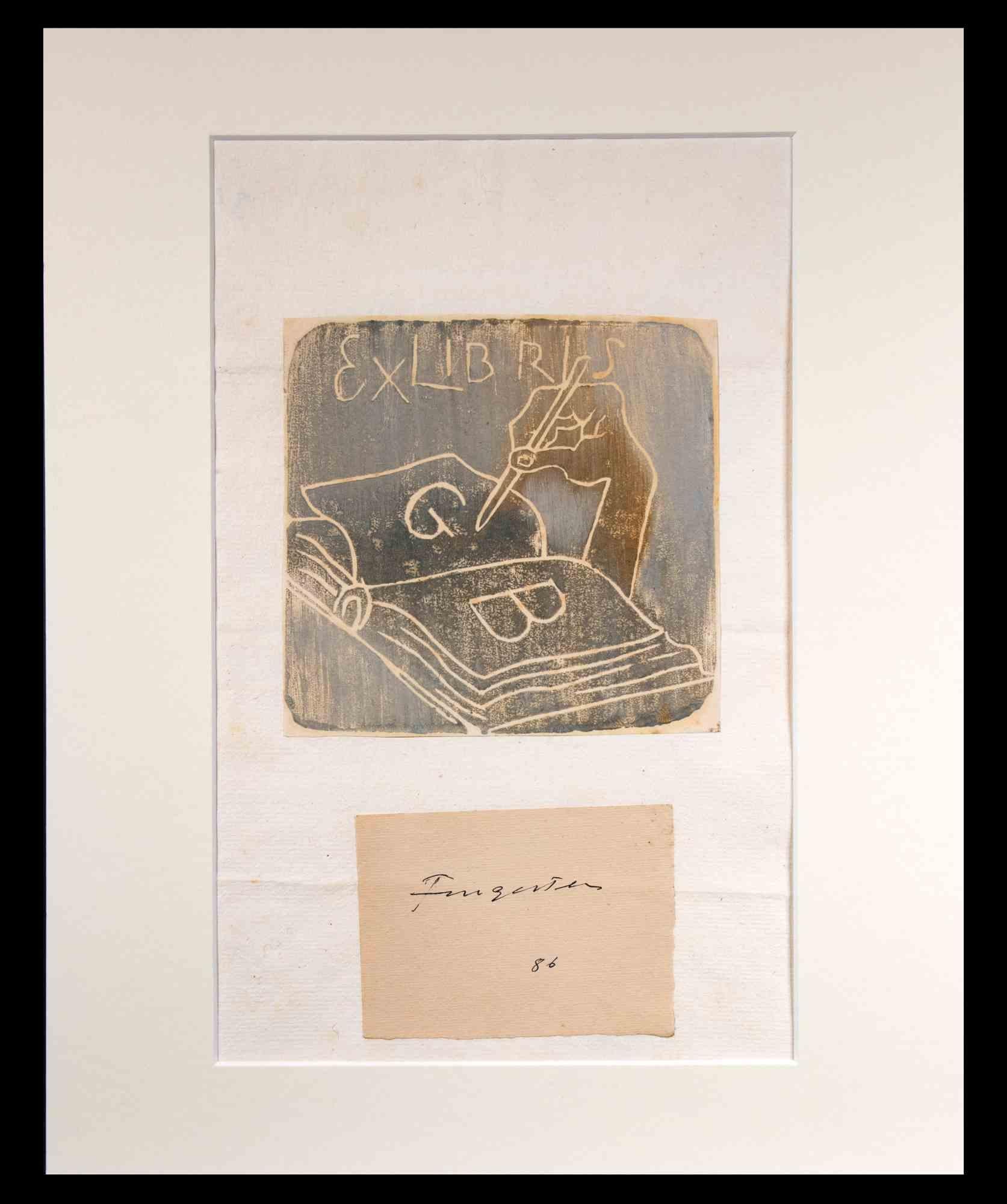
Ex Libris G.B. - Woodcut by Michel Fingesten - 1937
By Michel Fingesten
Located in Roma, IT
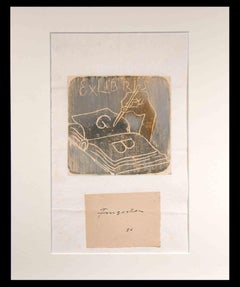
Ex Libris G.B. is a woodcut print by Michel Fingesten, in 1937.
Hand signed , included a white cardboard passpartout (30x24 cm).
In excellent conditions: As good as new.
Michel Fingesten (1884 - 1943) was a Czech painter and engraver of Jewish origin. He is considered one of the greatest Ex Libris artists in history. From an Austrian weaver father and a Jewish mother from Trieste. At 16 he studied at the Vienna Academy, together with Oskar Kokoschka. From 1902 to 1906 he wandered around America, and then Australia, before arriving in Palermo in 1907. He went up the peninsula via Trieste and returning to Germany, first settling in Munich in Franz von Stuck's studio, practicing caricature and small format graphics and then in Berlin.
In 1913 he began to record. He returned to Italy in 1935 to visit his maternal relatives from Trieste and remained there because of the racial persecutions to which the Jews in Silesia were subject, settling in Milan. In this period he recorded about 500 exlibris. On 9 October 1940 he was arrested and interned as a foreigner in the camp of Civitella del Tronto and then of Ferramonti, (Cosenza) from November 1941 and will be accused by the Nazis of having painted degenerate art ("Entartete Kunst...
Category
Early 20th Century Symbolist Figurative Prints
Materials
Woodcut
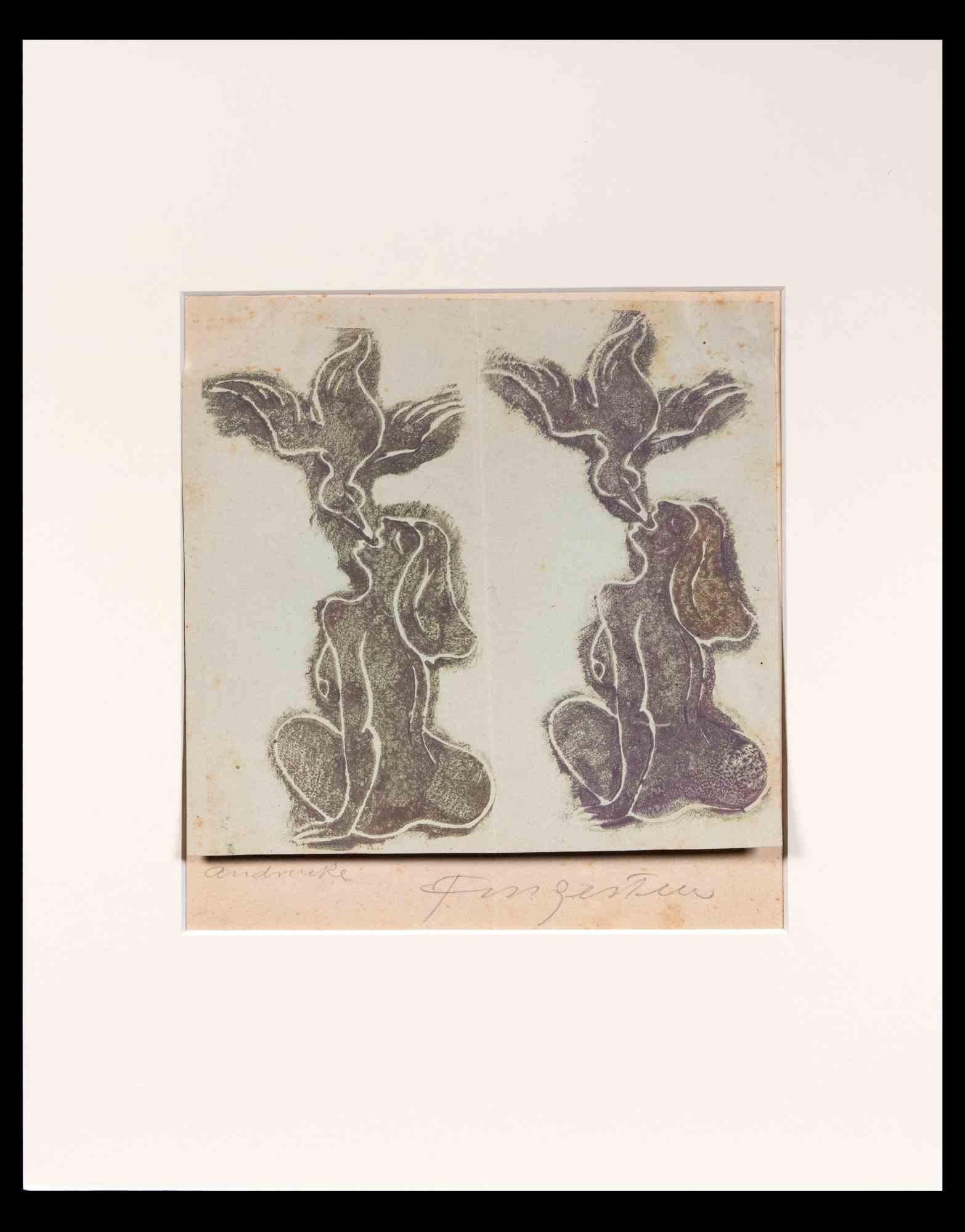
Woman and Bird - Woodcut by Michel Fingesten - 1936
By Michel Fingesten
Located in Roma, IT
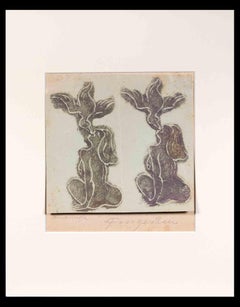
Woman and Bird is a woodcut print by Michel Fingesten, in 1936.
Hand signed in pencil.
In excellent conditions: As good as new.
Michel Fingesten (1884 - 1943) was a Czech painte...
Category
Early 20th Century Symbolist Figurative Prints
Materials
Woodcut
Man in Pot - Woodcut Print by Michel Fingesten - 1930s
By Michel Fingesten
Located in Roma, IT
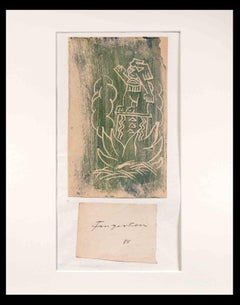
Man in pot is a woodcut print realized by Michel Fingesten in 1930s.
Above the woodcut representing a man with one hand raised and fire; underneath a card with the engraver's signature and the number 86.
30x24 cm ; it includes passpartout.
Good conditions.
Michel Fingesten. of an Austrian weaver father and a Jewish mother originally from Trieste. At the age of 16 he studied at the Vienna Academy together with Oskar Kokoschka From 1902 to 1906 he wandered around America, and then Australia, to then arrive
in Palermo in 1907. He traveled up the peninsula passing through Trieste and returning to Germany, settling first in Munich in Franz von Stuck's studio, practicing caricature and small format graphics and then in Berlin.
In 1913 he began to engrave. He returned to Italy in 1935 to visit his maternal relatives from Trieste and remained there due to the racial persecutions to which the Jews in Silesia were subjected, settling in Milan. In this period he engraved about 500 exlibris
On 9 October 1940 he was arrested and interned as a foreigner in the camp of Civitella del Tronto and then of Ferramonti (Cosenza) from November 1941 and will be accused by the Nazis of having painted degenerate art ("Entartete Kunst...
Category
1930s Symbolist Figurative Prints
Materials
Woodcut
Fruit - Etching by Michel Ciry - 1964
By Michel Ciry
Located in Roma, IT
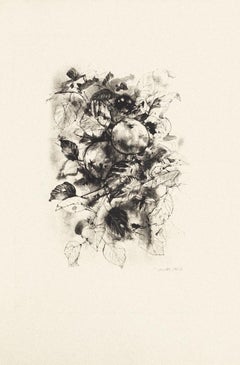
Fruit is a black and white etching realized by the French artist Michel Ciry in 1964.
Signed and dated on the lower right.
Sheet dimensions: 57 x 38 cm.
In good conditions.
The a...
Category
1960s Modern Figurative Prints
Materials
Etching
Ex Libris L
Amour et la Folie - Ex Libris - Woodcut by Michel Fingesten - 1930s
By Michel Fingesten
Located in Roma, IT
Ex Libris L'Amour et la Folie - Ex Libris Jean Brissac is a woodcut print created by Michel Fingesten.
Hand Signed on the lower right margin.
Good conditions.
Michel Fingesten (...
Category
1930s Symbolist Figurative Prints
Materials
Woodcut
You May Also Like
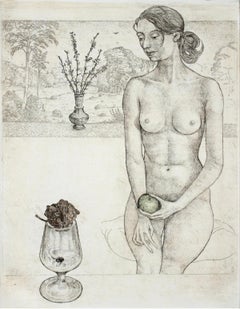
Two apples - XX Century Figurative Etching Print, Nude, Landscape
By Leszek Rózga
Located in Warsaw, PL
Etching on paper, épreuve d'artiste, 1973
LESZEK RÓZGA (1924-2015).
He studied painting at Maria Skarbek-Kruszewska private atelier in 1945-46. In 1948, he began studies at the art...
Category
Early 2000s Contemporary Abstract Prints
Materials
Paper, Etching
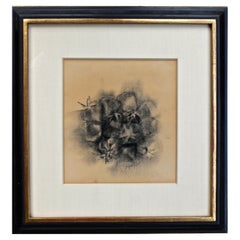
Loren Maciver 1940
s Drawing Still Life of Fruit
Located in Sharon, CT
Loren Maciver (American 1909-1998) drawing of fruit conte crayon on pastel paper. Measures: Matted and framed 13 1/2" x 14 5/8", sight size 8 1/8" x 7 3/8".
Category
Mid-20th Century American Expressionist Drawings
Materials
Paper
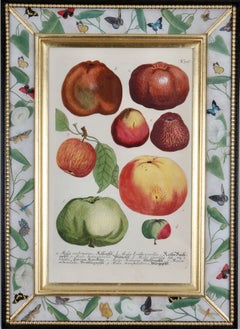
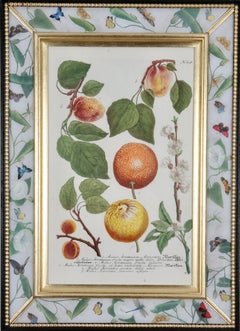
Johann Weinmann: c.18th Engraving of Fruit in a Decalcomania Frame.
Located in Richmond, GB
Hand-coloured mezzotint engravings from: ""Phytanthoza Iconographia"", c1739, presented in hand-made parcel-gilt, ebonised and decalcomania frames.
Johann Weinmann (1683-1741), a G...
Category
18th Century Figurative Prints
Materials
Watercolor, Mezzotint
Johann Weinmann: c.18th Engraving of Fruit in a Decalcomania Frame.
Located in Richmond, GB
Hand-coloured mezzotint engravings from: ""Phytanthoza Iconographia"", c1739, presented in hand-made parcel-gilt, ebonised and decalcomania frames.
Johann Weinmann (1683-1741), a G...
Category
18th Century Figurative Prints
Materials
Watercolor, Mezzotint
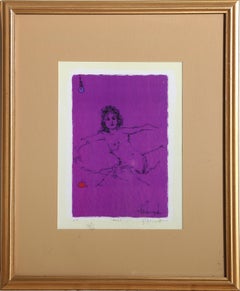
Apple, Modern Hand-Colored Lithograph by Alvin Carl Hollingsworth
By Alvin C. Hollingsworth
Located in Long Island City, NY
Alvin Carl Hollingsworth, American (1928 - 2000) - Apple, Year: circa 1990, Medium: Hand colored Lithograph, signed, titled and numbered in pencil, Edition: AP, Image Size: 10.75...
Category
1990s Modern Nude Prints
Materials
Lithograph
Samuel Bak Surrealist Etching Israeli Bezalel Artist "Hidden Pear", Fruit Bowl
By Samuel Bak
Located in Surfside, FL
HIDDEN PEAR, color etching, signed in pencil, numbered 7/50, Jerusalem Print workshop blind stamp, image 7 ½ x 5 ½”, sheet 15 x 10 ¼”.
Samuel Bak (born 12 August 1933) is a Polish- American painter and writer who survived the Holocaust and immigrated to Israel in 1948. Since 1993, he has lived in the United States.
Samuel Bak was born in Wilno, Poland, Bak was recognized from an early age as having an artistic talent. He describes his family as secular, but proud of their Jewish identity.
By 1939 when Bak was six years old, the war began and Wilno was transferred from Poland to Lithuania. When Wilno was occupied by the Germans on June 24, 1941, Bak and his family were forced to move into the ghetto. At the age of nine, he held his first exhibition inside the Ghetto. Bak and his mother sought refuge in a Benedictine convent where a Catholic nun named Maria Mikulska tried to help them. After returning to the ghetto, they were deported to a forced labour camp, but took shelter again in the convent where they remained in hiding until the end of the war.
By the end of the war, Samuel and his mother were the only members of his extensive family to survive. His father, Jonas, was shot by the Germans in July 1944, only a few days before Samuel's own liberation. As Bak described the situation, "when in 1944 the Soviets liberated us, we were two among two hundred of Vilna's survivors--from a community that had counted 70 or 80 thousand." Bak and his mother as pre-war Polish citizens were allowed to leave Soviet-occupied Wilno and travel to central Poland, at first settling briefly in Lodz. They soon left Poland and traveled into the American occupied zone of Germany. From 1945 to 1948, he and his mother lived in Displaced Persons camps in Germany. He spent most of this period at the Landsberg am Lech DP camp in Germany. It was there he painted a self-portrait shortly before repudiating his Bar Mitzvah ceremony. Bak also studied painting in Munich during this period, and painted "A Mother and Son", 1947, which evokes some of his dark memories of the Holocaust and escape from Soviet-occupied Poland. In 1948, Bak and his mother immigrated to Israel. In 1952, he studied art at the Bezalel Academy of Arts and Design in Jerusalem. After serving in the Israel Defense Forces, he continued his studies in Paris (from 1956 at the École nationale supérieure des Beaux-Arts) and spent various periods of time in Rome, Paris, Switzerland and Israel before settling permanently in the United States. In 2001, Bak returned to Vilnius for the first time and has since visited his hometown several times. Samuel Bak is a conceptual artist with elements of post-modernism as he employs different styles and visual vernaculars, i.e. surrealism (Salvador Dali, Rene Magritte), analytical cubism (Picasso), pop art (Andy Warhol, Roy Lichtenstein) and quotations from the old masters. The artist never paints direct scenes of mass death. Instead, he employs allegory, metaphor and certain artistic devices such as substitution: toys instead of the murdered children who played with them, books, instead of the people who read them. Further devices are quotations of iconographical prototypes, i.e. Michelangelo's "Creation of Adam" on the Sistine Ceiling or Albrecht Dürer's famous engraving entitled "Melencholia" . In the late 1980s Bak opened up about his paintings, stating they convey “a sense of a world that was shattered.” He turns these prototypes into ironical statements. Irony in the art of Samuel Bak does not mean parody or derision, but rather disenchantment, and the attempt to achieve distance from pain. Recurring symbols are: the Warsaw Ghetto Child, Crematorium Chimneys or vast backgrounds of Renaissance landscape that symbolize the indifference of the outside world. These form a disturbing contrast with the broken and damaged images in the foreground. Samuel Bak's paintings cause discomfort, they are a warning against complacency, a bulwark against collective amnesia with reference to all acts of barbarism, worldwide and throughout the ages, through his personal experience of genocide.
In Bak's piece entitled Trains Bak creates a vast grey landscape with large mounts creating the structure of a train. Massive taper candles burn in the distance further down the train tracks, surrounding an eruption. The smoke from the candles and volcano pour into a sky of dark ominous clouds that lurk over the landscape. Here Bak has created a whole new meaning for “trains.” Many of Bak’s pieces incorporate aspects of Jewish culture and the holocaust with a dark and creative twist, such as Shema Israel...
Category
20th Century Surrealist Figurative Prints
Materials
Etching