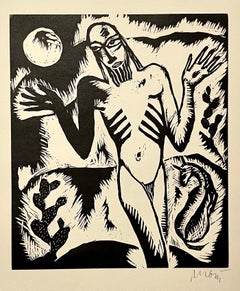
Items Similar to Ex Libris - Marco Binnholz - Woodcut by Michel Fingesten - 1930s
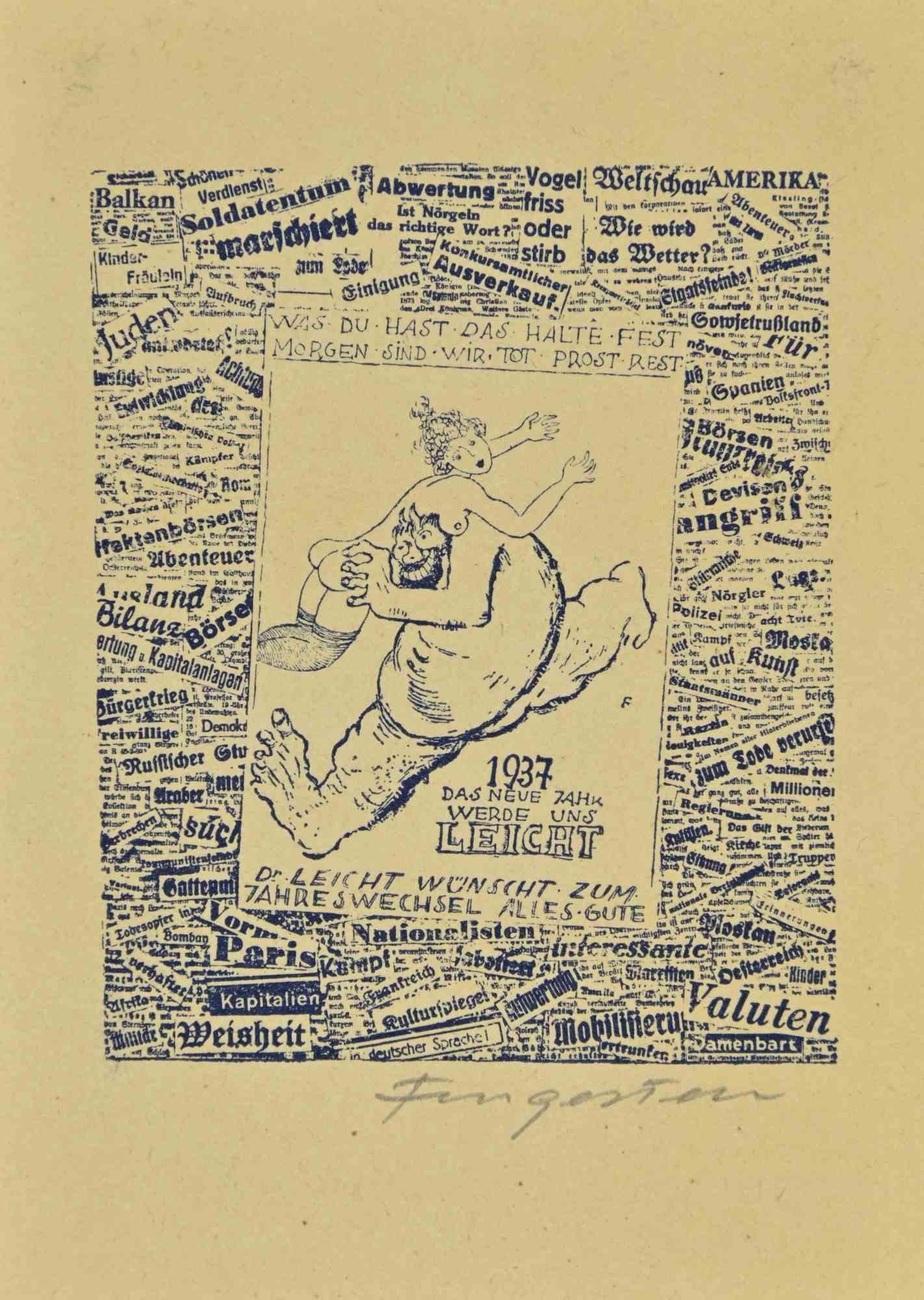
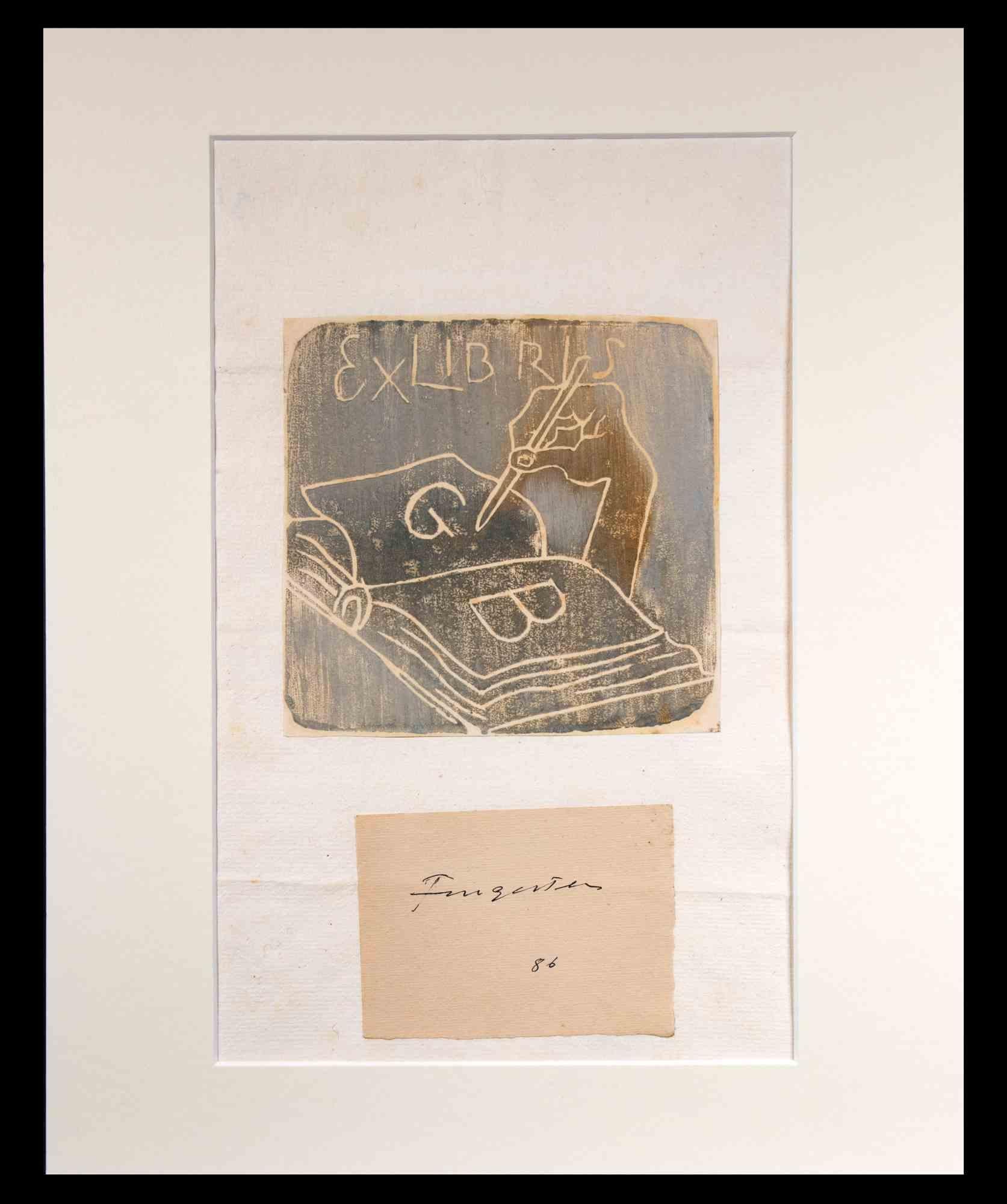
Want more images or videos?
Request additional images or videos from the seller
1 of 2
Michel FingestenEx Libris - Marco Binnholz - Woodcut by Michel Fingesten - 1930s1930s
1930s
$452.13
£336.40
€380
CA$626.26
A$671.03
CHF 359.96
MX$7,948.47
NOK 4,540.72
SEK 4,154.05
DKK 2,895.42
About the Item
Ex Libris - Marco Binnholz is a woodcut print created by Michel Fingesten.
Hand Signed on the lower right margin.
Good conditions.
Michel Fingesten (1884 - 1943) was a Czech painter and engraver of Jewish origin. He is considered one of the greatest Ex Libris artists in history. From an Austrian weaver father and a Jewish mother from Trieste. At 16 he studied at the Vienna Academy, together with Oskar Kokoschka. From 1902 to 1906 he wandered around America, and then Australia, before arriving in Palermo in 1907. He went up the peninsula via Trieste and returning to Germany, first settling in Munich in Franz von Stuck's studio, practicing caricature and small format graphics and then in Berlin.
In 1913 he began to record. He returned to Italy in 1935 to visit his maternal relatives from Trieste and remained there because of the racial persecutions to which the Jews in Silesia were subject, settling in Milan. In this period he recorded about 500 exlibris. On 9 October 1940 he was arrested and interned as a foreigner in the camp of Civitella del Tronto and then of Ferramonti, (Cosenza) from November 1941 and will be accused by the Nazis of having painted degenerate art ("Entartete Kunst").
He died on 8 October 1943, after the allies' liberation from the prison camp, due to an infection following a surgical operation carried out at Palazzo Sersale di Cerisano, at that time used as a hospital. His remains rest in the cemetery of the small town of Cosenza's greenhouses. Before this date he executed his last artistic work in Bisignano (Cs), creating a painting on wood depicting the martyrdom of San Bartolomeo, which is still preserved in the homonymous church.
Michel Fingesten, after his liberation from the Ferramonti concentration camp, had relations with the parish priest of Bisignano, don Giuseppe Savaglia, who commissioned the work by giving him a small image as a model. The work was done in a few days, about a week. This painting is important not only as it is the last artistic work of Michel Fingesten but above all because it represents a return to the pictorial art that he had completely abandoned, as in the last years of his life he had dedicated himself only to the realization of Ex Libris.
- Creator:Michel Fingesten (1884 - 1943, Italian)
- Creation Year:1930s
- Dimensions:Height: 4.34 in (11 cm)Width: 3.55 in (9 cm)Depth: 0.04 in (1 mm)
- Medium:
- Movement Style:
- Period:
- Framing:Framing Options Available
- Condition:Insurance may be requested by customers as additional service, contact us for more information.
- Gallery Location:Roma, IT
- Reference Number:Seller: T-1419191stDibs: LU650312922582
About the Seller
4.9
Platinum Seller
Premium sellers with a 4.7+ rating and 24-hour response times
1stDibs seller since 2017
7,918 sales on 1stDibs
Typical response time: 1 hour
- ShippingRetrieving quote...Shipping from: Grasse, France
- Return Policy
More From This Seller
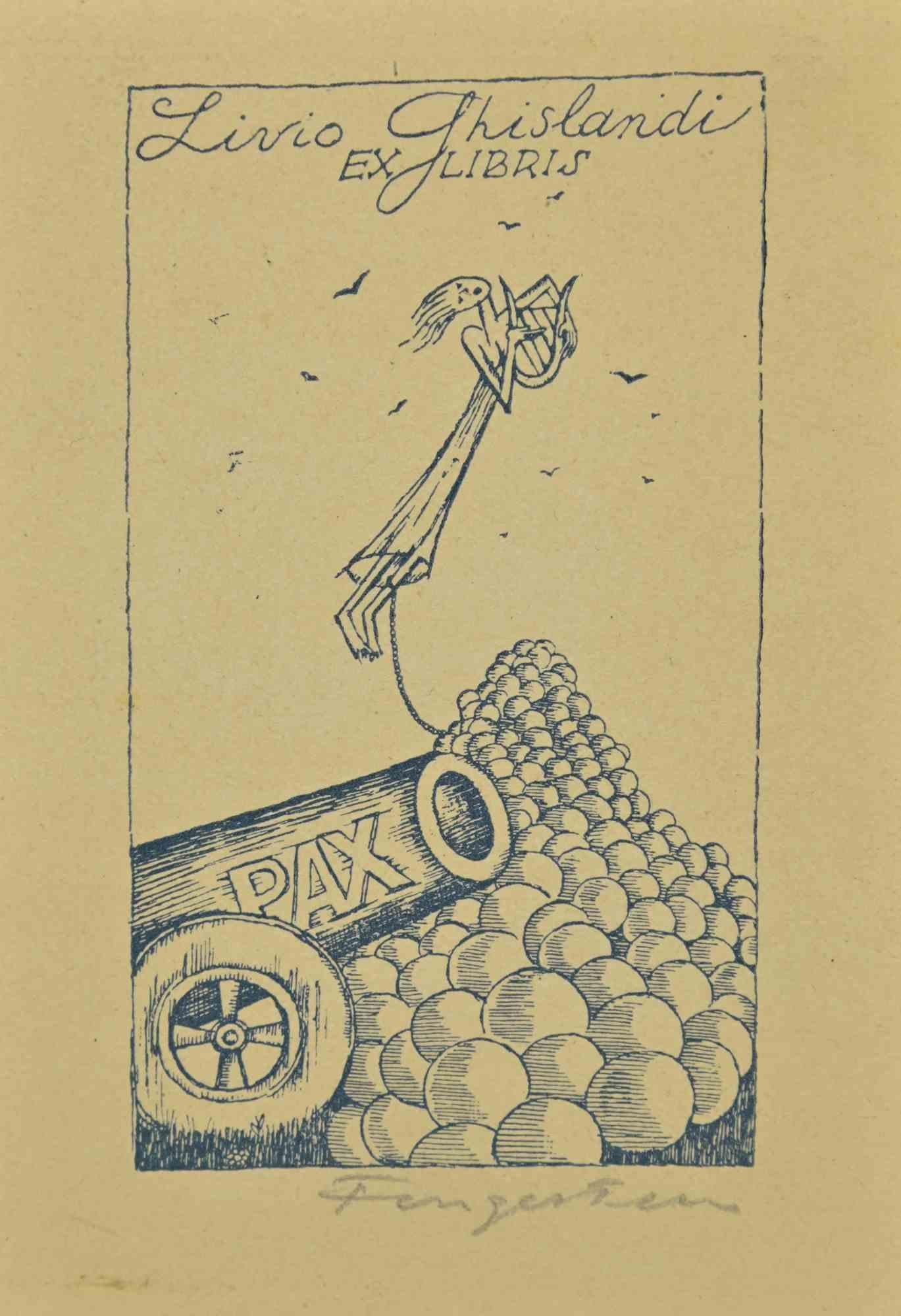
View AllEx Libris - Livio Ghislandi - Woodcut by Michel Fingesten - 1930s
By Michel Fingesten
Located in Roma, IT
Ex Libris - Livio Ghislandi is a woodcut print created by Michel Fingesten.
Hand Signed on the lower right margin.
Good conditions.
Michel Fingesten (1884 - 1943) was a Czech ...
Category
1930s Symbolist Figurative Prints
Materials
Woodcut
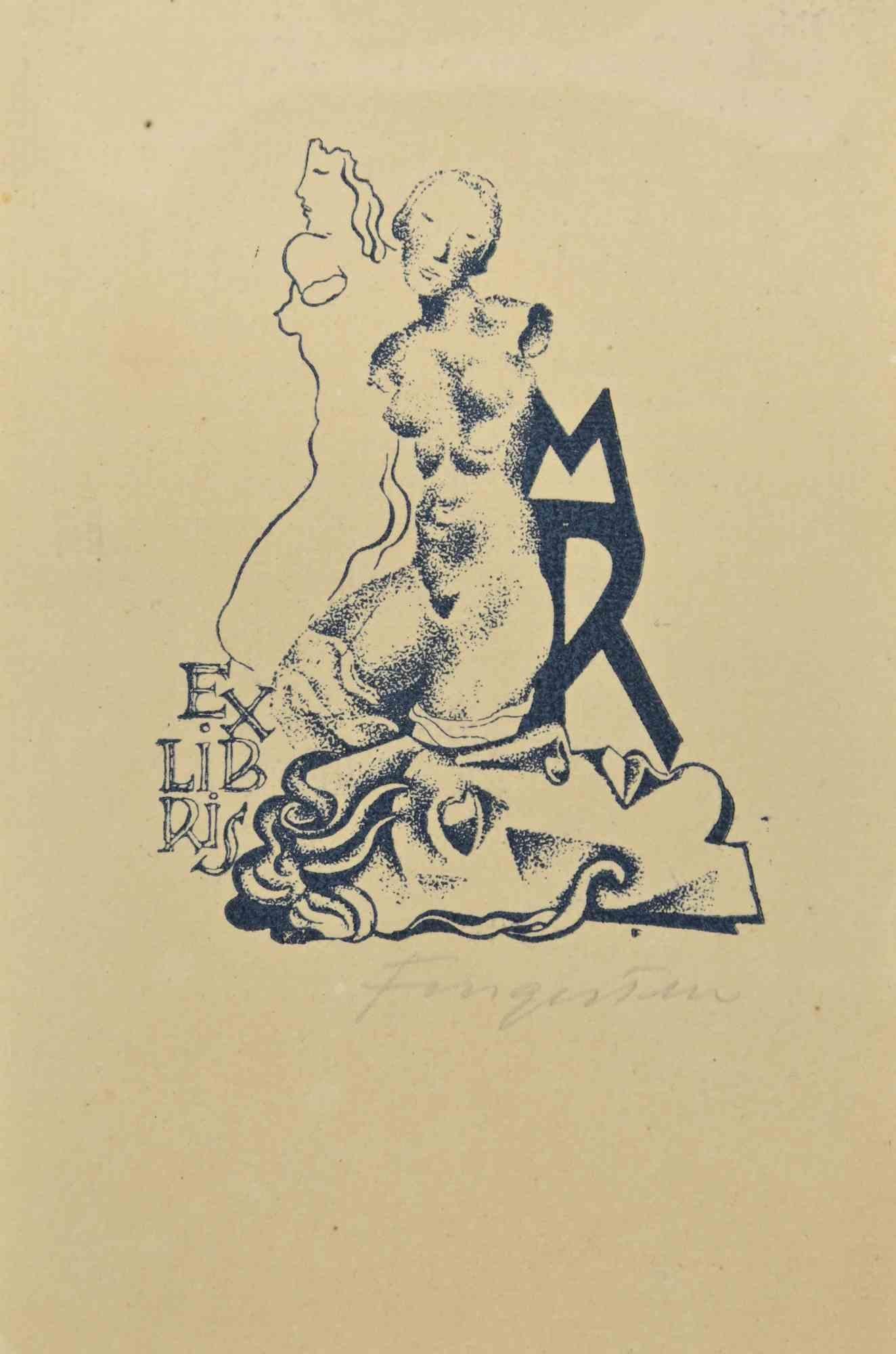
Ex Libris - M.R. - Woodcut by Michel Fingesten - 1930s
By Michel Fingesten
Located in Roma, IT
Ex Libris M.R. is a Woodcut print created by Michel Fingesten.
Hand Signed on the lower right margin.
Very Good condition.
Michel Fingesten (1884 - 1943) was a Czech painter and ...
Category
1930s Symbolist Figurative Prints
Materials
Woodcut

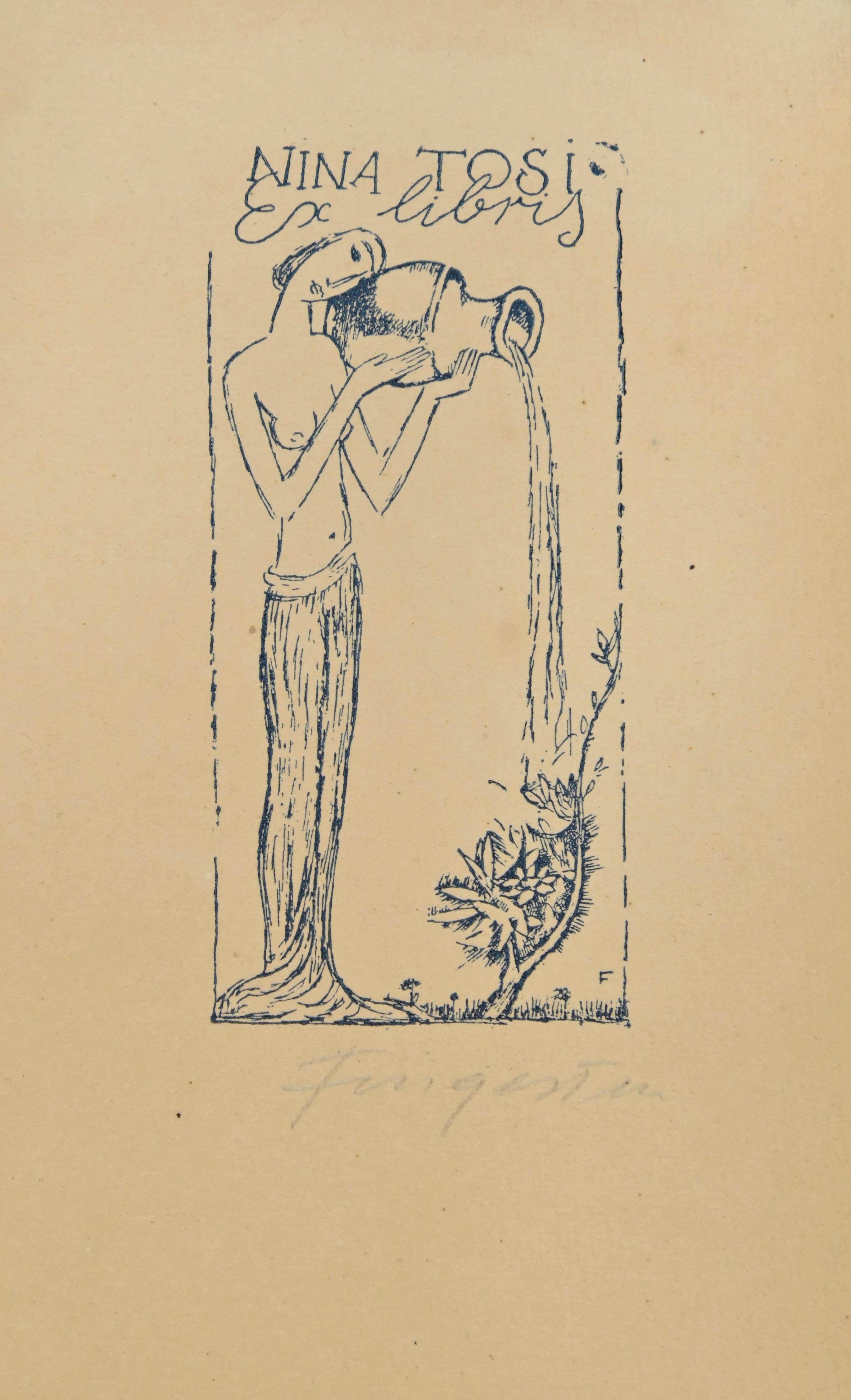
Ex Libris - Nina Tosi - Woodcut by Michel Fingesten - 1930s
By Michel Fingesten
Located in Roma, IT
Ex Libris - Nina Tosi is a woodcut print created by Michel Fingesten.
Hand Signed on the lower right margin.
Good conditions.
Michel Fingesten (1884 - 1943) was a Czech painter a...
Category
1930s Symbolist Figurative Prints
Materials
Woodcut
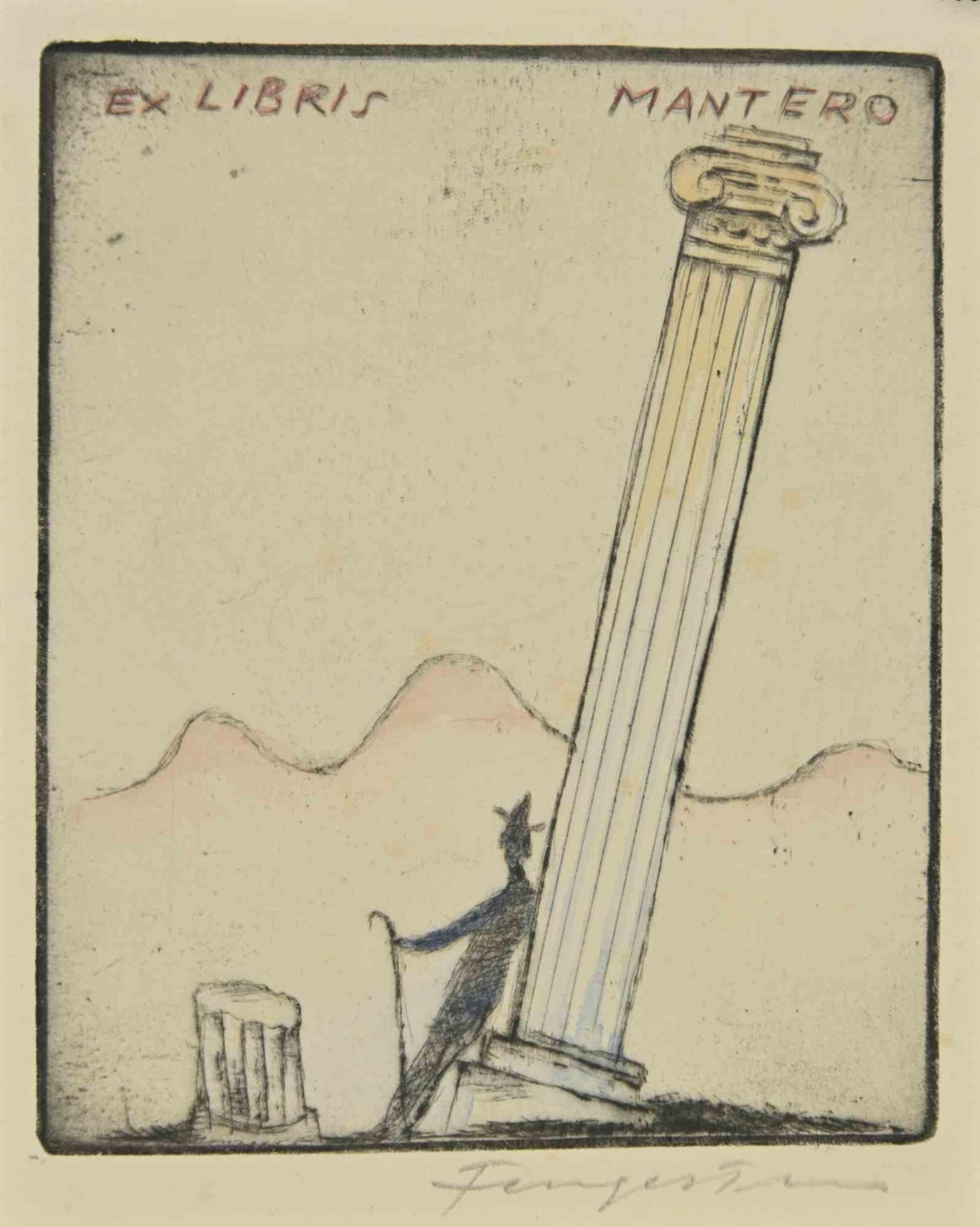
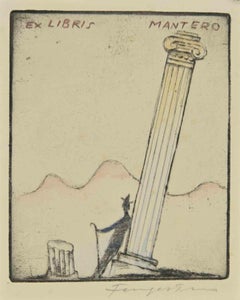
Ex Libris - Mantero - Woodcut by Michel Fingesten - 1930s
By Michel Fingesten
Located in Roma, IT
Ex Libris - Mantero is a Woodcut print created by Michel Fingesten.
Hand Signed on the lower right margin.
Very Good condition.
Michel Fingesten (1884 - 1943) was a Czech painter...
Category
1930s Symbolist Figurative Prints
Materials
Woodcut
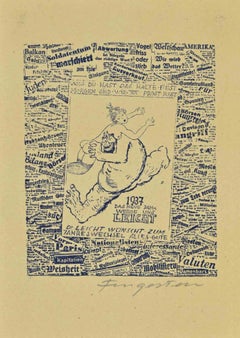
Ex Libris - Woodcut by Michel Fingesten - 1930s
By Michel Fingesten
Located in Roma, IT
Ex Libris is a woodcut print created by Michel Fingesten in 1937.
Hand Signed on the lower right margin.
Good conditions.
Michel Fingesten (1884 - 1943) was a Czech painter an...
Category
1930s Symbolist Figurative Prints
Materials
Woodcut
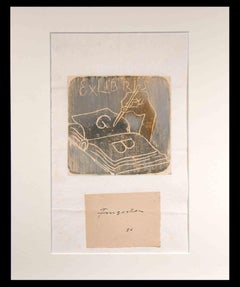
Ex Libris G.B. - Woodcut by Michel Fingesten - 1937
By Michel Fingesten
Located in Roma, IT
Ex Libris G.B. is a woodcut print by Michel Fingesten, in 1937.
Hand signed , included a white cardboard passpartout (30x24 cm).
In excellent conditions: As good as new.
Michel Fingesten (1884 - 1943) was a Czech painter and engraver of Jewish origin. He is considered one of the greatest Ex Libris artists in history. From an Austrian weaver father and a Jewish mother from Trieste. At 16 he studied at the Vienna Academy, together with Oskar Kokoschka. From 1902 to 1906 he wandered around America, and then Australia, before arriving in Palermo in 1907. He went up the peninsula via Trieste and returning to Germany, first settling in Munich in Franz von Stuck's studio, practicing caricature and small format graphics and then in Berlin.
In 1913 he began to record. He returned to Italy in 1935 to visit his maternal relatives from Trieste and remained there because of the racial persecutions to which the Jews in Silesia were subject, settling in Milan. In this period he recorded about 500 exlibris. On 9 October 1940 he was arrested and interned as a foreigner in the camp of Civitella del Tronto and then of Ferramonti, (Cosenza) from November 1941 and will be accused by the Nazis of having painted degenerate art ("Entartete Kunst...
Category
Early 20th Century Symbolist Figurative Prints
Materials
Woodcut
You May Also Like
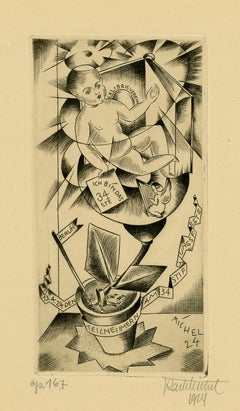
Ex Libris Verein
— 1920s German Expressionism
By Karl Michel
Located in Myrtle Beach, SC
Karl Michel, 'Ex Libris Verein' (New Year's Ex Libris Club Announcement), etching, 1924. Signed, dated, and numbered 'op. 167' in pencil. Signed and dated in...
Category
1920s Expressionist Figurative Prints
Materials
Etching
Ex Libris Dr. Witropp
— German Expressionism
By Karl Michel
Located in Myrtle Beach, SC
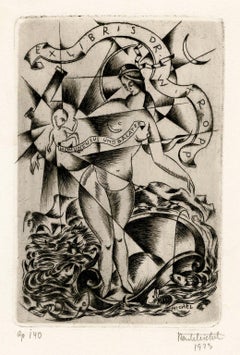
Karl Michel, 'Ex Libris Dr. Witropp - Homunculus und Galatee', etching, 1923, edition not stated. Signed, dated, and numbered 'Op. 140' (the artist's inventory number) in pencil. Si...
Category
1920s Expressionist Figurative Prints
Materials
Etching
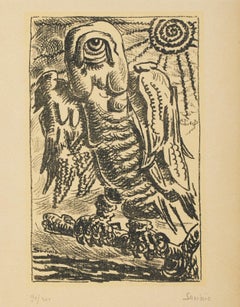
Alberto Savinio (1891–1952) - Da la nostra anima - lithograph on paper - 1944
By Alberto Savinio
Located in Varese, IT
Lithograph on paper,
Edited in 1944
Limited edition of 300, numbered 90/300
Signed in pencil by artist in lower right corner
Paper size: 31 x 23 cm
Plate size: 24 x 16 cm
Very good...
Category
1940s Abstract Animal Prints
Materials
Lithograph
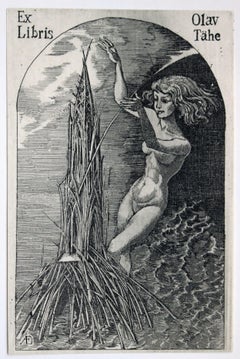
Ex libris. Paper, woodcut, 11x7cm
Located in Riga, LV
Ex libris Olav Tähe
Paper, woodcut, 11x7cm
Category
1990s Jugendstil Nude Prints
Materials
Paper, Woodcut
$172 Sale Price
20% Off
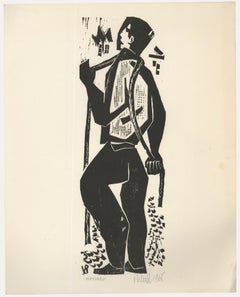
Victor Rebuffo (1903-1983) - Mid 20th Century Woodcut, Portuario
Located in Corsham, GB
An original woodcut print by the listed Italian-Argentinian artist Victor Luciano Rebuffo (1903-1983). Entitled 'Portuario'. The print depicts a figure, likely a dockworker. Monogram...
Category
20th Century Portrait Prints
Materials
Woodcut
Rare 1923 Cubist Reuven Rubin Woodcut Woodblock Kabbalah Print Israeli Judaica
By Reuven Rubin
Located in Surfside, FL
This is from the original first edition 1923 printing. there was a much later edition done after these originals.
These are individually hand signed in pencil by artist as issued.
This listing is for the one print. the other documentation is included here for provenance and is not included in this listing.
The various images inspired by the Jewish Mysticism and rabbis and mystics of jerusalem and Kabbalah is holy, dramatic and optimistic Rubin succeeded to evoke the spirit of life in Israel in those early days.
They are done in a modern art style influenced by German Expressionism, particularly, Ernst Barlach, Ernst Ludwig Kirchner, and Franz Marc, as introduced to Israel by Jakob Steinhardt, Hermann Struck and Joseph Budko.
Reuven Rubin 1893 -1974 was a Romanian-born Israeli painter and Israel's first ambassador to Romania.
Rubin Zelicovich (later Reuven Rubin) was born in Galati to a poor Romanian Jewish Hasidic family. He was the eighth of 13 children. In 1912, he left for Ottoman-ruled Palestine to study art at Bezalel Academy of Art and Design in Jerusalem. Finding himself at odds with the artistic views of the Academy's teachers, he left for Paris, France, in 1913 to pursue his studies at the École Nationale Supérieure des Beaux-Arts. He was of the well known Jewish artists in Paris along with Marc Chagall and Chaim Soutine,
At the outbreak of World War I, he was returned to Romania, where he spent the war years.
In 1921, he traveled to the United States with his friend and fellow artist, Arthur Kolnik. In New York City, the two met artist Alfred Stieglitz, who was instrumental in organizing their first American show at the Anderson Gallery. Following the exhibition, in 1922, they both returned to Europe. In 1923, Rubin emigrated to Mandate Palestine.
Rubin met his wife, Esther, in 1928, aboard a passenger ship to Palestine on his return from a show in New York. She was a Bronx girl who had won a trip to Palestine in a Young Judaea competition. He died in 1974.
Part of the early generation of artists in Israel, Joseph Zaritsky, Arieh Lubin, Reuven Rubin, Sionah Tagger, Pinchas Litvinovsky, Mordecai Ardon, Yitzhak Katz, and Baruch Agadati; These painters depicted the country’s landscapes in the 1920s rebelled against the Bezalel school of Boris Schatz. They sought current styles in Europe that would help portray their own country’s landscape, in keeping with the spirit of the time. Rubin’s Cezannesque landscapes from the 1920s were defined by both a modern and a naive style, portraying the landscape and inhabitants of Israel in a sensitive fashion. His landscape paintings in particular paid special detail to a spiritual, translucent light. His early work bore the influences of Futurism, Vorticism, Cubism and Surrealism.
In Palestine, he became one of the founders of the new Eretz-Yisrael style. Recurring themes in his work were the bible, the prophet, the biblical landscape, folklore and folk art, people, including Yemenite, Hasidic Jews and Arabs. Many of his paintings are sun-bathed depictions of Jerusalem and the Galilee. Rubin might have been influenced by the work of Henri Rousseau whose naice style combined with Eastern nuances, as well as with the neo-Byzantine art to which Rubin had been exposed in his native Romania. In accordance with his integrative style, he signed his works with his first name in Hebrew and his surname in Roman letters.
In 1924, he was the first artist to hold a solo exhibition at the Tower of David, in Jerusalem (later exhibited in Tel Aviv at Gymnasia Herzliya). That year he was elected chairman of the Association of Painters and Sculptors of Palestine. From the 1930s onwards, Rubin designed backdrops for Habima Theater, the Ohel Theater and other theaters.
His biography, published in 1969, is titled My Life - My Art. He died in Tel Aviv in October 1974, after having bequeathed his home on 14 Bialik Street and a core collection of his paintings to the city of Tel Aviv. The Rubin Museum opened in 1983. The director and curator of the museum is his daughter-in-law, Carmela Rubin. Rubin's paintings are now increasingly sought after. At a Sotheby's auction in New York in 2007, his work accounted for six of the ten top lots. Along with Yaacov Agam and Menashe Kadishman he is among Israel's best known artists internationally. Education
1912 Bezalel Academy of Arts and Design, Jerusalem
1913-14 École des Beaux Arts, Paris and Académie Colarossi, Paris
Select Group Exhibitions
Eged - Palestine Painters Group Eged - Palestine Painters Group, Allenby Street, Tel Aviv 1929
Artists: Chana Orloff, Abraham Melnikoff, Rubin, Reuven Nahum Gutman, Sionah Tagger,Arieh Allweil,
Jewish Artists Association, Levant Fair, Tel Aviv, 1929
Artists: Ludwig Blum,Eliyahu Sigad, Shmuel Ovadyahu, Itzhak Frenel Frenkel,Ozer Shabat, Menahem Shemi...
Category
1920s Abstract Figurative Prints
Materials
Woodcut
More Ways To Browse
Metropolitan Opera Poster
Metropolitan Opera Vintage Posters
Mexican Woodcut
Michelangelo Etching
Murakami Flower Ball
New Orleans Jazz Art
Original Toulouse Lautrec Lithograph
Peter Sager
Picasso Saltimbanques
Picture Of Dorian Gray
Pierre Casanova
Police Mugshot
Privat Livemont
Rene Portocarrero
Renoir Drawings
Royal Albert Old Country Roses
Salvador Dali 1967
Salvador Dali Mythology