Want more images or videos?
Request additional images or videos from the seller
1 of 7

Pablo Picasso
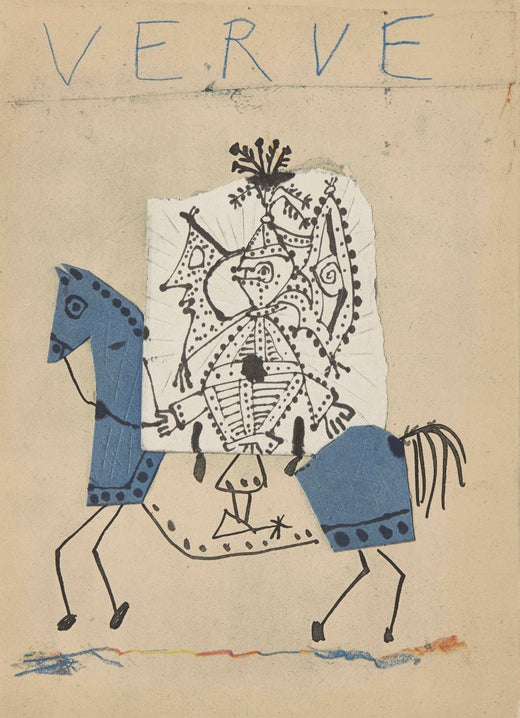
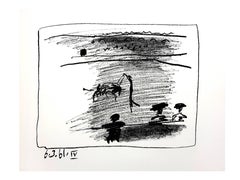
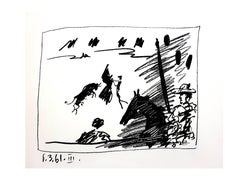
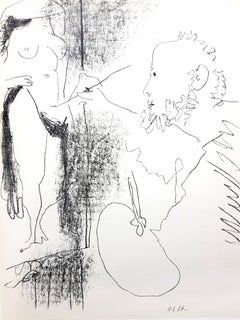
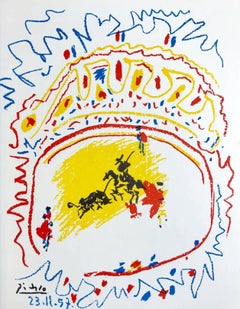
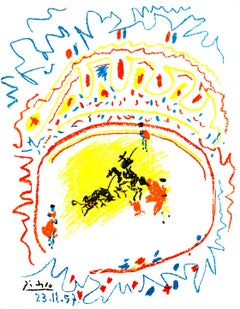
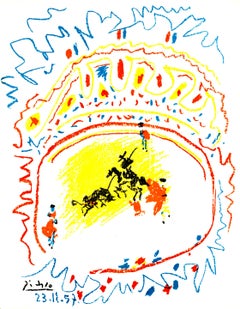
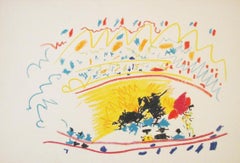
Pablo Picasso - La Petite Corrida - Original Lithograph

1958

$3,982.03
£2,985.84
€3,350
CA$5,556.40
A$6,015.96
CHF 3,198.41
MX$72,556.66
NOK 40,221.81
SEK 37,498.18
DKK 25,520.66

About the Item

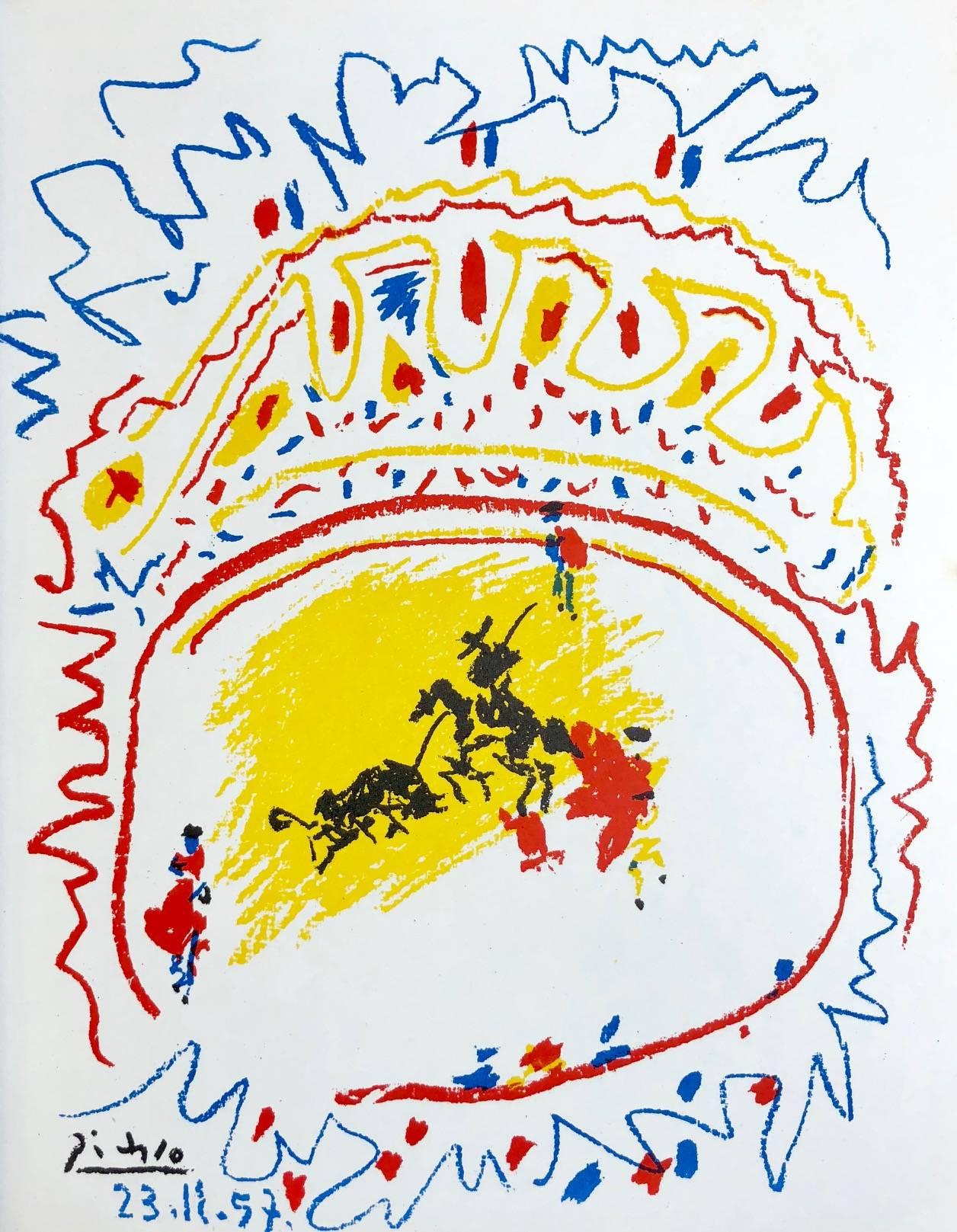
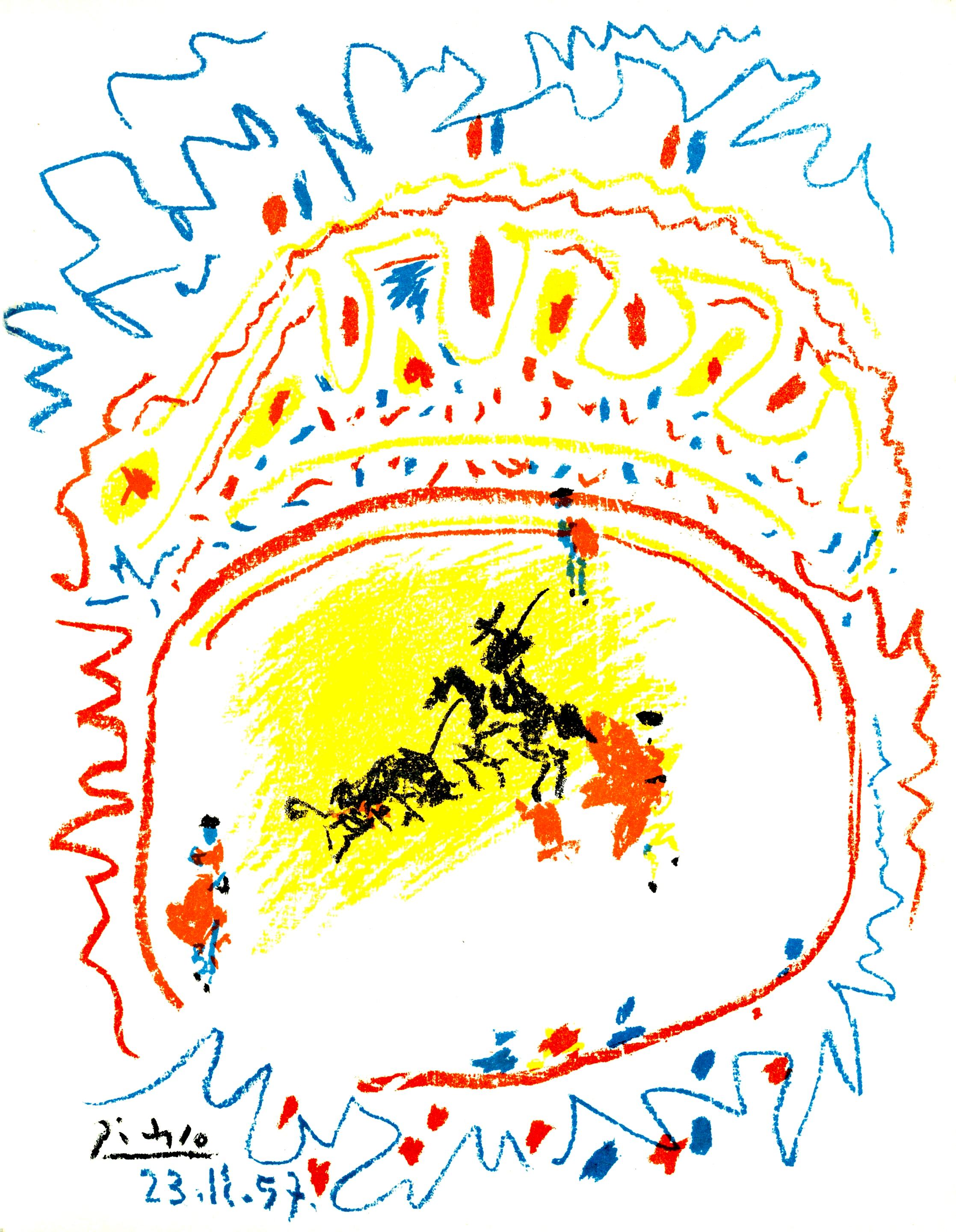
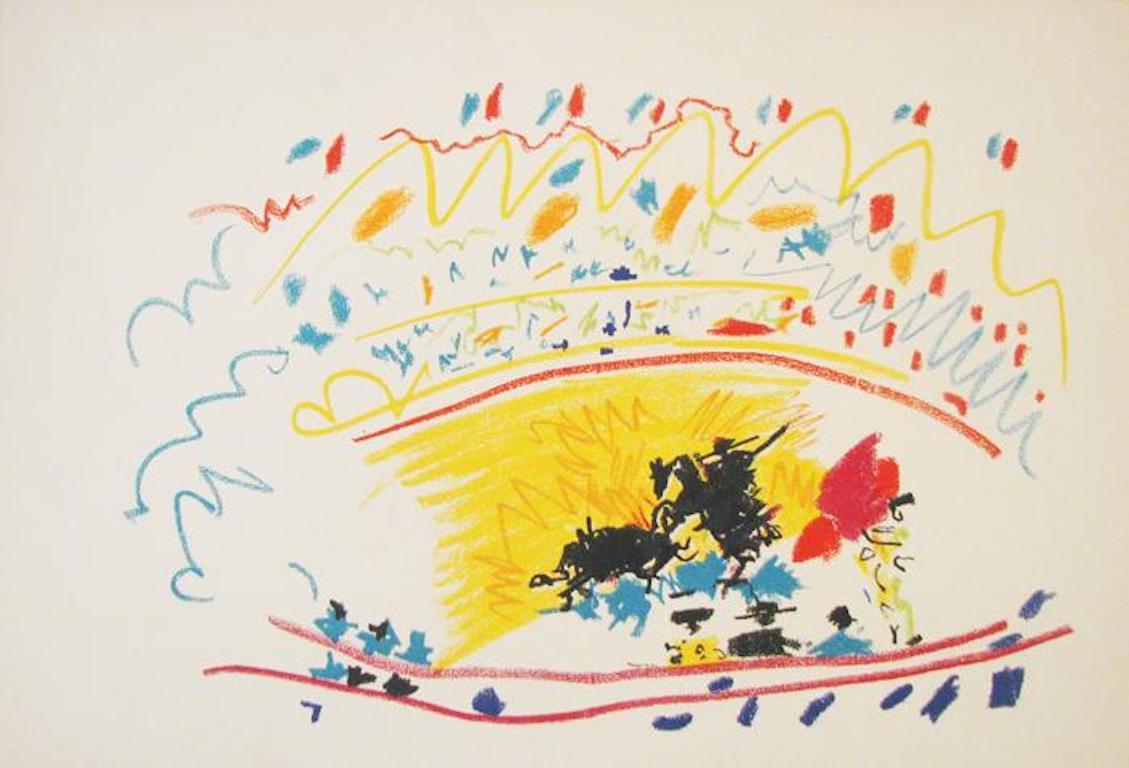
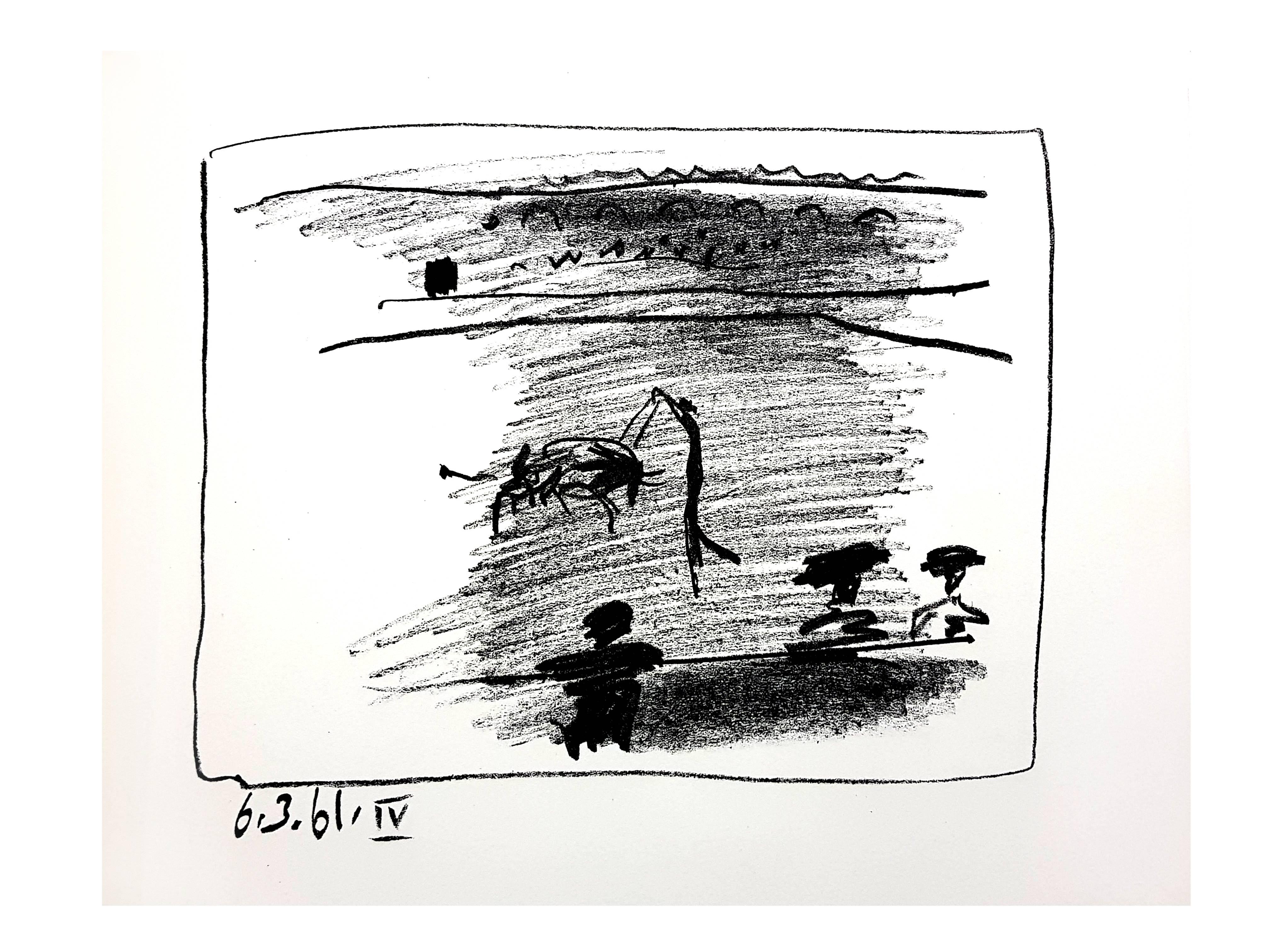
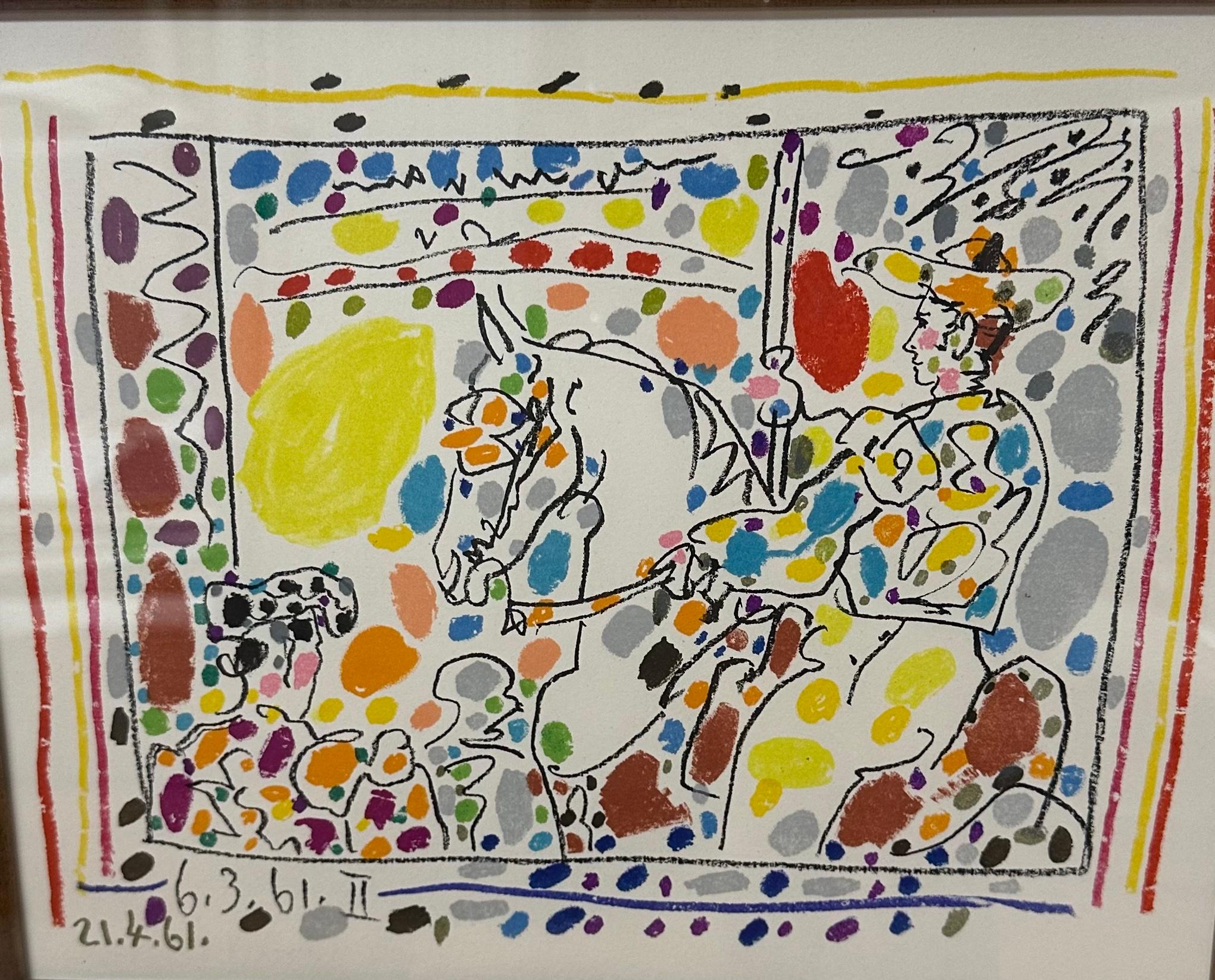
Pablo Picasso - Original Lithograph La Petite Corrida (The Small Bullfight) 1958 Edition of 2000, unsigned Published in the journal XXe Siecle Dimensions: 32 x 25 cm Edition: G. di San Lazzaro. Catalogue raisonne: Mourlot 302 Pablo Picasso Picasso is not just a man and his work. Picasso is always a legend, indeed almost a myth. In the public view he has long since been the personification of genius in modern art. Picasso is an idol, one of those rare creatures who act as crucibles in which the diverse and often chaotic phenomena of culture are focussed, who seem to body forth the artistic life of their age in one person. The same thing happens in politics, science, sport. And it happens in art. Early life Born in Malaga, Spain, in October of 1881, he was the first child born in the family. His father worked as an artist, and was also a professor at the school of fine arts; he also worked as a curator for the museum in Malaga. Pablo Picasso studied under his father for one year, then went to the Academy of Arts for one year, prior to moving to Paris. In 1901 he went to Paris, which he found as the ideal place to practice new styles, and experiment with a variety of art forms. It was during these initial visits, which he began his work in surrealism and cubism style, which he was the founder of, and created many distinct pieces which were influenced by these art forms. Updates in style During his stay in Paris, Pablo Picasso was constantly updating his style; he did work from the blue period, the rose period, African influenced style, to cubism, surrealism, and realism. Not only did he master these styles, he was a pioneer in each of these movements, and influenced the styles to follow throughout the 20th century, from the initial works he created. In addition to the styles he introduced to the art world, he also worked through the many different styles which appeared, while working in Paris. Not only did he continually improve his style, and the works he created, he is well known because of the fact that he had the ability to create in any style which was prominent during the time. Russian ballet In 1917, Pablo Picasso joined the Russian Ballet, which toured in Rome; during this time he met Olga Khoklova, who was a ballerina; the couple eventually wed in 1918, upon returning to Paris. The couple eventually separated in 1935; Olga came from nobility, and an upper class lifestyle, while Pablo Picasso led a bohemian lifestyle, which conflicted. Although the couple separated, they remained officially married, until Olga's death, in 1954. In addition to works he created of Olga, many of his later pieces also took a centralized focus on his two other love interests, Marie Theresa Walter and Dora Maar. Pablo Picasso remarried Jacqueline Roque in 1961; the couple remained married until his death 12 years later, in 1973. Work as a pacifist Pablo Picasso was a pacifist, and large scale paintings he created, showcased this cry for peace, and change during the time. A 1937 piece he created, after the German bombing of Guernica, was one such influential piece of the time. Not only did this become his most famous piece of art work, but the piece which showed the brutality of war, and death, also made him a prominent political figure of the time. To sell his work, and the message he believed in, art, politics, and eccentricity, were among his main selling points. Conflicting with social views Many things Pablo Picasso did during the 1950s, conflicted with the general public. Viciousness towards his children, exaggerated virility towards women, and joining the Communist party, were some of the many scandals which he was involved in during his lifetime. Although most of the things he did were viewed negatively by a minority of the general public, admirers of Pablo Picasso turned a blind eye, and still accepted him as a prominent figure in their society. Following the end of WWII, Pablo Picasso turned back towards his classic style of work, and he created the "Dove of Peace." Even though he became a member of the Communist party, and supported Stalin and his political views and rule, Pablo Picasso could do no wrong. In the eyes of his admirers and supporters, he was still a prominent figure, and one which they would follow, regardless of what wrongs he did. He was not only an influence because of the works he created, but he was also an influential figure in the political realm. Influence outside of art Although Pablo Picasso is mainly known for his influence to the art world, he was an extremely prominent figure during his time, and to the 20th century in general. He spread his influences to the art world, but also to many aspects of the cultural realm of life as well. He played several roles in film, where he always portrayed himself; he also followed a bohemian lifestyle, and seemed to take liberties as he chose, even during the later stages of his life. He even died in style, while hosting a dinner party in his home. Collection of work Pablo Picasso is recognized as the world's most prolific painter. His career spanned over a 78 year period, in which he created: 13,500 paintings, 100,000 prints and engravings, and 34,000 illustrations which were used in books. He also produced 300 sculptures and ceramic pieces during this expansive career. It is also estimated that over 350 pieces which he created during his career, have been stolen; this is a figure that is far higher than any other artist throughout history. Sale of his works Pablo Picasso has also sold more pieces, and his works have brought in higher profit margins, than any other artist of his time. His pieces rank among the most expensive art works to be created; with a price tag of $104 million, Garson a la Pipe, was sold in 2004. Although he had a conflicting lifestyle, Pablo Picasso was admired by many, and was one of the most influential figures of his time. Not only during his life, but also after his death, he is still one of the most well known artists, and political figures, of his time. With thousands of pieces to his name, and art works which have been seen by millions, around the world, he has been a great influence to society, he has influenced the art world, and he introduced many new styles of art, which helped shape modern art, and modern styles artists follow today.
  • Creator:
    Pablo Picasso (1881-1973, Spanish)
  • Creation Year:
    1958
  • Dimensions:
    Height: 12.6 in (32 cm)Width: 9.85 in (25 cm)Depth: 0.04 in (1 mm)
  • Medium:
  • Movement Style:
  • Period:
  • Condition:
  • Gallery Location:
    Collonge Bellerive, Geneve, CH
  • Reference Number:
    1stDibs: LU16126673932

More From This Seller

View All
Pablo Picasso - Les Banderillas - Original Lithograph
By Pablo Picasso
Located in Collonge Bellerive, Geneve, CH
Original Lithograph by Picasso Atelier Mourlot. Paper: Vélin. Dimensions : 9 5/8 x 12 7/16 inches Bloch 1017; Cramer 113; Mourlot 350
Category

1960s Modern Animal Prints

Materials

Lithograph

Pablo Picasso - Jeu de la Cape - Lithograph
By Pablo Picasso
Located in Collonge Bellerive, Geneve, CH
Lithograph by Picasso Atelier Mourlot. Paper: Vélin. Dimensions : 9 5/8 x 12 7/16 inches Reference: Bloch 1015 Picasso is not just a man and his work. Picasso is always a legend, ...
Category

1960s Modern Animal Prints

Materials

Lithograph

"Le Peintre et son Modèle" - Original Lithograph
By Pablo Picasso
Located in Collonge Bellerive, Geneve, CH
Original Lithograph - Pablo Picasso "Le Peintre et son Modèle" - Original Lithograph from "Picasso Lithographe IV" Dimensions: 32 x 25 cm 1964...
Category

1960s Modern Figurative Prints

Materials

Lithograph

Jean Cocteau - Bulls - Original Lithograph
By Jean Cocteau
Located in Collonge Bellerive, Geneve, CH
Original Lithograph by Jean Cocteau Title: Taureaux Signed in the plate Dimensions: 40 x 30 cm Edition: 200 Luxury print edition from the portfolio of Trinckvel 1965 From the last po...
Category

1960s Modern More Prints

Materials

Lithograph

Jean Cocteau - Bulls - Original Lithograph
By Jean Cocteau
Located in Collonge Bellerive, Geneve, CH
Original Lithograph by Jean Cocteau Title: Taureaux Signed in the plate Dimensions: 40 x 30 cm Edition: 200 Luxury print edition from the portfolio of Trinckvel 1965 From the last po...
Category

1960s Modern More Prints

Materials

Lithograph

The Human Comedy - Lithograph
By (after) Pablo Picasso
Located in Collonge Bellerive, Geneve, CH
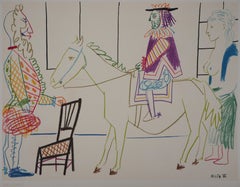
after Pablo Picasso - The Human Comedy - Lithograph Signed and dated in the plate Dimensions: 32 x 24 cm This artwork is a lithograph in colors on wov...
Category

1950s Modern Nude Prints

Materials

Lithograph

You May Also Like

Pablo Picasso, La Petite Corrida, lithograph
By Pablo Picasso
Located in Chatsworth, CA
This piece is a lithograph in colors (after)Pablo Picasso, done in 1957. Picasso created this piece for the special issue of the art publication XXe Sicle Review No. 10, entitled "Ho...
Category

1950s Modern More Prints

Materials

Lithograph

Pablo Picasso, The Little Bullfight, from XXe siecle, 1970
By Pablo Picasso
Located in Southampton, NY
This exquisite lithograph by Pablo Picasso (1881–1973), titled La Petite Corrida (The Little Bullfight), from the album Special issue of the XX Siecle Review, Hommage a Picasso, originates from the 1971 edition published by Tudor Publishing Co., New York, in collaboration with Societe Internationale d'Art XXe siecle, Paris, under the direction of Gualtieri di San Lazzaro, editeur, Paris, and printed by Mourlot Freres, Paris. La Petite Corrida reflects Picasso’s lifelong fascination with the bullfight—a subject that symbolized vitality, struggle, and creation throughout his career. Executed with the spontaneity and graphic brilliance characteristic of his late lithographs, the composition captures both movement and ritual, merging ancient spectacle with modern energy. Executed as a lithograph on velin paper, this work measures 12.5 × 9.75 inches (31.75 × 24.77 cm). Signed in the plate and unnumbered as issued. The edition exemplifies the superb craftsmanship of Mourlot Freres, Paris, the atelier that produced many of Picasso’s greatest lithographic works. Artwork Details: Artist: Pablo Picasso (1881–1973) Title: La Petite Corrida (The Little Bullfight), from the album Hommage a Picasso, 1971 Medium: Lithograph on velin paper Dimensions: 12.5 × 9.75 inches (31.75 × 24.77 cm) Inscription: Signed in the plate and unnumbered as issued Date: 1971 Publisher: Tudor Publishing Co., New York, in collaboration with Societe Internationale d'Art XXe siecle, Paris Printer: Mourlot Freres, Paris Catalogue raisonne references: Catalogue de L’oeuvre Grave et Lithographie, Pablo Picasso: Catalogue of the Printed Graphic Work. Editions Kornfeld, 1967, illustration 839. Goeppert, Sebastian, et al. Pablo Picasso, the Illustrated Books: Catalogue Raisonne. Patrick Cramer, 1983, illustration 92. Picasso, Pablo, and Fernand Mourlot. Picasso Lithographs, Translated by Jean Didry, Boston Book and Art Publisher, 1970, illustration 302. Condition: Well preserved, consistent with age and medium Provenance: From the album Hommage a Picasso, published 1971 by Tudor Publishing Co. and Societe Internationale d'Art XXe siecle, Paris About the Publication: Gualtieri di San Lazzaro’s XXe Siecle (Twentieth Century) was one of the most influential art journals of the modern era, founded in Paris in 1938 as a platform for the greatest painters, sculptors, and writers of the 20th century. San Lazzaro—a visionary editor, critic, and champion of modernism—believed that art and literature should coexist as expressions of a shared human imagination. Under his direction, XXe Siecle became a cultural bridge between Europe and the wider world, publishing special issues devoted to leading figures such as Picasso, Matisse, Chagall, Braque, Calder, Miro, Kandinsky, and Leger. Each edition combined essays by renowned critics and poets with original lithographs printed by the foremost ateliers of Paris, including Mourlot, Arte, and Bellini, creating a uniquely rich dialogue between text and image. Through XXe Siecle, San Lazzaro preserved the creative spirit of the avant-garde during and after World War II, championing freedom of expression and the evolution of abstraction, Surrealism, and modern thought. Over nearly four decades, the journal shaped international taste and defined the intellectual landscape of postwar art publishing. Today, XXe Siecle remains celebrated for its extraordinary synthesis of art, literature, and design—an enduring testament to Gualtieri di San Lazzaro’s belief that the visual arts are the soul of the modern age. About the Artist: Pablo Picasso (1881–1973) was a Spanish painter, sculptor, printmaker, and ceramicist whose extraordinary vision revolutionized modern art and defined the visual language of the 20th century. A child prodigy from Malaga, Spain, Picasso’s career spanned more than seven decades and encompassed an astonishing range of styles and innovations—from the melancholic Blue and romantic Rose periods to his pioneering invention of Cubism with Georges Braque, which shattered conventional notions of perspective and form. Influenced by the bold expressiveness of El Greco, the structure of Cezanne, and the vitality of African and Iberian sculpture, Picasso became a central figure of the Paris avant-garde, working in creative dialogue with contemporaries such as Henri Matisse, Alexander Calder, Alberto Giacometti, Salvador Dali, Joan Miro, Wassily Kandinsky, Marcel Duchamp, and Man Ray. His insatiable experimentation extended across painting, drawing, printmaking, ceramics, and sculpture, forever expanding the boundaries of artistic expression. A master of reinvention, Picasso profoundly shaped generations of artists who followed—from Andy Warhol, Roy Lichtenstein, David Hockney, and Jean-Michel Basquiat to Jeff Koons and Banksy—cementing his status as a timeless cultural icon whose works remain among the most sought after worldwide. His landmark painting Les Femmes d’Alger (Version “O”) achieved a record-breaking sale of $179,365,000 at Christie’s, New York, on May 11, 2015, affirming Picasso’s enduring legacy as one of the most influential and valuable artists in history. Pablo Picasso La Petite Corrida, Picasso Mourlot Freres, Picasso XXe siecle, Picasso Hommage a Picasso, Picasso 1971 lithograph, Picasso velin paper, Picasso bullfight lithograph...
Category

1970s Cubist Figurative Prints

Materials

Lithograph

Pablo Picasso, The Little Bullfight, from XXe Siecle, 1958
By Pablo Picasso
Located in Southampton, NY
This exquisite lithograph by Pablo Picasso (1881–1973), titled La Petite Corrida (The Little Bullfight), from the album XXe Siecle, Nouvelle serie, XXe Annee, N° 10 (double) Mars 195...
Category

1950s Cubist Figurative Prints

Materials

Lithograph

Corrida by Pablo Picasso
By Pablo Picasso
Located in New York, NY
Artist: Pablo Picasso Medium: Lithograph on Arches paper, 1957 Dimensions: 18 x 24 in, 45.7 x 63.5 cm
Category

1950s Prints and Multiples

Materials

Lithograph

Pablo Picasso, La Picador II, original lithograph
By Pablo Picasso
Located in Chatsworth, CA
Pablo Picasso Le Picador II from A Los Toros Avec Picasso Lithograph in 24 colors on wove paper 1961 Image Size: 8 x 10 inches Frame Size: 21 x 23 inches Dated in the plate Referenc...
Category

1960s Modern More Prints

Materials

Lithograph

Picasso "Jeu de la Cape" Lithograph
By Pablo Picasso
Located in Boston, MA
Artist: Picasso, Pablo Title: Jeu de la Cape Series: A Los Toros Date: 1961 Medium: Lithograph Unframed Dimensions: 9" x 12" Framed Dimensions: 17" x 19" Signature: Unsigned ...
Category

1960s Modern Prints and Multiples

Materials

Lithograph