Items Similar to Pablo Picasso, Woman with Mandolin, from Chroniques du Jour, 1930 (after)
Want more images or videos?
Request additional images or videos from the seller
1 of 8
Pablo Picasso, Woman with Mandolin, from Chroniques du Jour, 1930 (after)1930
1930
$2,396
$2,99520% Off
£1,818.69
£2,273.3620% Off
€2,085.58
€2,606.9720% Off
CA$3,381.94
CA$4,227.4320% Off
A$3,630.20
A$4,537.7520% Off
CHF 1,932.89
CHF 2,416.1220% Off
MX$42,995.61
MX$53,744.5120% Off
NOK 24,426.49
NOK 30,533.1220% Off
SEK 22,308.20
SEK 27,885.2520% Off
DKK 15,580.21
DKK 19,475.2720% Off
About the Item
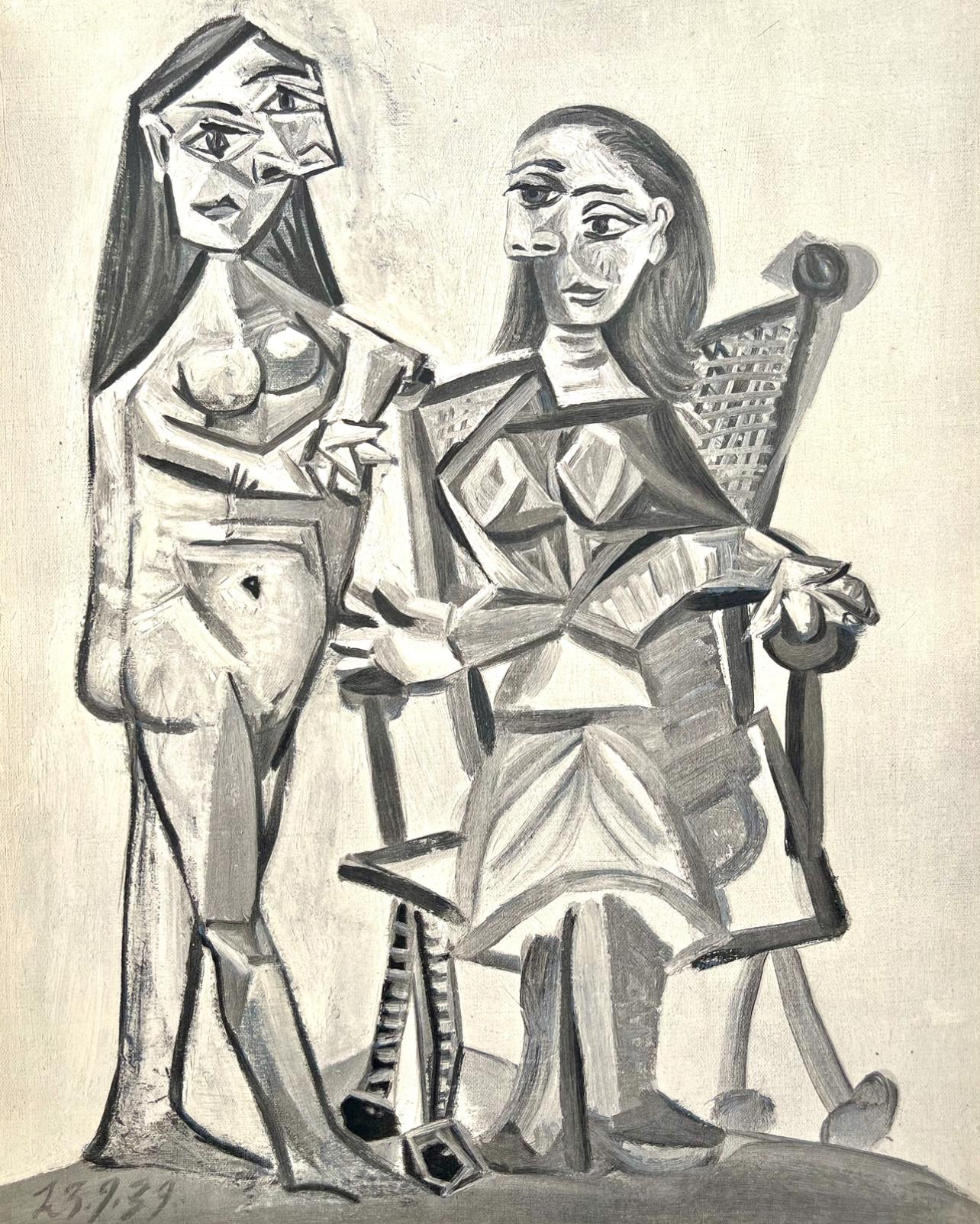
This exquisite lithograph and pochoir after Pablo Picasso (1881–1973), titled Femme à la mandoline (Woman with Mandolin), from the album, Pablo Picasso, 1930, originates from the 1930 edition published by Editions des Chroniques du Jour, Paris, and printed by L'Atelier Desjobert, Paris, 1930. Femme à la mandoline (Woman with Mandolin) exemplifies Picasso’s lyrical interpretation of the female form during his neoclassical period, fusing harmony, sensuality, and musicality into a composition that reflects both the artist’s Mediterranean roots and his mastery of modernist form. Through the union of lithographic line and pochoir color, the work conveys a balance between intimacy and abstraction, celebrating rhythm, grace, and the timeless relationship between art and music.
Executed as a lithograph and pochoir on velin paper, this work measures 11.38 x 9.09 inches. Unsigned and unnumbered as issued. The edition exemplifies the refined craftsmanship of Editions des Chroniques du Jour and the technical excellence of L'Atelier Desjobert, one of the premier Parisian workshops specializing in pochoir and fine art lithography.
Artwork Details:
Artist: After Pablo Picasso (1881–1973)
Title: Femme à la mandoline (Woman with Mandolin), from the album, Pablo Picasso, 1930
Medium: Lithograph and pochoir on velin paper
Dimensions: 11.38 x 9.09 inches (28.9 x 23.1 cm)
Inscription: Unsigned and unnumbered as issued
Date: 1930
Publisher: Editions des Chroniques du Jour, Paris
Printer: L'Atelier Desjobert, Paris
Catalogue raisonne references: Cramer, Patrick. Pablo Picasso, The Illustrated Books: Catalogue Raisonne. Patrick Cramer, 1983, illustration 18; Bloch, Georges. Pablo Picasso: Catalogue of the Printed Graphic Work 1904–1967. Kornfeld
Klipstein, 1968, illustration 98; Reusse, Gerhard. Pablo Picasso: The Illustrated Books, Catalogue Raisonne. Verlag Gerd Hatje, 1983, illustration 31
Condition: Well preserved, consistent with age and medium
Provenance: From the album, Pablo Picasso, published by Editions des Chroniques du Jour, Paris, and printed by L'Atelier Desjobert, Paris, 1930
Notes:
Excerpted from the album, This volume has been printed in MCC numbered examples, of which DL (LI to DC) constitute the edition in French and DCL (DCI to MCCL). The edition in English has been printed on behalf of E. Weyhe, 794 Lexington Avenue, New York (DCI to MC) and of A. Zwemmer, 78 Charing Cross Road, London, W. C.2. (MCI to MCCL). There have also been printed L examples on Arches paper with a lithograph by Picasso (I to L) distributed between the two editions, and some press examples.
About the Publication:
The album Pablo Picasso, published in 1930 by Editions des Chroniques du Jour, Paris, under the direction of Christian Zervos, stands among the earliest major printed tributes to the artist’s emerging international acclaim. Conceived as part of the publisher’s broader initiative to document and celebrate the modernist vanguard, the volume presented a series of lithographs and pochoirs interpreting Picasso’s drawings, watercolors, and gouaches from the preceding decade. Executed at the esteemed Atelier Desjobert, the edition combined the lithographic precision of line with the pochoir method’s hand-applied color, producing images of exceptional tonal depth and fidelity. Issued in both French and English, with distribution in Paris, New York, and London through E. Weyhe and A. Zwemmer, the album was limited to MCC copies, including a special suite of L examples on Arches paper containing an original lithograph by Picasso. The publication represented a vital collaboration between artist, publisher, and printer—uniting the intellectual rigor of Zervos’s art criticism with the material beauty of fine French printmaking. Today, Pablo Picasso, 1930 is recognized as a landmark in 20th-century art publishing, reflecting both the refinement of interwar Parisian craftsmanship and the international reach of Picasso’s genius.
About the Artist:
Pablo Picasso (1881–1973) was a Spanish painter, sculptor, printmaker, and ceramicist whose extraordinary vision revolutionized modern art and defined the visual language of the 20th century. A child prodigy from Malaga, Spain, Picasso's career spanned more than seven decades and encompassed an astonishing range of styles and innovations—from the melancholic Blue and romantic Rose periods to his pioneering invention of Cubism with Georges Braque, which shattered conventional notions of perspective and form. Influenced by the bold expressiveness of El Greco, the structure of Cezanne, and the vitality of African and Iberian sculpture, Picasso became a central figure of the Paris avant-garde, working in creative dialogue with contemporaries such as Henri Matisse, Alexander Calder, Alberto Giacometti, Salvador Dali, Joan Miro, Wassily Kandinsky, Marcel Duchamp, and Man Ray. His insatiable experimentation extended across painting, drawing, printmaking, ceramics, and sculpture, forever expanding the boundaries of artistic expression. A master of reinvention, Picasso profoundly shaped generations of artists who followed—from Andy Warhol, Roy Lichtenstein, David Hockney, and Jean-Michel Basquiat to Jeff Koons and Banksy—cementing his status as a timeless cultural icon whose works remain among the most sought after worldwide. His landmark painting Les Femmes d'Alger (Version O) achieved a record-breaking sale of 179,365,000 USD at Christie's, New York, on May 11, 2015, affirming Picasso's enduring legacy as one of the most influential and valuable artists in history.
Pablo Picasso Femme à la mandoline (Woman with Mandolin), Picasso 1930, Picasso Desjobert, Picasso pochoir, Picasso velin, Picasso collectible print.
- Creation Year:1930
- Dimensions:Height: 11.38 in (28.91 cm)Width: 9.094 in (23.1 cm)
- Medium:
- Movement Style:
- After:Pablo Picasso (1881-1973, Spanish)
- Period:
- Condition:
- Gallery Location:Southampton, NY
- Reference Number:1stDibs: LU1465215468912
About the Seller
4.9
Platinum Seller
Premium sellers with a 4.7+ rating and 24-hour response times
Established in 1978
1stDibs seller since 2021
1,271 sales on 1stDibs
Typical response time: 1 hour
- ShippingRetrieving quote...Shipping from: Southampton, NY
- Return Policy
More From This Seller
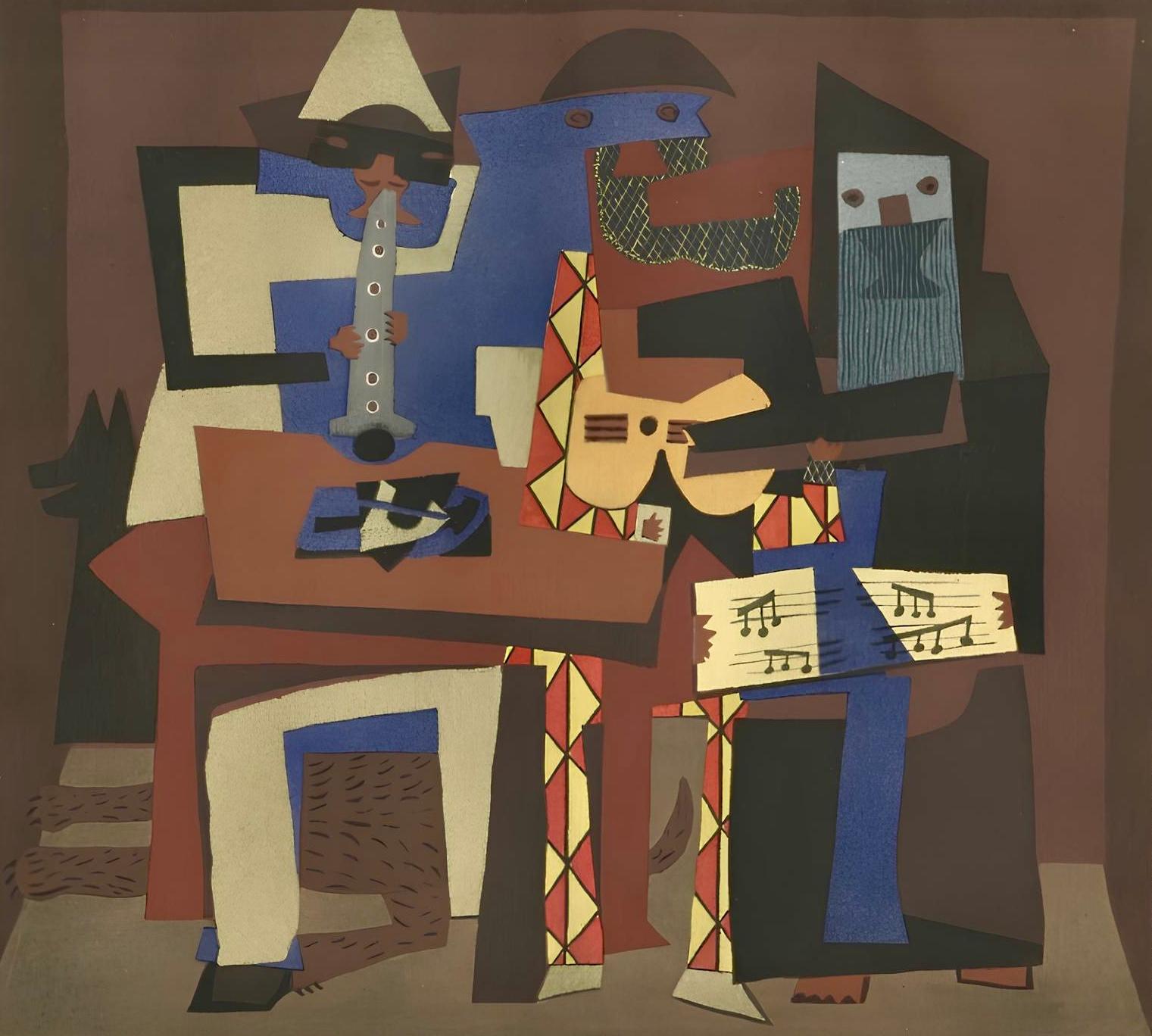
View AllPablo Picasso, The Three Musicians, from Chroniques du Jour, 1930 (after)
By Pablo Picasso
Located in Southampton, NY
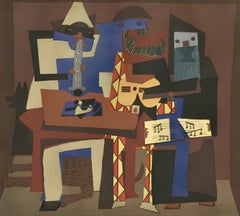
This exquisite lithograph and pochoir after Pablo Picasso (1881–1973), titled Les Trois Musiciens (The Three Musicians), from the album, Pablo Picasso, 1930, originates from the 1930 edition published by Editions des Chroniques du Jour, Paris, and printed by L'Atelier Desjobert, Paris, 1930. Les Trois Musiciens (The Three Musicians) captures Picasso’s Cubist mastery at its height, translating one of his most celebrated compositions into the refined medium of lithograph and pochoir. The scene depicts three abstracted figures—a harlequin, a monk, and a pierrot—arranged in a complex geometric harmony that embodies both the structure and rhythm of modernity. Through vivid color and precise pochoir layering, Picasso’s interplay of form, shadow, and light transforms the musicians into a symphony of shape and sound, reflecting the artist’s enduring fascination with the relationship between visual art and music.
Executed as a lithograph and pochoir on velin paper, this work measures 9.09 x 11.38 inches. Unsigned and unnumbered as issued. The edition exemplifies the refined craftsmanship of Editions des Chroniques du Jour and the technical excellence of L'Atelier Desjobert, one of the premier Parisian workshops specializing in pochoir and fine art lithography.
Artwork Details:
Artist: After Pablo Picasso (1881–1973)
Title: Les Trois Musiciens (The Three Musicians), from the album, Pablo Picasso, 1930
Medium: Lithograph and pochoir on velin paper
Dimensions: 9.09 x 11.38 inches (23.1 x 28.9 cm)
Inscription: Unsigned and unnumbered as issued
Date: 1930
Publisher: Editions des Chroniques du Jour, Paris
Printer: L'Atelier Desjobert, Paris
Catalogue raisonne references: Cramer, Patrick. Pablo Picasso, The Illustrated Books: Catalogue Raisonne. Patrick Cramer, 1983, illustration 18; Bloch, Georges. Pablo Picasso: Catalogue of the Printed Graphic Work 1904–1967. Kornfeld & Klipstein, 1968, illustration 98; Reusse, Gerhard. Pablo Picasso: The Illustrated Books, Catalogue Raisonne. Verlag Gerd Hatje, 1983, illustration 31
Condition: Well preserved, consistent with age and medium
Provenance: From the album, Pablo Picasso, published by Editions des Chroniques du Jour, Paris, and printed by L'Atelier Desjobert, Paris, 1930
Notes:
Excerpted from the album, This volume has been printed in MCC numbered examples, of which DL (LI to DC) constitute the edition in French and DCL (DCI to MCCL). The edition in English has been printed on behalf of E. Weyhe, 794 Lexington Avenue, New York (DCI to MC) and of A. Zwemmer, 78 Charing Cross Road, London, W. C.2. (MCI to MCCL). There have also been printed L examples on Arches paper with a lithograph by Picasso (I to L) distributed between the two editions, and some press examples.
About the Publication:
The album Pablo Picasso, published in 1930 by Editions des Chroniques du Jour, Paris, under the direction of Christian Zervos, stands among the earliest major printed tributes to the artist’s emerging international acclaim. Conceived as part of the publisher’s broader initiative to document and celebrate the modernist vanguard, the volume presented a series of lithographs and pochoirs interpreting Picasso’s drawings, watercolors, and gouaches from the preceding decade. Executed at the esteemed Atelier Desjobert, the edition combined the lithographic precision of line with the pochoir method’s hand-applied color, producing images of exceptional tonal depth and fidelity. Issued in both French and English, with distribution in Paris, New York, and London through E. Weyhe and A. Zwemmer, the album was limited to MCC copies, including a special suite of L examples on Arches paper containing an original lithograph by Picasso. The publication represented a vital collaboration between artist, publisher, and printer—uniting the intellectual rigor of Zervos’s art criticism with the material beauty of fine French printmaking. Today, Pablo Picasso, 1930 is recognized as a landmark in 20th-century art publishing, reflecting both the refinement of interwar Parisian craftsmanship and the international reach of Picasso’s genius.
About the Artist:
Pablo Picasso (1881–1973) was a Spanish painter, sculptor, printmaker, and ceramicist whose extraordinary vision revolutionized modern art and defined the visual language of the 20th century. A child prodigy from Malaga, Spain, Picasso's career spanned more than seven decades and encompassed an astonishing range of styles and innovations—from the melancholic Blue and romantic Rose periods to his pioneering invention of Cubism with Georges Braque, which shattered conventional notions of perspective and form. Influenced by the bold expressiveness of El Greco, the structure of Cezanne, and the vitality of African and Iberian sculpture, Picasso became a central figure of the Paris avant-garde, working in creative dialogue with contemporaries such as Henri Matisse, Alexander Calder, Alberto Giacometti, Salvador Dali, Joan Miro, Wassily Kandinsky, Marcel Duchamp, and Man Ray. His insatiable experimentation extended across painting, drawing, printmaking, ceramics, and sculpture, forever expanding the boundaries of artistic expression. A master of reinvention, Picasso profoundly shaped generations of artists who followed—from Andy Warhol, Roy Lichtenstein, David Hockney, and Jean-Michel Basquiat to Jeff Koons and Banksy—cementing his status as a timeless cultural icon whose works remain among the most sought after worldwide. His landmark painting Les Femmes d'Alger (Version O) achieved a record-breaking sale of 179,365,000 USD at Christie's, New York, on May 11, 2015, affirming Picasso's enduring legacy as one of the most influential and valuable artists in history.
Pablo Picasso Les Trois Musiciens (The Three Musicians), Picasso 1930, Picasso Desjobert, Picasso pochoir...
Category
1930s Cubist Figurative Prints
Materials
Lithograph, Stencil
$2,396 Sale Price
20% Off
Free Shipping
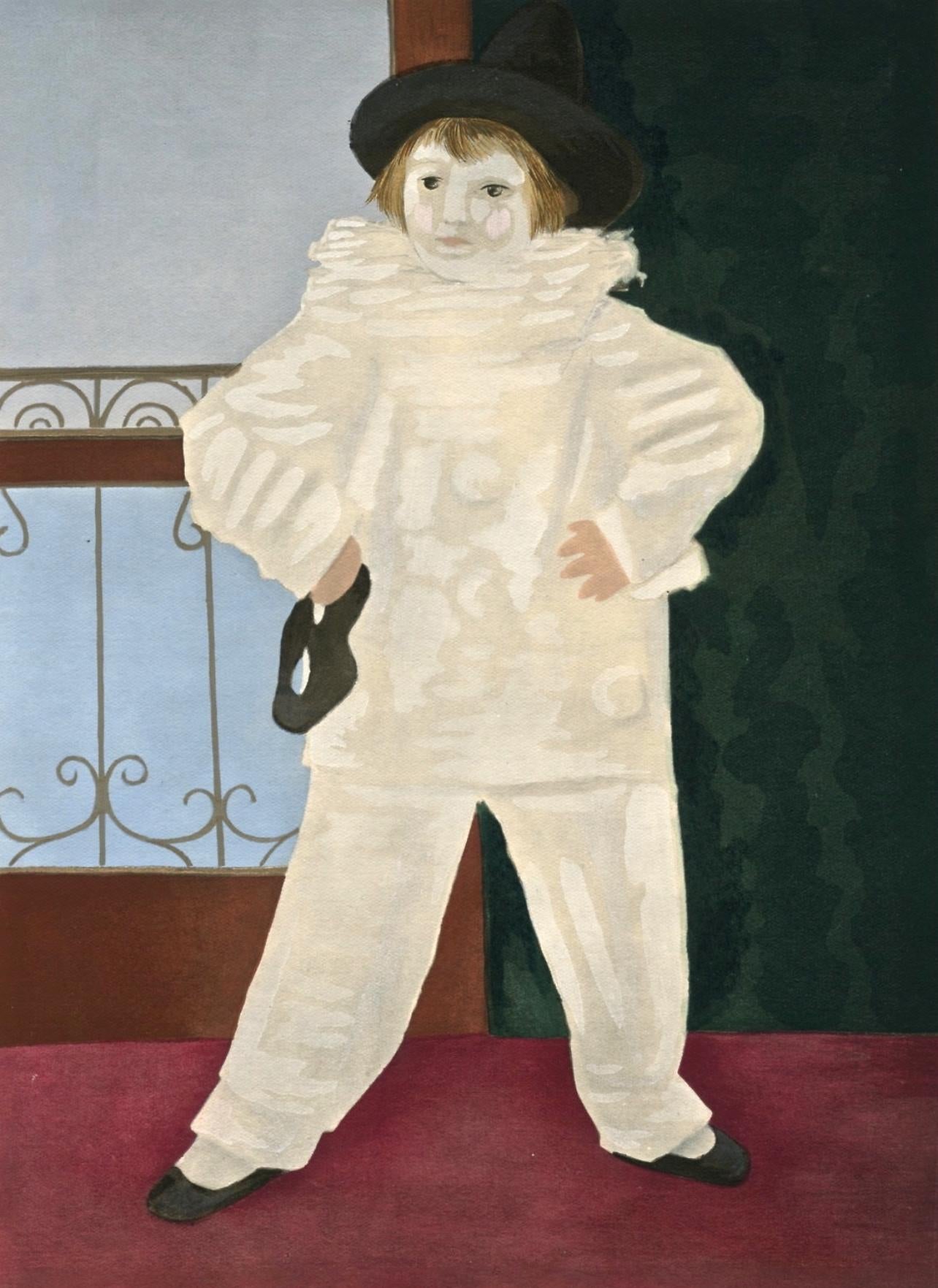
Pablo Picasso, Paul as Pierrot, from Chroniques du Jour, 1930 (after)
By Pablo Picasso
Located in Southampton, NY
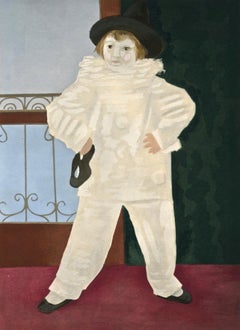
This exquisite lithograph and pochoir after Pablo Picasso (1881–1973), titled Paul en Pierrot (Paul as Pierrot), from the album, Pablo Picasso, 1930, originates from the 1930 edition published by Editions des Chroniques du Jour, Paris, and printed by L'Atelier Desjobert, Paris, 1930. Paul en Pierrot (Paul as Pierrot) exemplifies Picasso’s tender and theatrical portrayal of his son Paul, rendered with the lyrical charm and painterly sophistication that defined his neoclassical period. Through the combination of lithographic precision and pochoir color, the work evokes both the intimacy of family life and the dreamlike symbolism of commedia dell’arte, merging affection and artistry in a composition of striking emotional balance.
Executed as a lithograph and pochoir on velin paper, this work measures 11.38 x 9.09 inches. Unsigned and unnumbered as issued. The edition exemplifies the refined craftsmanship of Editions des Chroniques du Jour and the technical excellence of L'Atelier Desjobert, one of the premier Parisian workshops specializing in pochoir and fine art lithography.
Artwork Details:
Artist: After Pablo Picasso (1881–1973)
Title: Paul en Pierrot (Paul as Pierrot), from the album, Pablo Picasso, 1930
Medium: Lithograph and pochoir on velin paper
Dimensions: 11.38 x 9.09 inches (28.9 x 23.1 cm)
Inscription: Unsigned and unnumbered as issued
Date: 1930
Publisher: Editions des Chroniques du Jour, Paris
Printer: L'Atelier Desjobert, Paris
Catalogue raisonne references: Cramer, Patrick. Pablo Picasso, The Illustrated Books: Catalogue Raisonne. Patrick Cramer, 1983, illustration 18; Bloch, Georges. Pablo Picasso: Catalogue of the Printed Graphic Work 1904–1967. Kornfeld & Klipstein, 1968, illustration 98; Reusse, Gerhard. Pablo Picasso: The Illustrated Books, Catalogue Raisonne. Verlag Gerd Hatje, 1983, illustration 31
Condition: Well preserved, consistent with age and medium
Provenance: From the album, Pablo Picasso, published by Editions des Chroniques du Jour, Paris, and printed by L'Atelier Desjobert, Paris, 1930
Notes:
Excerpted from the album, This volume has been printed in MCC numbered examples, of which DL (LI to DC) constitute the edition in French and DCL (DCI to MCCL). The edition in English has been printed on behalf of E. Weyhe, 794 Lexington Avenue, New York (DCI to MC) and of A. Zwemmer, 78 Charing Cross Road, London, W. C.2. (MCI to MCCL). There have also been printed L examples on Arches paper with a lithograph by Picasso (I to L) distributed between the two editions, and some press examples.
About the Publication:
The album Pablo Picasso, published in 1930 by Editions des Chroniques du Jour, Paris, under the direction of Christian Zervos, stands among the earliest major printed tributes to the artist’s emerging international acclaim. Conceived as part of the publisher’s broader initiative to document and celebrate the modernist vanguard, the volume presented a series of lithographs and pochoirs interpreting Picasso’s drawings, watercolors, and gouaches from the preceding decade. Executed at the esteemed Atelier Desjobert, the edition combined the lithographic precision of line with the pochoir method’s hand-applied color, producing images of exceptional tonal depth and fidelity. Issued in both French and English, with distribution in Paris, New York, and London through E. Weyhe and A. Zwemmer, the album was limited to MCC copies, including a special suite of L examples on Arches paper containing an original lithograph by Picasso. The publication represented a vital collaboration between artist, publisher, and printer—uniting the intellectual rigor of Zervos’s art criticism with the material beauty of fine French printmaking. Today, Pablo Picasso, 1930 is recognized as a landmark in 20th-century art publishing, reflecting both the refinement of interwar Parisian craftsmanship and the international reach of Picasso’s genius.
About the Artist:
Pablo Picasso (1881–1973) was a Spanish painter, sculptor, printmaker, and ceramicist whose extraordinary vision revolutionized modern art and defined the visual language of the 20th century. A child prodigy from Malaga, Spain, Picasso's career spanned more than seven decades and encompassed an astonishing range of styles and innovations—from the melancholic Blue and romantic Rose periods to his pioneering invention of Cubism with Georges Braque, which shattered conventional notions of perspective and form. Influenced by the bold expressiveness of El Greco, the structure of Cezanne, and the vitality of African and Iberian sculpture, Picasso became a central figure of the Paris avant-garde, working in creative dialogue with contemporaries such as Henri Matisse, Alexander Calder, Alberto Giacometti, Salvador Dali, Joan Miro, Wassily Kandinsky, Marcel Duchamp, and Man Ray. His insatiable experimentation extended across painting, drawing, printmaking, ceramics, and sculpture, forever expanding the boundaries of artistic expression. A master of reinvention, Picasso profoundly shaped generations of artists who followed—from Andy Warhol, Roy Lichtenstein, David Hockney, and Jean-Michel Basquiat to Jeff Koons and Banksy—cementing his status as a timeless cultural icon whose works remain among the most sought after worldwide. His landmark painting Les Femmes d'Alger (Version O) achieved a record-breaking sale of 179,365,000 USD at Christie's, New York, on May 11, 2015, affirming Picasso's enduring legacy as one of the most influential and valuable artists in history.
Pablo Picasso Paul en Pierrot (Paul as Pierrot), Picasso 1930, Picasso Desjobert, Picasso pochoir...
Category
1930s Modern Figurative Prints
Materials
Lithograph, Stencil
$2,396 Sale Price
20% Off
Free Shipping
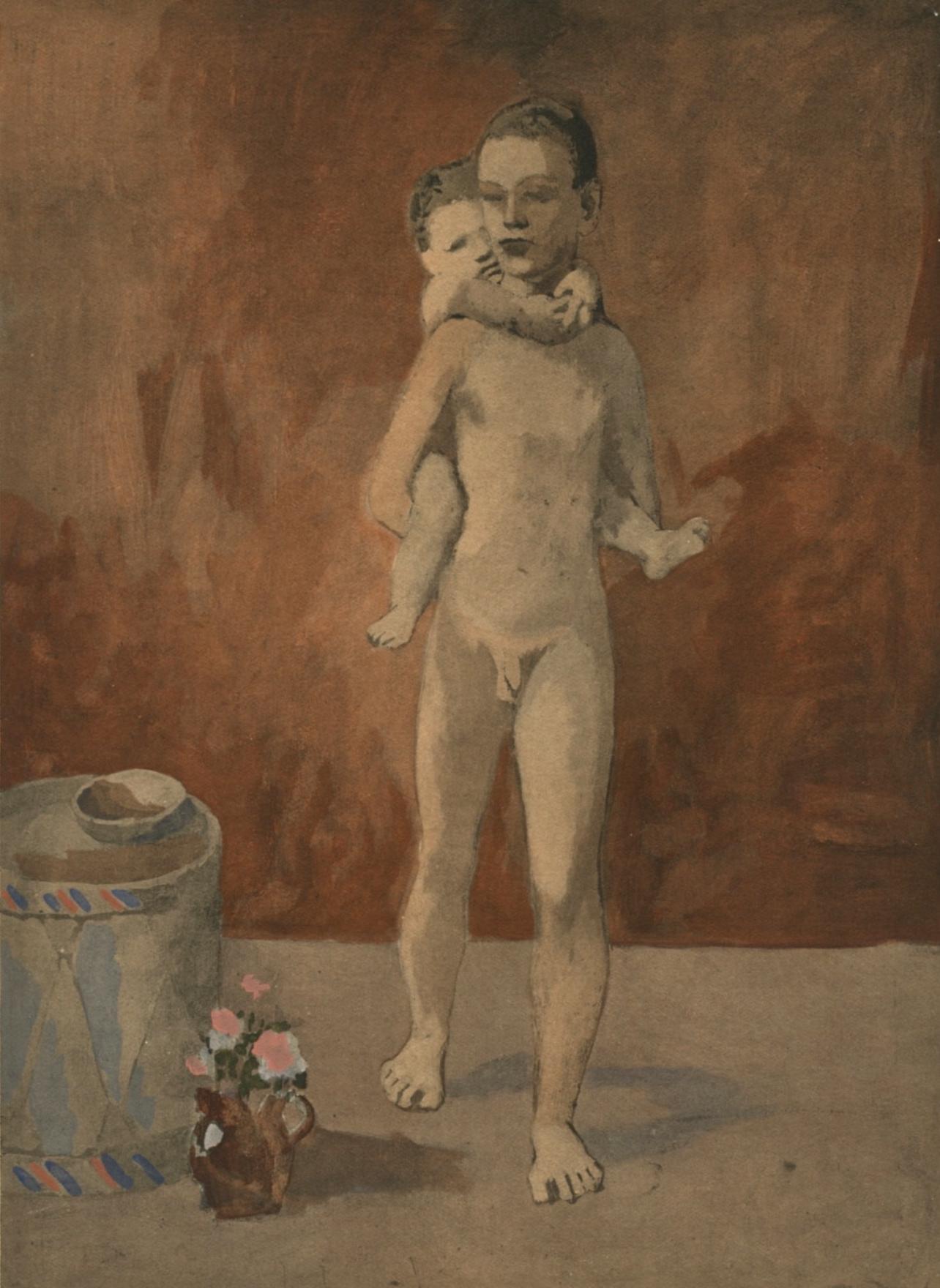
Pablo Picasso, The Child with the Doll, from Chroniques du Jour, 1930 (after)
By Pablo Picasso
Located in Southampton, NY
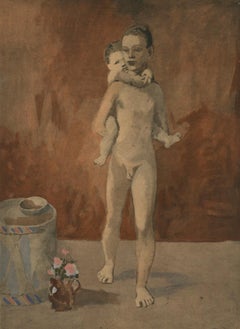
This exquisite lithograph and pochoir after Pablo Picasso (1881–1973), titled L’Enfant a l’ange (The Child with the Doll), from the album, Pablo Picasso, 1930, originates from the 1930 edition published by Editions des Chroniques du Jour, Paris, and printed by L'Atelier Desjobert, Paris, 1930. L’Enfant a l’ange (The Child with the Angel) exemplifies Picasso’s exploration of mythological and spiritual imagery during the early 1930s—a period in which he synthesized the formal innovations of Cubism with the poetic lyricism of his neoclassical and Surrealist phases. Through the delicate layering of lithographic line and pochoir color, the work evokes both innocence and transcendence, merging classical grace with modern expressiveness in a composition that feels simultaneously intimate and monumental.
Executed as a lithograph and pochoir on velin paper, this work measures 11.38 x 9.09 inches. Unsigned and unnumbered as issued. The edition exemplifies the refined craftsmanship of Editions des Chroniques du Jour and the technical excellence of L'Atelier Desjobert, one of the premier Parisian workshops specializing in pochoir and fine art lithography.
Artwork Details:
Artist: After Pablo Picasso (1881–1973)
Title: L’Enfant a l’ange (The Child with the Doll), from the album, Pablo Picasso, 1930
Medium: Lithograph and pochoir on velin paper
Dimensions: 11.38 x 9.09 inches (28.9 x 23.1 cm)
Inscription: Unsigned and unnumbered as issued
Date: 1930
Publisher: Editions des Chroniques du Jour, Paris
Printer: L'Atelier Desjobert, Paris
Catalogue raisonne references: Cramer, Patrick. Pablo Picasso, The Illustrated Books: Catalogue Raisonne. Patrick Cramer, 1983, illustration 18; Bloch, Georges. Pablo Picasso: Catalogue of the Printed Graphic Work 1904–1967. Kornfeld & Klipstein, 1968, illustration 98; Reusse, Gerhard. Pablo Picasso: The Illustrated Books, Catalogue Raisonne. Verlag Gerd Hatje, 1983, illustration 31
Condition: Well preserved, consistent with age and medium
Provenance: From the album, Pablo Picasso, published by Editions des Chroniques du Jour, Paris, and printed by L'Atelier Desjobert, Paris, 1930
Notes:
Excerpted from the album, This volume has been printed in MCC numbered examples, of which DL (LI to DC) constitute the edition in French and DCL (DCI to MCCL). The edition in English has been printed on behalf of E. Weyhe, 794 Lexington Avenue, New York (DCI to MC) and of A. Zwemmer, 78 Charing Cross Road, London, W. C.2. (MCI to MCCL). There have also been printed L examples on Arches paper with a lithograph by Picasso (I to L) distributed between the two editions, and some press examples.
About the Publication:
The album Pablo Picasso, published in 1930 by Editions des Chroniques du Jour, Paris, under the direction of Christian Zervos, stands among the earliest major printed tributes to the artist’s emerging international acclaim. Conceived as part of the publisher’s broader initiative to document and celebrate the modernist vanguard, the volume presented a series of lithographs and pochoirs interpreting Picasso’s drawings, watercolors, and gouaches from the preceding decade. Executed at the esteemed Atelier Desjobert, the edition combined the lithographic precision of line with the pochoir method’s hand-applied color, producing images of exceptional tonal depth and fidelity. Issued in both French and English, with distribution in Paris, New York, and London through E. Weyhe and A. Zwemmer, the album was limited to MCC copies, including a special suite of L examples on Arches paper containing an original lithograph by Picasso. The publication represented a vital collaboration between artist, publisher, and printer—uniting the intellectual rigor of Zervos’s art criticism with the material beauty of fine French printmaking. Today, Pablo Picasso, 1930 is recognized as a landmark in 20th-century art publishing, reflecting both the refinement of interwar Parisian craftsmanship and the international reach of Picasso’s genius.
About the Artist:
Pablo Picasso (1881–1973) was a Spanish painter, sculptor, printmaker, and ceramicist whose extraordinary vision revolutionized modern art and defined the visual language of the 20th century. A child prodigy from Malaga, Spain, Picasso's career spanned more than seven decades and encompassed an astonishing range of styles and innovations—from the melancholic Blue and romantic Rose periods to his pioneering invention of Cubism with Georges Braque, which shattered conventional notions of perspective and form. Influenced by the bold expressiveness of El Greco, the structure of Cezanne, and the vitality of African and Iberian sculpture, Picasso became a central figure of the Paris avant-garde, working in creative dialogue with contemporaries such as Henri Matisse, Alexander Calder, Alberto Giacometti, Salvador Dali, Joan Miro, Wassily Kandinsky, Marcel Duchamp, and Man Ray. His insatiable experimentation extended across painting, drawing, printmaking, ceramics, and sculpture, forever expanding the boundaries of artistic expression. A master of reinvention, Picasso profoundly shaped generations of artists who followed—from Andy Warhol, Roy Lichtenstein, David Hockney, and Jean-Michel Basquiat to Jeff Koons and Banksy—cementing his status as a timeless cultural icon whose works remain among the most sought after worldwide. His landmark painting Les Femmes d'Alger (Version O) achieved a record-breaking sale of 179,365,000 USD at Christie's, New York, on May 11, 2015, affirming Picasso's enduring legacy as one of the most influential and valuable artists in history.
Pablo Picasso L’Enfant a l’ange (The Child with the Doll), Picasso 1930, Picasso Desjobert, Picasso pochoir...
Category
1930s Modern Figurative Prints
Materials
Lithograph, Stencil
$2,396 Sale Price
20% Off
Free Shipping
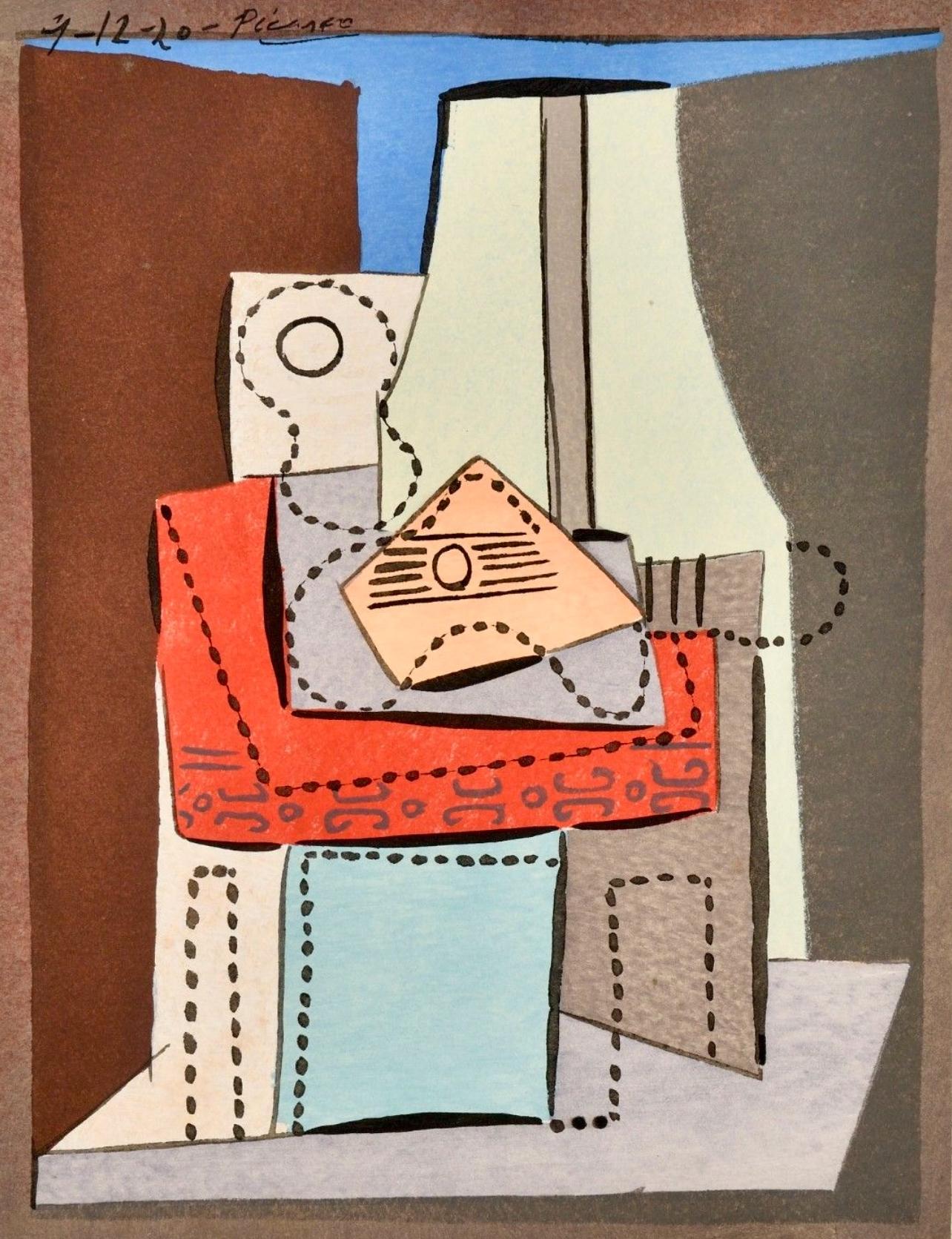
Pablo Picasso, Seated Woman in an Armchair, from Oeuvres 1920-1926 (after)
By Pablo Picasso
Located in Southampton, NY
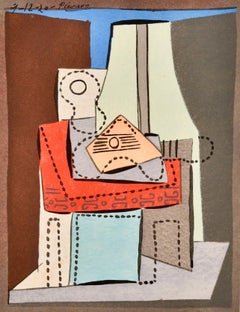
This exquisite lithograph and pochoir after Pablo Picasso (1881–1973), titled Femme Assise dans un Fauteuil (Seated Woman in an Armchair), from the album, Picasso, Oeuvres 1920-1926, 1926, originates from the 1926 edition published and printed by Editions des Cahiers d'Art, Paris, under the direction of Christian Zervos, Editeur, Paris, December 10, 1926. Femme Assise dans un Fauteuil (Seated Woman in an Armchair) captures Picasso’s evolving exploration of form, movement, and emotion during the mid-1920s—a pivotal period in which he redefined the relationship between classical representation and modern abstraction. With its bold contouring, stylized anatomy, and rhythmic color balance, the composition embodies the harmony between structural precision and sensual fluidity that characterized Picasso’s work in this era.
Executed as a lithograph and pochoir on velin paper, this work measures 11 x 8.75 inches. Signed in the plate and unnumbered as issued. The edition exemplifies the refined craftsmanship of Editions des Cahiers d'Art and the technical excellence of Parisian printmaking in the interwar period.
Artwork Details:
Artist: After Pablo Picasso (1881–1973)
Title: Femme Assise dans un Fauteuil (Seated Woman in an Armchair), from the album, Picasso, Oeuvres 1920-1926, 1926
Medium: Lithograph and pochoir on velin paper
Dimensions: 11 x 8.75 inches (27.94 x 22.23 cm)
Inscription: Signed in the plate and unnumbered as issued
Date: 1926
Publisher: Editions des Cahiers d'Art, Paris, under the direction of Christian Zervos, Editeur, Paris
Printer: Ducros & Colas, Paris
Catalogue raisonne references: Cramer, Patrick. Pablo Picasso, The Illustrated Books: Catalogue Raisonne. Patrick Cramer, 1983, illustration 15; Bloch, Georges. Pablo Picasso: Catalogue of the Printed Graphic Work 1904–1967. Kornfeld & Klipstein, 1968, illustration 56
Condition: Well preserved, consistent with age and medium
Provenance: From the album, Picasso, Oeuvres 1920-1926, published and printed by Editions des Cahiers d'Art, Paris, under the direction of Christian Zervos, Editeur, Paris, 1926
Notes:
Excerpted from the album (translated from French), This volume was completed to be printed by the Ducros & Colas printing house, 7, rue Croulebarbe in Paris, for the Editions des Cahiers d'Art, on December 10th MCMXXVI, DCC numbered examples, VI on Japon Imperial with an etching by Picasso, numbered from I to VI, L examples on paper by papier de Hollande, Van Gelder, with an etching by Picasso, numbered from VII to LVI, DCXL examples on velin, numbered from LVII to DCC, plus II examples intended for legal deposit.
About the Publication:
The album Picasso, Oeuvres 1920-1926 was issued in 1926 by Editions des Cahiers d'Art under the direction of Christian Zervos, one of the most influential editors, critics, and publishers of 20th-century modernism. Conceived as both a visual and intellectual tribute to Pablo Picasso’s mastery during a crucial transitional period, the volume presents a series of lithographs and pochoirs that chronicle his stylistic evolution from synthetic Cubism toward a renewed engagement with the human figure. Published in conjunction with the legendary Cahiers d'Art journal, the edition reflects Zervos’s vision of uniting scholarship, craftsmanship, and artistic authenticity in the modern book arts. Each composition was executed by the master printers Ducros & Colas and colored using the pochoir technique, faithfully translating the tonal subtleties and compositional balance of Picasso’s original drawings and gouaches. Completed on December 10, 1926, the edition comprised DCC examples—VI on Japon Imperial, L on Hollande Van Gelder, and DCXL on velin paper, plus II copies reserved for legal deposit—each numbered and printed to exacting standards. The volume stands as one of the earliest major Cahiers d'Art collaborations with Picasso, preceding the monumental Catalogue Raisonne des Oeuvres de Picasso that Zervos would later dedicate his life to producing. Today, Picasso, Oeuvres 1920-1926 remains a cornerstone of interwar art publishing, representing the confluence of avant-garde innovation, technical excellence, and intellectual rigor that defined the Parisian art world of the 1920s.
About the Artist:
Pablo Picasso (1881–1973) was a Spanish painter, sculptor, printmaker, and ceramicist whose extraordinary vision revolutionized modern art and defined the visual language of the 20th century. A child prodigy from Malaga, Spain, Picasso's career spanned more than seven decades and encompassed an astonishing range of styles and innovations—from the melancholic Blue and romantic Rose periods to his pioneering invention of Cubism with Georges Braque, which shattered conventional notions of perspective and form. Influenced by the bold expressiveness of El Greco, the structure of Cezanne, and the vitality of African and Iberian sculpture, Picasso became a central figure of the Paris avant-garde, working in creative dialogue with contemporaries such as Henri Matisse, Alexander Calder, Alberto Giacometti, Salvador Dali, Joan Miro, Wassily Kandinsky, Marcel Duchamp, and Man Ray. His insatiable experimentation extended across painting, drawing, printmaking, ceramics, and sculpture, forever expanding the boundaries of artistic expression. A master of reinvention, Picasso profoundly shaped generations of artists who followed—from Andy Warhol, Roy Lichtenstein, David Hockney, and Jean-Michel Basquiat to Jeff Koons and Banksy—cementing his status as a timeless cultural icon whose works remain among the most sought after worldwide. His landmark painting Les Femmes d'Alger (Version O) achieved a record-breaking sale of 179,365,000 USD at Christie's, New York, on May 11, 2015, affirming Picasso's enduring legacy as one of the most influential and valuable artists in history.
Pablo Picasso Femme Assise dans un Fauteuil (Seated Woman in an Armchair), Picasso Oeuvres 1920-1926, Picasso Zervos Cahiers d'Art, Picasso pochoir...
Category
1920s Cubist Still-life Prints
Materials
Lithograph, Stencil
$2,396 Sale Price
20% Off
Free Shipping
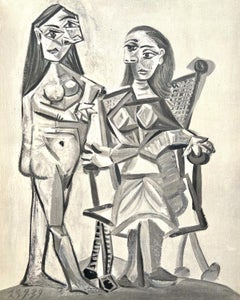
Picasso, Composition (Cramer 88), Dans l
Atelier de Picasso (after)
By Pablo Picasso
Located in Southampton, NY
Lithograph on vélin d'Arches à la forme savoir paper. Unsigned and unnumbered, as issued. Good condition. Notes: From the volume, Dans l'Atelier de Picasso, 1957. Published by Fernan...
Category
1950s Modern Landscape Prints
Materials
Lithograph
$10,396 Sale Price
20% Off
Free Shipping
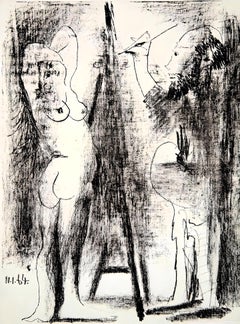
Picasso, Le peintre et son modèle (Cramer 128; Bloch 1848) (after)
By Pablo Picasso
Located in Southampton, NY
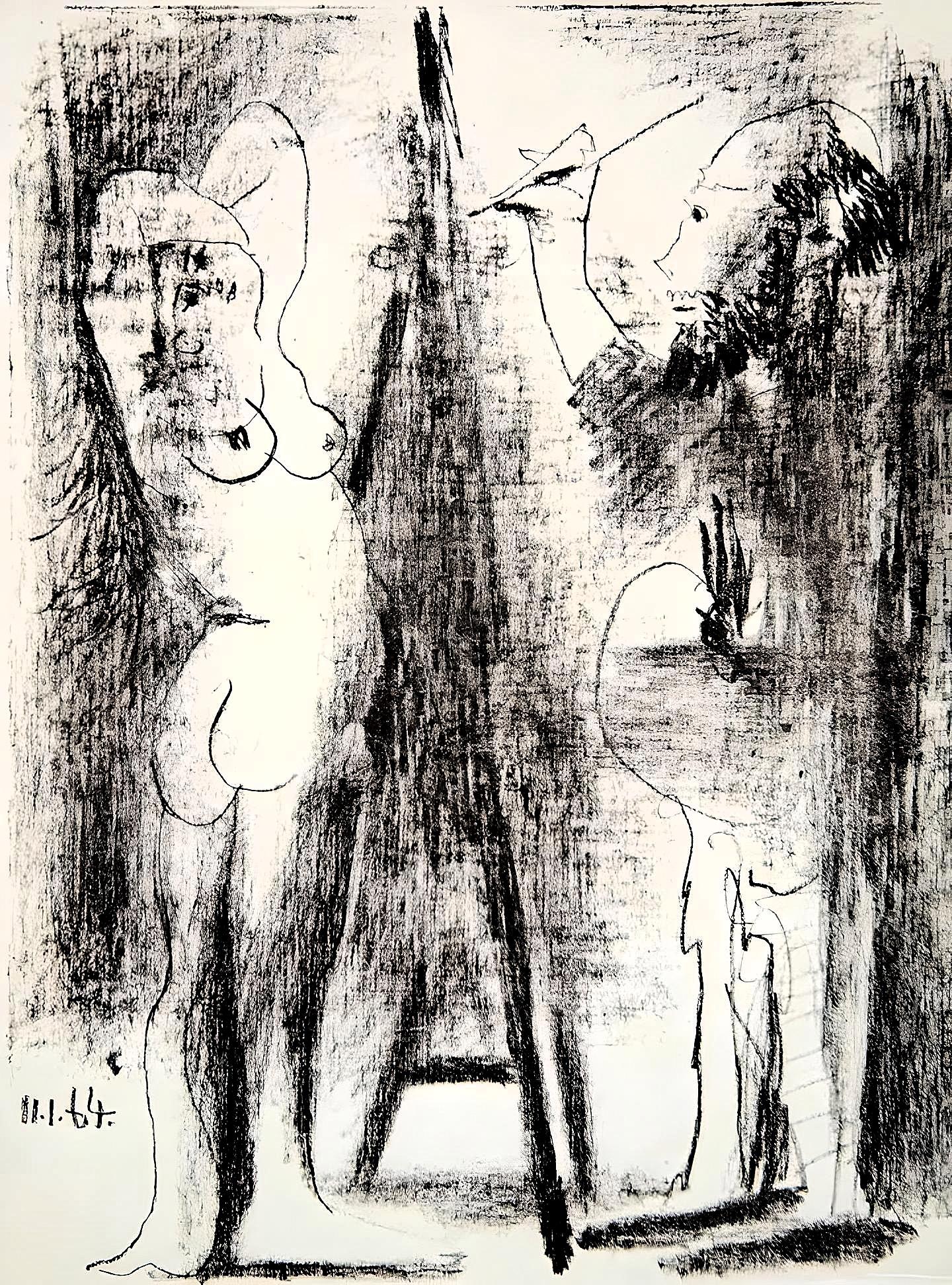
Lithograph on Arches paper. Inscription: Unsigned and unnumbered, as issued. Good condition; unframed. Notes: Published by Atelier Mourlot, Paris, 1964.
PABLO PICASSO (1881-1973) Spanish painter and sculptor is one of the most recognized figures of twentieth century art. During his artistic career, which lasted more than 75 years, he created thousands of works using all kinds of mediums. He changed art more profoundly than any other artist of his time. First famous for pioneering cubism, Picasso continued to develop his art with a pace...
Category
1960s Cubist Figurative Prints
Materials
Lithograph
$1,036 Sale Price
20% Off
Free Shipping
You May Also Like
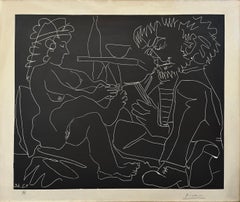
Peintre dessinant et modèle nu au chapeau
By Pablo Picasso
Located in Naples, Florida
This wonderful Linocut was produced 1956 at the height of Picasso's talent. It is in excellent original condition with its period frame. It is signed by the artist in pencil and numb...
Category
Mid-20th Century Other Art Style Figurative Prints
Materials
Linocut
Peintre et Modele
By Pablo Picasso
Located in Fairlawn, OH
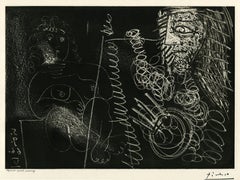
Peintre et Modele
Etching and aquatint on Rives wove paper, 1966
Signature stamp lower right (see photo)
Annotated in pencil lower left: "epreuve avant acierage" (see photo)
One of t...
Category
1960s Modern Figurative Prints
Materials
Aquatint
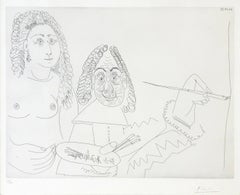
347 SERIES (BLOCH 1502)
By Pablo Picasso
Located in Aventura, FL
Etching on paper. Hand signed and numbered by the artist. From the 347 series. Bloch 1502. Edition 32/50. Sheet size: 18 x 22 inches. Image size 12.375 x 16.375 inches. Frame si...
Category
1960s Cubist Figurative Prints
Materials
Paper, Etching
$14,400 Sale Price
20% Off
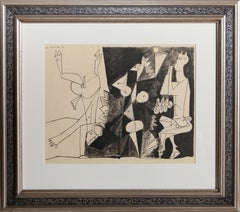
Hommage á la Nymphe, Cubist Collotype and Pochoir after Pablo Picasso
By Pablo Picasso
Located in Long Island City, NY
Between the years of 1946 and 1956, Pablo Picasso pulled concepts from his earlier creations, a series of drawings and watercolor, in order to form Faune a La Diaule, 1956. Pablo Pic...
Category
1950s Nude Prints
Materials
Stencil
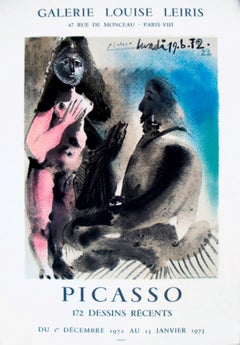
172 Dessins Recents By Pablo Picasso
By Pablo Picasso
Located in Dubai, Dubai
172 Dessins Recents
By Pablo Picasso
1972
Medium: Lithograph
Paper Size: 28.25 x 19 inches ( 72 x 48 cm )
Image Size: 19.5 x 15 inches ( 50 x 38 cm )
Edition Size: 5,200
Category
1970s Contemporary Figurative Prints
Materials
Lithograph
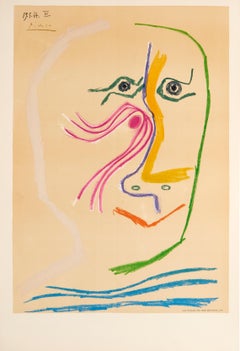
Hommage a Rene Char after Pablo Picasso
By Pablo Picasso
Located in New York, NY
This colorful lithograph after Pablo Picasso was printed by the Atelier Mourlot in Paris in 1964 and is unsigned*. This image is taken from a drawing in pencil and colored chalk enti...
Category
1960s Modern Abstract Prints
Materials
Lithograph
$2,800 Sale Price
20% Off
More Ways To Browse
Lexington Vintage
Art Werger On Sale
Arte Povera Poster
Banana Split
Bauer Lithograph
Ben Shahn Signed
Bigelow Illustrations
Bob Dylan Lithograph
Bowie Haring
Bullfight Original Prints
Carrega Nicolas
Cartier Salvador Dali
Cerberus Dali
Chagall Paris Opera Ceiling
Christine Rosamond
Colleen Ross
Craigie Aitchison
Cuno Amiet