1940s Figurative Prints
to
488
746
201
96
27
25
Overall Width
to
Overall Height
to
674
86
38
36
21
19
7
6
4
1
1
1
29
29
23
15
15
3,666
7,760
25,314
6,702
287
588
1,470
1,206
1,097
2,066
3,035
5,208
3,147
1,616
3,112
791
300
4
663
396
349
256
233
153
134
96
87
86
69
67
65
43
36
30
26
24
19
19
613
227
115
84
55
70
204
710
333
Period: 1940s
Original U.S. Military 1944 Propaganda Poster: In Mein Kampf...without a fight!
Located in Spokane, WA
This rare, original Newsmap for the Armed Forces poster from 1944 is a significant artifact of World War II history. Distributed weekly by the Army Information Branch, these maps kep...
Category
American Modern 1940s Figurative Prints
Materials
Offset

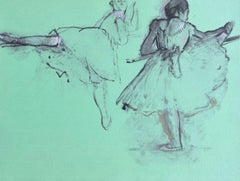
Edgar Degas, Dancer at the Barre, 1945 (after)
By Edgar Degas
Located in Southampton, NY
This exquisite lithograph after Edgar Degas (1834–1917), titled Danseur au bar (Dancer at the Barre), originates from the 1945 folio Degas, Ten Ballet Sketches. Published by The Studio Publications, Inc., New York, rendered and printed by Albert Carman, City Island, 1945, this work reflects Degas’s sensitive mastery of line, movement, and the intimate psychological nuances of the ballet studio.
Executed as a lithograph and pochoir on velin paper, this work measures 13 x 17 inches (33.02 x 43.18 cm). Signed in the plate and unnumbered as issued. Rendered and printed by Albert Carman, City Island.
Artwork Details:
Artist: After Edgar Degas (1834–1917)
Title: Danseur au bar (Dancer at the Barre), from Degas, Ten Ballet Sketches, 1945
Medium: Lithograph and pochoir on velin paper
Dimensions: 13 x 17 inches (33.02 x 43.18 cm)
Inscription: Signed in the plate and unnumbered as issued
Date: 1945
Publisher: The Studio Publications, Inc., New York
Printer: Albert Carman, City Island
Condition: Well preserved, consistent with age and medium
Provenance: From the 1945 folio Degas, Ten Ballet Sketches, published by The Studio Publications, Inc., New York
Notes:
Excerpted from the album, Born in Paris in 1834, Edgar Degas lived, and surely loved the life of that city during most of his years. These continued somewhat sadly beyond those of most of his friends— into the debacle of the first World War, during which he died in 1917. Judging by the frequency with which he used them as models, he must have had an especial admiration for the ballet girls who followed a profession that at the time brought none of the glory and prosperity which attend it today. New aspects of the human body, revealed in movement, fascinated him. But his occupation with the simply anatomical side of his subjects never resulted in a cold interpretation. On the contrary there is a warmth and sympathy that pervades all of his work. The drawings here represent the painter in one important phase of his multi-sensitive view of life; and permit an insight which a more ambitious work might not do-into the operation of the creative process, the artist's transformation of reality as it passes through the mesh of his sensibilities. The Edition of this Portfolio is limited to MMMD examples. Rendered by Albert Carman.
About the Publication:
Degas, Ten Ballet Sketches (1945) is one of the earliest and most significant American postwar fine art portfolios devoted to Edgar Degas’s intimate works on paper. Published by The Studio Publications, Inc., New York, and rendered and printed by Albert Carman at City Island, the album sought to faithfully reproduce a group of Degas’s ballet-related drawings through a combination of lithography and hand-applied pochoir coloring. This hybrid technique allowed the edition to preserve the immediacy, tonal subtlety, and gestural delicacy central to Degas’s draftsmanship. Conceived as a fine art publication rather than a commercial book, the portfolio provided American audiences unprecedented access to Degas’s private, spontaneous studies—images that reveal the artist’s fascination with movement, anatomy, and the psychological atmosphere of the rehearsal studio. The album exemplifies the mid-20th-century revival of pochoir as a means of recreating the texture and coloristic nuance of original works on paper, and it remains an important document of how Degas’s legacy was translated into high-quality printed form for collectors, museums, and connoisseurs.
About the Artist:
Edgar Degas (1834–1917) was a French painter, draughtsman, printmaker, and sculptor whose groundbreaking fusion of classical draftsmanship, modern experimentation, and psychological depth helped define the trajectory of Western art, positioning him as one of the most influential figures of the nineteenth and early twentieth centuries; renowned for his depictions of ballet dancers, racehorses, theater scenes, cafe life, domestic interiors, milliners, laundresses, and women at their toilette, Degas reimagined observational realism through radical compositional innovation—employing extreme cropping, asymmetrical framing, oblique viewpoints, and dramatic lighting that anticipated photographic and cinematic language long before these technologies shaped visual culture, and although associated with Impressionism, he rejected plein-air spontaneity in favor of studio-based discipline rooted in the linear precision of Jean-Auguste-Dominique Ingres, the expressive chromaticism of Eugene Delacroix, and the modernity of Edouard Manet while also drawing inspiration from Japanese ukiyo-e prints, classical sculpture, and early photography; his independent artistic philosophy resonated with and helped shape the innovations of Pablo Picasso, Alexander Calder, Alberto Giacometti, Salvador Dali, Joan Miro, Wassily Kandinsky, Marcel Duchamp, and Man Ray, whose explorations of movement, form, dream logic, abstraction, and conceptualism all find antecedents in Degas’s investigations into seriality, temporality, and the fragmented figure, and his pioneering use of pastel, monotype, and wax sculpture fundamentally transformed each medium, influencing artists from Henri Matisse, Francis Bacon, Lucian Freud, and Giacomo Manzu to Paula Rego, contemporary realists, experimental photographers, and choreographers; his works are held in nearly every major museum collection worldwide—including the Musee dOrsay, the Louvre, the Metropolitan Museum of Art, the National Gallery of Art, the Art Institute of Chicago, the Courtauld Institute, and the National Gallery, London—affirming his central place in the history of art, and the highest auction record for Degas was achieved at Sothebys London on February 3, 2015, when Danseuses en Bleu sold for 37,033,000 GBP, cementing his status as one of the most sought-after and enduringly significant artists of the Western canon.
Degas pochoir, Degas lithograph...
Category
Impressionist 1940s Figurative Prints
Materials
Lithograph

$796 Sale Price
20% Off
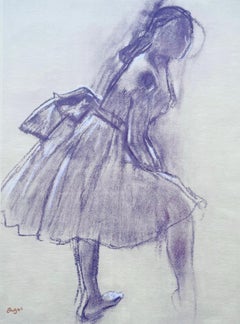
Edgar Degas, Dancer Standing in Profile, 1945 (after)
By Edgar Degas
Located in Southampton, NY
This exquisite lithograph after Edgar Degas (1834–1917), titled Danseur debout de profil (Dancer Standing in Profile), originates from the 1945 folio Degas, Ten Ballet Sketches. Published by The Studio Publications, Inc., New York, rendered and printed by Albert Carman, City Island, 1945, this work reflects Degas’s sensitive mastery of line, movement, and intimate observation, capturing the grace, poise, and psychological immediacy that define his iconic ballet imagery. In Danseur debout de profil (Dancer Standing in Profile), Degas reveals gesture and inner emotion through economical contour and lyrical nuance.
Executed as a lithograph and pochoir on velin paper, this work measures 17 x 13 inches (43.18 x 33.02 cm). Signed in the plate and unnumbered as issued. Rendered and printed by Albert Carman, City Island, one of the notable American ateliers specializing in fine art lithography during the mid-20th century.
Artwork Details:
Artist: After Edgar Degas (1834–1917)
Title: Danseur debout de profil (Dancer Standing in Profile), from Degas, Ten Ballet Sketches, 1945
Medium: Lithograph and pochoir on velin paper
Dimensions: 17 x 13 inches (43.18 x 33.02 cm)
Inscription: Signed in the plate and unnumbered as issued
Date: 1945
Publisher: The Studio Publications, Inc., New York
Printer: Albert Carman, City Island, 1945
Condition: Well preserved, consistent with age and medium
Provenance: From the 1945 folio Degas, Ten Ballet Sketches, published by The Studio Publications, Inc., New York
Notes:
Excerpted from the album, Born in Paris in 1834, Edgar Degas lived, and surely loved the life of that city during most of his years. These continued somewhat sadly beyond those of most of his friends— into the debacle of the first World War, during which he died in 1917. Judging by the frequency with which he used them as models, he must have had an especial admiration for the ballet girls who followed a profession that at the time brought none of the glory and prosperity which attend it today. New aspects of the human body, revealed in movement, fascinated him. But his occupation with the simply anatomical side of his subjects never resulted in a cold interpretation. On the contrary there is a warmth and sympathy that pervades all of his work. The drawings here represent the painter in one important phase of his multi-sensitive view of life; and permit an insight which a more ambitious work might not do-into the operation of the creative process, the artist's transformation of reality as it passes through the mesh of his sensibilities. The Edition of this Portfolio is limited to MMMD examples. Rendered by Albert Carman.
About the Publication:
Degas, Ten Ballet Sketches, published in 1945 by The Studio Publications, Inc., New York, stands as one of the most elegant and scholarly mid-century American fine art folios devoted to the ballet imagery of Edgar Degas. Conceived as a high-quality interpretive portfolio, the album presents a series of lithograph-and-pochoir renderings based on Degas’s original drawings, executed with exceptional attention to tonal subtlety, contour fidelity, and the emotional interiority that defines the artist’s draftsmanship. Rendered and printed by Albert Carman on City Island, the publication embodies an American postwar effort to restore and celebrate European masterworks through meticulous handcraft and artisanal color application, honoring Degas’s distinctive line and the atmospheric delicacy of his studio-based studies. Produced in a substantial edition of MMMD examples, the portfolio offered audiences rare access to Degas’s private working drawings—images rarely seen outside institutional collections—while exemplifying the technical refinement and interpretive care characteristic of Carman’s workshop. Today, Degas, Ten Ballet Sketches remains a sought-after historical publication, valued for its craft, fidelity to Degas’s aesthetic, and its role in preserving and disseminating the artist’s intimate ballet imagery in a beautifully executed mid-century fine art format.
About the Artist:
Edgar Degas (1834–1917) was a French painter, draughtsman, printmaker, and sculptor whose groundbreaking fusion of classical draftsmanship, modern experimentation, and psychological depth helped define the trajectory of Western art, positioning him as one of the most influential figures of the nineteenth and early twentieth centuries; renowned for his depictions of ballet dancers, racehorses, theater scenes, cafe life, domestic interiors, milliners, laundresses, and women at their toilette, Degas reimagined observational realism through radical compositional innovation—employing extreme cropping, asymmetrical framing, oblique viewpoints, and dramatic lighting that anticipated photographic and cinematic language long before these technologies shaped visual culture, and although associated with Impressionism, he rejected plein-air spontaneity in favor of studio-based discipline rooted in the linear precision of Jean-Auguste-Dominique Ingres, the expressive chromaticism of Eugene Delacroix, and the modernity of Edouard Manet while also drawing inspiration from Japanese ukiyo-e prints, classical sculpture, and early photography; his independent artistic philosophy resonated with and helped shape the innovations of Pablo Picasso, Alexander Calder, Alberto Giacometti, Salvador Dali, Joan Miro, Wassily Kandinsky, Marcel Duchamp, and Man Ray, whose explorations of movement, form, dream logic, abstraction, and conceptualism all find antecedents in Degas’s investigations into seriality, temporality, and the fragmented figure, and his pioneering use of pastel, monotype, and wax sculpture fundamentally transformed each medium, influencing artists from Henri Matisse, Francis Bacon, Lucian Freud, and Giacomo Manzu to Paula Rego, contemporary realists, experimental photographers, and choreographers; his works are held in nearly every major museum collection worldwide—including the Musee dOrsay, the Louvre, the Metropolitan Museum of Art, the National Gallery of Art, the Art Institute of Chicago, the Courtauld Institute, and the National Gallery, London—affirming his central place in the history of art, and the highest auction record for Degas was achieved at Sothebys London on February 3, 2015, when Danseuses en Bleu sold for 37,033,000 GBP, cementing his status as one of the most sought-after and enduringly significant artists of the Western canon.
Edgar Degas lithograph...
Category
Impressionist 1940s Figurative Prints
Materials
Lithograph
$796 Sale Price
20% Off
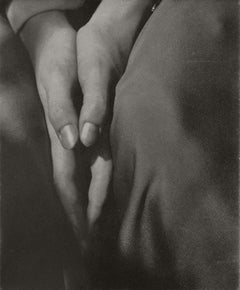
Alfred Stieglitz, Hands, Dorothy Norman, 1947 (after)
Located in Southampton, NY
This exquisite halftone print after Alfred Stieglitz (1864–1946), titled Hands, Dorothy Norman, originates from the 1947 folio Stieglitz Memorial Portfolio, 1864–1946. Published by T...
Category
American Modern 1940s Figurative Prints
Materials
Offset
$716 Sale Price
20% Off
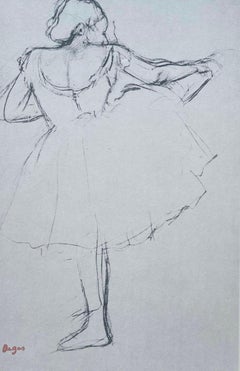
Edgar Degas, Dancer at the Barre, 1945 (after)
By Edgar Degas
Located in Southampton, NY
This exquisite lithograph after Edgar Degas (1834–1917), titled Danseur au bar (Dancer at the Barre), originates from the 1945 folio Degas, Ten Ballet Sketches. Published by The Studio Publications, Inc., New York, rendered and printed by Albert Carman, City Island, 1945, this work reflects Degas’s sensitive mastery of line, movement, and intimate observation, capturing the grace, poise, and psychological immediacy that define his iconic ballet imagery. In Danseur au bar (Dancer at the Barre), Degas reveals gesture and inner emotion through economical contour and lyrical nuance.
Executed as a lithograph and pochoir on velin paper, this work measures 17 x 13 inches (43.18 x 33.02 cm). Signed in the plate and unnumbered as issued. Rendered and printed by Albert Carman, City Island, one of the notable American ateliers specializing in fine art lithography during the mid-20th century.
Artwork Details:
Artist: After Edgar Degas (1834–1917)
Title: Danseur au bar (Dancer at the Barre), from Degas, Ten Ballet Sketches, 1945
Medium: Lithograph and pochoir on velin paper
Dimensions: 17 x 13 inches (43.18 x 33.02 cm)
Inscription: Signed in the plate and unnumbered as issued
Date: 1945
Publisher: The Studio Publications, Inc., New York
Printer: Albert Carman, City Island, 1945
Condition: Well preserved, consistent with age and medium
Provenance: From the 1945 folio Degas, Ten Ballet Sketches, published by The Studio Publications, Inc., New York
Notes:
Excerpted from the album, Born in Paris in 1834, Edgar Degas lived, and surely loved the life of that city during most of his years. These continued somewhat sadly beyond those of most of his friends— into the debacle of the first World War, during which he died in 1917. Judging by the frequency with which he used them as models, he must have had an especial admiration for the ballet girls who followed a profession that at the time brought none of the glory and prosperity which attend it today. New aspects of the human body, revealed in movement, fascinated him. But his occupation with the simply anatomical side of his subjects never resulted in a cold interpretation. On the contrary there is a warmth and sympathy that pervades all of his work. The drawings here represent the painter in one important phase of his multi-sensitive view of life; and permit an insight which a more ambitious work might not do-into the operation of the creative process, the artist's transformation of reality as it passes through the mesh of his sensibilities. The Edition of this Portfolio is limited to MMMD examples. Rendered by Albert Carman.
About the Publication:
Degas, Ten Ballet Sketches, published in 1945 by The Studio Publications, Inc., New York, stands as one of the most elegant and scholarly mid-century American fine art folios devoted to the ballet imagery of Edgar Degas. Conceived as a high-quality interpretive portfolio, the album presents a series of lithograph-and-pochoir renderings based on Degas’s original drawings, executed with exceptional attention to tonal subtlety, contour fidelity, and the emotional interiority that defines the artist’s draftsmanship. Rendered and printed by Albert Carman on City Island, the publication embodies an American postwar effort to restore and celebrate European masterworks through meticulous handcraft and artisanal color application, honoring Degas’s distinctive line and the atmospheric delicacy of his studio-based studies. Produced in a substantial edition of MMMD examples, the portfolio offered audiences rare access to Degas’s private working drawings—images rarely seen outside institutional collections—while exemplifying the technical refinement and interpretive care characteristic of Carman’s workshop. Today, Degas, Ten Ballet Sketches remains a sought-after historical publication, valued for its craft, fidelity to Degas’s aesthetic, and its role in preserving and disseminating the artist’s intimate ballet imagery in a beautifully executed mid-century fine art format.
About the Artist:
Edgar Degas (1834–1917) was a French painter, draughtsman, printmaker, and sculptor whose groundbreaking fusion of classical draftsmanship, modern experimentation, and psychological depth helped define the trajectory of Western art, positioning him as one of the most influential figures of the nineteenth and early twentieth centuries; renowned for his depictions of ballet dancers, racehorses, theater scenes, cafe life, domestic interiors, milliners, laundresses, and women at their toilette, Degas reimagined observational realism through radical compositional innovation—employing extreme cropping, asymmetrical framing, oblique viewpoints, and dramatic lighting that anticipated photographic and cinematic language long before these technologies shaped visual culture, and although associated with Impressionism, he rejected plein-air spontaneity in favor of studio-based discipline rooted in the linear precision of Jean-Auguste-Dominique Ingres, the expressive chromaticism of Eugene Delacroix, and the modernity of Edouard Manet while also drawing inspiration from Japanese ukiyo-e prints, classical sculpture, and early photography; his independent artistic philosophy resonated with and helped shape the innovations of Pablo Picasso, Alexander Calder, Alberto Giacometti, Salvador Dali, Joan Miro, Wassily Kandinsky, Marcel Duchamp, and Man Ray, whose explorations of movement, form, dream logic, abstraction, and conceptualism all find antecedents in Degas’s investigations into seriality, temporality, and the fragmented figure, and his pioneering use of pastel, monotype, and wax sculpture fundamentally transformed each medium, influencing artists from Henri Matisse, Francis Bacon, Lucian Freud, and Giacomo Manzu to Paula Rego, contemporary realists, experimental photographers, and choreographers; his works are held in nearly every major museum collection worldwide—including the Musee dOrsay, the Louvre, the Metropolitan Museum of Art, the National Gallery of Art, the Art Institute of Chicago, the Courtauld Institute, and the National Gallery, London—affirming his central place in the history of art, and the highest auction record for Degas was achieved at Sothebys London on February 3, 2015, when Danseuses en Bleu sold for 37,033,000 GBP, cementing his status as one of the most sought-after and enduringly significant artists of the Western canon.
Edgar Degas lithograph...
Category
Impressionist 1940s Figurative Prints
Materials
Lithograph
$796 Sale Price
20% Off
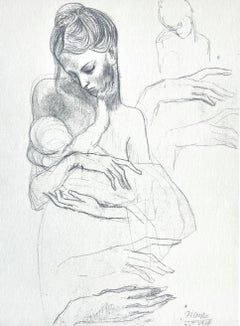
Pablo Picasso, Mother and Child, from Fifteen Drawings, 1946 (after)
Located in Southampton, NY
This exquisite lithograph and pochoir after Pablo Picasso (1881–1973), titled Mother and Child, from the folio Picasso, Fifteen Drawings, 1946, originates from the 1946 edition published by Pantheon Books, Inc., New York, and rendered and printed by Albert Carman, City Island, New York, 1946. Mother and Child conveys Picassos timeless exploration of tenderness, intimacy, and the human bond, distilling the universal theme of maternal love through graceful line and lyrical composition. With rhythmic simplicity and emotional clarity, the work captures the purity of affection and the quiet strength of motherhood—an enduring motif throughout Picassos artistic life.
Executed as a lithograph and pochoir on velin paper, this work measures 18.75 x 12.63 inches. Signed in the plate and unnumbered as issued. The edition exemplifies the exemplary standards and artistic integrity of the fine art publishing and printmaking of Pantheon Books, Inc., and Albert Carman whose next collaborative project following this edition was with Marc Chagall in the creation of his monumental suite, Four Tales from the Arabian Nights in 1948.
Artwork Details:
Artist: After Pablo Picasso (1881–1973)
Title: Mother and Child, from the folio Picasso, Fifteen Drawings, 1946
Medium: Lithograph and pochoir on velin paper
Dimensions: 18.75 x 12.63 inches (47.6 x 32.1 cm)
Inscription: Signed in the plate and unnumbered as issued
Date: 1946
Edition: D, primary edition; L, out of commerce, hand signed by Pablo Picasso
Publisher: Pantheon Books, Inc., New York
Printer: Albert Carman, City Island, New York
Catalogue raisonne reference: Orozco, Miguel. Picasso Interpretation Prints II - Etchings, Pochoirs
Woodcuts. Catalogue Raisonne. 2023, illustration 388–402
Condition: Well preserved, consistent with age and medium
Provenance: From the folio Picasso, Fifteen Drawings, 1946, published by Pantheon Books, Inc., New York; printed by Albert Carman, City Island, New York, 1946
About the Publication:
Picasso, Fifteen Drawings (1946) was one of the earliest fine art portfolios issued in the United States to feature the work of Pablo Picasso in the mediums of lithography and pochoir. Published by Pantheon Books, Inc., New York—a press renowned for its pioneering role in introducing European modernism to American audiences—the portfolio marked an important cultural bridge between postwar Paris and the emerging art scene in New York. The suite comprised fifteen images selected from Picassos prolific oeuvre, including depictions of mythological figures, musicians, and introspective portraits. Each work was rendered using a combination of lithography and pochoir, printed by Albert Carman at his atelier in City Island, New York, whose craftsmanship ensured a remarkable fidelity to the tonal and chromatic nuances of Picassos originals. The portfolio was produced in an edition of D, primary edition; L, out of commerce, hand signed by Pablo Picasso, issued unbound within a printed paper folder, and distributed primarily through Pantheons art book division under the direction of Kurt Wolff and Monroe Wheeler—key figures in shaping the intellectual reception of modern art in the United States. Picasso, Fifteen Drawings helped establish the artists postwar reputation among American collectors, scholars, and institutions, introducing a generation of viewers to the expressive immediacy and psychological depth of his draftsmanship. The publication also exemplified Pantheons broader mission to make modern European art accessible to an American audience, alongside their landmark editions devoted to Henri Matisse, Georges Rouault, and Marc Chagall. Technically refined and historically significant, the portfolio stands as a testament to the transatlantic exchange of modernist aesthetics during the mid-20th century and remains one of the most sought-after Picasso print editions issued in the United States before 1950.
About the Artist:
Pablo Picasso (1881–1973) was a Spanish painter, sculptor, printmaker, and ceramicist whose extraordinary vision revolutionized modern art and defined the visual language of the 20th century. A child prodigy from Malaga, Spain, Picassos career spanned more than seven decades and encompassed an astonishing range of styles and innovations—from the melancholic Blue and romantic Rose periods to his pioneering invention of Cubism with Georges Braque, which shattered conventional notions of perspective and form. Influenced by the bold expressiveness of El Greco, the structure of Cezanne, and the vitality of African and Iberian sculpture, Picasso became a central figure of the Paris avant-garde, working in creative dialogue with contemporaries such as Henri Matisse, Alexander Calder, Alberto Giacometti, Salvador Dali, Joan Miro, Wassily Kandinsky, Marcel Duchamp, and Man Ray. His insatiable experimentation extended across painting, drawing, printmaking, ceramics, and sculpture, forever expanding the boundaries of artistic expression. A master of reinvention, Picasso profoundly shaped generations of artists who followed—from Andy Warhol, Roy Lichtenstein, David Hockney, and Jean-Michel Basquiat to Jeff Koons and Banksy—cementing his status as a timeless cultural icon whose works remain among the most sought after worldwide. His landmark painting Les Femmes d'Alger (Version O) achieved a record-breaking sale of 179,365,000 USD at Christie's, New York, on May 11, 2015, affirming Picassos enduring legacy as one of the most influential and valuable artists in history.
Pablo Picasso Mother and Child...
Category
Modern 1940s Figurative Prints
Materials
Lithograph, Stencil
$3,996 Sale Price
20% Off
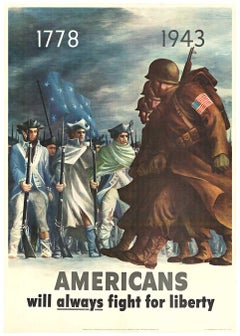
Original Americans will Always Fight for Liberty vintage WWII (1943) poster
Located in Spokane, WA
Title: Original 1943 WWII Propaganda Poster - "Americans Will Always Fight for Liberty" - Authentic U.S. Government Issue. Archival linen-backed with the original US Government-issue...
Category
American Modern 1940s Figurative Prints
Materials
Offset
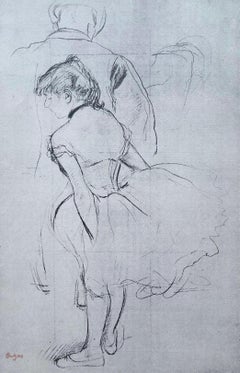
Edgar Degas, Dancer Arranging Her Dress, 1945 (after)
By Edgar Degas
Located in Southampton, NY
This exquisite lithograph after Edgar Degas (1834–1917), titled Danseuse arrangeant sa robe (Dancer Arranging Her Dress), originates from the 1945 folio Degas, Ten Ballet Sketches. Published by The Studio Publications, Inc., New York, rendered and printed by Albert Carman, City Island, 1945, this work reflects Degas’s sensitive mastery of line, movement, and intimate observation, capturing the grace, poise, and psychological immediacy that define his iconic ballet imagery. In Danseuse arrangeant sa robe (Dancer Arranging Her Dress), Degas reveals gesture and inner emotion through economical contour and lyrical nuance.
Executed as a lithograph and pochoir on velin paper, this work measures 17 x 13 inches (43.18 x 33.02 cm). Signed in the plate and unnumbered as issued. Rendered and printed by Albert Carman, City Island, one of the notable American ateliers specializing in fine art lithography during the mid-20th century.
Artwork Details:
Artist: After Edgar Degas (1834–1917)
Title: Danseuse arrangeant sa robe (Dancer Arranging Her Dress), from Degas, Ten Ballet Sketches, 1945
Medium: Lithograph and pochoir on velin paper
Dimensions: 17 x 13 inches (43.18 x 33.02 cm)
Inscription: Signed in the plate and unnumbered as issued
Date: 1945
Publisher: The Studio Publications, Inc., New York
Printer: Albert Carman, City Island, 1945
Condition: Well preserved, consistent with age and medium
Provenance: From the 1945 folio Degas, Ten Ballet Sketches, published by The Studio Publications, Inc., New York
Notes:
Excerpted from the album, Born in Paris in 1834, Edgar Degas lived, and surely loved the life of that city during most of his years. These continued somewhat sadly beyond those of most of his friends— into the debacle of the first World War, during which he died in 1917. Judging by the frequency with which he used them as models, he must have had an especial admiration for the ballet girls who followed a profession that at the time brought none of the glory and prosperity which attend it today. New aspects of the human body, revealed in movement, fascinated him. But his occupation with the simply anatomical side of his subjects never resulted in a cold interpretation. On the contrary there is a warmth and sympathy that pervades all of his work. The drawings here represent the painter in one important phase of his multi-sensitive view of life; and permit an insight which a more ambitious work might not do-into the operation of the creative process, the artist's transformation of reality as it passes through the mesh of his sensibilities. The Edition of this Portfolio is limited to MMMD examples. Rendered by Albert Carman.
About the Publication:
Degas, Ten Ballet Sketches, published in 1945 by The Studio Publications, Inc., New York, stands as one of the most elegant and scholarly mid-century American fine art folios devoted to the ballet imagery of Edgar Degas. Conceived as a high-quality interpretive portfolio, the album presents a series of lithograph-and-pochoir renderings based on Degas’s original drawings, executed with exceptional attention to tonal subtlety, contour fidelity, and the emotional interiority that defines the artist’s draftsmanship. Rendered and printed by Albert Carman on City Island, the publication embodies an American postwar effort to restore and celebrate European masterworks through meticulous handcraft and artisanal color application, honoring Degas’s distinctive line and the atmospheric delicacy of his studio-based studies. Produced in a substantial edition of MMMD examples, the portfolio offered audiences rare access to Degas’s private working drawings—images rarely seen outside institutional collections—while exemplifying the technical refinement and interpretive care characteristic of Carman’s workshop. Today, Degas, Ten Ballet Sketches remains a sought-after historical publication, valued for its craft, fidelity to Degas’s aesthetic, and its role in preserving and disseminating the artist’s intimate ballet imagery in a beautifully executed mid-century fine art format.
About the Artist:
Edgar Degas (1834–1917) was a French painter, draughtsman, printmaker, and sculptor whose groundbreaking fusion of classical draftsmanship, modern experimentation, and psychological depth helped define the trajectory of Western art, positioning him as one of the most influential figures of the nineteenth and early twentieth centuries; renowned for his depictions of ballet dancers, racehorses, theater scenes, cafe life, domestic interiors, milliners, laundresses, and women at their toilette, Degas reimagined observational realism through radical compositional innovation—employing extreme cropping, asymmetrical framing, oblique viewpoints, and dramatic lighting that anticipated photographic and cinematic language long before these technologies shaped visual culture, and although associated with Impressionism, he rejected plein-air spontaneity in favor of studio-based discipline rooted in the linear precision of Jean-Auguste-Dominique Ingres, the expressive chromaticism of Eugene Delacroix, and the modernity of Edouard Manet while also drawing inspiration from Japanese ukiyo-e prints, classical sculpture, and early photography; his independent artistic philosophy resonated with and helped shape the innovations of Pablo Picasso, Alexander Calder, Alberto Giacometti, Salvador Dali, Joan Miro, Wassily Kandinsky, Marcel Duchamp, and Man Ray, whose explorations of movement, form, dream logic, abstraction, and conceptualism all find antecedents in Degas’s investigations into seriality, temporality, and the fragmented figure, and his pioneering use of pastel, monotype, and wax sculpture fundamentally transformed each medium, influencing artists from Henri Matisse, Francis Bacon, Lucian Freud, and Giacomo Manzu to Paula Rego, contemporary realists, experimental photographers, and choreographers; his works are held in nearly every major museum collection worldwide—including the Musee dOrsay, the Louvre, the Metropolitan Museum of Art, the National Gallery of Art, the Art Institute of Chicago, the Courtauld Institute, and the National Gallery, London—affirming his central place in the history of art, and the highest auction record for Degas was achieved at Sothebys London on February 3, 2015, when Danseuses en Bleu sold for 37,033,000 GBP, cementing his status as one of the most sought-after and enduringly significant artists of the Western canon.
Edgar Degas lithograph...
Category
Impressionist 1940s Figurative Prints
Materials
Lithograph
$796 Sale Price
20% Off
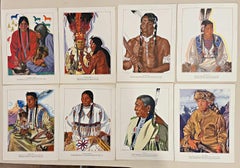
Blackfeet Indians, Great Northern Railway 14 prints
By Winold Reiss
Located in Spokane, WA
A group of 14 Blackfeet Indians prints created by the artist Winold Reiss. The Great Northern Railway printed and released these prints in c. 1940. This is for the entire group...
Category
American Realist 1940s Figurative Prints
Materials
Lithograph
$576 Sale Price
20% Off
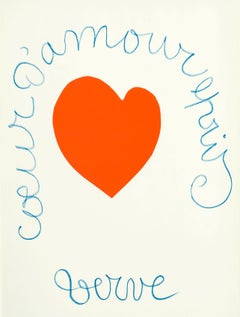
Henri Matisse, Heart of Love Taken, from Verve, Revue Artistique, 1949
Located in Southampton, NY
This exquisite lithograph by Henri Matisse (1869–1954), titled Coeur d’amour epris (Heart of Love Taken), from Verve, Revue Artistique et Litteraire, Vol. VI, No. 23, originates from...
Category
Fauvist 1940s Figurative Prints
Materials
Lithograph
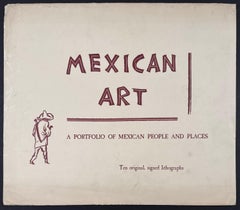
Mexican Art: A Portfolio of Mexican People and Places
Located in Palm Springs, CA
Ten lithographs in excellent condition, with portfolio cover. The ten artists included in the 1946 portfolio "Mexican Art: A Portfolio of Mexican People and Places" include: Ángel Bracho / Francisco Mora / Fernando Castro Pacheco / Raúl Anguiano / Alberto Beltrán...
Category
1940s Figurative Prints
Materials
Lithograph
$3,500 Sale Price
22% Off
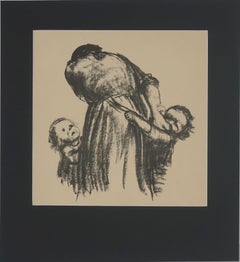
"Bread" lithograph by Käthe Kollwitz
Located in Soquel, CA
Bold lithograph titled "Bread" by Kathe Kollwitz (German, 1867-1945). This piece is one of the Lithographic reproductions of the original lithographs, plate 2 from a series of 10, pr...
Category
Expressionist 1940s Figurative Prints
Materials
Paper, Ink, Lithograph
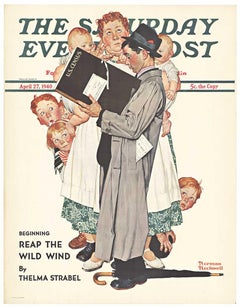
U. S. Census Saturday Evening Post original 1940 vintage poster
Located in Spokane, WA
Original poster: THE SAURDAY EVENING POST. Artist: Noman Rockwell. Size: 21.75" x 28". Archival linen backed in very fine condition. The painting for this original poster ...
Category
American Realist 1940s Figurative Prints
Materials
Offset
$1,960 Sale Price
20% Off
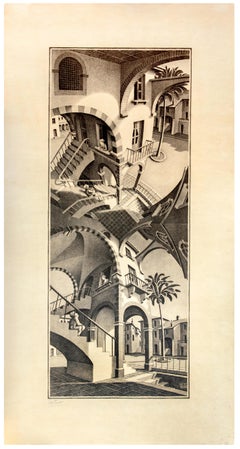
Up And Down - Lithograph by M.C. Escher - 1947
By M.C. Escher
Located in Roma, IT
Hand Signed.
Printed in black ink, and part of a limited edition thought to be of 400 specimen.
Image Dimensions : 51 x 20 cm
Reference: Bool n. 352 Locher 146.
Very good conditio...
Category
Modern 1940s Figurative Prints
Materials
Lithograph
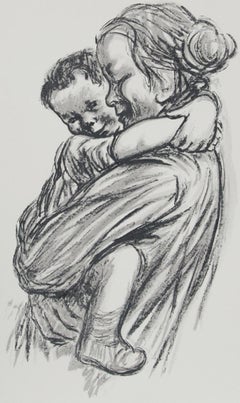
Kollwitz, Mother and Child (after)
Located in Southampton, NY
Lithograph on vélin paper. Inscription: Unsigned and unnumbered, as issued. Good condition. Notes: From the folio, Kathe Kollwitz, Ten Lithographs. Published by Henry C. Kleemann and...
Category
Modern 1940s Figurative Prints
Materials
Lithograph
$1,436 Sale Price
20% Off
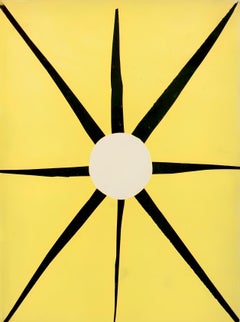
Henri Matisse, The Sun, from Verve, Revue Artistique, 1948
Located in Southampton, NY
This exquisite lithograph by Henri Matisse (1869–1954), titled Le Soleil (The Sun), from Verve, Revue Artistique et Litteraire, Vol. VI, No. 21–22, originates from the 1948 issue pub...
Category
Fauvist 1940s Figurative Prints
Materials
Lithograph
$956 Sale Price
20% Off
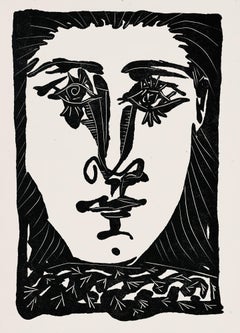
Composition (Cramer 36; Bloch 360; Horodisch A6), Non Vouloir, Pablo Picasso
Located in Southampton, NY
Zincograph on Vélin Bouffant paper. Unsigned and unnumbered, as issued. Good condition. Notes: From the volume, Non Vouloir, 1942. Published by Éditions Jeanne Bucher, Paris; printed...
Category
Cubist 1940s Figurative Prints
Materials
Etching
$1,596 Sale Price
20% Off
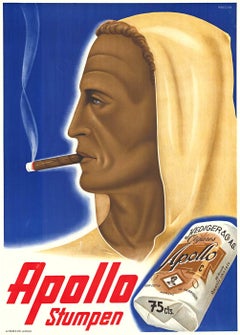
Original
Apollo Stumpen
vintage Swiss cigar poster
Located in Spokane, WA
Original Swiss poster: Apollo Stumpen Cigars. Johannes Handschin created this Swiss poster. Swiss size of 35" x 49". Professional acid-free archival linen backed, ready to frame. The colors are vibrant and intense. Great colors. Rare original Swiss (Switzerland) vintage poster.
This is the rarer large format, the rarest version of the poster. The small format is 20 x 27, about 1/2 the size.
There is a flaw in the lower section of the man’s covering, the lower left of his chin. Shown in images.
Switzerland was known for some of the better printing of their posters and the use of more expensive inks, thus richer colors in the posters that survive today.
This art deco-style cigar poster...
Category
American Modern 1940s Figurative Prints
Materials
Lithograph
$760 Sale Price
20% Off
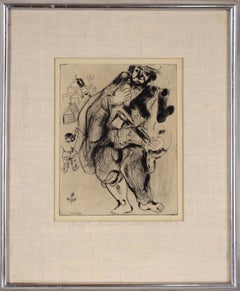
"The Barefoot Lumberjack" Etching from "Les Ames Mortes" by Marc Chagall
By Marc Chagall
Located in Soquel, CA
"The Barefoot Lumberjack" Etching from "Les Ames Mortes" by Marc Chagall
Playful etching of a lumberjack by Marc Chagall (Russian, 1887-1985). A stout lumberjack is shown holing his...
Category
Post-War 1940s Figurative Prints
Materials
Ink, Laid Paper
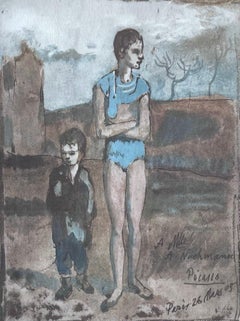
Pablo Picasso, Harlequin and Boy, from Fifteen Drawings, 1946 (after)
Located in Southampton, NY
This exquisite lithograph and pochoir after Pablo Picasso (1881–1973), titled Harlequin and Boy, from the folio Picasso, Fifteen Drawings, 1946, originates from the 1946 edition published by Pantheon Books, Inc., New York, and rendered and printed by Albert Carman, City Island...
Category
Modern 1940s Figurative Prints
Materials
Lithograph, Stencil
$3,996 Sale Price
20% Off
Elwood W. Bartlett, Wisconsin Farm, about 1945, mid-century wood engraving
Located in New York, NY
Elwood Warren Bartlett is a Wisconsin native who also worked in Indiana.
Largely self taught as a printmaker, Bartlett worked in a style that once identified as his, immediately t...
Category
American Modern 1940s Figurative Prints
Materials
Woodcut

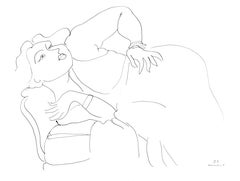
Henri Matisse, Series D, Var. 3, Drawings, Themes and Variations, 1943 (after)
Located in Southampton, NY
This exquisite lithograph after Henri Matisse (1869–1954), titled Serie D, var. 3 (Series D, Variation 3), from the album Henri Matisse, Dessins, Themes et Variations (Drawings, Them...
Category
Modern 1940s Figurative Prints
Materials
Lithograph
$796 Sale Price
20% Off
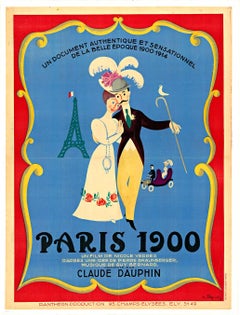
Original Paris 1900 de la Belle Epoque 1900-1914 vintage French movie poster
Located in Spokane, WA
Original 1947 Paris 1900 lithographic movie poster by the artist Raymond Peynet. The poster had originally been folded, and there is some wrinkling at the bottom edge of the poste...
Category
Art Nouveau 1940s Figurative Prints
Materials
Lithograph
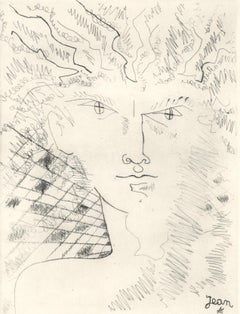
Jean Cocteau, Untitled, from Alternation, 1946
By Jean Cocteau
Located in Southampton, NY
This exquisite etching by Jean Cocteau (1889–1963), titled Sans titre (Untitled), from the album Alternance (Alternation), originates from the 1946 edition published by Le Gerbier, P...
Category
Modern 1940s Figurative Prints
Materials
Engraving
$1,436 Sale Price
20% Off
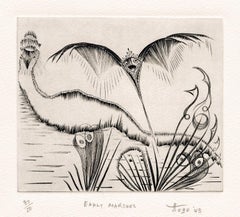
Early Marshes
— Mid-Century Surrealism, Atelier 17
Located in Myrtle Beach, SC
Ian Hugo, 'Early Marshes', from the portfolio 'Ten Engravings'. engraving, 1943, edition 50. Signed, dated, titled, and numbered '37/50' in pencil. A fine impression, with delicate overall plate tone, on cream wove paper, the full sheet with margins (2 5/8 to 7 inches), in excellent condition.
With the blind stamp 'madeleine-claude jobrack EDITIONS', in the bottom right margin. Matted to museum standards, unframed.
Image size 5 x 5 7/8 inches (127 x 149 mm); sheet size 15 x 11 inches (381 x 279 mm).
Ian Hugo originally created "Ten Engravings" in 1945 and the portfolio included a foreword by his partner and collaborator, Anais Nin. In 1978, Hugo republished the portfolio with Madeleine-Claude Jobrack, an American master printmaker who studied under Stanley William Hayter at Atelier 17, Paris, and with Johnny Friedlaender. When Jobrack returned to the States she managed the Robert Blackburn Printmaking Studio in New York before opening her own printing studio, Madeleine-Claude Jobrak Editions.
“The sign of the true artist is one who creates a complete universe, invents new plants, new animals, new figures to transfer to us a new vision of the universe in which dream and reality fuse. Ian Hugo's plants have eyes, the birds have the delicacy of dragonflies, their feathers have the shape of fans. Humor is apparent in every gesture. He uses a fine spider web to give a feeling of flight, speed, lightness. The body of a woman reveals the structure of a leaf, a plant. Wings are moving in a world unified by mythological themes. This is an animated world, humorous and levitating, elusive and decorative, which by its unique forms and shapes gives us the sensation of a rebirth, a liberation from the usual, the familiar, a visit to a new planet.”
—Anais Nin, from the forward to the portfolio ‘Ten Engravings’
ABOUT THE ARTIST
Ian Hugo was born Hugh Parker Guiler in Boston, Massachusetts, on February 15, 1898. His childhood was spent in Puerto Rico—a "tropical paradise," the memory of which stayed with him and surfaced in both his engravings and his films. He attended school in Scotland and graduated from Columbia University where he studied economics and literature.
Hugo was working with the National City Bank when he met and married author Anais Nin in 1923. The couple moved to Paris the following year, where Nin's diary and Guiler's artistic aspirations flowered. Guiler feared his business associates would not understand his interests in art and music, let alone those of his wife, so he began a second, creative life as Ian Hugo. Ian and Anais moved to New York in 1939. The following year he took up engraving and etching, working at Stanley William Hayter’s experimental printmaking workshop Atelier 17, established at the New School for Social Research.
Hugo began producing surreal images often used to illustrate Nin's books. For Nin, his unwavering love and financial support were indispensable—Hugo was the "fixed center, core... my home, my refuge" (Sept. 16, 1937, Nearer the Moon, The Unexpurgated Diary of Anais Nin, 1937-!939). Fictionalized portraits of Higo and Nin appear in Philip Kaufman's 1990 film drama of a literary love triangle, Henry & June.
Inspired by comments that viewers saw motion in his engravings, Hugo took up filmmaking. He asked the avant-garde filmmaker Sasha Hammid for instruction but was told, "Use the camera yourself, make your own mistakes, make your own style." Hugo embarked on an exploration of the film medium as a vehicle to delve into his dreams, his unconscious, and his memories. Without a specific plan, He would collect resonant images, then reorder or superimpose them, seeking a sense of self-connection through the poetic juxtapositions he created. These intuitive explorations resembled the mystical evocations of his engravings, which he described in 1946 as "hieroglyphs of a language in which our unconscious is trying to convey important, urgent messages."
In the underwater world of his film ‘Bells of Atlantis,’ the light originates from the world above the surface; it is otherworldly, out of place, yet essential. In ‘Jazz of Lights,’ the street lights of Times Square become in Nin's words, "an ephemeral flow of sensations." This flow that she also calls "phantasmagorical" had a crucial impact on Stan Brakhage, who said that without Jazz of Lights (1954), "there would have been no Anticipation of the Night" his autobiographical film which ushered in a new era of experimental modernist filmmaking.
Hugo lived the last two decades of his life in a New York apartment high above street level. In the evenings, surrounded by an electrically illuminated man...
Category
Surrealist 1940s Figurative Prints
Materials
Engraving
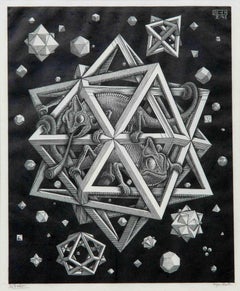
Stars/Sterren - Woodcut by Maurits Cornelis Escher - 1948
Located in Roma, IT
Woodcut print realized by Escher in 1948.
Hand signed in pencil and annotated in pencil lower right "eigen druck".
Monogrammed and dated in the plate "MCE/X-'48 upper right.
One o...
Category
Modern 1940s Figurative Prints
Materials
Woodcut
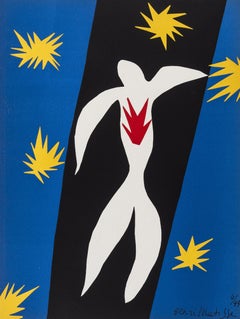
The Fall of Icarus, from Verve, Revue Artistique, 1945
Located in Southampton, NY
This exquisite lithograph by Henri Matisse (1869–1954), titled La Chute d’Icare (The Fall of Icarus), from Verve, Revue Artistique et Litteraire, Vol. IV, No. 13, originates from the...
Category
Fauvist 1940s Figurative Prints
Materials
Lithograph
$1,116 Sale Price
20% Off
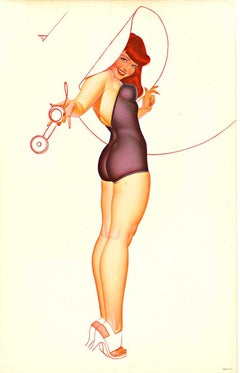
Original Pin-Up - Telephone Call linen backed vintage pinup girl.
Located in Spokane, WA
Behold the original lithographic Petty Pin-up, a unique vertical-format piece. The see-through bathing suit she wears seems to make her glow, especially with her red hair peeking fro...
Category
American Modern 1940s Figurative Prints
Materials
Lithograph
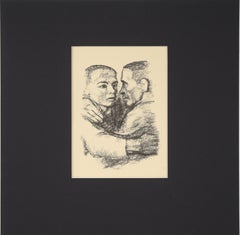
"Brotherhood" lithograph by Käthe Kollwitz
Located in Soquel, CA
Bold print of "Brotherhood" by Kathe Kollwitz (German, 1867-1945). This piece is one of the Lithographic reproductions of the original lithographs, plate 3 from a series of 10, print...
Category
Expressionist 1940s Figurative Prints
Materials
Paper, Ink, Lithograph
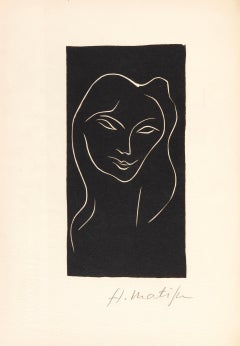
Tête de Femme (Duthuit 21), Le Poème pulvérisé, Henri Matisse
Located in Southampton, NY
Linocut on vélin pur fil Johannot a la forme paper. Inscription: signed in pencil and unnumbered, as issued, from the edition of 50. Good condition. Notes: From the folio, Le Poème p...
Category
Modern 1940s Figurative Prints
Materials
Linocut
$19,996 Sale Price
20% Off
Adolf Dehn, Lake Tarryall, 1941 mid-century lithograph of Colorado mountain lake
By Adolf Dehn
Located in New York, NY
Lake Tarryall, a 1941 lithograph by Adolf Dehn (1895-1968) was made while he was teaching in Colorado. A native of Waterville, Minnesota, Dehn attended the Minneapolis School of Art ...
Category
American Modern 1940s Figurative Prints
Materials
Lithograph
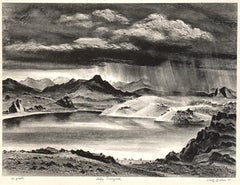
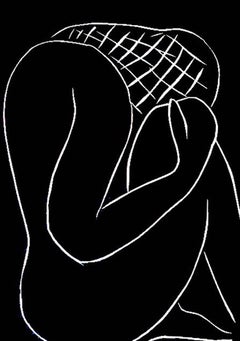
Plate 14: Ténèbres de moi-meme, je m
abandonne à vous
Located in Washington, DC
Artist: Henri Matisse
Medium: Linocut on Arches vellum
Title: Plate 14: Ténèbres de moi-meme, je m'abandonne à vous (Darkness of Myself, I Surrender to You)
Portfolio: Pasiphae
Year:...
Category
Modern 1940s Figurative Prints
Materials
Linocut
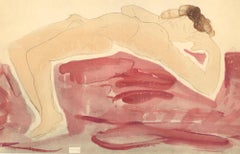
Francois Auguste Rene Rodin, Untitled, from The Varende, 1944 (after)
Located in Southampton, NY
This exquisite lithograph after Francois Auguste Rene Rodin (1840–1917), titled Sans titre (Untitled), from the folio La Varende, Rodin (La Varende, Rodin), originates from the 1944 ...
Category
Modern 1940s Figurative Prints
Materials
Lithograph, Stencil
$716 Sale Price
20% Off
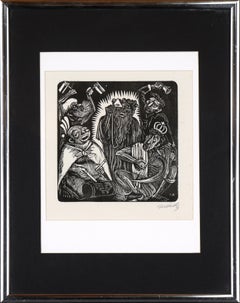
God and the Four Evangelists ("Fool
s Concert") - 1943 Linocut on Paper
Located in Soquel, CA
God and the Four Evangelists ("Fool's Concert") - 1943 Linocut on Paper
Leopoldo Méndez (Mexico City, Mexico, 1902–1969) "Fool's Concert" (from the portfolio "25 Prints of Leopoldo ...
Category
Symbolist 1940s Figurative Prints
Materials
Linocut, Printer s Ink, Laid Paper
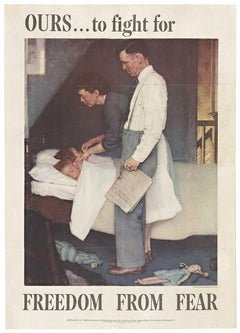
Freedom From Fear original 1943 Four Freedoms vintage poster
Located in Spokane, WA
Original World War II "Freedom from Fear" Ours ... To fight for by Rockwell. One of the 4 freedom posters created in 1943 by Norman Rockwell.
Fre...
Category
American Realist 1940s Figurative Prints
Materials
Offset
Body and Soul
— Mid-20th Century Surrealism
Located in Myrtle Beach, SC
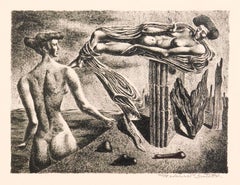
Federico Castellon, 'Body and Soul', 1938, lithograph, edition 30, Freundlich 3. Signed in pencil. Signed in the stone, lower left. A fine, richly-inked, atmospheric impression on cr...
Category
Surrealist 1940s Figurative Prints
Materials
Lithograph
Henri Matisse, Frontispiece, Vence 1944–1948, from Verve, Revue Artistique, 1948
Located in Southampton, NY
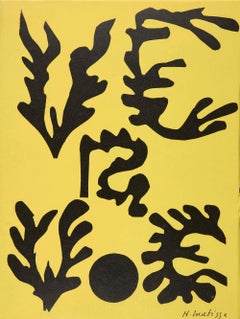
This exquisite lithograph by Henri Matisse (1869–1954), titled Frontispice, Vence 1944–1948 (Frontispiece, Vence 1944–1948), from Verve, Revue Artistique et Litteraire, Vol. VI, No. ...
Category
Fauvist 1940s Figurative Prints
Materials
Lithograph
Fernand Leger, After the Flood, from The Illuminations, 1949
Located in Southampton, NY
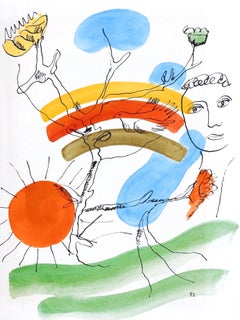
This exquisite lithograph by Fernand Leger (1881–1955), titled Apres le deluge (After the Flood), originates from the 1949 folio Les Illuminations, lithographies originales de Fernan...
Category
Modern 1940s Figurative Prints
Materials
Lithograph
$6,796 Sale Price
20% Off
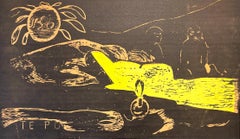
Gauguin, The Long Night (Te Po), Gauguin (after)
By Paul Gauguin
Located in Southampton, NY
Woodcut on vélin Utopian paper. Unsigned and unnumbered, as issued. Good Condition. Notes: From the folio, Gauguin, A portfolio of 12 color woodblocks, Paul Gauguin, French, 1848-1903 from the collection of the Museum Of Fine Arts, Boston, 1946. Rendered by Albert Carman (1899-1949); published the Museum Of Fine Arts, Boston and The Studio Publications, Inc., New York and London; printed by Holme Press Inc., New York, in an edition of MMMD. Excerpted from the folio, Paul Gauguin and Emil Bernard at Pont-Aven, Brittany, in 1888, each made a bas-relief, wooden panel to decorate a piece of furniture for a friend. In order to keep a record of their designs, a few inked impressions were made on paper. The illustration at left is a reproduction of a print which is possibly one of the above mentioned. It is further possible that this experiment later gave Gauguin the idea of making woodcuts. Just as his work in painting expressed a revolt against the overemphasis on factual representation of the nineteenth century in favor of decorative pattern and color, so also his woodcuts leaned strongly to the same side of the balance. Ten of the cuts reproduced (all excepting Soyez Amoureuses and Changement de Residence), which constitute the whole of his best known series, were made at Pont-Aven beginning in the fall of 1894, after Gauguin's return from his first trip to Tahiti and after he broke his ankle. They were at first roughly cut with a common carpenter's gouge, and the flat surfaces sandpapered and engraved with a sharp in-strument, perhaps an engraver's burin. A few trial proofs were printed in black ink only. Then the hollows were deepened with a woodcutter's gouge and highlights were added. An edition of thirty to fifty impressions of each subject, with the addition of color blocks (one, two or three), was made by Louis Roy...
Category
Post-Impressionist 1940s Figurative Prints
Materials
Woodcut
$716 Sale Price
20% Off
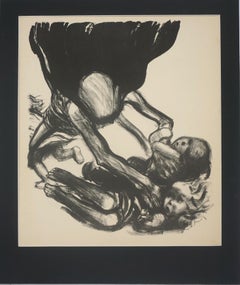
"Death Takes The Children" lithograph by Käthe Kollwitz
Located in Soquel, CA
Bold print of "Death Takes the Children" by Kathe Kollwitz (German, 1867-1945). This piece is one of the Lithographic reproductions of the original lithographs, plate 9 from a series...
Category
Expressionist 1940s Figurative Prints
Materials
Paper, Ink, Lithograph
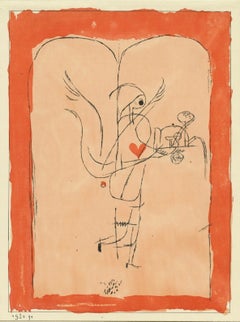
Paul Klee, A Guardian Angel Serves a Small Breakfast, 1941 (after)
By Paul Klee
Located in Southampton, NY
This exquisite silkscreen after Paul Klee (1879–1940), titled Ein Genius serviert ein kleines Fruhstuck (A Guardian Angel Serves a Small Breakfast), from the album Paul Klee, Paintin...
Category
Modern 1940s Figurative Prints
Materials
Screen
$716 Sale Price
20% Off
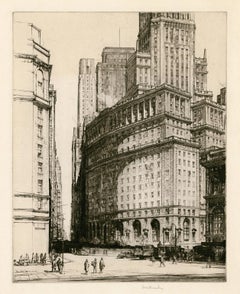
Bowling Green, New York
Located in Myrtle Beach, SC
Louis Conrad Rosenberg, 'Bowling Green, New York', etching, 1940. Signed in pencil. A superb, richly-inked impression, with all the fine lines printing c...
Category
American Realist 1940s Figurative Prints
Materials
Drypoint
Apocalypse of John the Evangelis - Etching by Giorgio De Chirico - 1941
Located in Roma, IT
Apocalypse of John the Evangelist is an original black and white etching realized by Giorgio De Chirico in 1941.
Hand signed on the lower right margin.
Numbered on the lower left. ...
Category
Surrealist 1940s Figurative Prints
Materials
Etching
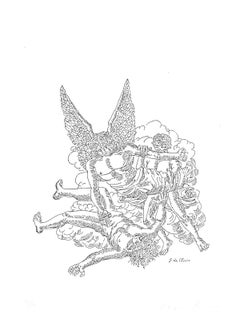
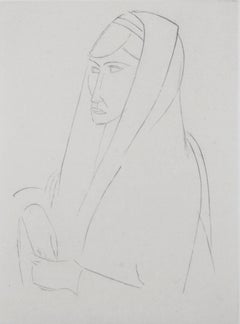
Derain, Figure, Du cubisme (after)
By André Derain
Located in Southampton, NY
Etching, Engraving on vélin du Lana Papiers Spéciaux pure rag paper. Unsigned and unnumbered, as issued. Good Condition. Notes: From the folio, Du Cubisme, 1947. Published by Compagn...
Category
Modern 1940s Figurative Prints
Materials
Etching, Engraving
$1,436 Sale Price
20% Off
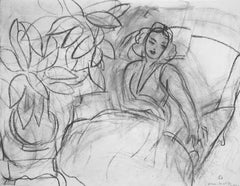
Henri Matisse, Series E, Var. 1, Drawings, Themes and Variations, 1943 (after)
Located in Southampton, NY
This exquisite lithograph after Henri Matisse (1869–1954), titled Serie E, var. 1 (Series E, Variation 1), from the album Henri Matisse, Dessins, Themes et Variations (Drawings, Them...
Category
Modern 1940s Figurative Prints
Materials
Lithograph
$796 Sale Price
20% Off
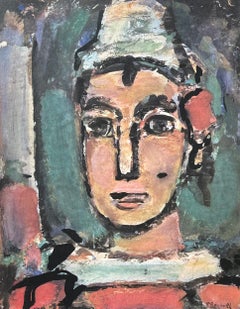
Georges Rouault, Jentie Bernard, from Divertissement, 1943
Located in Southampton, NY
This exquisite lithograph by Georges Rouault (1871–1958), titled Jentie Bernard (Jentie Bernard), from the album Georges Rouault, Divertissement, originates from the 1943 edition pub...
Category
Modern 1940s Figurative Prints
Materials
Lithograph
$716 Sale Price
20% Off
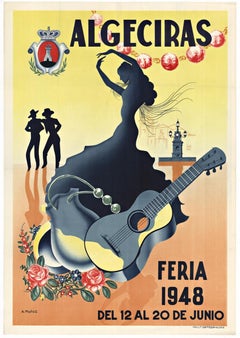
Original Algeciras Feria 1948 vintage Spanish travel lithograph poster
Located in Spokane, WA
Original vintage poster Algeciras Feria 1948 vintage Spanish travel poster. Archival linen backed in very fine condition, ready to frame. N...
Category
American Modern 1940s Figurative Prints
Materials
Lithograph
$1,080 Sale Price
20% Off
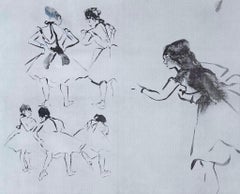
Edgar Degas, Sketch of Dancers, 1945 (after)
By Edgar Degas
Located in Southampton, NY
This exquisite lithograph after Edgar Degas (1834–1917), titled Croquis de danseurs (Sketch of Dancers), originates from the 1945 folio Degas, Ten Ballet Sketches. Published by The Studio Publications, Inc., New York, rendered and printed by Albert Carman, City Island, 1945, this work reflects Degas’s sensitive mastery of line, movement, and the intimate psychological nuances of the ballet studio.
Executed as a lithograph and pochoir on velin paper, this work measures 13 x 17 inches (33.02 x 43.18 cm). Signed in the plate and unnumbered as issued. Rendered and printed by Albert Carman, City Island.
Artwork Details:
Artist: After Edgar Degas (1834–1917)
Title: Croquis de danseurs (Sketch of Dancers), from Degas, Ten Ballet Sketches, 1945
Medium: Lithograph and pochoir on velin paper
Dimensions: 13 x 17 inches (33.02 x 43.18 cm)
Inscription: Signed in the plate and unnumbered as issued
Date: 1945
Publisher: The Studio Publications, Inc., New York
Printer: Albert Carman, City Island
Condition: Well preserved, consistent with age and medium
Provenance: From the 1945 folio Degas, Ten Ballet Sketches, published by The Studio Publications, Inc., New York
Notes:
Excerpted from the album, Born in Paris in 1834, Edgar Degas lived, and surely loved the life of that city during most of his years. These continued somewhat sadly beyond those of most of his friends— into the debacle of the first World War, during which he died in 1917. Judging by the frequency with which he used them as models, he must have had an especial admiration for the ballet girls who followed a profession that at the time brought none of the glory and prosperity which attend it today. New aspects of the human body, revealed in movement, fascinated him. But his occupation with the simply anatomical side of his subjects never resulted in a cold interpretation. On the contrary there is a warmth and sympathy that pervades all of his work. The drawings here represent the painter in one important phase of his multi-sensitive view of life; and permit an insight which a more ambitious work might not do-into the operation of the creative process, the artist's transformation of reality as it passes through the mesh of his sensibilities. The Edition of this Portfolio is limited to MMMD examples. Rendered by Albert Carman.
About the Publication:
Degas, Ten Ballet Sketches (1945) is one of the earliest and most significant American postwar fine art portfolios devoted to Edgar Degas’s intimate works on paper. Published by The Studio Publications, Inc., New York, and rendered and printed by Albert Carman at City Island, the album sought to faithfully reproduce a group of Degas’s ballet-related drawings through a combination of lithography and hand-applied pochoir coloring. This hybrid technique allowed the edition to preserve the immediacy, tonal subtlety, and gestural delicacy central to Degas’s draftsmanship. Conceived as a fine art publication rather than a commercial book, the portfolio provided American audiences unprecedented access to Degas’s private, spontaneous studies—images that reveal the artist’s fascination with movement, anatomy, and the psychological atmosphere of the rehearsal studio. The album exemplifies the mid-20th-century revival of pochoir as a means of recreating the texture and coloristic nuance of original works on paper, and it remains an important document of how Degas’s legacy was translated into high-quality printed form for collectors, museums, and connoisseurs.
About the Artist:
Edgar Degas (1834–1917) was a French painter, draughtsman, printmaker, and sculptor whose groundbreaking fusion of classical draftsmanship, modern experimentation, and psychological depth helped define the trajectory of Western art, positioning him as one of the most influential figures of the nineteenth and early twentieth centuries; renowned for his depictions of ballet dancers, racehorses, theater scenes, cafe life, domestic interiors, milliners, laundresses, and women at their toilette, Degas reimagined observational realism through radical compositional innovation—employing extreme cropping, asymmetrical framing, oblique viewpoints, and dramatic lighting that anticipated photographic and cinematic language long before these technologies shaped visual culture, and although associated with Impressionism, he rejected plein-air spontaneity in favor of studio-based discipline rooted in the linear precision of Jean-Auguste-Dominique Ingres, the expressive chromaticism of Eugene Delacroix, and the modernity of Edouard Manet while also drawing inspiration from Japanese ukiyo-e prints, classical sculpture, and early photography; his independent artistic philosophy resonated with and helped shape the innovations of Pablo Picasso, Alexander Calder, Alberto Giacometti, Salvador Dali, Joan Miro, Wassily Kandinsky, Marcel Duchamp, and Man Ray, whose explorations of movement, form, dream logic, abstraction, and conceptualism all find antecedents in Degas’s investigations into seriality, temporality, and the fragmented figure, and his pioneering use of pastel, monotype, and wax sculpture fundamentally transformed each medium, influencing artists from Henri Matisse, Francis Bacon, Lucian Freud, and Giacomo Manzu to Paula Rego, contemporary realists, experimental photographers, and choreographers; his works are held in nearly every major museum collection worldwide—including the Musee dOrsay, the Louvre, the Metropolitan Museum of Art, the National Gallery of Art, the Art Institute of Chicago, the Courtauld Institute, and the National Gallery, London—affirming his central place in the history of art, and the highest auction record for Degas was achieved at Sothebys London on February 3, 2015, when Danseuses en Bleu sold for 37,033,000 GBP, cementing his status as one of the most sought-after and enduringly significant artists of the Western canon.
Degas pochoir, Degas lithograph...
Category
Impressionist 1940s Figurative Prints
Materials
Lithograph
$796 Sale Price
20% Off
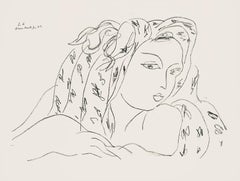
Henri Matisse, Series L, Var. 6, Drawings, Themes and Variations, 1943 (after)
Located in Southampton, NY
This exquisite lithograph after Henri Matisse (1869–1954), titled Serie L, var. 6 (Series L, Variation 6), from the album Henri Matisse, Dessins, Themes et Variations (Drawings, Them...
Category
Modern 1940s Figurative Prints
Materials
Lithograph
$796 Sale Price
20% Off
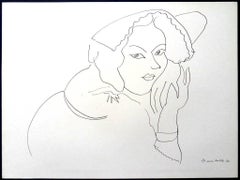
Henri Matisse (After) - Lithograph - Flowers
Located in Collonge Bellerive, Geneve, CH
after Henri MATISSE (1869-1954)
Lithograph
Signed in the plate
Vélin Paper
Dimensions: 32 x 24 cm (12 x 9")
This lithograph is one of a rare edition made during the Second World War ...
Category
Modern 1940s Figurative Prints
Materials
Lithograph
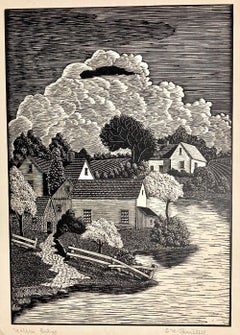
Elwood W. Bartlett, Water
s Edge (Wisconsin), about 1945, mid-century wood eng.
Located in New York, NY
Elwood Warren Bartlett is a Wisconsin native who also worked in Indiana.
Largely self taught as a printmaker, Bartlett worked in a style that once identified as his, immediately t...
Category
American Modern 1940s Figurative Prints
Materials
Woodcut
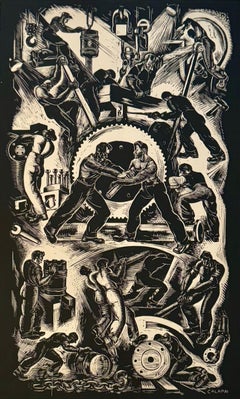
"Labor in a Diesel Plant" Machine Age American Scene Industrial Mid 20th Century
Located in New York, NY
"Labor in a Diesel Plant" Machine Age American Scene Industrial Mid 20th Century
Letterio Calapai (American 1902-1993)
''Labor in A Diesel Plant''
Wood engraving, 1940
17 x 10 1/2...
Category
American Modern 1940s Figurative Prints
Materials
Lithograph
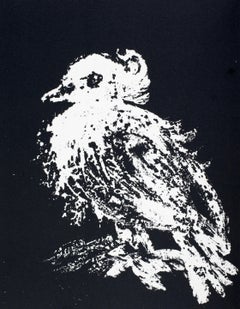
Picasso, La Petite Colombe (Mourlot 174; Cramer 55) (after)
Located in Southampton, NY
Lithograph on wove paper. Unsigned and unnumbered, as issued. Good Condition; never framed or matted. Notes: Executed in 1949 and issued as the frontispiece of the Picasso Lithograph...
Category
Modern 1940s Figurative Prints
Materials
Lithograph
$1,036 Sale Price
58% Off
Leonard Tsuguharu Foujita
La Reve
lithograph. signed in pencil, 1947
Located in Pembroke Pines, FL
Artist: Leonard Tsuguharu Foujita
Title: 'La Reve'
Year: 1947
Medium: lithograph on paper
Size: 22" x 29 7/8" (sheet)
Edition: E.A, aside of the edition of 50
signed & numbered in ...
Category
Contemporary 1940s Figurative Prints
Materials
Lithograph

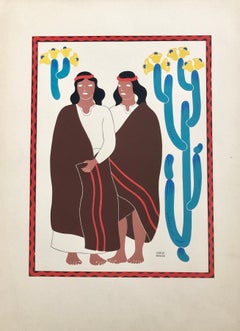
1945 Mexican Modernist Silkscreen Serigraph Print Regional Folk Art Dress Mexico
Located in Surfside, FL
This listing is for the one Silkscreen serigraph piece listed here.
Mexico City, 1945. First edition. plate signed, limited edition of 1000, these serigraph plates depict various types of traditional and folk art indigenous clothing...
Category
Folk Art 1940s Figurative Prints
Materials
Screen
Edgar Degas, Melina Darde, 1945 (after)
By Edgar Degas
Located in Southampton, NY
This exquisite lithograph after Edgar Degas (1834–1917), titled Melina Darde, originates from the 1945 folio Degas, Ten Ballet Sketches. Published by The Studio Publications, Inc., New York, rendered and printed by Albert Carman, City Island, 1945, this work reflects Degas’s sensitive mastery of line, movement, and the intimate psychological nuances of the ballet studio.
Executed as a lithograph and pochoir on velin paper, this work measures 17 x 13 inches (43.18 x 33.02 cm). Signed in the plate and unnumbered as issued. Rendered and printed by Albert Carman, City Island.
Artwork Details:
Artist: Edgar Degas (1834–1917)
Title: Melina Darde, from Degas, Ten Ballet Sketches, 1945
Medium: Lithograph and pochoir on velin paper
Dimensions: 17 x 13 inches (43.18 x 33.02 cm)
Inscription: Signed in the plate and unnumbered as issued
Date: 1945
Publisher: The Studio Publications, Inc., New York
Printer: Albert Carman, City Island
Condition: Well preserved, consistent with age and medium
Provenance: From the 1945 folio Degas, Ten Ballet Sketches, published by The Studio Publications, Inc., New York
Notes:
Excerpted from the album, Born in Paris in 1834, Edgar Degas lived, and surely loved the life of that city during most of his years. These continued somewhat sadly beyond those of most of his friends— into the debacle of the first World War, during which he died in 1917. Judging by the frequency with which he used them as models, he must have had an especial admiration for the ballet girls who followed a profession that at the time brought none of the glory and prosperity which attend it today. New aspects of the human body, revealed in movement, fascinated him. But his occupation with the simply anatomical side of his subjects never resulted in a cold interpretation. On the contrary there is a warmth and sympathy that pervades all of his work. The drawings here represent the painter in one important phase of his multi-sensitive view of life; and permit an insight which a more ambitious work might not do-into the operation of the creative process, the artist's transformation of reality as it passes through the mesh of his sensibilities. The Edition of this Portfolio is limited to MMMD examples. Rendered by Albert Carman.
About the Publication:
Degas, Ten Ballet Sketches (1945) is one of the earliest and most significant American postwar fine art portfolios devoted to Edgar Degas’s intimate works on paper. Published by The Studio Publications, Inc., New York, and rendered and printed by Albert Carman at City Island, the album sought to faithfully reproduce a group of Degas’s ballet-related drawings through a combination of lithography and hand-applied pochoir coloring. This hybrid technique allowed the edition to preserve the immediacy, tonal subtlety, and gestural delicacy central to Degas’s draftsmanship. Conceived as a fine art publication rather than a commercial book, the portfolio provided American audiences unprecedented access to Degas’s private, spontaneous studies—images that reveal the artist’s fascination with movement, anatomy, and the psychological atmosphere of the rehearsal studio. The album exemplifies the mid-20th-century revival of pochoir as a means of recreating the texture and coloristic nuance of original works on paper, and it remains an important document of how Degas’s legacy was translated into high-quality printed form for collectors, museums, and connoisseurs.
About the Artist:
Edgar Degas (1834–1917) was a French painter, draughtsman, printmaker, and sculptor whose groundbreaking fusion of classical draftsmanship, modern experimentation, and psychological depth helped define the trajectory of Western art, positioning him as one of the most influential figures of the nineteenth and early twentieth centuries; renowned for his depictions of ballet dancers, racehorses, theater scenes, cafe life, domestic interiors, milliners, laundresses, and women at their toilette, Degas reimagined observational realism through radical compositional innovation—employing extreme cropping, asymmetrical framing, oblique viewpoints, and dramatic lighting that anticipated photographic and cinematic language long before these technologies shaped visual culture, and although associated with Impressionism, he rejected plein-air spontaneity in favor of studio-based discipline rooted in the linear precision of Jean-Auguste-Dominique Ingres, the expressive chromaticism of Eugene Delacroix, and the modernity of Edouard Manet while also drawing inspiration from Japanese ukiyo-e prints, classical sculpture, and early photography; his independent artistic philosophy resonated with and helped shape the innovations of Pablo Picasso, Alexander Calder, Alberto Giacometti, Salvador Dali, Joan Miro, Wassily Kandinsky, Marcel Duchamp, and Man Ray, whose explorations of movement, form, dream logic, abstraction, and conceptualism all find antecedents in Degas’s investigations into seriality, temporality, and the fragmented figure, and his pioneering use of pastel, monotype, and wax sculpture fundamentally transformed each medium, influencing artists from Henri Matisse, Francis Bacon, Lucian Freud, and Giacomo Manzu to Paula Rego, contemporary realists, experimental photographers, and choreographers; his works are held in nearly every major museum collection worldwide—including the Musee dOrsay, the Louvre, the Metropolitan Museum of Art, the National Gallery of Art, the Art Institute of Chicago, the Courtauld Institute, and the National Gallery, London—affirming his central place in the history of art, and the highest auction record for Degas was achieved at Sothebys London on February 3, 2015, when Danseuses en Bleu sold for 37,033,000 GBP, cementing his status as one of the most sought-after and enduringly significant artists of the Western canon.
Degas pochoir, Degas lithograph...
Category
Impressionist 1940s Figurative Prints
Materials
Lithograph

$796 Sale Price
20% Off
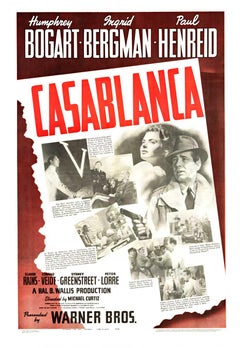
Original 1942 "CASABLANCA" vintage Academy Award winning movie poster
Located in Spokane, WA
Original 1942 CASABLANCA vintage movie poster. Archival linen backed in very good condition, ready to frame. The original production fold marks have been touched up and restored. This is an authentic vintage 1942 issue of Casablanca for sale.
"Casablanca" is widely regarded as one of the greatest films in cinema history. It received critical acclaim upon its release and won three Academy Awards, including Best Picture, Best Director for Michael Curtiz, and Best Adapted Screenplay. The cast's performances, memorable dialogue, and timeless romance have contributed to the film's enduring popularity. "Casablanca" remains a cultural touchstone and is often referenced in popular media.
• Rick Blaine (Humphrey Bogart): The owner of Rick's Café Américain, an establishment known for its lively atmosphere. Rick is initially portrayed as detached and cynical, but his past is revealed as the story progresses.
• Ilsa Lund (Ingrid Bergman): A Norwegian woman with a complicated history with Rick. She is caught in a love triangle between Rick and her husband, Victor Laszlo.
• Captain Louis Renault (Claude Rains): The corrupt and witty French police captain in Casablanca. He adds a layer of humor to the film and undergoes a moral transformation as the story unfolds.
Over the years, the Casablanca poster...
Category
American Realist 1940s Figurative Prints
Materials
Offset
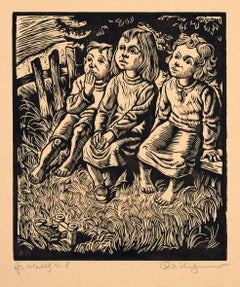
Blessed are the pure in heart / - The Vision of the Child
s Eyes -
Located in Berlin, DE
Rudolf Nehmer (1912 Bobersberg - 1983 Dresden), Blessed are the pure in heart, 1948. Woodcut on yellowish wove paper, 17.8 cm x 15.4 cm (image), 35 cm x 25 cm (sheet size), signed “R...
Category
Realist 1940s Figurative Prints
Materials
Woodcut
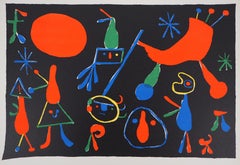
Joan Miro, Figures on a Black Background, from Cahiers d
Art, 1949 (after)
By Joan Miró
Located in Southampton, NY
This exquisite lithograph and pochoir after Joan Miro (1893–1983), titled Personnages sur un fond noir (Figures on a Black Background), from the album Cahiers dArt No. 24, 1949, orig...
Category
Modern 1940s Figurative Prints
Materials
Lithograph
$2,396 Sale Price
20% Off
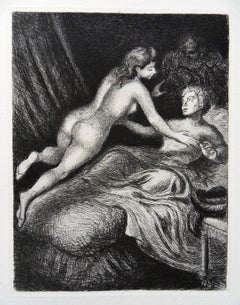
Lovers in Bed - Original etching, 1943
Located in Paris, IDF
Demetrios GALANIS
Lovers in Bed
Original etching
Printed signature in the plate
On Arches vellum 30 x 25 cm (c. 12 x 10 inch)
Printed in Haasen workshop in 19...
Category
Modern 1940s Figurative Prints
Materials
Etching
More Ways To Browse
Eduardo Roca
Edward B Gay
Edward Hopper Oil Painting
Edward Simmons
Edwin Lord Weeks
Elizabeth Enders
Elizabeth Horning
Emil Holzhauer
England Church Oil Painting
English Deer Painting
English Fox Hunt Painting
English Toy Terrier
Enrique Martinez Celaya
Eric Aho
Eritrea Art
Ernest Chateignon
Erotic Art Animal
Eugene Chigot