1950s Figurative Prints
to
1,171
1,622
288
176
56
38
Overall Width
to
Overall Height
to
979
326
268
119
103
68
21
21
15
4
3
2
275
75
58
56
47
3,634
7,757
25,007
6,689
285
584
1,429
1,208
1,244
2,180
2,983
5,154
2,931
1,445
3,102
1,710
451
12
1,345
794
771
493
448
365
331
264
148
108
101
97
83
62
56
54
51
42
35
31
1,443
381
145
115
89
128
543
1,298
741
Period: 1950s
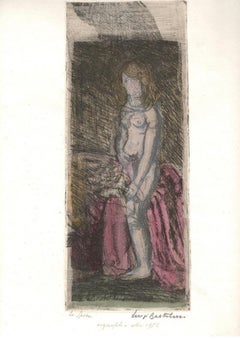
La Sposa - Etching by Luigi Bartolini - 1953
Located in Roma, IT
Image dimensions: 27.2 x 11 cm.
La sposa (The Bride) is an original artwork realized by Luigi Bartolini in 1953.
Original watercolored etching applied on China ink paper.
Hand-s...
Category
1950s Figurative Prints
Materials
Etching
L
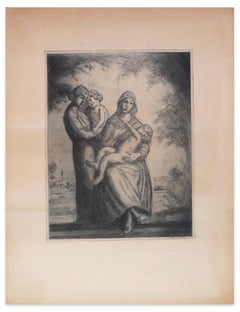
Enfance - Etching by J. Donnay - 1950s
By Jean Donnay
Located in Roma, IT
L'Enfance is an original artwork realized in the first half of the 20th Century by Jean Donnay.
Original etching on paper.
Edition of 50 prints.
Hand-signed in pencil by the ar...
Category
1950s Figurative Prints
Materials
Etching
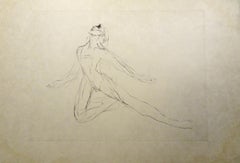
The Dancer - Original Etching and Drypoint by Ilse Voigt - 1950s
By Ilse Voigt
Located in Roma, IT
The dancer is an original artwork realized by Ilse Voigt in the first years of the 1950s. Etching and drypoint on Japan paper. Good conditions except for wide stains on the lower corners.
Ilse Voigt (Chemnitz, 1905 – Magdeburg, 1990) was an artist, pastellist, illustrator, and drawer. She attended the Fine Arts Academy of Berlin where she took Emil Orlik's classes. From 1964, she participated in international collective exhibitions. At the Salon des Indépendants, she became one of the company members. She exhibited in many art galleries in Paris and Switzerland. She painted and illustrated flowers, portraits...
Category
Modern 1950s Figurative Prints
Materials
Drypoint, Etching
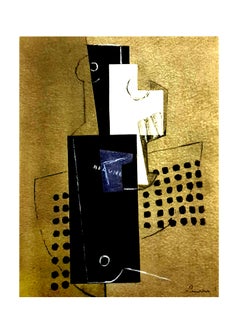
after Henri Laurens - Cubism - Pochoir
Located in Collonge Bellerive, Geneve, CH
after Henri Laurens - Cubism - Pochoir
Published in the deluxe art review, XXe Siecle
1956
Dimensions: 32 x 24 cm
Publisher: G. di San Lazzaro.
Unsigned and unumbered as issued
Category
Modern 1950s Figurative Prints
Materials
Stencil
L
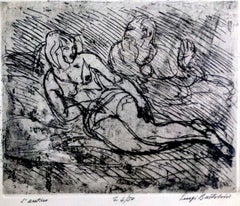
aretino
Located in Roma, IT
Original print. Black and white etching hand signed lower right. Titled lower left. Signed and date on the plate "Bartolini 1959". Edition of 50 prints.Very good conditions except li...
Category
Modern 1950s Figurative Prints
Materials
Etching
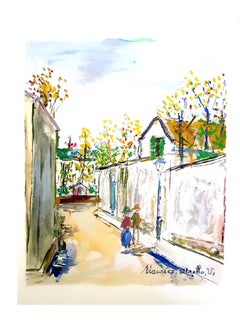
Maurice Utrillo (after) - Inspired Village of Montmartre - Pochoir
Located in Collonge Bellerive, Geneve, CH
(after) Maurice Utrillo
Inspired Village of Montmartre
Pochoir with printed signature
Edition of 490
Dimensions: 39 x 30 cm
Information : This print was created for the portfolio "L...
Category
Modern 1950s Figurative Prints
Materials
Stencil
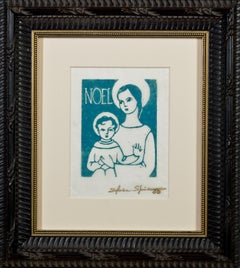
"Noel, " Religious Linocut in Blue on Tissue Paper signed by Sylvia Spicuzza
Located in Milwaukee, WI
"Noel" is an original linocut on tissue paper by Sylvia Spicuzza. The artist stamped her signature lower right. This artwork features the Virgin Mary holding the baby Jesus. Both fig...
Category
American Modern 1950s Figurative Prints
Materials
Linocut
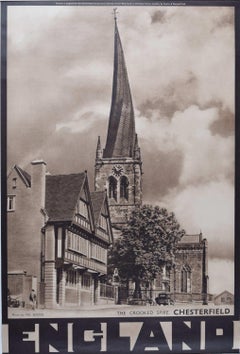
The Crooked Spire, Chesterfield, vintage 1950s travel poster by Val Doone
Located in London, GB
Val Doone
The Crooked Spire, Chesterfield
76 x 51 cm
Lithograph
Published by the Travel Association of Great Britain and N.Ireland this beautiful photographic image encouraged t...
Category
Photorealist 1950s Figurative Prints
Materials
Lithograph
Flamenco Dancers
, Paris, Louvre, Salon d
Automne, Ac. Chaumière, LACMA, SFAA
Located in Santa Cruz, CA
Stamped, verso, with estate stamp for Victor Di Gesu (American, 1914-1988) and created circa 1955.
Provenance: Janet Ament De La Roche, from estate stamp verso.
A cabinet sized, Pos...
Category
Post-Impressionist 1950s Figurative Prints
Materials
Paper, Monotype

Domergue - Parisienne - Original Signed Lithograph
Located in Collonge Bellerive, Geneve, CH
Original Lithograph by Jean-Gabriel Domergue
Title: Parisienne
Signed in the plate
Dimensions: 40 x 31 cm
1956
Edition of 197
This artwork is part of the famous portfolio "La Parisie...
Category
Impressionist 1950s Figurative Prints
Materials
Lithograph

Pablo Picasso (after) Helene Chez Archimede - Wood Engraving
Located in Collonge Bellerive, Geneve, CH
Pablo Picasso (after)
Helene Chez Archimede
Medium: engraved on wood by Georges Aubert
Dimensions: 44 x 33 cm
Portfolio: Helen Chez Archimede
Year: 1955
Edition: 240 (Here it is on...
Category
Cubist 1950s Figurative Prints
Materials
Engraving
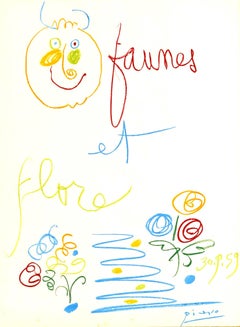
After Pablo Picasso - Wildlife of Antibes - Lithograph
Located in Collonge Bellerive, Geneve, CH
After Pablo PICASSO (1881-1973)
One plate from the book: Jaime Sabartés. "Faunes et flore d'Antibes" (Greenwich, Conn: New York Graphic Society, 1960).
Color Lithograph
63 x 47 cm
...
Category
Modern 1950s Figurative Prints
Materials
Lithograph
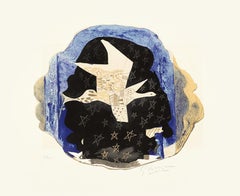
Les Étoiles (Stars), 1959
Located in Palo Alto, CA
Georges Braque Les Étoiles (Stars), 1959 opens a cloud-like window into a dreamy black and navy sky peppered with playful stars above which a bird, its bod...
Category
Modern 1950s Figurative Prints
Materials
Lithograph

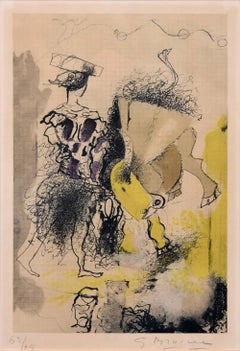
$7,000 Sale Price
30% Off
Torero
Located in Palo Alto, CA
Toreros seek to elicit inspiration and art from their work. Their intentions are not to deliberately cause harm the bull, but create an emotional connection with the crowd through th...
Category
Modern 1950s Figurative Prints
Materials
Lithograph
$6,000 Sale Price
33% Off
Jean Arp - Original Etching
By Jean Arp
Located in Collonge Bellerive, Geneve, CH
Jean Arp - Original Etching
1954
Dimensions: 32 x 24 cm
From the art review XXe siècle
Unsigned and unumbered as issued
Category
Surrealist 1950s Figurative Prints
Materials
Etching
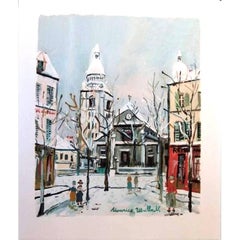
L
Eglise Saint Pierre de Montmartre - Pochoir
Located in Collonge Bellerive, Geneve, CH
(after) Maurice Utrillo
Title: L'Eglise Saint Pierre de Montmartre
Pochoir with printed signature
Edition of 550
Dimensions: 39 x 32 cm
Information : This print was created for the portfolio "Le Village inspiré, Chronique de la bohème de Montmartre (1920-1950) " published by Vertex in 1950
Condition : Excellent
Maurice Utrillo (1883 - 1955)
The French painter Maurice Utrillo was born as the illegitimate son of the painter Suzanne Valladon in Paris on December 26, 1883. He was adopted by the Catalan art critic Miguel Utrillo...
Category
Modern 1950s Figurative Prints
Materials
Lithograph
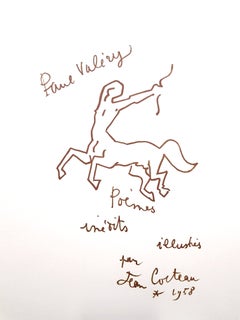
Jean Cocteau - For Paul Valery - Original Lithograph
By Jean Cocteau
Located in Collonge Bellerive, Geneve, CH
Original Lithograph by Jean Cocteau
Title: Paul Valery Poems
Signed in the plate
Dimensions: 32 x 25.5 cm
Edition: 200
1959
Publisher: Bibliophiles Du Palais
Unnumbered as issued
Category
Modern 1950s Figurative Prints
Materials
Lithograph
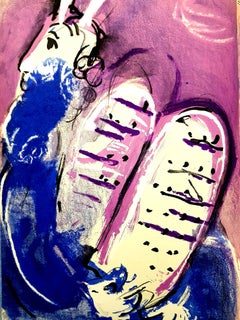
Marc Chagall - Moses with Tablets of Stone - Original Lithograph
By Marc Chagall
Located in Collonge Bellerive, Geneve, CH
Marc Chagall, Original Lithograph depicting an instant of the Bible.
Technique: Original lithograph in colours
Year: 1956
Sizes: 35,5 x 26 cm / 14" x 10.2" (sheet)
Published by: Éditions de la Revue Verve, Tériade, Paris
Printed by: Atelier Mourlot, Paris
Documentation / References: Mourlot, F., Chagall Lithograph [II] 1957-1962, A. Sauret, Monte Carlo 1963, nos. 234 and 257
Marc Chagall (born in 1887)
Marc Chagall was born in Belarus in 1887 and developed an early interest in art. After studying painting, in 1907 he left Russia for Paris, where he lived in an artist colony on the city’s outskirts. Fusing his own personal, dreamlike imagery with hints of the fauvism and cubism popular in France at the time, Chagall created his most lasting work—including I and the Village (1911)—some of which would be featured in the Salon des Indépendants exhibitions. After returning to Vitebsk for a visit in 1914, the outbreak of WWI trapped Chagall in Russia. He returned to France in 1923 but was forced to flee the country and Nazi persecution during WWII. Finding asylum in the U.S., Chagall became involved in set and costume design before returning to France in 1948. In his later years, he experimented with new art forms and was commissioned to produce numerous large-scale works. Chagall died in St.-Paul-de-Vence in 1985.
The Village
Marc Chagall was born in a small Hassidic community on the outskirts of Vitebsk, Belarus, on July 7, 1887. His father was a fishmonger, and his mother ran a small sundries shop in the village. As a child, Chagall attended the Jewish elementary school, where he studied Hebrew and the Bible, before later attending the Russian public school. He began to learn the fundamentals of drawing during this time, but perhaps more importantly, he absorbed the world around him, storing away the imagery and themes that would feature largely in most of his later work.
At age 19 Chagall enrolled at a private, all-Jewish art school and began his formal education in painting, studying briefly with portrait artist Yehuda Pen. However, he left the school after several months, moving to St. Petersburg in 1907 to study at the Imperial Society for the Protection of Fine Arts. The following year, he enrolled at the Svanseva School, studying with set designer Léon Bakst, whose work had been featured in Sergei Diaghilev's Ballets Russes. This early experience would prove important to Chagall’s later career as well.
Despite this formal instruction, and the widespread popularity of realism in Russia at the time, Chagall was already establishing his own personal style, which featured a more dreamlike unreality and the people, places and imagery that were close to his heart. Some examples from this period are his Window Vitebsk (1908) and My Fianceé with Black Gloves (1909), which pictured Bella Rosenfeld, to whom he had recently become engaged.
The Beehive
Despite his romance with Bella, in 1911 an allowance from Russian parliament member and art patron Maxim Binaver enabled Chagall to move to Paris, France. After settling briefly in the Montparnasse neighborhood, Chagall moved further afield to an artist colony known as La Ruche (“The Beehive”), where he began to work side by side with abstract painters such as Amedeo Modigliani and Fernand Léger as well as the avant-garde poet Guillaume Apollinaire. At their urging, and under the influence of the wildly popular fauvism and cubism, Chagall lightened his palette and pushed his style ever further from reality. I and the Village (1911) and Homage to Apollinaire (1912) are among his early Parisian works, widely considered to be his most successful and representative period.
Though his work stood stylistically apart from his cubist contemporaries, from 1912 to 1914 Chagall exhibited several paintings at the annual Salon des Indépendants exhibition, where works by the likes of Juan Gris, Marcel Duchamp and Robert Delaunay were causing a stir in the Paris art world. Chagall’s popularity began to spread beyond La Ruche, and in May 1914 he traveled to Berlin to help organize his first solo exhibition, at Der Sturm Gallery. Chagall remained in the city until the highly acclaimed show opened that June. He then returned to Vitebsk, unaware of the fateful events to come.
War, Peace and Revolution
In August 1914 the outbreak of World War I precluded Chagall’s plans to return to Paris. The conflict did little to stem the flow of his creative output, however, instead merely giving him direct access to the childhood scenes so essential to his work, as seen in paintings such as Jew in Green (1914) and Over Vitebsk (1914). His paintings from this period also occasionally featured images of the war’s impact on the region, as with Wounded Soldier (1914) and Marching (1915). But despite the hardships of life during wartime, this would also prove to be a joyful period for Chagall. In July 1915 he married Bella, and she gave birth to a daughter, Ida, the following year. Their appearance in works such as Birthday (1915), Bella and Ida by the Window (1917) and several of his “Lovers” paintings give a glimpse of the island of domestic bliss that was Chagall’s amidst the chaos.
To avoid military service and stay with his new family, Chagall took a position as a clerk in the Ministry of War Economy in St. Petersburg. While there he began work on his autobiography and also immersed himself in the local art scene, befriending novelist Boris Pasternak, among others. He also exhibited his work in the city and soon gained considerable recognition. That notoriety would prove important in the aftermath of the 1917 Russian Revolution when he was appointed as the Commissar of Fine Arts in Vitebsk. In his new post, Chagall undertook various projects in the region, including the 1919 founding of the Academy of the Arts. Despite these endeavors, differences among his colleagues eventually disillusioned Chagall. In 1920 he relinquished his position and moved his family to Moscow, the post-revolution capital of Russia.
In Moscow, Chagall was soon commissioned to create sets and costumes for various productions at the Moscow State Yiddish...
Category
Modern 1950s Figurative Prints
Materials
Lithograph
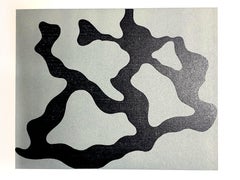
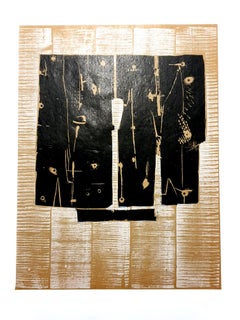
Pietro Consagra - Composition - Original Etching
Located in Collonge Bellerive, Geneve, CH
Pietro Consagra - Composition - Original Etching
1959
Dimensions: 32 x 24 cm
From the art review XXe siècle
Unsigned and unumbered as issued
Category
Surrealist 1950s Figurative Prints
Materials
Etching
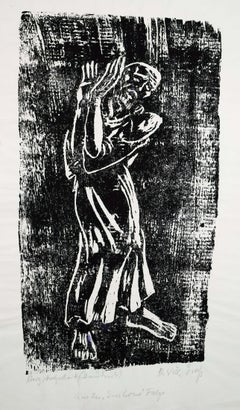
The Prophet / - The Burden of the Prophet -
Located in Berlin, DE
Wilhelm Gross (1883 Schlawe - 1974 Oranienburg-Eden), The Prophet, c. 1955. Woodcut on thin laid paper, 43 cm x 23 cm (depiction), 61 cm x 43 cm (sheet size), signed “Dr. Wilh.[elm] Gross” in pencil lower right, inscribed “Orig.[inal] Holzschnitt (Handabdruck)” lower left and inscribed “Aus der ”Ecce homo“ Folge” in the center.
- The wide margin with traces of pressing due to the impression, the sitter's left foot with a small purple stain, otherwise in vibrant condition.
- The Burden of the Prophet -
The large-format woodcut shows a prophet figure that takes up almost the entire height of the sheet. However, instead of seeing something in the distance that is still hidden from our eyes - as is usual in depictions of prophets - the figure has raised his hands in a defensive gesture, as if the prophet is trying to ward off what he has seen. At the same time, however, the position of the arms is an acceptance of the inevitable, which only those who recognize what is to come will have to bear for the time being, which is why the figure in the painting - despite its size - appears almost solitary, alone and exposed to the burden of suffering.
In a manner reminiscent of the folds of medieval wooden sculptures...
Category
Realist 1950s Figurative Prints
Materials
Paper
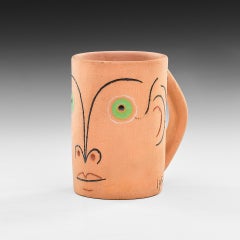
$427 Sale Price
20% Off
" Buveur au yeux verts "
By Jean Cocteau
Located in CANNES, FR
Jean Cocteau (1889 -1963 )
" Buveur aux yeux verts "
Chope à bière .
signed Jean Cocteau at the base .
Marked and numbered Edition originale de Jean Cocteau /
Atelier Madeline- J...
Category
Art Deco 1950s Figurative Prints
Materials
Ceramic
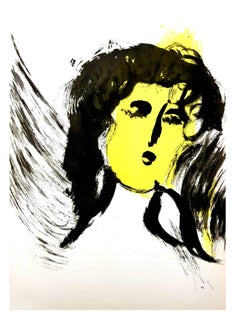
Marc Chagall - Woman Angel - Original Lithograph
By Marc Chagall
Located in Collonge Bellerive, Geneve, CH
Marc Chagall, Original Lithograph depicting an instant of the Bible.
Technique: Original lithograph in colours
Year: 1956
Sizes: 35,5 x 26 cm / 14" x 10.2" (sheet)
Published by: Édit...
Category
Modern 1950s Figurative Prints
Materials
Lithograph
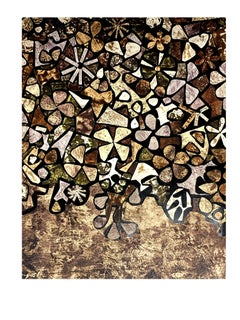
after Jean Dubuffet - Flowers - Pochoir
Located in Collonge Bellerive, Geneve, CH
after Jean Dubuffet - Flowers - Pochoir
1957
Dimensions: 32 x 25 cm
Edition: G. di San Lazzaro.
From the art review XXe siècle
Unsigned and unumbered as issued
Category
Modern 1950s Figurative Prints
Materials
Stencil
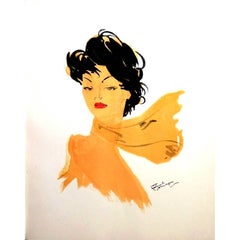
Domergue - Dark Hair Lady with a Scarf - Original Signed Lithograph
Located in Collonge Bellerive, Geneve, CH
Original Lithograph by Jean-Gabriel Domergue
Title: Dark Hair Lady with a Scarf
Signed
Dimensions: 40 x 31 cm
1956
Edition of 197
This artwork is part of the famous portfolio "La P...
Category
Impressionist 1950s Figurative Prints
Materials
Lithograph
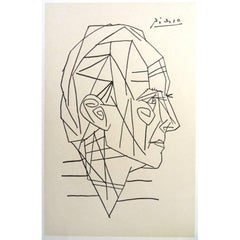
Jean Cocteau - Antigone - Original Lithograph
By Jean Cocteau
Located in Collonge Bellerive, Geneve, CH
Original Lithograph by Jean Cocteau
Title: Antigone
From "Théâtre" Portfolio, 1957
Edition: 207 / 8800
Dimensions: 22.5 x 15.5 cm
Jean Cocteau
Writer, artist and film director Jean Cocteau was one of the most influential creative figures in the Parisian avant-garde between the two World Wars.
“The poet never asks for admiration; he wants to be believed.”
—Jean Cocteau
Synopsis
Jean Cocteau was born on July 5, 1889, in Maisons-Laffitte, France. He spent most of his life in Paris, where he became part of the artistic avant-garde and was known for his variety of accomplishments. Over a 50-year career, he wrote poetry, novels and plays; created illustrations, paintings and other art objects; and directed influential films, including The Beauty and the Beast and Orpheus. He died on October 11, 1963.
Early Life and Literary Debut
Jean Cocteau was born on July 5, 1889, in Maisons-Laffitte, France, a village 12 miles outside Paris, to Georges and Eugénie (née) Lecomte Cocteau. He and his two older siblings were brought up in comfortable household in Paris, where they were introduced to the arts by their parents. Their father, a lawyer and amateur artist, committed suicide in 1898.
After his father's death, Cocteau was raised by his mother and his maternal grandfather. He attended school at the Lycée de Condorcet in Paris and he showed an early talent for writing. When he was just 18, his poetry was read aloud in performance arranged by the well-known actor Edouard de Max, and he became the toast of literary Paris. His first book of poems, La Lampe d'Aladin (Aladdin's Lamp), was published a year later, in 1909.
Cocteau and the Parisian Avant-Garde
In the 1910s, Cocteau formed friendships with many prominent members of the Parisian avant-garde, including writer Guillaume Apollinaire and artists Amedeo Modigliani and Pablo Picasso. He was so impressed by seeing the dancer Vaslav Nijinsky perform with the Ballets Russes that he met the company's founder, Sergei Diaghilev, and asked to work with him. Cocteau designed posters for the Ballets Russe, and in 1917 he was one of the collaborators on the ballet Parade: Cocteau wrote the story, Erik Satie composed the music, Léonide Massine choreographed the dance and Picasso designed the set and costumes.
Cocteau's activities of the 1920s were remarkably varied. He composed opera libretti for several composers. He published collections of poetry and illustrations as well as a novel inspired by his experiences during World War I. He staged a ballet called Le Boeuf Sur le Toit (The Ox on the Roof) and directed modern adaptations of several classic dramas. He promoted the work of young writer Raymond Radiguet...
Category
Modern 1950s Figurative Prints
Materials
Lithograph

"A Poem in Each Book" Exhibition Poster
Located in Collonge Bellerive, Geneve, CH
Exhibition poster for "A Poem in Each Book" by Paul Eluard, illustrated by his friends the painters-engravers, at Maison de la Pensée Française, Paris, October 26 - November 11, 1956...
Category
Cubist 1950s Figurative Prints
Materials
Lithograph
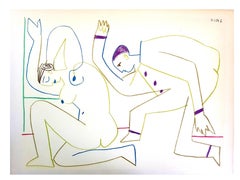
The Human Comedy - Lithograph
Located in Collonge Bellerive, Geneve, CH
after Pablo Picasso - The Human Comedy - Lithograph
Signed and dated in the plate
Dimensions: 32 x 24 cm
This artwork is a lithograph in colors on wov...
Category
Modern 1950s Figurative Prints
Materials
Lithograph
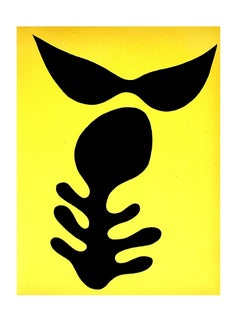
after Jean Arp - Moustaches et Squelette - Pochoir
By Jean Arp
Located in Collonge Bellerive, Geneve, CH
after Jean Arp
Moustaches et Squelette
Executed in 1957 after the original artwork by the studios from Daniel Jacomet in Paris, France
Pochoir
Dimensions: 32 x 24 cm
From the art re...
Category
Surrealist 1950s Figurative Prints
Materials
Stencil, Paper
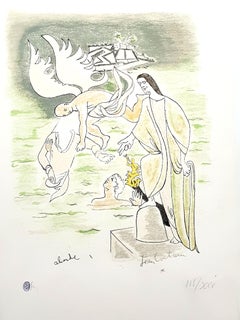
Jean Cocteau - Angel - Original Handcolored Lithograph
By Jean Cocteau
Located in Collonge Bellerive, Geneve, CH
Jean Cocteau - Angel - Original Handcolored Lithograph
Signed in the plate
Stampsigned
Handcolored in pencil.
Edition : /XXV
Dimensions: 47.5 x...
Category
Modern 1950s Figurative Prints
Materials
Lithograph
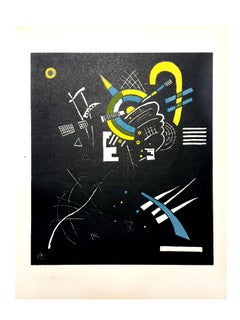
Wassily Kandinsky (after) - Small World - Lithograph
Located in Collonge Bellerive, Geneve, CH
Wassily Kandinsky (after) - Small World - Lithograph
Conditions: excellent
32 x 24 cm
1952
From the art review XXe siècle, San Lazzaro
Unsigned and unumber...
Category
Abstract Geometric 1950s Figurative Prints
Materials
Lithograph
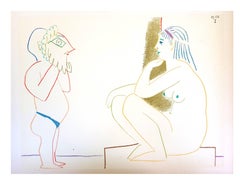
The Human Comedy - Lithograph
Located in Collonge Bellerive, Geneve, CH
After Pablo Picasso
The Human Comedy - Lithograph after an original drawing, as published in the journal "Verve"
Printed signature and date
Dimensions: 32...
Category
Modern 1950s Figurative Prints
Materials
Lithograph
The Human Comedy - Title Page - Lithograph
Located in Collonge Bellerive, Geneve, CH
After Pablo Picasso
The Human Comedy - Lithograph after an original drawing, as published in the journal "Verve"
Printed signature and date
Dimensions: 32 x 24 cm
This ...
Category
Modern 1950s Figurative Prints
Materials
Lithograph
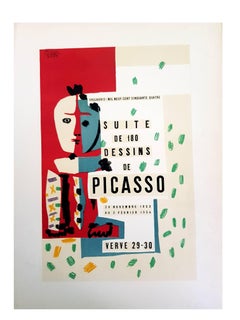
Jean Cocteau - Antigone - Original Lithograph
By Jean Cocteau
Located in Collonge Bellerive, Geneve, CH
Original Lithograph by Jean Cocteau
Title: Antigone
From "Théâtre" Portfolio, 1957
Edition: 207 / 8800
Dimensions: 22.5 x 15.5 cm
Category
Modern 1950s Figurative Prints
Materials
Lithograph
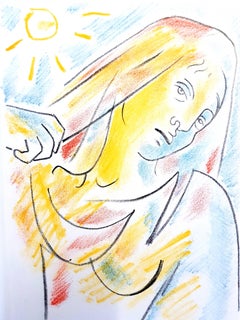
Domergue - Française - Original Signed Lithograph
Located in Collonge Bellerive, Geneve, CH
Original Lithograph by Jean-Gabriel Domergue
Title: Française
Signed in the plate
Dimensions: 40 x 31 cm
1956
Edition of 197
This artwork is part of the famous portfolio "La Parisien...
Category
Impressionist 1950s Figurative Prints
Materials
Lithograph
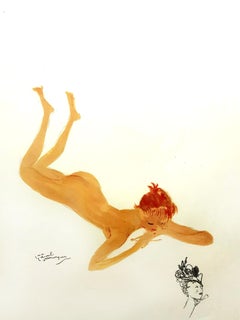
The Human Comedy - Lithograph
Located in Collonge Bellerive, Geneve, CH
After Pablo Picasso
The Human Comedy - Lithograph after an original drawing, as published in the journal "Verve"
Printed signature and date
Dimensi...
Category
Modern 1950s Figurative Prints
Materials
Lithograph
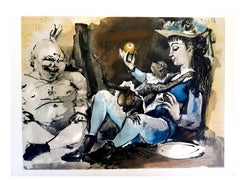
The Human Comedy - Lithograph
Located in Collonge Bellerive, Geneve, CH
A stone lithograph on Vélin de Rives paper after a drawing by Spanish artist Pablo Picasso (1881-1973) titled "La Comedie Humaine", 1954, unsigned as issued. From "Verve", no. 29-30,...
Category
Modern 1950s Figurative Prints
Materials
Lithograph
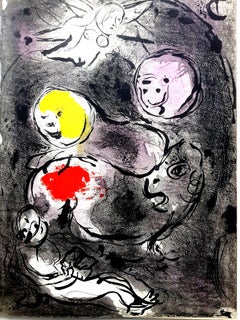
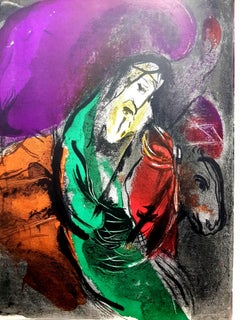
Marc Chagall - The Bible - Original Lithograph
By Marc Chagall
Located in Collonge Bellerive, Geneve, CH
Marc Chagall, Original Lithograph depicting an instant of the Bible.
Technique: Original lithograph in colours
Year: 1956
Sizes: 35,5 x 26 cm / 14" x 10.2" (sheet)
Published by: Éditions de la Revue Verve, Tériade, Paris
Printed by: Atelier Mourlot, Paris
Documentation / References: Mourlot, F., Chagall Lithograph [II] 1957-1962, A. Sauret, Monte Carlo 1963, nos. 234 and 257
Marc Chagall (born in 1887)
Marc Chagall was born in Belarus in 1887 and developed an early interest in art. After studying painting, in 1907 he left Russia for Paris, where he lived in an artist colony on the city’s outskirts. Fusing his own personal, dreamlike imagery with hints of the fauvism and cubism popular in France at the time, Chagall created his most lasting work—including I and the Village (1911)—some of which would be featured in the Salon des Indépendants exhibitions. After returning to Vitebsk for a visit in 1914, the outbreak of WWI trapped Chagall in Russia. He returned to France in 1923 but was forced to flee the country and Nazi persecution during WWII. Finding asylum in the U.S., Chagall became involved in set and costume design before returning to France in 1948. In his later years, he experimented with new art forms and was commissioned to produce numerous large-scale works. Chagall died in St.-Paul-de-Vence in 1985.
The Village
Marc Chagall was born in a small Hassidic community on the outskirts of Vitebsk, Belarus, on July 7, 1887. His father was a fishmonger, and his mother ran a small sundries shop in the village. As a child, Chagall attended the Jewish elementary school, where he studied Hebrew and the Bible, before later attending the Russian public school. He began to learn the fundamentals of drawing during this time, but perhaps more importantly, he absorbed the world around him, storing away the imagery and themes that would feature largely in most of his later work.
At age 19 Chagall enrolled at a private, all-Jewish art school and began his formal education in painting, studying briefly with portrait artist Yehuda Pen. However, he left the school after several months, moving to St. Petersburg in 1907 to study at the Imperial Society for the Protection of Fine Arts. The following year, he enrolled at the Svanseva School, studying with set designer Léon Bakst, whose work had been featured in Sergei Diaghilev's Ballets Russes. This early experience would prove important to Chagall’s later career as well.
Despite this formal instruction, and the widespread popularity of realism in Russia at the time, Chagall was already establishing his own personal style, which featured a more dreamlike unreality and the people, places and imagery that were close to his heart. Some examples from this period are his Window Vitebsk (1908) and My Fianceé with Black Gloves (1909), which pictured Bella Rosenfeld, to whom he had recently become engaged.
The Beehive
Despite his romance with Bella, in 1911 an allowance from Russian parliament member and art patron Maxim Binaver enabled Chagall to move to Paris, France. After settling briefly in the Montparnasse neighborhood, Chagall moved further afield to an artist colony known as La Ruche (“The Beehive”), where he began to work side by side with abstract painters such as Amedeo Modigliani and Fernand Léger as well as the avant-garde poet Guillaume Apollinaire. At their urging, and under the influence of the wildly popular fauvism and cubism, Chagall lightened his palette and pushed his style ever further from reality. I and the Village (1911) and Homage to Apollinaire (1912) are among his early Parisian works, widely considered to be his most successful and representative period.
Though his work stood stylistically apart from his cubist contemporaries, from 1912 to 1914 Chagall exhibited several paintings at the annual Salon des Indépendants exhibition, where works by the likes of Juan Gris, Marcel Duchamp and Robert Delaunay were causing a stir in the Paris art world. Chagall’s popularity began to spread beyond La Ruche, and in May 1914 he traveled to Berlin to help organize his first solo exhibition, at Der Sturm Gallery. Chagall remained in the city until the highly acclaimed show opened that June. He then returned to Vitebsk, unaware of the fateful events to come.
War, Peace and Revolution
In August 1914 the outbreak of World War I precluded Chagall’s plans to return to Paris. The conflict did little to stem the flow of his creative output, however, instead merely giving him direct access to the childhood scenes so essential to his work, as seen in paintings such as Jew in Green (1914) and Over Vitebsk (1914). His paintings from this period also occasionally featured images of the war’s impact on the region, as with Wounded Soldier (1914) and Marching (1915). But despite the hardships of life during wartime, this would also prove to be a joyful period for Chagall. In July 1915 he married Bella, and she gave birth to a daughter, Ida, the following year. Their appearance in works such as Birthday (1915), Bella and Ida by the Window (1917) and several of his “Lovers” paintings give a glimpse of the island of domestic bliss that was Chagall’s amidst the chaos.
To avoid military service and stay with his new family, Chagall took a position as a clerk in the Ministry of War Economy in St. Petersburg. While there he began work on his autobiography and also immersed himself in the local art scene, befriending novelist Boris Pasternak, among others. He also exhibited his work in the city and soon gained considerable recognition. That notoriety would prove important in the aftermath of the 1917 Russian Revolution when he was appointed as the Commissar of Fine Arts in Vitebsk. In his new post, Chagall undertook various projects in the region, including the 1919 founding of the Academy of the Arts. Despite these endeavors, differences among his colleagues eventually disillusioned Chagall. In 1920 he relinquished his position and moved his family to Moscow, the post-revolution capital of Russia.
In Moscow, Chagall was soon commissioned to create sets and costumes for various productions at the Moscow State Yiddish Theater, where he would paint a series of murals titled Introduction to the Jewish Theater as well. In 1921, Chagall also found work as a teacher at a school for war orphans. By 1922, however, Chagall found that his art had fallen out of favor, and seeking new horizons he left Russia for good.
Flight
After a brief stay in Berlin, where he unsuccessfully sought to recover the work exhibited at Der Sturm before the war, Chagall moved his family to Paris in September 1923. Shortly after their arrival, he was commissioned by art dealer and publisher Ambroise Vollard to produce a series of etchings for a new edition of Nikolai Gogol's 1842 novel Dead Souls. Two years later Chagall began work on an illustrated edition of Jean de la Fontaine’s Fables, and in 1930 he created etchings for an illustrated edition of the Old Testament, for which he traveled to Palestine to conduct research.
Chagall’s work during this period brought him new success as an artist and enabled him to travel throughout Europe in the 1930s. He also published his autobiography, My Life (1931), and in 1933 received a retrospective at the Kunsthalle in Basel, Switzerland. But at the same time that Chagall’s popularity was spreading, so, too, was the threat of Fascism and Nazism. Singled out during the cultural "cleansing" undertaken by the Nazis in Germany, Chagall’s work was ordered removed from museums throughout the country. Several pieces were subsequently burned, and others were featured in a 1937 exhibition of “degenerate art” held in Munich. Chagall’s angst regarding these troubling events and the persecution of Jews in general can be seen in his 1938 painting White Crucifixion.
With the eruption of World War II, Chagall and his family moved to the Loire region before moving farther south to Marseilles following the invasion of France. They found a more certain refuge when, in 1941, Chagall’s name was added by the director of the Museum of Modern Art (MOMA) in New York City to a list of artists and intellectuals deemed most at risk from the Nazis’ anti-Jewish campaign. Chagall and his family would be among the more than 2,000 who received visas and escaped this way.
Haunted Harbors
Arriving in New York City in June 1941, Chagall discovered that he was already a well-known artist there and, despite a language barrier, soon became a part of the exiled European artist community. The following year he was commissioned by choreographer Léonide Massine to design sets and costumes for the ballet Aleko, based on Alexander Pushkin’s “The Gypsies” and set to the music of Pyotr Ilyich Tchaikovsky.
But even as he settled into the safety of his temporary home, Chagall’s thoughts were frequently consumed by the fate befalling the Jews of Europe and the destruction of Russia, as paintings such as The Yellow Crucifixion...
Category
Modern 1950s Figurative Prints
Materials
Lithograph
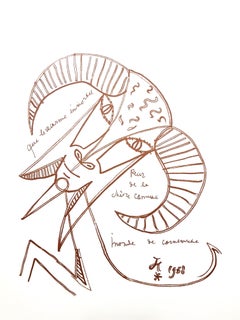
Jean Cocteau - Immortal Goat - Original Lithograph
By Jean Cocteau
Located in Collonge Bellerive, Geneve, CH
Original Lithograph by Jean Cocteau
Title: Immortal Goat
Signed in the plate
Dimensions: 38 x 28 cm
Edition: 200
1958
Jean Cocteau
Writer, artist and film director Jean Cocteau was...
Category
Modern 1950s Figurative Prints
Materials
Lithograph
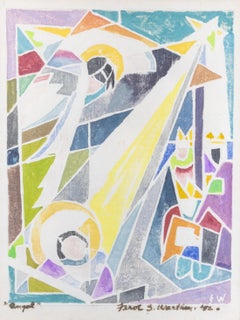
Angel
Located in Missouri, MO
Angel, 1952
Ferol K. Sibley Warthen (American, 1890-1986)
Color Woodblock Print
6.5 x 5 inches
16 x 13.75 inches with frame
Signed Lower Right
Titled Lower Left
Born 1890, Died 1986...
Category
American Modern 1950s Figurative Prints
Materials
Color
Jean Cocteau - Under the Fire Coat - Original Lithograph
By Jean Cocteau
Located in Collonge Bellerive, Geneve, CH
Jean Cocteau - Under the Fire Coat - Original Lithograph
Signed "Jean" in the plate and dated 1954 in the plate.
Joseph Forêt Editions
Dimensions: 41 x 33 cm...
Category
Surrealist 1950s Figurative Prints
Materials
Lithograph
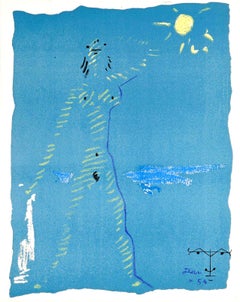
after Henri Matisse - Acrobat
Located in Collonge Bellerive, Geneve, CH
after Henri Matisse - Acrobat
Edition of 200
with the printed signature, as issued
76 x 56
With stamp of the Succession Matisse
References : Artvalue - Succession Matisse
Category
Modern 1950s Figurative Prints
Materials
Lithograph
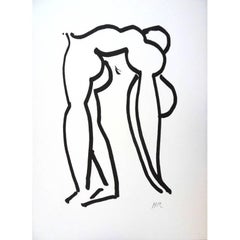
Henri Matisse (After) - Plant - Lithograph
Located in Collonge Bellerive, Geneve, CH
Henri Matisse (After) - Plant - Lithograph
Published in the deluxe art review, XXe Siecle
1954
Dimensions: 32 x 24 cm
Publisher: G. di San Lazzaro.
Unsigned and unumbered as issued
Category
Modern 1950s Figurative Prints
Materials
Lithograph

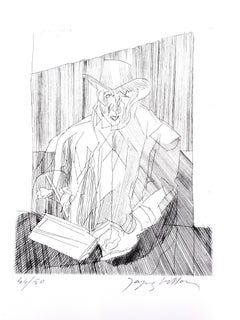
Jacques Villon - Man - Original Etching
Located in Collonge Bellerive, Geneve, CH
Jacques Villon - Man- Original Etching
1951
Signed in pencil and numbered
Dimensions : 34.8 x 25 cm
Category
Modern 1950s Figurative Prints
Materials
Etching
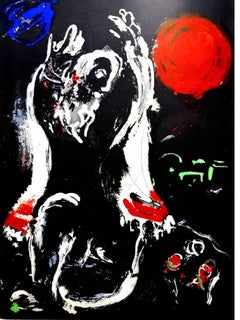
Marc Chagall - The Bible - Original Lithograph
By Marc Chagall
Located in Collonge Bellerive, Geneve, CH
Marc Chagall, Original Lithograph depicting an instant of the Bible.
Technique: Original lithograph in colours
Year: 1956
Sizes: 35,5 x 26 cm / 14" x 10.2" (...
Category
Modern 1950s Figurative Prints
Materials
Lithograph
Marc Chagall - The Bible - Original Lithograph
By Marc Chagall
Located in Collonge Bellerive, Geneve, CH
Marc Chagall, Original Lithograph depicting an instant of the Bible.
Technique: Original lithograph in colours
Year: 1956
Sizes: 35,5 x 26 cm / 14" x 10.2" (sheet)
Published by: Édit...
Category
Modern 1950s Figurative Prints
Materials
Lithograph
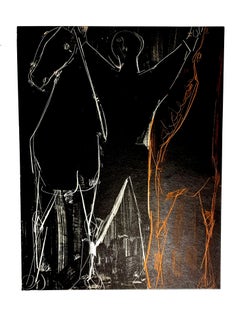
Marino Marini - Horses - Original Lithograph
Located in Collonge Bellerive, Geneve, CH
Marino Marini - Horses - Original Lithograph
1951
Dimensions: 32 x 24 cm
From the art review XXe siècle
Unsigned and unumbered as issued
Category
Surrealist 1950s Figurative Prints
Materials
Lithograph
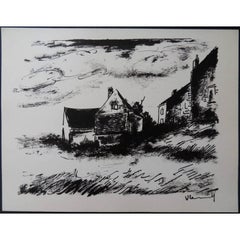
Maurice de Vlaminck - House in Rueil - Original Lithograph
Located in Collonge Bellerive, Geneve, CH
Maurice de Vlaminck
Original Lithograph
Signed in the plate
1958
Title: House in Beauce
Dimensions: 22 x 27 cm
Reference: Catalogue raisonné Walterskirchen 275
Condition : Excellent
Maurice de Vlaminck (1876 - 1958)
Maurice was three years old when his family moved from Paris to Vésinet. He first pursued the same musical career as his parents, who were both musicians, leaving his home as a trained double-bass player in 1892 to move to Chatou near Versailles. After absolving his military service in Vitré Maurice Vlaminck worked as a musician until he accidentally met André Derain in 1900.
It was Derain who kindled Vlaminck's artistic ambitions. He decided to become a painter and rented an old hut in which he and Derain shared a studio. A crucial turning point in Vlaminck's artistic development was a visit to a van Gogh exhibition...
Category
Impressionist 1950s Figurative Prints
Materials
Lithograph
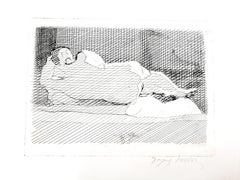
Jacques Villon - Sleeping Nude - Original Etching
Located in Collonge Bellerive, Geneve, CH
Jacques Villon - Sleeping Nude - Original Etching
Circa 1950
Signed in pencil
Edition of 45.
Dimensions : 32.7 x 25 cm
Category
Modern 1950s Figurative Prints
Materials
Etching
Pablo Picasso (after) Helene Chez Archimede - Wood Engraving
Located in Collonge Bellerive, Geneve, CH
Pablo Picasso (after)
Helene Chez Archimede
Medium: engraved on wood by Georges Aubert
Dimensions: 44 x 33 cm
Portfolio: Helen Chez Archimede
Year: 1955
Edition: 240 (Here it is on...
Category
Cubist 1950s Figurative Prints
Materials
Engraving
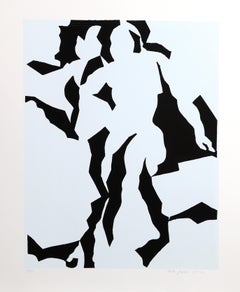
Positive 2, Abstract Screenprint by Peter Grippe
By Peter Grippe
Located in Long Island City, NY
Artist: Peter Grippe, American (1912 - 2002)
Title: Positive 2
Year: 1958-1960
Medium: Screenprint, signed and numbered in pencil
Edition: 75
Image Size: 26 x 20.25 inches
Size: 34 x...
Category
Pop Art 1950s Figurative Prints
Materials
Screen
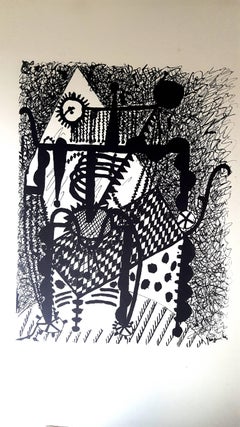
Pablo Picasso (after) Helene Chez Archimede - Wood Engraving
Located in Collonge Bellerive, Geneve, CH
Pablo Picasso (after)
Helene Chez Archimede
Medium: engraved on wood by Georges Aubert
Dimensions: 44 x 33 cm
Portfolio: Helen Chez Archimede
Year: 1955
Edition: 240 (Here it is on...
Category
Modern 1950s Figurative Prints
Materials
Engraving
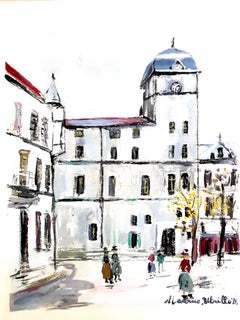
Inspired Village of Montmartre - Pochoir
Located in Collonge Bellerive, Geneve, CH
(after) Maurice Utrillo
Inspired Village of Montmartre
Pochoir with printed signature
Edition of 490
Dimensions: 39 x 30 cm
Information : This print was created for the portfolio "Le Village inspiré, Chronique de la bohème de Montmartre (1920-1950) " published by Vertex in 1950
Condition : Excellent
Maurice Utrillo (1883 - 1955)
The French painter Maurice Utrillo was born as the illegitimate son of the painter Suzanne Valladon in Paris on December 26, 1883. He was adopted by the Catalan art critic Miguel Utrillo...
Category
Modern 1950s Figurative Prints
Materials
Stencil
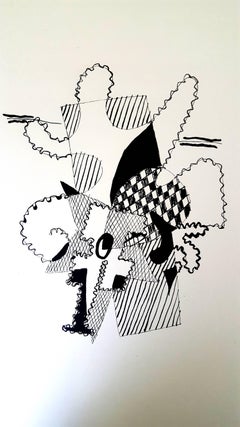
Jean Cocteau - Study for the Wall - Original Handsigned Lithograph
By Jean Cocteau
Located in Collonge Bellerive, Geneve, CH
Jean Cocteau - Study for the Wall - Original Handsigned Lithograph
Signed in pencil and numbered
Dimensions: 65 x 50 cm
Edition: 150
1956
Category
Modern 1950s Figurative Prints
Materials
Lithograph
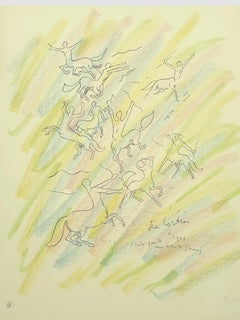
Kees van Dongen - Montmartre 1900 - Original Lithograph
Located in Collonge Bellerive, Geneve, CH
Kees van Dongen
Title: Montmartre 1900
Original Lithograph
Edition of 180
Dimensions: 39 x 30 cm
References: Juffermans JL 34
Information :
This lithograph was created for the portf...
Category
Impressionist 1950s Figurative Prints
Materials
Lithograph

Jacques Villon - Cubist Landscape - Original Etching
Located in Collonge Bellerive, Geneve, CH
Jacques Villon - Cubist Landscape - Original Etching
Circa 1950
Signed in pencil
Jacques Villon (1875 - 1963)
Jacques Villon was born Gaston Duchamp on July 31, 1875, in Damville,...
Category
Modern 1950s Figurative Prints
Materials
Etching
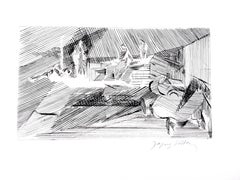
Jacques Villon - Two Cubist Vases - Original Etching
Located in Collonge Bellerive, Geneve, CH
Jacques Villon - Two Cubist Vases - Original Etching
1950
Signed in pencil
Edition of 40
Jacques Villon (1875 - 1963)
Jacques Villon was born Gaston Duchamp on July 31, 1875, in Da...
Category
Modern 1950s Figurative Prints
Materials
Etching
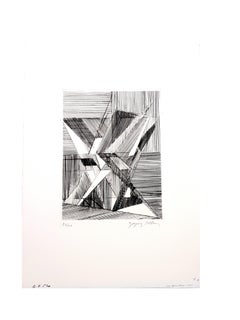
Feuillage en couleurs - Modern, Aquatint, Embossing, Plant, Leaves, Still Life
Located in Köln, DE
Colour aquatint with embossing ""Feuillage en couleurs" (Colourful Leaves) by Georges Braque from 1956.
The edition on BFK RIVES cromprises approx. 80 copies.
The present copy is ...
Category
Modern 1950s Figurative Prints
Materials
Color, Etching, Aquatint
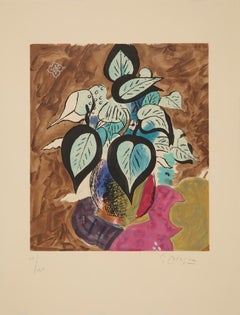
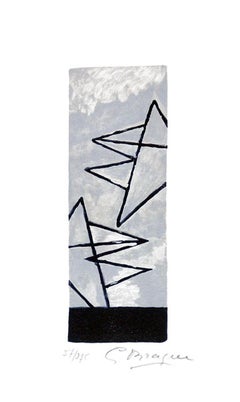
Ciel Gris I (Gray Sky I), 1959
Located in Palo Alto, CA
Utilizing straight lines and sharp angles, Braque creates geometric shapes reminiscent of folded origami. The true identities of these geometric forms elude us, though they vaguely r...
Category
Modern 1950s Figurative Prints
Materials
Lithograph
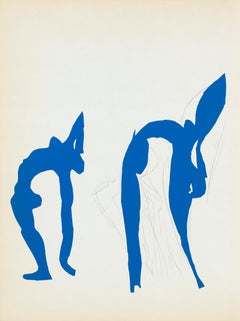
$8,000 Sale Price
33% Off
Acrobates
Located in London, GB
Lithograph in colours based on the cut-out of the same title, 1952
From 'Verve' Magazine Volume IX, Nos 35 & 36: 'Dernières Oeuvres de Matisse 1950-54'
Pr...
Category
Modern 1950s Figurative Prints
Materials
Lithograph
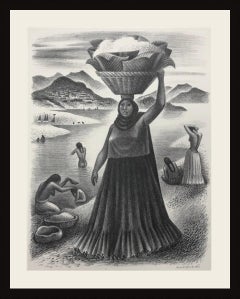
TEHAUNTEPEC RIVER
Located in Aventura, FL
Hand signed by Artist. Lithograph on paper. Published by Associated American Artists. Image size 12.25 x 9.25 inches Custom framed as pictured. Edition of 250. Artwork is in excel...
Category
Contemporary 1950s Figurative Prints
Materials
Paper, Lithograph
$3,000 Sale Price
25% Off
Recently Viewed
View AllMore Ways To Browse
Eduardo Roca
Edward B Gay
Edward Hopper Oil Painting
Edward Simmons
Edwin Lord Weeks
Elizabeth Enders
Elizabeth Horning
Emil Holzhauer
England Church Oil Painting
English Deer Painting
English Fox Hunt Painting
English Toy Terrier
Enrique Martinez Celaya
Eric Aho
Eritrea Art
Ernest Chateignon
Erotic Art Animal
Eugene Chigot