1960s Figurative Prints
to
1,158
1,556
744
464
154
51
Overall Width
to
Overall Height
to
1,108
788
199
150
127
79
76
17
5
5
4
1
377
123
55
53
43
3,634
7,755
24,994
6,704
285
584
1,429
1,208
1,244
2,180
2,970
5,154
2,931
1,445
3,102
2,271
664
26
1,805
1,116
957
591
568
558
532
273
143
111
106
104
88
81
74
72
72
70
62
57
1,659
600
260
200
132
287
1,018
1,497
1,197
Period: 1960s
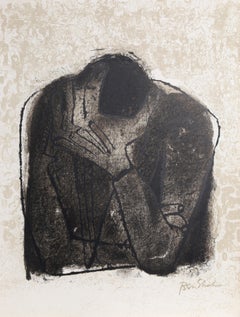
Beside the Dead from the Rilke Portfolio, Lithograph by Ben Shahn
By Ben Shahn
Located in Long Island City, NY
Artist: Ben Shahn, American (1898 - 1969)
Title: Beside the Dead from the Rilke Portfolio
Year: 1968
Medium: Lithograph, signed in the plate
Edition: 750
Size: 22.5 x 17.75 in. (57....
Category
Modern 1960s Figurative Prints
Materials
Lithograph
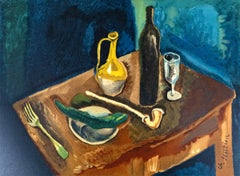
Soutine, Nature morte à la pipe, Soutine, Collection Pierre Lévy (after)
Located in Fairfield, CT
Medium: Lithograph on vélin d'Arches paper
Year: 1966
Paper Size: 20 x 26 inches
Inscription: Signed in the plate and unnumbered, as issued
Notes: From the folio, Soutine, I, Collect...
Category
Post-Impressionist 1960s Figurative Prints
Materials
Lithograph

$716 Sale Price
20% Off
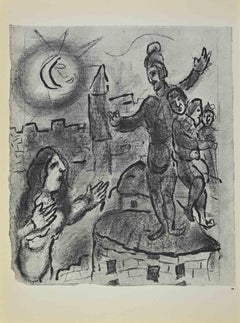
Acrobate - Lithograph by Marc Chagall - 1960
By Marc Chagall
Located in Roma, IT
Acrobate is an artwork realized by March Chagall, 1960s.
Lithograph on brown-toned paper, no signature.
Lithograph on both sheets.
Edition of 6500 unsigned lithographs. Printed b...
Category
Surrealist 1960s Figurative Prints
Materials
Lithograph
$231 Sale Price
35% Off
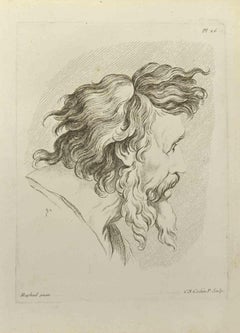
Portrait After Raphael - Etching by Nicholas Cochin - 1755
Located in Roma, IT
Portrait After Raphael is an etching realized by Nicholas Cochin in 1755.
Good conditions.
Signed in plate.
The artwork is depicted through confident strokes.
The etching was rea...
Category
Modern 1960s Figurative Prints
Materials
Etching
$213 Sale Price
40% Off
Dubuffet, Composition (Webel 775-779), La Fleur de Barbe (after)
Located in Southampton, NY
Phototype on vélin d’Arches paper. Unsigned and unnumbered, as issued. Good condition; never framed or matted. Notes: From the volume, La Fleur de Barbe, 1960. Published by Jean Dubu...
Category
Surrealist 1960s Figurative Prints
Materials
Photogravure
$1,836 Sale Price
20% Off
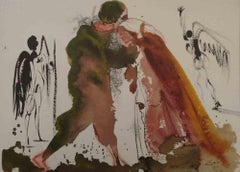
Ipse Coniungat Vos - Lithograph by Salvador Dalí - 1964
Located in Roma, IT
Ipse coniugant vos ("May he himself join you in Marriage") is an artwork realized in 1964.
It is part of Biblia Sacra vulgatæ editionis published by Rizzoli-Mediolani between 1967 ...
Category
Surrealist 1960s Figurative Prints
Materials
Lithograph
$413 Sale Price
40% Off
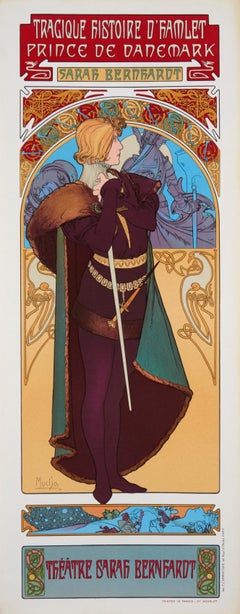
Hamlet - Theatre Sarah Bernhardt (after) Alphonse Mucha, 1969
Located in New York, NY
These beautiful and colorful lithographic posters were hand reproduced by the Mourlot Studio's Master Printer Henri Deschamps in 1969. They are not to be mistaken with later cheap di...
Category
Art Nouveau 1960s Figurative Prints
Materials
Lithograph
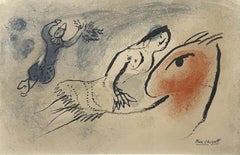
Carte de Voeux pour Aime Maeght
By Marc Chagall
Located in Bournemouth, Dorset
Marc Chagall (1887-1985)
Carte de Voeux pour Aime Maeght
1960
Lithograph in Arches paper
Signed in stone
Image: 22.2 x 29.5 cm
Frame: 46.5 x 54.5cm
Marc Chagall (1887 – 1985)
Russi...
Category
Modern 1960s Figurative Prints
Materials
Lithograph
$576 Sale Price
34% Off
Bernard, Composition, Éloge de Émile Bernard (after)
Located in Southampton, NY
Woodcut on vélin d’Arches paper. Inscription: unsigned and unnumbered, as issued. Good condition. Notes: From the volume, Éloge de Émile Bernard, 1962. Published by Editions d'Art Ma...
Category
Post-Impressionist 1960s Figurative Prints
Materials
Woodcut

$796 Sale Price
20% Off
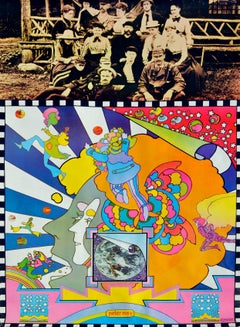
Instant Nutriment #4, 1969 - Modern Pop Art Psychedelic Print
By Peter Max
Located in Soquel, CA
Instant Nutriment #4, 1969 - Modern Pop Art Psychedelic Print
A vintage psychedelic print, Instant Nutriment #4, 1969 by Peter Max (German, b. 1937). Unframed. Shipped Rolled in tube. Some edge wear to paper. Image: 36"H x 24"W
One of the most famous of all living artist's, Peter Max is a pop culture icon. His bold colors, uplifting images and an uncommon artistic diversity have touched almost every phase of American culture and has inspired many generations. Peter Max has painted for six U.S. Presidents and his art is on display in Presidential Libraries and in U.S. Embassies. Max has painted our Lady Liberty annually since America's Bicentennial and in 2000 a collage of his Liberties adorned over 145 million Verizon phone books. Max has been named an official artist of the 2006 U.S. Olympic Team at the Winter Olympics in Turin, Italy. He has also been Official Artist of 5 Super Bowls, World Cup USA, The World Series, The U.S. Open, The Indy 500, The NYC Marathon...
Category
Pop Art 1960s Figurative Prints
Materials
Paper, Ink, Lithograph
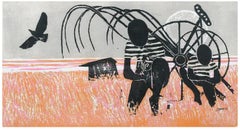
Harvest #2
Located in New York, NY
Color woodcut. Signed by the artist in pencil, lower right. Titled "Harvest 2" in pencil, lower center. Numbered "2nd 5/12 Special Edition" in pencil, lower left.
Framed dimensi...
Category
Modern 1960s Figurative Prints
Materials
Woodcut, Color
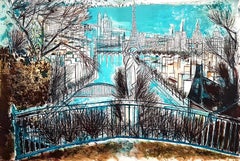
Mac-Avoy, Panorama de Paris, Au Temps de Paris Seine (after)
Located in Southampton, NY
Lithograph on grand vélin des Papeteries de Lana paper. Unsigned and unnumbered, as issued. Good condition, with centerfold, as issued. Notes: From the folio, Au Temps de Paris Seine...
Category
Modern 1960s Figurative Prints
Materials
Lithograph
$796 Sale Price
55% Off
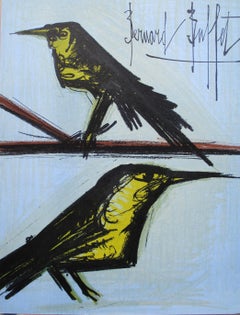
Buffet, Les deux oiseaux, Lithographs 1952-1966 (after)
Located in Fairfield, CT
Medium: Lithograph on vélin Acropole Papeteries de Renage paper.
Year: 1967
Paper Size: 12.25 x 9.5 inches
Inscription: Signed in the plate and unnumbered, as issued
Notes: From the ...
Category
Expressionist 1960s Figurative Prints
Materials
Lithograph
$716 Sale Price
20% Off
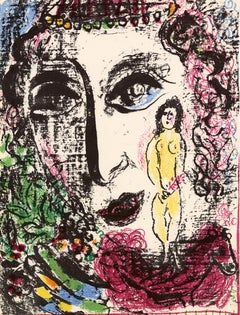
L
Apparition au Cirque (Apparition at the Circus)
By Marc Chagall
Located in Milwaukee, WI
Framed 26 x 22 in
No. 392 in the Catalogue Raisonne of Chagall's lithographs
This lithograph came from "The Lithographs of Chagall: Volume II" by Fernand Mourlot and Marc Chagall....
Category
1960s Figurative Prints
Materials
Lithograph
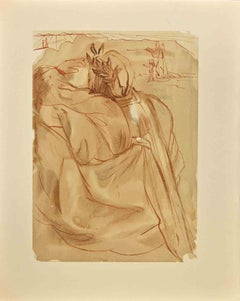
Dante
s Repetance - Plate n. 30 Purgatory - WoodcutPrint - 1963
Located in Roma, IT
Dante's Repetance from the Series "The Divine Comedy" - Plate n. 30 Purgatory is a woodcut print realized in 1963 for a series illustrating the Medieval poem of the "Divine Comedy" ...
Category
Surrealist 1960s Figurative Prints
Materials
Woodcut
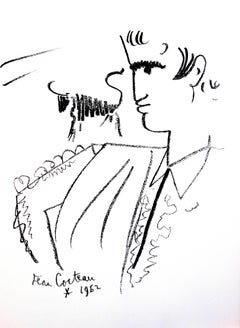
Jean Cocteau - Portrait - Original Lithograph
By Jean Cocteau
Located in Collonge Bellerive, Geneve, CH
Original Lithograph by Jean Cocteau
Title: Taureaux
Signed in the plate
Dimensions: 40 x 30 cm
Edition: 200
Luxury print edition from the portfolio of Trinckvel
1965
Jean Cocteau
W...
Category
Modern 1960s Figurative Prints
Materials
Lithograph
Composition - Print by Renzo Vespignani - 1960s
Located in Roma, IT
Composition is a phototype print reproducing drawing by Renzo Vespignani of the 1960s
Signed on the plate lower right.
The artwork is depicted through strong strokes and perfect ha...
Category
Modern 1960s Figurative Prints
Materials
Photogravure
$166 Sale Price
30% Off
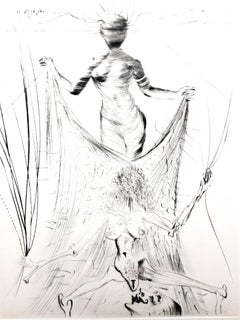
Salvador Dali - Woman Holding a Veil - Original Stamp-Signed Etching
Located in Collonge Bellerive, Geneve, CH
Salvador Dali - Woman Holding a Veil - Original Stamp-Signed Etching
Stamp signed by Dali
Edition of 294 copies.
Edition number : 7
Paper : Arches vellum.
Dimensions : 16x12".
Cat...
Category
Surrealist 1960s Figurative Prints
Materials
Etching
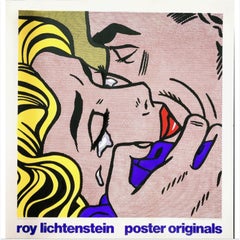
Kiss By Roy Lichtenstein
Located in Dubai, Dubai
Kiss
By Roy Lichtenstein
Roy Lichtenstein was a prominent American pop artist known for his bold, comic strip-inspired paintings. Emerging in the 1960s, his work featured bright co...
Category
Contemporary 1960s Figurative Prints
Materials
Paper, Screen
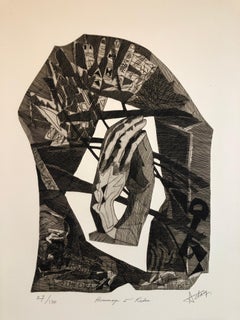
Surrealist Carborundum Etching, Homage a Rodin
Located in Surfside, FL
This is from a portfolio Hommage A Rodin. It included a lithograph by Henry Moore, Ossip Zadkine, Berto Lardera, an etching by Robert Couturier and an etching...
Category
Surrealist 1960s Figurative Prints
Materials
Etching
Dufy, Composition, Les Côtes Normandes (after)
By Raoul Dufy
Located in Southampton, NY
Lithograph on grand vélin d'Arches spécial paper. Unsigned and unnumbered, as issued. Good condition with centerfold, as issued. Notes: From the folio, Les Côtes Normandes 1961. Publ...
Category
Modern 1960s Figurative Prints
Materials
Lithograph
$1,516 Sale Price
20% Off
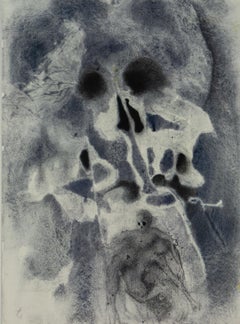
Losias Sepultus in Mausoleo Patrum from Bibla Sacra by Salvador Dali
Located in Paonia, CO
Losias Sepultus in Mausoleo Patrum ( Josiah buried in the Mausoleum of his Father ) is a colored lithograph from the original gouache on heavy rag paper from Salvador Dali’...
Category
Surrealist 1960s Figurative Prints
Materials
Lithograph
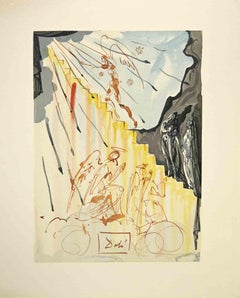
The Celestial Scale - Woodcut - 1963
Located in Roma, IT
The Celestial Scale - "The Divine Comedy" - Song 21 - Paradise is a woodcut print realized in 1963 for a series illustrating the Medieval poem of the "Divine Comedy" by Dante Aligh...
Category
Surrealist 1960s Figurative Prints
Materials
Woodcut
$347 Sale Price
35% Off
"Gothic Gables" New York Graphic Society 1966, Printed in Switzerland
Located in Chesterfield, MI
"Gothic Gables" Poster/Print by LYONEL FEININGER (American-German, 1871-1956). The print measures approximately 20 x 27 inches and is unframed. Published by New York Graphic Society 1966. Printed in Switzerland...
Category
1960s Figurative Prints
Materials
Lithograph
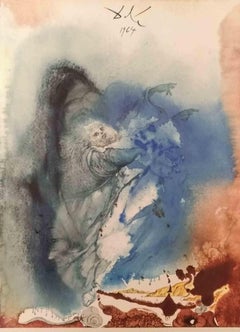
The Creation of Earth and Sea Animals - Lithograph - 1964
Located in Roma, IT
The Creation of Earthly and Sea Animals is an artwork realized by Salvador Dalí in 1964.
It is part of Biblia Sacra vulgatæ editionis published by Rizzoli-Mediolani between 1967 an...
Category
Surrealist 1960s Figurative Prints
Materials
Lithograph
$463 Sale Price
35% Off
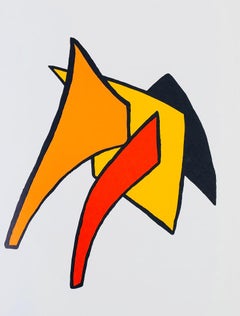
Alexander Calder lithograph (derrière le miroir)
Located in NEW YORK, NY
Alexander Calder Lithograph c. 1964 from Derrière le miroir:
Lithograph in colors; 15 x 11 inches.
Very good overall vintage condition; well-preserved.
Unsigned from an edition of unknown.
From: Derrière le miroir. Printed in France.
Derrière le miroir:
In October 1945 the French art dealer Aimé Maeght opens his art gallery at 13 Rue de Téhéran in Paris. His beginning coincides with the end of Second World War and the return of a number of exiled artists back to France. The publication was created in October 1946 (n°1) and published without interruption until 1982 (n°253).
Its original articles and illustrations (mainly original color lithographs by the gallery artists) who were famous at the time. The lithographic publication covered only the artists exhibited by Maeght gallery either through personal or group exhibitions.
Among them were, Pierre Alechinsky, Francis Bacon, Alexander Calder, Marc Chagall, Eduardo Chillida, Alberto Giacometti, Vassily Kandinsky, Ellsworth Kelly, Fernand Léger, Henri Matisse, Joan Miró, Saul Steinberg and Antoni Tapies.
_
Alexander Calder was an American artist best known for his invention of the kinetic sculptures known as mobiles. Calder also produced a variety of two-dimensional artworks including lithographs, paintings, and tapestries as seen in his Butterfly (1970). “My whole theory about art is the disparity that exists between form, masses, and movement,” the artist once said. Born on August 22, 1898 in Lawnton, PA, Calder turned to art in the 1920s, studying drawing and painting under George Luks and Boardman Robinson at the Art Students League in New York.
Calder moved to Paris to continue his studies in 1926, where he was introduced to the European avant-garde through performances of his Cirque Calder (1926–1931). “I was very fond of the spatial relations,” he said of his interest in the circus. “The whole thing of the—the vast space—I’ve always loved it.” With these performances, along with his wire sculptures, Calder attracted the attention of such notable figures as Marcel Duchamp, Jean Arp, and Fernand Léger. Notably, it was his friend Duchamp that coined the term mobile—a pun in French meaning both “motion” and “motive”—during a visit to Calder’s Paris studio in 1931.
His earliest mobiles moved by motors, but Calder soon abandoned these mechanics and designed pieces that moved by air currents or human interaction. Over the course of seven decades, along with his mobiles, he also produced paintings, monumental outdoor sculptures, works on paper, domestic objects, and jewelry.
The artist lived in both Roxbury, CT, and Saché, France, before his death on November 11, 1976 in New York, NY. Today, his works are held in the collections of The Museum of Modern Art in New York, the National Gallery of Art in Washington, D.C., the Whitney Museum of American Art, New York, the Art Institute of Chicago, and the Tate Gallery in London. Related Categories Calder prints. Mid Century Modern. 1970s. Miro. Chagall. Calder lithograph. Figurative art. Alexander Calder Derrière...
Category
Contemporary 1960s Figurative Prints
Materials
Lithograph
$200 Sale Price
20% Off
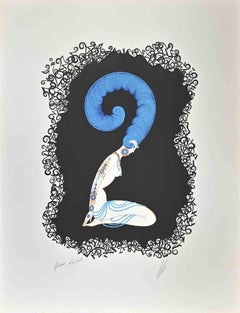
Le 2 - Lithograph by Erté - 1968
By Erté
Located in Roma, IT
Le 2 is a contemporary artwork realized in 1970s by Erté (Romain de Tirtoff).
Mixed colored lithograph on paper.
The artwork is from the Series "Les Chiffres"
Hand signed on the l...
Category
Contemporary 1960s Figurative Prints
Materials
Lithograph
Pablo Picasso - Painter and His Model - Original Lithograph
Located in Collonge Bellerive, Geneve, CH
Pablo Picasso - Original Lithograph
Title: Painter and his Model
Edition of 180
From the illustrated book "Regards sur Paris" (Paris: André Sauret, 1962)
Pulled from the folio number...
Category
Modern 1960s Figurative Prints
Materials
Lithograph

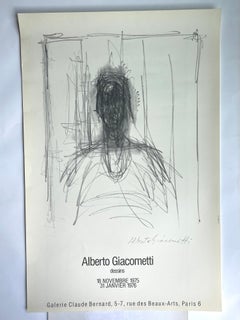
Alberto Giacometti, rare vintage original poster
Located in Saint Ouen, FR
Rare vintage original poster published by the famous Paris Gallery Claude Bernard pour an historic exhibition of Jean Dubuffet in the sixties (1964) a...
Category
Expressionist 1960s Figurative Prints
Materials
Paper
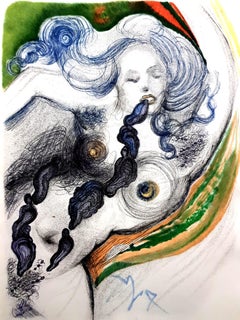
Salvador Dali - Oysters and Nude
Located in Collonge Bellerive, Geneve, CH
Salvador Dali - Oysters and Nude - Original Etching
Dimensions: 38 x 28 cm
Edition: 390
1967
On Rives Vellum
References : Field 67-4 (p. 32-33) / Michler & Lopsinger 174 to 187.
Category
Surrealist 1960s Figurative Prints
Materials
Etching
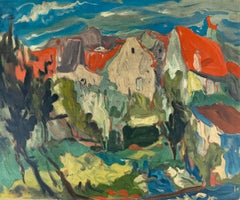
Chaim Soutine, Landscape at Cagnes, from Soutine, I, 1966 (after)
Located in Southampton, NY
This exquisite lithograph after Chaim Soutine (1893–1943), titled Paysage a Cagnes (Landscape at Cagnes), from the folio Soutine, I, Collection Pierre Levy, 1966, originates from the...
Category
Modern 1960s Figurative Prints
Materials
Lithograph
$716 Sale Price
20% Off
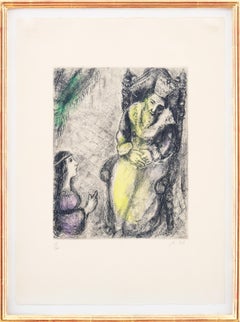
Marc Chagall - Bath-Sheba at the Feet of David - Original Handsigned Etching
By Marc Chagall
Located in Collonge Bellerive, Geneve, CH
Marc Chagall - Bath-Sheba at the Feet of David - Original Handsigned Etching
1958
Printed by Tériade
Dimensions: 54 x 39 cm
Handsigned and numbered
handcolored
Edition: 100
Reference: Cramer 30.
Etching with hand-coloring, circa 1930, initialled in pencil, numbered 75/100 (there were also twenty hors-commerce copies) , published 1958 by Tériade, Paris, on Arches wove paper
Marc Chagall (born in 1887)
Marc Chagall was born in Belarus in 1887 and developed an early interest in art. After studying painting, in 1907 he left Russia for Paris, where he lived in an artist colony on the city’s outskirts. Fusing his own personal, dreamlike imagery with hints of the fauvism and cubism popular in France at the time, Chagall created his most lasting work—including I and the Village (1911)—some of which would be featured in the Salon des Indépendants exhibitions. After returning to Vitebsk for a visit in 1914, the outbreak of WWI trapped Chagall in Russia. He returned to France in 1923 but was forced to flee the country and Nazi persecution during WWII. Finding asylum in the U.S., Chagall became involved in set and costume design before returning to France in 1948. In his later years, he experimented with new art forms and was commissioned to produce numerous large-scale works. Chagall died in St.-Paul-de-Vence in 1985.
The Village
Marc Chagall was born in a small Hassidic community on the outskirts of Vitebsk, Belarus, on July 7, 1887. His father was a fishmonger, and his mother ran a small sundries shop in the village. As a child, Chagall attended the Jewish elementary school, where he studied Hebrew and the Bible, before later attending the Russian public school. He began to learn the fundamentals of drawing during this time, but perhaps more importantly, he absorbed the world around him, storing away the imagery and themes that would feature largely in most of his later work.
At age 19 Chagall enrolled at a private, all-Jewish art school and began his formal education in painting, studying briefly with portrait artist Yehuda Pen. However, he left the school after several months, moving to St. Petersburg in 1907 to study at the Imperial Society for the Protection of Fine Arts. The following year, he enrolled at the Svanseva School, studying with set designer Léon Bakst, whose work had been featured in Sergei Diaghilev's Ballets Russes. This early experience would prove important to Chagall’s later career as well.
Despite this formal instruction, and the widespread popularity of realism in Russia at the time, Chagall was already establishing his own personal style, which featured a more dreamlike unreality and the people, places and imagery that were close to his heart. Some examples from this period are his Window Vitebsk (1908) and My Fianceé with Black Gloves (1909), which pictured Bella Rosenfeld, to whom he had recently become engaged.
The Beehive
Despite his romance with Bella, in 1911 an allowance from Russian parliament member and art patron Maxim Binaver enabled Chagall to move to Paris, France. After settling briefly in the Montparnasse neighborhood, Chagall moved further afield to an artist colony known as La Ruche (“The Beehive”), where he began to work side by side with abstract painters such as Amedeo Modigliani and Fernand Léger as well as the avant-garde poet Guillaume Apollinaire. At their urging, and under the influence of the wildly popular fauvism and cubism, Chagall lightened his palette and pushed his style ever further from reality. I and the Village (1911) and Homage to Apollinaire (1912) are among his early Parisian works, widely considered to be his most successful and representative period.
Though his work stood stylistically apart from his cubist contemporaries, from 1912 to 1914 Chagall exhibited several paintings at the annual Salon des Indépendants exhibition, where works by the likes of Juan Gris, Marcel Duchamp and Robert Delaunay were causing a stir in the Paris art world. Chagall’s popularity began to spread beyond La Ruche, and in May 1914 he traveled to Berlin to help organize his first solo exhibition, at Der Sturm Gallery. Chagall remained in the city until the highly acclaimed show opened that June. He then returned to Vitebsk, unaware of the fateful events to come.
War, Peace and Revolution
In August 1914 the outbreak of World War I precluded Chagall’s plans to return to Paris. The conflict did little to stem the flow of his creative output, however, instead merely giving him direct access to the childhood scenes so essential to his work, as seen in paintings such as Jew in Green (1914) and Over Vitebsk (1914). His paintings from this period also occasionally featured images of the war’s impact on the region, as with Wounded Soldier (1914) and Marching (1915). But despite the hardships of life during wartime, this would also prove to be a joyful period for Chagall. In July 1915 he married Bella, and she gave birth to a daughter, Ida, the following year. Their appearance in works such as Birthday (1915), Bella and Ida by the Window (1917) and several of his “Lovers” paintings give a glimpse of the island of domestic bliss that was Chagall’s amidst the chaos.
To avoid military service and stay with his new family, Chagall took a position as a clerk in the Ministry of War Economy in St. Petersburg. While there he began work on his autobiography and also immersed himself in the local art scene, befriending novelist Boris Pasternak, among others. He also exhibited his work in the city and soon gained considerable recognition. That notoriety would prove important in the aftermath of the 1917 Russian Revolution when he was appointed as the Commissar of Fine Arts in Vitebsk. In his new post, Chagall undertook various projects in the region, including the 1919 founding of the Academy of the Arts. Despite these endeavors, differences among his colleagues eventually disillusioned Chagall. In 1920 he relinquished his position and moved his family to Moscow, the post-revolution capital of Russia.
In Moscow, Chagall was soon commissioned to create sets and costumes for various productions at the Moscow State Yiddish Theater, where he would paint a series of murals titled Introduction to the Jewish Theater as well. In 1921, Chagall also found work as a teacher at a school for war orphans. By 1922, however, Chagall found that his art had fallen out of favor, and seeking new horizons he left Russia for good.
Flight
After a brief stay in Berlin, where he unsuccessfully sought to recover the work exhibited at Der Sturm before the war, Chagall moved his family to Paris in September 1923. Shortly after their arrival, he was commissioned by art dealer and publisher Ambroise Vollard to produce a series of etchings for a new edition of Nikolai Gogol's 1842 novel Dead Souls. Two years later Chagall began work on an illustrated edition of Jean de la Fontaine’s Fables, and in 1930 he created etchings for an illustrated edition of the Old Testament, for which he traveled to Palestine to conduct research.
Chagall’s work during this period brought him new success as an artist and enabled him to travel throughout Europe in the 1930s. He also published his autobiography, My Life (1931), and in 1933 received a retrospective at the Kunsthalle in Basel, Switzerland. But at the same time that Chagall’s popularity was spreading, so, too, was the threat of Fascism and Nazism. Singled out during the cultural "cleansing" undertaken by the Nazis in Germany, Chagall’s work was ordered removed from museums throughout the country. Several pieces were subsequently burned, and others were featured in a 1937 exhibition of “degenerate art” held in Munich. Chagall’s angst regarding these troubling events and the persecution of Jews in general can be seen in his 1938 painting White Crucifixion.
With the eruption of World War II, Chagall and his family moved to the Loire region before moving farther south to Marseilles following the invasion of France. They found a more certain refuge when, in 1941, Chagall’s name was added by the director of the Museum of Modern Art (MOMA) in New York City to a list of artists and intellectuals deemed most at risk from the Nazis’ anti-Jewish campaign. Chagall and his family would be among the more than 2,000 who received visas and escaped this way.
Haunted Harbors
Arriving in New York City in June 1941, Chagall discovered that he was already a well-known artist there and, despite a language barrier, soon became a part of the exiled European artist community. The following year he was commissioned by choreographer Léonide Massine to design sets and costumes for the ballet Aleko, based on Alexander Pushkin’s “The Gypsies” and set to the music of Pyotr Ilyich Tchaikovsky.
But even as he settled into the safety of his temporary home, Chagall’s thoughts were frequently consumed by the fate befalling the Jews of Europe and the destruction of Russia, as paintings such as The Yellow Crucifixion...
Category
Surrealist 1960s Figurative Prints
Materials
Etching
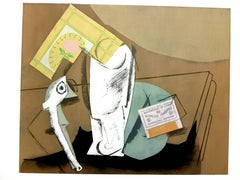
After Pablo Picasso - Cubist Still Life - Pochoir
Located in Collonge Bellerive, Geneve, CH
After Pablo Picasso - Cubist Still Life - Pochoir
Dimensions: 48.5 x 36 cm
1962
Edition of 260
Daniel Jacomet, LEDA, Editions d'Art
Pablo Picasso
Picasso is not just a man and his ...
Category
Modern 1960s Figurative Prints
Materials
Lithograph
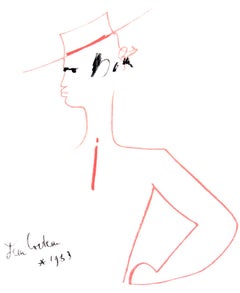
Jean Cocteau, He, from Bulls, 1965 (after)
By Jean Cocteau
Located in Southampton, NY
This exquisite lithograph after Jean Cocteau (1889–1963), titled El (He), from the folio Taureaux, Lithographies de Jean Cocteau (Bulls, Lithographs by Jean Cocteau), originates from...
Category
Modern 1960s Figurative Prints
Materials
Lithograph
$796 Sale Price
20% Off
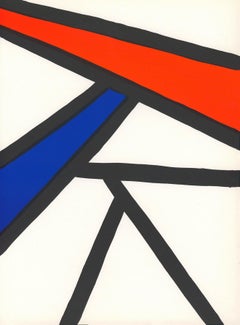
Alexander Calder lithograph (derrière le miroir)
Located in NEW YORK, NY
Alexander Calder Lithograph c. 1967 from Derrière le miroir:
Lithograph in colors; 15 x 11 inches.
Very good overall vintage condition; well-preseved.
Unsigned from an edition of u...
Category
Abstract 1960s Figurative Prints
Materials
Lithograph, Offset
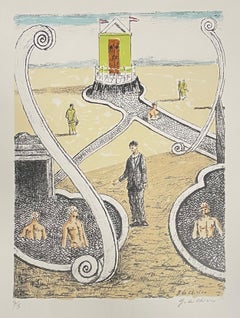
L
Ospite dei Bagnanti Misteriosi - Lithograph by G. De Chirico - 1969
Located in Roma, IT
Edition of 90 specimens in arab numbers and 10 specimens in roman numbers.
Edition IV/X.
Hand signed by the artist with pencil.
Ref. Cat. Raisonné "G. de Chirico: Catalogo dell'Ope...
Category
Surrealist 1960s Figurative Prints
Materials
Lithograph
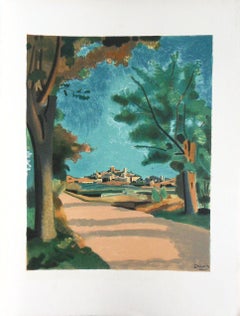
Near Saint Paul de Vence - Stone lithograph - 1965
By André Derain
Located in Paris, IDF
André DERAIN
Near Saint Paul de Vence
Original lithograph in colors (printed in Atelier Lucien Detruit)
Printed signature in the plate
On Arches vellum 38 x 28 cm (c. 15 x 11 in)
I...
Category
Modern 1960s Figurative Prints
Materials
Lithograph
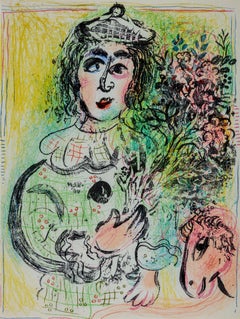
Le Clown fleuri (The Clown with flowers)
By Marc Chagall
Located in Milwaukee, WI
Framed 24 x 21 in
No. 399 in the Catalogue Raisonne of Chagall's lithographs
This lithograph came from "The Lithographs of Chagall: Volume II" by Fernand Mourlot and Marc Chagall....
Category
1960s Figurative Prints
Materials
Lithograph
$5,046 Sale Price
20% Off
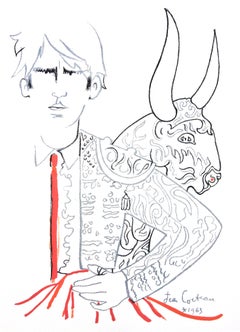
Jean Cocteau, The Suit of Light, from Bulls, 1965 (after)
By Jean Cocteau
Located in Southampton, NY
This exquisite lithograph after Jean Cocteau (1889–1963), titled L'habit de lumiere (The Suit of Light), from the folio Taureaux, Lithographies de Jean Cocteau (Bulls, Lithographs by...
Category
Modern 1960s Figurative Prints
Materials
Lithograph
$796 Sale Price
20% Off
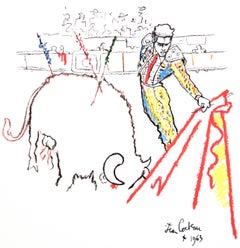
Jean Cocteau, Veronica, from Bulls, 1965 (after)
By Jean Cocteau
Located in Southampton, NY
This exquisite lithograph after Jean Cocteau (1889–1963), titled Veronica (Veronica), from the folio Taureaux, Lithographies de Jean Cocteau (Bulls, Lithographs by Jean Cocteau), ori...
Category
Modern 1960s Figurative Prints
Materials
Lithograph
$796 Sale Price
20% Off
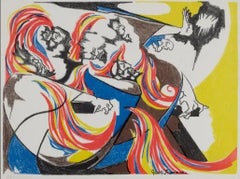
The Pentecost
Located in New York, NY
A very good impression of this color lithograph. Printer's proof, annotated P.P. 1 from the unknown edition size. Printed by United Church Press, Boston/Philadelphia. Published by Un...
Category
Modern 1960s Figurative Prints
Materials
Color, Lithograph
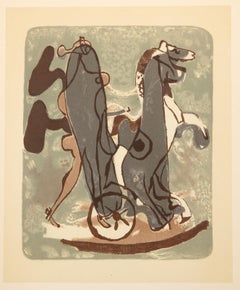
Athênê, Modern Offset Lithograph by Georges Braque
Located in Long Island City, NY
Georges Braque, French (1882 - 1963) - Athene, Year: circa 1963, Medium: Offset Lithograph, Image Size: 9 x 7.25 inches, Size: 13.5 x 11 in. (34.29 x 27.94 cm)
Category
Modern 1960s Figurative Prints
Materials
Lithograph
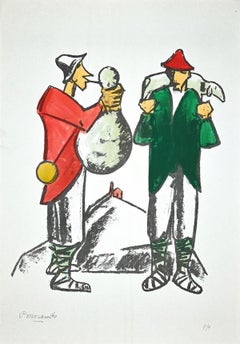
Shepherd - Lithograph by Pietro Morando - 1960s
Located in Roma, IT
Shepherd is an original artwork realized by Italian artist Pietro Morando (Alessandria 1889- 1980).
Hand-colored lithograph.
Hand-signed on the lower left in pencil.
Good conditio...
Category
Modern 1960s Figurative Prints
Materials
Lithograph
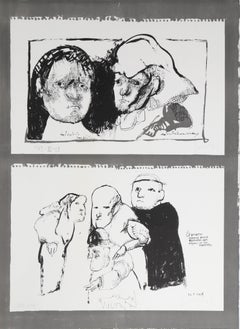
Jose Luis Cuevas, "El Siniestro, " Etching, 1968
Located in Long Island City, NY
This lithograph was created by Mexican artist Jose Luis Cuevas. Known for his aggressive attitude and strong beliefs, Cuevas' work is characterized by...
Category
Conceptual 1960s Figurative Prints
Materials
Lithograph
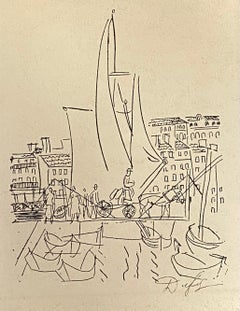
“Untitled”
By Jean Dufy
Located in Southampton, NY
Original lithographic print done as a gravure using black ink attributed to the hand of the well known French artist, Jean Dufy. Signed in the plate “Dufy” lower right. Circa 1960. Condition is very good. “Pierre Hautot...
Category
Post-Modern 1960s Figurative Prints
Materials
Archival Paper, Lithograph
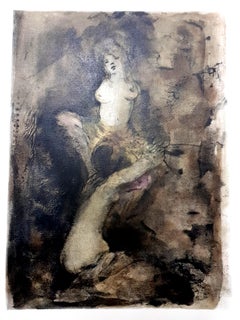
$236 Sale Price
20% Off
Leonor Fini - Pleasure - Original Lithograph
By Leonor Fini
Located in Collonge Bellerive, Geneve, CH
Leonor Fini - Pleasure - Original Lithograph
The Flowers of Evil
1964
Conditions: excellent
Edition: 500
Dimensions: 46 x 34 cm
Editions: Le Cercle du Livre Précieux, Paris
Unsigne...
Category
Modern 1960s Figurative Prints
Materials
Lithograph
Marc Chagall - Original Lithograph
By Marc Chagall
Located in Collonge Bellerive, Geneve, CH
Marc Chagall
Original Lithograph
1963
Dimensions: 32 x 24 cm
Reference: Chagall Lithographe 1957-1962. VOLUME II.
Condition : Excellent
Marc Chagall (born in 1887)
Marc Chagall was born in Belarus in 1887 and developed an early interest in art. After studying painting, in 1907 he left Russia for Paris, where he lived in an artist colony on the city’s outskirts. Fusing his own personal, dreamlike imagery with hints of the fauvism and cubism popular in France at the time, Chagall created his most lasting work—including I and the Village (1911)—some of which would be featured in the Salon des Indépendants exhibitions. After returning to Vitebsk for a visit in 1914, the outbreak of WWI trapped Chagall in Russia. He returned to France in 1923 but was forced to flee the country and Nazi persecution during WWII. Finding asylum in the U.S., Chagall became involved in set and costume design before returning to France in 1948. In his later years, he experimented with new art forms and was commissioned to produce numerous large-scale works. Chagall died in St.-Paul-de-Vence in 1985.
The Village
Marc Chagall was born in a small Hassidic community on the outskirts of Vitebsk, Belarus, on July 7, 1887. His father was a fishmonger, and his mother ran a small sundries shop in the village. As a child, Chagall attended the Jewish elementary school, where he studied Hebrew and the Bible, before later attending the Russian public school. He began to learn the fundamentals of drawing during this time, but perhaps more importantly, he absorbed the world around him, storing away the imagery and themes that would feature largely in most of his later work.
At age 19 Chagall enrolled at a private, all-Jewish art school and began his formal education in painting, studying briefly with portrait artist Yehuda Pen. However, he left the school after several months, moving to St. Petersburg in 1907 to study at the Imperial Society for the Protection of Fine Arts. The following year, he enrolled at the Svanseva School, studying with set designer Léon Bakst, whose work had been featured in Sergei Diaghilev's Ballets Russes. This early experience would prove important to Chagall’s later career as well.
Despite this formal instruction, and the widespread popularity of realism in Russia at the time, Chagall was already establishing his own personal style, which featured a more dreamlike unreality and the people, places and imagery that were close to his heart. Some examples from this period are his Window Vitebsk (1908) and My Fianceé with Black Gloves (1909), which pictured Bella Rosenfeld, to whom he had recently become engaged.
The Beehive
Despite his romance with Bella, in 1911 an allowance from Russian parliament member and art patron Maxim Binaver enabled Chagall to move to Paris, France. After settling briefly in the Montparnasse neighborhood, Chagall moved further afield to an artist colony known as La Ruche (“The Beehive”), where he began to work side by side with abstract painters such as Amedeo Modigliani and Fernand Léger as well as the avant-garde poet Guillaume Apollinaire. At their urging, and under the influence of the wildly popular fauvism and cubism, Chagall lightened his palette and pushed his style ever further from reality. I and the Village (1911) and Homage to Apollinaire (1912) are among his early Parisian works, widely considered to be his most successful and representative period.
Though his work stood stylistically apart from his cubist contemporaries, from 1912 to 1914 Chagall exhibited several paintings at the annual Salon des Indépendants exhibition, where works by the likes of Juan Gris, Marcel Duchamp and Robert Delaunay were causing a stir in the Paris art world. Chagall’s popularity began to spread beyond La Ruche, and in May 1914 he traveled to Berlin to help organize his first solo exhibition, at Der Sturm Gallery. Chagall remained in the city until the highly acclaimed show opened that June. He then returned to Vitebsk, unaware of the fateful events to come.
War, Peace and Revolution
In August 1914 the outbreak of World War I precluded Chagall’s plans to return to Paris. The conflict did little to stem the flow of his creative output, however, instead merely giving him direct access to the childhood scenes so essential to his work, as seen in paintings such as Jew in Green (1914) and Over Vitebsk (1914). His paintings from this period also occasionally featured images of the war’s impact on the region, as with Wounded Soldier (1914) and Marching (1915). But despite the hardships of life during wartime, this would also prove to be a joyful period for Chagall. In July 1915 he married Bella, and she gave birth to a daughter, Ida, the following year. Their appearance in works such as Birthday (1915), Bella and Ida by the Window (1917) and several of his “Lovers” paintings give a glimpse of the island of domestic bliss that was Chagall’s amidst the chaos.
To avoid military service and stay with his new family, Chagall took a position as a clerk in the Ministry of War Economy in St. Petersburg. While there he began work on his autobiography and also immersed himself in the local art scene, befriending novelist Boris Pasternak, among others. He also exhibited his work in the city and soon gained considerable recognition. That notoriety would prove important in the aftermath of the 1917 Russian Revolution when he was appointed as the Commissar of Fine Arts in Vitebsk. In his new post, Chagall undertook various projects in the region, including the 1919 founding of the Academy of the Arts. Despite these endeavors, differences among his colleagues eventually disillusioned Chagall. In 1920 he relinquished his position and moved his family to Moscow, the post-revolution capital of Russia.
In Moscow, Chagall was soon commissioned to create sets and costumes for various productions at the Moscow State Yiddish Theater...
Category
Surrealist 1960s Figurative Prints
Materials
Lithograph
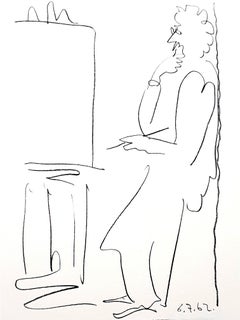
Pablo Picasso - The Painter - Lithograph
Located in Collonge Bellerive, Geneve, CH
Pablo Picasso - Lithograph
Title: Painter and his Model
From the illustrated book "Regards sur Paris" (Paris: André Sauret, 1962)
Pulled from the folio numbered 85 from the edition o...
Category
Modern 1960s Figurative Prints
Materials
Lithograph
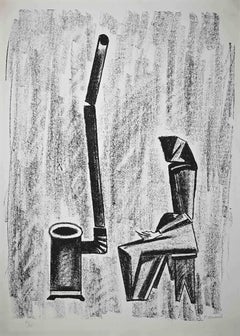
Heating - Original Lithograph by Pietro Morando - 1960s
Located in Roma, IT
Heating is an original artwork realized by Italian artist Pietro Morando (Alessandria 1889- 1980).
Original Lithograph.
Hand-signed on the lower right in pencil.
Numbered on the l...
Category
Modern 1960s Figurative Prints
Materials
Lithograph
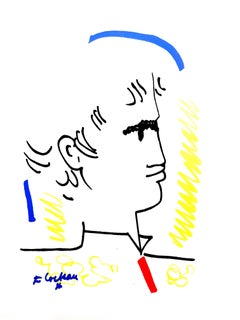
Jean Cocteau - Colorful Portrait - Original Lithograph
By Jean Cocteau
Located in Collonge Bellerive, Geneve, CH
Original Lithograph by Jean Cocteau
Title: Taureaux
Dimensions: 40 x 30 cm
Edition: 200
Luxury print edition from the portfolio of Trinckvel
1965
Jean Cocteau
Writer, artist and fi...
Category
Modern 1960s Figurative Prints
Materials
Lithograph
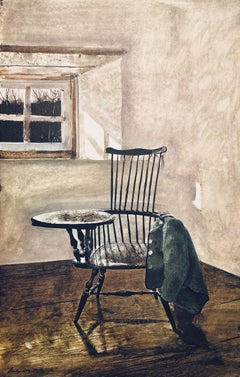
Andrew Wyeth, Early October, from The Four Seasons (after)
By Andrew Wyeth
Located in Southampton, NY
This exquisite lithograph after Andrew Wyeth (1917–2009), titled Early October, originates from the distinguished 1962 folio The Four Seasons: Paintings and Drawings by Andrew Wyeth....
Category
American Realist 1960s Figurative Prints
Materials
Lithograph
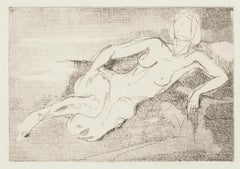
$716 Sale Price
20% Off
Nude - Etching - 1960s
Located in Roma, IT
Nude is an original etching realized by an Anonymous artist in the 1960s.
Sheet dimension: 32.5 x 25 cm; Image dimensions: 10 x 14.5 cm.
Very good conditions.
The artwork represe...
Category
1960s Figurative Prints
Materials
Etching, Aquatint
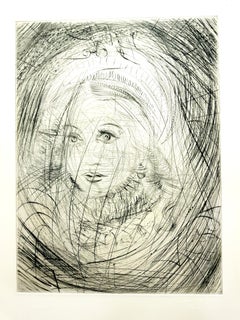
$232 Sale Price
30% Off
Salvador Dali - Marguerite - Original Etching
Located in Collonge Bellerive, Geneve, CH
Salvador Dali - Marguerite - Original Etching from "Faust" suite
Stamped signature, as issued
From the standard edition of 731
Edition number 7
Dimensions: 38,5 x 28,5 cm
Edition Arg...
Category
Surrealist 1960s Figurative Prints
Materials
Etching
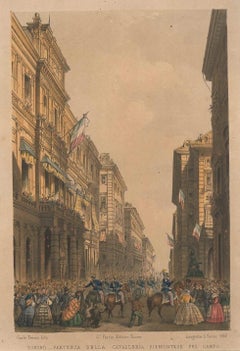
Turin - Departure of the Cavalry - 1860
By Carlo Perrin
Located in Roma, IT
In the lower margin "Carlo Perrin Lito , C. Perrin Editori Torino, Litografia C. Perin, 1860." In very good conditions except some stains, also stains overleaf.
Interesting colored lithograph which describes the cavalry's departure, the regiment "Cavalleria Piemonte" which was one of the most antique...
Category
1960s Figurative Prints
Materials
Lithograph
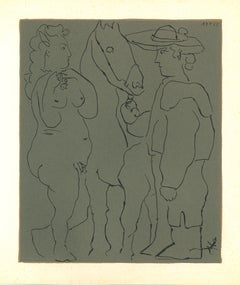
Picador, Femme et Cheval - Linocut After Pablo Picasso - 1962
Located in Roma, IT
Picador, Femme et Cheval is a beautiful contemporary artwork realized after Pablo Picasso (1881-1973).
Color linocut realized in smaller size after a linocut by Pablo Picasso of 195...
Category
Cubist 1960s Figurative Prints
Materials
Linocut
$415 Sale Price
30% Off
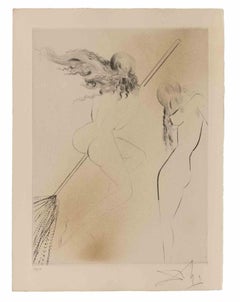
Sorcière au Balai - Etching - 1960s
Located in Roma, IT
Etching on chamois-colored laid paper, realized by Dalì in 1968/69.
Plate from "Faust (La Nuit de Walpurgis), published by Argillet, Paris.
Edition of 49/150, hand colored.
Hand s...
Category
Surrealist 1960s Figurative Prints
Materials
Etching
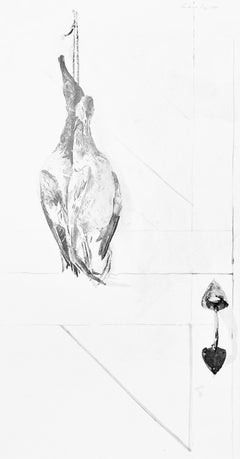
Andrew Wyeth, Canvasbacks, The Four Seasons (after)
By Andrew Wyeth
Located in Southampton, NY
This exquisite lithograph after Andrew Wyeth (1917–2009), titled Canvasbacks, originates from the distinguished 1962 folio The Four Seasons: Paintings and Drawings by Andrew Wyeth. Published and printed by Art in America Company, Inc., New York, the edition reflects Wyeth’s masterful study of nature and mood through his dry-brush technique. The composition captures the serene grace of waterfowl, rendered with Wyeth’s characteristic precision and quiet introspection that bridge realism and emotional depth.
Executed on velin paper, this lithograph measures 17 x 13 inches (43.2 x 33 cm). As issued, it is unsigned and unnumbered, representing the folio’s authentic format. The Four Seasons series was conceived by the editors of Art in America in collaboration with Andrew and Betsy Wyeth, who chose the theme to reflect the central role of seasonal transformation in his art. Each image reveals Wyeth’s profound sensitivity to light, time, and atmosphere—his ability to distill the poetry of the natural world into tangible form.
Artwork Details:
Artist: After Andrew Wyeth (1917–2009)
Title: Canvasbacks, from The Four Seasons, Paintings and Drawings by Andrew Wyeth, 1962
Medium: Lithograph on velin paper
Dimensions: 17 x 13 inches (43.2 x 33 cm)
Inscription: Unsigned and unnumbered, as issued
Date: 1962
Publisher: Art in America Company, Inc., New York
Printer: Art in America Company, Inc., New York
Condition: Well preserved, consistent with age and medium
Provenance: From the 1962 folio The Four Seasons, Paintings and Drawings by Andrew Wyeth, published and printed by Art in America Company, Inc., New York
Notes:
Excerpted from the 1962 folio:
"In 1962 the editors of Art in America proposed to Wyeth a portfolio of images of his recent dry-brush drawings. The artist and his wife suggested the theme, 'The Four Seasons,' because of the essential role played in his work by the cycle of the seasons. The drawings were selected by Andrew and Betsy Wyeth from works in the house and studio at Chadds Ford, supplemented by some owned by friends. With a few exceptions they had never been exhibited or reproduced. The plates were made directly from the originals. In these drawings Wyeth's loving concentration on the object is fully revealed. But as always in his work, this concern with the tangible is balanced by sensibility to mood, to the emotion arising from the actual. They are pervaded with a sense of the season—the exact time of year, the hour of the day, the quality of the light. To the truth and subtlety with which he captures these intangible factors, these drawings owe their poignant poetry."
About the Artist:
Andrew Wyeth (1917–2009) was an American visual artist and one of the best-known painters of the mid-20th century. Although he considered himself an abstractionist, Wyeth’s work is characterized by a meticulous realism imbued with psychological depth and atmosphere. He often painted the landscapes and people surrounding his homes in Chadds Ford, Pennsylvania, and Cushing, Maine, creating an intimate record of American rural life. The son of the celebrated illustrator N. C. Wyeth, Andrew trained under his father before developing his own deeply personal visual language inspired by Winslow Homer, Henry David Thoreau, and King Vidor. His wife, Betsy Wyeth, was both his muse and career manager, while his son Jamie Wyeth continued the family’s artistic legacy.
Among Wyeth’s best-known works is Christina’s World (1948), housed in the Museum of Modern Art, New York—a quintessential image of 20th-century American art. His other notable series include The Helga Pictures and his window studies, each reflecting a profound meditation on solitude, memory, and perception. Wyeth was the first painter to receive both the Presidential Medal of Freedom and the Congressional Gold Medal, and was elected to the French Académie des Beaux-Arts in 1980.
In 2022, Andrew Wyeth's painting Day Dream sold for USD 23.29 million at Christie’s New York, setting a world record for the artist.
Andrew Wyeth lithograph...
Category
American Realist 1960s Figurative Prints
Materials
Lithograph
$716 Sale Price
20% Off
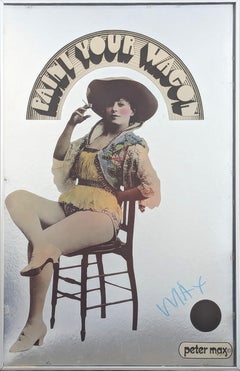
Signed Lithograph on Foil Movie Poster for Musical Western "Paint Your Wagon"
By Peter Max
Located in Houston, TX
Lithograph on foil movie poster for the musical western movie "Paint Your Wagon" designed by Peter Max. These posters were distributed to exhibitors show...
Category
Modern 1960s Figurative Prints
Materials
Foil
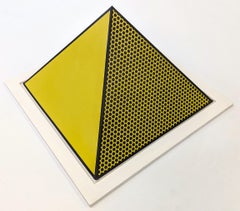
Pyramid (hand signed three dimensional screen print)
Located in Aventura, FL
Screen print in colors on lightweight board folded into a three-dimensional pyramid. Hand signed and numbered on interior edge by Roy Lichtenstein Numbered 41/300 (only approximate...
Category
Pop Art 1960s Figurative Prints
Materials
Paper, Lithograph, Screen
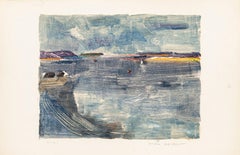
The Sea - Original Lithograph by Denise Bonvallet Philippon
Located in Roma, IT
The Sea is an original contemporary artwork realized by Denise Bonvallet-Philippon in the half of the XX Century by the French artist Denise Bonvallet-Philippon (1906-1994).
Origina...
Category
Modern 1960s Figurative Prints
Materials
Lithograph
Recently Viewed
View AllMore Ways To Browse
Eduardo Roca
Edward B Gay
Edward Hopper Oil Painting
Edward Simmons
Edwin Lord Weeks
Elizabeth Enders
Elizabeth Horning
Emil Holzhauer
England Church Oil Painting
English Deer Painting
English Fox Hunt Painting
English Toy Terrier
Enrique Martinez Celaya
Eric Aho
Eritrea Art
Ernest Chateignon
Erotic Art Animal
Eugene Chigot