Early 20th Century Figurative Prints
to
786
2,415
541
242
76
80
Overall Width
to
Overall Height
to
1,401
265
244
141
125
36
25
11
3
2
1
1
170
102
57
56
43
3,634
7,757
25,013
6,689
285
584
1,429
1,208
1,243
2,179
2,980
5,154
2,938
1,449
3,102
2,360
973
19
2,711
1,469
1,303
1,063
806
795
550
272
202
177
173
162
152
143
125
124
117
82
71
59
1,151
1,100
597
447
365
337
1,253
1,531
1,303
Period: Early 20th Century
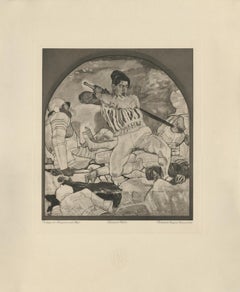
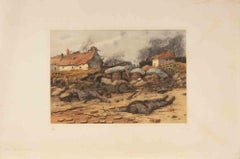
"Retreat from Marignano" set of 3 Copper Plate Prints
Located in Palm Beach, FL
The three prints included in this set are: "Retreat from Marignano", "Retreat from Marignano (left panel)", "Retreat from Marignano (right panel)".
2018 marks the centenary anniversary of Ferdinand Hodler’s death. In that 100 years time, the art world’s esteem of this important artist has proved fickle. It has shifted from extolling his artistic merits during his lifetime to showing something of a feigned disdain- more reflective of the world political order than a true change of heart for Hodler’s work. After years of Hodler being all but a footnote in the annals of art history and generally ignored, finally, the pendulum has righted itself once again. Recent retrospective exhibitions in Europe and the United States have indicated not only a joyful rediscovery of Hodler’s art but a firm conviction that his work and world view hold particular relevance today. DAS WERK FERDINAND HODLERS is not only a collection of printed work reflecting the best of all of his painted work created up to 1914 just before the outbreak of World War I, the portfolio itself is an encapsulation of Hodler’s ethos, Parallelisme.
Hodler developed his philosophy of Parallelisme as a unifying approach to art which strips away detail in search of harmony. By means of abstraction, symmetry and repetition, Hodler sought ways to depict Nature’s essence and her fundamental, universal order. He believed these universal laws governing the natural, observable world extend to the spiritual realm. Symbolist in nature with Romantic undertones, his works are equally portraits of these universal concepts and feelings governing all life as they are a visual portrait in the formal sense. Whether his subject is a solitary tree, a moment in battle, mortal fear, despair, the awe inspired by a vast mountain range, a tender moment or even the collective conviction in a belief, Hodler unveils this guiding principle of Parallelisme.
Several aspects of Hodler’s portfolio reinforce his tenets of Parallelisme. The Table of Contents clearly preferences a harmonious design over detail. The two columns, consisting of twenty lines each, list the images by order of appearance using their German titles. The abbreviated titles are somewhat cryptic in that they obscure the identities of the sitters. Like the image Hodler presents, they are distillations of the sitter without any extraneous details. This shortening was also done in an effort to maintain a harmonious symmetry of the Table of Contents, themselves, and keep titles to a one-line limit. The twenty-fourth title: “Bildnis des Schweizerischen Gesandten C.” was so long, even with abbreviation, that it required two lines; so, for the sake of maintaining symmetry, the fortieth title: “Bauernmadchen” was omitted from the list. This explains why the images are not numbered. Hodler’s reasoning is not purely esoteric. Symmetry and pattern reach beyond mere formal design principles. Finding sameness and imposing it over disorder goes to the root of Hodler’s identity and his art. A Swiss native, Hodler was bi-lingual and spoke German and French. Each printed image, even number forty, have titles in both of Hodler’s languages. Certainly, there was a market for Hodler’s work among francophones and this inclusion may have been a polite gesture to that end; however, this is the only place in the portfolio which includes French. With German titles at the lower left of each image, Hodler’s name at bottom center and corresponding French titles at the lower right of each image, there is a harmony and symmetry woven into all aspects of the portfolio. This holds true for the page design, as it applies to each printed image and as it describes the Swiss artist himself. Seen in this light, Hodler’s portfolio of printed work is the epitome of Hodler’s Parallelisme. DAS WERK FERDINAND HODLERS is also one of the most significant documents to best tell the story of how Hodler, from Switzerland, became caught between political cross-hairs and how the changing tides of nations directly impacted the artist during his lifetime as well as the accessibility of his art for generations to come.
The Munich-based publisher of the portfolio, R. Piper & Co., Verlag, plays a crucial role in this story. Publishing on a wide range of subjects from philosophy and world religion to music, literature and the visual arts; the publisher’s breadth of inquiry within any one genre was equal in scope. Their marketing strategy to publish multiple works on Hodler offers great insight as to what a hot commodity Hodler was at that time. R.Piper & Co.’s Almanach, which they published in 1914 in commemoration of their first ten years in business, clearly illustrates the rapid succession- strategically calculated for achieving the deepest and broadest impact - in which they released three works on Hodler to hit the market by the close of 1914. DAS WERK FERDINAND HODLERS was their premier publication. It preceded C.A. Loosli’s Die Zeichnungen Ferdinand Hodlers, a print portfolio after 50 drawings by Hodler which was released in Autumn of 1914 at the mid-level price-point of 75-150 Marks; and a third less expensive collection of prints after original works by Hodler, which had not been included in either of the first two portfolios, was released at the end of that year entitled Ferdinand Hodler by Dr. Ewald Bender.
The title and timing of DAS WERK FERDINAND HODLERS' debut leaves little doubt as to the connection it has with another avant-garde portfolio of art prints, Das Werk Gustav Klimts, released in 5 installments from 1908 -1914 by Galerie Miethke in Vienna. Hodler, himself, was involved in Klimt’s ground-breaking project. As the owner of Klimt’s 1901 painting, “Judith with the Head of Holifernes” which appears as the ninth collotype print in the second installment of Das Werk Gustav Klimts, Hodler was obliged to grant access of the painting to the art printers in Vienna for them to create the collotype sometime before 1908. Hodler had been previously invited in 1904 to take part in what would be the last exhibition of the Vienna Secession before Klimt and others associated with Galerie Miethke broke away. In an interview that same year, Hodler indicated that he respected and was impressed by Klimt. Hodler’s esteem for Klimt went beyond the art itself; he emulated Klimt’s method aimed at increasing his market reach and appeal to a wider audience by creating a print portfolio of his painted work. By 1914, Hodler and his publisher had the benefit of hindsight to learn from Klimt’s Das Werk publication.
Responding to the sluggish sales of Klimt’s expensive endeavor, Hodler’s publisher devised the same diversified 1-2-3 strategy for selling Hodler’s Das Werk portfolio as they did with regards to all three works on Hodler they published that year. For their premium tier of DAS WERKS FERDINAND HODLERS, R. Piper & Co. issued an exclusive Museum quality edition of 15 examples on which Hodler signed each page. At a cost of 600 Marks, this was generally on par with Klimt’s asking price of 600 Kronen for his Das Werk portfolio. A middle-tiered Preferred edition of 30, costing somewhat less and with Hodler’s signature only on the Title Page, was also available. The General edition, targeting the largest audience with its much more affordable price of 150 Marks, is distinguishable by its smaller size.
Rather than use the subscription format Miethke had chosen for Klimt’s portfolios which proved to have had its challenges, R. Piper & Co. employed a different strategy. In addition to instantly gratifying the buyer with all 40 of the prints comprising DAS WERK FERDINAND HODLERS and the choice among three price points, they advertised in German journals a fourth possibility of ordering single prints from them directly. These printed images are easily discernible from the three complete folio editions. The paper size of the single purchased images is of the larger format like the Museum and Preferred editions, measuring 65 h x 50 w cm; however, the paper itself is the same copper print paper used in the General edition and then mounted on poster board. The publishing house positioned itself to be a direct retailer of Hodler’s art. They astutely recognized the potential for profitability and the importance, therefore, of having proprietary control over his graphic works.
R. Piper & Co. owned the exclusive printing rights to Hodler’s best work found in their three publications dating from 1914. That same year, a competing publication out of Weimar entitled Ferdinand Hodler: Ein Deutungsversuch von Hans Muhlestein appeared. Its author, a young scholar, expressed his frustration with the limited availability of printable work by Hodler. In his Author’s Note on page 19, dated Easter, 1914, Muhlestein confirms that the publisher of Hodler’s three works from that same year owned the exclusive reproductive rights to Hodler’s printed original work. He goes further to explain that even after offering to pay to use certain of those images in his book, the publisher refused. Clearly, a lot of jockeying for position in what was perceived as a hot market was occurring in 1914.
Instead, their timing couldn’t have been more ill-fated, and what began with such high hopes suddenly found a much different market amid a hostile climate. The onset of WWI directly impacted sales. Many, including Ferdinand Hodler, publicly protested the September invasion by Germany of France in which the Reims Cathedral, re-built in the 13th century, was shelled, destroying priceless stained glass and statuary and burning off the iron roof and badly damaging its wooden interior. Thomas Gaehtgens, Director of the Getty Research Institute describes how the bombing of Reims Cathedral triggered blindingly powerful and deeply-felt ultra-nationalistic responses: “The event profoundly shocked French intellectuals, who for the most part had an intense admiration for German literature, music and art. By relying on press accounts and abstracting from the visual propagandistic content, they were unable to interpret the siege of Reims without turning away from German culture in disgust. Similarly, the German intelligentsia and bourgeoisie were also shocked to find themselves described as vandals and barbarians. Ninety-three writers, scientists, university professors, and artists signed a protest, directed against the French insults, that defended the actions of the German army.”
In similar fashion, a flurry of open letters published in German newspapers and journals as well as telegrams and postcards sent directly to Hodler following his outcry in support of Reims reflected the collectively critical reaction to Hodler’s position. Loosli documents that among the list of telegrams Hodler received was one from none other than his publisher in Germany, R.Piper & Co. Allegiances were questioned. The market for Hodler in Germany immediately softened. Matters worsened for the publisher beyond the German backlash to Hodler and his loss of appeal in the home market; with the war in full swing until 1918, there was little chance a German publisher would have much interest coming from outside of Germany and Austria. Following the war and Hodler’s death in 1918, the economy in Germany continued to spiral out and just 5 years later, hyper-inflation had rendered its currency worthless vis-a-vis its value in the pre-war years. Like the economy, Hodler’s reputation was slow to find currency in these difficult times. Even many French art fans had turned sour on Hodler as they considered his long-standing relationship in German and Austrian art circles. Thus, the portfolio’s rarity in Hodler’s lifetime and, consequently, the availability of these printed images from DAS WERK FERDINAND HODLERS since his death has been scarce.
In many ways, Hodler and his portfolios were casualties of war. Thwarted from their intended purpose of reaching a wide audience and show-casing Parallelisme, Hodler’s unique approach to art, this important, undated work has been both elusive and shrouded in mystery. Perhaps DAS WERK FERDINAND HODLERS was left undated as a means of affirming the timelessness of Hodler’s art. Digging back into the past, Hodler’s contemporaries, like R. Piper, C.A. Loosli and Hans Muhlestein, indeed provide the keys to unequivocally clarify what has largely been mired in obscurity. Just after Hodler’s death, the May, 1918 issue of the Burlington Review ran a small column which opined hope for better access to R.Piper & Co.’s DAS WERK FERDINAND HODLERS; 100 years later, it is finally possible. Hodler’s voice rings out through these printed works. Once more, his modern approach to depicting portraits, landscapes and grand scale scenes of Swiss history speak to us of what is universal. Engaging with any one of these images is the chance to connect to Hodler’s vision and his world view- weltanschauung in German, vision du monde in French- however one expresses these concepts through language, its message embedded in his work is the same: “We differ from one another, but we are like each other even more. What unifies us is greater and more powerful than what divides us.” Today, Hodler’s art couldn’t be more timely.
FERDINAND HODLER (SWISS, 1853-1918) explored Parallelisme through figurative poses evocative of music, dance and ritual. His images of sex, night, desertion and death as well as his many landscapes exploring the universal longing for harmony with Nature are unique and important works embodying a Symbolist paradigm. Truly a Modern Master, Hodler’s influence can be felt in the work of Gustav Klimt and Kolomon Moser and subsequent Expressionist artists such as Egon Schiele. He was born into an impoverished family in Bern, Switzerland in 1853. His entire family succumbed to tuberculosis, and he was orphaned by the age of 13, the only surviving child among his 13 siblings. In the absence of family, the influence and guidance which his art instructors provided Hodler was foundational and profound. Hodler began formal studies in 1872 at the Geneva School of Design. Under Barthelemy Menn, Hodler was drawn to the ordered beauty of Euclidian geometry and Durer’s fundamentals of human proportion that proved to be guiding principles informing his art throughout his life.
By the 1880s, Hodler began to enjoy some recognition for his work which put him on a new path towards stability. Remaining in Geneva, he became assistant to the well-known muralist, Edouard Castres. Following his first solo show in 1885, Hodler’s work took on a Symbolist quality. He frequently associated with a group of Swiss Symbolist...
Category
Symbolist Early 20th Century Figurative Prints
Materials
Paper
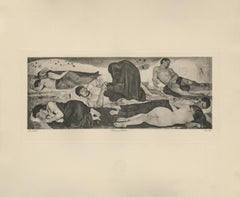
"Night" Copper Plate Heliogravure
Located in Palm Beach, FL
2018 marks the centenary anniversary of Ferdinand Hodler’s death. In that 100 years time, the art world’s esteem of this important artist has proved fickle. It has shifted from extolling his artistic merits during his lifetime to showing something of a feigned disdain- more reflective of the world political order than a true change of heart for Hodler’s work. After years of Hodler being all but a footnote in the annals of art history and generally ignored, finally, the pendulum has righted itself once again. Recent retrospective exhibitions in Europe and the United States have indicated not only a joyful rediscovery of Hodler’s art but a firm conviction that his work and world view hold particular relevance today. DAS WERK FERDINAND HODLERS is not only a collection of printed work reflecting the best of all of his painted work created up to 1914 just before the outbreak of World War I, the portfolio itself is an encapsulation of Hodler’s ethos, Parallelisme.
Hodler developed his philosophy of Parallelisme as a unifying approach to art which strips away detail in search of harmony. By means of abstraction, symmetry and repetition, Hodler sought ways to depict Nature’s essence and her fundamental, universal order. He believed these universal laws governing the natural, observable world extend to the spiritual realm. Symbolist in nature with Romantic undertones, his works are equally portraits of these universal concepts and feelings governing all life as they are a visual portrait in the formal sense. Whether his subject is a solitary tree, a moment in battle, mortal fear, despair, the awe inspired by a vast mountain range, a tender moment or even the collective conviction in a belief, Hodler unveils this guiding principle of Parallelisme.
Several aspects of Hodler’s portfolio reinforce his tenets of Parallelisme. The Table of Contents clearly preferences a harmonious design over detail. The two columns, consisting of twenty lines each, list the images by order of appearance using their German titles. The abbreviated titles are somewhat cryptic in that they obscure the identities of the sitters. Like the image Hodler presents, they are distillations of the sitter without any extraneous details. This shortening was also done in an effort to maintain a harmonious symmetry of the Table of Contents, themselves, and keep titles to a one-line limit. The twenty-fourth title: “Bildnis des Schweizerischen Gesandten C.” was so long, even with abbreviation, that it required two lines; so, for the sake of maintaining symmetry, the fortieth title: “Bauernmadchen” was omitted from the list. This explains why the images are not numbered. Hodler’s reasoning is not purely esoteric. Symmetry and pattern reach beyond mere formal design principles. Finding sameness and imposing it over disorder goes to the root of Hodler’s identity and his art. A Swiss native, Hodler was bi-lingual and spoke German and French. Each printed image, even number forty, have titles in both of Hodler’s languages. Certainly, there was a market for Hodler’s work among francophones and this inclusion may have been a polite gesture to that end; however, this is the only place in the portfolio which includes French. With German titles at the lower left of each image, Hodler’s name at bottom center and corresponding French titles at the lower right of each image, there is a harmony and symmetry woven into all aspects of the portfolio. This holds true for the page design, as it applies to each printed image and as it describes the Swiss artist himself. Seen in this light, Hodler’s portfolio of printed work is the epitome of Hodler’s Parallelisme. DAS WERK FERDINAND HODLERS is also one of the most significant documents to best tell the story of how Hodler, from Switzerland, became caught between political cross-hairs and how the changing tides of nations directly impacted the artist during his lifetime as well as the accessibility of his art for generations to come.
The Munich-based publisher of the portfolio, R. Piper & Co., Verlag, plays a crucial role in this story. Publishing on a wide range of subjects from philosophy and world religion to music, literature and the visual arts; the publisher’s breadth of inquiry within any one genre was equal in scope. Their marketing strategy to publish multiple works on Hodler offers great insight as to what a hot commodity Hodler was at that time. R.Piper & Co.’s Almanach, which they published in 1914 in commemoration of their first ten years in business, clearly illustrates the rapid succession- strategically calculated for achieving the deepest and broadest impact - in which they released three works on Hodler to hit the market by the close of 1914. DAS WERK FERDINAND HODLERS was their premier publication. It preceded C.A. Loosli’s Die Zeichnungen Ferdinand Hodlers, a print portfolio after 50 drawings by Hodler which was released in Autumn of 1914 at the mid-level price-point of 75-150 Marks; and a third less expensive collection of prints after original works by Hodler, which had not been included in either of the first two portfolios, was released at the end of that year entitled Ferdinand Hodler by Dr. Ewald Bender.
The title and timing of DAS WERK FERDINAND HODLERS' debut leaves little doubt as to the connection it has with another avant-garde portfolio of art prints, Das Werk Gustav Klimts, released in 5 installments from 1908 -1914 by Galerie Miethke in Vienna. Hodler, himself, was involved in Klimt’s ground-breaking project. As the owner of Klimt’s 1901 painting, “Judith with the Head of Holifernes” which appears as the ninth collotype print in the second installment of Das Werk Gustav Klimts, Hodler was obliged to grant access of the painting to the art printers in Vienna for them to create the collotype sometime before 1908. Hodler had been previously invited in 1904 to take part in what would be the last exhibition of the Vienna Secession before Klimt and others associated with Galerie Miethke broke away. In an interview that same year, Hodler indicated that he respected and was impressed by Klimt. Hodler’s esteem for Klimt went beyond the art itself; he emulated Klimt’s method aimed at increasing his market reach and appeal to a wider audience by creating a print portfolio of his painted work. By 1914, Hodler and his publisher had the benefit of hindsight to learn from Klimt’s Das Werk publication.
Responding to the sluggish sales of Klimt’s expensive endeavor, Hodler’s publisher devised the same diversified 1-2-3 strategy for selling Hodler’s Das Werk portfolio as they did with regards to all three works on Hodler they published that year. For their premium tier of DAS WERKS FERDINAND HODLERS, R. Piper & Co. issued an exclusive Museum quality edition of 15 examples on which Hodler signed each page. At a cost of 600 Marks, this was generally on par with Klimt’s asking price of 600 Kronen for his Das Werk portfolio. A middle-tiered Preferred edition of 30, costing somewhat less and with Hodler’s signature only on the Title Page, was also available. The General edition, targeting the largest audience with its much more affordable price of 150 Marks, is distinguishable by its smaller size.
Rather than use the subscription format Miethke had chosen for Klimt’s portfolios which proved to have had its challenges, R. Piper & Co. employed a different strategy. In addition to instantly gratifying the buyer with all 40 of the prints comprising DAS WERK FERDINAND HODLERS and the choice among three price points, they advertised in German journals a fourth possibility of ordering single prints from them directly. These printed images are easily discernible from the three complete folio editions. The paper size of the single purchased images is of the larger format like the Museum and Preferred editions, measuring 65 h x 50 w cm; however, the paper itself is the same copper print paper used in the General edition and then mounted on poster board. The publishing house positioned itself to be a direct retailer of Hodler’s art. They astutely recognized the potential for profitability and the importance, therefore, of having proprietary control over his graphic works.
R. Piper & Co. owned the exclusive printing rights to Hodler’s best work found in their three publications dating from 1914. That same year, a competing publication out of Weimar entitled Ferdinand Hodler: Ein Deutungsversuch von Hans Muhlestein appeared. Its author, a young scholar, expressed his frustration with the limited availability of printable work by Hodler. In his Author’s Note on page 19, dated Easter, 1914, Muhlestein confirms that the publisher of Hodler’s three works from that same year owned the exclusive reproductive rights to Hodler’s printed original work. He goes further to explain that even after offering to pay to use certain of those images in his book, the publisher refused. Clearly, a lot of jockeying for position in what was perceived as a hot market was occurring in 1914.
Instead, their timing couldn’t have been more ill-fated, and what began with such high hopes suddenly found a much different market amid a hostile climate. The onset of WWI directly impacted sales. Many, including Ferdinand Hodler, publicly protested the September invasion by Germany of France in which the Reims Cathedral, re-built in the 13th century, was shelled, destroying priceless stained glass and statuary and burning off the iron roof and badly damaging its wooden interior. Thomas Gaehtgens, Director of the Getty Research Institute describes how the bombing of Reims Cathedral triggered blindingly powerful and deeply-felt ultra-nationalistic responses: “The event profoundly shocked French intellectuals, who for the most part had an intense admiration for German literature, music and art. By relying on press accounts and abstracting from the visual propagandistic content, they were unable to interpret the siege of Reims without turning away from German culture in disgust. Similarly, the German intelligentsia and bourgeoisie were also shocked to find themselves described as vandals and barbarians. Ninety-three writers, scientists, university professors, and artists signed a protest, directed against the French insults, that defended the actions of the German army.”
In similar fashion, a flurry of open letters published in German newspapers and journals as well as telegrams and postcards sent directly to Hodler following his outcry in support of Reims reflected the collectively critical reaction to Hodler’s position. Loosli documents that among the list of telegrams Hodler received was one from none other than his publisher in Germany, R.Piper & Co. Allegiances were questioned. The market for Hodler in Germany immediately softened. Matters worsened for the publisher beyond the German backlash to Hodler and his loss of appeal in the home market; with the war in full swing until 1918, there was little chance a German publisher would have much interest coming from outside of Germany and Austria. Following the war and Hodler’s death in 1918, the economy in Germany continued to spiral out and just 5 years later, hyper-inflation had rendered its currency worthless vis-a-vis its value in the pre-war years. Like the economy, Hodler’s reputation was slow to find currency in these difficult times. Even many French art fans had turned sour on Hodler as they considered his long-standing relationship in German and Austrian art circles. Thus, the portfolio’s rarity in Hodler’s lifetime and, consequently, the availability of these printed images from DAS WERK FERDINAND HODLERS since his death has been scarce.
In many ways, Hodler and his portfolios were casualties of war. Thwarted from their intended purpose of reaching a wide audience and show-casing Parallelisme, Hodler’s unique approach to art, this important, undated work has been both elusive and shrouded in mystery. Perhaps DAS WERK FERDINAND HODLERS was left undated as a means of affirming the timelessness of Hodler’s art. Digging back into the past, Hodler’s contemporaries, like R. Piper, C.A. Loosli and Hans Muhlestein, indeed provide the keys to unequivocally clarify what has largely been mired in obscurity. Just after Hodler’s death, the May, 1918 issue of the Burlington Review ran a small column which opined hope for better access to R.Piper & Co.’s DAS WERK FERDINAND HODLERS; 100 years later, it is finally possible. Hodler’s voice rings out through these printed works. Once more, his modern approach to depicting portraits, landscapes and grand scale scenes of Swiss history speak to us of what is universal. Engaging with any one of these images is the chance to connect to Hodler’s vision and his world view- weltanschauung in German, vision du monde in French- however one expresses these concepts through language, its message embedded in his work is the same: “We differ from one another, but we are like each other even more. What unifies us is greater and more powerful than what divides us.” Today, Hodler’s art couldn’t be more timely.
FERDINAND HODLER (SWISS, 1853-1918) explored Parallelisme through figurative poses evocative of music, dance and ritual. His images of sex, night, desertion and death as well as his many landscapes exploring the universal longing for harmony with Nature are unique and important works embodying a Symbolist paradigm. Truly a Modern Master, Hodler’s influence can be felt in the work of Gustav Klimt and Kolomon Moser...
Category
Symbolist Early 20th Century Figurative Prints
Materials
Paper
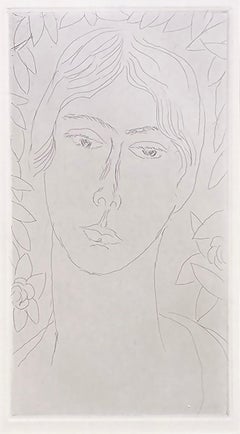
"Mlle Landsberg" (grade planche, pl. 16)
Located in Missouri, MO
"Mlle Landsberg" (grade planche, pl. 16), 1914
Henri Matisse (French, 1869-1954)
Signed and Numbered Lower Right
Edition 12/15
Image size: 7 7/8 x 4 5/16 inches
Sheet size: 17 11/16 x 12 1/2 inches
With frame: 19 1/2 x 14 1/2 inches
Henri Matisse came from a family who were of Flemish origin and lived near the Belgian border. At eight o'clock on the evening of December 31, 1869, he was born in his grandparents' home in the town of Le Cateau in the cheerless far north of France. His father was a self-made seed merchant who was a mixture of determination and tightly coiled tension.
Henri had no clear idea of what he wanted to do with his life. He was a twenty-year-old law clerk convalescing from appendicitis when he first began to paint, using a box of colors given to him by his mother. Little more than a year later, in 1890, he had abandoned law and was studying art in Paris. The classes consisted of drawing from plaster casts and nude models and of copying paintings in the Louvre. He soon rebelled against the school's conservative atmosphere; he replaced the dark tones of his earliest works with brighter colors that reflected his awareness of Impressionism. Matisse was also a violinist; he took an odd pride in the notion that if his painting eye failed, he could support his family by fiddling on the streets of Paris.
Henri found a girlfriend while studying art, and he fathered a daughter, Marguerite, by her in 1894. In 1898 he married another woman, Amelie Parayre. She adopted the beloved Marguerite; they eventually had two sons, Jean, a sculptor and Pierre who became an eminent art dealer. Relations between Matisse and his wife were often strained. He often dallied with other women, and they finally separated in 1939 over a model who had been hired as a companion for Mme. Matisse. She was Madame Lydia, and after Mme. Matisse left, she remained with Matisse until he died.
Matisse spent the summer of 1905 working with Andre Derain in the small Mediterranean seaport of Collioure. They began using bright and dissonant colors. When they and their colleagues exhibited together, they caused a sensation. The critics and the public considered their paintings to be so crude and so roughly crafted that the group became known as Les Fauves (the wild beasts).
By 1907, Matisse moved on from the concerns of Fauvism and turned his attention to studies of the human figure. He had begun to sculpt a few years earlier. In 1910, when he saw an exhibition of Islamic art, he was fascinated with the multiple patterned areas and adapted the decorative universe of the miniatures to his interiors. As a continuation of his interest in the "exotic", Matisse made extended trips to Morocco in 1912 and 1913.
At the end of 1917, Matisse moved to Nice; he would spend part of each year there for the remainder of his life. A meticulous dandy, he wore a light tweed jacket amd a tie when he painted. He never used a palette, but instead squeezed his colors on to plain white kitchen dishes...
Category
Fauvist Early 20th Century Figurative Prints
Materials
Drypoint, Etching
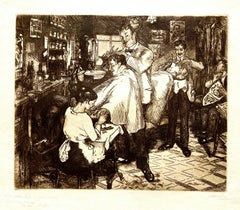
Barbershop
By John Sloan
Located in New York, NY
John Sloan (1871-1954), Barbershop, 1915, etching and aquatint, signed in pencil lower right, inscribed in pencil “For John Quinn, Esq. – John Sloan” lower left margin, (also signed ...
Category
Ashcan School Early 20th Century Figurative Prints
Materials
Etching, Aquatint
$12,000
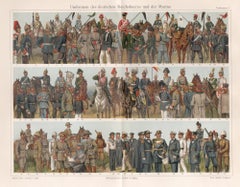
Military Uniforms, German antique army soldier chromolithograph print.
Located in Melbourne, Victoria
'Uniformen des deutschen Reichsheeres und der Marine'
(Uniforms of the German Imperial Army and Navy)
German chromolithograph, circa 1910. Central vertical fold as issued.
245mm ...
Category
Naturalistic Early 20th Century Figurative Prints
Materials
Lithograph
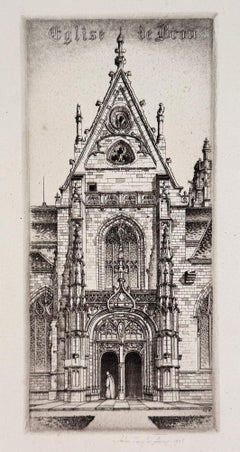
Église de Brou
Located in Middletown, NY
Etching on delicate, fibrous Japon paper with a deckle edge, 8 7/8 x 4 1/8 (227 x 105 mm); sheet 12 x 7 7/8 inches (304 x 100 mm), full margins. Signed and dated in pencil in the low...
Category
American Modern Early 20th Century Figurative Prints
Materials
Handmade Paper, Etching
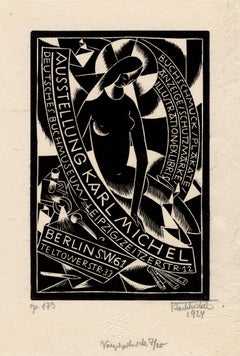
Karl Michel Exhibition
— German Expressionism
By Karl Michel
Located in Myrtle Beach, SC
Karl Michel, 'Austellung Karl Michel', woodcut, 1924, edition 20. Signed, dated, numbered 'op. 173' (the artist's inventory number) and '7/20' (the impression number/edition size) and annotated 'Vorgesdruck' (artist's proof) in pencil.
A fine, richly-inked impression on hand-made cream, wove paper, with full margins (1 1/16 to 1 1/2 inches); toning to the right sheet edge deckle, otherwise in good condition. With the artist's blind stamp in the bottom center margin. Designed and printed by the artist. Very scarce. Matted to museum standards (unframed).
An elegantly designed, dynamic exhibition announcement with the German copy in the block: 'Austellung Karl Michel – Deutsches Buchmuseum Leipzig/Zeitzer str 12, Berlin S.W. 61 Teltower str 33 / Buchschmuck/ Plakate/ Anzeige/ Schultzmarke/ Illustrations/ Ex Libris'. English translation: 'Karl Michel Exhibition – German Book Museum, Leipzig Zeitzer Street 12, Berlin, S.W. 61 Teltower St. 33. / Book Decoration / Posters / Announcements / Illustrations / Ex Libris.'
Image size 6 x 4 inches (152 x 102 mm); sheet size 8 1/16 x 5 1/2 inches (205 x 140 mm).
ABOUT THE ARTIST
Karl Michel (1889-1984) was a noted graphic designer and expressionist printmaker during Germany's pre-Nazi Weimar Republic (1919-1933). Michel’s work was the subject of a feature article in the influential German graphic design magazine 'Das Plakat' (The Poster) in 1920. An anti-war advocate, Michel created a suite of 12 wood engravings depicting his impressions of the humanitarian toll of WWII entitled ‘Humanitas’ (Humanity). The German publishing house Greifenverlag published the series in a folio of unsigned prints.
Michel’s graphic work is held in the permanent collections of the Auckland War Memorial Museum (New Zealand), Frederikshavn Kunstmuseum & Exlibrissamling (Denmark), Museum of Applied Arts (Budapest), The Robert Gore Rifkind Center for German Expressionist Studies at the Los Angeles County Museum of Art, and the German Expressionism...
Category
Expressionist Early 20th Century Figurative Prints
Materials
Woodcut
"Männlicher Kopf" original woodcut
Located in Henderson, NV
Medium: original woodcut. Printed in Germany in 1917 for Die Aktion; this impression is from the deluxe edition of 100 on Bütten laid paper. Catalogue reference: Schapire 202. Image ...
Category
Expressionist Early 20th Century Figurative Prints
Materials
Woodcut
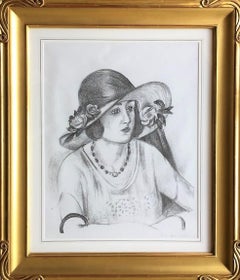
La Capeline de Paille d
Italie (The Italian Straw Hat).
Located in Storrs, CT
La Capeline de Paille d'Italie (The Italian Straw Hat). 1923. Lithograph. Duthuit 430. 17 3/4 x 15 3/4 (sheet 23 1/8 x 17 7/8). Trial proof, apart fr...
Category
Modern Early 20th Century Figurative Prints
Materials
Lithograph

$48,000 Sale Price
20% Off
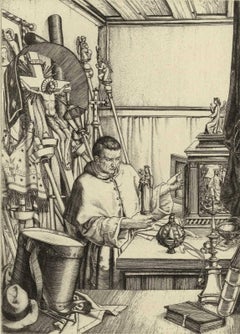
The Sacristan
By Harry Morley
Located in New Orleans, LA
This image shows a cleric seated in a church sacristy surrounded by religious statues, croziers, various saints, statues and chalices. It is an origina...
Category
Modern Early 20th Century Figurative Prints
Materials
Engraving
$356 Sale Price
40% Off
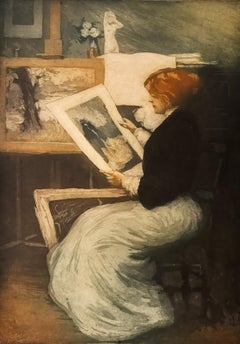
Femme a l
Estampe
By Manuel Robbe
Located in Middletown, NY
Edition of 100.
Color aquatint and etching, 21 x 14 7/8 inches (531 x 376 mm), wide margins (full). Signed in pencil, lower left image area. Light toning, otherwise in very good cond...
Category
French School Early 20th Century Figurative Prints
Materials
Etching, Aquatint
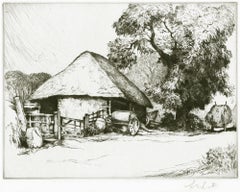
Ruff
s Farm
Located in Middletown, NY
A nostalgic image of a bucolic farmyard and thatched cottage, hearkening to a bygone era.
c 1920. Etching with drypoint on laid watercolor paper with deckle edges, and an indiscerni...
Category
American Modern Early 20th Century Figurative Prints
Materials
Handmade Paper, Laid Paper, Drypoint, Etching
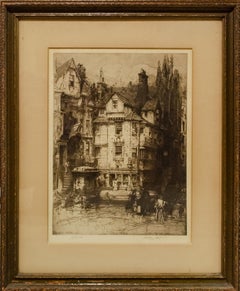
Etching of John Knox
s House Hedley Fitton RA
By Hedley Fitton
Located in New York, NY
Hedley Fitton (British, c. 1857-1929)
John Knox's House, c. 1900
Etching
17 x 12 3/4 in.
Framed: 25 x 20 1/2 in.
Signed in the plate by Hedley Fitton
Sig...
Category
English School Early 20th Century Figurative Prints
Materials
Etching
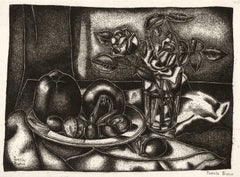
Fruit Piece
— American Modernism, Woman Artist
Located in Myrtle Beach, SC
Pamela Bianco, 'Fruit Piece', lithograph, c. 1925. Signed and titled in pencil. Signed in the stone, lower left. Annotated 'No. 8' in pencil, upper right...
Category
American Modern Early 20th Century Figurative Prints
Materials
Lithograph
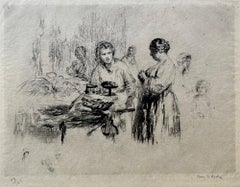
The Market
By Henri Le Riche
Located in Middletown, NY
Stone lithograph in black ink on tissue-thin wove Japon paper, 9 x 11 1/4 inches (228 x 285 mm), full margins. Signed and numbered 43/125 in pencil in the lower margin. Overall mod...
Category
French School Early 20th Century Figurative Prints
Materials
Handmade Paper, Lithograph
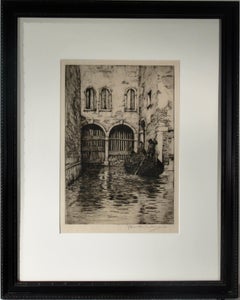
Venetian Scene with Arches
By James Hamilton Mackenzie
Located in San Francisco, CA
This artwork "Venetian Scene with Arches" c.1910, is an original etching on paper by noted Scottish artist James Hamilton Mackenzie, 1875-1926. It is hand signed at the lower right c...
Category
Realist Early 20th Century Figurative Prints
Materials
Etching
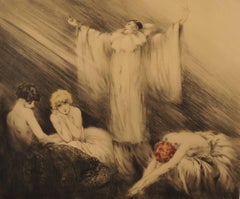
Le Poeme (The Poem)
By Louis Icart
Located in Fort Washington, PA
Date: 1928
Medium: Etching and aquatint on wove paper
Framed Dimensions: 28.00" x 31.50"
Signature: Signed in pencil at lower right, with the artist’s blindstamp at lower left. “C...
Category
Early 20th Century Figurative Prints
Materials
Etching, Aquatint
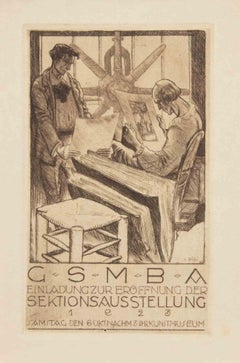
Invitation GSMBA 1923 - Etching by Fritz Gilsi - 1923
Located in Roma, IT
Etching realized by Fritz Gilsi in 1923.
Signed in the plate.
Very good condition.
Category
Modern Early 20th Century Figurative Prints
Materials
Etching
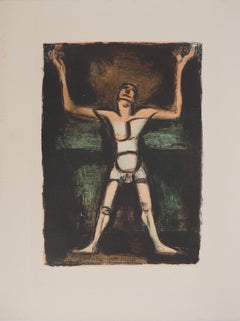
Circus - Original Etching
Located in Paris, IDF
Georges ROUAULT (1871-1958)
Circus, 1927
Original etching
Signed in the plate
Limited to 225 copies (Not numbered)
On BFK Rives vellum 33 x 25 cm (c. 12.9 x 9.8 in)
Excellent condi...
Category
Modern Early 20th Century Figurative Prints
Materials
Etching
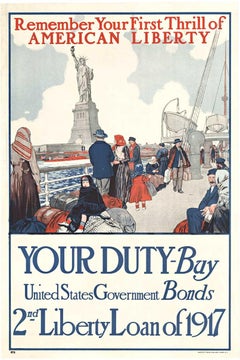
Original Remember Your First Thrill of American Liberty 1917 vintage poster
Located in Spokane, WA
Original poster: Rembember Your First Thrill of Ameridan Liberty YOUR DUTY Buy United States Government Bonds 2nd Liberty Loan of 1917. Linen backed and ready to frame. Poste...
Category
American Realist Early 20th Century Figurative Prints
Materials
Lithograph
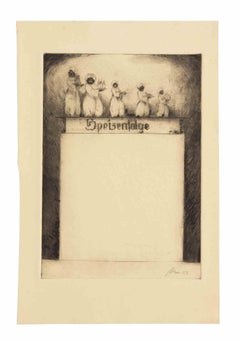
Speisenfolge (Study for a Menu) - Etching - 1923
Located in Roma, IT
Etching realized in 1923.
Hand signed in pencil, unreadable.
Very good condition.
Category
Modern Early 20th Century Figurative Prints
Materials
Etching
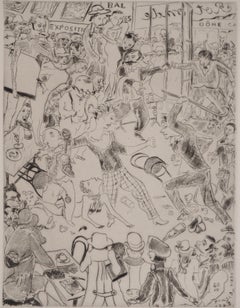
Paris : The Café - Original Etching (Buisson #25-68)
Located in Paris, IDF
Léonard Tsuguharu FOUJITA (1886-1968)
Paris : The Café, 1927
Original etching
Signed in the plate
Limited to 225 copies
On BFK Rives vellum 33 x 25 cm (c. 12.9 x 9.8 in)
REFERENC...
Category
Modern Early 20th Century Figurative Prints
Materials
Etching
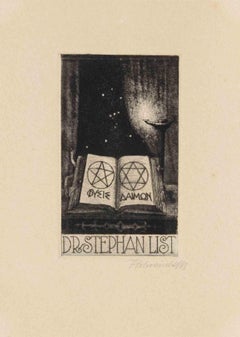
Ex Libris Dr Stephan List - Etching by Jan Konupek - Early 20th Century
Located in Roma, IT
Etching realized in the early 20th Century.
Hand signed, unreadable.
Very good condition.
Category
Modern Early 20th Century Figurative Prints
Materials
Etching
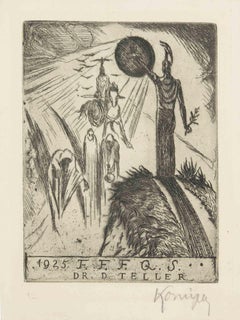
Ex Libris Doctr D. Teller - Etching by Jan Konupek - 1923
Located in Roma, IT
Etching realized by Ja Konupek in 1923.
Hand signed in pencil.
Very good condition.
Category
Modern Early 20th Century Figurative Prints
Materials
Etching
The Punt
By Rosamond Tudor
Located in Middletown, NY
A dynamic football image from the 1920s by a female artist known for her sports scenes.
Etching with drypoint on exceptionally fine laid Japon paper with a double watermark, 10 7/8 ...
Category
Realist Early 20th Century Figurative Prints
Materials
Handmade Paper, Drypoint, Etching
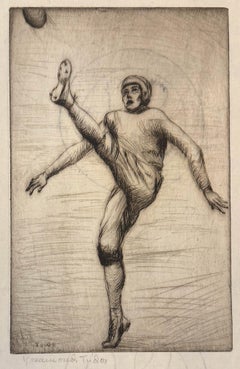
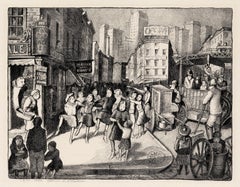
Hurdy Gurdy Ballet
— New York City American Scene, Ashcan School
Located in Myrtle Beach, SC
Glenn O. Coleman, 'Hurdy Gurdy Ballet', lithograph 1928, edition 50. Signed, dated, and numbered '14/50' in pencil. Titled in the bottom left margin, in an...
Category
Ashcan School Early 20th Century Figurative Prints
Materials
Lithograph
$3,840 Sale Price
20% Off
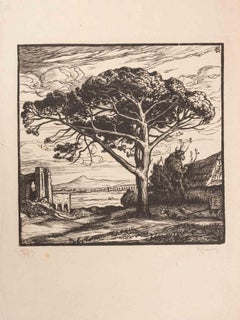
Environ de Rome - Woodcut by Pierre Gusman - Early 20th Century
Located in Roma, IT
Woodcut print realized by Pierre Gusman in the early 20th Century.
Hand signed and numbered.
Edition of 150.
Very good condition.
Category
Modern Early 20th Century Figurative Prints
Materials
Woodcut
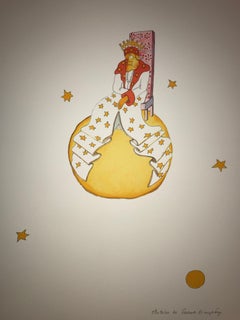
Le vieux Roi - Lithograph - 1900-1944 - Platesigned
Located in Sint-Truiden, BE
Color lithograph after the watercolor illustrations by Antoine de Saint-Exupéry from his beloved masterpiece "The Little Prince".
This lithograph was printed and published in 2009 ...
Category
Contemporary Early 20th Century Figurative Prints
Materials
Lithograph
$137 Sale Price
35% Off
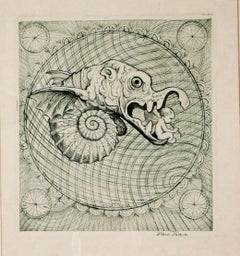
RATSELRACHEN III (JAWS OF THE RIDDLE III)
By Hans Thoma 1
Located in Portland, ME
Thoma, Hans. RATSELRACHEN III (JAWS OF THE RIDDLE III). Etching, 1908 (Beringer 77, second state). 10 3/8 x 9 5/8 inches (200 x 285 mm), image; 11 x 9 3/4 inches (246 x 296 mm.), plate; 18 3/4 x 15 1/4 inches (477 x 390 mm.), sheet. Monogrammed and dated in the plate, signed "Hans Thoma...
Category
Early 20th Century Figurative Prints
Materials
Etching
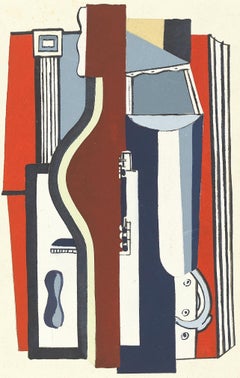
Fernand Leger, Musical Instruments, from Cahiers d
Art, 1928 (after)
Located in Southampton, NY
This exquisite lithograph and pochoir after Fernand Leger (1881–1955), titled Instruments de musique (Musical Instruments), from the album Fernand Leger (Fernand Leger), originates f...
Category
Modern Early 20th Century Figurative Prints
Materials
Lithograph
$2,396 Sale Price
20% Off
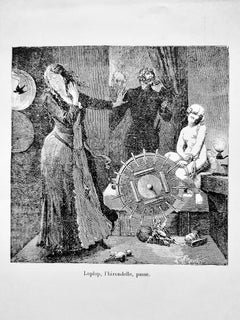
La Femme 100 Têtes - Rare Book Illustrated by Max Ernst - 1929
By Max Ernst
Located in Roma, IT
La Femme 100 Têtes is an original modern rare book illustrated by Max Ernst (1891 - 1976) in 1929, and extraordinary first example of conceptual art
Original first edition.
Publish...
Category
Surrealist Early 20th Century Figurative Prints
Materials
Paper, Mixed Media
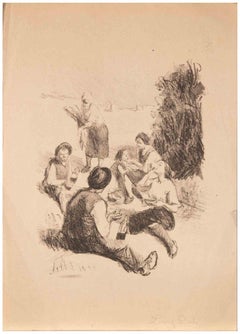
Family of Peasants - Etching by Lobel-Riche - Early 20th Century
Located in Roma, IT
Lithograph realized by Lobel-Riche in the early 20th Century.
Hand signed lower right in pencil.
Good condition.
Category
Modern Early 20th Century Figurative Prints
Materials
Etching
Les Deux Aristocrates - Woodcut by Hermann Paul - 1923
Located in Roma, IT
Woodcut print realized by Hermann Paul in 1923.
Not signed, as issued.
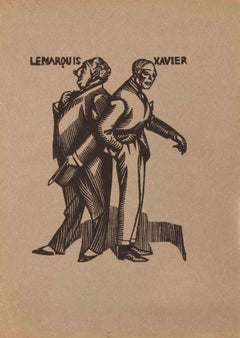
Very good condition.
Category
Modern Early 20th Century Figurative Prints
Materials
Woodcut
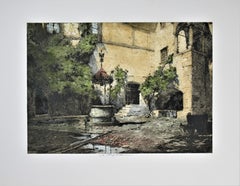
Seebenstein Castle Courtyard, Austria, large color etching
Located in San Francisco, CA
This artwork titled "Seebenstein Castle, Austria" 1920 is a color etching on watermarked Kasimir Vienna paper by Austrian artist Luigi Kasimir, 1881-1962. It is hand signed in pencil by the artist's estate at the lower center. The plate mark (image) size is 15.75 x 22.25 inches, the sheet size is 23.25 x 29.5 inches. with full margin. it is in excellent condition, has never been framed.
About the artist.
Luigi Kasimir was born in 1881 at Pettau, today Ptuj, Slovenia, then a part of the Austro-Hungarian monarchy. He inherited his talent from his ancestors; his grandfather was a painter and a poet, and his father an officer in the Habsburg army, who later became a professional painter. Kasimir attended the Vienna Academy of Art where he studied under Wilhelm Unger, who introduced him to the technique of the coloured etching, and also to his future wife, the artist Tanna Hoernes.[1] He died in 1962 in Grinzing, a suburb of Vienna.Kasimir was among the first to develop the technique of the coloured etching. Before this, prints were usually hand-coloured with the colour being applied in a casual, haphazard manner. Kasimir would first create a sketch usually in pastel, he then transferred the design on as many as four to six plates, printing one after the other and applying the colour on the plate, all done by hand.
Kasimir is mainly famous for his etchings, but he also produced some oil painting, as well as some pastels. One of his favourite genres was the landscape, or veduta. He demonstrated a predisposition street scenes, and tourist landmarks. He depicted places from all over Europe, mainly Italy, Austria, and Germany. He also travelled to the United States to do a series of etchings of famous sights ranging from urban landmarks such as New York City skyscrapers, to natural wonders like Yosemite Valley. Luigi Kasimir’s etchings...
Category
Realist Early 20th Century Figurative Prints
Materials
Etching
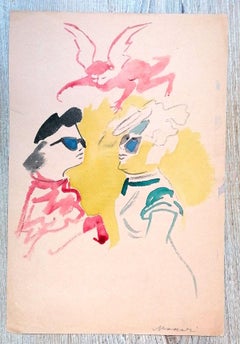
Two Female Portraits - Original Tempera by Mino Maccari - 1920s
By Mino Maccari
Located in Roma, IT
To Female Portraits is an original modern artwork realized in the early 20th Century by the Italian artist Mino Maccari (Siena, 1898 - Rome, 1989).
Original painting. Tempera on pap...
Category
Modern Early 20th Century Figurative Prints
Materials
Tempera
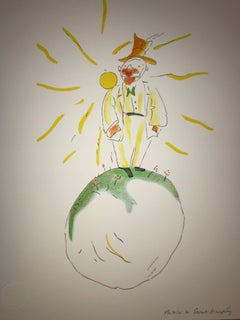
Le Poète - Lithograph - 1900-1944 - Platesigned
Located in Sint-Truiden, BE
Color lithograph after the watercolor illustrations by Antoine de Saint-Exupéry from his beloved masterpiece "The Little Prince".
This lithograph was printed and published in 2009 ...
Category
Contemporary Early 20th Century Figurative Prints
Materials
Lithograph
$137 Sale Price
35% Off
La Vérité - Etching by Antoine Dezarrois - 1900
Located in Roma, IT
Etching realized by Antoine Dezarrois in 1900, after P. Baudry.
Proof on Japan paper, not signed as issued.
Very good condition.
Category
Modern Early 20th Century Figurative Prints
Materials
Etching
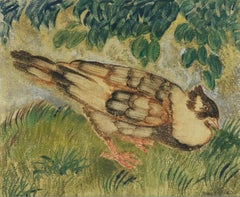
Procede by Georges Manzana Pissarro - Monotype of a bird, Animal
Located in London, GB
Procede by Georges Manzana Pissarro (1871-1961)
Coloured monotype with gold, silver and pencil
24 x 30 cm (9¹/₂ x 11³/₄ inches)
Signed lower right, Manzana
Artist biogaphy
Like all ...
Category
Post-Impressionist Early 20th Century Figurative Prints
Materials
Gold, Silver
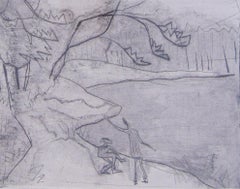
Children on the Shore Kinder am Ufer - German Expressionism
By Erich Heckel
Located in London, GB
This original etching and drypoint is hand signed and dated in pencil by the artist "Erich Heckel 12" at the lower right margin.
This work was hand printed by the artist in 1912 in ...
Category
Expressionist Early 20th Century Figurative Prints
Materials
Drypoint, Etching
"Nu Assis, Bras Gauche sur la Tete" [Nude Seated, Left Arm Overhead]
Located in Astoria, NY
Henri Matisse (French, 1869-1954), "Nu Assis, Bras Gauche sur la Tete" [Nude Seated, Left Arm Overhead], Lithograph on Japan Paper, 1926, signed in pencil lower right and numbered ed...
Category
Impressionist Early 20th Century Figurative Prints
Materials
Paper, Lithograph
!["Nu Assis, Bras Gauche sur la Tete" [Nude Seated, Left Arm Overhead]](https://a.1stdibscdn.com/henri-matisse-prints-works-on-paper-nu-assis-bras-gauche-sur-la-tete-nude-seated-left-arm-overhead-for-sale/a_28452/1761326983907/104_1_master.jpg?width=240 "Henri Matisse - \"Nu Assis, Bras Gauche sur la Tete\" [Nude Seated, Left Arm Overhead]")
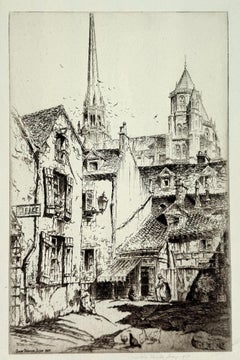
Saint Benigne, Dijon
Located in Middletown, NY
A fine impression on antique watermarked paper.
Etching on antique blueish-gray antique laid paper with an unknown crown watermark, 10 1/2 x 6 7/8 inches ( 268 x 175 mm); sheet 13 3...
Category
American Modern Early 20th Century Figurative Prints
Materials
Handmade Paper, Etching
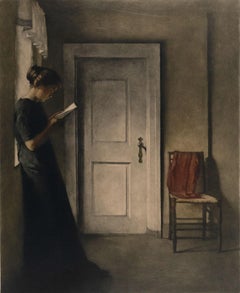
Interior with Red Shawl (Young woman reads in this calm Vermeer-like interior)
Located in New Orleans, LA
Interior with a red shawl conveys a quite different mood and feeling: one of calm, and suspension of time. Here the suggestion is that the woman is waiting ...
Category
Dutch School Early 20th Century Figurative Prints
Materials
Mezzotint
$5,625 Sale Price
25% Off
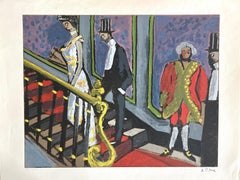
La Re
ception
Located in Belgrade, MT
Auguste Chabaud was born in Nimes, France and attended the Ecole des Beaux-Arts in Avignon and Paris.He lived in the area of Montmarte where he had a studio and painted various scene...
Category
Cubist Early 20th Century Figurative Prints
Materials
Oil, Lithograph
$480 Sale Price
20% Off
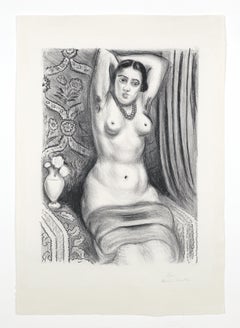
Torse à l
aiguière
Located in London, GB
Henri Matisse
Torse à l’aiguière
1927
Lithograph on Chine paper, Edition of 50
Paper size: 49.5 x 34.5 cms (19 1/2 x 13 1/2 ins)
Image size: 36.4 x 26 cms (14 1/4 x 10 1/4 ins)
HM15...
Category
Modern Early 20th Century Figurative Prints
Materials
Lithograph
Ottokar Mascha Folio, plate 18: "Shaw Oder Die Ironie Poster" by Egon Schiele
By Egon Schiele
Located in Palm Beach, FL
after EGON SCHIELE (1890-1918) SHAW ODER DIE IRONIE POSTER, C. 1912, (In Mascha, no. 18) Schiele’s poster is an advertisement for a lecture to be given ...
Category
Vienna Secession Early 20th Century Figurative Prints
Materials
Lithograph
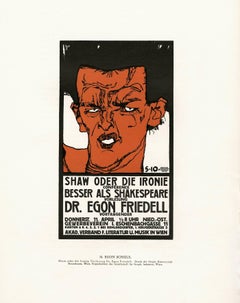
Figure Reading - Etching - Fauvism - French Art
Located in London, GB
HENRI MATISSE 1869-1954
(Emile Benoît)
Le Cateau-Cambrésis 1869-1954 Nice (French)
Title: Figure Reading Figure lisant, 1929
Technique: Original Hand Signed and Numbered Etching o...
Category
Fauvist Early 20th Century Figurative Prints
Materials
Etching
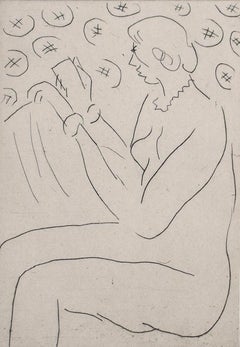
Seated Figure
— American Expressionism
By Max Weber
Located in Myrtle Beach, SC
Max Weber, 'Seated Figure", woodcut, edition not stated, 1919-20, Rubenstein 17. Signed in pencil. A fine impression on cream Japan paper; the full sheet with margins (2 to 3 1/8 in...
Category
Expressionist Early 20th Century Figurative Prints
Materials
Woodcut
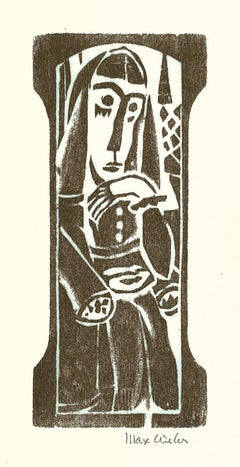
The Right Hon Henry Herbert Asquith, Prime Minister, portrait engraving
Located in Melbourne, Victoria
The Right Hon Henry Herbert Asquith, Prime Minister
Mezzotint. 1918. India-laid proof before lettering with a remarque of a doorway centre bottom.
Herbert Henry Asquith, 1st Earl of Oxford and Asquith, KG, PC, KC, FRS (1852 – 1928), generally known as H. H. Asquith, was a British politician and statesman who served as Prime Minister of the United Kingdom from 1908 to 1916.
Norman Hirst...
Category
English School Early 20th Century Figurative Prints
Materials
Engraving, Mezzotint
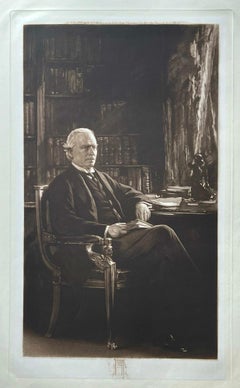
Portrait of Mustafa Kemal Atatürk- Etching by Paul Flury - Early 20th Century
Located in Roma, IT
Original burin engraving (copper engraving).
Artist proof, hand signed.
A precise and finely executed portrait of Mustafa Kemal Atatürk, the founder of modern Turkey. The engraving...
Category
Modern Early 20th Century Figurative Prints
Materials
Etching
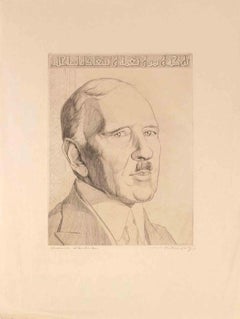
The Barricade - Etching on Paper by Georg Graf - Early 20th Century
Located in Roma, IT
Colored etching realized by Georg Graf in the early 20th Century.
Edition of 100.
Hand signed and numbered in pencil.
A powerful and dramatic composition depicting the aftermath o...
Category
Modern Early 20th Century Figurative Prints
Materials
Etching
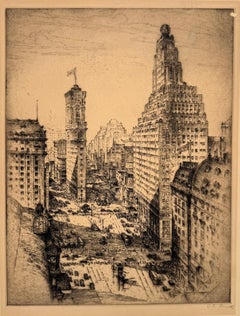
Seventh Avenue Canyon, from New York in Etchings
By Anton Schutz
Located in Middletown, NY
New York: 1939.
Etching on light weight wove paper, 13 3/4 x 10 3/4 inches ( 350 x 273 mm); 15 1/4 x 12 inches; sheet (383 x 300 mm); full margins. Signed in pencil in the lower mar...
Category
American Modern Early 20th Century Figurative Prints
Materials
Etching
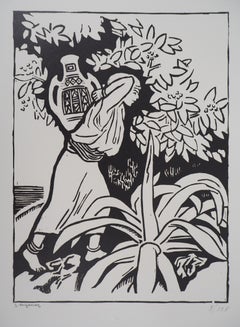
Orientalism : Young Girl with a Pot - Original wooodcut, Handsigned
Numbered
Located in Paris, IDF
Jules MIGONNEY (1876-1929)
Orientalism : Young Girl with a Pot, 1921
Original woodcut
Handsigned in pencil
Numbered /125
On vellum 32.5 x 25.5 cm (c. 13 x 10 in)
Bears the blind sta...
Category
Modern Early 20th Century Figurative Prints
Materials
Woodcut
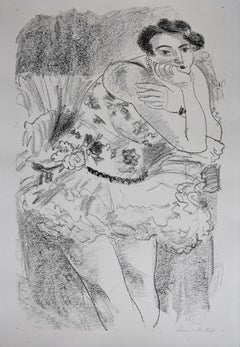
Standing Dancer, Leaning from: Ten Dancers - Lithograph - French - Fauvism Art
Located in London, GB
HENRI MATISSE 1869-1954
(Emile Benoît)
Le Cateau-Cambrésis 1869-1954 Nice (French)
Title: Standing Dancer, Leaning, from: Ten Dancers Danseuse debout, accoudée, Dix Danseuses, 1925...
Category
Post-Impressionist Early 20th Century Figurative Prints
Materials
Lithograph
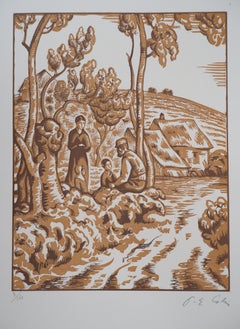
Allegory of Peace : the Family in Countryside - Original wooodcut, Handsigned
By Paul Colin
Located in Paris, IDF
Paul Emile Colin
Allegory of Peace : the Family in Countryside, 1929
Original woodcut
Handsigned in pencil
Numbered /160
On vellum 32.5 x 25.5 cm (c. 13 x 10 in)
Bears the blind sta...
Category
Art Deco Early 20th Century Figurative Prints
Materials
Woodcut
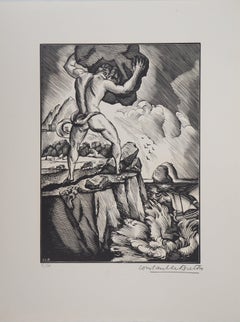
Cyclop Polyphene and Ulysses - Original wooodcut, Handsigned and numbered / 160
Located in Paris, IDF
Daniel GIRARD (1890-1970)
Cyclop Polyphene and Ulysses, 1925
Original woodcut
Handsigned in pencil
Numbered /160
On vellum 32.5 x 25.5 cm (c. 13 x 10 in)
Bears the blind stamp of th...
Category
Modern Early 20th Century Figurative Prints
Materials
Woodcut
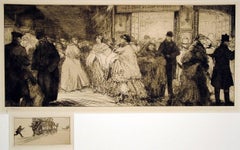
Sortie de Theatre a Londres
Located in New York, NY
Jean-Emile Laboureur (1877-1943), Sortie de Theatre a Londres, etching and drypoint, 1911, signed in pencil lower left [also signed and dated in the plate upper right]. Reference: Laboureur 104, third state (of 3). Published for La Societe des amis de l’eau-forte, with the blindstamp with the inscription: Circle Librairie Estampes. From an edition in the third state of 109; there were also 5 impressions of the first state and five of the second state. In excellent condition, the full sheet with deckle edges bottom and sides, 6 3/4 x 14; a remarque lower left 2 x 3 1/2, the sheet 12 3/4 x 19 3/4 inches.
Provenance: unknown collector’s mark verso (GOE in oval)
A fine rich impression, printed in dark brown ink on cream laid paper with the Arches watermark.
The small remarque lower left is actually another print printed on a separate plate; it shows a man running after a London horse...
Category
Naturalistic Early 20th Century Figurative Prints
Materials
Drypoint
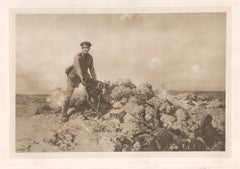
Lieutenant JRN Graham, World War I, military photogravure after Lucy Kemp-Welch
Located in Melbourne, Victoria
Lieutenant J.R.N. Graham
Photogravure after Lucy Kemp-Welch (1869-1958). C1920.
330mm by 505mm (image) 470mm by 630mm (sheet).
Lieutenant J.R.N. Graham (1882-1980), 9th Battalion Argyle & Sutherland Highlanders, was attached to 136 Company Machine Gun Corps...
Category
Other Art Style Early 20th Century Figurative Prints
Materials
Lithograph
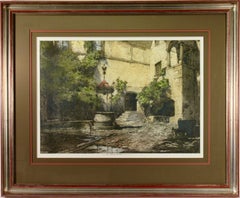
Seebenstein Castle Courtyard, Austria, large color etching
Located in San Francisco, CA
This artwork titled "Seebenstein Castle, Austria" 1920 is a color etching on paper by Austrian artist Luigi Kasimir, 1881-1962. It is hand signed in pencil by the artist's estate at the lower center. The plate mark (image) size is 15.75 x 22.25 inches, Framed size is 27.25 x 33 inches. Custom framed in a wooden silver frame, with brown/green matting and red/brown fillet. It is in excellent condition, the frame has a very minor restoration, practically invisible.
About the artist.
Luigi Kasimir was born in 1881 at Pettau, today Ptuj, Slovenia, then a part of the Austro-Hungarian monarchy. He inherited his talent from his ancestors; his grandfather was a painter and a poet, and his father an officer in the Habsburg army, who later became a professional painter. Kasimir attended the Vienna Academy of Art where he studied under Wilhelm Unger, who introduced him to the technique of the coloured etching, and also to his future wife, the artist Tanna Hoernes...
Category
Realist Early 20th Century Figurative Prints
Materials
Etching
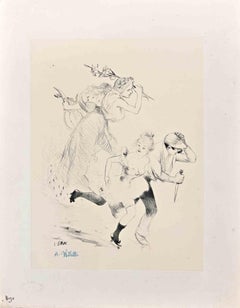
Dangerous Jokes - Lithograph by Adolphe Willette - Early 20th Century
Located in Roma, IT
Dangerous Jokes is an Original Lithograph realized by Willette (Adolphe Léon).
Good condition on a yellowed paper.
Hand signed with blue pencil on the lower left corner.
Adolphe ...
Category
Art Nouveau Early 20th Century Figurative Prints
Materials
Lithograph
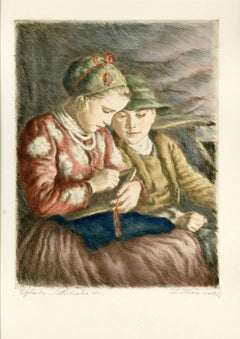
Portrait of a girl writing on a slate.
By Oszkar Glatz
Located in Middletown, NY
Etching with extensive hand coloring in watercolor on white wove paper, 13 3/4 x 10 3/4 inches (347 x 271 mm); sheet 24 x 17 inches (608 x 430 mm), full margins. In good condition wi...
Category
Modern Early 20th Century Figurative Prints
Materials
Watercolor, Etching
Recently Viewed
View AllMore Ways To Browse
Eduardo Roca
Edward B Gay
Edward Hopper Oil Painting
Edward Simmons
Edwin Lord Weeks
Elizabeth Enders
Elizabeth Horning
Emil Holzhauer
England Church Oil Painting
English Deer Painting
English Fox Hunt Painting
English Toy Terrier
Enrique Martinez Celaya
Eric Aho
Eritrea Art
Ernest Chateignon
Erotic Art Animal
Eugene Chigot