Want more images or videos?
Request additional images or videos from the seller
1 of 6

Robert Rauschenberg
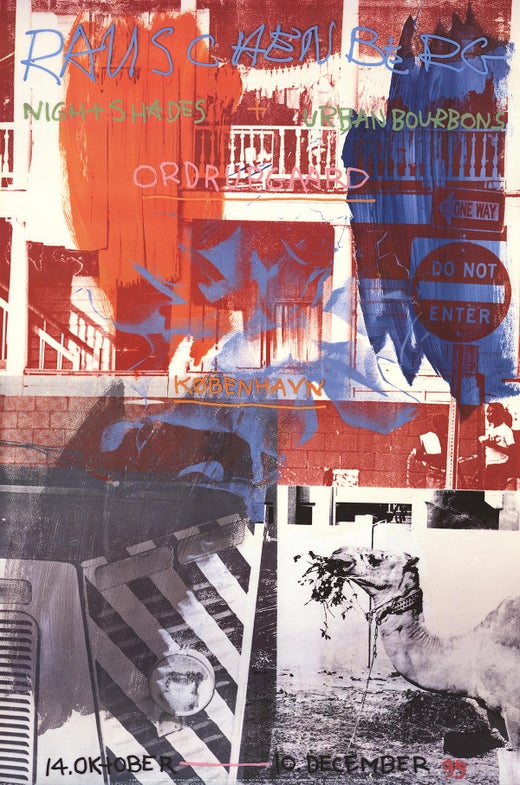
Robert Rauschenberg - Rare 1960s Musee D Art Moderne de la ville de Paris poster

1968

$2,800
£2,132.14
€2,455.10
CA$3,967.85
A$4,267.99
CHF 2,280.94
MX$50,307.40
NOK 28,757.26
SEK 26,289.59
DKK 18,343.77

About the Item

Robert Rauschenberg Rare 1960s Musee D'Art Moderne de la ville de Paris poster, 1968 Offset Lithograph Edition of 500 27 1/2 × 21 inches Unframed, not signed Accompanied by Certificate of Guarantee issued by Alpha 137 Gallery The rare offset lithograph poster was created on the occasion of the Rauschenberg exhibition at Musee D'art Moderne in Paris, France from October 10 - November 10, 1968. It is unframed. An historic and elusive Rauschenberg poster from one of the most influential and desirable eras. Robert Rauschenberg Biography b. 1925, Port Arthur, Texas; d. 2008, Captiva Island, Florida Robert Rauschenberg was born Milton Rauschenberg on October 22, 1925, in Port Arthur, Texas. He began to study pharmacology at the University of Texas, Austin, before being drafted into the U.S. Navy, where he served as a neuropsychiatric technician in the U.S. Navy Hospital Corps in San Diego. In 1947, he enrolled at the Kansas City Art Institute and traveled to Paris to study at the Académie Julian the following year. In fall 1948, Rauschenberg returned to the United States to study under Josef Albers at Black Mountain College near Asheville, North Carolina. During intermittent study there through 1952, he met avant-garde creative partners John Cage and Merce Cunningham, with whom he would later collaborate. While taking classes at the Art Students League, New York, from 1949 to 1951, Rauschenberg was offered his first solo exhibition at the Betty Parsons Gallery. Some works from this period include blueprints, monochromatic white paintings, and black paintings. From fall 1952 to spring 1953, he traveled to Europe and North Africa with Cy Twombly, whom he had met at the Art Students League. During his travels, Rauschenberg worked on a series of small collages, hanging assemblages, and small boxes filled with found elements, which he exhibited in Rome and Florence. On his return to New York in 1953, Rauschenberg completed his series of black paintings, using newspaper as the ground, and began work on sculptures created from wood, stones, and other materials found on the street; paintings made with tissue paper, dirt, or gold leaf; and more conceptually oriented works such as Automobile Tire Print (1953) and Erased de Kooning Drawing (1953). By the end of 1953, he had begun his Red Painting series (1953–54) on canvases that incorporated newspapers, fabric, and found objects and evolved in 1954 into the Combines, a term Rauschenberg coined for his well-known works that integrated aspects of painting and sculpture and would often include such objects as a stuffed eagle or goat, street signs, or a quilt and pillow. In late 1953, he met Jasper Johns; together, Johns and Rauschenberg are now considered the most influential artists who reacted against Abstract Expressionism. They had neighboring studios, regularly exchanging ideas and discussing their work, until 1961. From 1954 to 1964, and again in 1977, Rauschenberg also worked with Cage and Cunningham, contributing scenic, costume, and lighting design to the latter’s dance company. Rauschenberg began to silkscreen paintings in 1962. He had his first retrospective, organized by the Jewish Museum, New York, in 1963 and was awarded the Grand Prize for painting at the 1964 Venice Biennale. He spent much of the remainder of the 1960s dedicated to more collaborative projects, including printmaking, performance, choreography, set design, and art-and-technology works. In 1966, he cofounded Experiments in Art and Technology, an organization that sought to promote collaborations between artists and engineers. Over the following decades his work continued to encompass a variety of fields. In the summer of 1970, joining a protest movement in the arts against the Vietnam War, Rauschenberg withdrew from the U.S. Pavilion at the Venice Biennale. In September that same year, he founded Change, a nonprofit organization to assist artists-in-need with emergency expenses. By the end of 1970, Rauschenberg had established a permanent residence and studio in Captiva Island, Florida. He eventually acquired 20 acres of the island to use a workspace and serve as a nature preserve. His first project on Captiva was a 16.5-meter-long silkscreen print called Currents (1970), made with newspapers from the first two months of the year, followed by Cardboards (1970–71) and Early Egyptians (1973–74), the latter of which is a series of wall reliefs and sculptures constructed from used boxes. He also printed on textiles using his solvent-transfer technique to make the Hoarfrosts (1974–76) and Spreads (1975–82), and for the Jammers (1975–76), he created a series of colorful silk wall and floor works. A retrospective organized by the National Collection of Fine Arts (now the Smithsonian American Art Museum), Washington, D.C., traveled throughout the United States in 1976 and 1978. In 1977 Rauschenberg, Cunningham, and Cage reconnected as collaborators for the first time in 13 years, when the Merce Cunningham Dance Company, New York, performed Travelogue (1977), for which Rauschenberg contributed the costume and set designs. In 1980, after he settled a copyright lawsuit brought against him for an earlier appropriation of an advertisement, Rauschenberg shifted to exclusively using his own photographs as material for works that involved photography. His return to that medium led to exhibitions in Florida and Paris over the next two years, which, for the first time, featured his black-and-white photographs from the 1950s, as well as his more current photographs taken in various cities around the United States. In 1981 he began work on The 1/4 Mile or Two Furlong Piece (1981–2008), conceived by the artist to be the longest artwork in the world, eventually extending beyond the length designated in the title. It encompassed a wide range of Rauschenberg’s techniques and a chronology of his imagery. Rauschenberg traveled extensively throughout his life. In the mid-1980s his collaborations with artisans and workshops abroad culminated in the establishment of the Rauschenberg Overseas Culture Interchange (ROCI). Announced to the United Nations in December 1984, ROCI involved the artist making and presenting work while traveling with a team of assistants through 11 politically sensitive countries, including China, Tibet, the U.S.S.R., and East Germany, as a way to initiate cross-cultural dialogue. Some works remained in their original sites as gifts and others traveled with the ROCI team to be shared with future participants. Rauschenberg personally funded the project, which concluded in 1991 with an exhibition of over 125 works at the National Gallery of Art, Washington, D.C. Based on his introduction to painting and screenprinting on copper during ROCI Chile in 1985, Rauschenberg created multiple series, such as Urban Bourbons (1988–95), that focused on different methods of transferring images onto a variety of reflective metals, such as steel and aluminum. In addition, throughout the 1990s, Rauschenberg continued to use new materials while still working with more rudimentary techniques, such as wet fresco, as in the series Arcadian Retreat (1996), and the transfer of images by hand, as in the Anagrams (1995–2000). As part of his engagement with the latest technology, he began making digital Iris prints and using biodegradable vegetable dyes in his transfer processes, underscoring his commitment to caring for the environment. During this time, he also designed costumes and sets for several major productions by the Trisha Brown Dance Company, New York. Despite a stroke in 2002 that paralyzed his right side, he continued to make work in his Captiva Island studio. The Guggenheim Museum has exhibited the largest retrospective of Rauschenberg’s work to date (1997), which traveled to the Menil Collection, Contemporary Arts Museum, and Museum of Fine Arts, all in Houston (1998); and then traveled to Europe (1998–99) with exhibitions at Museum Ludwig, Cologne (1998); and Guggenheim Museum Bilbao (1998–99). Also in 1998, the Vatican commissioned (and later refused) a work by Rauschenberg based on the Apocalypse for Renzo Piano’s pilgrimage church in Foggia, Italy. The Museum of Contemporary Art, Los Angeles, and the Metropolitan Museum of Art, New York, hosted a survey of the artist’s Combines (1999), and the Guggenheim Foundation organized the memorial exhibition Robert Rauschenberg: Gluts for the Peggy Guggenheim Collection, Venice (2009), which traveled to the Museum Tinguely, Basel (2009–10); Guggenheim Museum Bilbao (2010); and Villa e Collezione Panza, Varese, Italy (2010–11). Rauschenberg’s last stage set was for Cunningham’s Xover (crossover) (2007), based on his own painting Plank (2003). Rauschenberg died in Captiva Island, Florida, on May 12, 2008. -Courtesy Guggenheim Museum
  • Creator:
    Robert Rauschenberg (1925 - 2008, American)
  • Creation Year:
    1968
  • Dimensions:
    Height: 27.5 in (69.85 cm)Width: 21 in (53.34 cm)
  • Medium:
  • Movement Style:
  • Period:
  • Condition:
    Good vintage condition.
  • Gallery Location:
    New York, NY
  • Reference Number:
    1stDibs: LU1745217508152

More From This Seller

View All
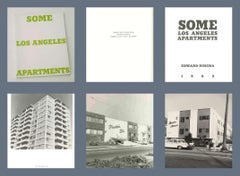
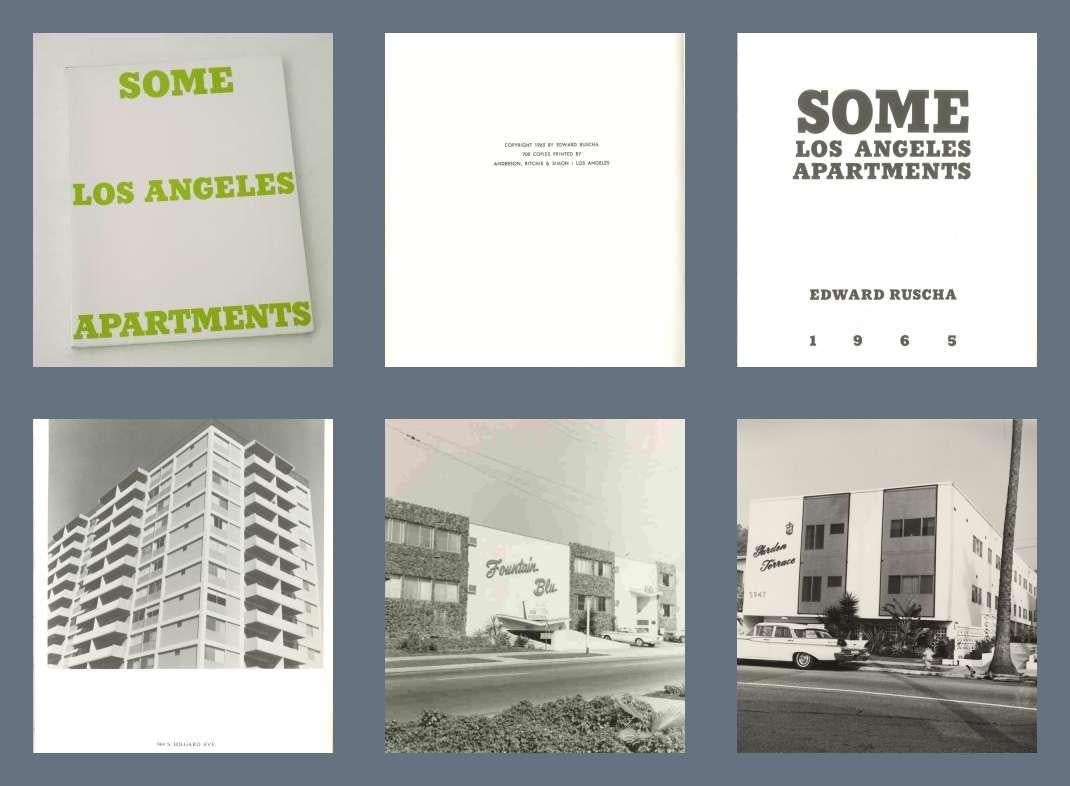
Some Los Angeles Apartments - True, Stated 1st Edition of only 700 Artist Book
By Ed Ruscha
Located in New York, NY
Ed Ruscha Some Los Angeles Apartments (Unsigned), 1965 True First Edition Artist Book: Stated Limited Edition of only 700 7 × 5 1/2 inches Unframed A rare and elusive 1960s Artist Bo...
Category

1960s Pop Art Figurative Prints

Materials

Mixed Media, Lithograph, Offset

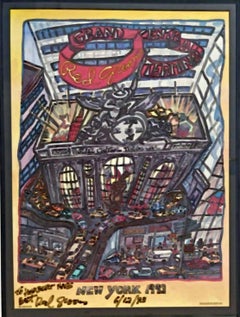
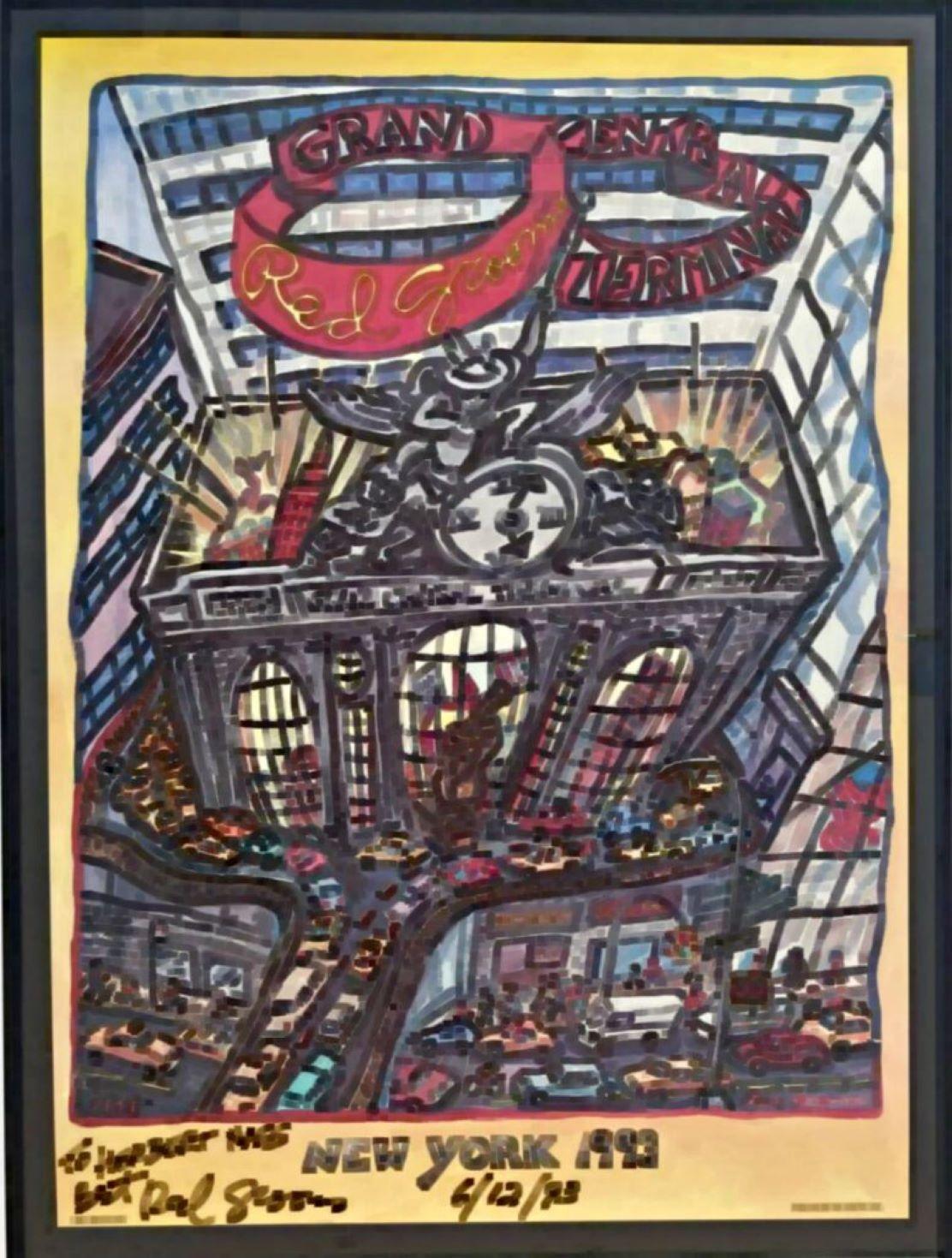
Red Grooms Grand Central Terminal (signed and inscribed to famed estate atty)
By Red Grooms
Located in New York, NY
Red Grooms Grand Central Terminal (signed and inscribed to renowned attorney), 1993 Offset lithograph poster (signed and inscribed in marker to Herbert Nass) Signed, inscribed to Her...
Category

1990s Pop Art Landscape Prints

Materials

Lithograph, Offset

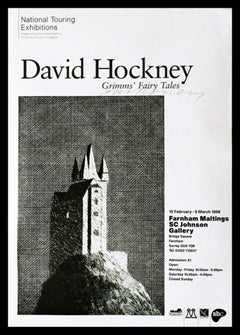
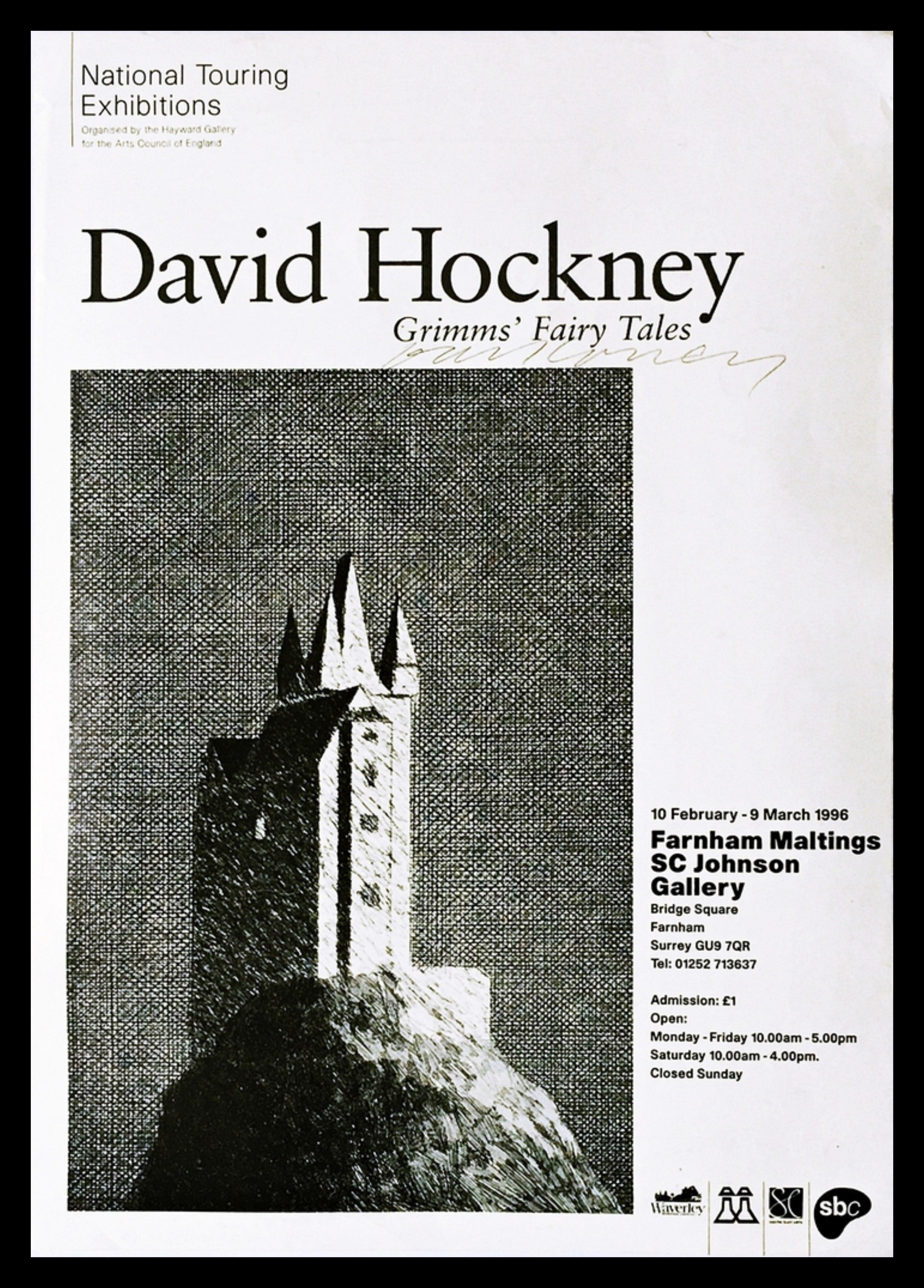
UK exhibition poster of Grimms Fairy Tales (Hand signed by David Hockney)
By David Hockney
Located in New York, NY
David Hockney Grimms' Fairy Tales (Hand Signed), 1996 Offset Lithograph Poster Boldly signed in ink marker on the top front 16 1/2 × 11 1/2 inches Unframed This signed offset lithogr...
Category

1990s Pop Art Landscape Prints

Materials

Lithograph, Offset

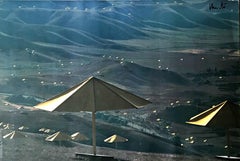
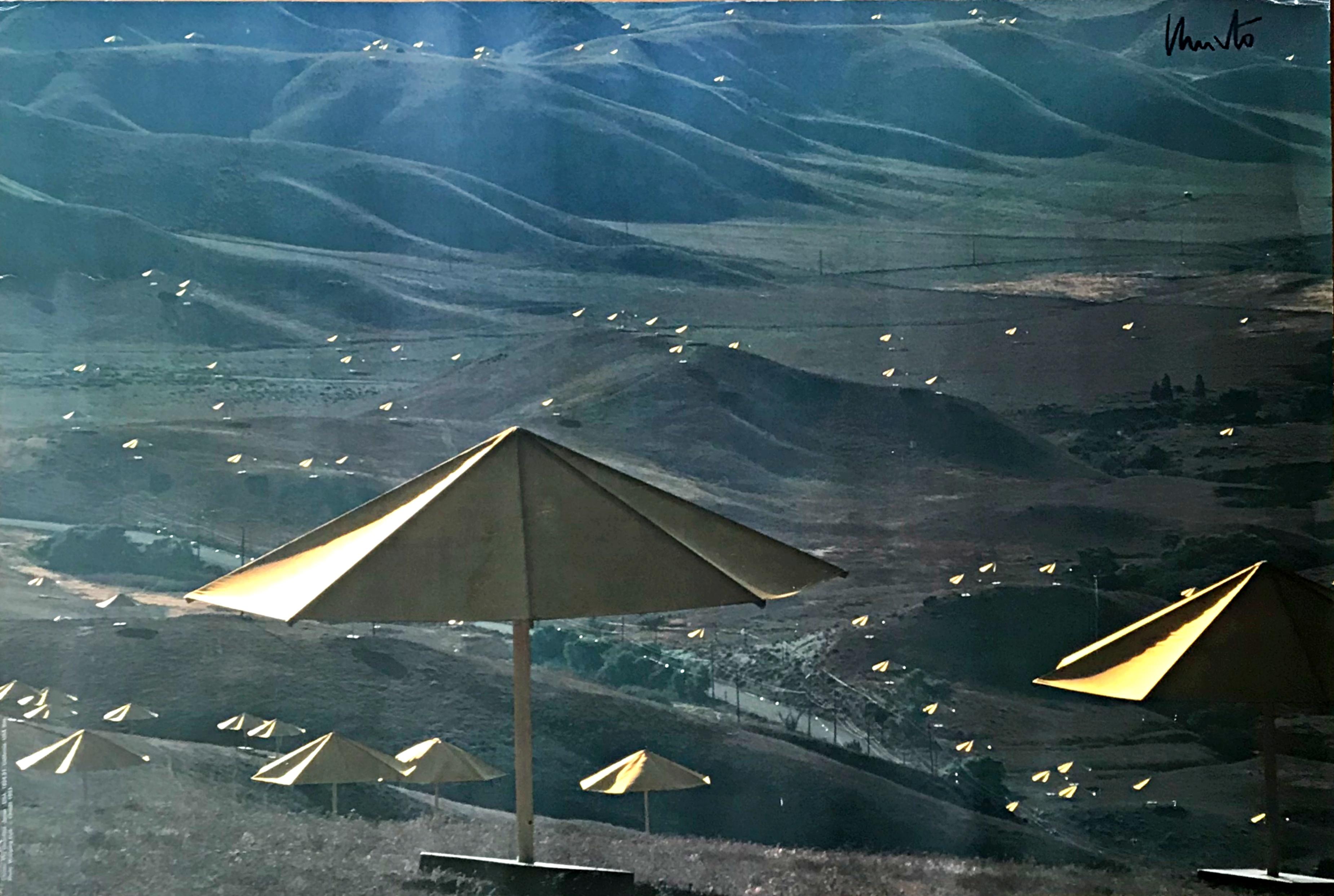
The Umbrellas, Japan - USA Offset lithograph poster (Hand Signed by Christo)
By Christo and Jeanne-Claude
Located in New York, NY
Christo and Jeanne-Claude The Umbrellas, Japan - USA (Hand Signed), 1991 Offset lithograph poster Boldly signed by Christo upper right 25 × 38 inches Unframed This rare vintage poster was published by Christo and Jeanne-Claude to promote and raise funds for Christo's famous Umbrellas Japan-USA project in the early 1990s. It is hand signed boldly in black marker "Christo" on the recto - upper right corner. This work was acquired from the Estate of Jacob and Aviva Baal-Teshuva, collectors, curators, authors, early supporters and good friends of Christo. Authenticity unconditionally guaranteed. ABOUT THE UMBRELLAS JAPAN-USA PROJECT: At sunrise, on October 9, 1991, Christo and Jeanne-Claude's 1,880 workers began to open the 3,100 umbrellas in Ibaraki and California, in the presence of the artists at both sites. This Japan-USA temporary work of art reflected the similarities and differences in the ways of life and the use of the land in two inland valleys, one 12 miles (19 kilometers) long in Japan, and the other 18 miles (29 kilometers) long in the USA. In Japan, the valley is located north of Hitachiota and south of Satomi, 75 miles (120 kilometers) north of Tokyo, around Route 349 and the Sato River, in the Prefecture of Ibaraki, on the properties of 459 private landowners and governmental agencies. In the USA, the valley is located 60 miles (96.5 kilometers) north of Los Angeles, along Interstate 5...
Category

1990s Pop Art Landscape Prints

Materials

Lithograph, Offset

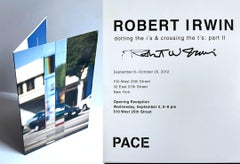
Fold-out PACE Gallery invitation (hand signed by Robert Irwin)
By Robert Irwin
Located in New York, NY
Robert Irwin Fold-out PACE Gallery invitation (hand signed by Robert Irwin), 2012 Offset lithograph fold-out invitation (hand signed by Robert Irwin) Boldly signed by Robert Irwin on...
Category

2010s Conceptual Figurative Prints

Materials

Lithograph, Offset

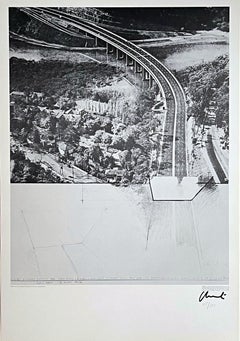
Signed and numbered lithograph for highway across America #115/150, Schelmann 51
By Christo
Located in New York, NY
CHRISTO Closed Highway, Project for 5000 Miles, 6 Lanes East-West Highway (Schellmann, 51), 1972 Lithograph with Offset lettering on wove paper Hand signed in felt tip pen and pencil...
Category

1970s Land Landscape Prints

Materials

Pencil, Lithograph, Offset

You May Also Like

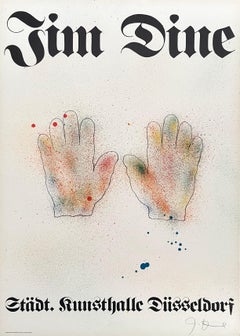
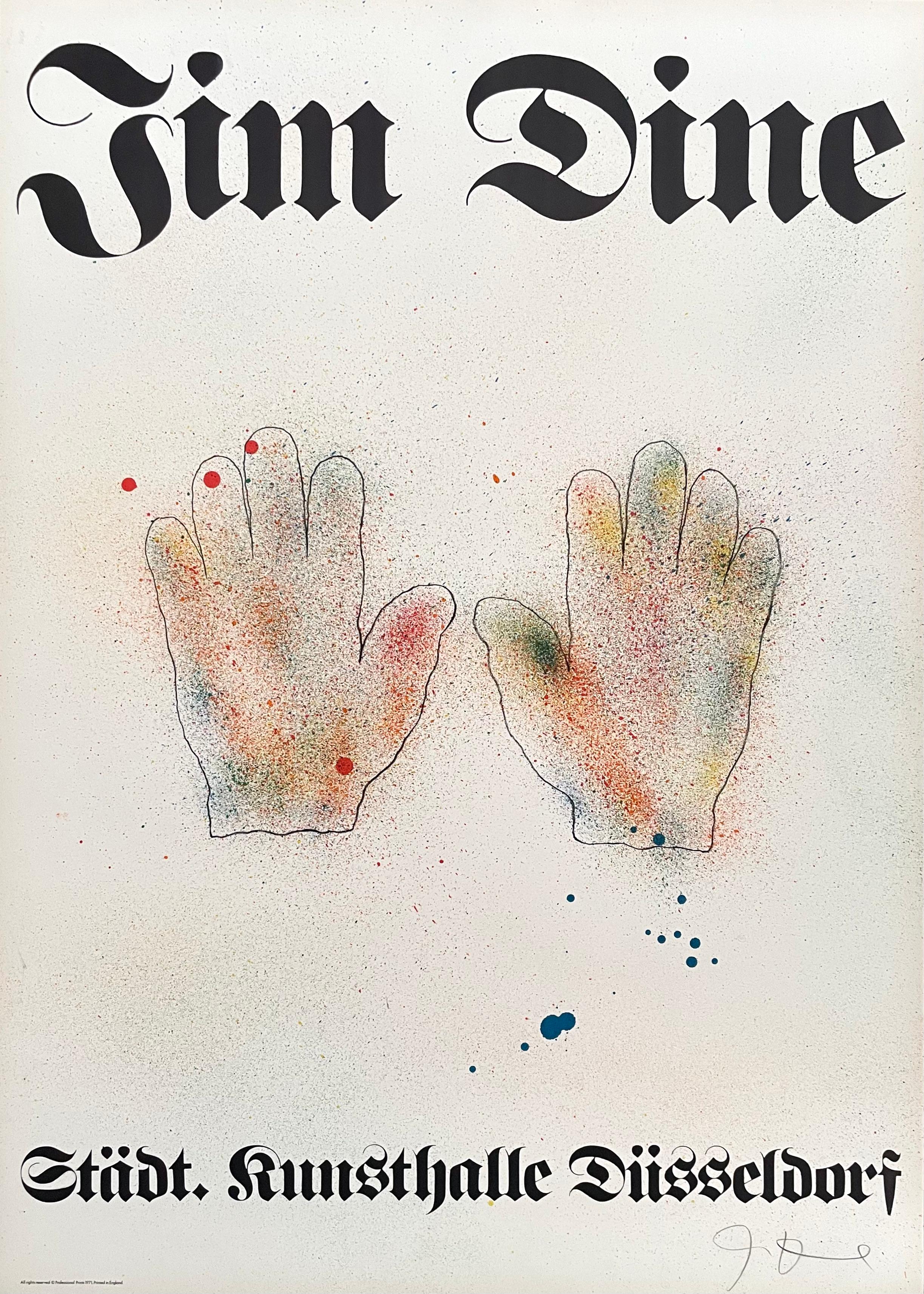
Hands 1971, after Jim Dine
By Jim Dine
Located in Fairfield, CT
Artist: After Jim Dine (1935) Title: Hands, exhibition poster Year: 1971 Medium: Lithograph on Arches paper Size: 30.75 x 22 inches Condition: Excellent Inscription: Signed by the ar...
Category

1970s Pop Art Figurative Prints

Materials

Lithograph, Offset

Hands 1971, after Jim Dine
$2,800 Sale Price
20% Off
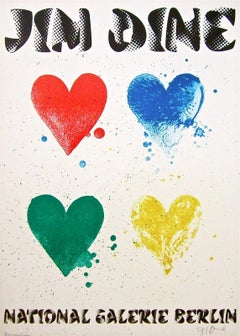
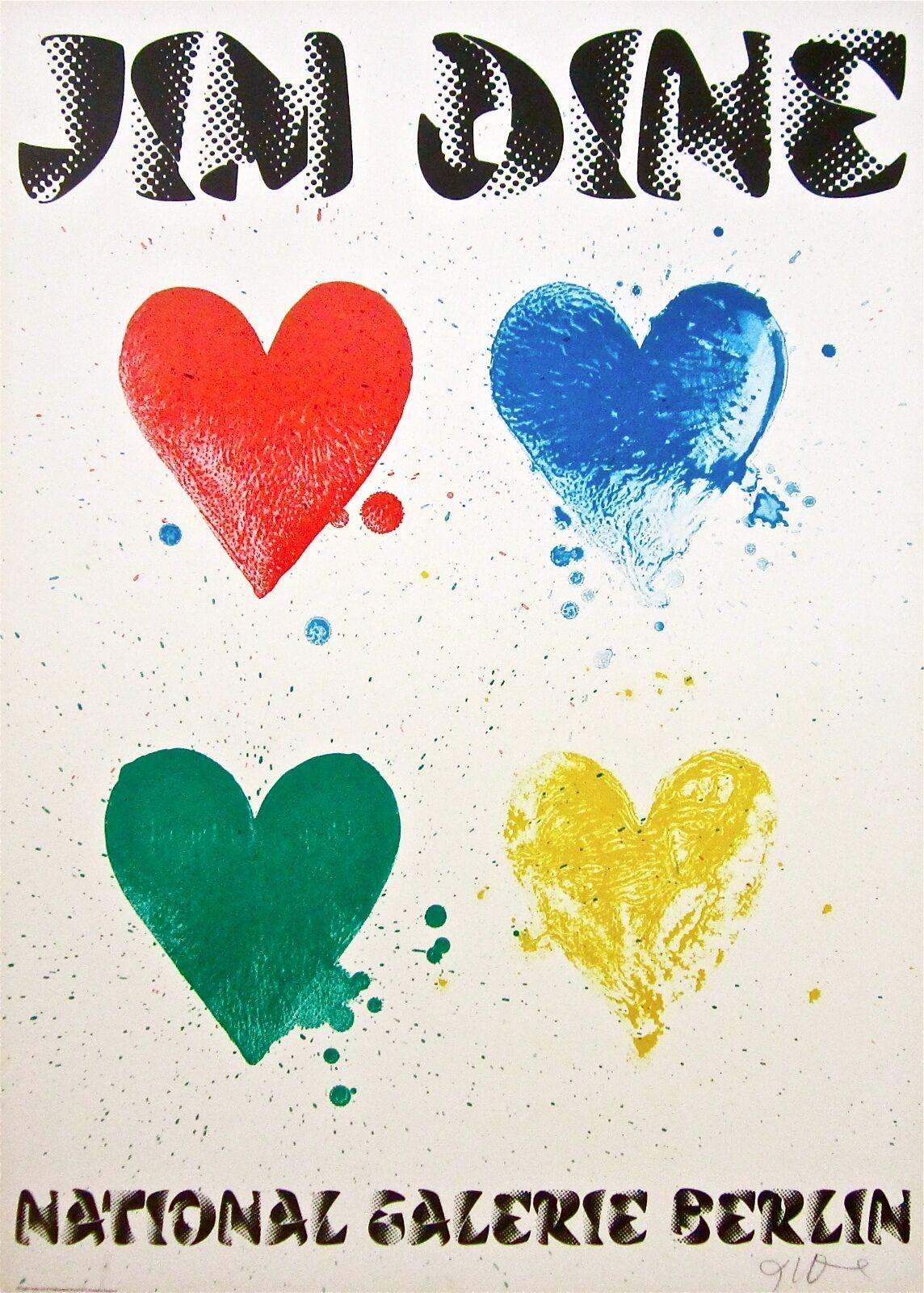
Four Hearts, 1971, after Jim Dine
By Jim Dine
Located in Fairfield, CT
Artist: After Jim Dine (1935) Title: Four Hearts, exhibition poster Year: 1971 Medium: Lithograph on Arches paper Size: 30.75 x 22 inches Condition: Excellent Inscription: Signed by ...
Category

1970s Pop Art Figurative Prints

Materials

Lithograph, Offset

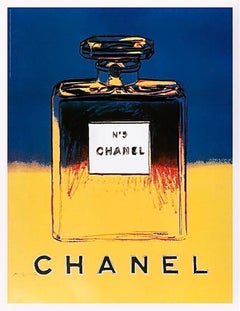
Warhol, Chanel (Yellow/Blue), Chanel Ad Campaign (after)
By Andy Warhol
Located in Fairfield, CT
Title: Chanel Year: 1997 Medium: Offset lithograph on archival paper mounted on canvas Size: 29 x 22 inches Condition: Excellent Inscription: Signed in the plate Notes: This special ...
Category

1990s Pop Art Figurative Prints

Materials

Canvas, Offset

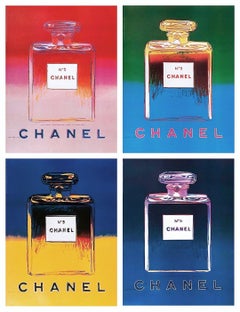
Warhol, Chanel suite (four artworks), Chanel Ad Campaign (after)
By Andy Warhol
Located in Fairfield, CT
Title: Chanel suite (four artworks) Year: 1997 Medium: Offset lithograph on archival paper mounted on canvas Size: 29 x 22 inches, each Condition: Excellent Inscription: Signed in th...
Category

1990s Pop Art Figurative Prints

Materials

Canvas, Offset

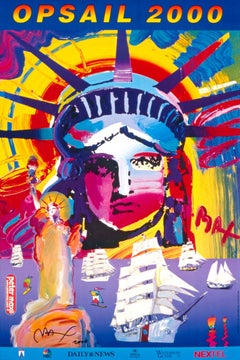
Max, OPSAIL, Hand Signed, Official Edition, Peter Max (after)
By Peter Max
Located in Fairfield, CT
Title: OPSAIL Year: 2000 Medium: Offset lithograph in colors on gloss archival paper Size: 36 x 24 inches Inscription: Hand signed by Peter Max in ink and unnumbered, as issued Notes...
Category

Early 2000s Pop Art Figurative Prints

Materials

Offset

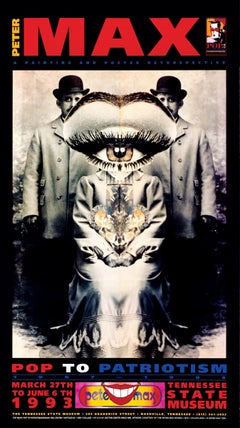
Max, Tennessee State Museum, Hand Signed, Official Edition, Peter Max (after)
By Peter Max
Located in Fairfield, CT
Title: Tennessee State Museum Year: 1993 Medium: Offset lithograph in colors on gloss archival paper Size: 36 x 20 inches Inscription: Hand signed by Peter Max in ink and unnumbered,...
Category

1990s Pop Art Figurative Prints

Materials

Offset