Expressionist Figurative Prints

EXPRESSIONIST STYLE

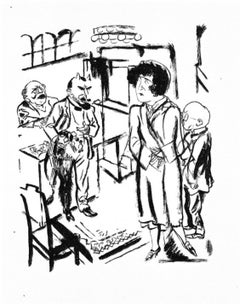
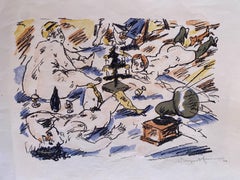
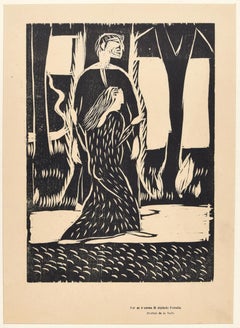
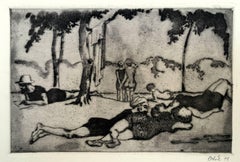
While “expressionist” is used to describe any art that avoids naturalism and instead employs a bold use of flattened forms and intense brushwork, Expressionist art formally describes early-20th-century work from Europe that drew on Symbolism and confronted issues such as urbanization and capitalism. Expressionist artists experimented in paintings and prints with skewed perspectives, abstraction and unconventional, bright colors to portray how isolating and anxious the world felt rather than how it appeared. 

Between 1905 and 1920, Austrian and German artists, in particular, were inspired by Postimpressionists such as Paul Gauguin and Vincent van Gogh in their efforts to strive for a new authenticity in their work. In its geometric patterns and decorative details, Expressionist art was also marked by eclectic sources like German and Russian folk art as well as tribal art from Africa and Oceania, which the movement’s practitioners witnessed at museums and world’s fairs.

Groups of artists came together to share and promote the themes now associated with Expressionism, such as Die Brücke (The Bridge) in Dresden, which included Erich Heckel, Ernst Ludwig Kirchner and Karl Schmidt-Rottluff and investigated alienation and the dissolution of society in vivid color. In Munich, Der Blaue Reiter (The Blue Rider), a group led by Wassily Kandinsky and Franz Marc, instilled Expressionism with a search for spiritual truths. In his iconic painting The Scream, prolific Norwegian painter Edvard Munch conveyed emotional turmoil through his depiction of environmental elements, such as the threatening sky.

Expressionism shifted around the outbreak of World War I, with artists using more elements of the grotesque in reaction to the escalation of unrest and violence. Printmaking was especially popular, as it allowed artists to widely disseminate works that grappled with social and political issues amid this time of upheaval. Although the art movement ended with the rise of Nazi Germany, where Expressionist creators were labeled “degenerate,” the radical ideas of these artists would influence Neo-Expressionism that emerged in the late 1970s with painters like Jean-Michel Basquiat and Francesco Clemente.

​​Find a collection of authentic Expressionist paintings, sculptures, prints and more art on 1stDibs.

to
393
546
212
147
64
24
Overall Width
to
Overall Height
to
15,579
7,947
2,667
2,429
2,252
1,054
725
673
416
324
112
93
39
143
53
38
31
28
1
25
882
89
53
66
137
33
8
103
127
78
98
34
1
698
287
8
683
403
305
242
235
224
150
121
71
41
36
31
23
23
21
21
21
18
17
16
599
146
90
85
53
97
151
804
134
Style: Expressionist
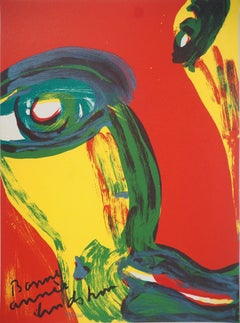
Fauvist Portrait in Red - Original lithograph
Located in Paris, IDF
Bengt Lindström (1925-2008) Fauvist Portrait in Red Original Lithograph Printed signature in the plate Numbered / 500 ex On vellum 31 x 22.5 cm (c. ...
Category

Late 20th Century Expressionist Figurative Prints

Materials

Lithograph

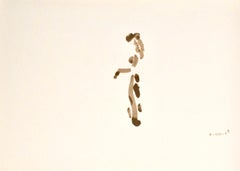
Apeles Fenosa Spanish Sculptor Mourlot Lithograph Abstract Expressionist Figures
Located in Surfside, FL
This is from a hand signed, limited edition (edition of 125) folio or full page lithographs some having a poem verso. The individual sheets are not signed or numbered. This listing ...
Category

1970s Expressionist Figurative Prints

Materials

Lithograph

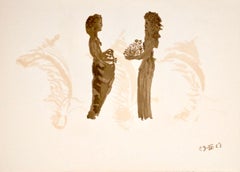
Apeles Fenosa Spanish Sculptor Mourlot Lithograph Abstract Expressionist Figures
Located in Surfside, FL
This is from a hand signed, limited edition (edition of 125) folio or full page lithographs some having a poem verso. The individual sheets are not signed or numbered. This listing ...
Category

1970s Expressionist Figurative Prints

Materials

Lithograph

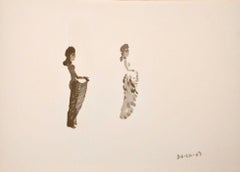
Apeles Fenosa Spanish Sculptor Mourlot Lithograph Abstract Expressionist Figures
Located in Surfside, FL
This is from a hand signed, limited edition (edition of 125) folio or full page lithographs some having a poem verso. The individual sheets are not signed or numbered. This listing ...
Category

1970s Expressionist Figurative Prints

Materials

Lithograph

Apeles Fenosa Spanish Sculptor Mourlot Lithograph Abstract Expressionist Figures
Located in Surfside, FL
This is from a hand signed, limited edition (edition of 125) folio or full page lithographs some having a poem verso. The individual sheets are not signed or numbered. This listing ...
Category

1970s Expressionist Figurative Prints

Materials

Lithograph

Apeles Fenosa Spanish Sculptor Mourlot Lithograph Abstract Expressionist Figures
Located in Surfside, FL
This is from a hand signed, limited edition (edition of 125) folio or full page lithographs some having a poem verso. The individual sheets are not signed or numbered. This listing ...
Category

1970s Expressionist Figurative Prints

Materials

Lithograph

Apeles Fenosa Spanish Sculptor Mourlot Lithograph Abstract Expressionist Figures
Located in Surfside, FL
This is from a hand signed, limited edition (edition of 125) folio or full page lithographs with a poem verso. The individual sheets are not signed or numbered. This listing is just...
Category

1970s Expressionist Figurative Prints

Materials

Lithograph

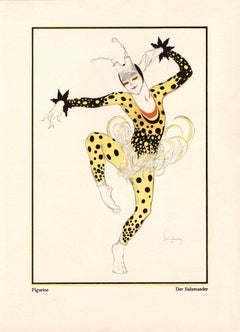
Kostume, Plakate, und Dekorationen, "Der Salamander"
Located in Palm Beach, FL
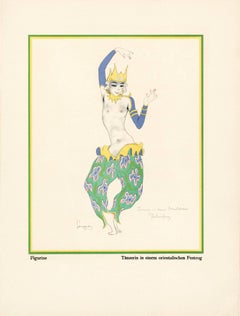
Walter Schnackenberg’s style changed several times during his long and successful career. Having studied in Munich, the artist traveled often to Paris where he fell under the spell of the Henri de Toulouse-Lautrec’s colorful and sensuous posters depicting theatrical and decadent subjects. Schnackenberg became a regular contributor of similar compositions to the German magazines Jugend and Simplicissimus before devoting himself to the design of stage scenery and costumes. In the artist’s theatrical work, his mastery of form, ornamentation, and Orientalism became increasingly evident. He excelled at combining fluid Art Nouveau outlines, with spiky Expressionist passages, and the postures and patterns of the mysterious East...
Category

1910s Expressionist Figurative Prints

Materials

Lithograph

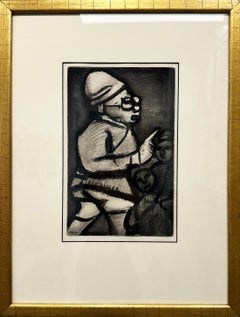
Bold Black and White Etching on Paper The Colonial Governor by Georges Rouault
Located in White Plains, NY
'The Colonial Governor' by Georges Rouault. Etching on paper, 10.5 x 6.5 in. / Frame: 19.5 x 14.5 in. This work is an exceptional example of Rouault's work, depicting the colonial go...
Category

1920s Expressionist Figurative Prints

Materials

Paper, Etching

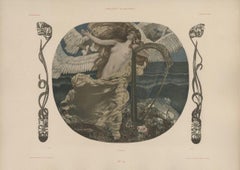
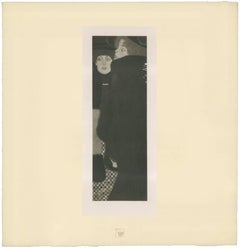
Gerlach s Allegorien Plate #98: "Poetry" Lithograph by Carl Otto Czeschka
Located in Palm Beach, FL
after Carl Otto Czeschka, (1878-1960), Austrian A leading member of the Vienna Secession and later the Wiener Werkstätte (Viennese Workshop), Carl Otto Czeschka was a vital figu...
Category

1890s Expressionist Figurative Prints

Materials

Lithograph

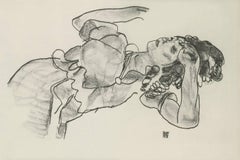
E. Strache, Handzeichnungen folio, "Reclining Girl, Half-Figure" Collotype plate
Located in Palm Beach, FL
after Egon Schiele (1890 – 1918), AUSTRIA “ART CANNOT BE MODERN, ART IS PRIMORDIALLY ETERNAL.” -SCHIELE Defiantly iconoclastic in life and art, Egon Schiele is esteemed for his mas...
Category

1920s Expressionist Figurative Prints

Materials

Paper

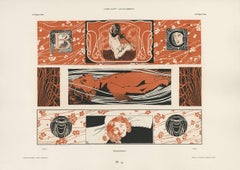
Gerlach s Allegorien Plate #94: "Heads" Lithograph
Located in Palm Beach, FL
Koloman Moser (1868 –1918), AUSTRIAN Instead of applying his flair and art education solely to painting, Koloman Moser embodied the idea of Gesamt Kunstwerk (all-embracing art work) by designing architecture, furniture, jewelry, graphics, and tapestries meant to coordinate every detail of an environment. His work transcended the imitative decorative arts of earlier eras and helped to define Modernism for generations to come. Moser achieved a remarkable balance between intellectual structure (often geometric) and hedonistic luxury. Collaborating with Gustav Klimt and Josef Hoffmann, the artist was an editor and active contributor to Ver Sacrum, (Sacred Spring), the journal of the Viennese Secession that was so prized for its aesthetics and high quality production that it was considered a work of art. The magazine featured drawings and designs in the Jugendstil style (Youth) along with literary contributions from distinguished writers from across Europe. It quickly disseminated both the spirit and the style of the Secession. In 1903 Moser and Hoffmann founded and led the Wiener Werkstatte (Viennese Workshop) a collective of artisans that produced elegant decorative arts items, not as industrial prototypes but for the purpose of sale to the public. The plan, as idealistic then as now, was to elevate the lives of consumers by means of beautiful and useful interior surroundings. Moser’s influence has endured throughout the century. His design sensibility is evident from the mid-century modern furniture of the 1950s and ‘60s to the psychedelic rock posters...
Category

1890s Expressionist Figurative Prints

Materials

Lithograph

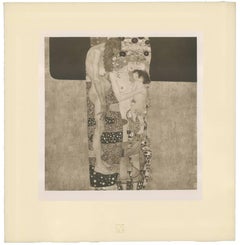
H.O. Miethke Das Werk folio "The Three Ages of Woman" collotype print
Located in Palm Beach, FL
DAS WERK GUSTAV KLIMTS, a portfolio of 50 prints, ten of which are multicolor collotypes on chine colle paper laid down on hand-made heavy cream wove paper with deckled edges; under ...
Category

Early 1900s Expressionist Figurative Prints

Materials

Paper

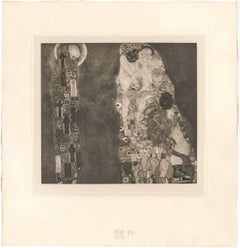
H.O. Miethke Das Werk folio "Death and Life" collotype print
Located in Palm Beach, FL
DAS WERK GUSTAV KLIMTS, a portfolio of 50 prints, ten of which are multicolor collotypes on chine colle paper laid down on hand-made heavy cream wove paper with deckled edges; under ...
Category

Early 1900s Expressionist Figurative Prints

Materials

Paper

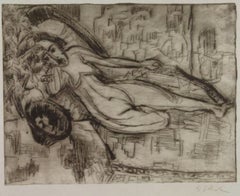
Nacktes Liegendes Mädchen auf Diwan
Located in New York, NY
Drypoint printed in dark brown on heavy cream wove paper with wide margins. This is the third state (of four) from a small edition of only several. Signed and inscribed "II Zustand" ...
Category

1920s Expressionist Figurative Prints

Materials

Color, Drypoint

H.O. Miethke Das Werk folio "The Sisters" collotype print
Located in Palm Beach, FL
DAS WERK GUSTAV KLIMTS, a portfolio of 50 prints, ten of which are multicolor collotypes on chine colle paper laid down on hand-made heavy cream wove paper with deckled edges; under each of the 50 prints is a gold signet intaglio printed on the cream paper each of which Klimt designed for the publication as unique and relating to its corresponding image; H.O. Miethke, Editor-Publisher; k.k. Hof-und Staatsdruckerei, Printer; printed in a limited edition of 300 numbered plus several presentation copies; Vienna, 1908-1914. The idea of collaboration in the arts is anything but new; however it has so often been viewed and assessed as somehow devaluing the intrinsic worth of art. It’s as if it was a dirty secret to be hidden away. More so even than the eroticism explored by Klimt, which divided public opinion, the artistic avant-garde began to boldly flaunt artistic collaboration beginning in the 19th century- which gained steam in the first part of the 20th century- to become a driving vehicle of contemporary artistic creation. Viewed in this context, the folios of collotype prints published by H.O. Miethke in Vienna between 1908-1914 known as Das Werk Gustav Klimts, are important art documents worthy of as much consideration for their bold stand they take on established ways of thinking about artistic collaboration as they are for their breathtakingly striking images. 1908 is indeed a watershed moment in the history of art. To coincide with the 60th anniversary of the reign of Emperor Franz Joseph I, Kunstschau opened in Vienna in May of that year. It was there that Klimt delivered the inaugural speech. Speaking about the avant-garde group’s unifying philosophy of Gesamtkunstwerk, or the synthesis of the arts, Klimt shared his belief that the ideal means to bring artists and an audience together was via “work on major art projects.” It was at Kunstschau 1908 that Klimt first exhibited his most iconic painting, The Kiss, as well as The Sunflower, Water Snakes I and II and Danae. It was at Kunstschau 1908 that Das Werk Gustav Klimts was first available for purchase. Thanks to Galerie Miethke’s organization, Kunstschau 1908 was possible. Miethke’s pioneering art house had become Klimt’s exclusive art dealer and main promoter of his modernist vision. Paul Bacher and Carl Moll, a founding member with Klimt of the Vienna Secession, who all broke away during the rift in 1905, took stewardship of the gallery following the fallout with the Secession. Das Werk Gustav Klimts is a prime example of Miethke’s masterful and revolutionary approach to marketing art. Miethke’s innovative marketing strategy played to a penchant for exclusivity. The art gallery and publishing house utilized the press and art critics- such as Austria’s preeminent Art Historian, Hugo Haberfield, who became Director of the gallery in 1912- as a means of gaining publicity as well as maintaining effective public relations. Miethke used the grand exposition format to extend the art gallery’s market reach, cultivating their product’s prestige by stroking the egos of current art patrons while simultaneously creating accessibility for newcomers and others avid collectors to share a relative proximity to other wealthy and respected members of the art collecting community. Essentially, their approach paved the way for what is still the predominant means of marketing. Between 1908 and 1914, H.O. Miethke published a total of 5 installments of print folios of Klimt’s painted work, each comprising 10 prints. The series was limited in availability to 300 and purchase was arranged through subscription. Each issue was presented unbound in a gold embossed black paper folder. Included in the folio was a Title Page, a Justification page and a Table of Contents page itemizing each of the 10 printed works with details about their corresponding painted works as well as information about each work’s current owner. These folios were not comprehensive of Klimt’s work; but rather, they feature what he believed were his most important paintings from 1898-1913. Only 2 collotypes in each folio were multicolored. To punctuate the fact that Klimt, himself, was very much an active player in creating these printed works, he created square-shaped signets, unique to each collotype which were intaglio printed in gold ink at the bottom of the cream wove papers to which the chine collie papers were affixed.These signets relate thematically to their corresponding printed images and designate each of those images by their placement in the folio’s Table...
Category

Early 1900s Expressionist Figurative Prints

Materials

Archival Paper

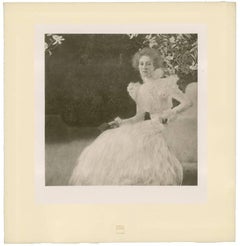
H.O. Miethke Das Werk folio "Portrait of Sonja Knips" collotype print
Located in Palm Beach, FL
DAS WERK GUSTAV KLIMTS, a portfolio of 50 prints, ten of which are multicolor collotypes on chine colle paper laid down on hand-made heavy cream wove paper with deckled edges; under ...
Category

Early 1900s Expressionist Figurative Prints

Materials

Paper

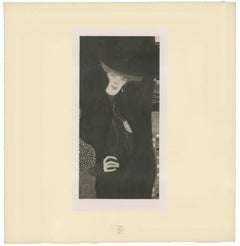
H.O. Miethke Das Werk folio "Portrait of Lady in Red and Black" collotype print
Located in Palm Beach, FL
DAS WERK GUSTAV KLIMTS, a portfolio of 50 prints, ten of which are multicolor collotypes on chine colle paper laid down on hand-made heavy cream wove paper with deckled edges; under each of the 50 prints is a gold signet intaglio...
Category

Early 1900s Expressionist Figurative Prints

Materials

Paper

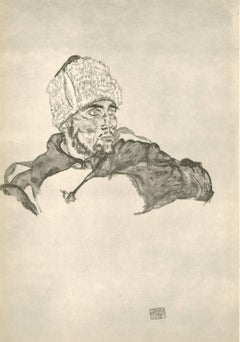
R. Layni, Zeichnungen folio, "Russian Soldier" Collotype plate VII
Located in Palm Beach, FL
Egon Schiele (1890 – 1918), AUSTRIA “ART CANNOT BE MODERN, ART IS PRIMORDIALLY ETERNAL.” -SCHIELE Defiantly iconoclastic in life and art, Egon Schiele is esteemed for his masterful draftsmanship and precocious insight into the human condition. Part of the first wave of Austrian Modernism, he was swept away by the Viennese fascination with the tension between Life and Death (known in the works of Freud and his later interpreters as Eros and Thanatos). Life, identified with attraction, love, sexuality, and reproduction, and Death, represented by distortion, disease, repulsion, and hysteria, often appeared in the same composition, thereby suggesting the frightening life cycle of the human mind and body. Young throughout his career, Schiele universalized his childhood traumas, thriving libido, insecurities, fears, and longings. His contorted line, jarring contrasts, and flat areas of color, demonstrate an early alliance with Expressionist philosophy and artists who were relentlessly frustrated by conventionality in all its forms. Schiele’s work embodied man’s disorientation and confusion in a seemingly absurd world, a world plagued by disease and war. It continues to be astonishingly relevant today, not just because it helped define Modernism but also because it revealed the dark and immutable aspects of the human condition. Zeichnungen is a fine art print portfolio published by Verlag der Buchhandlung Richard Lanyi, Vienna, 1917, printed by Max Jaffe...
Category

1910s Expressionist Figurative Prints

Materials

Paper

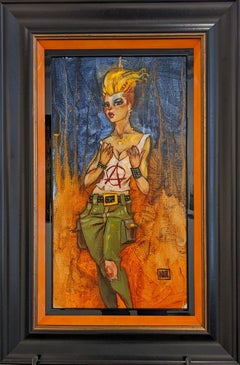
Social Distancing (Original)
Located in Toronto, ON
21” x 11” Unframed Original Acrylic on Canvas Board Hand Signed by Todd White Todd white captures restaurant, night and Hollywood scenes with contrasting colors serving the viewer’...
Category

2010s Expressionist Figurative Prints

Materials

Canvas, Acrylic

Kostume, Plakate, und Dekorationen, "Shadows Light"
Located in Palm Beach, FL
Walter Schnackenberg’s style changed several times during his long and successful career. Having studied in Munich, the artist traveled often to Paris where he fell under the spell of the Henri de Toulouse-Lautrec’s colorful and sensuous posters depicting theatrical and decadent subjects. Schnackenberg became a regular contributor of similar compositions to the German magazines Jugend and Simplicissimus before devoting himself to the design of stage scenery and costumes. In the artist’s theatrical work, his mastery of form, ornamentation, and Orientalism became increasingly evident. He excelled at combining fluid Art Nouveau outlines, with spiky Expressionist passages, and the postures and patterns of the mysterious East. In his later years, Schnackenberg explored the unconscious, using surreal subject matter and paler colors that plainly portrayed dreams and visions, some imbued with political connotations. His drawings, illustrations, folio prints, and posters are highly sought today for their exceedingly imaginative qualities, enchanting subject matter, and arresting use of color. SCHNACKENBERG: KOSTUME, PLAKATE UND DEKORATIONEN, a cardboard bound art book consisting of 43 prints of work by Walter Schnackenberg, 30 of which are color lithographs that are signed and some are titled and dated in the plate, as well as black and white prints and photographs with accompanying text by Oskar Bie; lithographs printed at Kunstanstalt Oskar Consee in Munich, other images printed by Gesellschaft Pick & Co. in Munich, the text and cover with color images by Schnackenberg front and verso printed by R. Oldenbourg in Munich; published by Musarion Verlag, Munich, 1920. The majority of Walter Schnackenberg’s artistic output was destroyed by bomb attacks in Munich in 1944. The highly publicized 2013 auction in New York of the recovered pre-war poster collection once belonging to German poster aficionado, Hans Sachs has reintroduced the world to Walter Schnackenberg’s graphic genius and priceless ephemeral art from a lost era. Besides the museum world, designer Karl Lagerfeld is one of the most prodigious collectors of Schnackenberg. Flipping through the pages of Kostume, Plakate und Dekorationen, it becomes quite clear that Schnackenberg’s collection is ground zero at the crossroads of early modern fashion where the cult of celebrity meets up with dance, music, theater and cabaret, film and the graphic medium. Berlin and Munich under Germany’s Weimar Republic in the first quarter of the 20th century produced just the atmosphere to feed this burgeoning industry. Rising inflation sparked a recklessness to live large for the moment and heightened a desire for escapism. An influx of Indian and East Asian dancers and musicians added to the artsy bohemian cultural mix. A new decadence and tolerance resulted. Film boldly featured provocative subject matter. Cabarets became popular venues giving rise to the demi-monde in which people from all social stations mixed more freely in a thriving underground economy and culture where there was a blurring of boundaries and of social codes. Noted art historian and cultural doyen, Oskar Bie astutely observes in his introduction to Schnackenberg’s publication that what unites the images is fantasy and advertisement. Schnackenberg uses the eye as an instrument to brilliantly construct and convey this double message. His personages never directly confront the viewer. Their eyes gaze off in the distance like those of the screenplayer and film star Hedamaria Scholz in Schnackenberg’s “Die Rodelhexe” movie poster. Their eyes follow the path of a dance composition or become a transfixed and ogling male gaze such as the iconic 1911 Odeon Casino poster...
Category

1910s Expressionist Figurative Prints

Materials

Lithograph

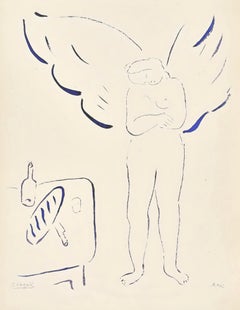
Chagall, Composition, Le Dur Désir de Durer (after)
Located in Southampton, NY
Lithograph on vélin bouffant d'Alfa paper. Inscription: unsigned and unnumbered, as issued. Good condition. Notes: From the volume, Le Dur Désir de Durer, illustré par Marc Chagall, ...
Category

1950s Expressionist Figurative Prints

Materials

Lithograph

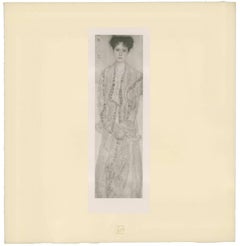
H.O. Miethke Das Werk folio "Portrait of Gertha Felsövanyi" collotype print
Located in Palm Beach, FL
DAS WERK GUSTAV KLIMTS, a portfolio of 50 prints, ten of which are multicolor collotypes on chine colle paper laid down on hand-made heavy cream wove paper with deckled edges; under ...
Category

Early 1900s Expressionist Figurative Prints

Materials

Paper

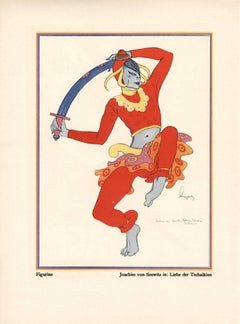
Kostume, Plakate, und Dekorationen, "Joachim von Seewitz"
Located in Palm Beach, FL
Walter Schnackenberg’s style changed several times during his long and successful career. Having studied in Munich, the artist traveled often to Paris where he fell under the spell of the Henri de Toulouse-Lautrec’s colorful and sensuous posters depicting theatrical and decadent subjects. Schnackenberg became a regular contributor of similar compositions to the German magazines Jugend and Simplicissimus before devoting himself to the design of stage scenery and costumes. In the artist’s theatrical work, his mastery of form, ornamentation, and Orientalism became increasingly evident. He excelled at combining fluid Art Nouveau outlines, with spiky Expressionist passages, and the postures and patterns of the mysterious East. In his later years, Schnackenberg explored the unconscious, using surreal subject matter and paler colors that plainly portrayed dreams and visions, some imbued with political connotations. His drawings, illustrations, folio prints, and posters are highly sought today for their exceedingly imaginative qualities, enchanting subject matter, and arresting use of color. SCHNACKENBERG: KOSTUME, PLAKATE UND DEKORATIONEN, a cardboard bound art book consisting of 43 prints of work by Walter Schnackenberg, 30 of which are color lithographs that are signed and some are titled and dated in the plate, as well as black and white prints and photographs with accompanying text by Oskar Bie; lithographs printed at Kunstanstalt Oskar Consee in Munich, other images printed by Gesellschaft Pick & Co. in Munich, the text and cover with color images by Schnackenberg front and verso printed by R. Oldenbourg in Munich; published by Musarion Verlag, Munich, 1920. The majority of Walter Schnackenberg’s artistic output was destroyed by bomb attacks in Munich in 1944. The highly publicized 2013 auction in New York of the recovered pre-war poster collection once belonging to German poster aficionado, Hans Sachs has reintroduced the world to Walter Schnackenberg’s graphic genius and priceless ephemeral art from a lost era. Besides the museum world, designer Karl Lagerfeld is one of the most prodigious collectors of Schnackenberg. Flipping through the pages of Kostume, Plakate und Dekorationen, it becomes quite clear that Schnackenberg’s collection is ground zero at the crossroads of early modern fashion where the cult of celebrity meets up with dance, music, theater and cabaret, film and the graphic medium. Berlin and Munich under Germany’s Weimar Republic in the first quarter of the 20th century produced just the atmosphere to feed this burgeoning industry. Rising inflation sparked a recklessness to live large for the moment and heightened a desire for escapism. An influx of Indian and East Asian dancers and musicians added to the artsy bohemian cultural mix. A new decadence and tolerance resulted. Film boldly featured provocative subject matter. Cabarets became popular venues giving rise to the demi-monde in which people from all social stations mixed more freely in a thriving underground economy and culture where there was a blurring of boundaries and of social codes. Noted art historian and cultural doyen, Oskar Bie astutely observes in his introduction to Schnackenberg’s publication that what unites the images is fantasy and advertisement. Schnackenberg uses the eye as an instrument to brilliantly construct and convey this double message. His personages never directly confront the viewer. Their eyes gaze off in the distance like those of the screenplayer and film star Hedamaria Scholz in Schnackenberg’s “Die Rodelhexe” movie poster. Their eyes follow the path of a dance composition or become a transfixed and ogling male gaze such as the iconic 1911 Odeon Casino...
Category

1910s Expressionist Figurative Prints

Materials

Lithograph, Paper

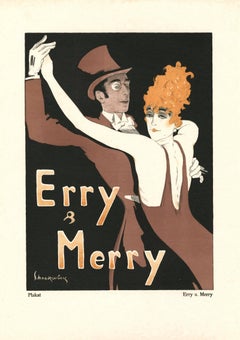
Kostume, Plakate, und Dekorationen, "Erry Merry"
Located in Palm Beach, FL
Walter Schnackenberg’s style changed several times during his long and successful career. Having studied in Munich, the artist traveled often to Paris where he fell under the spell of the Henri de Toulouse-Lautrec’s colorful and sensuous posters depicting theatrical and decadent subjects. Schnackenberg became a regular contributor of similar compositions to the German magazines Jugend and Simplicissimus before devoting himself to the design of stage scenery and costumes. In the artist’s theatrical work, his mastery of form, ornamentation, and Orientalism became increasingly evident. He excelled at combining fluid Art Nouveau outlines, with spiky Expressionist passages, and the postures and patterns of the mysterious East. In his later years, Schnackenberg explored the unconscious, using surreal subject matter and paler colors that plainly portrayed dreams and visions, some imbued with political connotations. His drawings, illustrations, folio prints, and posters are highly sought today for their exceedingly imaginative qualities, enchanting subject matter, and arresting use of color. SCHNACKENBERG: KOSTUME, PLAKATE UND DEKORATIONEN, a cardboard bound art book consisting of 43 prints of work by Walter Schnackenberg, 30 of which are color lithographs that are signed and some are titled and dated in the plate, as well as black and white prints and photographs with accompanying text by Oskar Bie; lithographs printed at Kunstanstalt Oskar Consee in Munich, other images printed by Gesellschaft Pick & Co. in Munich, the text and cover with color images by Schnackenberg front and verso printed by R. Oldenbourg in Munich; published by Musarion Verlag, Munich, 1920. The majority of Walter Schnackenberg’s artistic output was destroyed by bomb attacks in Munich in 1944. The highly publicized 2013 auction in New York of the recovered pre-war poster collection once belonging to German poster aficionado, Hans Sachs has reintroduced the world to Walter Schnackenberg’s graphic genius and priceless ephemeral art from a lost era. Besides the museum world, designer Karl Lagerfeld is one of the most prodigious collectors of Schnackenberg. Flipping through the pages of Kostume, Plakate und Dekorationen, it becomes quite clear that Schnackenberg’s collection is ground zero at the crossroads of early modern fashion where the cult of celebrity meets up with dance, music, theater and cabaret, film and the graphic medium. Berlin and Munich under Germany’s Weimar Republic in the first quarter of the 20th century produced just the atmosphere to feed this burgeoning industry. Rising inflation sparked a recklessness to live large for the moment and heightened a desire for escapism. An influx of Indian and East Asian dancers and musicians added to the artsy bohemian cultural mix. A new decadence and tolerance resulted. Film boldly featured provocative subject matter. Cabarets became popular venues giving rise to the demi-monde in which people from all social stations mixed more freely in a thriving underground economy and culture where there was a blurring of boundaries and of social codes. Noted art historian and cultural doyen, Oskar Bie astutely observes in his introduction to Schnackenberg’s publication that what unites the images is fantasy and advertisement. Schnackenberg uses the eye as an instrument to brilliantly construct and convey this double message. His personages never directly confront the viewer. Their eyes gaze off in the distance like those of the screenplayer and film star Hedamaria Scholz in Schnackenberg’s “Die Rodelhexe” movie poster. Their eyes follow the path of a dance composition or become a transfixed and ogling male gaze such as the iconic 1911 Odeon Casino poster...
Category

1910s Expressionist Figurative Prints

Materials

Lithograph

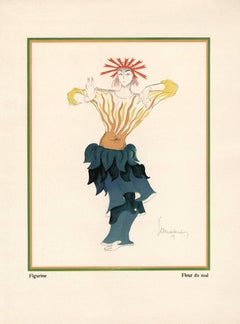
Kostume, Plakate, und Dekorationen, "Flower of Evil"
Located in Palm Beach, FL
Walter Schnackenberg’s style changed several times during his long and successful career. Having studied in Munich, the artist traveled often to Paris where he fell under the spell of the Henri de Toulouse-Lautrec’s colorful and sensuous posters depicting theatrical and decadent subjects. Schnackenberg became a regular contributor of similar compositions to the German magazines Jugend and Simplicissimus before devoting himself to the design of stage scenery and costumes. In the artist’s theatrical work, his mastery of form, ornamentation, and Orientalism became increasingly evident. He excelled at combining fluid Art Nouveau outlines, with spiky Expressionist passages, and the postures and patterns of the mysterious East. In his later years, Schnackenberg explored the unconscious, using surreal subject matter and paler colors that plainly portrayed dreams and visions, some imbued with political connotations. His drawings, illustrations, folio prints, and posters are highly sought today for their exceedingly imaginative qualities, enchanting subject matter, and arresting use of color. SCHNACKENBERG: KOSTUME, PLAKATE UND DEKORATIONEN, a cardboard bound art book consisting of 43 prints of work by Walter Schnackenberg, 30 of which are color lithographs that are signed and some are titled and dated in the plate, as well as black and white prints and photographs with accompanying text by Oskar Bie; lithographs printed at Kunstanstalt Oskar Consee in Munich, other images printed by Gesellschaft Pick & Co. in Munich, the text and cover with color images by Schnackenberg front and verso printed by R. Oldenbourg in Munich; published by Musarion Verlag, Munich, 1920. The majority of Walter Schnackenberg’s artistic output was destroyed by bomb attacks in Munich in 1944. The highly publicized 2013 auction in New York of the recovered pre-war poster collection once belonging to German poster aficionado, Hans Sachs...
Category

1910s Expressionist Figurative Prints

Materials

Lithograph

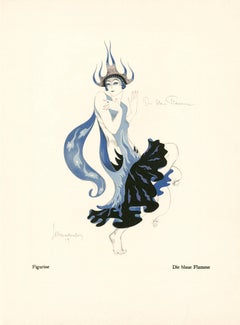
Kostume, Plakate, und Dekorationen, "The Blue Flame"
Located in Palm Beach, FL
Walter Schnackenberg’s style changed several times during his long and successful career. Having studied in Munich, the artist traveled often to Paris where he fell under the spell of the Henri de Toulouse-Lautrec’s colorful and sensuous posters depicting theatrical and decadent subjects. Schnackenberg became a regular contributor of similar compositions to the German magazines Jugend and Simplicissimus before devoting himself to the design of stage scenery and costumes. In the artist’s theatrical work, his mastery of form, ornamentation, and Orientalism became increasingly evident. He excelled at combining fluid Art Nouveau outlines, with spiky Expressionist passages, and the postures and patterns of the mysterious East. In his later years, Schnackenberg explored the unconscious, using surreal subject matter and paler colors that plainly portrayed dreams and visions, some imbued with political connotations. His drawings, illustrations, folio prints, and posters are highly sought today for their exceedingly imaginative qualities, enchanting subject matter, and arresting use of color. SCHNACKENBERG: KOSTUME, PLAKATE UND DEKORATIONEN, a cardboard bound art book consisting of 43 prints of work by Walter Schnackenberg, 30 of which are color lithographs that are signed and some are titled and dated in the plate, as well as black and white prints and photographs with accompanying text by Oskar Bie; lithographs printed at Kunstanstalt Oskar Consee in Munich, other images printed by Gesellschaft Pick & Co. in Munich, the text and cover with color images by Schnackenberg front and verso printed by R. Oldenbourg in Munich; published by Musarion Verlag, Munich, 1920. The majority of Walter Schnackenberg’s artistic output was destroyed by bomb attacks in Munich in 1944. The highly publicized 2013 auction in New York of the recovered pre-war poster collection once belonging to German poster aficionado, Hans Sachs has reintroduced the world to Walter Schnackenberg’s graphic genius and priceless ephemeral art from a lost era. Besides the museum world, designer Karl Lagerfeld is one of the most prodigious collectors of Schnackenberg. Flipping through the pages of Kostume, Plakate und Dekorationen, it becomes quite clear that Schnackenberg’s collection is ground zero at the crossroads of early modern fashion where the cult of celebrity meets up with dance, music, theater and cabaret, film and the graphic medium. Berlin and Munich under Germany’s Weimar Republic in the first quarter of the 20th century produced just the atmosphere to feed this burgeoning industry. Rising inflation sparked a recklessness to live large for the moment and heightened a desire for escapism. An influx of Indian and East Asian dancers and musicians added to the artsy bohemian cultural mix. A new decadence and tolerance resulted. Film boldly featured provocative subject matter. Cabarets became popular venues giving rise to the demi-monde in which people from all social stations mixed more freely in a thriving underground economy and culture where there was a blurring of boundaries and of social codes. Noted art historian and cultural doyen, Oskar Bie astutely observes in his introduction to Schnackenberg’s publication that what unites the images is fantasy and advertisement. Schnackenberg uses the eye as an instrument to brilliantly construct and convey this double message. His personages never directly confront the viewer. Their eyes gaze off in the distance like those of the screenplayer and film star Hedamaria Scholz in Schnackenberg’s “Die Rodelhexe” movie poster. Their eyes follow the path of a dance composition or become a transfixed and ogling male gaze such as the iconic 1911 Odeon Casino poster...
Category

1910s Expressionist Figurative Prints

Materials

Lithograph

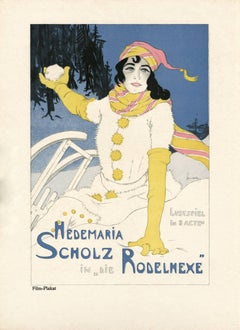
Kostume, Plakate, und Dekorationen, "Die Rodelhexe"
Located in Palm Beach, FL
Walter Schnackenberg’s style changed several times during his long and successful career. Having studied in Munich, the artist traveled often to Paris where he fell under the spell of the Henri de Toulouse-Lautrec’s colorful and sensuous posters depicting theatrical and decadent subjects. Schnackenberg became a regular contributor of similar compositions to the German magazines Jugend and Simplicissimus before devoting himself to the design of stage scenery and costumes. In the artist’s theatrical work, his mastery of form, ornamentation, and Orientalism became increasingly evident. He excelled at combining fluid Art Nouveau outlines, with spiky Expressionist passages, and the postures and patterns of the mysterious East. In his later years, Schnackenberg explored the unconscious, using surreal subject matter and paler colors that plainly portrayed dreams and visions, some imbued with political connotations. His drawings, illustrations, folio prints, and posters are highly sought today for their exceedingly imaginative qualities, enchanting subject matter, and arresting use of color. SCHNACKENBERG: KOSTUME, PLAKATE UND DEKORATIONEN, a cardboard bound art book consisting of 43 prints of work by Walter Schnackenberg, 30 of which are color lithographs that are signed and some are titled and dated in the plate, as well as black and white prints and photographs with accompanying text by Oskar Bie; lithographs printed at Kunstanstalt Oskar Consee in Munich, other images printed by Gesellschaft Pick & Co. in Munich, the text and cover with color images by Schnackenberg front and verso printed by R. Oldenbourg in Munich; published by Musarion Verlag, Munich, 1920. The majority of Walter Schnackenberg’s artistic output was destroyed by bomb attacks in Munich in 1944. The highly publicized 2013 auction in New York of the recovered pre-war poster collection once belonging to German poster aficionado, Hans Sachs has reintroduced the world to Walter Schnackenberg’s graphic genius and priceless ephemeral art from a lost era. Besides the museum world, designer Karl Lagerfeld is one of the most prodigious collectors of Schnackenberg. Flipping through the pages of Kostume, Plakate und Dekorationen, it becomes quite clear that Schnackenberg’s collection is ground zero at the crossroads of early modern fashion where the cult of celebrity meets up with dance, music, theater and cabaret, film and the graphic medium. Berlin and Munich under Germany’s Weimar Republic in the first quarter of the 20th century produced just the atmosphere to feed this burgeoning industry. Rising inflation sparked a recklessness to live large for the moment and heightened a desire for escapism. An influx of Indian and East Asian dancers and musicians added to the artsy bohemian cultural mix. A new decadence and tolerance resulted. Film boldly featured provocative subject matter. Cabarets became popular venues giving rise to the demi-monde in which people from all social stations mixed more freely in a thriving underground economy and culture where there was a blurring of boundaries and of social codes. Noted art historian and cultural doyen, Oskar Bie astutely observes in his introduction to Schnackenberg’s publication that what unites the images is fantasy and advertisement. Schnackenberg uses the eye as an instrument to brilliantly construct and convey this double message. His personages never directly confront the viewer. Their eyes gaze off in the distance like those of the screenplayer and film star Hedamaria Scholz in Schnackenberg’s “Die Rodelhexe” movie poster. Their eyes follow the path of a dance composition or become a transfixed and ogling male gaze such as the iconic 1911 Odeon Casino poster...
Category

1910s Expressionist Figurative Prints

Materials

Lithograph

Kostume, Plakate, und Dekorationen, "Dancer in an Oriental Pageant"
Located in Palm Beach, FL
Walter Schnackenberg’s style changed several times during his long and successful career. Having studied in Munich, the artist traveled often to Paris where he fell under the spell o...
Category

1910s Expressionist Figurative Prints

Materials

Paper

Lithuanian French Artist Arbit Blatas Lithograph Albert Marquet Ecole D Paris
Located in Surfside, FL
Arbit Blatas (1908 – 1999) Hand signed and numbered to lower edge Ecole de Paris Portrait Printed on Arches French deckle edged art paper 1962 Arbit Blatas (1908 – 1999), born Nicol...
Category

1960s Expressionist Figurative Prints

Materials

Lithograph

Lithuanian French Artist Arbit Blatas Lithograph Georges Braque School of Paris
Located in Surfside, FL
Arbit Blatas (1908 – 1999) Hand signed and numbered to lower edge Ecole de Paris Portrait Printed on Arches French deckle edged art paper 1962 Arbit Blatas (1908 – 1999), born Nicol...
Category

1960s Expressionist Figurative Prints

Materials

Lithograph

Lithuanian French Artist Arbit Blatas Lithograph Pierre Bonnard School of Paris
Located in Surfside, FL
Arbit Blatas (1908 – 1999) Hand signed and numbered to lower edge Ecole de Paris Portrait Printed on Arches French deckle edged art paper 1962 Arbit Blatas (1908 – 1999), born Nicol...
Category

1960s Expressionist Figurative Prints

Materials

Lithograph

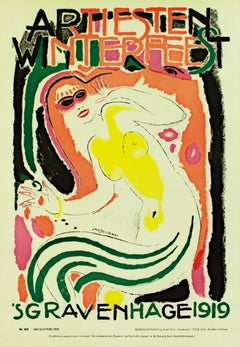
"Artiesten Winterfest, " an Original Color Lithograph
By Jan Sluijters
Located in Milwaukee, WI
"Artiesten Winterfest" is an original color lithograph poster designed by Jan Sluijters. It depicts a brightly colored woman with long orange hair and su...
Category

Early 20th Century Expressionist Figurative Prints

Materials

Lithograph

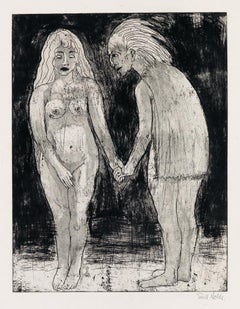
Junges Paar
Located in New York, NY
Large and very scarce etching, aquatint and drypoint. This richly-inked impression is the second state (of 2) from a limited edition of approximately 17. Signed and titled in pencil ...
Category

1920s Expressionist Figurative Prints

Materials

Drypoint, Etching, Aquatint

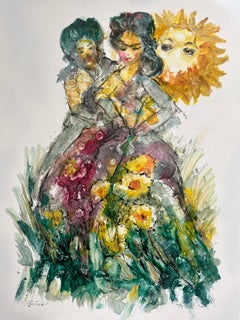
Morning Glow in Love
Located in West Hollywood, CA
ABOUT THE PAINTING 40" X 28" Monoprint In this enchanting morning scene, the essence of love and connection amidst the beauty of nature is captured skillfully. The backdrop reveals a...
Category

20th Century Expressionist Figurative Prints

Materials

Oil

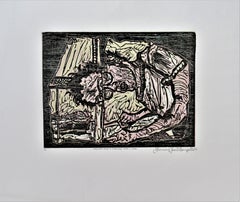
Versando Traco E embaraco Sobre O Papel
Located in San Francisco, CA
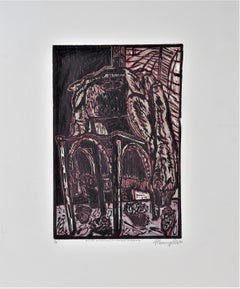
This artwork titled "Versando Traco E embaraco Sobre O Papel" 1995 is an original color woodcut on Wove paper by Brazilian artist Francisco Jose Maringelli, b.1959. It is hand signed, titled and numbered I/L in pencil by the artist. The image (block mark) size is 9 x 11.75 inches, sheet size is 16.5 x 19.5 inches. It is in excellent condition, it has 4 very small 1/4 inches mark in each corner on the back due to hanging tape removal, not visible from the front About the artist: Education: Bachelor Fine Arts, ECAUSP (1984-1989) and Architecture FAUUSP (1979-1985). Professor at Centro Universitário Belas Artes de São Paulo Main Exhibitions: 2018 CONTRAGOLPES; obras recentes de Biba Rigo, Cláudio Caropreso e Francisco Maringelli, São Paulo(SP) Graphias quinze anos, São Paulo(SP) 2017 ROSTOS LAVRADOS-XILOGRAVURAS,Museu Casa da Xilogravura, Campos do...
Category

Late 20th Century Expressionist Figurative Prints

Materials

Woodcut

Ouvidos de Conchas, em Mangas de Jaqueta
Located in San Francisco, CA
This artwork titled "Ouvidos de Conchas, em Mangas de Jaqueta" 1995 is an original color woodcut on watermarked Fabriano paper by Brazilian artist Francisco Jose Maringelli, b.1959. It is hand signed, titled and numbered 1/15 in pencil by the artist. The image (block mark) size is 10.65 x 7 inches, sheet size is 16.25 x 14 inches. It is in excellent condition, has never been framed. About the artist: Education: Bachelor Fine Arts, ECAUSP (1984-1989) and Architecture FAUUSP (1979-1985). Professor at Centro Universitário Belas Artes de São Paulo Main Exhibitions: 2018 CONTRAGOLPES; obras recentes de Biba Rigo, Cláudio Caropreso e Francisco Maringelli, São Paulo(SP) Graphias quinze anos, São Paulo(SP) 2017 ROSTOS LAVRADOS-XILOGRAVURAS,Museu Casa da Xilogravura, Campos do...
Category

Late 20th Century Expressionist Figurative Prints

Materials

Woodcut

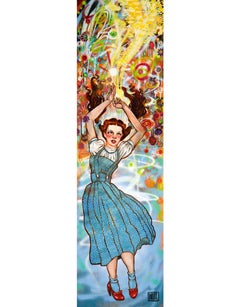
Flying Over the Poppies
Located in Toronto, ON
40.75" x 11.25" Unframed Limited Edition Giclée on Canvas with Hand Embellishment Numbered of 80 Hand Signed by Todd White Todd white captures restaurant, night and Hollywood scenes with contrasting colors serving the viewer’s eyes as those in his stolen scenes serve or are served-wine, coffee, cigarettes, cigars, and martinis. He creates timeless scenes of diverse attraction, of known intimacy. Within the exaggerated features and textured skin of his characters lies truth, yours and theirs. Distinctive bodies and details to lips, eyes, hair, skin, hands and what is held in each, separate and blend his characters’ lives. The smoke that rises from their lips, the drinks that linger at their fingertips, the clothing that adorns their bodies and the crowd created among lovers, friends, patrons and co-workers all speak a certain poetry. Each character depicts the subtleties of what one shows and what one hides. An asymmetrical face tells of an asymmetrical life, of how life wears and how we wear life — what we choose to carry in our hands and on our faces — how we wear ourselves, what smoke and color we stand in. Todd’s paintings are captivating, demanding a second look, often invoking humor or thoughts of familiar feelings — I’ve been there, I know them. Above all, the work is infectious and has caught the attention of the public (galleries cannot keep enough of Todd’s work in stock) as well as celebrities (Vin Diesel, Hugh Hefner, Macaulay Culkin, Eric McCormack, Ryan Stiles and Joe Rogan are collectors of Todd’s oil paintings). But who is the artist behind the art and where did his unique style come from? Todd began in at Warner Bros. Studios while working on the popular series, tiny toons. Through character clean-up and development, Todd began to forge his own artistic style. Shortly thereafter, Todd became part of the lead animation team for the internationally renowned cartoon, sponge bob square pants. Over the next three years, Todd sharpened his eye in storyboarding, illustration and character design. Throughout this period, Todd privately experimented with style and concept, eventually arriving at a process which guides him through every piece. The impact is apparent in his paintings; Todd’s rat-pack-meets-Picasso style results, in part, from his desire to reveal his characters’ innermost thoughts and emotions on their faces. Todd likens his portraits to his favorite episode of the Twilight Zone in which people wore masks that later became their faces and revealed who they truly were. Fast forward ten years later, and until Todd can conceptually see the story in his head, he refuses to paint a single signature knuckle curled around one of his famous martinis. "I actually name my pieces first and then i visualise each face and its personality. Then I develop each person’s story." The stark, unblemished delivery of his subjects is very much intended: whatever isn’t necessary to the story isn’t on my canvas. "I don’t waste a lot of time with backgrounds because they don’t interest me. They aren’t necessary. Instead i focus on what is essential. For example, the hands." Hands are a focal point for Todd, reflecting the subject’s state of mind as much as any body language or facial expression. Everyone’s hands are full of personality he surmises. Take Al Pacino; without his hands, he’s not nearly as interesting to watch. In addition to more obvious influences, such as Austrian expressionist Egon...
Category

2010s Expressionist Figurative Prints

Materials

Giclée

Someones About to Get Hustled
Located in Toronto, ON
22" x 32" Unframed Limited Edition Giclee with Hand Embellishment of 195 Hand Signed by Todd White Todd white captures restaurant, night and Hollywood scenes with contrasting colors serving the viewer’s eyes as those in his stolen scenes serve or are served-wine, coffee, cigarettes, cigars, and martinis. He creates timeless scenes of diverse attraction, of known intimacy. Within the exaggerated features and textured skin of his characters lies truth, yours and theirs. Distinctive bodies and details to lips, eyes, hair, skin, hands and what is held in each, separate and blend his characters’ lives. The smoke that rises from their lips, the drinks that linger at their fingertips, the clothing that adorns their bodies and the crowd created among lovers, friends, patrons and co-workers all speak a certain poetry. Each character depicts the subtleties of what one shows and what one hides. An asymmetrical face tells of an asymmetrical life, of how life wears and how we wear life — what we choose to carry in our hands and on our faces — how we wear ourselves, what smoke and color we stand in. Todd’s paintings are captivating, demanding a second look, often invoking humor or thoughts of familiar feelings — I’ve been there, I know them. Above all, the work is infectious and has caught the attention of the public (galleries cannot keep enough of Todd’s work in stock) as well as celebrities (Vin Diesel, Hugh Hefner, Macaulay Culkin, Eric McCormack, Ryan Stiles and Joe Rogan are collectors of Todd’s oil paintings). But who is the artist behind the art and where did his unique style come from? Todd began in at Warner Bros. Studios while working on the popular series, tiny toons. Through character clean-up and development, Todd began to forge his own artistic style. Shortly thereafter, Todd became part of the lead animation team for the internationally renowned cartoon, sponge bob square pants. Over the next three years, Todd sharpened his eye in storyboarding, illustration and character design. Throughout this period, Todd privately experimented with style and concept, eventually arriving at a process which guides him through every piece. The impact is apparent in his paintings; Todd’s rat-pack-meets-Picasso style results, in part, from his desire to reveal his characters’ innermost thoughts and emotions on their faces. Todd likens his portraits to his favorite episode of the Twilight Zone in which people wore masks that later became their faces and revealed who they truly were. Fast forward ten years later, and until Todd can conceptually see the story in his head, he refuses to paint a single signature knuckle curled around one of his famous martinis. "I actually name my pieces first and then i visualise each face and its personality. Then I develop each person’s story." The stark, unblemished delivery of his subjects is very much intended: whatever isn’t necessary to the story isn’t on my canvas. "I don’t waste a lot of time with backgrounds because they don’t interest me. They aren’t necessary. Instead i focus on what is essential. For example, the hands." Hands are a focal point for Todd, reflecting the subject’s state of mind as much as any body language or facial expression. Everyone’s hands are full of personality he surmises. Take Al Pacino; without his hands, he’s not nearly as interesting to watch. In addition to more obvious influences, such as Austrian expressionist Egon...
Category

2010s Expressionist Figurative Prints

Materials

Giclée

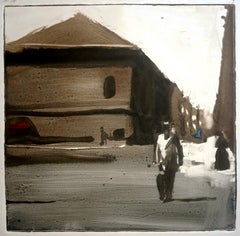
Ghosts of New York 5, mysterious, monochromatic cityscape
Located in Brooklyn, NY
One of a series of oil based monotypes on fine printmaking paper, subtle color design, symbolic and atmospheric figure/figures in cityscape
Category

2010s Expressionist Figurative Prints

Materials

Monotype, Archival Paper

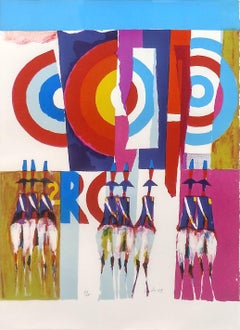
CARABINIERI A OSTIA
Located in Aventura, FL
Serigraph on paper. Hand signed and numbered by the artist. Artwork size 27.5 x 19.5 inches. Frame size approx 32 x 24 inches. Artwork is in excellent condition. Edition of 125. C...
Category

1990s Expressionist Figurative Prints

Materials

Paper, Screen

CARABINIERI A OSTIA
CARABINIERI A OSTIA
$682 Sale Price
30% Off
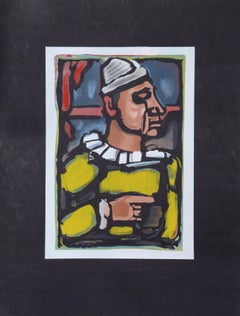
Le Clown, Screenprint Poster by Georges Rouault (After)
Located in Long Island City, NY
Le Clown Georges Rouault (After), French (1871–1958) Date: circa 1970 Screenprint Poster Image Size: 17.5 x 12 inches Size: 26 x 20 in. (66.04 x 50.8 cm)
Category

1970s Expressionist Figurative Prints

Materials

Screen

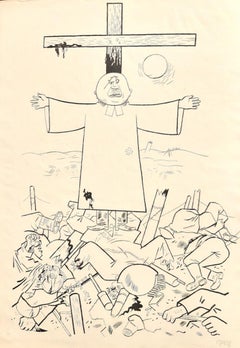
They Thunder forth from Their Clouds-Lithograph by George Grosz - 1922
Located in Roma, IT
They Thunder forth from Their Clouds is an original lithograph, realized by George Grosz in 1922, from Die Raüber, edition Malik Verlag in 100 prints, plate n°8 da Die Raüber, hand-signed in pencil. "They thunder forth from their clouds about gentleness and forbearance, while they sacrifice human victims to the God of love." (Da donnern sie Sanftmut und Duldung aus ihren Wolken und bringen dem Gott der Liebe Menschenopfer.)" Sheet dimension: 61,5 x 42 cm. In very good conditions. Here representing a man in front of cross miserably praying, below of his feet laid down many dead bodies and ruined part of the city. here is one of his artwork affected by consequences drama of war. George Grosz (1893 -1959) was a German artist known especially for his caricatural drawings and paintings of Berlin life in the 1920s. He was a prominent member of the Berlin Dada and New Objectivity group during the Weimar Republic. He studied drawing at the Dresden Academy 1909-11 and at the School of Arts and Crafts in Berlin 1912-14, He was in the army 1914-15 and again for a short time in 1917, but spent the rest of the war in Berlin where he made violently anti-war drawings...
Category

1920s Expressionist Figurative Prints

Materials

Lithograph, Paper

UNTITLED (from the ARTSOUNDS Collection)
Located in New York, NY
YURA ADAMS Untitled (from the Artsounds Collection), 1986 color offset print, ed. 200 12 x 12 cm. 30.5 x 30.5 cm. Edition 49/100 signed and numbered in pencil by the artist on ver...
Category

1980s Expressionist Figurative Prints

Materials

Offset

Interrogation - Original Lithograph and Offset by George Grosz - 1925
Located in Roma, IT
Interrogation is an original offset and lithograph realized by George Grosz. The artwork is from the book "Kobes" by Heinrich Man, that Grosz illustrated with 10 drawings reproduce...
Category

1920s Expressionist Figurative Prints

Materials

Lithograph, Offset

In the Brothel - Original Lithograph by Eugen Hamm - 1922
Located in Roma, IT
In the Brothel is an original lithograph realized by Eugen Hamm a german artist in 1922. In good conditions. This artwork represents a brothel with severa...
Category

1920s Expressionist Figurative Prints

Materials

Lithograph

Per un Dramma di Alpinolo Porcella- Woodcut by A. Martini - Early 20th Century
Located in Roma, IT
Alpinolo Porcella is a woodcut print on ivory-colored, realized at the beginning of the 20th century by the Italian artist Arturo Martini (Treviso, 1889 - Milan, 1947) for a drama by...
Category

Early 20th Century Expressionist Figurative Prints

Materials

Woodcut

Am Gänsehäufel in Wien
Located in New York, NY
Emil Orlik (1870-1932), Am Gänsehäufel in Wien, 1911, soft-ground etching, signed and dated in pencil lower right. In very good condition, on firm laid paper with margins, 5 1/2 x 8...
Category

1910s Expressionist Figurative Prints

Materials

Etching

Bordellszene - Original Lithograph by Otto Gleichmann - 1924
Located in Roma, IT
Bordellszene is an original lithograph, realized by Otto Gleichmann in 1924, hand- signed and dated. In very good conditions. Here the artwork represents two men in Expressionistic...
Category

1920s Expressionist Figurative Prints

Materials

Lithograph

Der Polster
Located in New York, NY
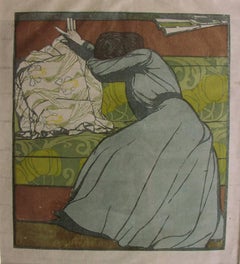
Kurzweil, Maximilian. Der Polster, 1903. Color woodcut on japon. Included as an insert in Pan. Unsigned. Framed.11 1/4 x 10 1/4. 1 Ref: Hofstatter, p. 241; Pabst, p. 154. Maximillian Kurzweil was the co-founder of the Vienna Secession in 1897 and editor and illustrator of the influential Secessionist magazine Ver Sacrum...
Category

Early 1900s Expressionist Figurative Prints

Materials

Lithograph

Market in Grodek
Located in New York, NY
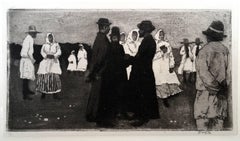
Emil Orlik (1870-1932), Market in Grodek, etching and aquatint, 1898, signed in pencil lower right, in very good condition, trimmed just outside of the platemark and so with a small ...
Category

1890s Expressionist Figurative Prints

Materials

Etching, Aquatint

Fruhling
By Josef Siccard-Redl
Located in New York, NY
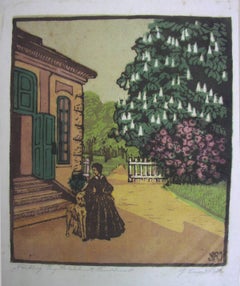
Siccard-Redl, Josef. Fruhling, Ca 1910. Color wood engraving, Signed and titled in pencil by the artist. Little is known of this artist other than he worked in Vienna during the ...
Category

1910s Expressionist Figurative Prints

Materials

Engraving

Nude Female Figure Baby Family 1910 s Black and White Original Lithograph Signed
Located in Milwaukee, WI
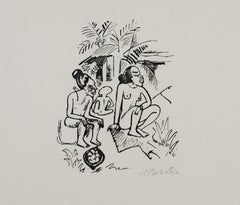
"Three Seated Figures- Women (Frauen)" is an original lithograph from the "South Sea (Sudsee)" series by Max Pechstein. This lithograph depicts th...
Category

Early 20th Century Expressionist Figurative Prints

Materials

Lithograph

English Girls Are Mean
Located in Toronto, ON
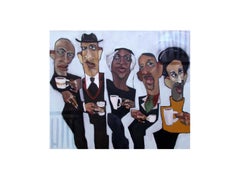
24" x 19" Unframed Limited Edition Face Mounted Acrylic Giclee on Canvas with Hand Embellishment of 45 Hand Signed by Todd White Todd white captures restaurant, night and Hollywood...
Category

2010s Expressionist Figurative Prints

Materials

Giclée

Running Circles Around
Located in Toronto, ON
18" x 10" Unframed Limited Edition Giclée with Hand Embellishment of 135 Hand Signed by Todd White “Do you know the old adage “running circles around you”? When you get one of thos...
Category

2010s Expressionist Figurative Prints

Materials

Giclée

Cafe Mocha Jive
Located in Toronto, ON
20" x 30" Unframed Limited Edition Giclee On Canvas Hand Signed by Todd White Todd white captures restaurant, night and Hollywood scenes with contrasting colors serving the viewer’s ...
Category

2010s Expressionist Figurative Prints

Materials

Canvas, Giclée

Junger Fürst und Tänzerinnen
Located in New York, NY
A superb impression of this extremely scarce etching and aquatint. First state (of 2), before the darkened background. Edition of approximately only 11. Signed in pencil. This etch...
Category

1910s Expressionist Figurative Prints

Materials

Etching, Aquatint

FEMME NUE ET JOUEUSE DE FLUTE
Located in New York, NY
stamped on back: Le Vent d'Arles and SPADEM 1975 - Printed in France Edition sticker on back reads: No. 1815
Category

Early 20th Century Expressionist Figurative Prints

Materials

Color

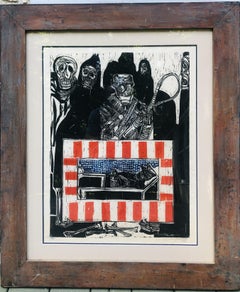
Brutalist Graveside Scene Patriotic Dead Soldier, Gas Mask Skeletons
By Nicholas Sperakis
Located in Exton, PA
Brutalist colored woodcut circa 1976 by Nicholas Sperakis. The image depicts skeletal figures around the grave of a soldier. Note the American flag features which drape the entombed ...
Category

1970s Expressionist Figurative Prints

Materials

Woodcut

Coming Up Roses
Located in Toronto, ON
18" x 10" Unframed Limited Edition Giclée with Hand Embellishment of 135 Hand Signed by Todd White “Being an observational artist of 53 years, I truly understand, only now, life is...
Category

2010s Expressionist Figurative Prints

Materials

Giclée

Expressionist figurative prints for sale on 1stDibs.

Find a wide variety of authentic Expressionist figurative prints available for sale on 1stDibs. Works in this style were very popular during the 21st Century and Contemporary, but contemporary artists have continued to produce works inspired by this movement. If you’re looking to add figurative prints created in this style to introduce contrast in an otherwise neutral space in your home, the works available on 1stDibs include elements of orange, blue, purple, red and other colors. Many Pop art paintings were created by popular artists on 1stDibs, including George Grosz, Marc Chagall, Todd White, and Gustav Klimt K.K. Hof-und Staatsdruckerei. Frequently made by artists working with Lithograph, and Paper and other materials, all of these pieces for sale are unique and have attracted attention over the years. Not every interior allows for large Expressionist figurative prints, so small editions measuring 3 inches across are also available. Prices for figurative prints made by famous or emerging artists can differ depending on medium, time period and other attributes. On 1stDibs, the price for these items starts at $88 and tops out at $975,000, while the average work sells for $1,100.

Recently Viewed

View All