Showa Figurative Prints
to
8
Overall Width
to
Overall Height
to
15,658
8,447
2,626
2,451
2,264
1,004
814
796
613
434
344
115
90
37
1
1
1
1
1
2
6
2
1
2
1
6
1
4
2
2
2
1
1
1
1
1
1
1
1
1
1
1
1
1
8
1
1
1
8
Style: Showa
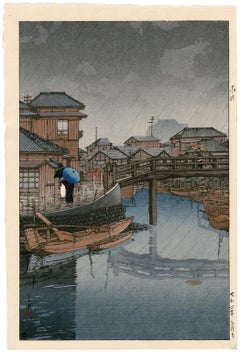
Rain at Shinagawa, Ryoshimachi
— Showa-era Woodblock Print
By Kawase Hasui
Located in Myrtle Beach, SC
Kawase Hasui, 'Rain at Shinagawa, Ryoshimachi' from the series 'Selection of Views of the Tokaido', woodblock print, 1931. A very fine, atmospheric impression, with fresh colors; the...
Category
1930s Showa Figurative Prints
Materials
Woodcut
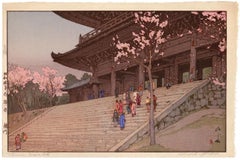
Chion-in Temple Gate
from
Eight Scenes of Cherry Blossoms
— Jizuri Seal
By Hiroshi Yoshida
Located in Myrtle Beach, SC
Hiroshi Yoshida, 'Chion-in Temple Gate (Sunset)' from the series 'Eight Scenes of Cherry Blossoms (Sakura hachi dai: Sakura mon)', color woodblock print, 1935. Signed in brush 'Yoshida' and in pencil 'Hiroshi Yoshida'. A superb, early impression, with fresh colors; the full sheet with margins, on cream Japan paper; an area of slight toning in the top right sheet corner, not affecting the image, otherwise in excellent condition. Marked with a jizuri (self-printed) seal, upper left margin. Self-published by the artist.
Image size 9 5/8 x 14 3/4 inches (444 x 375 mm); sheet size 10 7/8 x 16 inches (276 x 406 mm). Archivally sleeved, unmatted.
Provenance: M. Nakazawa, Tokyo.
Literature: Japanese Landscapes of the 20th Century (Hotei Publishing calendar), 2001, May.
Collections: Honolulu Museum of Art, Museum of Fine Arts, Boston.
ABOUT THE IMAGE
Located in Kyoto, Chionin is the main temple of the Jodo sect of Japanese Buddhism, one of the most popular Buddhist sects in Japan, having millions of followers. The Sanmon Gate, Chionin's entrance gate, standing 24 meters tall and 50 meters wide, it is the largest wooden temple gate in Japan and dates back to the early 1600s. Behind the gate, a broad set of stairs leads to the main temple grounds.
ABOUT THE ARTIST
Painter and printmaker Yoshida Hiroshi (1876-1950) is regarded as one of the greatest artists of the Japanese 'shin hanga' (New Print) movement.
Yoshida was born as the second son of Ueda Tsukane in Kurume, Fukuoka Prefecture, a schoolteacher from an old samurai family. In 1891 he was adopted by his art teacher Yoshida Kasaburo in Fukuoka and took his surname. In 1893 he went to Kyoto to study painting, and the following year to Tokyo to join Koyama Shotaro's Fudosha private school; he also became a member of the Meiji Fine Arts Society. These institutions taught and advocated Western-style painting, greatly influencing Yoshida’s artistic development.
In 1899 Yoshida had his first American exhibition at Detroit Museum of Art (now Detroit Institute of Art), making the first of many visits to the US and Europe. In 1902 he helped reorganize the Meiji Fine Arts Society, renaming it the Taiheiyo-Gakai (Pacific Painting...
Category
1930s Showa Figurative Prints
Materials
Woodcut
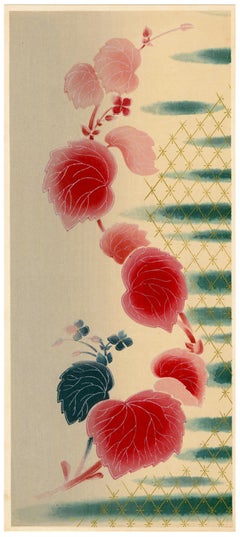
Japanese Kimono Fabric Design — Vintage Color Woodblock Print
Located in Myrtle Beach, SC
Anonymous, Japanese Kimono Fabric Design, color woodcut, c. 1930. A superb impression, with fresh colors, fine graduations, and metallic gold motifs, on ...
Category
Early 1900s Showa Figurative Prints
Materials
Woodcut
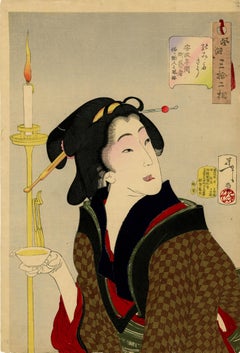
Thirsty: The Appearance of a Town Geisha - a So-Called Wine-Server - in the Anse
Located in Fairlawn, OH
Thirsty: The Appearance of a Town Geisha - a So-Called Wine-Server - in the Ansei Era
Color woodcut, 1888
Signed; Seal: Taiso (see photo)
Plate 22 from the series "Thirty-two Aspects...
Category
1880s Showa Figurative Prints
Materials
Woodcut
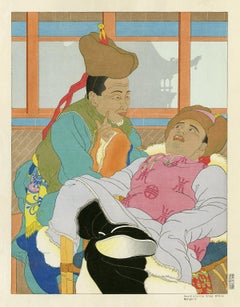
A Very Funny Story, Mongols
— Mid-Century Woodblock Print
Located in Myrtle Beach, SC
Paul Jacoulet, 'Une Histoire très Drôle, Mongols', color woodblock print, 1949. A fine impression, with fresh colors, on the artist's handmade, personally watermarked Japan paper, in...
Category
1940s Showa Figurative Prints
Materials
Woodcut
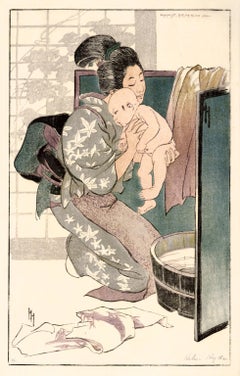
The Bath
— Meji Era Cross-Cultural Woman Artist
By Helen Hyde
Located in Myrtle Beach, SC
Helen Hyde, 'The Bath', color woodblock print, edition not stated, 1905, Mason & Mason 59. Signed in pencil in the image, lower right. Numbered '96' in pencil in the image, lower left. The artist's monogram in the block, lower left, and 'Copyright, 1905, by Helen Hyde.' upper right. A superb impression with fresh colors on tissue-thin cream Japanese paper; the full sheet with margins (7/16 to 1 5/8 inches), in excellent condition. Matted to museum standards, unframed.
Image size 16 1⁄4 x 10 1⁄8 in. (413 x 260 mm); sheet size: 19 1⁄4 x 11 1⁄8 in. (489 x 283 mm).
Literature and Exhibition: Back cover illustration of the catalog of the artist’s prints, 'Helen Hyde', Smithsonian Institution Press, 1990; 'The International Block Print Renaissance, Then And Now, Block Prints In Wichita, Kansas, A Centennial Celebration — 1922-2022', Barbara J. Thompson, Wichita Art Museum, 2022 (back cover).
Impressions of this work are held in the following collections: Achenbach Foundation for Graphic Arts, Art Institute of Chicago, Fine Arts Museums of San Francisco (De Young), Harvard Art Museums, Library of Congress, Metropolitan Museum of Art, New York Public Library, Smithsonian American Art Museum, Terra Foundation for American Art, University of Oregon Museum of Art.
ABOUT THE ARTIST
Helen Hyde (1868-1919) was a pioneer American artist best known for advancing Japanese woodblock printmaking in the United States and for bridging Western and Japanese artistic traditions. Hyde was born in Lima, New York, but after her father died in 1872, her family relocated to Oakland, California, where she spent much of her youth.
Hyde pursued formal art education in the United States and Europe. She enrolled in the San Francisco School of Design, where she took classes from the Impressionist painter Emil Carlsen; two years later, she transferred to the Art Students League in New York, studying there with Kenyon Cox. Eager to expand her artistic repertoire, Hyde traveled to Europe, studying under Franz Skarbina in Berlin and Raphael Collin in Paris. While in Paris, she first encountered Japanese ukiyo-e prints, sparking a lifelong fascination with Japanese aesthetics. After ten years of study, Hyde returned to San Francisco, where she continued to paint and began to exhibit her work.
Hyde learned to etch from her friend Josephine Hyde in about 1885. Her first plates, which she etched herself but had professionally printed, represented children. On sketching expeditions, she sought out quaint subjects for her etchings and watercolors. In 1897, Hyde made her first color etchings—inked á la poupée (applying different ink colors to a single printing plate)—which became the basis for her early reputation. She also enjoyed success as a book illustrator, and her images sometimes depicted the children of Chinatown.
After her mother died in 1899, Hyde sailed to Japan, accompanied by her friend Josephine, where she would reside, with only brief interruptions, until 1914. For over three years, she studied classical Japanese ink painting with the ninth and last master of the great Kano school of painters, Kano Tomonobu. She also studied with Emil Orlik, an Austrian artist working in Tokyo. Orlik sought to renew the old ukiyo-e tradition in what became the shin hanga “new woodcut prints” art movement. She immersed herself in the study of traditional Japanese printmaking techniques, apprenticing with master printer Kanō Tomonobu. Hyde adopted Japanese tools, materials, and techniques, choosing to employ the traditional Japanese system of using craftsmen to cut the multiple blocks and execute the exacting color printing of the images she created. Her lyrical works often depicted scenes of family domesticity, particularly focusing on women and children, rendered in delicate lines and muted colors.
Through her distinctive fusion of East and West, Hyde’s contributions to Western printmaking were groundbreaking. At a time when few Western women ventured to Japan, she mastered its artistic traditions and emerged as a significant figure in the international art scene.
Suffering from poor health, she returned to the United States in 1914, moving to Chicago. Having found restored health and new inspiration during an extended trip to Mexico in 1911, Hyde continued to seek out warmer climates and new subject matter. During the winter of 1916, Hyde was a houseguest at Chicora Wood, the Georgetown, South Carolina, plantation illustrated by Alice Ravenel Huger Smith in Elizabeth Allston Pringle’s 1914 book A Woman Rice Planter. The Lowcountry was a revelation for Hyde. She temporarily put aside her woodcuts and began creating sketches and intaglio etchings of Southern genre scenes and African Americans at work. During her stay, Hyde encouraged Smith’s burgeoning interest in Japanese printmaking and later helped facilitate an exhibition of Smith’s prints at the Art Institute of Chicago.
During World War I, Hyde designed posters for the Red Cross and produced color prints extolling the virtues of home-front diligence.
In ill health, Hyde traveled to be near her sister in Pasadena a few weeks before her death on May 13, 1919. She was buried in the family plot near Oakland, California.
Throughout her career, Hyde enjoyed substantial support from galleries and collectors in the States and in London. She exhibited works at the St. Louis Exposition in 1897, the Pan-American Exhibition in Buffalo in 1901, the Tokyo Exhibition for Native Art (where she won first prize for an ink drawing) in 1901, the Alaska-Yukon-Pacific Exhibition in Seattle in 1909 (received a gold medal for a print), the Newark Museum in 1913, a solo show at the Chicago Art Institute in 1916, and a memorial exhibition in 1920, Detroit Institute of Arts, Color Woodcut Exhibition in 1919, New York Public Library, American Woodblock Prints...
Category
Early 1900s Showa Figurative Prints
Materials
Woodcut
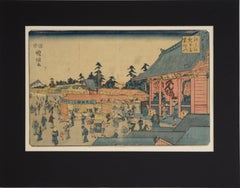
"The Kaminarimon at the Kanseon Temple in Asakusa" - Original Japanese Print
Located in Soquel, CA
"The Kaminarimon at the Kanseon Temple in Asakusa" - Original Japanese Print
Japanese Print "The Kaminarimon at the Kanseon Temple in Asakusa", from the series "Famous Places in Ed...
Category
1850s Showa Figurative Prints
Materials
Rice Paper, Woodcut
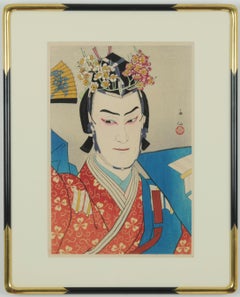
Morita Kanya XIII As Genta Kagesue in the play Genta Kando
Located in Fairlawn, OH
Morita Kanya XIII As Genta Kagesue in the play Genta Kando
Color woodcut, 1928
Signed and stamped middle right edge
Natori stamp lower left image edge
Series: Collection of Creative...
Category
1920s Showa Figurative Prints
Materials
Woodcut
Related Items
"Toy Horse Dance" Japanese Woodblock Triptych with Beauties and Mt Fuji
Located in Soquel, CA
"Toy Horse Dance" Japanese Woodblock Triptych with Beauties and Mt Fuji
Vibrant three-panel woodblock print by Utagawa Toyohiro (Japanese,...
Category
Early 20th Century Showa Figurative Prints
Materials
Ink, Rice Paper, Woodcut
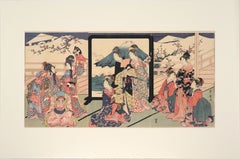

Utagawa Toyohiro"Toy Horse Dance" Japanese Woodblock Triptych with Beauties and Mt Fuji, early 1900s
$1,700
H 24 in W 36 in D 0.25 in
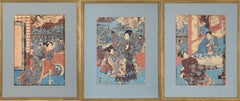
The Four Seasons: Spring Japanese Woodblock Triptych ink on Paper Tales of Genji
Located in Soquel, CA
The Four Seasons: Spring - Japanese Woodblock Triptych in Ink on Paper
Colorful kabuki scene by Utagawa Kuniteru (Japanese, active 1818-18...
Category
Early 19th Century Showa Figurative Prints
Materials
Paper, Ink, Woodcut
$1,850
H 18.75 in W 44.25 in D 0.75 in
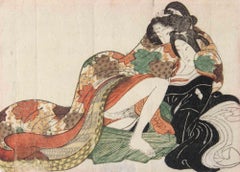
Shunga - Woodcut attr. Keisai Eisen - Mid-19th Century
By Keisai Eisen
Located in Roma, IT
Woodcut shunga print attributed to Keisai Eisen and realized in the early 19th century.
Good condition except for some signs of time.
Category
Mid-19th Century Showa Figurative Prints
Materials
Woodcut
$356
H 3.55 in W 4.73 in D 0.04 in
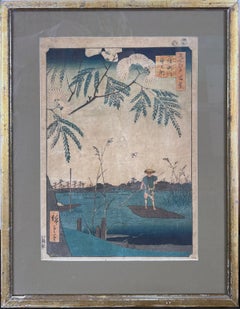
The Ayase River and Kanegafuchi, Summer, One Hundred Famous Views of Edo
Located in Soquel, CA
The Ayase River and Kanegafuchi, Summer, One Hundred Famous Views of Edo
Summer on the Ayase River by Hiroshige (Ando) Utagawa (Japan, 1797 - 1858 ). Woodcut circa 1856.
Ima...
Category
1850s Showa Figurative Prints
Materials
Ink, Woodcut
$1,350
H 19.5 in W 14.13 in D 0.38 in
Shunga - Woodcut attr. Keisai Eisen - Mid-19th Century
By Keisai Eisen
Located in Roma, IT
Woodcut shunga print attributed to Keisai Eisen and realized in the early 19th century.
Good condition except for some signs of time.
Category
Mid-19th Century Showa Figurative Prints
Materials
Woodcut
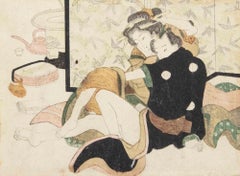
$356
H 3.55 in W 4.73 in D 0.04 in
Shunga - Woodcut attr. Keisai Eisen - Mid-19th Century
By Keisai Eisen
Located in Roma, IT
Woodcut shunga print attributed to Keisai Eisen and realized in the early 19th century.
Good condition except for some signs of time.
Category
Mid-19th Century Showa Figurative Prints
Materials
Woodcut
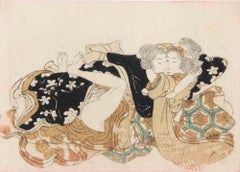
$356
H 3.55 in W 4.73 in D 0.04 in
Sanjûroku Kasen ... - Woodcut by Mizuno Toshikata - 1893
Located in Roma, IT
Nishiki-e (woodcut print), in vertical oban format (31x20.5) realized by Mizuno Toshikata in 1893 (Meiji 26).
Belongs to the Series "Sanjûroku Kasen" (Thirty-Six Beauties in Compari...
Category
1890s Showa Figurative Prints
Materials
Woodcut
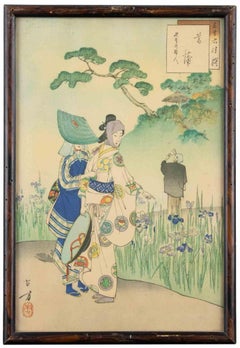
$380
H 12.21 in W 8.08 in D 0.04 in
"Rainbow-Man" - Abstracted Mexican Figurative Woodblock Print
By Pedro Puesta
Located in Soquel, CA
"Rainbow-man," an abstracted Mexican figurative woodblock by Pedro Puerta (Mexican, 20th Century), 1974. Titled "Rainbow-Man" lower left and "from a Michoacan Pot" "Reproduced with a...
Category
1970s Showa Figurative Prints
Materials
Paper, Ink, Woodcut
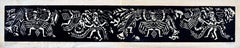
$1,195
H 11 in W 59 in D 1 in
3 Panel Hand Colored Japanese Woodcut Print Lithograph
By Keisai Eisen
Located in Soquel, CA
3 Panel Hand Colored Japanese Woodcut Print Lithograph
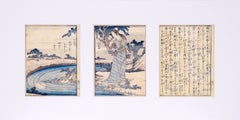
Three panel hand colored woodcut lithograph from Nanso Satomi hakkenden, Tale of the Eight Dogs...
Category
Early 19th Century Showa Figurative Prints
Materials
Paper, Ink, Woodcut
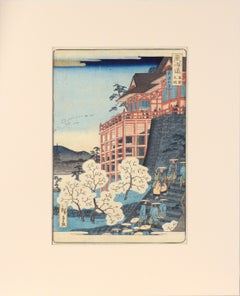
Kiyomizu Temple, Scenes of Famous Places along Tôkaidô Road - Woodblock on Paper
Located in Soquel, CA
Kiyomizu Temple, Scenes of Famous Places along Tôkaidô Road - Woodblock on Paper
Full Title:
Kyoto: Kiyomizu Temple (Kyô Kiyomizudera), from the series Scenes of Famous Places along...
Category
1860s Showa Figurative Prints
Materials
Ink, Rice Paper, Woodcut
$1,200
H 20 in W 16 in D 0.25 in
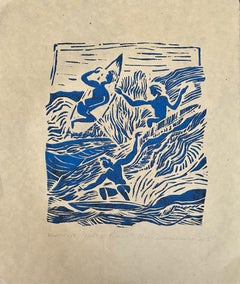
Three Turns - Surfing Art By Marc Zimmerman
Located in Carmel, CA
Three Turns - Surfing Art - Figurative - Woodcut Print By Marc Zimmerman
Limited Edition 01/04
This masterwork is exhibited in the Zimmerman Gallery, Carmel CA.
Immerse yourself i...
Category
2010s Showa Figurative Prints
Materials
Woodcut
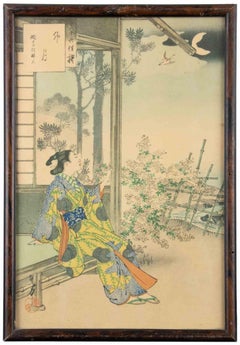
Sanjûroku Kasen ... - Woodcut by Mizuno Toshikata - 1893
Located in Roma, IT
Nishiki-e (woodcut print), in vertical oban format (31x20.5) realized by Mizuno Toshikata in 1893 (Meiji 26).
Belongs to the Series "Sanjûroku Kasen" (Thirty-Six Beauties in Compari...
Category
1890s Showa Figurative Prints
Materials
Woodcut
$404
H 12.21 in W 8.08 in D 0.04 in
Previously Available Items
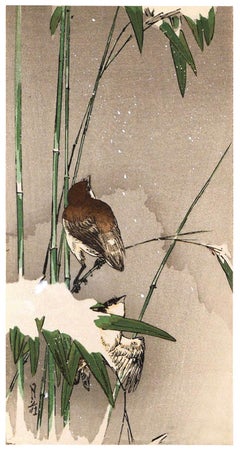
Sparrows and Bamboo in Snow
— Showa-era
kacho-e
Woodblock Print
Located in Myrtle Beach, SC
Gesso Yoshimoto, 'Sparrows and Bamboo in Snow', woodblock print, 1930s. Signed 'Gesso', lower left. A superb, impression with fresh colors and pronounced woodgrain, fine bokashi gr...
Category
1930s Showa Figurative Prints
Materials
Woodcut
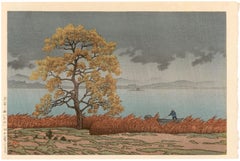
Lakeside Shower, Matsue
— Showa-era Woodblock Print
By Kawase Hasui
Located in Myrtle Beach, SC
Kawase Hasui, 'Chihan no Ame, Matsue' (Lakeside Shower, Matsue), color woodblock print, 1932. A fine, atmospheric impression, with fresh colors; the full sheet, from a postwar editio...
Category
1930s Showa Figurative Prints
Materials
Woodcut
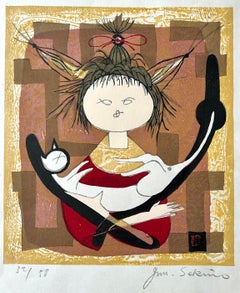
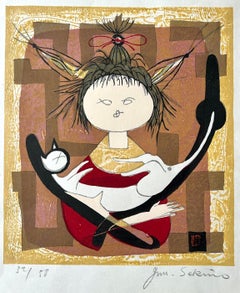
Junichiro Sekino Japanese Signed Limited Edition Print Girl Cradling Cat Red
Located in Norfolk, GB
Paper Size: 37.4 x 31.6 cm
Image Size: 27 x 24 cm
Print on paper, signed in pencil to the right, Edition in pencil 39/58. There is an artist water mark in the paper (see image)
As S...
Category
20th Century Showa Figurative Prints
Materials
Paper
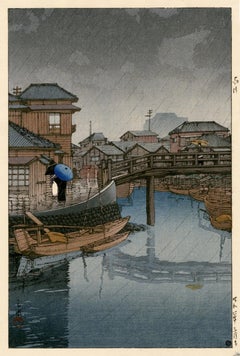
Rain at Shinagawa, Ryoshimachi
— lifetime impression
By Kawase Hasui
Located in Myrtle Beach, SC
A fine, atmospheric impression, with fresh colors; the full sheet, in excellent condition. Signed 'Hasui' with the artist’s seal 'Kawase', lower left. Published by Watanabe Shozaburo with the Watanabe 6mm round seal indicating a lifetime impression printed between 1945 - 1957. Archivally sleeved, unmatted.
Image size 14 1/4 x 9 3/8 inches (362 x 238 mm); sheet size 15 1/2 x 10 3/8 inches (391 x 264 mm).
An impression of this work is in the permanent collection of the Fine Arts Museum of San Francisco, Achenbach Foundation.
ABOUT THE ARTIST
“I do not paint subjective impressions. My work is based on reality...I can not falsify...(but) I can simplify…I make mental impressions of the light and color at the time of sketching. While coloring the sketch, I am already imagining the effects in a woodblock print.” — Kawase Hasui
Hasui Kawase (1883–1957) is the most celebrated Japanese print designer of the shin-hanga ('new prints') movement. His prints, produced under the guidance and discerning eye of his publisher, Watanabe Shozaburo, represent the modern legacy of the renowned 19th-century Ukiyo-e masters Hiroshige and Hokusai. Hasui was able to evoke the fleeting beauty of Japan during the interwar period as no other printmaker of his time could.
Hasui's work enjoyed huge popularity upon producing his first print in 1918. Watanabe recognized and developed the enormous potential of the American market, resulting in Hasui's prints achieving high prices at auctions in New York as early as the 1920s. After the Second World War, his prints became highly sought-after collectible works among the American occupying forces in Japan. Hasui designed more than 600 prints during the 40-year span of his artistic career, and in 1956, he was named a 'Living National Treasure' of Japan.
Hasui’s woodblock...
Category
1930s Showa Figurative Prints
Materials
Woodcut
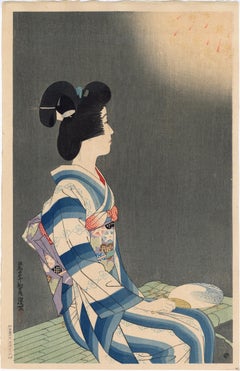
Beauty Enjoying Summer Fireworks
By Ito Shinsui
Located in Burbank, CA
Title: Fireworks 花火
Series: The Second Collection of Modern Beauties (Gendai bijin shū dai nishū 現代美人集第二輯)
Date: 1932
A young woman is shown enjoying the summer fireworks, her face shown in profile as she looks towards the display. She holds a summer fan on her lap, and her kimono features large blue stripes and is tied with a colorful obi that features a morning glory pattern. The summer evening sky is a soft grey rather than a deep black, perhaps reflecting the brightness of the fireworks. Numbered verso, from a limited edition of 250 prints.
Condition: Excellent impression, color and condition.
Publisher: Watanabe Shôzaburô
Literature: See “All the Woodblock Prints of Shinsui Ito...
Category
1920s Showa Figurative Prints
Materials
Woodcut
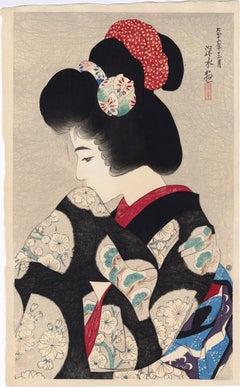
Contemplating the Coming Spring (Young Maiko, Apprentice Geisha)
By Ito Shinsui
Located in Burbank, CA
A maiko shyly covers her mouth with her sleeve. An apprentice geisha, she wears the maiko’s distinctive red collar and hairstyle. She could be contemplating the public odori dances t...
Category
1920s Showa Figurative Prints
Materials
Woodcut
H 16.93 in W 10.36 in
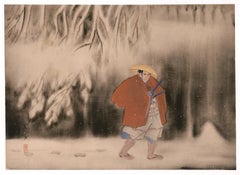
Samurai Walking in Snow — Forty-seven Ronin Memorial Series, 1920
Located in Myrtle Beach, SC
Arai Kanpo, 'Samurai Walking in the Snow' from 'Gishi Taikan' (Pictures of Loyal Followers), Forty-Seven Ronin Memorial Series, color woodblock print, 1920. Signed Kanpo with the art...
Category
1920s Showa Figurative Prints
Materials
Woodcut
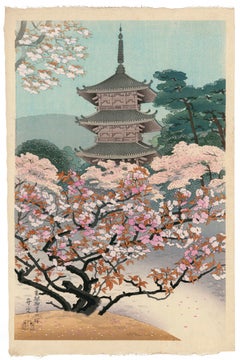
Cherry Blossoms and Pagoda
— Showa Woodblock Print with Rare Progressive Proof
Located in Myrtle Beach, SC
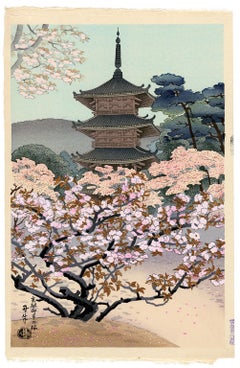
Benji Asada, 'Kyoto Omuro no Sakura (The Cherry Blossoms and a Pagoda at Ninnaji Temple)', color woodblock, 1947. Title and Asada's art name 'Tangyu' with ...
Category
1940s Showa Figurative Prints
Materials
Woodcut
Junichiro Sekino Signed Limited Edition Japanese Print Girl Cradling Cat Red
Located in Norfolk, GB
Paper Size: 37.4 x 31.6 cm
Image Size: 27 x 24 cm
Print on paper, signed in pencil to the right, Edition in pencil 39/58. There is an artist water mark in the paper (see image)
As South Asian specialist's we knew nothing about this fabulous print when we first set eyes on it but the form and presence of the piece was so compelling we snapped it up. Purchased from an estate sale in the UK. Research has led us to the information in the listing. As art specialists, the handling of the print would suggest a period around the 1960's. There is a watermark with the artist's name in the paper, to the right hand side, not visible unless held up to light.
Junichiro Sekino (1914-1988) was one of the leading artists of the Sosaku Hanga movement and is widely considered one of Japan's most important 20th century print artists. His work is collected by the Museum of Modern Art, N. Y., Seattle Art Museum...
Category
20th Century Showa Figurative Prints
Materials
Paper
Irises
— Mid-century Japanese Woodblock
Located in Myrtle Beach, SC
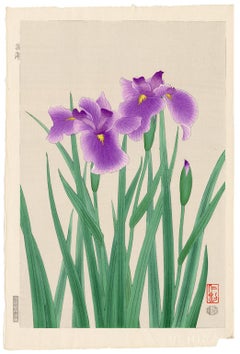
Ito Nisaburo, 'Irises', color woodblock, c. 1950s. Signed with the artist’s red seal, lower right. A fine impression from a later printing, with fresh colors, on cream "Uchida" watermarked washi paper; the full sheet in excellent condition. Published by Uchida with the publisher's seal, lower right within the image, and in the lower left margin. Image size 15 7/8 x 10 5/8 inches (403 x 270 mm); sheet size 17 3/4 x 11 7/8 inches (451 x 302 mm). Archivally sleeved, unmatted.
ABOUT THE ARTIST
Born in Kyoto, shin-hanga artist Nisaburo Ito (1910-1988) was a student of Tsuchida Bakusen at the Kyoto City Specialist School of Painting. Ito created woodblock prints of flowers...
Category
1950s Showa Figurative Prints
Materials
Woodcut
Cherry Blossoms and Pagoda at Ninnaji Temple — Showa Woodblock Print, 1940s
Located in Myrtle Beach, SC
Benji Asada, 'Kyoto Omuro no Sakura (The Cherry Blossoms and a Pagoda at Ninnaji Temple)', color woodblock, 1947. Title and Asada's art name 'Tangyu' with ...
Category
1940s Showa Figurative Prints
Materials
Woodcut
The Spirit of the Wine
— Japanese Legend from the Famed Chikamatsu Series
Located in Myrtle Beach, SC
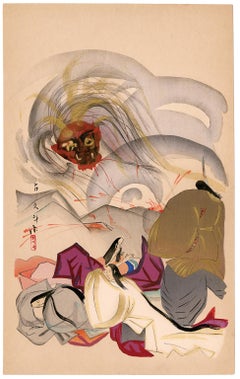
Hokuto Tamamura (1893-1951), 'The Spirit of the Wine' (Shuten Dōji) - from Dai Chikamatsu Zenshu (The Complete Works of Chikamatsu)', color woodblock, 1923-26. Signed 'Hokuto'. A fin...
Category
1920s Showa Figurative Prints
Materials
Woodcut
Showa figurative prints for sale on 1stDibs.
Find a wide variety of authentic Showa figurative prints available for sale on 1stDibs. Works in this style were very popular during the 21st Century and Contemporary, but contemporary artists have continued to produce works inspired by this movement. If you’re looking to add figurative prints created in this style to introduce contrast in an otherwise neutral space in your home, the works available on 1stDibs include elements of orange and other colors. Many Pop art paintings were created by popular artists on 1stDibs, including Ito Shinsui, Kawase Hasui, Paul Jacoulet, and Natori Shunsen. Frequently made by artists working with Woodcut Print, and Handmade Paper and other materials, all of these pieces for sale are unique and have attracted attention over the years. Not every interior allows for large Showa figurative prints, so small editions measuring 4.63 inches across are also available. Prices for figurative prints made by famous or emerging artists can differ depending on medium, time period and other attributes. On 1stDibs, the price for these items starts at $250 and tops out at $5,975, while the average work sells for $1,620.
More Ways To Browse
Edward Simmons
Edwin Lord Weeks
Elizabeth Enders
Elizabeth Horning
Emil Holzhauer
England Church Oil Painting
English Deer Painting
English Fox Hunt Painting
English Toy Terrier
Enrique Martinez Celaya
Eric Aho
Eritrea Art
Ernest Chateignon
Erotic Art Animal
Eugene Chigot
Eugene Devaud De Madelin
Eugene Jardin
Faith Sheppard